16 DIY Cat Tower Ideas for 2026
Cats love having their own space to climb, scratch, play, and relax. A well-designed cat tower gives them all these opportunities while keeping them entertained indoors. However, store-bought cat furniture can be expensive, and finding something that fits your room perfectly isn’t always easy.
Building a DIY cat tower allows you to customize everything, from the height and materials to the sleeping areas and scratching surfaces. You can transform leftover wood, sturdy shelves, baskets, and other household materials into a comfortable climbing structure your cat will enjoy.
Whether you have a playful kitten, an energetic adult cat, or an older companion who prefers gentle climbing, these 16 DIY cat tower ideas for 2026 offer creative solutions for different spaces, budgets, and skill levels.
Jump to section (4)
What Materials Do You Need for a DIY Cat Tower?
A DIY cat tower starts with durable materials that can withstand climbing, jumping, scratching, and daily movement. Choosing the right supplies helps create a structure that remains stable and comfortable over time.
Plywood is an excellent option for platforms and bases because it provides a solid surface and is relatively easy to cut. Solid wooden posts or appropriately reinforced structural supports can form the vertical sections. For scratching areas, natural sisal rope is a practical choice because its coarse texture gives cats something satisfying to grip.
You can also use low-pile carpet, washable upholstery fabric, and removable cushions to make resting areas more inviting. Wood screws, suitable brackets, and wall anchors help secure the different components.
Before construction, measure your available space and consider your cat’s size and mobility. Sand exposed wooden edges, avoid loose staples or dangling cords, and use pet-safe finishes that have fully cured before allowing your cat onto the tower.
Can cats sleep in a cat tower?
Yes, many cats enjoy sleeping in elevated spaces where they can observe their surroundings while feeling relatively undisturbed. A cat tower can become a favorite resting spot, particularly when it offers a comfortable platform away from household activity.
The most important features are stability, sufficient sleeping space, and a surface that feels pleasant against your cat’s body. A padded perch or removable fleece cushion can make the upper levels more comfortable.
Some cats prefer enclosed sleeping compartments, while others enjoy open platforms with a clear view of the room. Including both options gives your pet more freedom to choose.
Position the tower away from unstable furniture, excessive heat, and other potential hazards. With the right placement and design, it can serve as both an activity center and a peaceful sleeping retreat.
Vertical Playground
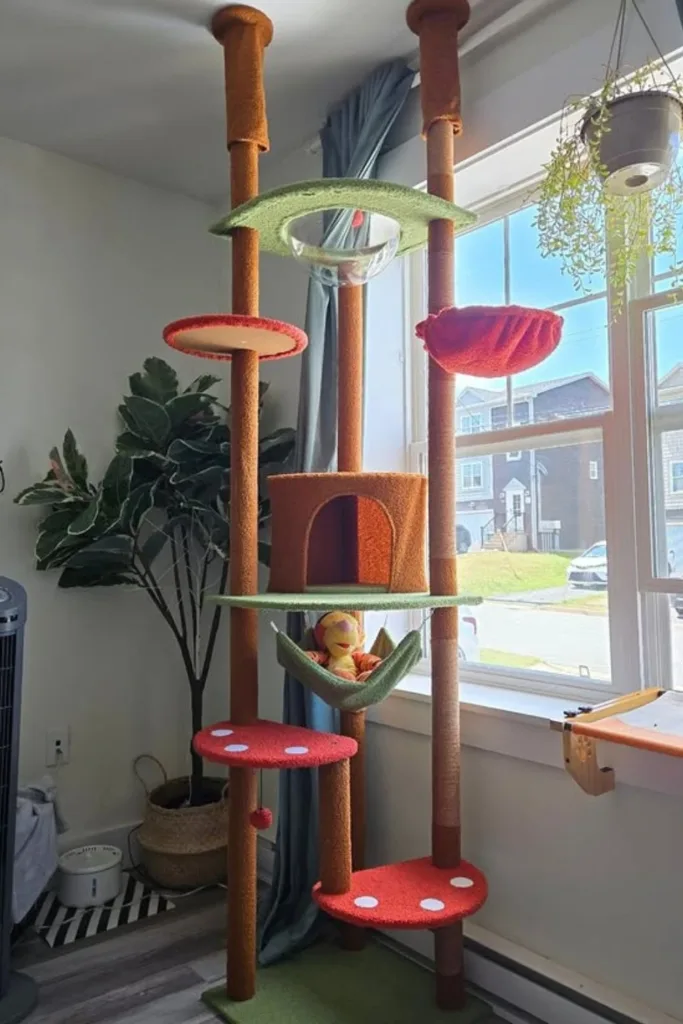
A vertical playground is an excellent DIY cat tower idea for homes with limited floor space. Instead of spreading across a large area, this design uses height to create multiple opportunities for climbing and exploration.
Start with a sturdy base and install vertical wooden supports. Attach several platforms at alternating heights, allowing your cat to move upward through a series of manageable jumps.
Cover selected posts with sisal rope to create scratching surfaces, and add a cushioned perch at the highest accessible level.
For particularly tall structures, secure the framework to appropriate wall framing using suitable hardware. This additional support helps prevent tipping when cats jump between platforms.
The finished tower offers plenty of activity without occupying much of the room.
Staggered Steps
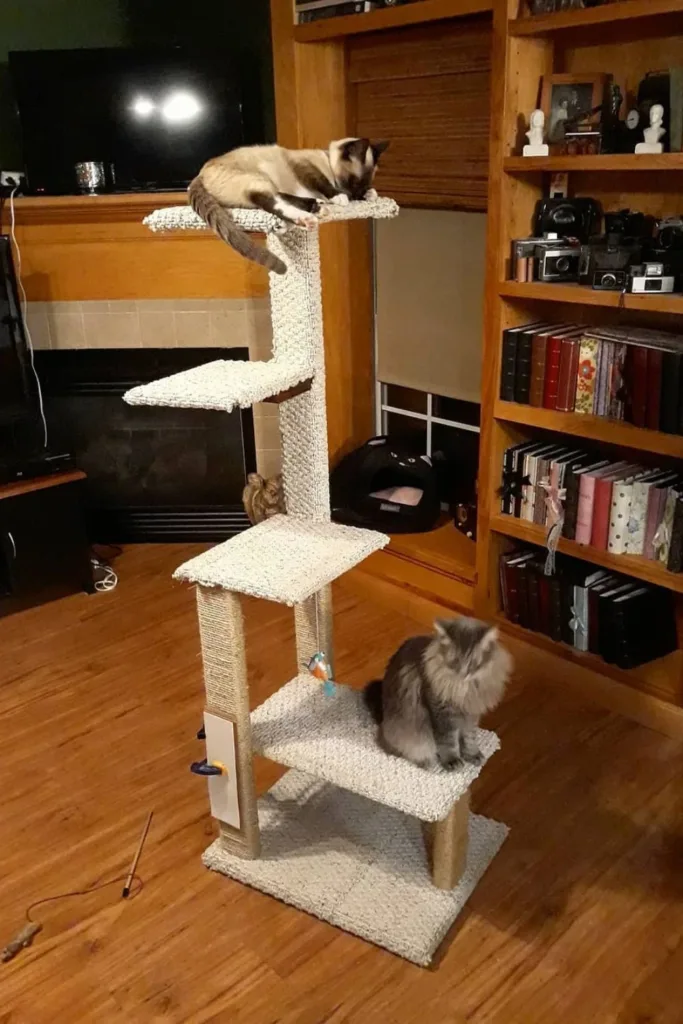
A staggered cat tower features platforms arranged at different heights, creating a climbing path that feels more like a staircase than a vertical jump.
This arrangement is especially useful for cats that prefer moving gradually between levels. It can also work well in multi-cat households because several platforms provide separate resting areas.
Build the main structure using plywood and wooden posts, then attach platforms in an alternating pattern. Make each landing large enough for your cat to turn around comfortably.
Add carpet or another securely attached, grippy material to reduce slipping.
For older cats, keep the height differences smaller and consider adding a gently inclined ramp. The result is an accessible climbing structure that encourages movement without requiring difficult leaps.
Modern Column
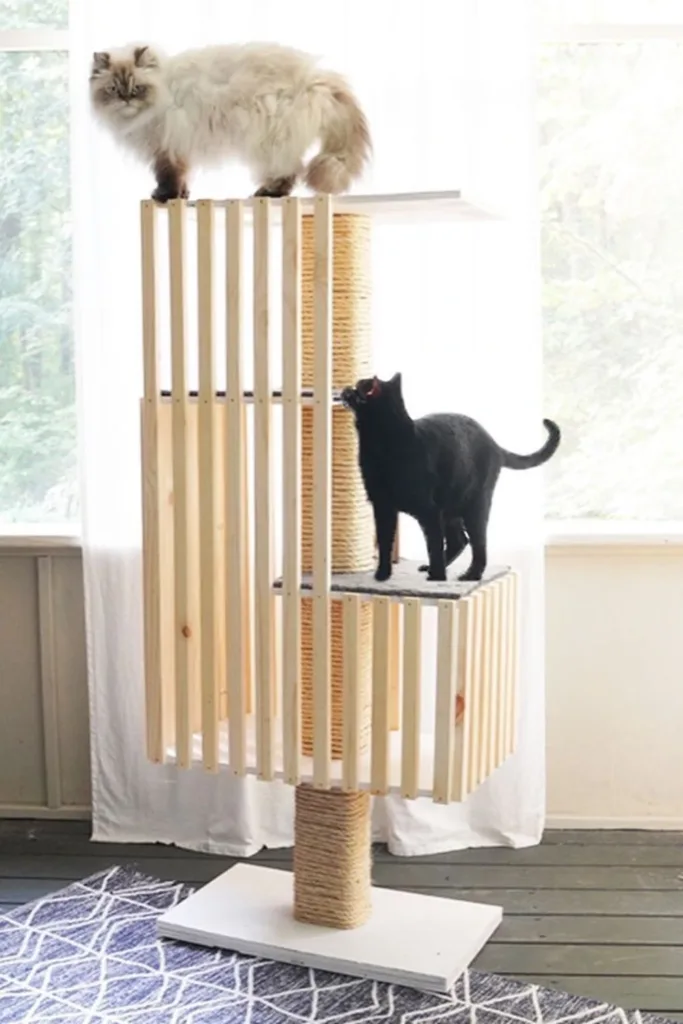
If you prefer simple furniture with clean lines, a modern column cat tower can blend naturally into a contemporary living room.
This design uses a streamlined vertical structure with one or more platforms extending from the main support. Smooth wooden panels, neutral upholstery, and carefully positioned scratching sections give it a polished appearance.
Begin with a wide, weighted wooden base and a strong central post. Install a generously sized resting platform near the top and wrap part of the support with sisal rope.
You can finish the exposed wood with a pet-safe, fully cured coating that complements your existing furniture.
Keep decorative elements minimal and avoid sharp corners. A modern column tower proves that functional pet furniture can also look attractive.
Basket Tower

A basket tower combines cozy sleeping spaces with a compact climbing arrangement. It’s particularly appealing for cats that enjoy curling up in enclosed or partially enclosed areas.
Use a sturdy wooden shelving frame as the foundation. Position supportive baskets at different heights, making sure each one is securely attached rather than simply resting on a shelf.
Choose baskets with strong construction and no sharp wire ends, loose fibers, or handles that could trap paws. Add small removable cushions to make the sleeping areas more comfortable.
Arrange the baskets so your cat can move easily between levels.
Secure the shelving frame to the wall to reduce the risk of tipping. This design is a creative way to turn a simple storage-inspired structure into a personalized cat retreat.
Design Statement
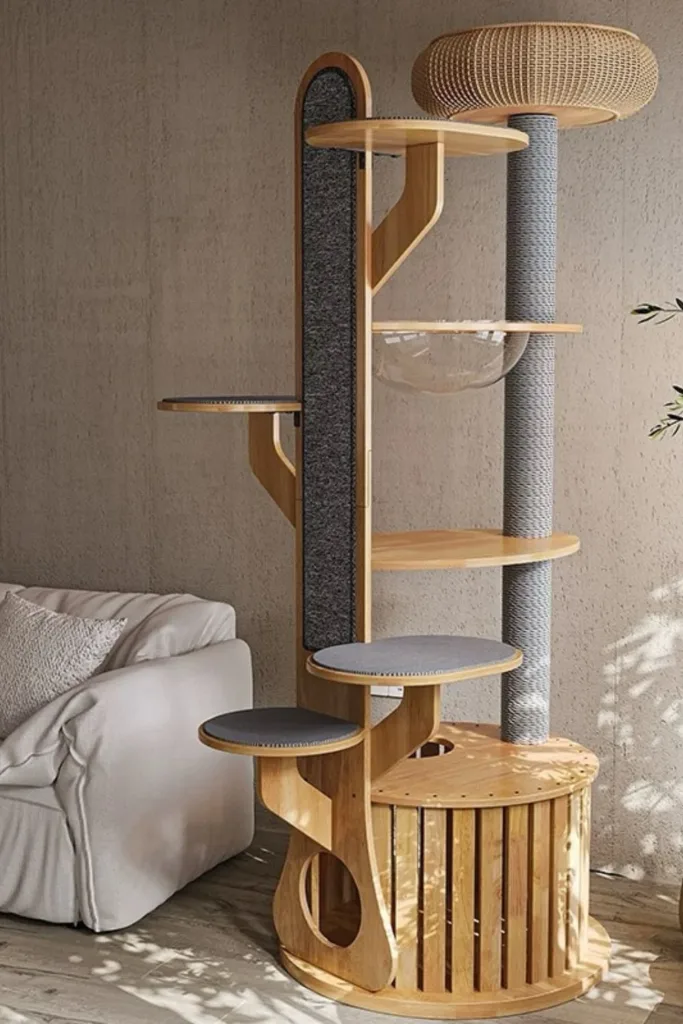
A statement cat tower is ideal when you want your pet’s furniture to become part of your interior design rather than something you try to hide.
Consider combining curved wooden panels, rounded platforms, and coordinated upholstery for a more refined appearance. Natural wood tones work beautifully with neutral fabrics, while darker finishes can create a dramatic modern look.
Begin by planning the overall shape and identifying where the main supports will carry the weight. Build a stable foundation before adding decorative panels or elevated resting areas.
You can include a curved scratching surface or a padded upper perch to balance appearance with practicality.
The key is ensuring that decorative choices never compromise strength, accessibility, or comfort. A thoughtfully designed tower can complement your living space while giving your cat a functional place to relax.
Comfort Stack
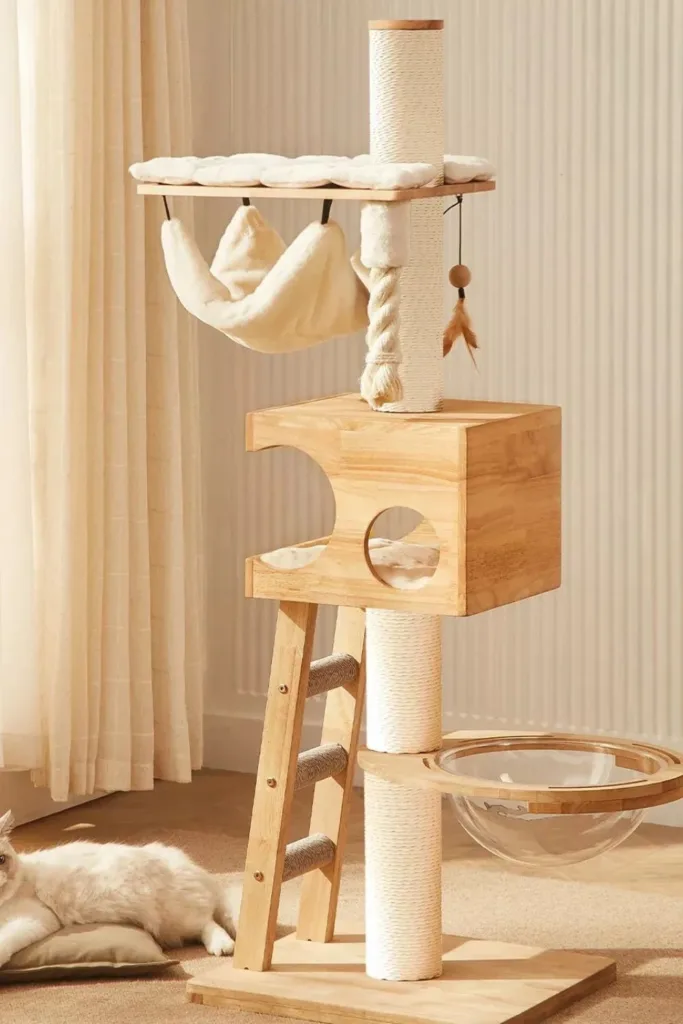
A comfort stack cat tower focuses on offering several different lounging experiences within one structure.
You might combine a padded lower platform, an enclosed middle compartment, and an open upper perch. A properly supported fabric hammock can provide another relaxing option.
Start with a solid wooden frame and build the resting areas around it. Use durable fabric for the hammock, attaching it with secure hardware designed to withstand your cat’s weight and movement.
Choose washable cushions and removable covers wherever possible.
This design is particularly helpful for cats whose resting preferences change throughout the day. They can retreat into a sheltered space, stretch out on an open platform, or settle into a soft hammock without leaving their tower.
Sculpted Steps
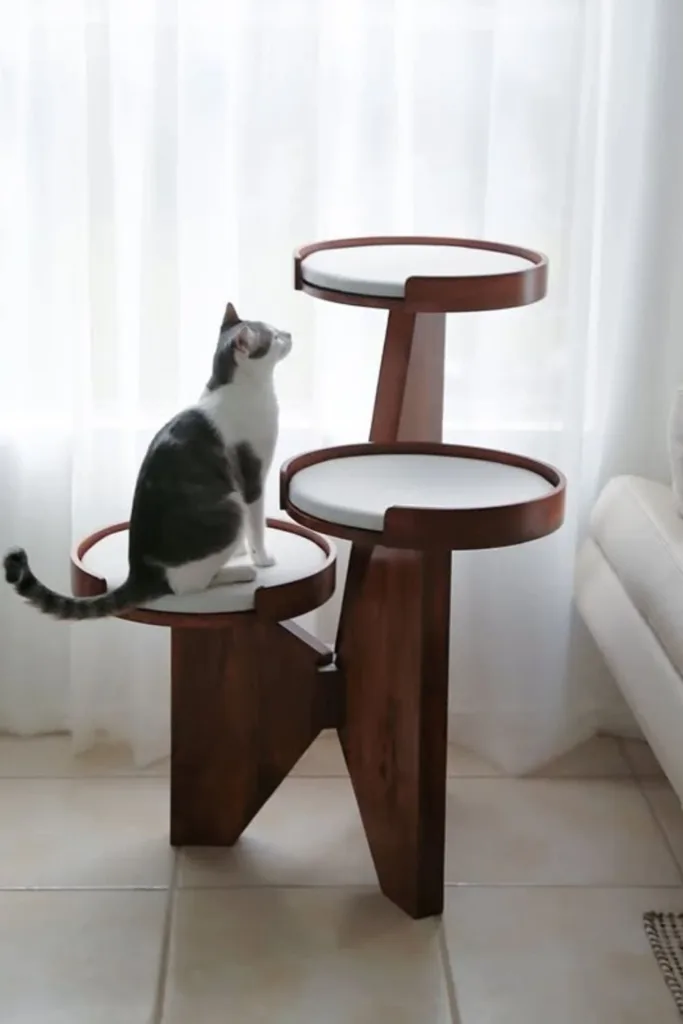
Sculpted steps offer a creative alternative to traditional rectangular cat platforms. Rounded or organically shaped landings give the tower a softer appearance while providing an interesting climbing route.
Create the platforms from thick plywood, cutting them into rounded shapes with smooth edges. Mount them on a reinforced framework at gradually increasing heights.
Keep each step wide enough to support your cat securely. Small decorative discs may look attractive, but they aren’t suitable as primary resting or landing surfaces.
Cover the walking areas with securely fitted carpet or another non-slip material.
This design works especially well in modern or minimalist interiors where curved furniture creates a gentle visual effect.
The finished tower offers a playful combination of artistic styling and practical climbing space.
Play Zones

For active cats, a tower with dedicated play zones can provide opportunities for exercise and mental stimulation throughout the day.
Instead of creating only sleeping platforms, divide the structure into areas for climbing, scratching, hiding, and interactive play.
You could include a short tunnel on the lower level, a scratching post in the middle, and a viewing platform near the top. Securely mounted toys can add interest, although long strings and dangling accessories should be used only during supervised play.
Build the framework from sturdy wood and reinforce all connections carefully.
Leave enough room between features for comfortable movement, especially if more than one cat will use the tower.
A multi-activity design can help indoor cats stay engaged and provide a positive outlet for their natural climbing and scratching behaviors.
Branch Climber

A branch climber brings a nature-inspired appearance into your home by incorporating real wooden branches into the tower’s structure.
Look for sturdy, untreated hardwood branches that are dry, clean, free from pests, and known to be non-toxic to cats. Avoid rotten wood, splintering surfaces, and branches from unidentified trees.
Attach the branches firmly to a heavy wooden base, using appropriate mechanical fasteners rather than relying on glue alone.
Add flat wooden platforms at suitable heights to provide comfortable landing areas. You can also wrap selected sections with sisal rope for extra grip.
The irregular shapes create an interesting climbing environment while giving the finished tower a rustic appearance.
Place it in a bright indoor corner or protected sunroom, away from excessive moisture and unstable surfaces.
Cozy Crochet

A cozy crochet cat tower combines a strong wooden structure with soft, handmade textile details.
Begin with a basic tower featuring several platforms and a scratching post. Then create tightly stitched crochet covers for selected resting surfaces using durable, washable yarn.
Choose dense stitches that won’t easily catch claws, and secure the covers so they cannot slide or bunch up during climbing.
Avoid loose loops, tassels, and decorative yarn strands that cats might chew or swallow.
For additional comfort, add removable cushions underneath the textile covers. Neutral shades create a subtle look, while colorful patterns can make the tower feel more playful.
This project is a lovely option for anyone who enjoys crafting and wants to incorporate handmade details into their pet furniture.
Window Watch
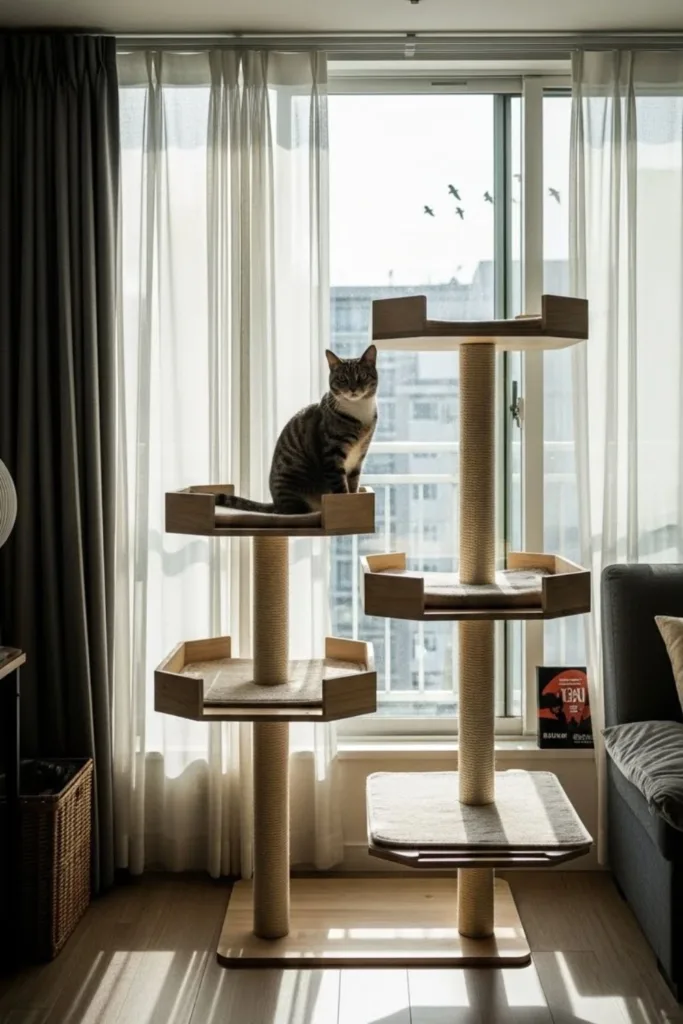
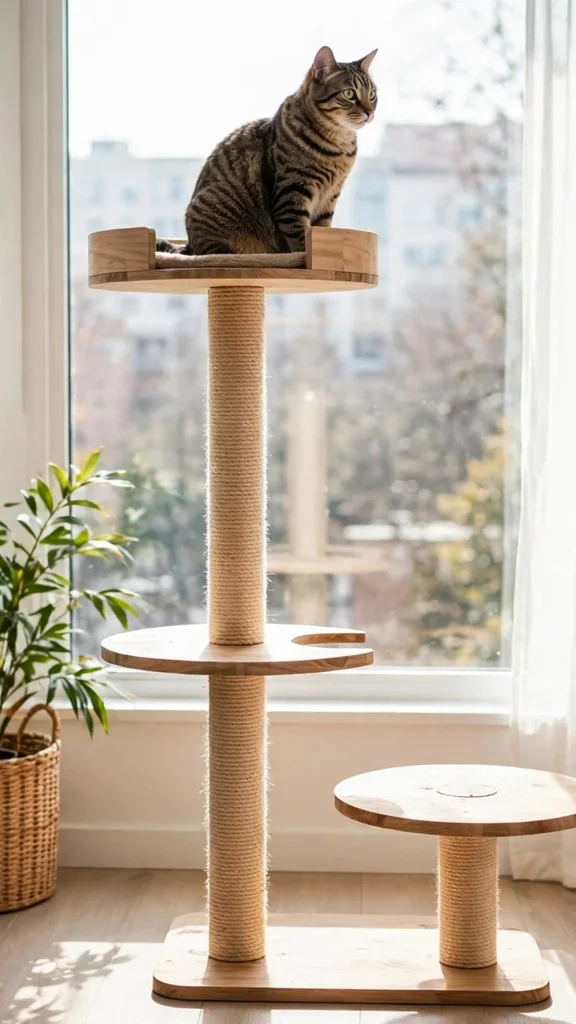
A window-facing cat tower creates an inviting observation point where your cat can enjoy natural light and watch outdoor activity.
Start with a compact wooden tower that fits beside a suitable window. Position the upper platform so your cat has an unobstructed view without needing to balance on a narrow surface.
Add a comfortable cushion and a scratching section below the main perch.
Make sure the tower is stable and cannot tip toward the glass. Window screens should never be treated as fall protection, and windows should remain safely secured.
Avoid locations where prolonged direct sunlight could cause overheating, especially during warmer months.
This simple setup can become one of your cat’s favorite places to rest, observe birds, and enjoy everyday household life.
Corner Climb
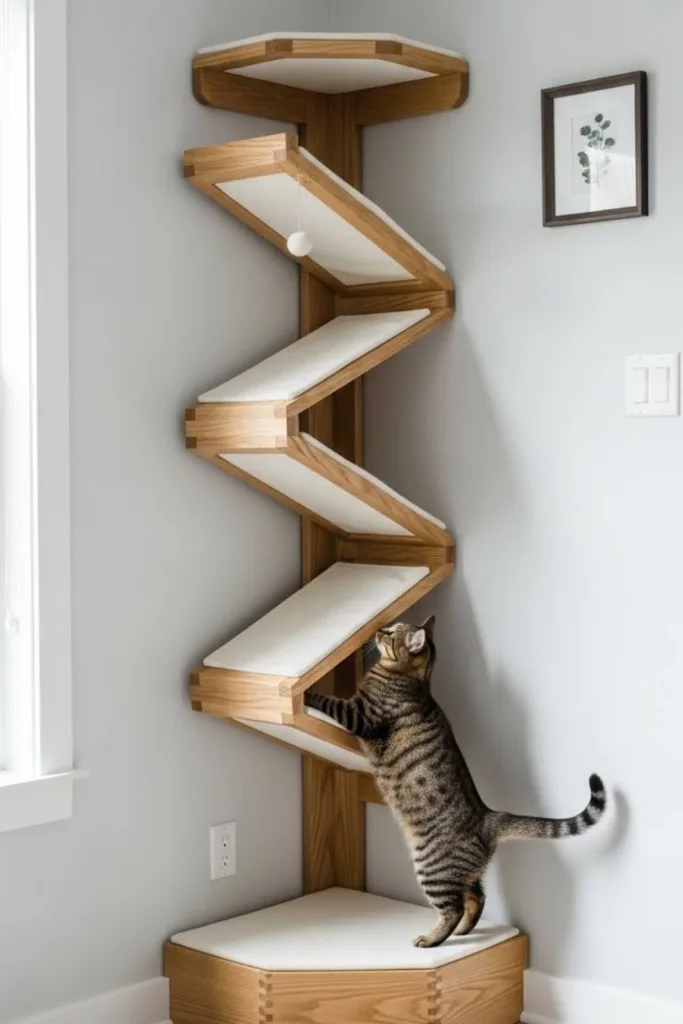
A corner cat tower makes practical use of an area that might otherwise remain empty.
Design the base to fit the available corner, using a triangular or compact square shape depending on your space. Build upward with platforms that alternate along the two adjoining walls.
This arrangement creates an easy climbing route while keeping the structure relatively unobtrusive.
You can attach the platforms to a central frame or use properly rated wall-mounted supports fixed into suitable structural material.
Add carpeted surfaces and a comfortable upper resting spot. For extra interest, include a small scratching panel along one side.
Corner towers work particularly well in apartments, bedrooms, and living rooms where every bit of floor space matters.
Ladder Route

A ladder-style cat tower offers a gradual climbing path for cats that aren’t comfortable making large jumps.
Construct a sturdy inclined ladder or ramp using plywood and wooden supports. Add wide steps or closely spaced footholds to make climbing easier.
Cover the walking surfaces with low-pile carpet or another material that provides reliable traction.
Connect the ladder to a secure resting platform, and make sure the structure doesn’t shift when your cat climbs.
For senior cats or those with limited mobility, a continuous ramp with a gentle slope may be more suitable than individual rungs.
This design provides access to an elevated resting space while accommodating cats with different physical abilities.
Hidden Den
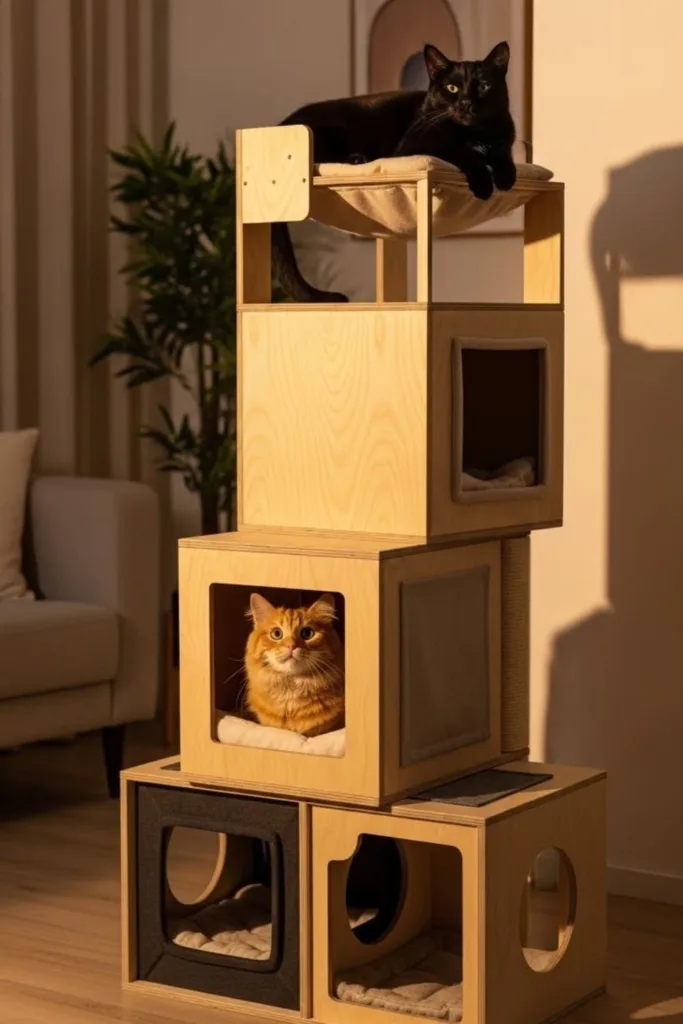
Some cats prefer quiet, sheltered spaces where they can rest without being disturbed. A hidden-den tower combines enclosed compartments with open climbing platforms.
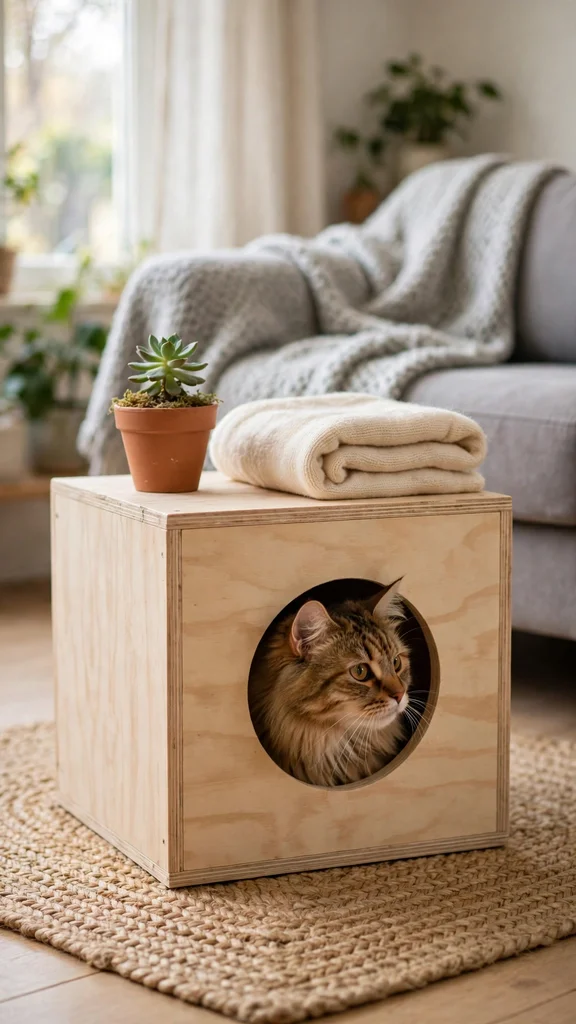
Build one or two wooden cubbies into the main structure, leaving entrances large enough for your cat to enter and turn around comfortably.
Include adequate ventilation and avoid doors or panels that could accidentally trap your pet inside.
Line the compartments with washable bedding and connect them to nearby platforms.
You can position a scratching post beside the lower compartment and a comfortable lookout perch above it.
This design is especially useful in busy households because it gives cats the choice between participating in family activity and retreating to a quieter space.
Minimal Pole

A minimal pole tower is one of the simplest DIY options for small homes or beginner woodworking projects.
It consists of a sturdy vertical post, a substantial base, and a comfortable platform near the top.
Use a strong wooden post and secure it to a broad plywood base with appropriate brackets and fasteners. Wrap the lower portion with sisal rope to create a scratching area.
Attach a padded upper platform that provides enough space for your cat to sit, turn, and lie down.
Although the design looks simple, stability remains essential. A tall, narrow structure may need additional wall support to prevent tipping.
Place the finished tower near a sofa or another convenient area where your cat enjoys spending time.
Modular Build
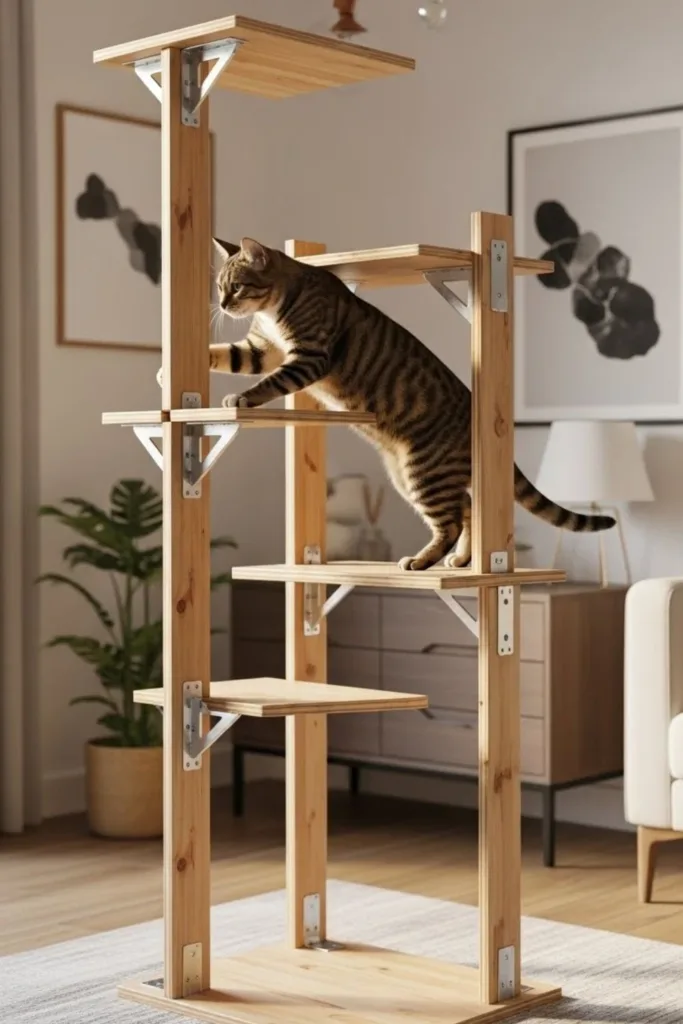
A modular cat tower is designed to change as your cat’s needs or your living space evolve.
Instead of constructing one permanent arrangement, create separate sections that can be connected using compatible brackets and secure mechanical fasteners.
Start with a basic structure containing a lower scratching post and one resting platform. Later, you can add another level, an enclosed compartment, or an additional climbing section.
Plan the attachment points carefully so every configuration remains structurally stable. Any newly added height or weight should be assessed before allowing your cat to use the tower.
This approach is particularly practical for growing kittens, changing room layouts, or households that may eventually welcome another cat.
A modular tower gives you flexibility without requiring an entirely new project whenever your needs change.
FAQs
Is a DIY cat tower safe for large or heavy cats?
A DIY cat tower can be safe for larger cats when it is designed with their size, weight, and activity level in mind.
Use strong wooden supports, reinforced connections, and wide platforms that allow your cat to turn and lie down comfortably. A heavy, broad base helps improve stability, while appropriate wall anchoring can reduce tipping risks.
Consider the forces created when a cat jumps onto a platform, not just its standing weight. Choose hardware and materials with adequate load capacity, and avoid weak joints or unsupported overhangs.
Before use, test the tower for movement and inspect every connection. Continue checking it regularly for loose screws, damaged rope, or worn materials.
How tall should a DIY cat tower actually be?
The ideal height depends on your cat’s age, mobility, confidence, and the space available in your home.
Many healthy adult cats enjoy towers around 3 to 6 feet tall, but there is no universal height that suits every cat. A shorter structure with several comfortable levels may be more useful than a tall tower with difficult jumps.
Kittens, senior cats, and cats with mobility limitations generally benefit from lower platforms and shorter distances between levels.
Focus on providing a safe climbing route, comfortable resting areas, and a stable foundation rather than simply maximizing height.
Conclusion
Building your own cat tower is a rewarding way to create furniture that suits both your cat’s personality and your home’s layout. From compact corner climbers and minimalist scratching posts to elaborate play zones and cozy sleeping towers, there are plenty of designs to explore in 2026.
The best DIY cat tower isn’t necessarily the tallest or most complicated. It’s one that provides secure climbing opportunities, comfortable resting places, and durable scratching surfaces while remaining stable during everyday use.
Choose a design that matches your skills, use reliable materials, and prioritize safety throughout construction. With thoughtful planning, you can create a personalized space that your cat will enjoy for years.