25 DIY Bird Houses Ideas for 2026
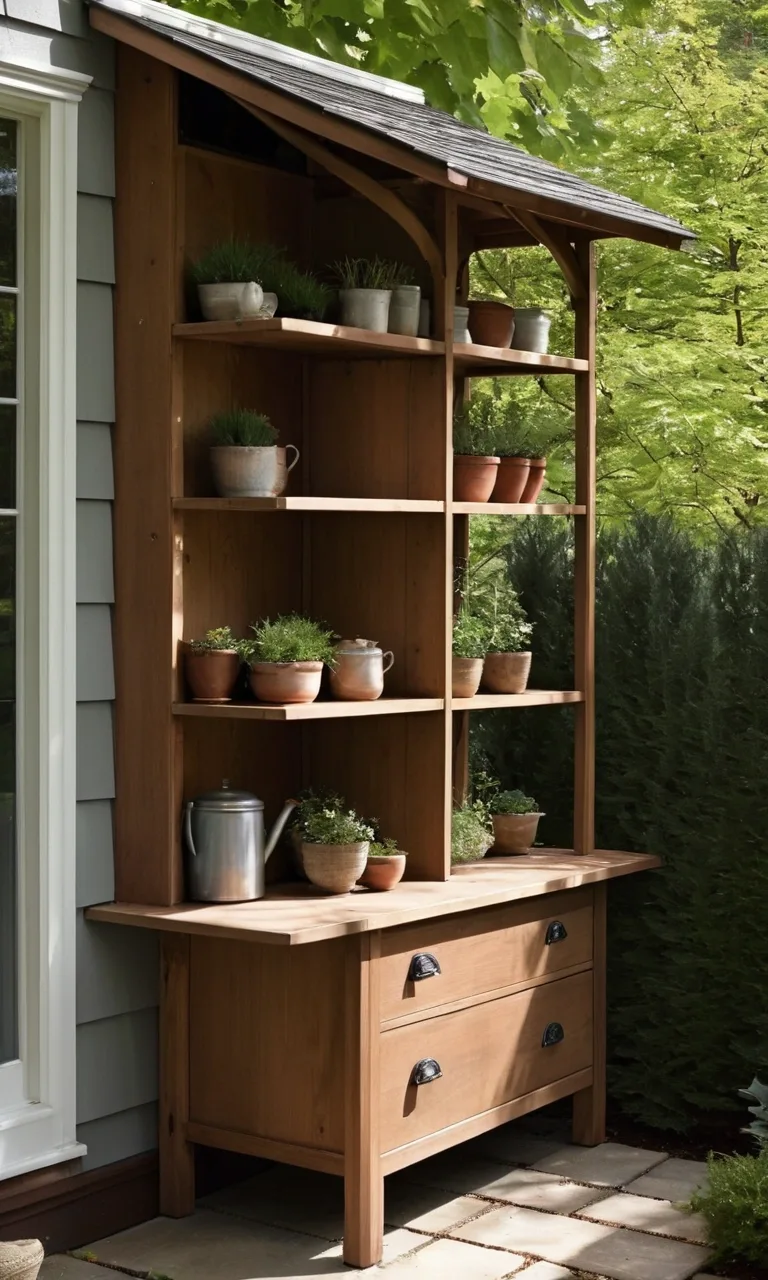
Creating a birdhouse is a rewarding way to make your outdoor space more inviting while giving local birds a place to nest. With a little creativity and a few suitable materials, you can build something practical that also adds character to your garden, patio, or backyard.
DIY birdhouses come in many styles, from traditional wooden boxes to imaginative designs made with recycled materials and natural textures. Whether you enjoy woodworking, painting, or simple weekend crafts, there is an option to suit your experience and available space.
The most important consideration is choosing a design that meets the needs of the birds you hope to attract. Proper dimensions, weather protection, ventilation, and a safe location can make your finished project more useful than decoration alone.
Explore these 24 DIY birdhouse ideas for inspiration, including rustic shelters, colorful creations, and nature-inspired designs that can bring new life to your outdoor surroundings.
1. Simple & Functional
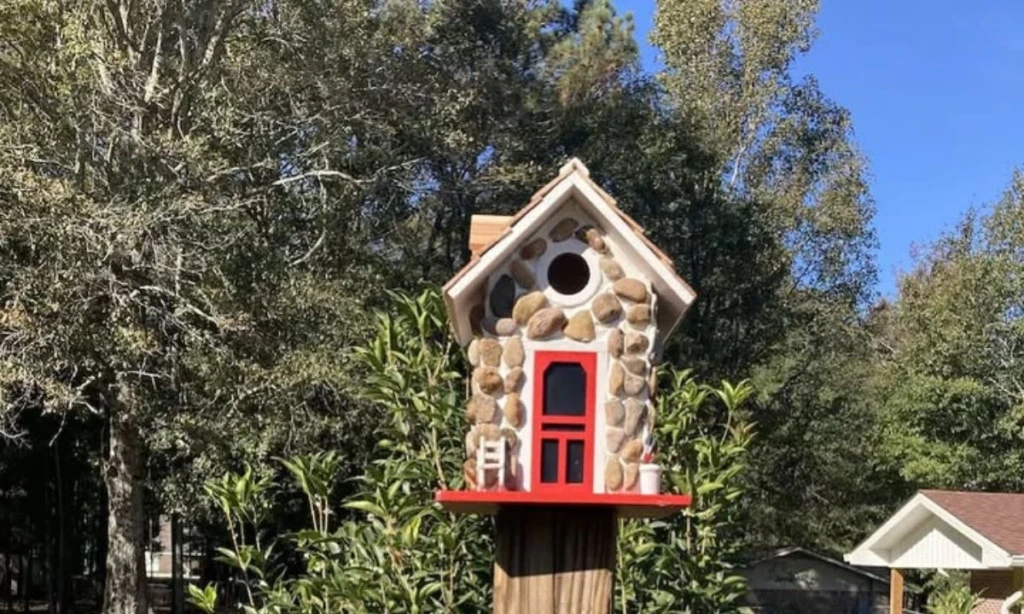
A successful birdhouse does not need complicated construction or expensive supplies. A straightforward wooden box with a well-designed entrance can provide a suitable nesting space when its dimensions match the needs of the intended bird species.
Untreated wood is a dependable material for outdoor birdhouses because it is sturdy and generally suitable for nesting when assembled correctly. Reclaimed timber can also work well if it is clean and free from chemical treatments.
Pay attention to practical details before decorating your project. A sloping roof helps shed rain, drainage holes allow moisture to escape, and ventilation openings help prevent overheating. The entrance should be appropriately sized, and the interior should not contain sharp nails or rough hazards.
You can personalize a simple design with natural finishes, subtle colors, or decorative features on the exterior. Keep the inside untreated, avoid toxic paints and coatings, and leave out unnecessary perches that may make it easier for predators to approach the entrance.
2. Chapel Roof Feeder
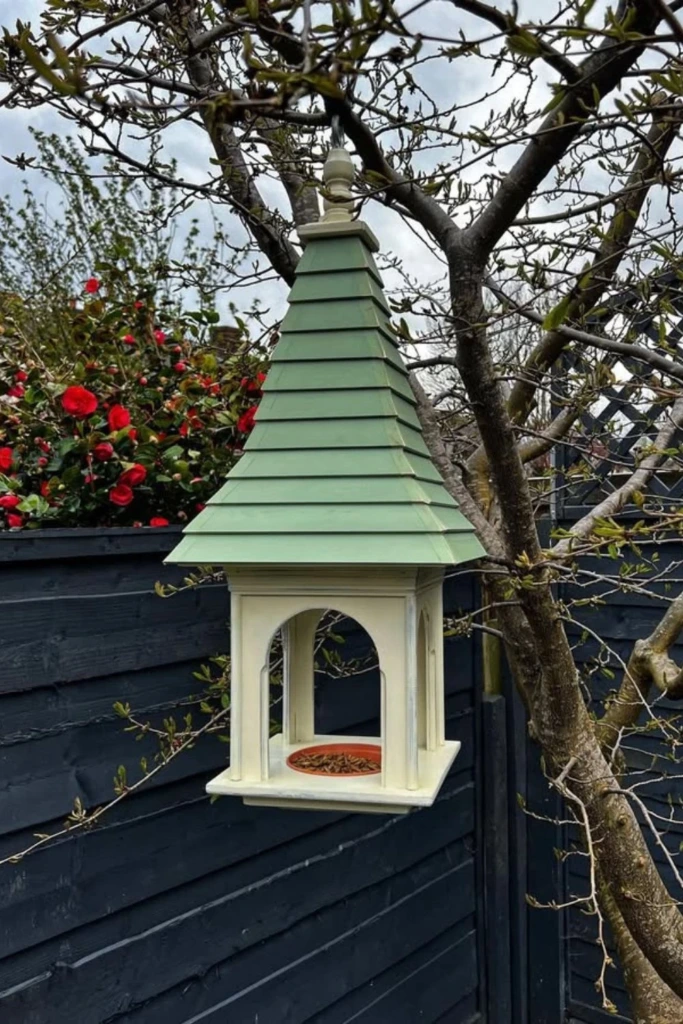
A miniature chapel-inspired structure can give your garden a distinctive architectural feature. Its tall, pointed roof and open sides create a traditional appearance that works particularly well in cottage gardens or beside wooden fences.
For a feeding station, build a stable wooden frame with a generously overhanging roof to help protect seed from light rain. A pale body paired with a green roof can create a classic countryside look.
Remember that a feeder and a nesting box serve different purposes. Keep the feeding area open and accessible for birds, and provide a separate enclosed nest box if you want to encourage breeding. Choose weather-resistant materials and make the feeder easy to clean.
3. Twig Cabin Nest
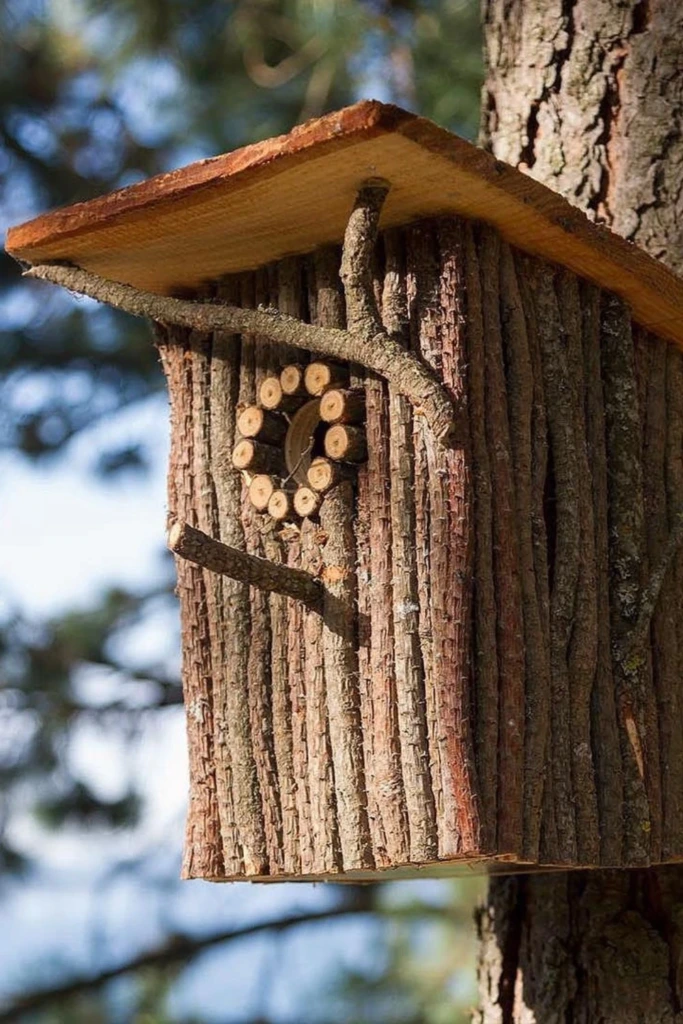
Small branches and twigs can transform an ordinary birdhouse into a woodland-style creation. Arranged over a sturdy wooden base, they create a textured exterior that blends naturally with tree trunks, shrubs, and other garden features.
Start with a properly constructed nest box, then attach clean, firmly secured twigs around its outer walls. Keep the entrance unobstructed and make sure no loose branches can fall away over time.
A natural brown finish helps the structure blend into its surroundings. Mount it securely in a quiet location where cats and other predators have limited access. The decorative twig layer should never compromise the box's weather protection or safe interior space.
4. Gourd-Inspired Pod
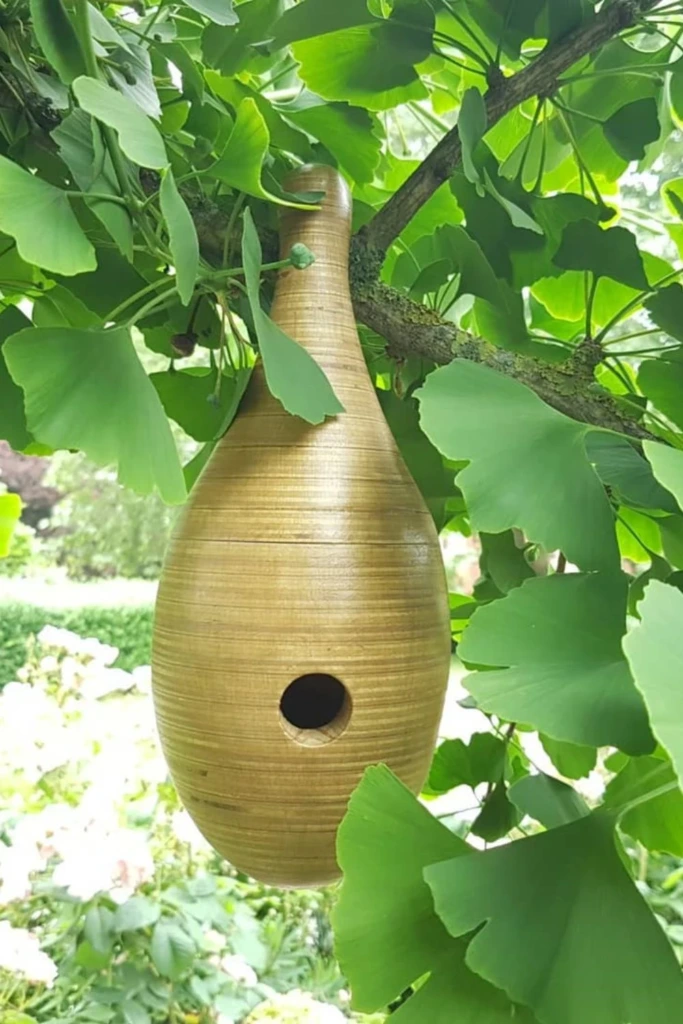
A rounded, hanging birdhouse inspired by the shape of a gourd offers a softer alternative to conventional square designs. Its curved outline can complement contemporary gardens, balconies, and outdoor spaces with a minimalist style.
You can create this look using a suitable dried gourd or a purpose-built wooden shell. Provide an entrance sized for the intended bird species, along with appropriate drainage, ventilation, and access for cleaning.
If using a natural gourd, make sure it is thoroughly dried and free from mold before preparing it. Suspend the finished shelter from a strong support that can withstand wind and rain.
A simple natural finish keeps the design understated while allowing the rounded form to stand out against surrounding foliage.
5. Slanted Roof Box
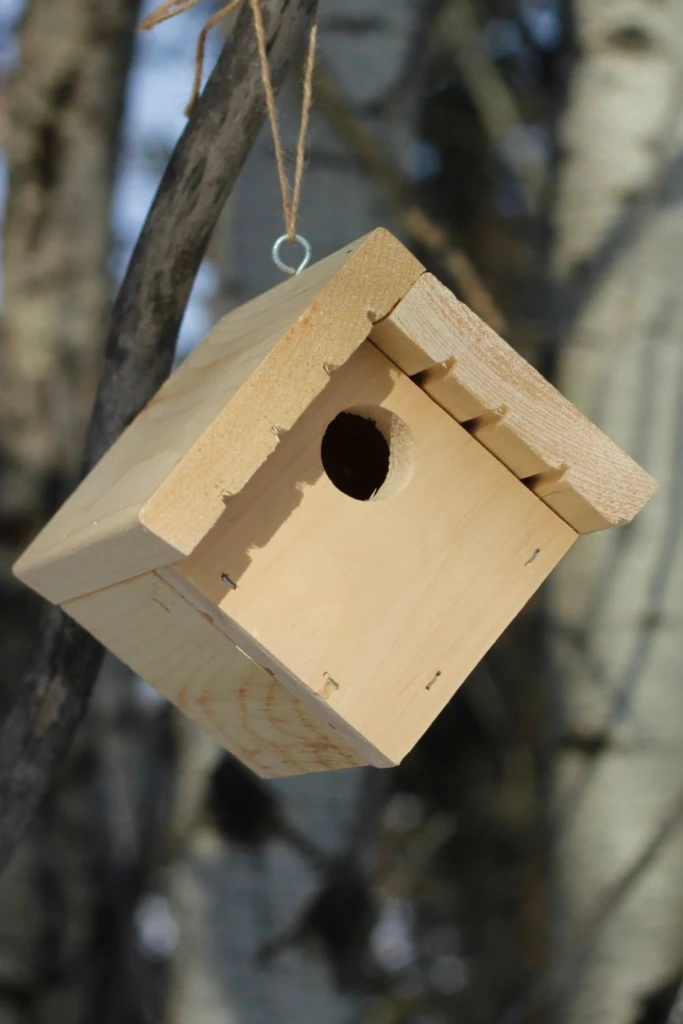
A basic wooden birdhouse with an angled roof is one of the most practical projects for beginners. Its uncomplicated shape requires relatively few cuts, making it suitable for someone learning basic measuring, drilling, and assembly skills.
Use untreated, weather-suitable timber and cut the roof so water runs away from the entrance. Secure the panels firmly, smooth any dangerous edges, and create a properly sized entrance hole.
A natural pine finish gives the structure a traditional appearance, while a carefully applied, bird-safe exterior finish can provide a little extra protection. Keep drainage and ventilation in mind during construction.
This versatile design works in many garden settings, provided it is mounted securely and sized for the local species you want to attract.
6. Funky Pink House
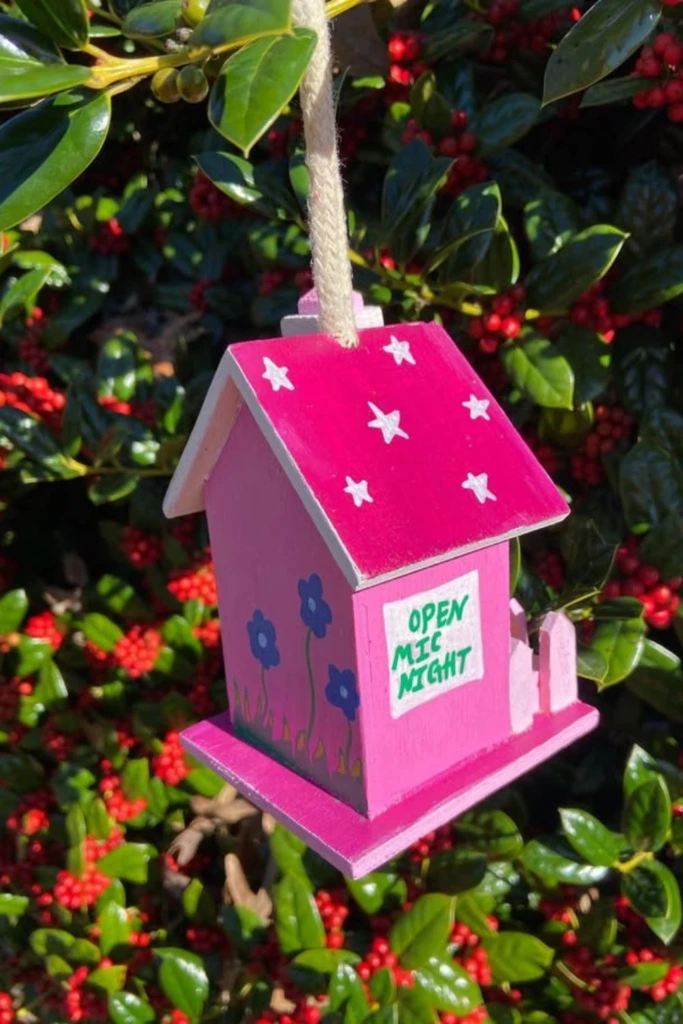
A brightly colored birdhouse can introduce a playful focal point into a garden. Imagine a pink roof decorated with white stars, painted flowers along the walls, and a tiny sign that gives the structure its own personality.
Begin with a functional wooden nest box, then apply decorative details to the exterior using non-toxic, weather-appropriate products. Allow all finishes to cure fully before installation, and avoid painting the interior or narrowing the entrance with decorative additions.
A miniature fence or painted border can enhance the whimsical appearance without interfering with access to the nest box.
For an actual nesting site, prioritize a suitable entrance, safe construction, and protection from rain. If the design is primarily ornamental, it can instead serve as a colorful accent on a porch or garden shelf.
7. Bottle Birdhouse
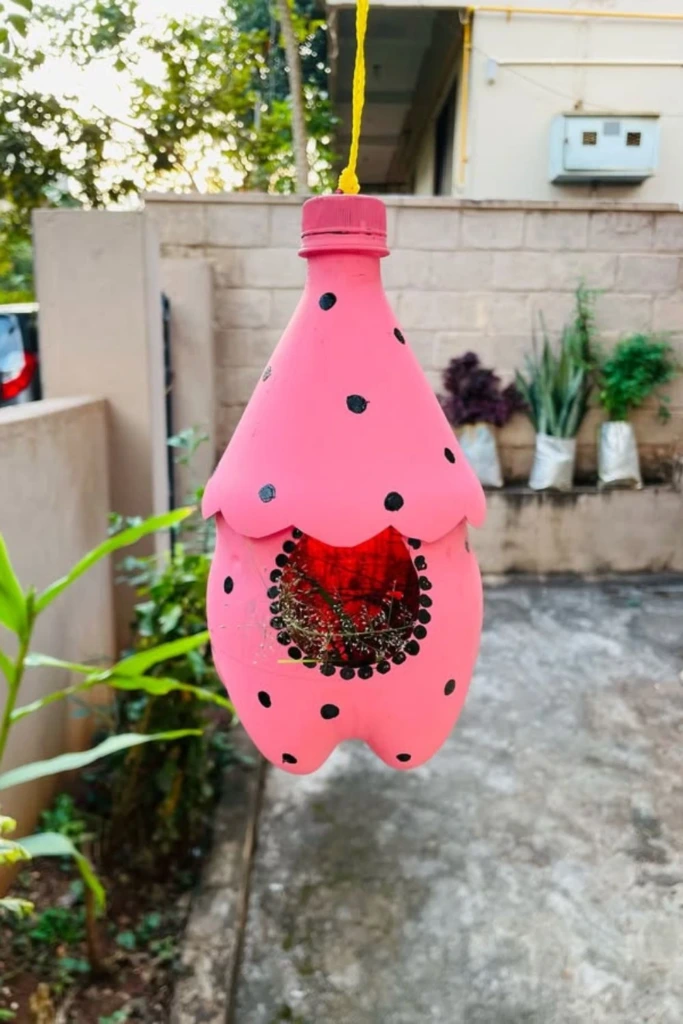
Repurposing a plastic bottle can be an inexpensive way to explore creative garden crafts. A clean, sturdy bottle offers a starting point for an imaginative design, especially when decorated with contrasting colors or simple painted patterns.
However, not every bottle is suitable for a real bird's nest. Thin plastic may trap heat, develop sharp edges when cut, or provide inadequate insulation and protection. A bottle decorated as a feeder or ornamental hanging piece is often a more appropriate use.
If you adapt a container for feeding, ensure it is stable, easy to clean, and designed to keep food dry. Smooth every cut edge and remove loose strings or small decorative pieces that could entangle wildlife.
For nesting purposes, a purpose-built wooden box generally provides a more dependable solution than an improvised plastic container.
8. Yellow Box Nest
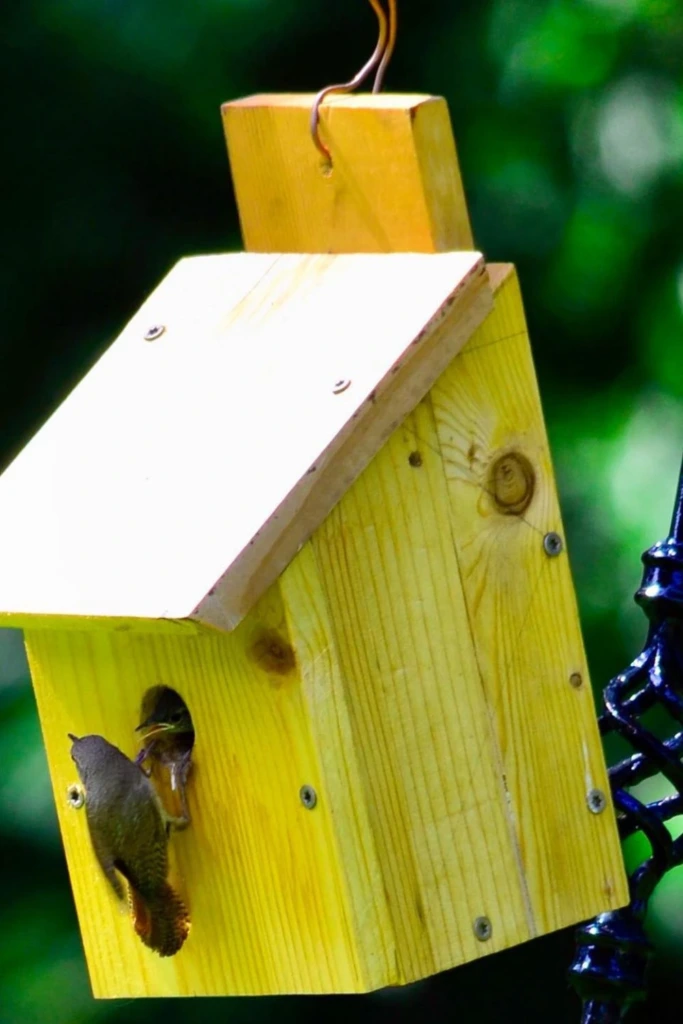
A bright yellow finish can make a traditional wooden birdhouse stand out against green foliage. The simple rectangular body, compact entrance, and straightforward construction create an appealing project for anyone who prefers clean lines over elaborate decorations.
Build the box from untreated timber and use weather-resistant fasteners. The entrance must match the intended bird species, while the roof should extend beyond the walls to reduce rain exposure.
A perch is generally unnecessary for cavity-nesting birds and may give predators an additional foothold, so a clean entrance without one is a sensible choice.
If you want to add color, apply a suitable exterior coating only after assembling the box. Keep the interior natural, provide ventilation and drainage, and install the finished structure in a sheltered, stable location.
9. Green Roof Planter
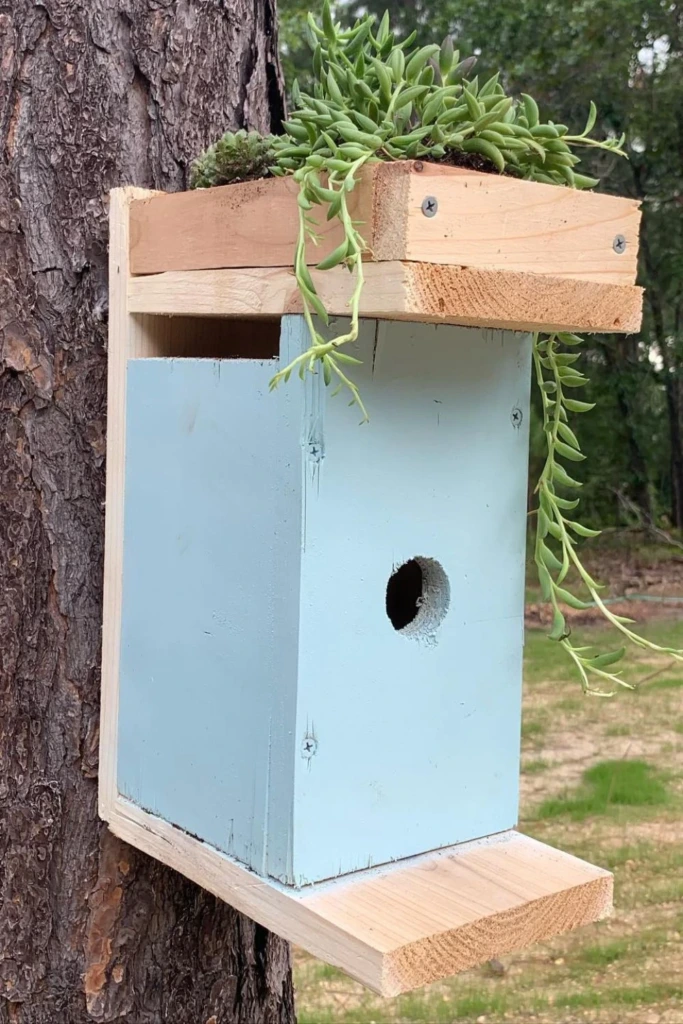
Combining a birdhouse with a small rooftop planter creates an attractive feature for gardens where space is limited. A wooden shelter topped with a shallow planting tray can bring together greenery, handmade design, and opportunities for observing wildlife.
Use a properly constructed nest box as the foundation, then add a separate waterproof planter above it. Keep excess water from draining into the nesting chamber, and ensure the added weight does not make the structure unstable.
Small succulents may work well in a lightweight planter, provided the roof receives appropriate light and the plants suit the local climate.
Avoid letting roots, branches, or irrigation water interfere with the entrance and ventilation. The planter should be removable for maintenance, and the nest box itself should remain accessible for seasonal cleaning.
10. Rustic Wall Mount
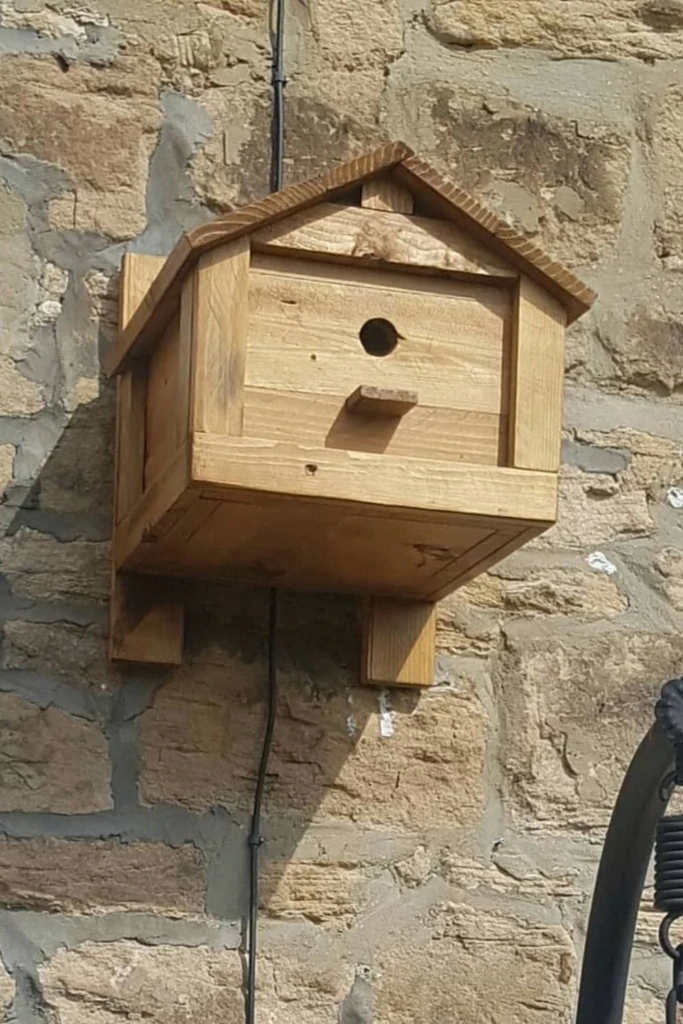
A wall-mounted birdhouse is a useful choice when trees are scarce or a garden has limited room for hanging structures. It can be installed on a suitable shed, garden wall, or other stable support.
A traditional wooden box with a pitched roof and natural finish fits comfortably into rustic outdoor settings. Choose untreated timber, assemble the panels securely, and include the drainage and ventilation features required for a nesting box.
Before mounting it, check that the surface is strong enough to support the structure and that the installation will not damage electrical wiring or other hidden services.
Position the box away from busy doors, frequent disturbances, and easy predator access. A secure mounting method matters more than decorative hardware, particularly in exposed locations that experience strong winds.
11. Cork & Cap Cottage
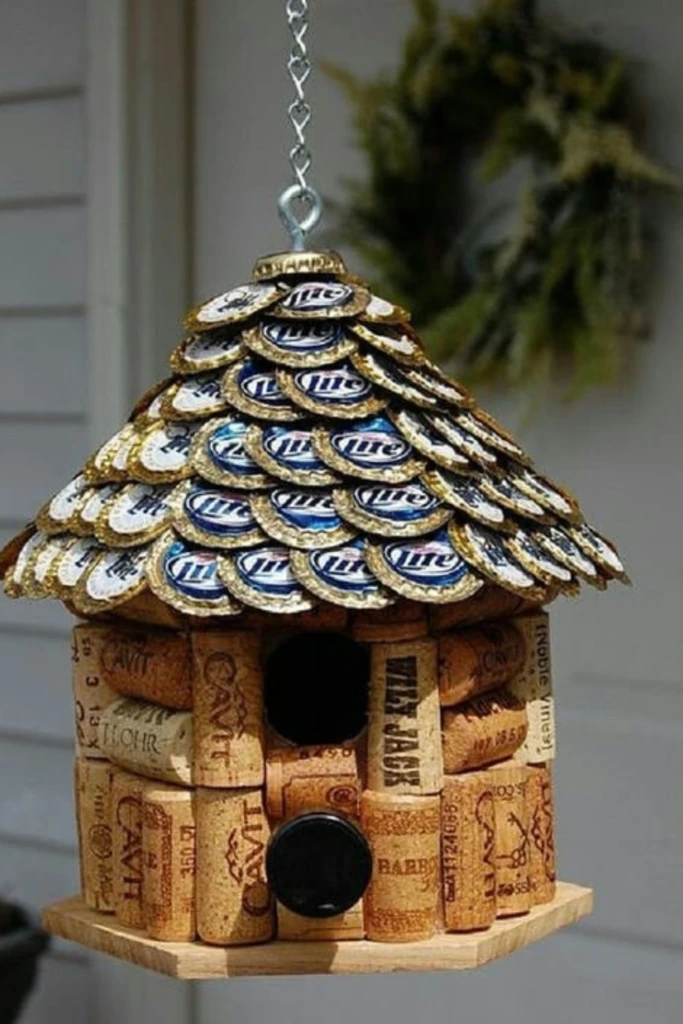
Wine corks and bottle caps can give a craft birdhouse an unusual appearance by combining earthy textures with colorful details. The corks provide a distinctive outer surface, while carefully arranged caps can create a decorative roof.
For a project intended to house real birds, begin with a properly designed wooden box. Treat the corks and caps as exterior decoration rather than essential structural components, and attach them firmly without leaving gaps that collect water.
Avoid sharp metal edges, loose pieces, and small decorations that might fall off. Bottle caps can also heat up in direct sunlight, so a full decorative covering may be less suitable for a functional nesting box.
This idea is particularly appealing as a garden art project or sheltered porch decoration. If the finished piece will be used for nesting, make durability, safe materials, and easy maintenance the priorities.
12. Acorn-Inspired Shelter
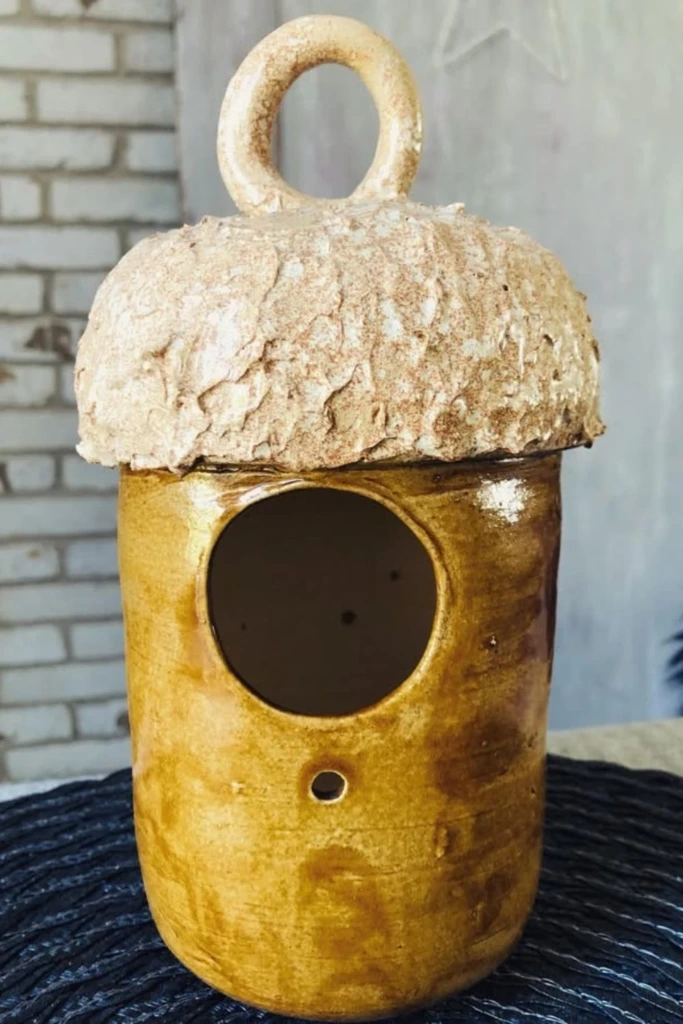
An acorn-shaped birdhouse brings a woodland theme to outdoor decorating. Its rounded body and textured cap can imitate the appearance of a large seed, creating a playful design that looks at home among trees and natural planting.
You can build the shape from a suitable wooden shell or use a purpose-made nesting container with a curved exterior. A warm brown finish and ridged roof detail help achieve the acorn effect.
The entrance must be correctly sized for the intended species, and the interior needs adequate room for nesting. If you choose a ceramic version, confirm that it has suitable drainage, ventilation, and mounting arrangements before considering it a functional birdhouse.
A heavy decorative object should be supported securely, especially when hung from a branch. Place it where it will remain stable during bad weather and where maintenance is practical.
13. Chalet-Style Nest
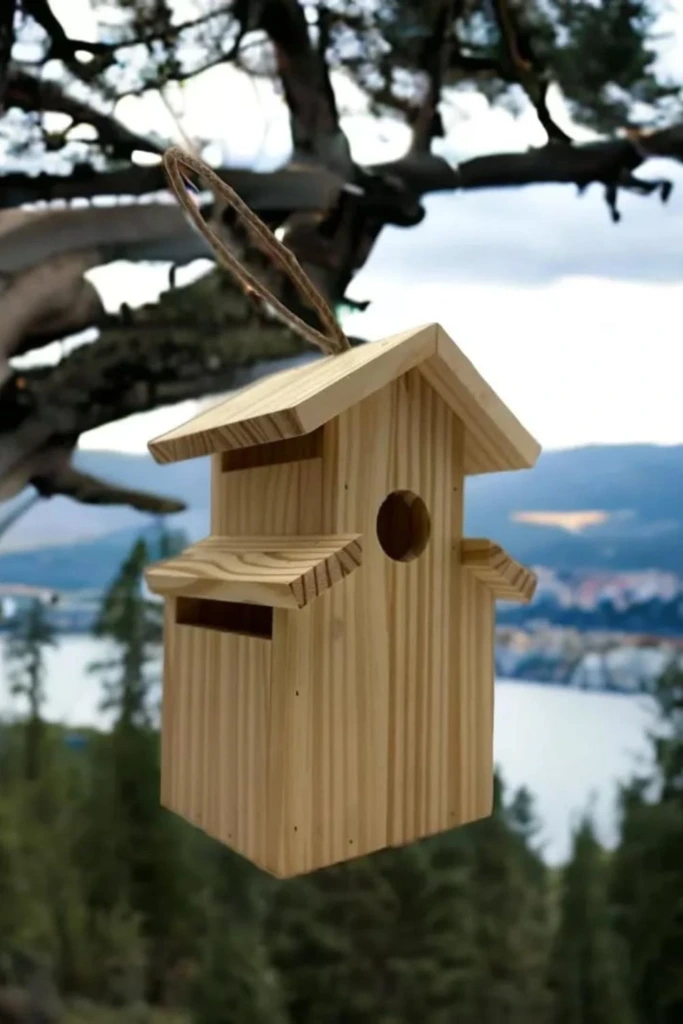
A chalet-inspired birdhouse can bring the appearance of a miniature mountain cabin to your backyard. Its layered rooflines, broad eaves, and clean wooden surfaces create a more architectural alternative to a simple nesting box.
Use a sturdy rectangular body and add a pitched roof with an overhang that helps direct rain away from the entrance. Pale timber can create a bright, contemporary look, while natural wood preserves a rustic character.
The construction should still follow the requirements of the birds you want to attract. A correctly sized entrance, adequate internal dimensions, and suitable ventilation are more important than elaborate roof details.
This style works particularly well in wooded gardens and natural landscapes. Keep decorative extensions lightweight, secure all joints, and leave enough access for cleaning and inspection when the nesting season has ended.
14. Ceramic Charm
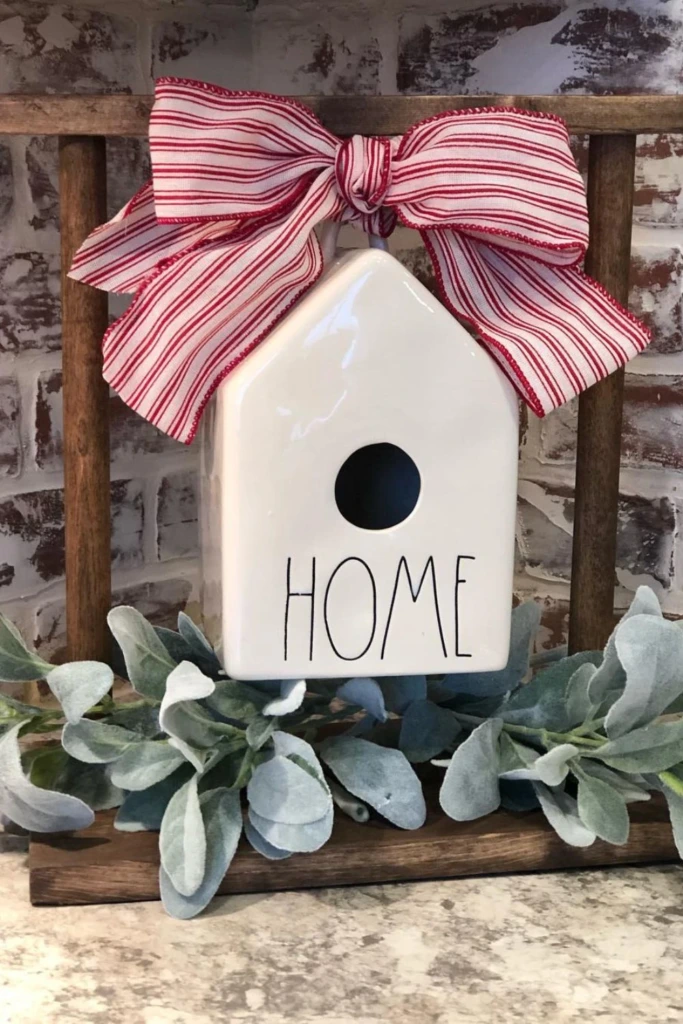
A ceramic birdhouse decorated with a simple word, colorful ribbon, or contrasting trim can make a charming display piece. Its smooth surface and polished finish work well with farmhouse-inspired decorations, indoor arrangements, and covered patios.
A white ceramic body paired with red accents offers a classic decorative combination, while a wooden stand can make the piece easier to display on a shelf or table.
The main consideration is distinguishing decoration from a functional nesting shelter. Solid ceramic ornaments may lack the ventilation, drainage, dimensions, and cleaning access that nesting birds need.
If you want to attract nesting birds, choose a ceramic design specifically made for that purpose and suitable for your climate. Otherwise, enjoy the piece as garden art without expecting birds to use it as a nest.
15. Curved Wood Front
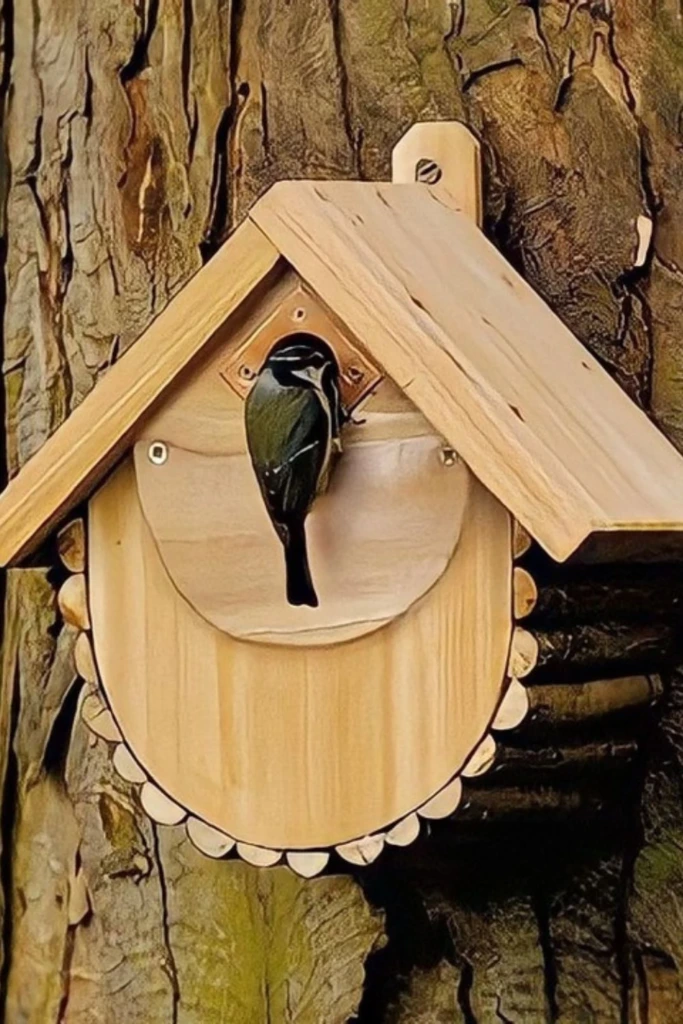
A birdhouse with a curved front panel introduces a handcrafted detail without abandoning the familiar shape of a traditional nest box. The rounded surface can soften the appearance of the structure, while a small shingled roof adds texture.
You can achieve the effect by cutting a curved panel from suitable timber or by attaching a shaped exterior piece to a standard box. Measure carefully to maintain a snug fit and avoid openings where rainwater could enter.
Keep the entrance clear and ensure the internal space remains appropriate for the intended bird species. Sand rough edges and use weather-resistant construction methods.
The finished birdhouse can be mounted on a stable post or suitable tree support. Its natural appearance makes it a good fit for gardens that emphasize wood, stone, and other understated outdoor materials.
16. Stick Roof Feeder
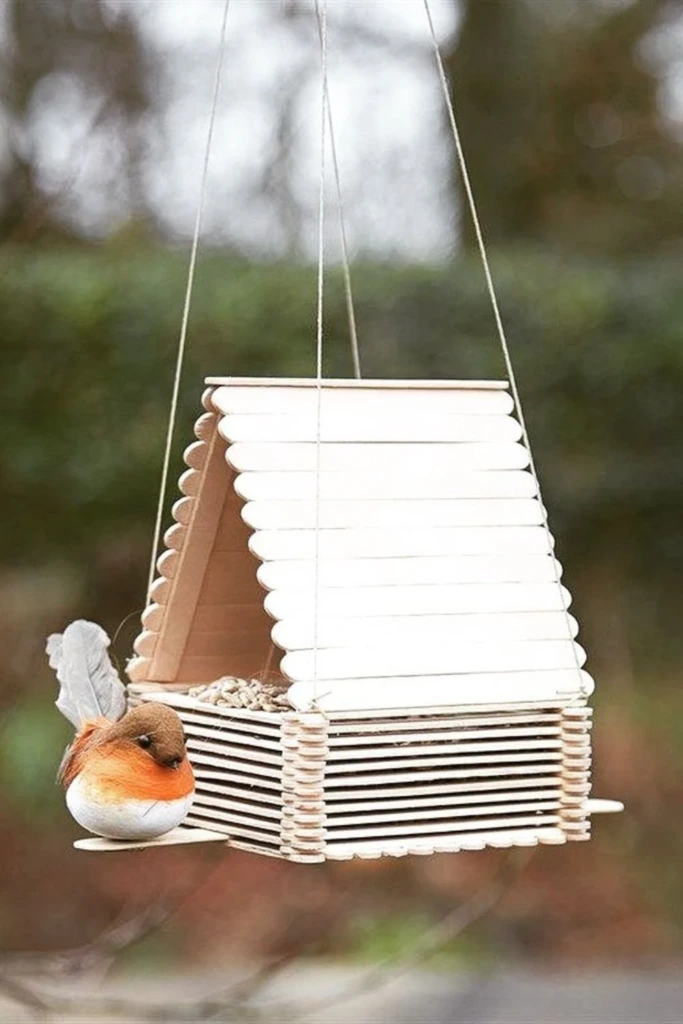
Craft sticks can be assembled into a lightweight, geometric feeding station with an open, A-frame roof. This is a simple activity for beginners and supervised children who want to experiment with shapes and basic construction.
Arrange the sticks around a stable frame, leaving enough open space for birds to reach the food. Strong, weather-appropriate adhesive or suitable fasteners will help the structure withstand outdoor conditions.
Because craft sticks are thin and can deteriorate when wet, this design is best treated as a feeder for sheltered locations rather than a permanent nesting box. Use a separate, properly built nest box if your goal is to support breeding birds.
Keep the feeding surface easy to clean and replace the structure if it becomes moldy, unstable, or damaged by moisture.
17. Whimsical Bottle Homes
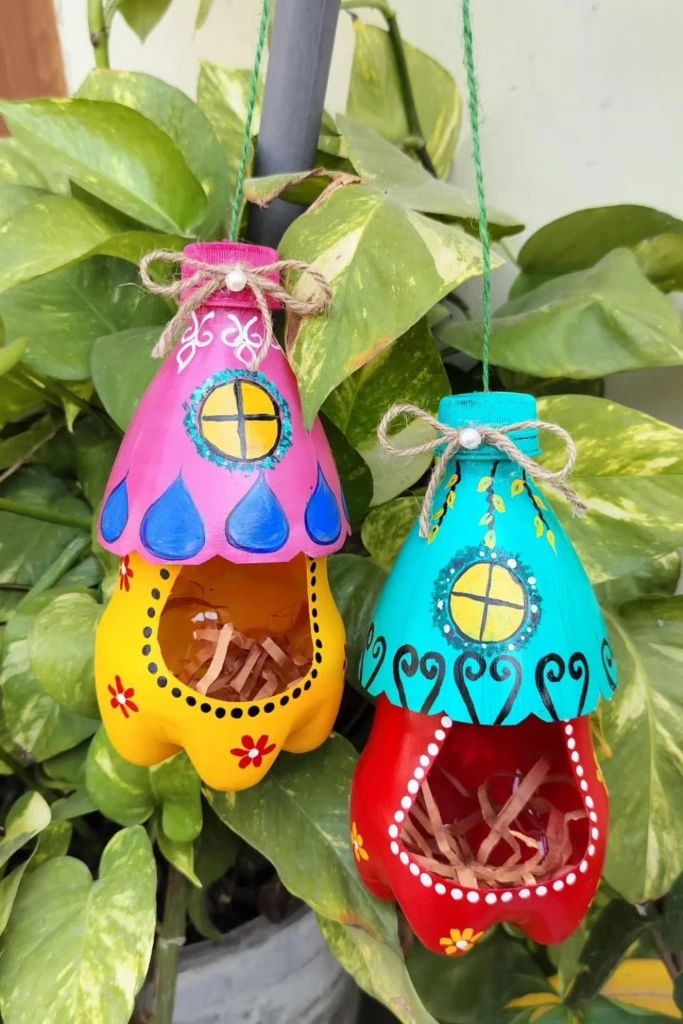
A collection of colorful bottle-shaped decorations can turn a balcony or small garden into a cheerful craft display. Different paint colors, hand-drawn windows, and simple floral motifs help each piece feel unique.
Before decorating, clean the containers thoroughly and check that their edges are smooth. Use suitable exterior paints, allow them to cure fully, and secure the finished decorations against wind.
You can incorporate a bird-feeding feature into a container only when it can be cleaned easily and offers birds safe access to food. Loose fibers, string, and shredded materials should not be placed inside in a way that could cause entanglement or expose birds to unsuitable nesting substances.
For genuine nesting, use a species-appropriate nest box rather than assuming that any decorated bottle will offer adequate shelter. The colorful bottle concept is best enjoyed as a creative upcycling project unless it is specifically engineered for wildlife.
18. Log Cabin Porch
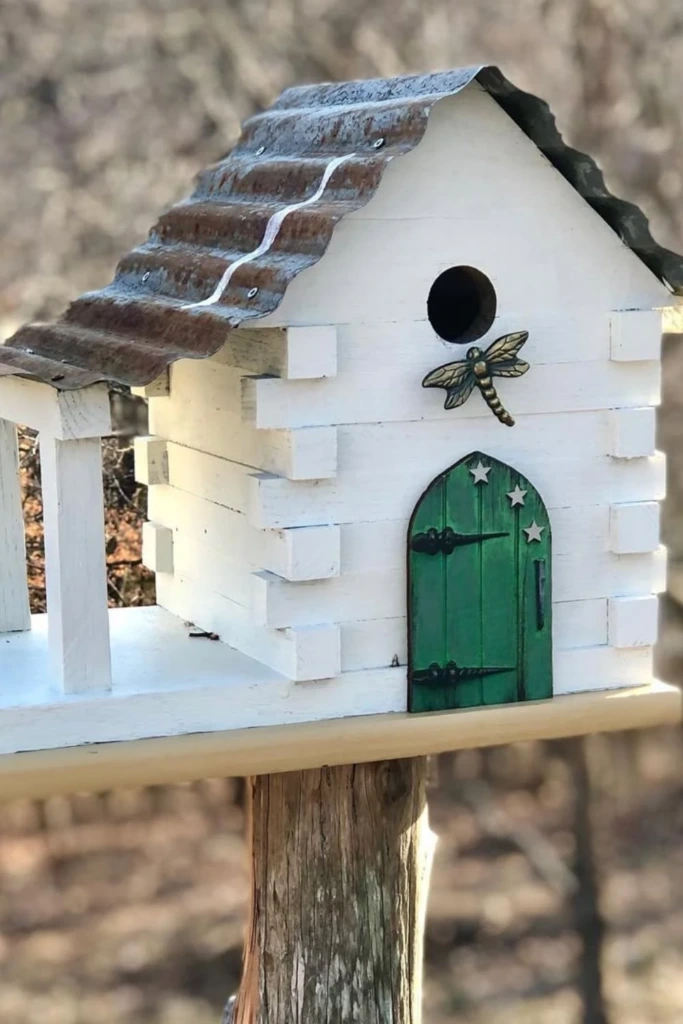
A miniature log cabin birdhouse combines the charm of a country cottage with decorative details such as a small porch, contrasting door, and textured roof.
Start with a stable wooden nest box, then add thin exterior strips to imitate log walls. A lightweight roof covering can create the appearance of corrugated metal without making the structure unnecessarily heavy.
Keep the entrance unobstructed, and make sure the porch does not provide predators with easy access to the opening. Avoid sharp metal edges and any decorative pieces that could loosen in the wind.
A sturdy post can display this design effectively in a rural or cottage-style garden. Choose a location that offers suitable shelter while keeping the box away from constant human activity and other sources of disturbance.
19. Painted Window Nest
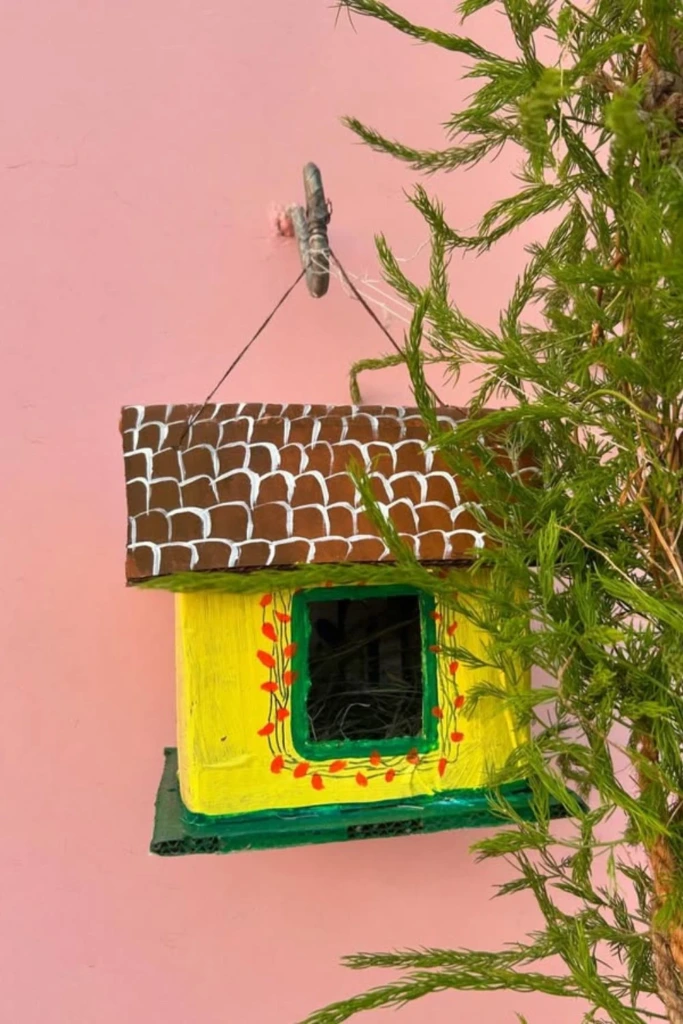
A painted birdhouse with colorful walls, contrasting window details, and a patterned roof can brighten a small outdoor space. The design allows plenty of room for creativity while retaining the familiar shape of a traditional nest box.
Use a simple wooden body as the foundation, then add painted window frames, vines, flowers, or geometric patterns to the exterior. These details should remain decorative rather than forming extra openings that compromise the box's structure.
Choose non-toxic exterior products and let every coating cure completely before installation. Keep the actual entrance correctly sized and free from paint buildup.
This style works well on a balcony or patio when mounted securely. A natural interior, appropriate drainage, and good ventilation will help make the box more suitable for birds than a purely decorative model.
20. Wine Cork Haven
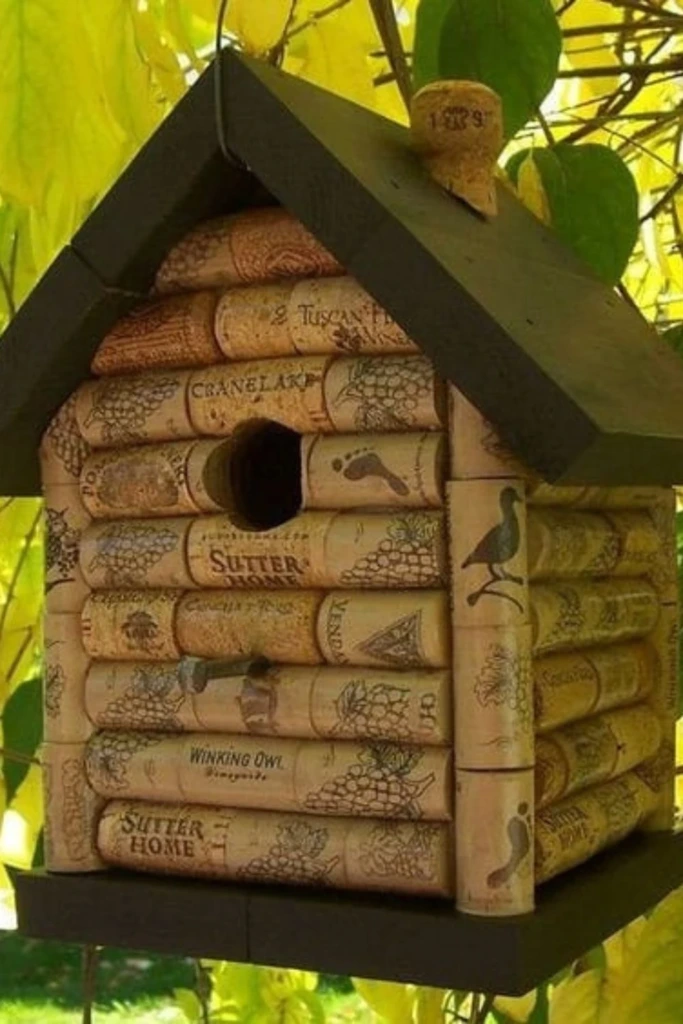
A birdhouse covered with wine corks can create the appearance of a tiny log cabin. The repeated cork shapes add texture, while a darker roof and base provide contrast.
For a durable result, assemble a conventional wooden nesting box first. Attach clean corks securely to the outside, ensuring that the entrance, ventilation openings, and drainage holes remain clear.
Corks should not be used to fill the interior or create loose fragments that could interfere with nesting. Check the covering periodically for moisture damage, mold, or pieces that have begun to detach.
This project is a useful way to reuse leftover craft materials and introduce a rustic accent to a garden. For a birdhouse that will remain outdoors year-round, weather resistance and safe construction should guide the design choices.
21. Fairy Tale Tower
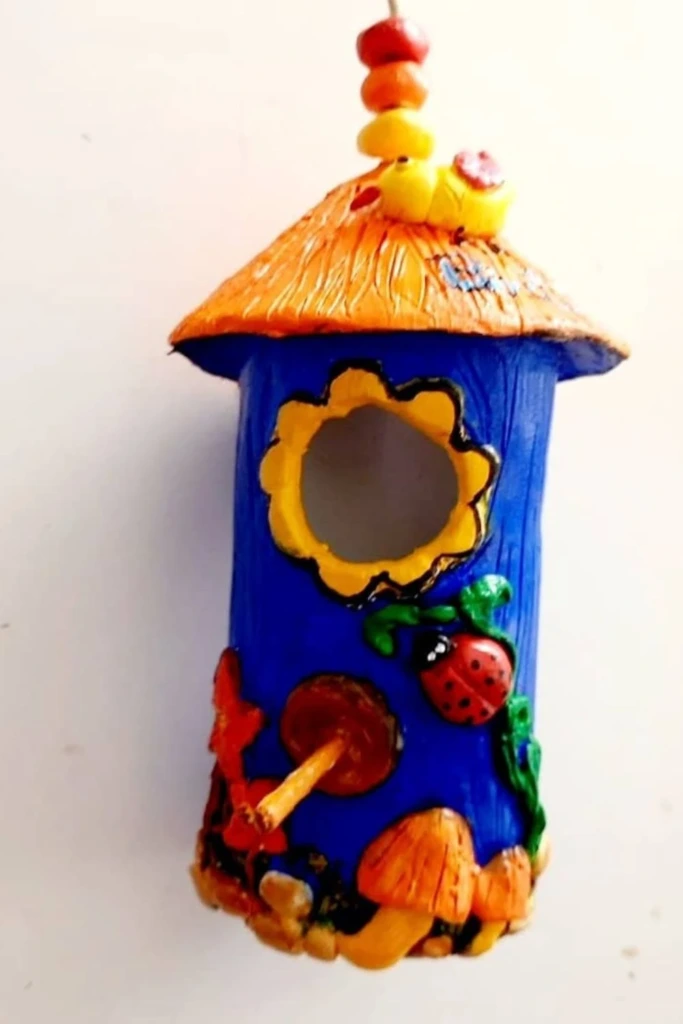
A tall, storybook-inspired birdhouse can bring a little fantasy to a garden. A blue tower, colorful roof, flower-shaped decorative accents, and tiny mushroom details can make the structure look like a miniature woodland home.
Build the main body from sturdy material and use lightweight exterior decorations to achieve the playful appearance. Secure every ornament carefully, and avoid embellishments that create sharp edges or block the entrance.
A tall design needs a stable mounting arrangement, particularly when exposed to wind. Make sure the structure does not become top-heavy and that it remains accessible for cleaning.
If the tower is intended for real nesting birds, its entrance and interior dimensions must suit a particular species. Otherwise, it can serve as a decorative hanging feature that adds a whimsical touch to flower beds and outdoor seating areas.
22. Decoupage Delight
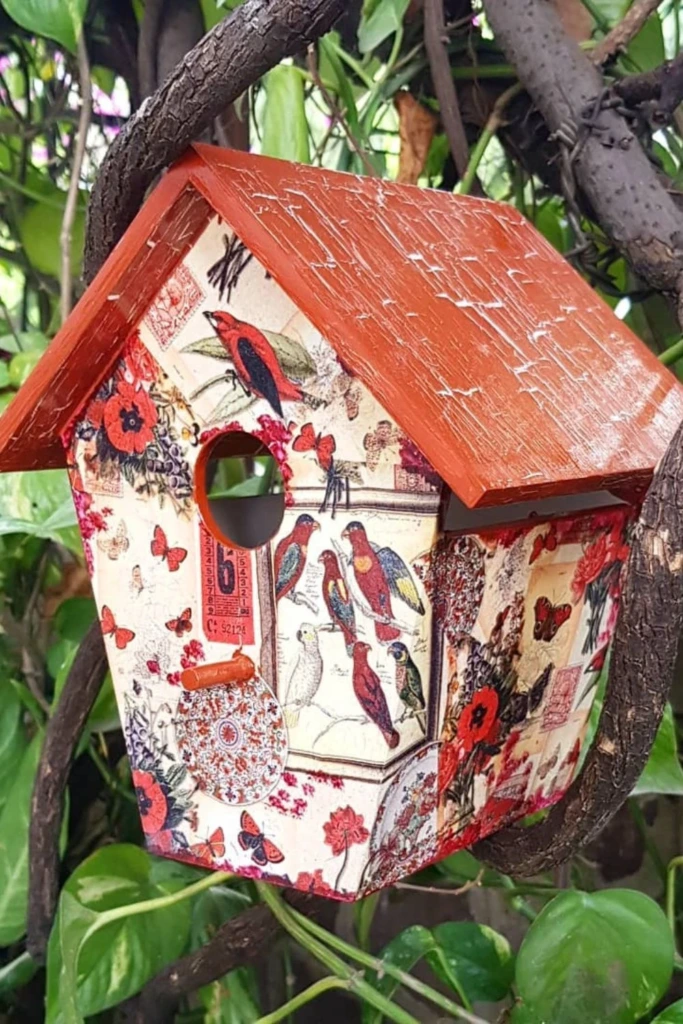
Decoupage offers an easy way to personalize a plain birdhouse with patterned paper, botanical illustrations, or bird-themed artwork. Carefully arranged designs can give the exterior a layered, vintage appearance without requiring advanced woodworking skills.
Prepare a sound wooden box, then decorate its outside with paper and an appropriate protective finish. Keep the entrance, ventilation, and drainage holes clear throughout the process.
Materials used on an outdoor birdhouse must withstand moisture and sunlight without peeling or releasing harmful substances. Allow all adhesives and coatings to cure completely before placing the structure outside.
A distressed-looking roof or floral border can create a cottage-style effect. For a functional nesting box, keep the interior free of paper, glue, and decorative coatings, and inspect the exterior regularly for damage.
23. Bear Face House
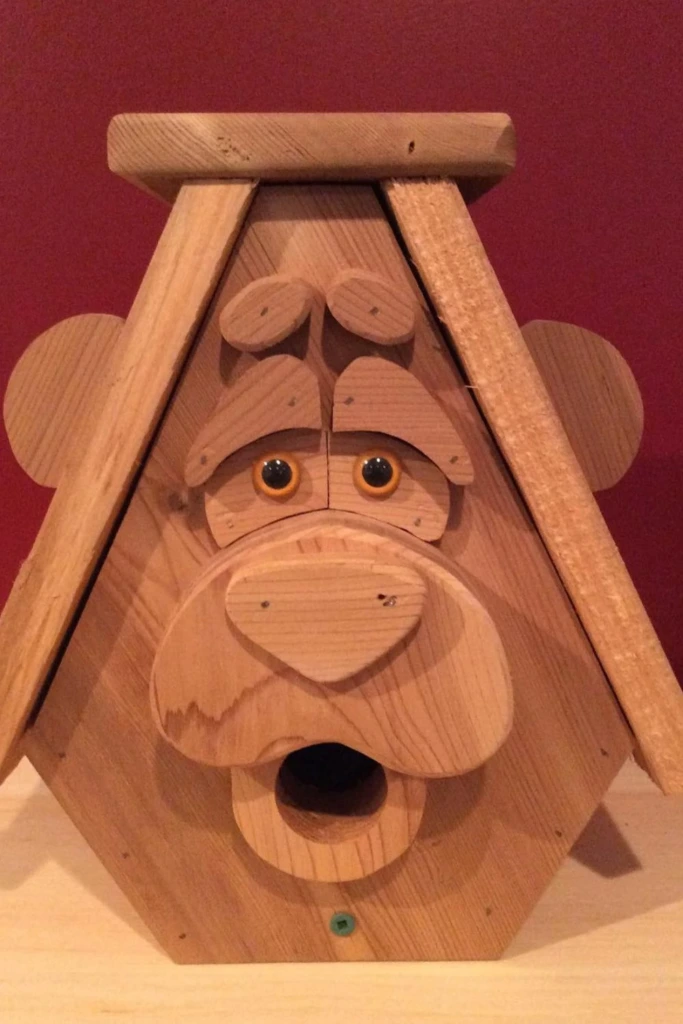
A bear-shaped birdhouse is an imaginative project for anyone who enjoys sculptural woodworking. Rounded ears, a projecting snout, and carefully placed facial details can turn a basic wooden box into a playful animal-inspired design.
Build a secure nest box first, then attach the decorative facial elements to the exterior. The actual entrance should be designed for the intended bird species rather than relying on an oversized mouth opening that could expose the nest.
Keep the added pieces firmly attached and avoid small parts that may loosen or sharp edges that could injure birds. A simple natural finish can preserve the wood's appearance, while carefully chosen exterior colors add personality.
This design can be a fun family woodworking project with adult supervision. Check the finished structure for stability, appropriate dimensions, and easy access for maintenance before installation.
24. Fiber Sphere Nest
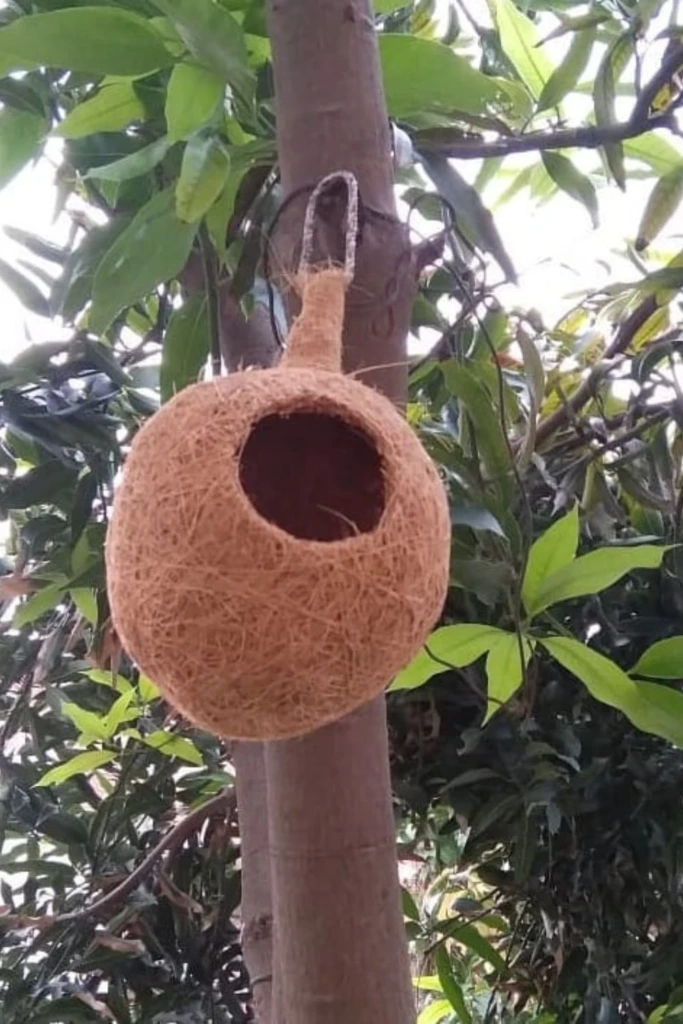
A rounded shelter made from plant fibers offers an organic appearance that blends into leafy surroundings. Its woven texture can complement gardens that favor natural materials and understated decoration.
For an ornamental project, use clean, dry fibers to form a stable sphere and secure the structure so it does not unravel in the wind. Choose materials carefully, avoiding synthetic strands, long threads, and anything that could become tangled around birds' feet.
A woven sphere should not automatically be considered a suitable nest box. Many cavity-nesting species need a protected interior with specific dimensions and an entrance of the correct size.
If your goal is to provide nesting habitat, use a purpose-built box for the local species. A natural-fiber sphere can still serve as a decorative accent or, where appropriate, a carefully designed shelter for species that use that type of structure.
25. Palm Pod Shelter
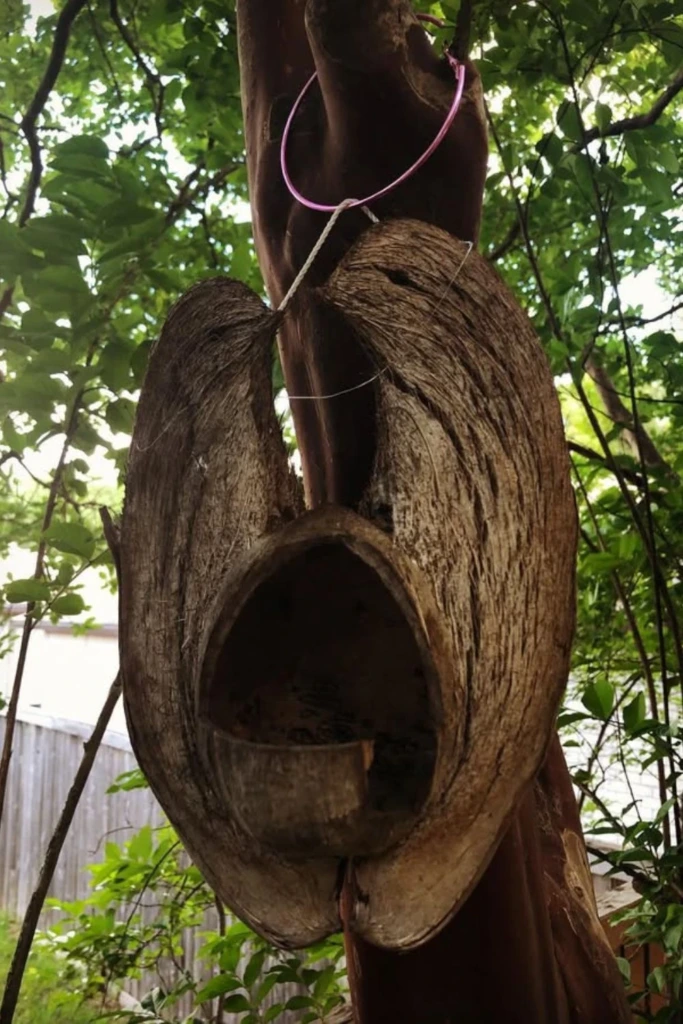
Dried palm fronds can inspire a tropical-style birdhouse with overlapping layers and a natural, textured finish. The curved leaves create an organic silhouette that can blend into lush gardens and leafy outdoor spaces.
For a decorative shelter, arrange clean, dry fronds around a lightweight, stable frame and fasten them securely. Check for sharp edges, loose fibers, and weak joints before hanging the finished piece.
Natural plant materials may deteriorate when exposed to persistent rain, humidity, and direct sunlight. Regular inspection is therefore important, especially in tropical climates where moisture can encourage mold and weaken the structure.
For actual nesting, the shelter must provide the appropriate level of protection, ventilation, drainage, and internal space for the intended species. A purpose-built nest box may be more dependable in demanding weather conditions.
Choose a secure hanging point and keep the structure away from places where strong winds could dislodge it. With thoughtful construction and suitable maintenance, this nature-inspired design can add a distinctive handmade touch to a garden.