21 DIY Cat Bed Ideas for 2026
Cats can be surprisingly particular about where they sleep. You might buy an expensive pet bed only to find your feline curled up in a cardboard box, a laundry basket, or a pile of freshly washed clothes. Often, the most appealing resting places are the ones that offer warmth, comfort, and a familiar scent.
Making a cat bed at home gives you the freedom to choose materials, adjust the size, and create something that suits your pet's habits. You can repurpose household items, use leftover fabric, or build a simple sleeping nook that fits neatly into your home.
These 21 DIY cat bed ideas range from soft fabric nests to elevated perches and enclosed hideaways. Whether your cat prefers a sunny window or a quiet corner, there is a design worth trying.
How to Make a Comfortable DIY Cat Bed at Home?
Start by observing how your cat likes to sleep. Some cats curl into tight balls, while others stretch out or rest with their heads supported by a raised edge. Choosing a design that accommodates these habits is the first step toward creating a bed your pet will actually use.
Gather soft, washable materials such as fleece, cotton blankets, old towels, or a clean sweatshirt. If your cat enjoys curling against something, add padded sides using securely enclosed stuffing or a rolled blanket.
Size also matters. A bed should provide enough room for your cat to stretch and change positions without feeling exposed. For cats that enjoy hiding, a partially enclosed design can offer extra privacy.
Choose a location your cat already likes, such as a quiet bedroom, a sunny windowsill, or a familiar living room corner. Use stable materials, avoid loose threads and small detachable decorations, and make sure the finished bed can be cleaned easily.
What Can I Use Instead of a Cat Bed?
You do not necessarily need to purchase a dedicated pet bed to give your cat a comfortable place to rest. Several everyday household items can serve as practical alternatives with little or no modification.
A sturdy cardboard box makes an inexpensive sleeping nook when lined with a soft blanket. Its walls provide a sheltered feeling, and the enclosed space can help retain warmth. Replace the box if it becomes damp, damaged, or dirty.
An old sweater can become a familiar resting surface, especially if your cat already enjoys sleeping on your clothes. Woven baskets, shallow storage containers, and unused drawers can also work when they are stable, clean, and large enough for your pet.
Before repurposing any item, remove sharp edges, exposed staples, loose strings, and other hazards. Avoid containers that can tip over or trap your cat. The best alternative is one that combines comfort, safety, and a location your feline already enjoys.
1. Felted Cave
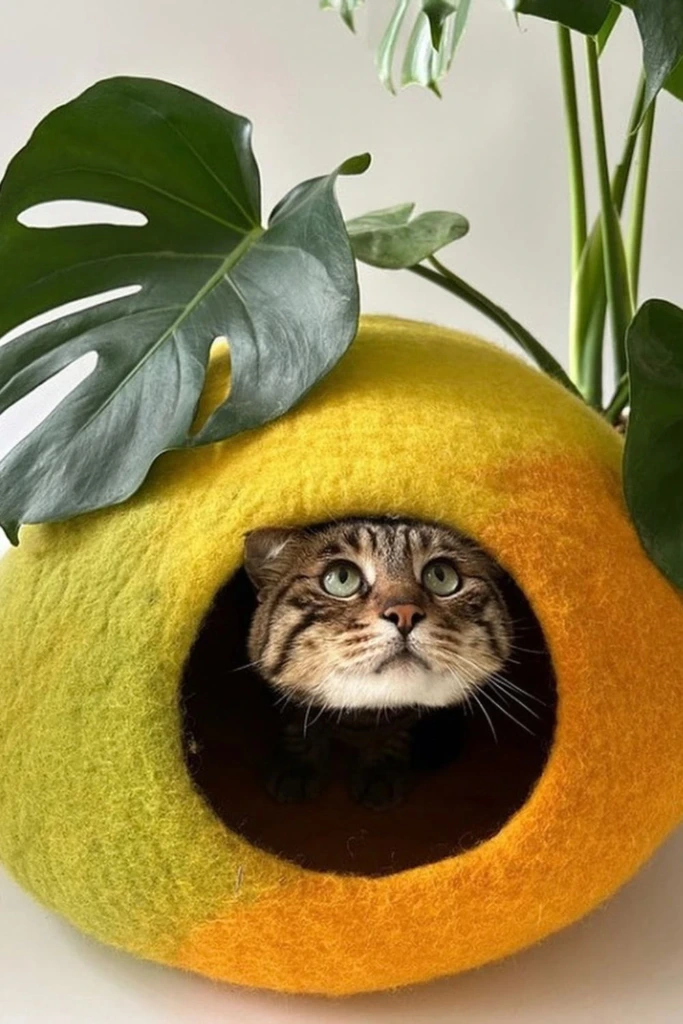
A felted cave creates a private sleeping space for cats that prefer enclosed surroundings. Its rounded shape helps shield the interior from distractions, while the thick material can provide a soft, insulated resting area.
To make one, shape dense wool felt over a rounded mold or construct a dome from sturdy felt sheets. Leave an entrance large enough for your cat to enter and turn around comfortably. The opening should provide privacy without making the interior difficult to access.
Place the finished cave against a wall or in a peaceful corner. Choose a design that holds its shape without collapsing, and inspect the material regularly for damage. A removable cushion inside makes cleaning much easier.
2. Basket Nook
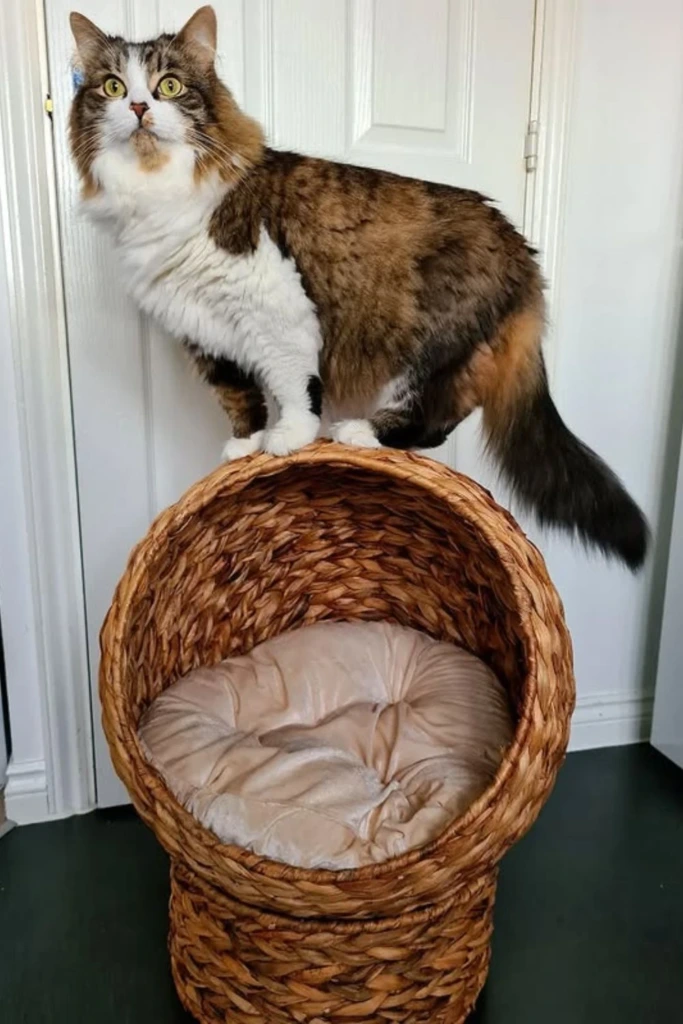
A basket nook combines a simple structure with a comfortable padded interior. It works particularly well for cats that enjoy resting in slightly enclosed spaces while remaining aware of their surroundings.
Choose a sturdy woven basket with smooth edges and enough room for your cat to settle comfortably. Add a washable cushion or folded blanket to soften the base. If you want a more sheltered design, position the basket securely on its side, provided the opening remains unobstructed and the structure cannot roll.
For a raised nook, use a stable platform that cannot wobble when your cat climbs in. This design suits living rooms, bedrooms, and other areas where your pet enjoys observing household activity.
3. Blanket Bolster
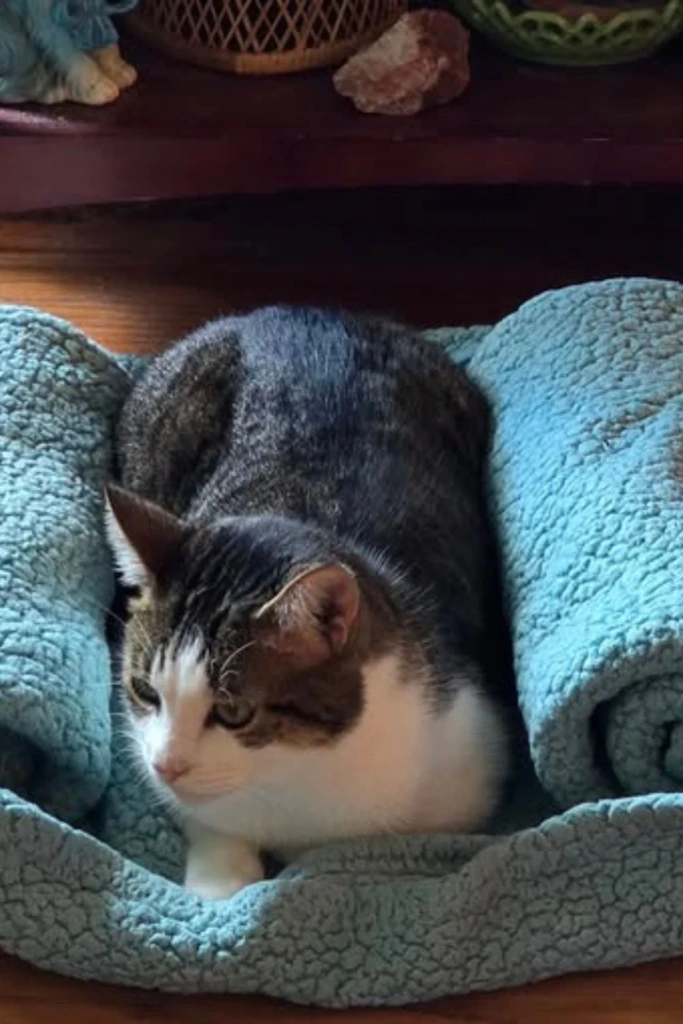
A blanket bolster is an easy solution for cats that like resting against soft edges. It creates a cushioned boundary around a flat sleeping surface without requiring sewing or specialized tools.
Fold a thick blanket into a rectangular pad, then roll another blanket or towel into a long cushion. Position the roll along one or more sides of the sleeping area, making sure it cannot unravel easily.
You can also secure the bolster inside a washable fabric cover to keep everything in place. This arrangement works well on hard floors, beside a sofa, or in a favorite corner.
Keep the padding low enough for older cats and kittens to climb over comfortably. Check the rolls regularly to ensure they remain firm and do not expose loose threads.
4. Knit Nest
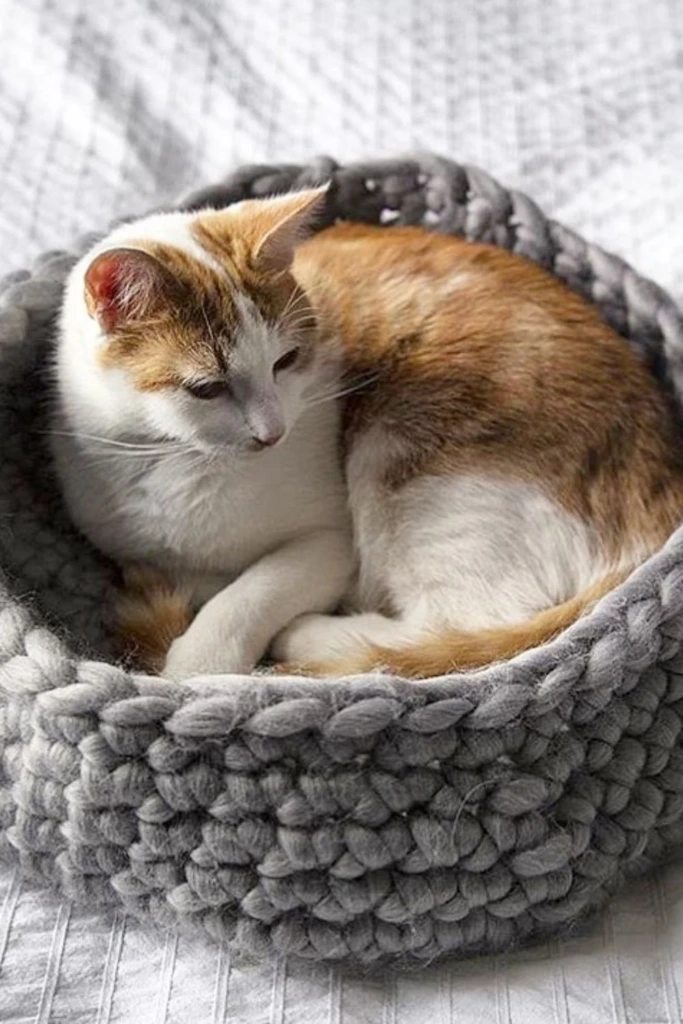
A knit nest offers a soft, textured place for cats that enjoy curling up in warm surroundings. Its rounded shape can create a gentle boundary around the sleeping area, making it an attractive addition to a bedroom or living room.
You can crochet a wide circular base with thick yarn and build up the sides, or use a large, tightly knitted piece shaped into a shallow bowl. Add a removable cushion if you want extra padding and easier cleaning.
Choose durable yarn that does not shed excessively or unravel into long strands. Loose loops can catch claws, so inspect the nest frequently and repair damaged sections before continued use.
Make the sides supportive rather than excessively tall, allowing your cat to enter and leave without difficulty. A soft, washable knit nest can be both practical and decorative.
5. Mini Bed
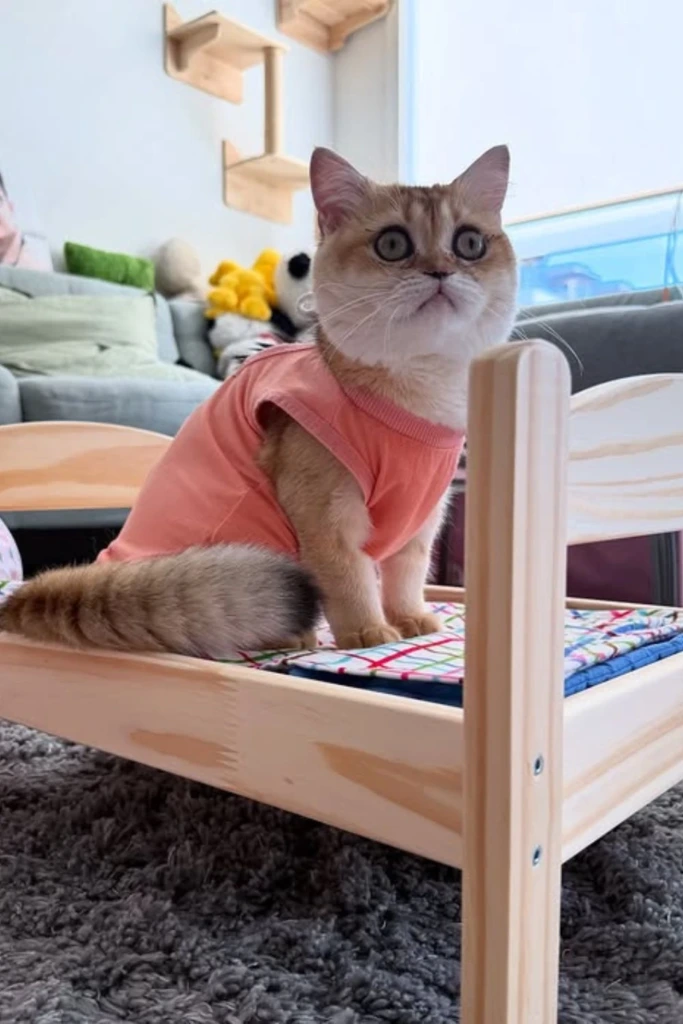
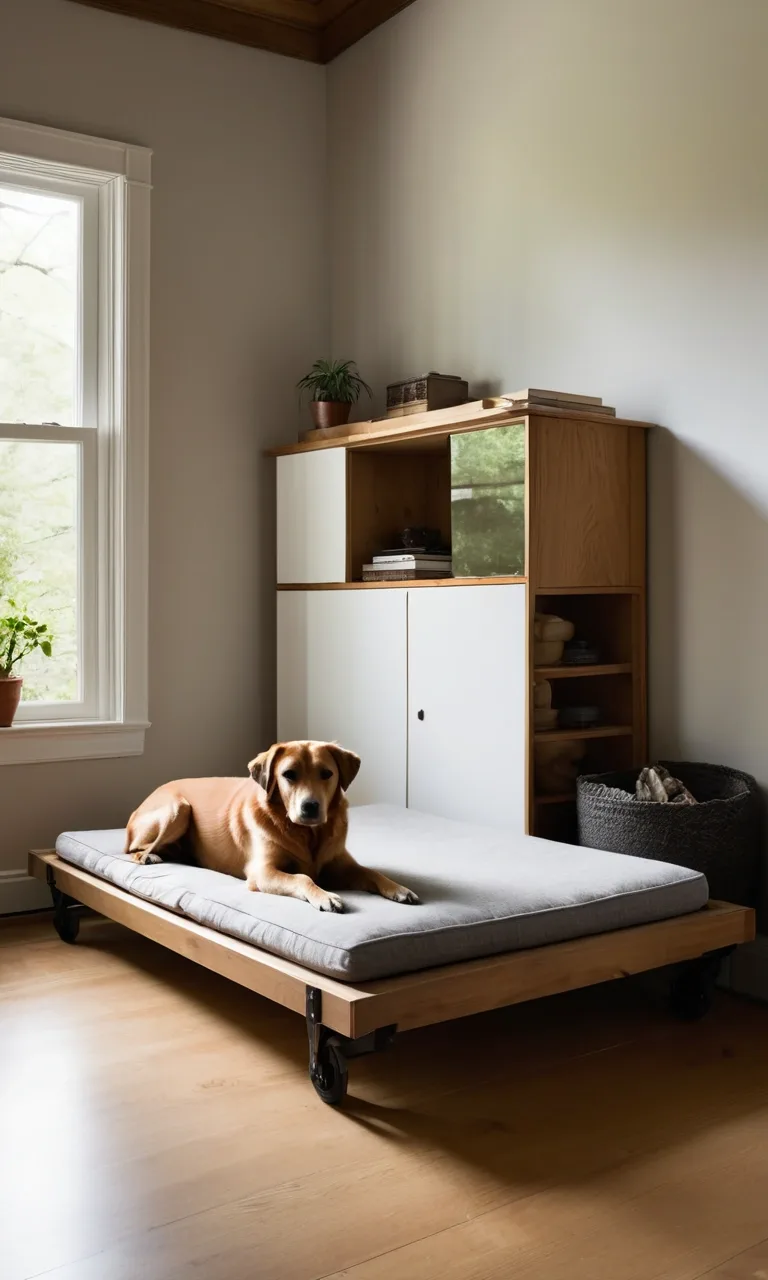
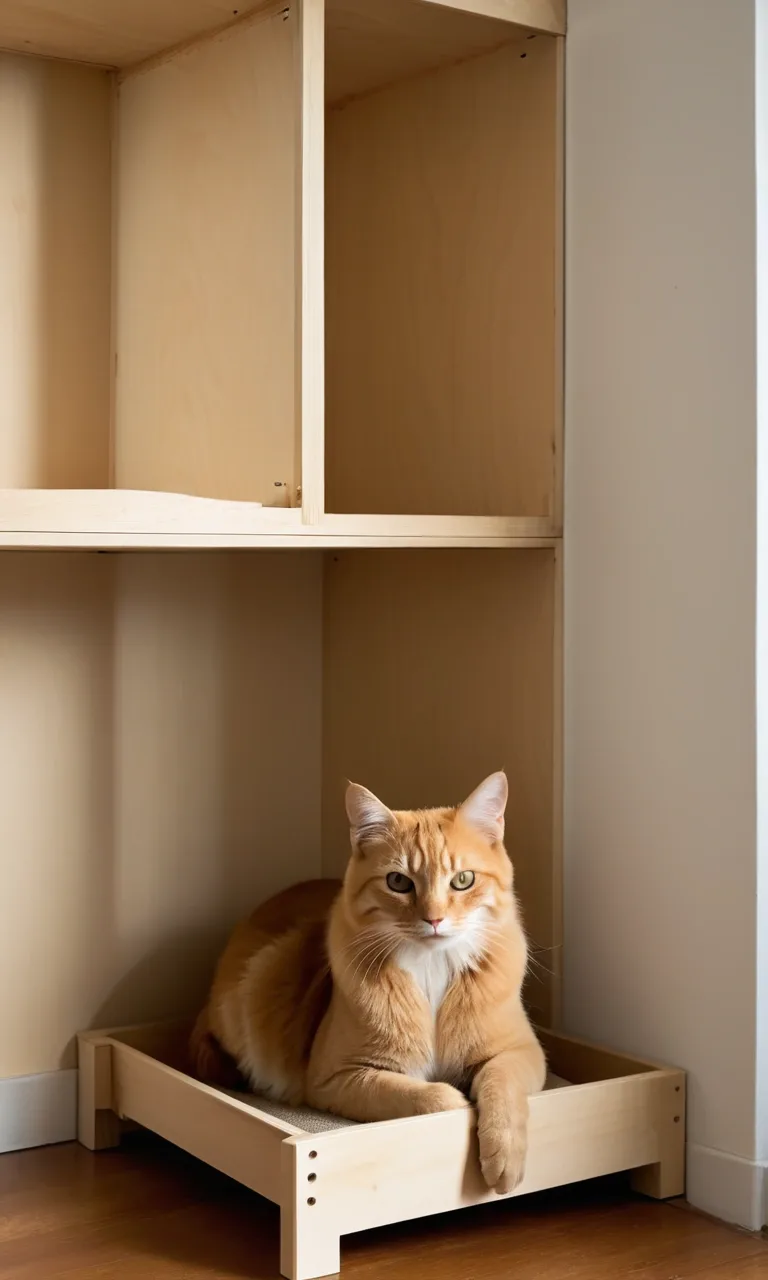
A miniature cat bed with a raised base gives your pet a dedicated sleeping area while keeping the design compact. It is especially useful when you want the bed to complement your existing furniture.
Build a low wooden frame with smooth, finished edges, then fit a padded mattress inside. Alternatively, repurpose a small, sturdy wooden tray or low platform, provided it has no exposed fasteners or sharp corners.
The mattress should fit securely without leaving large gaps around the edges. Use a washable cover and a non-slip base to prevent the bed from shifting during use.
Place it beside a sofa, in a bedroom, or near a spot where your cat likes to spend time with the family. Keep the height modest so the bed remains accessible to cats with limited mobility.
6. Cone Cave
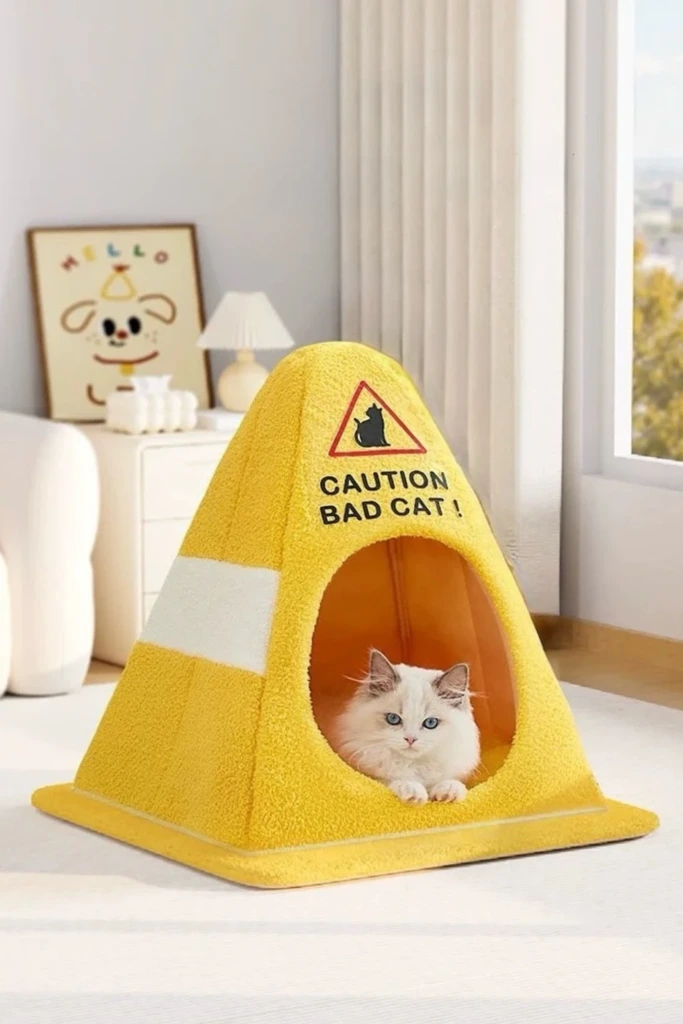
A cone-shaped cat bed creates a compact hideaway with a distinctive silhouette. Its taller walls offer a sheltered interior, making it suitable for cats that like to nap away from busy household activity.
To build one, form a cone or tapered dome using sturdy felt, foam panels, or durable fabric supported by a suitable frame. Line the interior with a soft cushion, and leave a clear entrance that allows your cat to move freely.
The structure should remain upright when your cat enters or shifts position. Avoid exposed wire, rigid points, or materials that could collapse inward.
Set the cave in a quiet area where your cat feels comfortable. A removable inner pad helps keep the sleeping space clean, while a washable outer cover can extend the life of the project.
7. Plush Dome
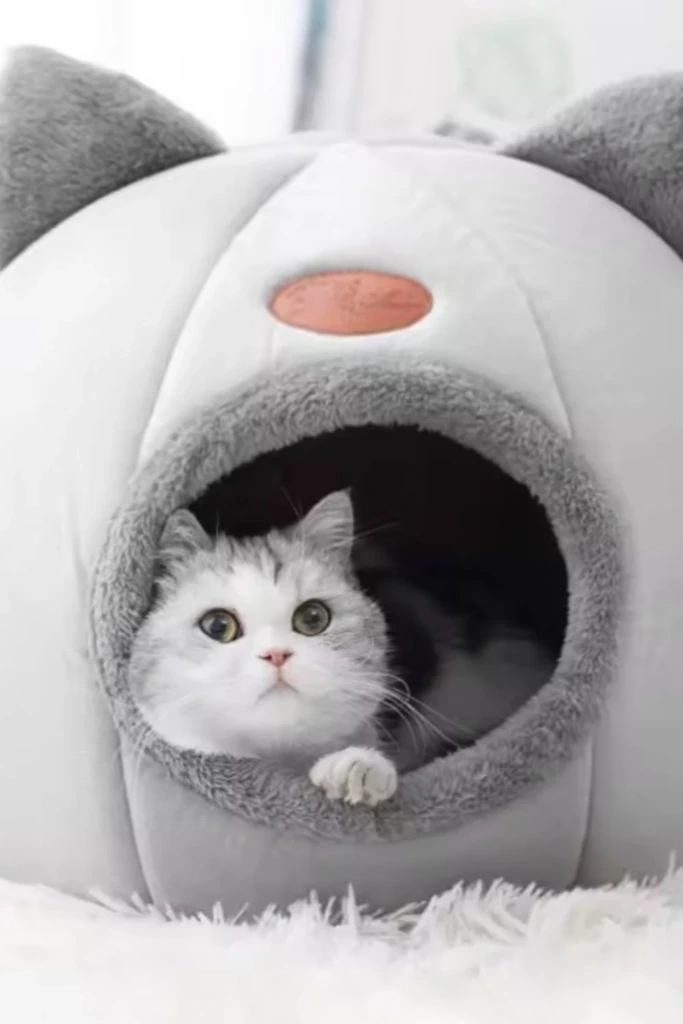
A plush dome offers a cushioned retreat with a rounded roof and padded sides. It can appeal to cats that enjoy curling up in sheltered places but still want an opening through which they can observe the room.
Create the frame from flexible foam panels or another pet-safe, shape-holding material. Cover it with fleece or soft upholstery fabric, then add securely enclosed padding around the walls. A separate mattress at the bottom provides additional comfort.
Keep the entrance wide enough for easy movement and ensure the roof cannot fall onto the sleeping area. Avoid adhesives or finishing products that leave strong odors or exposed residues.
This design works nicely in a bedroom or a quiet living room corner. A removable cover is particularly useful if your cat sheds heavily or spends a lot of time inside the dome.
8. Bubble Lounger
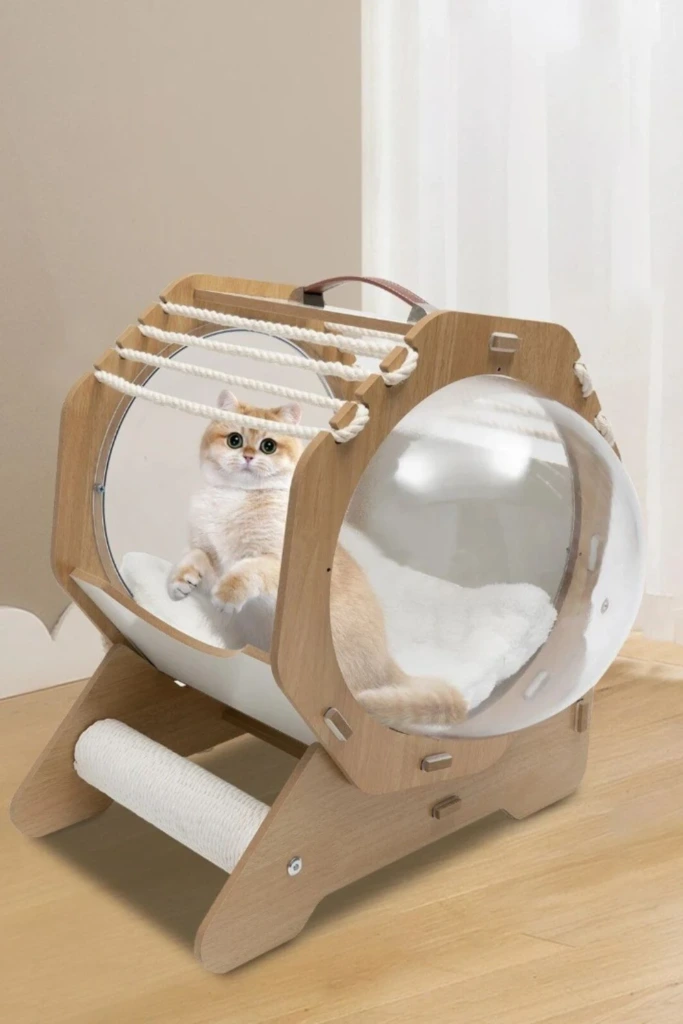
A bubble lounger is a modern bed concept for cats that enjoy watching their surroundings from a comfortable resting position. Its curved shape can create a semi-enclosed space without completely hiding the animal from view.
For a DIY version, start with a sturdy, rounded base and a supportive cushion. If you want a transparent effect, use a purpose-made, pet-safe transparent enclosure with smooth edges and adequate ventilation rather than improvised brittle plastic.
The structure must remain stable and allow your cat to enter and exit without squeezing through a narrow opening. Check that the interior does not become excessively warm in direct sunlight.
A bubble-inspired lounger looks particularly appealing near a bright window or in an open living space. Prioritize safe construction and easy cleaning over the appearance of the finished piece.
9. Cushion Perch
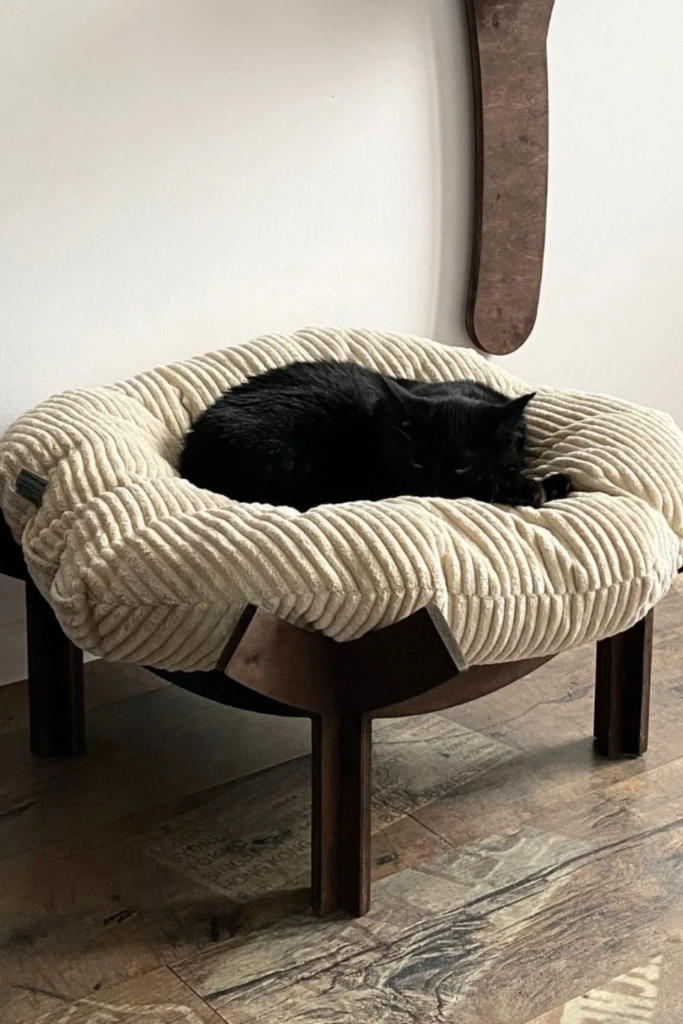
A cushion perch provides a comfortable resting spot with a slightly elevated view. Cats that like observing people, birds, or activity around the home may appreciate having a dedicated place to settle while staying nearby.
The simplest version uses a soft, rounded cushion on a low, stable stool or wooden platform. Choose a cushion with enough depth to support the cat's body and raised edges if your pet likes to rest its head against something.
Secure the cushion so it cannot slide when your cat jumps on or off. If you choose a taller platform, ensure it has a broad, stable base and a safe approach.
Position the perch where your cat can enjoy the surroundings without being disturbed. For senior cats or those with mobility difficulties, a low platform is generally more practical than a high resting place.
10. Soft Shelter
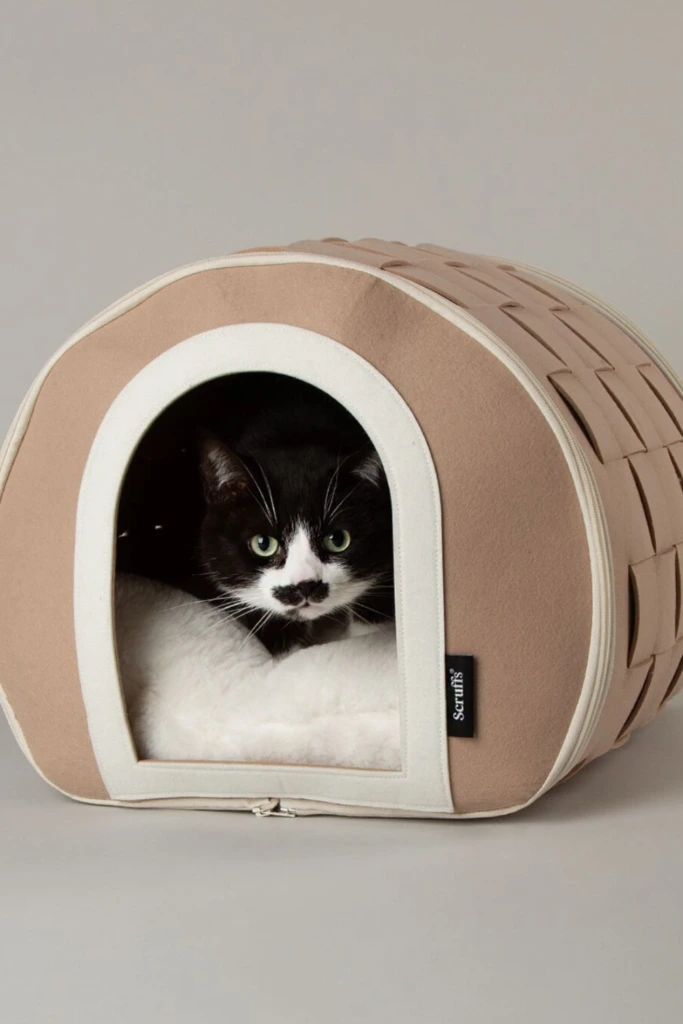
A soft shelter creates a quiet, covered sleeping area for cats that prefer privacy but still want an easy way out. Its padded walls can make the interior feel more secluded than an ordinary open cushion.
Use firm felt panels or a lightweight, stable frame to form a small enclosure. Cover the structure with durable fabric, add a cushioned floor, and leave an open entrance. A detachable cover or removable mattress will make routine cleaning simpler.
If you prefer a zippered design, position the zipper where it cannot rub against your cat or become accessible for chewing. Do not allow loose fabric, dangling fasteners, or collapsing walls inside the shelter.
This bed is a good choice for a busy household because it gives your cat a consistent place to retreat. Set it away from loud appliances and high-traffic walkways.
11. Hooded Donut
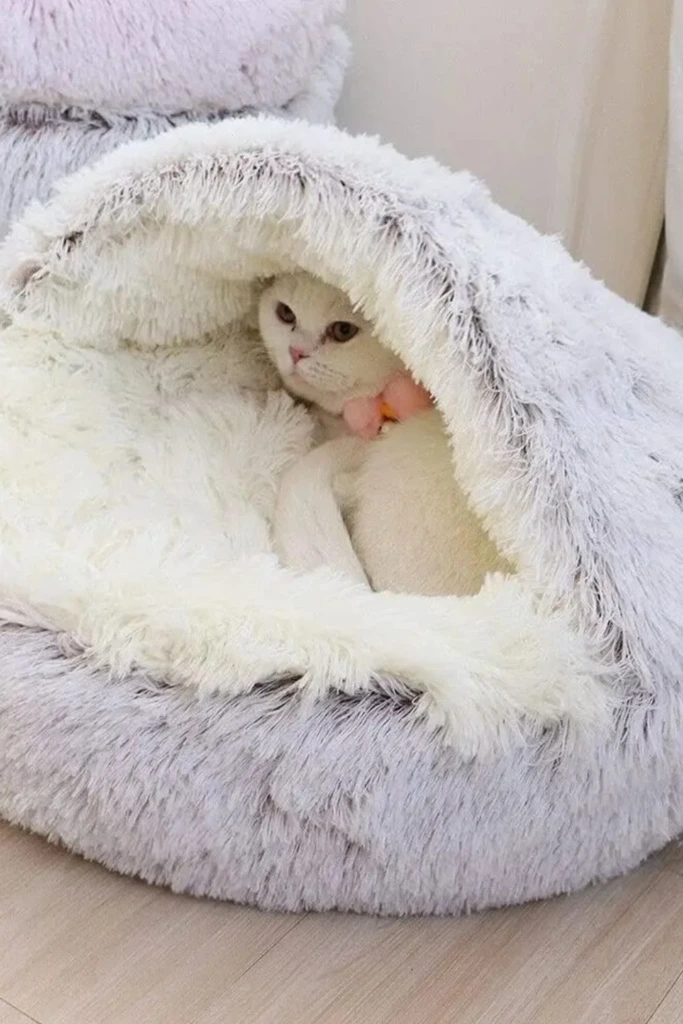
A hooded donut combines a circular cushion with a soft covering over part of the sleeping area. The raised rim supports a curled-up posture, while the hood creates a more sheltered atmosphere.
To make one, begin with a round padded base and add a thick fabric bolster around its perimeter. Attach a fleece or faux-fur canopy to one section, leaving enough room for your cat to enter, turn around, and leave comfortably.
Secure all seams and keep stuffing enclosed. The hood should remain open and breathable rather than forming a tight enclosure that traps heat.
This design can be especially appealing during cooler weather. Choose washable fabrics and place the bed in a dry area away from direct heat sources.
12. Window Wave
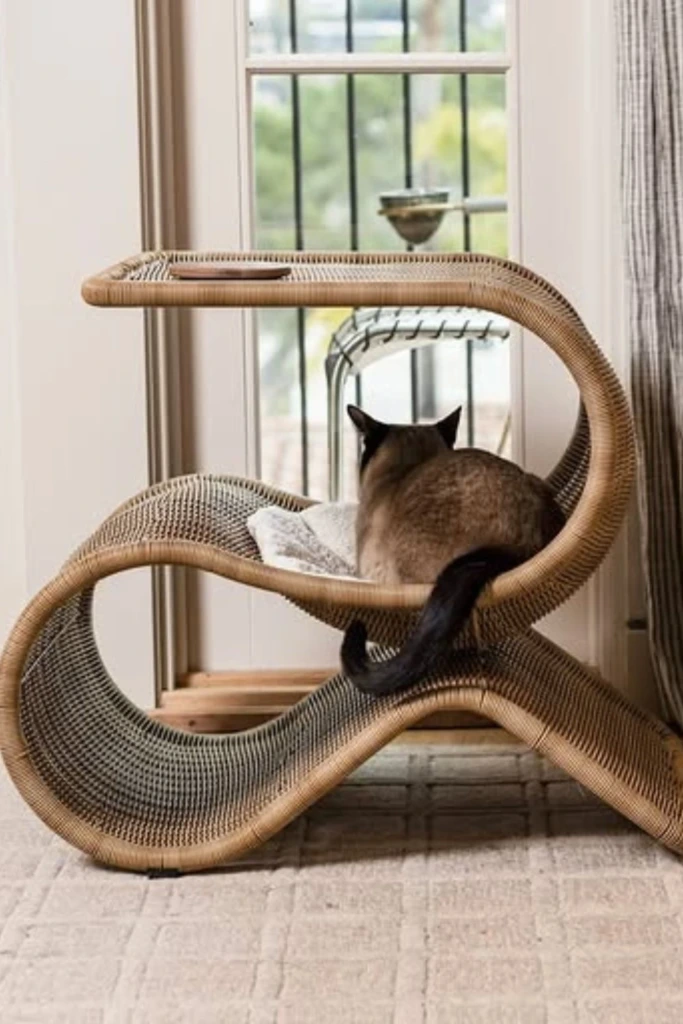
A window wave bed provides a long, gently curved surface where cats can stretch, curl up, or watch the outdoors. Its flowing shape makes it an interesting alternative to a conventional rectangular cushion.
Create the base from a shaped piece of sturdy foam or a supported wooden platform with smooth edges. Cover it with upholstery fabric and add a thin layer of padding for comfort. If the bed will sit on a windowsill or shelf, verify that the supporting surface is wide and strong enough for your cat.
Use non-slip material underneath to reduce movement, and keep the bed away from windows that may be opened unsafely. Never rely on a loose cushion alone to secure an elevated resting spot.
This design works well beside large windows and glass doors where your cat enjoys watching birds, people, and outdoor activity.
13. Hidden Ring
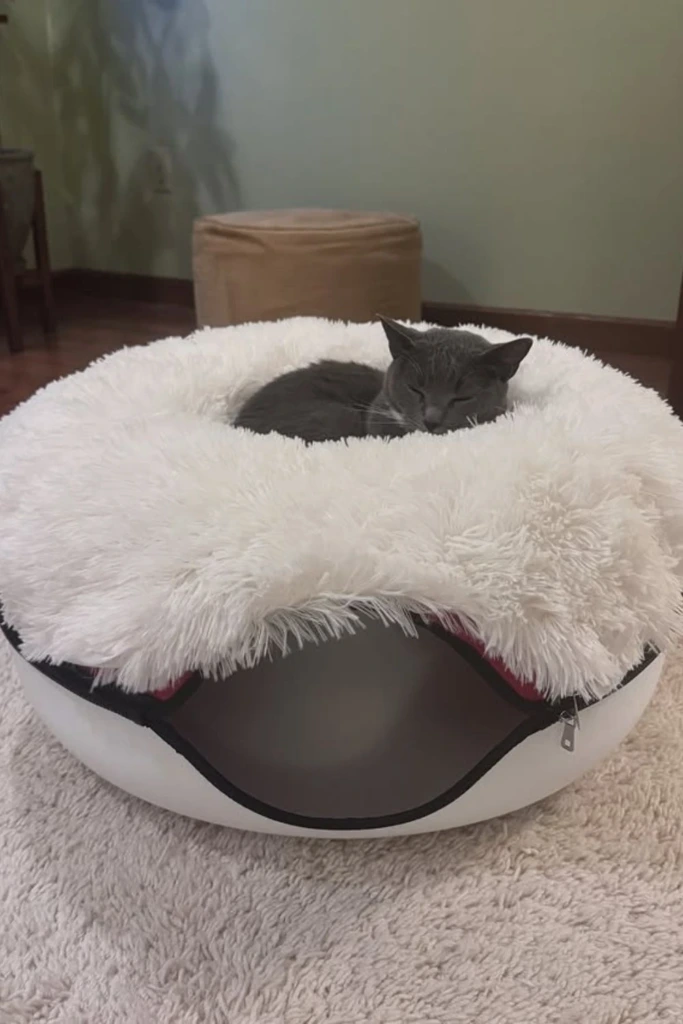
A hidden ring bed uses a thick, cushioned perimeter surrounding a softer central area. The shape gives cats a place to curl up while providing a comfortable edge against which they can rest their head or back.
For a simple DIY project, sew a circular fabric cover, fill the outer channel with pet-safe stuffing, and create a separate padded center. Close the seams securely so the filling remains inaccessible.
You can make the ring shallow for cats that prefer easy access or slightly deeper for pets that enjoy a more enclosed feel. Ensure the center remains large enough for comfortable movement.
Place the bed in a familiar room where your cat can relax without constant interruption. A removable center cushion and washable outer cover make this design particularly convenient for everyday use.
14. Hammock Loft
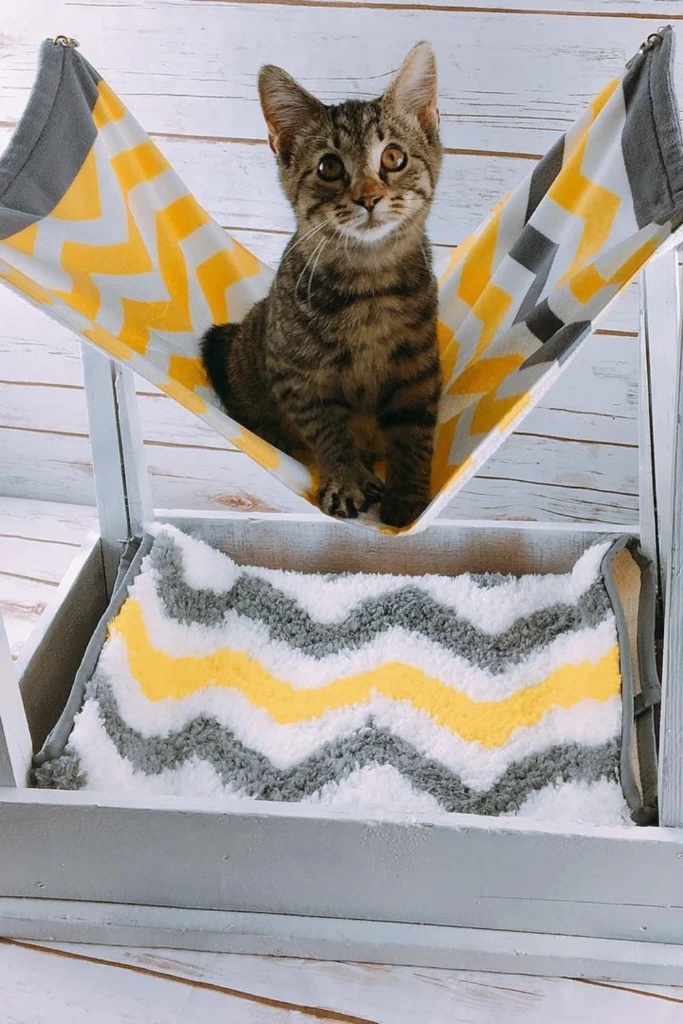
A cat hammock offers a suspended resting surface that adjusts to the animal's weight and body position. It can also save floor space while giving your cat an elevated place to observe the room.
Construct the simplest version by stretching strong, washable fabric across a sturdy wooden frame. Reinforce the fabric edges and use secure fasteners that cannot loosen easily. The finished surface should support your cat without sagging excessively or tipping the frame.
If you plan to suspend the hammock from furniture or a wall, make sure the attachment points are designed for the expected load. Test the setup carefully before allowing your cat to use it, and check the fasteners regularly.
This bed works well in a quiet corner or beside a favorite viewing spot. For older cats, choose a low installation that does not require a difficult jump.
15. Cube Cave
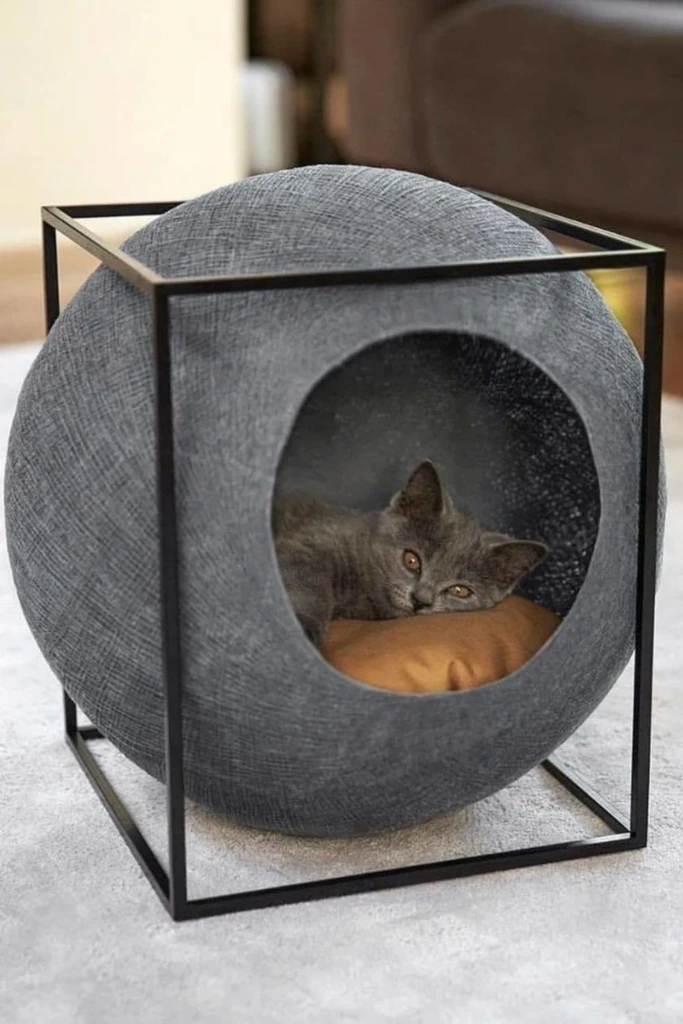
A cube cave provides a defined sleeping area with a firm exterior and a cushioned interior. Its geometric shape can suit modern home decor while giving cats a partially enclosed place to rest.
Build a frame from smooth, sturdy panels or use a purpose-made fabric cube designed to maintain its shape. Include a wide entrance and place a removable cushion inside. Reinforce the corners so the structure does not twist or collapse when your cat moves around.
Make sure all edges are smooth and all fasteners are covered or inaccessible. The cube should be spacious enough for your cat to turn around comfortably.
A cube cave fits neatly beside a sofa, under a suitable table, or against a wall. Choose materials that can withstand scratching and are simple to clean.
16. Drawer Den
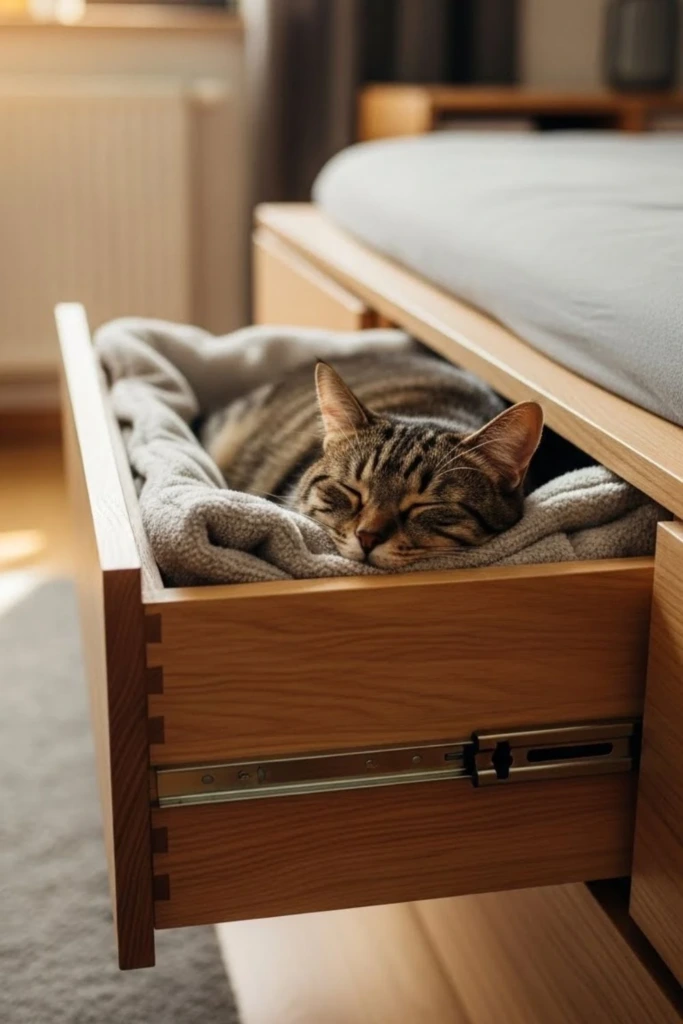
An unused drawer can become a cozy cat retreat with very little work. Its existing walls create a defined sleeping space, making it appealing to cats that like to settle into enclosed areas.
Choose a clean, sturdy drawer and place a folded blanket or fitted cushion inside. Remove any sharp hardware, protruding screws, or loose components that could injure your pet.
If you intend to leave the drawer partially extended from a cabinet, secure it so it cannot slide, tip, or close unexpectedly. A drawer placed directly on the floor may be a safer option than one suspended inside unstable furniture.
Locate the den in a quiet bedroom or another peaceful part of the home. Check that the interior remains dry and free of dust, and wash the bedding regularly.
17. Radiator Shelf
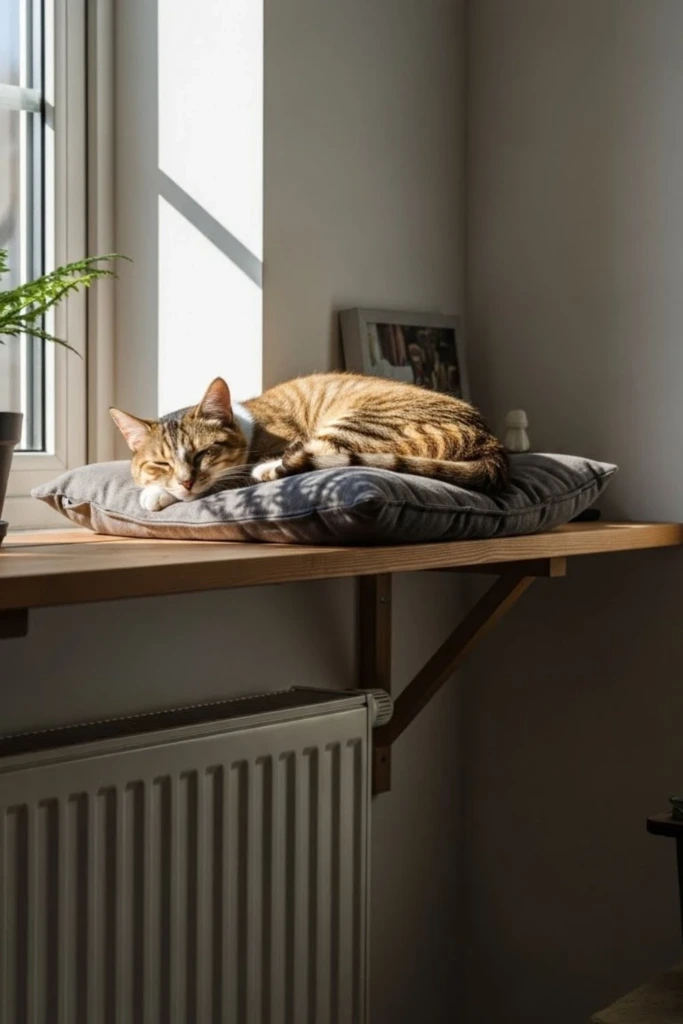
A radiator shelf creates an elevated resting place that makes use of otherwise unused wall space. It may be attractive to cats that seek warm spots during colder months, but safe installation and temperature control are essential.
Use a shelf and mounting system rated for the expected weight, and attach it securely to an appropriate support. The shelf must not interfere with the radiator's operation or block required ventilation.
Add a thin, washable cushion that does not overheat or obstruct airflow. Check the surface temperature before your cat uses it, since prolonged contact with a hot surface can cause discomfort or burns.
Position the shelf so your cat can reach it without a risky jump. Avoid this design if the radiator becomes excessively hot or if the installation cannot be made secure.
18. Suitcase Bed
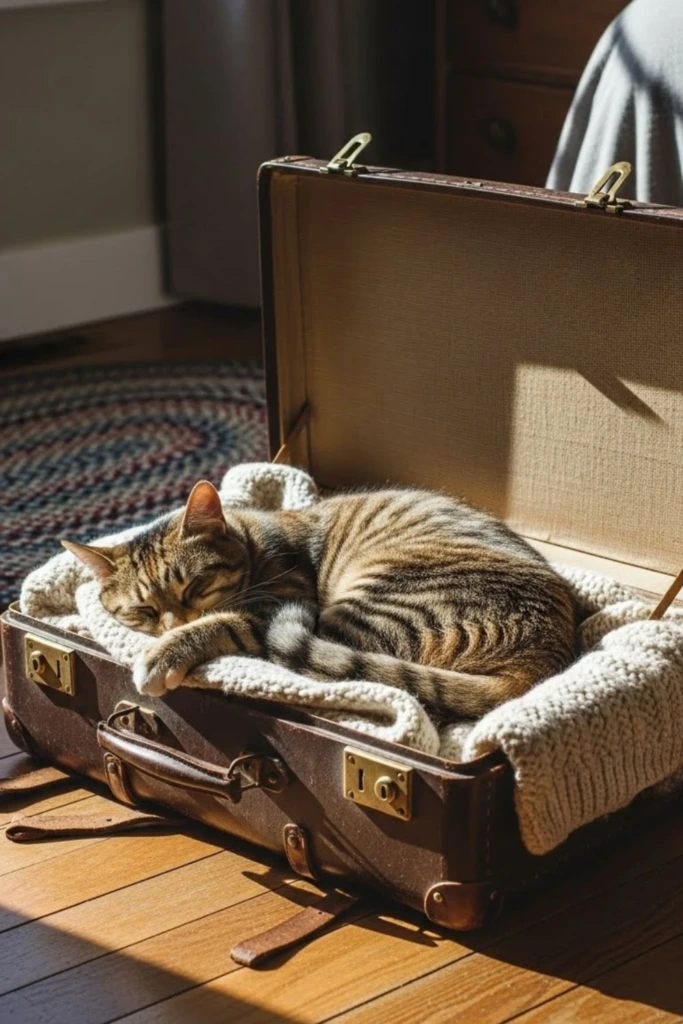
An old suitcase can be transformed into a distinctive cat bed with a soft interior and protective sides. Its compact shape also makes it an interesting decorative feature in a bedroom or guest room.
Choose a clean suitcase with a stable base and remove any detachable straps, loose lining, sharp hardware, or other components that could pose a hazard. If the lid remains open, secure it so it cannot fall shut on your cat.
Line the interior with a washable blanket or a custom-fitted cushion. Avoid suitcases with strong chemical odors, damaged surfaces, or inaccessible spaces where moisture and dirt could collect.
Place the bed directly on the floor or on a stable platform. Keep it in a location where your cat can enter and exit freely, and inspect the lining for wear over time.
19. Shelf Pad
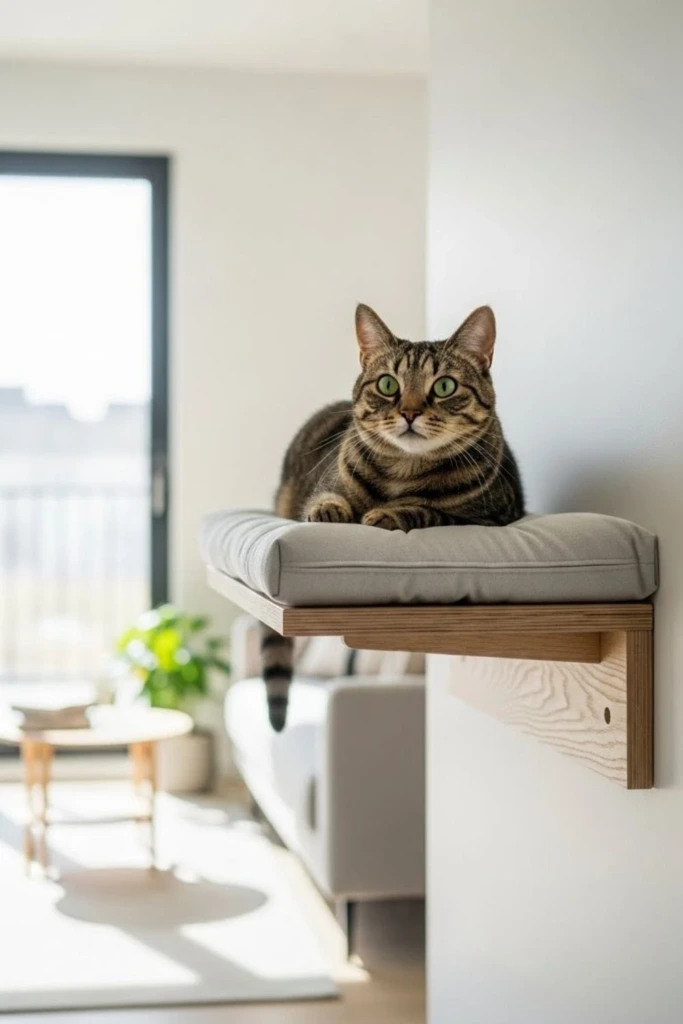
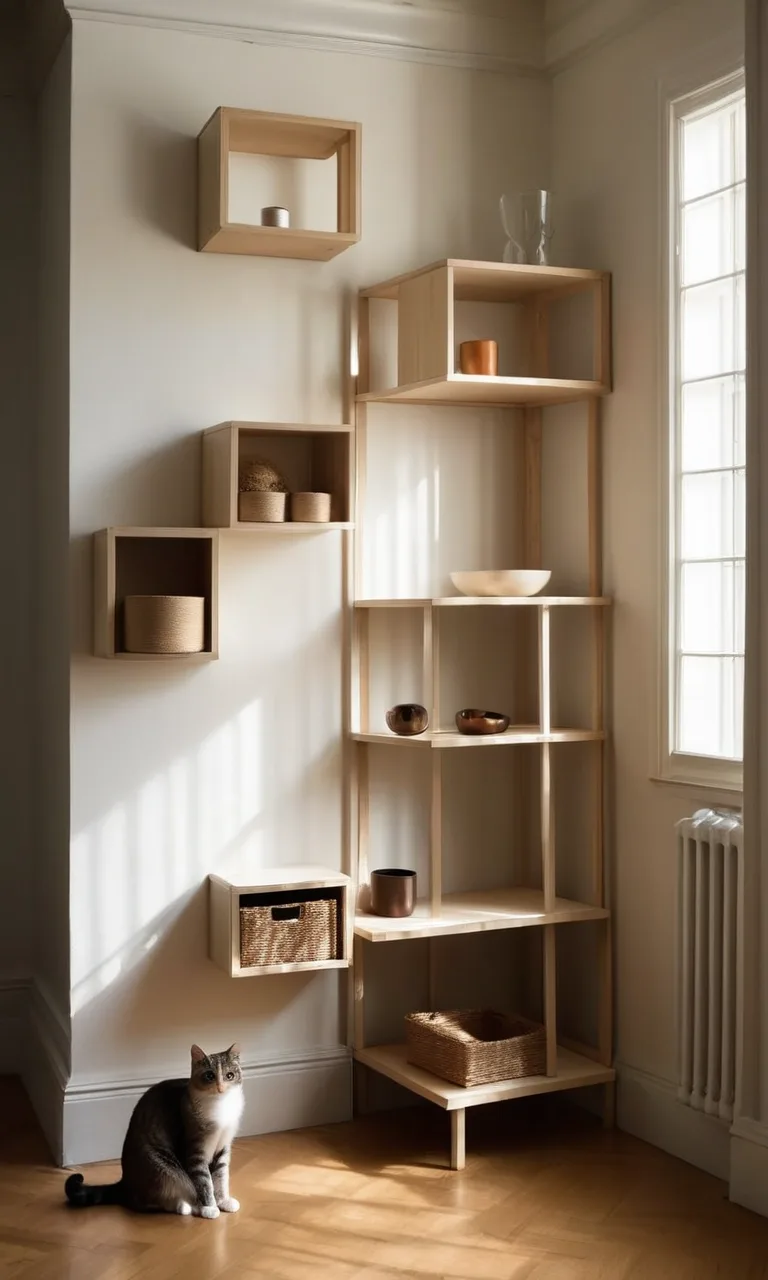
A padded shelf gives cats a compact resting spot above floor level without requiring an entire cat tree. It is particularly useful in homes where floor space is limited.
Start with a sturdy shelf that is securely attached to suitable wall supports. Add a fitted cushion or non-slip mat, ensuring that the padding cannot slide off when your cat jumps onto it.
The shelf should be deep enough for your cat to lie down comfortably. Keep nearby objects from creating unstable stepping points, and consider adding an accessible route for climbing up and down.
This setup can work in a living room, office, or quiet bedroom. Check the brackets and fixings periodically, especially if your cat uses the shelf frequently or likes to leap onto it.
20. Laundry Nest
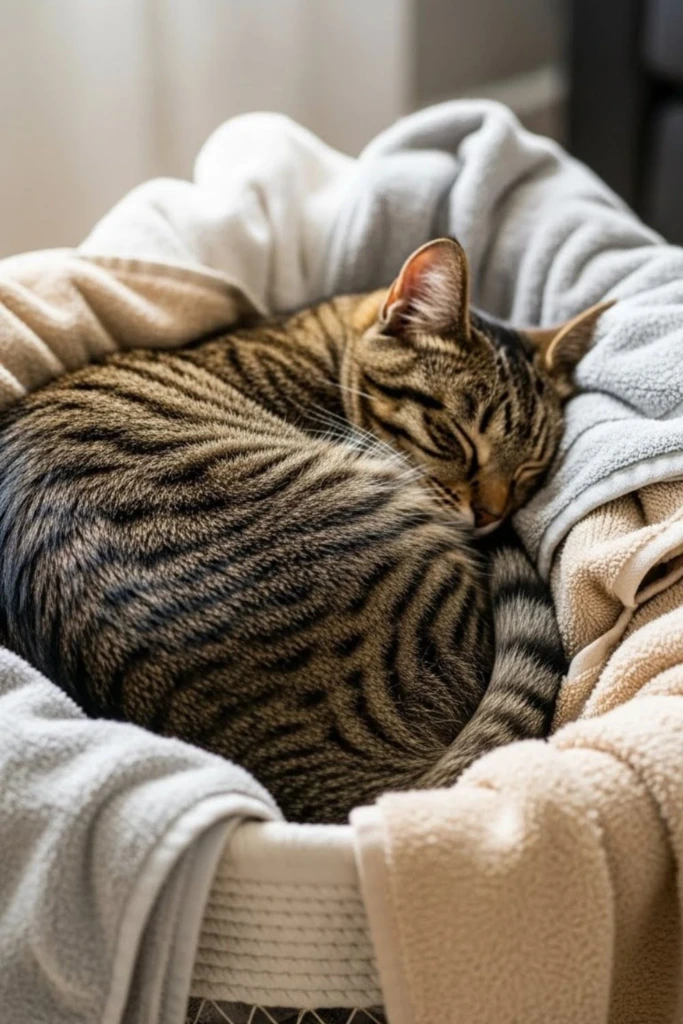
A laundry nest repurposes a sturdy laundry basket into a comfortable sleeping space. Cats are often drawn to fabric that carries familiar household scents, and the basket's sides can create a sense of enclosure.
Select a basket with smooth edges, sufficient space, and a broad base. Line it with a clean towel, fleece blanket, or washable cushion. Avoid baskets with broken plastic, sharp wire, or large openings that could trap a paw.
If the basket is lightweight, secure it against tipping or place it on a stable floor. Do not use laundry containing detergent residue, dryer sheets, or other products that could irritate your pet.
Set the nest in a quiet area where your cat already enjoys resting. Keeping a dedicated blanket inside can also discourage your feline from claiming freshly washed clothes.
21. Corner Cushion
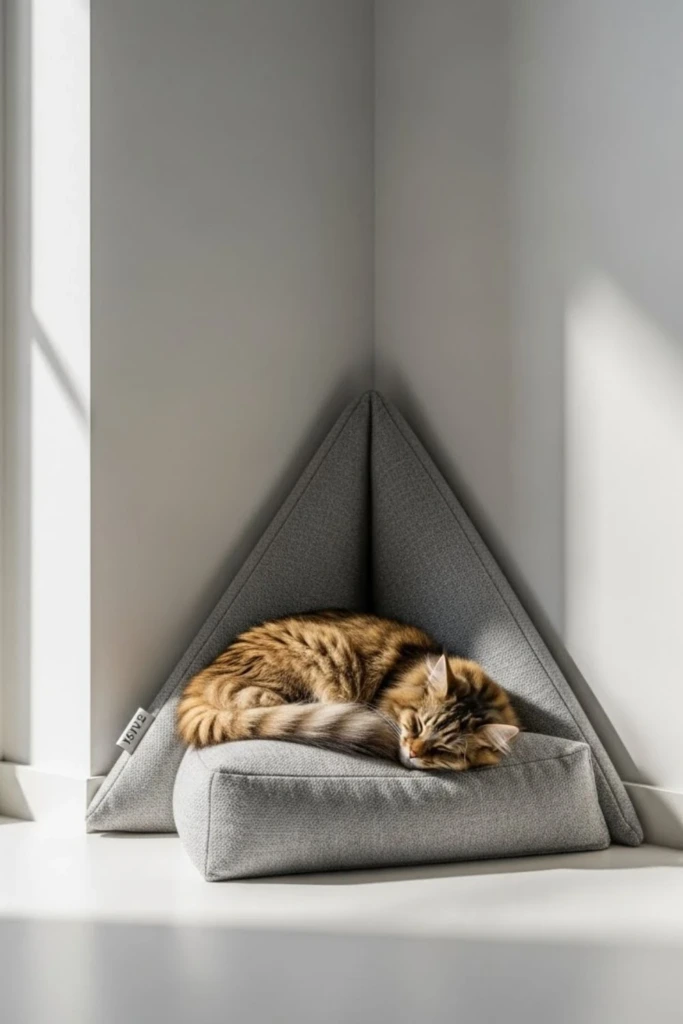
A corner cushion makes efficient use of a small area by fitting into the space where two walls meet. The surrounding walls provide a natural boundary, while the padded surface gives your cat a comfortable place to stretch or curl up.
Measure the corner before cutting a triangular piece of firm foam. Cover it with durable, washable fabric and secure the seams so the filling remains enclosed. You can add a thin backing underneath to help prevent the cushion from sliding.
Choose a thickness that supports your cat without making the bed difficult to climb onto. If the floor is slippery, use a non-slip layer beneath the cushion.
This design works especially well in apartments, compact bedrooms, and unused corners of living rooms. Matching the fabric to your decor can help the bed blend naturally into the space.
Can a DIY cat bed replace a store-bought one?
Yes. A homemade cat bed can be just as useful as a commercial option when it provides suitable support, comfortable materials, and a safe place to rest. The most important factors are your cat's preferences and the quality of the construction, rather than the price or appearance of the bed.
A simple blanket-lined box may be more appealing to one cat than an expensive padded bed, while another might prefer an elevated perch or enclosed cave. Homemade options also make it easier to adjust the dimensions and replace worn materials.
Choose fabrics that can be washed, keep the structure stable, and avoid exposed stuffing, loose strings, or unsafe heating arrangements. If your cat ignores the finished bed, try moving it to a preferred resting spot before deciding that the design has failed.
How do I know if my cat actually likes the bed I made?
Observe your cat's behavior without repeatedly placing it in the bed or trying to persuade it to stay. A cat that voluntarily enters, settles down, naps, kneads the bedding, or returns to the same spot regularly is showing encouraging signs.
Pay attention to when and where your pet uses the bed. For example, a cat might prefer an enclosed cave during the day but choose an open cushion when the room is warm.
If your cat avoids the bed, consider its location, size, texture, and smell. Moving it somewhere familiar, using a blanket with a recognizable scent, or changing the padding may help. Give your pet time to investigate at its own pace.
Ultimately, the best DIY cat bed is one that fits your cat's sleeping habits and remains safe, clean, and comfortable over time.