25 Road Trip Organization Ideas for a Clutter-Free Car for 2026
This post contains affiliate links. As an Amazon Associate, Cozylis earns from qualifying purchases at no extra cost to you.
Planning a road trip is exciting, but keeping your vehicle tidy throughout the journey can be challenging. Between luggage, snacks, electronics, and personal belongings, even a spacious car can become overcrowded after a few hours of traveling.
A well-organized vehicle makes traveling more comfortable, reduces distractions, and helps everyone find what they need without unnecessary searching. Whether you’re preparing for a weekend getaway or a cross-country adventure, having practical storage solutions can make a noticeable difference.
These 25 road trip organization ideas will help you maximize available space, manage everyday essentials, and maintain a clean interior. Most require inexpensive accessories or items you may already have at home.
Jump to section (31)
- Our Top Picks
- Give Everyone Their Own Small Travel Bag
- Use a Backseat Organizer
- Keep a Small Trash Bin in the Car
- Create a Snack Station
- Use Clear Containers for Small Items
- Keep Charging Cables Together
- Use the Center Console Carefully
- Put Important Documents in One Folder
- Pack a Front-Seat Essentials Basket
- Use Door Pockets With a Purpose
- Pack Snacks Into Individual Portions
- Keep Wet Wipes Within Reach
- Use Cupholder Organizers
- Pack a Car Cleaning Kit
- Use Packing Cubes in the Trunk
- Keep an Overnight Bag Separate
- Create a Dedicated Cooler Zone
- Use Reusable Water Bottles
- Pack Entertainment Into One Bag
- Use a Document or Tablet Holder for Kids
- Keep a Spare Clothes Bag Easy to Reach
- Use a Laundry Bag for Dirty Clothes
- Keep a Shoe Bag Near the Trunk
- Do a Five-Minute Car Reset at Every Major Stop
- Leave Some Empty Space
- A Simple Road Trip Organization Setup
- What to Keep Within Reach
- What Should Stay in the Trunk
- One Rule That Makes Road Trips Much Easier
- Final Thoughts
Our Top Picks


1. Give Everyone Their Own Small Travel Bag
Assigning a personal travel bag to each passenger is an effective way to prevent belongings from spreading throughout the vehicle.
Choose compact backpacks, zippered totes, or lightweight pouches that fit comfortably beside each person’s seat. Encourage everyone to pack only what they expect to use during the journey.
Useful items include headphones, sunglasses, charging cables, books, lip balm, and a few favorite snacks.
For families with children, selecting different bag colors makes identification easier. Each passenger becomes responsible for returning their belongings to the correct bag after use.
Keep these bags securely positioned so they cannot slide into the driver’s footwell or become hazards during sudden braking.
2. Use a Backseat Organizer
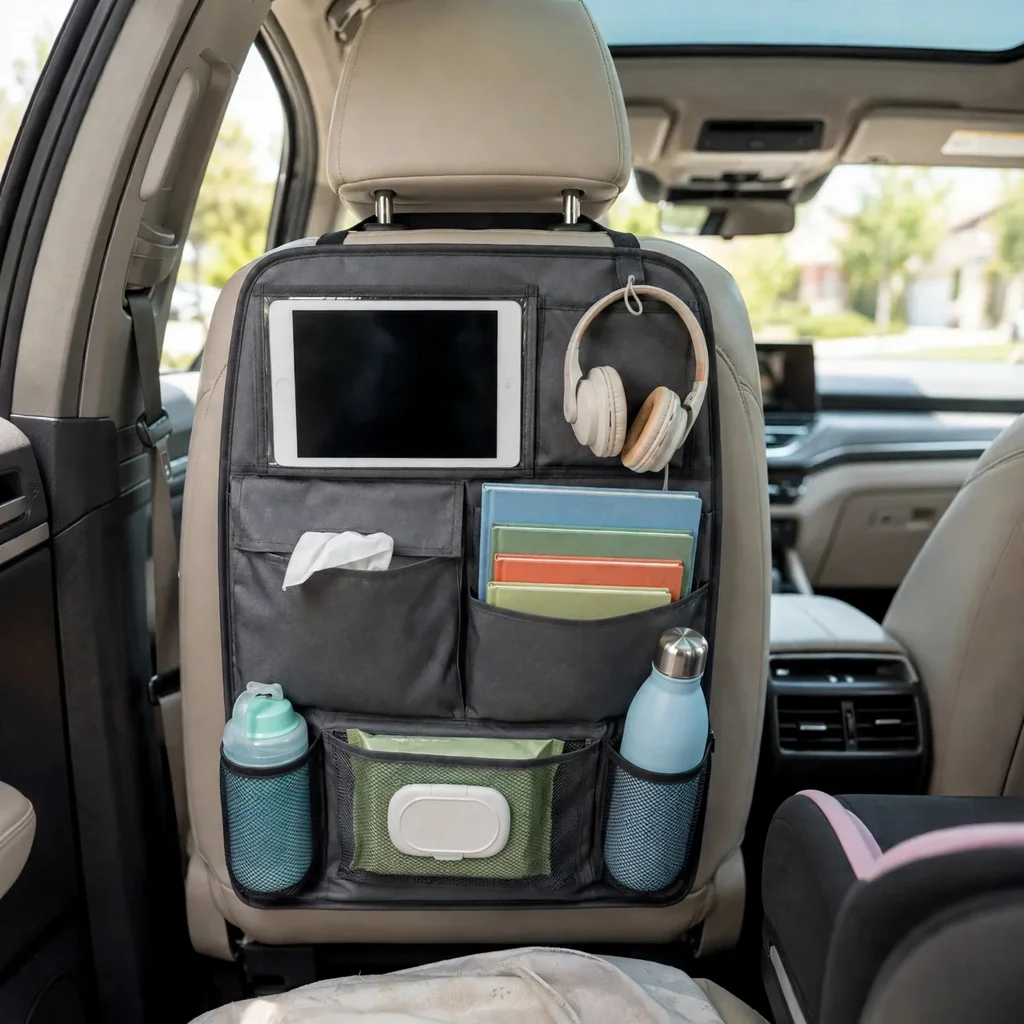
The backs of front seats offer valuable storage space that often goes unused. A hanging backseat organizer transforms this area into a convenient place for everyday travel supplies.
Choose a design featuring different pocket sizes to accommodate books, tissues, lightweight toys, snacks, and small accessories.
Mesh compartments are particularly helpful because passengers can identify their contents immediately.
For younger children, arrange frequently used items in lower pockets they can reach while remaining properly restrained.
Make sure the organizer is securely attached and does not interfere with seat adjustments, seat-mounted airbags, or other vehicle safety features.
3. Keep a Small Trash Bin in the Car
Food packaging, receipts, and used tissues can quickly accumulate during long drives. Providing a designated rubbish container prevents these items from collecting around seats and cupholders.
A compact, leak-resistant trash bin with a lid works well for regular road trips. Alternatively, use a reusable container lined with a small disposable bag.
Position the bin somewhere accessible to passengers without blocking legroom or vehicle controls.
Empty it whenever you stop at a fuel station, restaurant, or rest area with suitable waste disposal facilities.
For easier maintenance, keep replacement liners inside a nearby storage pocket.
4. Create a Snack Station
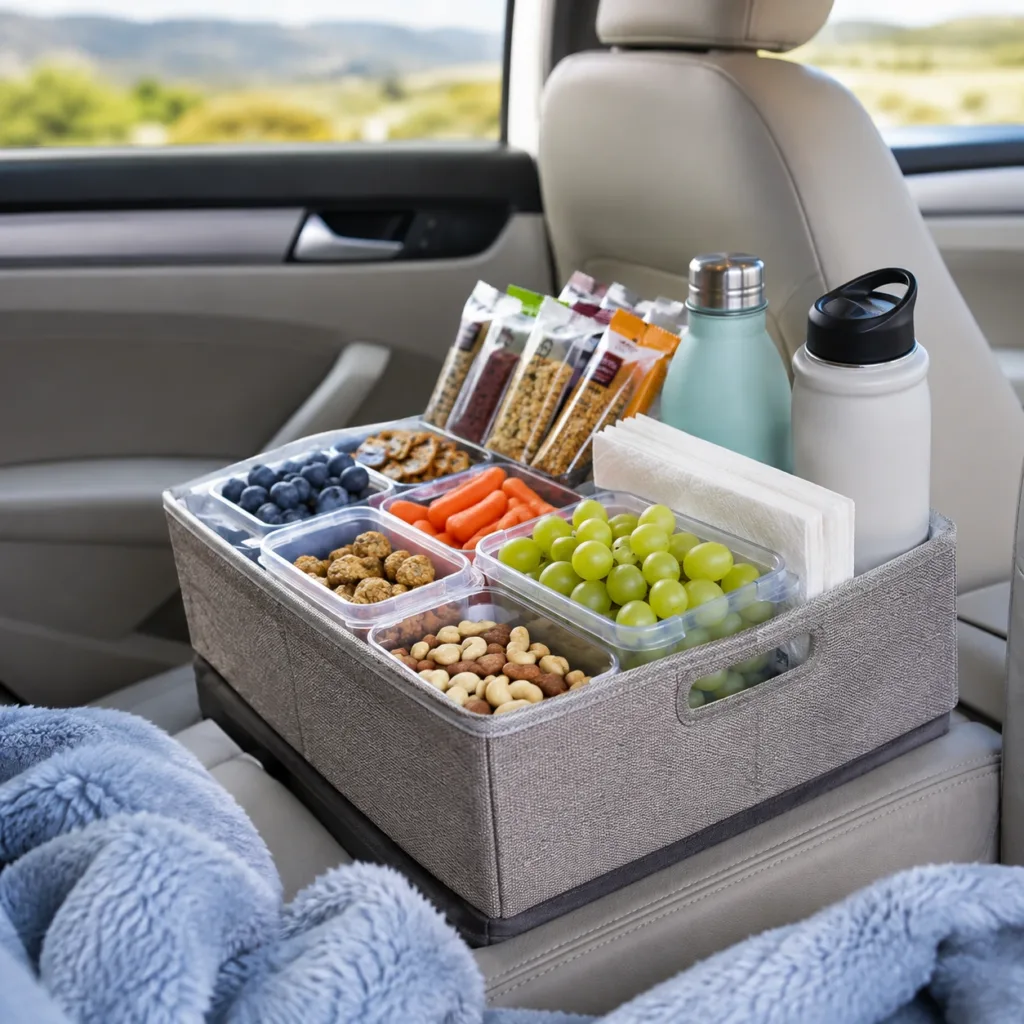
A dedicated snack station keeps food organized and reduces the need to search through grocery bags whenever someone becomes hungry.
Choose a compact storage basket or lidded container and arrange snacks according to type.
Good road trip options include:
- Granola bars and crackers
- Dried fruit and trail mix
- Pretzels and rice cakes
- Whole fruits that travel well
- Individually packed biscuits
Place heavier items at the bottom and delicate foods near the top to prevent crushing.
Keep perishable foods in a properly chilled cooler rather than leaving them in a warm passenger compartment.
A snack station works best when passengers know where food belongs and return unopened items after each break.
5. Use Clear Containers for Small Items
Small travel accessories are easier to manage when they are grouped by purpose rather than scattered among larger bags.
Transparent pouches and compact containers allow you to recognize their contents without unpacking everything.
Create separate storage categories for electronics, personal hygiene products, basic first-aid supplies, and children’s activities.
For example, one pouch might contain charging adapters and earbuds, while another holds tissues, sunscreen, and hand sanitizer.
Select containers with secure closures to prevent contents from spilling during turns or sudden stops.
Labeling each pouch can make the system even more convenient, especially when several passengers share the same supplies.
6. Keep Charging Cables Together
Phones, navigation devices, tablets, and portable electronics often require different charging accessories. Without a system, loose cables can become tangled or disappear between seats.
Store spare cords in a compact electronics pouch with individual compartments.
Reusable hook-and-loop cable ties help prevent tangling while allowing cords to be removed quickly.
Consider assigning one charging cable to the front passenger area and another to the rear seats.
A multi-port car charger may also be useful, provided it is compatible with your vehicle’s electrical system.
Avoid routing cables across the driver’s controls, and keep power banks away from excessive heat and direct sunlight.
7. Use the Center Console Carefully
The center console should provide quick access to important items rather than becoming an overflowing storage compartment.
Begin by removing unnecessary objects, old receipts, and anything you rarely use.
Next, add a small divider tray or compact organizer to separate essentials.
Reserve individual sections for sunglasses, charging accessories, parking tickets, and other frequently needed items.
Keep the arrangement simple enough that you can identify what you need without rummaging through the compartment.
Avoid storing bulky objects that prevent the console lid from closing properly.
8. Put Important Documents in One Folder
Keeping travel documents organized can save time during hotel check-ins, roadside emergencies, and unexpected changes to your itinerary.
Use a slim, water-resistant document folder with separate compartments.
Depending on your destination, you may need vehicle registration, insurance information, driving documents, accommodation confirmations, and reservation details.
For international road trips, include any required travel permits and identification documents.
Save digital copies on your phone for convenient access, but consider keeping essential information available offline in case mobile coverage becomes unreliable.
Store sensitive paperwork in a secure location that is accessible when needed but not openly visible from outside the vehicle.
9. Pack a Front-Seat Essentials Basket
Frequently used supplies should have a dedicated location near the front passenger seat.
A small basket or secured organizer can hold practical items such as tissues, wet wipes, sunscreen, hand sanitizer, a pen, and charging accessories.
Choose a container that fits inside an existing storage compartment or another secure location.
Avoid placing loose baskets on the dashboard or anywhere they could interfere with driving.
Before departure, check that the most important items are available without requiring the driver to reach across the cabin.
The front passenger can manage the basket and pass supplies to other travelers when necessary.
10. Use Door Pockets With a Purpose
Car door pockets can provide useful storage when each compartment has a clearly defined function.
Instead of filling them with unrelated objects, assign different categories to individual doors.
For example, the front passenger door could hold tissues and cleaning wipes, while a rear door pocket might contain a lightweight activity book.
Keep items small enough to fit completely inside the compartment.
Avoid storing sharp, heavy, or breakable objects in open door pockets, particularly where they could interfere with airbags or become dislodged.
Check the pockets during rest stops to remove unnecessary packaging and prevent clutter from accumulating.
11. Pack Snacks Into Individual Portions
Dividing food into smaller servings before departure can make eating inside the vehicle considerably less messy.
Use reusable snack containers, silicone pouches, or food-safe resealable bags.
Prepare portions according to each passenger’s preferences and dietary needs.
This approach reduces the number of large packages being opened repeatedly and makes it easier to distribute snacks during breaks.
Choose foods that are unlikely to crumble, melt, or leave sticky residue.
For young children, select age-appropriate foods and supervise eating. Stopping the vehicle for meals and snacks is the safest option, particularly for children at risk of choking.
12. Keep Wet Wipes Within Reach
Wet wipes are among the most practical cleaning supplies for family road trips.
They can help manage sticky fingers, food residue, and minor messes before dirt spreads to upholstery or other belongings.
Keep a small packet in the front passenger area and another near the rear seats.
Choose a resealable package to prevent the wipes from drying out.
For delicate interior surfaces, check your vehicle manufacturer’s cleaning recommendations before using any product.
Keep a microfiber cloth nearby for surfaces that require gentle cleaning without additional moisture.
13. Use Cupholder Organizers
Cupholders often collect small objects that do not have an assigned storage location.
Removable cupholder inserts can help organize coins, hair accessories, and other lightweight essentials.
Choose washable designs that fit your vehicle’s existing cupholders without obstructing nearby controls.
If you regularly travel with several passengers, prioritize keeping enough cupholders available for securely holding drinks.
A small divided insert can be useful for spare change or parking tokens, while a separate covered container can hold miscellaneous accessories.
Cleaning removable inserts between trips also prevents dirt and sticky residue from building up.
14. Pack a Car Cleaning Kit
A compact cleaning kit makes it easier to handle everyday messes before they become difficult to remove.
You do not need a large collection of cleaning products. A few versatile supplies are usually sufficient.
Consider packing:
- Microfiber cleaning cloths
- Paper towels
- Small trash bags
- Interior-safe cleaning wipes
- Hand sanitizer
- A resealable bag for soiled materials
Store everything in a waterproof pouch or small container.
Keep liquid products upright and securely closed to prevent leaks.
For significant spills, pull over somewhere safe before attempting to clean. Never allow cleaning tasks to distract the driver.
15. Use Packing Cubes in the Trunk
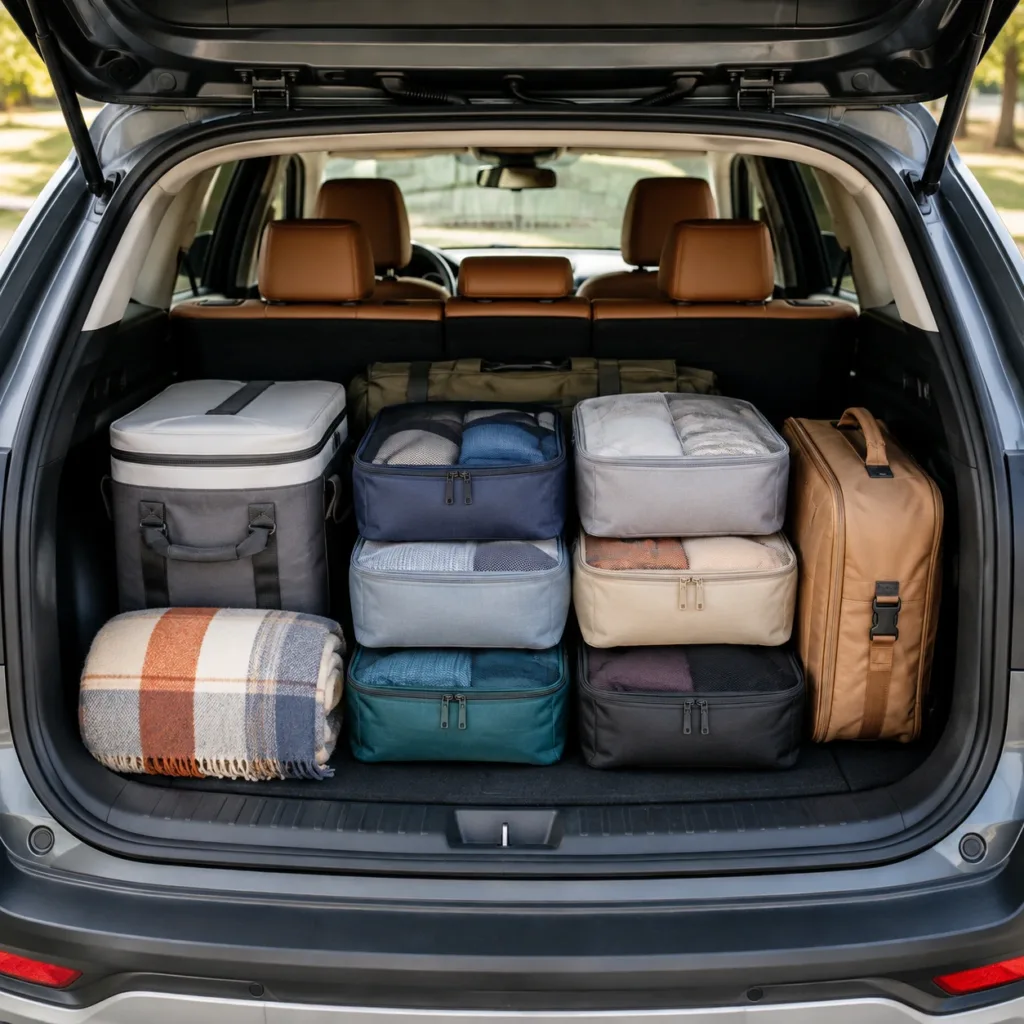
Packing cubes make it easier to separate clothing and travel accessories inside larger luggage.
They can also help organize smaller items within the trunk.
Assign different cubes to clothing, towels, sleepwear, or outdoor accessories.
Choose contrasting colors or attach labels so you can quickly identify each category.
Soft-sided cubes are especially convenient because they fit into irregular spaces more easily than rigid containers.
Place heavier luggage low and toward the front of the trunk, and secure the load according to your vehicle’s recommendations.
Avoid stacking belongings high enough to obstruct rear visibility or create a risk of items entering the passenger compartment.
16. Keep an Overnight Bag Separate
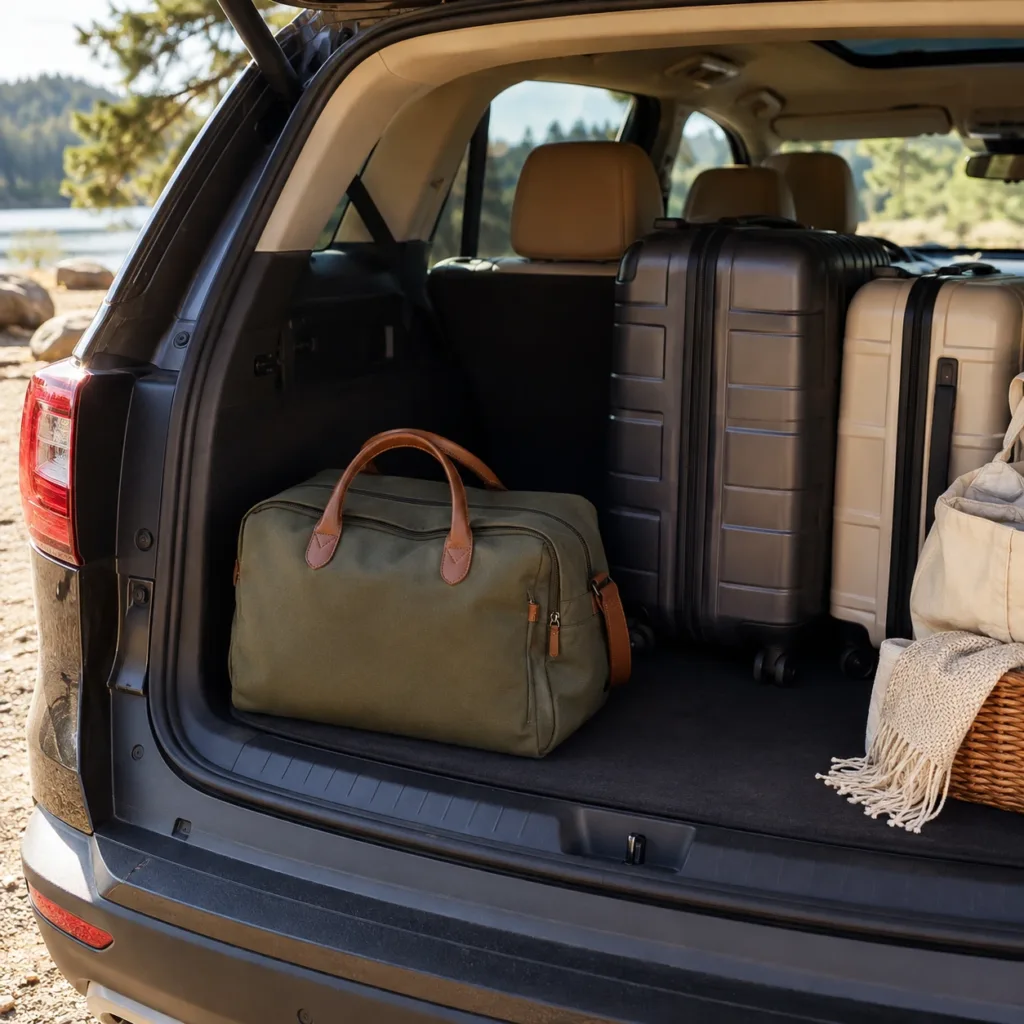
If your road trip includes several overnight stops, packing a separate bag for short stays can simplify your routine.
Instead of unloading large suitcases at every destination, prepare one compact bag containing the essentials for a single night.
Include a change of clothes, sleepwear, toiletries, medications, and charging accessories.
For families, consider using one overnight bag per person or a shared bag with separate compartments.
Place overnight luggage near the trunk opening so it can be retrieved without moving everything else.
Remember to secure valuables and take important belongings with you rather than leaving them unattended in the vehicle.
17. Create a Dedicated Cooler Zone
Food and beverages are easier to manage when your cooler has a consistent, secure location.
Choose a flat area in the trunk where the cooler can remain upright and be restrained against movement.
Position related supplies nearby, such as reusable utensils, napkins, and sealed food containers.
Organize the cooler so frequently needed items are easy to retrieve during stops.
Use ice packs or suitable cooling methods to maintain safe temperatures for perishable foods. A cooler should generally keep these foods at 40°F (4°C) or below.
Avoid opening it unnecessarily, particularly during hot weather.
Keeping the cooler separate from clothing and electronics also reduces the consequences of accidental leaks.
18. Use Reusable Water Bottles
Reusable water bottles reduce disposable packaging and help passengers keep track of their drinks.
Assign a separate bottle to each traveler and use names, stickers, or different colors to distinguish them.
Choose leak-resistant designs that fit securely inside the vehicle’s cupholders or designated bottle compartments.
Insulated bottles are useful for keeping drinks cool during warmer journeys.
Carry an additional supply of drinking water appropriate for the route, weather, and number of passengers.
Refill bottles at safe drinking-water sources and wash them regularly, especially after storing beverages other than water.
19. Pack Entertainment Into One Bag
Keeping entertainment supplies together makes long drives easier for passengers, especially children.
Use a lightweight tote or backpack to organize books, headphones, coloring materials, travel games, and electronic devices.
Select activities that require minimal loose pieces and can be enjoyed comfortably while seated.
For younger passengers, magnetic games, sticker books, and reusable drawing pads can be convenient alternatives to activities involving many small objects.
Download movies, audiobooks, or educational content before departure if your route may have limited internet access.
Secure the entertainment bag when not in use, and avoid allowing toys or accessories to obstruct seat belts.
20. Use a Document or Tablet Holder for Kids
A suitable tablet holder can provide children with a more organized way to enjoy digital entertainment during long journeys.
Choose a holder designed specifically for automotive use and compatible with your vehicle’s seating arrangement.
It should attach securely without affecting head restraints, airbags, or other safety components.
Position the screen at a comfortable viewing angle to reduce unnecessary neck strain.
For activities such as drawing or coloring, consider a lightweight travel tray that is appropriate for the child’s age and restraint system.
Avoid hard or heavy accessories that could become dangerous during sudden stops.
Encourage regular screen breaks and include alternative activities to make the journey more enjoyable.
21. Keep a Spare Clothes Bag Easy to Reach
Unexpected spills, muddy clothing, and changes in weather can make spare outfits essential during road trips.
Prepare a compact bag containing an extra shirt, trousers, underwear, and socks.
For children, include additional clothing appropriate for their age and the length of the journey.
A waterproof pouch can be particularly useful for storing wet or soiled garments until they can be washed.
Place the spare clothes bag near the top of your luggage or inside an accessible trunk compartment.
This small preparation can prevent an inconvenient search through several suitcases when someone needs a quick change.
22. Use a Laundry Bag for Dirty Clothes
Separating worn clothing from clean outfits helps maintain order during multi-day trips.
Pack a lightweight laundry bag that folds flat when empty.
Choose a breathable fabric bag for dry clothing and a separate waterproof pouch for damp items.
Encourage everyone to place used garments in the correct bag rather than returning them to their suitcases.
For longer journeys, separate particularly dirty items from lightly worn clothing.
Do not leave wet garments sealed for extended periods, as trapped moisture can encourage unpleasant odors and mildew.
When you return home, having laundry already collected in one place makes unpacking considerably easier.
23. Keep a Shoe Bag Near the Trunk
Shoes can transfer sand, mud, grass, and moisture onto clean luggage and vehicle carpeting.
A dedicated shoe bag or washable storage crate provides a simple solution.
Choose a container that accommodates the footwear you expect to use during outdoor activities.
For beach trips, a mesh bag allows loose sand to fall away before shoes are placed in the vehicle.
For muddy hiking boots, use a washable waterproof tray or container.
Position shoe storage near the trunk entrance to make footwear changes convenient during stops.
Allow wet shoes to dry when practical rather than keeping them sealed for long periods.
24. Do a Five-Minute Car Reset at Every Major Stop
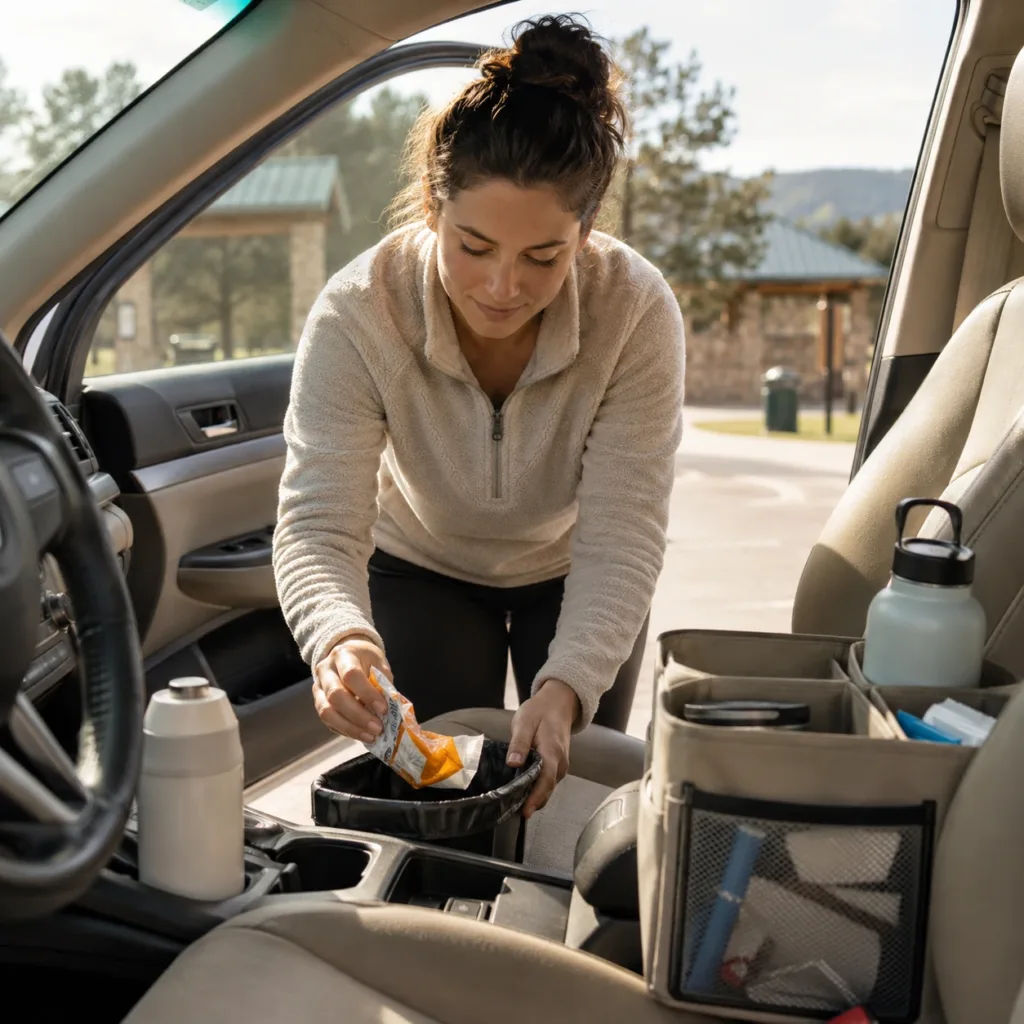
Even a carefully organized vehicle can become untidy after several hours of travel.
A short cleanup routine at major stops helps prevent small messes from turning into larger problems.
When the vehicle is safely parked, ask passengers to collect rubbish, close food containers, return electronics to their pouches, and organize personal belongings.
Check the seats and footwells for loose objects that could shift while driving.
Use the opportunity to refill drinking water, inspect snack supplies, and identify anything that needs cleaning.
Sharing these responsibilities among passengers makes the process faster and encourages everyone to maintain the system.
A consistent routine is usually more effective than waiting until the end of the journey to clean everything.
25. Leave Some Empty Space
One of the most useful packing strategies is resisting the temptation to fill every available compartment.
Road trips often involve unexpected purchases, additional food supplies, jackets, souvenirs, and other items collected along the way.
Leaving some storage capacity available makes it easier to accommodate these belongings without crowding the passenger area.
Before departure, review everything you have packed and remove unnecessary duplicates.
Choose versatile clothing and multipurpose accessories to reduce luggage volume.
Remember that the vehicle’s weight limits still apply, even when additional physical storage space is available.
A thoughtfully packed car should provide comfortable seating, unobstructed visibility, and enough room for essential supplies.
A Simple Road Trip Organization Setup
You do not need dozens of accessories to maintain an organized vehicle. A basic storage arrangement can work well for most trips.
The key is assigning each category of belongings a consistent location.
| Car area | Recommended organization |
|---|---|
| Front passenger area | Secured essentials organizer and frequently used supplies |
| Center console | Charging accessories, sunglasses, and small essentials |
| Back seats | Personal travel bags and properly secured seat organizers |
| Door compartments | Lightweight items and compatible water bottles |
| Trunk | Suitcases, packing cubes, and overnight bags |
| Food storage | Secured cooler and separate snack container |
| Waste collection | Compact, leak-resistant trash bin |
Before leaving, make sure storage accessories do not interfere with seat belts, airbags, pedals, or passenger comfort.
Keep emergency equipment accessible rather than burying it underneath heavy luggage.
The most successful organization setup is one that passengers can maintain without constantly rearranging belongings.
What to Keep Within Reach
During a long drive, certain supplies should be readily available to passengers.
Keeping these essentials accessible reduces unnecessary stops and prevents repeated searches through packed luggage.
Consider preparing a small collection of:
- Drinking water and suitable snacks
- Tissues and wet wipes
- Hand sanitizer
- Phone charging accessories
- Sunglasses
- A small waste bag
- Essential medications
- Basic first-aid supplies
- Important travel information
- Age-appropriate passenger entertainment
- Spare clothing when traveling with children
Organize these items according to how frequently they will be needed.
Items required for emergencies should be accessible when the vehicle is safely stopped.
The driver should never search through bags or handle loose accessories while driving. Ask a passenger for assistance or pull over safely.
What Should Stay in the Trunk
The trunk is generally the best location for larger belongings that passengers do not need throughout the drive.
Keeping unnecessary luggage outside the seating area helps maintain legroom and reduces the number of loose objects inside the cabin.
Suitable trunk items include suitcases, extra footwear, spare blankets, outdoor equipment, additional clothing, and backup supplies.
Arrange these belongings by weight and frequency of use.
Heavy items should be placed low and secured, while frequently accessed bags can be positioned near the opening.
Store emergency equipment in a location that remains accessible, even when the vehicle is fully packed.
Avoid exceeding the manufacturer’s cargo capacity, and use suitable restraints to prevent luggage from shifting.
A carefully arranged trunk makes loading, unloading, and finding belongings much easier at each destination.
One Rule That Makes Road Trips Much Easier
The simplest way to maintain an organized car is to return belongings to their designated storage places immediately after using them.
A charging cable should go back into its pouch, a finished snack should leave no packaging behind, and a book should return to its travel bag.
These small actions prevent clutter from accumulating throughout the day.
For families, establish a few easy expectations before departure so everyone understands their responsibilities.
Children can manage age-appropriate tasks, such as putting away toys or collecting their own belongings during stops.
Combine this habit with a brief cleanup whenever you park for a longer break.
Consistency matters more than having expensive storage accessories. Even a few basic containers can work effectively when everyone uses them properly.
Final Thoughts
A comfortable road trip begins with thoughtful preparation, and keeping your car organized is an important part of that process.
These 25 road trip organization ideas offer practical ways to manage luggage, food, electronics, cleaning supplies, and personal belongings without overcrowding your vehicle.
You do not need to implement every suggestion. Start with a few essentials, such as personal travel bags, a designated trash container, organized snacks, and a well-arranged trunk.
Prioritize secure storage, easy access, and simple habits that your passengers can follow throughout the journey.
With the right setup, you can spend less time searching for missing items or cleaning unexpected messes and more time enjoying the scenery, exploring new destinations, and making memories along the way.