22 Goat Playground Ideas DIY for 2026
Goats are curious, energetic animals that love climbing, jumping, exploring, and investigating anything within reach. A thoughtfully designed playground gives them opportunities to express these natural behaviors while making their living space more interesting.
Building a goat playground doesn't have to involve expensive equipment or complicated construction. Everyday materials such as wooden pallets, sturdy logs, large tires, and cable spools can become entertaining play structures with a little creativity.
Whether you have a spacious pasture or a smaller backyard enclosure, these 24 DIY goat playground ideas offer practical ways to create an engaging environment for your herd.
What Materials Are Safe for Goat Playgrounds?
Choosing suitable building materials is essential because goats frequently chew, rub against, and climb on their surroundings.
Untreated, solid lumber is a practical choice for platforms, ramps, and climbing structures. Select wood without splinters, rot, exposed nails, or damaged sections. Smooth rough edges and use fasteners that cannot work loose during play.
Heat-treated wooden pallets marked HT may be suitable for certain projects, provided they are clean, structurally sound, and free from chemical contamination. Avoid pallets with unknown histories.
Other useful materials include large natural logs, securely anchored rocks, and heavy-duty tires in good condition. Inspect tires for exposed wire, trapped water, and openings that could catch a hoof or head.
Whatever materials you choose, the finished structure should support the weight and movement of several goats without shifting, collapsing, or creating dangerous gaps.
How to Place Play Structures in Your Goat Pen?
A successful goat playground needs more than interesting equipment. Its layout should allow animals to move comfortably without creating crowded or hazardous areas.
Position climbing structures well away from perimeter fences. Goats can use elevated platforms as launching points to escape, even when the fencing itself is secure.
Leave generous clearance around gates, feeding stations, water containers, and shelter entrances. Avoid placing tall equipment over hard obstacles or uneven ground where a falling goat could be injured.
Consider how goats interact as a group. Multiple climbing routes and accessible exits help prevent dominant animals from blocking others.
Finally, preserve enough open ground for running, resting, cleaning, and everyday herd management.
1. Pallet Platform
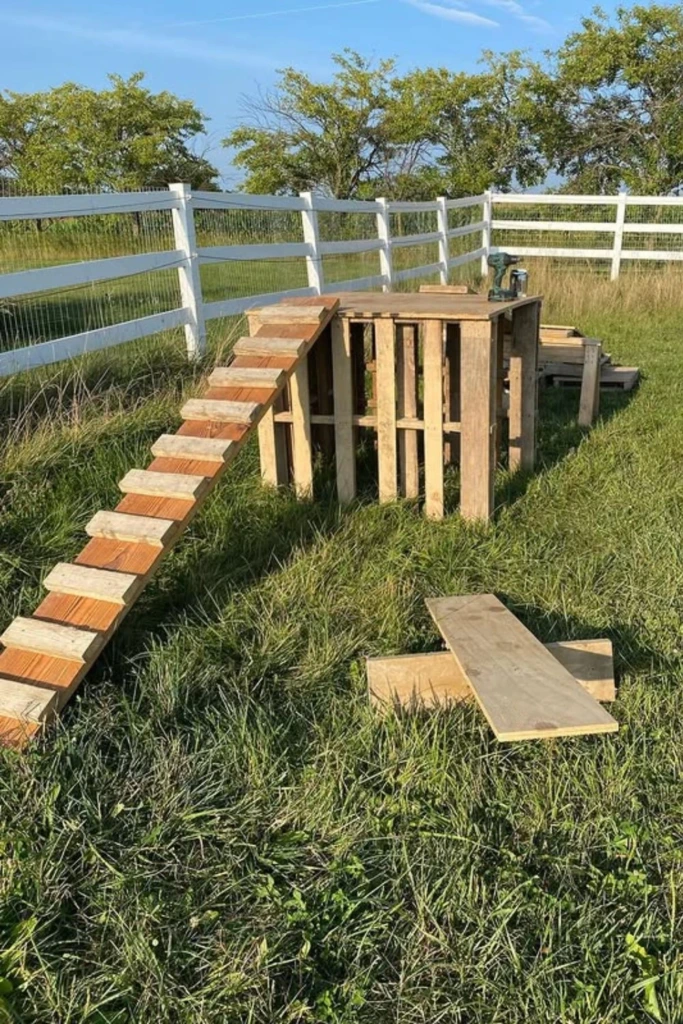
A pallet platform is an affordable starting point for creating an elevated play area.
Begin with clean, heat-treated pallets and reinforce the framework using sturdy lumber. Cover the top completely with closely fitted boards so hooves cannot slip between the slats.
For easier access, attach a broad wooden ramp with securely fastened traction strips. Keep the incline gentle enough for your goats to walk up and down comfortably.
A low platform is especially useful for beginners because it introduces climbing without requiring large jumps. Make the surface spacious enough for more than one goat to stand comfortably.
2. Spool Table
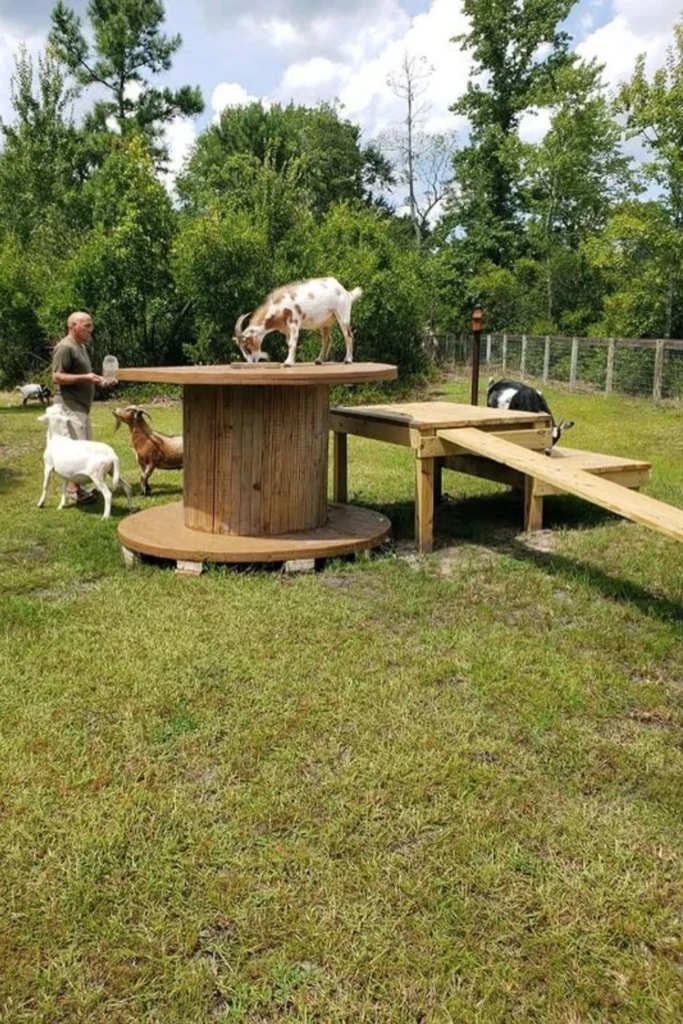
Large wooden cable spools can become excellent climbing stations when properly prepared.
Choose a spool with solid wooden surfaces and no exposed hardware. Check that the circular ends and central barrel are firmly connected before placing it in the enclosure.
For maximum stability, secure the spool so it cannot roll, tip, or rotate when goats jump onto it.
You can add a small wooden step nearby to help younger goats reach the top. The elevated surface gives goats somewhere to observe their surroundings, rest, or interact with their companions.
Avoid spools that previously carried hazardous materials or have been treated with unknown chemicals.
3. Ground Platform
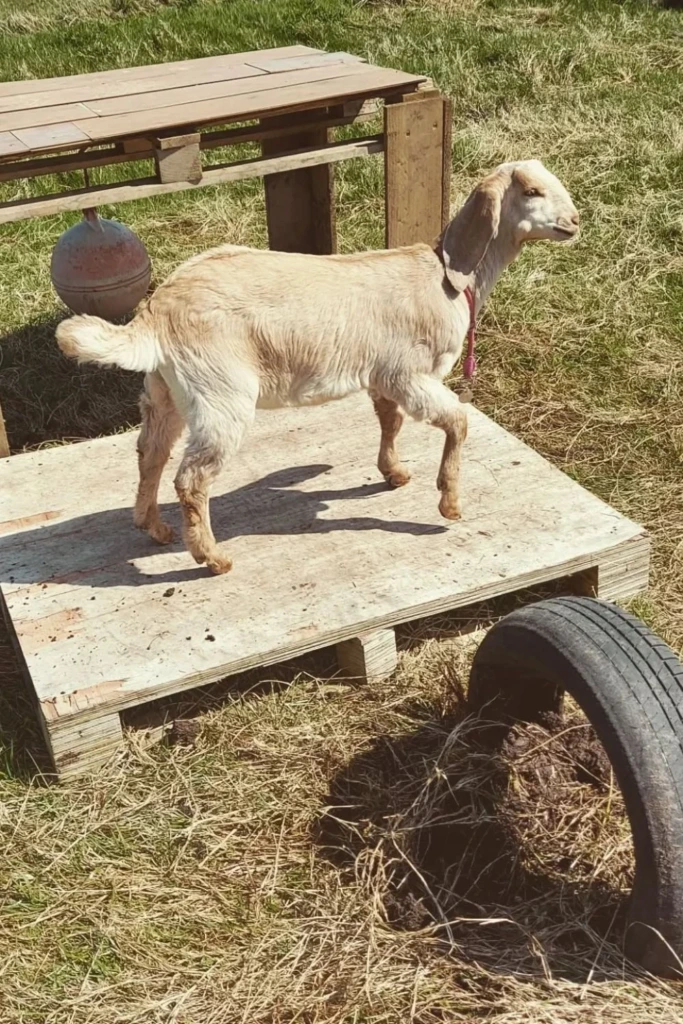
A ground-level platform is ideal for goats that are inexperienced climbers or need a less demanding activity.
Build a shallow rectangular frame from durable timber and cover it with solid decking boards. Keep the structure close to the ground, with no openings that could trap a leg.
The slightly raised surface introduces a new texture and provides a comfortable place to stand or lounge.
For additional interest, position a securely embedded tire or short log nearby. Goats can explore the different surfaces at their own pace.
This simple arrangement works particularly well for young goats and smaller enclosures.
4. Pallet Fortress
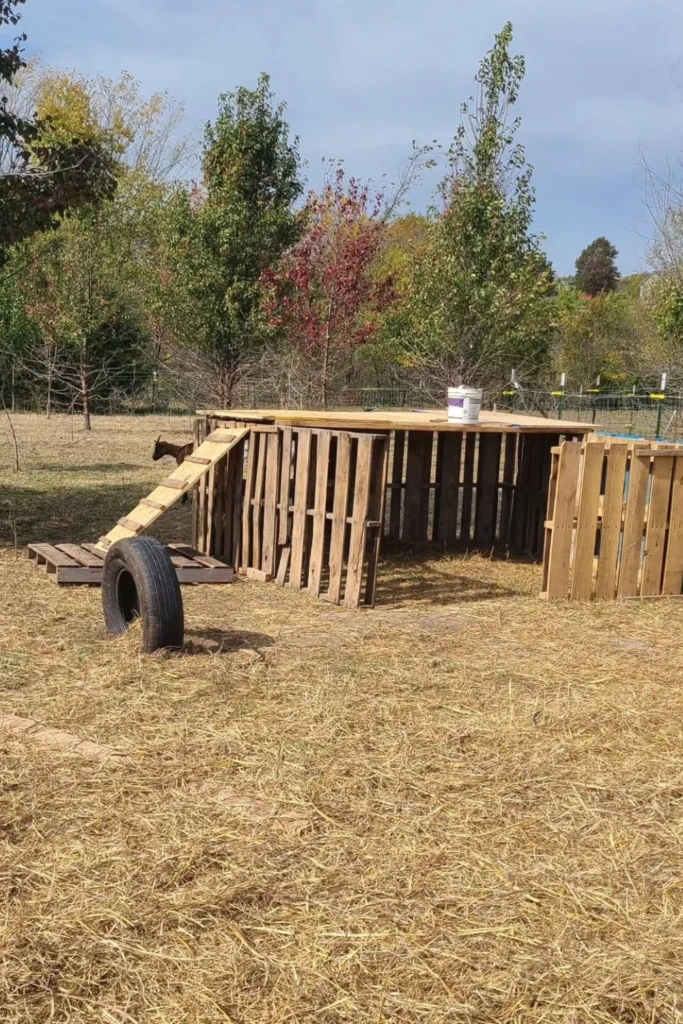
A pallet fortress combines climbing opportunities with a sheltered resting space.
Construct a sturdy wooden framework with an enclosed lower section and a reinforced upper platform. Use solid decking for the roof and ensure the supporting posts can handle the combined weight of several goats.
The lower area can provide shade, while the upper level becomes a lookout spot.
Install a wide access ramp and leave multiple openings at ground level so animals cannot become trapped by more dominant herd members.
Keep the structure ventilated, easy to clean, and free from narrow spaces where horns could become caught.
5. Fallen Logs
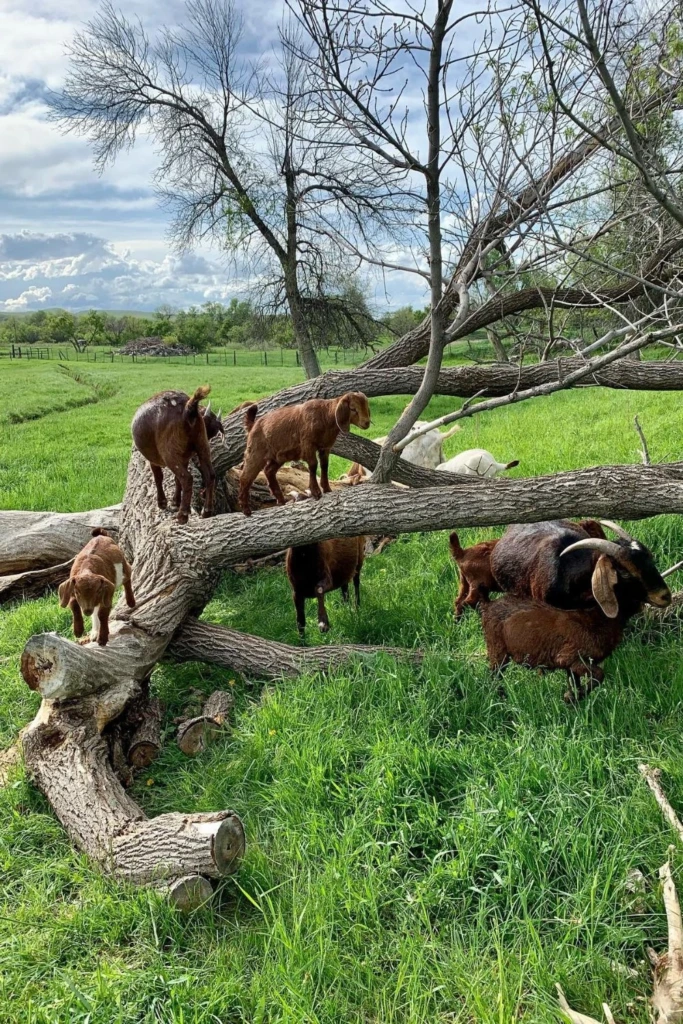
Natural logs are among the easiest materials to incorporate into a goat playground.
Select large, healthy logs without decay, sharp branches, or loose bark that could cause injuries. Lay them horizontally on stable ground and secure them against rolling.
Arrange several logs at different low heights to create a natural obstacle course.
Goats can step over them, walk along broad surfaces, or climb onto larger sections.
This option is particularly attractive for rustic farm settings because the materials blend naturally into the landscape.
Regularly inspect the wood for deterioration, insects, and slippery surfaces.
6. Tire Tunnel
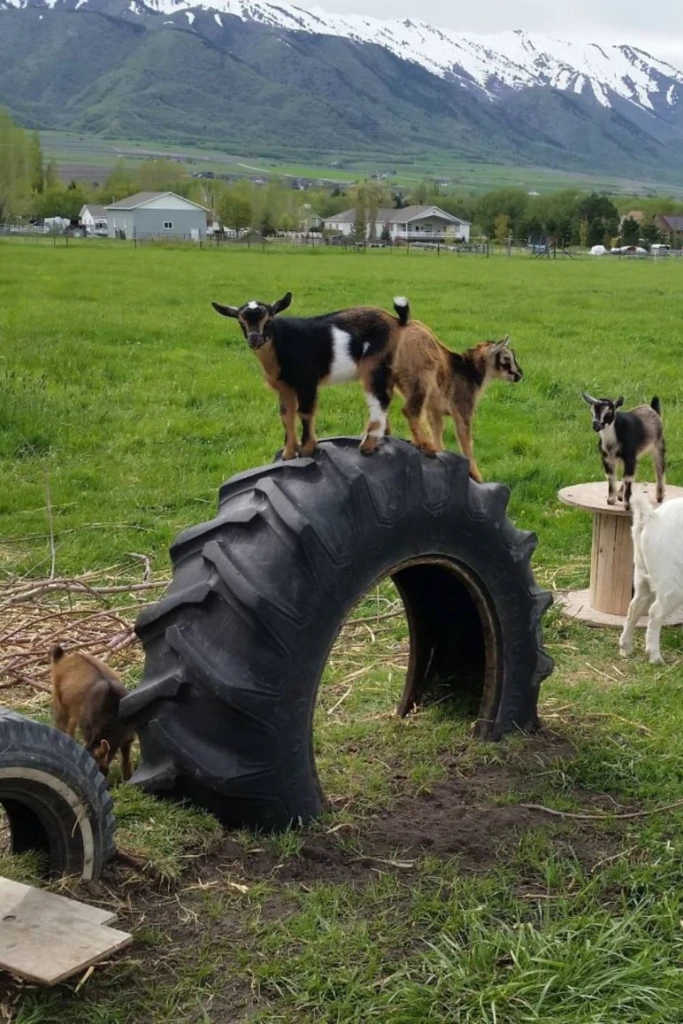
A large tractor tire can create an interesting climbing obstacle without requiring elaborate carpentry.
Partially bury a clean, structurally sound tire in compacted ground, leaving a curved section exposed. Anchor it securely so it cannot move when goats climb over it.
The rounded surface encourages careful foot placement and adds variety to an otherwise flat enclosure.
Choose a tire size appropriate for your goats and avoid openings where animals could become trapped.
Drill suitable drainage openings where safe and practical, or arrange the tire so rainwater cannot collect inside.
Place the obstacle away from fences and other hard structures.
7. Raised Deck
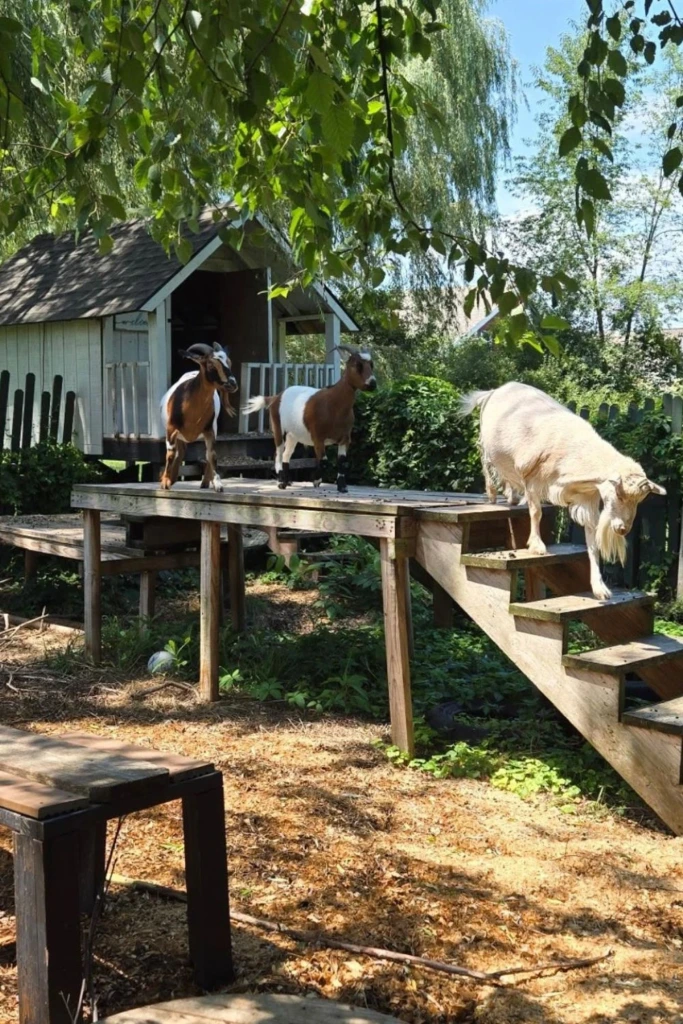
A raised wooden deck provides an elevated area where goats can gather and observe their environment.
Build the deck using strong posts, cross-bracing, and closely fitted boards. Anchor the supports properly rather than relying on loose blocks.
Add broad steps or a gently sloped ramp to make the platform accessible.
The height should suit the size, age, and mobility of your animals. Lower decks are generally easier to manage and reduce the consequences of accidental falls.
Leave sufficient space around the structure for safe movement, and inspect all connections periodically.
8. Picnic Beam
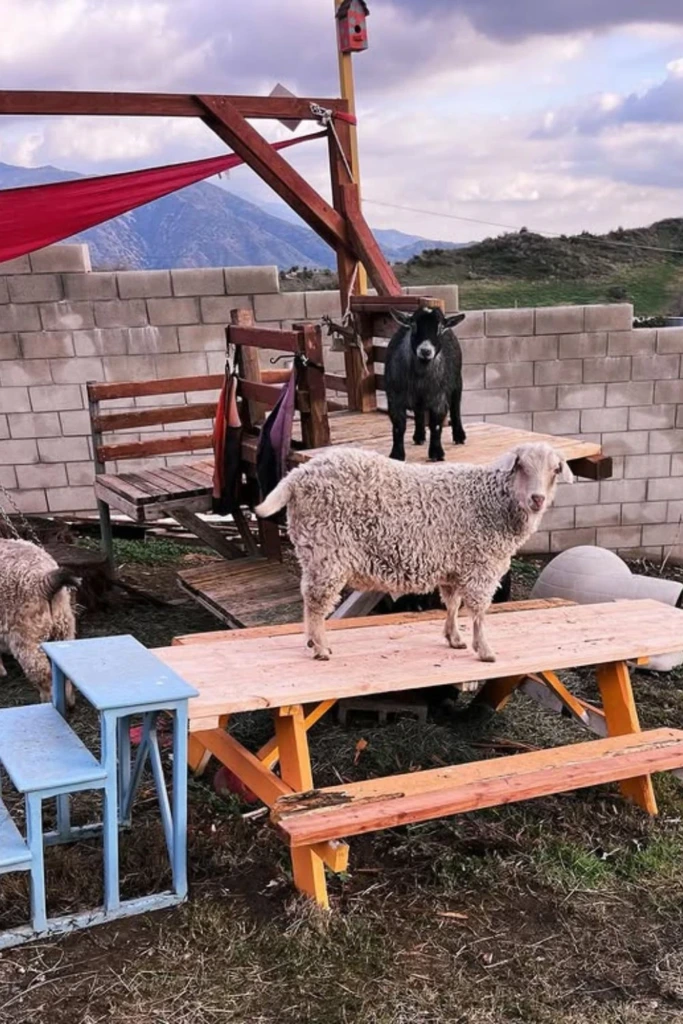
An old wooden picnic table can be repurposed into a low climbing obstacle if its construction is suitable.
Remove damaged components, reinforce the legs, and check that the table cannot fold or collapse under pressure.
The tabletop can serve as a broad walking platform, while securely supported benches create lower stepping surfaces.
If the original table is too tall or unstable, rebuild it as a lower, fixed structure rather than using it unchanged.
Sand rough edges and replace weak boards before introducing the goats.
This project is particularly convenient when you already have unused outdoor furniture available.
9. Modular Platforms
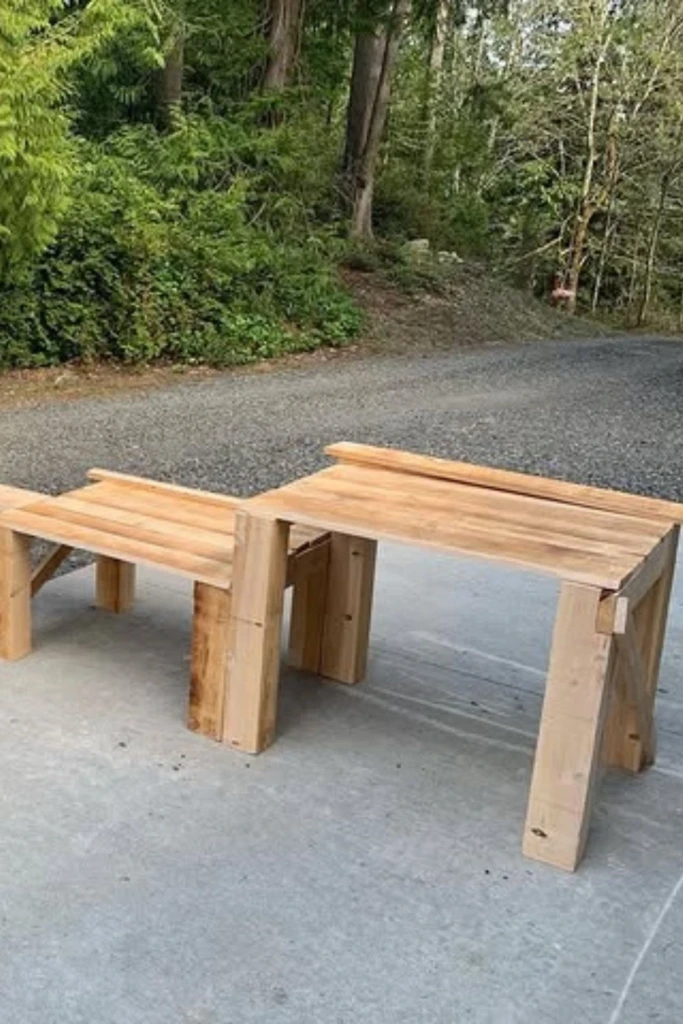
Modular platforms offer flexibility because individual climbing stations can be moved or rearranged as needed.
Construct several independent wooden boxes with solid tops and reinforced corners. Make each unit stable enough to resist tipping, or anchor it securely.
Use different low heights to create a progression of climbing challenges.
Place the platforms close enough for comfortable stepping, but avoid gaps where hooves could become trapped.
One advantage of this approach is that you can adapt the arrangement as young goats grow or herd behavior changes.
It also allows damaged sections to be repaired individually without dismantling the entire playground.
10. Ramp Tower
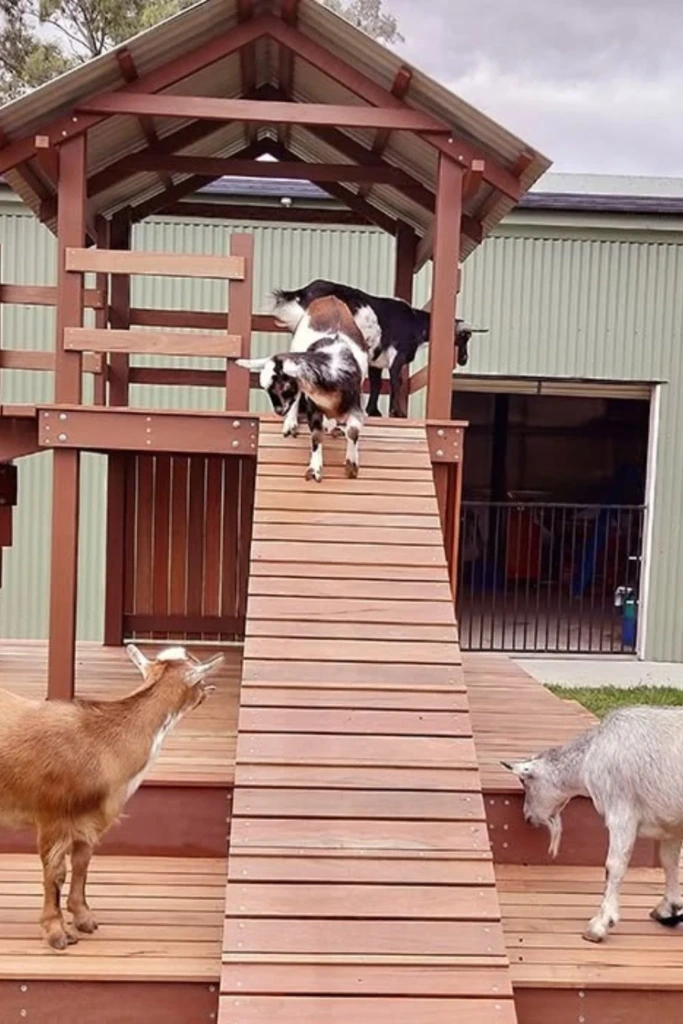
A ramp tower creates a dedicated climbing activity with a clear route upward and downward.
Start with a securely anchored platform supported by heavy timber posts. Attach a wide ramp at a manageable incline.
Install evenly spaced wooden cleats across the ramp to improve traction, particularly during damp weather.
For added safety, use solid side barriers where appropriate, ensuring they do not create head or horn entrapment points.
Avoid excessive height, especially for young, elderly, or less agile animals.
A second exit route can help reduce congestion when several goats want to use the structure simultaneously.
11. Lookout Levels
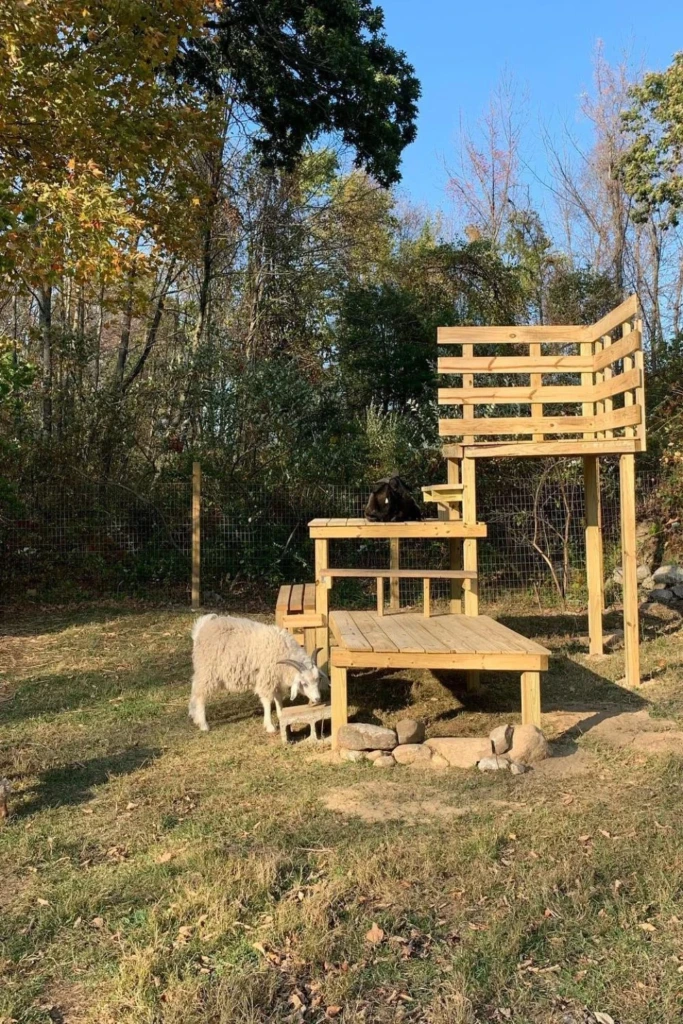
A tiered lookout structure gives goats several elevated resting places within one compact footprint.
Build two or three broad platforms at progressively increasing heights. Connect them with secure steps or short ramps.
Each level should provide enough space for a goat to turn around without being forced near an exposed edge.
Use sturdy supports and cross-bracing to prevent movement when multiple animals climb together.
Lower levels are particularly valuable because they allow smaller or less confident goats to participate without competing for the highest spot.
Position the structure where you can easily inspect and maintain it.
12. Pallet Bridge
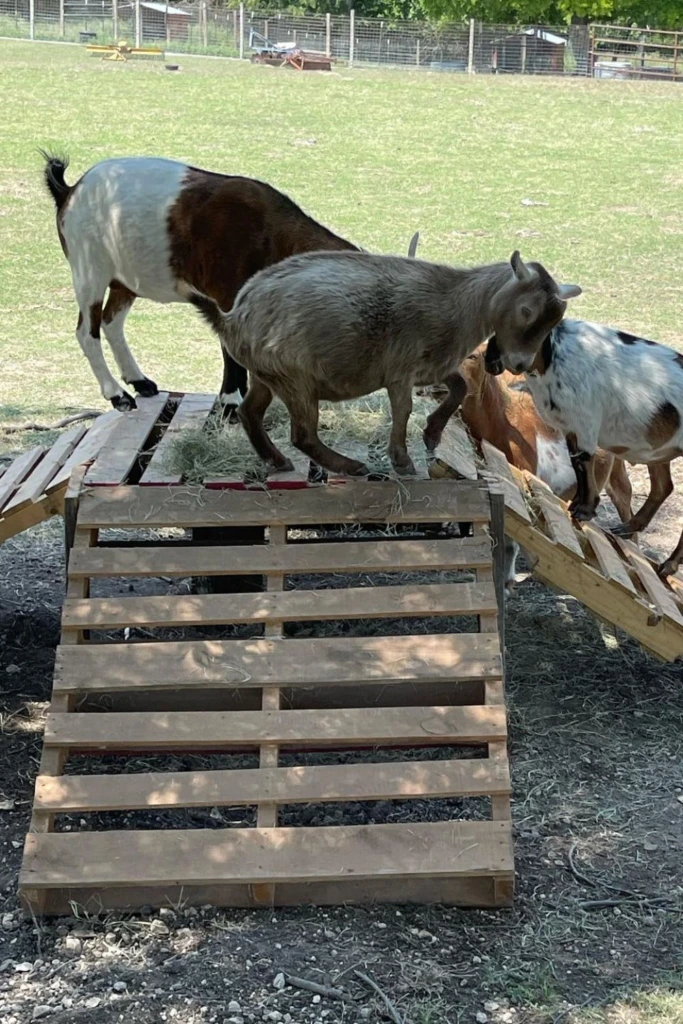
A pallet bridge introduces a raised walking route that connects two sections of a playground.
Create a rigid rectangular framework and cover the walking surface with continuous, securely fastened boards.
Support both ends firmly and reinforce the middle to prevent bending.
Add low ramps at each end, making sure the entrances and exits remain clear.
The bridge should be wide enough for comfortable movement and low enough to minimize fall risks.
Avoid using unsupported pallets as elevated walkways. Proper structural reinforcement is necessary because goats may jump, run, or gather on the bridge unexpectedly.
13. Climbing Circuit
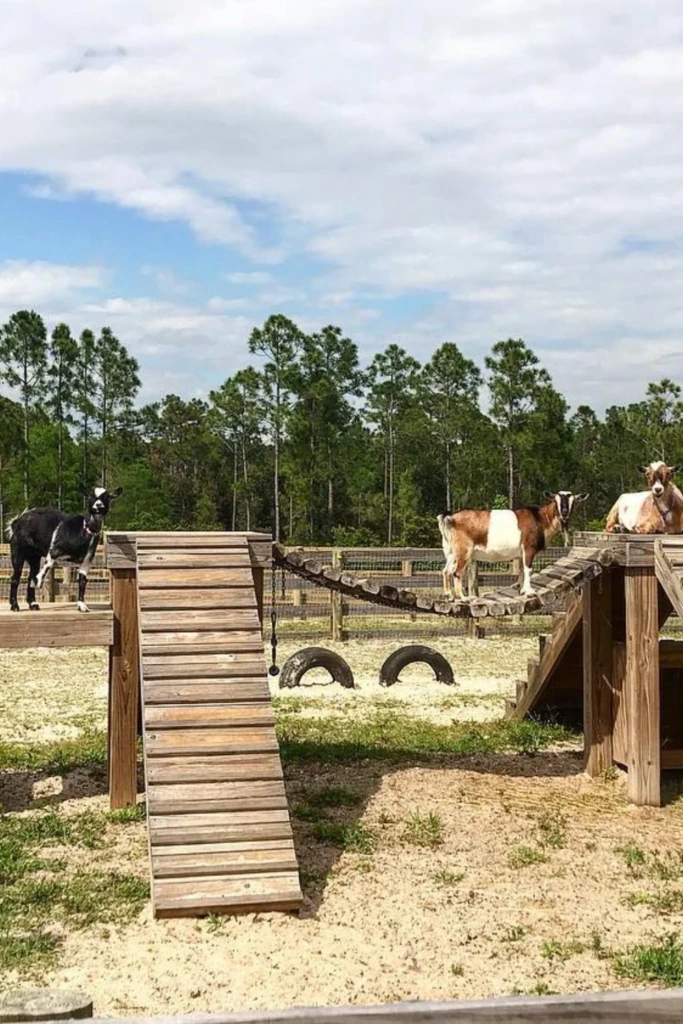
A climbing circuit connects several obstacles into one continuous activity area.
Combine low platforms, broad ramps, secured logs, and short bridges to create different routes through the enclosure.
Design the course with several entry and exit points so goats can choose where to go.
Keep transitions between obstacles manageable and avoid forcing animals to make long jumps.
A circuit works especially well for active herds because it spreads enrichment opportunities across a larger area.
You can also modify individual sections over time without rebuilding the entire arrangement.
14. Spool Path
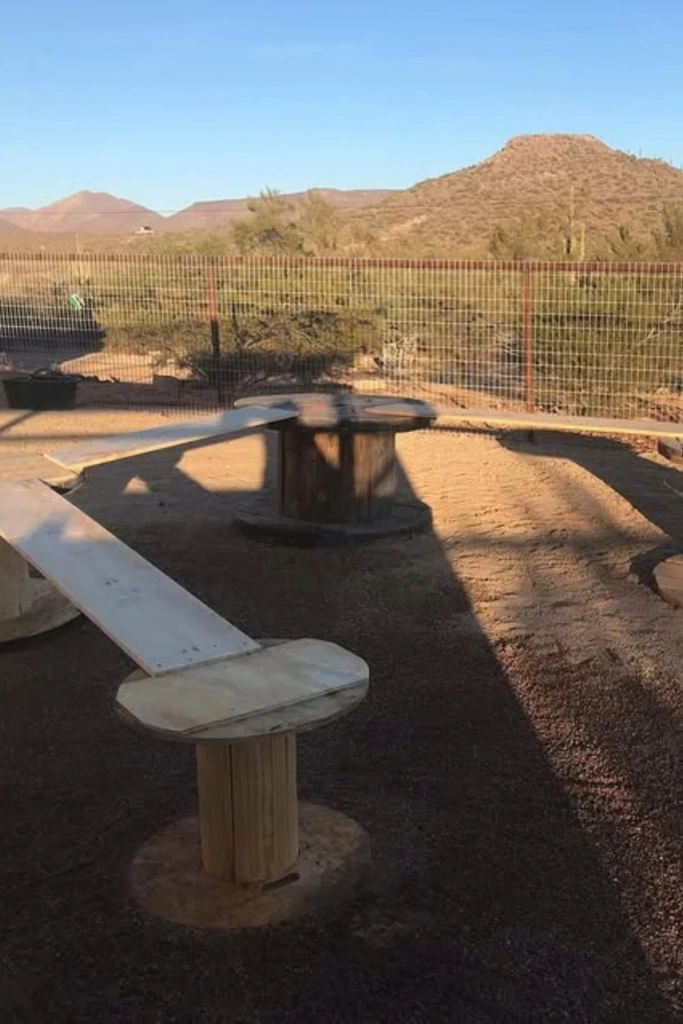
A spool path uses multiple wooden cable spools to form a sequence of stepping platforms.
Choose sturdy spools with broad, secure tops and arrange them at modest heights.
Short wooden walkways can connect the platforms, provided each walkway is wide, rigid, and firmly attached at both ends.
Avoid narrow balancing boards that could cause a goat to slip or become stranded.
The combination of flat surfaces and short transitions encourages controlled climbing.
Leave enough space around the course for goats to step down safely if they decide not to continue.
15. Spool Pods
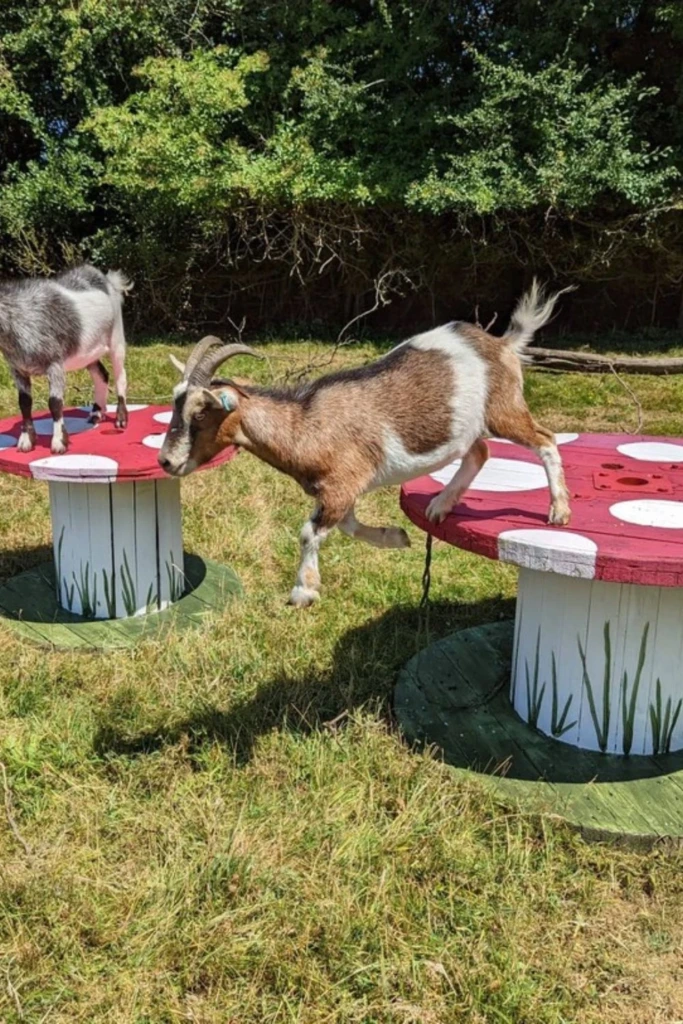
Spool pods are individual raised platforms arranged across an open area.
Unlike connected climbing courses, each spool stands separately and offers its own resting or observation point.
Use low, stable spools and anchor them against movement. Position them so goats can approach and leave without colliding with nearby equipment.
Varying the heights slightly can make the arrangement more interesting while keeping the activity accessible.
For larger herds, provide several pods so dominant goats cannot monopolize every elevated space.
This design is particularly useful in grassy enclosures with plenty of open ground.
16. Spool Network
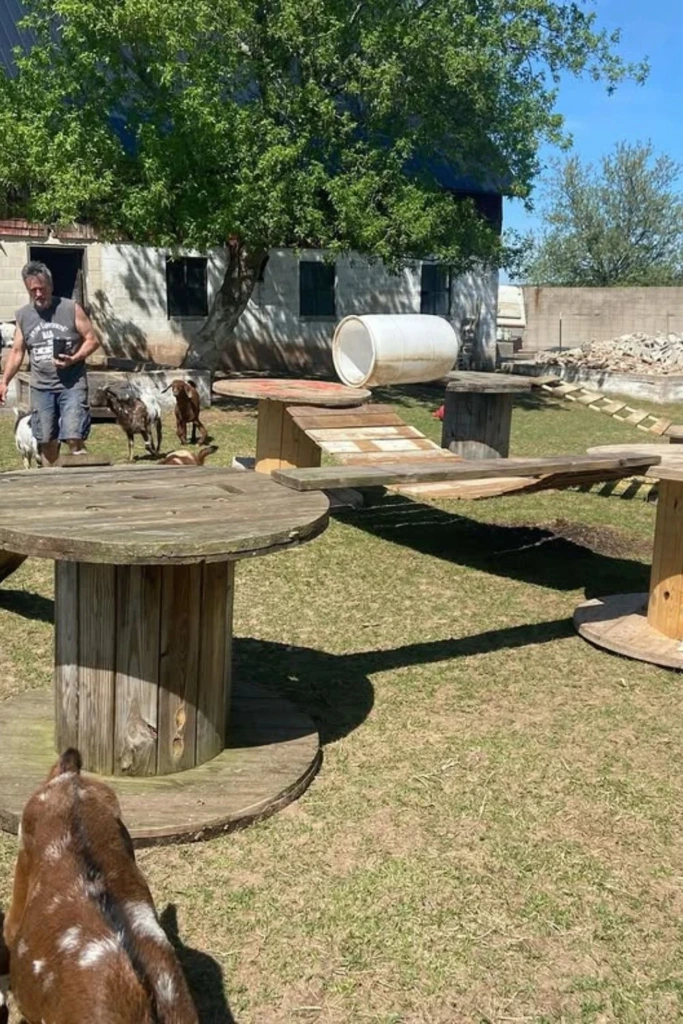
A spool network creates a more elaborate playground using several connected wooden platforms.
Arrange the spools in a branching layout rather than a single straight line. Connect selected sections using sturdy ramps or broad wooden bridges.
Include alternative routes and ground-level exits throughout the network.
All connections should be securely fastened, and each spool must remain stationary under load.
The layout can provide climbing, exploration, and resting opportunities within one coordinated structure.
Start with a small arrangement and expand only after observing how comfortably your goats use it.
17. Winter Stack
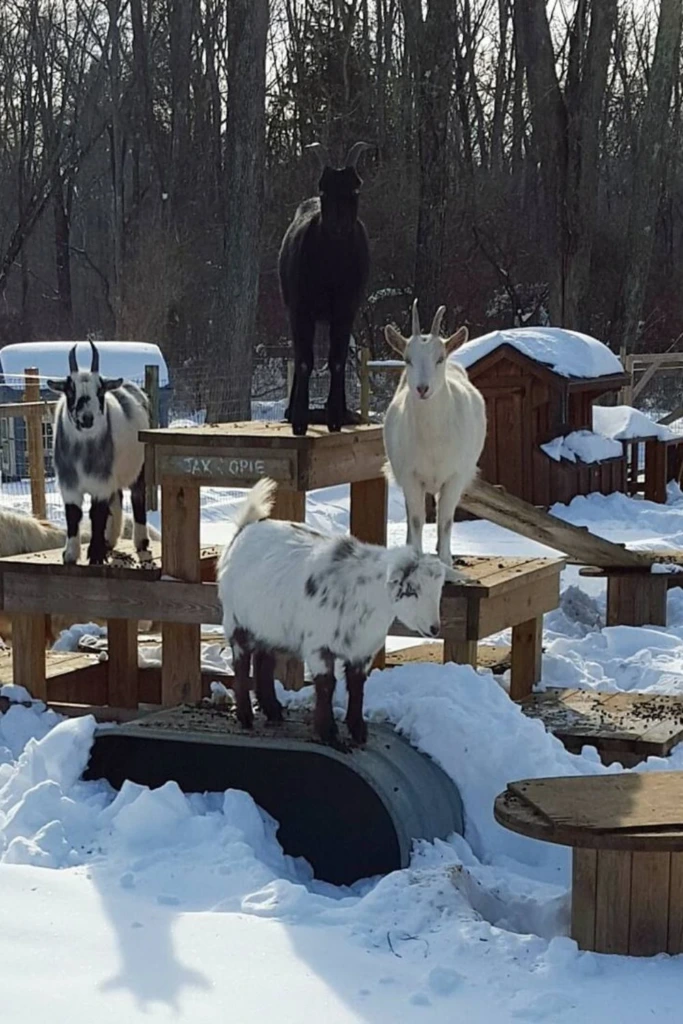
A winter climbing setup should prioritize secure footing and easy access.
Build a series of low wooden platforms arranged like broad steps. Keep the gaps small and the surfaces easy to inspect.
Textured boards can provide better traction than smooth, polished wood, although snow and ice must still be removed.
Avoid steep ramps and high platforms during freezing conditions.
Position the structure on well-drained ground where melting snow will not create persistent puddles.
Regularly check for frozen surfaces, loose boards, and hidden ice before allowing goats to play.
18. Playhouse Ramp
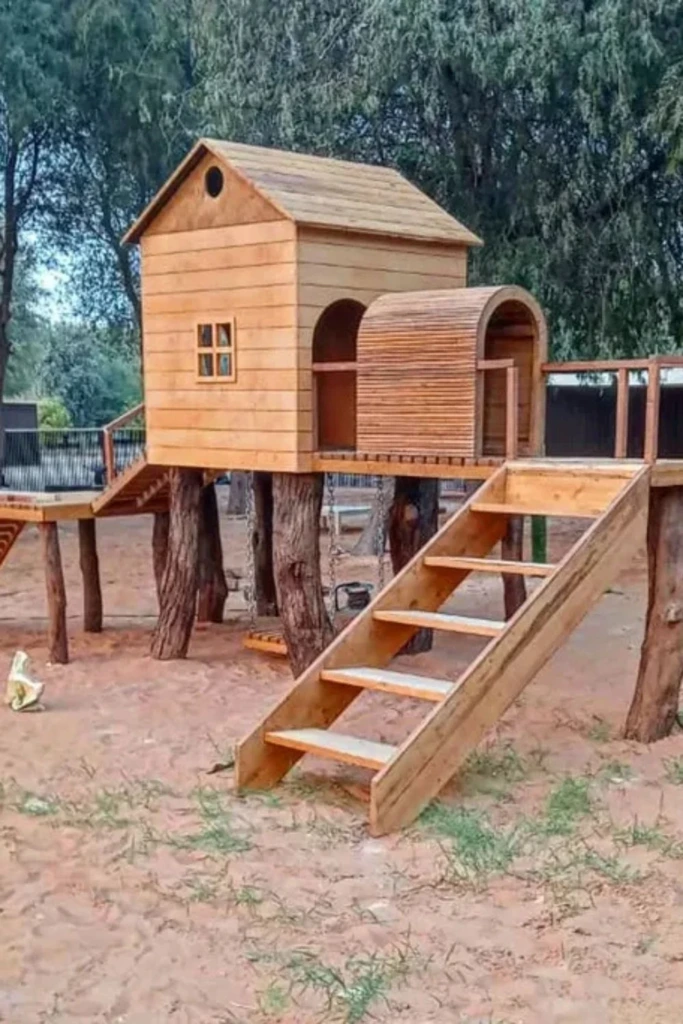
A raised playhouse can serve as both an enrichment structure and a sheltered retreat.
Build a compact wooden shelter with a strong roof designed to support climbing only if that use is intentional and properly engineered.
Attach a broad ramp leading to the upper area, and include traction strips to prevent slipping.
The space underneath should remain ventilated and accessible for cleaning.
Provide more than one ground-level opening to reduce the chance of animals becoming cornered.
Keep the structure away from perimeter fencing and ensure all supporting posts are firmly anchored.
19. Hay Climber
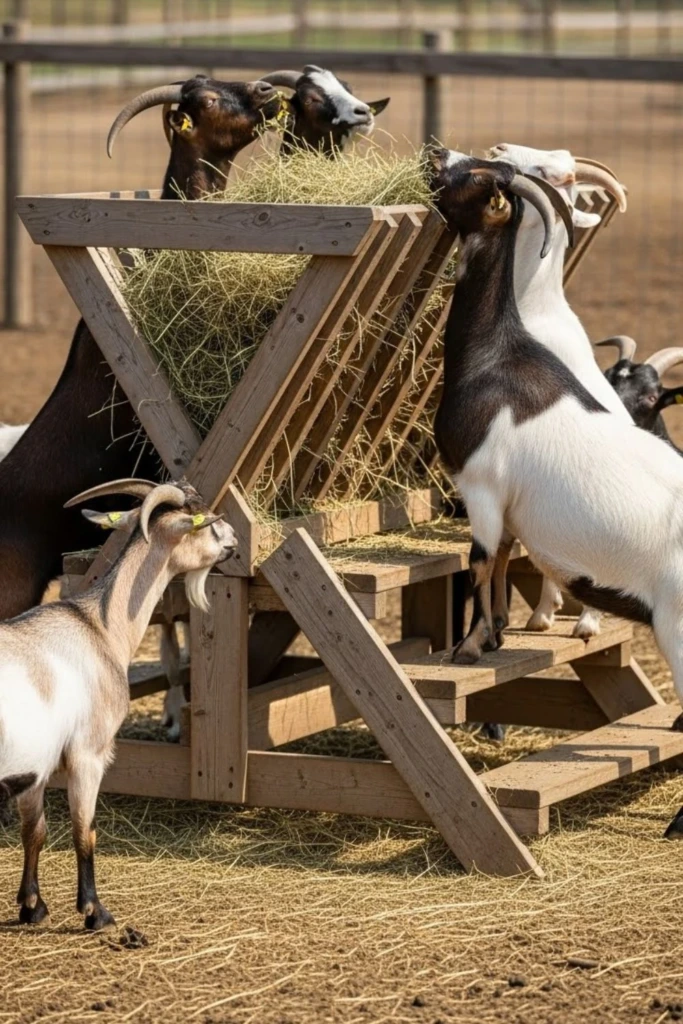
A hay climber combines feeding enrichment with gentle physical activity.
Build a low wooden step or platform beside a properly designed hay feeder. The goal is to offer a different standing position, not to make food difficult to reach.
Keep the feeder at a comfortable height and provide sufficient feeding space for the herd.
Avoid designs where goats must stretch dangerously, climb into the feeder, or place their heads through openings that could trap horns.
Use secure feeder covers or barriers where needed to prevent animals from standing in hay and contaminating it.
Always provide accessible feeding options for goats that cannot or prefer not to climb.
20. Rock Steps
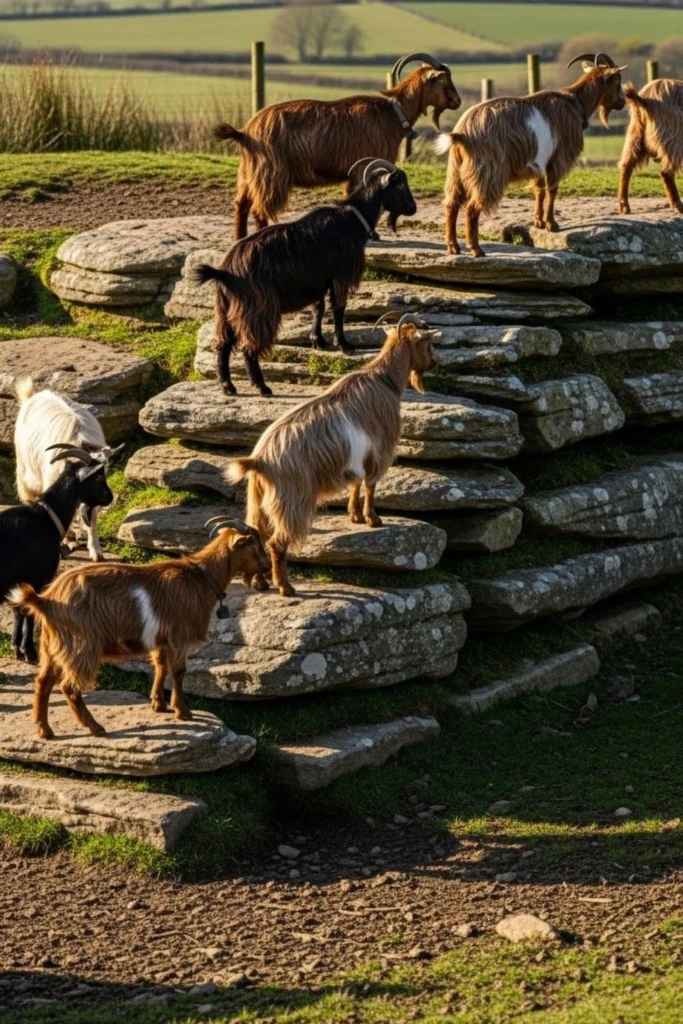
Large natural stones can create a durable climbing feature with minimal ongoing maintenance.
Choose broad rocks with textured surfaces and no sharp edges.
Set the stones firmly into the ground, using compacted material underneath to prevent rocking or settling.
Arrange them in gradual steps rather than creating a steep pile.
Leave enough space on each stone for secure hoof placement.
Rock steps are particularly suitable for dry environments, although they can become slippery when wet or covered with algae.
Inspect the arrangement after heavy rainfall to ensure the stones remain stable.
21. Brush Station
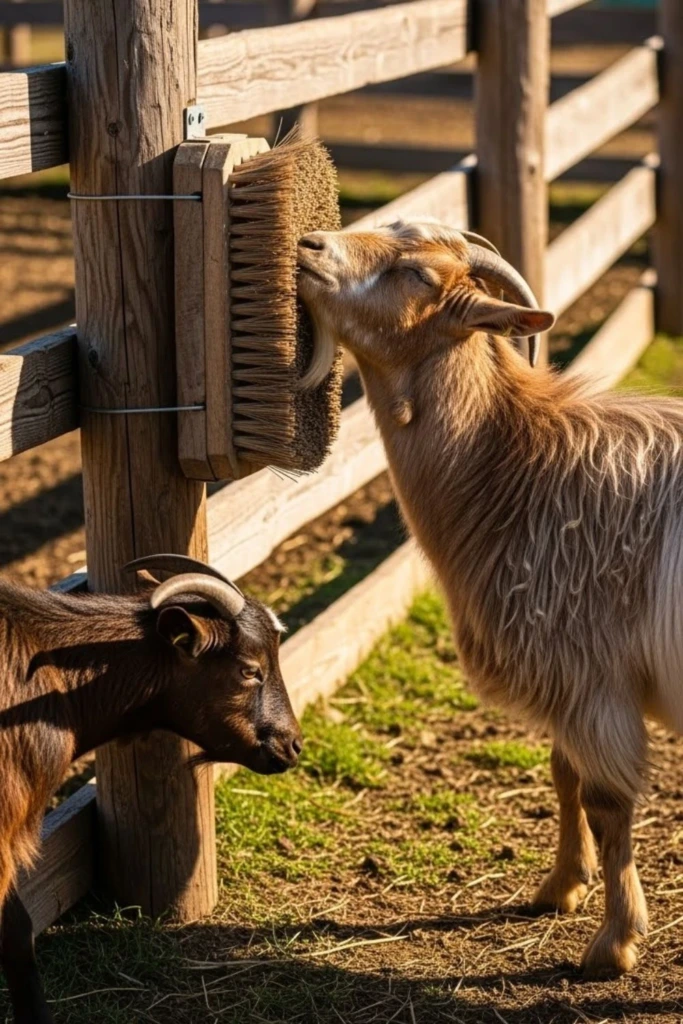
Not every playground feature needs to involve climbing.
A fixed scratching station gives goats an appropriate place to rub against a textured surface.
Attach a durable livestock grooming brush to a strong wooden post or wall. Position it at a height that allows goats to rub their shoulders, necks, and sides comfortably.
Use rounded hardware and ensure the brush cannot detach during vigorous use.
Avoid stiff, sharp bristles that might injure the skin.
A low, stable platform nearby can make the station accessible from different positions, but it should not restrict movement.
Regularly clean the brush and inspect it for wear.
22. Sand Mound
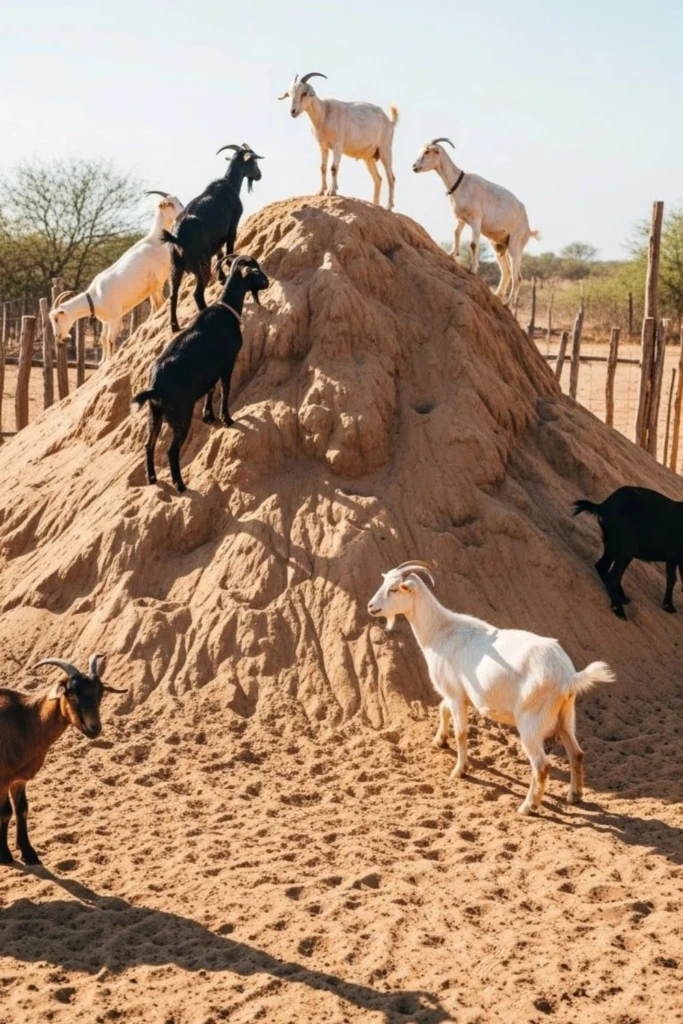
A compacted earth or sand mound provides a simple