20 DIY Cat Toy Ideas for 2026
Cats need more than a comfortable bed and a full food bowl to stay happy. Regular play gives them an outlet for their natural instincts, helps them stay active, and provides mental stimulation throughout the day. Fortunately, you don't have to spend a fortune on store-bought toys to keep your feline friend entertained.
With a few everyday supplies, you can create homemade cat toys that encourage chasing, batting, climbing, and problem-solving. From simple cardboard activities to soft fabric creations, these projects offer plenty of ways to make playtime more exciting while reusing materials you already have at home.
Whether your cat loves chasing moving objects or prefers investigating hidden treats, there is a DIY project to suit its personality. The ideas below include affordable crafts for different play styles, along with practical tips for making each activity enjoyable.
How to Make a Fluffy Cat Toy?
A fluffy cat toy can be a wonderful choice for cats that enjoy carrying, grabbing, or kicking their playthings. You can make one using a small piece of fleece, felt, or another durable fabric that won't easily unravel.
Cut the material into two matching shapes, sew the edges together, and leave a small opening for the filling. Add clean fabric scraps or pet-safe stuffing, then close the opening securely. A small amount of catnip can make the finished toy more appealing to cats that respond to its scent.
Try making a mouse, cushion, or rounded shape that your cat can comfortably hold between its paws. Keep the design lightweight enough to toss around but sturdy enough to withstand repeated play.
Avoid loose threads, plastic decorations, buttons, and detachable parts that could be swallowed. Inspect the toy regularly, and replace it if the seams begin to open.
1. Cardboard Play Zone
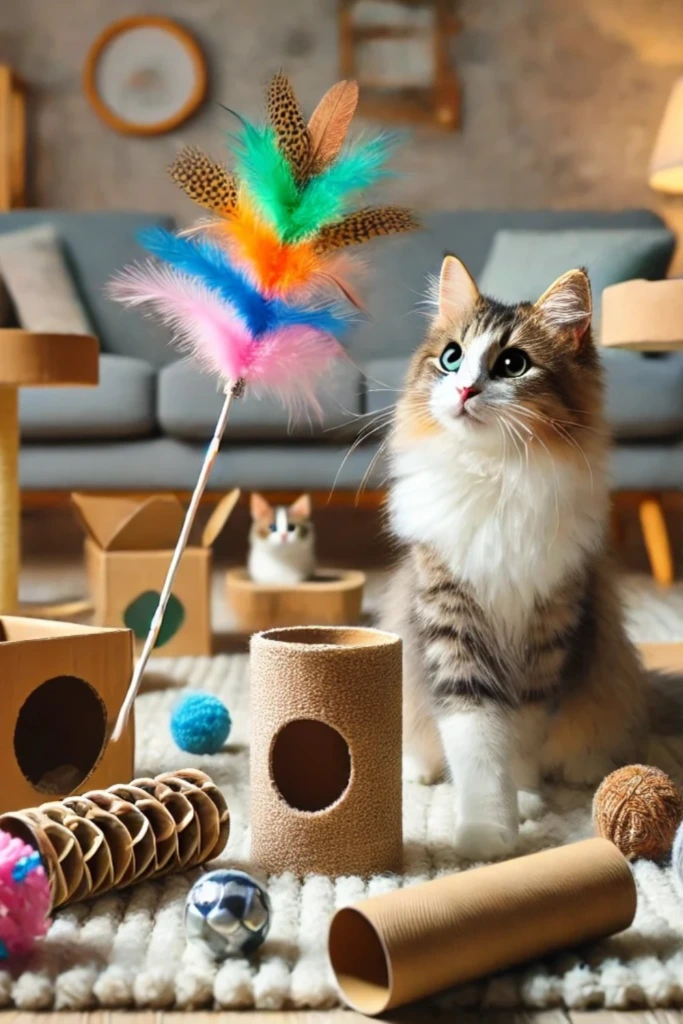
Turn spare shipping boxes and cardboard tubes into a miniature playground for your cat. Arrange several boxes together, cut openings between them, and add a few peek-through holes to create hiding spots and short tunnels.
Place a favorite toy inside one of the boxes to encourage exploration. You can also move a wand toy past the openings to inspire your cat to reach, stalk, and pounce.
Use clean cardboard without staples, sharp edges, or exposed adhesive. Keep the structure low and stable so it doesn't collapse when your cat jumps inside.
2. Flat Scratcher Board
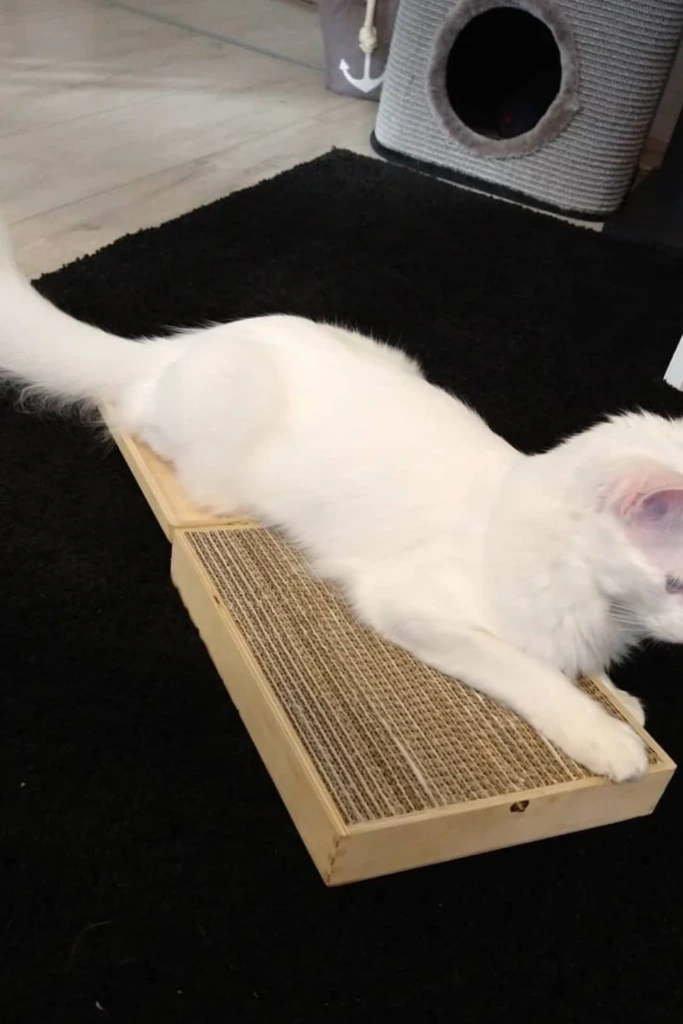
A homemade scratcher is an inexpensive way to give your cat an appropriate place to sharpen its claws and stretch its body. Corrugated cardboard works particularly well because its layered texture provides satisfying resistance.
Cut cardboard strips to a uniform width and arrange them tightly inside a shallow frame. Alternatively, stack flat pieces together and secure them with pet-safe adhesive, allowing everything to dry completely before use.
Position the scratcher near your cat's favorite resting spot or in an area where it frequently scratches furniture. Replace the cardboard when it becomes excessively worn or starts shedding small pieces.
3. Doorway Batting String
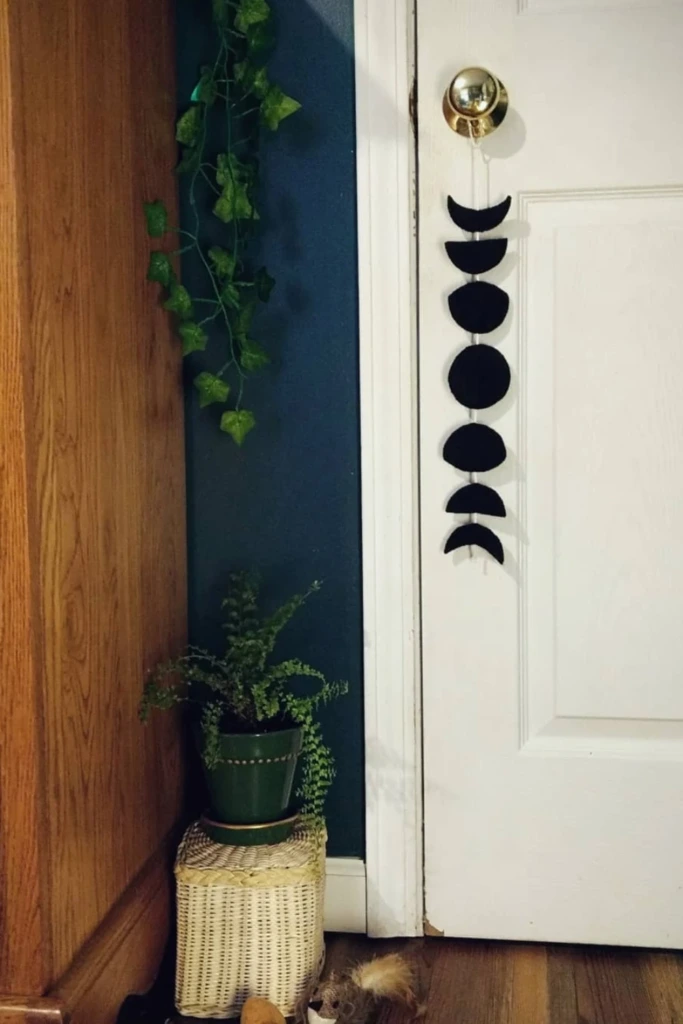
Create a simple batting activity with soft fabric shapes that move when your cat touches them. Cut felt into circles or other large shapes and attach them to a short play wand for supervised sessions.
You can move the shapes from side to side, pause briefly, and let your cat attempt to catch them. Changing the speed and direction keeps the activity interesting without requiring complicated equipment.
Although hanging toys may look convenient, never leave your cat alone with an accessible string or loop. Loose strings can cause serious intestinal injuries if swallowed. Put the toy away after play and keep it out of reach when you're not supervising.
4. Ribbon Walk-Through
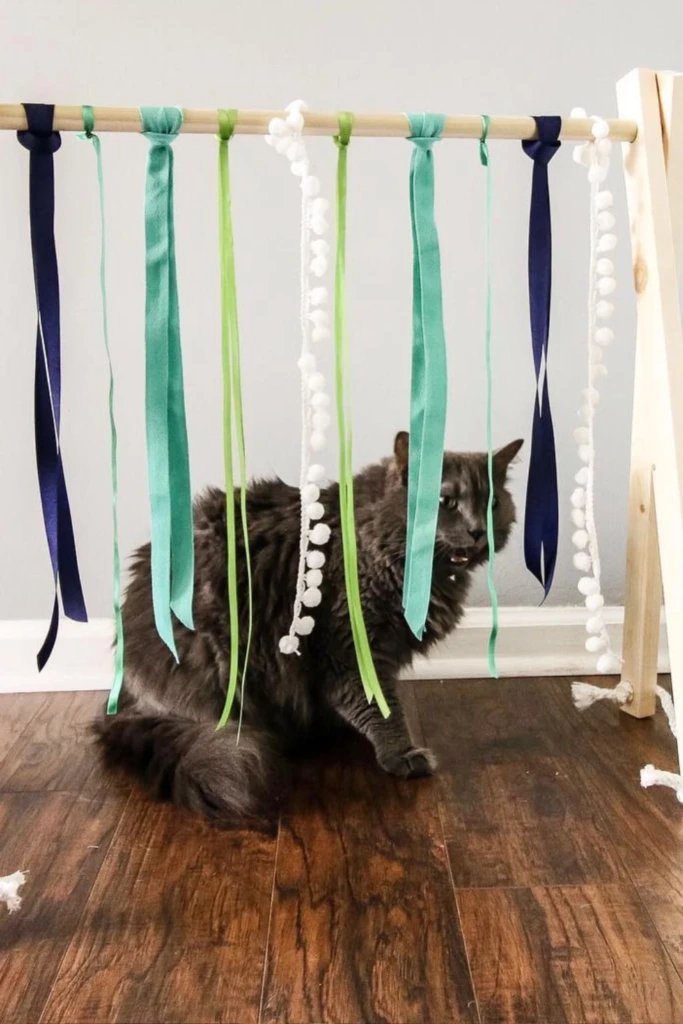
Cats that enjoy investigating new textures may appreciate a small sensory play frame. Use a stable wooden frame or another sturdy support to display different textured fabric pieces at varying heights.
For safety, choose broad fabric panels rather than long, narrow ribbons, yarn, or dangling cords. Secure every piece firmly and remove any material that becomes loose or frayed.
Place the frame in an open area where your cat can approach from different directions. Let your pet investigate at its own pace instead of forcing it through the materials. This is an especially useful project for introducing variety into an indoor cat's environment.
5. Wool Pom-Pom Balls
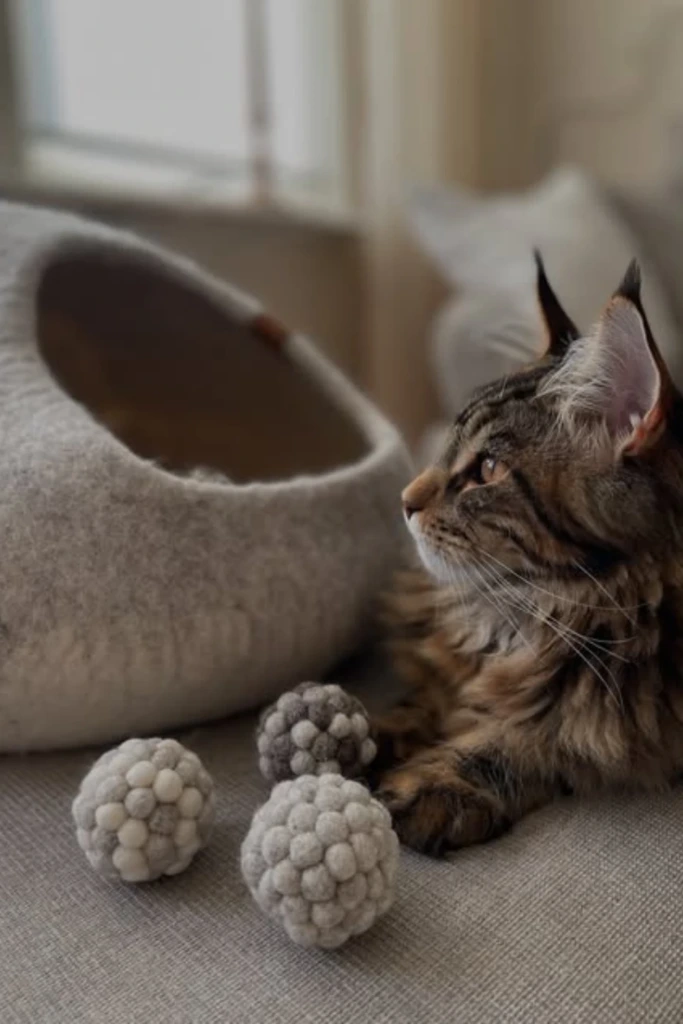
Soft wool balls can provide simple entertainment for cats that enjoy batting small objects across the floor. Their lightweight design makes them easy to push, chase, and retrieve.
To make them, shape clean wool roving into compact balls and felt the fibers together using an appropriate felting technique. Make sure the finished balls hold their shape and don't shed loose strands.
Choose a size that cannot easily be swallowed, and inspect each ball before play. Avoid loose wool, decorative threads, and small embellishments that could become choking hazards.
Once the balls are ready, roll one gently across the floor to encourage your cat to chase it. Keep a few extras available so you can rotate them when one becomes worn.
6. Peek-Hole Box Game
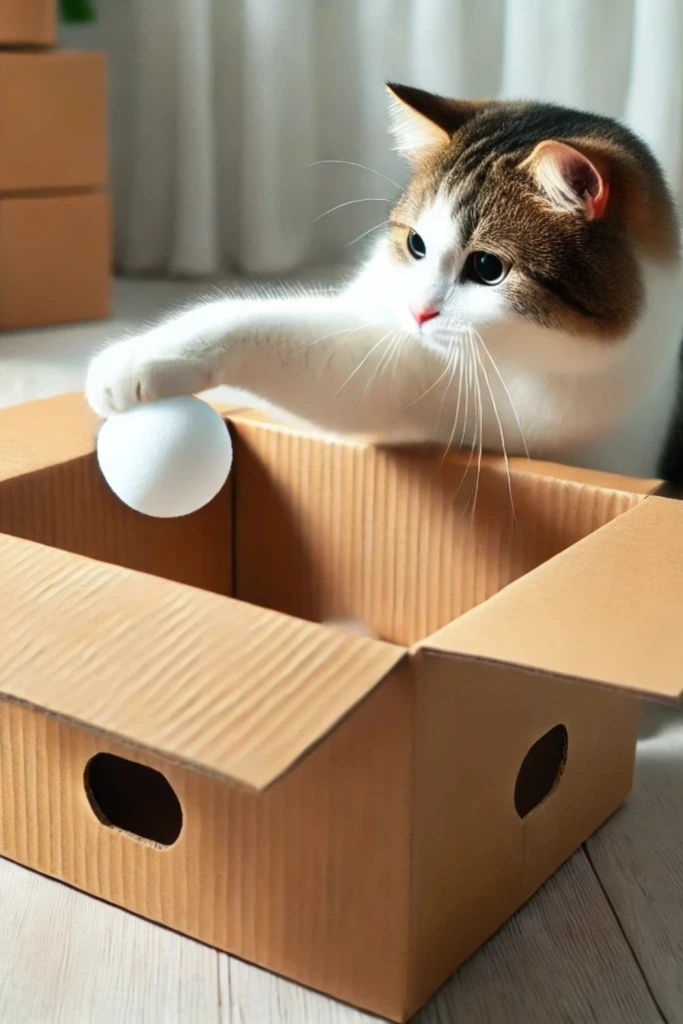
A peek-hole box turns an ordinary cardboard container into an interactive hunting game. Cut several openings in the top and sides, making sure the edges are smooth and large enough for your cat to withdraw its paws comfortably.
Place a large, lightweight cat toy inside the box. Your cat can peer through the holes, reach inside, and try to move the hidden object toward an opening.
You can make the game more engaging by occasionally changing the toy's position. For food-motivated cats, a few pieces of their regular kibble can also encourage investigation.
Avoid small objects that could be swallowed or become trapped inside the box. Keep the box open enough for your cat to exit easily, and remove it if it becomes damaged.
7. Bottle Spinner Puzzle
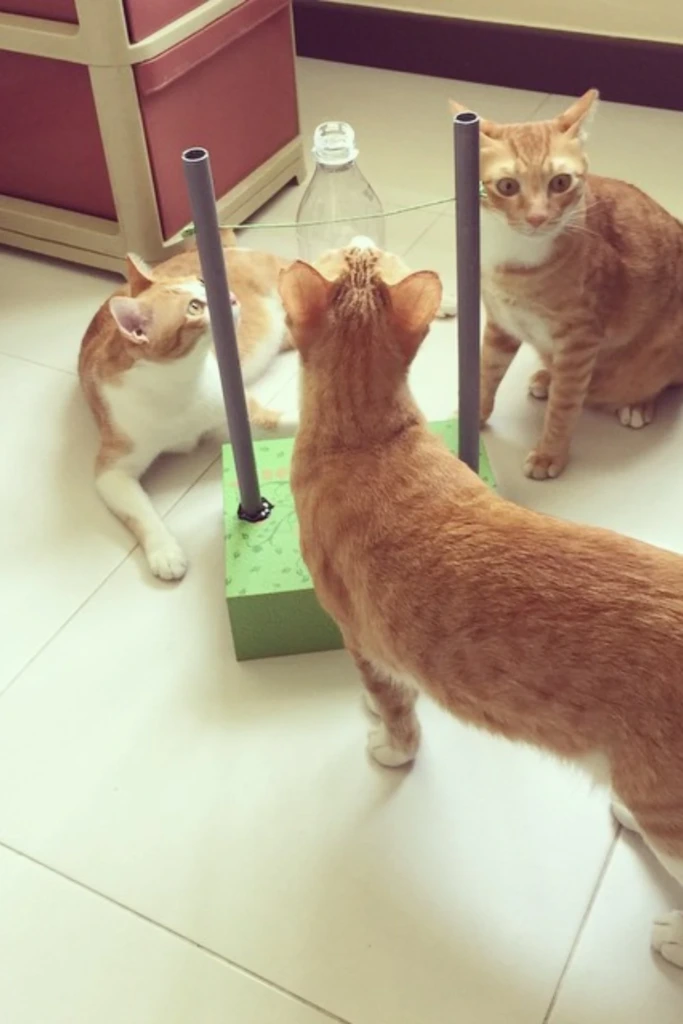
A treat-dispensing puzzle can give curious cats a rewarding challenge. One homemade version uses a purpose-designed, food-safe container that rotates on a securely mounted axle when the cat bats it.
Add a small amount of dry cat food or treats, then adjust the opening so that food comes out gradually. Start with an easy setting to help your cat understand how the puzzle works.
Stability is essential. The rotating component must not pinch paws, expose sharp edges, or detach into swallowable pieces. Avoid using an improvised plastic bottle if its cap, ring, or cut edges could become accessible.
For a simpler alternative, place a few pieces of kibble inside a sturdy cardboard treat puzzle with large, smooth openings. Supervise the activity and clean away food residue after use.
8. Fluffy Kick Ball
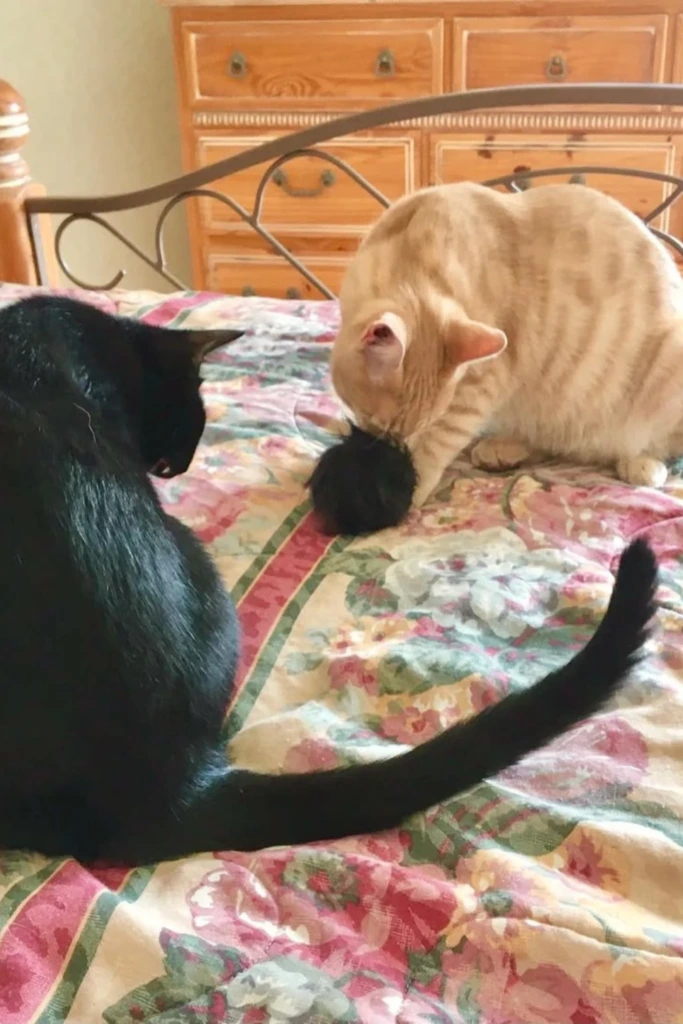
Some cats love wrapping their front paws around a toy and kicking it with their back legs. A soft kicker gives them an appropriate object for this energetic behavior.
Cut a piece of sturdy fleece into a rectangle, fold it lengthwise, and sew the long edge and one end closed. Turn the fabric right side out, add pet-safe filling, and stitch the remaining opening securely.
A short, rounded cylinder is often easier to grasp than a perfectly round ball. You can experiment with different lengths to find a comfortable size for your cat.
Avoid decorative tails, elastic attachments, and loose fabric strips. Check the seams regularly, particularly if your cat plays vigorously or bites the toy frequently.
9. DIY Foraging Board
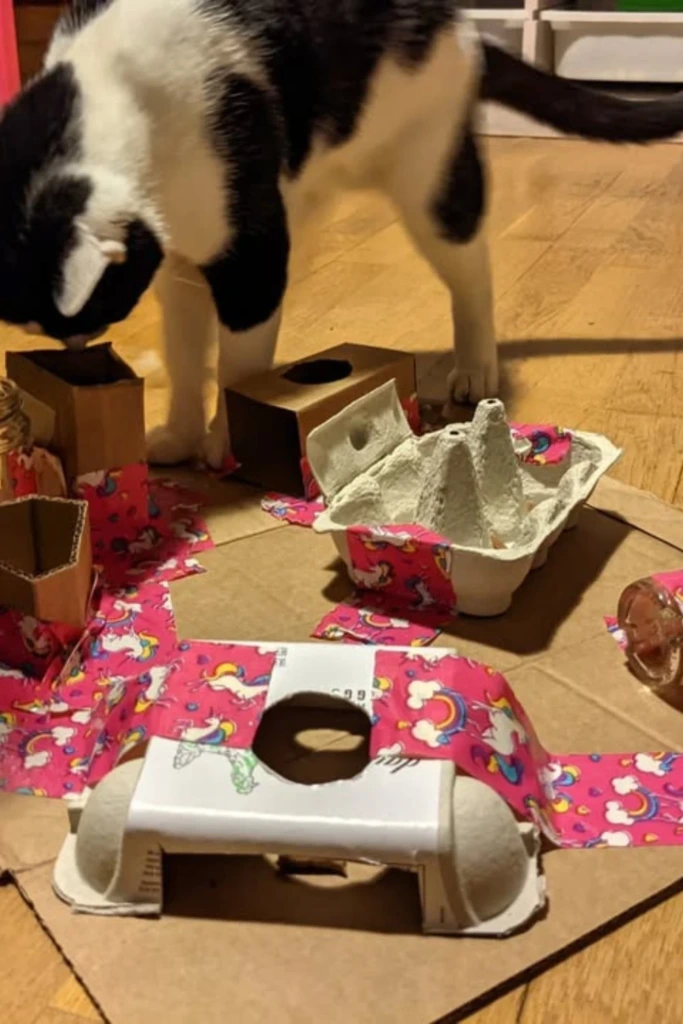
A foraging board encourages your cat to search for food instead of eating every piece directly from a bowl. It can be especially useful for cats that enjoy investigating objects with their paws.
Start with a clean, shallow cardboard tray and create several compartments using folded cardboard dividers. Place a few pieces of dry food in different sections so your cat has to explore the board to find them.
Keep the first version simple, then gradually introduce additional compartments as your cat learns the activity. You can also vary the location of the food to make repeated sessions more interesting.
Choose a sturdy base that won't slide around easily. Avoid glass jars, sharp-edged containers, and small detachable pieces. Replace the board whenever it becomes damp, dirty, or heavily chewed.
10. Giant Whack-a-Mole Box
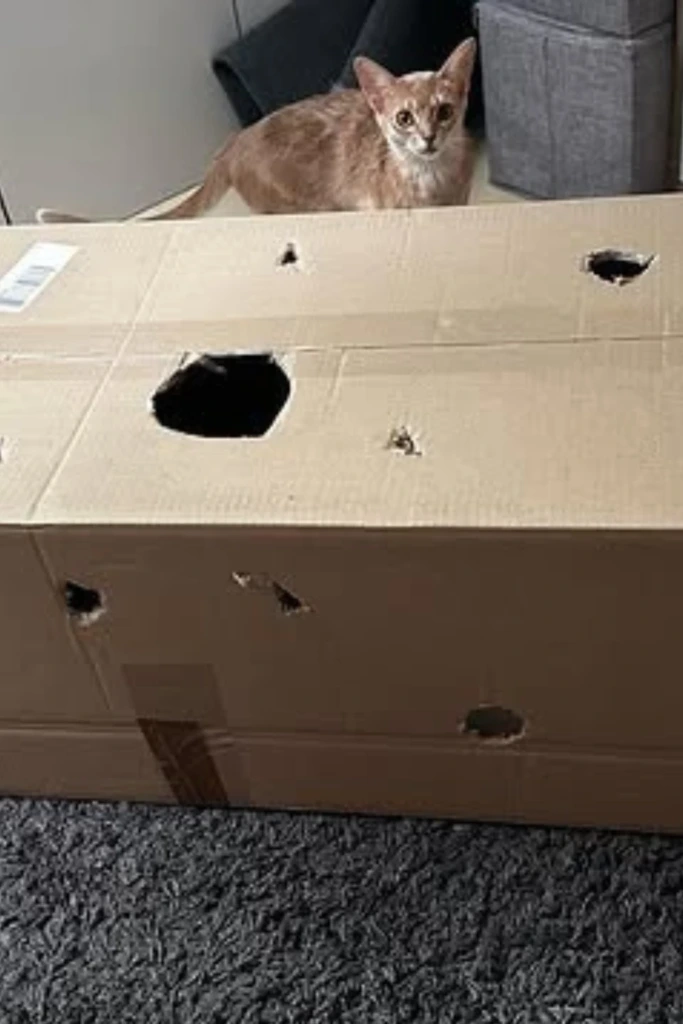
If your cat loves surprise attacks, a large cardboard box can become a playful hide-and-seek station. Cut several generously sized openings across the top and sides, then use a cat wand to make a toy appear briefly through different holes.
The unpredictable movement encourages stalking, reaching, and pouncing. Pause between movements to give your cat time to watch and plan its next attempt.
Keep your hands outside the openings while your cat is excitedly swiping. Use a wand or another suitable toy to prevent accidental scratches, and make sure every opening has smooth edges.
The box should be large enough for your cat to move around comfortably without getting stuck. When playtime ends, remove the wand and store it safely.
11. Sock Toy Trio
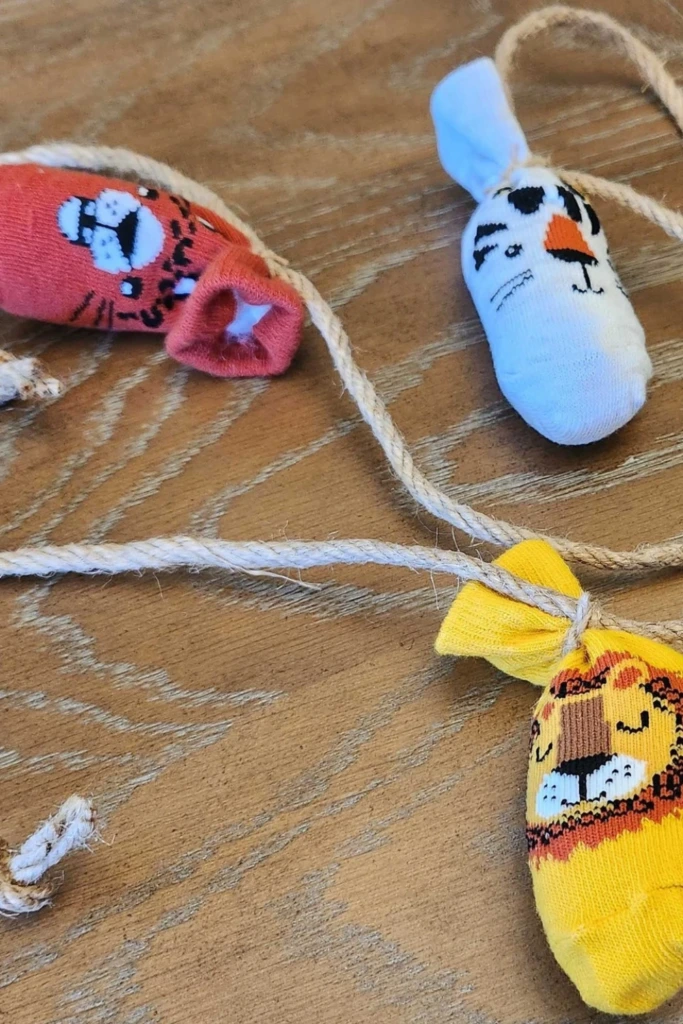
Repurpose clean, unwanted socks into soft toys with minimal sewing. Cut the socks into suitable pieces, fill them with clean fabric scraps, and securely stitch every opening closed.
Make several shapes with different textures so your cat can choose between them. One might be a small cushion, while another could be a compact padded toy for batting around.
Avoid leaving a tied sock opening or adding loose string as a tail. Knots can loosen during chewing, and exposed threads may be swallowed.
Washable fabric is useful because homemade toys can collect dust, fur, and saliva. Inspect each toy frequently and discard it if the stitching weakens or the filling becomes exposed.
12. Mixed Fabric Toy Set
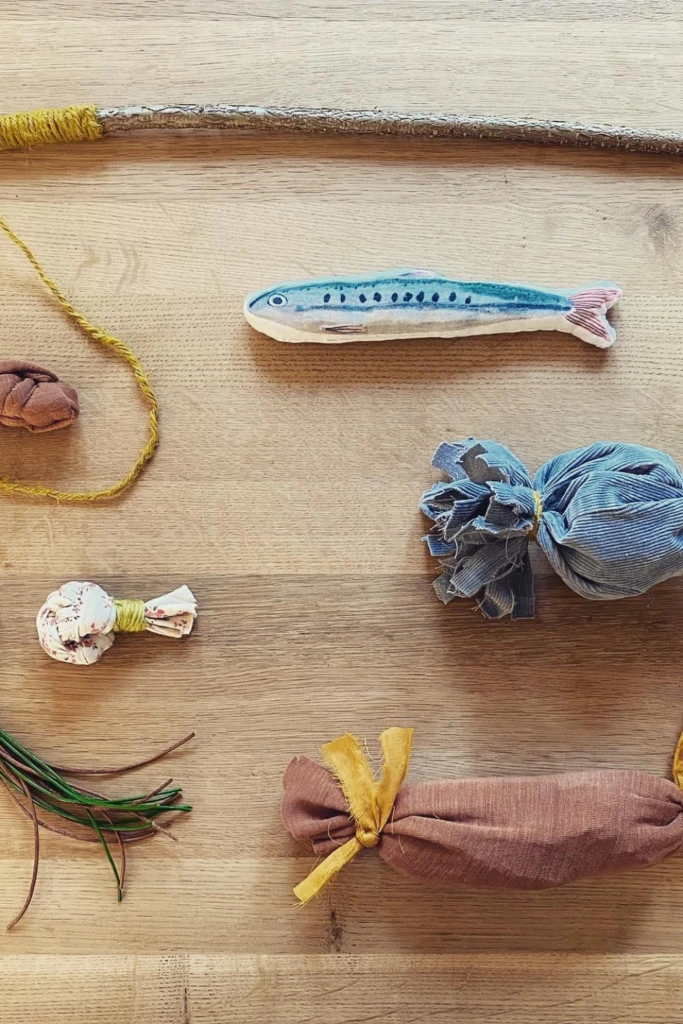
A mixed fabric toy set gives your cat several different objects to explore without requiring a separate shopping trip for each one. Use clean fabric remnants to make small padded shapes, soft balls, and sturdy fabric cushions.
Choose materials with different textures, such as fleece, cotton, and felt. Keep each design simple, with no beads, buttons, bells, or other small attachments that could detach during play.
Arrange two or three toys on the floor and observe which ones attract the most attention. Some cats prefer soft objects they can carry, while others enjoy toys that slide across smooth surfaces.
Rotate the collection every few days to provide novelty. Remove any toy that starts to unravel, and wash reusable fabric toys according to their material and construction.
13. Yarn & Tassel Play Set
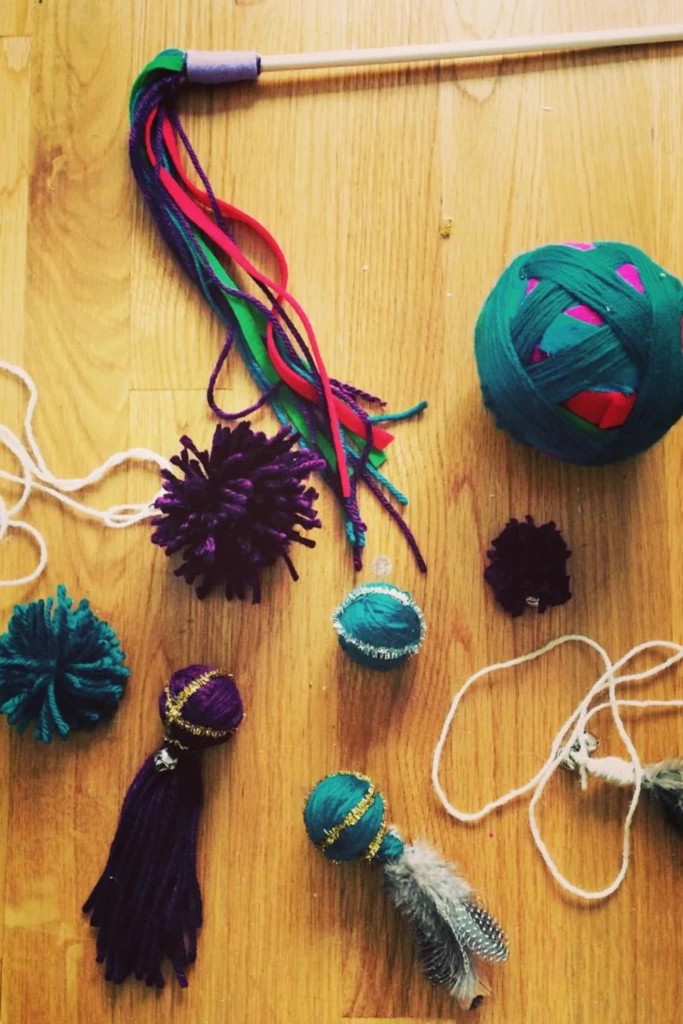
Bright colors, changing movement, and varied textures can make a toy collection more interesting. For this project, create compact felt balls and soft padded shapes that roll or slide when your cat bats them.
You can also make a tassel-style teaser from broad, securely attached fabric pieces on a handheld wand. Move it slowly across the floor, then change direction to encourage chasing.
Avoid loose yarn balls and unsecured tassels. Cats may swallow strands, and long fibers can cause dangerous intestinal obstructions. Store all teaser toys after use rather than leaving them where your cat can chew them unsupervised.
Keep the individual toys separate and sturdy so you can quickly remove any piece that becomes damaged.
14. Feather Teaser Wand
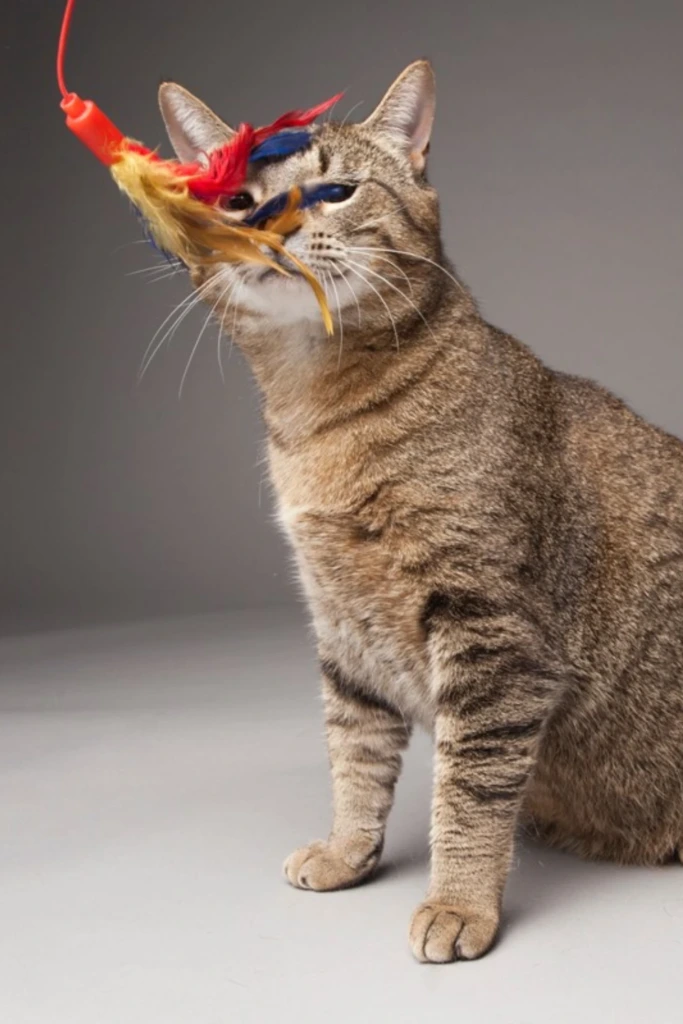
A feather wand is a useful option for cats that enjoy stalking moving objects. It lets you imitate the unpredictable movement of prey while keeping your hands at a comfortable distance from your cat's claws.
To make a basic version, attach a securely fastened, pet-safe feather attachment to a purpose-built wand. Check that the attachment cannot easily come loose and that there are no exposed wire ends.
Move the feathers along the floor, behind a cushion, or briefly out of sight. Allow your cat to catch the toy occasionally so the activity feels rewarding rather than frustrating.
Always supervise feather play. Some cats chew through feathers or attempt to swallow them, so put the wand away immediately if the attachment becomes damaged.
15. Twine Chase Ball
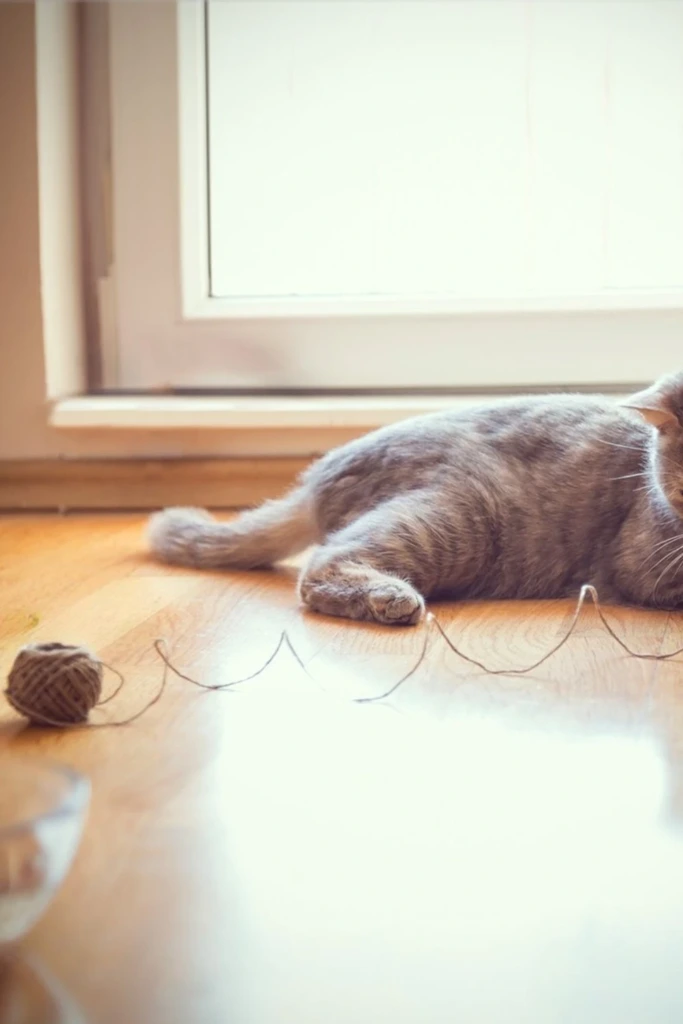
A small rolling toy can encourage short bursts of movement throughout the day. Rather than wrapping a loose ball in twine, use a purpose-made, solid cat toy with a smooth surface and no detachable components.
You can also make a simple fabric ball by stitching two or more rounded pieces together and filling them with clean fabric scraps. The finished shape should roll easily without being small enough to swallow.
Test the toy before giving it to your cat, checking that the seams are secure and the material doesn't shed fibers.
Roll it gently across an open floor to invite your cat to chase it. Keep the play area clear of breakable objects, and put the toy away if it becomes damaged.
16. Fabric Mouse Toys
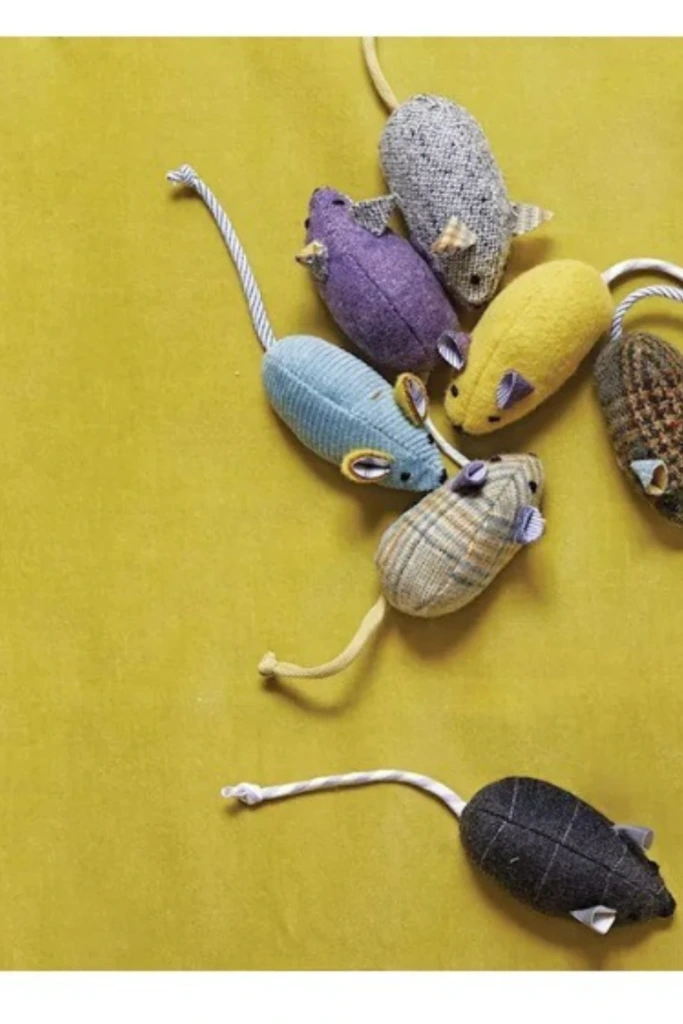
Fabric mice are a classic homemade project for cats that enjoy chasing small moving objects. Their shape can encourage stalking, pouncing, and carrying.
Cut two matching mouse-shaped pieces from durable fabric and sew them together, leaving a small opening. Turn the fabric right side out, add a little pet-safe filling, and close the seam securely.
Use contrasting fabric to create a simple body pattern if desired, but avoid glued-on eyes, buttons, plastic noses, or other small decorations. A plain design is often more durable and easier to maintain.
You can make mice in several sizes and textures to discover your cat's preference. Supervise play and remove the toy if its seams split or the filling starts to escape.
17. Toilet Roll Treat Box
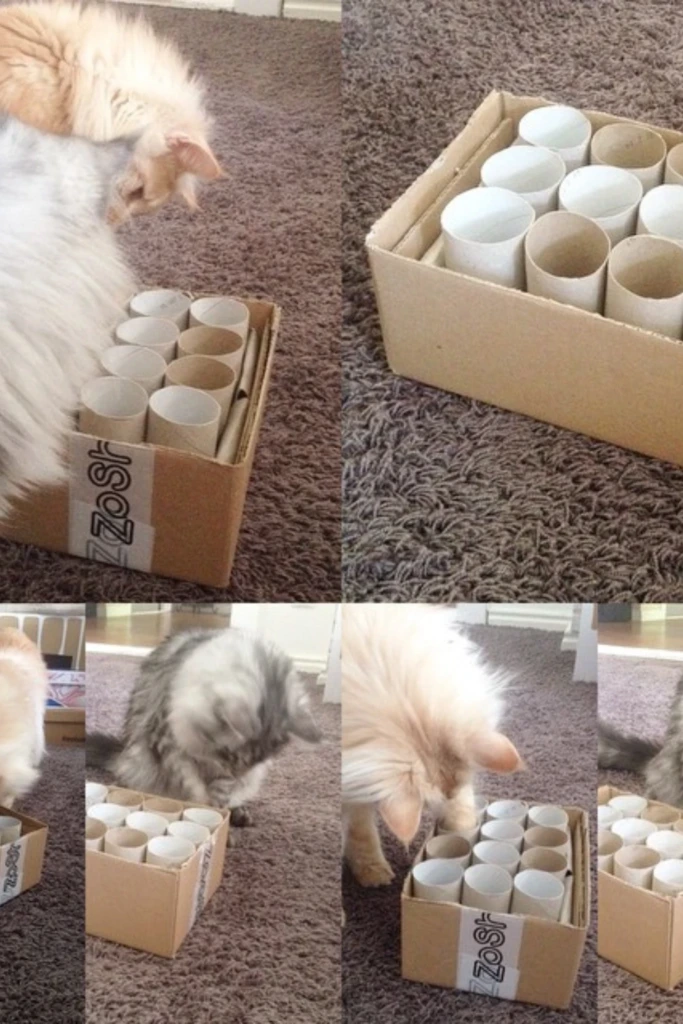
Empty cardboard tubes can be arranged into a simple treat-searching activity. Place several tubes upright in a sturdy cardboard tray, leaving enough space between them for your cat to reach in with a paw.
Hide a few pieces of dry food inside selected tubes and leave others empty. Your cat can investigate each opening to discover where the rewards are located.
Begin with food near the top of the tubes, then make the challenge slightly harder if your cat enjoys the activity. Keep the puzzle on a nonslip surface so it doesn't slide around while your cat explores.
Use clean, dry tubes without staples or attached plastic. Because cardboard can soften and break apart when chewed, supervise the game and replace damaged pieces promptly.
18. Cardboard Tube Set
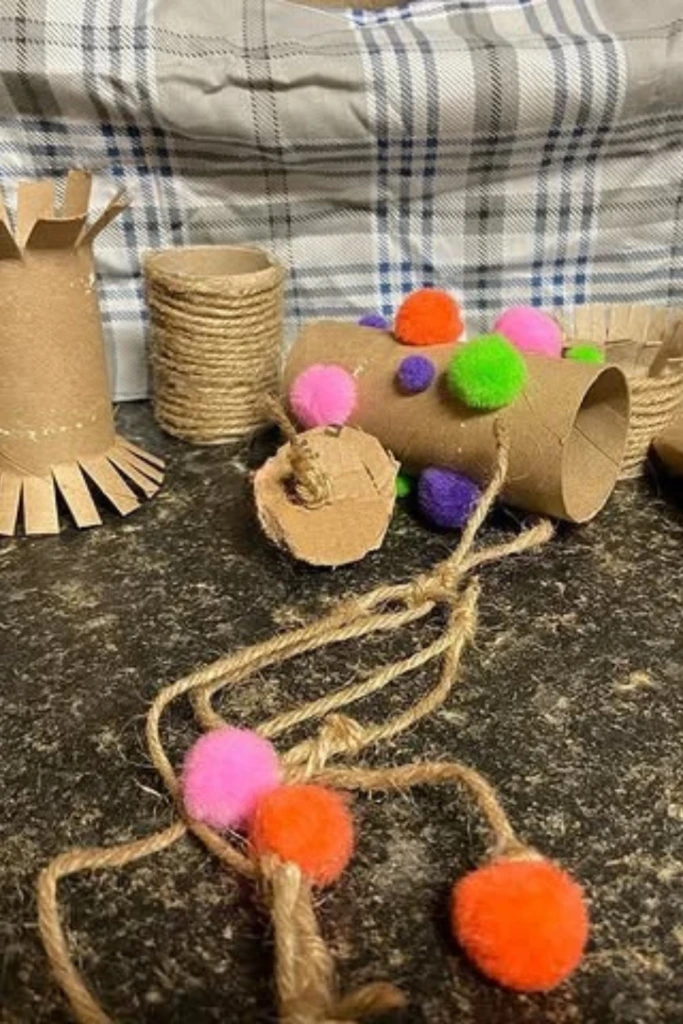
Cardboard tubes can be transformed into several simple toys with just a pair of scissors. Flatten one tube slightly to make it wobble differently, or cut broad fringe sections at the ends to create a shape that moves when tapped.
Another option is to place a few pieces of kibble inside a tube and fold the ends inward loosely. Your cat can investigate the tube and work out how to reach the food.
Avoid attaching pom-poms, loose threads, or small decorations that could be swallowed. Don't use hot glue or other adhesives where your cat could chew or lick them.
Keep the toys simple and replace them whenever they become soggy, torn, or heavily chewed. These low-cost crafts are best used for supervised play and occasional enrichment rather than left out indefinitely.
19. Hanging String Stick
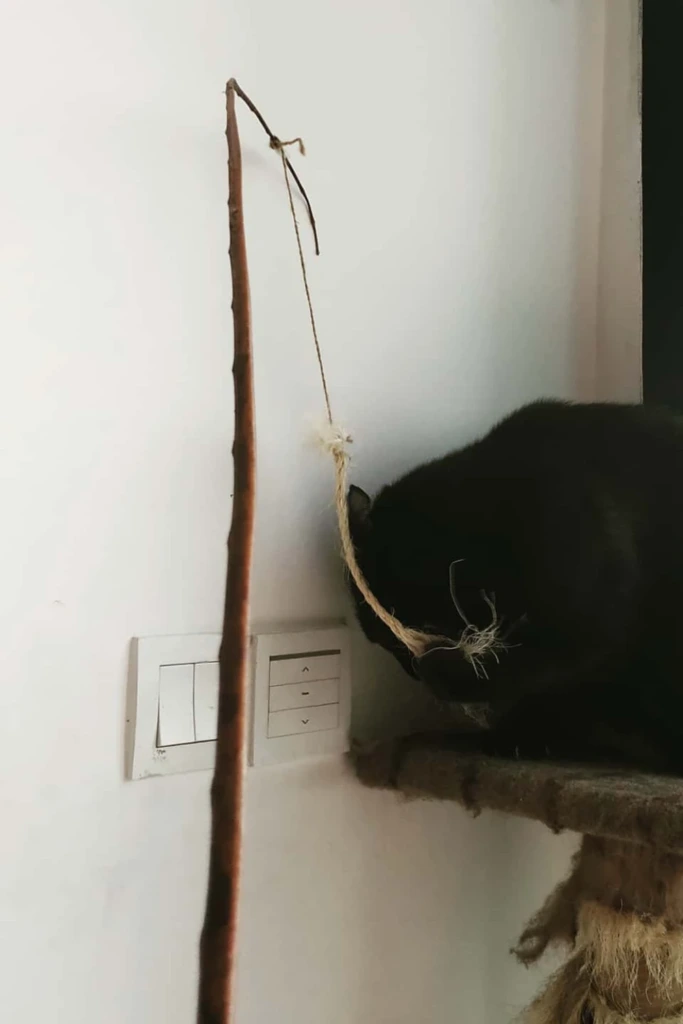
A handheld play stick can provide an easy way to encourage your cat to jump, reach, and chase. Use a sturdy wand with a securely attached fabric lure designed for supervised pet play.
Move the lure in short bursts across the floor or around a scratching post. Alternate quick movements with pauses to give your cat time to focus and prepare to pounce.
Although a permanently hanging string may seem convenient, it can pose a strangulation or ingestion hazard. Don't leave cords or strings hanging from furniture, door handles, or cat perches where your pet can access them alone.
Store the wand in a closed drawer or cupboard when the session ends. This keeps the toy in good condition and helps prevent accidental entanglement.
20. Feather Catch Toy
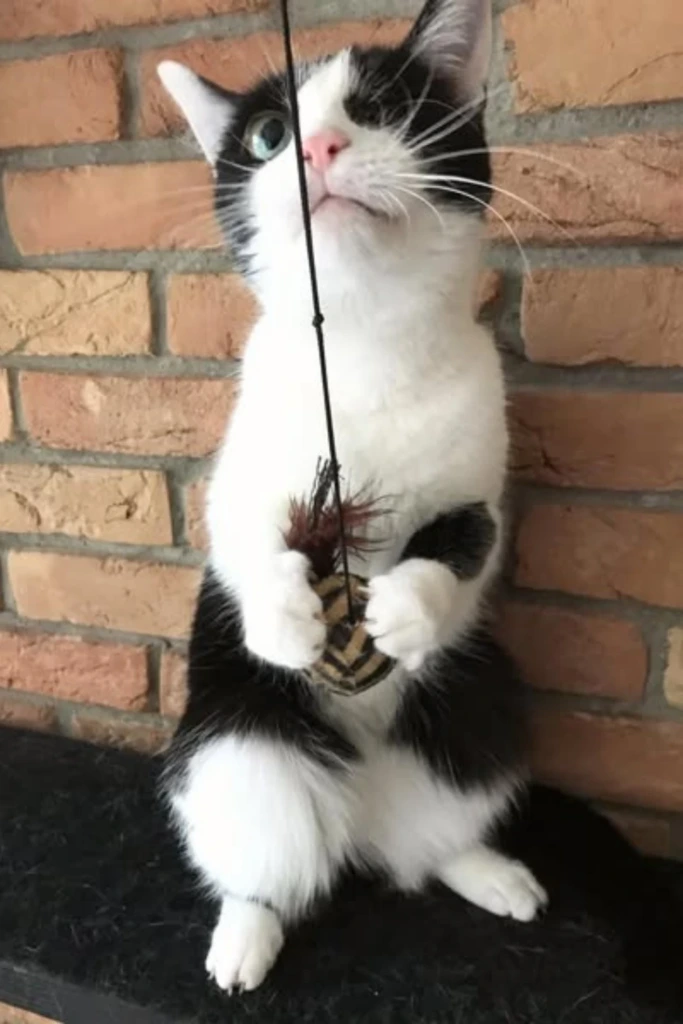
For cats that enjoy grabbing their target with both paws, a feather attachment can make playtime particularly engaging. Use a sturdy commercial wand or a well-made pet toy with feathers firmly secured to the end.
Move the feathers just above the floor or along the side of a low cushion, giving your cat opportunities to reach and catch them. Avoid encouraging risky leaps from tall furniture or slippery surfaces.
Let your cat catch the lure periodically and take breaks when it appears tired or loses interest. If the feathers start coming loose, stop the session and replace the damaged toy.
As with any string-based toy, keep the attachment out of reach when you're not supervising. A short, interactive session is safer than leaving a feather toy available for unsupervised chewing.
What toys do cats never get bored with?
No single toy will hold every cat's attention forever. Cats often enjoy toys that encourage natural behaviors such as stalking, chasing, pouncing, batting, and investigating hidden objects.
Rolling balls, soft kickers, cardboard puzzles, and interactive wand toys can all be good choices, depending on your cat's personality. A cat that loves food rewards may prefer a treat puzzle, while an energetic hunter may be more interested in a lure that changes direction unexpectedly.
Variety also matters. Instead of putting every toy out at once, offer a small selection and rotate it regularly. Reintroducing a familiar toy after a few days can renew interest without requiring you to make something new every time.
Pay attention to how your cat responds. If a toy causes frustration, fear, or little interest, try a different texture, movement, or level of difficulty. Always supervise toys containing feathers, fabric attachments, or other components that could be swallowed.
Are DIY cat toys cheaper to make?
Yes, homemade cat toys can be considerably less expensive than purchasing new toys regularly, particularly when you use materials you already have. Clean cardboard boxes, fabric remnants, and suitable household packaging can provide the foundation for many simple projects.
The savings depend on the materials and equipment required. A basic cardboard puzzle may cost virtually nothing, while a sewn toy might require new fabric, thread, or stuffing if you don't have suitable supplies available.
DIY projects also make it easier to customize toys to your cat's preferences. You can experiment with different shapes, textures, and puzzle difficulties rather than repeatedly buying toys that your pet may ignore.
However, low cost should never come at the expense of safety. Avoid loose strings, swallowable parts, toxic adhesives, sharp edges, and materials that break apart easily. Inspect homemade toys frequently and replace them when damaged.
With a little creativity and regular supervision, homemade toys can provide affordable entertainment, encourage daily activity, and make time spent playing with your cat more rewarding.