21 DIY Cat House Ideas for 2026
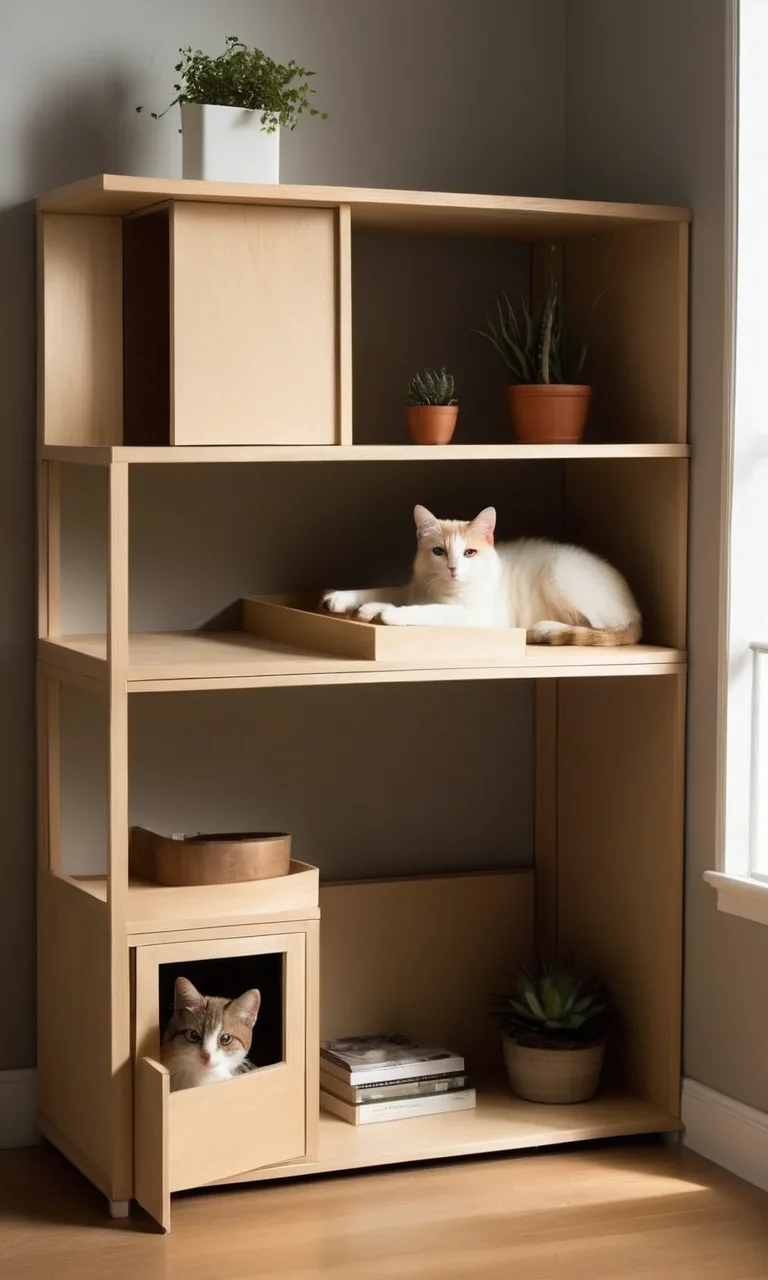
Creating a comfortable home for your cat doesn't require expensive furniture or professional woodworking skills. With a few everyday materials, some creativity, and attention to your pet's habits, you can build a cozy retreat that fits your space and budget. The best design is one your cat feels comfortable entering, using, and returning to throughout the day.
Before starting, consider where the shelter will go, whether your cat prefers enclosed hiding spots or elevated resting places, and how much protection it needs from cold, moisture, or drafts. An indoor playhouse can be made from cardboard, while an outdoor shelter calls for durable construction and weather-resistant materials. These 21 ideas offer inspiration for different homes, budgets, and feline personalities.
What Materials Do You Need for a DIY Cat House?
The materials you choose should match the location and purpose of your cat house. A lightweight indoor hideaway needs different supplies from a shelter designed to withstand rain and cold weather.
Common materials include:
Cardboard boxes: Affordable and easy to cut, making them suitable for temporary indoor shelters and creative playhouses.
Plastic storage containers: Useful for outdoor shelters because they resist moisture and are easy to clean.
Plywood or untreated wood: Ideal for sturdy structures, elevated platforms, and long-lasting cat furniture.
Insulation: Appropriate insulating materials help maintain a comfortable temperature, especially in outdoor shelters.
Bedding: Washable cushions and blankets work well indoors, while dry straw is often preferable for unheated outdoor shelters in cold weather.
Basic tools: A measuring tape, ruler, pencil, saw or utility knife, sandpaper, and suitable fasteners can help with construction.
Finishing supplies: Pet-safe, fully cured paint or sealant can protect wooden surfaces and make cleaning easier.
Choose materials without sharp edges, loose staples, exposed nails, or strong chemical odors. Avoid using damaged containers or treated wood that could expose your cat to harmful substances. If you plan to place the house outdoors, provide a raised floor, a protected entrance, and a roof that keeps water away from the interior.
How to Make a Cat House Out of a Plastic Tote?
A plastic storage tote can become a practical cat shelter with only a few modifications. Start with a sturdy container large enough for your cat to stand, turn around, and lie down comfortably. Wash it thoroughly and allow it to dry before beginning construction.
Mark an entrance on one side, preferably away from the center if that helps reduce direct wind exposure. Cut the opening carefully and smooth every rough edge so your cat won't get scratched. The entrance should be large enough for easy access without leaving an unnecessarily wide gap that allows heat to escape.
Add insulation suitable for the climate, making sure it cannot be chewed or pulled loose. For an outdoor shelter, line the floor with dry straw rather than moisture-retaining blankets. Fit a secure lid, raise the container above the ground, and position the entrance away from prevailing winds.
Inspect the shelter regularly for leaks, condensation, damaged insulation, and damp bedding. A plastic tote is an inexpensive starting point, but its effectiveness depends on proper insulation, ventilation, drainage, and placement.
1. Cardboard Castle
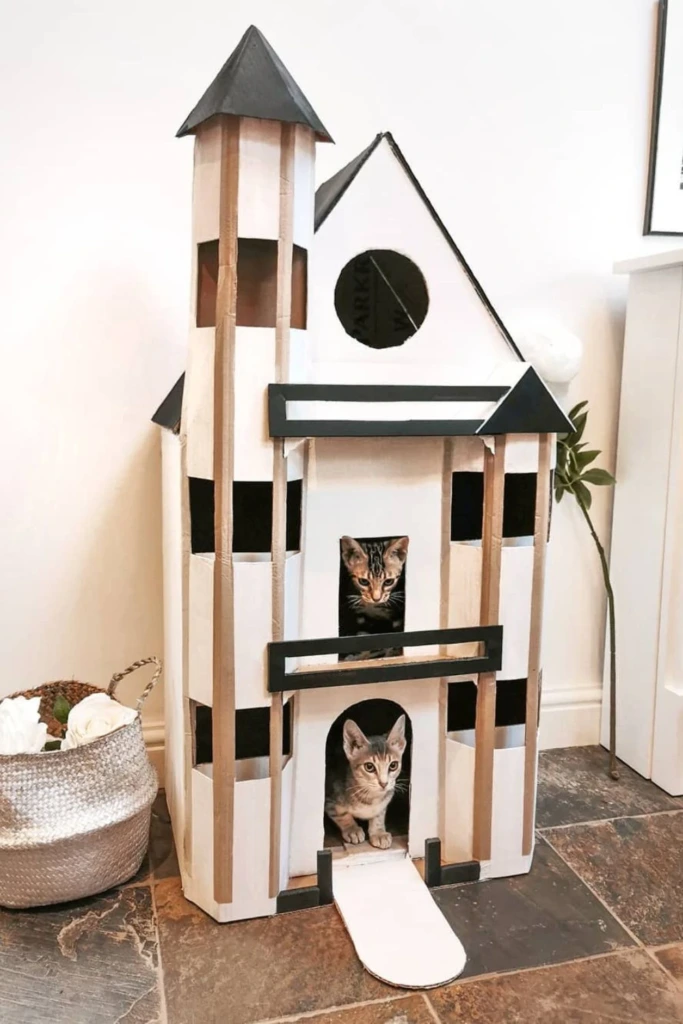
Turn ordinary shipping boxes into a miniature castle with multiple rooms, doorways, and climbing levels. This project works especially well for indoor cats that enjoy exploring new spaces, hiding during play, and watching their surroundings from higher positions.
Choose boxes made from sturdy corrugated cardboard and arrange them into a stable layout before attaching anything. Cut openings between connected sections so your cat can move from one room to another. Reinforce the joints with pet-safe construction methods, and make sure no loose tape, string, or sharp staples remain accessible.
For additional enrichment, include a low platform, a tunnel, or a small window. Keep the structure on a level surface and avoid tall towers that could tip over during enthusiastic play.
A cardboard castle is best suited to dry indoor environments. Replace sections that become soft, torn, or dirty, and treat the project as a creative play area rather than a permanent outdoor shelter.
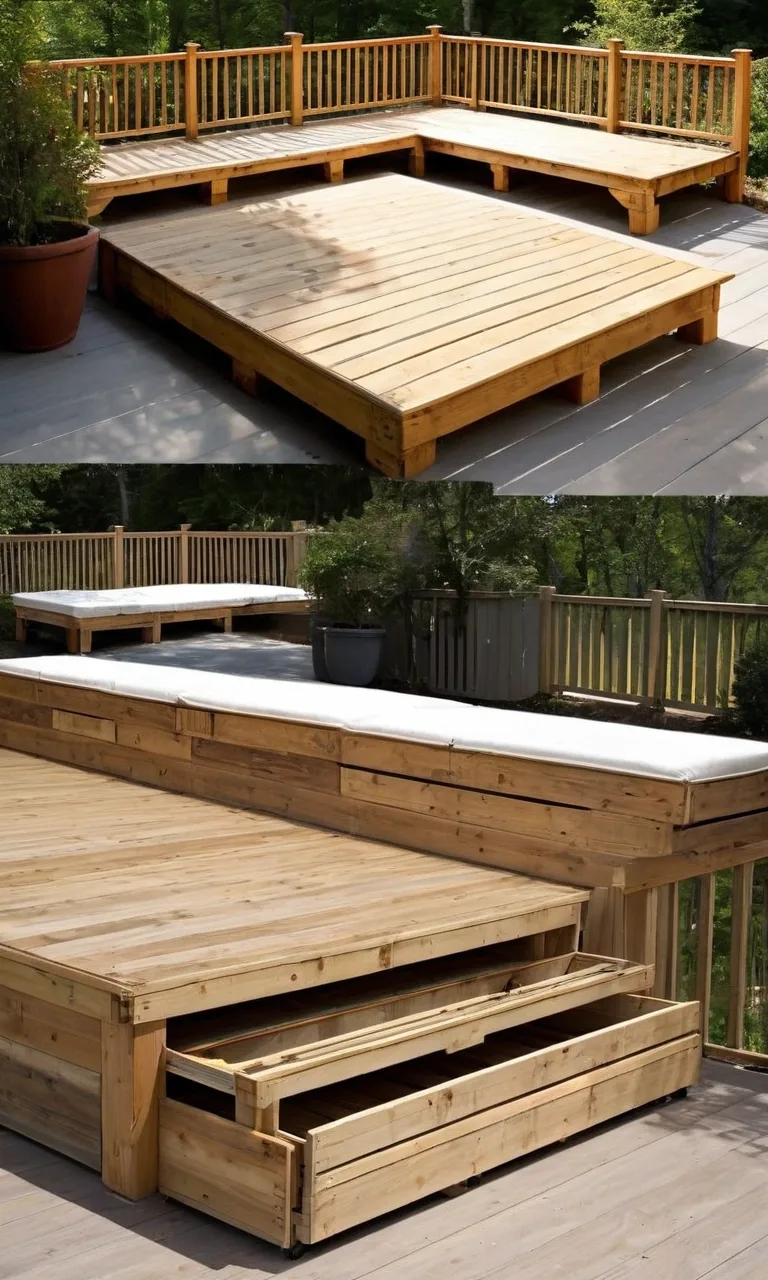
2. Wooden Playground
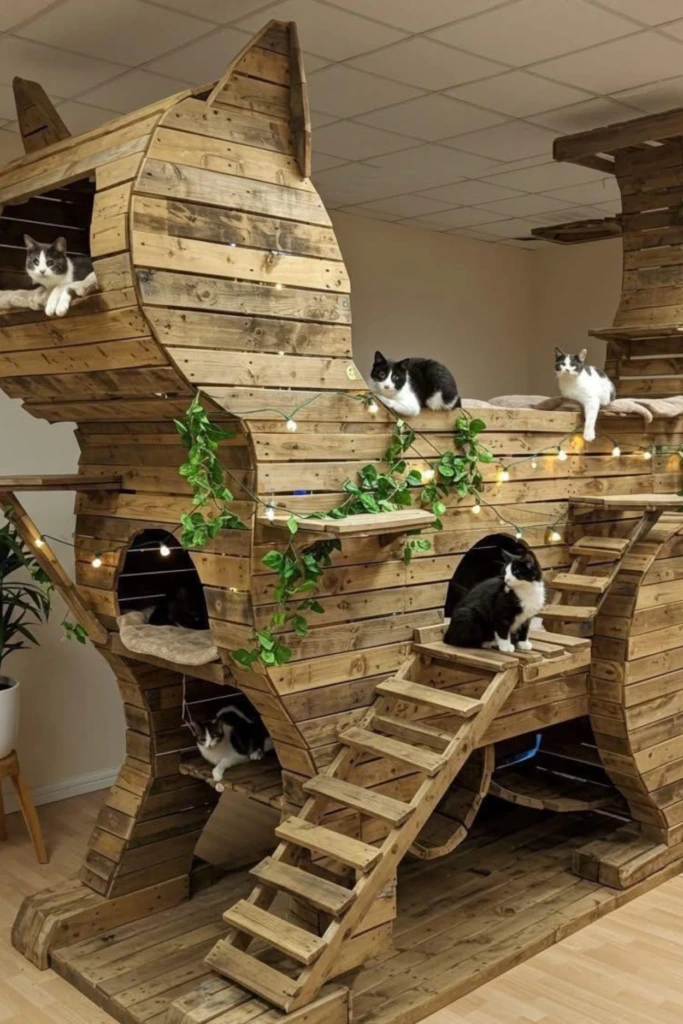
A wooden playground combines a cozy house with opportunities for climbing, scratching, and exploring. It's a useful choice for active cats or households with several pets that benefit from having separate resting areas.
Begin with a broad, stable base and add platforms at manageable heights. Include enclosed cubbies beneath the climbing sections so cats have somewhere quiet to retreat when they need a break. A gently sloped ramp can help less agile cats reach elevated areas.
Inspect reclaimed pallet wood carefully before using it. Avoid timber with unknown chemical treatments, splinters, rot, or protruding fasteners. Sand the surfaces smooth and secure every joint firmly. If you add carpeting or sisal, attach it so there are no loose loops that could catch claws.
Position the playground away from unstable furniture and heavy objects that might fall. A well-built wooden design can serve as both a cat house and a dedicated activity center while keeping climbing and scratching away from household belongings.
3. Wall Cubes
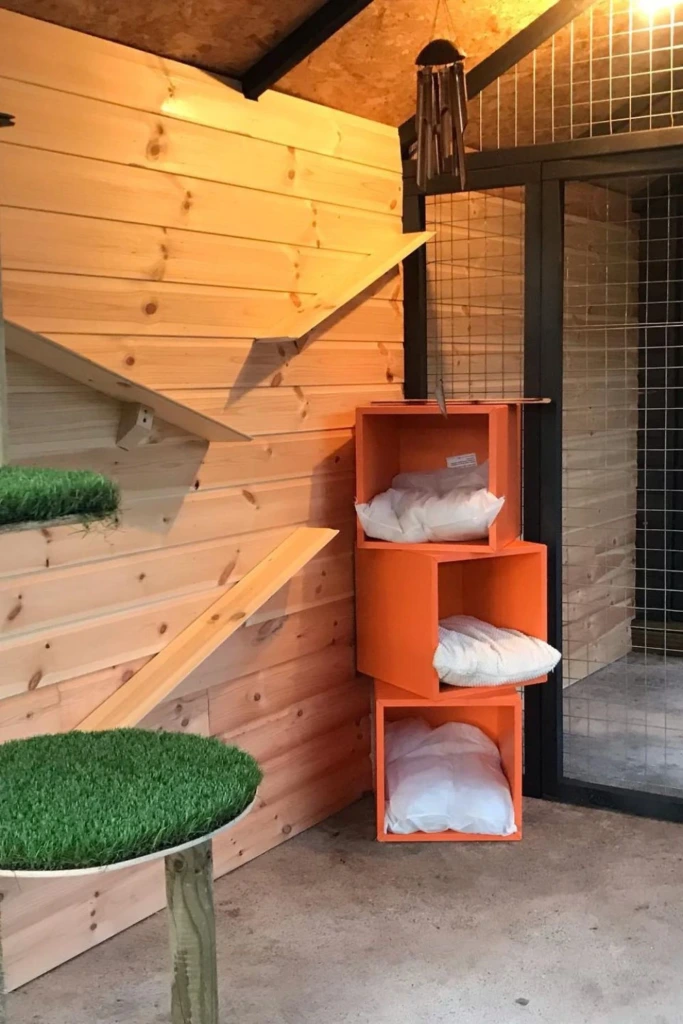
Wall-mounted cubes make use of vertical space without occupying much floor area. They can create a series of resting spots, particularly in small apartments or rooms where a traditional cat tower would feel bulky.
Use sturdy wooden cubes with smooth edges and openings that allow comfortable entry and exit. Mount them into suitable wall studs or with hardware rated for the expected load. Drywall anchors alone may not provide sufficient support for a cat that jumps forcefully onto a platform.
Arrange the cubes with enough room for your cat to move between them safely. Adding a short ramp or intermediate shelf can make the route easier to navigate. Place removable cushions inside each compartment so they can be washed when necessary.
This design is particularly attractive for homes that favor a clean, modern appearance. Check the mounting hardware periodically, and avoid positioning the cubes near breakable decorations or exposed electrical cables.
4. Retro Cabinet
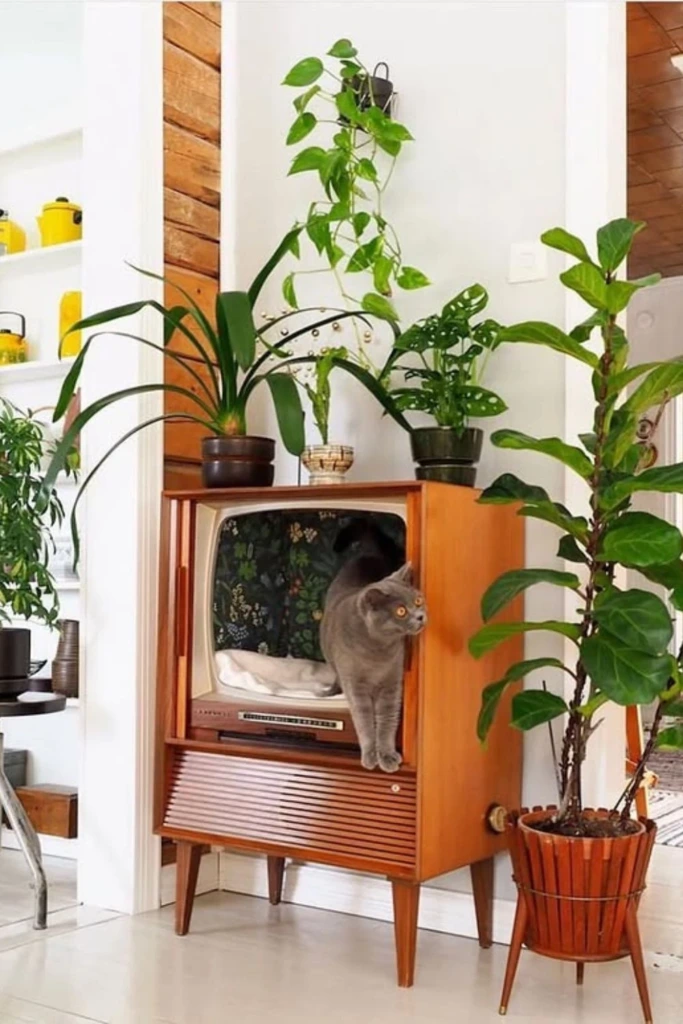
An old television cabinet, bedside table, or compact sideboard can become a charming cat retreat without introducing another piece of furniture into the room.
First, empty the cabinet and remove any loose components, glass panels, or unstable shelves. Create an entrance that is easy for your cat to use, then check that the interior has sufficient airflow. Depending on the cabinet's construction, you may need to remove part of the rear panel or add ventilation openings.
Sand rough wood and cover exposed hardware. If you repaint the furniture, choose a pet-safe finish and allow it to cure completely before introducing your cat. Add a washable cushion to the floor and secure the cabinet so it cannot wobble or tip.
This project suits living rooms and bedrooms where appearance matters as much as comfort. The finished cabinet can resemble ordinary furniture while giving your cat a quiet place to sleep.
5. Box Stack
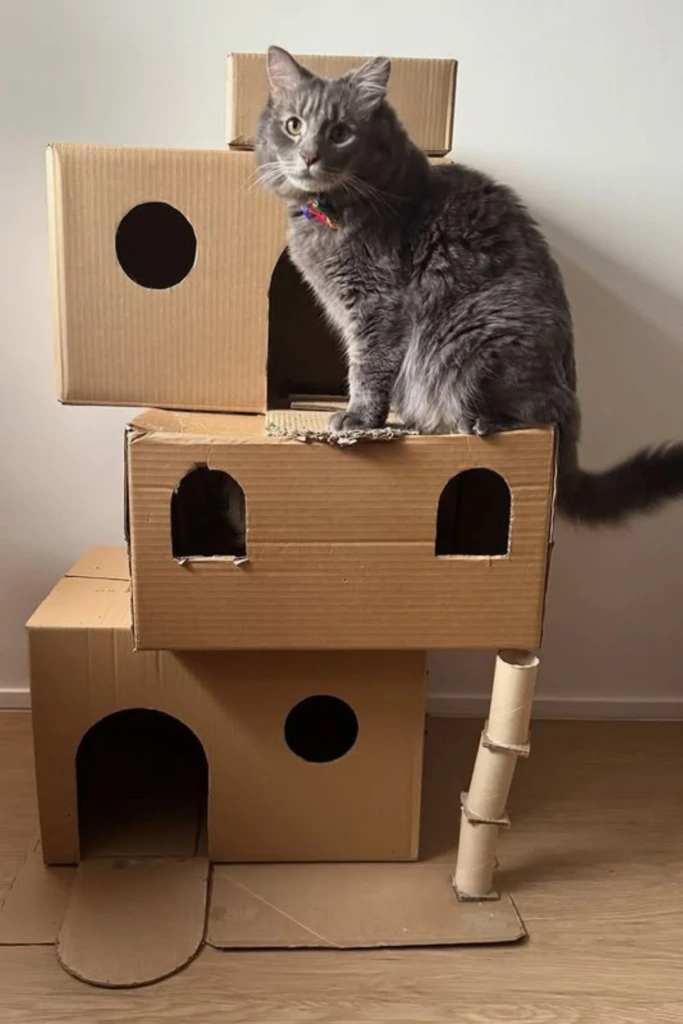
Stacking cardboard boxes is a quick way to build an inexpensive hideaway with several compartments. It also allows you to experiment with different arrangements before settling on a design your cat enjoys.
Use strong boxes and position them so the weight is distributed evenly. Cut entrances into the appropriate sides, making sure neighboring openings line up if you want the boxes to connect. Secure the stack against movement instead of relying on gravity alone.
A broad, low ramp or additional floor-level opening can make the structure more accessible. You can also incorporate a scratch-friendly cardboard panel on the outside.
Keep the finished house indoors and away from water bowls, damp floors, and direct heat sources. Because cardboard weakens over time, inspect it frequently and replace damaged sections. This is a good option for playful cats and owners who want an adaptable project without spending much money.
6. Tire Shelter
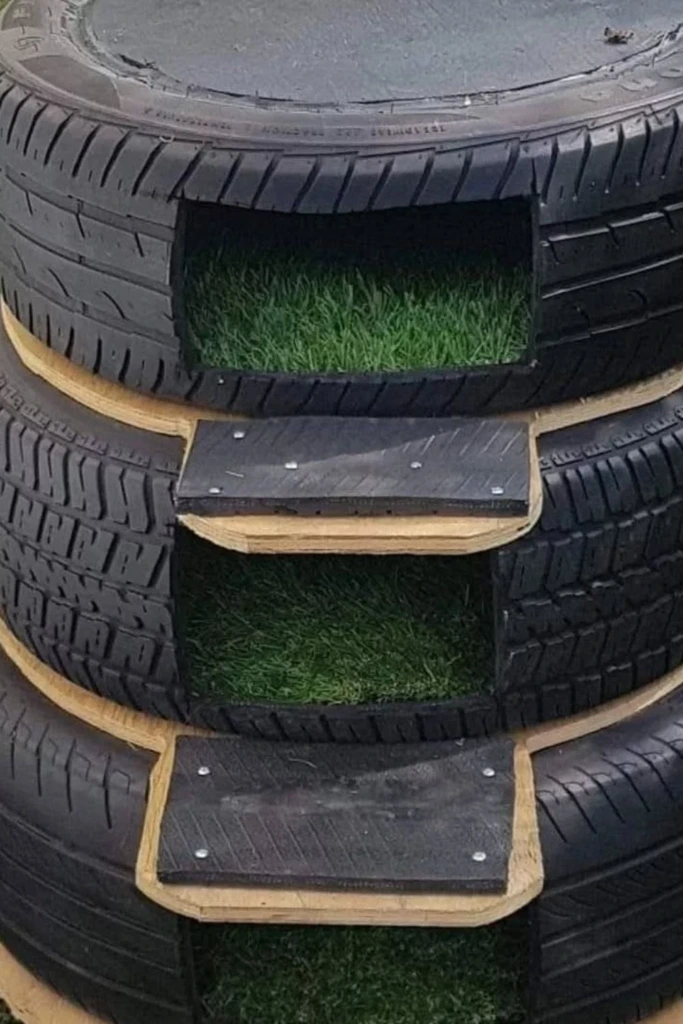
Repurposed tires may look rugged, but they are not automatically waterproof or insulated enough to serve as a comfortable cat shelter. If you want to use old tires creatively, treat them as an exterior protective feature rather than the main sleeping enclosure.
Start with an enclosed, weather-resistant shelter made from a suitable plastic container or properly constructed wood. Place it inside a stable, clean tire-based surround only if the arrangement allows easy inspection, adequate drainage, and safe access. Never leave exposed wire, damaged rubber, or sharp cut edges where a cat can reach them.
Use dry, climate-appropriate insulation and raise the sleeping area above wet ground. Make sure rainwater cannot collect inside the surrounding materials, and position the entrance away from strong winds.
This idea is best approached as an outdoor upcycling project rather than a simple stack of tires. For many households, a well-insulated tote or wooden shelter will be easier to clean, maintain, and keep comfortable in changing weather.
7. Painted Cubes
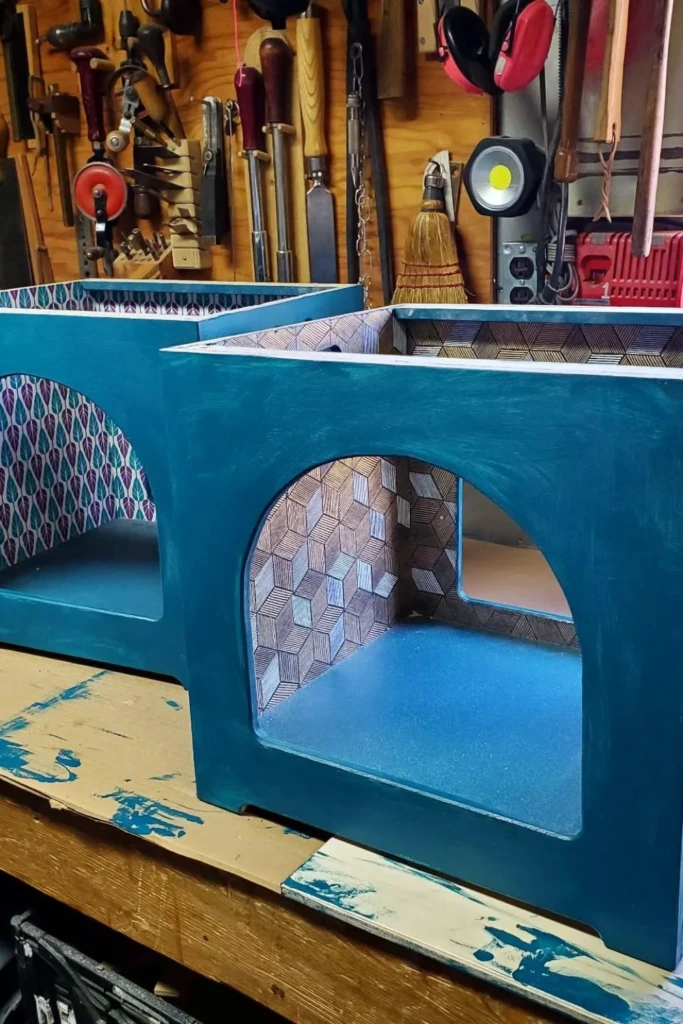
Painted wooden cubes provide a straightforward way to build a cat house that coordinates with your home decor. Their simple shape makes them easy to customize with colors, patterns, or multiple compartments.
Cut plywood panels to size and assemble them into a rigid cube with a suitable entrance. Sand all corners and edges thoroughly before applying a finish. MDF can also be used for certain indoor projects, but it is less suitable for damp environments because moisture may cause swelling or deterioration.
Choose a low-odor, pet-safe coating and wait until it has fully cured before allowing your cat inside. Add a removable cushion to make routine cleaning easier.
You can build a single cube for a small room or combine several units into a larger arrangement. Keep the structure stable, avoid unsupported stacking, and make sure your cat has enough space to enter, turn around, and stretch out.
8. Tote Shelter
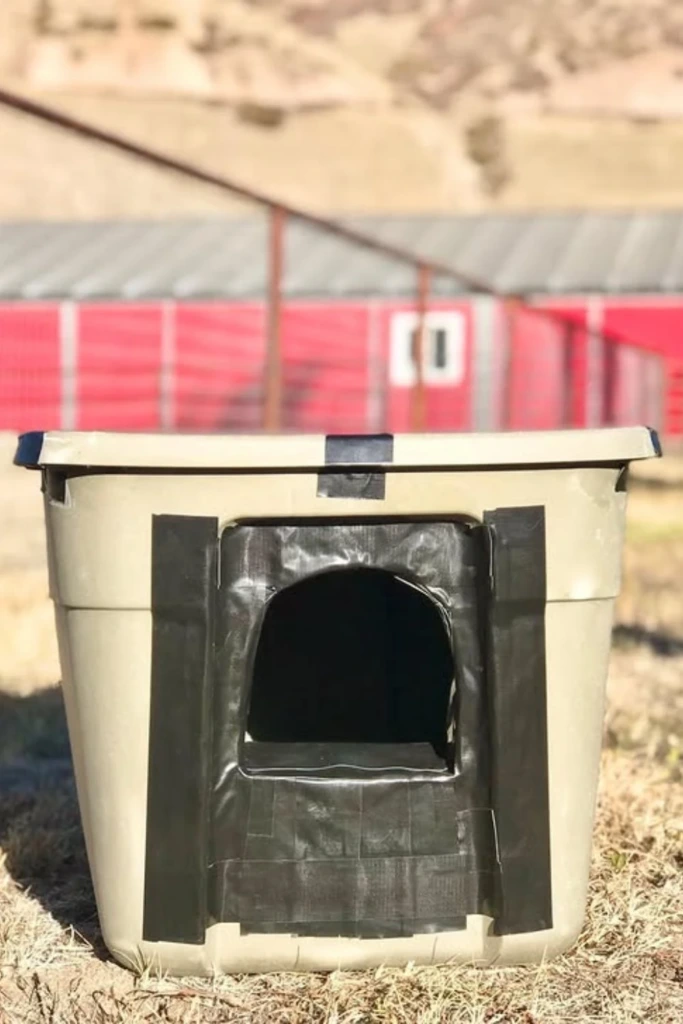
A tote shelter is a practical choice for community cats and pets that spend time outdoors. Its main advantage is the plastic shell, which can resist rain better than untreated cardboard when the lid and openings are properly fitted.
Choose a durable container with enough interior room for the cat to curl up comfortably. Cut an entrance in a side wall, then smooth and protect the edges. Add insulation that cannot easily be reached or swallowed, and use dry straw for bedding in cold outdoor conditions.
Place the shelter on a raised, stable platform and position it under an overhang or another protected location. Keep the entrance clear, check for water intrusion, and replace damp or contaminated bedding promptly.
Avoid making the enclosure completely airtight. Some ventilation is necessary, but large gaps that expose the sleeping area to wind should also be avoided. With regular maintenance, a well-designed tote shelter can provide a simple refuge without requiring advanced construction skills.
9. Playhouse Build
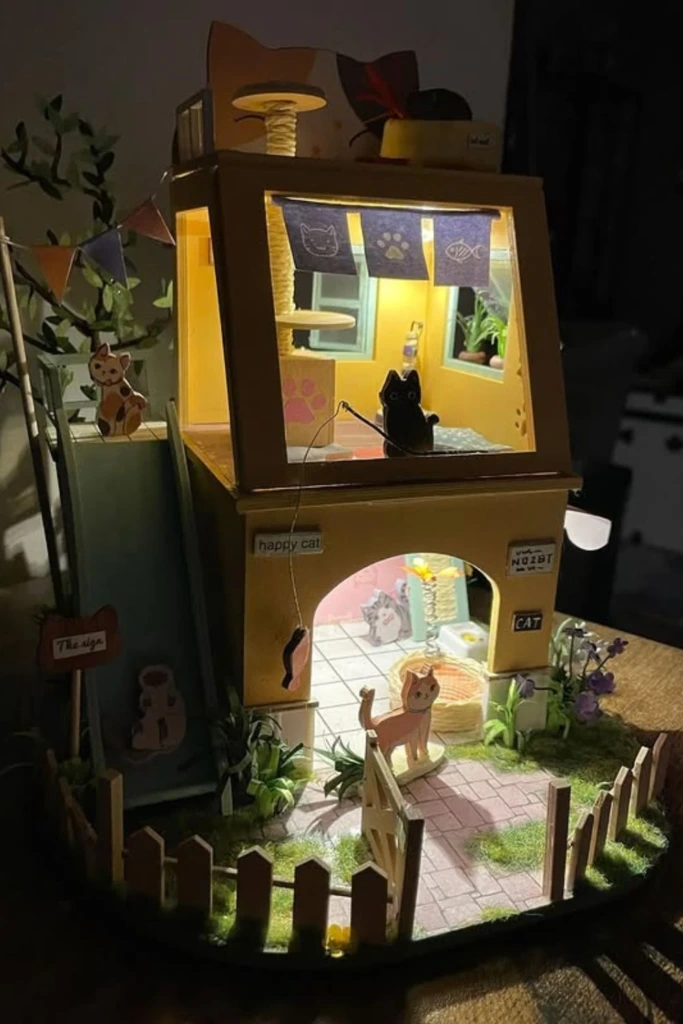
A miniature playhouse transforms a basic cardboard box into a decorative space for cats to investigate and relax. It is particularly suitable for indoor environments where you want a functional pet project that also looks attractive.
Use thick corrugated cardboard or another lightweight, sturdy material. Plan the entrance, windows, and roof before cutting the pieces. Attach the panels securely, reinforce the base, and make sure the roof cannot collapse if your cat climbs onto it.
Decorate the exterior with non-toxic art materials, keeping paint, glue, ribbons, and small embellishments out of reach until everything is completely dry and secure. Keep the interior uncluttered and place a washable mat inside.
This style works well as a seasonal project or a fun weekend activity. Since cardboard is vulnerable to moisture and chewing, inspect the structure regularly and replace it when it begins to weaken.
10. Grid Condo
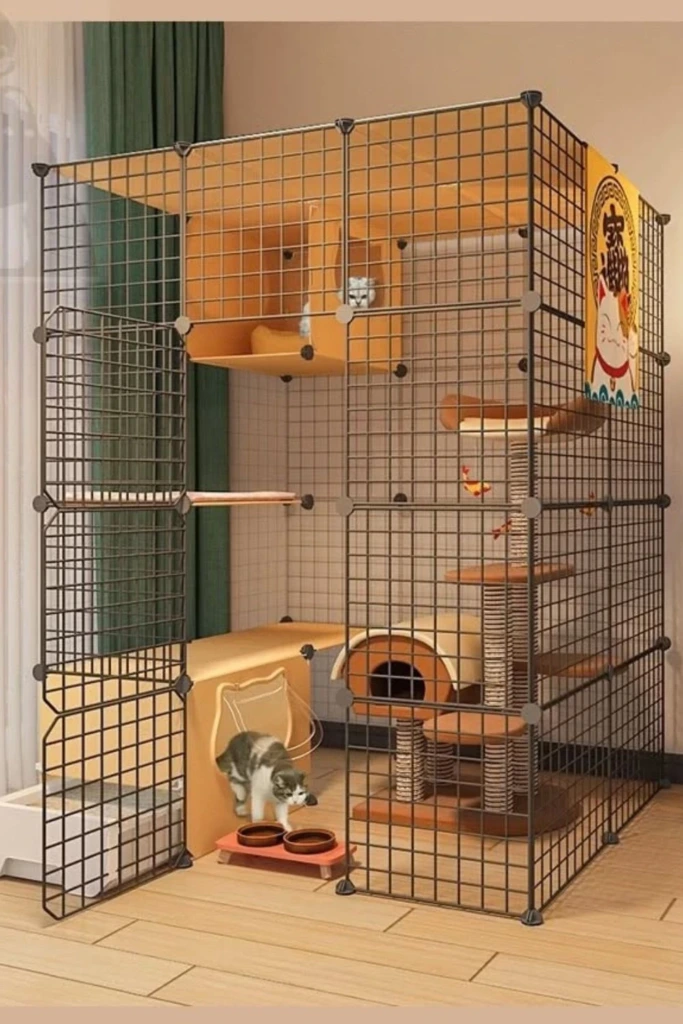
A modular grid condo offers flexibility for people who want to create a custom cat area in a limited space. Interlocking storage panels can form a frame that accommodates shelves, resting compartments, and climbing routes.
Choose panels and connectors strong enough for the intended load. Secure the structure so it cannot lean or collapse, and cover any wire ends that could scratch paws or catch claws. Add firmly attached wooden shelves and a comfortable enclosed sleeping compartment.
Plan the layout around your cat's habits. Active cats may enjoy several climbing levels, while older or less agile pets benefit from wider shelves and shorter gaps between platforms. A scratching surface can make the structure more useful without requiring additional floor space.
The modular format makes it possible to rearrange the condo as your needs change. Check every connector regularly and never assume a lightweight storage grid is safe for climbing until its stability has been verified.
11. Fabric Hideaway
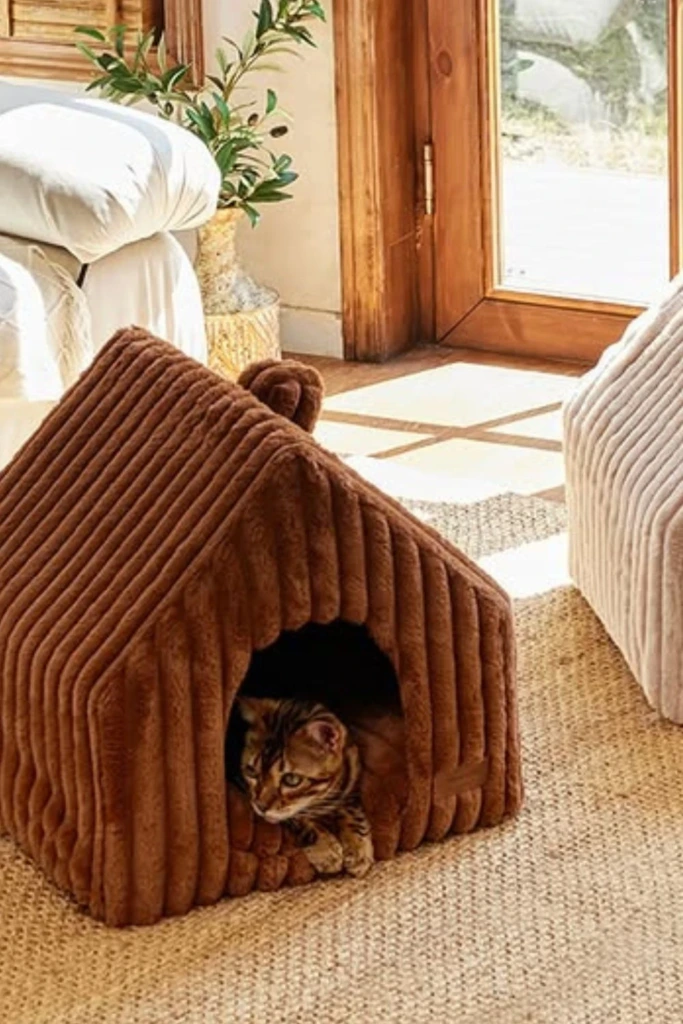
A fabric hideaway is a comfortable option for cats that prefer soft surroundings to rigid wooden or plastic enclosures. It works well beside a bed, beneath a desk, or in a quiet corner of the living room.
Create a simple frame using materials that will hold their shape, then cover it with durable, washable fabric. Add padding to the sides and a removable cushion to the floor. Keep the entrance wide enough for your cat to move through easily without snagging its fur or whiskers.
Use materials without loose threads, exposed staples, or decorative parts that can be swallowed. Avoid placing electrical heating pads inside a homemade fabric structure unless they are specifically designed for pet use and can be operated safely.
This design is best for indoor use in a dry environment. Wash the cover regularly, allow it to dry completely, and replace damaged padding when it becomes flattened or torn.
12. Gingerbread House
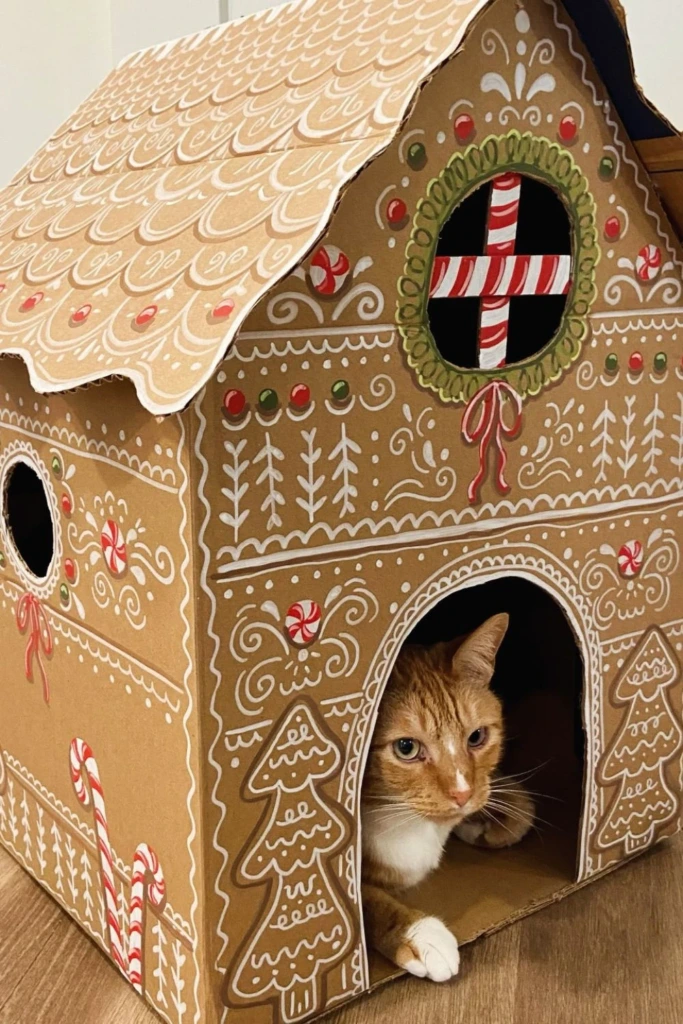
A gingerbread-style cat house adds a festive touch to your home while providing a temporary play and hiding space. It can be decorated to resemble a holiday cottage without using real food ingredients that might attract pets to chew on it.
Start with a strong cardboard box and cut a cat-sized doorway into the front. Create a pitched roof from separate cardboard panels, securing the joints so the roof stays in place. Add decorative windows and icing-inspired patterns with pet-safe craft materials.
Keep the decoration simple and avoid glitter, small beads, loose ribbons, or edible ornaments that could be swallowed. Make sure the interior remains spacious enough for your cat to turn around and lie down comfortably.
This seasonal project is best kept indoors and away from moisture. Remove it when the cardboard becomes damaged or when your cat starts chewing the structure excessively.
13. Mini Villa
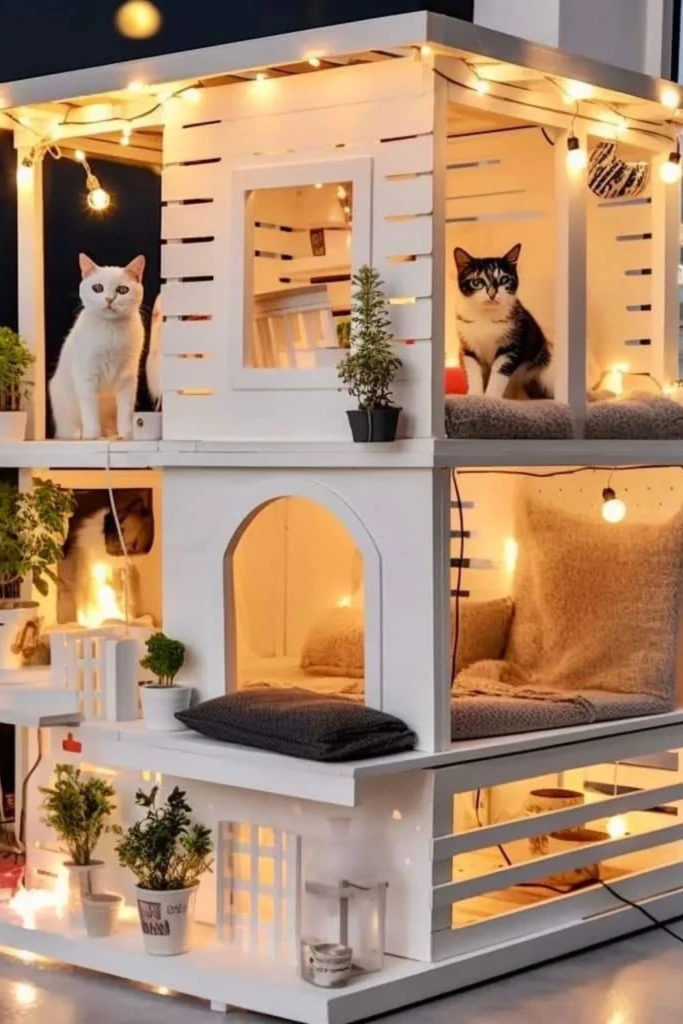
A mini villa creates multiple resting areas from a series of wooden crates or purpose-built compartments. It can be useful in homes with several cats, especially when each animal prefers its own sleeping space.
Choose crates made from sound wood and sand the surfaces until they are smooth. Assemble the compartments into a stable arrangement, securing each level rather than simply placing one crate on top of another. Provide a separate entrance for each enclosed area and make sure no openings are blocked by adjacent pieces.
Place cushions inside the sleeping compartments and keep some sections open for lounging or observing the room. If the villa will sit on a balcony, protect it from rain and strong sunlight, and ensure it cannot slide or topple.
This design combines a furniture-like appearance with practical resting spaces. Its success depends on stable construction, easy cleaning, and enough room for every cat to use the structure comfortably.
14. Ramp House
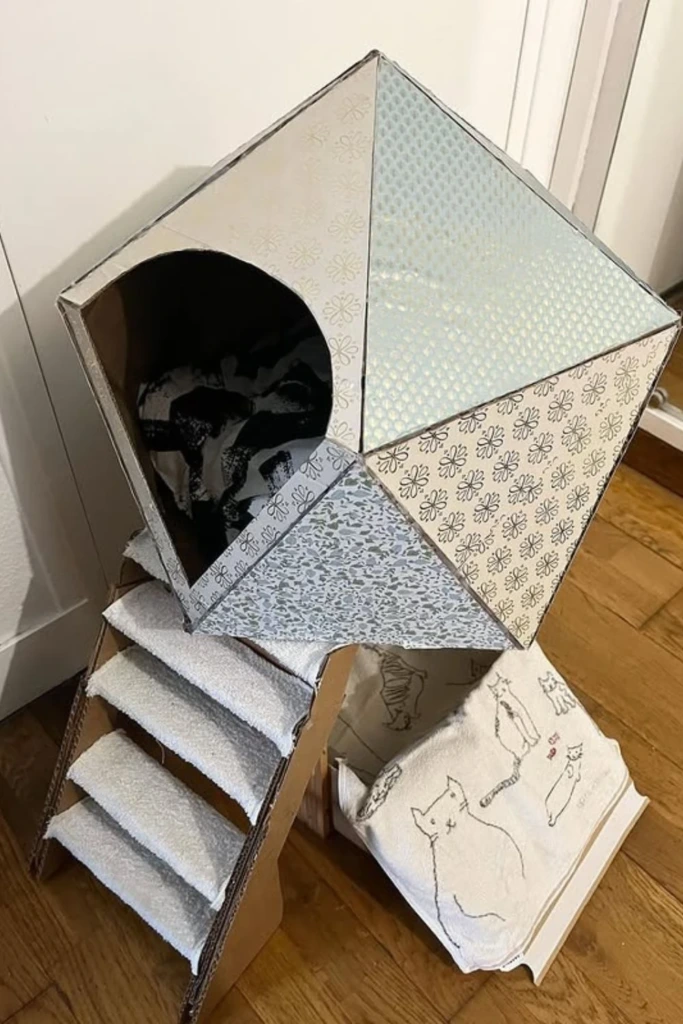
A ramp house gives cats an alternative to jumping directly onto an elevated sleeping platform. This can be especially helpful for kittens learning to climb or cats that prefer a gradual route to a higher resting place.
Build the main enclosure from sturdy cardboard or wood, then attach a gently sloped ramp. Make sure the ramp is wide enough for comfortable movement and has a nonslip surface. Reinforce every connection so the structure remains steady when your cat walks up or down.
Keep the overall height modest, especially if you are using cardboard. A low platform with a broad ramp is safer than a tall design with a steep incline. Position the house on a level floor and leave clear space around it.
This project can fit neatly into small apartments where floor space is limited. Add a cushion inside the upper compartment and monitor how your cat uses the ramp before making it taller or more complex.
15. Suitcase Nook
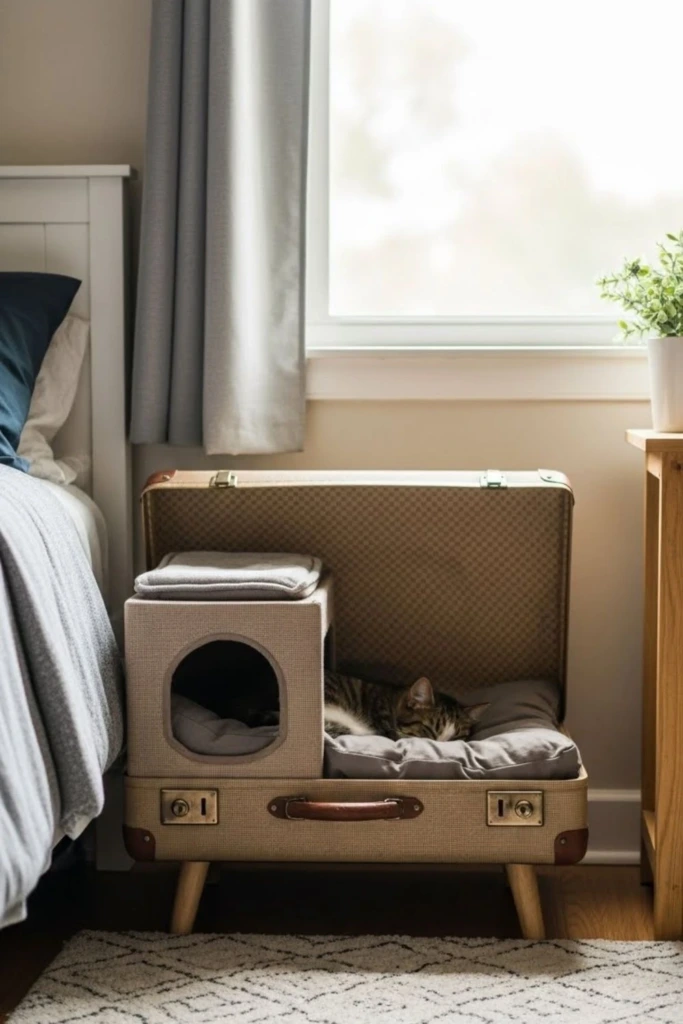
An old suitcase can become a distinctive indoor cat nook with very little modification. Its enclosed shape creates a sheltered resting area, while its exterior can add character to a bedroom or living space.
Choose a clean, structurally sound suitcase and remove sharp hardware, loose lining, and any damaged components. Keep the lid securely supported or remove it entirely so it cannot fall onto your cat. Place a washable cushion inside and check that the interior has adequate airflow.
Hard-shell suitcases tend to retain their shape better than soft luggage, but neither should be used if the structure collapses easily. If you raise the nook on a platform, make sure the entire arrangement is stable and cannot slide.
This idea is intended for indoor use. Clean the suitcase thoroughly before introducing your cat, and avoid using luggage with strong chemical odors or mold damage.
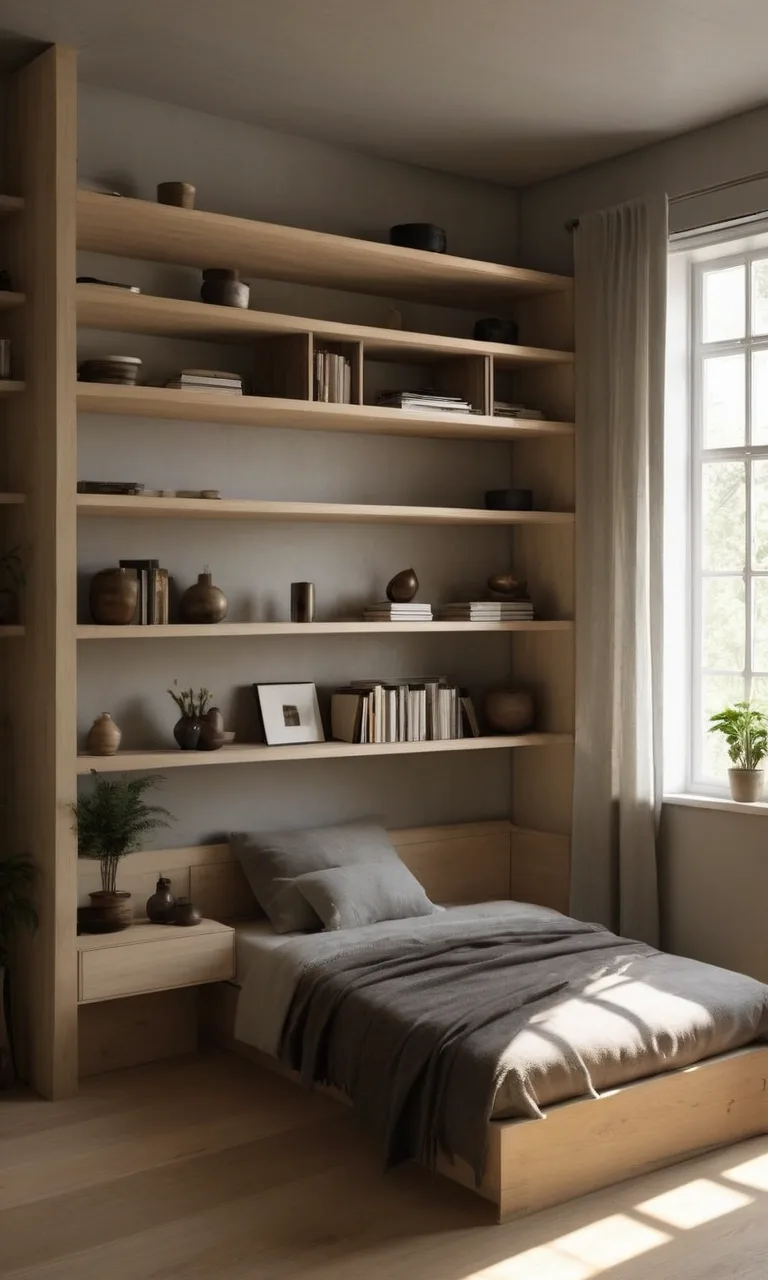
16. Bookshelf Den
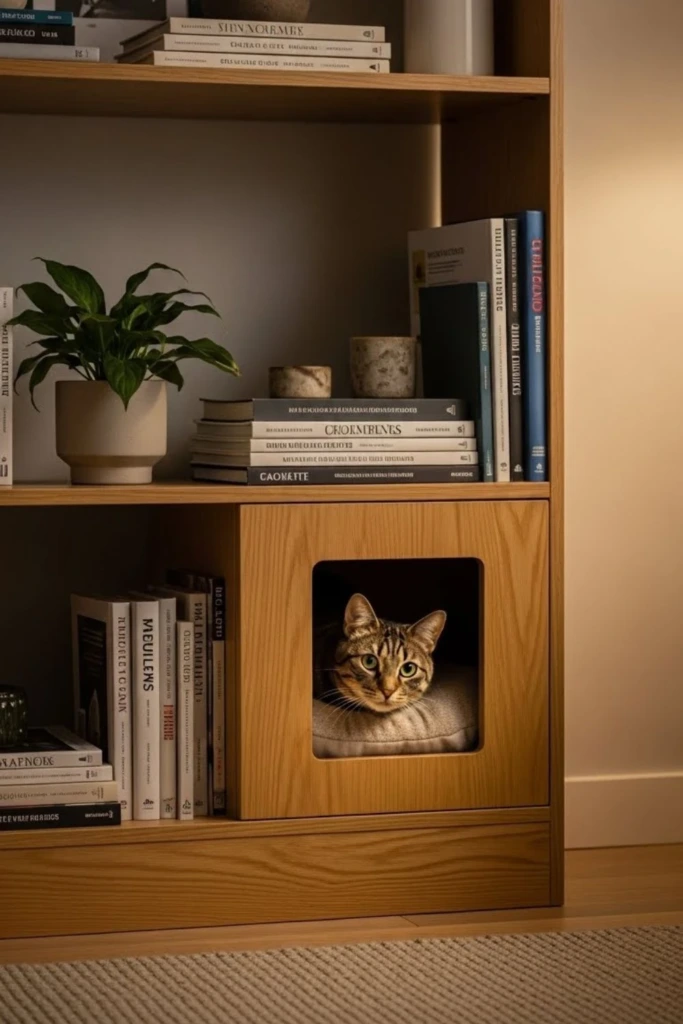
An unused bookshelf compartment can provide a discreet cat house without requiring a separate piece of furniture. The lower section of a bookcase is often a convenient place to create a quiet resting area.
Measure the compartment and fit a sturdy box or wooden enclosure inside it. Cut an entrance into the front, smooth the edges, and leave enough clearance for the cat to enter without rubbing against sharp corners. A removable cushion makes the space more inviting and simplifies cleaning.
Keep heavy books and decorative objects away from the enclosure's entrance. If the bookshelf is tall, secure it to the wall to prevent tipping when your cat jumps onto nearby shelves.
This design works particularly well in compact homes where every square foot matters. It allows the cat's resting space to blend with existing furniture while preserving a quiet, enclosed environment.
17. Drawer Retreat
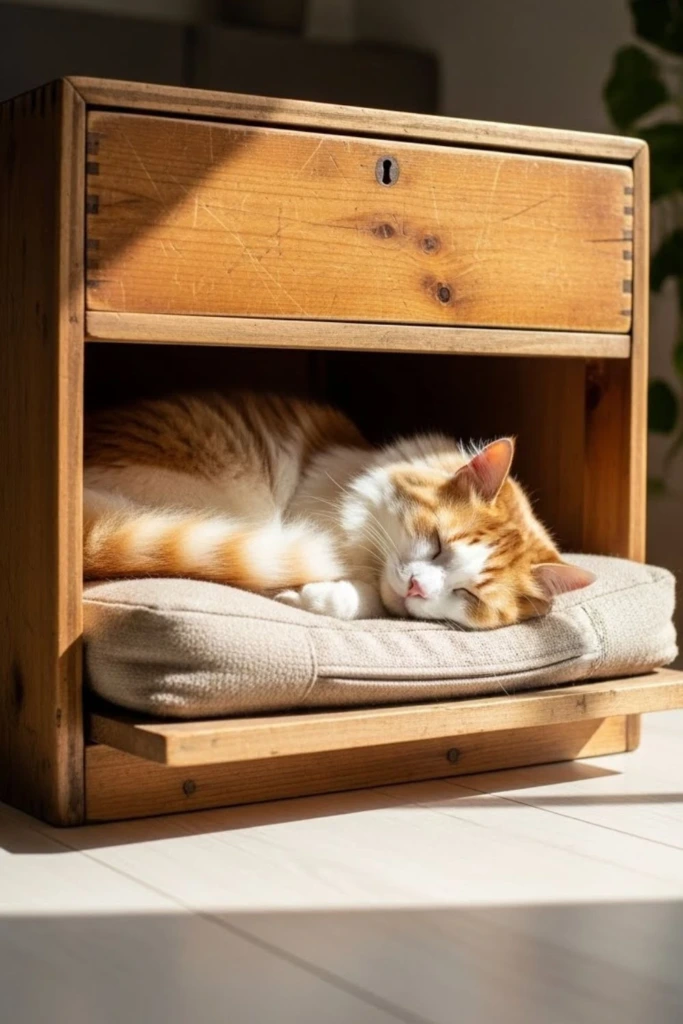
An unused dresser drawer can be repurposed into a compact resting box for a cat. Its rectangular shape offers a convenient starting point, and the project can be customized to match the surrounding furniture.
Remove the drawer from its cabinet and inspect it for loose joints, splinters, or protruding screws. Position it securely on a level surface, making sure it cannot slide or roll. If needed, add a wooden support base to improve stability.
Create an entrance if the existing opening does not provide easy access, then sand the edges and add a removable cushion. The opening should be low enough for comfortable entry but large enough that the cat does not feel trapped.
Although stacking drawers can create additional levels, each section must be firmly attached and supported. For most households, a single low drawer is the simpler and safer choice. Keep the retreat indoors and clean it regularly.
18. Window Lounge
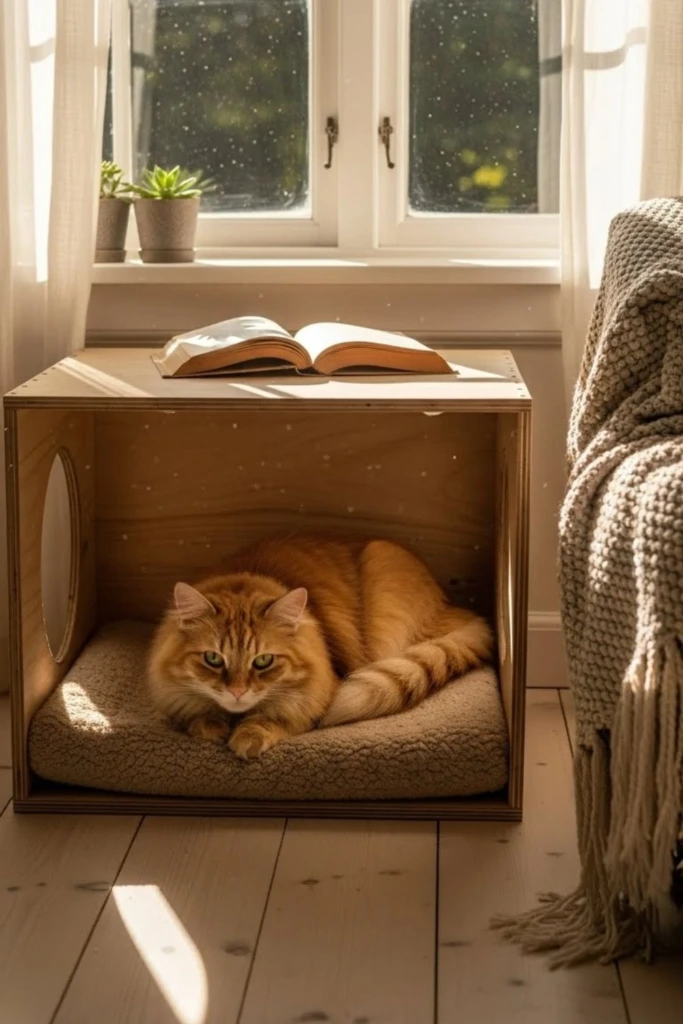
Many cats enjoy watching birds, passing vehicles, and movement outdoors from a comfortable indoor position. A window lounge combines a sheltered resting spot with an appealing view.
Place a sturdy wooden box or suitable cat bed beside a secure window. Add a washable cushion and position the opening so your cat can enter and leave without squeezing into a narrow space. If the design includes a raised platform, support it properly rather than relying on a loose box or unstable furniture.
Keep the window closed or use a secure, cat-resistant screen designed to prevent escapes. Ordinary insect screens may not withstand a cat pushing or climbing against them.
This arrangement works well in bedrooms and living rooms where sunlight reaches the floor. Provide some shade during hot weather, and make sure the resting area never becomes excessively warm.
19. Table Hideout
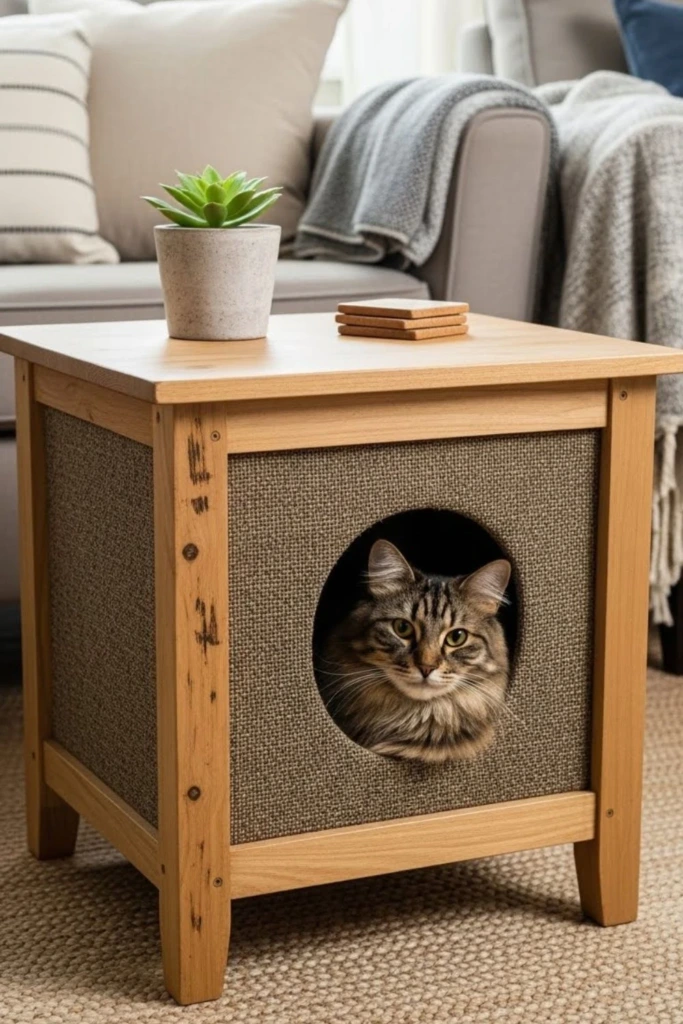
A side table can serve two purposes when its lower section becomes a private cat retreat. This approach is ideal for living rooms where a separate cat house might take up too much space.
Start with a sturdy table that can support its usual load without wobbling. Add wooden panels or durable fabric around the lower sides, leaving an accessible entrance. Smooth all exposed edges and ensure the enclosure does not interfere with the table's structural supports.
Place a washable cushion underneath and keep the interior free of stored objects. Avoid positioning heavy or fragile items on a table that your cat may use as a jumping platform.
The tabletop provides a convenient surface for everyday use, while the shaded space underneath gives your cat a place to rest. Choose materials that coordinate with your existing furniture and allow the interior to be cleaned easily.
20. Laundry Cave
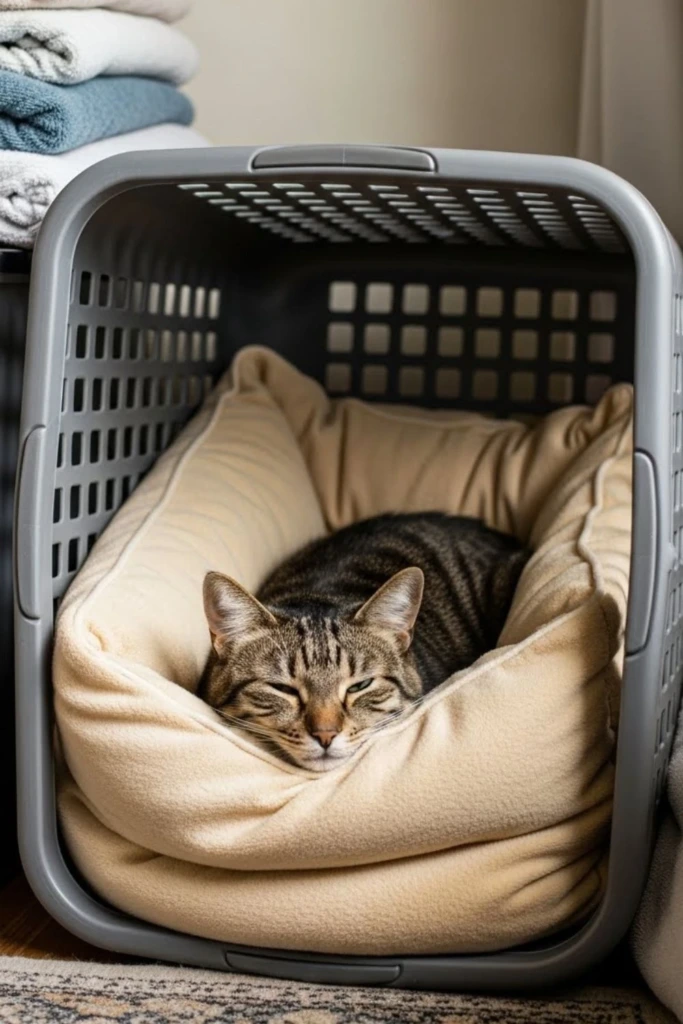
A sturdy laundry basket can be adapted into a simple cat hideaway, particularly for cats that enjoy enclosed spaces near their owners. Its familiar household appearance makes this an easy project for beginners.
Choose a rigid plastic basket with no broken handles, sharp edges, or narrow openings that could trap a paw. Position it on its side and secure it so it cannot roll or shift. Add a washable fabric liner or cushion, ensuring there are no loose threads or long ties.
If you prefer a more enclosed design, use a suitable cover that leaves adequate ventilation and does not collapse inward. Avoid wire baskets with exposed ends or wide gaps that might catch claws.
This shelter works best in a quiet bedroom or laundry room. Keep it away from running appliances, hot dryers, and detergents, and wash the bedding regularly to maintain a clean resting environment.
21. Closet Corner
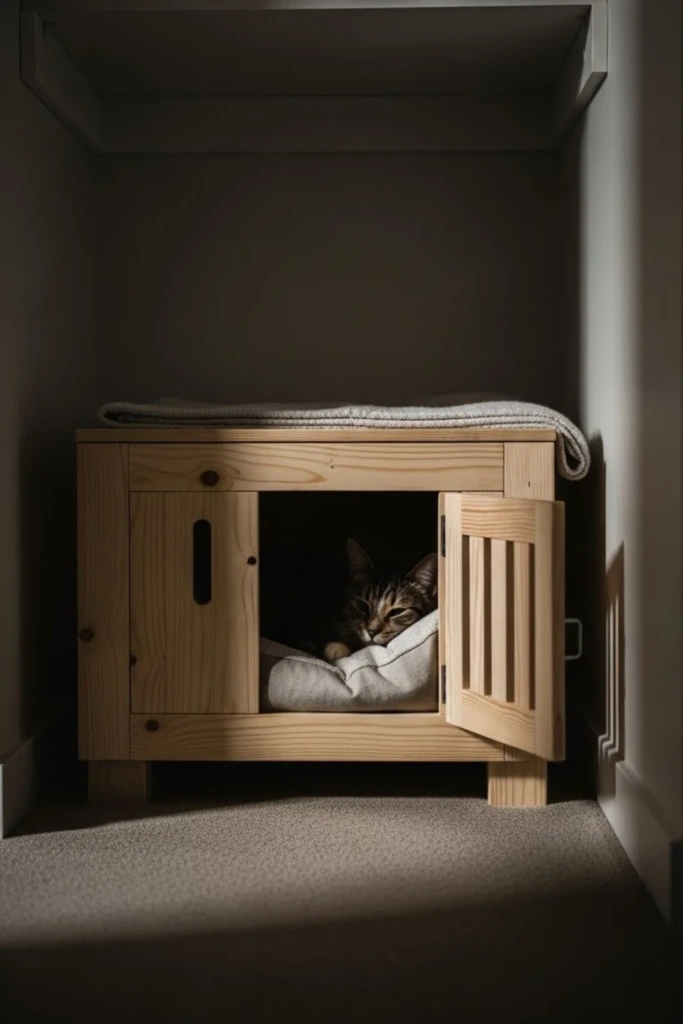
A quiet closet corner can become an appealing retreat for cats that prefer to sleep away from household activity. The space is already sheltered, so a simple enclosure may be all you need.
Choose a wooden crate or sturdy box that fits comfortably on the closet floor. Sand rough edges, check for exposed fasteners, and add a washable cushion. Leave the entrance unobstructed and allow enough room for your cat to turn around and leave without difficulty.
Keep cleaning products, shoes, hanging cords, and other potentially hazardous items away from the sleeping area. If the closet door closes, make sure your cat cannot become accidentally trapped inside. Leave the space accessible whenever your pet needs to use it.
This is a practical choice for smaller homes or cats that appreciate a low-traffic environment. Regularly vacuum the surrounding area and wash the bedding to prevent dust and odors from building up.
Can a DIY cat house really work better than a store-bought one?
Yes, a homemade cat house can be a better fit for an individual cat when it is designed around the animal's habits and the environment where it will be used. You can choose the dimensions, entrance position, materials, bedding, and location rather than relying on a standard design.
For example, an indoor cat that likes enclosed spaces may prefer a cardboard den, while an outdoor cat needs a weather-resistant shelter with effective insulation and protection from moisture. A DIY project also allows you to adapt the structure to an awkward corner or a limited budget.
However, homemade does not automatically mean better. A commercially manufactured shelter may offer stronger construction or more reliable weather protection than an inexperienced builder can achieve. Whichever option you choose, prioritize safety, comfort, easy cleaning, and durability.
Give your cat time to investigate the new space. Placing familiar bedding nearby, introducing a favorite toy, and choosing a quiet location can encourage exploration without forcing the cat inside.
How do I know if my DIY cat house is the right size for my cat?
A properly sized cat house should allow your cat to enter easily, turn around, adjust its position, and lie down in a natural sleeping posture. It should feel sheltered without being so cramped that movement becomes difficult.
Measure your cat while it is resting and compare those measurements with the available floor space. Consider the height needed for sitting or standing, especially if the design has a low roof. For kittens, remember that they will grow, so a slightly larger structure may be more practical.
For an outdoor shelter in cold weather, avoid making the interior unnecessarily spacious because a larger volume can be harder to keep warm. Nevertheless, comfort and safe movement remain essential. The entrance must be large enough for easy access without forcing the cat to squeeze through.
Observe how your pet responds after the house is introduced. If your cat enters willingly, settles down, and can leave without difficulty, the dimensions may be suitable. If it repeatedly avoids the enclosure, check the entrance, temperature, location, stability, and bedding before assuming the size is the problem.