19 Toy Storage Ideas for 2026
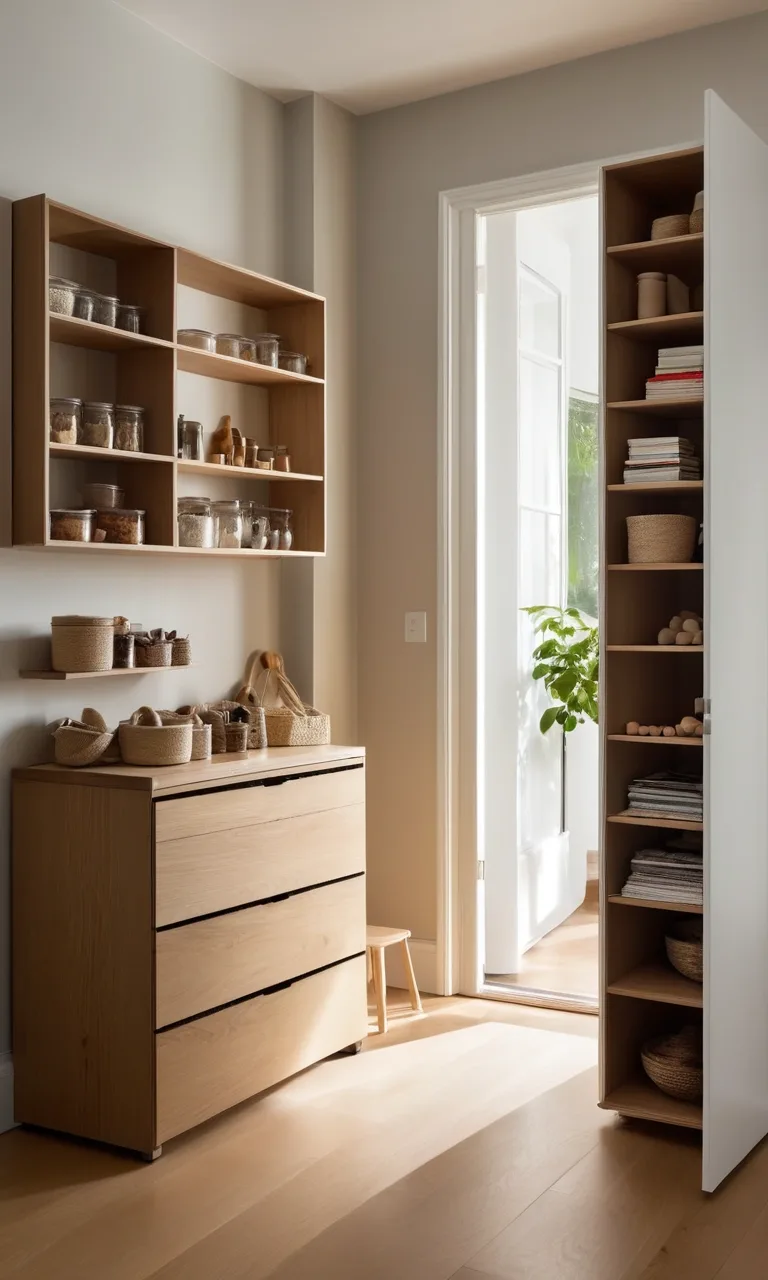
Keeping toys organized can feel like a daily challenge, especially when playthings seem to spread into every corner of the house. The good news is that you don't need a large toy chest or an entire playroom to maintain order. With a few practical storage solutions, you can make toys easy to access, simple to put away, and less likely to clutter your living space.
From attractive baskets and compact shelving to creative wall storage and multifunctional furniture, these toy storage ideas can help you create a tidier home while giving children plenty of room to play.
How Can You Keep Toys Organized Without a Toy Box?
A traditional toy box isn't the only way to store children's belongings. In fact, separating toys by category often makes them easier to find and return to their proper places. Instead of tossing everything into one large container, consider using shelves, baskets, drawers, or smaller bins that suit your available space.
Start by sorting toys into groups such as building blocks, dolls, stuffed animals, art supplies, and puzzles. Assign each category a dedicated storage spot, preferably somewhere your child can reach without assistance. Labels with pictures can help younger children understand where everything belongs.
You can also use furniture you already own. An unused bookcase, a bedside drawer, or a low cabinet can become a useful storage area with very little effort. For frequently used toys, choose open containers that make cleanup quick. Keep small pieces in lidded containers when necessary, particularly if younger children could swallow them.
The goal is to establish a simple system that works with your family's routine rather than creating an elaborate arrangement that takes longer to maintain than the mess itself.
1. Open Shelves
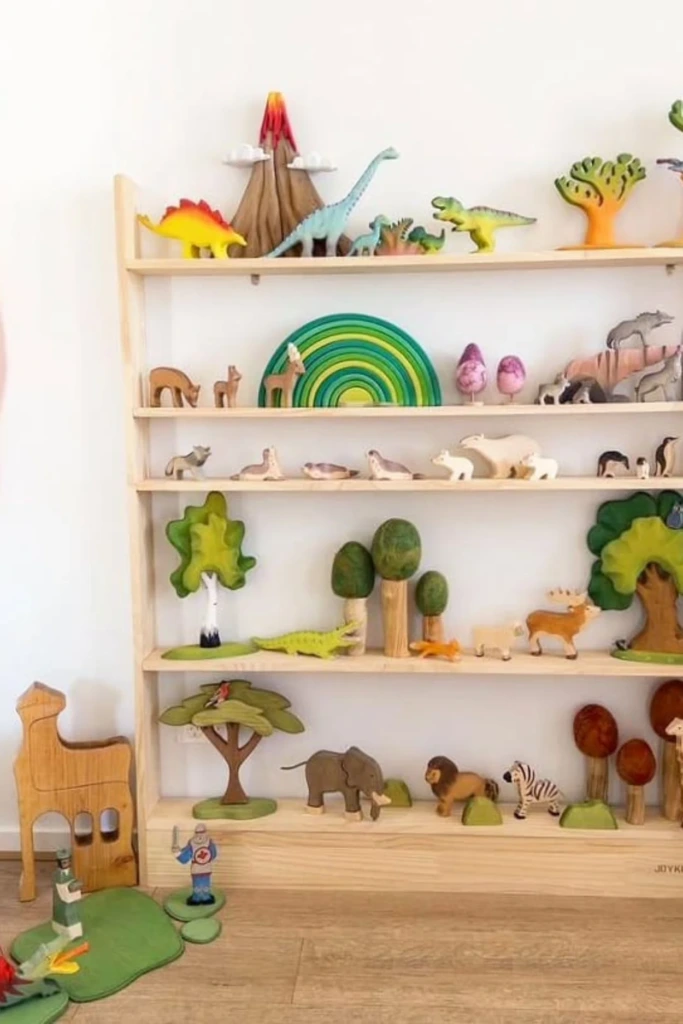
Open shelving offers a straightforward way to organize toys while keeping them visible and accessible. Children can see their options without emptying several containers, and parents can quickly identify which items need to be returned to their places.
Choose a low, sturdy shelf for everyday toys and arrange similar items together. Baskets can hold loose pieces, while larger toys can sit directly on the shelves. Books, puzzles, and activity sets also fit nicely into this arrangement.
To prevent the shelves from looking overcrowded, leave some empty space between groups and rotate toys occasionally. Display only the items your child currently enjoys, storing less frequently used belongings elsewhere.
Safety matters when choosing this option. Secure shelving to the wall according to the manufacturer's instructions, avoid placing heavy objects on high shelves, and keep frequently used toys within comfortable reach.
2. Basket Storage
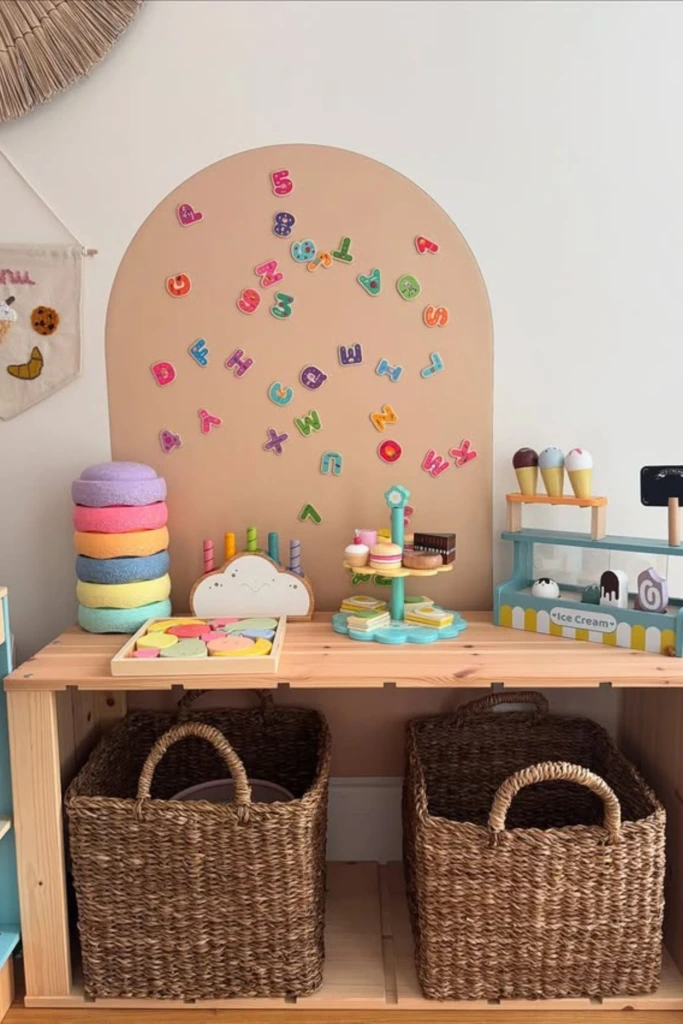
Baskets combine practical storage with a softer, more decorative appearance. They work particularly well in living rooms, bedrooms, and shared family spaces where brightly colored plastic containers might look out of place.
Use separate baskets for stuffed animals, toy vehicles, dress-up clothes, dolls, or building toys. Woven baskets can add texture to a room, while fabric baskets are lightweight and easy for children to move around. Plastic baskets are another good choice for toys that need frequent cleaning.
Choose sizes that match the contents. A basket that's too deep can make smaller toys difficult to retrieve, while an oversized container may encourage children to mix everything together.
Place baskets beneath a console table, beside a play area, or inside an open shelving unit. If several baskets look similar, add simple labels or picture tags so everyone knows what belongs where. For nurseries and homes with toddlers, avoid baskets with sharp edges, loose decorative parts, or heavy lids that could cause injuries.
3. Stackable Bins
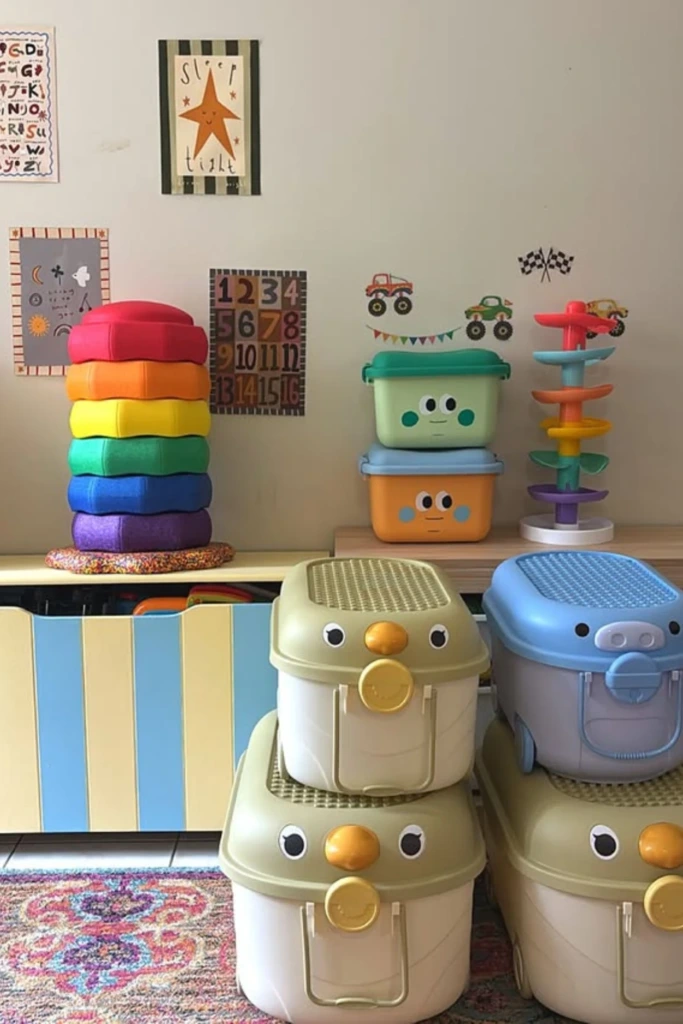
Stackable bins make use of vertical space, which is particularly valuable when floor space is limited. Rather than spreading multiple containers across a room, you can arrange them in a compact tower or fit them into a suitable shelving system.
These bins are useful for building bricks, toy animals, miniature vehicles, craft materials, and other collections containing many small pieces. Transparent bins make it easier to identify their contents, while colored containers can help distinguish different categories.
Look for bins that fit together securely and can be removed without disturbing the entire stack. If children will use them independently, keep the arrangement low enough for safe access and place heavier items near the bottom.
Avoid stacking containers so high that they become unstable. For daily use, a few accessible bins are often more practical than a tall tower that requires adult help every time a child wants a toy.
4. Play Nook
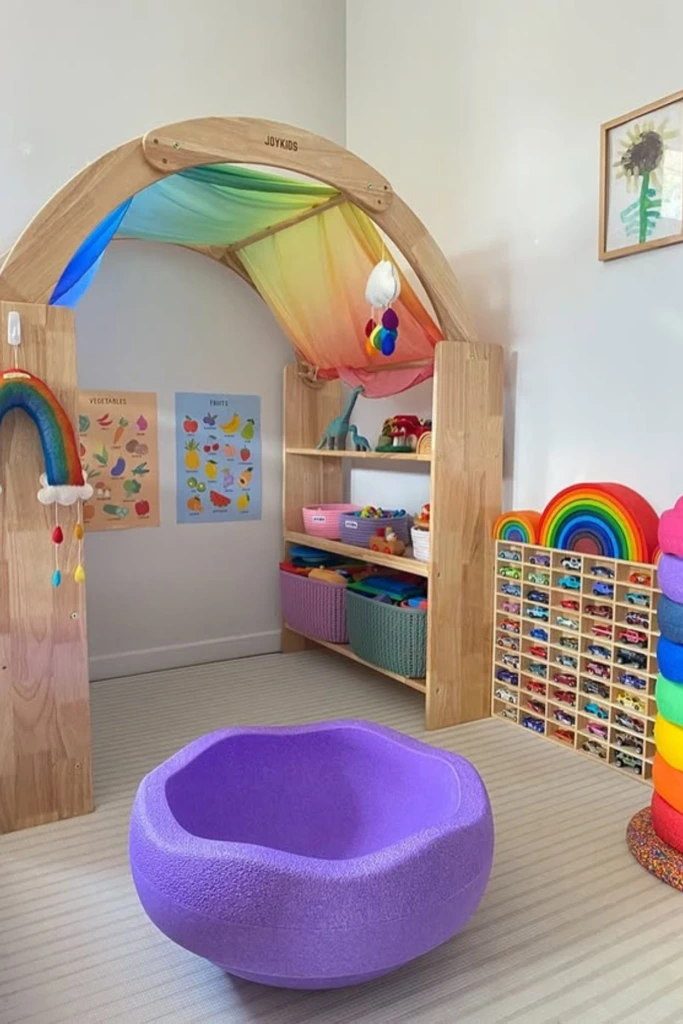
A dedicated play nook gives children a clear place to enjoy their toys without requiring a separate playroom. It can be created in an unused bedroom corner, beneath a suitable window, or along one side of a family living area.
Begin with a comfortable floor mat or small rug to define the space. Add a low shelf, a couple of baskets, and a compact table if your child enjoys drawing or building. Keeping storage close to the play area makes it easier to put things away when playtime ends.
You can also use a small book display or a wall-mounted organizer to keep favorite activities within reach. Choose a limited selection of toys for the nook and store extras elsewhere to prevent the area from becoming crowded.
A play nook should feel inviting rather than restrictive. Make sure there is enough room to move around, keep walkways clear, and position furniture away from hazards such as unstable windows, heaters, or dangling cords.
5. Plush Tower
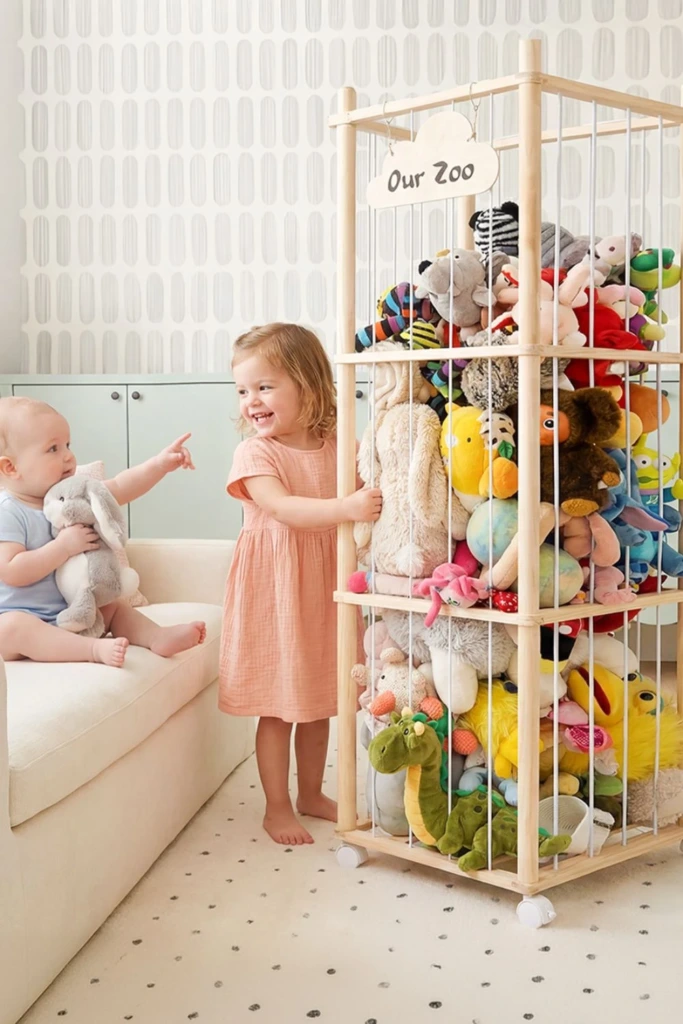
Stuffed animals are soft and lovable, but a growing collection can quickly occupy beds, chairs, and every available corner. A plush tower offers a way to gather these toys vertically instead of allowing them to spread throughout the room.
One option is a purpose-made stuffed-animal organizer with flexible compartments or fabric pockets. Another is a tall, open basket designed to hold plush toys without crushing them. A narrow storage unit can also work if its shelves are deep enough for the animals.
Arrange larger stuffed animals near the bottom and smaller ones toward the top. Keep the structure stable, and make sure children can retrieve their favorite toys without climbing or pulling down the entire collection.
If you choose a hanging organizer, attach it securely and follow the weight limits provided by the manufacturer. For younger children, avoid narrow openings, long cords, or designs that could create an entrapment hazard.
6. Display Shelf
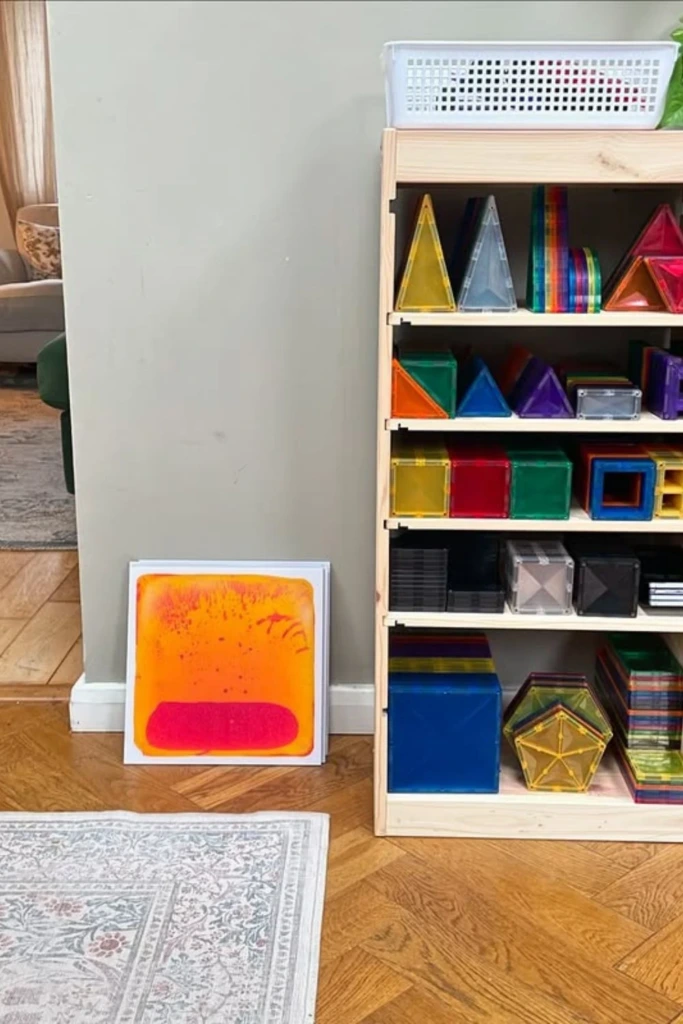
A display shelf allows you to turn selected toys into part of the room's decoration. This works especially well for collectible figurines, wooden toys, model vehicles, character figures, or special items your child enjoys showing off.
Arrange the toys in small groups rather than filling every available inch. You might organize them by theme, color, size, or collection. A few books or decorative objects can be included if there is enough room, but the toys should remain easy to identify and remove.
Choose shelf dimensions that suit the objects being displayed. Deeper shelves are useful for larger toys, while narrow ledges can accommodate small figures or lightweight collectibles.
For safety, anchor shelves properly and avoid placing fragile or heavy toys above beds, seating areas, or places where children frequently play. Keep small collectible pieces away from toddlers who may put them in their mouths.
A display shelf works best when it showcases favorite items while leaving the rest of the collection stored somewhere practical.
7. Cube Organizer
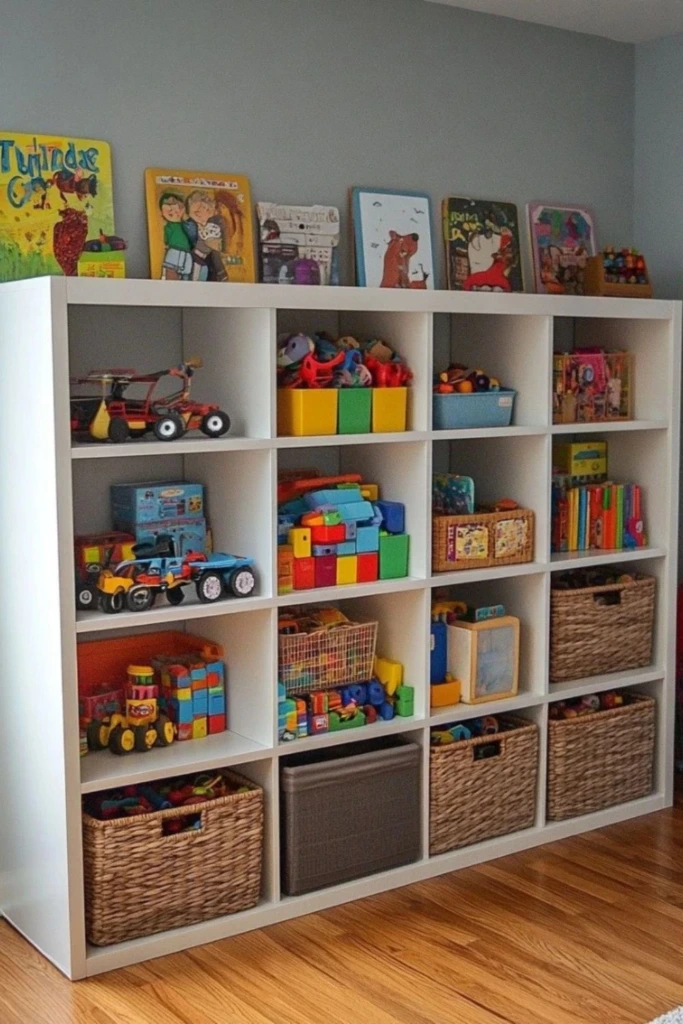
Cube organizers are versatile pieces of furniture that can adapt to different toy collections and room layouts. Their individual compartments create natural boundaries, making it easier to assign each category a specific home.
Place dolls in one cube, puzzles in another, and building blocks in a fabric bin. Larger compartments can hold stuffed animals or bulky toys, while smaller containers keep accessories together. If the unit has an open design, children can see what is available without opening drawers.
You can choose a horizontal unit for a low storage arrangement or a taller model when more vertical space is available. Adding matching baskets can give the organizer a consistent appearance, while leaving a few cubes open keeps favorite toys accessible.
Measure the room before buying a unit and check the dimensions of any storage bins you plan to use. Secure the organizer to the wall when required, and make sure children cannot pull it over by climbing or hanging on its compartments.
8. Bucket Stand
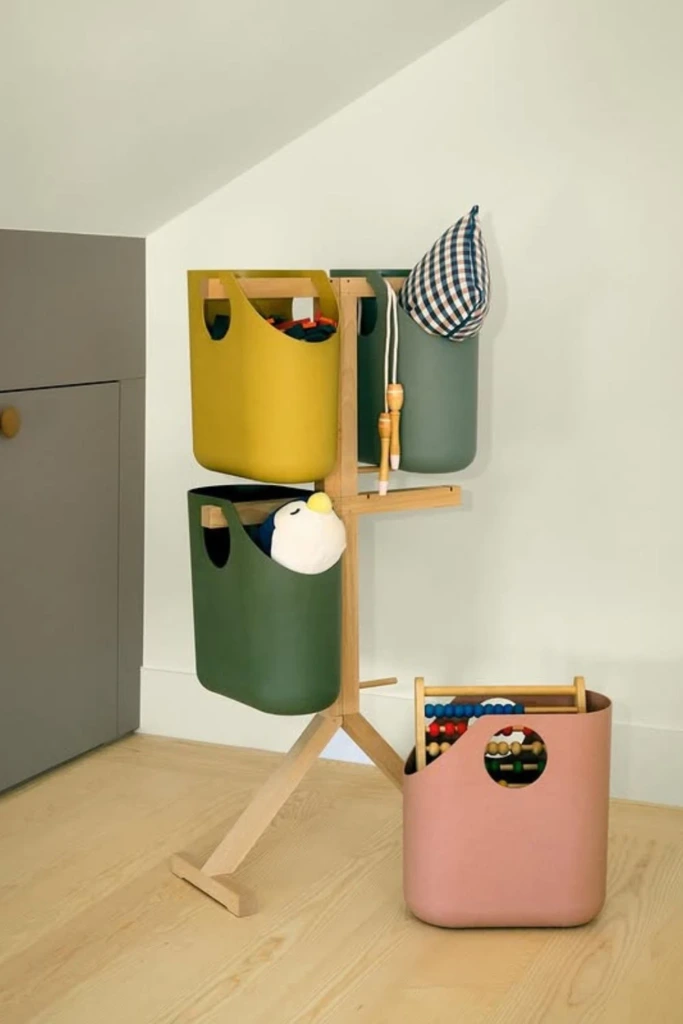
A bucket stand is a useful option for families who want portable, easy-to-sort toy storage. Several lightweight buckets can be arranged on a freestanding rack, giving each type of toy a designated container.
Use one bucket for building blocks, another for toy cars, and a third for animal figures or dolls' accessories. The buckets can be taken directly to the play area and returned to the stand after use, reducing the need to carry individual toys across the room.
Choose a stand with a stable base and buckets that fit securely. If children will remove the containers themselves, the arrangement should be low enough for them to reach comfortably.
Plastic buckets are generally easy to clean, while fabric containers offer a softer appearance. Avoid containers with sharp metal edges, pinch points, or handles that could catch small fingers.
This setup is particularly convenient for toys that frequently move between bedrooms, living rooms, and shared play spaces.
9. Book Display
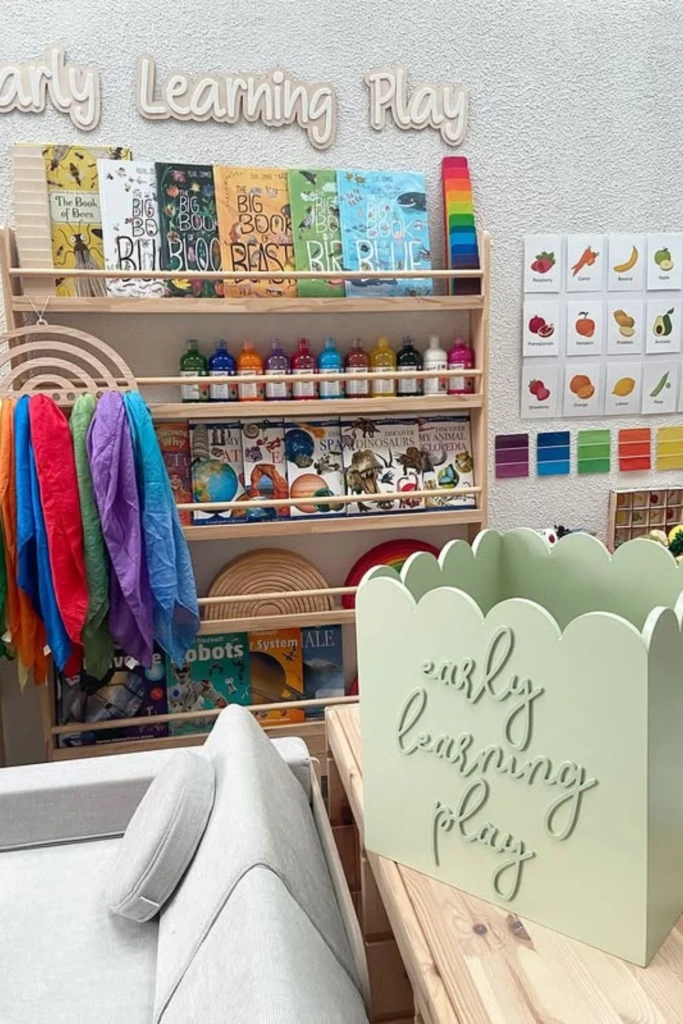
A book display can provide storage for reading materials while making a child's favorite stories easy to browse. Front-facing book racks show the covers rather than only the spines, helping young readers recognize books and choose one independently.
Although books are the main focus, the surrounding area can also accommodate a few related toys. For example, a small basket beside the rack could hold puppets, reading cushions, or soft toys used during storytime.
Keep the display at a child-friendly height and avoid overcrowding it with toys that make the books difficult to reach. If the unit includes shelves, reserve separate sections for board books, picture books, and early readers.
A small reading corner can be created with a cushion, a washable rug, and a nearby storage basket. This gives children a comfortable place to enjoy books and encourages them to return reading materials after use.
Secure the display when necessary, especially if it is tall or freestanding, and check that its edges and hardware are safe for children.
10. Crate Shelves
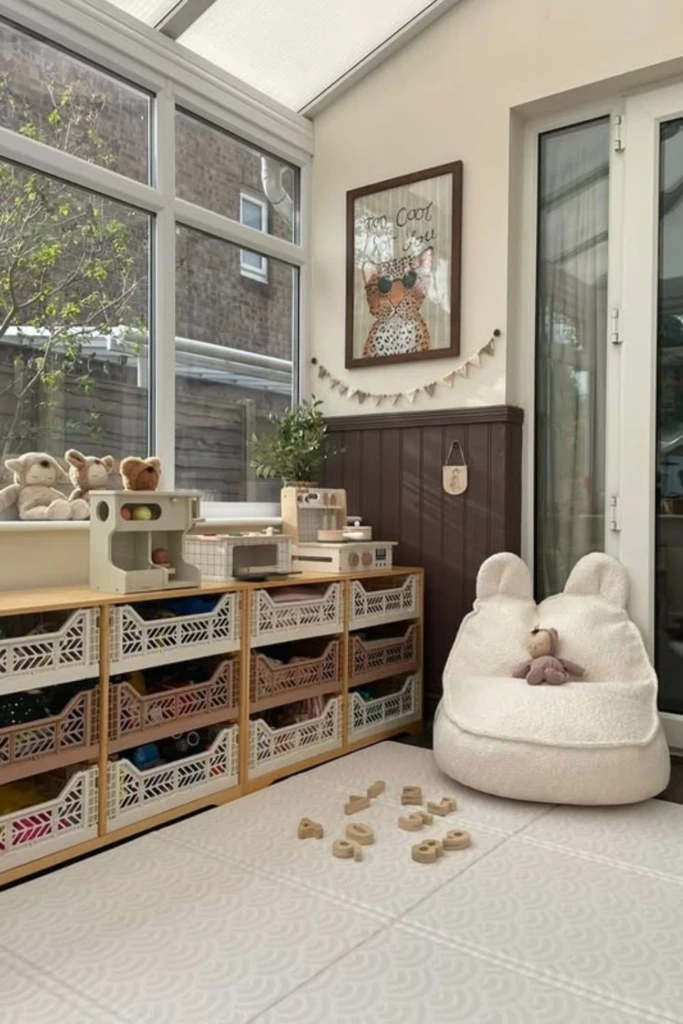
Wooden or plastic crates can be repurposed into practical toy storage when arranged thoughtfully. Their open sides provide easy access, and their modular shape makes it possible to create a setup that fits an awkward corner or small room.
Use individual crates for different toy categories, such as vehicles, dolls, stuffed animals, or building sets. A crate can also serve as a container for oversized toys that don't fit neatly into standard baskets.
If you use wooden crates, sand rough areas and check carefully for splinters, exposed nails, or loose joints. Finished crates can be painted or stained to coordinate with the room, provided the finish is appropriate for the intended use and fully cured before children handle them.
Stacking crates can save floor space, but the structure must be stable and securely connected where necessary. Never rely on a loosely balanced stack, and don't let children climb on the arrangement.
For a flexible alternative, place the crates individually along a wall or under a sturdy table. This keeps the storage low and makes it easier to rearrange the setup as your child's collection changes.
11. Storage Bench
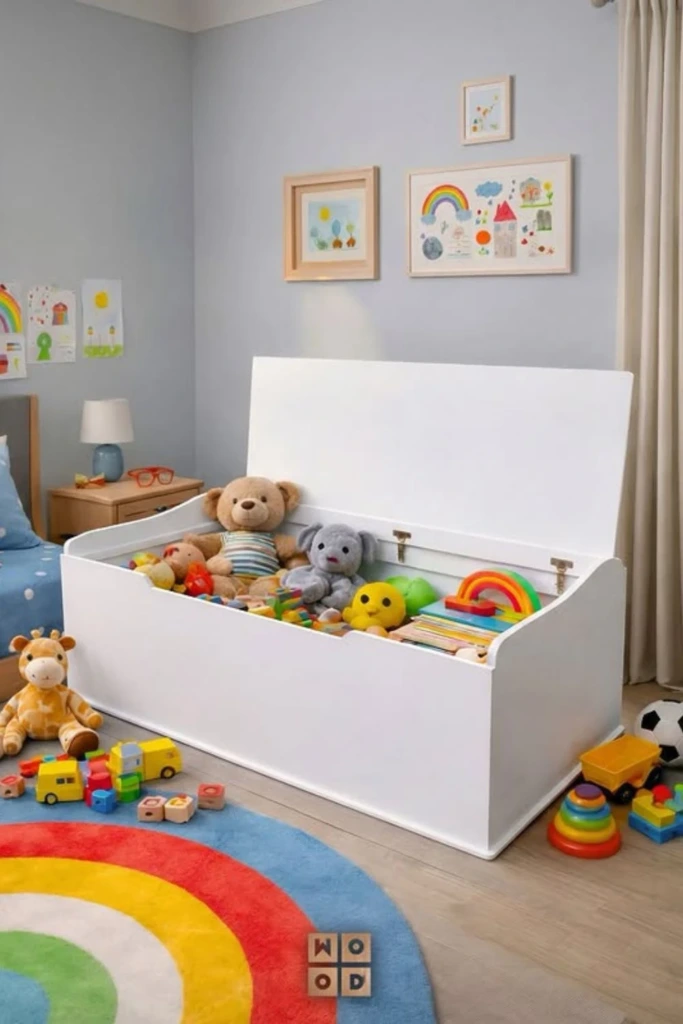
A storage bench combines seating with hidden storage, making it a useful choice for bedrooms, playrooms, and family living areas. It can provide a place to sit while keeping bulky toys out of sight when they're not in use.
Choose a bench with enough internal space for items such as stuffed animals, dress-up costumes, large building toys, or outdoor play accessories. Smaller toys should be placed in separate containers inside the bench so they don't become mixed together.
If the bench is in a bedroom, it can sit at the foot of the bed. In a playroom, it can be positioned along a wall to leave the central floor area open for activities.
Pay attention to the lid design. A model with a lid that stays open safely, soft-close hinges, or accessible open storage may be more suitable for households with young children. Avoid designs that can slam shut or create finger-trapping gaps.
Check the bench's weight capacity before using it as seating, and anchor or position it according to the manufacturer's safety guidance. The most useful bench is one that serves its intended purpose without making toy cleanup difficult.
12. Wall Shelves
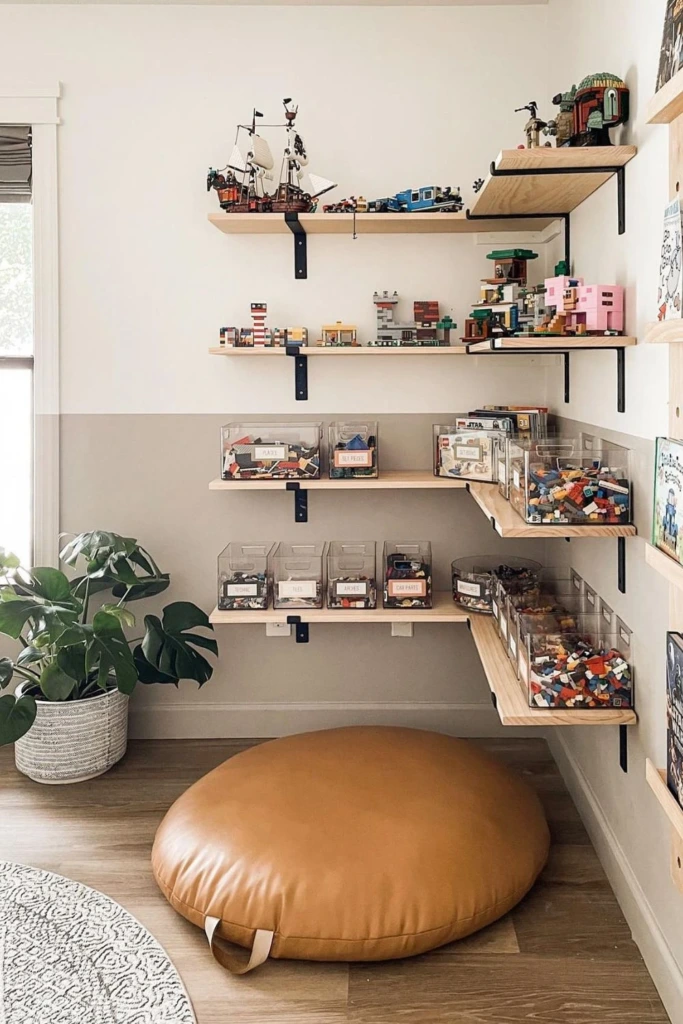
Wall shelves are ideal when floor space is limited and you want to keep toys organized without adding another bulky piece of furniture. They can hold lightweight figures, small vehicles, display items, books, and selected play accessories.
Install shelves above a desk, along an unused wall, or beside a reading corner. Use shallow shelves for collectibles and deeper ones for larger toys, making sure each shelf is suitable for the weight it will carry.
A staggered arrangement can create an attractive display, while evenly spaced shelves offer a cleaner, more structured look. You can also combine shelves with small labeled containers to prevent loose pieces from falling or becoming scattered.
Keep heavy toys low and reserve higher shelves for items adults manage. Toys that children use daily should remain within their safe reach, and wall-mounted furniture must be attached to appropriate supports using suitable hardware.
Wall shelves work best when they hold a carefully selected group of belongings rather than the entire toy collection. Leaving some open space helps the room feel less crowded.
13. Play Mat
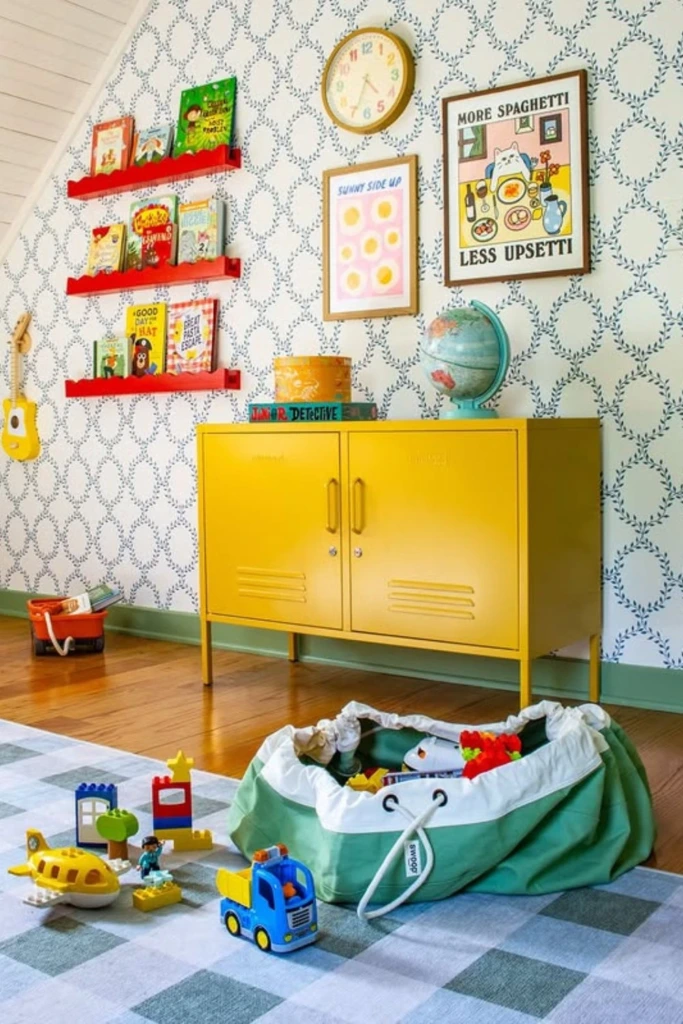
A play mat can double as a simple toy storage solution when paired with a design that gathers toys into one place. Some mats feature drawstrings or raised fabric edges, allowing you to pull the sides together and turn the play surface into a portable storage sack.
These designs are especially helpful for building blocks, toy animals, miniature vehicles, and other small pieces that tend to spread across the floor. Children can play on the open mat and help collect everything before the mat is closed.
For larger toys, a regular washable mat can still define the play area. Keep a nearby basket or bin for items that cannot be gathered into the mat itself.
Choose a material that is durable, comfortable, and easy to clean. Make sure drawstrings and cords are managed safely, particularly around toddlers, and never leave a long cord where it could create a strangulation risk.
A play mat won't replace all your storage furniture, but it can make cleanup faster and help keep toys contained during everyday activities.
14. Toy Display
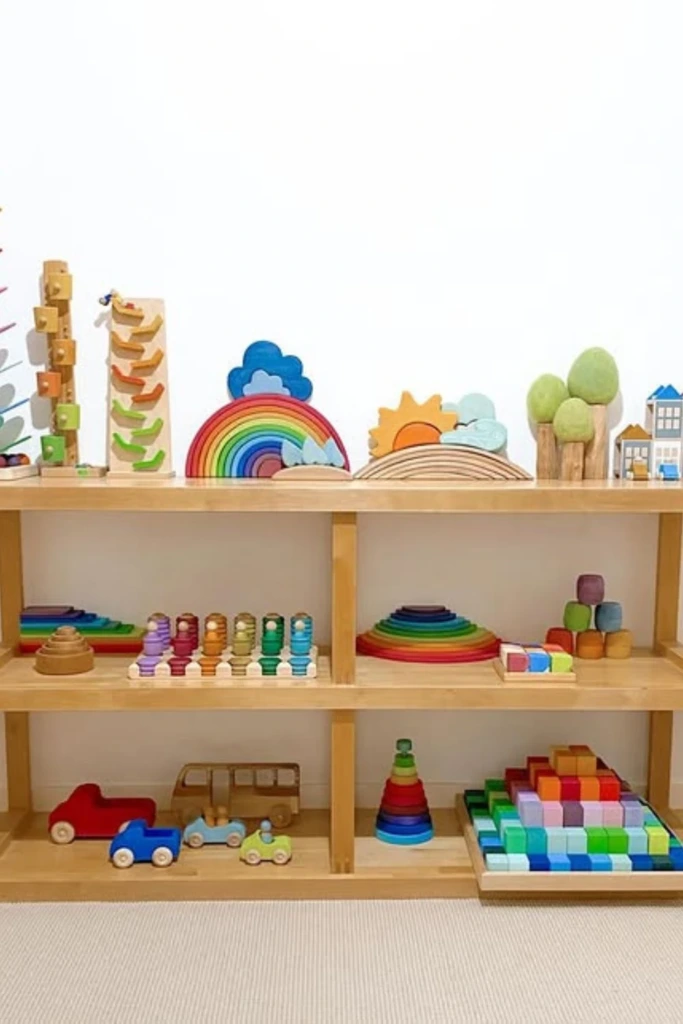
Displaying toys can make a child's room feel personal while keeping favorite belongings organized. Rather than hiding every item in a container, select a few special toys to become part of the room's visual design.
You might arrange wooden animals on a low shelf, place model cars in a dedicated display case, or group favorite dolls on a sturdy bookcase. Rotating the display every few weeks keeps the room interesting without requiring additional storage.
Think about which toys are meant to be played with and which are primarily decorative. Everyday favorites should be easy to reach, while delicate collectibles can be placed in a protected display area.
Use stable surfaces, secure freestanding furniture, and avoid putting breakable objects near the edge of a shelf. If the collection contains small parts, keep them away from young children who could swallow them.
A well-planned toy display provides a balance between appearance and function. The idea is to highlight meaningful items without turning every available surface into another place for clutter to accumulate.
15. Low Cubes
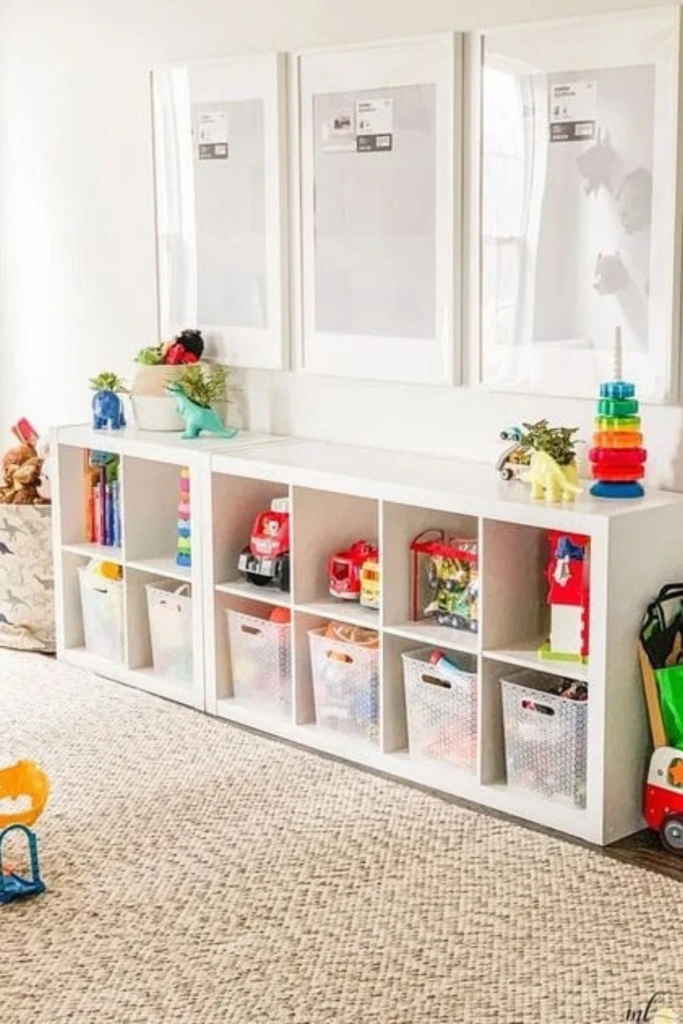
Low cube storage is particularly convenient for toddlers and preschoolers because it puts toys within easy reach. Children can select what they want to play with and return it afterward without needing an adult to retrieve a container from a high shelf.
Arrange the cubes according to the way your family uses the room. One compartment might hold books, another could contain blocks, and a third could store dolls or soft toys. Small baskets help keep loose pieces together and can be removed when it's time to play.
A low unit also works well beneath a window or along a wall where a tall bookcase would feel overwhelming. The top can hold a small selection of lightweight items, provided it remains uncluttered and safe.
Choose a sturdy unit with smooth edges and suitable compartment dimensions. Secure it to the wall when recommended by the manufacturer, and don't allow children to use the cubes as climbing steps.
For a changing collection, use removable bins that can be relabeled as your child's interests develop. This keeps the system useful without requiring a complete reorganization every few months.
16. Drawer Sorting
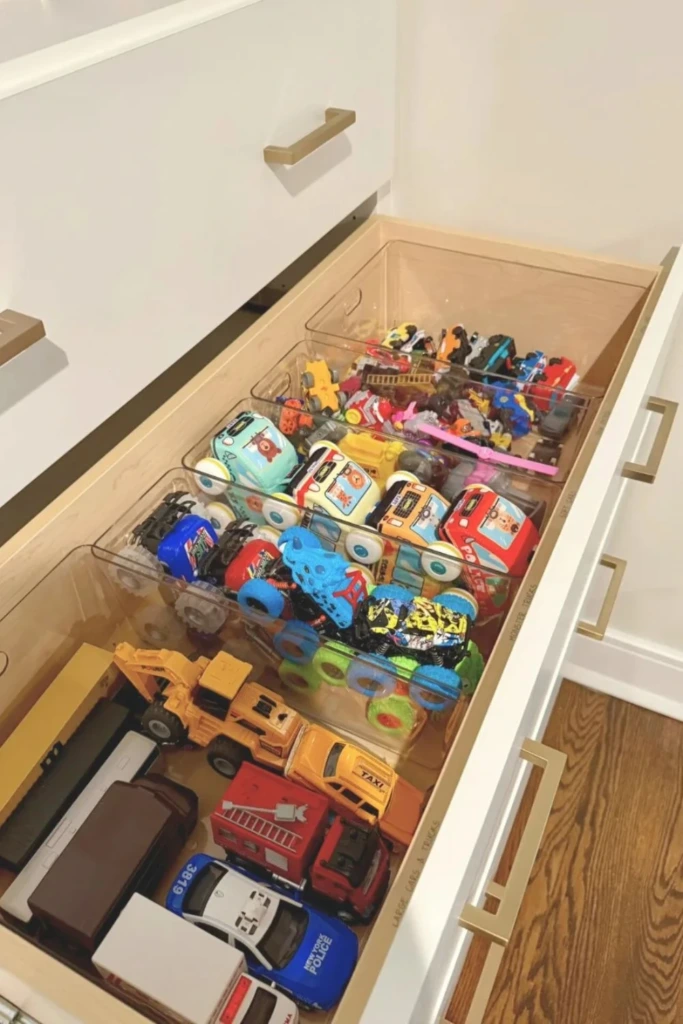
Drawers are useful for hiding toys that don't need to remain on display. They can be built into a dresser, placed beneath a bed, or incorporated into a desk or storage unit.
The key to making drawer storage effective is dividing the contents into manageable categories. Use small organizers or separate containers for puzzle pieces, toy accessories, art supplies, miniature figures, and other small belongings.
Assign each drawer a clear purpose rather than mixing unrelated items together. Labels on the outside help children identify the correct drawer, while picture labels can make the system easier for younger kids to follow.
Avoid filling drawers so tightly that they become difficult to open or close. Store heavier items in lower drawers, and choose units with appropriate anti-tip protection. Drawer stops and soft-close features may also be useful depending on the child's age and the furniture design.
Before organizing, remove broken toys, incomplete sets that are no longer useful, and items your child has outgrown. A smaller collection is easier to sort and much simpler to maintain.
17. Toy Cubes
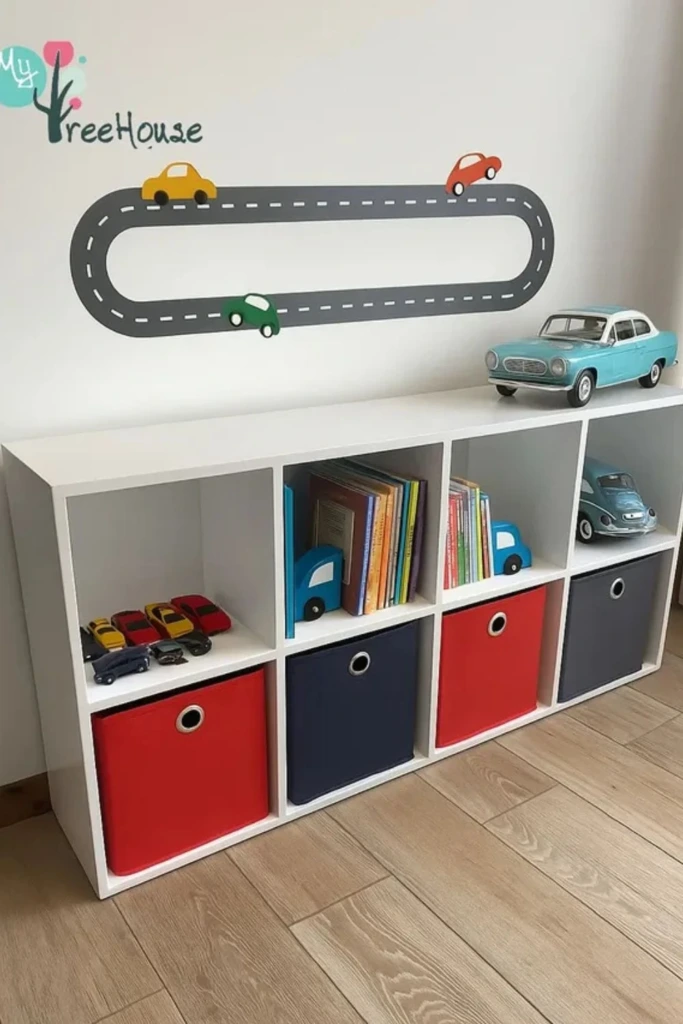
Toy cubes offer a compact way to separate belongings without dedicating an entire wall to shelving. Individual cubes can be used on their own or combined into a larger modular arrangement, depending on the room's available space.
They work well for toy cars, dolls, action figures, building blocks, and small activity sets. Open cubes provide quick access, while fabric bins or fitted containers help conceal clutter and prevent loose pieces from spilling out.
If you have a mixed collection, assign each cube one category and avoid combining too many unrelated items. Keeping categories distinct makes it easier for children to locate what they need and helps prevent toys from becoming damaged by being piled together.
Choose cube dimensions that suit the toys rather than buying a unit based on appearance alone. Measure larger items first and consider whether containers will need extra clearance to slide in and out.
For a flexible setup, begin with a small number of cubes and expand only if necessary. Secure units according to the manufacturer's instructions, particularly if they can tip when a child pulls on an upper compartment.
18. Pegboard Wall
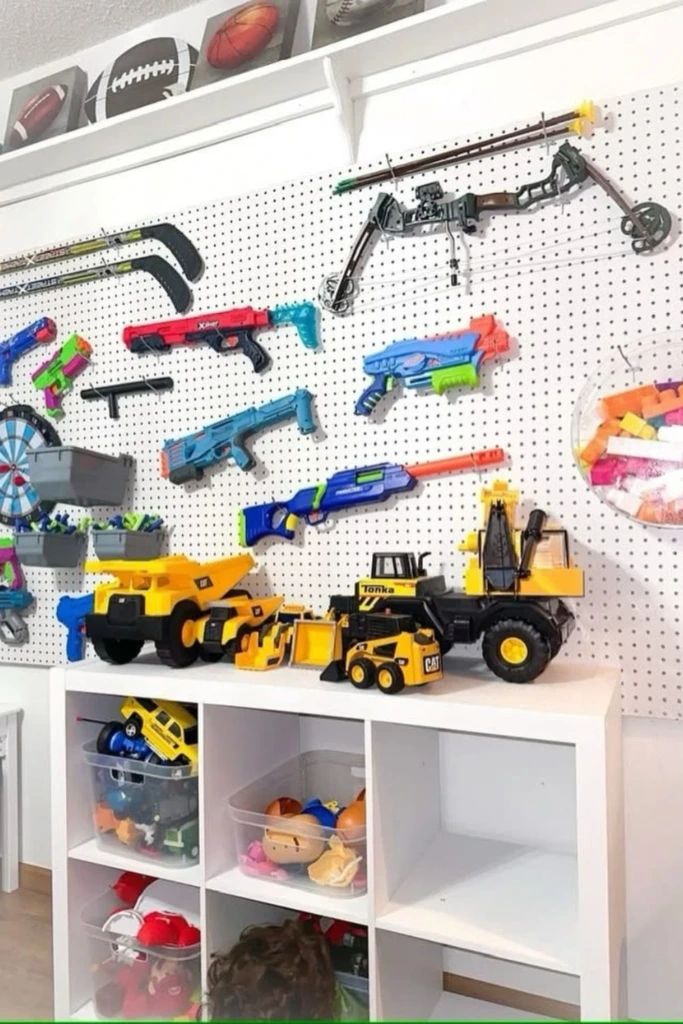
A pegboard wall creates customizable storage by allowing hooks, baskets, and compatible accessories to be repositioned as your needs change. It can be useful for lightweight toys, dress-up accessories, craft tools, and items that benefit from being hung rather than piled into a bin.
Install the board securely using the appropriate fixings for the wall type. Arrange accessories so that frequently used items sit at a comfortable height, and reserve higher sections for belongings that require adult supervision.
Small baskets can hold crayons, toy accessories, or other lightweight supplies, while suitable hooks may accommodate dress-up bags or larger lightweight play items. Keep the arrangement simple enough that children can understand where everything belongs.
Check the board's load capacity and the weight limits of individual hooks and baskets. Make sure hooks are firmly attached and don't leave sharp points exposed at a child's eye level.
A pegboard can also help older children organize their hobby supplies or collectibles. Since the accessories can be moved, the system can evolve as their interests change without requiring entirely new furniture.
19. Clear Bins
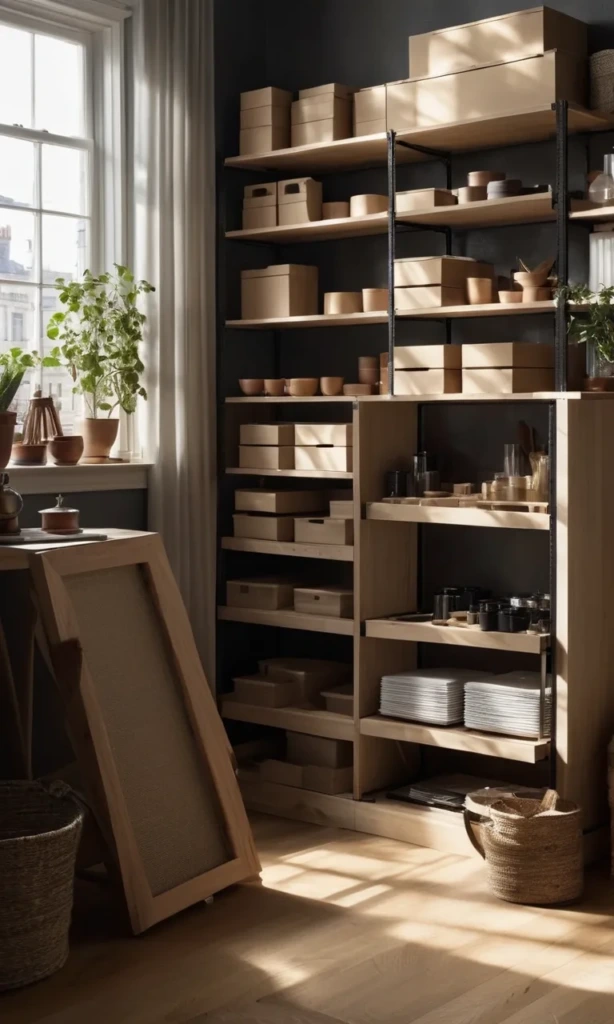
Clear storage bins make it easy to identify toys without opening every container. They're particularly practical for collections with lots of small pieces, including building bricks, toy animals, miniature vehicles, and craft materials.
Choose containers in different sizes to accommodate different categories. Shallow bins are useful for items that need to remain visible and easy to reach, while larger containers can hold bulkier toys. Smaller boxes placed inside a larger bin can keep tiny accessories organized.
Arrange the bins on a low shelf, inside a cube organizer, or in a designated closet. If you stack them, use compatible containers that sit securely together and avoid creating towers that children could pull over.
Labels can still be helpful even when the contents are visible. They make it easier to return toys to the correct location and are especially useful when several categories look similar.
For younger children, avoid bins with heavy lids or locking mechanisms that could trap fingers. Keep small parts in securely closed containers out of reach of children who may swallow them, and inspect plastic bins regularly for cracks or sharp edges.
FAQs
Choosing the right toy storage system depends on the size of your home, your child's age, and the types of toys you need to organize. The following answers cover two common challenges: making the most of a small room and encouraging children to participate in cleanup.
How do you organize toys in a small room without adding bulky furniture?
Start by making better use of the storage space you already have. Under-bed containers can hold toys that aren't needed every day, while wall shelves provide additional storage without taking up floor space.
Use compact baskets, stackable bins, and drawer organizers to separate different categories. A low cube unit can work as both storage and a room divider, while a storage bench may provide seating and a place to keep larger toys.
Another effective strategy is to reduce the number of toys available at one time. Keep a manageable selection in the room and store the rest in a closet or another suitable area. Rotate the collection periodically to maintain variety without increasing clutter.
Try to keep the floor as open as possible, especially in rooms where children sleep and play. Choose furniture that serves more than one purpose, use vertical space safely, and measure carefully before purchasing anything new.
Most importantly, make sure every toy has a designated home. Even a small room can remain organized when the storage system is simple and easy for everyone to follow.
What is the easiest way to get kids to put their toys away?
The easiest approach is to make cleanup a short, predictable part of the daily routine. Children are more likely to participate when they understand where things belong and don't have to complete a complicated series of tasks.
Begin with a few clearly defined categories. For example, building blocks go into one bin, stuffed animals into a basket, and books onto a shelf. Picture labels can help younger children recognize the correct locations without needing to read.
Turn cleanup into a game when appropriate. Set a short timer, take turns collecting different toy categories, or challenge your child to find all the toy cars before moving on to the next activity. Keep the tone encouraging rather than making tidying feel like a punishment.
It's also helpful to avoid offering too many toys at once. A smaller selection is easier to manage, and rotating toys can make old favorites feel interesting again.
Most importantly, demonstrate the routine and participate when necessary. Young children learn through repetition, so a consistent cleanup time after play, before dinner, or before bedtime can gradually become a natural habit.
Final Thoughts
Organizing toys doesn't require an expensive makeover or a dedicated playroom. Open shelves, baskets, stackable bins, drawer dividers, and wall-mounted storage can all help create a more functional space, even in a small home.
Choose solutions that match your child's toys, your available room, and your family's daily habits. Keep frequently used items accessible, store small pieces safely, and make cleanup straightforward enough for children to participate.
With a practical storage system and a little consistency, you can spend less time managing clutter and more time enjoying the fun that toys are meant to bring.