19 Storage Bench Ideas for 2026 to Make Your Home More Organized
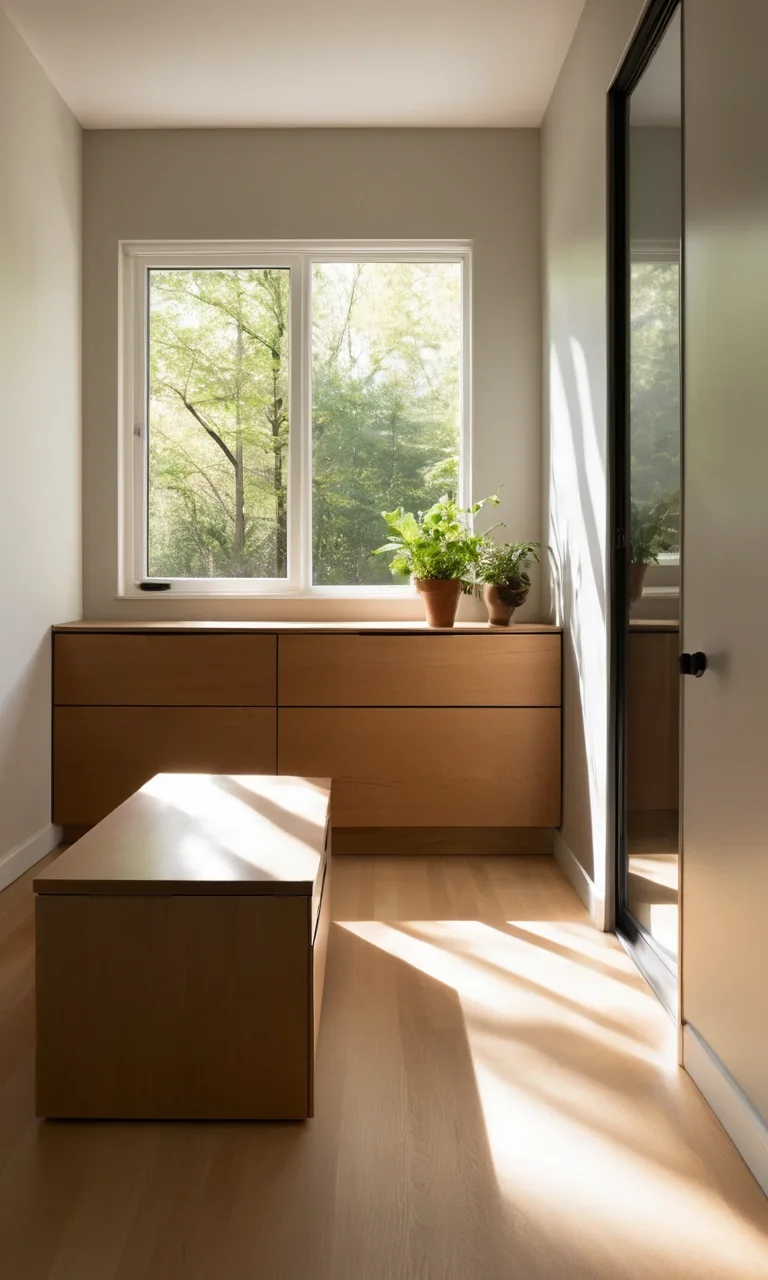
A storage bench is a practical addition to almost any home, offering a comfortable place to sit while keeping everyday belongings neatly arranged. Whether you need somewhere to put shoes near the front door, organize toys in a playroom, or create a cozy reading spot beside a window, the right bench can serve several purposes without taking up unnecessary space. From open shelves to concealed compartments, these storage bench ideas combine convenience, functionality, and style to help you make better use of your home.
How Can a Storage Bench Transform Both Seating and Organization in Your Home?
A storage bench brings two useful features together: a place to sit and a designated spot for belongings. Instead of adding separate chairs, shelves, or storage boxes, you can use one piece of furniture to handle several everyday needs.
In an entryway, it provides a convenient seat for putting on shoes while keeping footwear within reach. In a bedroom, it can hold spare bedding, pillows, or seasonal accessories. In a living room, a bench can double as extra seating and a place to store blankets, magazines, or children's toys.
The best design depends on where you plan to use it. Open compartments make frequently used items easy to access, while drawers and hinged lids conceal clutter. Materials also matter: solid wood suits traditional and contemporary interiors, upholstered benches offer additional comfort, and woven designs introduce texture.
Before choosing a bench, measure the available floor space and consider how much storage you actually need. A well-proportioned design can improve organization without making a room feel crowded.
1. Open Cubbies
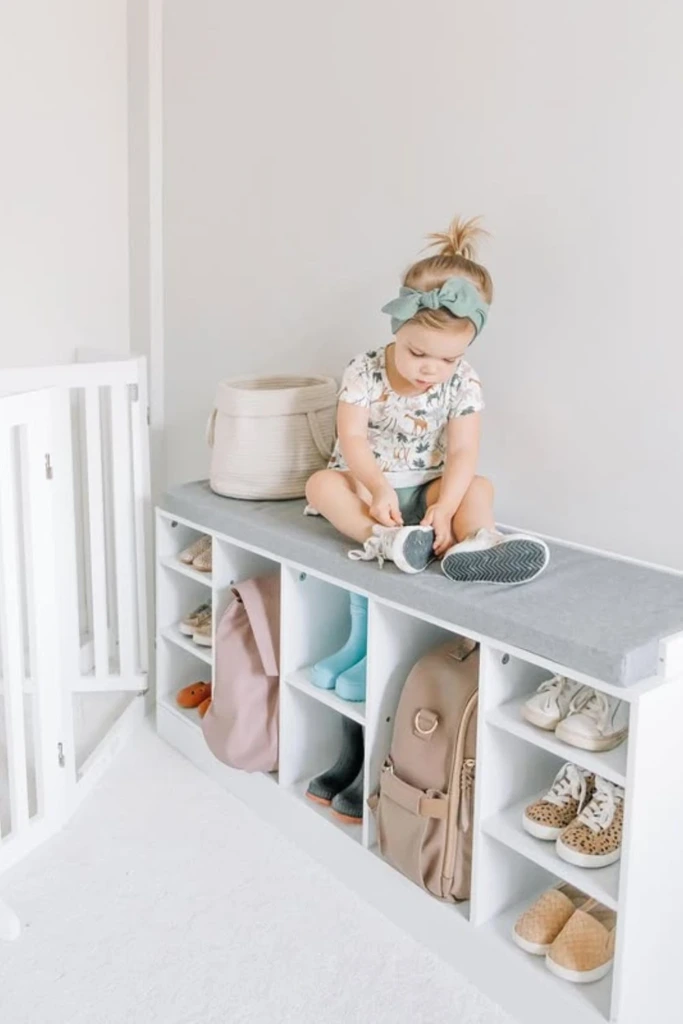
Open cubbies are an excellent option when you want storage that remains visible and accessible. A bench divided into individual compartments creates a designated place for shoes, bags, books, or small household essentials.
This style works particularly well in entryways, children's bedrooms, and shared family spaces. You can assign one cubby to each family member, making it easier for everyone to keep personal belongings organized. Adding fabric bins or small baskets inside selected compartments helps contain loose accessories without sacrificing convenience.
For a neat appearance, avoid filling every opening with unrelated items. Arrange belongings by category and leave a little room for easy removal. If the bench is intended for children, choose compartments that are easy for them to reach.
Open-cubby benches are also useful in small homes because they keep stored items accessible without requiring additional cabinet doors or drawer clearance.
2. Shoe Shelves
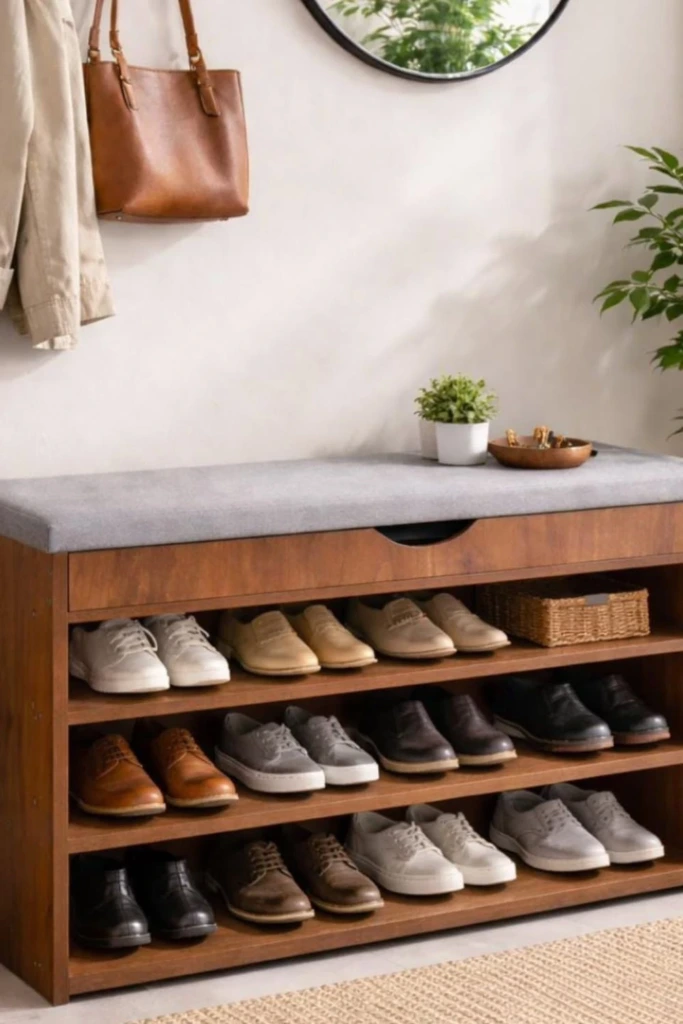
A storage bench with shoe shelves makes getting ready at the door more comfortable and keeps footwear from spreading across the floor. The seat offers a convenient place to sit while putting on shoes, while the shelves below provide an organized home for everyday pairs.
Choose a design with enough vertical clearance for the footwear you wear most often. Sneakers, flats, and children's shoes generally fit easily on standard shelves, while boots may require taller openings or a separate compartment.
Adjustable shelves are especially helpful if your footwear collection includes different sizes and styles. For a busy household, consider a bench with several tiers so each person can keep their regular shoes in a designated area.
Allow wet shoes to dry before placing them in enclosed compartments, and clean the shelves periodically to prevent dirt from accumulating. A washable mat beneath the bench can also protect the surrounding floor.
3. Toy Storage
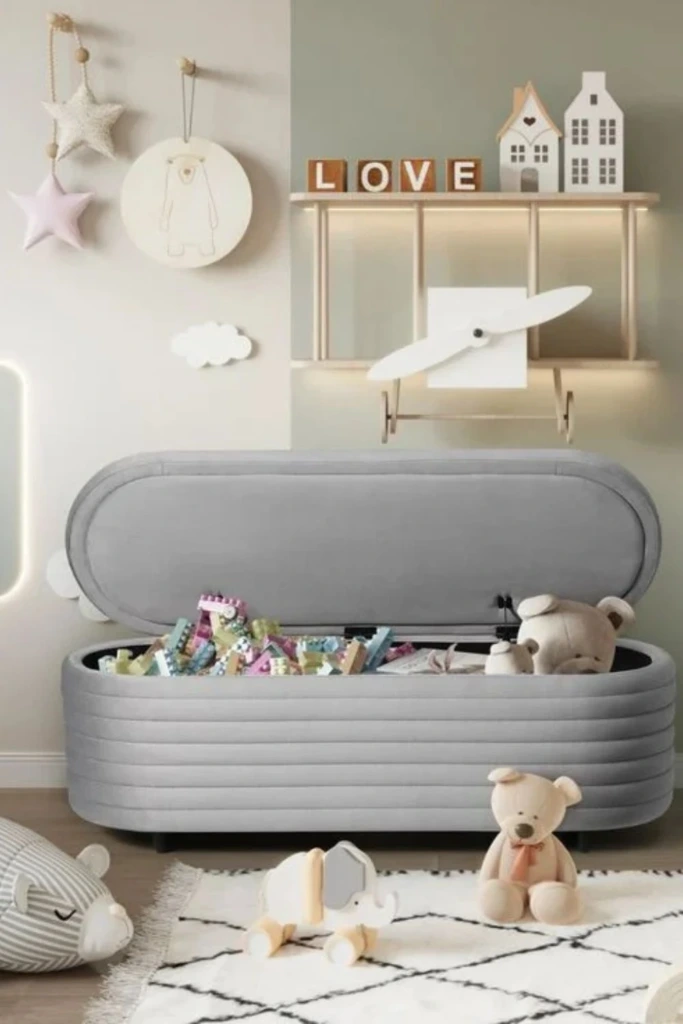
A storage bench can make playrooms and children's bedrooms easier to maintain by giving toys a dedicated place to go after playtime. It also creates additional seating for reading, games, or quiet activities.
Choose a bench with compartments suited to the toys you own. Open cubbies work well for stuffed animals, picture books, and frequently used toys, while removable bins can hold building blocks, dolls, or art supplies. A hinged storage compartment offers space for larger items that do not fit neatly on shelves.
Safety should be a priority when selecting a toy storage bench. Look for stable construction, rounded edges where practical, and a lid designed to reduce the risk of trapped fingers. Secure taller furniture according to the manufacturer's instructions, particularly in children's rooms.
Keeping toys grouped by type makes cleanup easier and helps children learn simple organizational habits. Store small pieces in suitable containers and keep age-inappropriate items out of younger children's reach.
4. Crate Storage
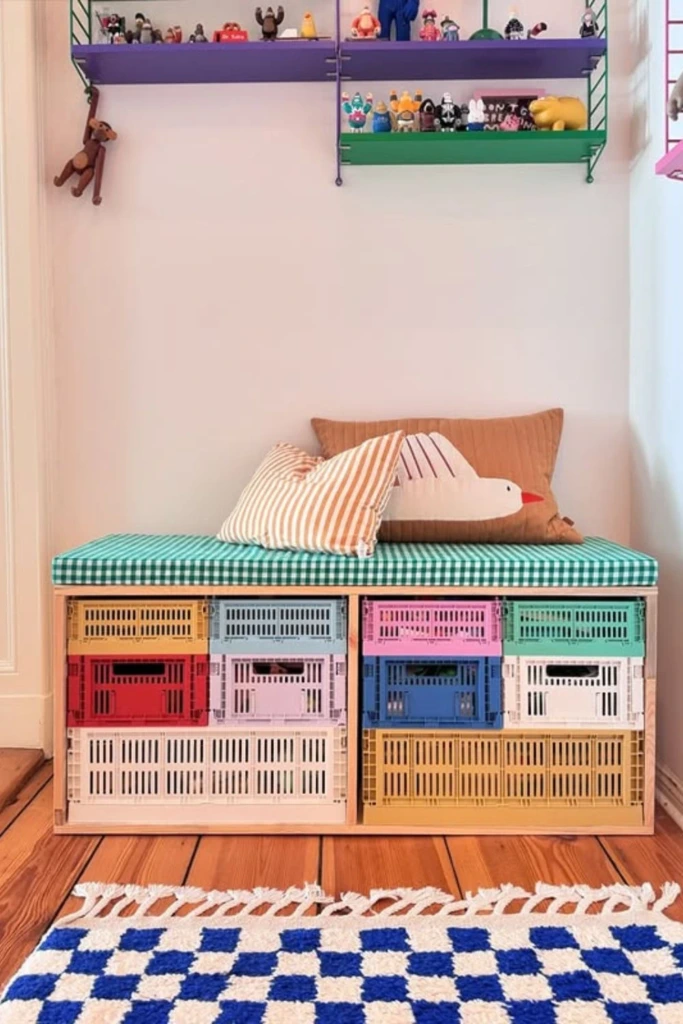
Crate storage offers a flexible way to build a bench with separate spaces for everyday belongings. Wooden crates can be arranged beneath a sturdy seating surface to create compartments for shoes, books, baskets, or decorative accessories.
This approach suits rustic, farmhouse, and casual interiors. Natural wood provides a warm appearance, while painted crates can complement a more colorful room. You can also choose removable crates, making it easier to carry stored items from one room to another.
When building a DIY crate bench, use crates designed to support the intended load and a properly secured top that can safely accommodate seated users. Ordinary decorative crates may not be strong enough for this purpose. Sand rough edges, check for protruding fasteners, and ensure the finished structure does not wobble.
Crate storage is particularly useful for people who want a customizable furniture project. You can change the arrangement as your needs evolve, provided the structure remains stable and safe.
5. Hidden Chest
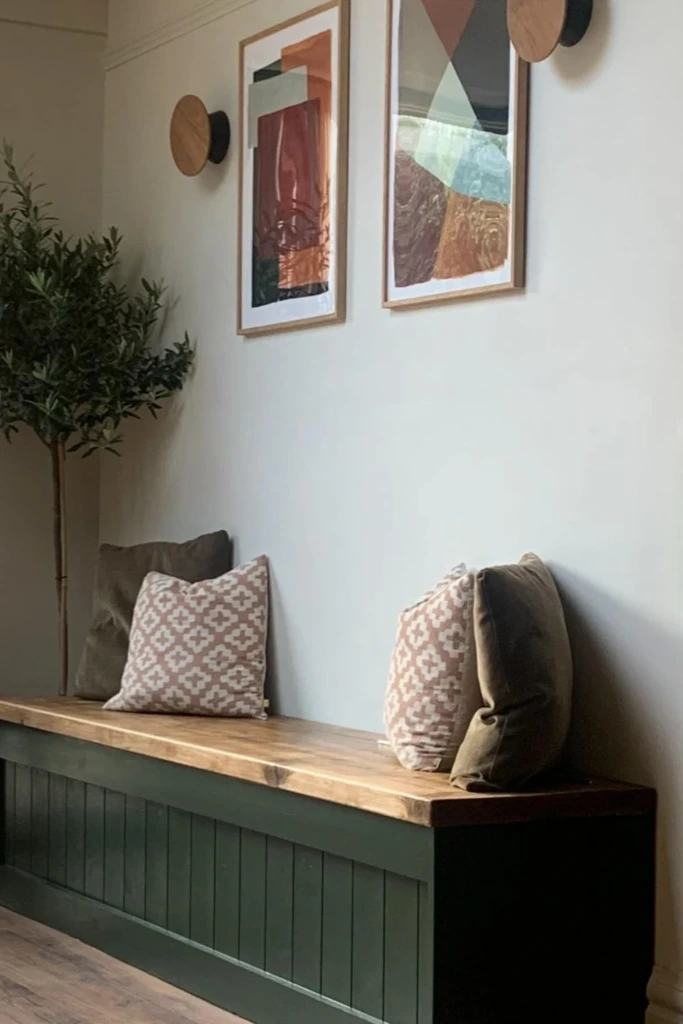
A hidden-chest bench provides concealed storage beneath a continuous seat. From the outside, it can resemble a simple bench, but the interior offers room for belongings you prefer to keep out of sight.
This design works well in bedrooms, living rooms, and entryways where visible clutter can make the space feel untidy. Depending on its dimensions, the chest can hold spare blankets, cushions, winter accessories, or other household items that are not needed every day.
A padded top makes the bench more comfortable, while a wooden finish can give it a streamlined, furniture-like appearance. For frequently accessed belongings, choose a lid with supportive hinges or a controlled closing mechanism.
Think about ventilation before storing textiles or other moisture-sensitive items inside. Keep the contents clean and completely dry, and avoid placing heavy objects in a compartment that is difficult to lift safely.
A hidden chest is most useful when you want substantial storage capacity without displaying everything you own.
6. Window Cubbies
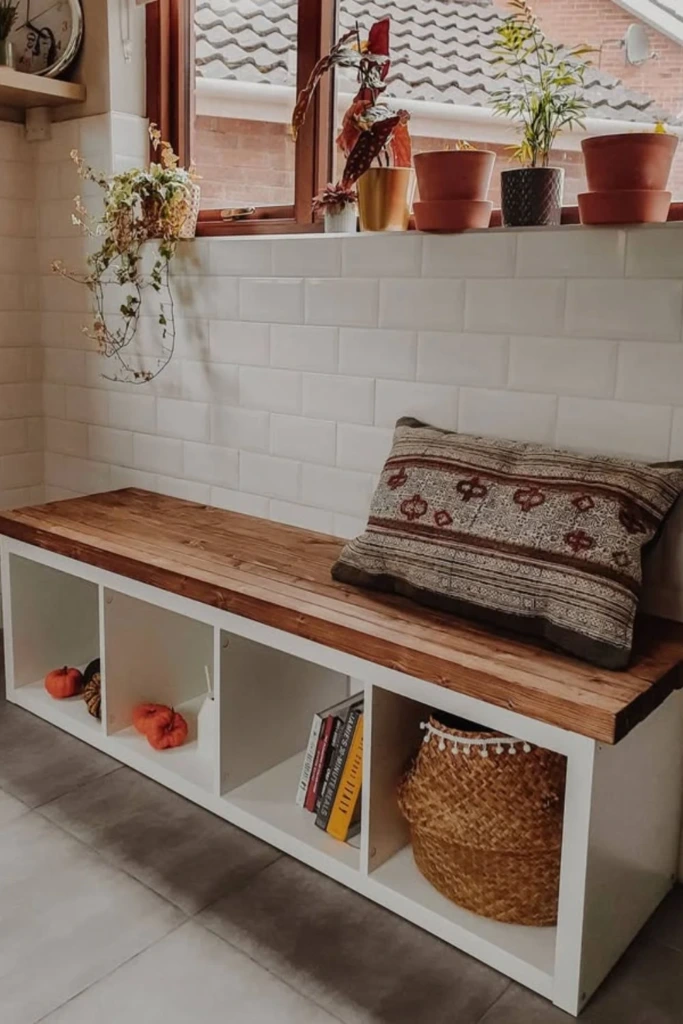
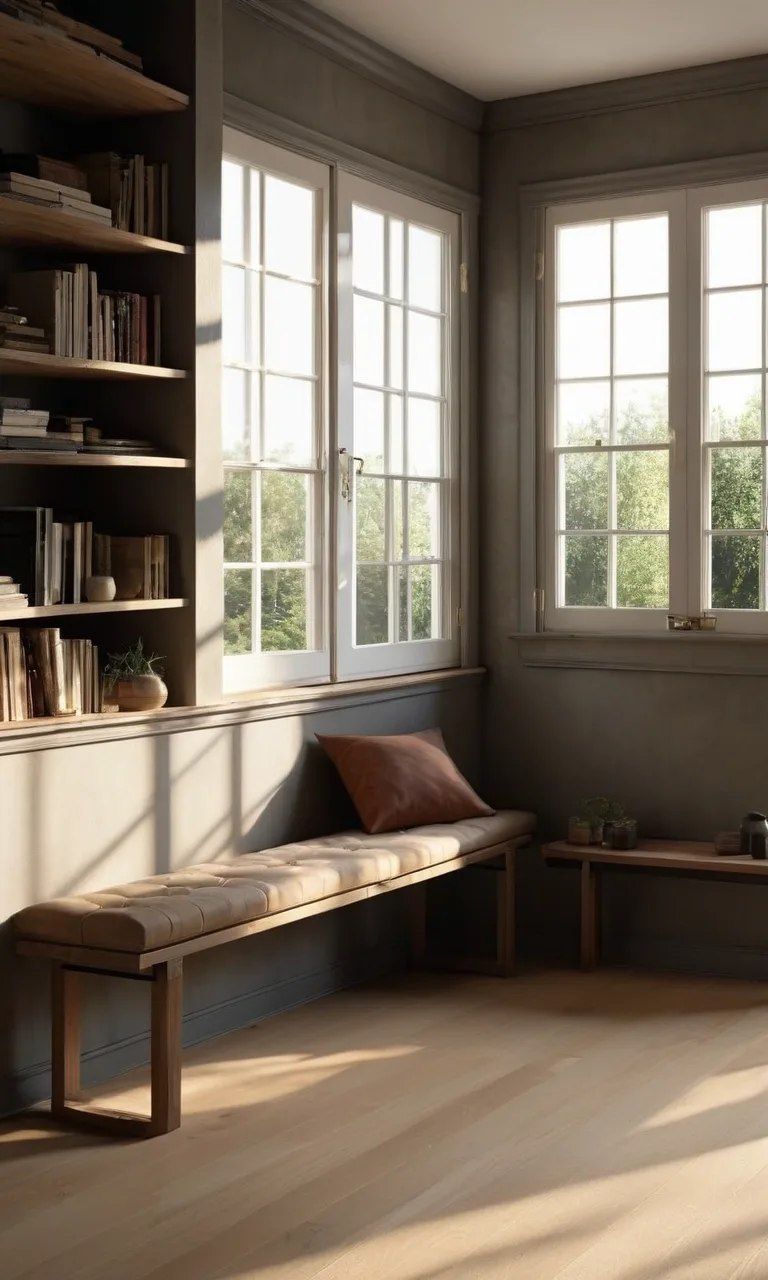
Window cubbies turn the area beneath a window into a combination of seating and organized storage. The bench can run along the wall below the sill, with separate compartments underneath for books, baskets, toys, or folded textiles.
This layout is particularly attractive in family rooms, bedrooms, and reading corners. Natural light makes the seat an inviting place to relax, while the cubbies help keep useful items close by.
Measure the window height, sill depth, and available wall width before planning the bench. Leave any required clearance for curtains, blinds, window handles, and heating equipment. The seating height should also feel comfortable for the people who will use it.
You can keep the cubbies open for a clean, built-in appearance or add matching baskets to soften the look. A cushion and a few pillows make the seat more inviting, provided they do not obstruct the window.
For a coordinated finish, match the bench color to the window trim or choose a contrasting shade that complements the rest of the room.
7. Mudroom Station
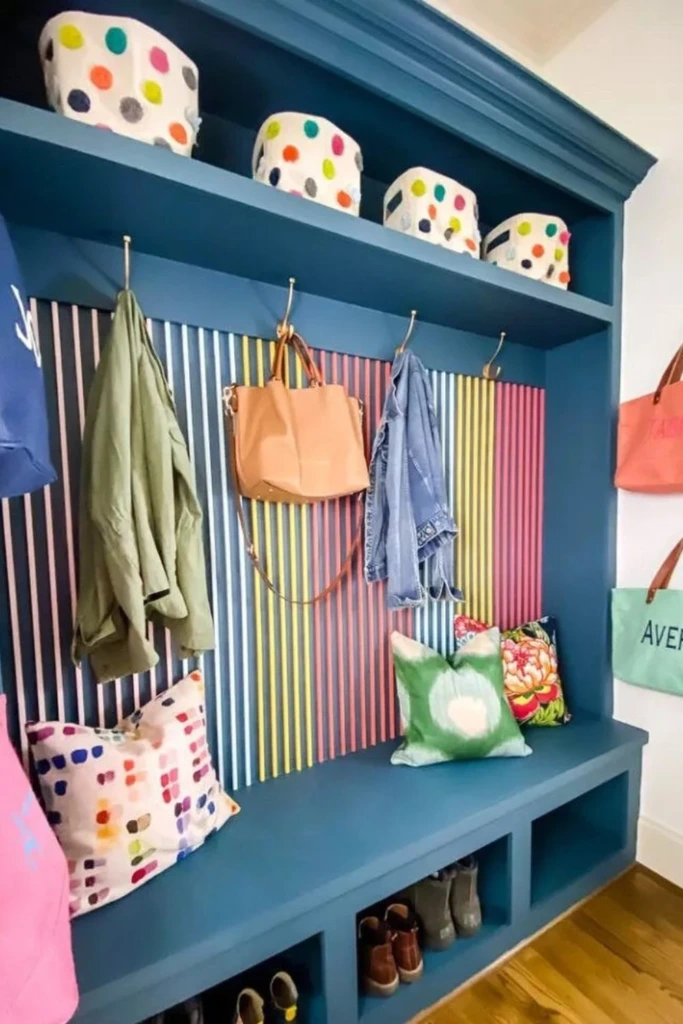
A mudroom storage bench creates a central spot for managing the belongings that come into the house every day. It can combine seating, shoe storage, coat hooks, and compartments for bags or outdoor accessories in one organized arrangement.
Place the bench near the main entrance used by family members. Shoe shelves underneath provide space for everyday footwear, while hooks above can hold jackets, hats, and reusable bags. Small baskets can keep gloves, scarves, and pet-walking accessories together.
If several people share the station, assign a specific section to each person. This simple arrangement reduces confusion during busy mornings and makes it easier to return items to their proper places.
Choose durable materials that can handle frequent use, dirt, and occasional moisture. A wipeable seat and removable floor mat are practical choices for households with children or pets.
Keep the walkway clear and make sure coats and bags do not interfere with the door. A well-planned mudroom station can turn a cluttered entrance into a functional transition between outdoors and indoors.
8. Blanket Shelf
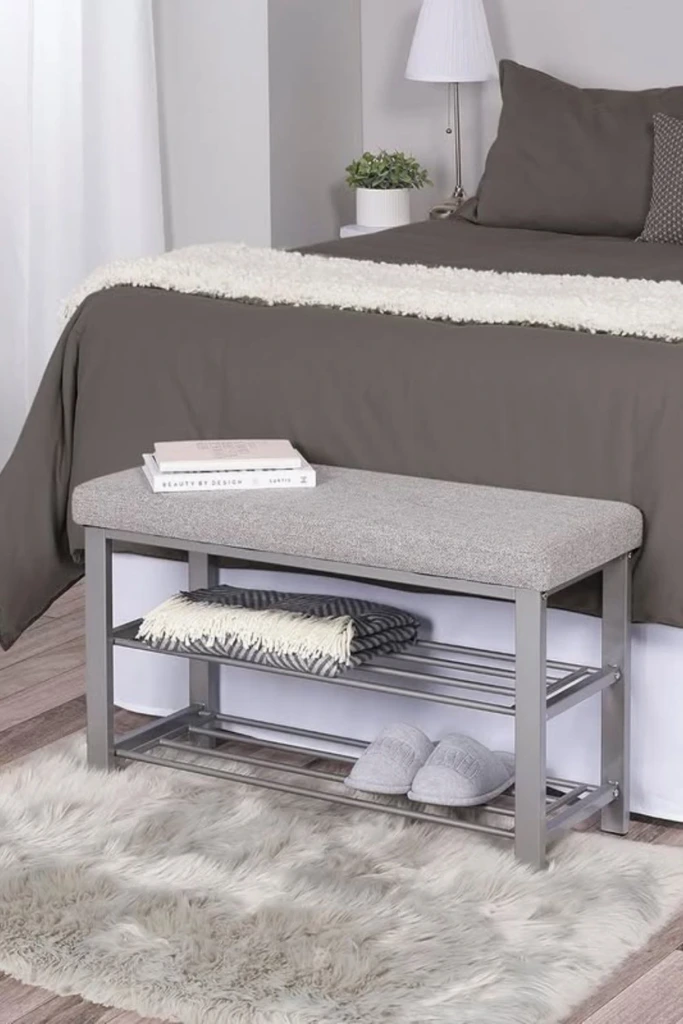
A storage bench with a blanket shelf provides a convenient place to keep throws, quilts, and lightweight bedding within reach. It is especially useful in living rooms, guest rooms, and bedrooms where extra textiles are frequently needed.
An open shelf beneath the seat makes folded blankets easy to see and retrieve. You can arrange them by color or texture to create a decorative display, or use a fabric basket to keep the collection looking orderly.
For a living room, place the bench near a sofa or reading chair so guests can reach a blanket without searching through a cupboard. In a bedroom, it can hold spare bedding at the foot of the bed while providing an additional place to sit.
Avoid stacking too many textiles on the shelf, as heavy piles can become difficult to manage and may make the bench look untidy. Wash blankets before storing them for long periods, and ensure they are completely dry.
A blanket shelf works best when storage remains accessible rather than becoming a place for items you rarely use.
9. Drawer Bench
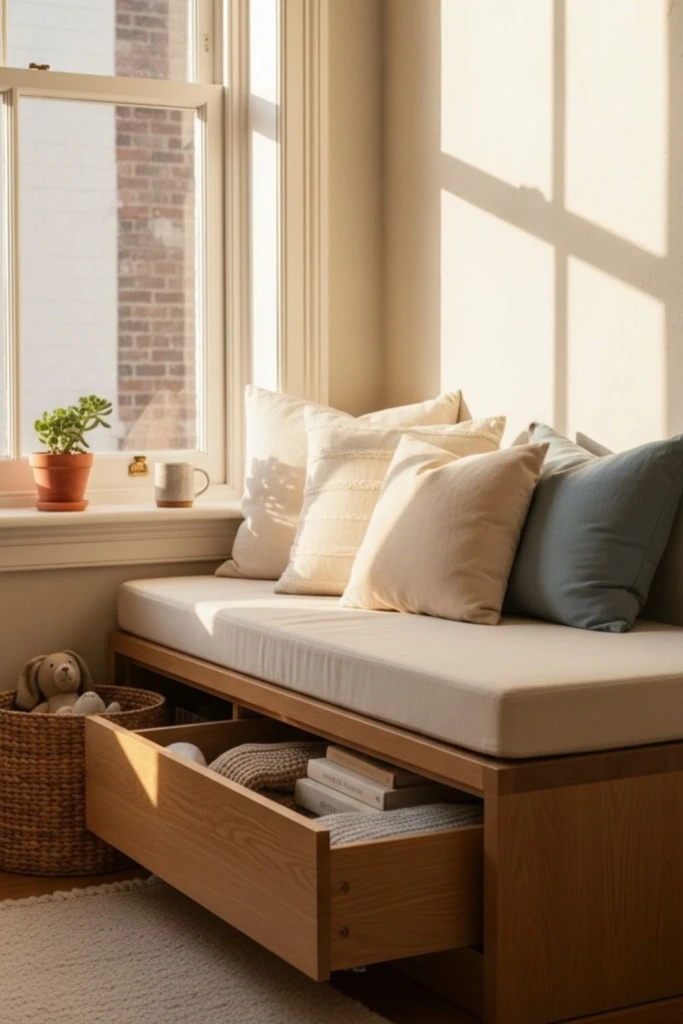
A drawer bench offers a more structured way to organize smaller belongings. Instead of placing everything in one large compartment, you can separate items into individual drawers that slide out when needed.
This design is suitable for bedrooms, hallways, dressing areas, and living rooms. Drawers can hold socks, accessories, stationery, pet supplies, or small household essentials, depending on the bench's location.
Choose drawer depths that suit the items you plan to store. Shallow drawers are useful for small accessories because they reduce the temptation to pile things on top of one another. Deeper drawers provide more room for bulkier belongings but benefit from internal dividers.
Check the quality of the drawer runners and handles before buying a bench. Smooth operation makes daily use easier, while sturdy construction helps the furniture withstand repeated opening and closing.
For a polished appearance, choose drawer fronts that complement nearby furniture. Minimalist handles create a modern look, while decorative hardware can suit traditional interiors.
Remember to account for the space needed to pull the drawers open when deciding where to position the bench.
10. Basket Bench
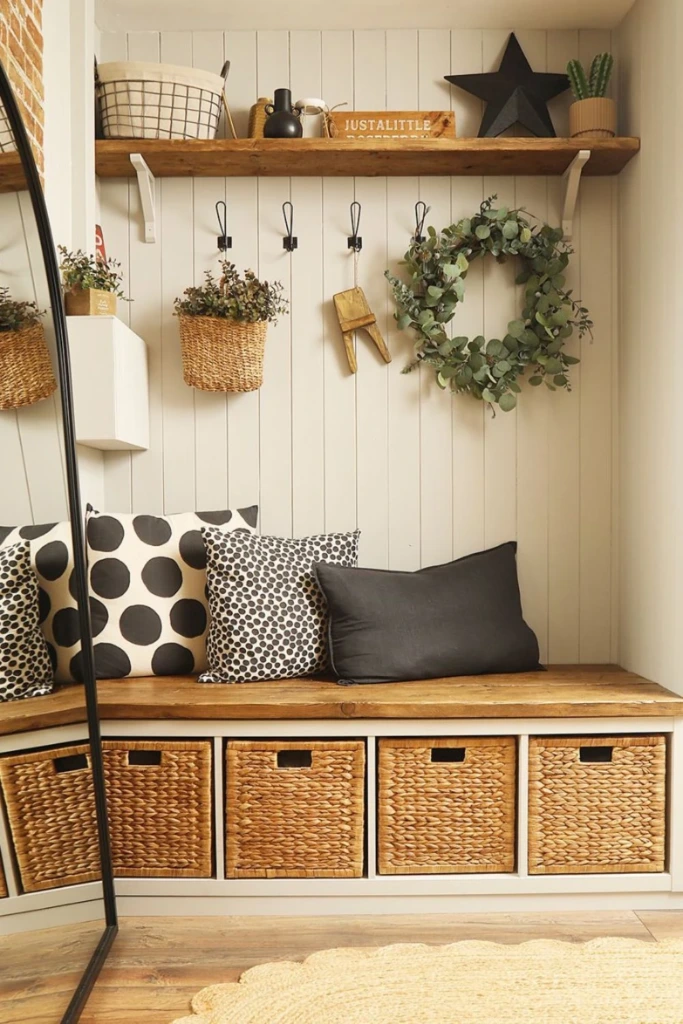
A basket bench combines a simple seating surface with removable containers underneath. It is an easy way to organize belongings while keeping the overall design relaxed and decorative.
Depending on the size of the baskets, you can store toys, folded clothes, craft supplies, towels, or miscellaneous accessories. Each basket can serve a specific purpose, making it easier to find what you need without searching through one large compartment.
Woven baskets add natural texture to a room, while fabric bins create a softer appearance. Plastic or washable containers may be more practical for damp-prone areas or spaces that need frequent cleaning.
Measure the openings beneath the seat before purchasing baskets. Containers should slide in and out comfortably without catching on the frame, and their handles should remain accessible.
For a coordinated look, use baskets in similar colors or materials. If several people share the bench, labels can identify each container's contents and make it easier to put things away.
The biggest advantage of a basket bench is flexibility: you can remove a basket, carry it elsewhere, and return it when finished.
11. Corner Bench
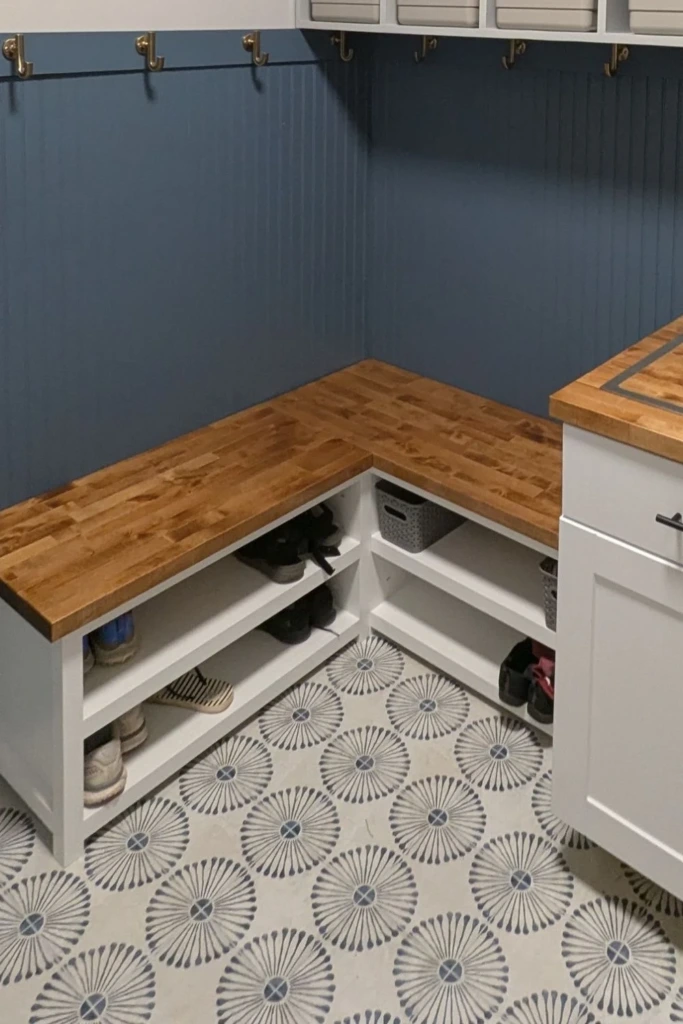
A corner storage bench makes use of an area that might otherwise remain empty. Its L-shaped design can fit along two adjoining walls, providing seating and storage without occupying the center of the room.
This style works particularly well in breakfast nooks, compact dining areas, kitchens, and family rooms. Beneath the seat, you can incorporate drawers, lift-up compartments, or open cubbies for items you want nearby.
Before choosing a corner bench, measure both walls and account for nearby doors, cabinets, and walking routes. In a dining nook, make sure people can sit down and stand up comfortably without moving the table excessively.
A fitted corner bench can create a built-in appearance, while a freestanding version offers greater flexibility if you rearrange the room later. Cushions and upholstery can make the seating more comfortable and introduce color or pattern.
Use the internal storage for items that suit the location, such as table linens in a dining area or books and board games in a family room.
A carefully measured corner bench can improve both seating capacity and organization while making better use of an awkward layout.
12. Lift Lid
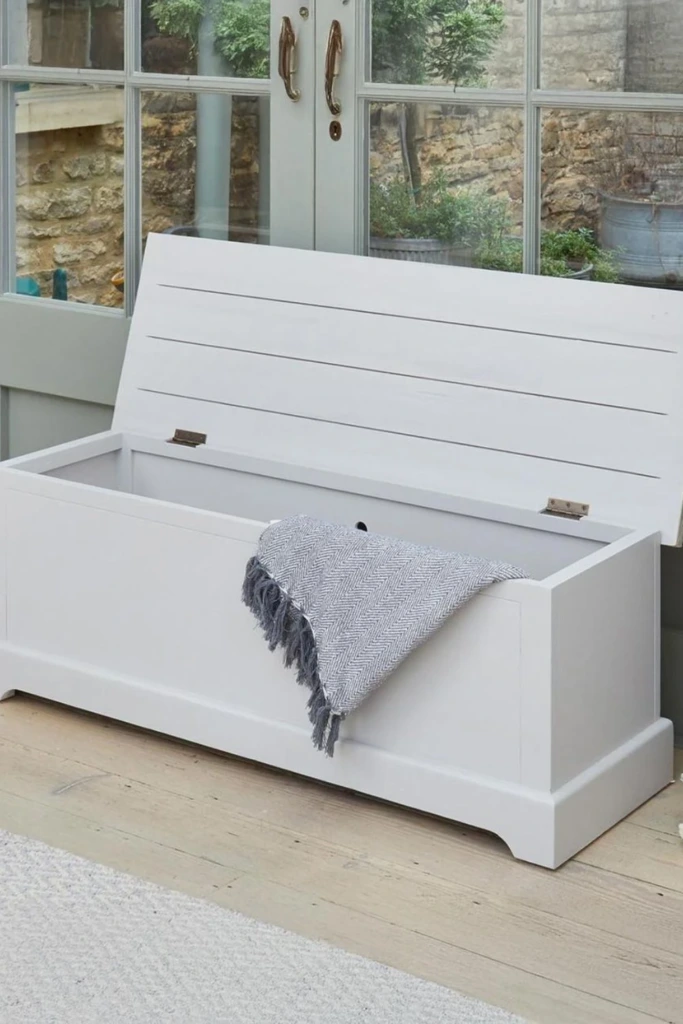
A lift-lid storage bench has a hinged seat that opens to reveal a compartment underneath. It is a useful option when you need a generous amount of concealed storage without dividing the interior into separate sections.
The compartment can accommodate blankets, pillows, seasonal accessories, or other belongings that benefit from being kept out of sight. In an entryway, it may hold hats and bags; in a bedroom, it can store extra bedding.
Consider the lid's weight and opening mechanism before purchasing. A controlled hinge or lid support can make the bench easier to use and reduce the risk of sudden closure. Avoid overloading the compartment, especially if lifting it requires considerable effort.
If children will use the bench, prioritize a design with appropriate safety features to help prevent finger injuries. Keep the opening area clear and supervise young children around hinged storage.
For a comfortable seating surface, look for a padded lid or add a fitted cushion. Make sure the cushion can be removed easily when you need access to the compartment.
A lift-lid bench is a strong choice when concealed capacity matters more than having several individually organized sections.
13. Window Bench
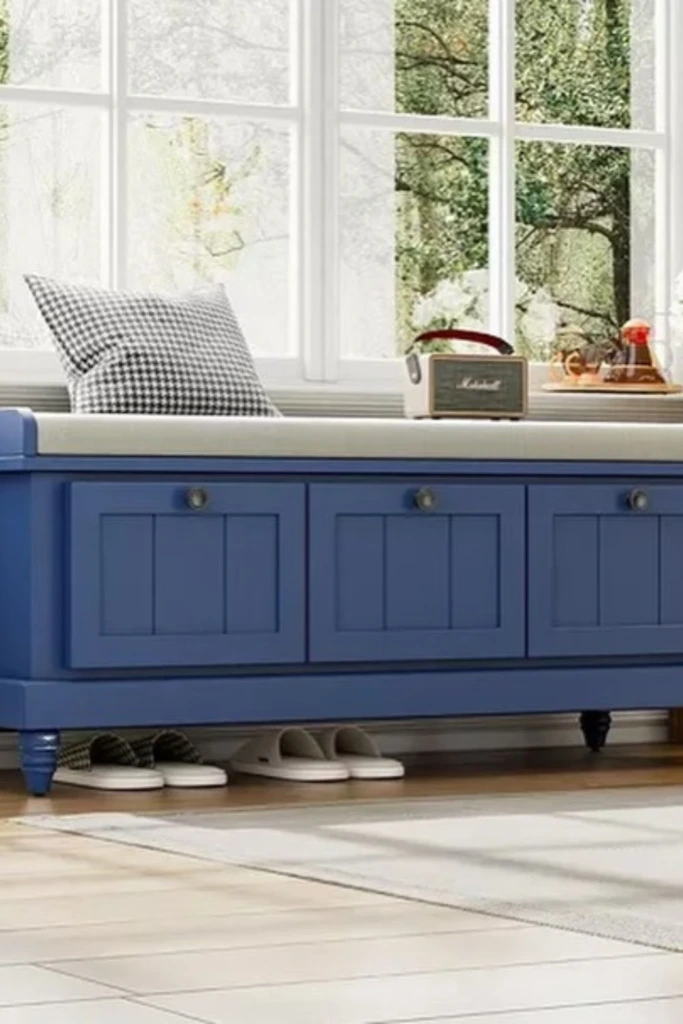
A window bench creates a comfortable place to sit, read, enjoy daylight, or simply pause during the day. When storage is built into the base, the seating area becomes even more useful.
You can position a window bench in a bedroom, living room, hallway, or home office, depending on the available layout. A cushioned seat adds comfort, while pillows can introduce colors and textures that match the room.
The storage underneath may consist of drawers, cupboards, baskets, or an open shelf. Choose the arrangement based on what you want to keep nearby. Books and magazines are easy to reach on open shelves, while bedding and less attractive household items can be hidden behind doors.
Accurate measurements are essential, especially if the bench is built into the wall. Check the window sill, curtain movement, radiator placement, and any ventilation requirements before installation. Avoid blocking emergency exits or window access.
For a cohesive design, match the bench to the room's trim or cabinetry. A contrasting cushion can provide visual interest without overwhelming the space.
With suitable dimensions and comfortable seating, a window bench can become a favorite spot while adding useful storage.
14. Panel Bench
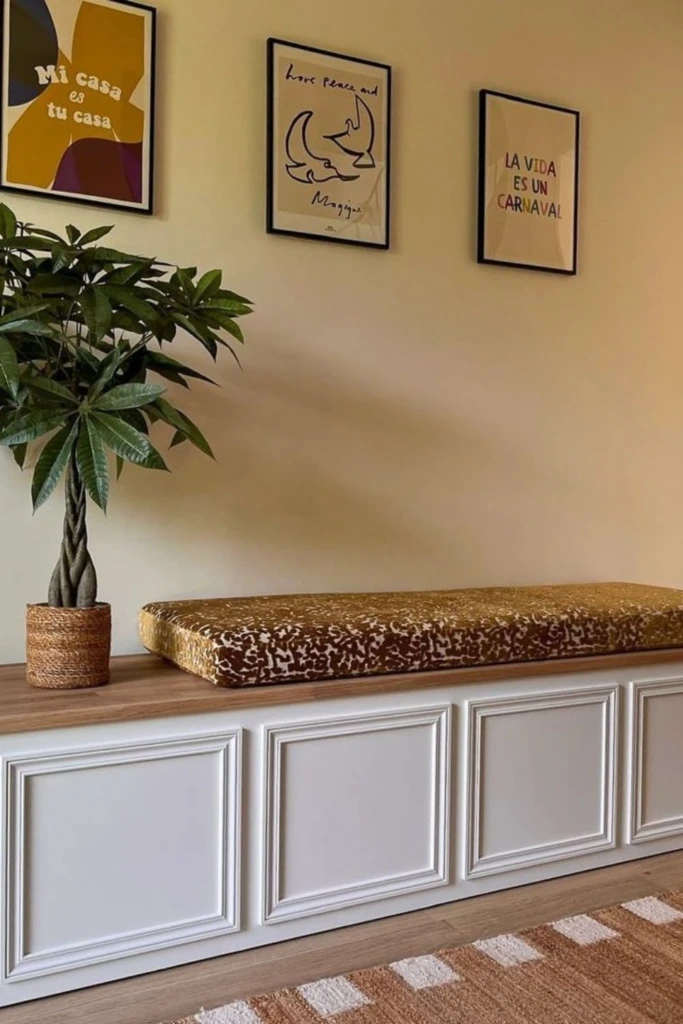
A panel bench uses solid panels to create a defined, structured furniture design. The panels may form the sides, back, or front of the bench, giving it a more finished appearance than a basic open frame.
This style can suit contemporary, traditional, or transitional interiors, depending on the material, finish, and detailing. Painted panels offer a clean, coordinated look, while natural wood highlights the grain and adds warmth.
Storage can be incorporated beneath the seat through a closed compartment, drawers, or open sections. If you prefer a minimalist room, a bench with simple panel fronts can conceal belongings without introducing visual clutter.
When choosing a panel bench, pay attention to the thickness and quality of the materials, the stability of the frame, and the finish around exposed edges. A well-constructed bench should feel solid when someone sits down.
Panel designs are also suitable for custom furniture projects because their proportions and finishes can be adapted to the room. Match the bench to nearby cabinets or wall colors to create a unified appearance.
The result is a practical piece that looks intentional rather than like an extra storage container placed against a wall.
15. Wicker Baskets
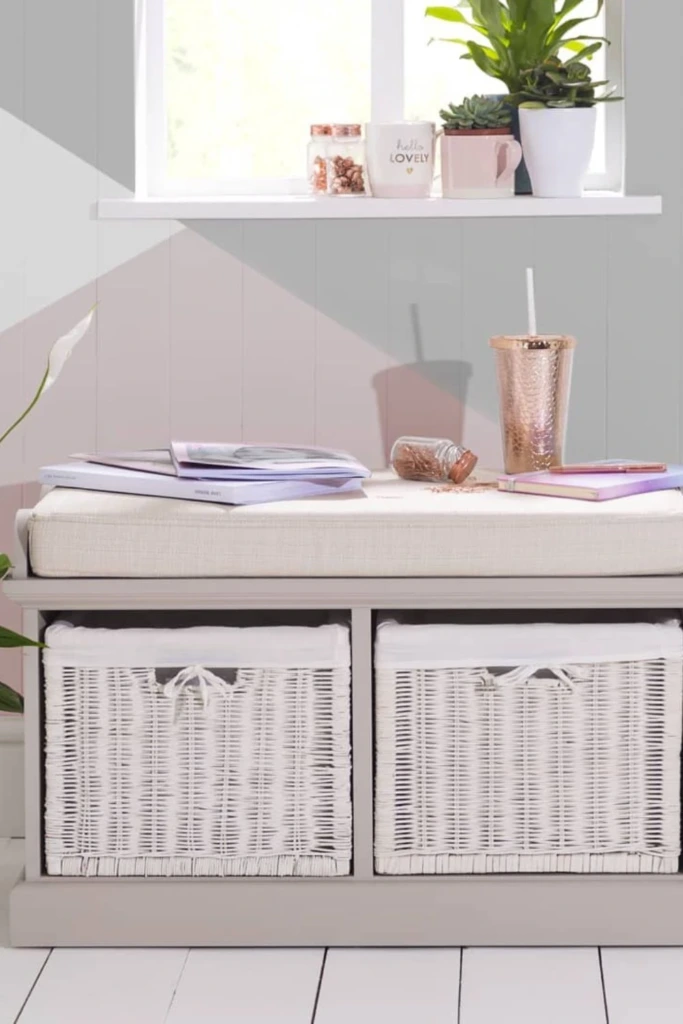
Wicker baskets beneath a storage bench introduce texture while providing separate spaces for household items. Their natural or woven appearance works particularly well in relaxed, coastal, rustic, and Scandinavian-inspired interiors.
Use them to store folded towels, scarves, toys, small accessories, or lightweight blankets. Matching baskets create a uniform look, while a mixture of natural shades can add subtle variation.
Choose basket sizes that fit the bench compartments without scraping the frame. Handles are useful when you need to carry a basket into another room, and removable liners can help protect delicate textiles from rough woven surfaces.
Natural wicker and similar plant-based materials are best kept away from persistent dampness, which can encourage deterioration or mold. For bathrooms or other moisture-prone areas, consider a suitable synthetic woven material that is easier to clean.
To maintain an orderly appearance, give each basket a clear purpose and avoid allowing unrelated objects to accumulate inside. Empty and clean the baskets regularly, particularly when they hold shoes or items brought in from outdoors.
Wicker baskets make storage feel more decorative while keeping everyday belongings easy to access.
16. Dual Storage
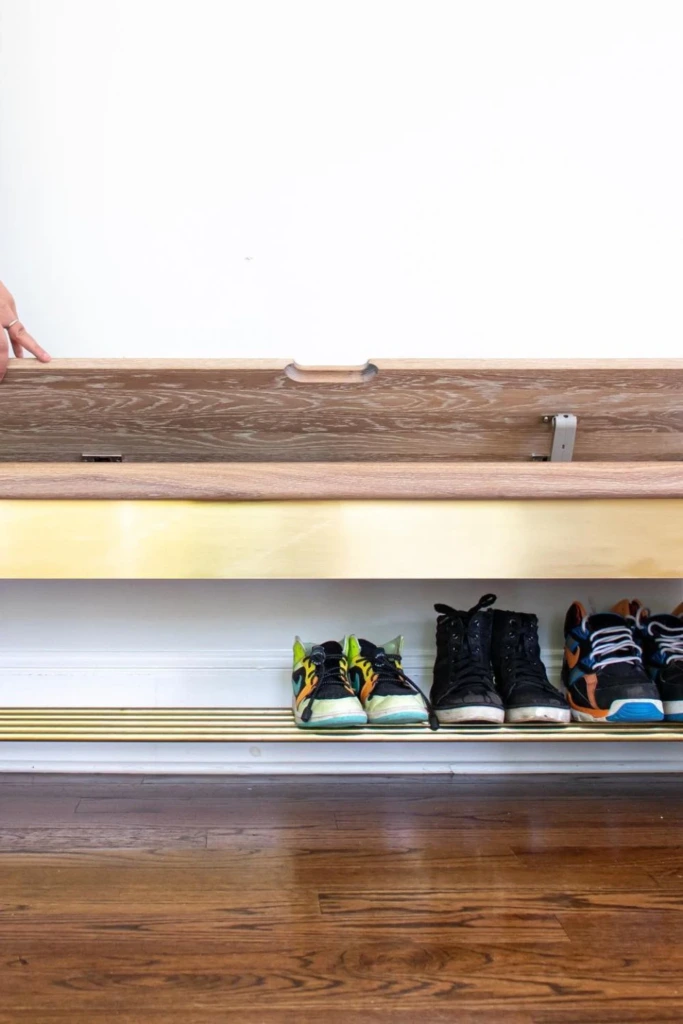
A dual-storage bench combines two different storage methods in one piece of furniture. For example, it might feature open cubbies alongside a closed compartment, or drawers paired with a shelf.
This combination is useful when you need both quick access and concealed storage. Frequently worn shoes can sit on an open shelf, while cleaning supplies or spare accessories remain hidden behind a door. In a bedroom, drawers can organize small garments while a larger compartment holds bulky textiles.
Think about how often you use each category of belongings before choosing a layout. Items needed every day should be easy to reach, while seasonal or occasional-use possessions can occupy the less accessible section.
A dual-storage design can also help keep a shared area organized because different types of items have separate places. Baskets or dividers can provide additional structure without changing the furniture itself.
Measure the bench carefully to ensure the compartments offer enough room for their intended contents. The best arrangement balances capacity, accessibility, and appearance rather than simply adding as many storage sections as possible.
17. Entry Organizer
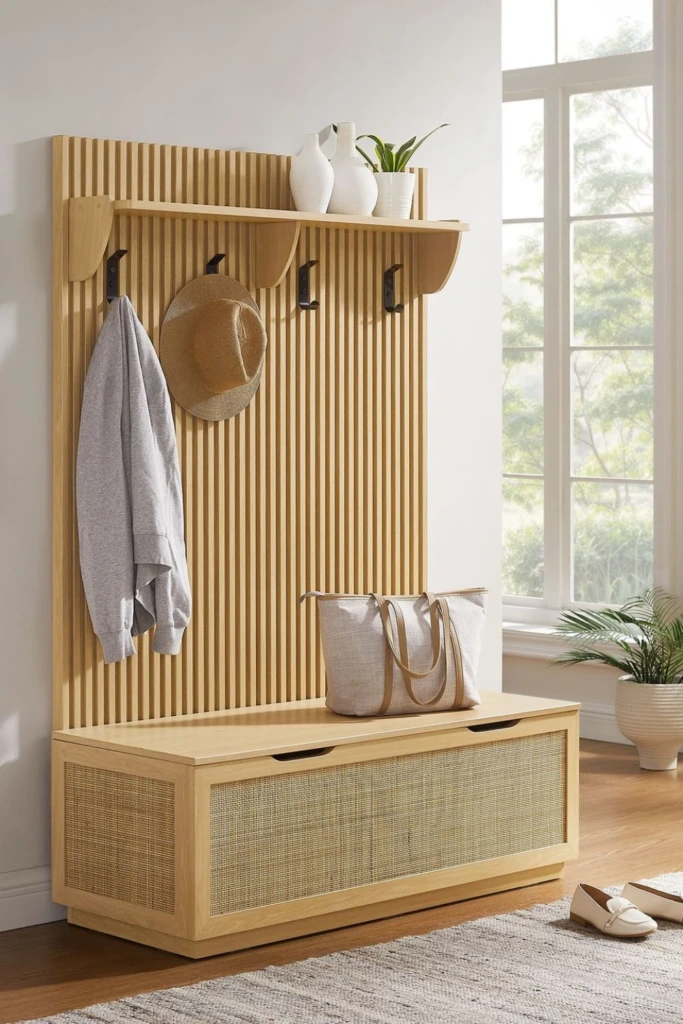
An entry organizer bench helps control the small items that tend to accumulate near a front door. By combining a seat with shelves, hooks, drawers, or baskets, it gives everyday essentials a consistent place.
The seating area makes putting on shoes more comfortable, while the storage underneath can accommodate frequently worn footwear. Hooks above the bench can hold coats, umbrellas, and bags, provided they do not obstruct the doorway. A small tray or drawer may be useful for keys and other items that need to be collected before leaving.
For a household with several people, assign specific sections to different family members. This reduces the chance of belongings becoming mixed together and makes morning routines more predictable.
Choose materials that are easy to wipe clean because entry furniture often encounters dust, mud, and moisture. A washable cushion cover and a removable shoe mat can make maintenance simpler.
Keep the organizer proportionate to the entrance. A narrow bench with vertical hooks may work better in a small hallway than a deep unit with extensive shelving.
The aim is to create a landing place for everyday essentials without turning the entryway into another storage problem.
18. Fluted Drawers
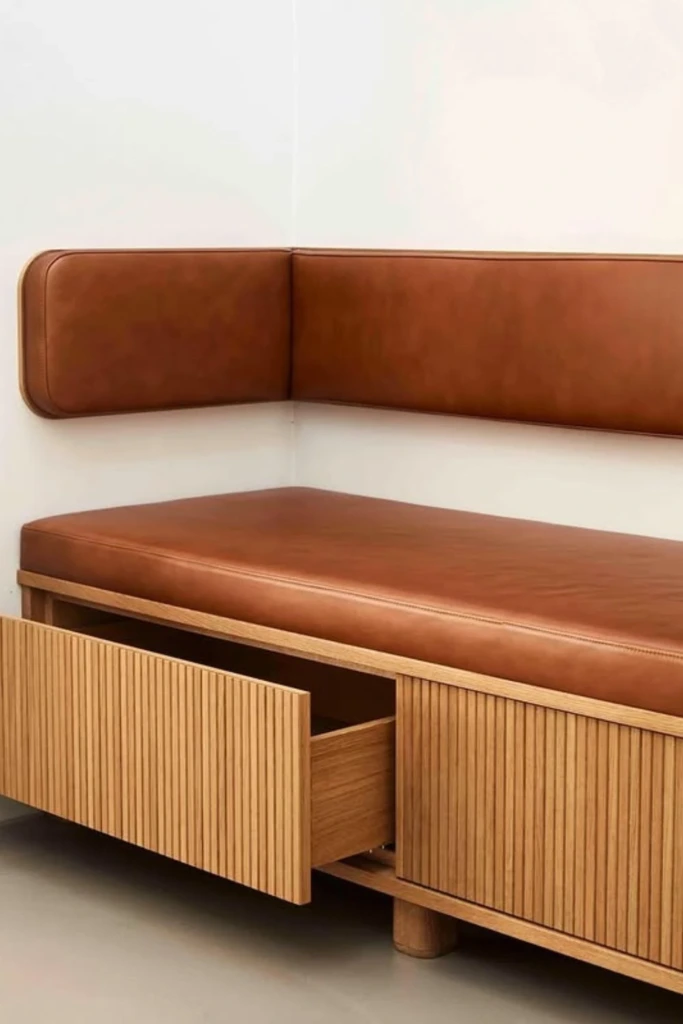
A bench with fluted drawer fronts adds decorative detail while keeping stored belongings out of sight. The repeated vertical grooves create texture and subtle shadows, making the furniture visually interesting without requiring bold colors or elaborate ornamentation.
This design works well in bedrooms, living rooms, and sophisticated entryways. Depending on the finish, it can complement contemporary, modern organic, or mid-century-inspired interiors.
The drawers provide practical space for accessories, linens, books, or other small household items. Use dividers when storing several types of belongings in the same drawer, and avoid overfilling them so they continue to slide smoothly.
Fluted details can be created in solid wood, engineered wood, or other furniture materials. When comparing options, check the quality of the drawer construction, the smoothness of the finish, and whether the grooves are easy to clean.
For a refined appearance, choose a bench with understated hardware and a finish that complements nearby furniture. Light wood tones can create an airy effect, while darker finishes offer more contrast.
A fluted drawer bench is a good option when you want functional storage that also contributes to the room's overall design.
19. Triple Storage
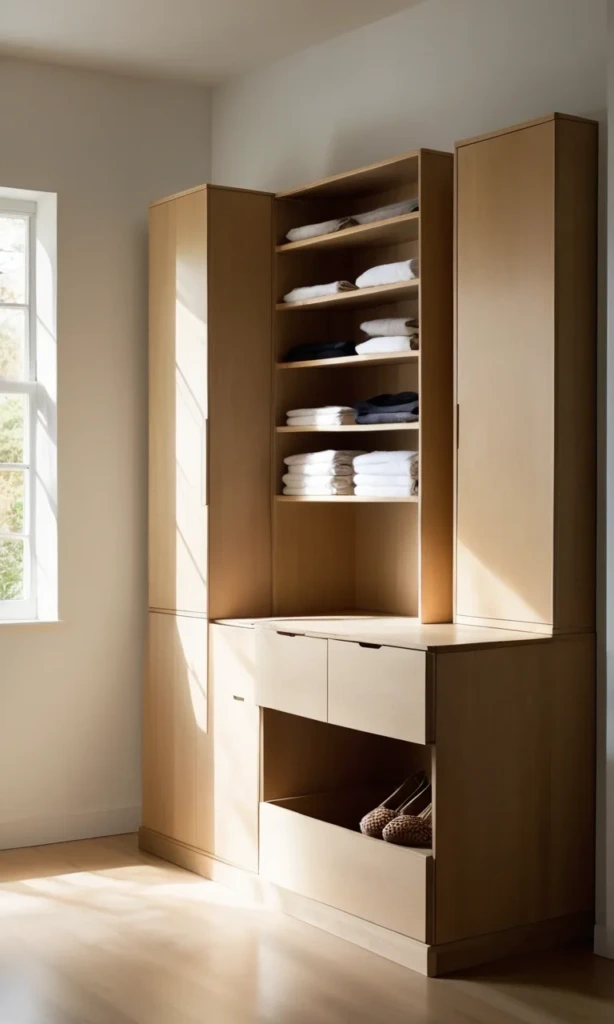
A triple-storage bench uses three distinct storage sections to accommodate different categories of belongings. Depending on the design, these might be three drawers, three cubbies, or a combination of shelves and enclosed compartments.
This arrangement is particularly useful in shared spaces where multiple people need organized storage. In an entryway, each section can hold a different person's shoes or accessories. In a bedroom, separate compartments might be used for clothing, bedding, and personal items.
A three-section layout also works well for sorting belongings by frequency of use. Keep everyday essentials in the easiest-to-reach compartment and reserve the remaining sections for occasional-use items.
Check the dimensions of each section rather than judging capacity by the number of compartments alone. Three small openings may be less useful than two larger ones if you need to store bulky shoes or folded blankets.
Choose a construction that supports the intended seating load, and make sure drawers or doors operate without interfering with nearby furniture.
A triple-storage bench offers a simple way to establish clear categories and maintain a tidy room without adding several separate storage units.
FAQs
Storage benches are available in many sizes and configurations, so the right choice depends on your room, storage requirements, and preferred style. Before purchasing one, consider how the furniture will be used, what it needs to hold, and how frequently you will access its contents.
A useful bench should offer comfortable seating, adequate storage, and a design that fits the surrounding space. Think about whether you prefer open compartments, removable baskets, drawers, or a concealed chest. Each option offers a different balance of accessibility and visual neatness.
Material quality, weight capacity, ease of cleaning, and safety features are also worth checking. If the bench will be used daily or by children, durable construction and suitable safety mechanisms are particularly important.
The following answers address two common questions about choosing and using a storage bench.
Can a storage bench work in small apartments or narrow spaces?
Yes. A storage bench can be especially useful in a small apartment because it combines seating and storage without requiring separate pieces of furniture.
The key is to choose a design that fits the available footprint. A narrow bench with shoe shelves can work well in an entryway, while a compact chest bench may provide useful storage in a bedroom or living room. A bench beneath a window can make use of an area that might otherwise remain unused.
Consider the room's layout before buying. Measure the available width and depth, and leave enough clearance for doors, drawers, and walking routes. If floor space is limited, choose vertical storage above the bench, such as wall hooks or a shelf, instead of a wider unit.
Open cubbies can make a small space feel less enclosed, while closed compartments help conceal clutter. A bench with a simple frame and a light finish may also create a more open visual effect.
Avoid choosing a bench that is too deep or bulky for the room. The most effective option is one that meets your storage needs while preserving comfortable movement around the apartment.
What items are best to store inside a storage bench?
The best items depend on the bench's location, size, construction, and storage design. Grouping similar belongings together makes the available space easier to manage and helps you find things quickly.
Common choices include:
Shoes and slippers: Ideal for entryway benches with shelves or ventilated compartments.
Blankets and throws: Suitable for living room benches and bedroom chests.
Toys and games: A practical option for playrooms and family areas, especially when using removable bins.
Scarves, hats, and gloves: Useful in entryway organizers and mudroom benches.
Books and magazines: Best kept in open cubbies or accessible baskets.
Bedding and spare pillows: Appropriate for larger bedroom benches with concealed compartments.
Towels and linens: Convenient in suitable bedrooms or dry storage areas.
Bags and everyday accessories: Easy to organize in divided compartments or baskets.
Craft supplies: Well suited to benches with drawers or clearly labeled containers.
Before storing anything, consider whether the compartment is suitable for that item. Damp shoes and wet textiles should dry completely before being placed inside, and delicate belongings may need protective containers.
Avoid storing food, hazardous chemicals, or other items that require specialized conditions in an ordinary storage bench. Heavy objects should only be stored if the compartment and its supporting structure can handle their weight.
Keeping the contents relevant to the bench's location is the simplest way to make the furniture genuinely useful. An entryway bench should hold items you need when leaving home, while a bedroom bench is better suited to clothing, bedding, and personal accessories.
Final Thoughts
A storage bench can make your home more comfortable and organized without sacrificing valuable floor space. From open cubbies and shoe shelves to lift-lid chests, corner benches, and decorative drawer designs, there is an option for nearly every room and storage need.
Start by identifying what you want to store and where the bench will go. Then compare its dimensions, materials, accessibility, and construction to find a design that suits your household. With thoughtful placement and a simple organization system, a storage bench can provide dependable everyday storage while adding useful seating and style to your home.