21 Bedside Storage Ideas for 2026
A bedside area should make your nightly routine easier, not become another place where clutter collects. Phones, charging cables, books, glasses, skincare products, and other small essentials can quickly overwhelm a limited amount of space.
The solution is to choose storage that suits your bedroom layout and the things you actually use. You might need a compact drawer unit, a wall-mounted shelf, or a more creative way to use the space around your bed.
These 21 bedside storage ideas explore practical ways to keep everyday necessities accessible while making your bedroom feel more spacious, comfortable, and organized.
What Are the Best Storage Options for a Nightstand?
The best bedside storage depends on how much room you have and what you want to keep nearby. A nightstand with drawers works well for concealing personal belongings, while open shelves make books and frequently used items easy to reach.
In a small bedroom, wall-mounted furniture can provide useful storage without occupying valuable floor space. Baskets, organizers, and compact shelving units are also helpful when you need additional room but cannot fit another full-size piece of furniture.
Think about your nighttime routine before choosing a solution. Keep essentials such as your phone, reading glasses, and current book within easy reach. Store less frequently used belongings in drawers, baskets, or lower compartments.
The goal is to create a convenient bedside setup that looks tidy without making everyday items difficult to access.
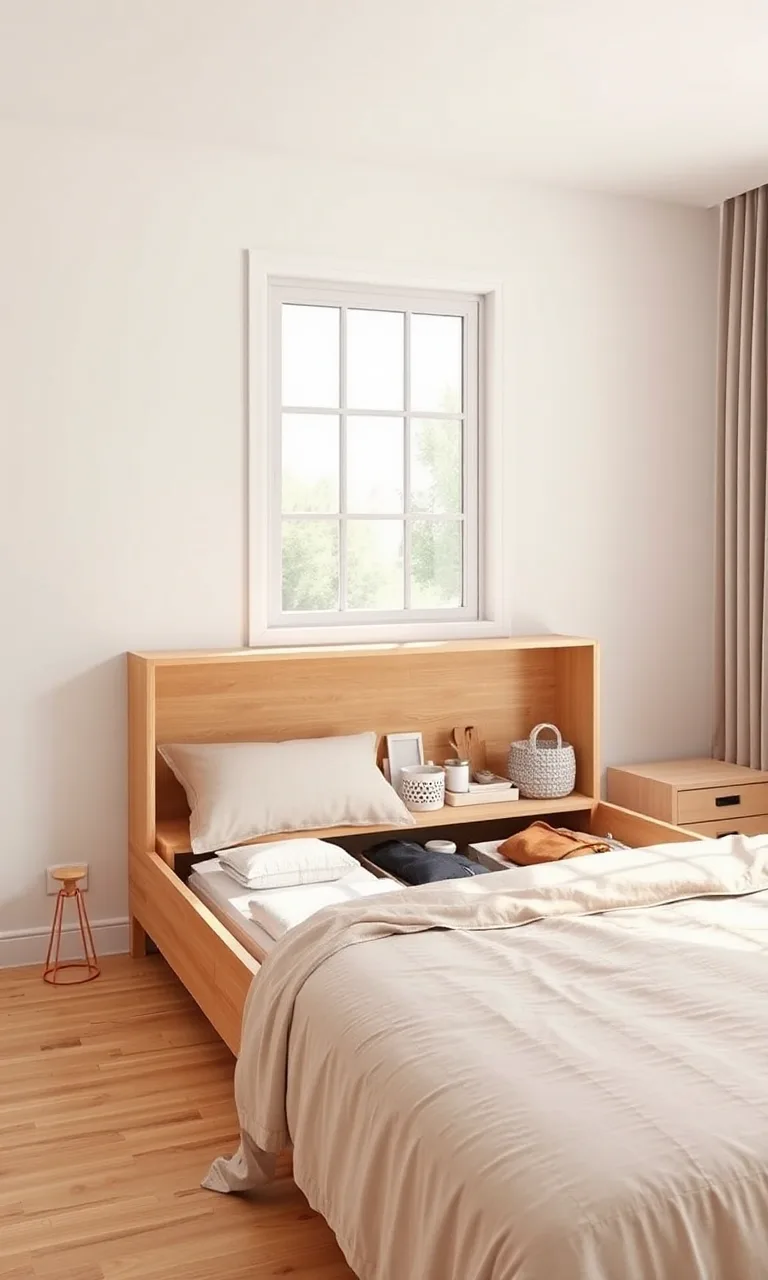
1. Headboard Storage
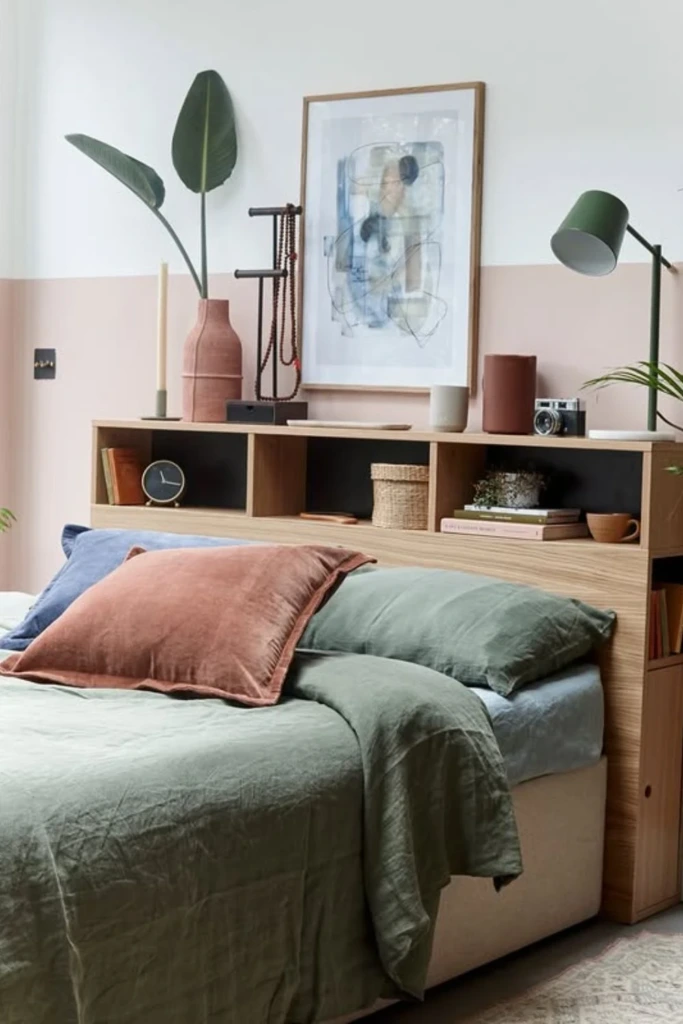
A storage headboard offers a clever way to organize bedtime essentials without relying entirely on a traditional nightstand. Depending on its design, it may include narrow shelves, recessed compartments, or small cabinets for everyday belongings.
Use these spaces for books, reading glasses, alarm clocks, and small storage baskets. A designated compartment can also accommodate charging accessories, helping keep cables from spreading across the bedside area.
If you already have a headboard, consider adding a slim shelf behind the bed when the layout allows it. Measure carefully to ensure the shelf does not interfere with the mattress or make it difficult to reach your belongings.
This arrangement is particularly useful in compact bedrooms where adding another table would make the room feel crowded.
2. Floating Cube
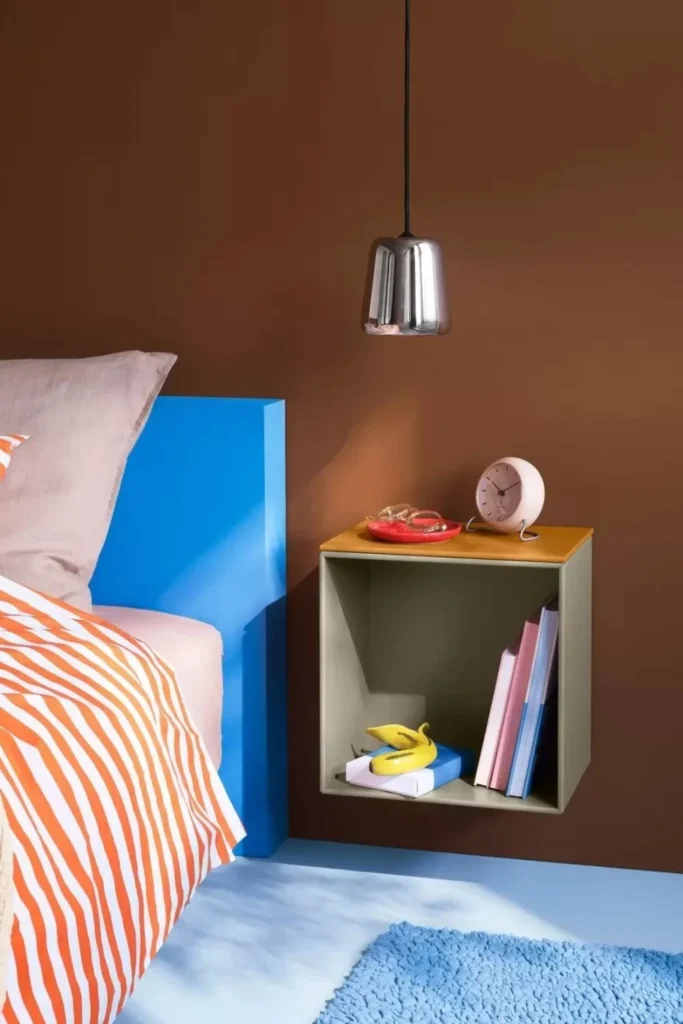
A floating cube shelf provides a compact alternative to a conventional bedside table. Mounted securely on the wall, it creates a convenient surface while leaving the floor underneath completely open.
Choose a cube with enough interior space for a few books, a small basket, or other personal items. The upper surface can hold your phone, glasses, or a compact decorative object.
For everyday convenience, install it at a comfortable height relative to your mattress. You should be able to reach your belongings without stretching or leaning awkwardly.
A pendant light or wall-mounted reading lamp can complement this arrangement by eliminating the need for a bulky table lamp. The result is a simple bedside station that makes efficient use of limited space.
3. Slim Drawer

A narrow drawer unit is an excellent choice when the area beside your bed is too small for a standard nightstand. Its vertical design provides several storage opportunities without extending far into the room.
Use the top surface for items you reach for every night, such as a phone or a glass of water. Keep smaller belongings, including charging cables, hand cream, and reading accessories, inside the drawer.
If the unit includes open shelving, reserve those compartments for books or small baskets. This separation makes it easier to find things without searching through a crowded drawer.
A wall-mounted light can free up even more surface space. Before buying a slim unit, measure the available width and check that drawers can open fully without hitting the bed.
4. Drawer Stack
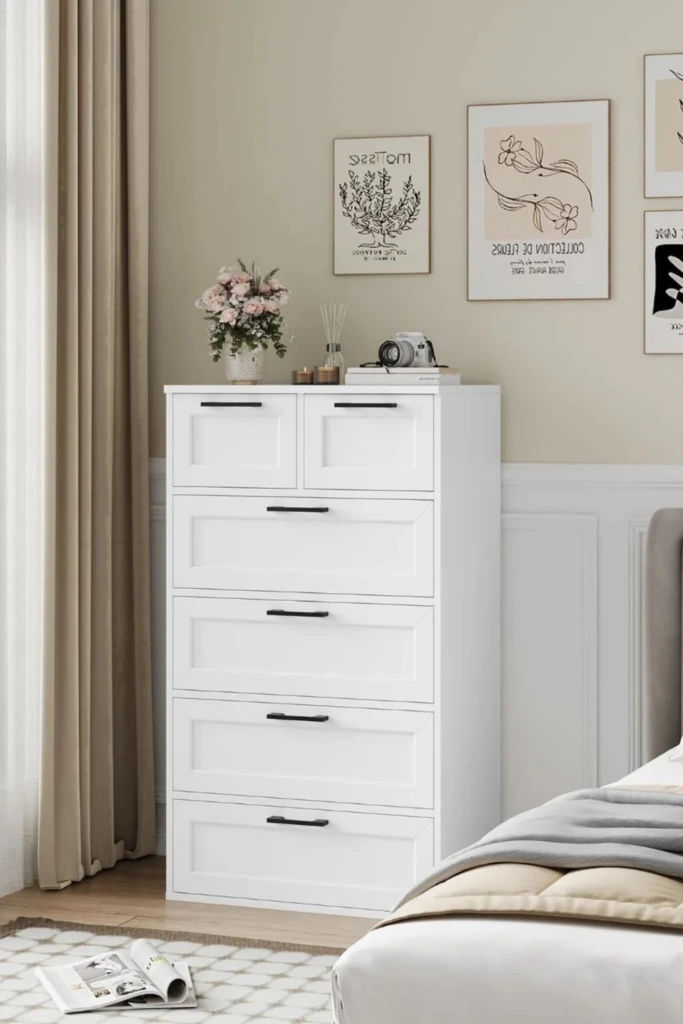
Stackable drawers provide flexible storage for bedrooms that need more organization but have limited floor space. Depending on the design, you can arrange several compact units vertically or choose a ready-made drawer tower.
Assign a purpose to each drawer to prevent miscellaneous items from accumulating together. One compartment might hold electronics and cables, another can store personal care products, and a lower drawer can accommodate spare linens or other larger belongings.
Keep the upper surface relatively clear so the storage unit does not become another cluttered landing spot. A small tray can collect frequently used items without spreading them across the furniture.
This option works especially well when you have several categories of belongings to organize and prefer keeping them out of sight.
5. Hybrid Table
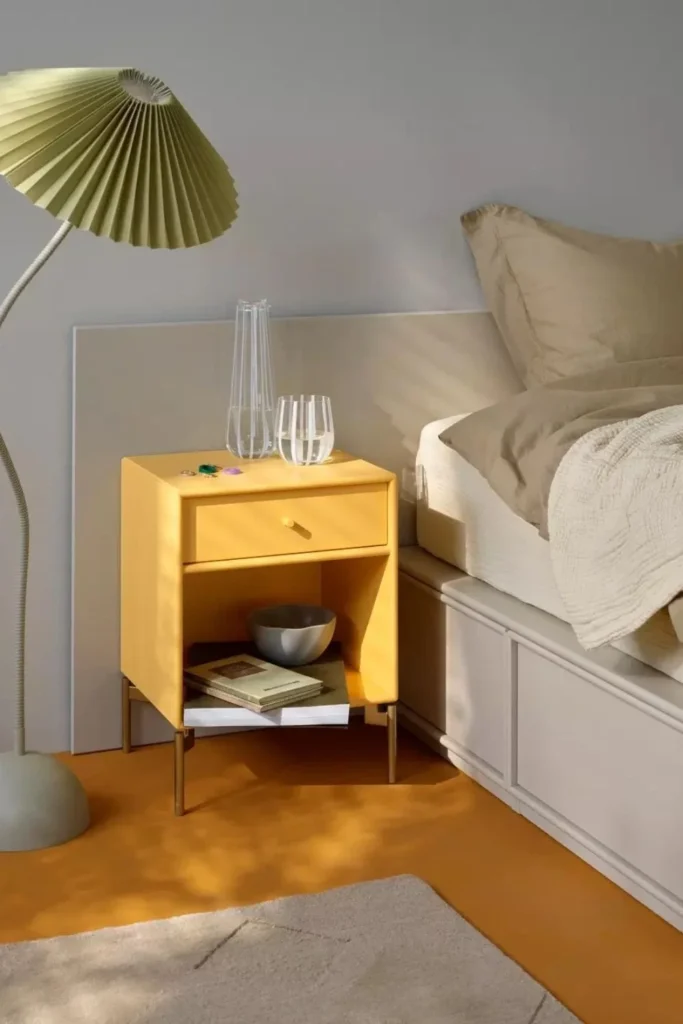
A hybrid bedside table combines a tabletop, an open shelf, and a drawer in one practical piece of furniture. It offers a useful balance between displaying everyday items and concealing things that would otherwise make the room look untidy.
Place a lamp, phone, or small tray on top. Use the drawer for personal belongings and loose accessories, then keep books or a small basket on the lower shelf.
This arrangement makes sense for people who want their necessities close at hand without displaying everything they own. The open compartment also makes frequently used books easier to retrieve than items stored in a closed cabinet.
Look for a design that fits the scale of your bed and leaves enough clearance for walking around the furniture comfortably.
6. Wall Shelf
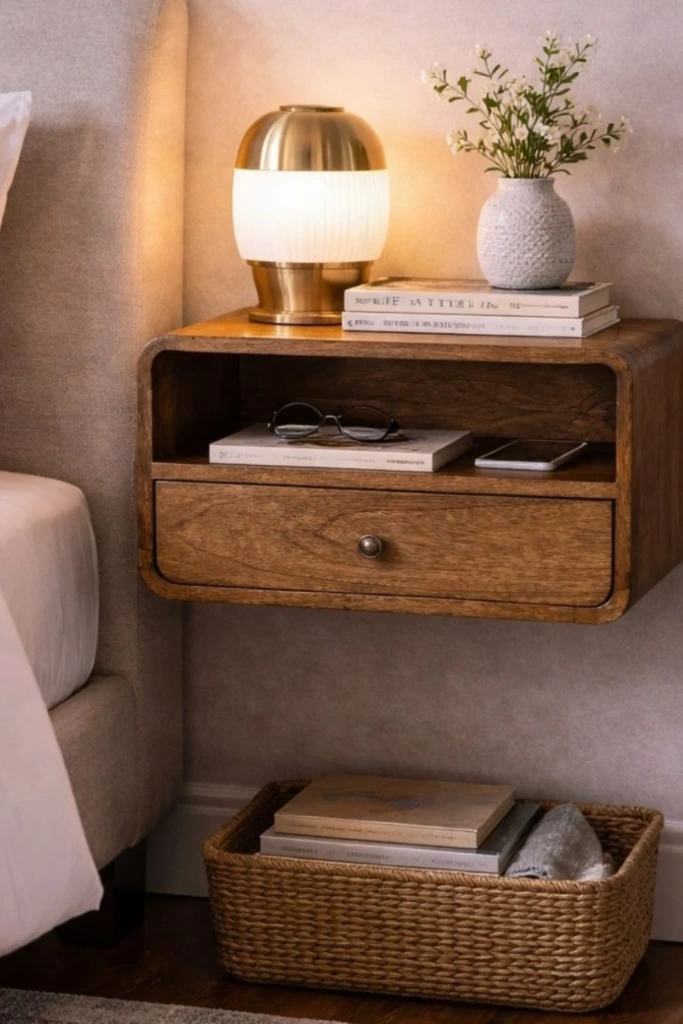
A wall-mounted shelf can replace a conventional nightstand when floor space is at a premium. Depending on its construction, it may provide a simple open surface or include a drawer for additional concealed storage.
Use the shelf for a phone, glasses, a book, or a small bedside accessory. If you need more room, place a lightweight basket beneath it for magazines or other items that do not require immediate access.
Keep the arrangement simple. Too many decorative objects can quickly eliminate the space you intended to gain.
Choose a sturdy shelf and install it with hardware appropriate for your wall type. Position it where you can comfortably reach your belongings from bed, and confirm that it will not interfere with bedding or movement.
7. Layered Shelf
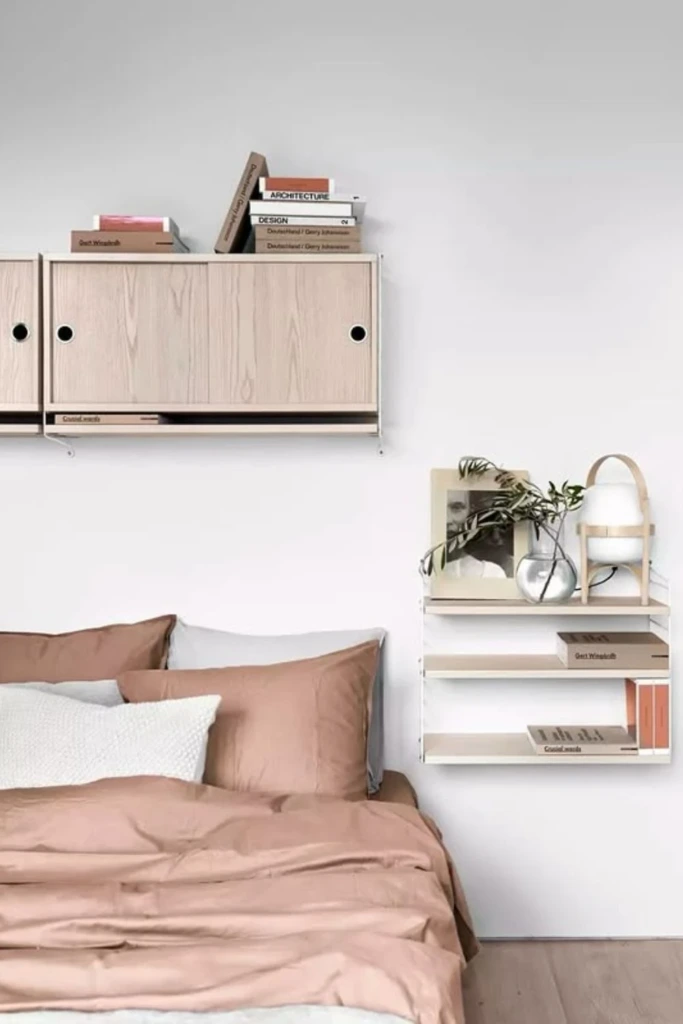
Layered shelving makes use of vertical space by creating several separate levels for bedside belongings. Instead of crowding everything onto one small surface, you can organize different categories across multiple shelves.
Keep frequently used items on the lowest accessible level. Books, journals, and small baskets can occupy the middle shelves, while decorative objects or less frequently needed belongings can sit higher up.
A combination of open shelves and closed storage is particularly useful. Open compartments provide quick access, while a cabinet or enclosed section hides items that would otherwise contribute to visual clutter.
For the best result, leave some space between objects instead of filling every shelf. A well-organized arrangement should make it easy to find things and simple to maintain.
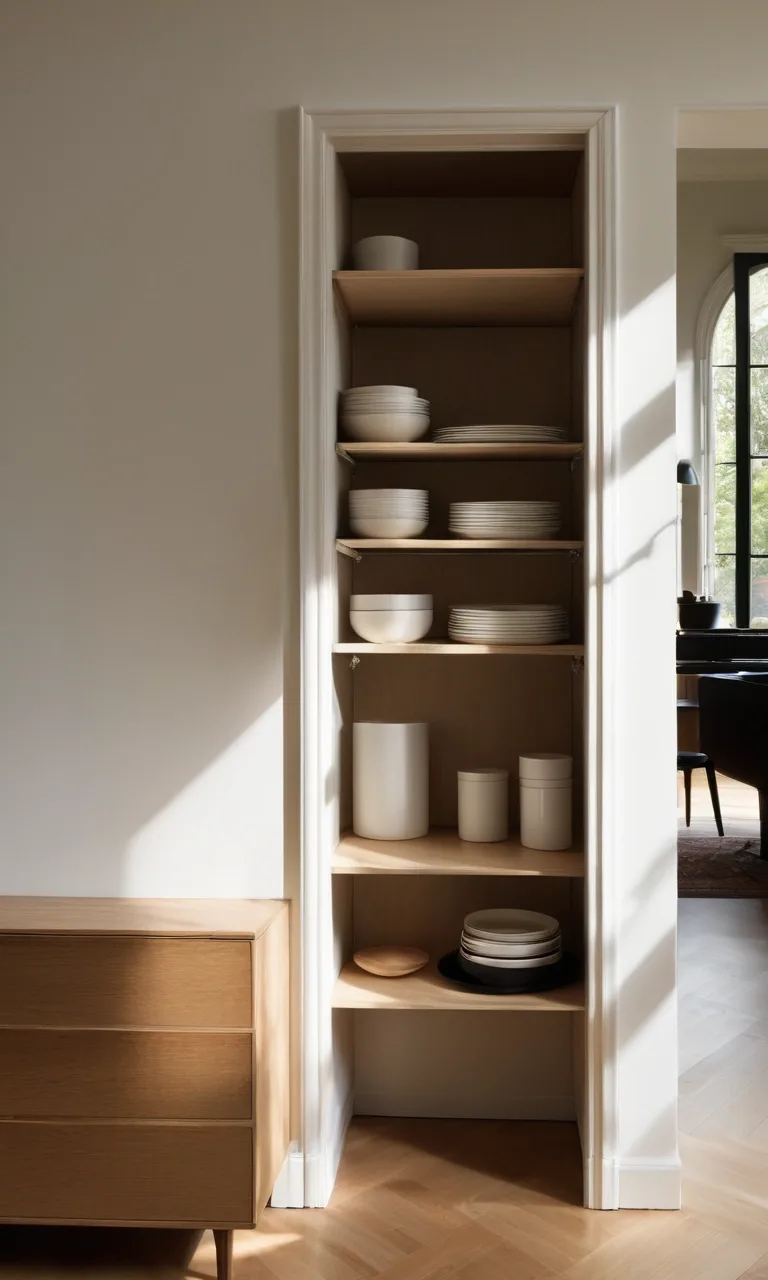
8. Niche Storage
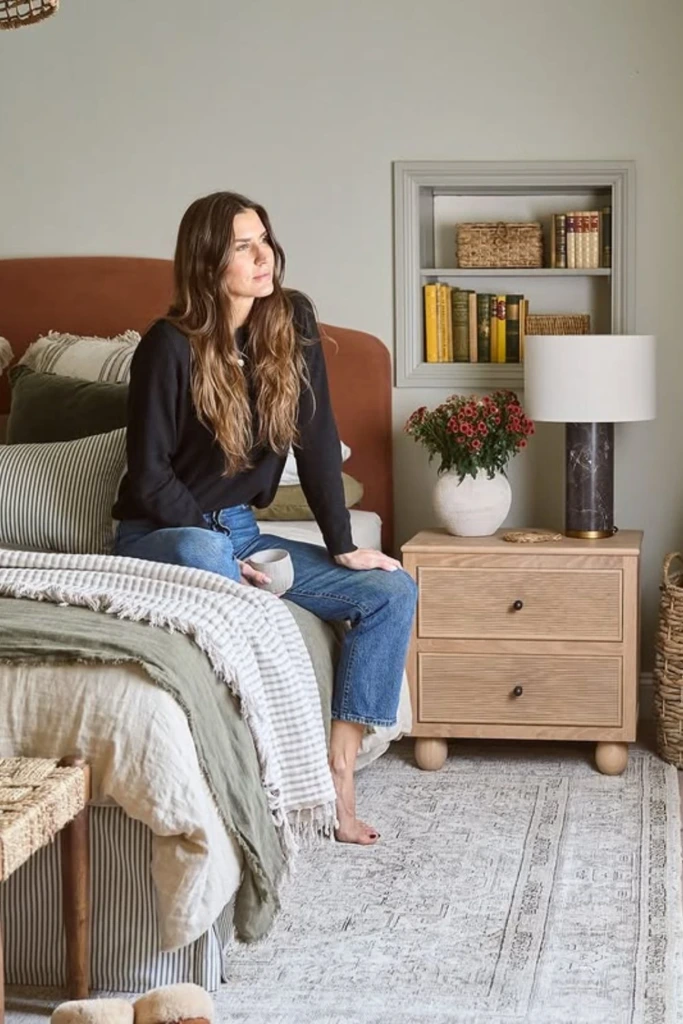
Recessed or niche storage turns part of a wall into a practical place for keeping bedside essentials. Because the storage sits within the wall rather than projecting far into the room, it can be useful where space is tight.
A recessed compartment can hold books, small baskets, and decorative accessories. Pair it with a compact nightstand or drawer unit to create separate places for frequently used and less frequently used items.
You do not necessarily need to build a new wall niche to achieve a similar effect. A shallow wall shelf or a small wall-mounted organizer can provide comparable functionality without extensive renovation.
If you are planning a permanent recessed installation, check the wall construction and the location of wiring or plumbing before making any cuts. A properly planned niche adds storage without unnecessarily crowding the bedside area.
9. Compact Cabinet
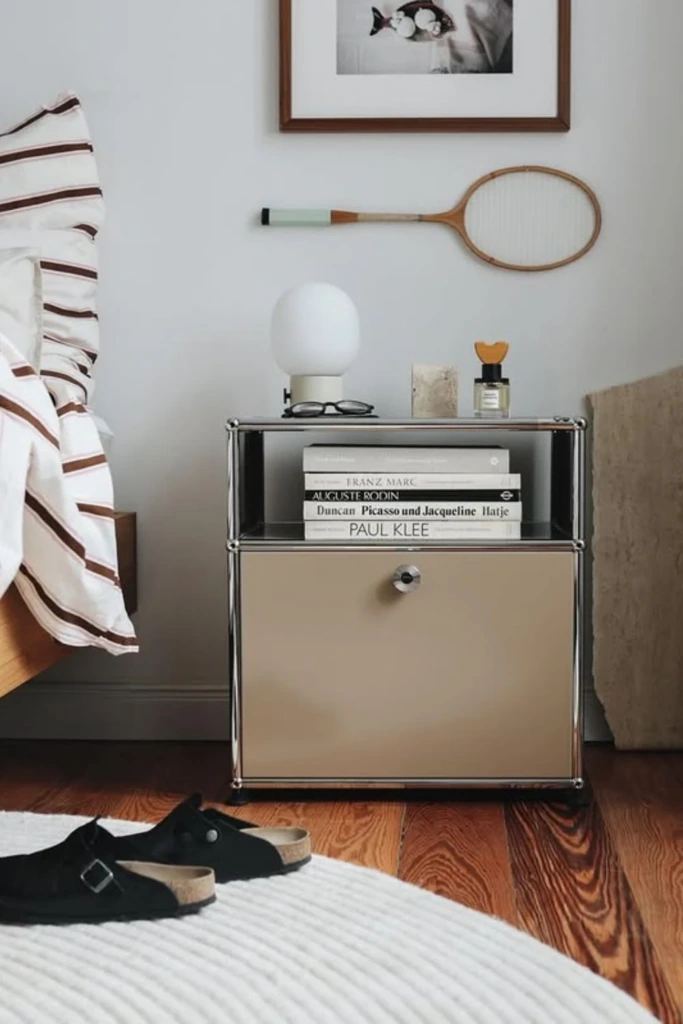
A compact bedside cabinet provides a combination of concealed and accessible storage in a relatively small footprint. It is particularly useful when you have several personal belongings but want to keep the bedroom visually calm.
Choose a cabinet with an arrangement that suits your needs. An upper surface can hold nighttime essentials, an open shelf can accommodate books, and a closed compartment can hide cables, skincare products, or other small belongings.
A narrow cabinet often works better than a deep, oversized piece in a smaller room. Check the measurements before purchasing, especially if your bed sits close to a wall or wardrobe.
You can also use small organizers inside the cabinet to separate different categories. This prevents the hidden storage from becoming disorganized over time.
10. Stack Boxes
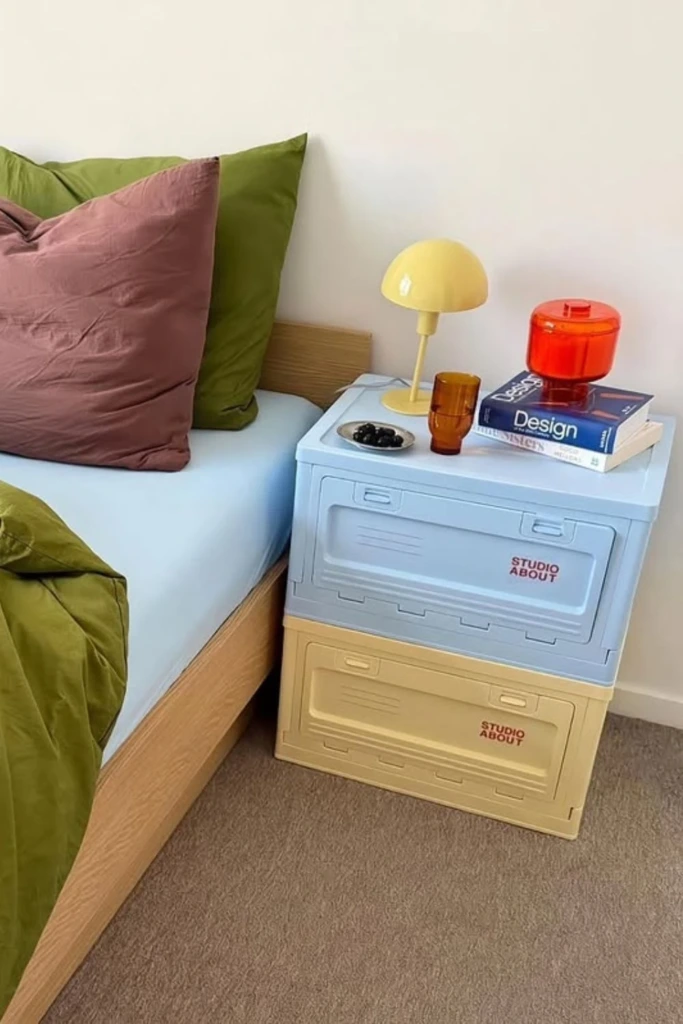
Storage boxes can serve as an inexpensive and flexible alternative to a traditional nightstand. When selected in complementary sizes, they create a compact structure that provides both a useful upper surface and enclosed storage.
Use sturdy boxes designed to support the weight of the items you plan to place on top. Store books, spare charging cables, accessories, or other small belongings inside, assigning each container a particular purpose.
Boxes with lids offer a cleaner appearance, while open-front containers make frequently used items easier to retrieve. Matching finishes or neutral colors can help the arrangement look intentional rather than temporary.
This solution suits renters, students, and anyone who wants movable storage that can be rearranged when furniture layouts change.
11. Tiered Stand
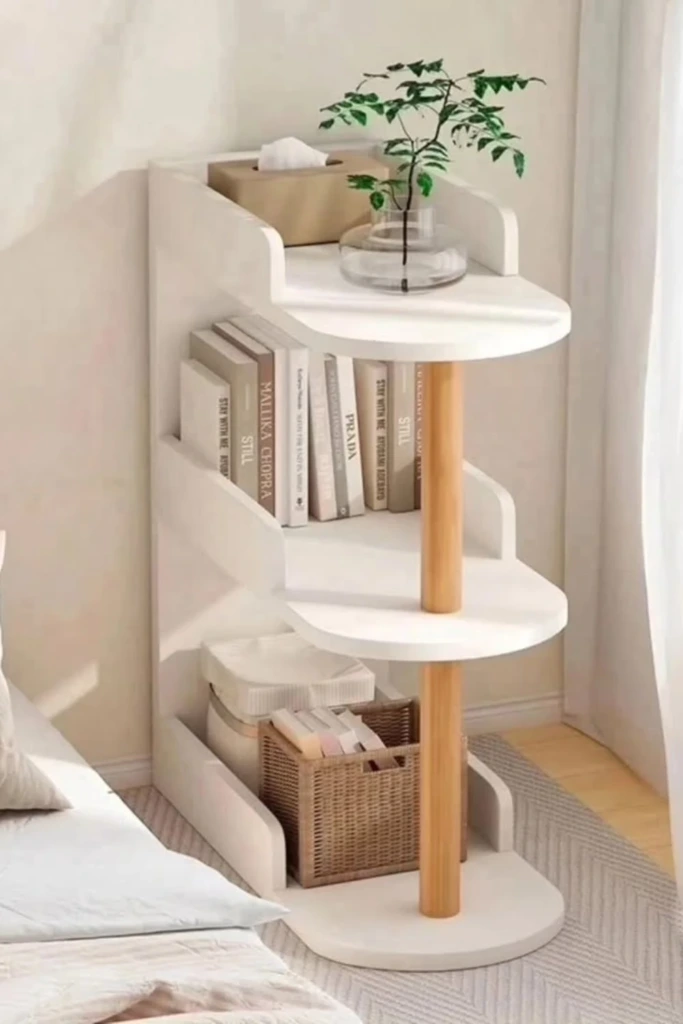
A tiered stand adds multiple storage levels within the footprint of a single piece of furniture. It is a useful choice when your nightstand is too small to accommodate books, personal accessories, and other everyday necessities.
Keep the top level for items you use most often, such as your phone or a small lamp. Place books on a lower shelf and use a basket on the bottom level for loose accessories or larger belongings.
The separation between tiers helps prevent different items from becoming mixed together. It also keeps the main surface available for the essentials you want to reach quickly.
Choose a stand with a stable base and enough clearance between shelves for the objects you intend to store. Avoid overloading the upper levels, especially if the unit is narrow or lightweight.
12. Open Cube
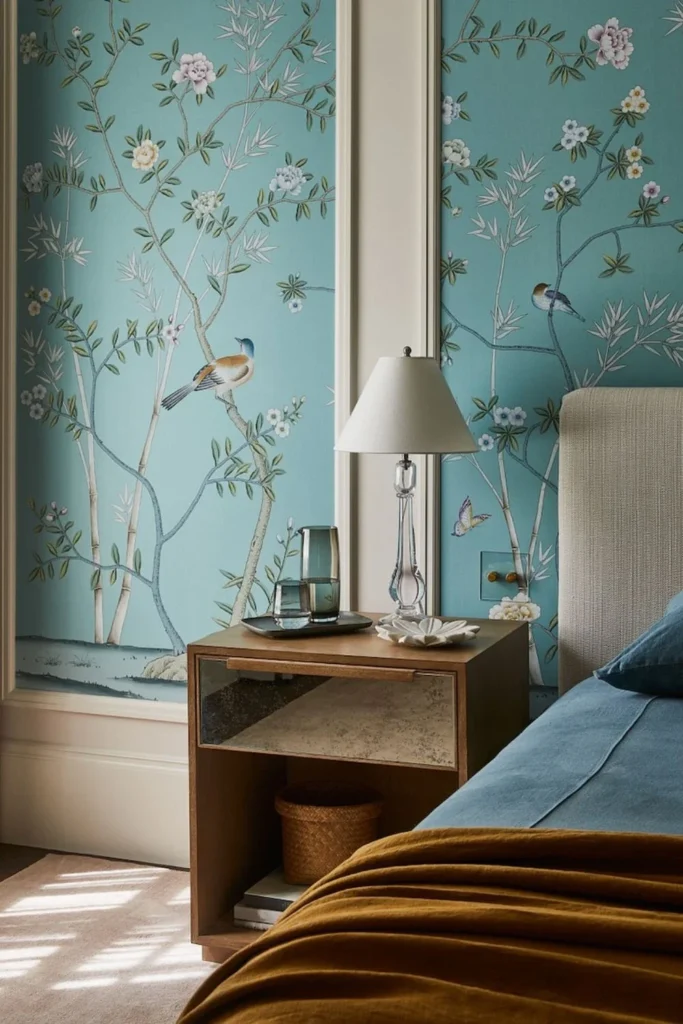
An open-cube organizer provides straightforward storage without the need for drawers or complicated hardware. Its compartments make it easy to arrange books, baskets, and personal belongings while keeping everything visible.
Use the upper surface for your nightly essentials and reserve the lower compartment for items that would otherwise occupy the tabletop. A small container can hold loose accessories, while books can be stacked neatly in a dedicated section.
This design works well for anyone who prefers open storage and wants to see where everything belongs. It is also easy to rearrange when your needs change.
To maintain a tidy appearance, group similar items together and avoid filling every compartment to capacity. Leaving some open space makes the unit easier to use and prevents the bedside area from looking overcrowded.
13. Modular Drawers
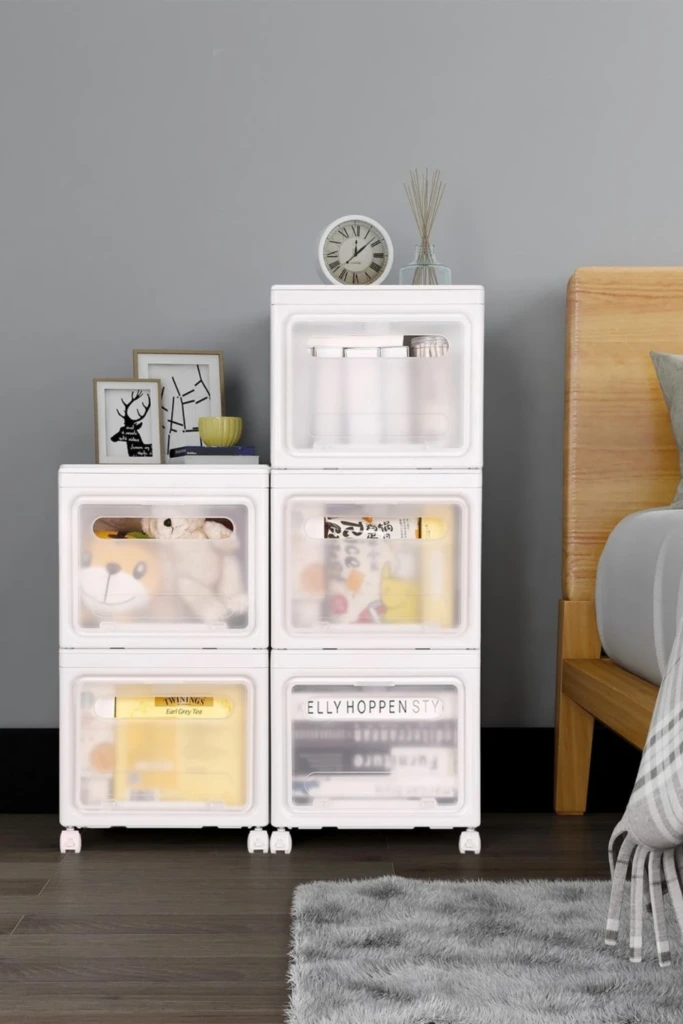
Modular drawers allow you to customize bedside storage according to the amount and type of belongings you need to organize. Small units can sit on a shelf, while taller arrangements can provide additional capacity beside the bed.
Transparent drawers are useful when you want to identify contents quickly. Opaque options offer a more understated appearance if you prefer to keep personal items out of sight.
Reserve the upper drawers for frequently used belongings, such as chargers, hand cream, or small accessories. Place larger or less frequently needed items in lower compartments.
Some modular units include wheels, making them easier to move when cleaning or rearranging furniture. If you choose a wheeled design, ensure it remains stable during everyday use.
The key to keeping modular storage effective is to give each drawer a clear purpose and avoid mixing unrelated belongings together.
14. Wall Grid
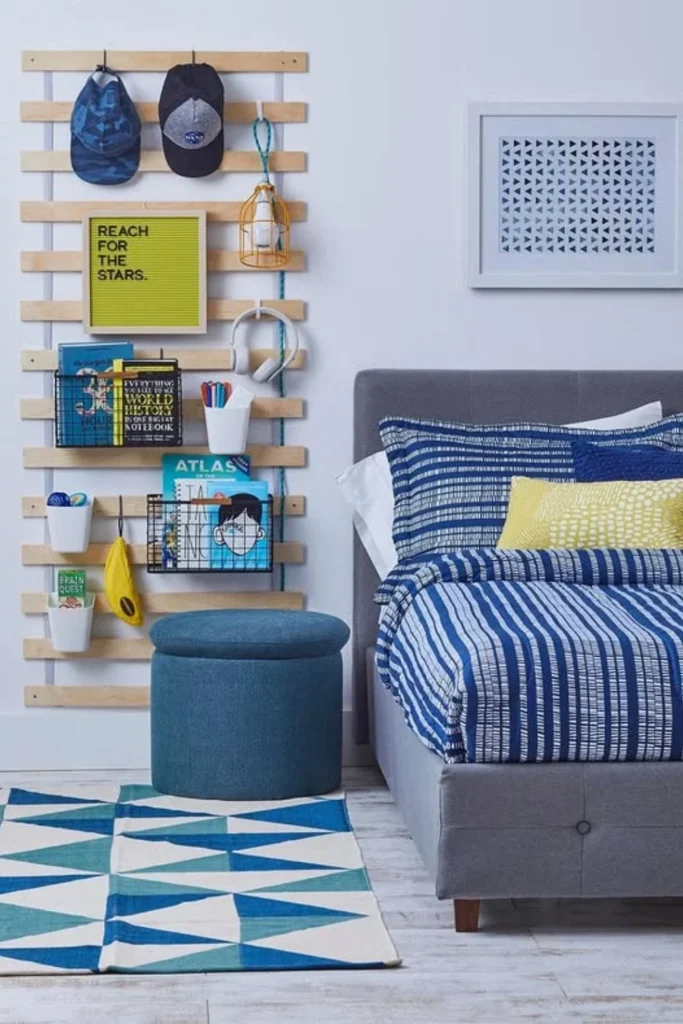
A wall grid transforms an unused section of wall into an adaptable bedside organizer. With compatible hooks, baskets, and small shelves, it can hold a range of items without taking up floor space.
Use hooks for headphones or lightweight accessories, small baskets for miscellaneous belongings, and shelves for books or decorative objects. Position frequently used items at a comfortable height so you can reach them easily from bed.
One advantage of a grid system is that its layout can change as your storage needs evolve. You can move accessories around instead of replacing the entire organizer.
Choose a grid that complements your bedroom decor and install it securely using suitable fixings. Avoid placing heavy objects overhead or storing anything that could fall onto the bed.
This approach is particularly helpful for compact bedrooms, shared spaces, and rooms where conventional bedside furniture is difficult to accommodate.
15. Hanging Lights

Moving your bedside lighting from the tabletop to the wall or ceiling can immediately free up valuable surface space. Pendant lights and wall-mounted reading lamps provide illumination while allowing the nightstand to serve primarily as a storage area.
With the lamp removed, you have more room for a phone, a book, a small tray, or a glass of water. Drawers and shelves beneath the surface can then accommodate belongings that would otherwise remain scattered around the room.
Choose lighting that provides enough brightness for reading without being uncomfortable for someone sharing the bed. Adjustable fixtures can be particularly useful when you want to direct light toward a book rather than the entire room.
Before installing a hardwired fixture, use a qualified electrician when appropriate and ensure the placement is suitable for your bedroom layout. Renters may prefer plug-in wall lamps that can be removed more easily.
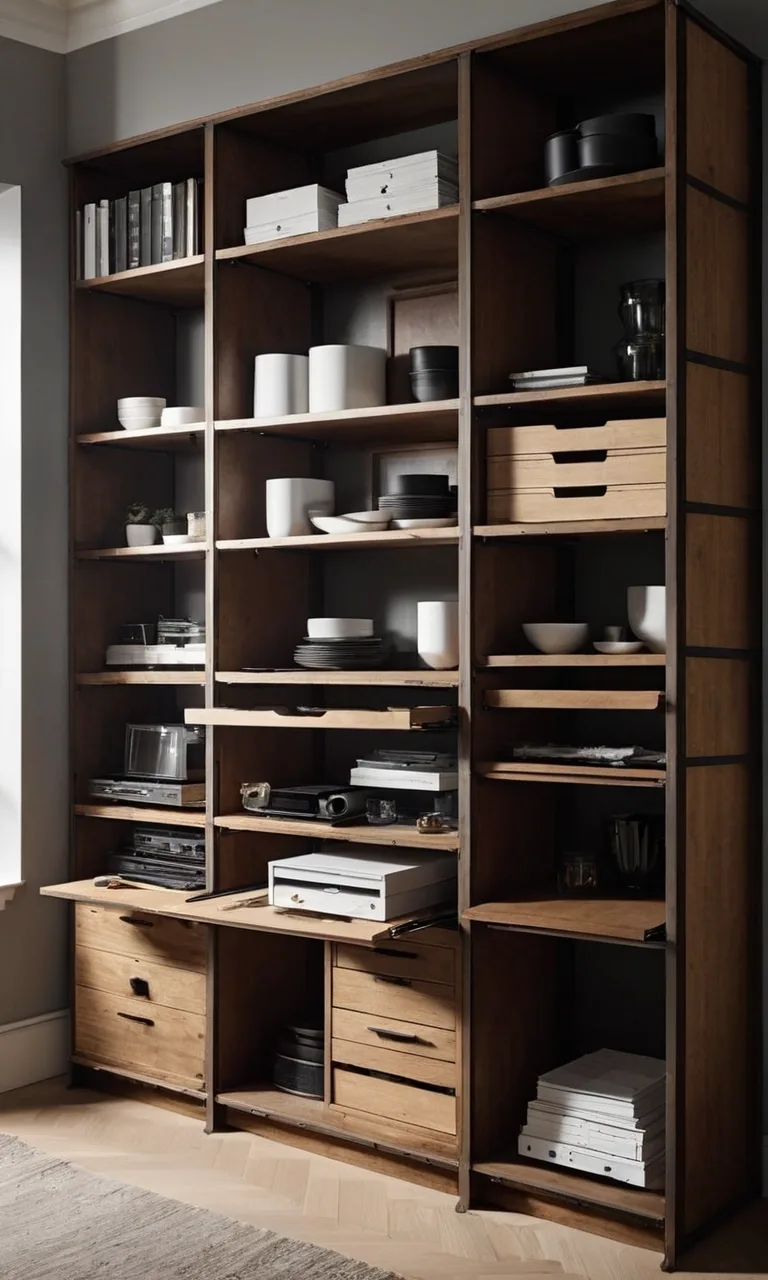
16. Shelf Tower
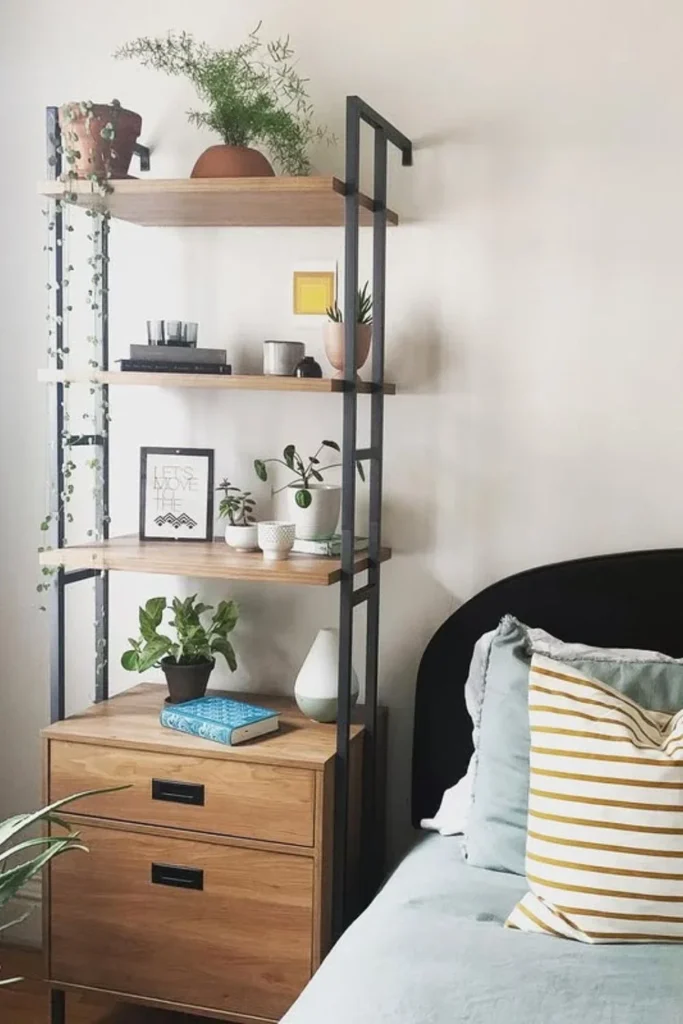
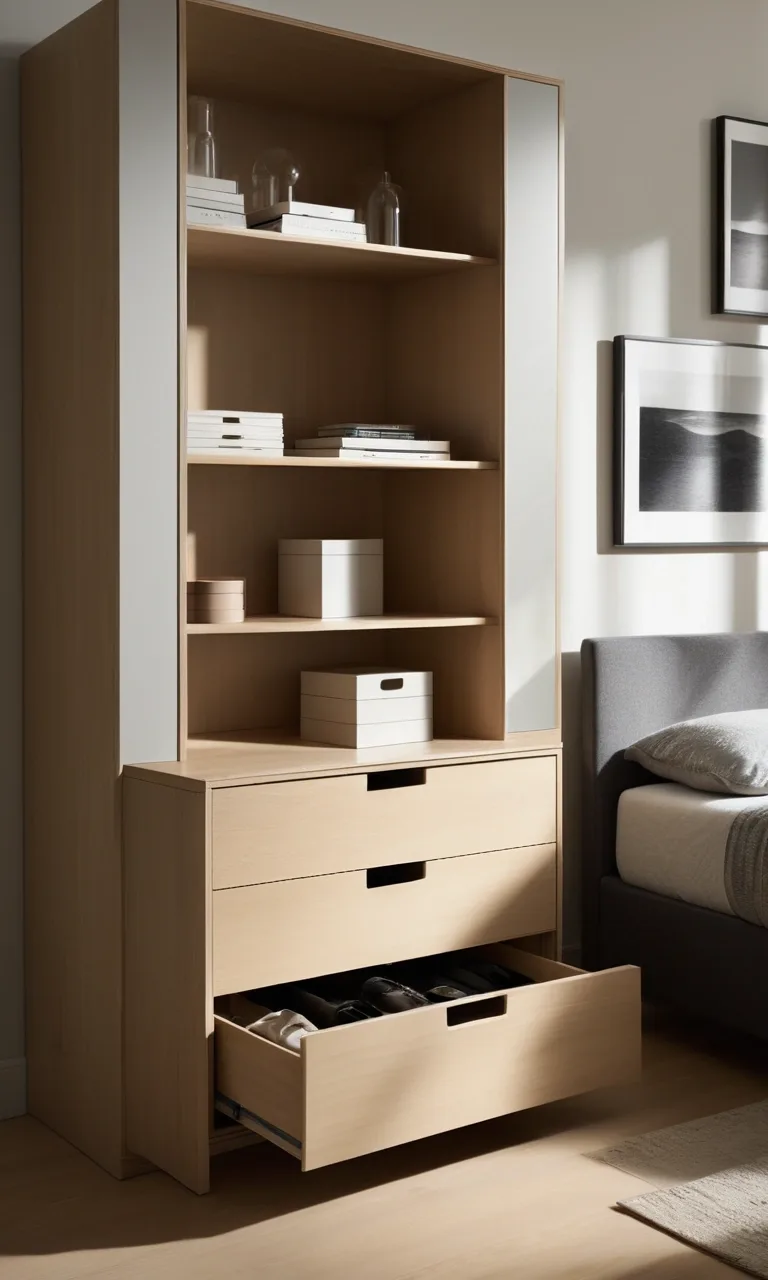
A shelf tower combines vertical shelving with drawers or closed compartments to create a compact, multifunctional bedside storage unit. It is useful when you need more capacity than a basic nightstand can offer.
Place books, small plants, or other frequently used belongings on accessible shelves. Use the drawers for charging accessories, personal care products, and items you would rather keep out of view.
Arrange heavier belongings on the lower levels to improve stability. Reserve upper shelves for lightweight items and avoid storing anything fragile where it could fall onto the bed.
A tower with a relatively narrow profile can make good use of height without extending too far into the room. Check that its dimensions suit the space beside your mattress and that the unit can be secured if necessary.
17. Rack Combo
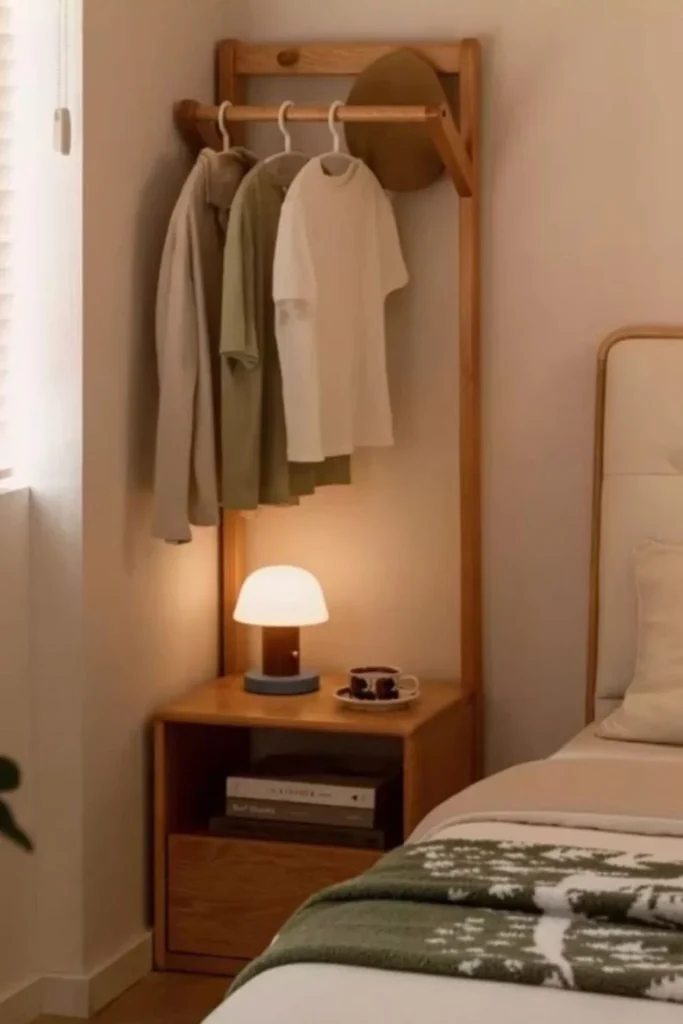
A rack-and-table combination brings several useful functions into one compact arrangement. Depending on the design, it may include a small hanging rail, a tabletop, shelves, and a cabinet.
The hanging section can hold lightweight clothing or accessories you use regularly. Keep your phone, lamp, or other nighttime essentials on the tabletop, while lower compartments provide space for books and miscellaneous belongings.
This arrangement can be useful in studio apartments, guest rooms, or bedrooms where separate furniture pieces would take up too much room.
Before choosing a rack combination, consider what you genuinely need to store. A large hanging section may be unnecessary if you already have a spacious wardrobe, while extra shelves could be more valuable for books or personal items.
A well-chosen multifunctional unit reduces the need for several separate pieces of furniture.
18. Classic Drawers
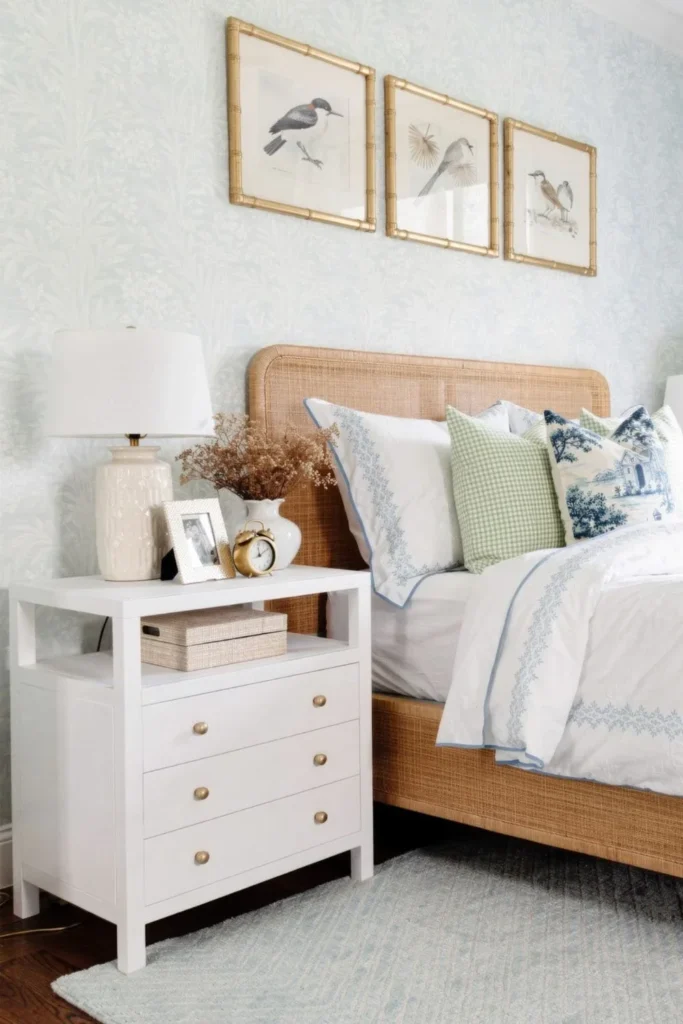
A traditional bedside table with drawers remains a dependable choice because it combines a familiar layout with practical concealed storage. It is particularly suitable for anyone who wants to keep personal belongings accessible without leaving them on display.
Use the tabletop for essentials such as a reading lamp, phone, or book. Store chargers, glasses, stationery, and other small items inside the drawers.
Drawer dividers or small containers can make the interior more functional by separating different categories. This also helps prevent small objects from becoming mixed together whenever you open or close the drawer.
If the nightstand includes an open shelf, reserve it for books or a basket of frequently used belongings.
For a coordinated bedroom, choose a finish that complements your bed frame and other furniture. A simple design can remain useful even when your decor changes.
19. Slim Rack
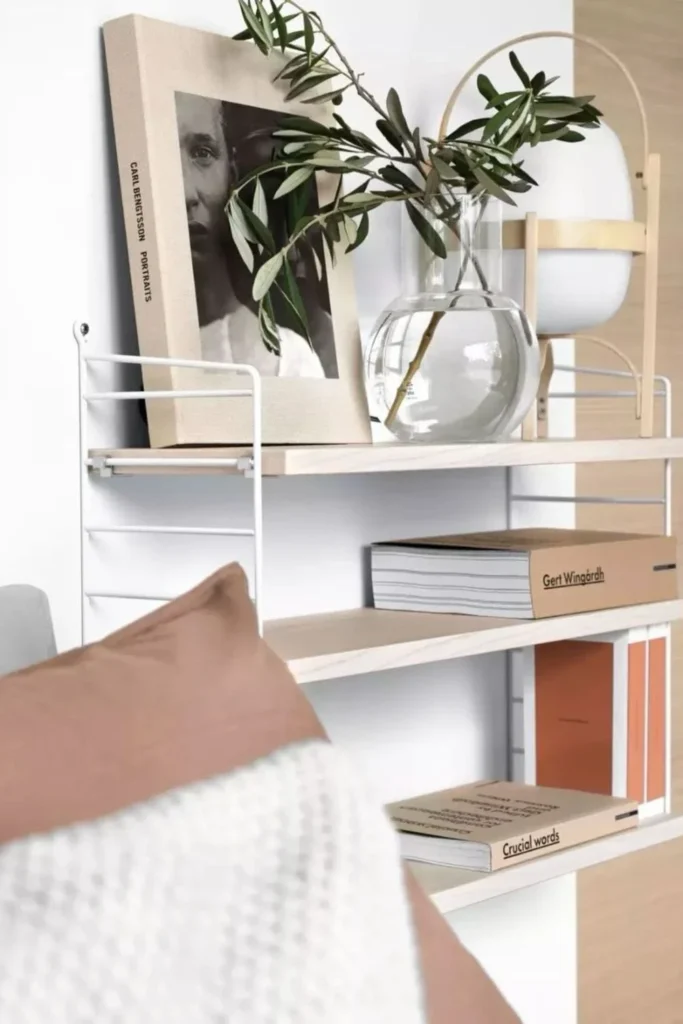
A slim bedside rack provides storage in a narrow gap where a conventional table may not fit. Its vertical shelves allow you to keep several items nearby without spreading them across a wide surface.
Use the lower shelves for heavier objects, such as books or storage baskets, and keep the upper level for lightweight essentials. Small side rails can help prevent belongings from slipping off the shelves.
Measure the available space carefully before purchasing a rack. Consider not only its width but also its depth, height, and stability, particularly if it will stand close to the bed.
This type of organizer works well for renters, minimalist bedrooms, and rooms with awkward spaces between the mattress and a wall.
To keep the arrangement useful, give each shelf a specific purpose instead of treating every level as a place for miscellaneous belongings.
20. Under Bed
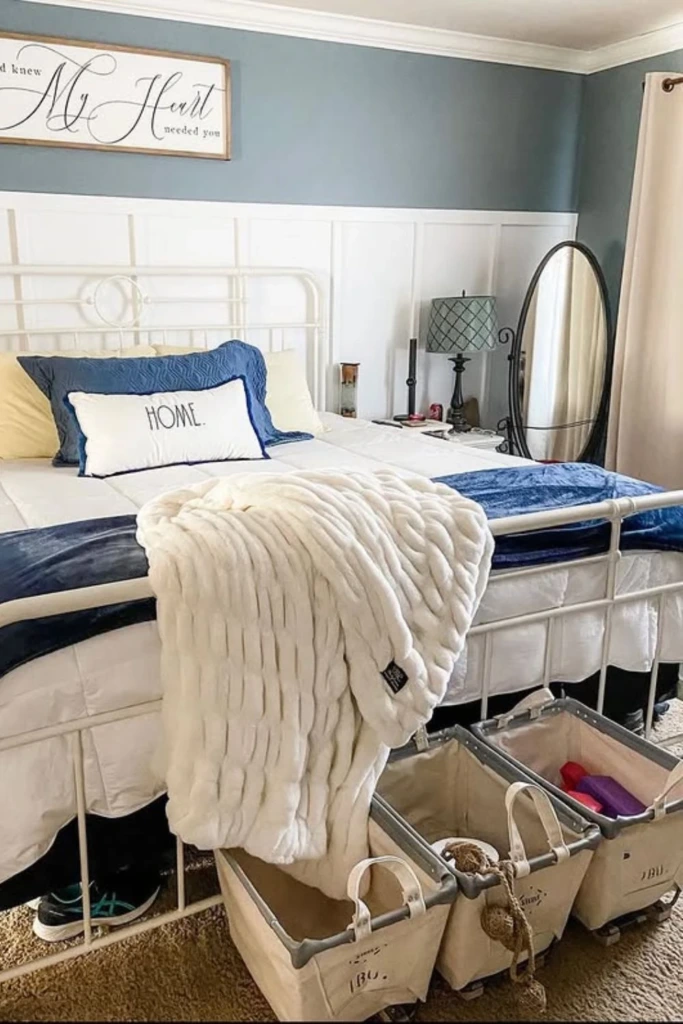
The space beneath your bed can provide additional storage when the nightstand is already full or there is no room for another cabinet. It is especially useful for belongings that you need occasionally rather than every night.
Low-profile containers can hold spare blankets, seasonal clothing, extra bedding, or books. Choose boxes that fit comfortably beneath the bed and can slide out without damaging the floor.
Clear containers make it easier to identify contents, while fabric organizers can be useful for lightweight items. Labels are helpful when several boxes contain different categories of belongings.
Keep frequently used items near the front so you do not have to pull out every container to find something. Avoid storing damp textiles or anything that requires ventilation in a sealed space without first ensuring it is completely dry.
Under-bed storage keeps additional belongings close at hand while preserving valuable space around the nightstand.
21. Deep Drawers
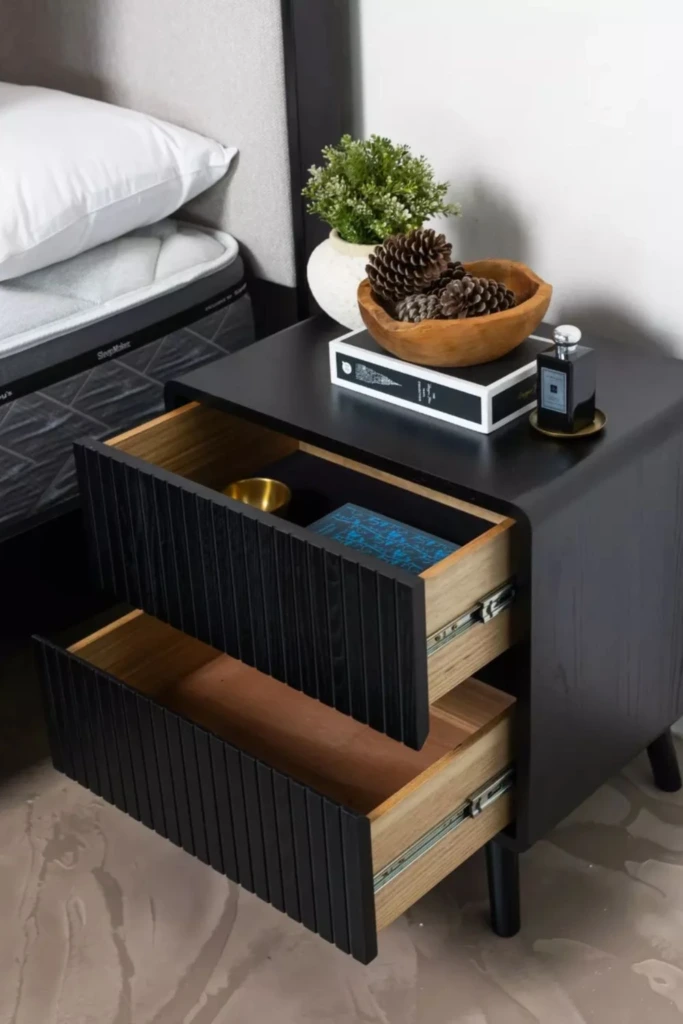
Deep drawers offer generous storage for bedrooms where shallow compartments are no longer sufficient. They can accommodate books, larger personal care products, spare accessories, and other belongings that do not fit comfortably in a small bedside table.
Organize the interior by frequency of use. Keep everyday necessities in the most accessible drawer, then reserve deeper or lower compartments for items you need less often.
Small bins and drawer dividers can prevent belongings from shifting around and make it easier to find specific items. If you store electronics, keep cables separated and avoid placing anything that could leak or damage other contents nearby.
Because deep drawers provide considerable capacity, it is important not to fill them with unnecessary items. Review their contents occasionally and remove anything you no longer need.
A deep-drawer nightstand is a practical option when you want substantial storage while maintaining a clean, uncluttered bedside surface.
How do you organize a nightstand without creating clutter?
Start by removing everything from the nightstand and deciding which items you actually use at bedtime. Keep essentials such as your phone, reading glasses, a book, or a lamp on the surface, depending on how much room is available.
Move less frequently used belongings into drawers, baskets, or nearby storage compartments. Group similar objects together so chargers do not become mixed with personal care products, stationery, or other small accessories.
A small tray can contain loose items such as lip balm, a watch, or jewelry. Cable clips or a simple cord organizer can also keep charging wires from spreading across the tabletop.
Finally, make a habit of returning items to their designated places each morning. A simple organization system is easier to maintain when every object has a clear home.
What can replace a traditional nightstand in a small bedroom?
Several alternatives can provide bedside storage without requiring a full-size table. Floating shelves and wall-mounted cubes are useful when floor space is limited, while a slim drawer unit can fit into a narrow gap beside the bed.
A storage headboard offers another option by incorporating shelves or compartments directly into the bed area. Bedside caddies are particularly useful for keeping phones, books, and small accessories close without adding furniture.
You can also consider a compact rolling cart, an open-cube organizer, or a tiered stand. These options provide different amounts of storage and can often be moved or rearranged as needed.
Choose an alternative based on the items you need to store, the available space, and how easily you want to reach your belongings from bed. The most effective solution is one that fits your routine while leaving enough room to move comfortably around the bedroom.