22 Jeans Storage Ideas for 2026
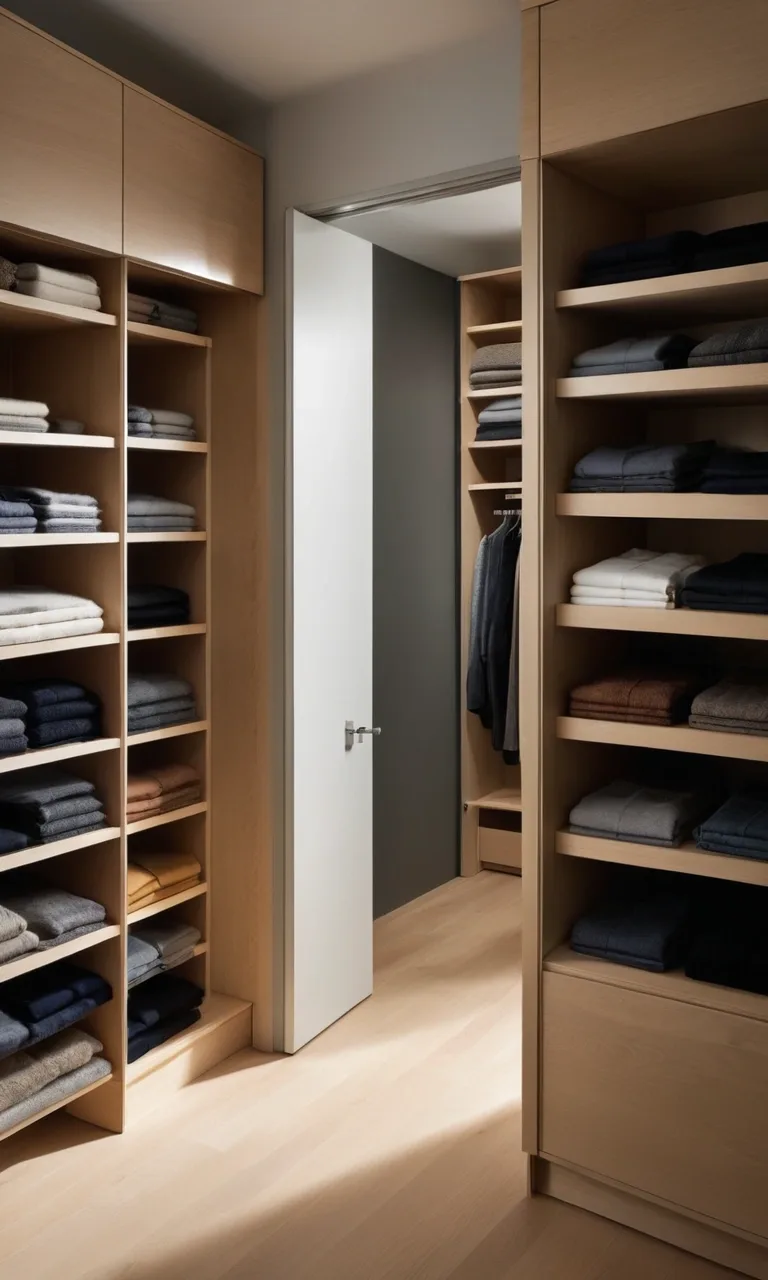
Jeans are wardrobe essentials, but storing them can quickly become a challenge when drawers overflow and shelves turn messy. The right storage method helps you keep denim organized, protect its shape, and find the pair you want without rummaging through your entire closet. Whether you have a spacious walk-in wardrobe or a small bedroom closet, these practical jeans storage ideas can help you make better use of your available space.
What Are The Easiest Ways To Store Jeans Without Wrinkles?
The easiest way to store jeans without wrinkles is to fold them neatly along their natural seams or hang them from a suitable hanger. Denim is generally more forgiving than delicate fabrics, so it does not require elaborate care. However, uneven folding, overcrowded drawers, and heavy piles can leave unwanted creases.
Start by making sure your jeans are completely dry before putting them away. Smooth the fabric with your hands, align the legs, and remove bulky folds around the knees and waistband. If you prefer folded storage, arrange pairs in manageable stacks or use file folding so every item remains visible.
Hanging is another convenient option, especially for jeans you wear frequently. Use sturdy hangers that can support the weight of denim without slipping. For limited closet space, try vertical organizers, slim racks, or adjustable dividers to keep everything accessible. The best approach depends on how many pairs you own, the space available, and whether you prefer hanging or folding.
1. Waistband Hanging
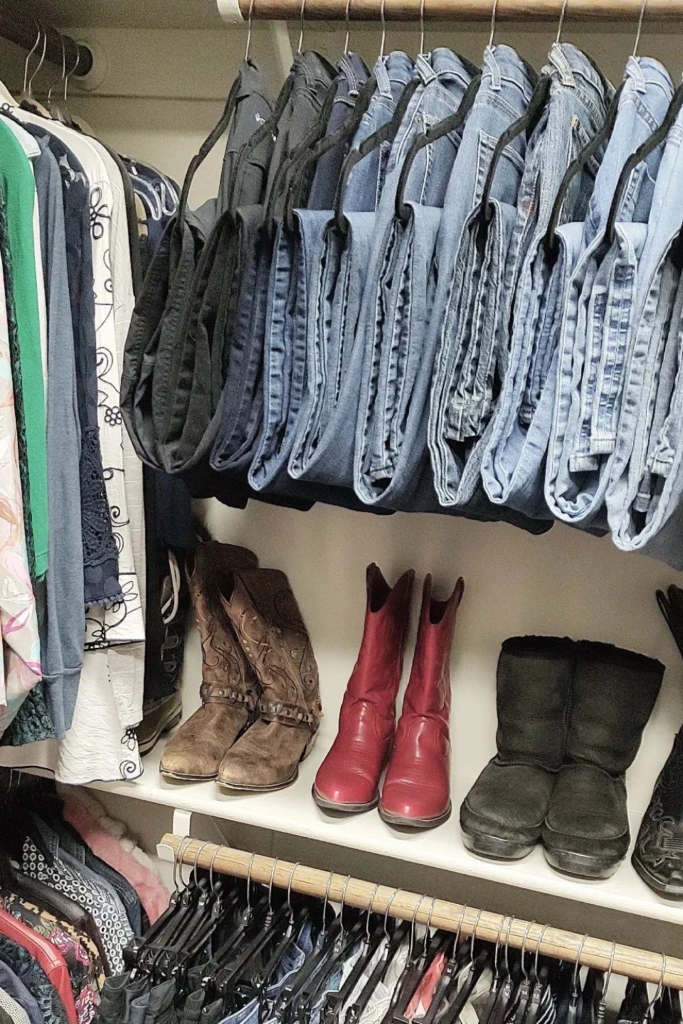
Hanging jeans by the waistband is a straightforward way to keep them organized while freeing up drawer and shelf space. Use a hanger with secure clips or a dedicated trouser hanger designed to hold heavier garments. Position the clips evenly so the waistband remains balanced.
This method works particularly well for jeans you wear regularly because you can see each pair at a glance. It also helps prevent deep creases caused by repeatedly folding denim in the same places.
Before hanging your jeans, check that the clips grip securely without leaving noticeable marks. If your hangers have adjustable clips, position them according to the width of the waistband. Leave a little space between garments to make selecting and removing a pair easier.
2. Drawer Dividers
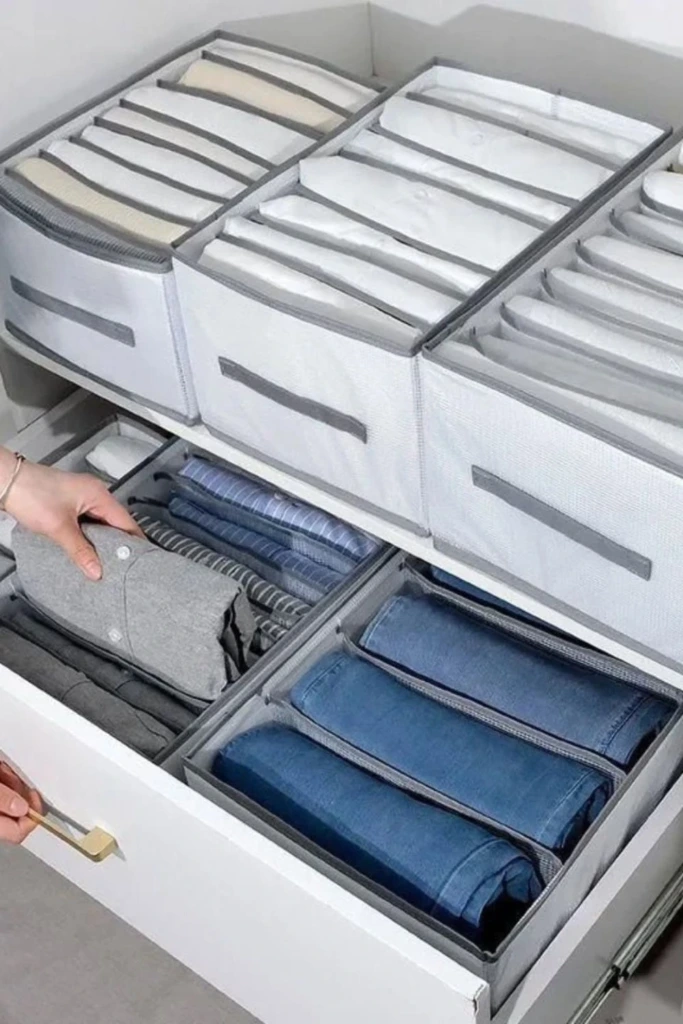
Drawer dividers turn a cluttered drawer into a series of organized compartments. Instead of letting jeans slide into one another, you can assign each section to a particular style, size, or occasion.
Adjustable dividers are especially useful because they accommodate different drawer dimensions. Place folded jeans upright whenever possible so the front edge of each pair is visible. This arrangement makes it easier to find your favorite denim without pulling out everything above it.
For a more organized wardrobe, dedicate separate sections to everyday jeans, darker denim, lighter washes, and occasional-wear styles. Avoid packing the compartments too tightly, as compressed stacks can become difficult to remove neatly.
3. Slide Rack
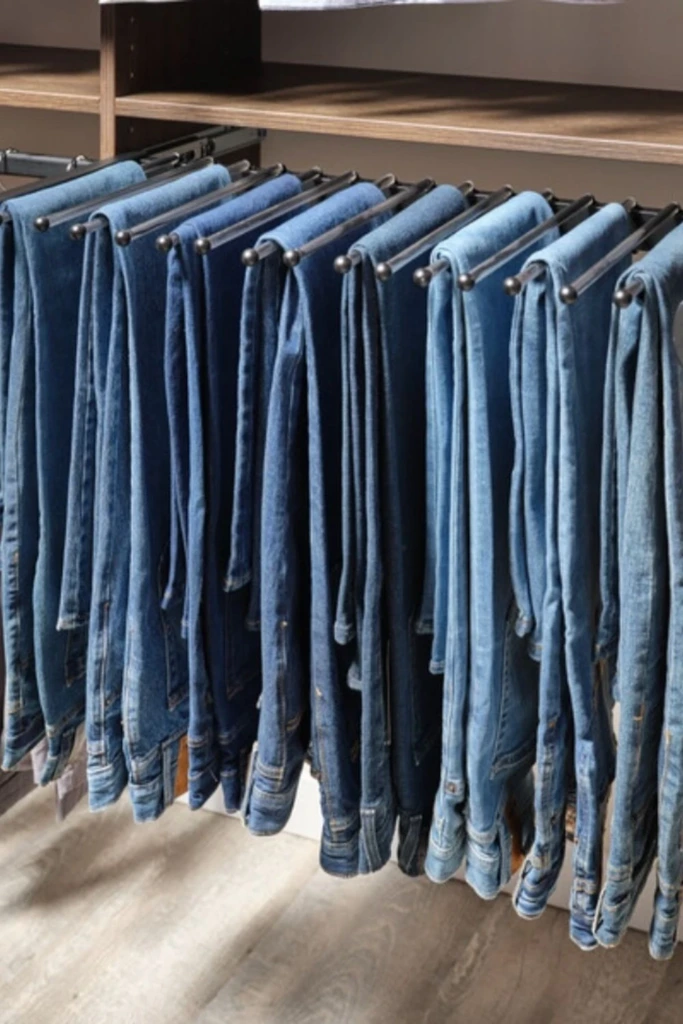
A slide-out rack is a smart solution for wardrobes where the back of the closet is difficult to reach. Installed inside a cabinet or wardrobe, this type of rack pulls forward when needed and slides back out of sight afterward.
Depending on its design, a slide rack may hold jeans on individual bars, hangers, or pull-out trouser arms. Individual supports keep garments separated, making it easier to browse your collection and return each pair to its place.
Measure the available cabinet depth and width before purchasing one. Check the rack's weight capacity as well, since denim can be considerably heavier than lightweight trousers. A smooth sliding mechanism and sturdy mounting hardware will make everyday use more convenient.
4. Clip Hanging
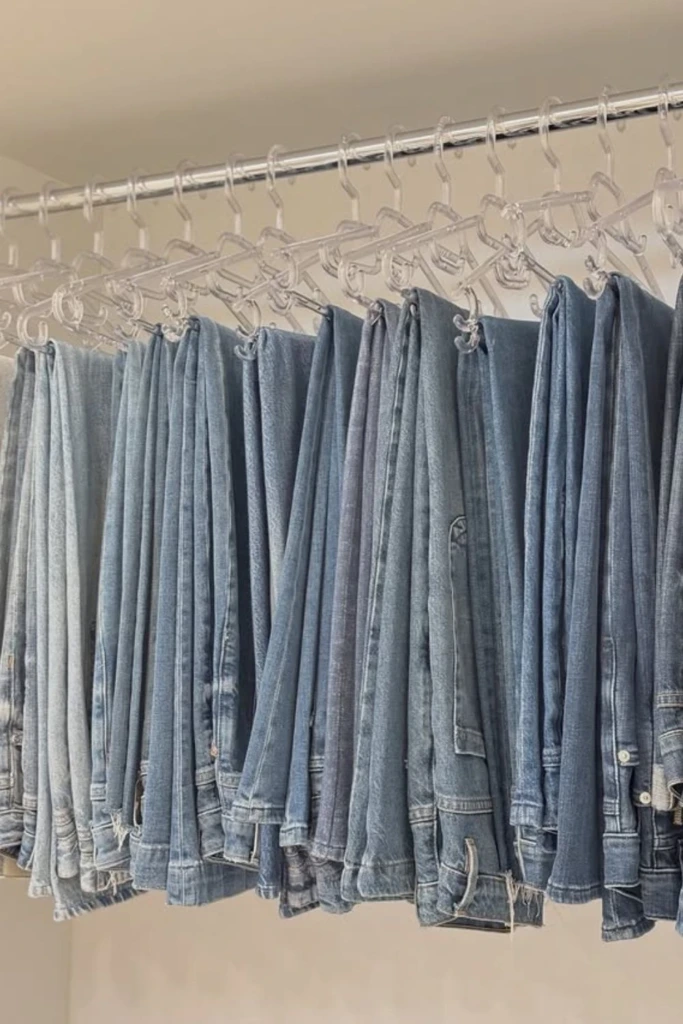
Clip hangers are useful for people who want to hang jeans without folding them over a conventional hanger. The clips grip the waistband or another suitable section of the garment, allowing the jeans to hang vertically.
Choose hangers with rubberized or padded clips to reduce the risk of marks on the fabric. Distribute the clips evenly and make sure the hanger can support the weight of the jeans, especially when storing thick or heavy denim.
This arrangement can work well in a shared closet because each pair has its own place. It is also helpful when organizing jeans by style, making straight-leg, skinny, wide-leg, and relaxed-fit options easier to identify.
5. Shelf Stacks
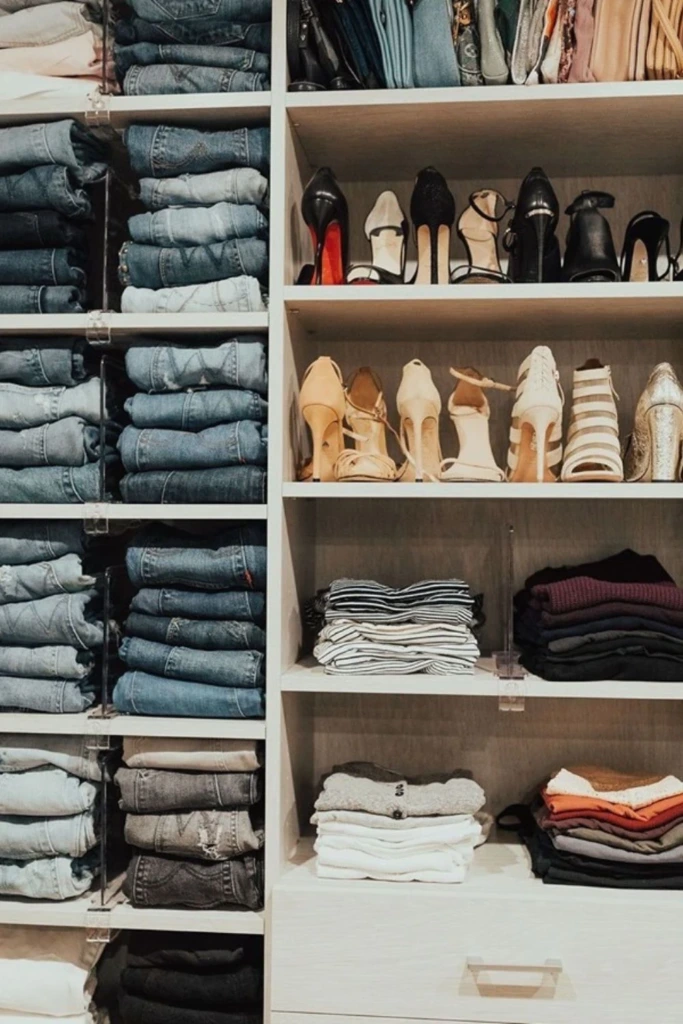
Shelf stacking is a classic storage method that works well in closets, wardrobes, and open shelving units. Fold each pair into a consistent shape, then place the jeans in small, stable piles.
For easier access, group similar styles or washes together. You might keep dark denim on one shelf, light washes on another, and heavier winter jeans in a separate section. Labels can be helpful when shelves are deep or several family members share the same storage area.
Keep the stacks low enough that you can remove the bottom or middle pair without causing the entire pile to collapse. If you notice that a stack repeatedly leans or falls over, reduce its height or use shelf dividers to provide additional support.
6. Rod Sorting
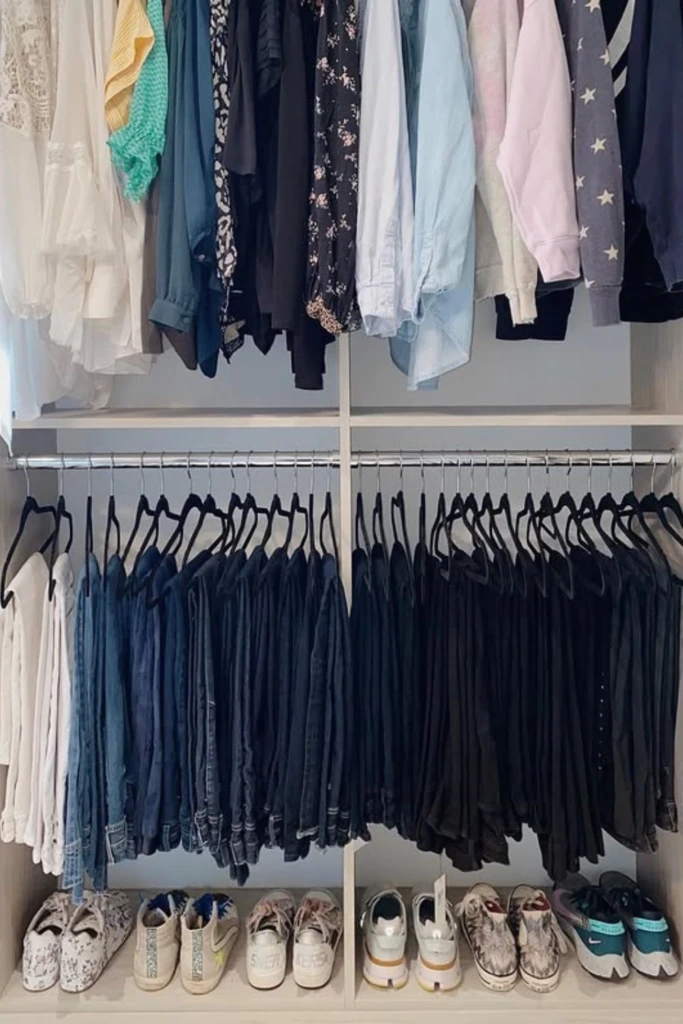
Rod sorting uses the hanging rod inside your wardrobe as an organizational tool. Rather than hanging jeans randomly, arrange them in a consistent sequence based on color, fit, or how often you wear them.
For example, position your most frequently worn pairs near the front and reserve the far end for occasional-use denim. You can also group similar washes together to create a more visually organized closet.
Use matching hangers where possible to maintain a uniform appearance and make efficient use of the rod. If you have a large collection, consider adding a second hanging section only if the wardrobe has enough vertical clearance and the additional hardware can support the weight.
7. File Folding
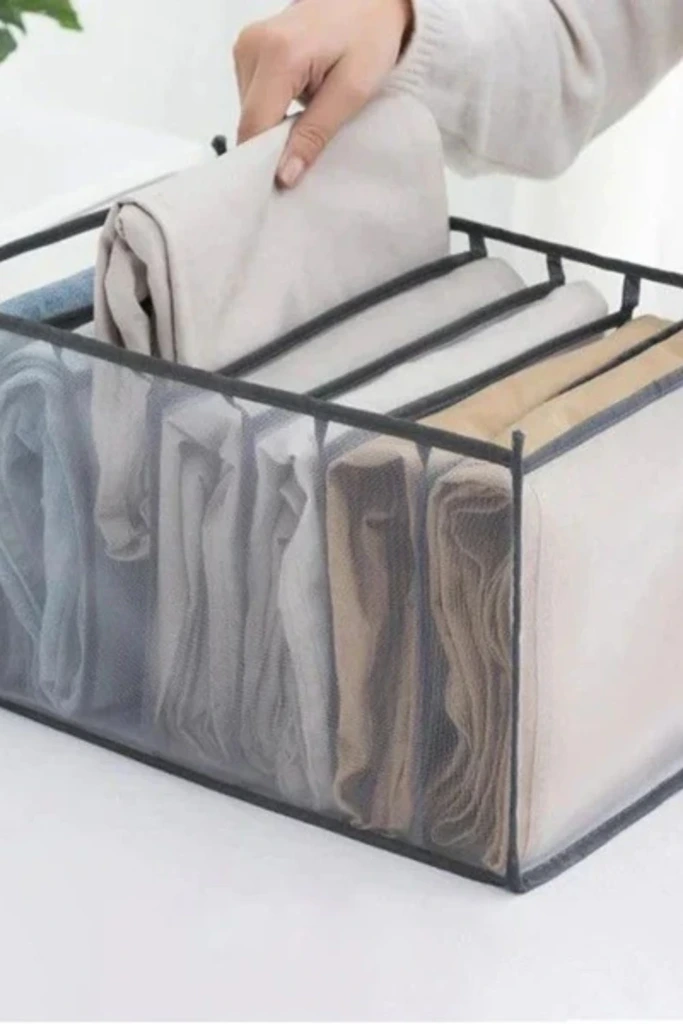
File folding allows you to store jeans vertically instead of laying them in traditional horizontal stacks. The technique involves folding each pair into a compact rectangle that can stand upright in a drawer or storage container.
Begin by laying the jeans flat and smoothing the fabric. Fold one leg over the other, then fold the garment into a compact shape that fits your drawer's height. Adjust the number of folds according to the depth of the drawer and the thickness of the denim.
Once folded, arrange the pairs side by side like files in a cabinet. This makes individual garments visible, reducing the need to disturb neighboring pairs. File folding is especially practical for smaller wardrobes where every inch of drawer space matters.
8. Divider Shelves
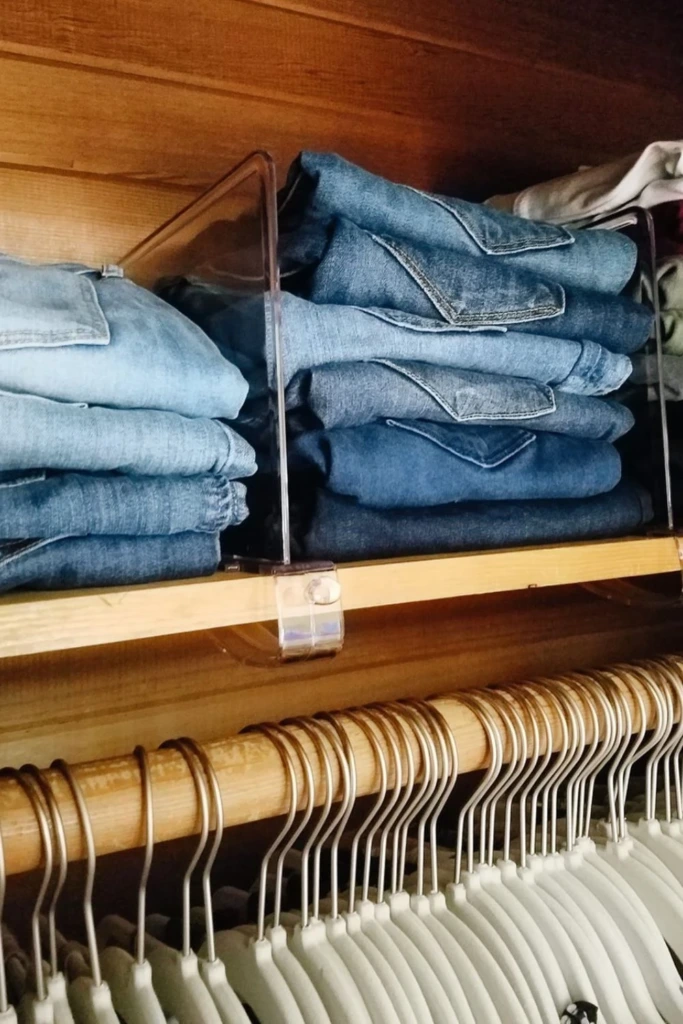
Divider shelves help keep separate piles of jeans from merging into one large, disorganized stack. These dividers can be installed between garments on an existing shelf or built into a closet system.
Use them to separate denim by color, cut, or wearer. For example, one section might hold black jeans, another blue denim, and another white or colored styles. In a shared wardrobe, separate compartments can also prevent different people's clothing from becoming mixed together.
Choose dividers that fit securely and have smooth edges to avoid snagging fabric. Clear acrylic options provide visibility, while wood or metal versions can complement a more structured closet design. If your shelves are adjustable, position them to suit the height of your folded stacks.
9. Tier Hangers
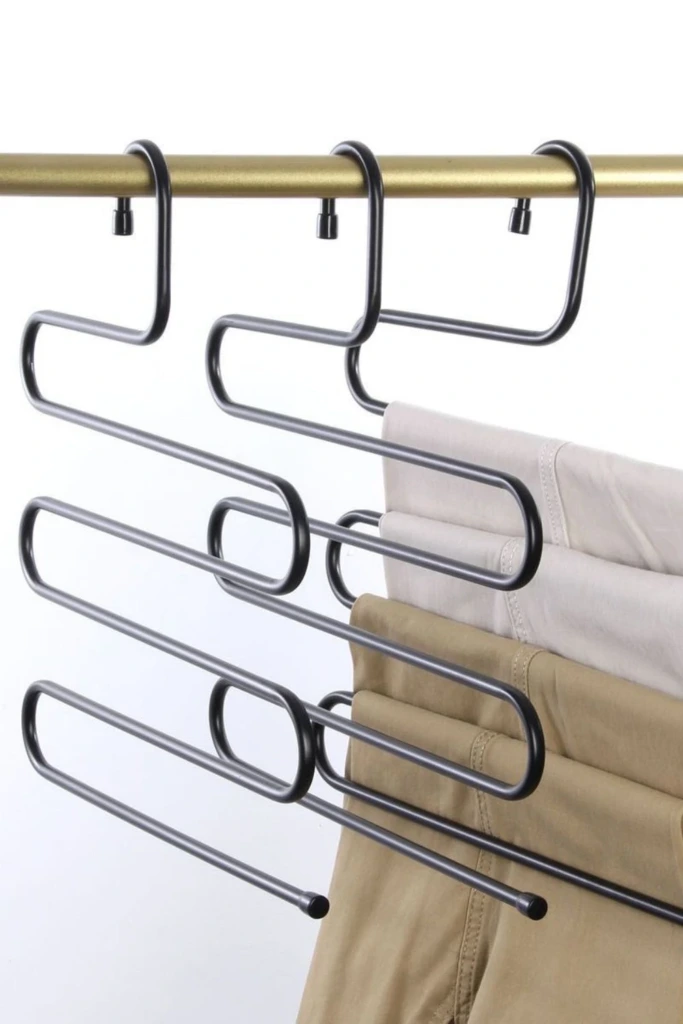
Tier hangers allow several pairs of jeans to hang from a single closet hook or rod position. Depending on the design, they may feature multiple horizontal bars, cascading arms, or connected hanging loops.
This arrangement can help free up space on a crowded wardrobe rod. It is particularly useful for storing jeans that you wear less frequently but still want to keep readily accessible.
Check the total weight rating before loading a tier hanger with multiple pairs. Distribute the garments evenly to keep the hanger balanced, and leave enough room to remove one pair without pulling the others out of position.
Tier hangers are available in vertical and horizontal configurations. Choose a vertical version when rod space is limited, or consider a horizontal model if your wardrobe has more width than height.
10. Color Sections
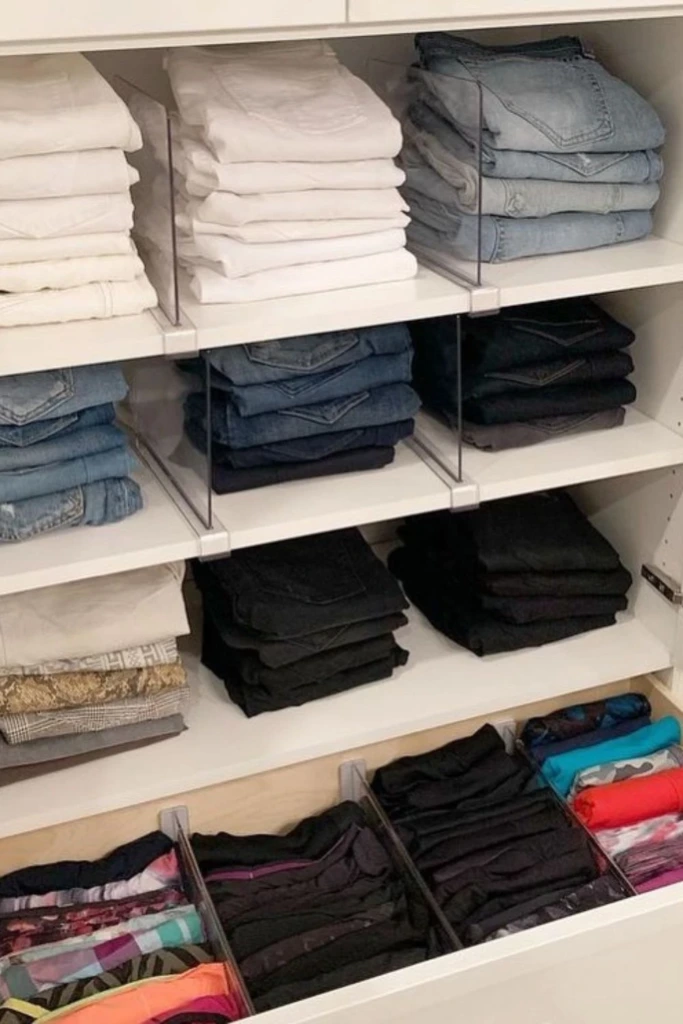
Organizing jeans by color creates a wardrobe that is easy to navigate and visually appealing. Instead of searching through a mixed collection, you can go directly to the shade you want.
Start with broad categories such as black, dark blue, medium blue, light blue, white, and colored denim. Within each group, arrange jeans by fit or frequency of use if you have enough pairs to justify additional organization.
Color sections work with almost any storage method, including drawers, shelves, hanging rods, and cabinet racks. You do not need to purchase new organizers to try this approach; simply rearranging your existing collection may be enough.
For the best results, maintain the same color sequence whenever you put laundry away. Consistent placement helps everyone in the household return jeans to the correct section.
11. Hanging Organizers
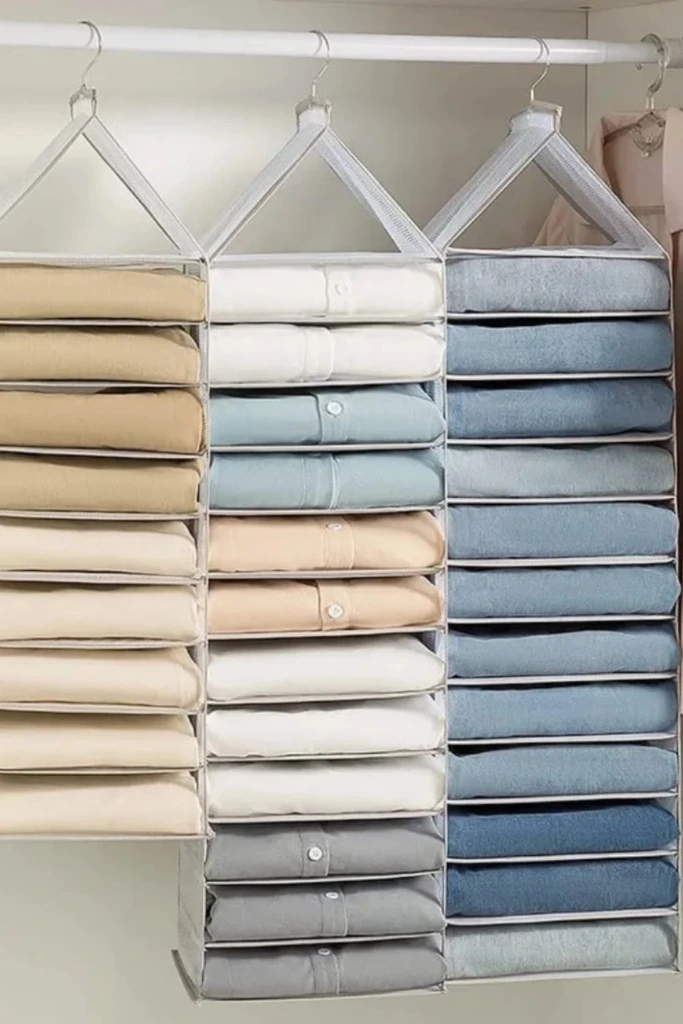
Hanging organizers provide extra storage without requiring a new cabinet or a larger wardrobe. These fabric or compartment-style units usually attach to a closet rod and create several shelves or pockets for folded garments.
Choose a model with compartments wide and deep enough to accommodate folded denim. Reinforced shelves are worth considering because jeans can be heavier than many other clothing items. Avoid overloading the organizer, as excessive weight may cause sagging or strain the attachment point.
You can dedicate each compartment to a different style or color, or use separate shelves for everyday jeans and occasional-wear pairs. Hanging organizers are especially helpful in rental homes, compact bedrooms, and wardrobes with limited built-in shelving.
12. Ladder Rack

A ladder rack offers an attractive alternative to conventional closet storage. A freestanding or wall-supported ladder-style rack can hold suitable hangers, while some designs include horizontal bars for folded clothing.
This idea works well when you want your denim collection to remain visible and easy to reach. It can also serve as a decorative feature in a bedroom, dressing area, or carefully organized walk-in closet.
Select a rack with stable construction and sufficient load capacity for multiple pairs of jeans. If the design leans against a wall, position it securely and follow the manufacturer's installation guidance. Keep the area around the base clear to reduce the risk of tripping.
Because open storage exposes garments to dust and sunlight, avoid placing your jeans where they receive strong direct sunlight for extended periods. A ladder rack is best suited to a small, frequently used selection rather than an entire large collection.
13. Pant Hooks
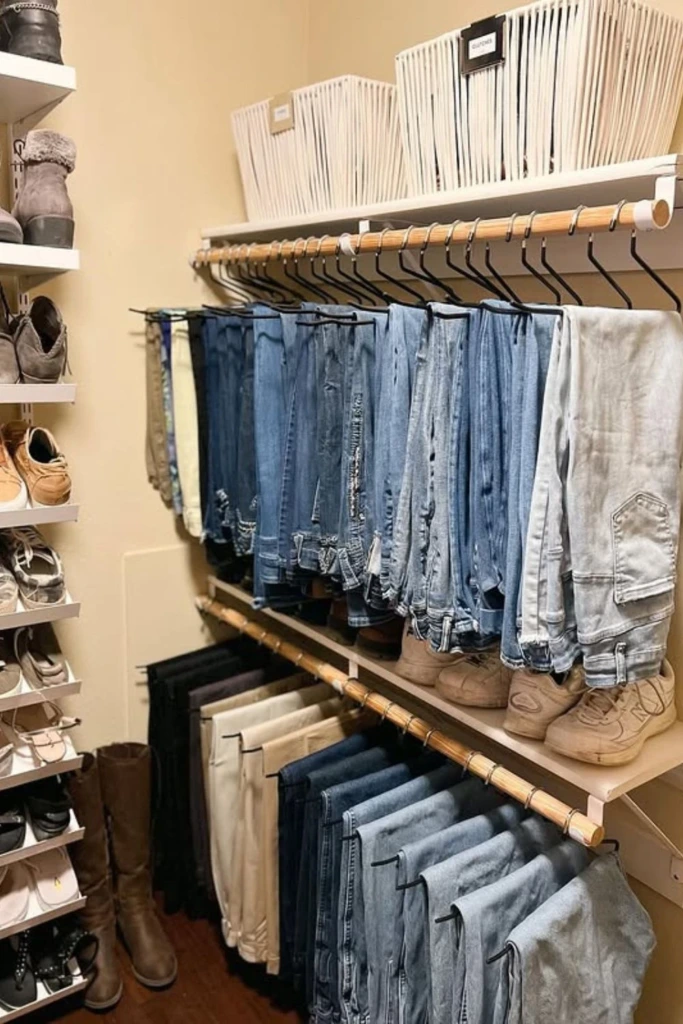
Pant hooks provide a compact way to hang jeans individually. They may be mounted on a wall, installed inside a wardrobe, or attached to a dedicated hanging rail.
Choose hooks that are strong enough to hold denim and have smooth surfaces that will not catch the fabric. If you use wall-mounted hooks, secure them to suitable wall anchors or studs according to the manufacturer's instructions.
You can hang jeans from the waistband using a purpose-designed hook or fold them over a broad, smooth support. Position frequently worn pairs at a convenient height and reserve higher hooks for garments used less often.
This method is particularly useful for creating a small daily-wear station near a dressing area. Just avoid hanging too many pairs on a single hook, as the weight can make the arrangement awkward and difficult to maintain.
14. Basket Storage
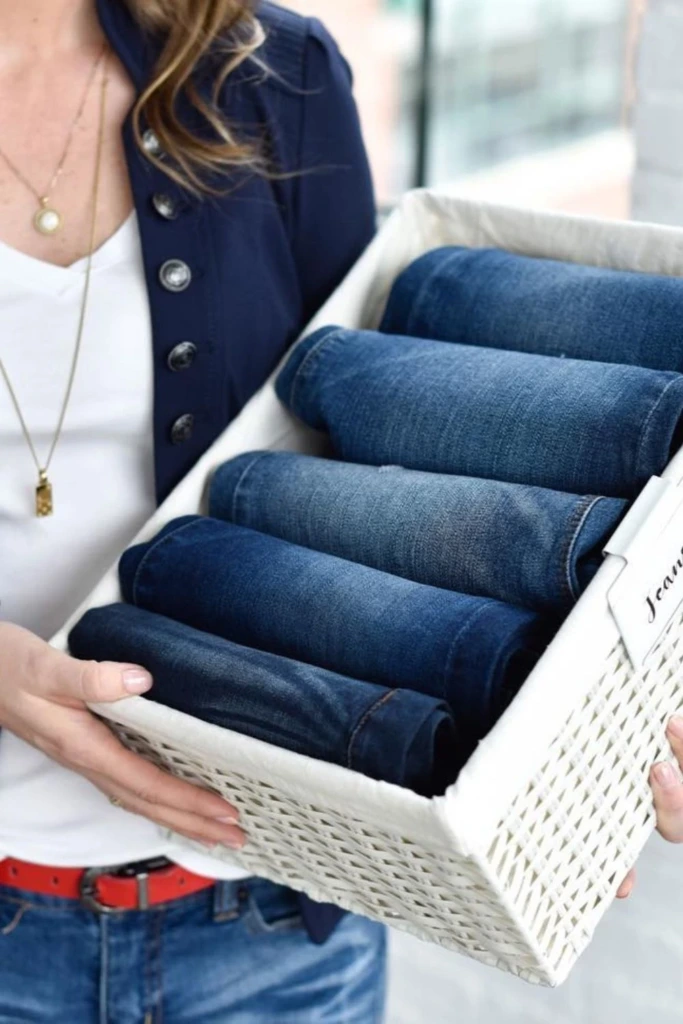
Baskets offer flexible storage for folded jeans and can make open shelving look less cluttered. They are available in woven natural materials, fabric, plastic, and wire, so you can choose a style that suits your room.
Fold your jeans into similar-sized rectangles before placing them inside the basket. For easy access, stand the pairs vertically when the basket is deep enough. In shallower baskets, small horizontal stacks may work better.
Use separate baskets for different categories, such as work jeans, casual denim, and seasonal items. Labels on the front can help you identify the contents without searching through every container.
Choose a basket that is sturdy enough to support the weight of denim without bowing. If you prefer breathable storage, consider an open-weave design. For wardrobes where dust is a concern, a lidded basket can provide additional protection.
15. Wire Drawers
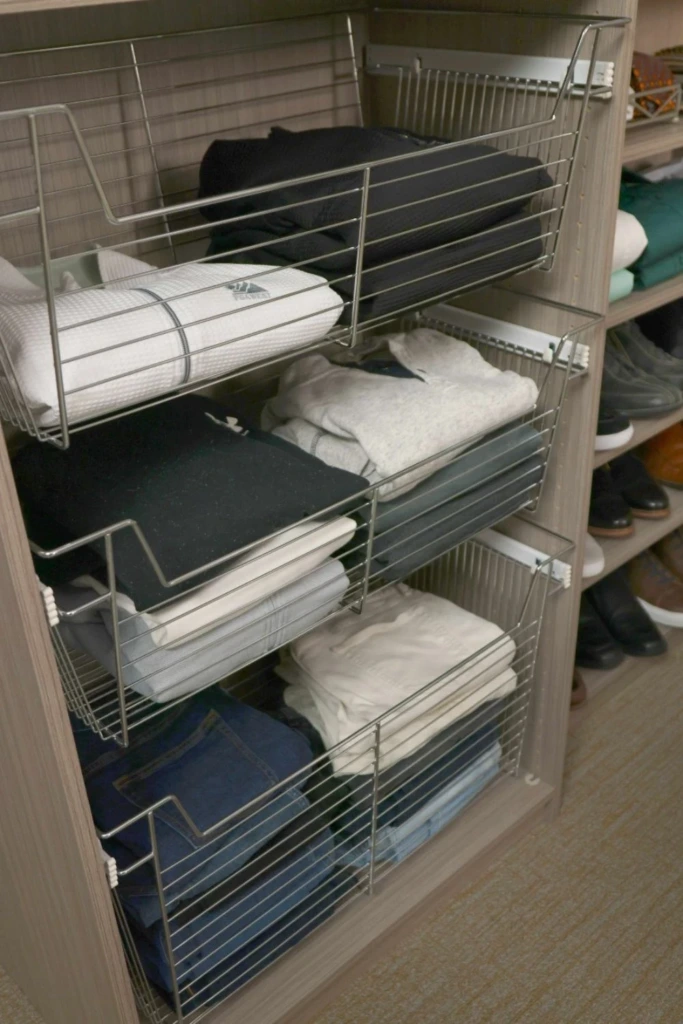
Wire drawers are useful for closets that need better airflow and flexible organization. They often form part of modular wardrobe systems and can slide out, allowing you to reach clothing stored toward the back.
Fold your jeans consistently and arrange them in small groups inside each drawer. If the wire gaps are wide enough for folded edges to slip through, use a suitable drawer liner or place the jeans inside fabric organizers.
Separate the contents by style or color to make selection easier. If the drawers are deep, vertical file folding can help you see each pair without moving the entire collection.
Before adding heavy denim, confirm the drawer's weight capacity and ensure that its runners are properly installed. Avoid overfilling the drawer, as excess weight may affect smooth operation and make clothing harder to retrieve.
16. Drawer Stacks
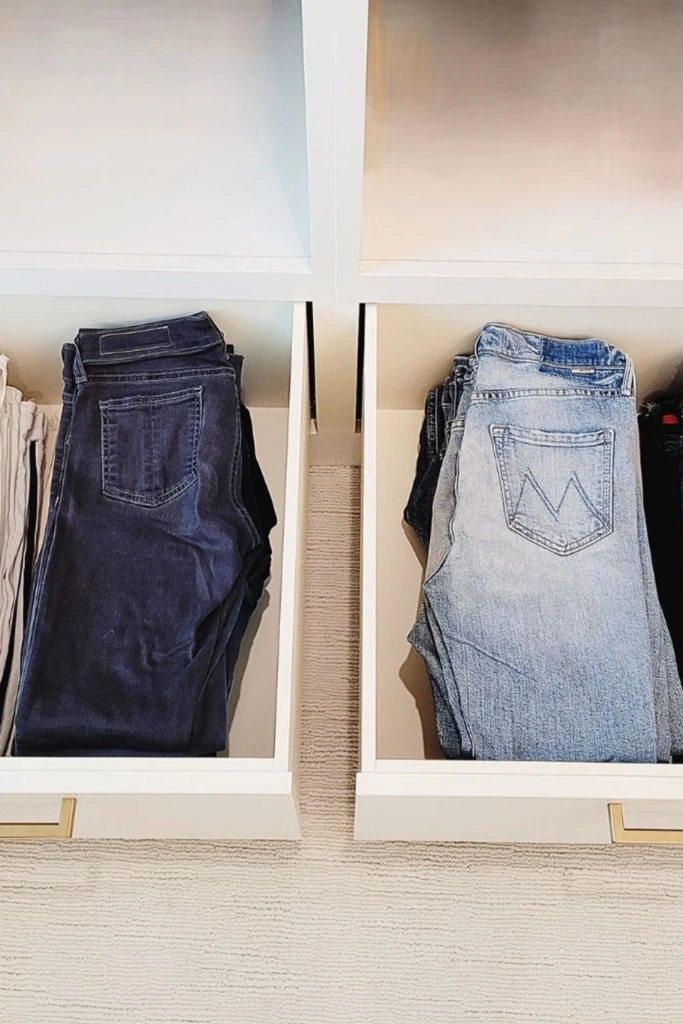
Drawer stacks are a practical option for people who prefer keeping jeans out of sight. A dedicated chest of drawers, modular storage unit, or built-in wardrobe drawer can hold a substantial collection without using hanging space.
Arrange the jeans by category and avoid making piles so tall that the drawer becomes difficult to open or close. If you prefer traditional folding, place the most frequently worn pairs near the top and less-used options below.
For a larger collection, assign one drawer to everyday denim and another to special styles or seasonal clothing. Drawer labels can be useful when several compartments look alike.
If you are buying a new storage unit, measure both the exterior dimensions and the usable interior space. Deep drawers may hold more clothing, but shallow drawers can be easier to organize when paired with dividers or vertical folding.
17. Rod Clips
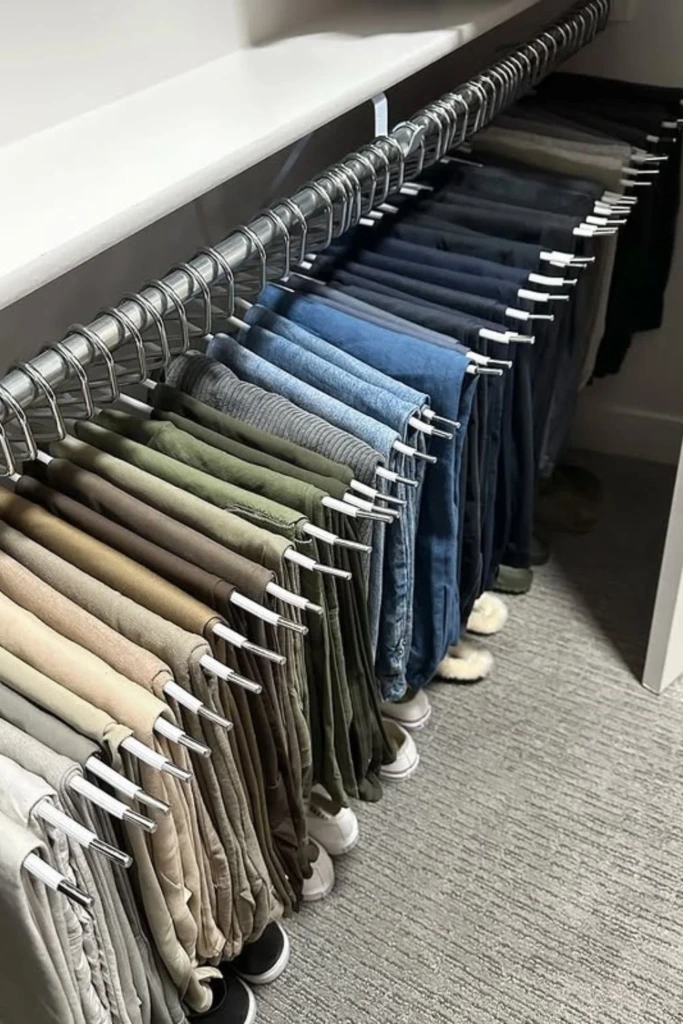
Rod clips are accessories that attach to a closet rod or a compatible hanging system and hold garments using clips or connected supports. They can be useful when you want to hang several pairs of jeans without dedicating a separate full-width hanger to each one.
Choose clips that grip securely and have smooth contact surfaces. Distribute the jeans evenly across the available supports so the load does not become concentrated on one side.
Rod clips can be particularly helpful in narrow wardrobes or closets shared by several people. Before purchasing them, check that the attachment mechanism fits your existing rod and that the rod can bear the added weight.
Leave enough clearance between hanging garments to remove them comfortably. An overly crowded arrangement may save space initially but can make daily dressing less convenient.
18. Wall Hooks
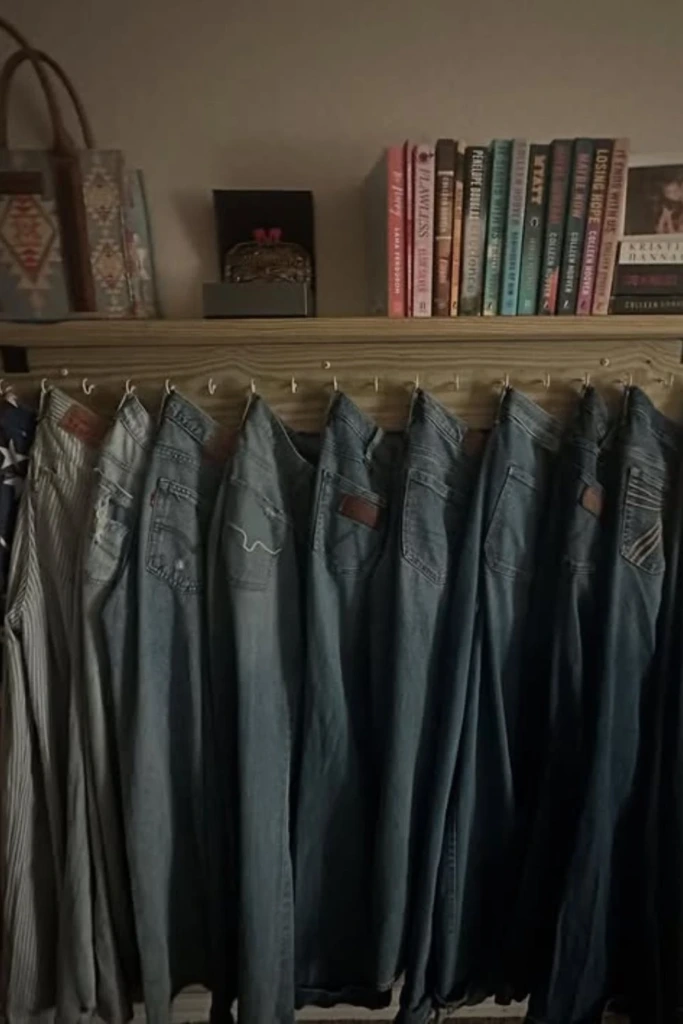
Wall hooks turn unused wall space into a simple clothing storage area. Install a row of hooks in a bedroom, dressing corner, or inside a closet where they will not interfere with doors or walkways.
Use sturdy hooks with smooth edges and secure mounting hardware. Depending on their design, they can hold jeans folded over the hook or attached by the waistband with an appropriate clip.
This method works best for a small rotation of frequently worn jeans rather than a large collection. It can also be handy for setting aside a pair you plan to wear again before laundry day, provided the garment is clean and completely dry.
Keep wall hooks away from damp areas and strong direct sunlight. For a neat appearance, arrange them at consistent intervals and hang similar garments together.
19. Color Hanging
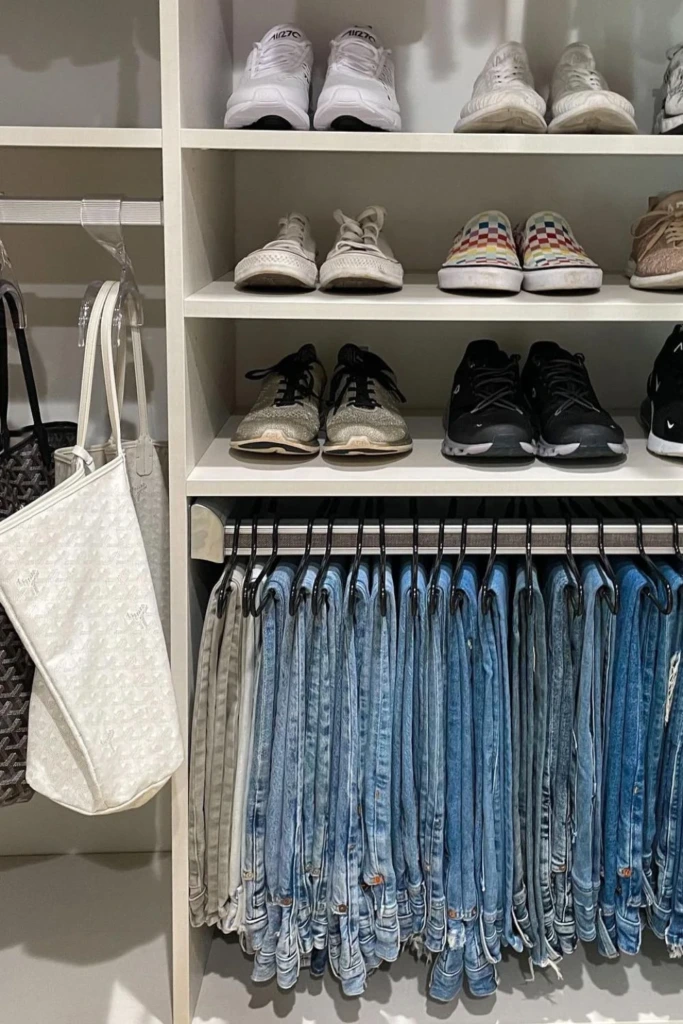
Color hanging combines the convenience of suspended storage with a clear visual system. Instead of arranging jeans randomly on the rod, group them by shade so the collection is easier to scan.
Begin with dark denim, then progress through medium and light blues, followed by black, white, and other colors. You can reverse the order if that makes more sense for your wardrobe; consistency is what matters most.
Use hangers that suit the weight of your jeans and leave a little space between pairs. If you also organize by fit, arrange styles within each color group so you can quickly compare straight-leg, slim, relaxed, and wide-leg options.
This technique is particularly useful for people who plan outfits around color or own several similar pairs. Once the system is established, returning clean jeans to their correct positions becomes a simple habit.
20. Cabinet Rack
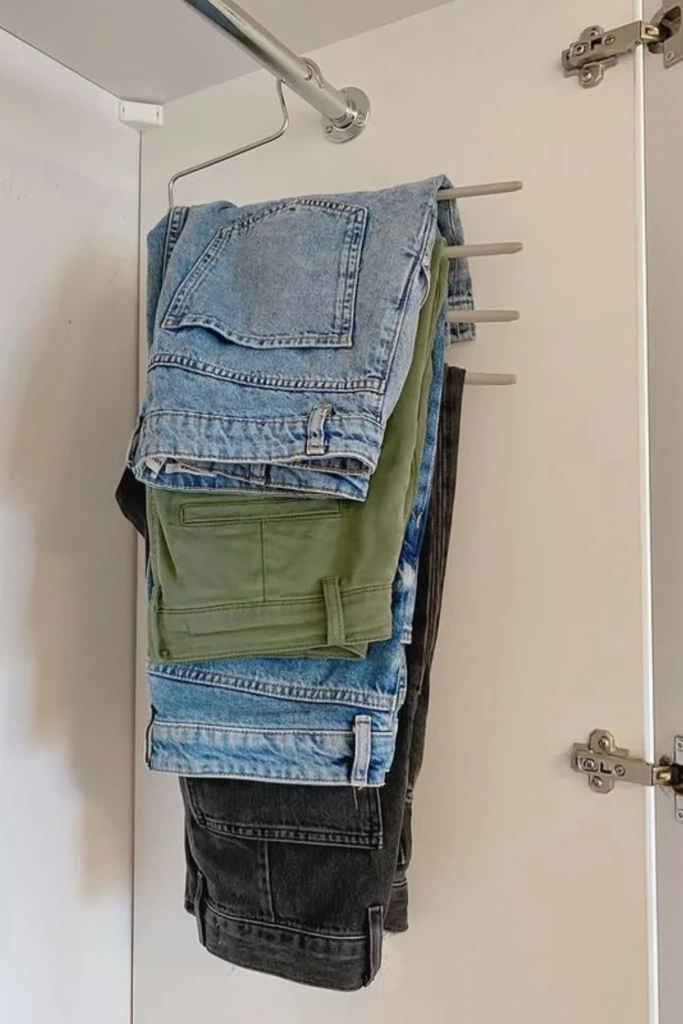
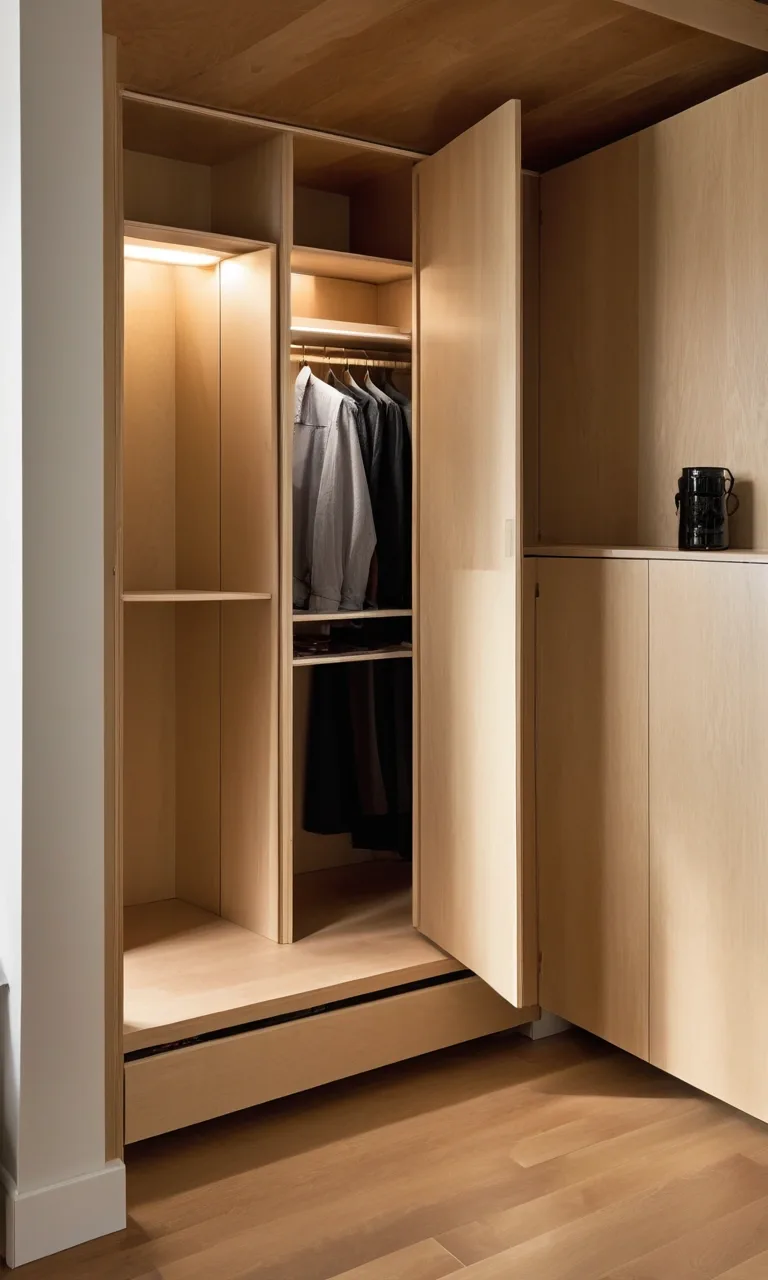
A cabinet rack creates a dedicated storage zone inside a wardrobe or freestanding cabinet. Depending on the cabinet's layout, you can use a hanging rail, pull-out trouser rack, adjustable shelf, or a combination of these features.
Hanging racks are ideal for keeping individual pairs separate, while shelves accommodate folded denim. A pull-out rack can be especially convenient when the cabinet is deep and garments at the back would otherwise be difficult to reach.
Measure the cabinet before choosing an organizer. Check door clearance, available depth, mounting requirements, and weight capacity to ensure the rack fits properly.
For a more efficient system, keep everyday jeans at an accessible height and store occasional-use pairs higher or lower. If the cabinet also holds shirts and jackets, designate a specific section for denim so everything remains easy to find.
21. Storage Bins
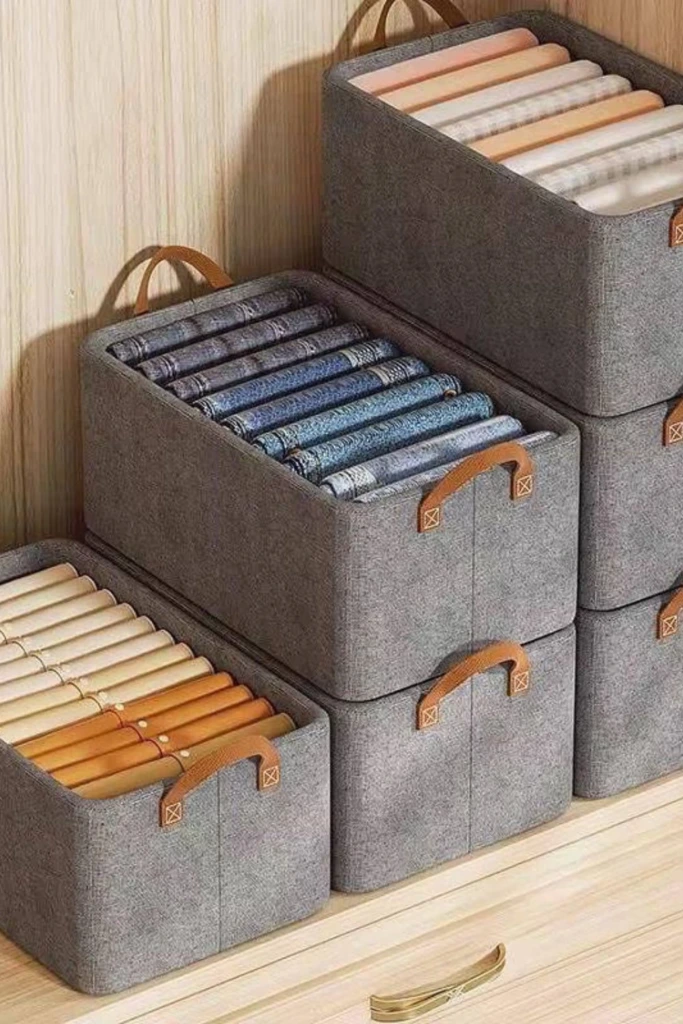
Storage bins are ideal for keeping jeans organized when closet shelves and drawers are already full. They can be placed under a bed, on a sturdy wardrobe shelf, or inside a larger storage unit.
Fold the jeans neatly before placing them inside, and avoid compressing the contents more than necessary. Clear bins allow you to identify the contents quickly, while opaque bins can create a cleaner appearance on open shelves.
For seasonal storage, choose containers with secure lids and store them in a cool, dry place away from direct sunlight. Make sure every pair is clean and completely dry before packing it away. Moisture trapped inside a closed container can lead to musty odors and other fabric problems.
Add a simple label indicating the contents, such as dark denim, summer jeans, or rarely worn styles. If you stack several bins, place heavier containers at the bottom and avoid exceeding the manufacturer's stacking recommendations.
22. Uniform Hangers
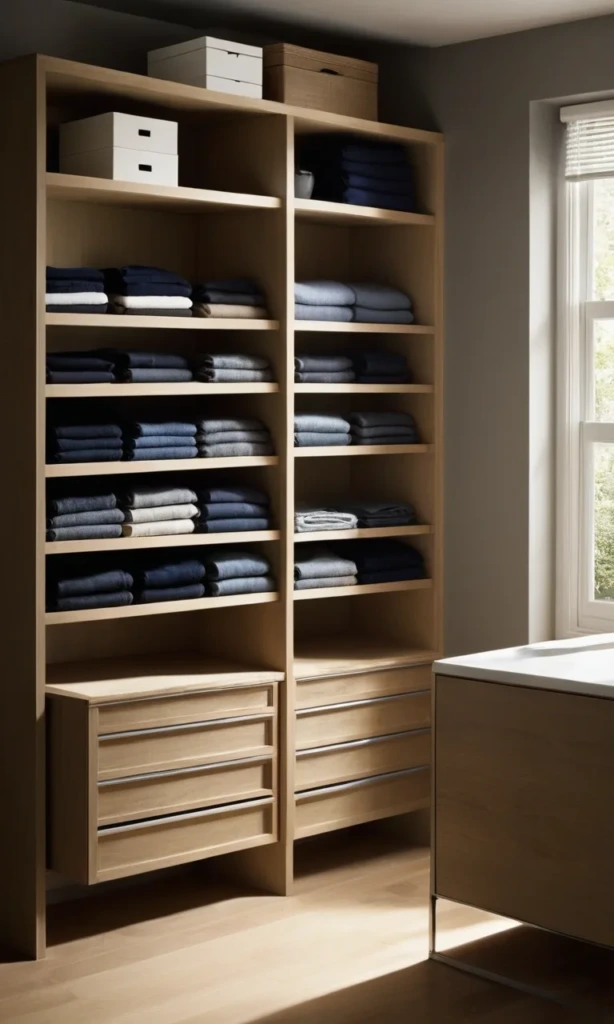
Uniform hangers create a consistent look throughout your wardrobe and make the hanging space feel more organized. Using hangers of similar size and style also reduces unnecessary gaps and visual clutter.
For jeans, choose sturdy trouser hangers, clip hangers, or broad hangers designed to accommodate heavier clothing. Thin hangers intended for lightweight shirts may bend or become unstable under the weight of thick denim.
If you prefer folding jeans over a horizontal hanger bar, make sure the bar is smooth and wide enough to reduce sharp creases. For clip styles, padded or coated grips can help minimize marks.
Matching hangers work especially well when combined with color sorting. The result is a wardrobe where garments are easy to compare, retrieve, and return to their proper places.
FAQs
Choosing the right jeans storage method often depends on your available space, the size of your collection, and how frequently you wear denim. A few simple adjustments can make a noticeable difference without requiring a complete wardrobe makeover.
Folded storage is generally convenient for drawers, shelves, baskets, and bins, while hanging works well when you have sufficient rod space. Vertical folding helps you see more pairs at once, and dividers prevent garments from becoming mixed together.
For long-term storage, clean and dry your jeans first. Keep them in a dry environment, avoid unnecessary compression, and check stored clothing occasionally for signs of moisture or musty odors. The aim is to make your collection easy to access while keeping the fabric in good condition.
Can hanging jeans damage their shape over time?
Hanging jeans generally does not damage their shape when you use suitable hangers and store them correctly. Denim is a durable fabric, and most everyday jeans can be hung without difficulty.
Problems are more likely when the hanger is too narrow, the clips grip too tightly, or the garment hangs unevenly. These conditions may leave temporary marks or place unnecessary stress on particular areas of the fabric. Very heavy denim can also cause weaker hangers to bend.
To reduce these risks, use sturdy trouser hangers, distribute the weight evenly, and avoid squeezing multiple pairs onto one hanger. If you are concerned about clip marks, choose padded clips or fold the jeans over a smooth, broad support.
Folding is an equally suitable option, particularly for stretch denim or jeans that you prefer to keep in drawers. There is no universal requirement to hang all jeans; select the method that best suits your closet and the garment's construction.
How many pairs of jeans should be stored in one stack?
A stack of around four to six pairs is a useful starting point for folded jeans. This height is often manageable while making it easier to remove individual garments without disturbing the rest of the pile.
However, the ideal number depends on the thickness of your denim, the depth of the shelf, and how consistently the jeans are folded. Heavy rigid denim takes up more room than lightweight stretch jeans, so a smaller stack may be more stable.
If you notice the pile leaning, slipping, or becoming difficult to maintain, divide it into two smaller stacks. Shelf dividers can provide extra support, while file folding can help you store individual pairs vertically instead of creating a tall pile.
For frequently worn jeans, prioritize accessibility over fitting as many pairs as possible into one stack. A well-organized shelf should let you remove any pair easily and return it without causing the rest to fall over.
Final Thoughts
Keeping jeans organized does not require an expensive wardrobe or a complicated storage system. Simple solutions such as file folding, drawer dividers, shelf stacks, clip hangers, and storage bins can help you make the most of your available space.
Start by choosing a method that suits your collection and daily routine. Group similar jeans together, avoid overcrowding, and keep stored denim clean and dry. With a little consistency, you can maintain a tidy wardrobe where every pair is easy to find and ready to wear.