19 Tomato Cages DIY Ideas for 2025
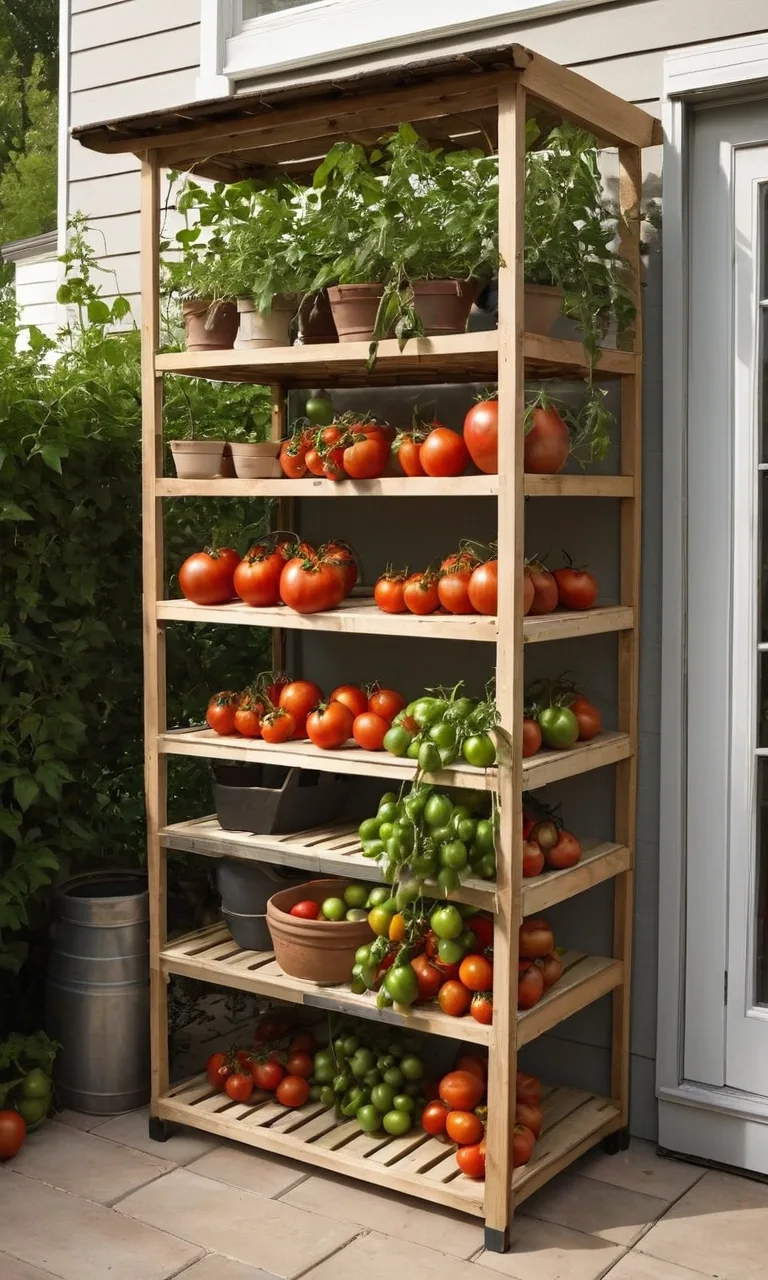
Tomato plants often begin as small seedlings but can develop into sprawling vines loaded with fruit. Without dependable support, branches may bend under the weight, tomatoes can touch damp soil, and harvesting becomes more difficult. A well-designed cage or trellis helps keep plants upright, improves access, and makes better use of garden space.
Building your own tomato supports gives you the freedom to choose the right height, width, materials, and shape for your growing area. You can repurpose supplies you already own, construct a sturdy frame for large varieties, or create an attractive support that complements your patio or raised beds.
Whether you grow tomatoes in containers, a backyard vegetable patch, or a spacious garden, these DIY tomato cage ideas offer practical ways to support healthy plants without spending unnecessarily.
1. Upcycled & Budget Builds

You don't need expensive gardening equipment to create effective tomato supports. Leftover lumber, reclaimed wire, sturdy branches, and other reusable materials can be transformed into useful structures with a little planning.
Before starting, inspect recycled materials for rust, splinters, rot, and sharp edges. Choose untreated wood for direct contact with edible garden plants, and make sure every structure can withstand wind and the weight of mature vines.
Budget-friendly designs are especially useful when growing several tomato plants at once. Reusing materials reduces waste, keeps costs manageable, and lets you customize each support to fit your garden's layout. Even a simple wooden frame or string trellis can provide reliable support when properly anchored.
2. Slanted Frame
A slanted wooden frame offers a distinctive alternative to traditional upright tomato cages. Its angled sides provide several places to guide stems and attach soft plant ties, making it useful for gardeners who want an accessible, organized growing space.
Build the structure with weather-resistant lumber and secure the joints so the frame remains stable throughout the season. The open sides make it easier to inspect foliage, remove unwanted shoots, and pick ripe tomatoes without reaching through dense wire.
This design can also work in a large container or galvanized planting tub, provided the frame is securely anchored and the container has adequate drainage. Allow enough room for the mature plant rather than designing the support around the size of a young seedling.
3. Wire Towers
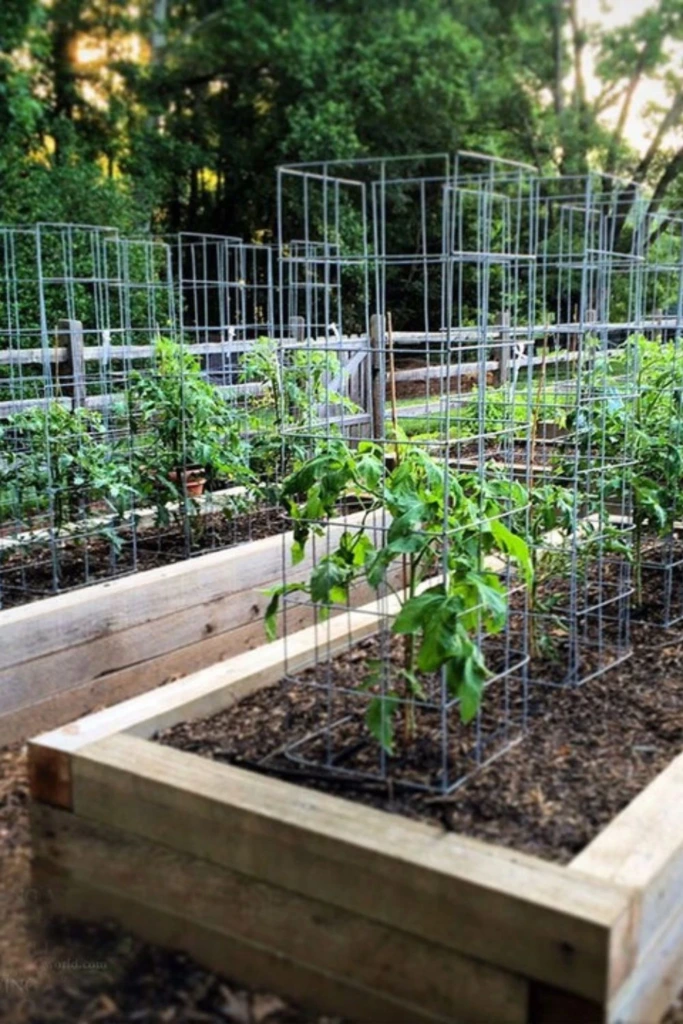
Wire towers are a practical choice for gardeners who need vertical support without occupying much ground space. Made from rigid garden mesh or appropriately coated wire, these tall structures give tomato stems room to grow while keeping fruit away from the soil.
They are particularly useful in raised beds and narrow planting rows. The open framework allows sunlight and air to reach the foliage, while multiple attachment points make it easier to secure heavy branches as the plant develops.
Choose wire with openings large enough to accommodate your hands when harvesting. Anchor the tower firmly in the ground, and avoid exposed cut ends that could injure you while working. Depending on the material and construction, a sturdy tower can be reused for many growing seasons.
4. Grid Trellis
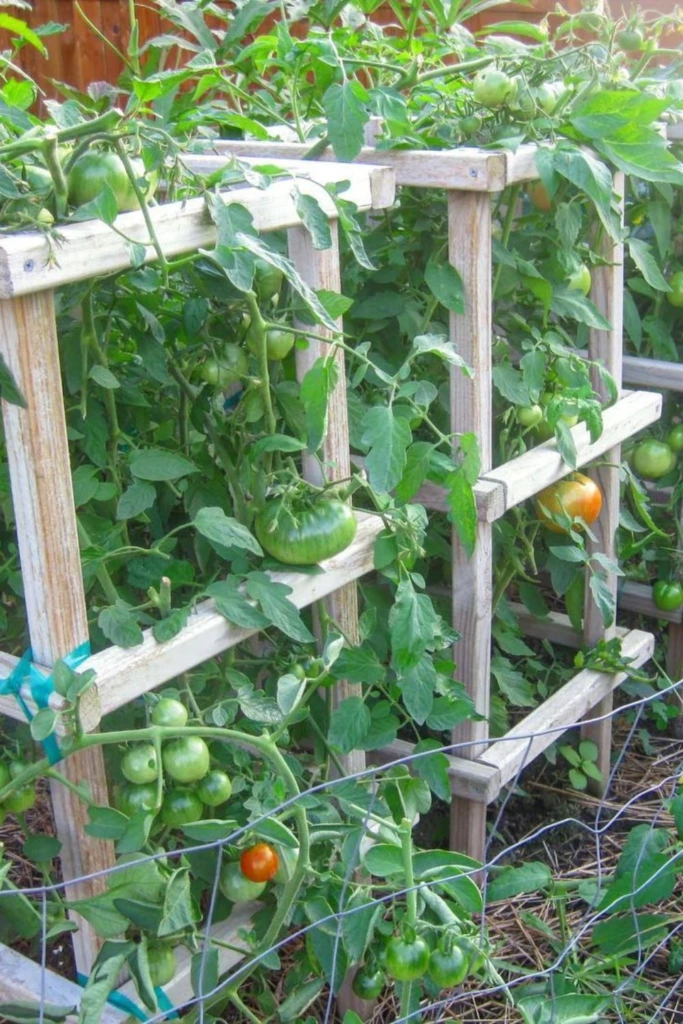
A wooden grid trellis offers an organized way to manage tomato vines that tend to spread in different directions. Its intersecting horizontal and vertical members create convenient places to attach stems with soft garden ties.
This design is especially useful when you want to keep plants separated and make routine maintenance easier. By guiding the branches through the grid, you can encourage upward growth and prevent fruit-bearing stems from dragging along the ground.
Use durable, untreated lumber and reinforce the corners to prevent the structure from twisting. Secure the lower section to sturdy stakes or posts, particularly in exposed gardens where wind could push against the foliage.
A grid trellis is also easy to customize. You can build a narrow version for a single plant or a longer panel for several tomatoes growing in a row.
5. Pyramid Towers
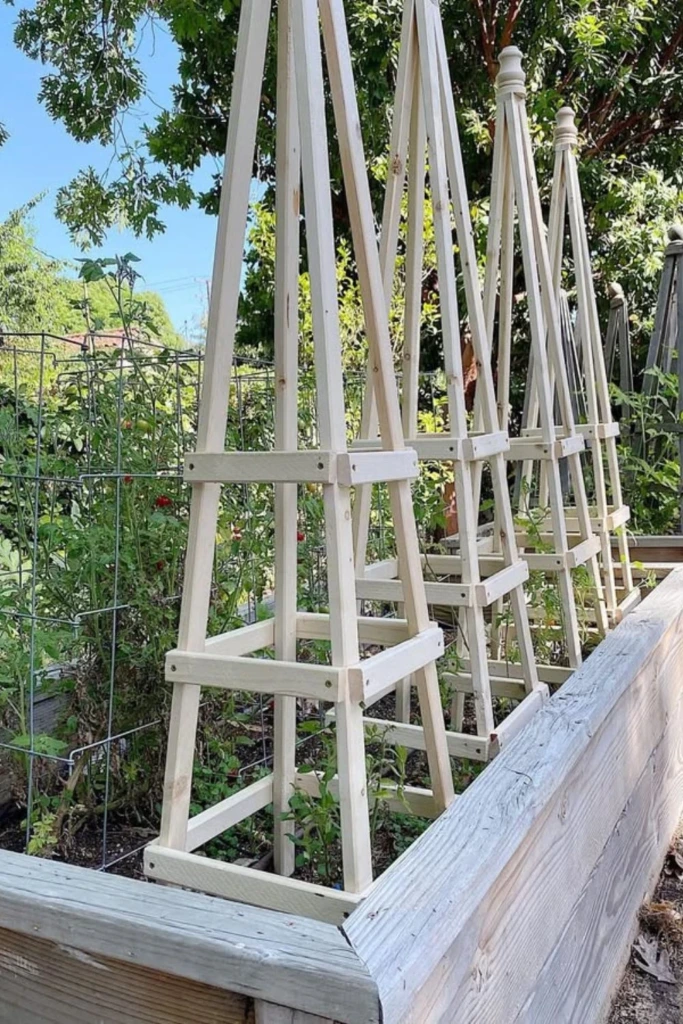
Pyramid towers combine a decorative shape with useful vertical support. The broad base provides room for the plant's lower branches, while the narrower upper section creates a defined structure for guiding vines upward.
Construct the tower from wooden strips, bamboo poles, or other strong garden materials. Connect the pieces securely at the top and add horizontal crosspieces where necessary to create additional attachment points.
This design works well in raised beds and ornamental vegetable gardens because it adds height without requiring a large footprint. Leave enough space between neighboring towers to prevent mature plants from becoming crowded.
For a natural appearance, retain the wood's original finish. Alternatively, use an exterior coating suitable for garden structures. Keep the frame stable and tall enough to accommodate the expected growth of your tomato variety.
6. Compact Crate
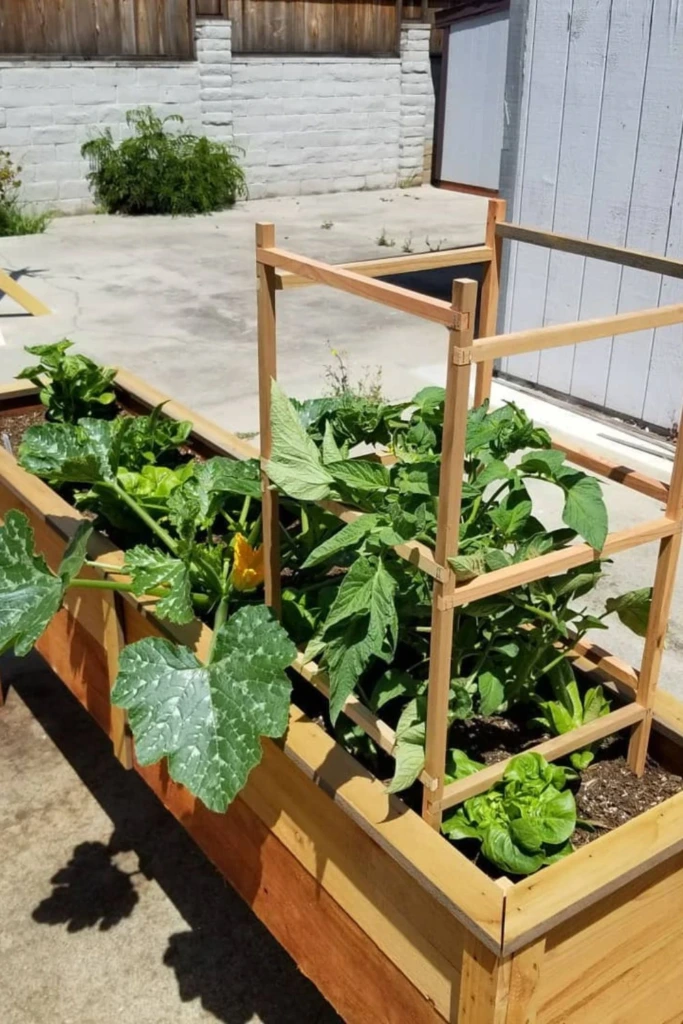
A compact wooden crate-style support is a space-conscious option for patios, balconies, and small raised beds. Its square frame can be built around a container or positioned over a planting area, with slats providing places to guide the stems.
The open sides allow you to reach the plant for watering, pruning, and harvesting. Unlike a solid wooden box, a properly spaced slat design also leaves room for light and air to reach the foliage.
Use rot-resistant or untreated lumber and make sure the support does not block drainage from the container. Attach the slats securely so they can handle the increasing weight of branches and fruit.
This design is best suited to compact tomato varieties or plants whose growth can be managed with regular tying. For particularly vigorous indeterminate tomatoes, build a taller, stronger version instead of relying on a small decorative crate.
7. Popsicle Cage
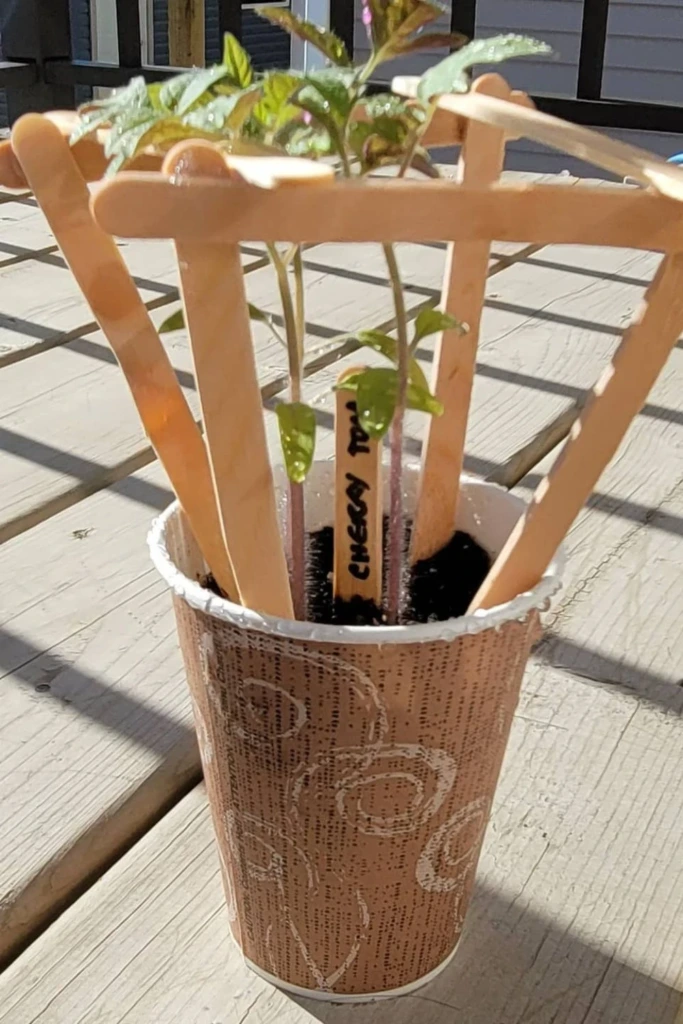
A popsicle-stick cage is a small-scale project that can introduce children and beginners to the idea of supporting growing plants. Lightweight wooden sticks can be arranged into a square or triangular framework and joined with a suitable adhesive or small fasteners.
This miniature structure is intended for seedlings, young plants, or decorative gardening projects rather than mature tomato vines. Full-sized tomato plants become too heavy for a frame made from ordinary craft sticks.
For a small pot, arrange several upright sticks around the plant and connect them with horizontal pieces. Keep the framework loose enough to avoid rubbing against the stem, and ensure that any adhesive or finish is appropriate for the intended use.
The project works well on sunny windowsills, balconies, or in classroom gardening activities. As the tomato grows, replace the miniature support with a more durable cage or trellis.
8. Cone Cage
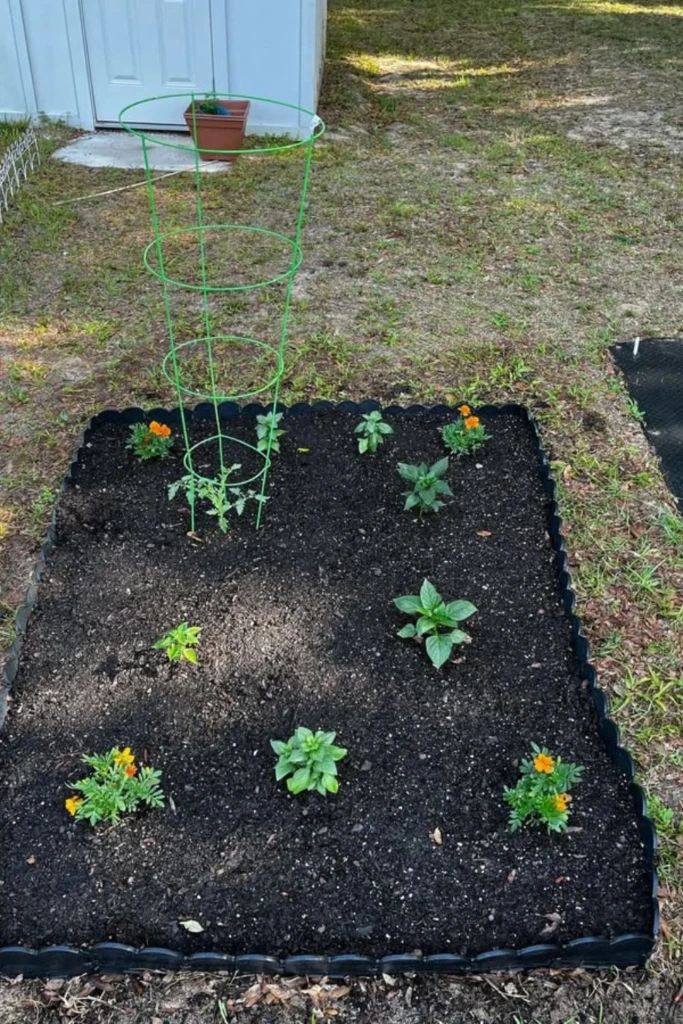
A cone-shaped tomato cage provides straightforward support with a wide base and a narrower top. This shape gives the plant room to spread near the soil while directing its stems toward the upper part of the structure.
You can make one using suitable garden wire or repurpose an existing metal cage. If you build your own, ensure that the wire is strong enough to hold mature branches and that every exposed end is covered or bent safely out of the way.
A colorful exterior finish can make the support easier to spot among dense foliage, although any coating should be suitable for outdoor use and kept away from edible plant surfaces when required by the product instructions.
Cone cages are convenient for smaller garden beds and many determinate tomato varieties. Taller, more vigorous plants may require a larger cage or additional stakes to prevent the structure from leaning under the weight of the harvest.
9. PVC Grid
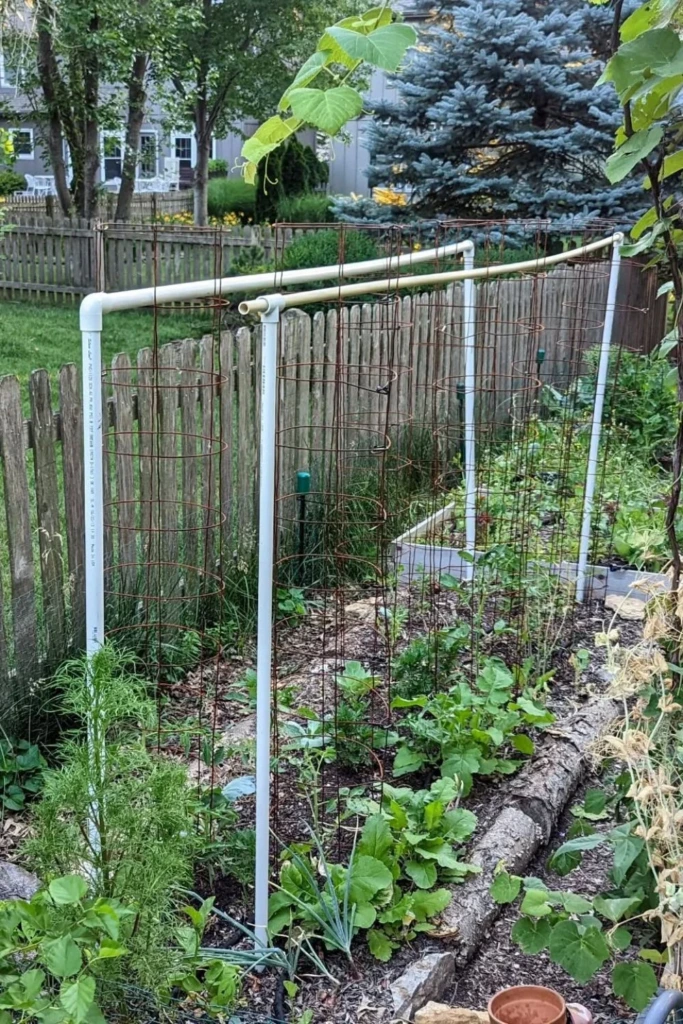
A PVC grid combines lightweight plastic piping with a mesh panel to create a reusable tomato support. The pipes form the outer frame, while the grid gives stems and branches multiple places to attach.
This design can be useful for long planting beds, container gardens, and areas where a wooden structure would be heavier to move. PVC is generally resistant to moisture and rot, but the finished frame still needs appropriate joints and anchoring to withstand wind and plant weight.
Measure the planting area before cutting the pipes, and use fittings designed for the pipe dimensions. Choose mesh that will not sag easily when the plants become heavy.
For sloping gardens, adjust the legs or anchoring points so the frame remains stable. Keep in mind that PVC can become brittle with prolonged outdoor exposure, depending on its formulation and environmental conditions. Inspect the structure regularly and replace damaged parts when necessary.
10. Willow Dome
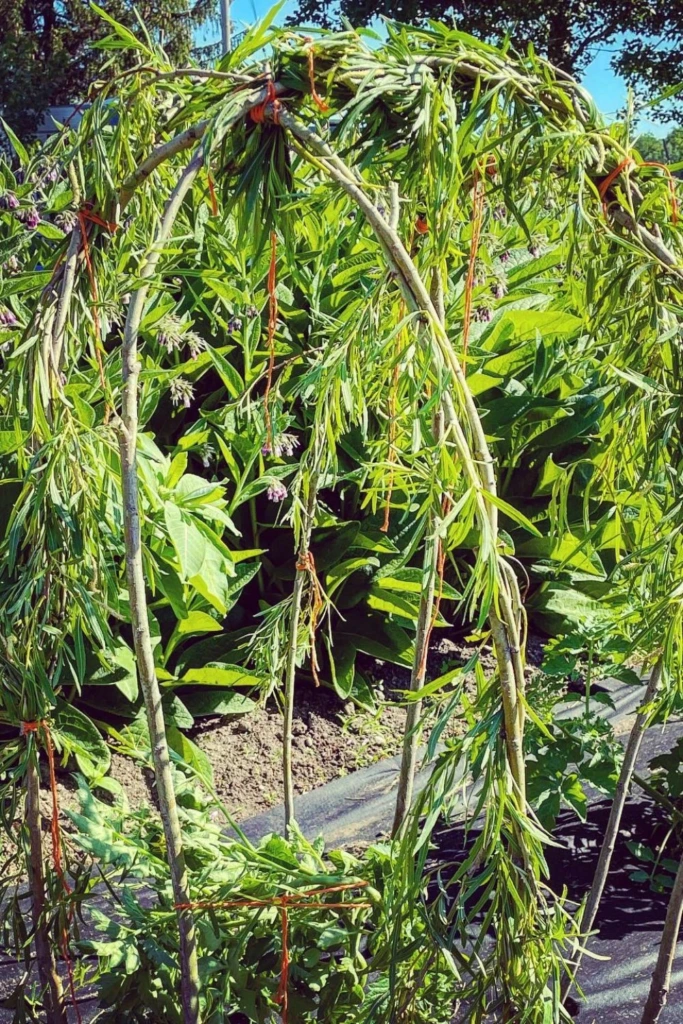
A willow dome creates a natural-looking support from flexible branches woven into an arched framework. Its organic appearance suits cottage gardens, informal vegetable patches, and gardeners who prefer using renewable materials.
To build one, arrange sturdy branches into a rounded or dome-shaped frame, then weave thinner shoots between the main supports. Secure the intersections with garden twine or suitable natural ties to help the structure retain its shape.
The curved framework provides multiple places to guide tomato stems, although the strength of the finished dome depends on the branch thickness, construction, and anchoring. Use sound, flexible material rather than brittle or decaying wood.
Willow can deteriorate when exposed to constant moisture, so check the joints and replace weakened branches when needed. For large tomato varieties, add stronger upright supports to prevent the dome from bending under the weight of mature vines.
11. Heart Frame
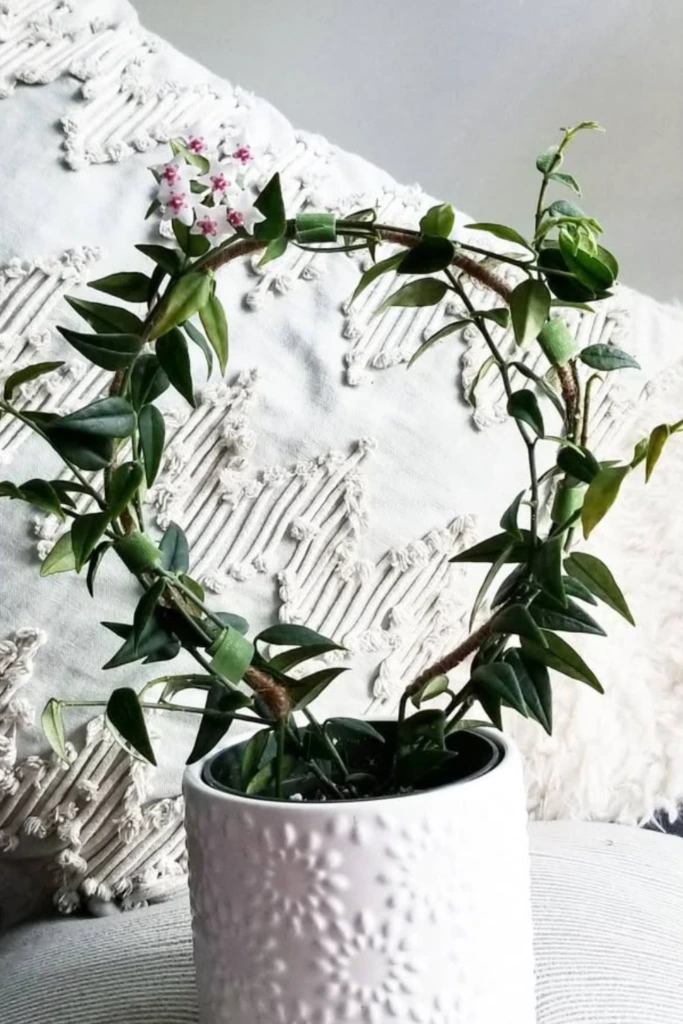
A heart-shaped trellis adds a decorative feature to a small container garden. Formed from curved wire or a pre-shaped metal frame, it provides a simple outline for guiding young stems and displaying compact tomato plants.
This design is best suited to cherry tomatoes with manageable growth or to young plants that have not yet developed heavy branches. A small decorative frame should not be expected to support a large, fruit-laden indeterminate variety.
Position the trellis in the pot before the roots become established, taking care not to damage the root system. Secure the base firmly, and use soft ties to attach the stems without constricting them.
The heart shape works particularly well on sunny balconies, patios, and windowsills where appearance matters alongside function. If the plant grows beyond the frame, add a stronger support rather than allowing the branches to bend under their own weight.
12. Tall Square
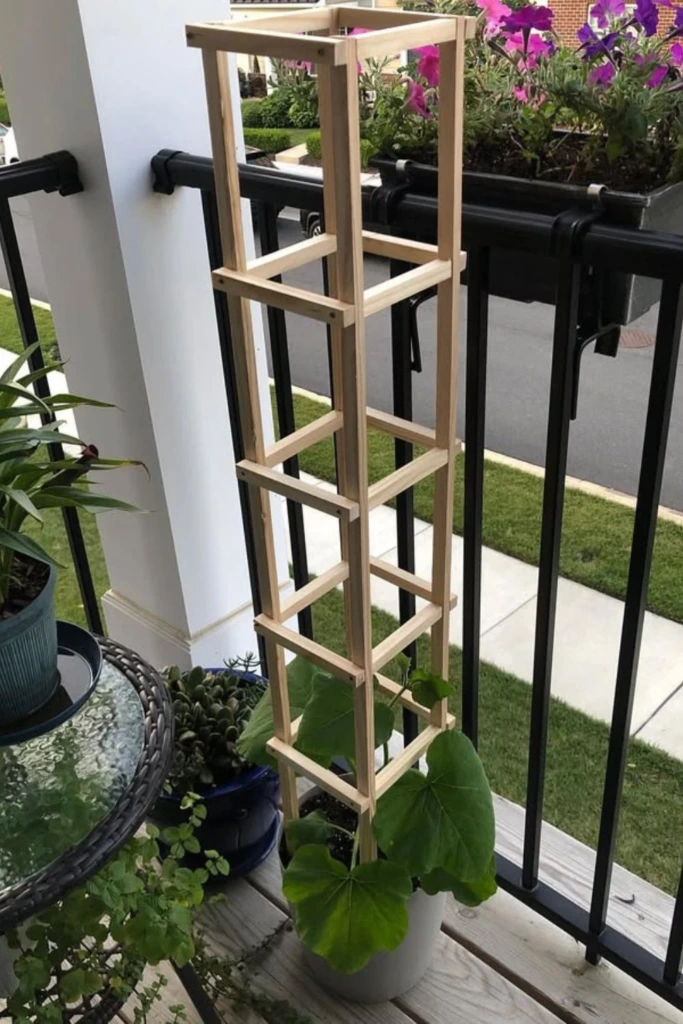
A tall square frame makes efficient use of limited garden space by encouraging tomato plants to grow vertically. Its straight sides provide a neat framework for tying stems at different heights, making it suitable for containers and narrow planting areas.
Build the frame from sturdy wooden strips and reinforce the corners to prevent movement. Horizontal crossbars can be added at regular intervals, giving you more places to secure branches as the plant grows.
Because a tall structure can act like a sail in strong wind, anchor it securely to the container, a stable base, or the ground. The pot itself should be heavy enough to resist tipping and large enough to accommodate the plant's roots.
This design is most effective when paired with regular maintenance. Guide new growth toward the frame, remove damaged ties, and check that fruit-bearing branches are adequately supported throughout the season.
13. Pipe Fortress
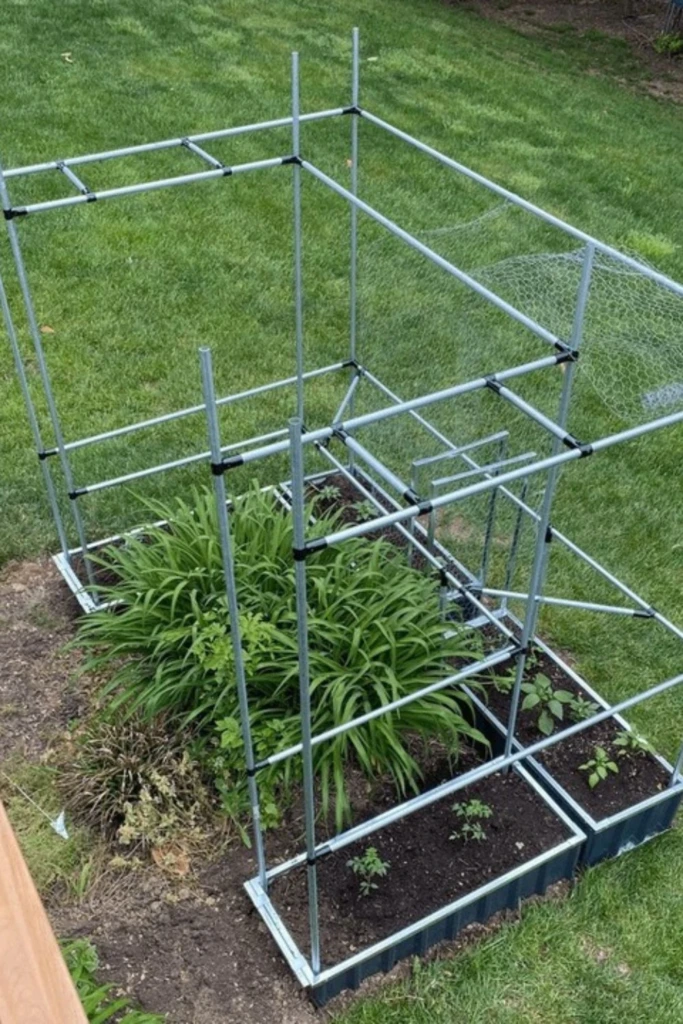
A pipe fortress is a heavy-duty option for gardeners who need a durable framework for vigorous tomato plants. Galvanized metal pipes, compatible connectors, and reinforced joints can create a strong rectangular enclosure around one or more plants.
The rigid frame offers plenty of attachment points for stems, netting, or suitable garden mesh. It can be particularly useful in exposed locations where lightweight cages tend to shift or collapse.
Start by measuring the mature plant's expected size and selecting pipe dimensions that provide adequate strength. Assemble the structure on level ground, check that every connection is secure, and anchor the frame before the plants become large.
Additional mesh may help guide branches or provide a physical barrier, but it should not obstruct airflow or trap excessive heat around the foliage. Inspect the metal for corrosion and make sure no sharp edges are accessible.
Although this design may cost more to construct than a simple wire cage, durable components can make it a worthwhile long-term investment for gardeners who grow tomatoes every year.
14. Twine Grid
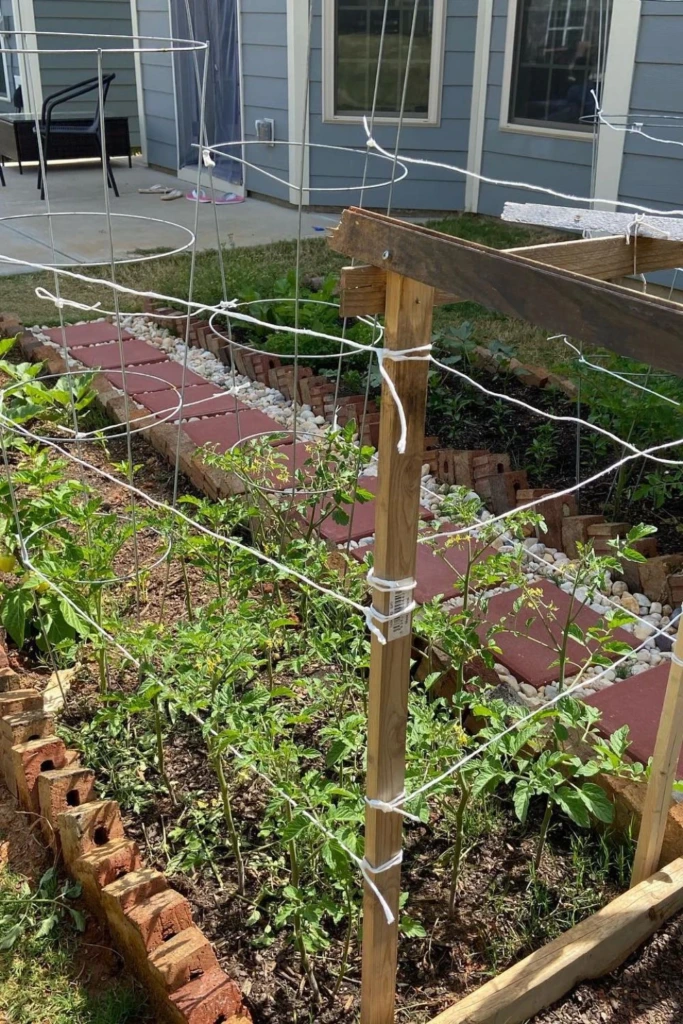
A twine grid is an economical support system made from stakes and tensioned garden string. Rather than surrounding every plant with a separate cage, this method creates horizontal lines that help keep stems upright along a planting row.
Install strong stakes at suitable intervals, then stretch garden twine between them at progressively higher levels as the plants grow. The lines should be firm enough to guide the stems without pulling the stakes inward or damaging the plants.
Choose weather-resistant garden twine that can handle the expected load. Thin household string may weaken when wet or under prolonged tension, especially when supporting heavy branches.
This approach is particularly useful in raised beds and larger vegetable gardens where multiple plants need support. It also makes harvesting easier because the framework leaves much of the foliage accessible.
Check the tension regularly and add new lines before the stems begin to lean. For especially heavy plants, combine the grid with individual ties or additional upright supports.
15. Cage Tunnel
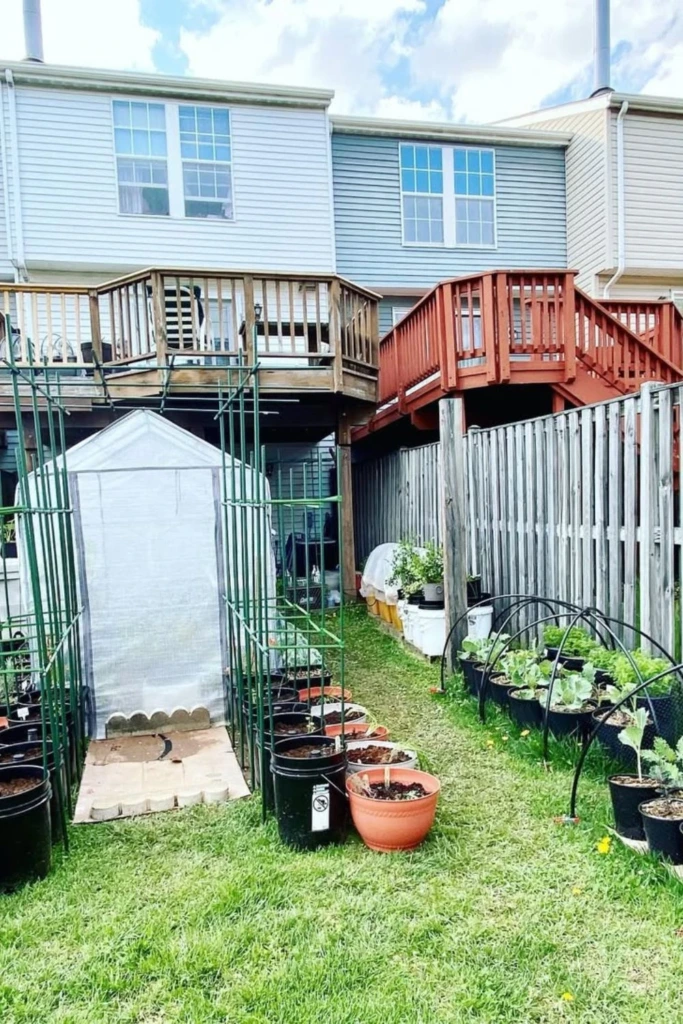
A cage tunnel uses connected metal frames to create a tall, tunnel-like growing structure. It can support plants along two sides while leaving a central passage for access, depending on its dimensions and layout.
The design is best suited to larger gardens where there is enough room for a walkway between planting rows. Position the plants so that mature foliage will not completely close the passage or block access to the fruit.
Use strong wire panels or metal mesh attached to a rigid framework, and secure the structure deeply enough to resist wind. Avoid relying on lightweight connectors if the tunnel will carry the weight of several mature tomato plants.
The open framework allows gardeners to reach the plants from different directions, although dense growth may eventually make pruning necessary to maintain access and airflow.
For a small backyard, a shorter tunnel can provide the same general concept without taking over the garden. Measure the available area first and leave enough room to move comfortably while watering and harvesting.
16. String Towers
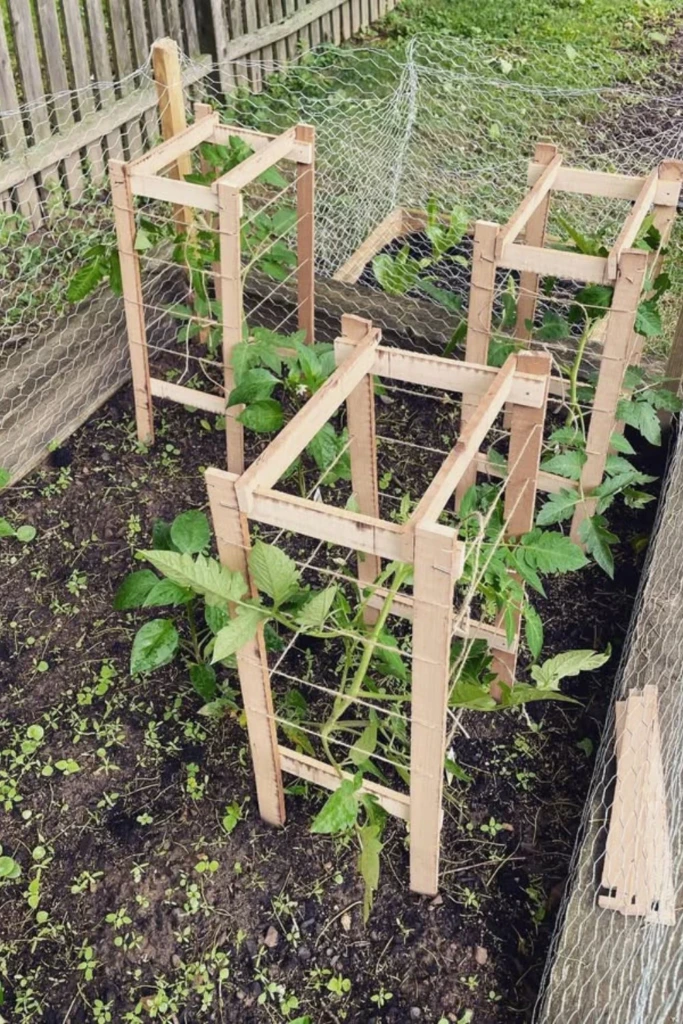
String towers combine a rigid wooden frame with vertical or horizontal twine to create an adjustable growing support. The wooden structure carries the load, while the string provides flexible points for guiding stems.
Construct a rectangular tower with sturdy uprights and crossbars. Attach weather-resistant twine securely, spacing the strands so growing branches can be supported without becoming crowded against one another.
This design works well for medium-sized gardens and can be adapted for different tomato varieties. As the vines grow, use soft plant clips or loose ties to keep the stems close to the support.
One advantage of this system is that damaged string can often be replaced without rebuilding the entire frame. However, natural twine may deteriorate during the growing season, so inspect it regularly and replace weakened strands before they fail.
For indeterminate tomatoes that continue growing throughout the season, make the tower tall enough for the expected height and anchor it firmly against wind and the weight of the fruit.
17. Rustic Poles
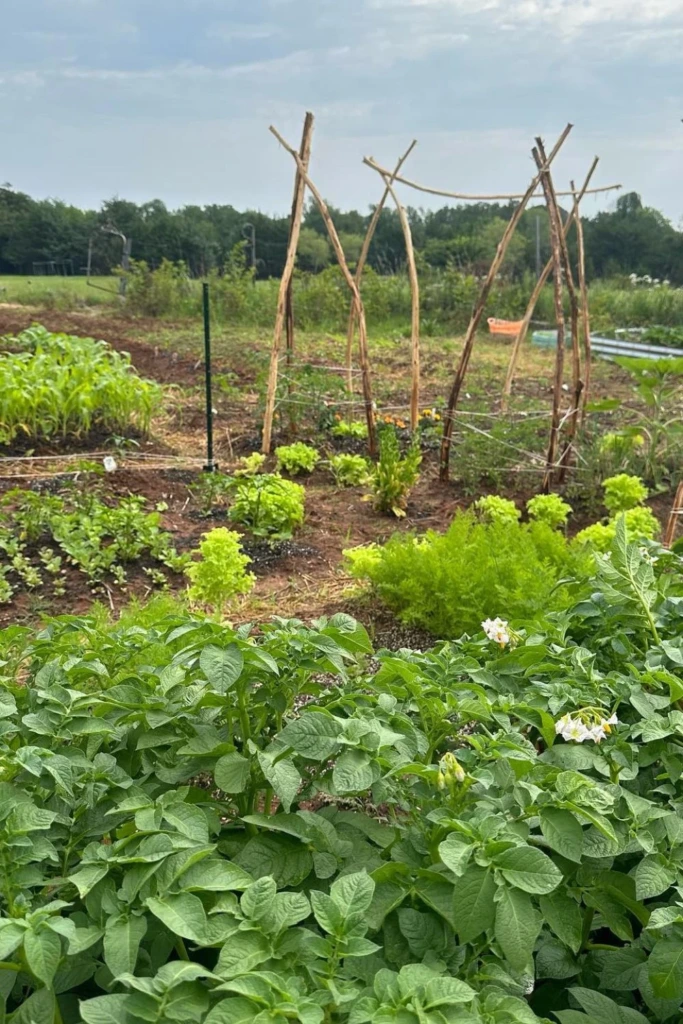
Rustic pole supports are an easy way to use suitable branches, bamboo canes, or other sturdy natural materials in the vegetable garden. Arranged in a teepee formation, several poles create a broad base and a central meeting point that helps distribute the load.
Choose straight, sound poles that will not snap easily under pressure. Push their lower ends securely into the soil, gather the upper ends together, and tie them firmly with garden twine.
As the tomato plants grow, guide the stems around the poles and use additional ties where necessary. This method is useful for gardeners who prefer simple construction and a natural appearance over manufactured metal cages.
The finished structure should be stable before planting begins. Loose soil, weak poles, and poorly secured joints can cause the entire arrangement to lean as the vines become heavier.
Inspect the materials throughout the season and replace any that become brittle or begin to rot. For particularly productive plants, add crosspieces or additional poles to improve support.
18. Classic Round
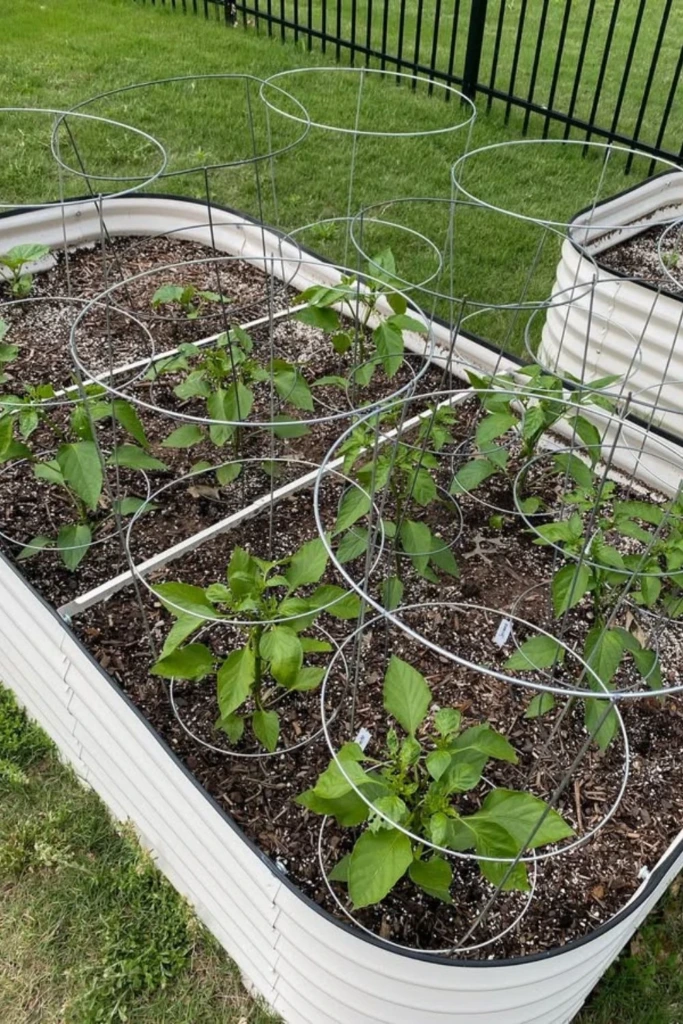
The classic round tomato cage remains a dependable option because it surrounds the plant with support on every side. Its circular shape gives branches several places to rest, while horizontal rings and vertical wires help maintain the structure's form.
These cages are convenient for home gardens because they are relatively simple to install and can often be stored for reuse after the season ends. Choose a model with sufficient height and diameter for the tomato variety you plan to grow.
Place the cage over the plant while it is still small, pushing the legs securely into the soil. Installing it early reduces the risk of damaging established roots and makes it easier to guide new growth through the openings.
Round cages can work with both determinate and indeterminate tomatoes, but size matters. Many standard store-bought cages are too short or flimsy for vigorous indeterminate plants, which may need taller, heavier-duty support.
As the plant develops, guide branches through the openings and support heavy fruit clusters where necessary. Inspect the legs after strong winds and reinforce the cage if it begins to wobble.
19. Panel Tower
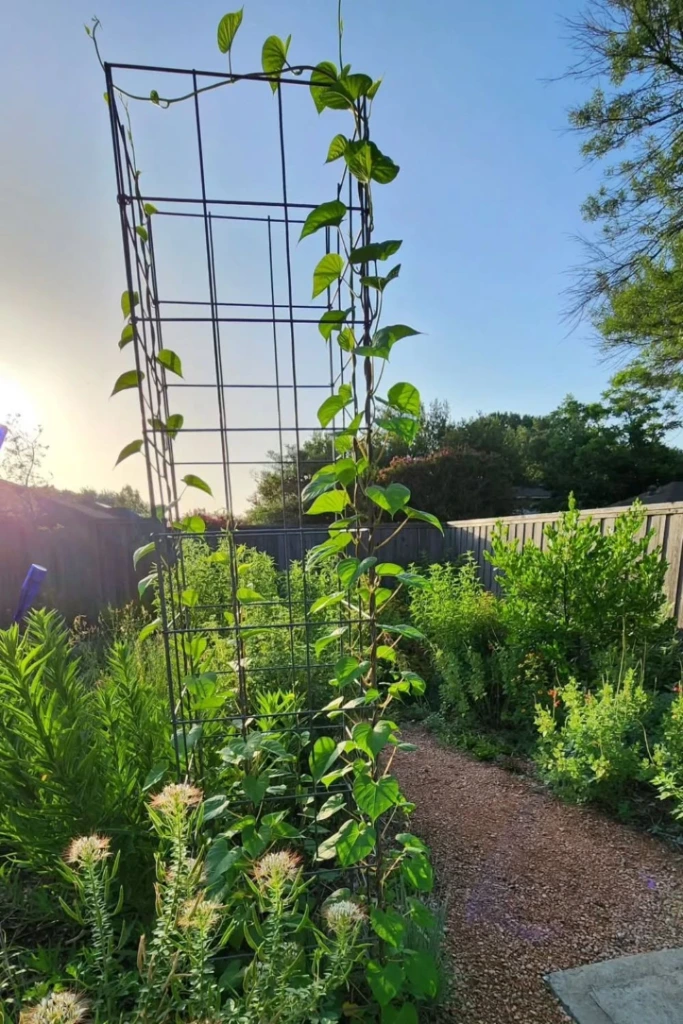
A panel tower uses a tall rectangular wire panel to create a spacious framework for climbing tomato vines. Its grid offers numerous attachment points, allowing you to position stems where they receive adequate light and remain accessible for harvesting.
This structure is useful for vigorous plants that outgrow smaller cages. A strong panel can provide support over a considerable height, making it suitable for planting rows or as a prominent feature in a vegetable garden.
Choose rigid, garden-appropriate mesh and reinforce the panel with sturdy posts. Anchor the supports deeply enough to handle the weight of mature foliage and the pressure created by wind.
As the tomatoes grow, attach the stems with soft ties and distribute the branches across the panel rather than allowing them to collect in one dense mass. This helps maintain access to the fruit and makes it easier to inspect leaves for damage or disease.
A panel tower can be reused across multiple seasons if the frame remains structurally sound. Before each growing season, inspect the joints, fasteners, and mesh for rust, bending, or other signs of wear.