13 DIY Window Seat Ideas for 2026
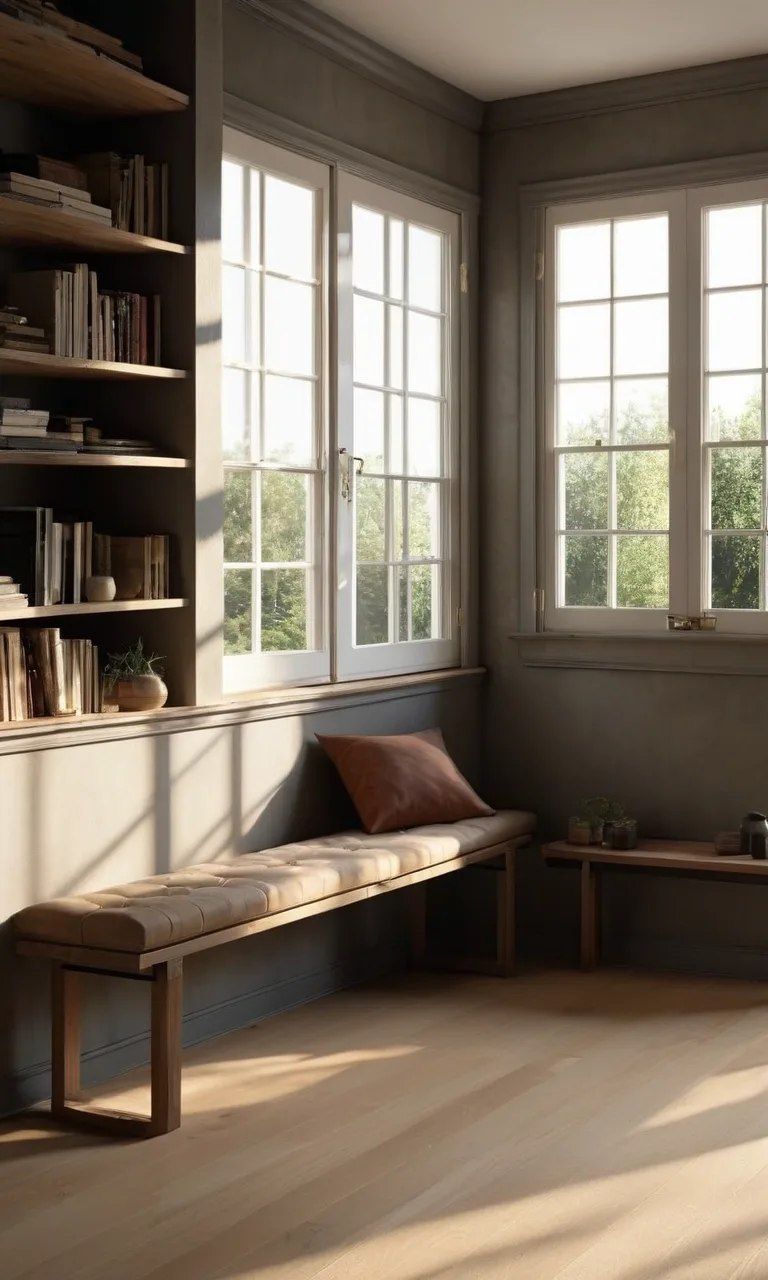
A window seat can turn an unused corner into one of the most inviting places in your home. Whether you want a peaceful reading nook, extra seating for guests, or a clever way to organize everyday belongings, a DIY window seat offers plenty of possibilities without requiring an expensive renovation.
With thoughtful planning, you can design a bench that fits your window, matches your interior style, and makes better use of available space. From built-in storage and cushioned benches to simple wooden designs, there is an option for almost every room and budget.
These 12 DIY window seat ideas will help you find inspiration for creating a comfortable, attractive space that you can enjoy throughout the year.
How to Make a Window Seat More Comfortable?
Comfort starts with getting the proportions right. Choose a seat height that allows you to sit naturally, with your feet resting comfortably on the floor whenever possible. The depth should provide enough room to relax without forcing you to lean forward or slide toward the edge.
A supportive cushion makes a significant difference. High-density foam is a practical choice because it generally maintains its shape better than very soft filling. Finish the seat with a washable cover, a few pillows, and a soft blanket to create a welcoming place to unwind.
Consider how you will use the nook, too. A reading corner benefits from supportive back pillows and a nearby lamp, while a kitchen window seat may need easy-to-clean fabrics. If the area receives strong sunlight, choose materials designed to resist fading.
Finally, keep the surrounding space uncluttered. A small side table, a wall-mounted light, or a nearby bookshelf can improve functionality without making the seating area feel crowded.
1. Built-In Kids Nook
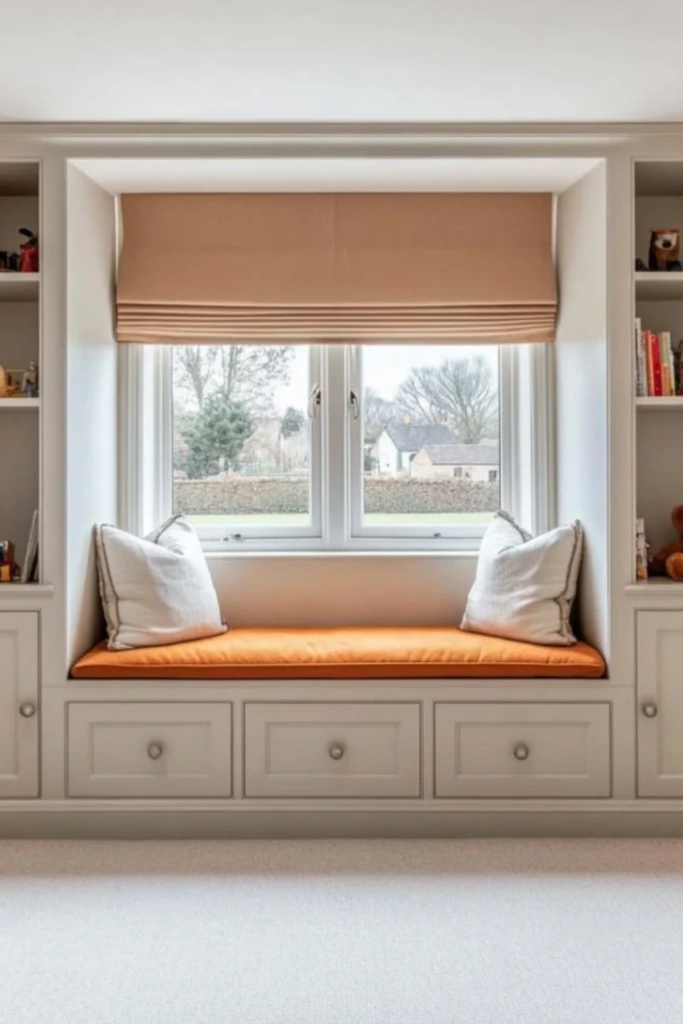
A built-in window seat can make a children's bedroom or playroom more organized while giving kids a dedicated place to read, draw, or relax. Add open shelving on either side of the bench for books and display items, then incorporate drawers beneath the seat for toys, games, and craft supplies.
Choose a durable cushion in a cheerful color and include a couple of comfortable pillows. Rounded accessories and easy-to-reach storage can make the nook more suitable for younger children.
For evening use, install a properly positioned light that provides enough illumination for reading. Secure tall shelving and other furniture to the wall, and avoid small decorative objects that could pose a hazard to young children.
2. Sunny Pillow Lineup
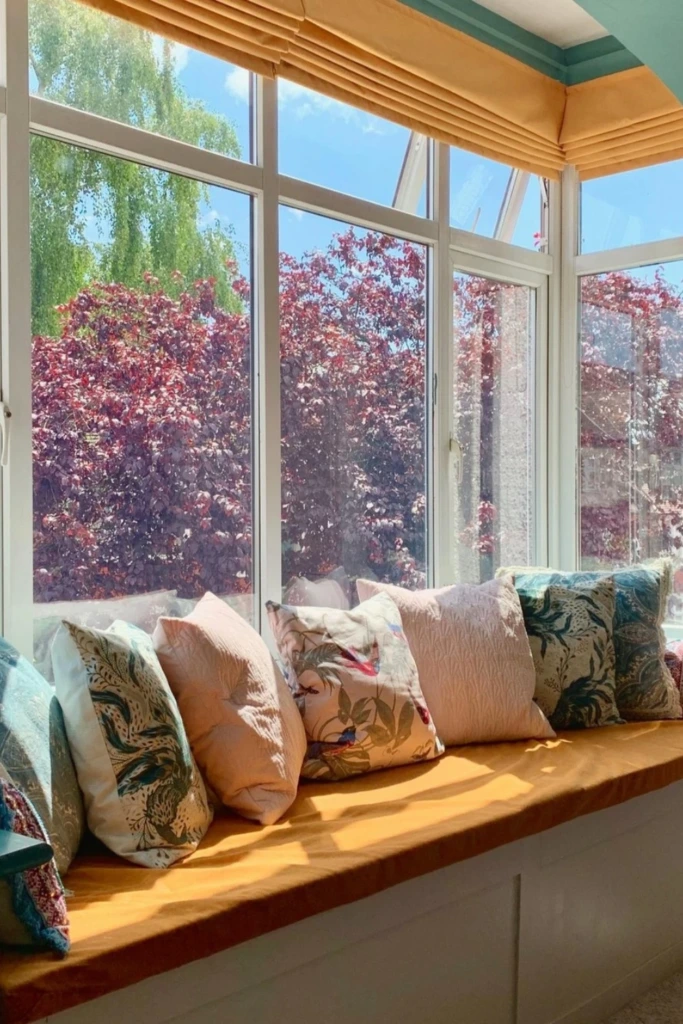
If you want to refresh an existing window bench without building anything new, a carefully arranged collection of pillows is an easy solution. Begin with a long seat cushion, then layer pillows in different sizes to create a relaxed, inviting appearance.
Combine complementary fabrics, such as cotton, linen, textured weaves, or soft knits. A consistent color palette keeps the arrangement coordinated, while subtle differences in pattern and texture prevent it from looking flat.
This idea works particularly well in bright living rooms, bedrooms, and reading corners. Position a floor lamp nearby so the seat remains useful after sunset, and choose removable pillow covers for convenient cleaning.
3. Bay Window Cozy Spot
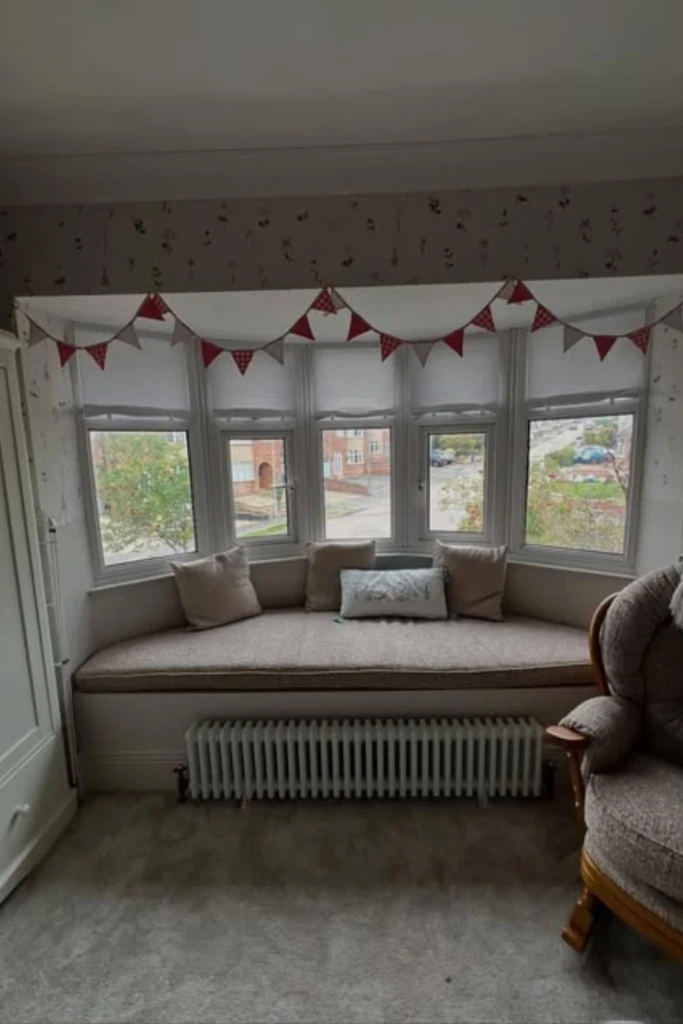
Bay windows naturally create an attractive area for a custom seating arrangement. A fitted bench can follow the shape of the window, making use of space that might otherwise remain empty.
Measure each section carefully before building the base or ordering a cushion. For angled bay windows, a custom-cut cushion usually provides a neater fit than several unrelated cushions placed side by side.
Keep the design restful with neutral upholstery, soft pillows, and a warm throw. Beige, cream, muted green, and light gray are versatile choices that work with many decorating styles.
A nearby reading lamp adds functionality, while discreet drawers beneath the bench can provide storage for blankets, books, or seasonal accessories. Make sure the finished design does not interfere with opening windows or operating blinds.
4. Kitchen Garden Seat
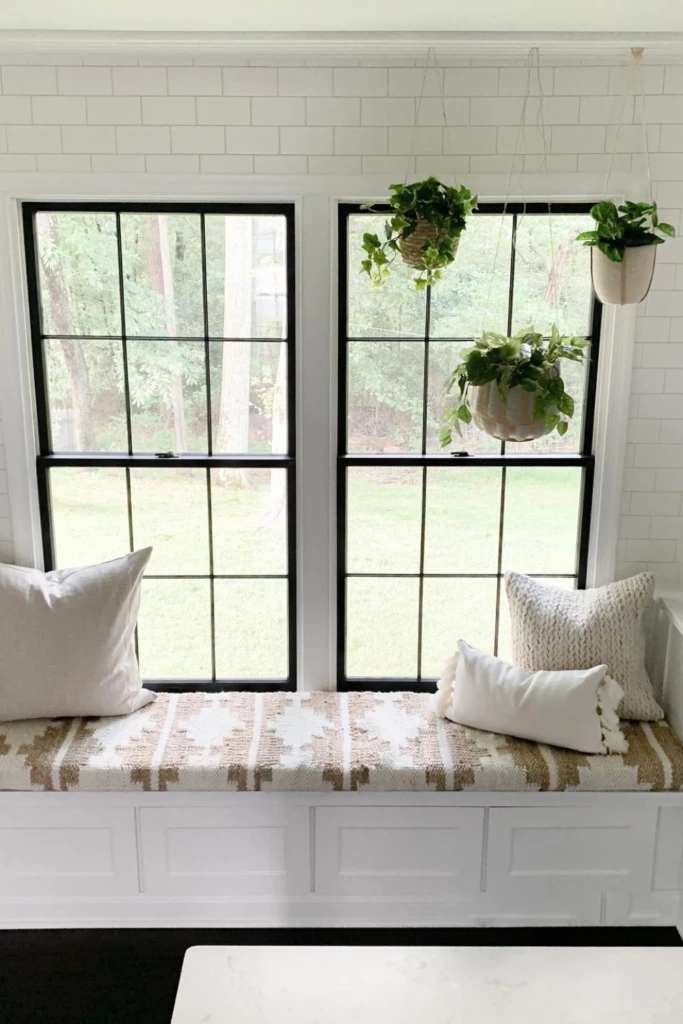
A window seat in the kitchen can create a pleasant place to enjoy breakfast, have a cup of tea, or take a short break while preparing meals. It works especially well in a spacious kitchen with an unused window alcove or a wide stretch of wall.
Start with a sturdy bench that fits the available space without obstructing walkways, cabinet doors, or access to appliances. Add a patterned cushion to introduce personality, then balance it with simple pillows in complementary colors.
Small potted plants or hanging greenery can bring a fresh, natural feeling to the area. Choose plants suited to the available light and position them safely away from cooking heat and food preparation surfaces.
A pendant light or nearby wall fixture can make the nook more useful in the evening. Since kitchens are exposed to spills and food residue, washable cushion covers and moisture-resistant finishes are particularly practical.
5. Neutral Lounge Bench
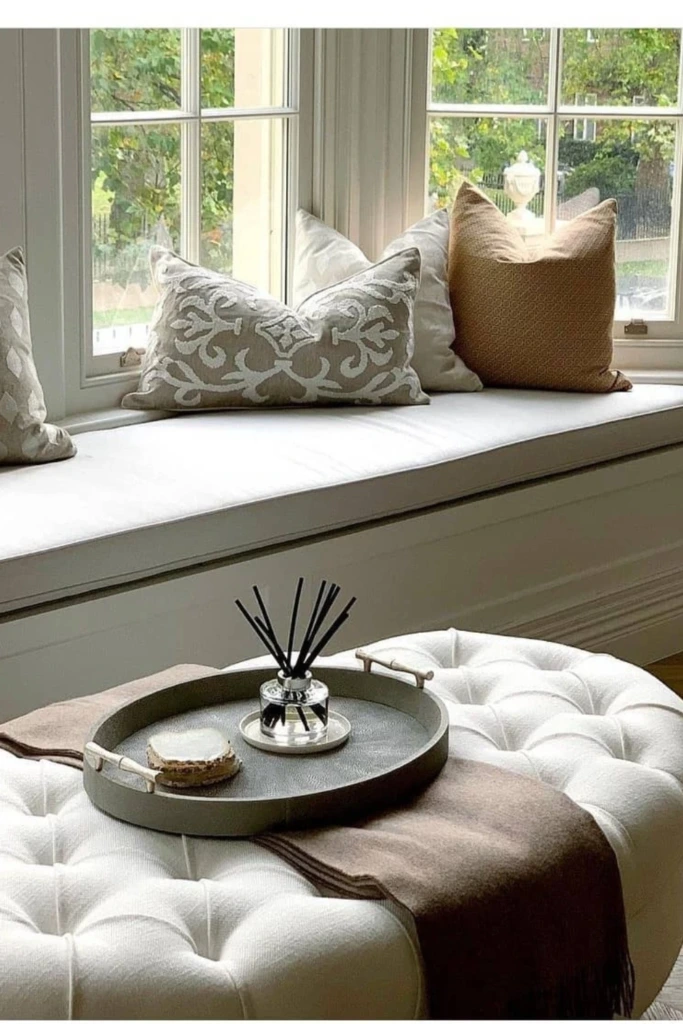
A neutral window seat creates a calm, understated look that fits comfortably into contemporary, traditional, and minimalist interiors. The design can be as simple as a wooden bench with a tailored cushion or as elaborate as a full built-in structure with concealed storage.
Start with a restrained palette of cream, sand, taupe, or soft gray. Instead of relying on multiple colors, introduce visual interest through different materials, such as linen cushions, woven pillows, and a textured throw.
This style is especially suitable for living rooms and quiet reading areas where you want the seating to complement the rest of the furniture rather than dominate it.
Add a compact lamp or wall sconce to provide evening illumination. If the bench includes storage, use baskets or dividers to keep books, blankets, and other belongings neatly arranged.
6. Cozy Curtain Retreat
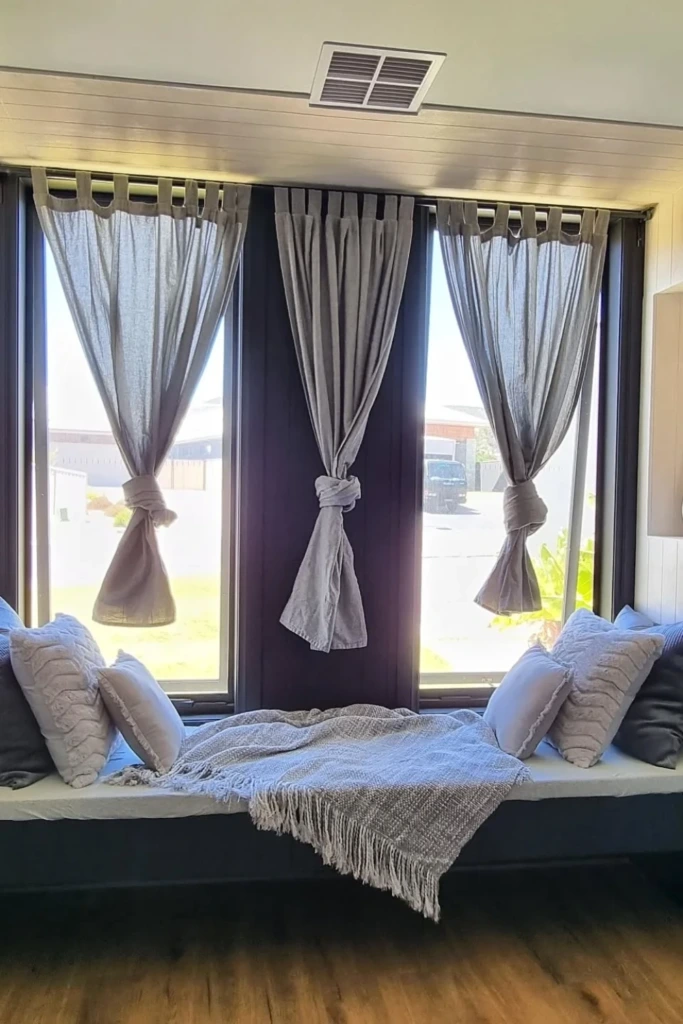
Curtains can transform a window seat into a more private, sheltered-feeling corner. Soft drapes frame the seating area, filter incoming daylight, and introduce movement and texture without requiring a complicated construction project.
Choose curtains that coordinate with the room's existing colors. Lightweight linen or cotton blends can create an airy appearance, while thicker curtains offer a more enclosed look.
A generously sized bench cushion, supportive pillows, and a soft blanket complete the arrangement. Place pillows along the sides if you want the space to feel more like a small indoor retreat.
For lighting, combine natural daylight with a nearby table lamp or wall-mounted fixture. Make sure curtains remain clear of hot bulbs, heaters, and other heat sources, and ensure they do not obstruct windows that need to open for ventilation.
7. Minimal Wood Nook
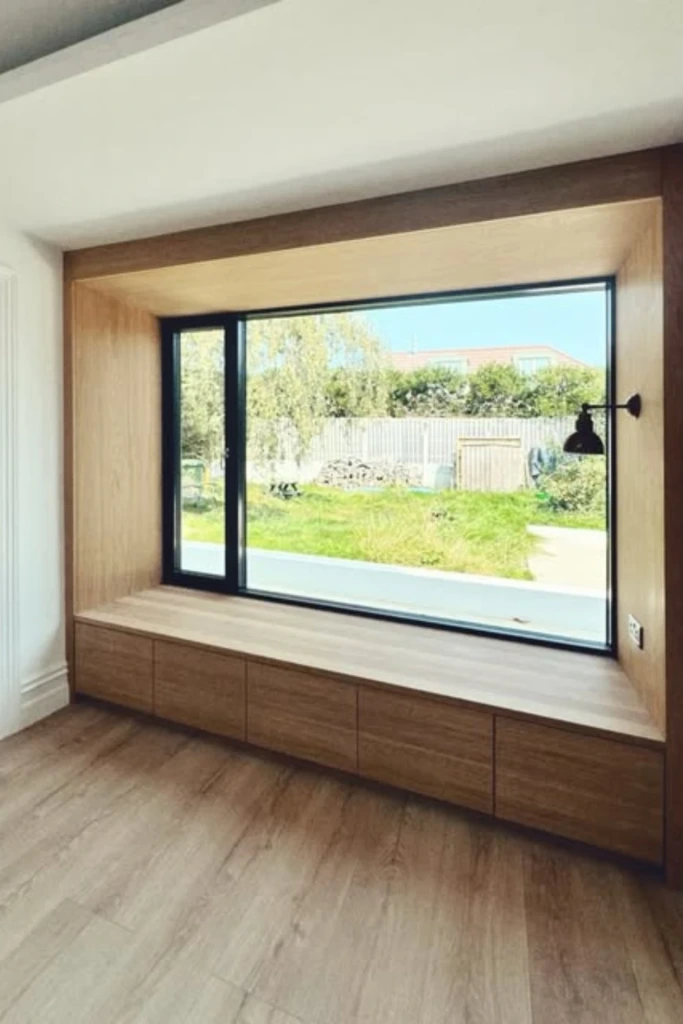
A wooden window seat is an excellent option for anyone who appreciates clean lines and natural materials. Its simple appearance allows the grain, craftsmanship, and surrounding architecture to become part of the overall design.
Plywood with an attractive finish or a hardwood-faced frame can work well, depending on your budget and the look you want. A built-in surround can make the seat feel like a natural extension of the room, especially when the wood tones complement nearby flooring or furniture.
Keep the styling uncomplicated with a fitted cushion, two supportive pillows, and a lightweight throw. Warm white or earthy upholstery creates a pleasing contrast against natural wood.
A wall sconce is a useful addition if you plan to read in the evenings. Before fixing the bench in place, check the wall for concealed wiring and pipes, and make sure the structure is properly supported for regular seating.
8. Bright Built-In Bench
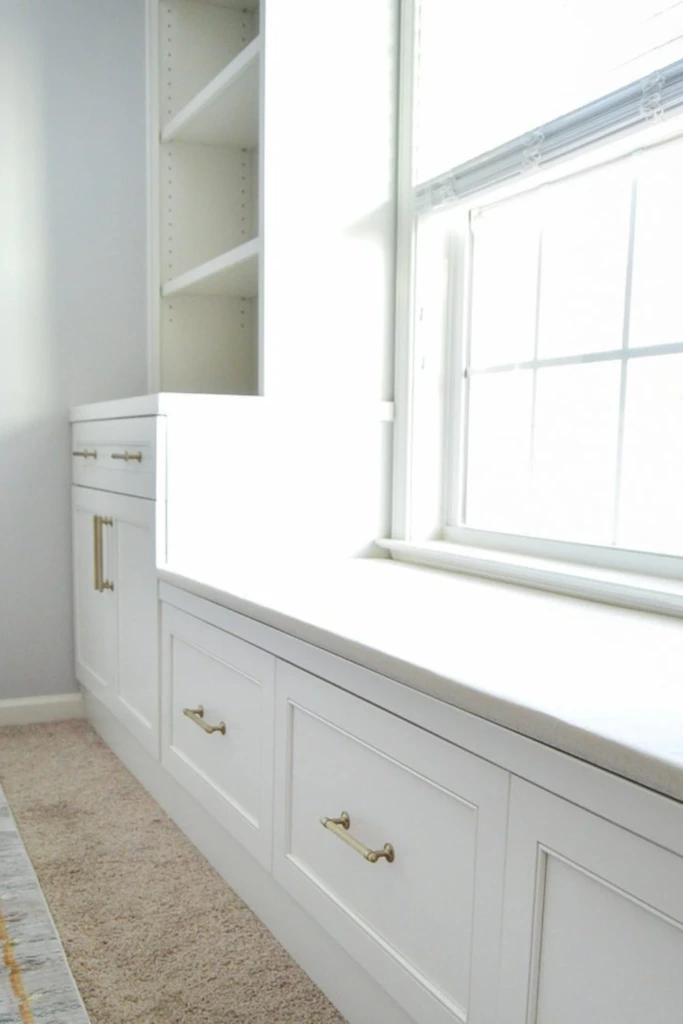
A white built-in window bench offers a clean, timeless appearance and can help a small room feel more open. It works particularly well in bedrooms, home offices, and dedicated reading spaces.
For a more finished look, add paneled drawer fronts, simple trim, and understated hardware. Brass or brushed-metal handles can provide a subtle accent without overwhelming the design.
Drawers beneath the seat make it easier to store extra bedding, paperwork, books, or other household essentials. Plan the drawer dimensions around the items you intend to keep inside, and leave sufficient clearance for them to open fully.
Complete the bench with a neutral cushion and a few decorative pillows. A small lamp or wall sconce will provide useful illumination when natural light fades.
To maintain the bright appearance, select a durable paint finish that can withstand everyday cleaning. If the bench receives direct sunlight, test the paint and upholstery samples in the actual room before committing to your final choices.
9. Shiplap Reading Nook
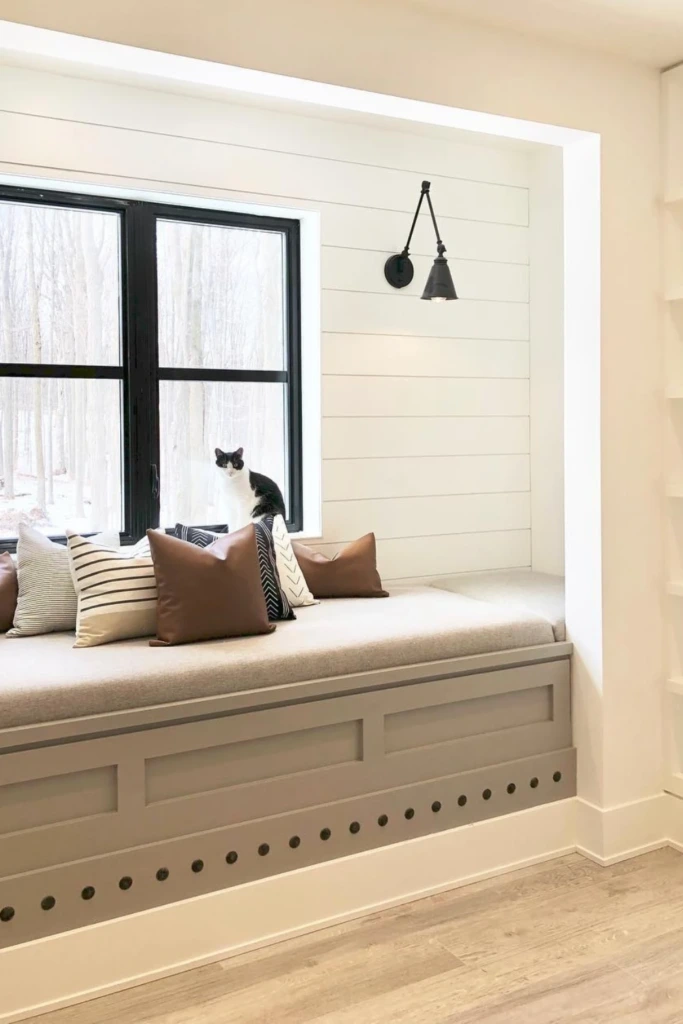
Shiplap paneling adds subtle texture and a relaxed farmhouse character to a window seat. The horizontal lines create visual interest without requiring bold colors or elaborate decoration.
Begin with a built-in bench or a simple wooden base, then finish the surrounding wall with painted shiplap boards or suitable paneling. White, warm cream, and muted earthy shades are popular choices, although darker colors can create a more dramatic effect.
A long upholstered cushion makes the seat comfortable, while a mixture of neutral pillows adds softness. You can introduce a small amount of contrast through a dark window frame, natural wood accents, or a black wall sconce.
This design works well in family rooms, bedrooms, and reading corners. If you plan to install paneling yourself, measure carefully, use appropriate fasteners, and check for hidden utilities before attaching anything to the wall.
10. Tufted Corner Seat
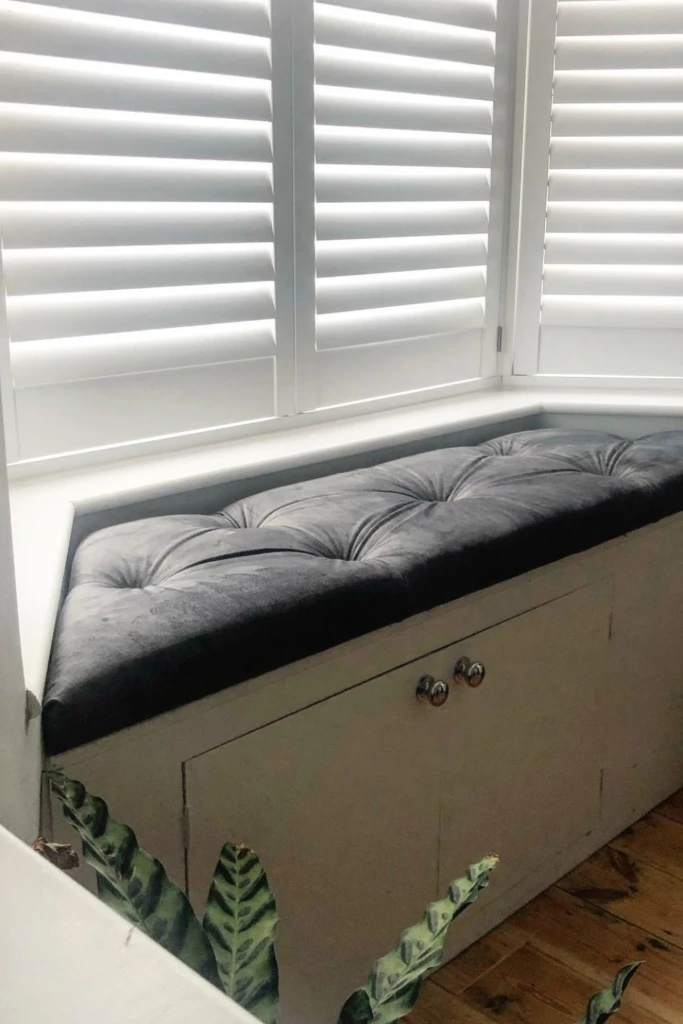
A tufted cushion gives a window seat a more refined appearance by adding depth and a traditional upholstered finish. It is a good option for bedrooms, formal sitting rooms, or interiors that lean toward classic or elegant decor.
Choose a cushion with tufting that suits the proportions of your bench. Velvet can create a rich, luxurious effect, while textured woven upholstery offers a more understated alternative.
Keep the base relatively simple so the upholstery remains the focal point. Neutral shades such as dusty blue, soft beige, muted rose, and charcoal can work beautifully depending on the surrounding decor.
Add a small number of coordinated pillows rather than filling the entire seat with accessories. A warm bedside-style lamp or wall light can complete the arrangement.
If the window receives direct sunlight, consider fade-resistant upholstery and position the seat away from excessive heat where possible. Removable or professionally cleanable covers are useful for maintaining the cushion over time.
11. Classic Sunlit Bench
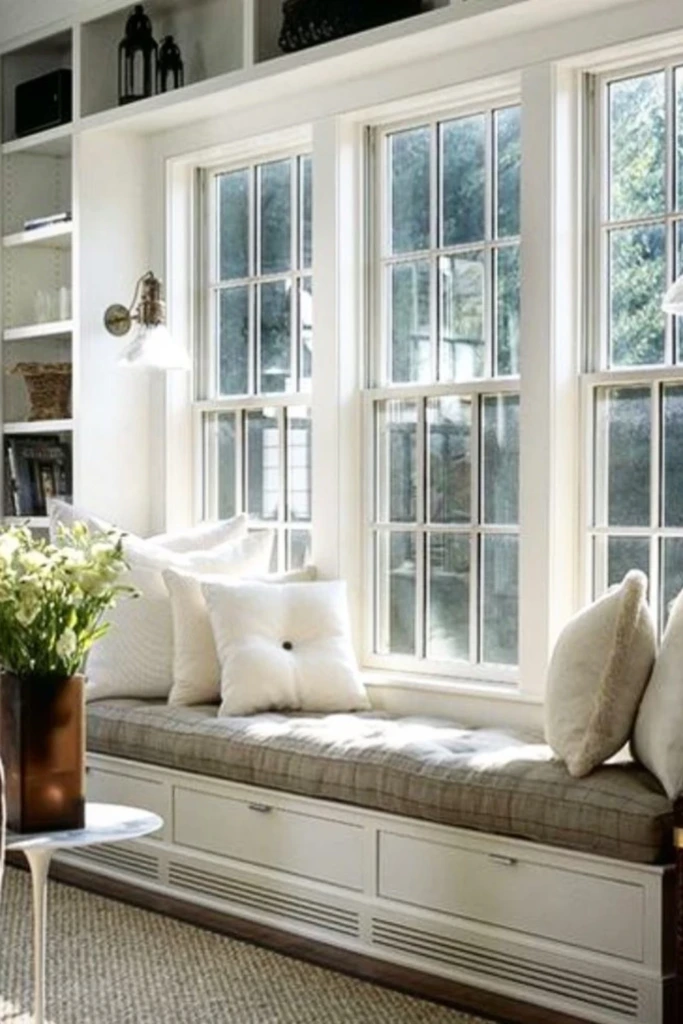
A classic window bench combines comfortable upholstery with practical storage and timeless styling. It suits living rooms, bedrooms, and traditional homes where you want the seating area to feel established rather than temporary.
A long cushion with gentle tufting creates a tailored finish, while layered pillows introduce extra comfort. Keep the colors coordinated with nearby curtains, rugs, and furniture for a balanced appearance.
Built-in drawers beneath the bench provide a convenient place to store books, blankets, games, or spare cushions. If you are building the bench from scratch, choose materials and supports appropriate for the expected seating load.
Natural daylight is one of the main attractions of this design, so avoid placing bulky accessories where they block the view or reduce the amount of light entering the room.
For evening use, add a table lamp or wall sconce. A few carefully selected decorative details can make the bench feel polished without sacrificing its everyday usefulness.
12. Soft Bay Hideaway

A soft bay window hideaway is ideal for anyone who wants a peaceful place to read, rest, or enjoy the view. The combination of a fitted bench, comfortable upholstery, and full-length curtains creates a cohesive seating area that feels connected to the rest of the room.
Start by measuring the bay window's individual sections and planning a bench that follows its shape. A continuous cushion can provide a streamlined finish, while separate cushions may be easier to remove and clean.
Choose a light color scheme with cream, ivory, pale gray, or soft beige. Add a row of supportive pillows and a textured blanket to introduce warmth without making the area feel crowded.
Curtains help frame the nook and give the window a more finished appearance. If you prefer a brighter, more open feel, use lightweight fabrics that allow daylight to pass through.
A warm reading light makes the area practical after dark. For added functionality, consider storage beneath the seat for bedding, books, or other items you want to keep close at hand.
Are window seats good for people with anxiety?
A window seat may provide a comforting place to pause, relax, and take a break from a busy environment. Natural daylight, an outdoor view, and a familiar, comfortable setting can help some people feel calmer.
Creating a dedicated relaxation corner may also encourage simple habits such as reading, listening to quiet music, or taking a few slow breaths. Soft fabrics, supportive cushions, and warm lighting can make the space more inviting.
Individual experiences vary, however. A window seat is not a treatment for anxiety, and there is no guarantee that it will reduce symptoms. People experiencing persistent or overwhelming anxiety may benefit from speaking with a qualified mental health professional.
To make the nook more suitable for relaxation, keep the surrounding area uncluttered, reduce distracting noise where possible, and choose accessories that help you feel comfortable rather than overstimulated.
What materials are best for window seats?
The best materials depend on your budget, the intended use of the seat, and how much maintenance you are willing to do.
For the bench structure, quality plywood is a practical option because it can provide good strength when properly supported. MDF can work well for painted finishes and decorative panels, but standard MDF should be protected from moisture. Hardwood is another option for a durable, attractive finish, although it may cost more.
For cushions, high-density foam provides useful support and generally holds its shape better than very soft filling. Choose upholstery that suits the room: cotton and linen blends offer a natural appearance, while performance fabrics can be easier to clean in busy households.
If you have children or pets, prioritize durable, removable cushion covers and fabrics that tolerate frequent cleaning. In sunny rooms, look for upholstery and finishes designed to resist fading.
Finally, use appropriate screws, brackets, framing, and supports for the bench's design and expected load. A window seat should be built as functional furniture, not simply as a decorative box.
13. Love this idea? Save it for later.
A thoughtfully designed window seat can add comfort, storage, and character to almost any room. Save your favorite ideas, note the measurements of your available space, and collect a few fabric and finish samples before starting your project.
Whether you choose a simple cushioned bench or a custom-built bay window nook, planning around your needs will help you create a space that remains useful and inviting for years to come.