31 DIY Flower Beds In Front Of House in 2026
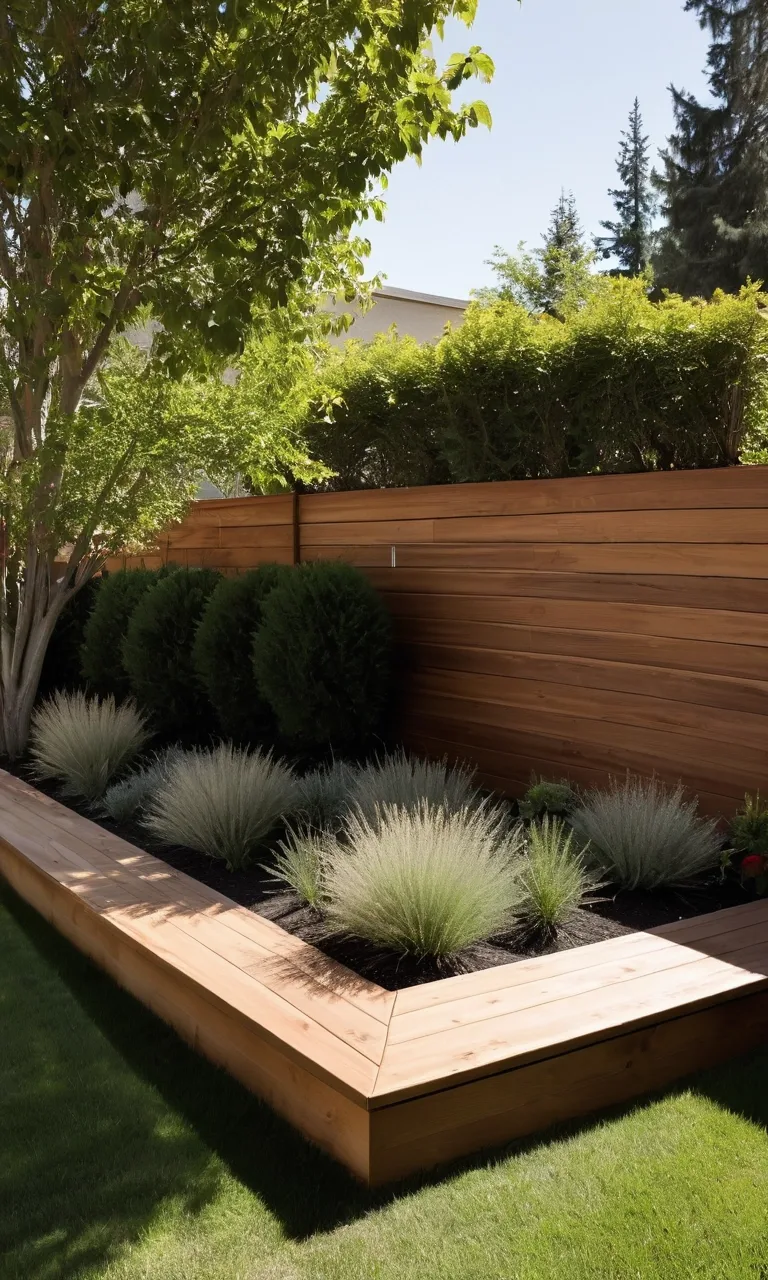
A thoughtfully designed flower bed can completely change how your home looks from the street. Whether you prefer colorful seasonal flowers, neatly arranged greenery, or a relaxed cottage garden, the right planting arrangement can make your entrance feel more attractive and welcoming.
Creating DIY flower beds in front of your house doesn't require professional landscaping experience or an expensive budget. With suitable plants, simple edging materials, and a little planning, you can transform an ordinary front yard into a beautiful outdoor space.
These 30 flower bed ideas offer inspiration for different home styles, garden sizes, and maintenance preferences. From classic hydrangea borders to modern raised beds, there's something for almost every outdoor setting.
1. Common Mistakes To Avoid for DIY Flower Beds
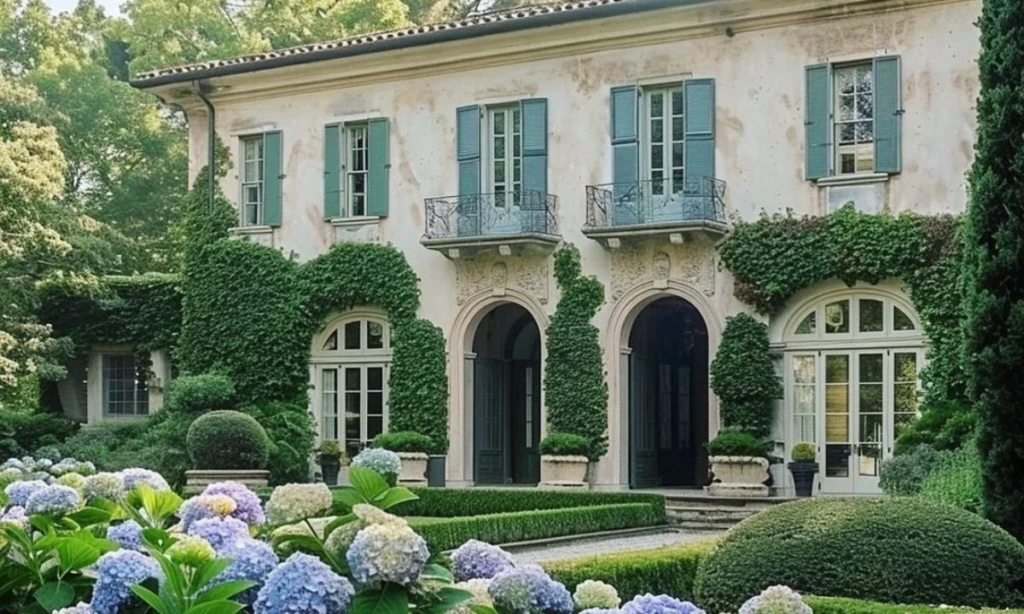
One of the biggest mistakes homeowners make when creating flower beds is choosing plants based entirely on appearance. Beautiful flowers won't thrive if the location doesn't provide the sunlight, drainage, and soil conditions they need.
Before planting, observe how much direct sunlight your front yard receives throughout the day. Select flowers suited to those conditions, and check their mature height and width to avoid overcrowding.
It's also important to prepare the soil properly. Remove weeds, loosen compacted ground, and incorporate compost where needed. A layer of organic mulch helps conserve moisture and reduce weed growth.
When planting near your home's foundation, maintain adequate clearance for airflow, drainage, and future maintenance. Avoid piling soil or mulch against siding.
Finally, consider bloom times. Combining spring bulbs, summer-flowering perennials, and evergreen plants will help your garden remain attractive beyond a single season.
2. Snowy Lantern Beds
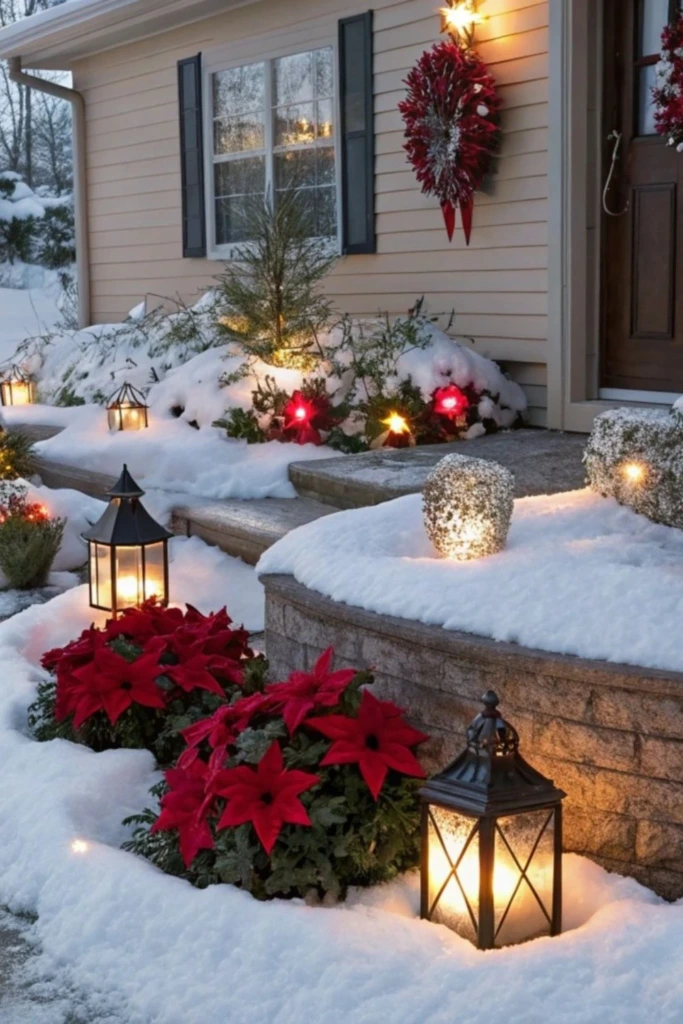
A winter-inspired flower bed can make your front entrance look inviting even when most garden plants are dormant. Black metal lanterns placed between evergreen shrubs create an elegant contrast against snow-covered surroundings.
For seasonal color, arrange red poinsettias in weather-protected containers near the entrance. Since poinsettias are sensitive to freezing temperatures, they work best outdoors only in mild climates or as temporary decorations during suitable weather.
Add weather-resistant ornaments, warm outdoor lighting, and natural greenery to complete the display. This arrangement is particularly attractive beside walkways and covered porches.
3. Hydrangea Cottage Path
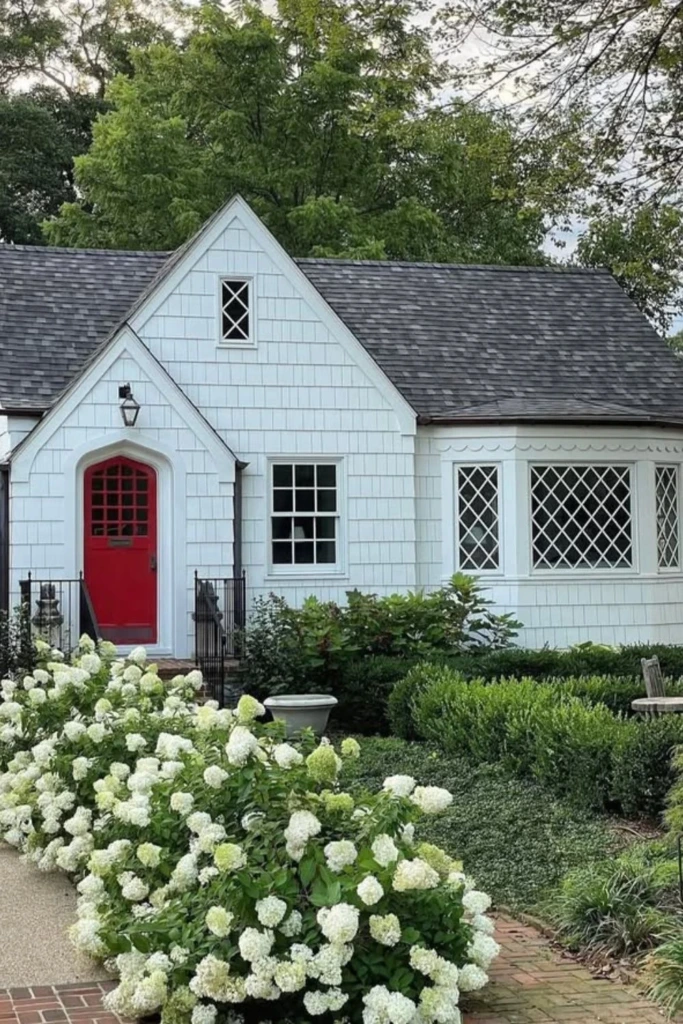
Hydrangeas are an excellent choice for creating a soft, traditional garden beside a front walkway. Their generous flower clusters provide beautiful color while their broad leaves make planting areas appear full and established.
Choose a hydrangea variety suited to your climate and the amount of sunlight available. Many varieties appreciate morning sunshine with protection from intense afternoon heat.
Plant the shrubs far enough from the walkway to accommodate their mature size. Low-growing companion plants and a simple garden bench can make the entrance feel especially charming.
4. Spring Tulip Garden
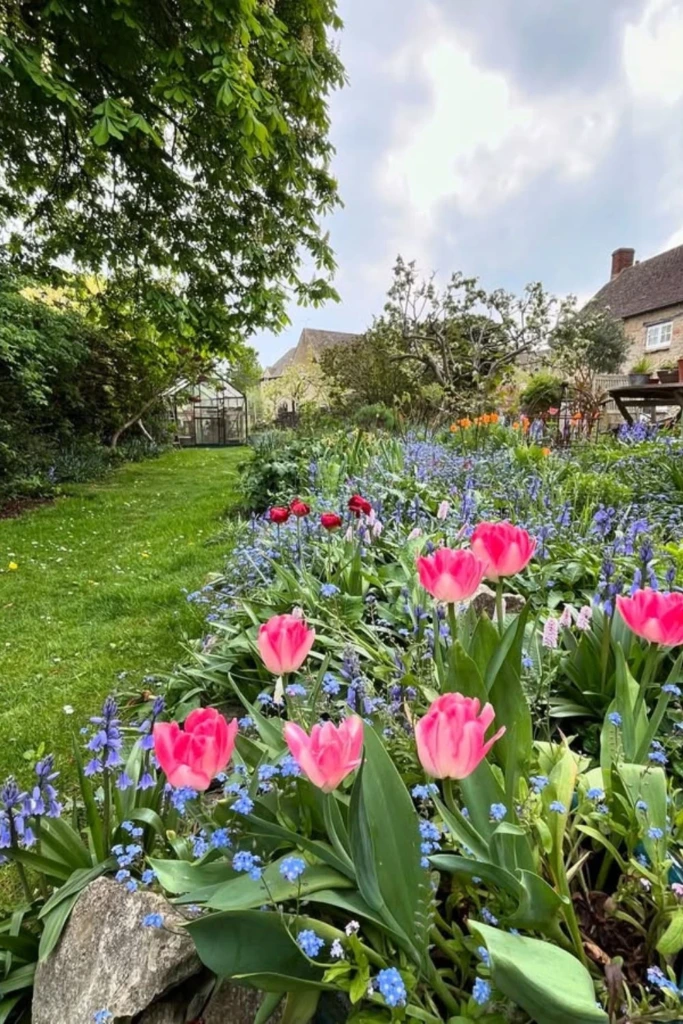
A spring tulip garden brings bright seasonal color to the front of a house after winter. Pink tulips look particularly appealing when planted in generous groups rather than scattered individually.
Combine them with bluebells, forget-me-nots, or other spring-flowering plants suited to your region. The mixture creates a natural-looking display with contrasting flower shapes and heights.
Plant tulip bulbs in autumn where winters provide adequate chilling. In warmer regions, pre-chilled bulbs may be necessary. Allow the foliage to die back naturally after flowering so the bulbs can replenish their energy.
5. Rose and Hostas Mix
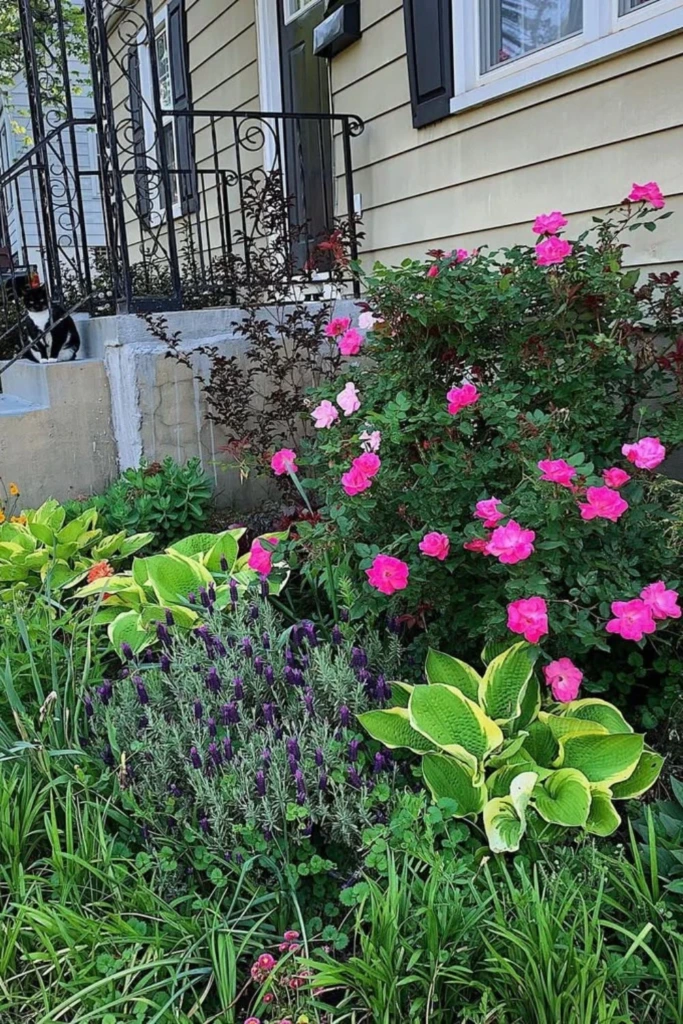
Roses and hostas can create an attractive combination of colorful flowers and decorative foliage when their different growing requirements are considered.
Position roses where they receive plenty of direct sunlight, while placing hostas in nearby shaded or partially shaded areas. This works especially well in front gardens with varying light conditions.
Add lavender in sunny, well-drained spots and daisies for additional blooms. Arrange taller plants toward the back of the bed and smaller varieties along the edge.
The result is a layered garden with visual interest from spring through autumn.
6. Curved Stone Bed
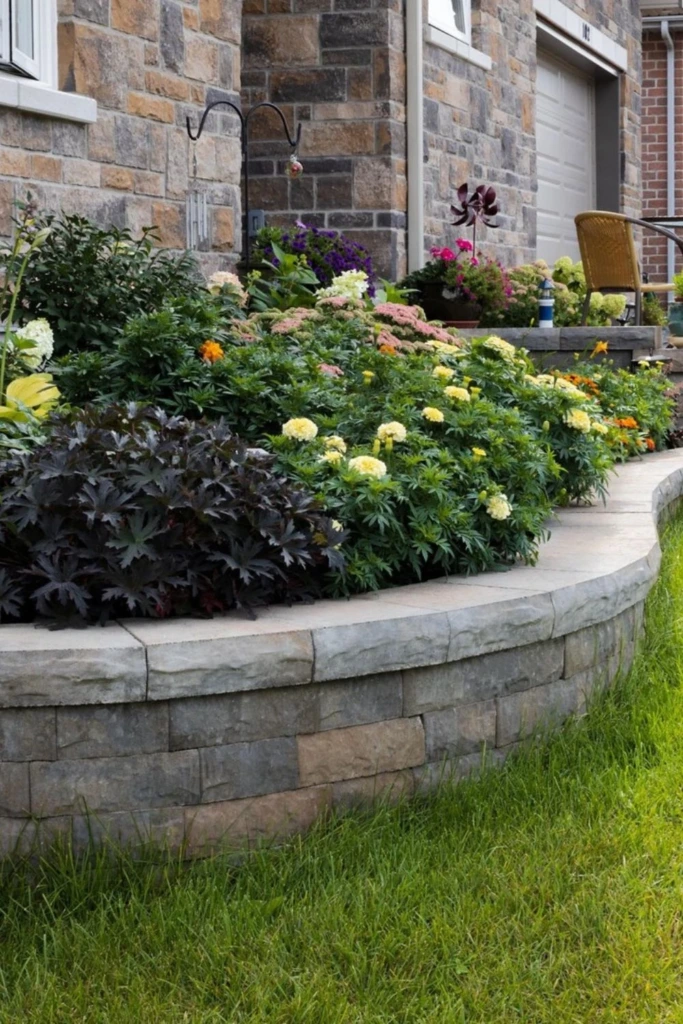
A curved stone flower bed can soften the straight lines of a house and create a more natural-looking landscape.
Start by marking a gentle curve using a garden hose or rope. Once you're satisfied with the shape, install natural stones or suitable landscape blocks along the boundary.
Fill the planting area with flowers such as marigolds, ornamental grasses, and foliage plants suited to your climate. Use taller plants toward the house and shorter flowers near the stone edging.
For raised stone walls, build on a properly prepared base and provide drainage. The finished border adds definition while making mowing and garden maintenance easier.
7. Formal Garden Circles
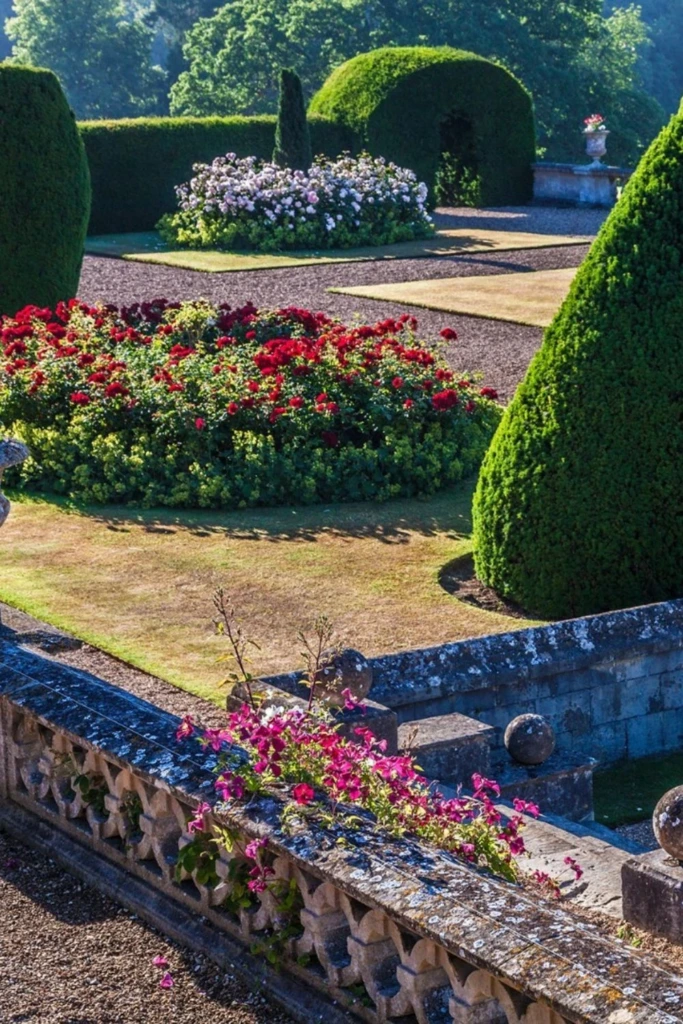
Circular flower beds offer a structured landscaping option for homes with traditional or symmetrical architecture.
Create matching circles on either side of a pathway or arrange several circular beds across a spacious front lawn. Use compact evergreen shrubs to establish the main shapes, then introduce roses or seasonal flowers for color.
Carefully measured spacing is important because uneven circles can make a formal garden appear unbalanced.
Keep surrounding grass neatly trimmed and prune shrubs regularly to preserve the geometric design.
8. Fountain Flower Borders
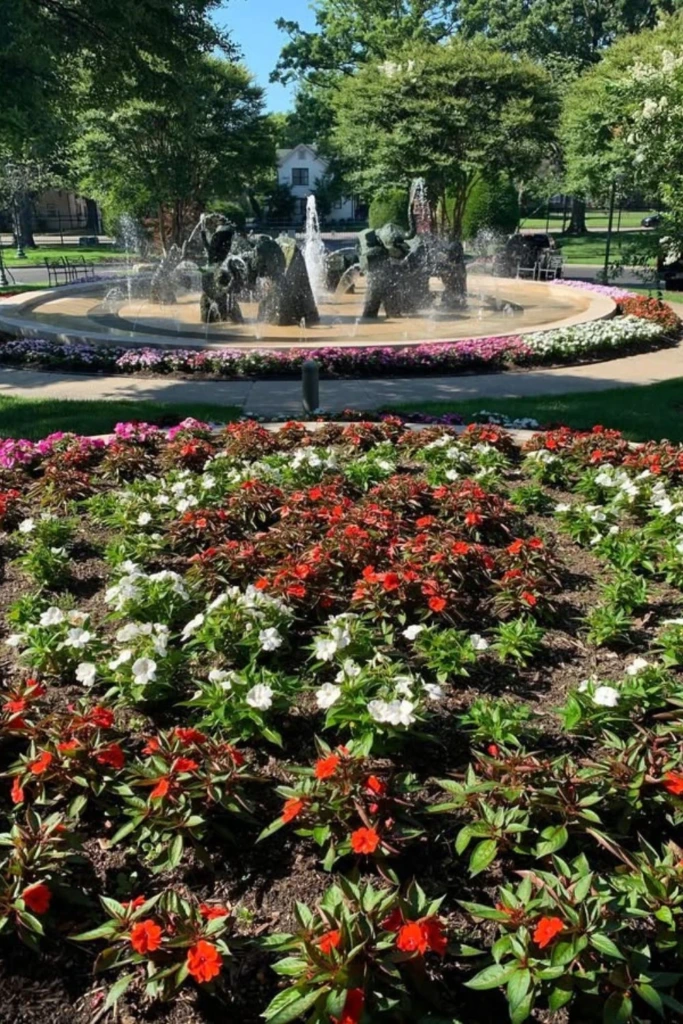
A decorative fountain can become the centerpiece of a front garden when surrounded by colorful flower beds.
Arrange low-growing flowering plants around the fountain, leaving enough room for cleaning and maintenance. Impatiens are suitable for many shaded locations, while sun-loving annuals can be used in brighter areas.
Choose flowers in two or three coordinating colors to prevent the arrangement from appearing overly busy.
Stone edging or decorative gravel can separate the planting area from the fountain and help keep loose soil away from the water.
9. Yellow Tulip Patch
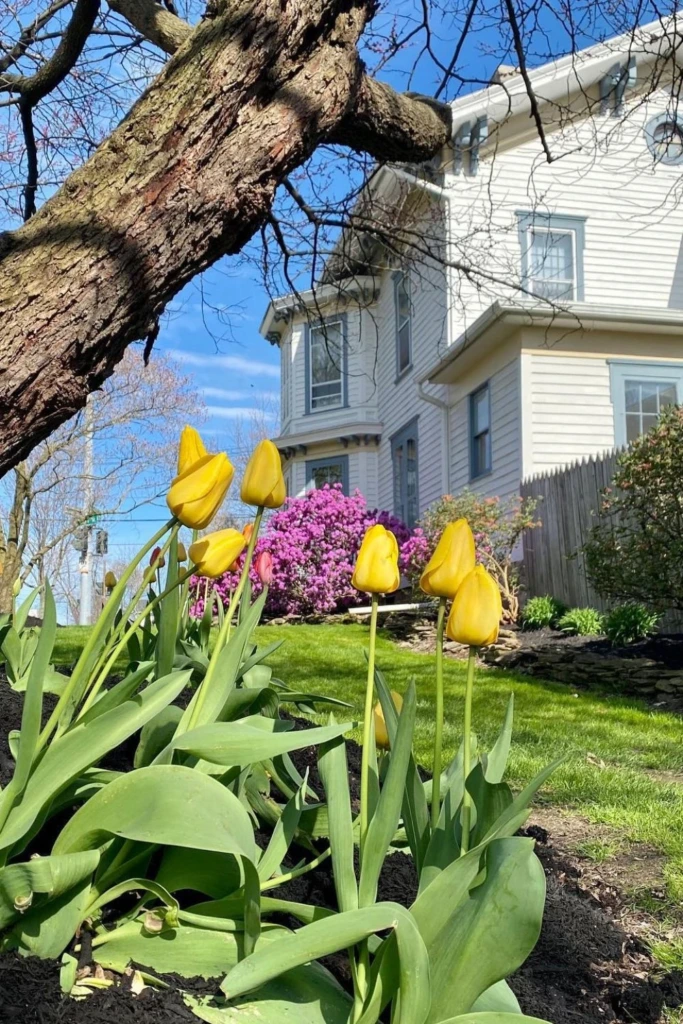
Yellow tulips provide a cheerful splash of color that stands out beautifully against dark mulch and green foliage.
Plant the bulbs in irregular clusters around an established garden area for a relaxed appearance. If planting beneath a tree, avoid damaging major roots and choose locations where the bulbs receive enough light during their growing season.
A thin layer of mulch helps maintain a tidy appearance and regulate soil moisture.
Because tulips have a relatively short flowering period, consider adding summer perennials nearby to provide color after the spring display fades.
10. Hydrangea Wall Cover
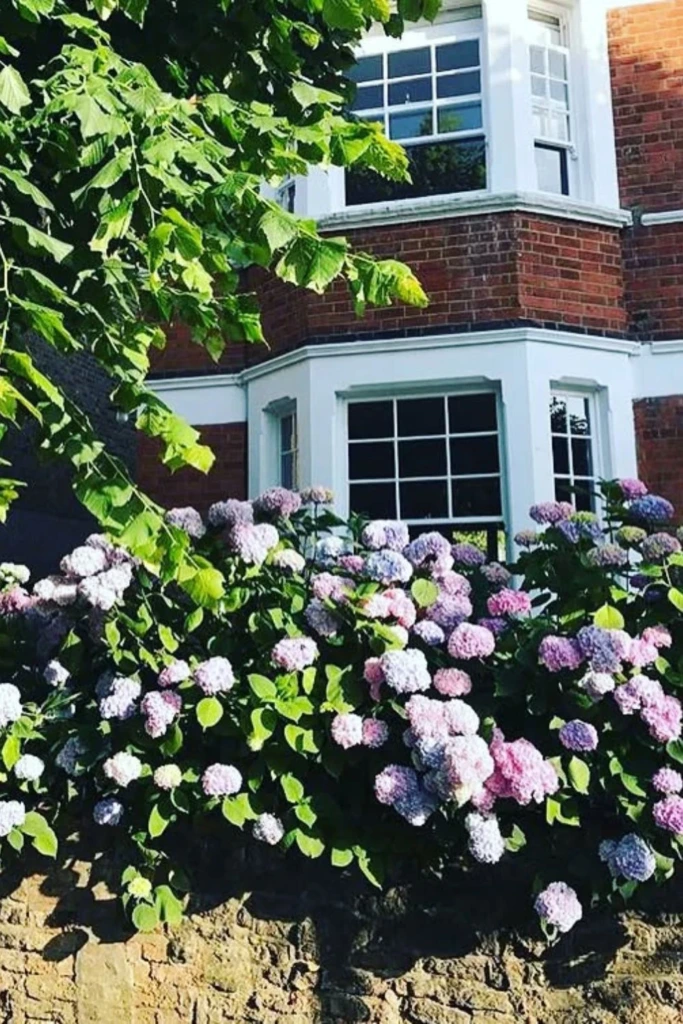
Large hydrangea shrubs can soften the appearance of a stone retaining wall or garden boundary.
Choose varieties with mature dimensions appropriate for the available space, then plant them where their foliage and flowers can extend naturally over the edge without blocking paths.
White, pink, or blue hydrangeas can complement stone, brick, and painted house exteriors. Flower color in some bigleaf hydrangeas depends partly on soil chemistry and the variety.
Maintain adequate moisture during establishment, and avoid placing large shrubs too close to walls that require regular inspection or repairs.
11. Symmetrical Red Bed
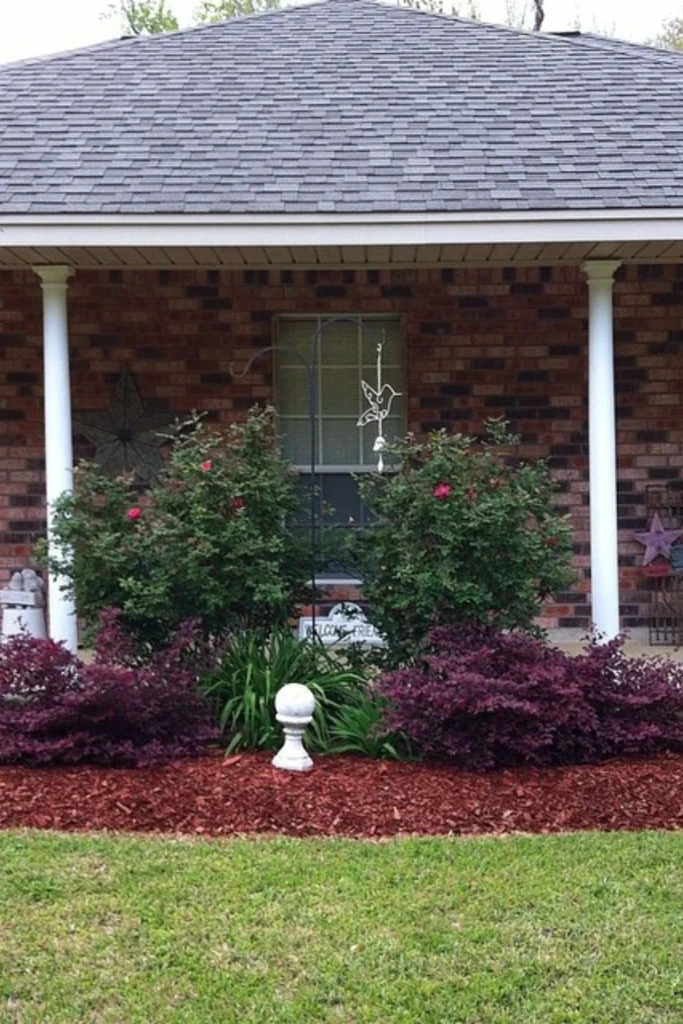
A symmetrical red flower bed creates a bold, organized appearance around a front entrance.
Begin with matching evergreen shrubs on either side of the doorway or walkway. Add red-flowering plants such as salvias, begonias, or geraniums according to your local growing conditions.
Repeat the same planting pattern on both sides to maintain visual balance. Dark mulch can provide a clean background that emphasizes the flowers.
A small decorative ornament may work as a focal point, but keep accessories minimal so the plants remain the main attraction.
12. Stone Edge Hydrangeas
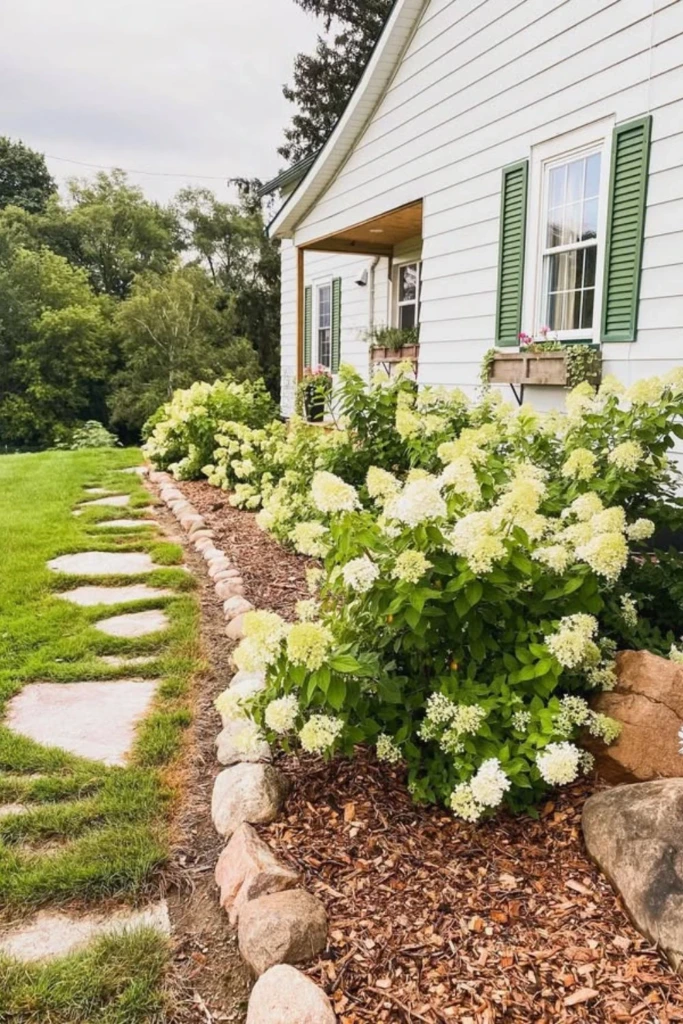
Stone-edged hydrangea beds combine natural landscaping materials with large, attractive flowers.
Install a low border using flat stones, cobblestones, or landscape edging blocks. Behind the border, plant compact hydrangeas with enough room for their mature growth.
White-flowering varieties are especially effective against darker mulch and green foliage.
You can add a few stepping stones for maintenance access without walking directly on the soil. This layout works well along front lawns, beside porches, and near garden pathways.
13. White Rose Hedge
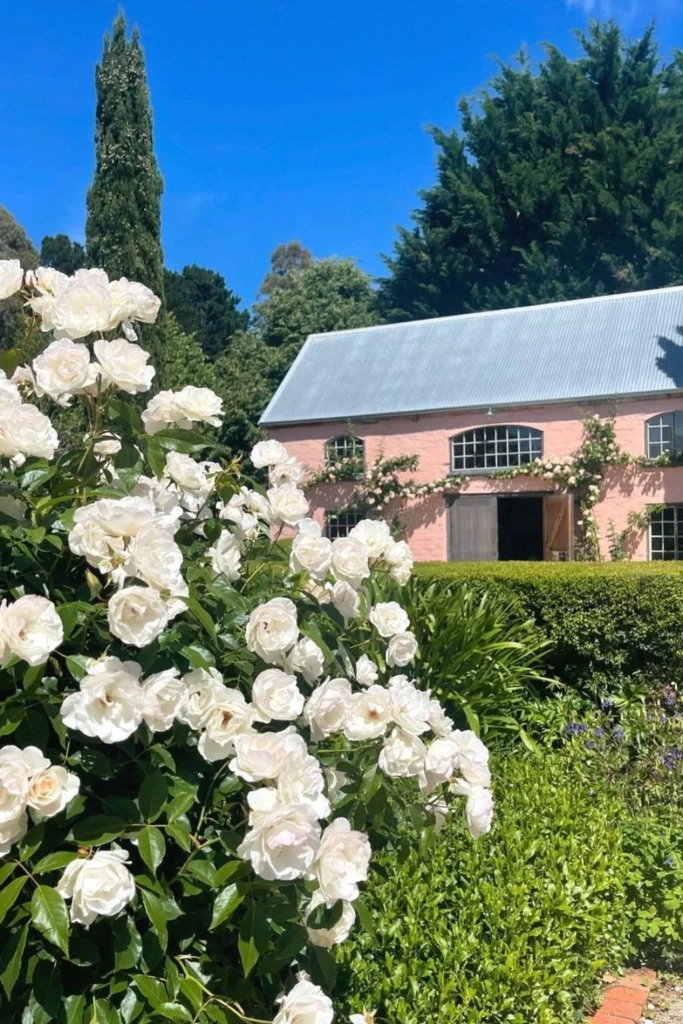
A white rose hedge creates a refined garden boundary with a classic appearance.
Select repeat-flowering shrub roses with suitable disease resistance for your climate. Plant them in a continuous row, following the recommended spacing for the chosen variety.
Provide a sunny location, fertile well-drained soil, and good airflow between plants. Regular pruning helps maintain a manageable shape and encourages healthy growth.
Low evergreen plants can provide additional structure during periods when the roses are not blooming.
14. Colorful Balcony Bed
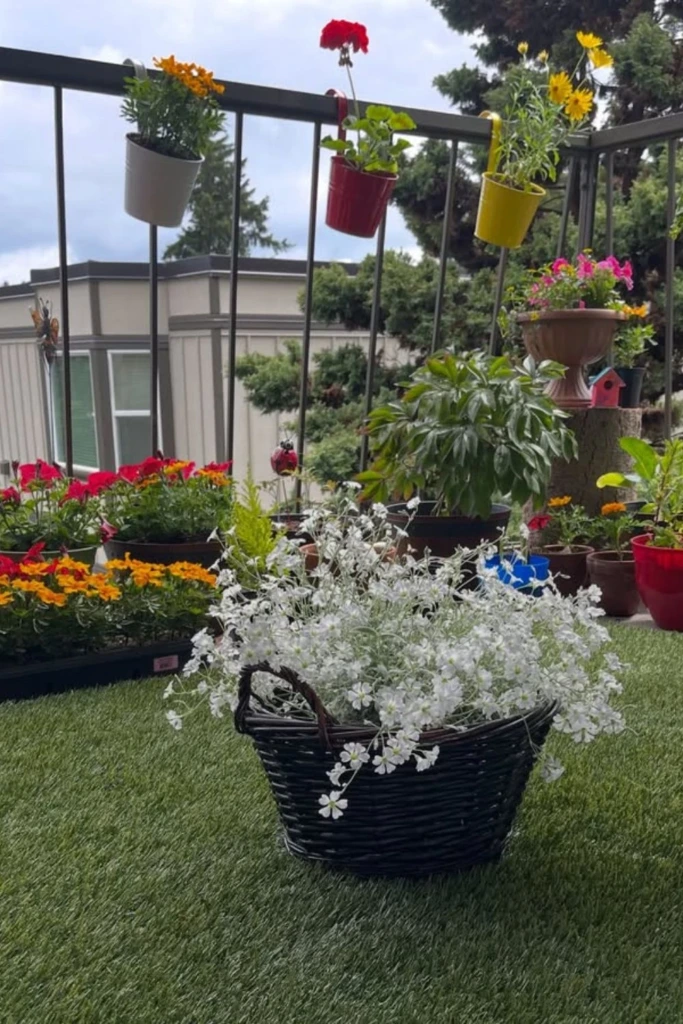
A small balcony or front porch can still accommodate a beautiful flower garden without traditional ground-level beds.
Use lightweight containers, railing planters, and hanging baskets to display flowers at different heights. Petunias, begonias, geraniums, and compact marigolds are useful choices depending on sun exposure.
Choose pots with drainage holes and use quality container potting mix rather than heavy garden soil.
Coordinating container colors can make the arrangement look intentional, while a mix of trailing and upright plants creates depth.
Always check balcony weight limits and secure railing planters properly.
15. Wild Cottage Bed
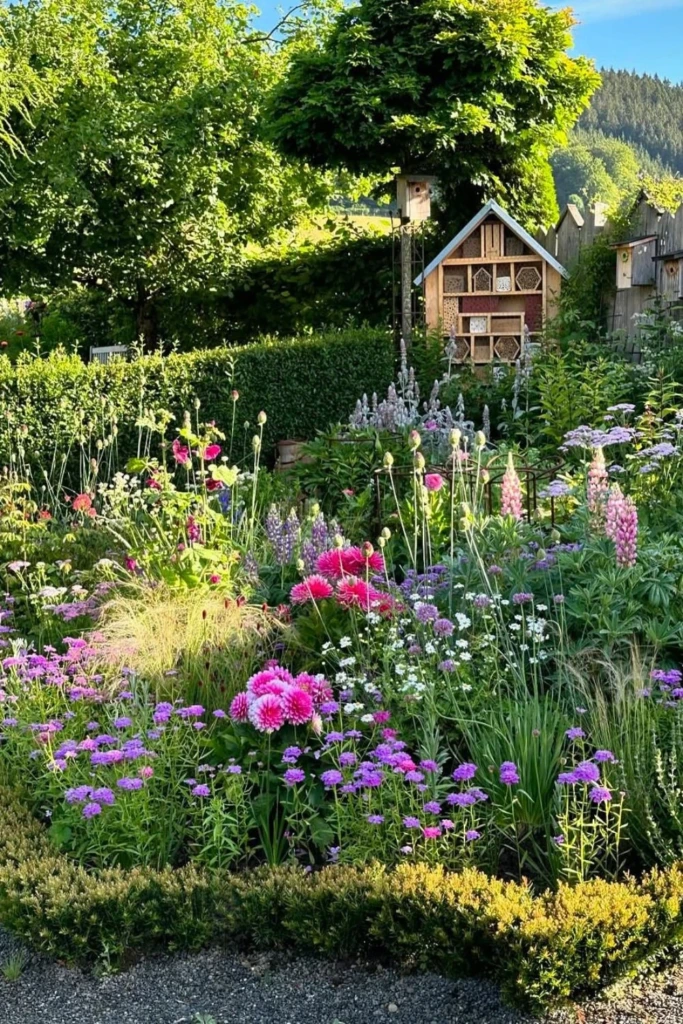
A wild cottage flower bed offers a relaxed alternative to formal landscaping.
Combine flowering perennials, self-seeding annuals, and ornamental foliage to create an informal planting arrangement. Suitable choices might include cosmos, foxgloves, salvias, daisies, and hardy geraniums, depending on your climate.
Plant in small groups and vary the heights to create a naturally layered appearance.
A narrow border of low shrubs or simple edging helps maintain a tidy boundary between the garden and lawn.
Choose a few repeating flower colors to give the arrangement a cohesive look.
16. Tulip Fountain Border
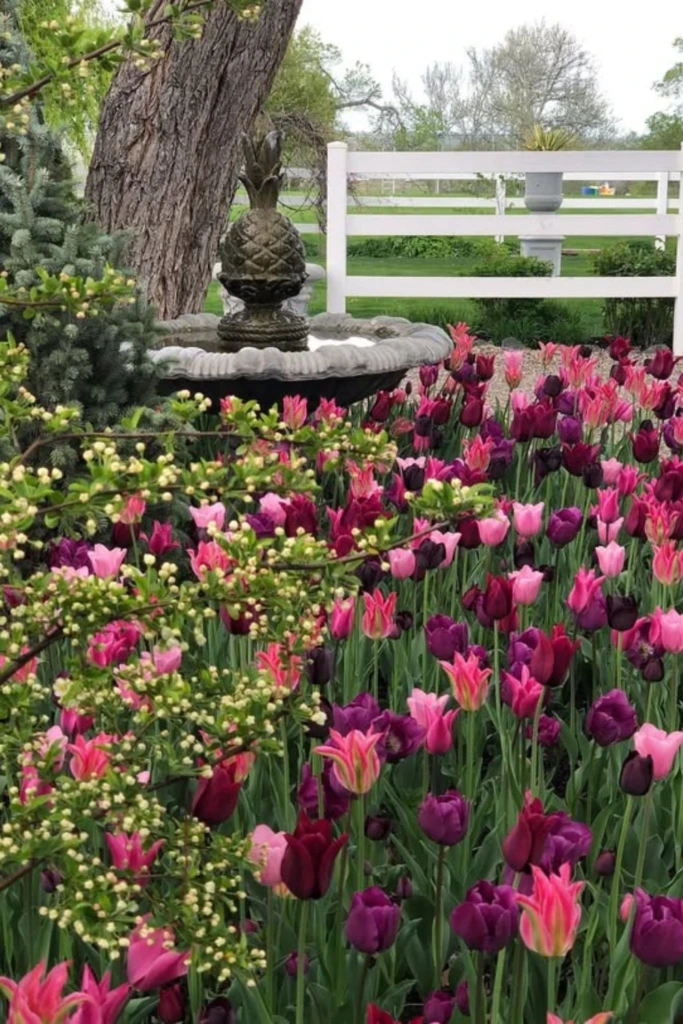
Tulips planted around a garden fountain create a striking spring display.
Use purple, pink, or white tulips in curved groups that follow the shape of the water feature. Surround them with low evergreen foliage or spring groundcovers to maintain a finished appearance.
Leave a clear maintenance area around the fountain and avoid placing bulbs where the soil remains waterlogged.
For additional seasonal interest, replace fading tulip displays with summer annuals or include perennials that emerge later in spring.
17. Meadow Tulip Patch
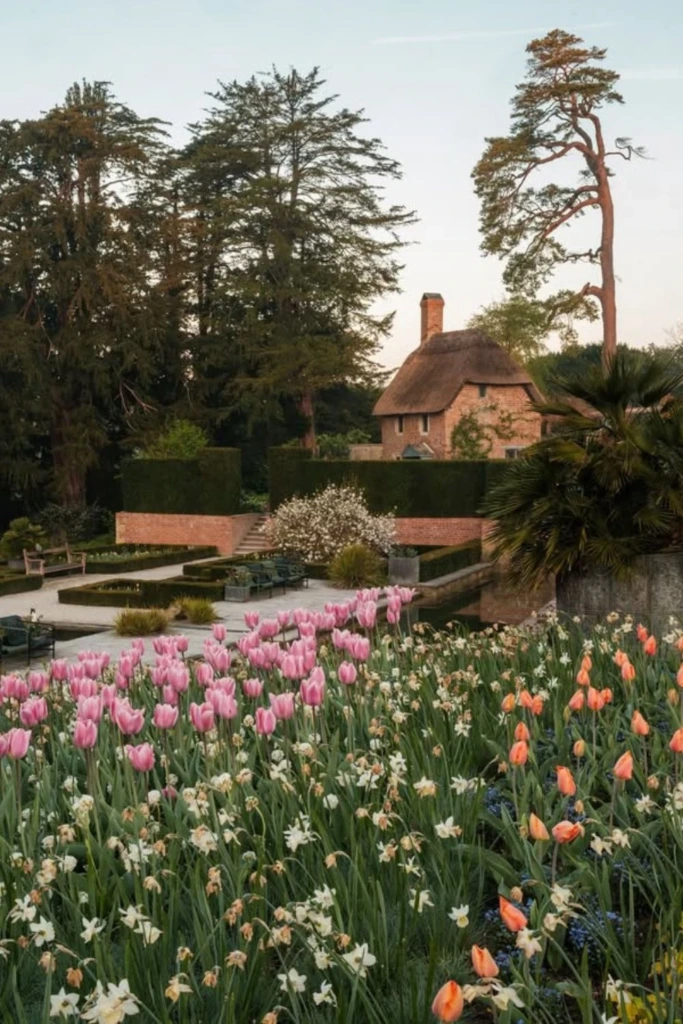
A meadow-style tulip bed works beautifully in front yards with enough space for informal planting.
Instead of arranging bulbs in straight lines, scatter them across the planned area and plant them where they fall, adjusting spacing as needed.
Combine pastel tulips with fine-textured grasses and other spring bulbs for a naturalistic appearance.
Choose grasses that won't overwhelm the tulips, and avoid mowing the area until bulb foliage has finished storing energy for the next growing season.
This design looks especially attractive along curved pathways and open lawn borders.
18. Barrel Tulip Bed
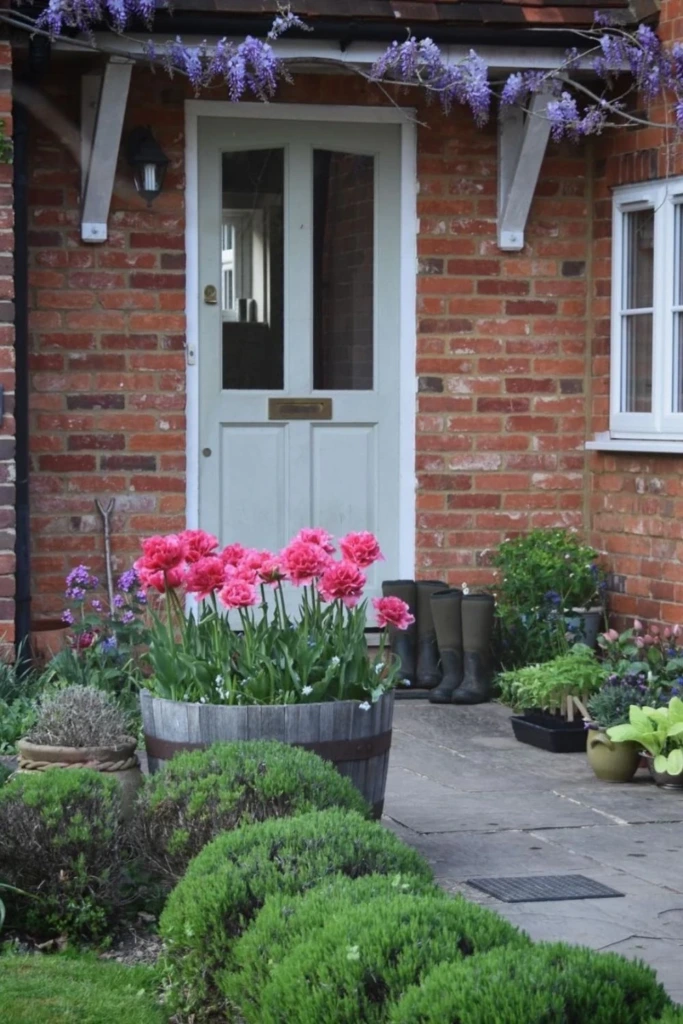
A wooden barrel planter offers a simple way to introduce spring flowers near a front door or porch.
Use a sturdy half-barrel with drainage holes and fill it with a well-draining container mix. Plant tulip bulbs at the appropriate depth and spacing for the variety.
For a fuller arrangement, combine tulips with small pansies or other cool-season flowers.
Place the barrel where it receives suitable light and won't obstruct the entrance. In cold climates, container-grown bulbs may need protection from repeated freezing and thawing.
The barrel can be replanted with summer flowers once the tulip season ends.
19. Potted Tulip Path
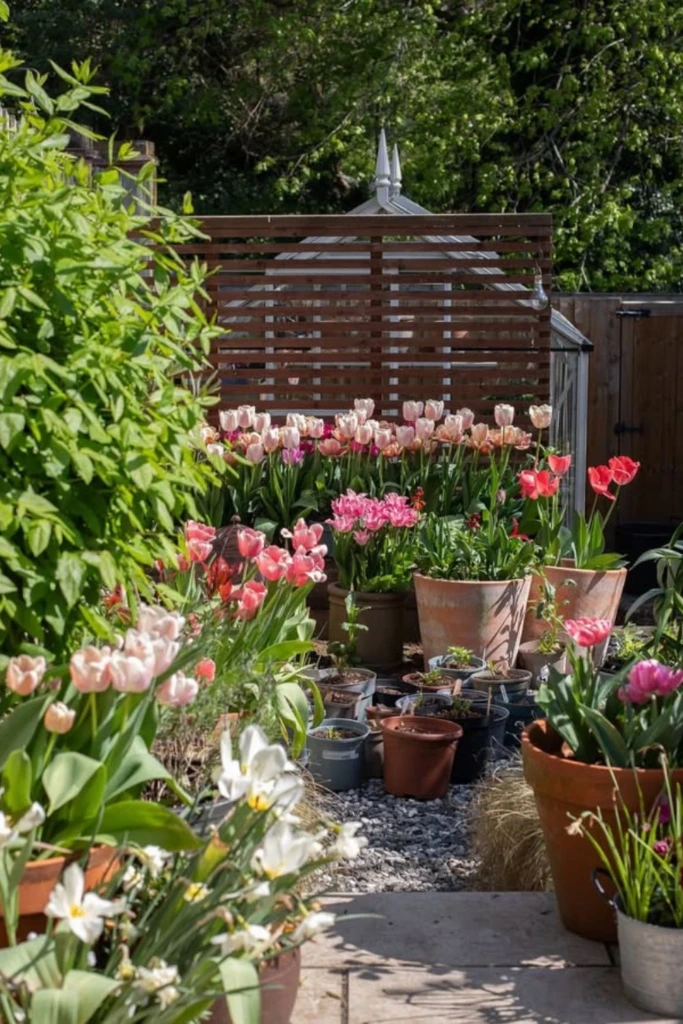
Terracotta pots filled with tulips can create an attractive entrance without permanent landscaping changes.
Arrange containers along the sides of a walkway, using matching or complementary pot sizes. Plant tulips in shades of pink, coral, red, or white for a coordinated seasonal display.
Keep the containers far enough from the path to allow comfortable walking.
After the tulips finish blooming, replace the display with warm-season flowers. This flexible approach is especially useful for renters and homeowners with limited planting space.
20. Layered Tulip Terrace
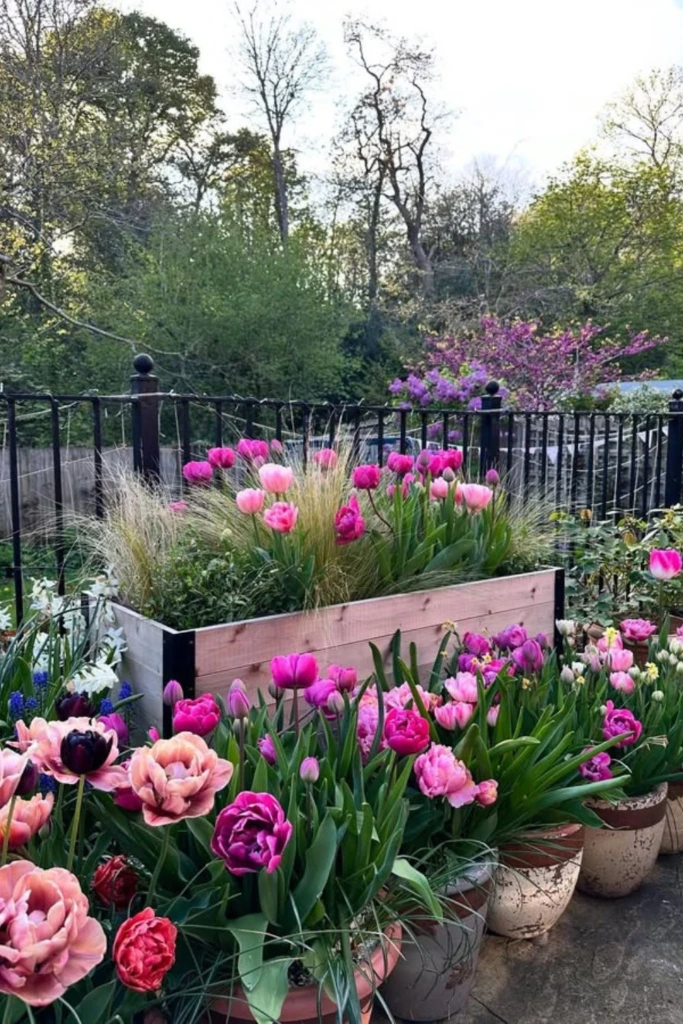
A tiered arrangement of tulip containers can turn a small patio or entrance into a colorful spring garden.
Place larger planters at the back and smaller containers toward the front. Use sturdy plant stands or existing steps to introduce additional height.
Combine tulips with contrasting foliage and early-season flowers for a fuller appearance.
Choose pots with proper drainage and avoid stacking heavy containers on unstable surfaces.
This approach allows you to create an impressive flower display without digging a traditional garden bed.
21. Formal Tulip Hedge
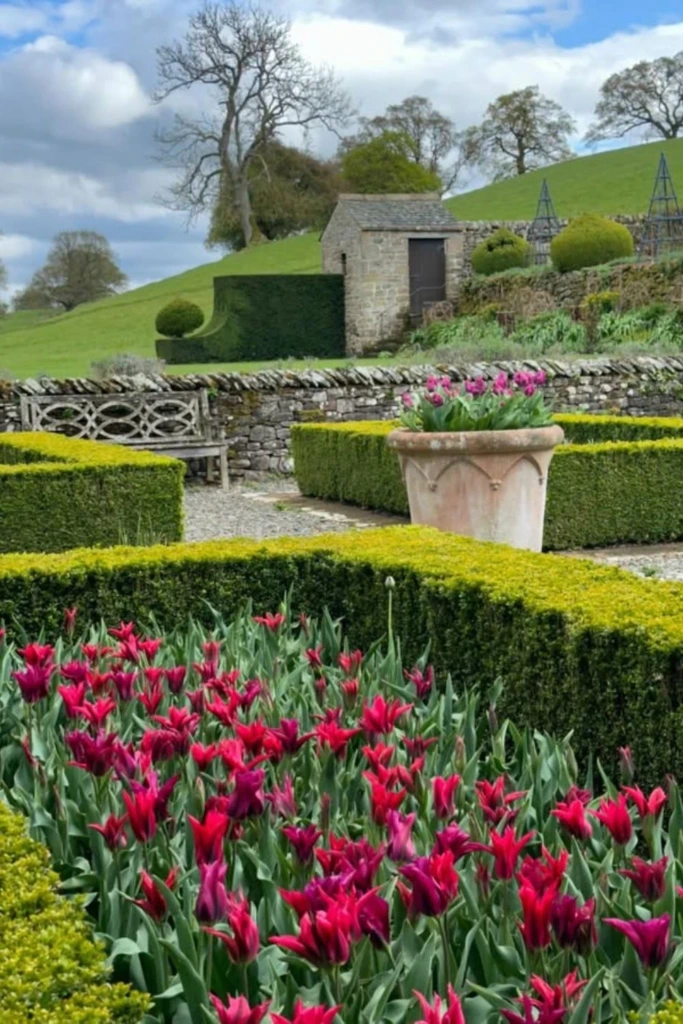
A formal tulip hedge combines neatly maintained evergreen borders with bright seasonal flowers.
Use low-growing boxwood or another suitable compact shrub to outline a rectangular or curved planting area. Inside the border, plant tulips in organized groups or rows.
Red tulips against deep green foliage produce a particularly strong visual contrast.
Keep the hedge trimmed and remove weeds regularly to preserve the clean appearance. Once tulips finish flowering, use appropriate summer bedding plants to maintain seasonal interest.
22. Field Flower Rows
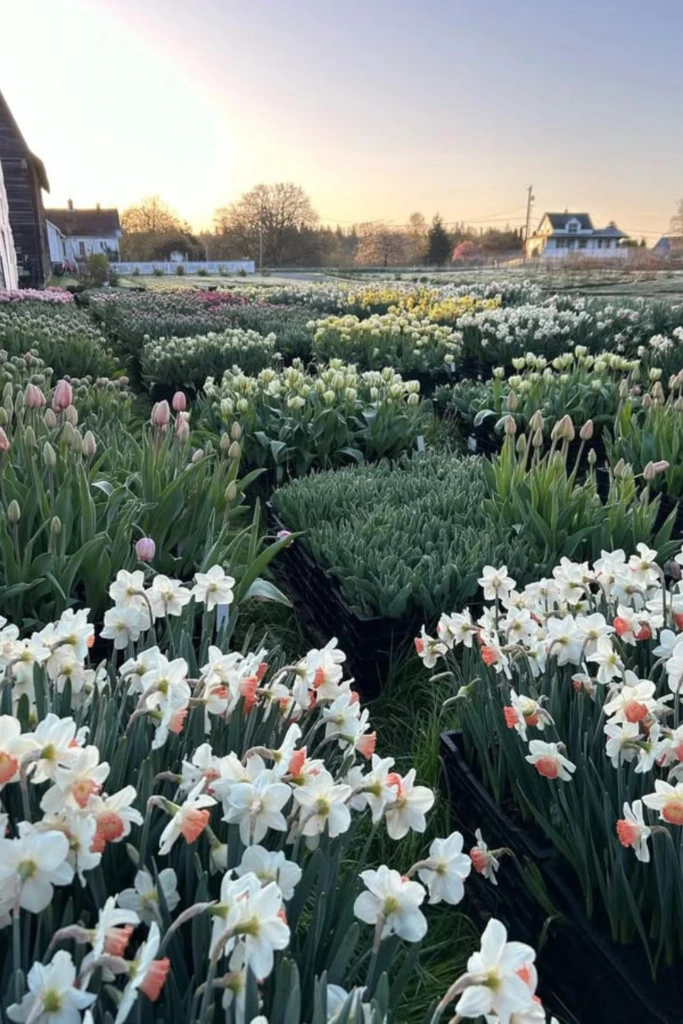
Rows of spring flowers can give a front garden a charming, countryside-inspired appearance.
Create long planting strips using tulips, daffodils, and other seasonal bulbs. Rather than mixing every flower randomly, group similar varieties into broad sections.
This makes the display easier to appreciate from the street and helps create a sense of rhythm across the garden.
Leave sufficient space between planting rows for maintenance, especially in larger beds.
For a more natural effect, gently curve the rows to follow the shape of your lawn or pathway.
23. 3. English Cottage Border
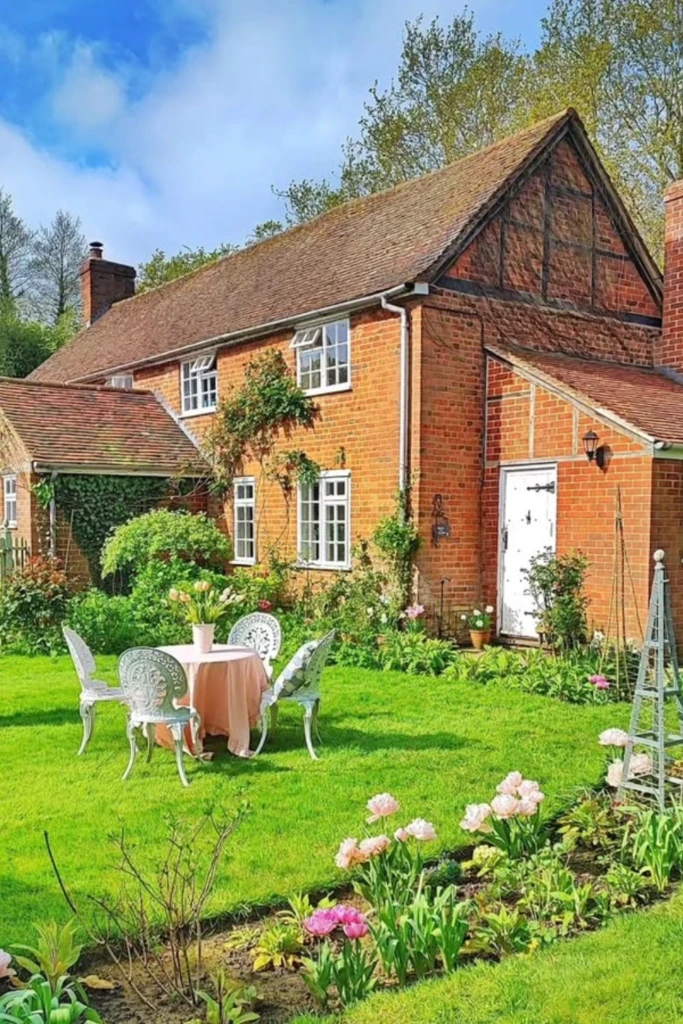
An English cottage border combines abundant flowers, soft foliage, and traditional garden details.
Plant spring bulbs such as tulips among hardy perennials, climbing roses, and other flowering plants suited to your growing conditions. Allow some plants to overlap naturally while keeping walkways clear.
A brick wall or traditional fence makes an attractive background for climbing plants supported by a suitable trellis.
Add a small bistro table or decorative bench if space allows.
The key is to combine generous planting with enough structure to prevent the garden from becoming difficult to maintain.
24. Symmetrical Raised Beds
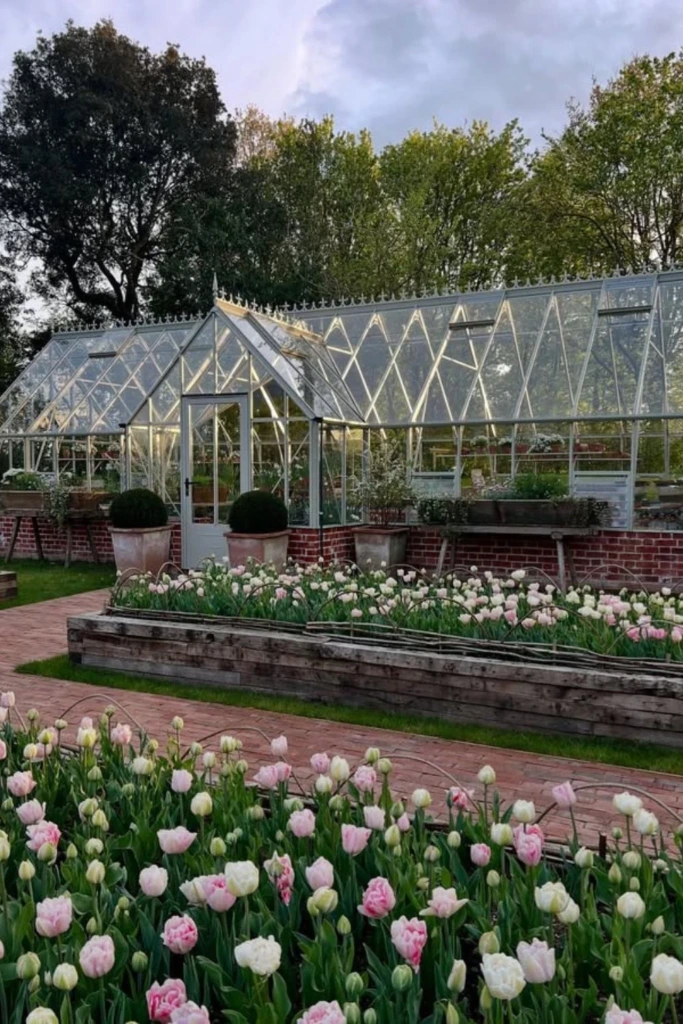
Matching raised flower beds provide a clean, organized look for front entrances.
Build two identical planters from rot-resistant wood, stone, or suitable landscape blocks. Position them on either side of a walkway to create a balanced arrangement.
Fill the beds with quality soil and plant white tulips, compact evergreen shrubs, or seasonal flowers.
Make sure raised beds drain properly and do not direct excess water toward the house foundation.
This design works particularly well with contemporary homes and straight garden paths.
25. Courtyard Flower Borders
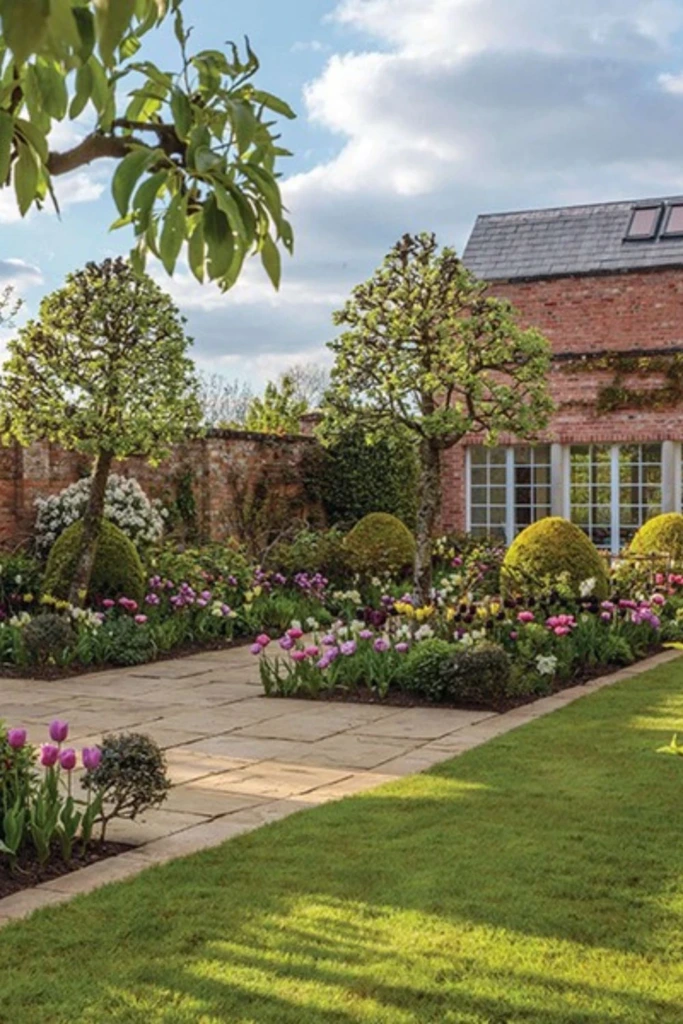
Courtyard-style flower beds can make a front patio or paved entrance feel greener and more inviting.
Create narrow planting borders around the perimeter of the space, leaving the central area open for walking or seating.
Combine flowering plants such as roses and tulips with compact shrubs or small topiary trees.
Use repeating plant varieties to connect different sections of the courtyard visually.
If the area is enclosed by walls, check how much sunlight reaches each planting bed before choosing flowers.
26. Pink Tulip Border
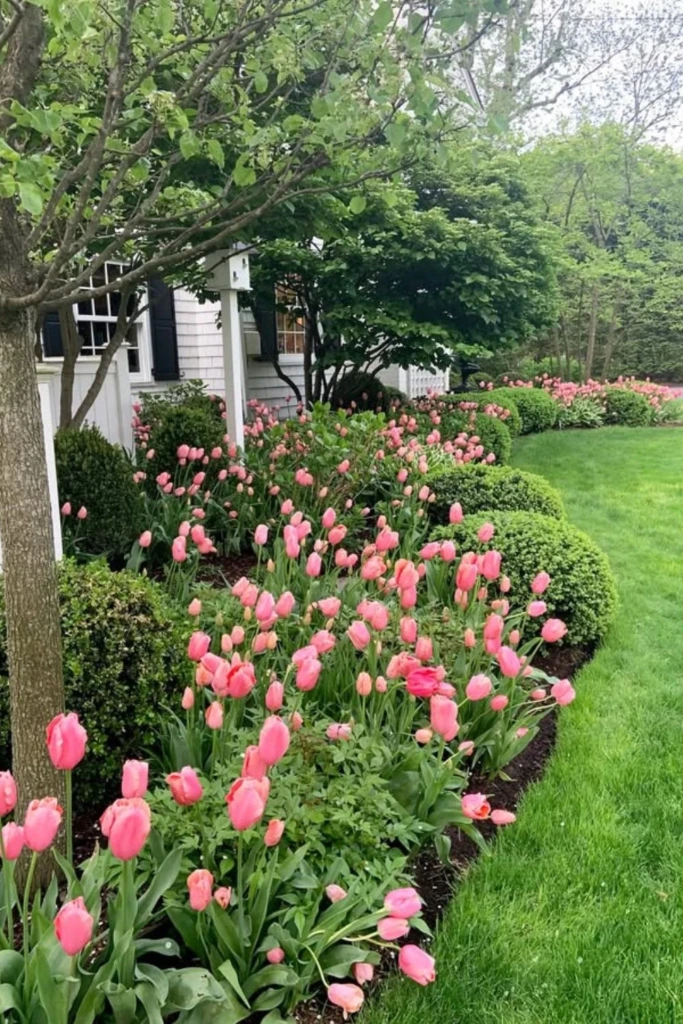
A border of pink tulips is a simple way to introduce spring color along the front of a house.
Prepare a planting strip with well-drained soil and arrange the bulbs in groups for a fuller display. Mix light and deeper pink varieties for subtle variation.
Small evergreen shrubs can provide year-round structure behind the tulips.
Avoid planting directly against the foundation, and ensure the bed slopes or drains away from the building.
In regions where tulips don't reliably return each year, treat them as seasonal bulbs and plan for replacement planting.
27. Modern Grass Mix
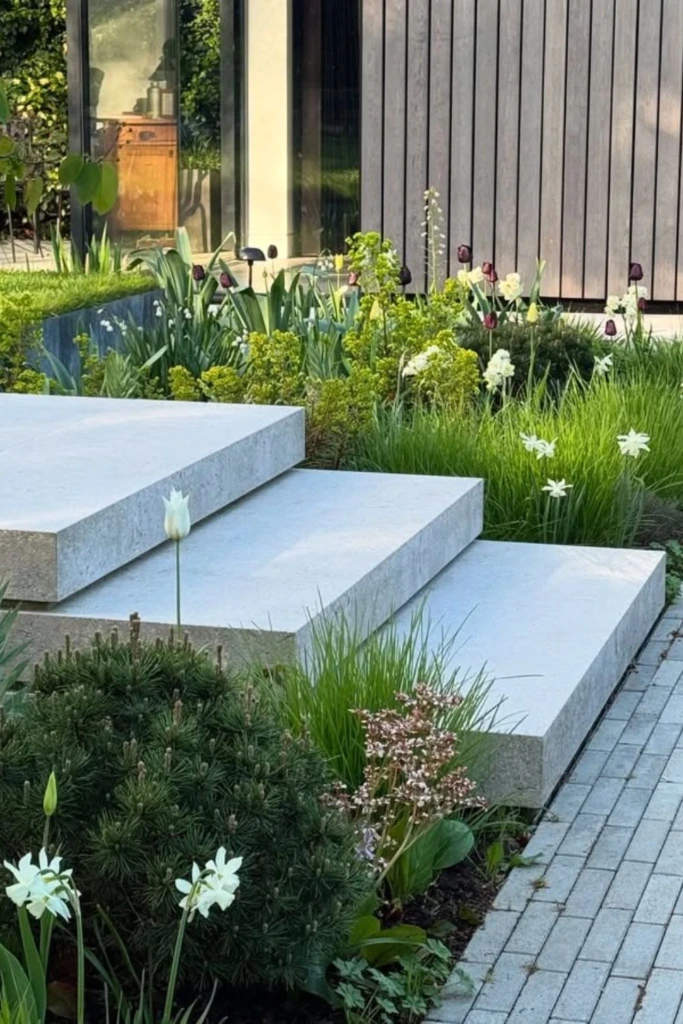
Ornamental grasses and flowering bulbs make an excellent combination for a modern front yard.
Choose grasses with upright or arching forms, then introduce dark purple tulips and soft yellow spring flowers for contrast.
Arrange plants in repeated groups rather than using too many different varieties. Gravel mulch or simple metal edging can reinforce the contemporary appearance.
Select noninvasive ornamental grasses suited to your region, and consider their mature size before planting.
This design offers visual interest through foliage texture even when few flowers are blooming.
28. Charming Door Garden
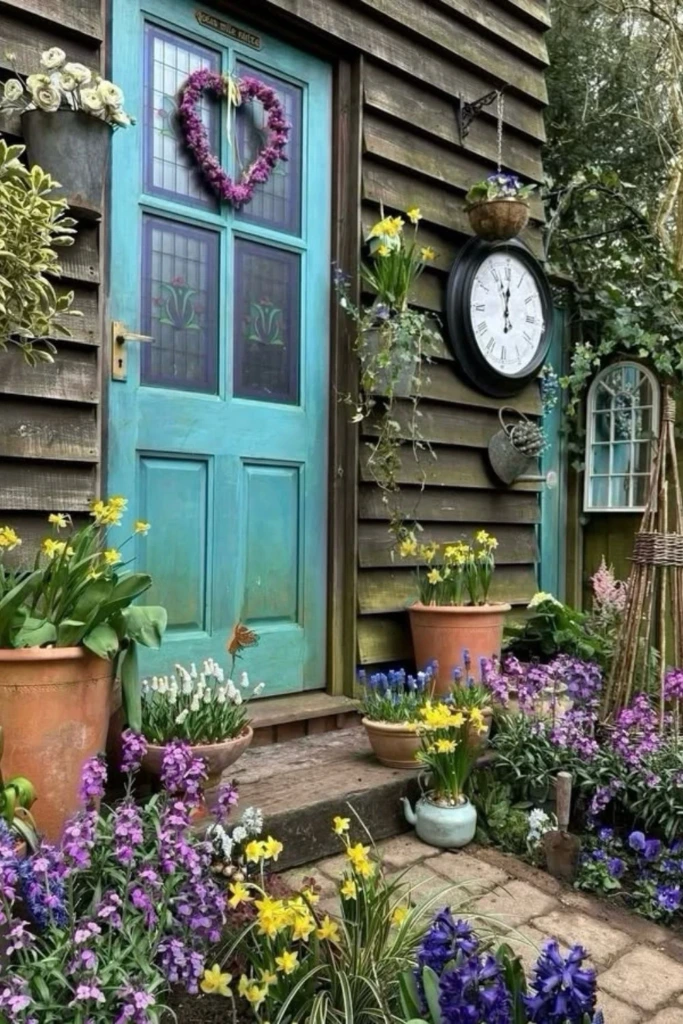
A colorful doorstep garden can make even a small entrance feel warm and inviting.
Arrange containers filled with daffodils, hyacinths, and miniature tulips near the front door. Use taller planters at the back and shorter pots closer to the edges.
Hanging baskets can add another planting level without occupying valuable floor space.
Choose a consistent container material or color scheme to keep the display visually connected.
Keep doorways, steps, and handrails unobstructed, and replace seasonal flowers as needed.
29. Cottage Flower Walls
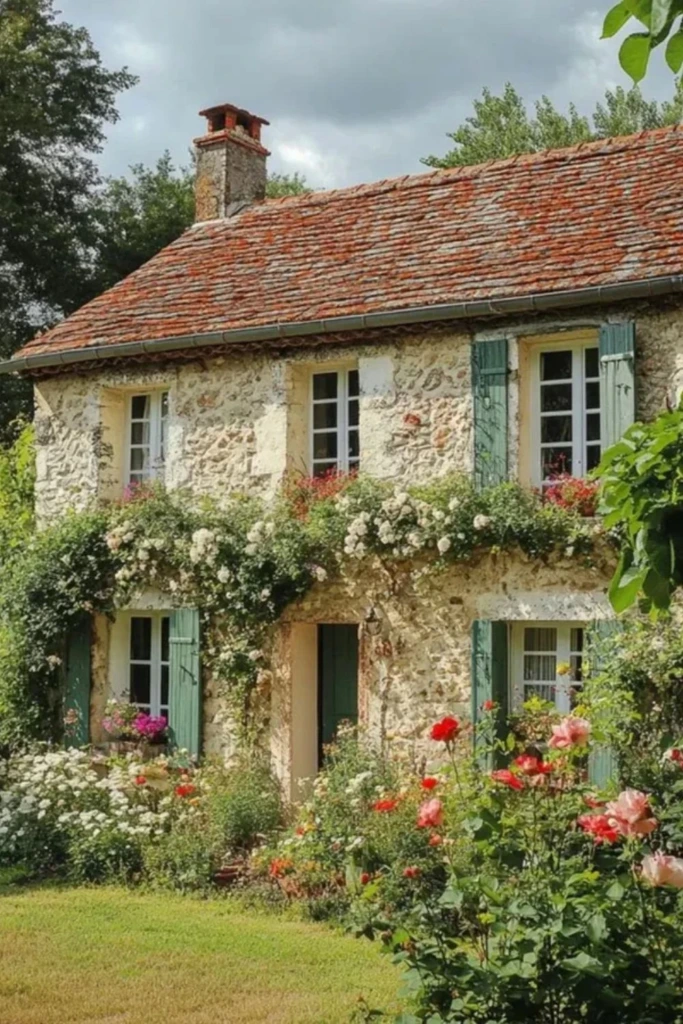
Flowering vines and climbing roses can transform a plain exterior wall into an attractive garden feature.
Install a sturdy trellis or appropriate support system near the wall, leaving enough clearance for airflow and maintenance.
Train climbing roses, clematis, or other suitable flowering vines along the structure. Add smaller flowering plants at the base to create a layered appearance.
Choose plants carefully because some vigorous climbers can become difficult to control.
Regular pruning and secure supports help maintain a beautiful display without damaging the building.
30. Vibrant Wild Bed
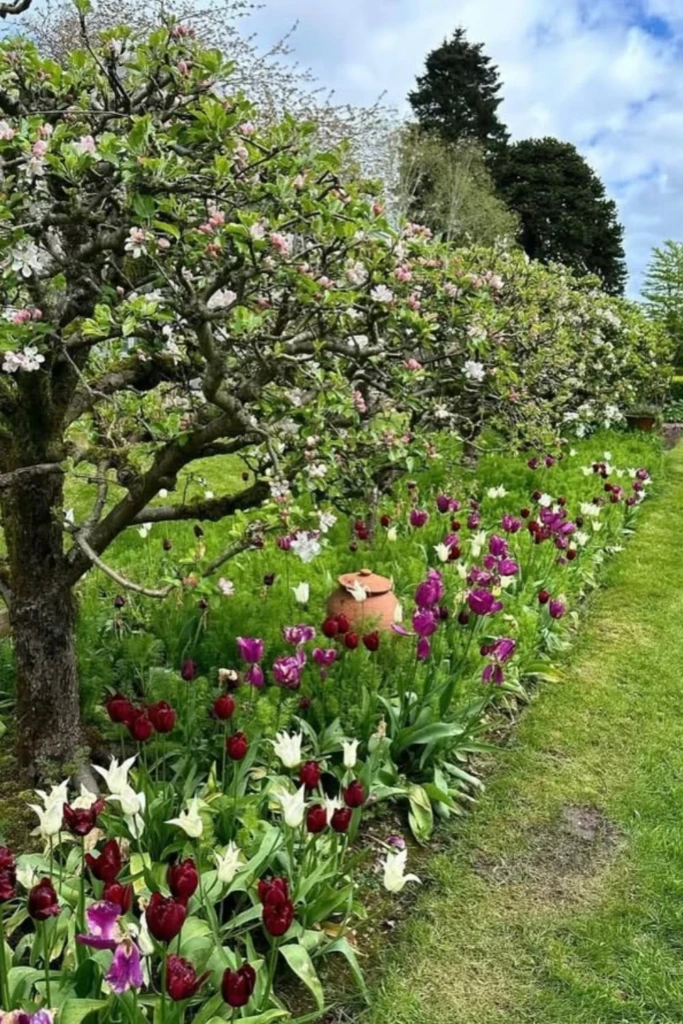
A vibrant wildflower-style bed is ideal for homeowners who enjoy colorful, informal gardens.
Combine spring bulbs such as daffodils and hyacinths with later-flowering annuals and perennials. Choose plants with different bloom periods so the bed remains interesting across multiple seasons.
Use varying plant heights and foliage textures to create movement throughout the planting area.
Native flowering species can be particularly valuable for supporting local pollinators when selected appropriately for your region.
Although this style looks natural, occasional weeding, thinning, and cutting back are still important for maintaining healthy growth.
31. Front Yard Orchard
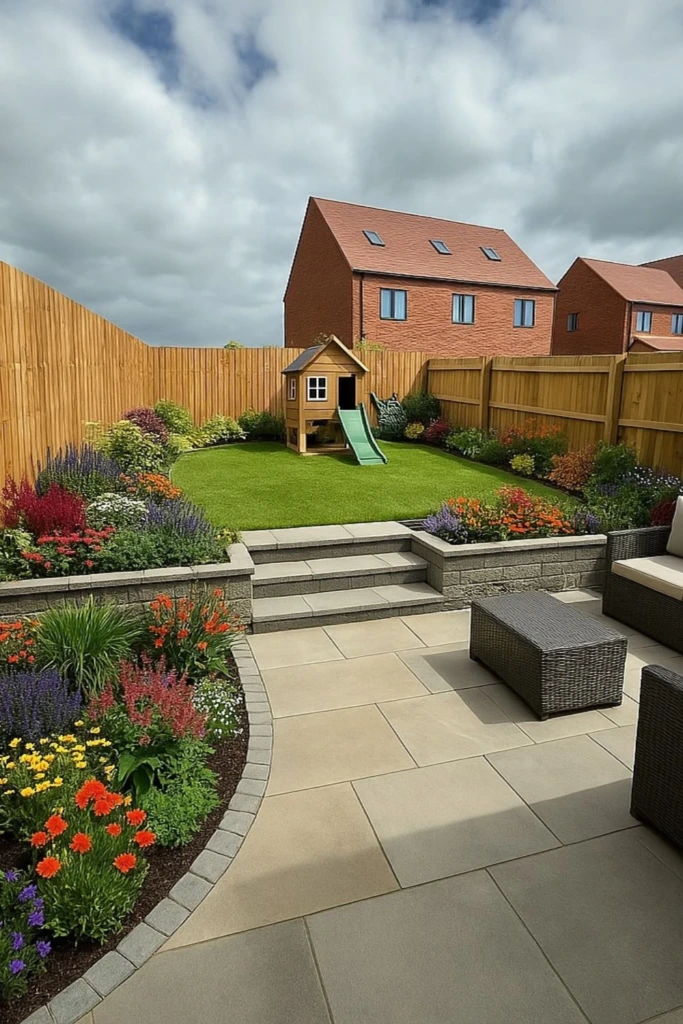
A small front yard orchard combines ornamental landscaping with the possibility of growing fresh fruit.
Start with one or two compact fruit trees suited to your climate and available space. Dwarf apples, pears, citrus, or other locally appropriate varieties may work depending on growing conditions.
Surround the trees with low-growing flowers, spring bulbs, and small shrubs, leaving sufficient clearance around the trunks.
Consider mature tree height, root spread, sunlight, pollination needs, and maintenance before planting.
A thoughtfully planned orchard-style flower bed can provide seasonal blossoms, attractive foliage, and a productive landscape that feels both beautiful and practical.