22 DIY Wooden Swing Ideas for 2026
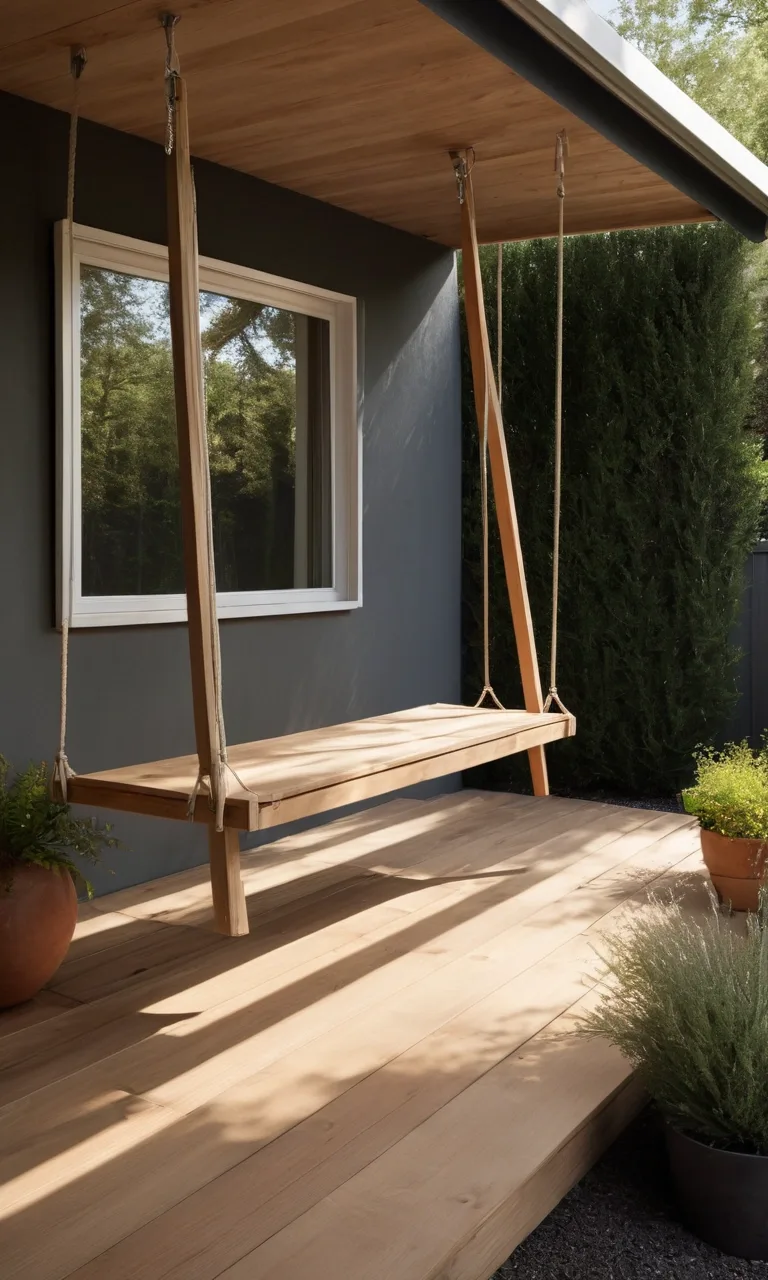
A wooden swing can turn an ordinary porch, garden, balcony, or living room into a comfortable place to relax. Building one yourself gives you the freedom to choose the dimensions, wood finish, suspension style, and decorative details that suit your home.
Before starting, consider the available space, the swing's intended use, and the materials you already own. A straightforward bench swing may be an affordable weekend project, while a freestanding structure or an elaborate indoor design requires more planning, equipment, and careful installation.
The following 22 DIY wooden swing ideas offer inspiration for different spaces, decorating styles, and practical needs. Whether you prefer rustic garden furniture or a sleek indoor seat, there is a design worth considering.
Is it cheaper to build or buy a swing set?
Building a wooden swing can cost less than purchasing a ready-made model, particularly if you already have woodworking tools and can complete the project without professional assistance. You can also select your preferred materials and avoid paying for features you do not need.
However, the savings depend on more than the lumber price. Screws, chains, ropes, brackets, protective finishes, tools, and delivery can increase the total expense. More complicated projects may also require extra materials or professional installation.
Buying a manufactured swing set is often more convenient because its components are designed to work together, and assembly instructions are usually included. Some products also come with weight ratings and installation guidance.
Compare the complete cost of both options before deciding. A simple DIY bench may suit someone who enjoys woodworking, while a professionally designed swing or complete playground set may be a better investment when safety, convenience, and time are priorities.
1. Coastal Porch Swing
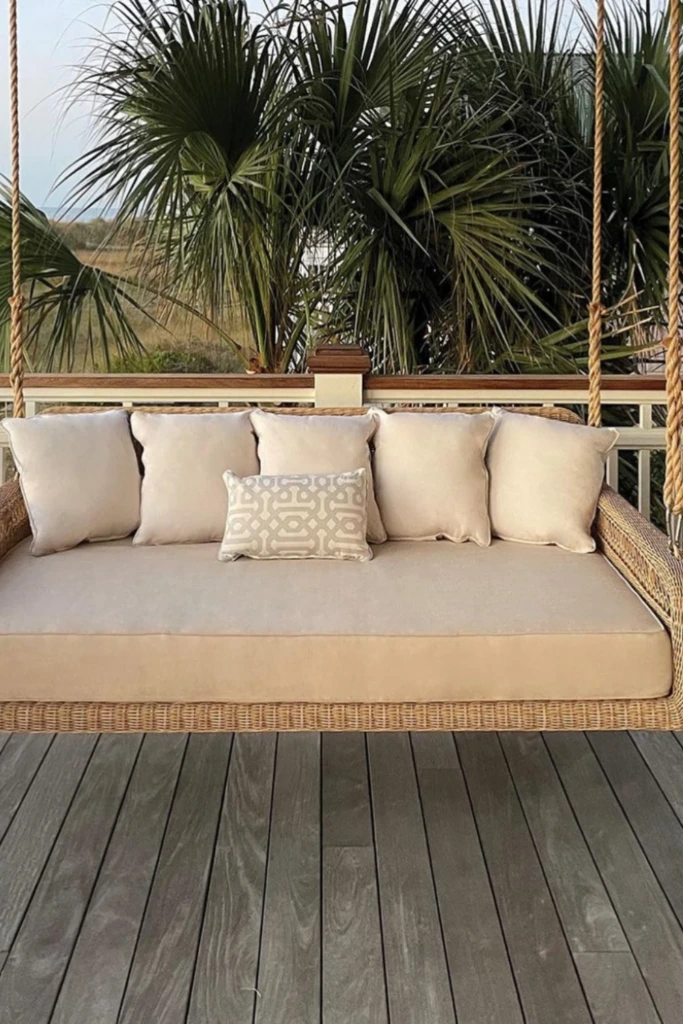
A coastal porch swing brings a relaxed, beach-inspired atmosphere to a covered outdoor space. Natural wood, light-colored cushions, and thick decorative rope create an inviting setting without making the porch feel crowded.
Choose weather-resistant timber and a finish that complements white walls, pale flooring, or other natural materials. Neutral cushions and a lightweight throw can complete the look while keeping the seat comfortable.
This design works particularly well on covered verandas and patios where you can enjoy fresh air without exposing the swing to constant rain and harsh sunlight. Make sure the suspension points are engineered to carry the combined weight of the swing and its occupants.
2. Minimal Wood Bench
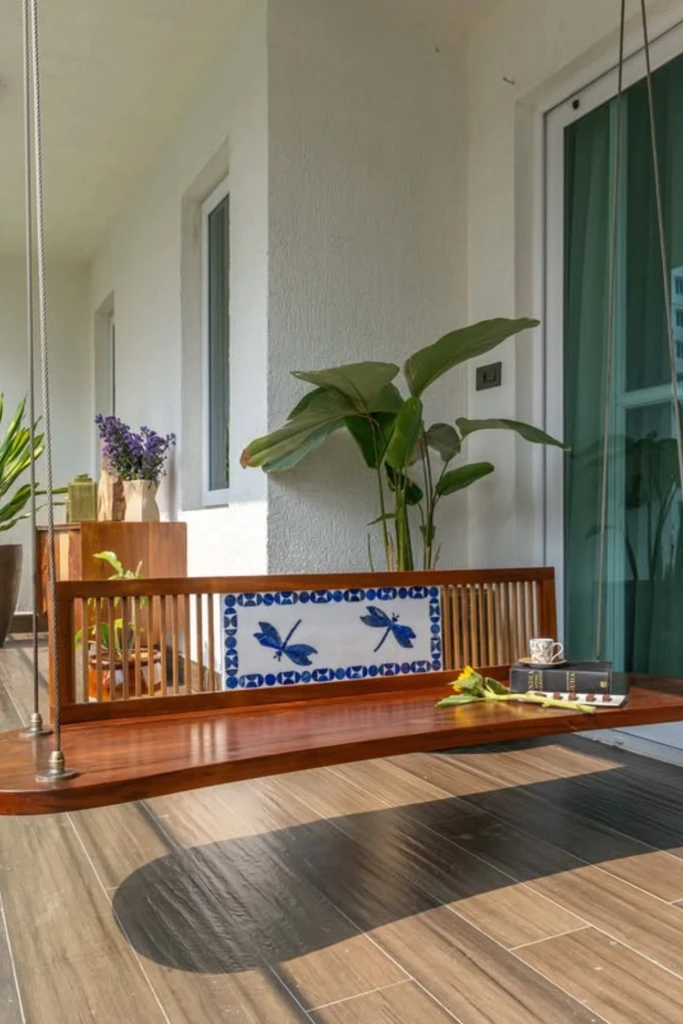
A minimalist wooden bench swing is ideal for anyone who appreciates simple furniture and uncluttered surroundings. Its clean lines make it suitable for modern balconies, compact porches, and contemporary outdoor seating areas.
Use a properly sized hardwood board or a carefully constructed wooden seat with smooth, rounded edges. Metal rods or suitable swing hardware can create a streamlined appearance, provided the supporting structure is strong enough for the intended load.
Keep accessories to a minimum. A small cushion or one outdoor pillow adds comfort without overwhelming the design. Before installing the swing on a balcony, check the available clearance and confirm that the building structure can safely support it.
3. Carved Indoor Swing
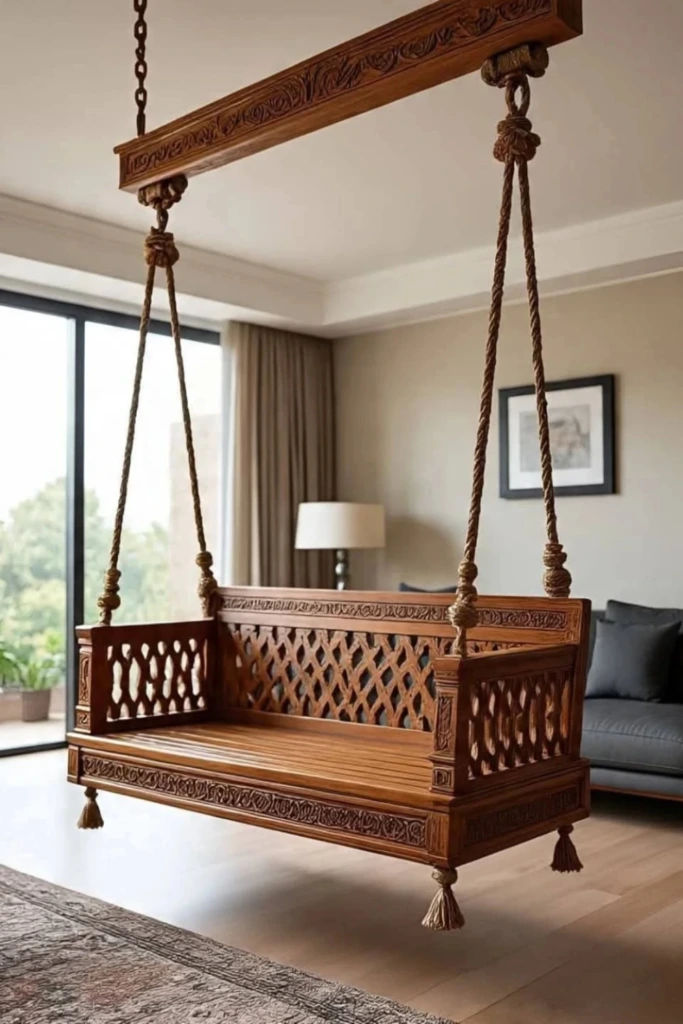
A carved indoor swing combines decorative craftsmanship with functional seating. Intricate woodwork, a rich finish, and carefully chosen upholstery can make the swing an attractive focal point in a spacious living room or bedroom.
Select hardwood suited to the design and use decorative details that complement your existing furniture. A carved backrest or patterned side panels can provide character without requiring excessive ornamentation throughout the room.
Installation is especially important indoors. Ceiling joists and decorative beams are not automatically suitable for hanging furniture. Have the supporting structure and mounting hardware assessed for dynamic loads, and use a qualified professional when necessary.
Once installed correctly, this style creates a pleasant spot for reading, quiet conversation, or relaxing at the end of the day.
4. Compact Hanging Seat
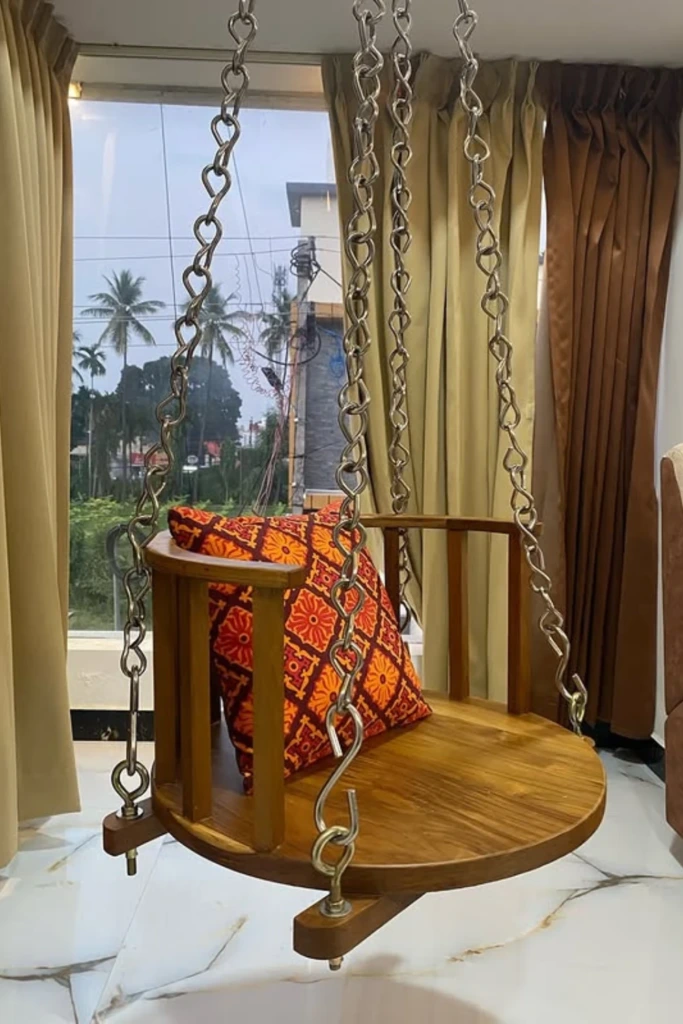
A compact hanging seat provides a swinging experience without occupying as much floor space as a conventional armchair. It is a practical option for a reading nook, sheltered patio, or an otherwise unused corner.
Start with a solid wooden seat that has been sanded smooth. Choose appropriately rated rope or chain, along with compatible connectors designed for the intended load. A single supportive cushion can make the seat more comfortable while maintaining its compact appearance.
Measure the area carefully so the swing has room to move without hitting walls, furniture, windows, or railings. This design is best for gentle recreational movement rather than heavy loads or vigorous swinging.
5. Balcony Plank Swing
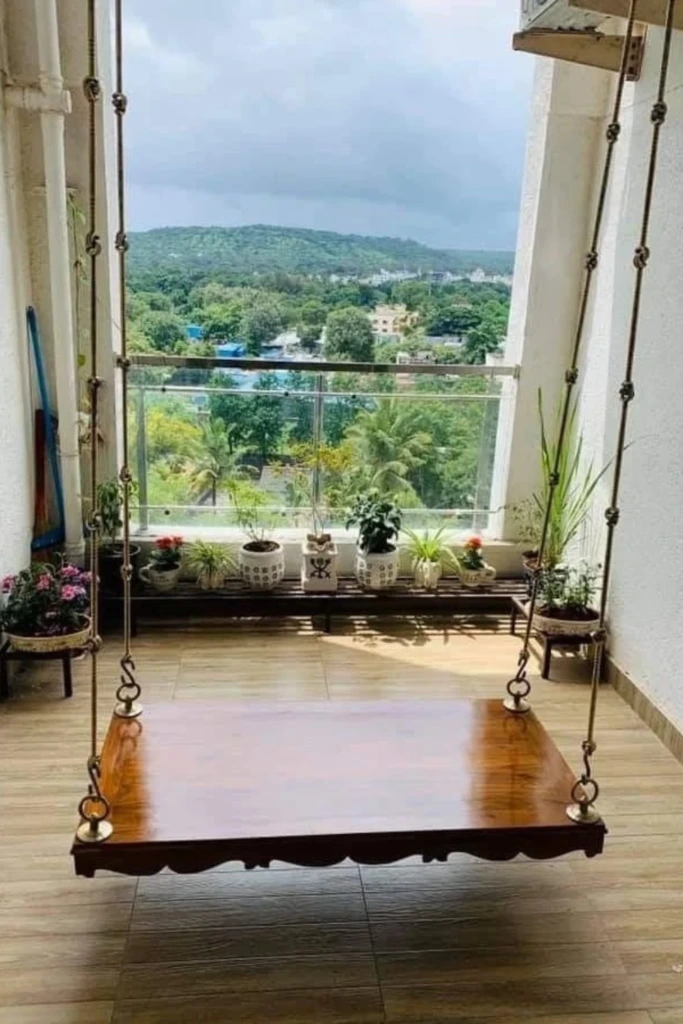
A plank swing is one of the simplest wooden designs to consider when space is limited. Its uncomplicated shape suits apartment balconies and small outdoor areas where bulky furniture would restrict movement.
Choose a sturdy, appropriately thick board without cracks, splits, or other structural defects. Round the edges and sand the surface before applying a finish suitable for outdoor use. Properly rated chains or other compatible suspension equipment can complete the design.
Potted plants can soften the surrounding space without taking up the seat itself. Keep the balcony walkway clear, and never attach a swing to a railing unless that structure has been specifically engineered and approved for the load.
6. Traditional Wooden Jhula
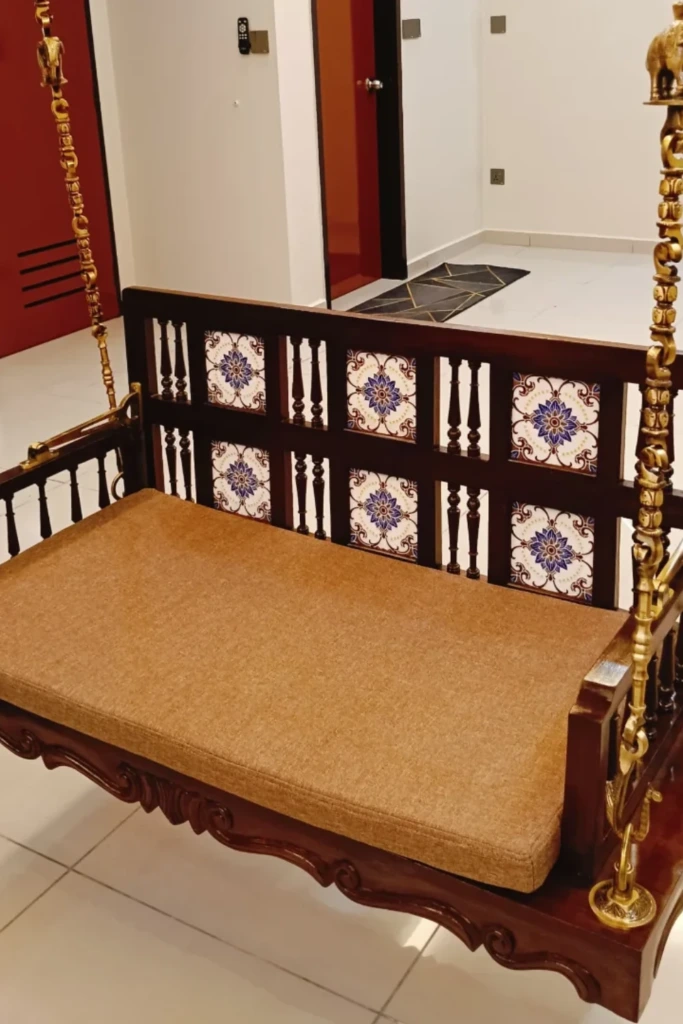
A traditional wooden jhula adds a classic, welcoming character to a home. Its substantial wooden seat, decorative carvings, and traditional silhouette make it particularly appealing in spacious living rooms, verandas, and wide corridors.
Choose a design with a comfortable seating depth and a backrest that provides adequate support. Hardwood can offer durability and an attractive finish, while decorative carving introduces visual detail.
Metal chains and suitable mounting hardware can complement the traditional appearance. However, the swing must be supported by a structure designed for its full load and movement. Consider the ceiling height, surrounding furniture, and access to the seating area before settling on a location.
For everyday comfort, add firm cushions that fit the seat securely and can be removed for cleaning.
7. Modern Indoor Jhula
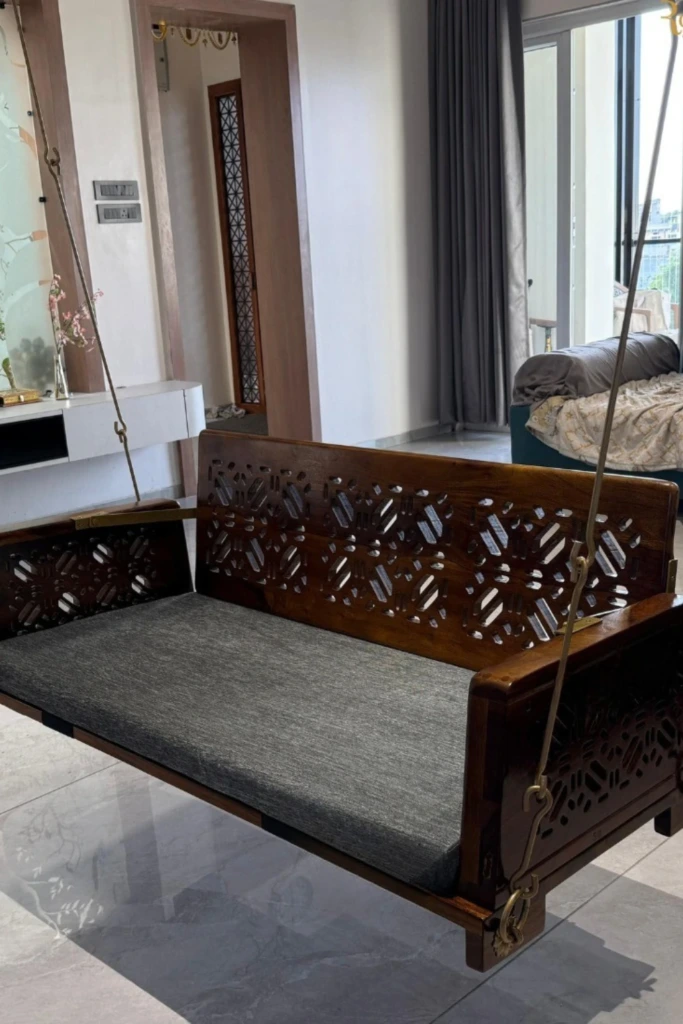
A modern indoor jhula combines the familiar comfort of a traditional swing with a cleaner, more contemporary design. Straight wooden panels, understated detailing, and neutral upholstery help it blend into modern interiors.
Oak or another suitable hardwood can create a warm finish that works well with neutral walls, simple lighting, and contemporary furnishings. Keep the decorative elements restrained so the swing complements the room instead of competing with other furniture.
Depending on the design, engineered suspension rods or suitable chains may provide the desired appearance. The attachment system must be selected for the actual structural conditions rather than appearance alone.
This style works well in a family sitting area or spacious bedroom where comfortable seating is just as important as visual appeal.
8. Daybed Style Swing
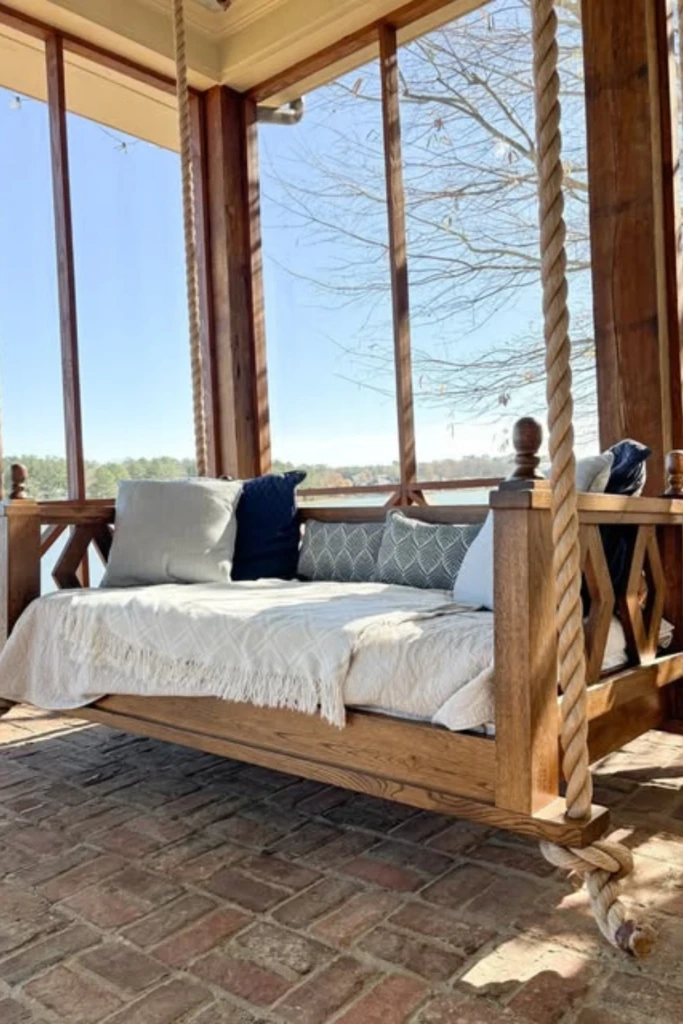
A daybed-style swing offers more room than a conventional bench, making it suitable for long afternoons spent reading, resting, or enjoying the outdoors. Its broad wooden platform can accommodate a generous mattress or several supportive cushions.
Build the seat around a carefully calculated frame rather than simply enlarging an ordinary swing bench. A wider platform places greater demands on the structure, suspension points, and connecting hardware. Every component must be suitable for the expected load.
Use outdoor-rated cushions and removable covers to simplify cleaning. Lightweight throws can add warmth without making the seat difficult to maintain.
A covered porch or sheltered terrace is usually a practical location, provided there is enough clearance for the platform to move safely.
9. Freestanding Garden Swing
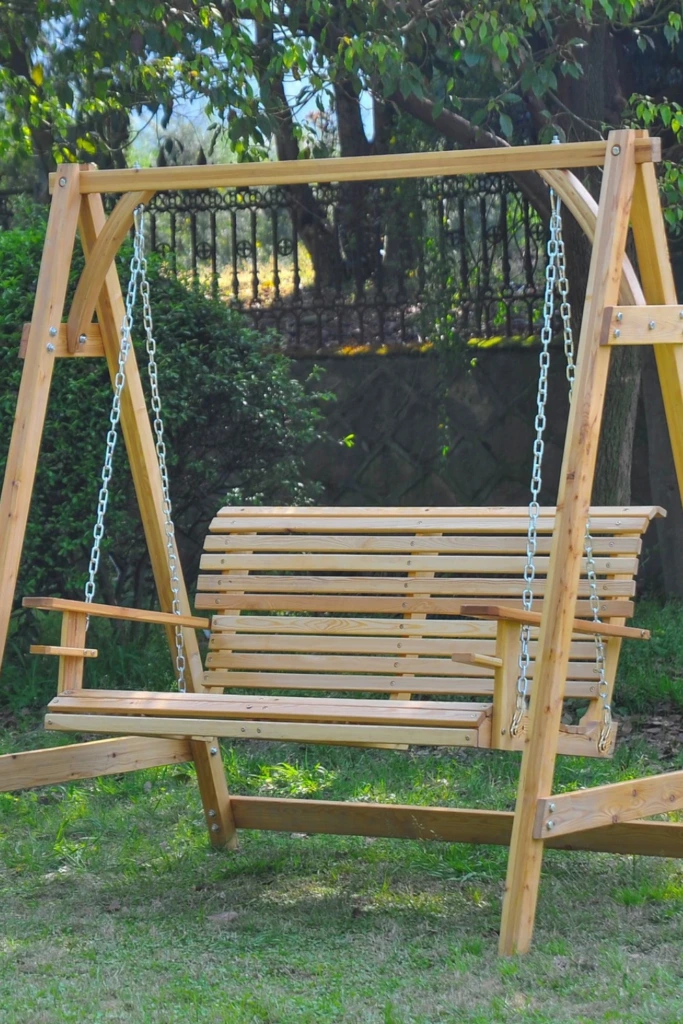
A freestanding garden swing is a versatile choice for a backyard without an appropriate porch beam or other overhead support. Its independent frame allows you to position the seating area in a suitable part of the garden.
An A-frame design is a popular option because the angled supports can provide a stable base when properly engineered. Use outdoor-rated timber, corrosion-resistant fasteners, and suitable bracing. The frame and its foundations or ground anchors must be designed for swinging forces, not merely the static weight of the seat.
A wooden bench with chain suspension gives the project a classic garden appearance. Choose a location with adequate clearance on every side and a firm, level base.
Inspect the frame, fasteners, and suspension components regularly, especially after severe weather or prolonged outdoor exposure.
10. Clean Frame Swing
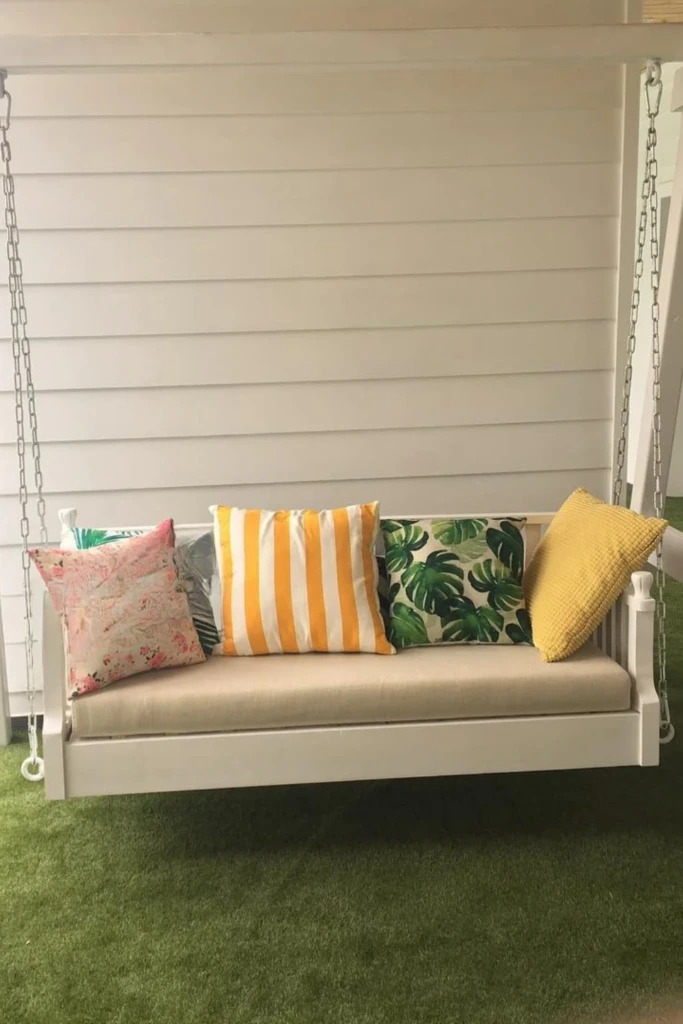
A clean-frame swing offers a more architectural look than a traditional garden bench. Its straight supports and simple geometry work well in contemporary patios, poolside seating areas, and landscaped courtyards.
Construct the frame using properly sized structural timber and secure connections. A painted or stained finish can help coordinate the swing with nearby fencing, decking, or outdoor furniture.
Colorful cushions introduce personality, while neutral upholstery creates a more understated result. Select fabrics designed for outdoor conditions and remove them when they are not in use if the area receives heavy rain.
The frame should be engineered for the swing's intended capacity and movement. Good proportions, suitable bracing, and secure anchoring matter more than decorative features.
11. Living Room Swing
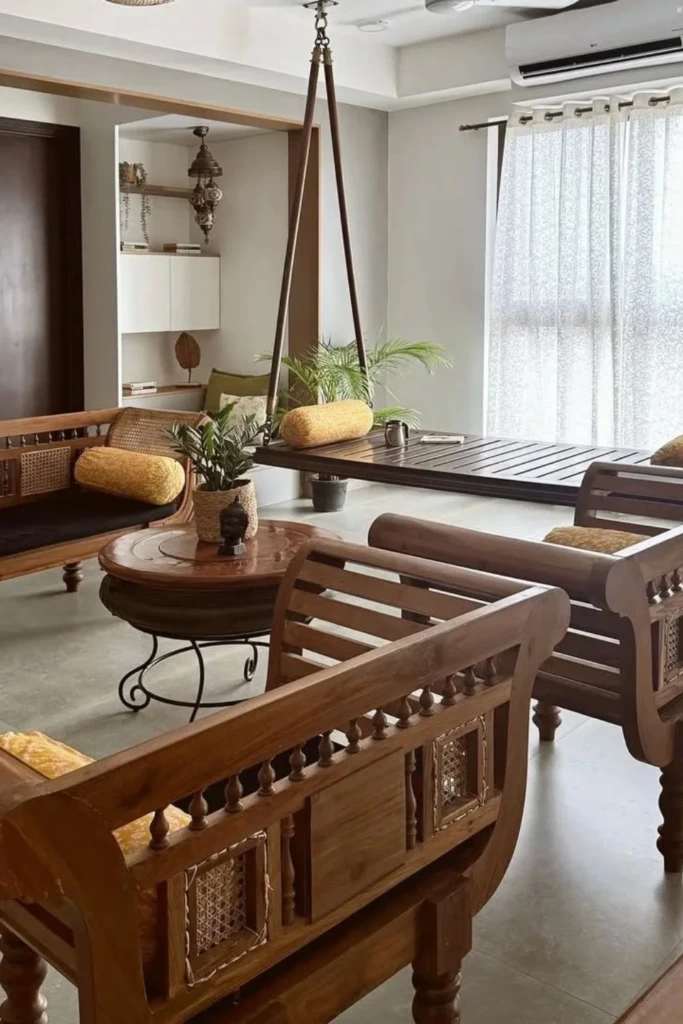
A living room swing can serve as an alternative to conventional lounge seating while introducing movement and visual interest. A broad wooden seat, supportive backrest, and comfortable upholstery help it feel like a natural part of the room.
Choose dimensions that suit the available space and the scale of nearby furniture. A swing that is too large can obstruct circulation, while an undersized design may look out of place beside a full-size sofa.
Wood tones can be matched to coffee tables, shelving, or flooring for a coordinated appearance. Soft cushions add comfort without hiding the natural character of the frame.
Before installation, obtain professional confirmation that the ceiling structure and mounting system can support the swing's dynamic loads. Allow enough clearance for safe movement and easy entry and exit.
12. Indoor Frame Swing
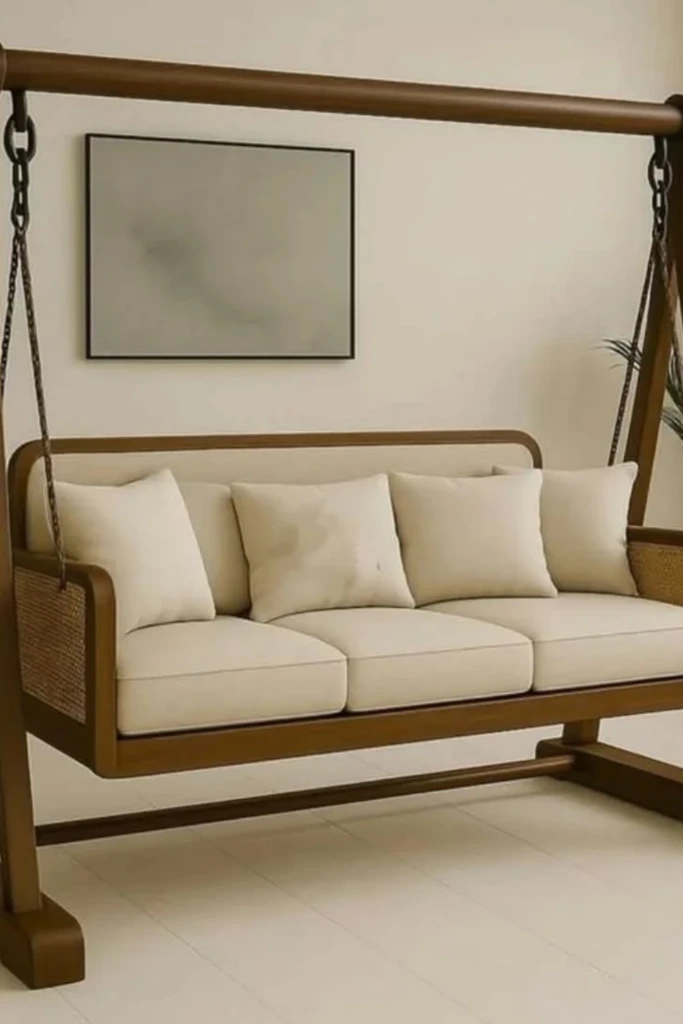
An indoor frame swing provides an alternative when you want a dedicated swing area without relying on an existing ceiling attachment. The supporting structure can also become part of the room's decorative design.
Solid timber creates a warm, natural appearance, while a simple bench keeps the overall style versatile. Depending on the available floor space, the frame can be designed to complement a reading corner or a larger recreational area.
The frame must be engineered to resist the repeated forces produced by swinging. Ordinary decorative beams and lightweight furniture joints are not adequate substitutes for properly designed structural connections.
Keep the surrounding area clear and use a finish appropriate for indoor furniture. With suitable dimensions and careful placement, the swing can provide comfortable seating while remaining visually consistent with the rest of the room.
13. Canopy Garden Swing
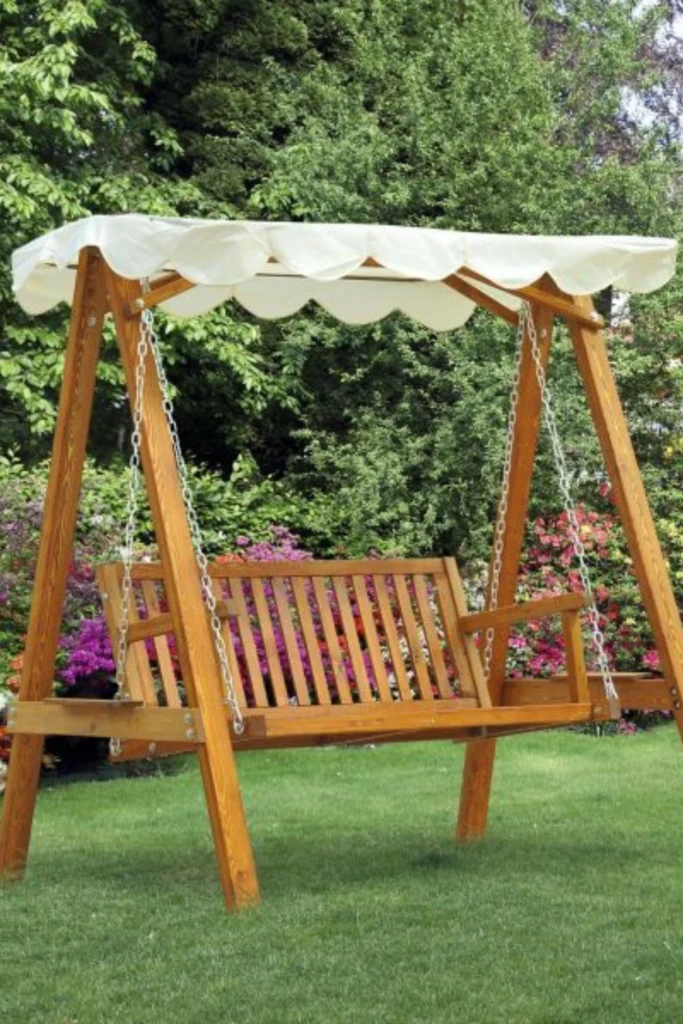
A canopy garden swing provides shade and creates a more comfortable outdoor seating area during sunny weather. It is particularly useful in exposed gardens where direct sunlight makes an uncovered bench less inviting.
Begin with a properly engineered swing frame, then add a compatible canopy made from weather-resistant fabric or another suitable outdoor material. The canopy supports should be designed for wind exposure as well as the additional weight of the covering.
A simple wooden bench keeps the project practical, while neutral cushions or a small outdoor pillow can soften the appearance. Choose removable canopy fabric when possible so it can be cleaned or stored during storms.
Remember that a canopy can catch strong gusts of wind. Follow the manufacturer's installation guidance and secure the structure appropriately for local weather conditions.
14. Fire Pit Swings
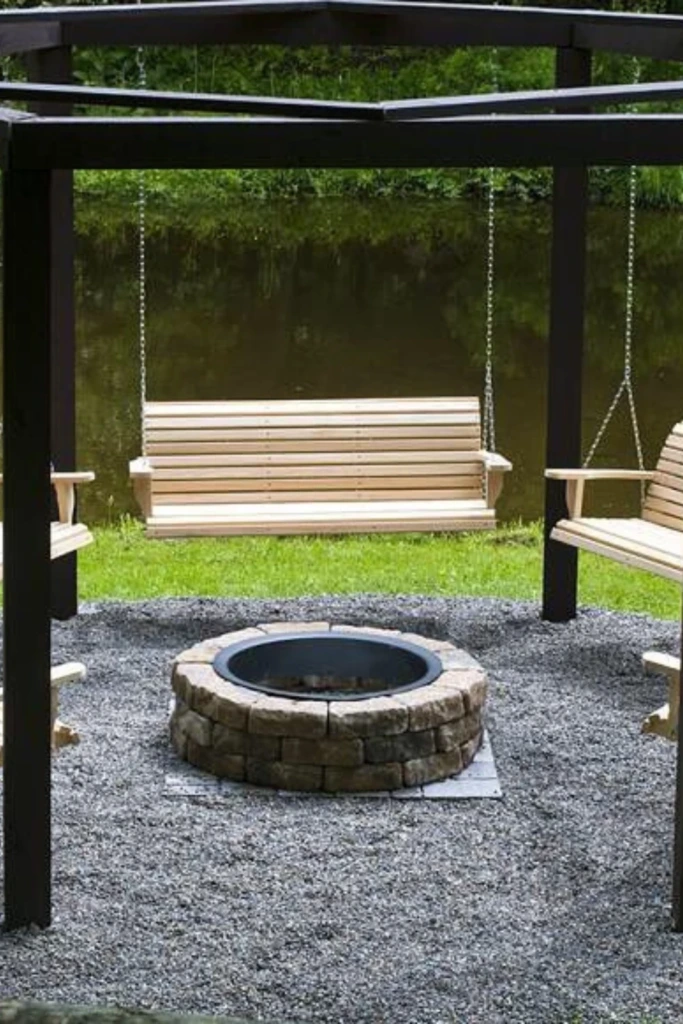
A swing seating arrangement near a fire pit can create a welcoming gathering area for evening conversations. Several wooden benches suspended from a carefully designed overhead structure provide a distinctive alternative to stationary outdoor chairs.
A pergola-style frame may suit this concept, but its supports, connections, and foundations must be engineered for the combined loads and movement of every swing. Positioning also requires careful attention to fire safety.
Keep the swings outside the fire pit's required clearance area, following local fire guidance and the appliance manufacturer's instructions. Use suitable noncombustible surfaces around the fire feature and avoid placing fabric cushions close to flames or sparks.
This design is best suited to larger yards where guests can enter and leave each seat comfortably without crossing through another swing's path.
15. Modern Yard Swings
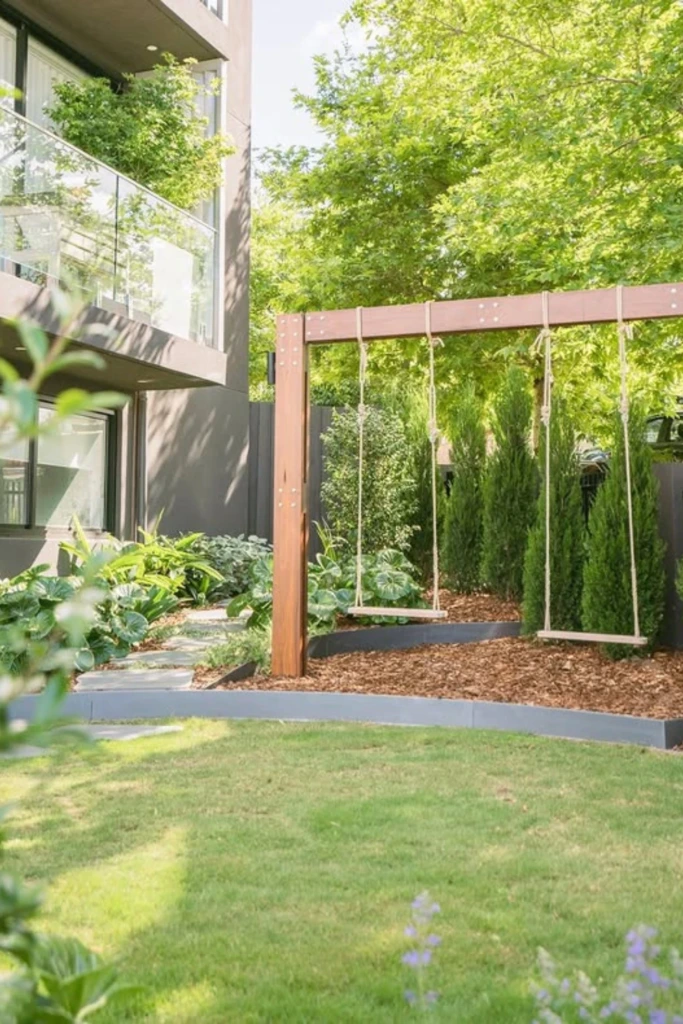
Modern yard swings emphasize balanced proportions, straightforward materials, and thoughtful landscaping. A strong timber frame paired with simple wooden seats can create a coordinated outdoor feature without excessive ornamentation.
Consider using matching seats, consistent finishes, and evenly planned spacing. Repeating the same design throughout the arrangement creates a unified appearance, while grasses, shrubs, or potted greenery can soften the structure.
Choose materials rated for outdoor use and ensure that the support frame and ground anchoring are designed for the intended loads. A clean-looking installation should still provide sufficient clearance between seats and nearby obstacles.
This style works particularly well in contemporary gardens where the swing structure doubles as a visual feature and a place to relax.
16. Macramé Rope Swing
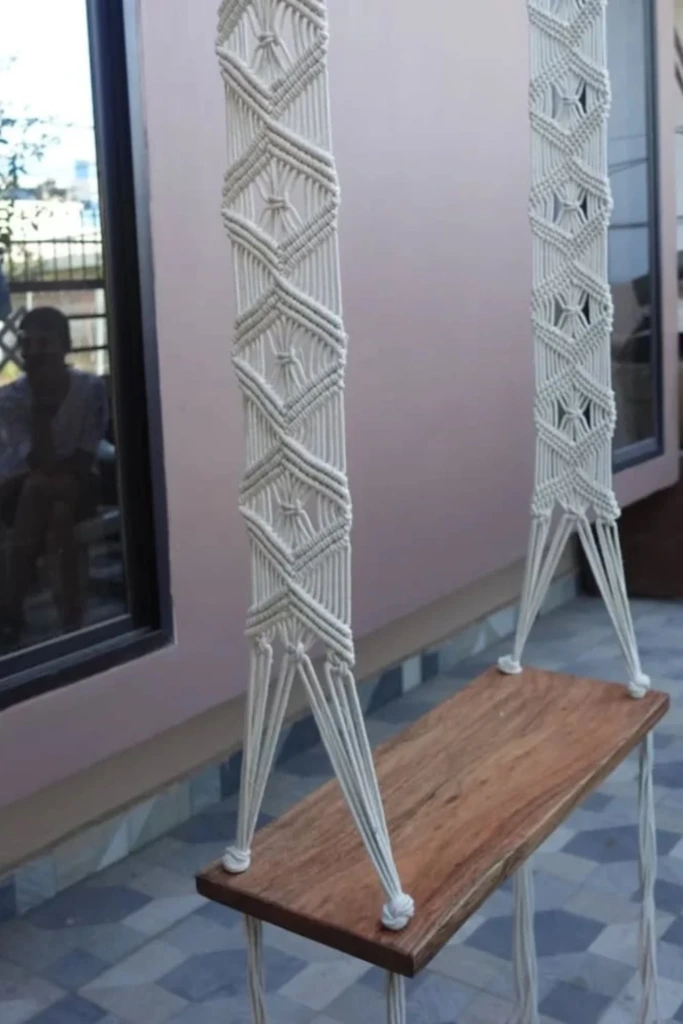
A macramé rope swing combines natural wood with decorative knotting for a relaxed, handcrafted appearance. It suits bohemian interiors, covered balconies, and sheltered patios where texture plays an important role in the overall design.
Use a strong wooden seat with smooth edges and rope specifically rated for suspension loads. Decorative macramé alone should not be assumed to provide adequate structural support. Any load-bearing knots, connectors, and attachment points must be appropriate for the intended use.
Natural-colored rope works well with timber, woven rugs, and greenery. A small cushion can make the seat more comfortable while allowing the knotwork to remain visible.
Keep the swing protected from prolonged moisture and ultraviolet exposure when its materials are not designed for outdoor conditions. Inspect the rope regularly for fraying, wear, or deterioration.
17. Tree Branch Swing
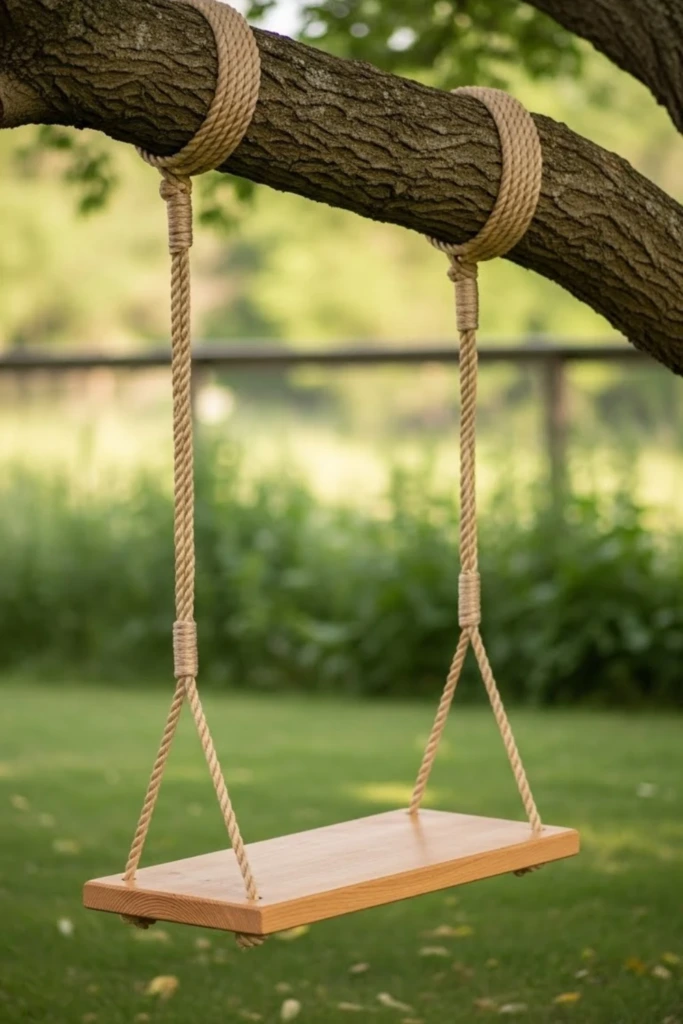
A tree swing can bring a nostalgic, playful element to a garden while making use of a mature tree. Its simple construction may require fewer materials than a freestanding swing, but choosing the right tree and attachment method is essential.
Select a healthy tree with a suitable branch that has been assessed for the expected load. A branch that appears thick is not automatically safe, especially if it has hidden decay, cracks, or a weak connection to the trunk.
Use a purpose-designed tree-swing attachment that protects the bark and is suitable for the branch and expected forces. Choose a sound wooden plank with smooth edges, and keep the seat at a height that allows safe access.
Allow plenty of open space around and beneath the swing. Check the branch and hardware regularly, and discontinue use if you notice damage or deterioration.
18. Pergola Bench Swing
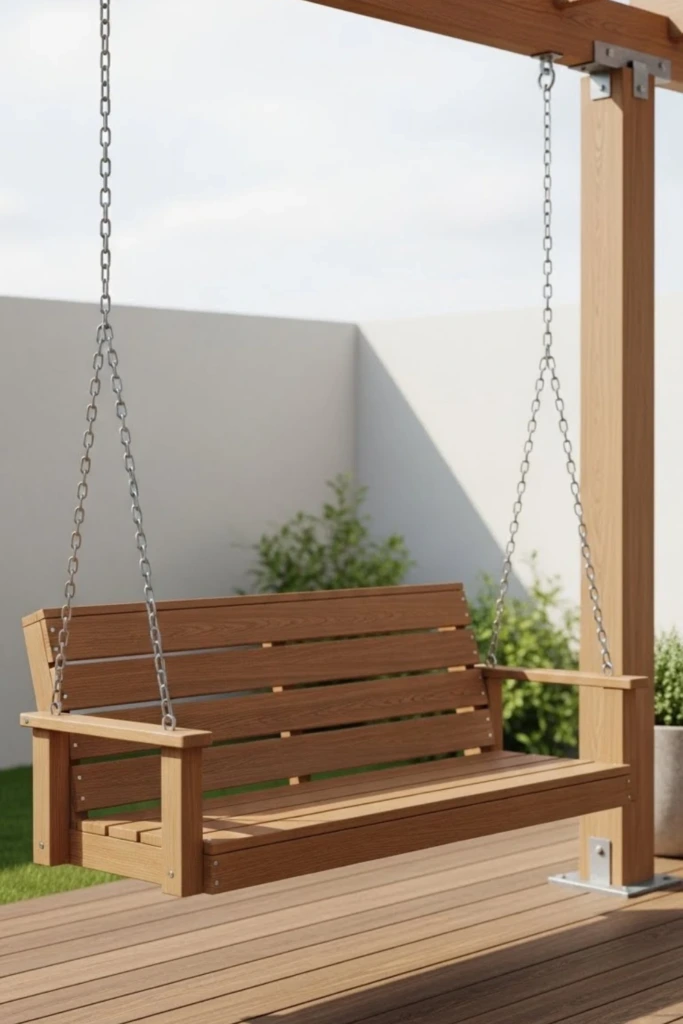
A pergola bench swing combines the comfort of moving seating with the established look of an outdoor living structure. It can make a patio feel more inviting while maintaining a consistent design with nearby garden furniture.
A straightforward wooden bench is a practical starting point. Choose a seat with a comfortable backrest and finish it to match the pergola. Outdoor cushions can add color and make the seating more suitable for extended relaxation.
However, pergola beams are not automatically designed to support a suspended swing. Have the structure, connections, and foundations assessed for repeated dynamic loads before attaching any hardware.
With appropriate engineering and sufficient clearance, this arrangement can provide a comfortable place to read, enjoy a morning drink, or unwind outdoors.
19. Kids A-Frame Swing
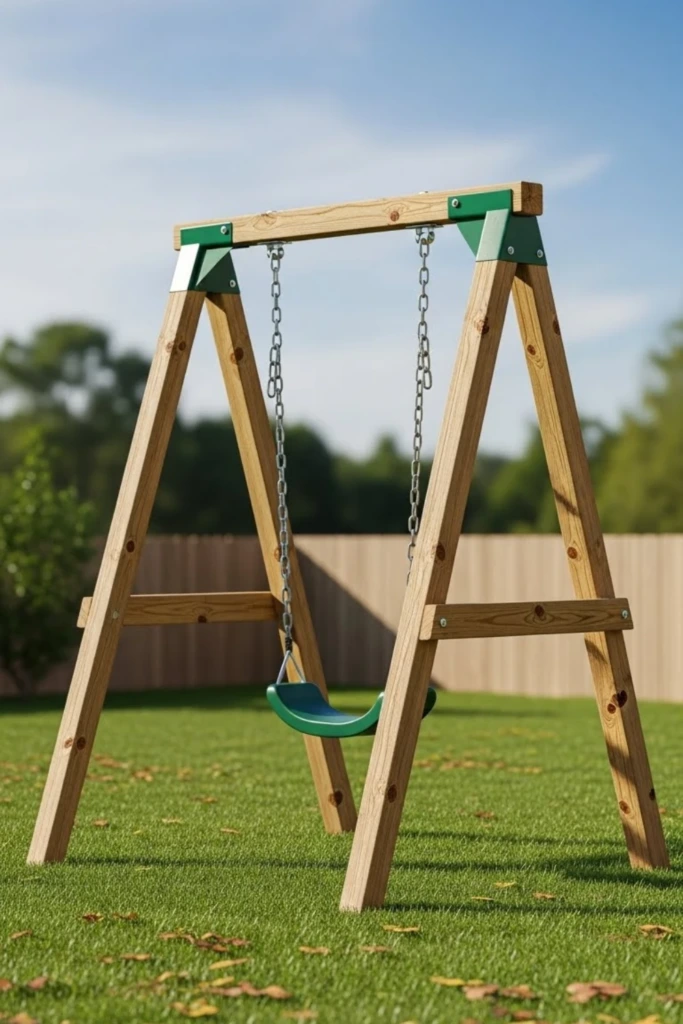
A children's A-frame swing can provide a dedicated play area in a family garden. A compact design may fit a smaller yard, but the frame, suspension, and seat must all be appropriate for the child's age, size, and intended activity.
Use structural timber rated for outdoor use, properly designed bracing, and secure ground anchoring. Select a manufactured child-appropriate seat and compatible suspension components rather than improvising connections from unrelated materials.
Keep the swing away from walls, fences, trees, pathways, and other play equipment. Provide a suitable impact-absorbing surface beneath and around the swing in accordance with applicable playground safety guidance.
Adult supervision, regular inspections, and adherence to the equipment's specified age and weight limits are essential. A low seat alone does not eliminate the risk of falls or collisions.
20. Corner Porch Swing
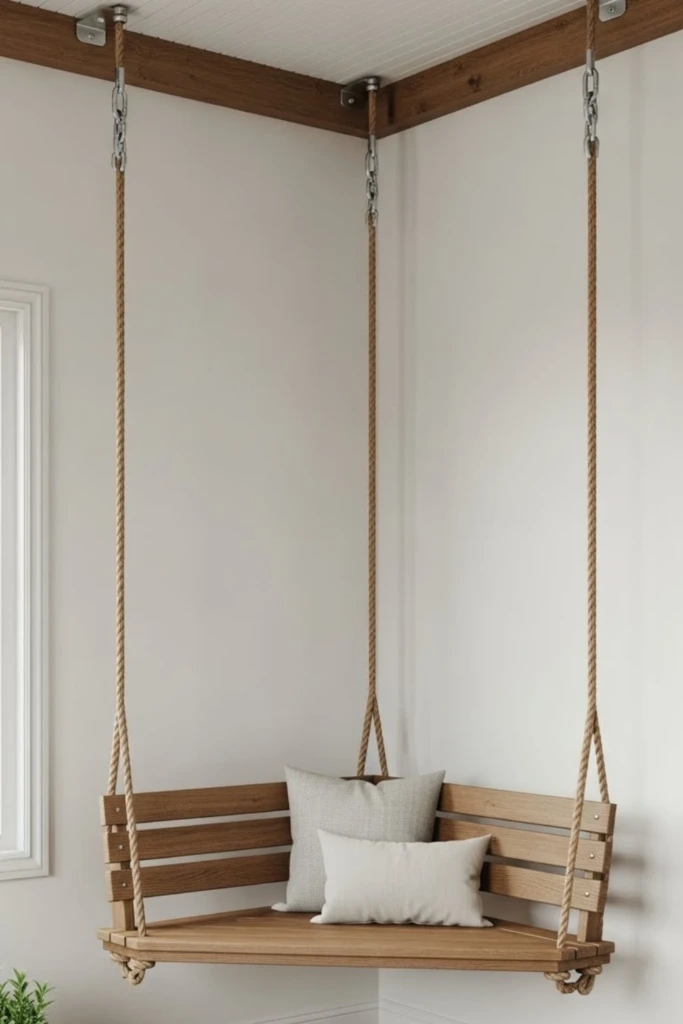
A corner porch swing can make an underused part of a veranda more functional. Its compact arrangement provides a comfortable place to sit while helping preserve the main walking route through the space.
Choose a bench whose dimensions suit the corner rather than forcing an oversized seat into a narrow area. A simple wooden design with a supportive backrest can look attractive without overwhelming nearby windows, doors, or railings.
The suspension arrangement should be designed specifically for the structure and intended swing movement. Two ceiling attachment points do not automatically make a diagonal installation safe, so obtain appropriate professional guidance before fitting the hardware.
Add a small cushion or a couple of outdoor pillows for comfort. Keep the entryway clear and verify that the swing cannot strike the surrounding walls during use.
21. Rustic Log Swing
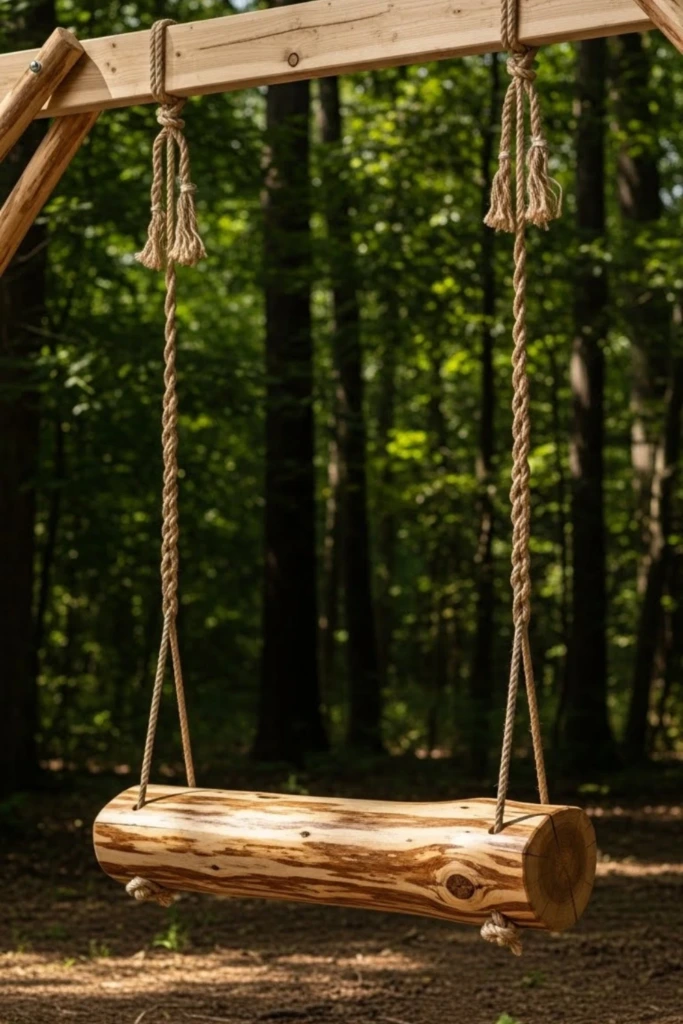
A rustic log swing suits cabins, wooded gardens, and outdoor spaces with a natural landscape. Its substantial timber seat creates a rugged appearance that differs from the polished finish of conventional garden furniture.
Select sound wood without significant cracks, rot, or insect damage. If using a log rather than a flat plank, make sure its shape allows occupants to sit securely. Remove loose bark where appropriate and smooth every area that may come into contact with the body.
Use properly rated suspension hardware and a support structure capable of handling the swing's weight and movement. A heavy log can impose substantial loads, so its weight must be included in the design calculations.
A suitable outdoor finish can help protect the timber, while regular inspections will reveal splinters, splitting, moisture damage, or worn connections before they become more serious problems.
22. Folding Seat Swing
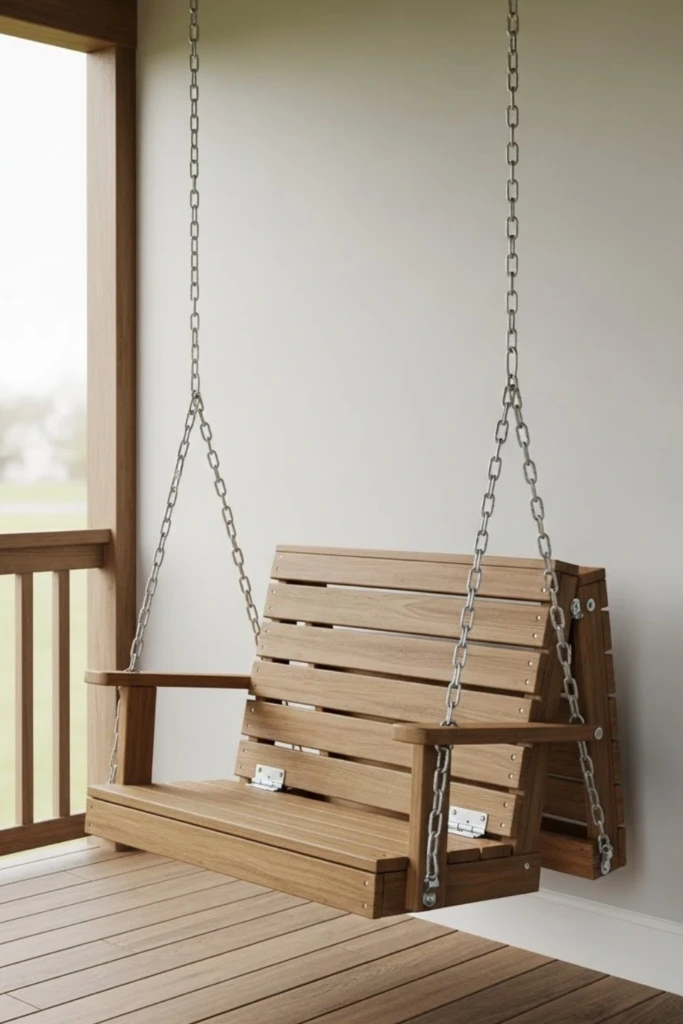
A folding seat swing is worth considering when outdoor space serves several purposes. Its seat can be folded away when it is not needed, helping keep a compact porch or sheltered area open.
The design typically uses a hinged wooden seat or a specially engineered folding mechanism. Choose hinges, locks, and suspension components intended for the loads involved rather than relying on ordinary cabinet hardware.
Before construction, work out how the seat will move between its folded and open positions. Check that the mechanism cannot trap fingers and that the seat remains securely supported during use.
A folding design still requires a reliable structural mounting system and sufficient room for swinging. Follow the hardware manufacturer's instructions, and inspect the moving parts frequently for looseness or wear.
Which wood is best for a swing?
The best wood depends on where the swing will be installed, how frequently it will be used, and the amount of maintenance you are prepared to do.
For outdoor structures, pressure-treated pine can be a practical choice when the timber is rated for the intended exposure and used according to its treatment specifications. Cedar is another option because of its natural resistance to decay. Both require appropriate design, suitable fasteners, and ongoing maintenance.
For indoor seating, oak and other durable hardwoods can provide strength and an attractive furniture-grade finish. Teak is also valued for outdoor furniture, although its price may be higher.
Regardless of the species, inspect the timber for splits, knots in critical load-bearing areas, decay, and other defects. Use a finish suitable for the environment, and remember that good wood cannot compensate for undersized supports or unsafe attachment points.
What type of swing set lasts the longest?
A well-engineered swing set made from durable materials can last for many years, but longevity depends on construction quality, installation, exposure to weather, and regular maintenance.
Freestanding A-frame designs made with appropriately treated timber or naturally durable wood can perform well outdoors when they are properly braced and anchored. Corrosion-resistant hardware and compatible suspension components also help reduce premature wear.
Simple designs may be easier to maintain because they have fewer moving parts and decorative joints. Nevertheless, every connection, hinge, chain, rope, and support needs to be suitable for the loads it will experience.
Protect exposed wood with an appropriate exterior finish, prevent water from collecting around vulnerable joints, and check the frame after severe weather. Replace worn or damaged components promptly.
The most durable choice is not necessarily the heaviest or most expensive swing. It is the one that is correctly designed, securely installed, suitable for its environment, and consistently maintained.