23 DIY Wall Decor Ideas for 2026
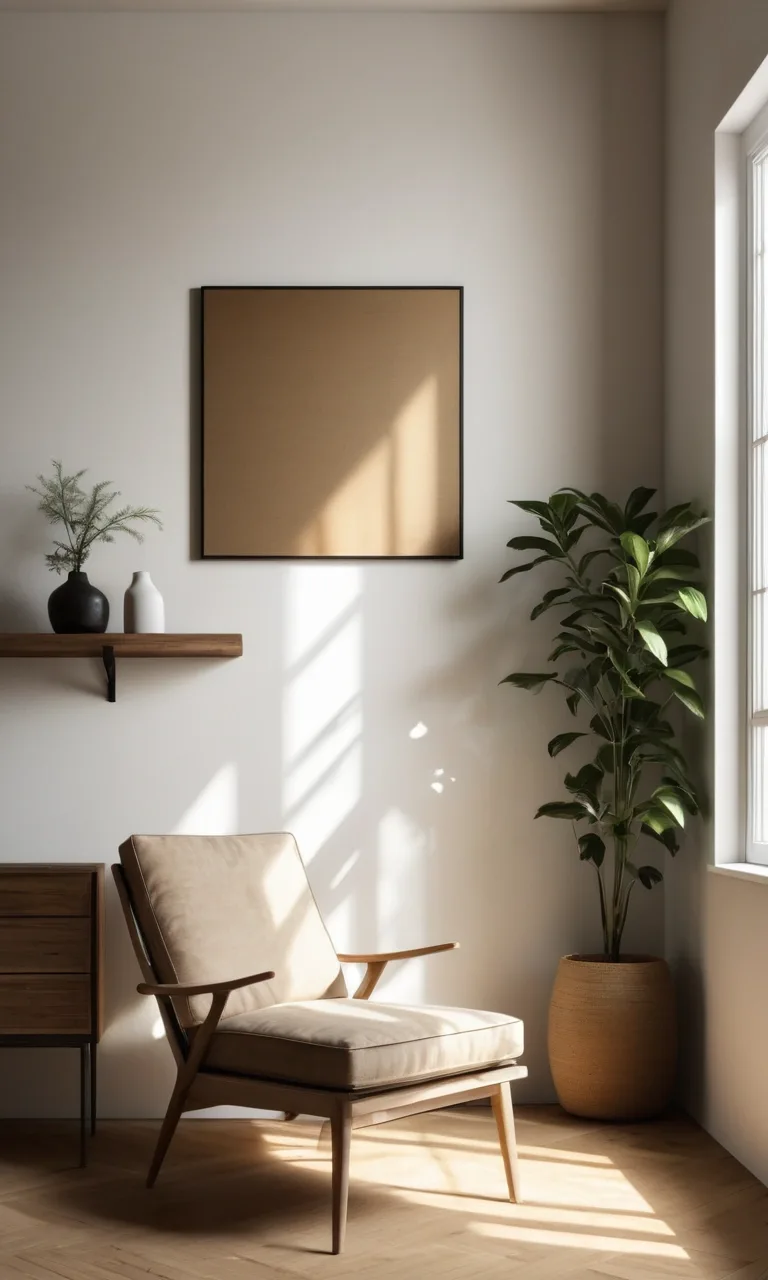
Decorating your walls doesn't have to involve expensive artwork, professional designers, or a complete room makeover. With a few affordable materials and some creativity, you can transform an ordinary wall into a beautiful feature that reflects your personality.
DIY wall decor is a practical way to refresh your home while making use of materials you may already own. From handmade fabric art and wooden shelves to painted accents and botanical displays, there are countless ways to create something unique.
Whether you're decorating a bedroom, living room, hallway, or small apartment, these 23 DIY wall decor ideas for 2026 will help you add character, texture, and visual interest to your space.
How can I make my walls look interesting?
Making a wall visually appealing starts with choosing decorations that complement the room rather than simply filling empty space.
Try combining different textures, shapes, and materials. For example, a wooden shelf paired with framed artwork and a small hanging plant can create a more inviting arrangement than several identical decorations.
Consider the size of your wall before selecting your pieces. Large walls can accommodate oversized artwork or grouped displays, while smaller spaces often benefit from compact decorations arranged vertically.
Color also makes a difference. Choose two or three complementary shades that connect your wall decorations with the furniture and accessories already in the room.
Most importantly, leave some open space around your decorations. A balanced arrangement allows individual pieces to stand out without making the room feel crowded.
1. Mixed Wall Cluster
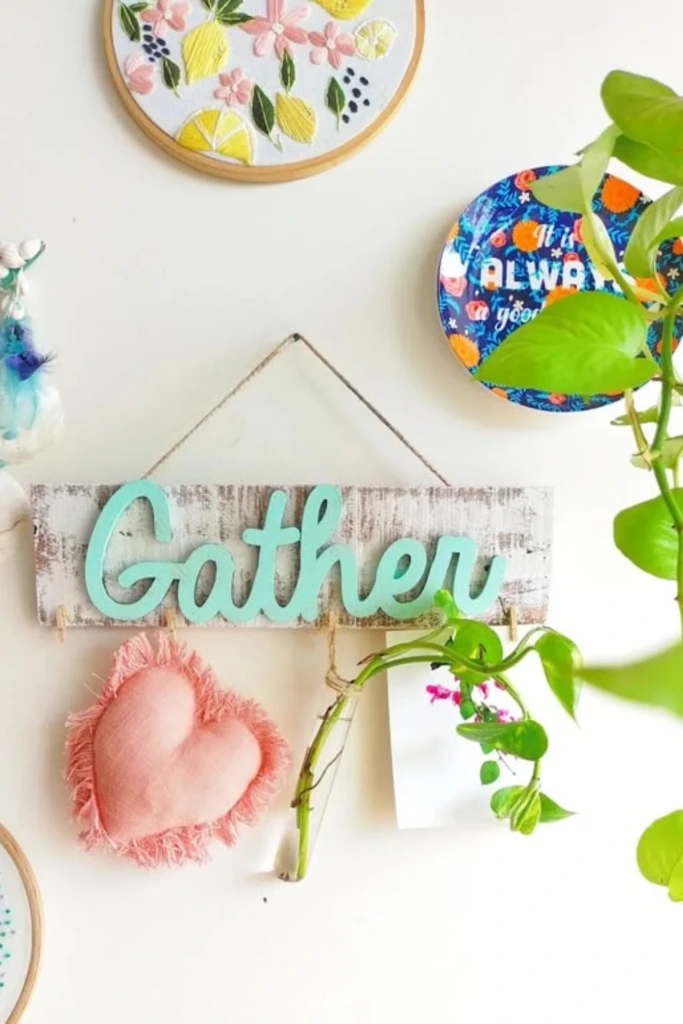
A mixed wall cluster combines several decorative pieces into one personalized display. It's an excellent choice for anyone who enjoys collecting small handmade items but wants them to look coordinated.
Start with a few different elements, such as a small framed photograph, a miniature wall shelf, an embroidery hoop, and a hanging plant.
Arrange everything on the floor before attaching it to the wall. This allows you to experiment with spacing and find a composition that feels balanced.
Choose one consistent feature, such as natural wood finishes or neutral colors, to connect the different pieces. The result is an attractive gallery-style display that feels personal without looking overly planned.
2. Shaped Wall Shelf
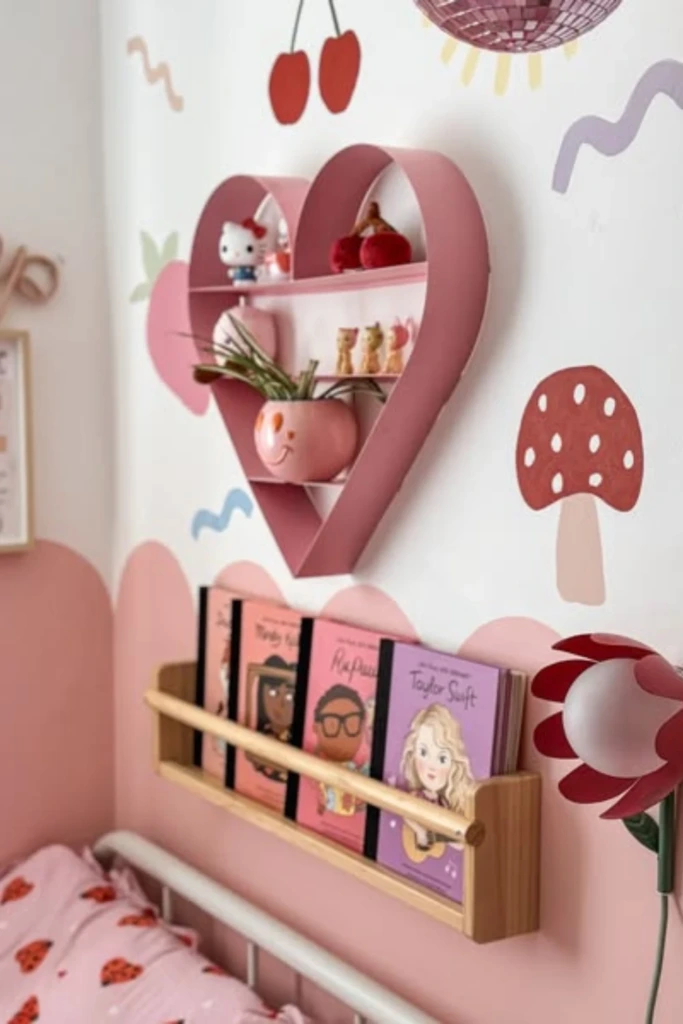
A shaped wall shelf adds storage and decoration while introducing an interesting silhouette to your room.
Instead of installing a standard rectangular shelf, consider making one shaped like a cloud, house, mountain, or crescent moon. These designs work especially well in children's bedrooms, nurseries, and cozy reading areas.
You can create a simple version using plywood or MDF, wood glue, and suitable mounting hardware. Sand the edges thoroughly before applying paint or a protective finish.
Once installed securely, decorate the shelf with lightweight objects such as miniature plants, small books, or decorative figurines.
Keep the arrangement simple so the shelf's distinctive shape remains the main attraction.
3. Staircase Gallery Flow
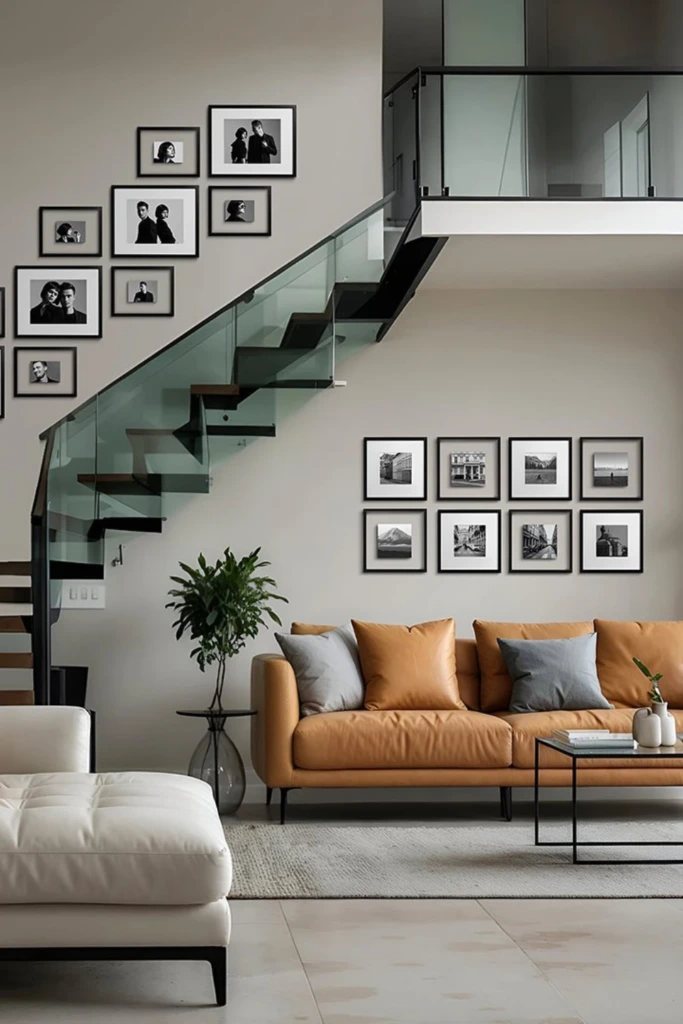
Staircase walls provide an excellent opportunity to display photographs, illustrations, and meaningful artwork.
A staircase gallery follows the upward movement of the stairs, creating a natural visual connection between different levels of your home.
Begin by selecting frames in similar finishes. They don't need to be identical, but using a consistent color or material will help the display feel organized.
Create paper templates matching the frame sizes and tape them to the wall before drilling. Arrange the templates so the gallery gradually rises alongside the staircase.
Maintain relatively consistent spacing between frames, and position the artwork at a comfortable viewing height.
Family photographs, travel memories, botanical illustrations, and black-and-white prints are all suitable choices.
4. Metallic Wall Panels
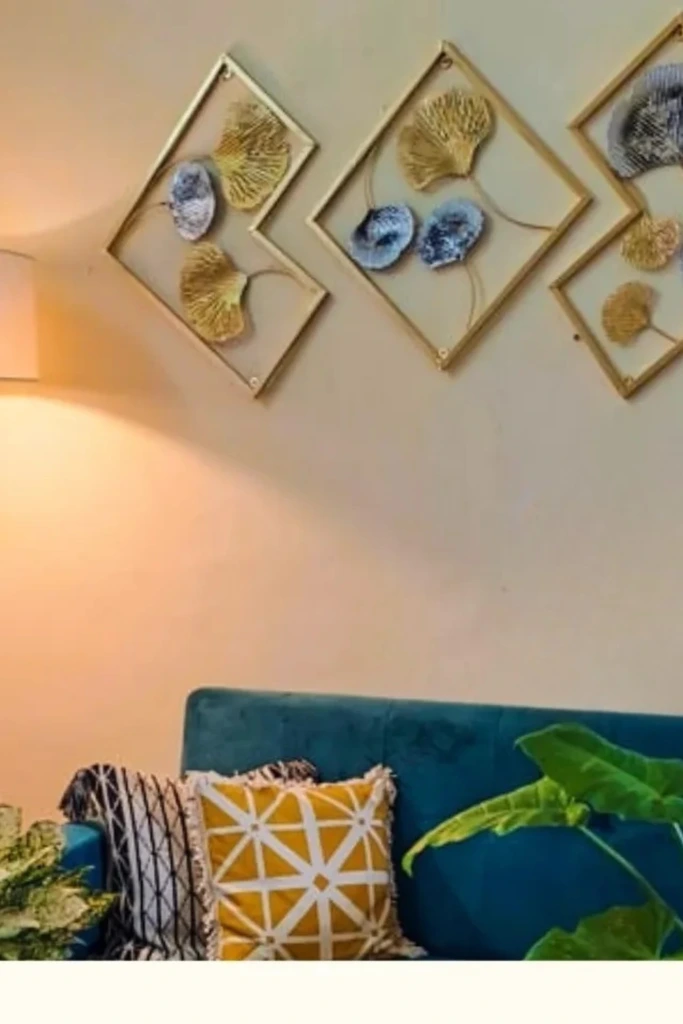
Metallic wall panels can introduce a sophisticated decorative element without requiring expensive materials.
You can create geometric designs using lightweight wooden frames, decorative wire, or thin craft panels finished with metallic paint.
Gold, bronze, copper, and brushed silver are popular options, depending on your existing interior color scheme.
For a contemporary design, arrange several narrow rectangular panels in an asymmetrical pattern. Alternatively, combine circular and angular shapes for a more artistic appearance.
Use metallic finishes sparingly, particularly in smaller rooms. A few carefully positioned pieces often create a stronger impression than covering an entire wall.
Nearby lamps can highlight the reflective surfaces and make the installation more noticeable in the evening.
5. Chevron Frame Layout
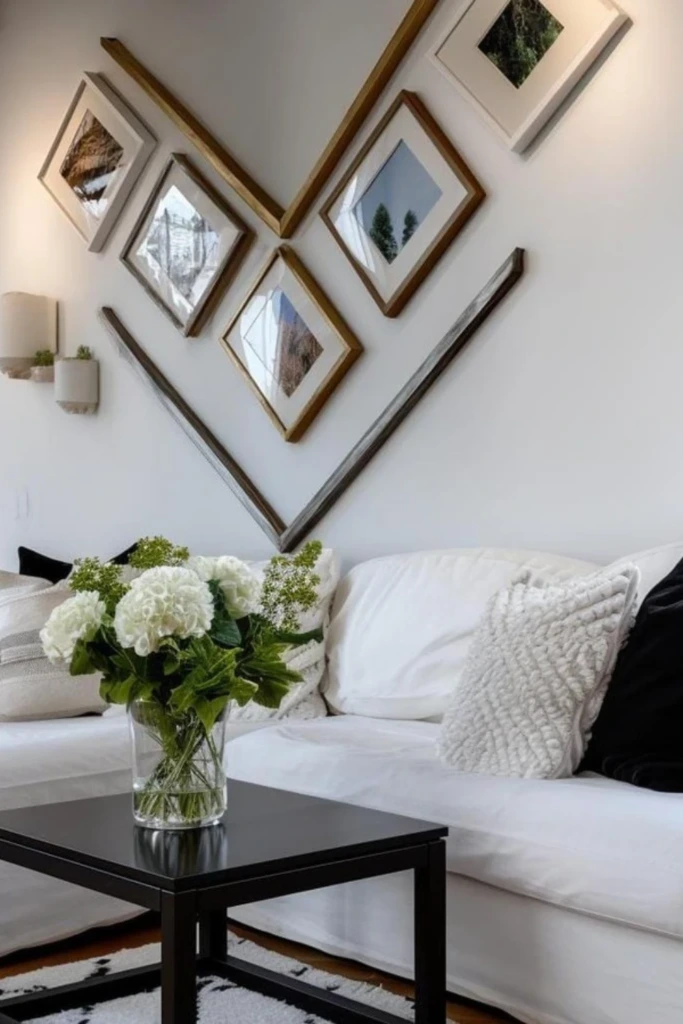
A chevron frame layout offers a creative alternative to traditional straight-line gallery walls.
This arrangement uses frames positioned in a V-shaped or zigzag pattern, giving the display a sense of direction and movement.
Choose several frames of similar dimensions for the cleanest result. You can fill them with abstract prints, family photographs, inspirational artwork, or simple sketches.
Mark the center of your intended arrangement and work outward to keep both sides balanced.
Use a measuring tape and level to establish consistent spacing. If you want the frames themselves angled, test the layout with paper templates first.
This decorative approach works particularly well above a sofa, hallway console, or bedroom dresser.
6. Textured Wall Hangings
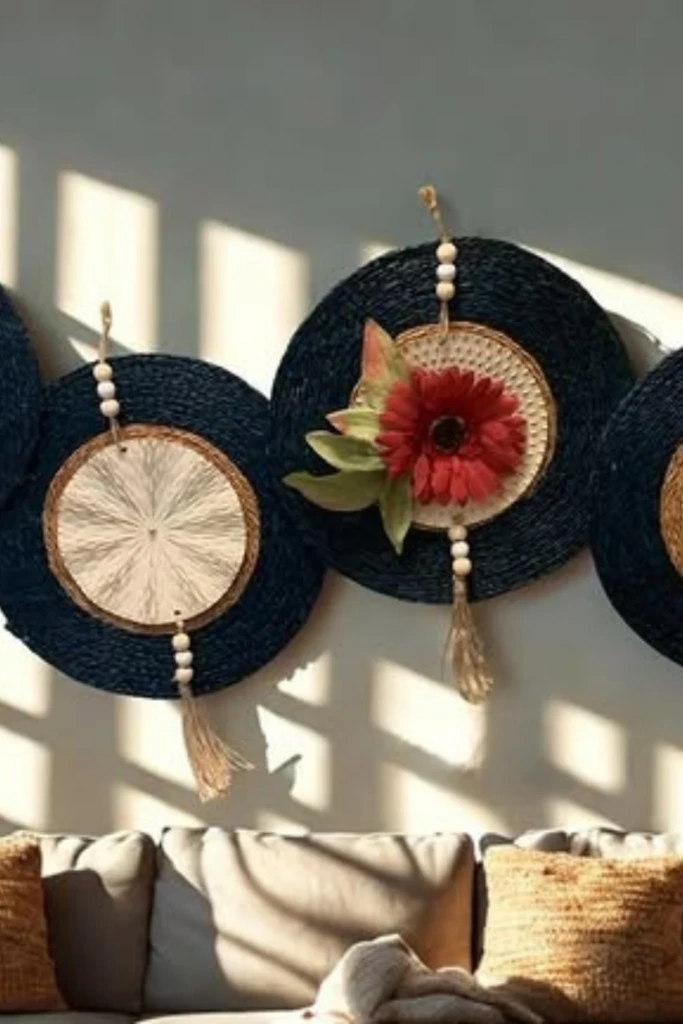
Textured wall hangings introduce softness and warmth, especially in rooms dominated by smooth furniture and plain painted surfaces.
You can make your own decorations using yarn, cotton rope, fabric scraps, felt, or woven materials.
One simple project involves attaching strands of yarn to a wooden dowel and trimming the ends into a curved or geometric shape.
For a more detailed design, incorporate wooden beads, braided sections, or contrasting yarn colors.
Neutral shades such as cream, beige, taupe, and warm brown create a relaxed appearance, while brighter combinations can make the decoration more playful.
Hang your finished piece above a bed, reading chair, or narrow console table to introduce texture without occupying floor space.
7. Wood Slat Accent
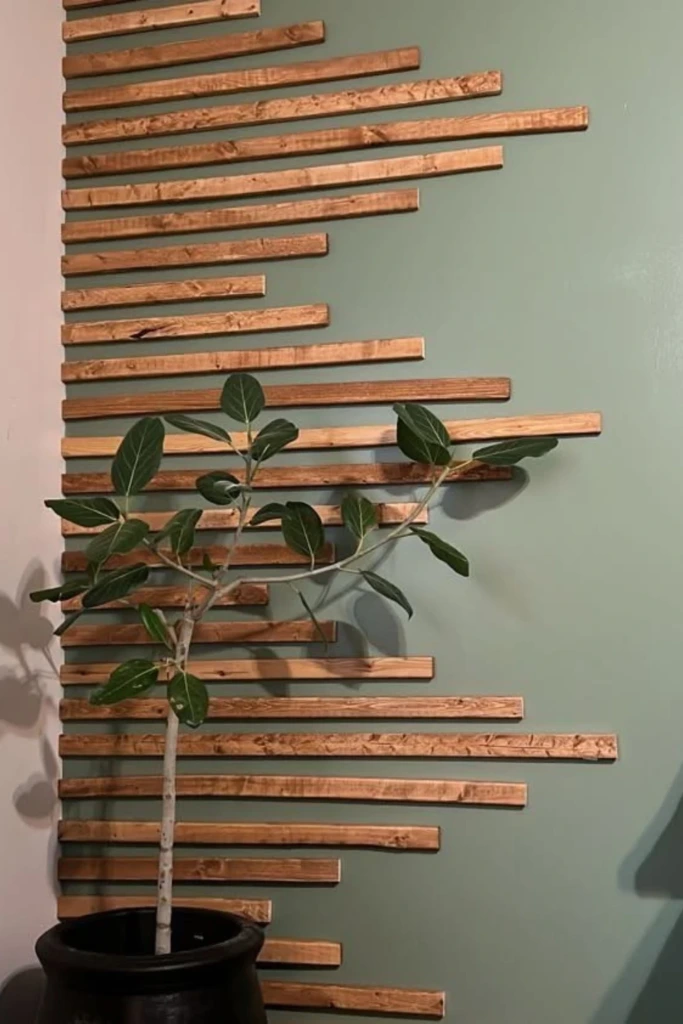
Wood slat accents bring architectural detail to otherwise plain walls.
This project involves arranging narrow wooden strips vertically or horizontally to create a repeating pattern.
Begin by measuring the area you want to decorate. Cut your slats to the required lengths, sand rough edges, and apply your preferred wood stain or paint.
You can use equal lengths for a structured appearance or vary their heights to create a more decorative arrangement.
Secure the slats using an installation method appropriate for the wall surface and the weight of the materials.
Natural wood finishes suit Scandinavian and modern interiors, while painted slats can complement contemporary or minimalist rooms.
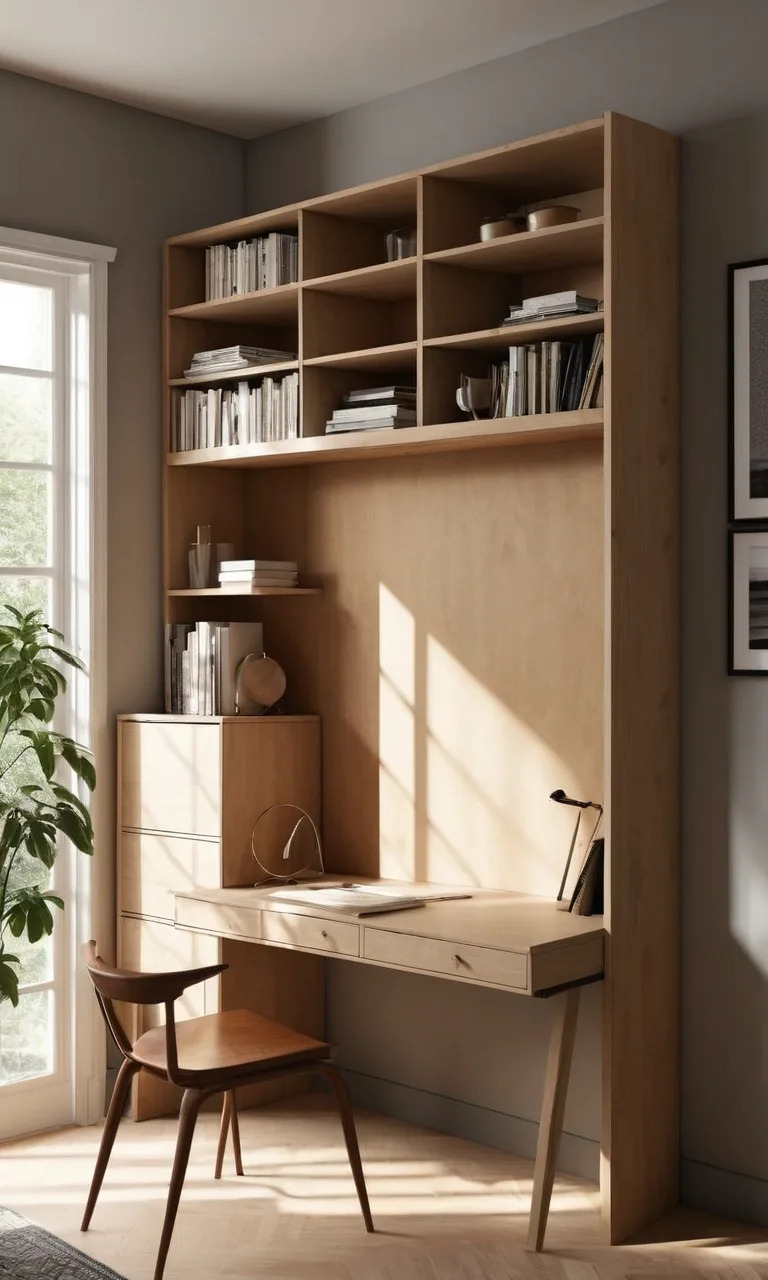
A wood slat feature behind a desk, television console, or reading corner can make the entire area feel more defined.
8. Plant Layered Wall
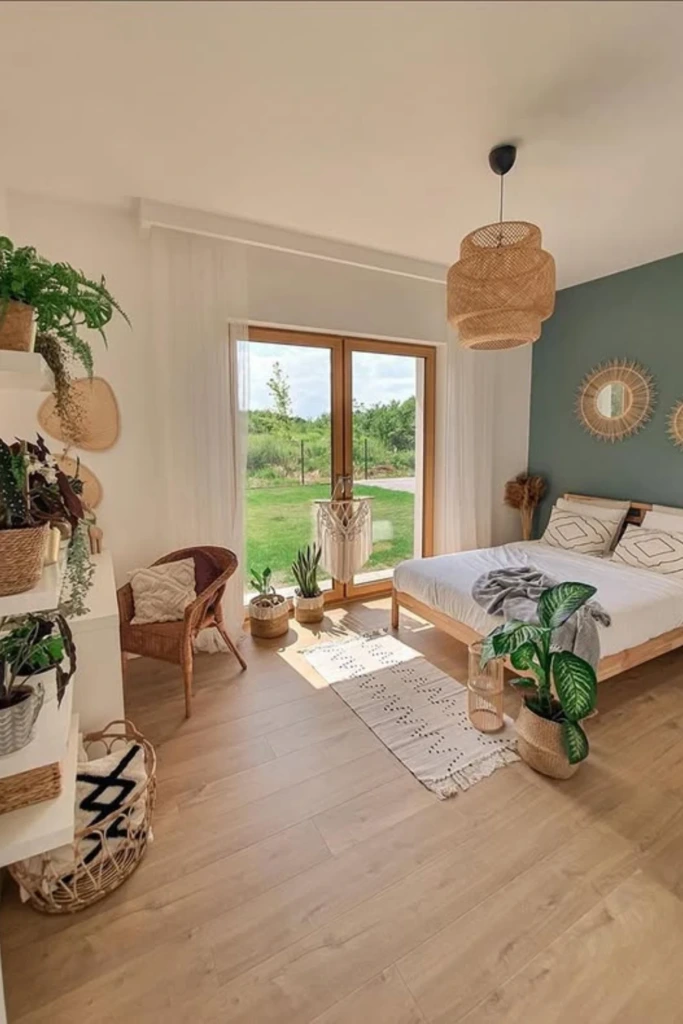
A plant-layered wall combines greenery at different heights to create a refreshing indoor display.
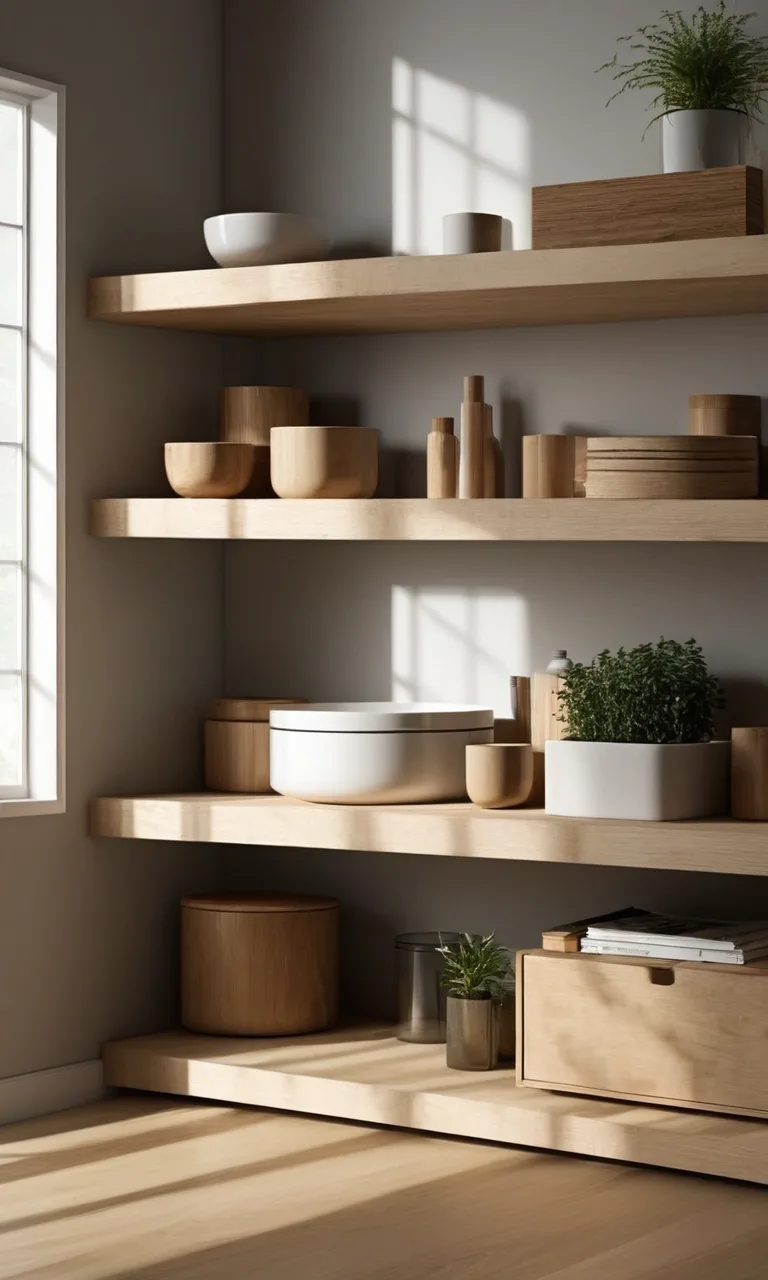
Instead of keeping all your plants on the floor, use a combination of floating shelves, wall-mounted planters, and hanging baskets.
Trailing plants such as pothos and heartleaf philodendron are particularly useful because their vines can extend naturally downward.
Mix these with compact plants that have upright or rounded foliage to introduce variation.
Choose containers in coordinating colors to maintain a cohesive appearance.
Before installing shelves or planters, check their weight capacity and account for the additional weight of wet soil. Use waterproof saucers to protect your walls and furniture.
Position the arrangement where plants receive suitable light, and select species that match the conditions of the room.
9. Botanical Wall Grid
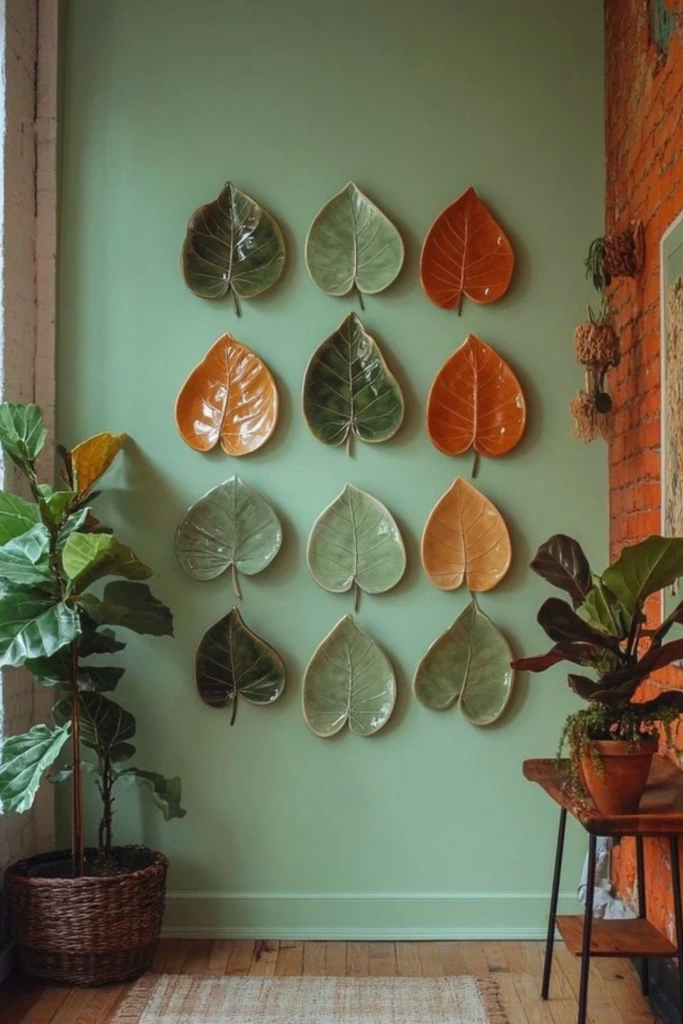
A botanical wall grid is an elegant way to incorporate nature-inspired decoration into your home.
Instead of using conventional framed prints, you can create dimensional botanical artwork with air-dry clay, pressed leaves, or molded decorative pieces.
For a simple clay project, roll out small sections of air-dry clay and press clean leaves into the surface to capture their natural patterns.
Cut the clay into your desired shapes, allow it to dry according to the manufacturer's instructions, and paint it if desired.
Arrange the finished pieces in evenly spaced rows and columns.
A consistent grid creates an organized appearance, allowing the natural textures and leaf patterns to provide the visual interest.
This idea works beautifully in dining rooms, bedrooms, and quiet home offices.
10. Woven Wall Circles
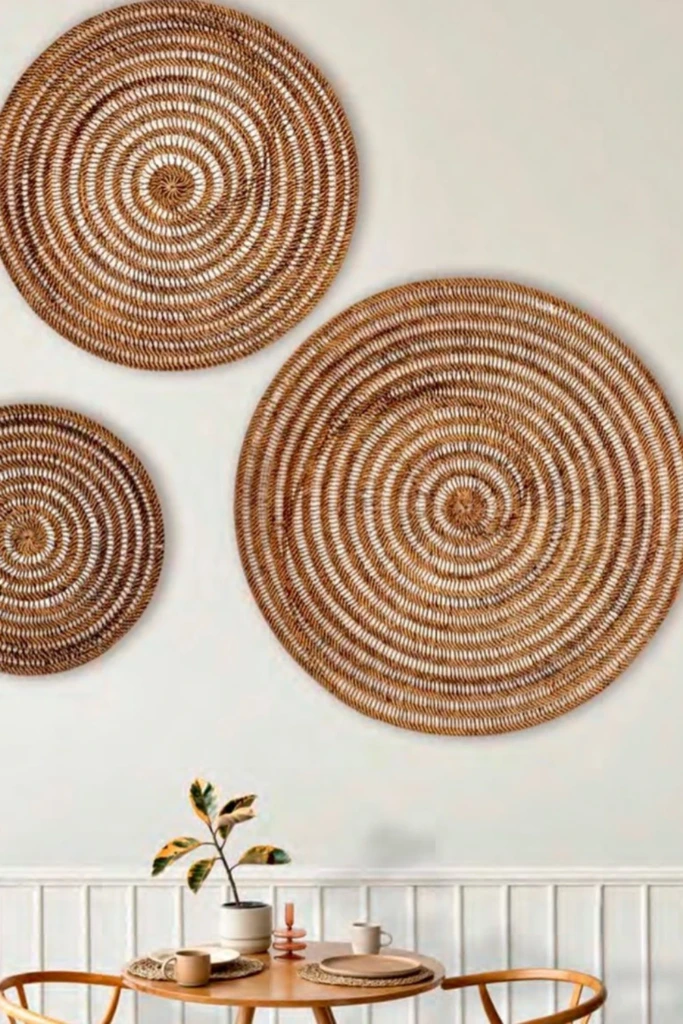
Woven wall circles are a budget-friendly way to introduce natural materials and rounded shapes into your decor.
You can repurpose shallow woven baskets, placemats, or handmade rope circles to create an attractive wall arrangement.
Gather pieces in different sizes but similar tones. Natural straw, jute, raffia, and cotton work particularly well together.
Position the largest circle slightly off-center, then arrange smaller pieces around it to create a balanced composition.
You can overlap some of the circles visually, but make sure each item is mounted securely.
This style complements bohemian, coastal, rustic, and farmhouse interiors.
Because woven decorations already have noticeable texture, they usually look best against a relatively simple wall color.
11. Abstract Wall Mural
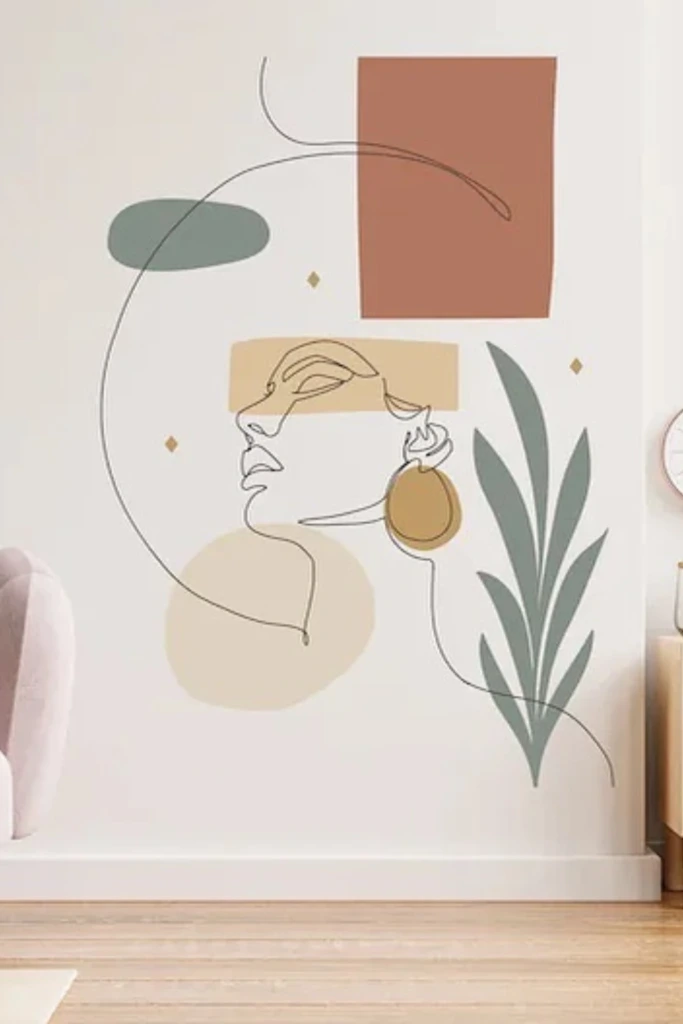
An abstract wall mural lets you create personalized artwork directly on your wall without purchasing additional decorations.
You don't need advanced painting skills to make an appealing design. Simple curves, overlapping shapes, and irregular color blocks can produce impressive results.
Start by sketching your design on paper. Select a limited palette that works with your existing furniture.
Use painter's tape for straight edges, or lightly draw curved shapes with a pencil before painting.
Apply interior wall paint with a small roller or brush, allowing each section to dry before adding overlapping details.
Earthy colors, muted pastels, and warm neutrals can create a subtle feature, while bold contrasting shades produce a more energetic atmosphere.
A mural behind a sofa, desk, or bed can serve as the main decorative feature of the room.
12. Triangle Shelf Play
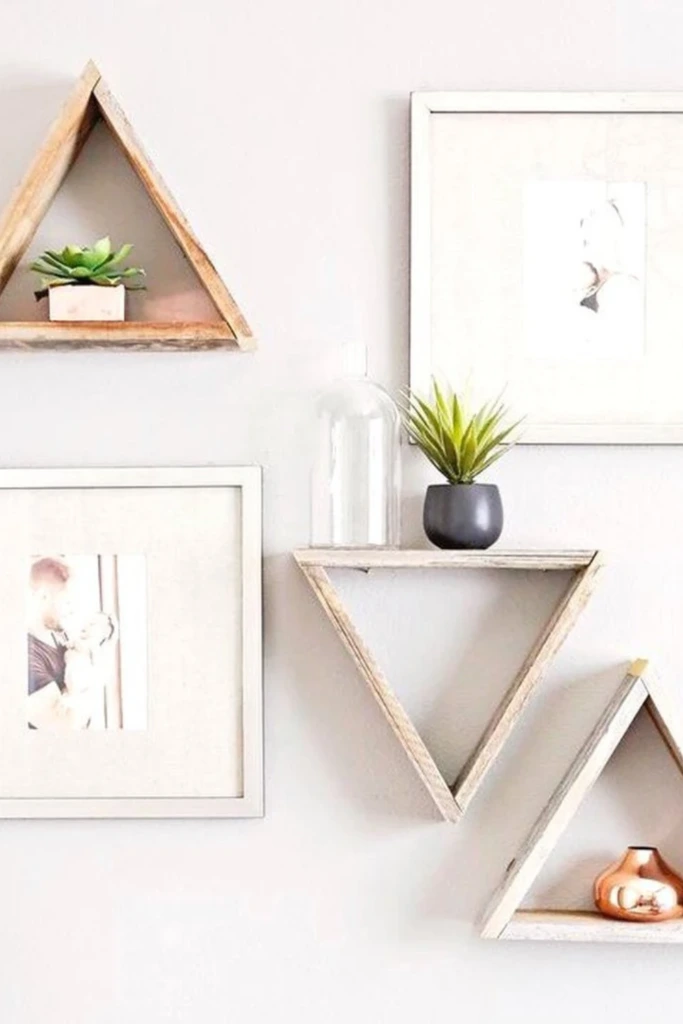
Triangle shelves combine practical display space with an eye-catching geometric design.
You can make triangular shelves from lightweight wooden boards cut to the appropriate angles and joined securely.
For a simpler project, purchase unfinished triangular wooden frames and customize them with paint or wood stain.
Arrange two or three shelves at different heights to create a playful composition.
Use each shelf for a small decorative item, such as a miniature plant, candle holder, or collectible.
Avoid overloading the shelves, especially if they have narrow bases or decorative joints.
Triangle shelves work particularly well in small bedrooms, entryways, and home offices where you want decoration without installing bulky furniture.
13. Layered Basket Wall
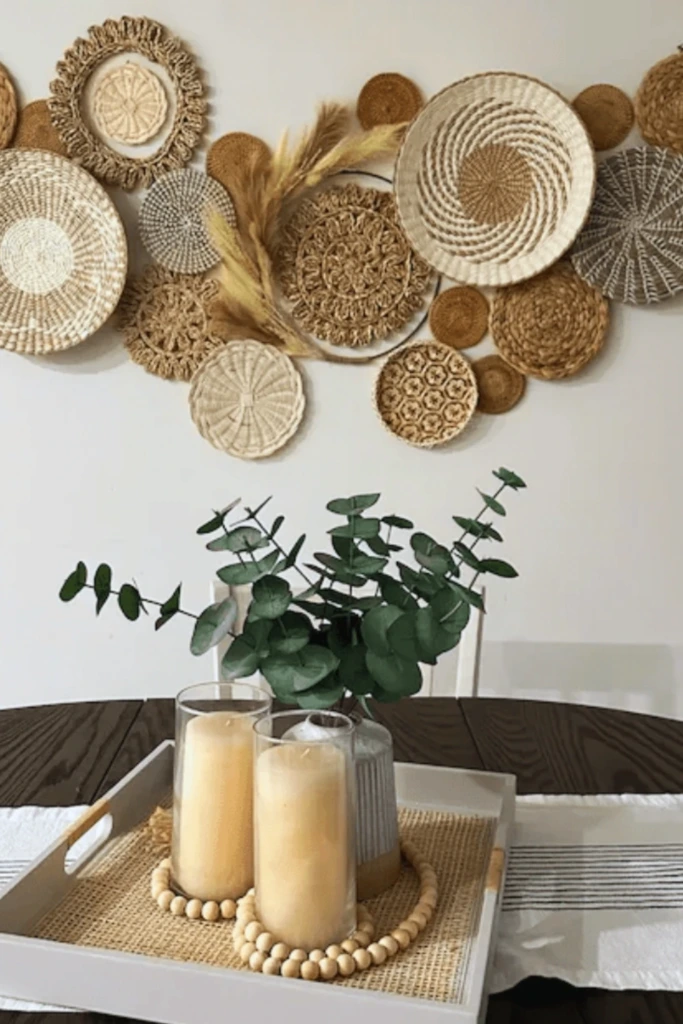
A layered basket wall uses woven baskets as decorative artwork, turning everyday household objects into an attractive feature.
Collect shallow baskets in different sizes, patterns, and weaving styles.
Arrange them on the floor first, beginning with the largest basket and placing smaller ones around it.
Mix tightly woven designs with more open patterns to introduce texture and variety.
You can create a circular grouping above a sofa or extend the arrangement horizontally across a dining room wall.
Secure each basket with suitable hooks or fasteners, taking care not to damage the woven material.
Natural-colored baskets create a warm, organic appearance, while a few painted pieces can add personality.
This is also an excellent way to reuse baskets that are no longer needed for storage.
14. Green Entry Corner
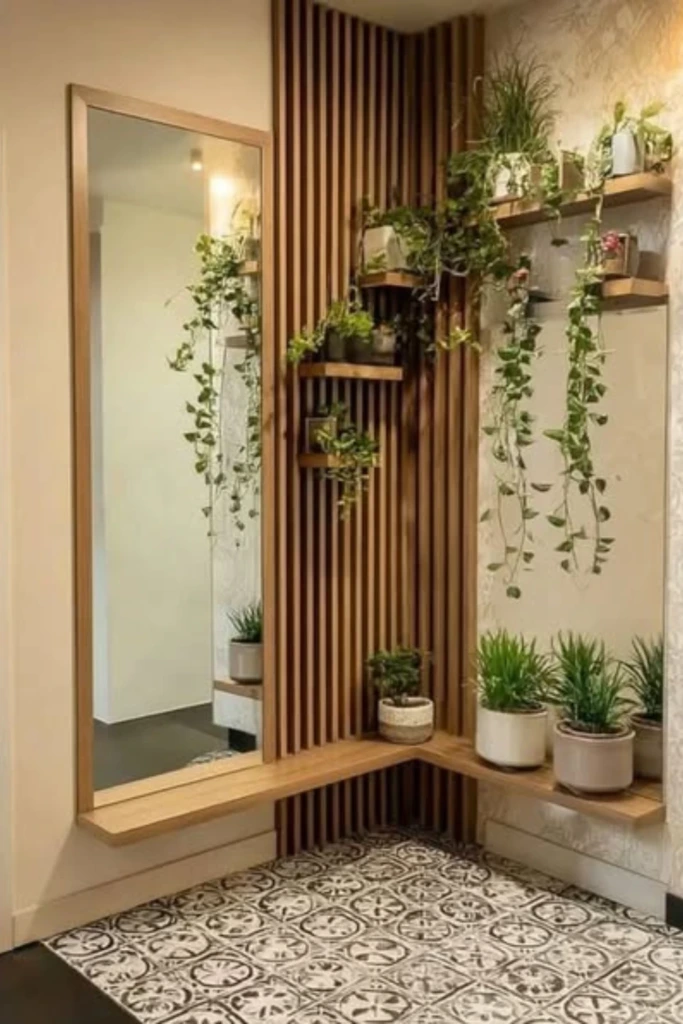
A green entry corner makes the entrance to your home feel more welcoming while using relatively little space.
Start with a narrow wall shelf or a small collection of wall-mounted planters.
Add a few compact plants and, if space allows, one trailing variety to soften the arrangement.
You can also install narrow wooden strips or a small decorative panel behind the plants to introduce texture.
Choose plants based on the amount of natural light available. In darker entryways, consider suitable low-light varieties or realistic artificial greenery.
Keep the floor area clear so the entrance remains practical and easy to navigate.
A small mirror or wall-mounted key holder can make the display both decorative and functional.
15. Embroidery Hoop Art
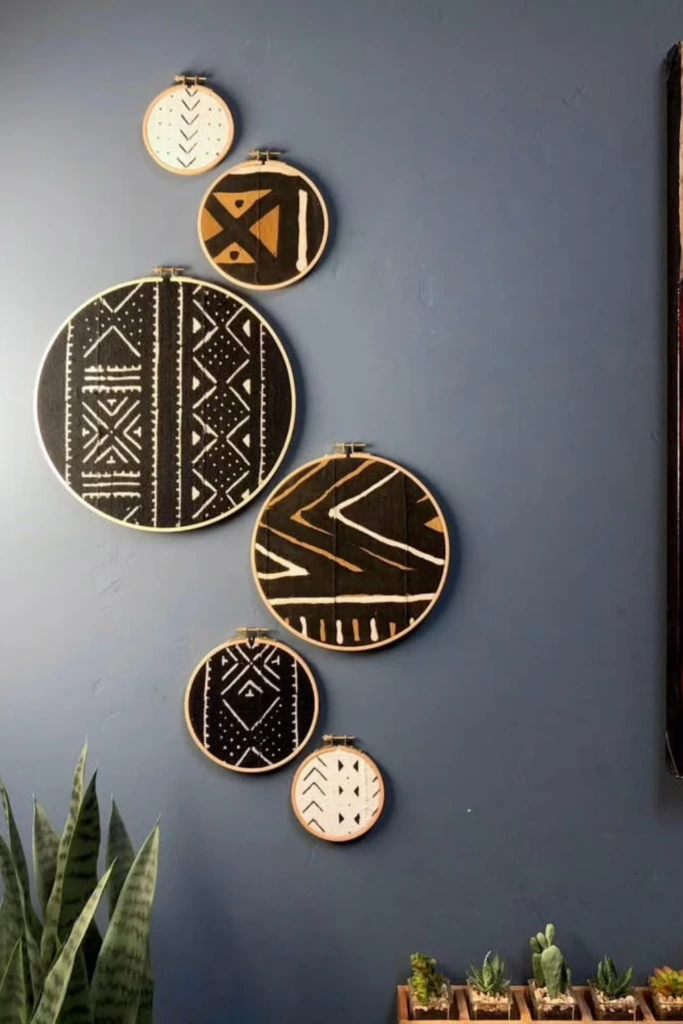
Embroidery hoop art is one of the easiest ways to create customized wall decorations using inexpensive materials.
Wooden embroidery hoops can hold patterned fabric, embroidered designs, or simple textile artwork.
Choose fabrics that coordinate with your room's colors. Floral prints, linen, gingham, and geometric patterns are all attractive options.
Place the fabric between the two sections of the hoop, tighten the screw, and pull the material until the surface is smooth.
Trim the excess fabric at the back, leaving enough to secure the edges neatly.
Create several hoops in different sizes and arrange them together on the wall.
You can also personalize the designs with embroidered initials, small flowers, or meaningful words.
This project is particularly suitable for bedrooms, craft rooms, and cozy reading corners.
16. Green Mirror Wall
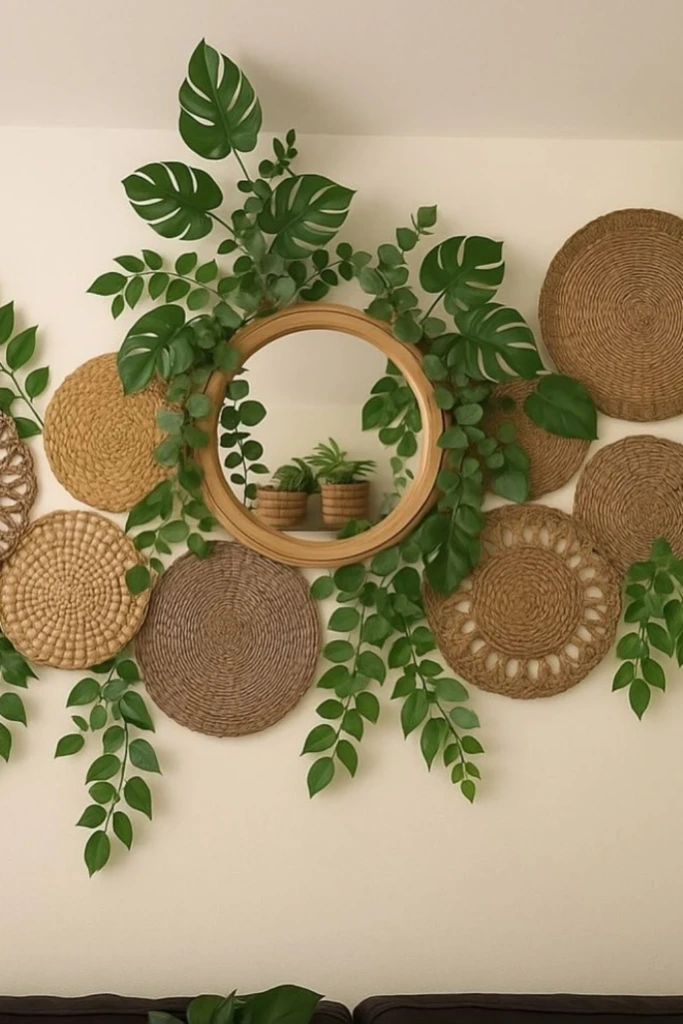
A green mirror wall combines the reflective benefits of a mirror with the natural appearance of foliage.
Begin with a round or oval mirror that suits the size of your wall.
Install it using mounting hardware appropriate for its weight and the wall construction.
Next, arrange decorative greenery around the mirror. You can use small wall-mounted planters, artificial vines, or lightweight botanical accents.
For a balanced look, concentrate the greenery along one side or around the lower portion of the mirror rather than covering the entire frame.
Adding a few woven or wooden accessories can make the display feel more complete.
This idea is especially effective in entryways and smaller living rooms because mirrors reflect light and can make the surrounding space feel more open.
17. Mini Frame Grid
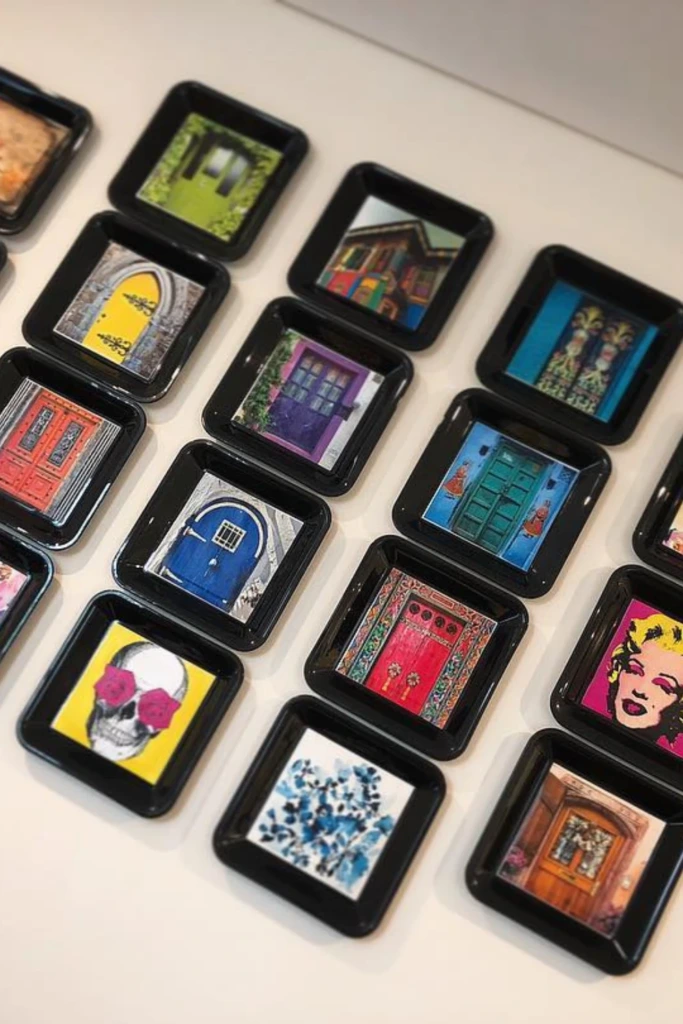
A mini frame grid turns small photographs or illustrations into a structured wall display.
Choose a collection of identical or similarly sized frames and arrange them in evenly spaced rows.
For example, nine small frames can form a three-by-three grid, while six frames can create a simple rectangular arrangement.
Use artwork that shares a common theme, such as travel photography, botanical drawings, family portraits, or abstract designs.
Measure carefully before hanging the frames. Even spacing is essential because small alignment differences become noticeable in repeated patterns.
A frame grid looks particularly attractive above a desk, along a hallway, or beside a reading area.
For a more personalized result, combine meaningful photographs with handmade illustrations.
18. Painted Arch Accent
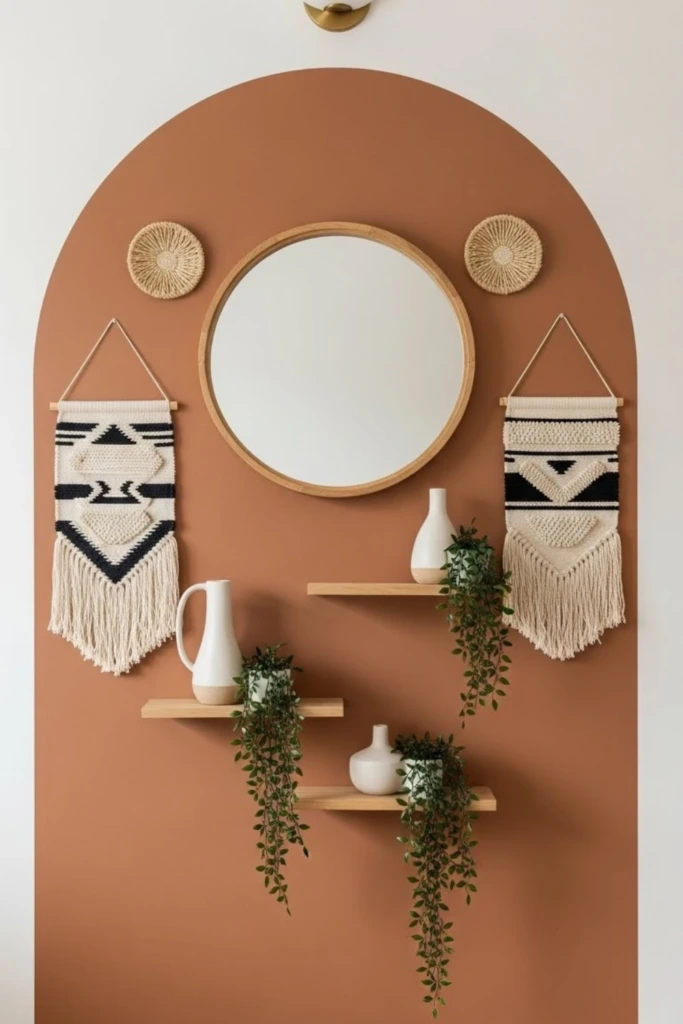
A painted arch is an affordable way to define a specific area of a room without covering an entire wall.
This design works well behind beds, desks, small cabinets, and reading chairs.
Choose a paint color that contrasts gently with your existing wall. Terracotta, sage green, dusty blue, and warm beige are versatile options.
Measure the desired width and mark the straight sides using painter's tape.
To form the rounded top, use a pencil attached to a string as a simple compass, or trace a large curved template.
Paint carefully along the curved outline with a brush before filling the larger area with a roller.
Once the paint dries, position your furniture or decorative accessories in front of the arch.
The painted shape creates a visual backdrop that helps the furniture feel intentionally placed.
19. Fabric Wall Panels
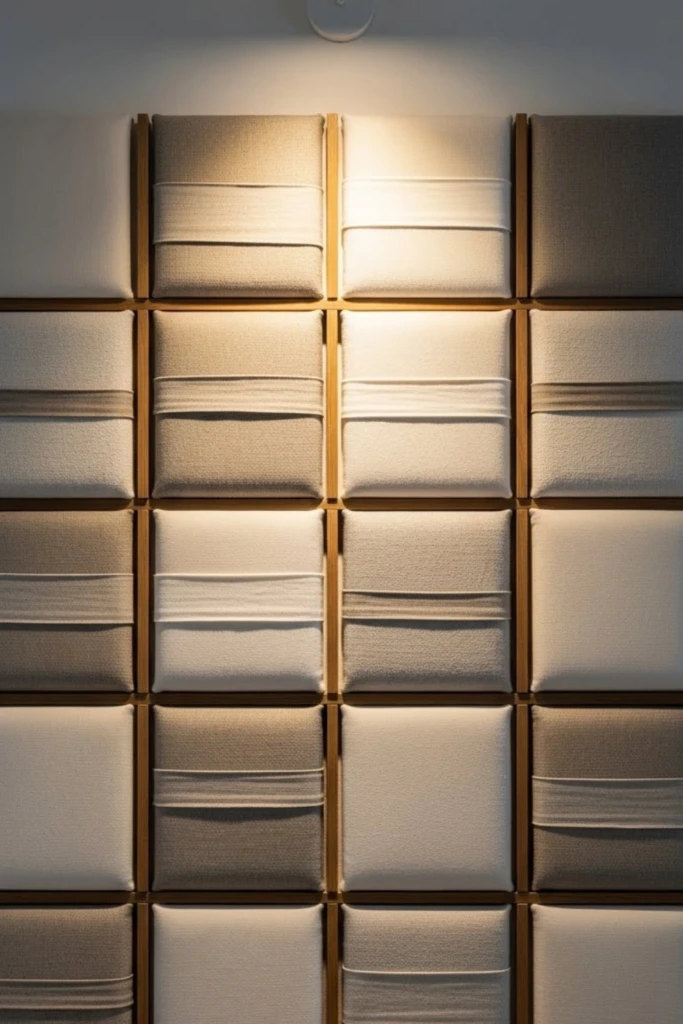
Fabric wall panels offer a creative way to introduce color, pattern, and softness into a room.
You can make decorative panels by stretching fabric over lightweight wooden frames or rigid backing boards.
Choose upholstery fabric, cotton, linen, or another material that complements your interior.
Cut the fabric slightly larger than the backing, pull it evenly around the edges, and secure it at the back using an appropriate adhesive or staple gun.
Create multiple panels in matching dimensions and arrange them in a row or grid.
Solid fabrics provide a subtle textured effect, while patterned materials can become a stronger decorative feature.
Padded or purpose-built acoustic panels may also help reduce sound reflections, although ordinary fabric-covered boards should not be expected to provide substantial soundproofing.
Fabric panels are especially attractive in bedrooms, home offices, and entertainment rooms.
20. Floating Picture Ledge
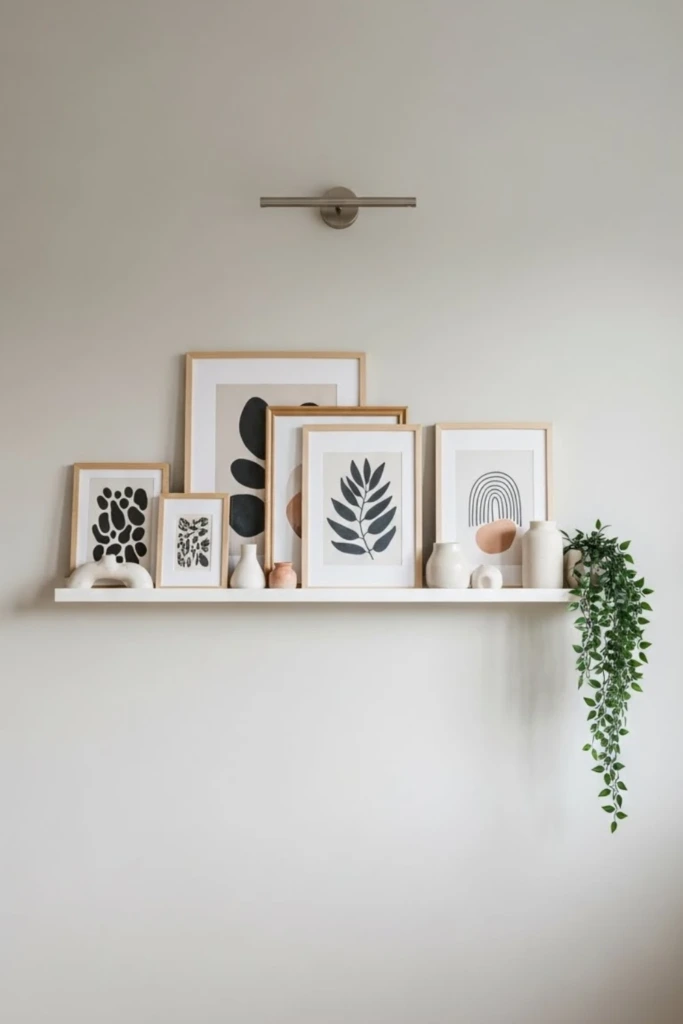
A floating picture ledge provides a flexible way to display artwork without creating new wall holes every time you change your arrangement.
Install a narrow wooden picture ledge using suitable screws and wall anchors.
Once securely mounted, lean framed photographs, prints, and small decorative pieces against the wall.
Combine two or three frame sizes to create depth, allowing some pieces to overlap slightly.
You can also include lightweight accessories such as miniature vases or small decorative objects.
Choose frames in coordinating colors to prevent the arrangement from looking overly busy.
The main advantage of a picture ledge is flexibility. You can update the display for different seasons, celebrations, or personal preferences without changing the shelf itself.
For safety, use a ledge with a raised front lip and secure frames where they could be knocked over.
21. Rope Wall Art
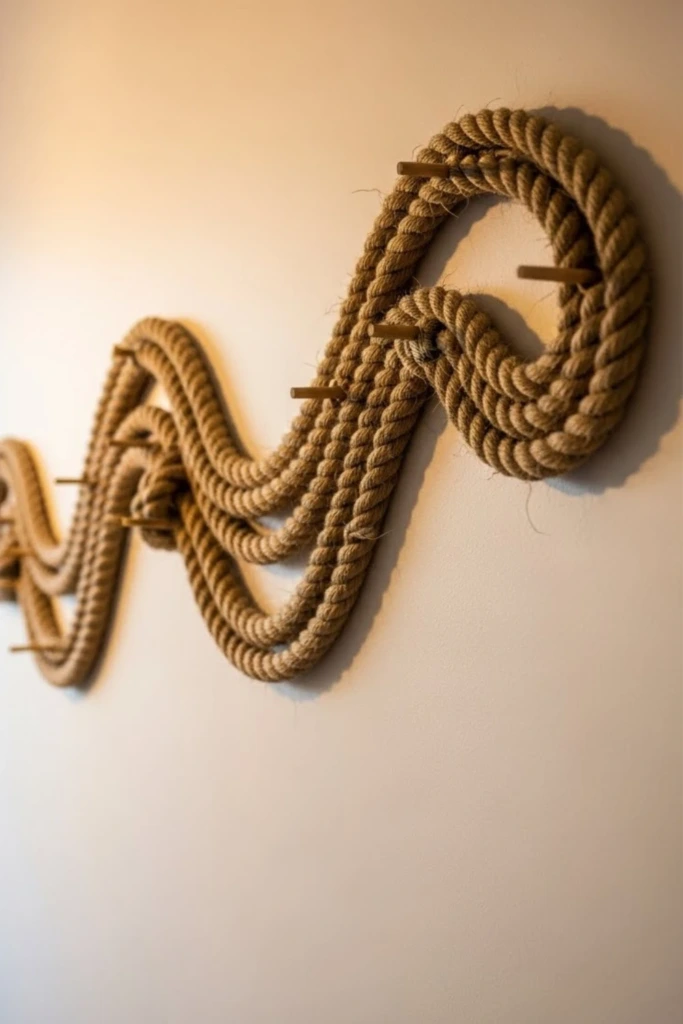
Rope wall art is a simple craft project that adds texture and handmade character to your walls.
Natural cotton rope, jute, and macramé cord are all suitable materials.
One approach is to create curved or geometric rope designs on a lightweight backing board.
Sketch your desired pattern first, then attach the rope using a craft adhesive compatible with your materials.
You can create spirals, arches, waves, or abstract shapes depending on the style you prefer.
For additional interest, combine different rope thicknesses or incorporate wooden beads.
Allow the adhesive to cure fully before hanging the artwork.
Rope designs pair particularly well with neutral interiors, wooden furniture, and other natural textures.
Avoid positioning rope decorations too close to candles, heaters, or other heat sources.
22. Accent Paint Block
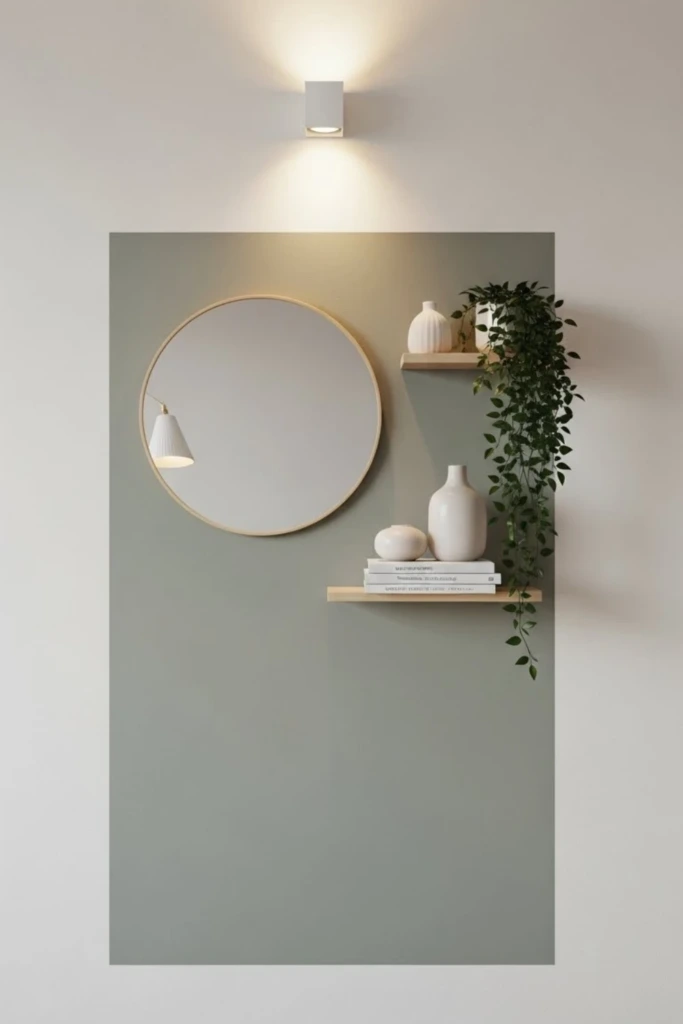
An accent paint block is an easy way to highlight furniture or create a focal point without repainting the entire room.
Instead of covering a full wall, paint a defined rectangular or square section behind a particular piece of furniture.
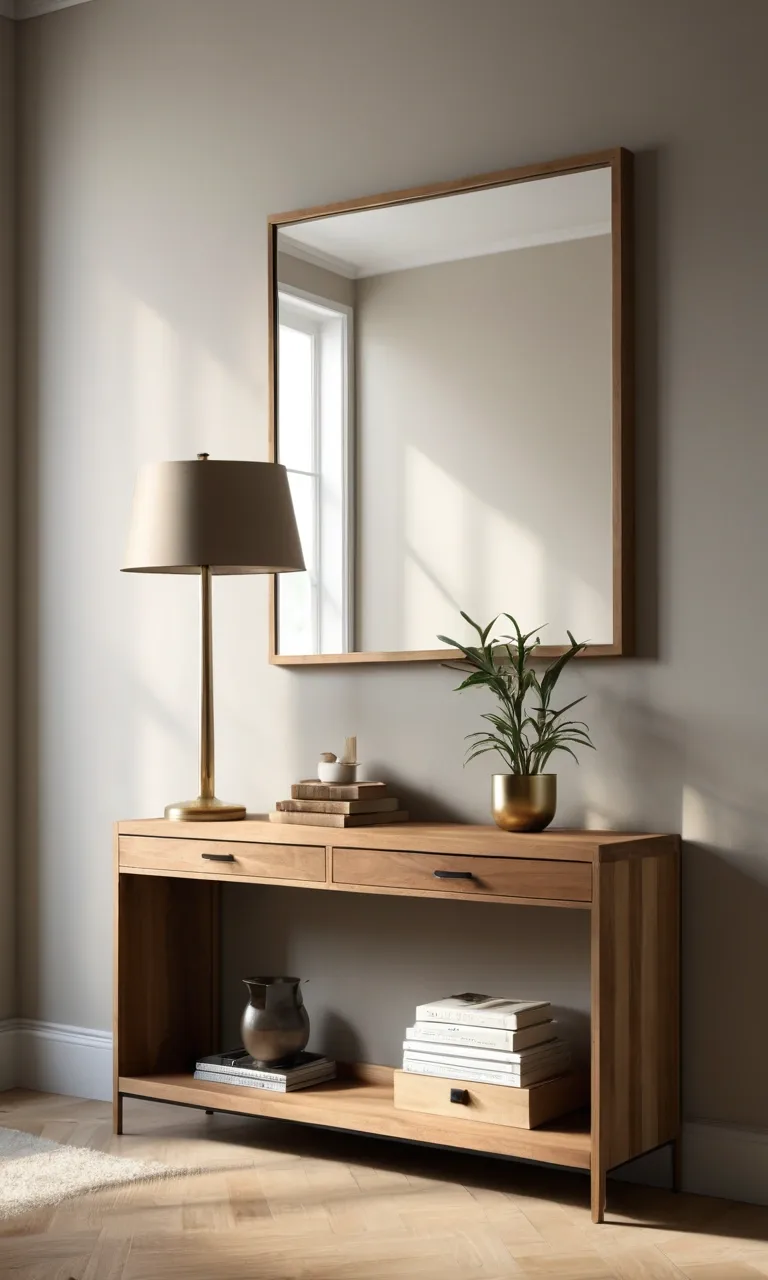
This technique works well behind a console table, desk, dresser, or pair of bedside tables.
Measure the area carefully and use painter's tape to establish clean boundaries.
Choose a color that complements your existing decor while providing enough contrast to make the shape noticeable.
For a modern appearance, extend the painted block slightly beyond the width of the furniture.
You can also use two complementary colors to create overlapping geometric sections.
Once the paint has dried, remove the tape carefully and return the furniture to its position.
The result is a simple architectural effect achieved with minimal materials.
23. Framed Fabric Art
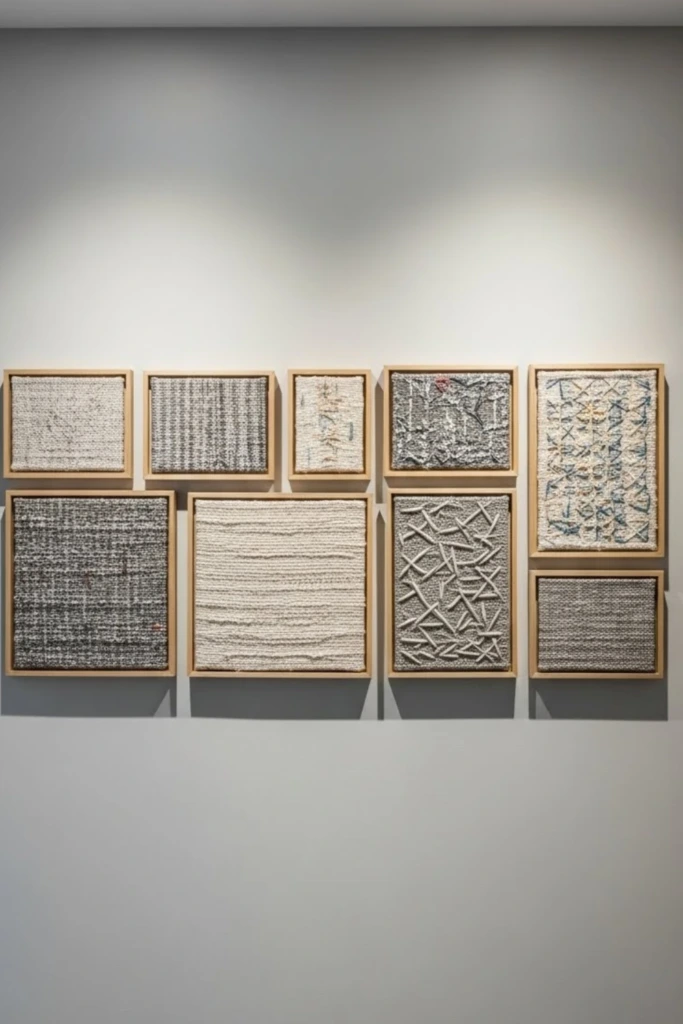
Framed fabric art allows you to turn beautiful textiles into affordable wall decorations.
Look for fabric remnants, vintage scarves, patterned cotton, or pieces of decorative linen.
Choose a section with an interesting print or texture and cut it to fit your frame, leaving enough material for neat positioning.
For a smooth finish, mount the fabric onto acid-free backing board using a reversible, fabric-safe method when preserving valuable textiles.
Place the mounted fabric inside a simple frame that complements the design.
You can display one large piece or create a coordinated collection using fabrics with related colors and patterns.
This approach is especially useful when you want unique artwork that matches your curtains, cushions, or other soft furnishings.
Framed textiles look beautiful in bedrooms, dining rooms, and hallways, adding a personal touch without requiring painting or drawing skills.
How can I decorate my wall DIY?
You can decorate your walls yourself using affordable materials such as paint, fabric, wood, rope, picture frames, and decorative plants.
Begin by deciding what you want the wall to achieve. A blank living room wall might benefit from a gallery arrangement, while a bedroom could look more inviting with a painted arch or textured hanging.
If you're working with a small budget, try repurposing existing materials. Leftover fabric can become framed artwork, old baskets can form a decorative display, and unused wooden boards can be transformed into shelves.
Plan the layout before attaching anything permanently. Paper templates and painter's tape can help you visualize the arrangement.
For the best result, focus on a consistent color palette, appropriate proportions, and secure installation.
What wall art is popular now?
Wall decor in 2026 continues to embrace natural textures, personalized artwork, and creative combinations of decorative and functional elements.
Popular styles include woven wall hangings, botanical displays, geometric shelving, textured fabric panels, and painted architectural shapes.
Handmade artwork is particularly appealing because it introduces details that mass-produced decorations may not offer.
Warm wood tones, organic materials, soft neutrals, and earthy colors remain versatile choices for contemporary interiors.
Gallery walls are also evolving beyond matching picture frames, with many designs incorporating mirrors, small shelves, textiles, and sculptural objects.
The most successful approach is to choose wall art that suits your home's existing style and reflects your personal taste rather than following every trend.
DIY wall decor gives you the freedom to experiment with materials, colors, and arrangements without committing to an expensive renovation. Whether you prefer a simple painted feature or a detailed handmade display, even one thoughtfully designed wall can make a noticeable difference in how your home looks and feels.