21 Door Storage Ideas for 2026 to Maximize Every Inch of Space
Doors are often overlooked when organizing a home, yet they can provide valuable storage without taking up additional floor space. Whether you live in a small apartment or simply want to keep everyday essentials organized, the right door storage solutions can make your rooms more functional and less cluttered.
From hanging baskets and adjustable racks to clever organizers for shoes, kitchen supplies, and bathroom essentials, there are options for almost every room. Here are 21 practical door storage ideas to help you make better use of the space you already have.
What Are the Most Creative Door Storage Ideas for Every Room?
The best door storage ideas combine convenience, accessibility, and efficient use of vertical space. An empty door can become a home for cleaning supplies, toiletries, accessories, pantry items, or children's belongings with the right organizer.
Start by considering what you need to store and where you use those items most often. A bathroom door may benefit from moisture-resistant shelves, while a pantry door can hold spices, bottles, or packaged food. In a bedroom, hanging pockets can keep accessories and small personal items within reach.
Before installing anything, measure the available door space and check the clearance between the door and the surrounding wall or furniture. Choose an organizer that suits the door's construction, supports the intended weight, and allows the door to open and close freely.
1. Mesh Baskets

Mesh baskets are a simple way to organize items while keeping them visible and easy to reach. Their open construction allows air to circulate, making them particularly useful for lightweight bathroom products, rolled towels, hair accessories, and small household supplies.
You can attach individual wire baskets to a suitable mounting system or use a purpose-built over-the-door rack with several basket levels. Different basket sizes make it easier to separate small products from taller containers.
For the best results, reserve upper baskets for items you use occasionally and place everyday essentials at a comfortable height. Check the basket's weight rating before adding heavier products, and use a protective backing if the metal could scratch the door.
2. Shower Shelves
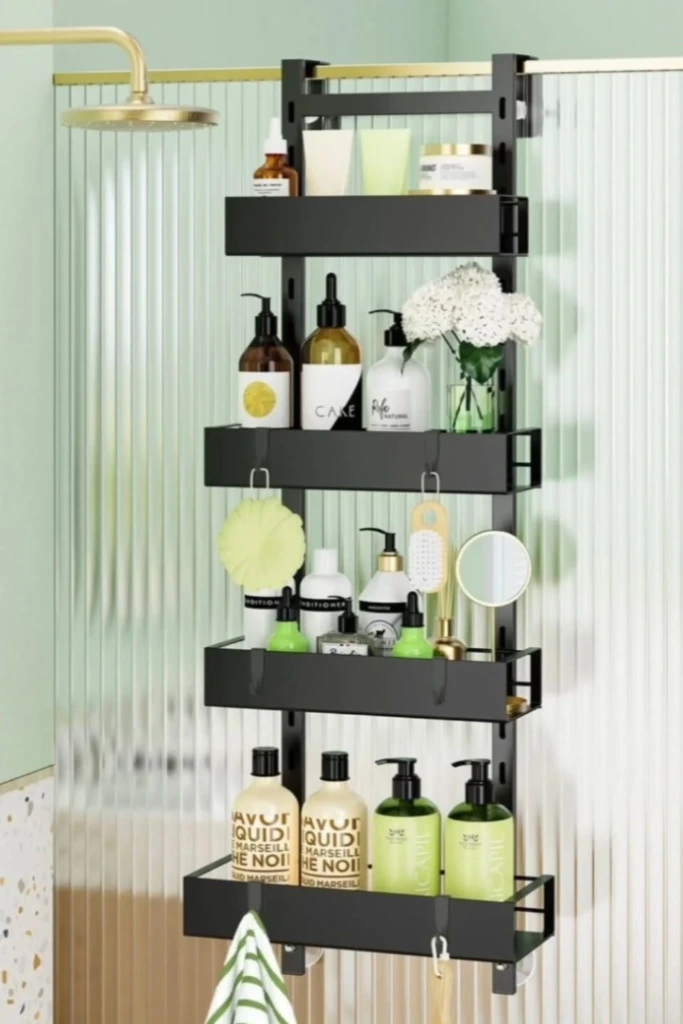
Shower shelves mounted on a bathroom door can help organize shampoo, conditioner, body wash, and other bathing essentials without crowding the shower floor or walls. They are especially useful in bathrooms where built-in niches and wall shelves are unavailable.
Choose shelves specifically designed for damp environments. Stainless steel, rust-resistant coated metal, and suitable plastic are practical options. Open designs with drainage holes help water escape rather than collect beneath bottles.
Measure the door carefully to ensure the shelves do not interfere with hinges, handles, or nearby fixtures. If you prefer an over-the-door design, confirm that it is intended for the type and thickness of your door. Avoid storing glass containers overhead, and clean the shelves regularly to prevent soap residue and mildew buildup.
3. Pegboard System
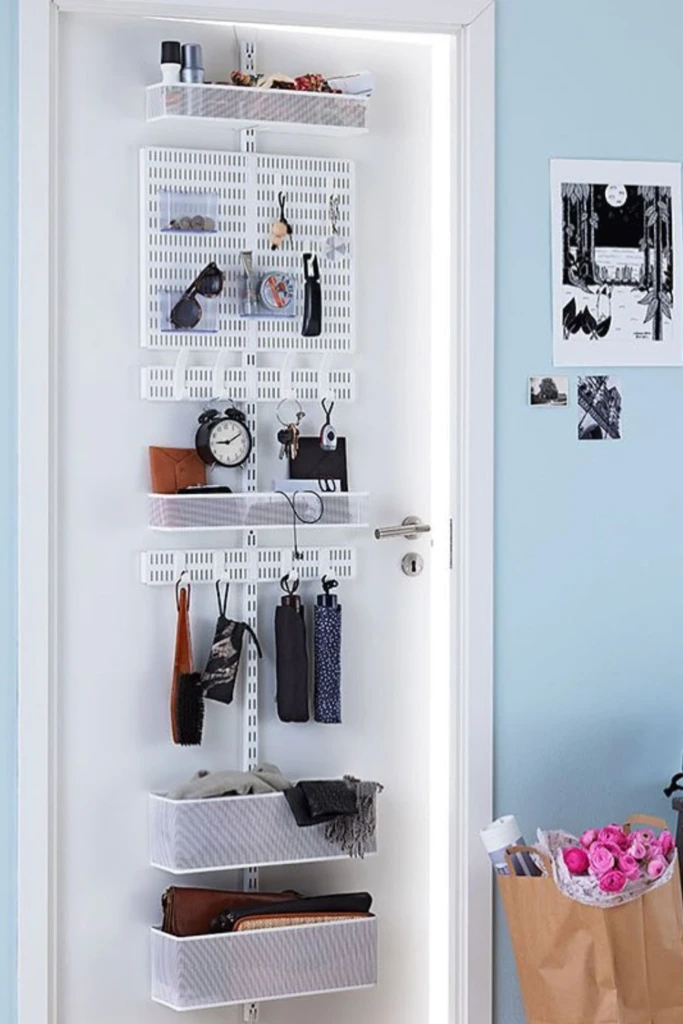
A pegboard system transforms an otherwise unused door into a flexible storage station. With movable hooks, small baskets, and compatible holders, you can customize the arrangement whenever your storage needs change.
In a craft room, a pegboard can hold scissors, ribbons, measuring tools, and small containers. In a home office, it can organize cables, stationery, and frequently used accessories. A utility-room setup might accommodate lightweight tools and household equipment.
Choose a pegboard and mounting hardware designed for the door material and the weight of the items you intend to store. Keep heavier objects low, distribute the load evenly, and make sure protruding hooks will not catch on nearby walls or furniture when the door moves.
4. Utility Baskets
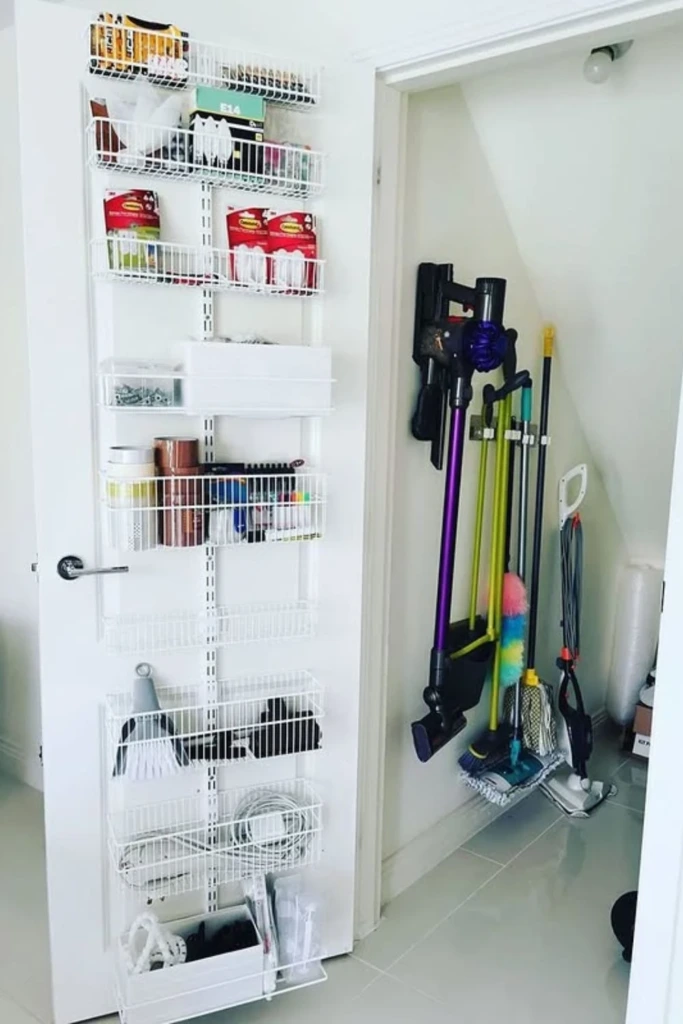
Utility baskets offer versatile storage for the miscellaneous items that tend to accumulate around the house. They can hold batteries, reusable cloths, spare light bulbs, pet accessories, small toys, or other everyday essentials.
A set of over-the-door baskets works particularly well in laundry rooms, hallways, and utility closets. Using baskets of different sizes allows you to separate products according to their purpose instead of mixing everything together.
To keep the arrangement practical, avoid overfilling the baskets and place frequently used items within easy reach. If the contents are small, choose baskets with a solid base or sufficiently narrow openings so nothing slips through. Labels can also help family members return items to the correct place.
5. Gift Storage
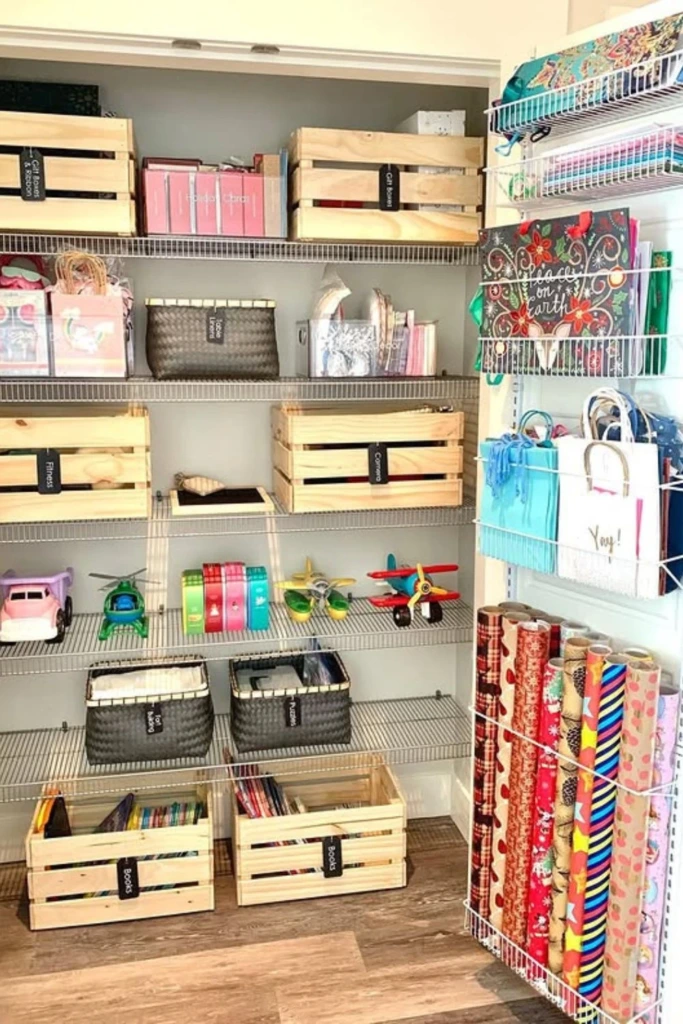
Gift-wrapping supplies can take up surprising amounts of room, especially when wrapping paper rolls, ribbons, gift bags, and greeting cards are stored separately. A door-mounted organizer creates one convenient place for these materials.
Look for a system with tall compartments for wrapping paper, smaller pockets for ribbons and tape, and hooks for scissors or reusable gift bags. A craft-room or closet door is often an ideal location because the supplies remain accessible without being constantly visible.
Keep delicate paper products away from damp areas and direct sunlight to prevent curling or fading. Store scissors securely, and make sure long rolls fit without touching the floor when the door opens. If your collection is large, divide supplies into everyday and seasonal sections.
6. Towel Rack
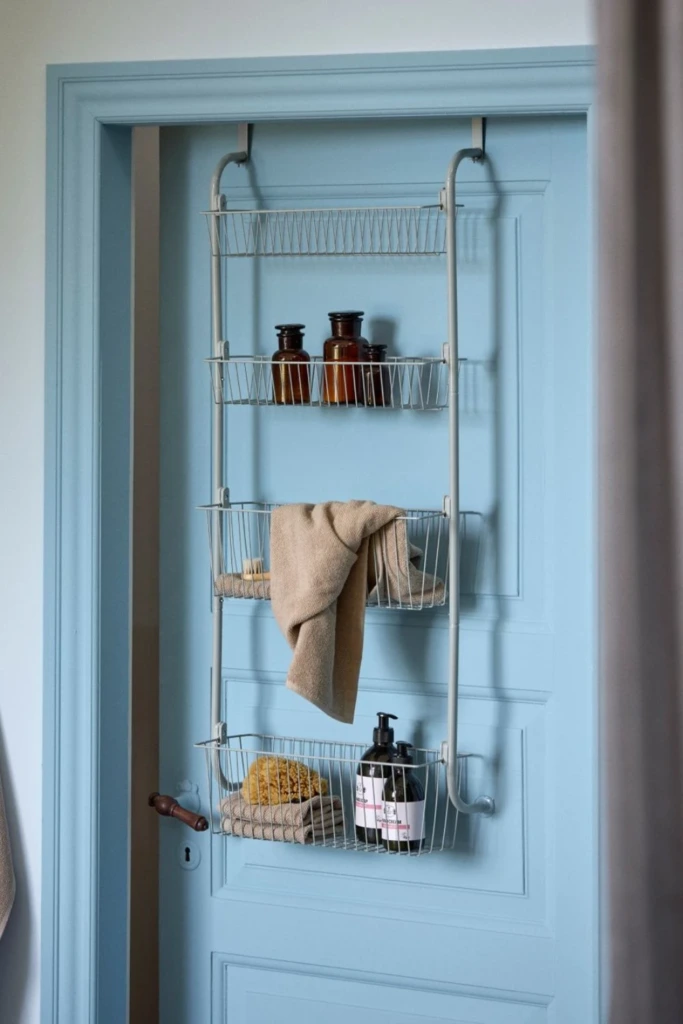
A door-mounted towel rack can free up wall space while giving bath towels, hand towels, and washcloths a designated home. It is useful in compact bathrooms, guest rooms, and laundry areas where conventional towel bars may not fit.
Choose a rack with enough clearance between the bars to allow towels to dry. Multiple horizontal rails are suitable for folded or draped towels, while hooks can accommodate hand towels and lightweight bathrobes.
For bathrooms, prioritize corrosion-resistant materials and secure mounting. Avoid hanging too many heavy, wet towels on a rack that was designed for lighter loads. If the door is frequently used, check that the towels will not become trapped against the wall or door frame.
7. Clear Holders
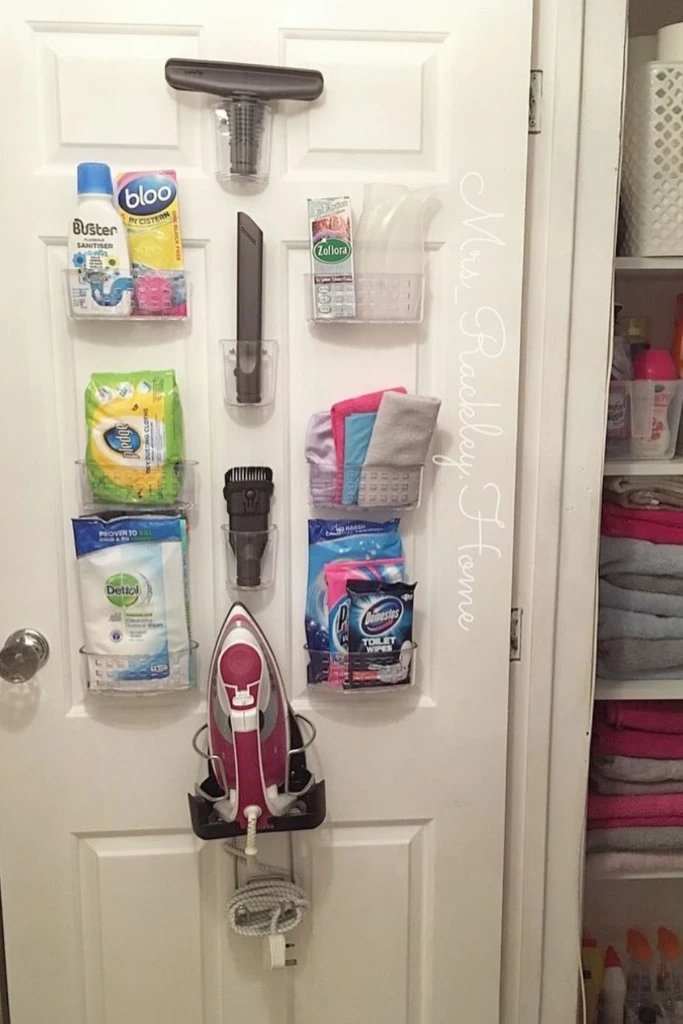
Clear holders make it easy to see what you have stored without opening every pocket or container. Transparent plastic pockets, sleeves, and small compartments work well for accessories, office supplies, toiletries, and craft materials.
In a bedroom, clear pockets can hold sunglasses, belts, hair ties, and other small items. On a pantry door, transparent holders make individually packaged snacks and small packets easier to identify. They are also useful for organizing cables, batteries, and stationery in a home office.
Select durable holders with smooth edges and secure attachment points. Check the maximum supported weight, particularly when storing multiple items in one compartment. Keep frequently used products in the middle sections and reserve higher pockets for lightweight items you rarely need.
8. Wooden Shelves
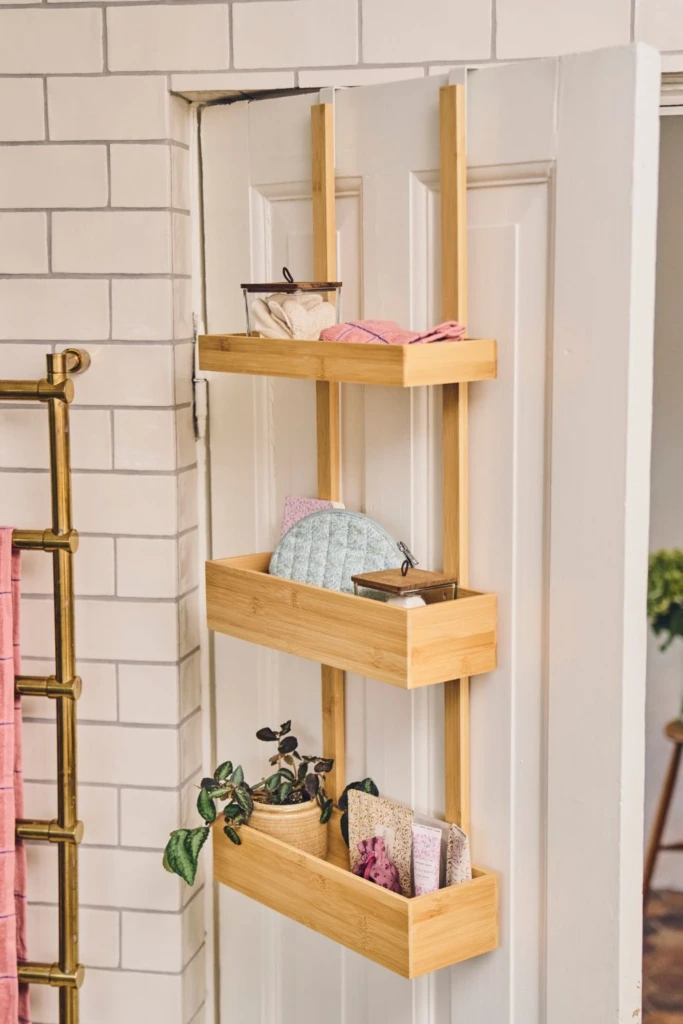
Wooden door shelves introduce a warm, natural look while providing practical storage. They can hold small decorative objects, lightweight books, folded accessories, or neatly arranged containers, depending on their construction and mounting method.
In a bedroom or home office, narrow shelves can display small plants, stationery, or collectibles. In a pantry, properly supported shelves can organize lightweight packaged goods. For a coordinated appearance, match the wood tone to nearby furniture or cabinetry.
Weight and installation are important considerations. Wood can be heavier than wire or plastic, so use hardware suitable for the door itself rather than relying on an ordinary adhesive strip. Avoid placing fragile items where the door's movement could make them fall, and protect wooden shelves from persistent moisture.
9. Cleaning Rack

A cleaning rack attached to a utility-closet door can bring order to spray bottles, microfiber cloths, dusters, and other household cleaning essentials. Keeping these products together makes it easier to find what you need when tackling everyday messes.
Choose a rack with bottle-sized compartments, sturdy hooks, and enough spacing for longer tools. A combination of shelves and hooks is particularly useful because spray bottles, cleaning brushes, and cloths have different storage requirements.
Store chemicals in their original, clearly labeled containers and follow the manufacturer's safety instructions. Keep hazardous products out of children's and pets' reach, and do not place incompatible cleaning chemicals together in a way that could lead to accidental spills or mixing. Ensure bottles remain upright and secure when the door moves.
10. Supply Organizer
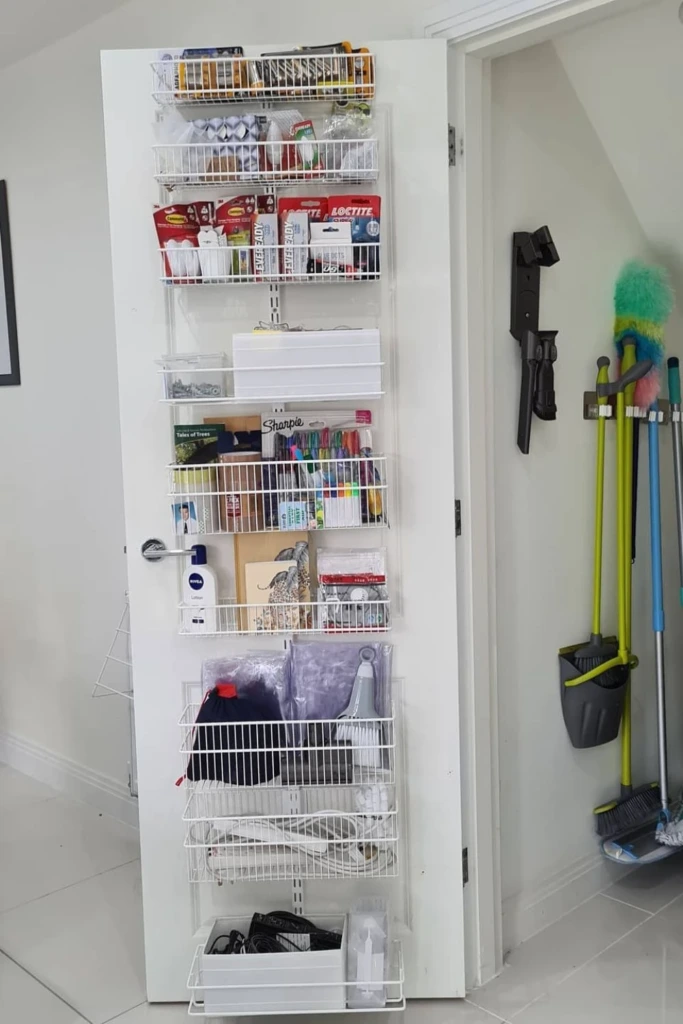
A door-mounted supply organizer is useful for collecting the small essentials that otherwise get scattered across drawers, countertops, and shelves. Depending on its layout, it can accommodate stationery, sewing supplies, batteries, cables, first-aid items, or basic repair tools.
Choose an organizer with compartments suited to the size of your belongings. Small pockets work for clips, pins, and adapters, while deeper sections are better for larger containers. If several people share the space, assigning a separate section to each category can make the system easier to maintain.
Avoid mixing sharp tools with loose items that could be damaged, and store medicines or potentially dangerous supplies securely. Review the organizer occasionally to remove empty packaging, duplicate items, and anything that no longer belongs there.
11. Bag Storage
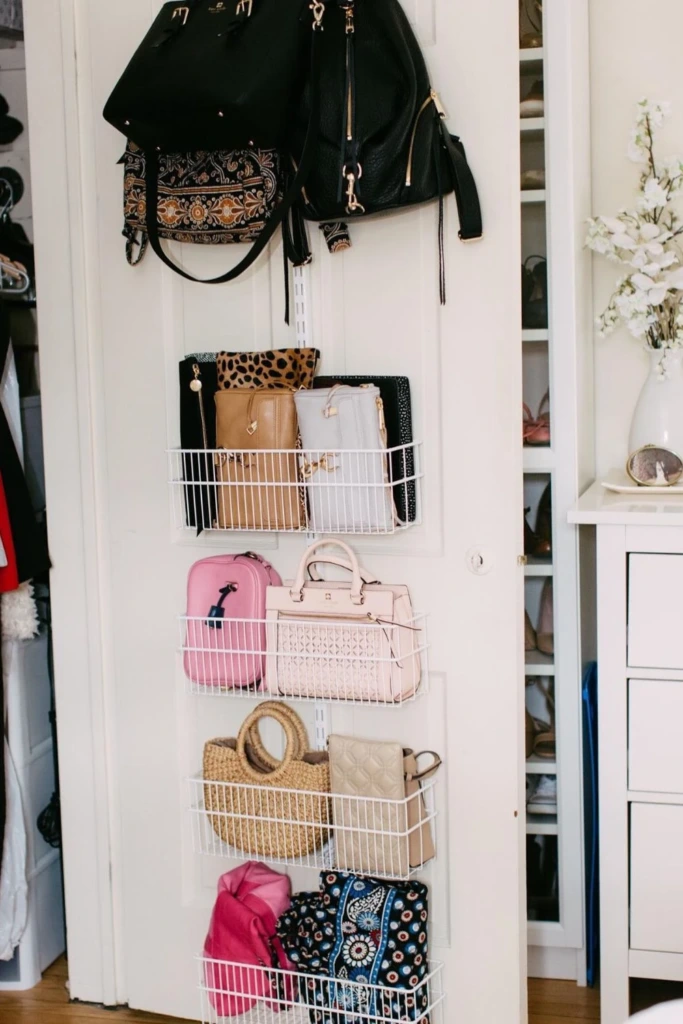
Handbags, backpacks, reusable shopping bags, and small purses can quickly clutter a closet or entryway. Hanging them on a dedicated door organizer keeps them off the floor and makes it easier to choose the right bag before leaving home.
A sturdy over-the-door hook rack works well for frequently used bags, while a pocket organizer can accommodate lightweight foldable shopping bags. For handbags that need to retain their shape, use wide hooks or individual supports that do not place excessive pressure on the handles.
Distribute the weight across several hooks instead of hanging every bag from one point. Keep heavy backpacks lower and ensure the door can still close without pressing against the bags. Delicate leather bags should be stored in a dry location with enough space to prevent scuffing.
12. Wrap Storage
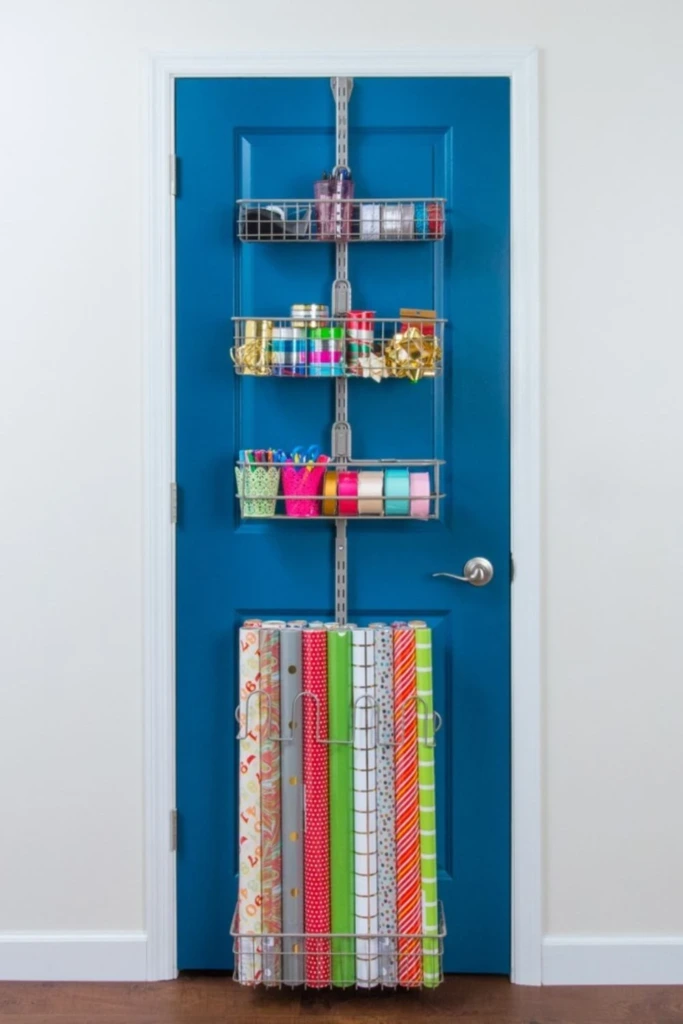
A dedicated wrap organizer can keep gift-wrap paper, adhesive tape, ribbons, bows, and decorative accessories in one accessible place. It is particularly helpful for people who enjoy crafting or regularly prepare gifts for birthdays and holidays.
Look for a design with vertical sleeves for paper rolls, narrow compartments for ribbon spools, and pockets for smaller supplies. A full-length organizer is suitable for tall rolls, while a compact version may be sufficient for a small collection.
To keep paper in good condition, store it in a dry closet away from direct sunlight and heat. Secure loose ribbon ends to prevent tangling, and keep scissors and cutting tools in a designated compartment. Before purchasing an organizer, measure your longest roll and check the available door clearance.
13. Spice Storage
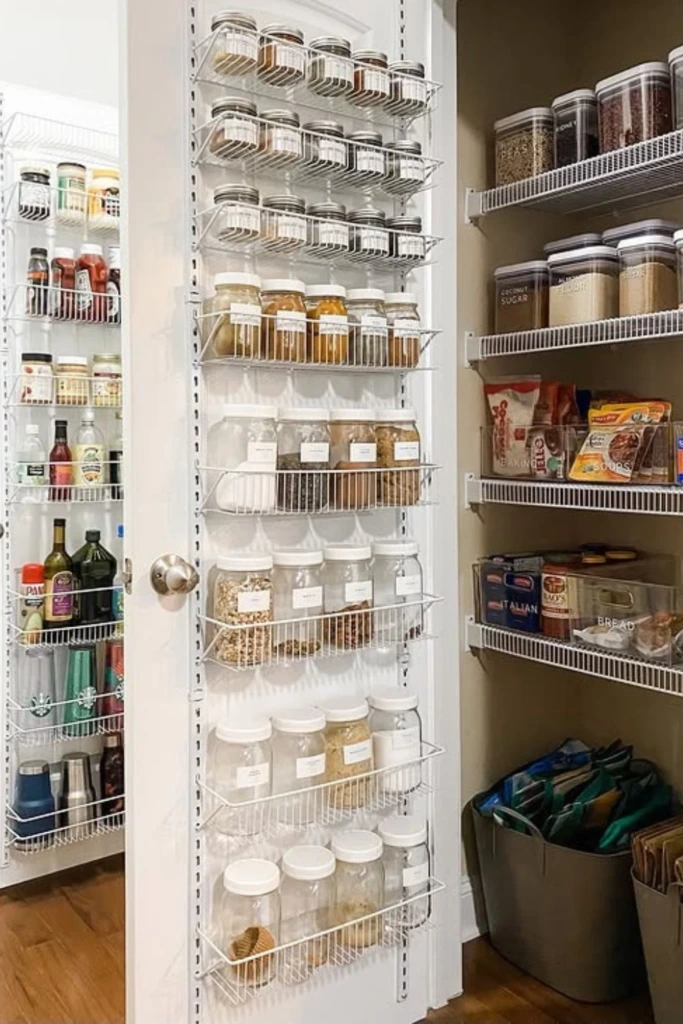
The inside of a pantry or kitchen-cabinet door can provide a convenient location for frequently used spices. Narrow racks allow small jars to stand in organized rows, making it easier to identify seasonings while preparing meals.
Choose shelves with raised edges or retaining rails so jars remain stable as the door opens and closes. Arrange spices by cooking frequency, cuisine, or alphabetical order, depending on what helps you find them fastest.
Check the height and diameter of your jars before installing the rack. Keep the organizer away from excessive heat, steam, and direct sunlight, which can affect spice quality. Label jars clearly and review them periodically to remove stale seasonings. Because jars can be heavy in groups, make sure the mounting system is rated for the combined load.
14. Bottle Storage
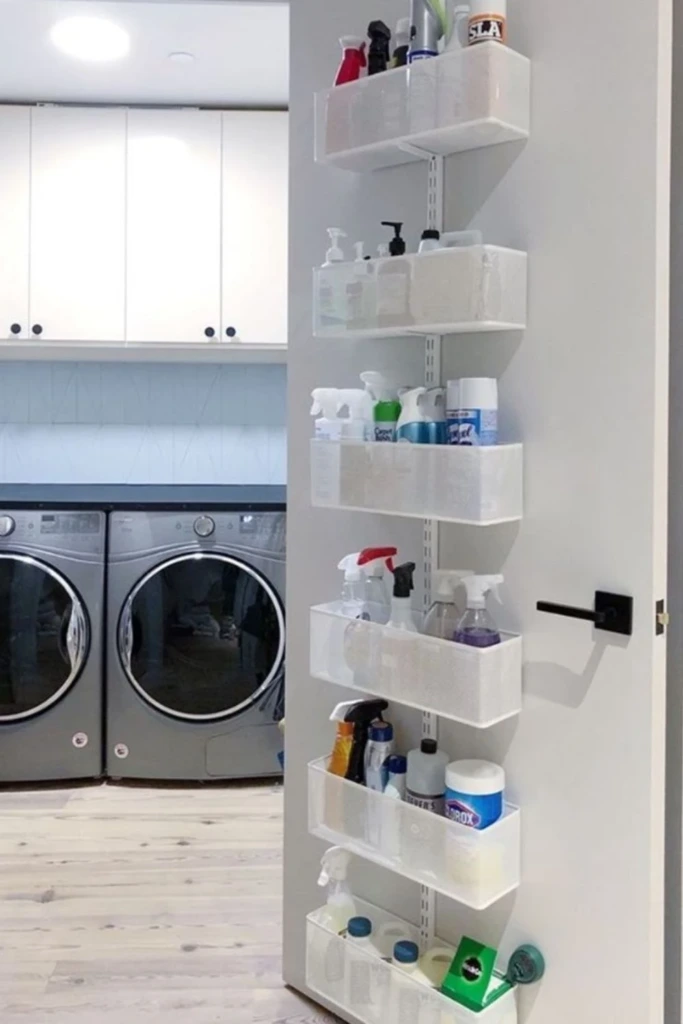
Bottle storage on a door can help organize reusable water bottles, travel containers, cleaning liquids, or pantry bottles. The right design depends on the size, shape, and weight of the containers you need to store.
For reusable water bottles, use a rack with appropriately sized openings or adjustable holders. In a pantry, narrow shelves with retaining lips can accommodate lightweight oil or condiment bottles. Cleaning products should be kept upright in compartments that prevent them from tipping over.
Measure the bottles before choosing an organizer, including their caps and handles. Avoid placing heavy glass bottles on an inadequately supported door, and leave enough room for the bottles to clear nearby shelves and walls. For reusable drink containers, allow damp bottles to dry fully before storing them to reduce unpleasant odors.
15. Kids Storage
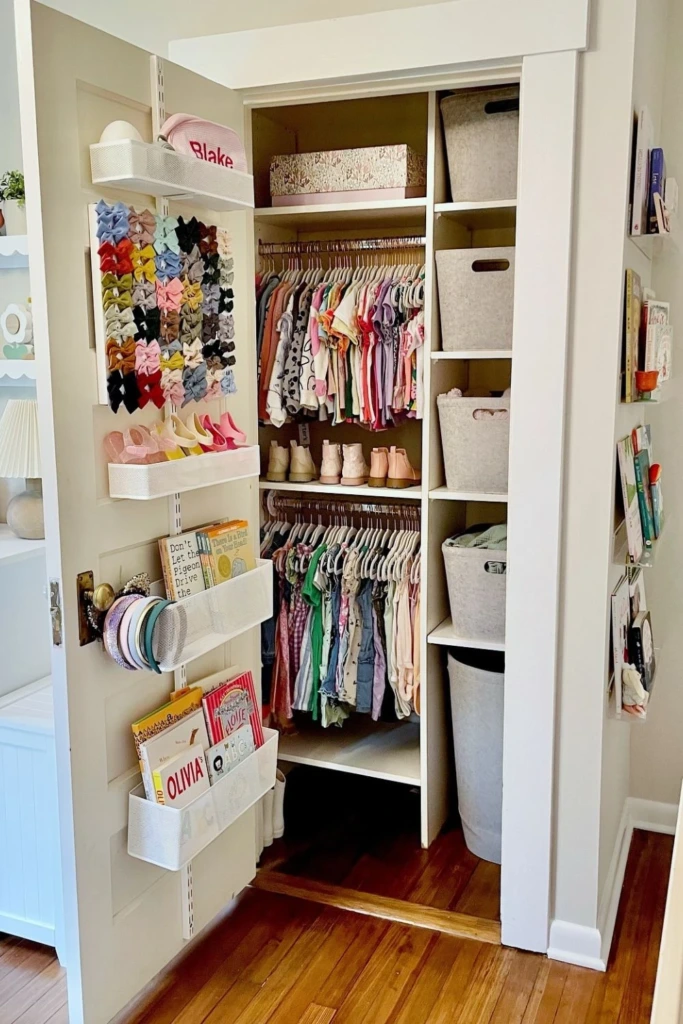
A child's bedroom or playroom door can become a practical storage area for toys, books, art supplies, and small accessories. Using vertical space helps keep the floor clearer and makes cleanup more manageable.
Fabric pocket organizers are useful for lightweight toys, crayons, dolls, and stuffed animals. Small baskets can separate building blocks from puzzles, while low-mounted hooks may provide accessible spots for lightweight backpacks and dress-up accessories.
Safety should guide the design. Secure the organizer properly, avoid overloading it, and keep small choking hazards away from young children. Do not place heavy objects above a child's sleeping or playing area, and choose materials that are easy to clean. Clear labels or simple pictures can help younger children understand where their belongings belong.
16. Kitchen Rack
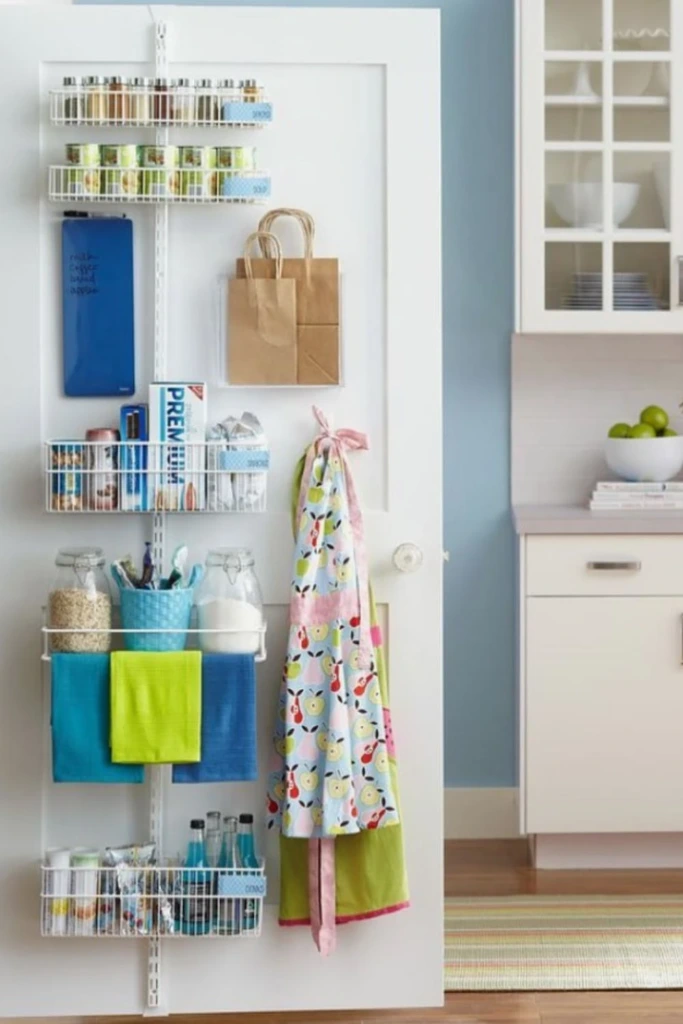
A kitchen door rack can provide extra room for frequently used cooking tools, packaged ingredients, lids, and lightweight containers. It is especially useful in smaller kitchens where drawer and cabinet space is limited.
A rack mounted inside a pantry door can hold packets, small jars, and baking supplies. A cabinet-door organizer may work better for measuring cups, pot lids, or lightweight utensils. Choose the design according to what you use most often rather than trying to store every kitchen item in one place.
Before installing the rack, account for the depth of the shelves inside the cabinet. Items attached to the door must not strike stored dishes or prevent the cabinet from closing. Use materials suitable for a kitchen environment, clean the organizer regularly, and keep heavier cookware in properly supported drawers or shelves.
17. Shoe Organizer
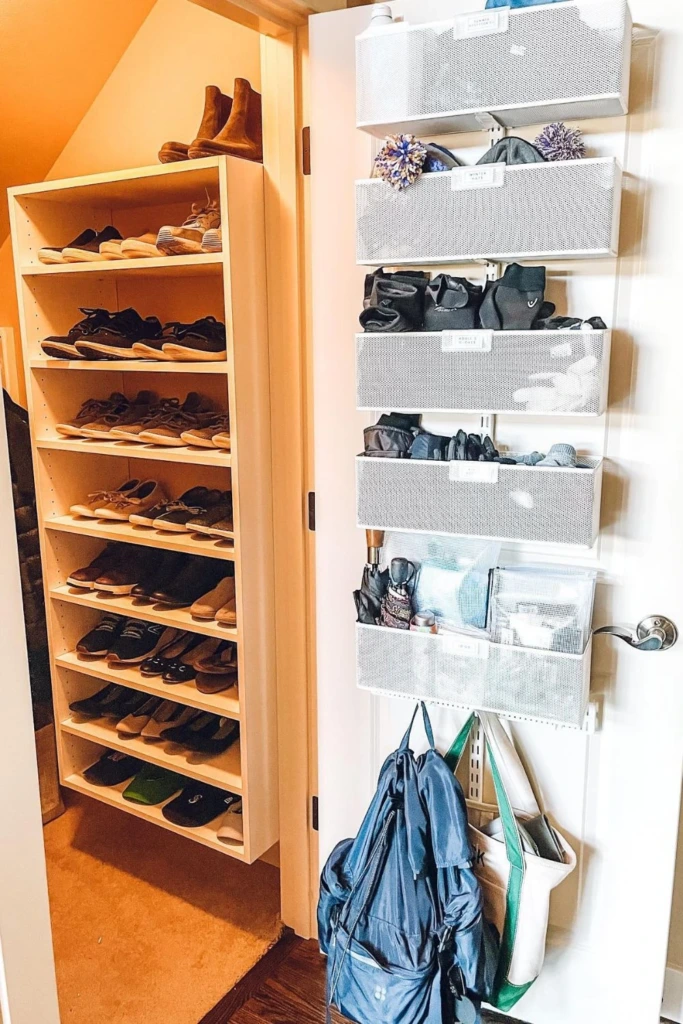
A shoe organizer is one of the most effective ways to use the vertical space behind a bedroom or closet door. It can hold flats, sandals, slippers, children's shoes, and other footwear that does not require a large amount of storage space.
Over-the-door pocket organizers are suitable for lightweight pairs, while tiered racks offer better access to shoes that are awkward to fit into pockets. Some designs also accommodate accessories such as insoles, shoe brushes, and spare laces.
Measure your shoes and the distance between the door and any nearby furniture before choosing a style. Let damp footwear dry before storing it, and clean muddy soles to keep pockets and shelves fresh. Heavy boots or bulky shoes may be better stored on a sturdy floor-level rack rather than a lightweight hanging organizer.
18. Fabric Shelves
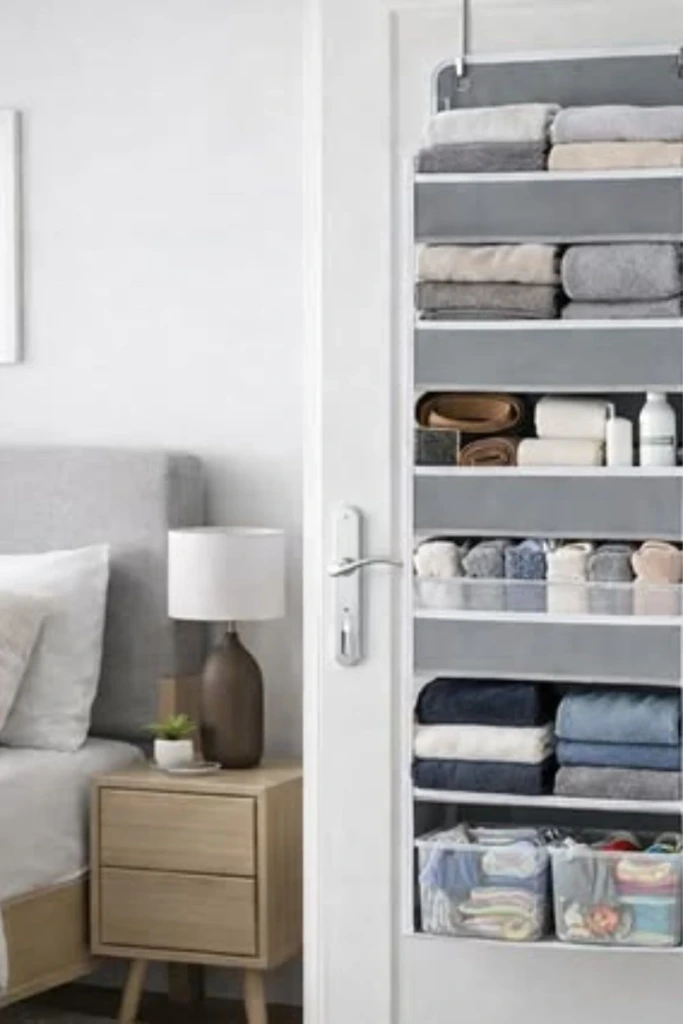
Fabric door shelves provide a lightweight alternative to rigid metal or wooden organizers. They commonly feature several soft compartments that hang from a frame or a set of hooks, making them useful for lightweight clothing, accessories, linens, and small household items.
In a bedroom, fabric shelves can hold socks, scarves, hats, or folded T-shirts. In a nursery, they can organize bibs, small blankets, and baby accessories. A utility closet can use them for spare cloths, lightweight gloves, or reusable shopping bags.
Look for durable stitching, a stable hanging system, and compartments deep enough to contain the intended items. Avoid placing wet products or heavy objects in fabric shelves unless the material and frame are specifically designed for them. Wash or spot-clean the organizer according to its care instructions.
19. Labeled Baskets
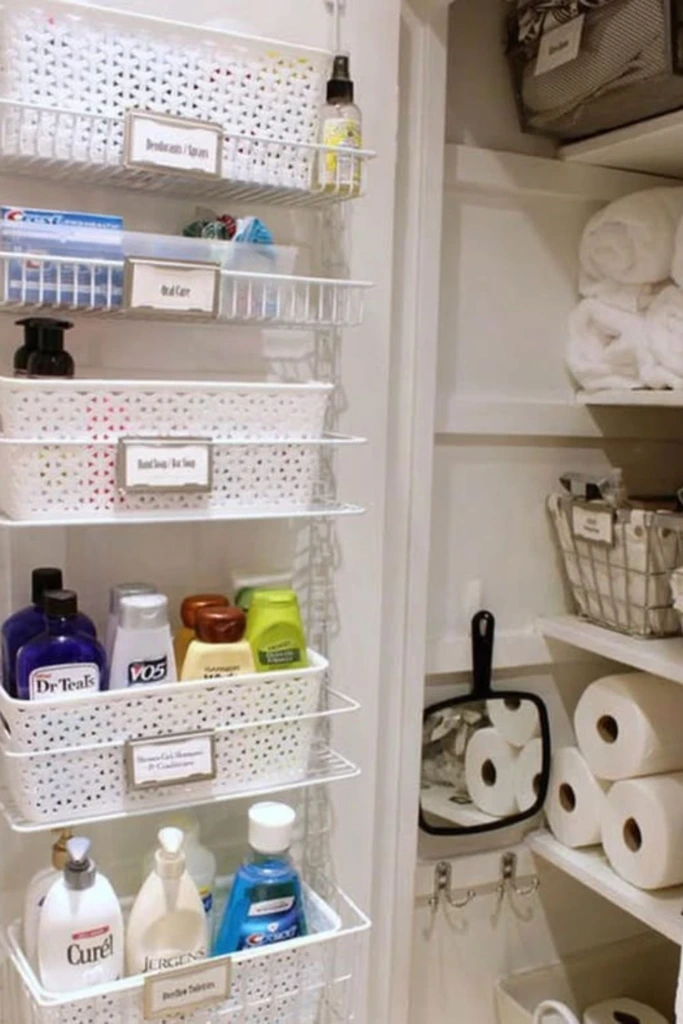
Labeled baskets make door storage easier to maintain because every item has a clear place to return to. This is especially useful when multiple people share a pantry, bathroom, laundry room, or family storage area.
Use labels such as "Hair Care," "Batteries," "Baking Supplies," or "Pet Accessories" to identify each basket's purpose. Transparent label holders allow you to change the wording when your needs change, while waterproof labels are useful in humid rooms.
Keep each basket focused on one category rather than combining unrelated objects. Avoid filling containers so tightly that retrieving an item becomes difficult. If the organizer is mounted on a moving door, select baskets with secure attachment points and keep the heaviest contents in the lowest positions.
20. Cabinet Shelves
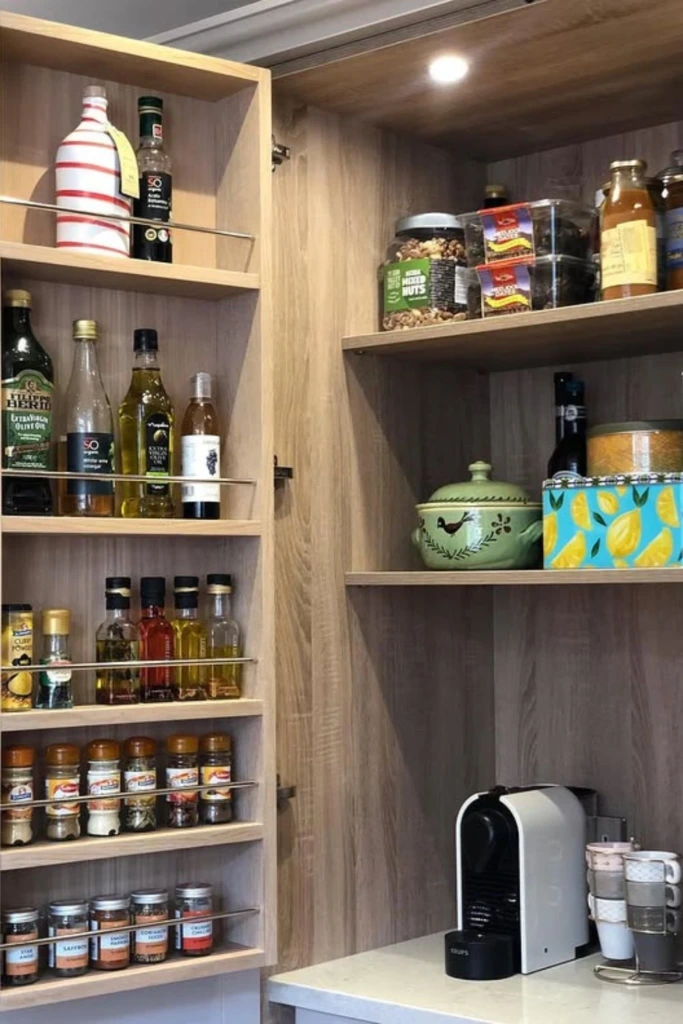
Cabinet doors can provide extra storage when fitted with shelves designed for their specific dimensions. These organizers are useful for making better use of pantry cabinets, bathroom vanities, laundry cupboards, and other enclosed storage areas.
In a kitchen cabinet, shallow shelves may hold seasoning packets, small jars, or lightweight wraps. In a bathroom, a suitable organizer can store spare toiletries and grooming products. Inside a utility cabinet, shelves can separate small household supplies from larger items stored below.
The most important consideration is clearance. Measure the cabinet's interior depth and check how far the door-mounted shelves will project when closed. Make sure the contents cannot collide with existing shelves, hinges, or stored objects. Choose secure mounting hardware and avoid adding excessive weight to thin cabinet doors.
21. Tiered Racks
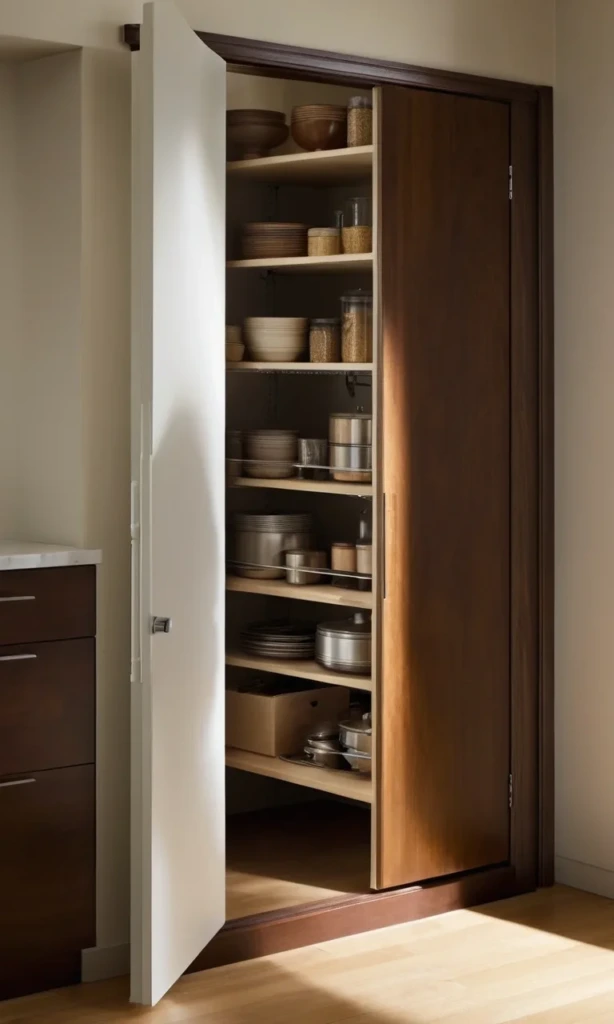
Tiered racks create several levels of storage on a single door, making them useful for grouping items by size or category. Instead of spreading products across different cabinets, you can keep frequently used supplies together in a compact vertical arrangement.
A pantry rack can separate snacks, packets, and jars by shelf. In a bathroom, tiers can hold skincare products, toiletries, and spare soap. A laundry-room version can organize clothespins, stain-removal products, and cleaning accessories.
Choose a rack with enough vertical space for your tallest containers and sufficient depth for the items you plan to store. Raised edges help prevent products from sliding off, while adjustable shelves provide flexibility when your collection changes. Distribute weight evenly and confirm that the rack remains stable when the door is opened or closed.
FAQs
Door storage can be an affordable way to organize a home, but choosing the right system involves more than finding an empty door. Consider the door material, the organizer's weight limit, the items you want to store, and how often the door is used.
The following answers address two common questions to help you choose a solution that works well without creating new storage or maintenance problems.
Can door storage damage the door over time?
Yes, door storage can cause damage if the organizer is too heavy, poorly installed, or incompatible with the door's construction. Over-the-door hooks may scratch the finish, interfere with closing, or put pressure on the upper edge. Screws can leave permanent holes, and adhesive products may pull away paint or veneer when removed.
To reduce the risk, choose an organizer designed for your door type and thickness. Check the manufacturer's weight limit and account for the combined weight of both the organizer and its contents. Spread items evenly, avoid sudden loading, and inspect the mounting points periodically for movement or wear.
If scratching is a concern, use a compatible protective pad between the organizer and the door. Confirm that the pad will not prevent the door from closing properly. For hollow-core doors, be particularly cautious about drilling or attaching heavy items because the internal structure may not provide adequate support.
Adhesive organizers can work well for lightweight products on suitable surfaces, but their performance depends on the adhesive, surface preparation, humidity, and load. Follow the manufacturer's installation instructions rather than assuming that every adhesive hook can support the same weight.
How do you choose the right door storage for your space?
Start by identifying the items you want to organize. Small accessories may fit neatly into pockets, while bottles and jars usually need rigid shelves or baskets. Shoes benefit from compartments sized to accommodate individual pairs, and cleaning tools may require a combination of hooks and deeper holders.
Next, measure the door's width, height, thickness, and available clearance. Consider nearby walls, furniture, cabinet shelves, handles, and hinges. An organizer that fits the door itself may still prevent it from opening fully or closing securely.
Material is another important factor. Plastic and corrosion-resistant metal are practical choices for many bathrooms and kitchens, while fabric works well for lightweight bedroom items. Wood can provide a more decorative appearance but may require stronger mounting hardware and protection from moisture.
Finally, consider installation, accessibility, and maintenance. Choose a system that allows you to reach frequently used items comfortably, clean the compartments easily, and rearrange the contents when necessary. If you rent your home, a removable solution may be preferable, provided it is compatible with the door and the intended load.
The most effective door organizer is one that fits your space, supports your belongings safely, and makes everyday routines simpler.
Final Thoughts
Door storage is a practical way to create extra organization without sacrificing valuable floor space. From spice racks and shoe organizers to fabric pockets and tiered shelves, there are solutions for nearly every room and household need.
Choose an organizer that suits the items you own, measure carefully before installation, and respect the door's weight limits. With a little planning, an unused door can become a useful extension of your home's existing storage.