16 Cast Iron Wall Storage Ideas for 2026
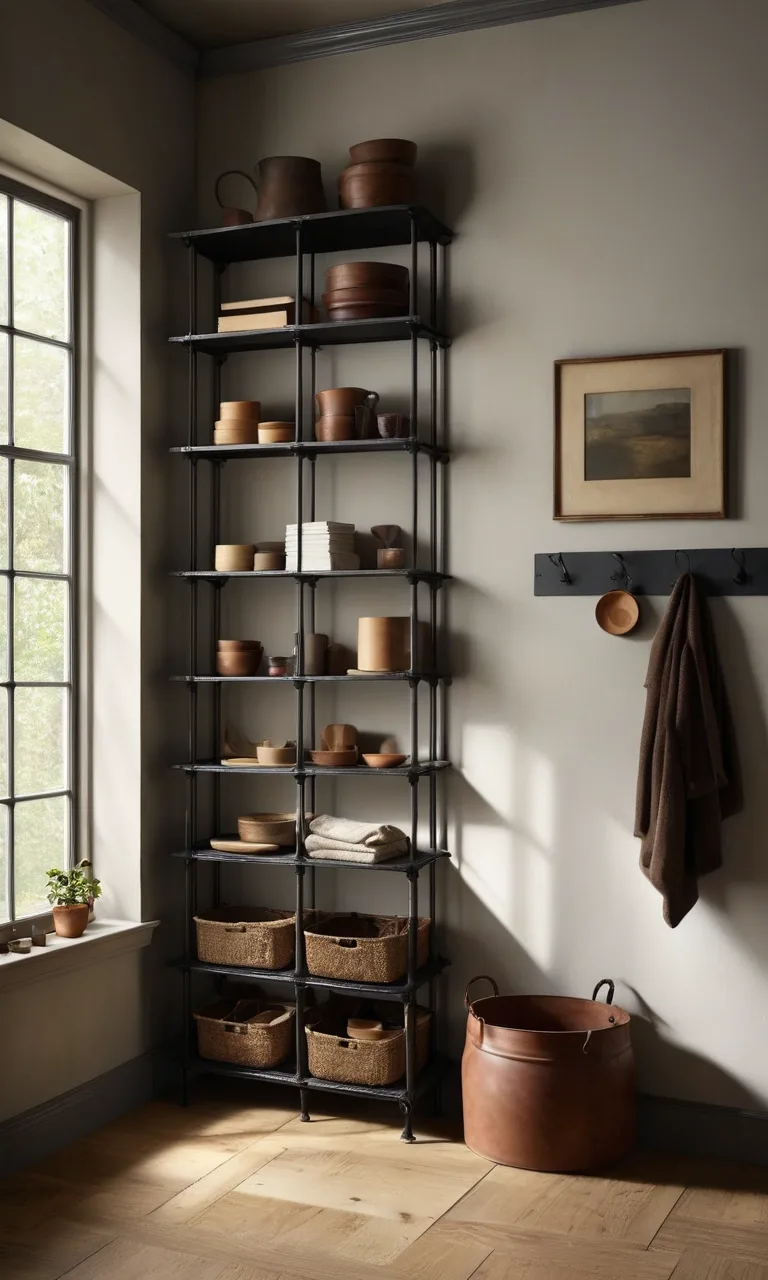
Cast iron cookware is built to last, but its weight and bulky shape can make it difficult to organize in a crowded kitchen. Stacking heavy skillets inside cabinets often leads to scratches, awkward lifting, and wasted space. Wall storage offers a practical alternative by keeping pans accessible while turning everyday cookware into an attractive part of your kitchen decor.
Whether you have a single cast iron skillet or an extensive collection of Dutch ovens, griddles, and specialty pans, the right wall-mounted system can help you create a more organized cooking area. From simple wooden rails to industrial pipe racks, these ideas offer solutions for kitchens of different sizes and styles.
What is the Best Way to Store Cast Iron?
The best way to store cast iron is to keep it clean, completely dry, and protected from moisture while ensuring that every pan has adequate support. For wall storage, use sturdy hooks, rails, or racks that are securely attached to wall studs or another suitable structural support.
Before hanging your cookware, wash it according to its care requirements and dry it thoroughly. Apply a thin layer of cooking oil when appropriate to maintain the seasoning and help prevent rust. Avoid putting damp pans away, even if they appear clean.
Choose hooks that fit comfortably through the handle openings without creating pressure points. Large skillets and Dutch ovens need stronger hardware than lightweight kitchen utensils, and unusually heavy pieces may require dedicated brackets or shelves.
Leave enough space between pans so they do not knock against one another when removed. Keep the arrangement away from excessive steam, splashing water, and areas where grease accumulates. A well-planned wall system makes cookware easier to reach, protects your investment, and gives your kitchen a functional focal point.
1. Vertical Hook Grid
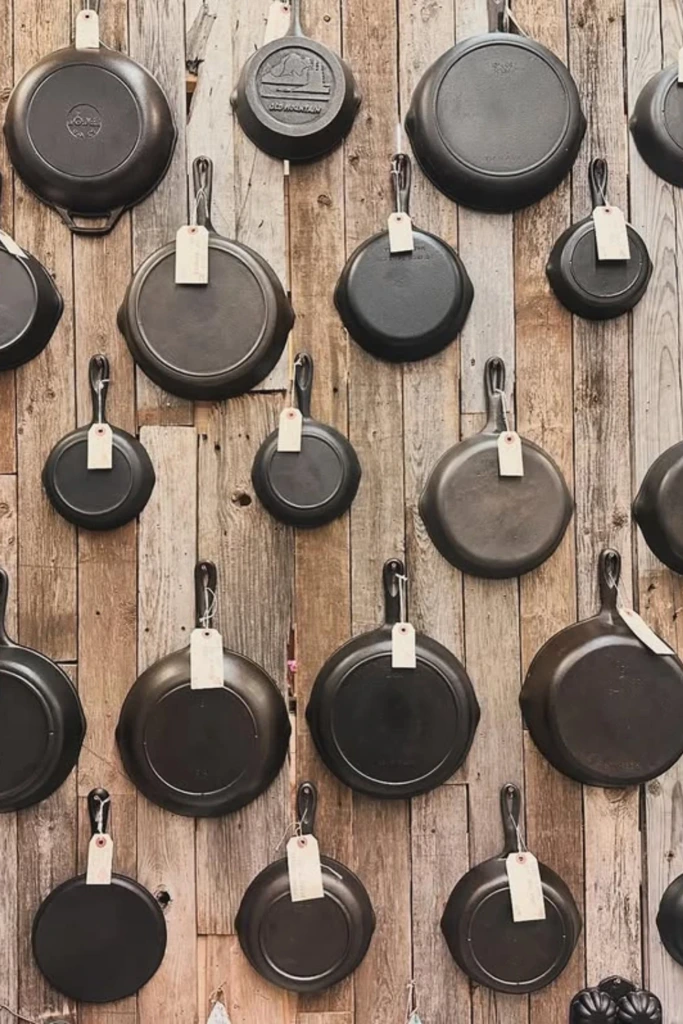
A vertical hook grid is an excellent option for displaying several cast iron pans without taking up an entire wall. Install a sturdy metal grid or purpose-built hanging panel vertically, then arrange compatible hooks at different heights.
This arrangement works especially well in narrow kitchens where horizontal wall space is limited. You can position smaller skillets near the top and place larger, heavier pans lower down, provided the grid and mounting hardware are rated for their weight.
The open structure also allows you to rearrange hooks whenever your collection changes. If you have pans with different handle shapes, select hooks that hold each piece securely rather than relying on one universal size.
For a tidy appearance, keep the grid aligned with nearby cabinets or shelving. A black metal finish creates a modern industrial look, while a stainless steel version can complement professional-style kitchens.
2. Wood Backer Rail
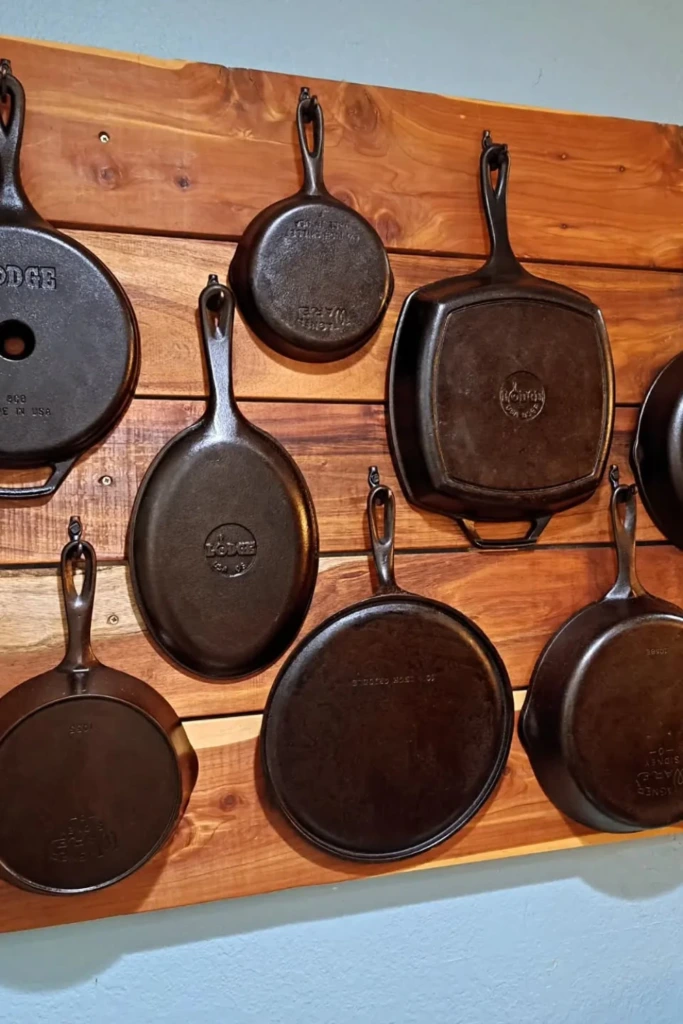
A wooden backer rail brings warmth to a kitchen while providing a solid foundation for hanging cast iron cookware. Choose a thick, straight board made from a durable wood species, then attach suitable hooks along its length.
The rail should be secured to wall studs or an appropriately engineered mounting system. Avoid relying on ordinary drywall anchors for a row of heavy skillets, especially when the pans will be moved frequently.
Hardwood is a good choice because it offers durability and can support a variety of kitchen styles. Oak, maple, and walnut each provide a distinctive appearance, while a painted board can blend into existing cabinetry.
Measure the spacing between hooks before drilling so that large skillets have enough room. If you want a simple DIY project, sand the board, apply a kitchen-appropriate finish, and install the hardware before mounting it.
A wooden rail is particularly useful above a preparation counter, where frequently used pans remain within easy reach without occupying valuable drawer space.
3. Live-Edge Beam
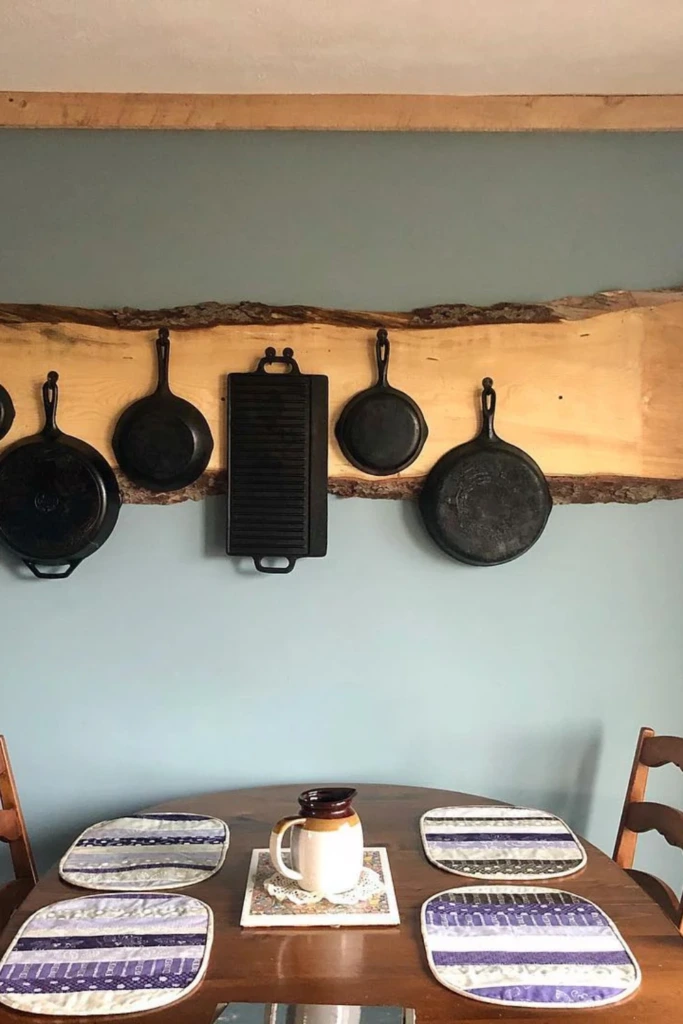
A live-edge beam combines rustic character with practical cookware storage. Its natural outer edge preserves the irregular shape of the wood, making the rack feel like a decorative feature rather than ordinary kitchen hardware.
Select a properly dried, structurally sound beam with enough thickness to accept the mounting hardware. Check it carefully for cracks, loose bark, and other defects that could compromise its strength. A heavy timber may require multiple mounting points and professional installation.
Install sturdy hooks along the underside or front face, depending on the design. Arrange the pans so their weight is distributed across the beam rather than concentrated in one section.
This idea works particularly well in farmhouse kitchens, cabins, and rooms with exposed timber or natural finishes. Pair the beam with neutral walls and simple accessories to keep the display from looking overcrowded.
Although the wood provides visual appeal, its decorative appearance should never take priority over safe installation. The beam, fasteners, and wall structure must all be suitable for the combined weight of the cookware.
4. Color Coded Wall
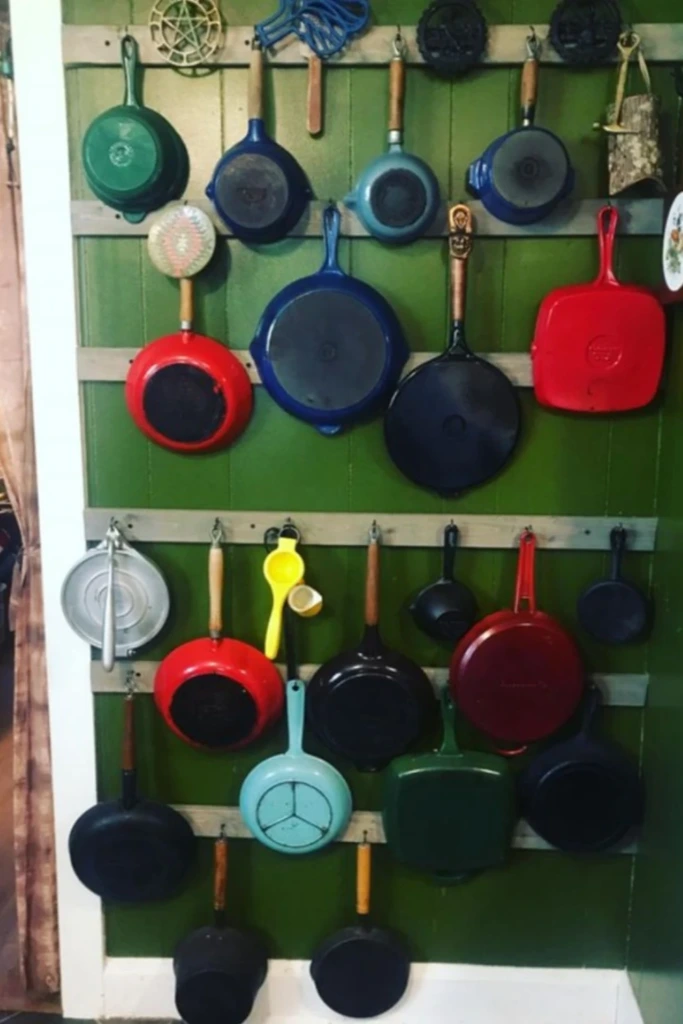
A color-coded cast iron wall makes it easier to identify different pans while introducing personality into the kitchen. Instead of arranging cookware randomly, divide the display into visual groups based on size, purpose, or frequency of use.
For example, keep everyday skillets together, place griddles in a separate section, and reserve another area for Dutch ovens or specialty cookware. You can reinforce these categories with colored wall panels, painted mounting rails, or small labels.
If you use color to distinguish cooking tasks, establish a consistent system that everyone in the household understands. The goal is to simplify organization rather than create an elaborate arrangement that becomes difficult to maintain.
Choose durable finishes that can withstand normal kitchen conditions, and avoid painting the cookware itself unless the coating is specifically designed for its intended use. Traditional seasoned cooking surfaces should remain suitable for food preparation.
A color-coded wall is especially helpful for households with several cooks, cooking enthusiasts with large collections, or kitchens where cookware serves as both equipment and decoration.
5. Pegboard System
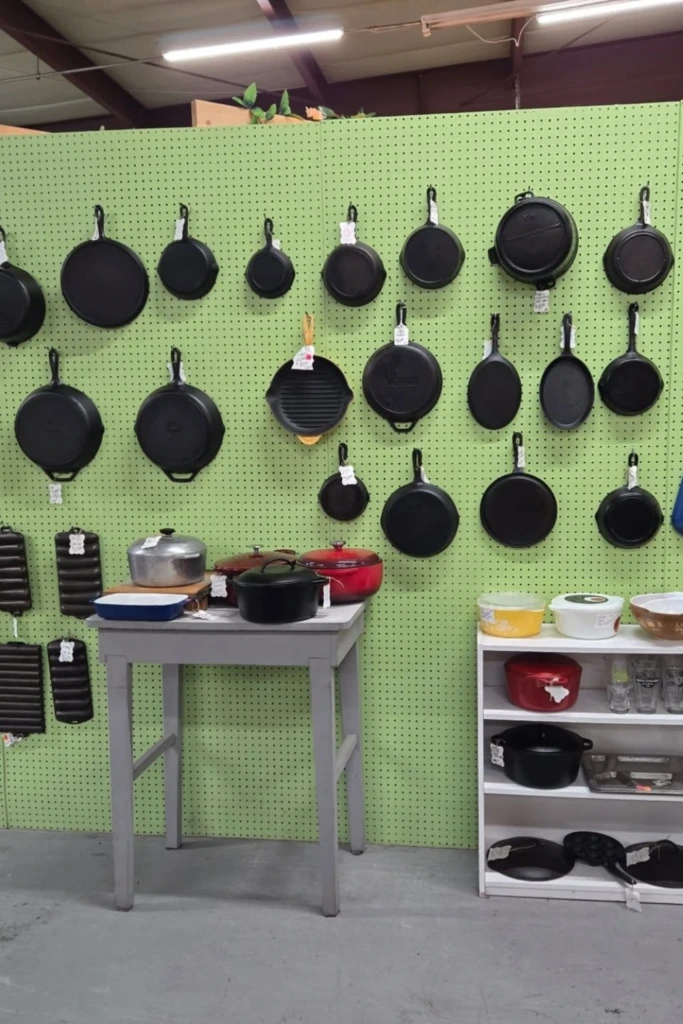
A heavy-duty pegboard system offers flexible storage for cast iron pans and other kitchen tools. Unlike a fixed row of hooks, a pegboard allows you to reposition accessories as your collection grows or your cooking habits change.
Choose a panel and mounting system specifically suited to the intended load. Metal pegboards or reinforced systems may be more appropriate than lightweight decorative boards when storing heavy cookware.
Attach the panel securely to structural supports and use compatible hooks designed to remain in place under repeated loading. Test the arrangement carefully before hanging your heaviest pieces.
One useful layout places larger skillets along the lower portion of the board, with smaller pans and lighter utensils above. Keep the heaviest items at a manageable height so they can be lifted down without straining.
Pegboards also make it easy to incorporate shelves, baskets, and holders for accessories, provided each component is compatible with the system. This creates a compact workstation where spatulas, scrapers, and frequently used cookware stay organized together.
6. Full Height Panel
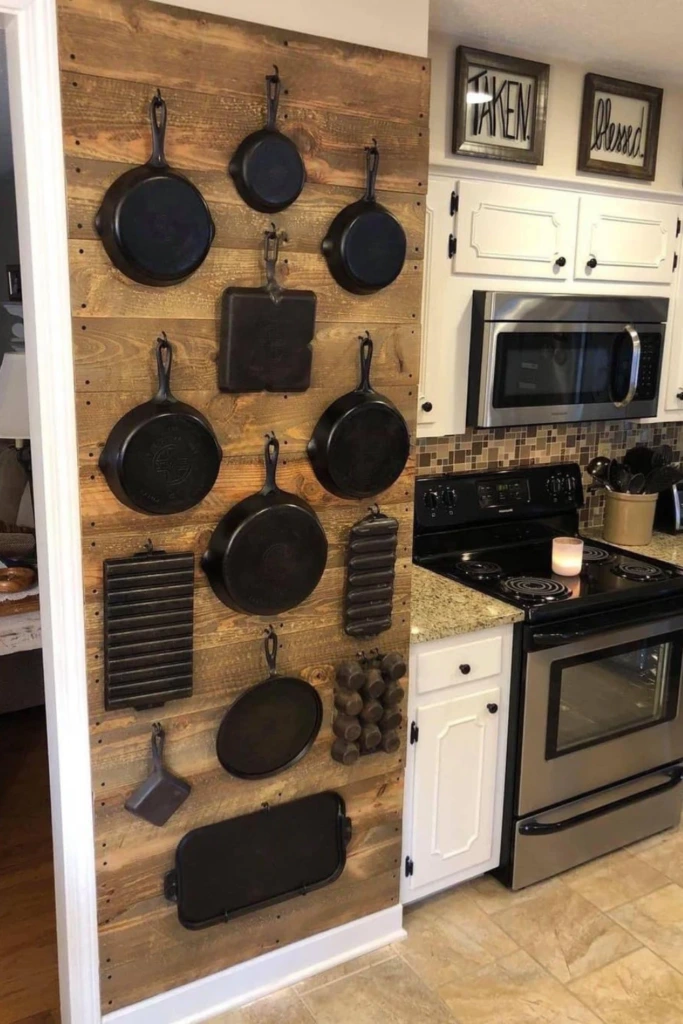
A full-height storage panel turns an otherwise unused kitchen wall into a dedicated cookware zone. Extending the system from near the floor toward the ceiling creates room for several rows of hooks, shelves, and accessories.
This option works well for serious home cooks who own numerous skillets, Dutch ovens, grill pans, and specialty pieces. You can divide the panel into sections, placing frequently used cookware at an accessible height and reserving higher areas for lighter or less frequently used items.
Choose a material that suits the environment, such as a properly finished wood panel or a robust metal mounting system. The entire structure must be anchored securely, particularly when multiple heavy pans will hang from it.
A full-height panel can also visually unify a kitchen by creating a consistent backdrop for mixed cookware. Keep enough space around switches, outlets, ventilation equipment, and doorways, and avoid placing pans where they interfere with normal movement.
For smaller kitchens, a panel installed on a single narrow wall may provide substantial storage without requiring a large renovation.
7. Mixed Mold Display
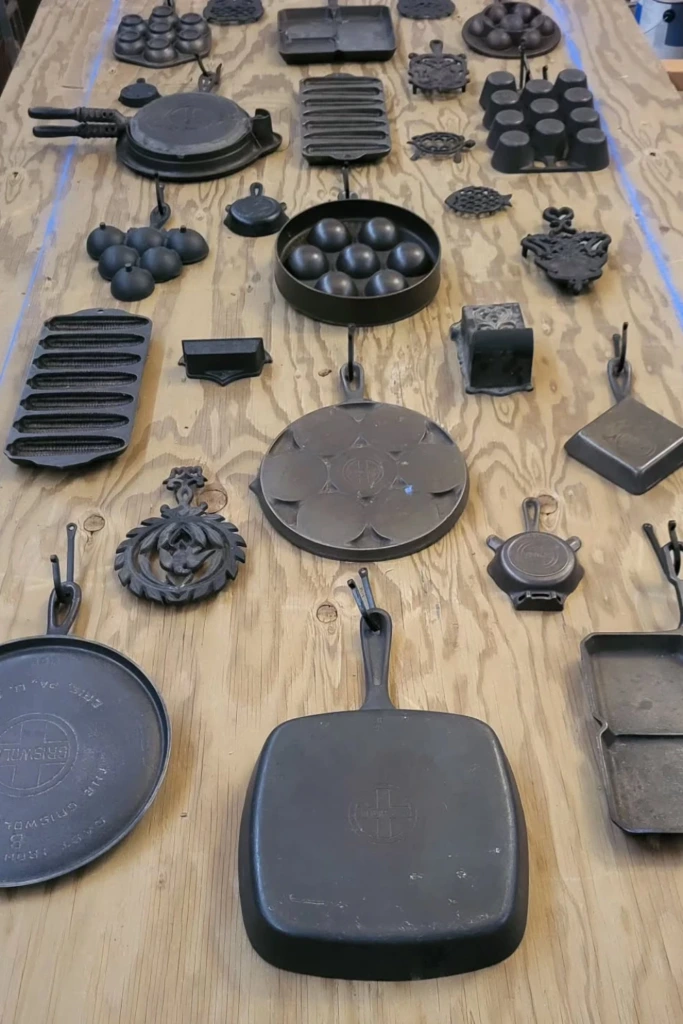
A mixed mold display combines cast iron cookware with vintage cast iron molds, trivets, and other decorative pieces. It is an appealing option for kitchens where traditional materials and antique-inspired details are part of the design.
Start by separating functional cookware from decorative objects. Pans used for cooking should be stored in a way that keeps their surfaces clean and easy to access, while collectible molds can occupy separate hooks or shallow display shelves.
Arrange objects by shape, size, or visual contrast. A large skillet can anchor the composition, with smaller molds and trivets filling the surrounding space. Leave enough room between pieces so they do not collide when handled.
Remember that antique cast iron items may have fragile sections, uneven surfaces, or uncertain structural integrity. Avoid hanging valuable or damaged collectibles from ordinary hooks without checking whether they can safely support their own weight.
This arrangement works particularly well in rustic kitchens, traditional homes, and cooking spaces where cast iron has both practical and sentimental value.
8. Framed Pipe Rack
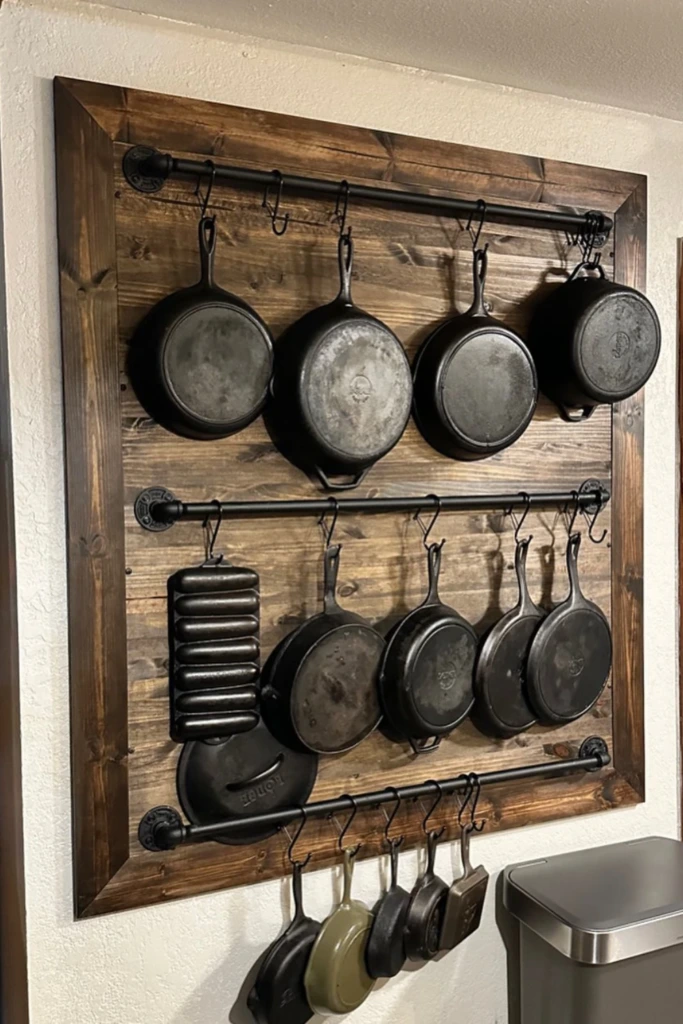
A framed pipe rack introduces an industrial look while creating a sturdy framework for hanging cookware. Metal pipes, compatible fittings, and a properly designed frame can support multiple hooks without requiring a separate mounting point for every pan.
Choose components with suitable load ratings and corrosion-resistant finishes for the kitchen environment. The design should distribute weight across the frame and transfer it securely to wall studs or another verified structural support.
Horizontal pipes are convenient for arranging pans in a row, while additional crossbars can create separate sections for different cookware sizes. End caps and fittings can also give the rack a finished appearance.
Before installing the system, consider the depth of the pans and the clearance needed to remove them. A rack that projects too far into a walkway may become inconvenient, especially in a narrow kitchen.
Pipe racks complement exposed brick, concrete finishes, dark cabinetry, and other industrial design elements. For a more balanced look, combine the metal frame with wooden shelves or warm-toned accessories.
9. Appliance Side Wall
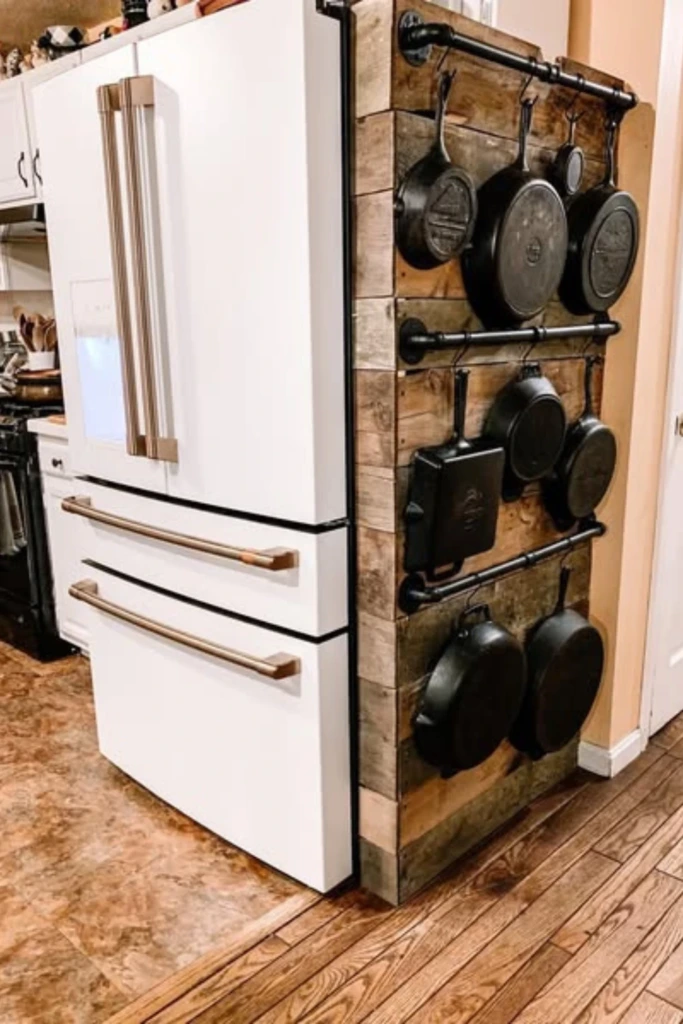
The narrow wall beside a refrigerator, oven cabinet, or pantry is often overlooked as a storage opportunity. With a suitable mounting surface, this area can accommodate a compact cast iron rack without taking up the main cooking wall.
Measure the available width and check how nearby doors and appliance panels open. Pans should not obstruct ventilation openings, handles, controls, or access to electrical connections.
A short rail with a few sturdy hooks is often sufficient for everyday skillets. If the wall is especially narrow, arrange the pans vertically and choose hook positions that prevent their edges from overlapping excessively.
Pay attention to heat exposure. Do not position cookware or mounting hardware where it could become dangerously hot from an oven, range, or other heat-producing appliance.
Because this location is usually close to the cooking area, it can be convenient for storing the pans you reach for most often. Keep the setup simple so that removing one skillet does not disturb the others.
10. Slim Rail Stack
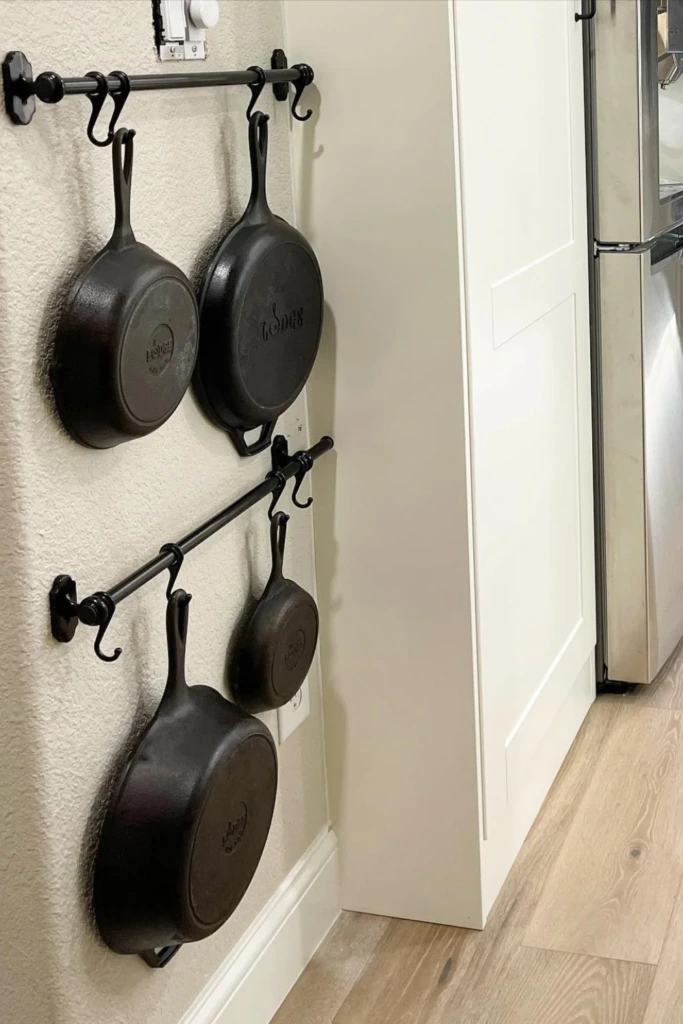
A slim rail stack uses several narrow horizontal rails arranged one above another. It is a practical alternative to a large pot rack when you want to maximize wall space without creating a bulky visual feature.
Install the rails with enough vertical clearance for each pan's handle and body. Larger skillets generally need more space than small frying pans, so plan the layout around your biggest pieces before fixing the rails in place.
This arrangement works best when the rails are securely anchored and the hooks are designed to hold cookware without slipping. Do not assume that a thin rail is suitable for heavy cast iron simply because it appears strong.
You can assign each level a purpose, such as everyday skillets on the middle rail, smaller pans above, and less frequently used pieces lower down if they remain easy to lift safely.
For a clean appearance, match the rails to your cabinet hardware or choose a contrasting finish that makes the storage area feel intentional. Slim rails are particularly useful in apartments and compact kitchens where every section of wall matters.
11. Floating Shelf Hooks
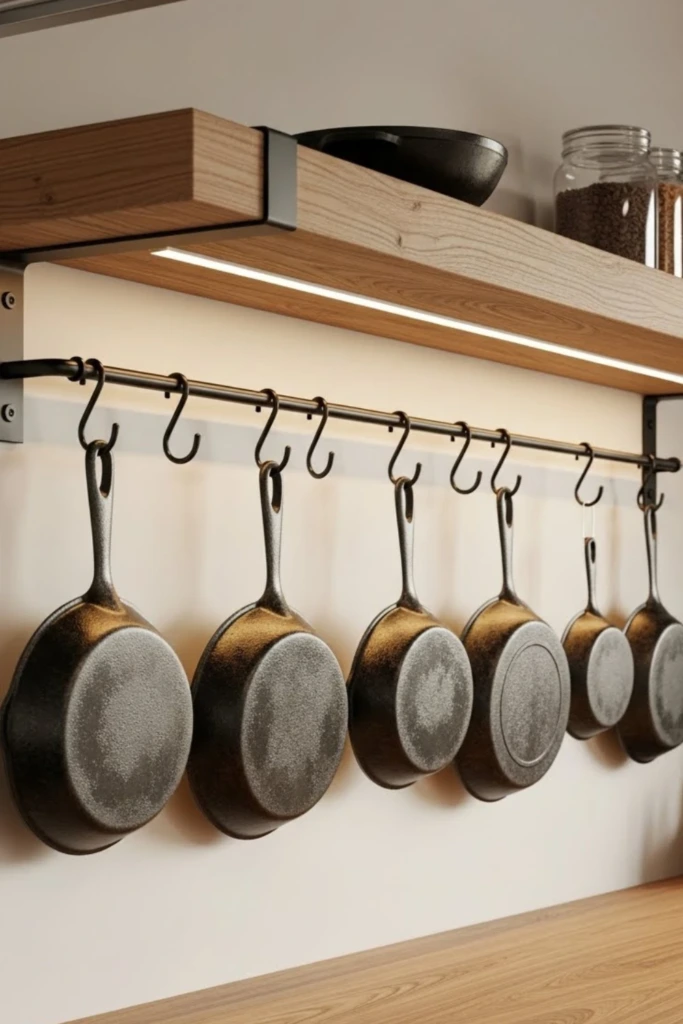
Floating shelves with integrated hooks provide two types of storage in one compact installation. The shelf can hold lighter kitchen accessories, seasoning containers, or decorative objects, while the hooks below keep selected cast iron pans accessible.
For heavy cookware, the shelf brackets and wall fixings must be designed to support the combined load. A floating shelf that is suitable for ornaments may not be safe for several cast iron skillets.
Choose a shelf with sufficient depth for the items placed on top, but avoid crowding it with objects that could fall when pans are removed. Keep oils, spices, and other ingredients away from excessive heat and splashes.
Space the hooks so that pans hang freely and can be lifted off without striking the shelf or neighboring cookware. Larger pieces may be better suited to a separate rail mounted directly into structural supports.
Wooden shelves provide a warm contrast to dark cast iron, while metal shelves can create a more contemporary appearance. This arrangement is particularly useful above a preparation area where both cookware and small accessories need a convenient home.
12. Ladder Style Rack
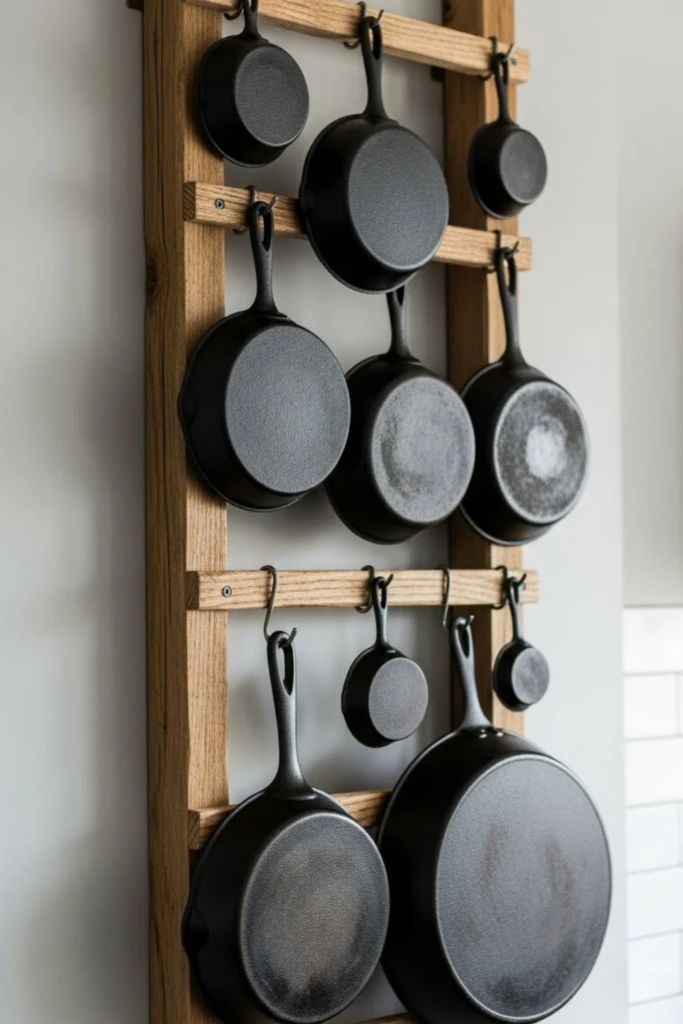
A ladder-style rack uses horizontal bars connected by two vertical supports to create a simple, structured display. The repeated lines make it easy to organize cookware by size while adding a decorative feature to the wall.
A wall-mounted ladder rack can be built from wood or metal, provided the materials and joints are appropriate for the intended load. Each crossbar and its connections must withstand the weight of the pans assigned to it.
Position heavier skillets on lower bars when the design allows, and place smaller pieces higher up. This reduces the effort needed to remove bulky cookware and helps keep the overall arrangement manageable.
If you prefer a freestanding ladder-style rack, make sure it is specifically designed for heavy cookware and cannot tip or slide during use. A decorative leaning ladder is not automatically suitable for storing cast iron.
The design works well in farmhouse, cottage, and modern rustic kitchens. A simple finish and consistent spacing help the rack look organized even when it holds several different kinds of pans.
13. Cabinet Side Face
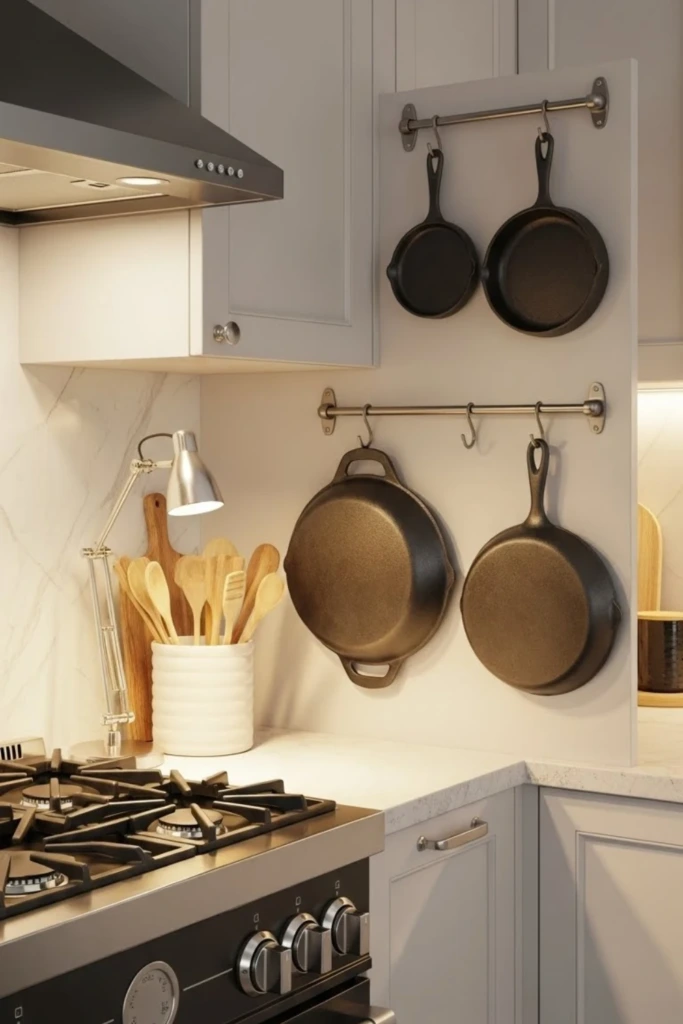
The exposed side of a kitchen cabinet can provide useful storage without adding another freestanding rack. A small hook rail or purpose-built mounting panel can turn this vertical surface into a convenient home for a few cast iron skillets.
Before drilling, confirm that the cabinet side is solid enough to hold the proposed hardware and load. Some cabinets have thin decorative end panels that are not suitable for supporting heavy cookware without reinforcement.
Keep the number of hanging pans appropriate for the cabinet's construction. Large skillets can create significant leverage when pulled away from the surface, so strong fasteners and a secure mounting method are essential.
This solution works particularly well on the side of a pantry cabinet or an island positioned near the cooking area. It is less suitable where pans would interfere with drawers, cabinet doors, or normal walking routes.
For a cohesive appearance, match the hooks to the cabinet handles or use a rail that complements the kitchen's existing finishes. Even a small section can make frequently used cookware easier to access.
14. Under Stair Wall
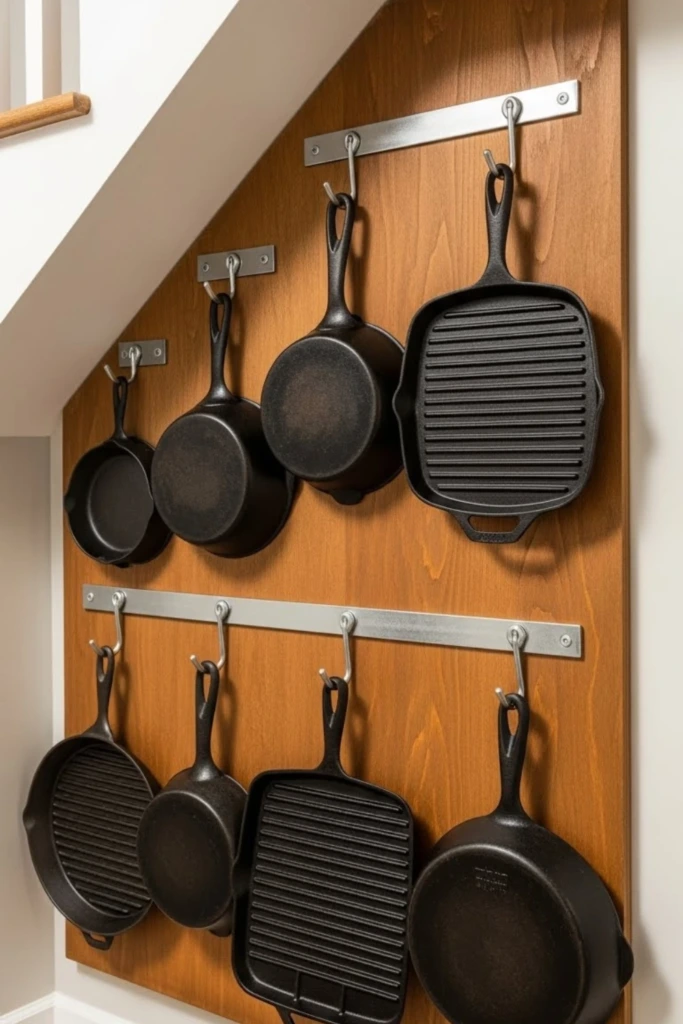
The wall beneath a staircase can become an unexpected storage area for cast iron cookware, particularly in open-plan homes where the kitchen shares space with a dining or living area.
Start by assessing the shape and height of the available wall. Sloped ceilings may limit the space for large pans, but they can accommodate a combination of short rails, individual hooks, and shallow shelves.
Arrange the cookware according to how often you use it. Frequently handled skillets should remain within comfortable reach, while less commonly used pieces can occupy higher or lower sections if they can be retrieved safely.
Check the wall construction before mounting anything. If the area contains access panels, electrical equipment, plumbing, or other services, keep the installation clear of those features.
Because an under-stair display may be visible from several rooms, a consistent arrangement can help it look intentional rather than improvised. Repeating the same hook finish and grouping similar pans together creates a more polished result.
Avoid using the space for cookware if it becomes damp or is exposed to condensation. Cast iron still needs a dry environment, regardless of where it is stored.
15. Brick Wall Mount
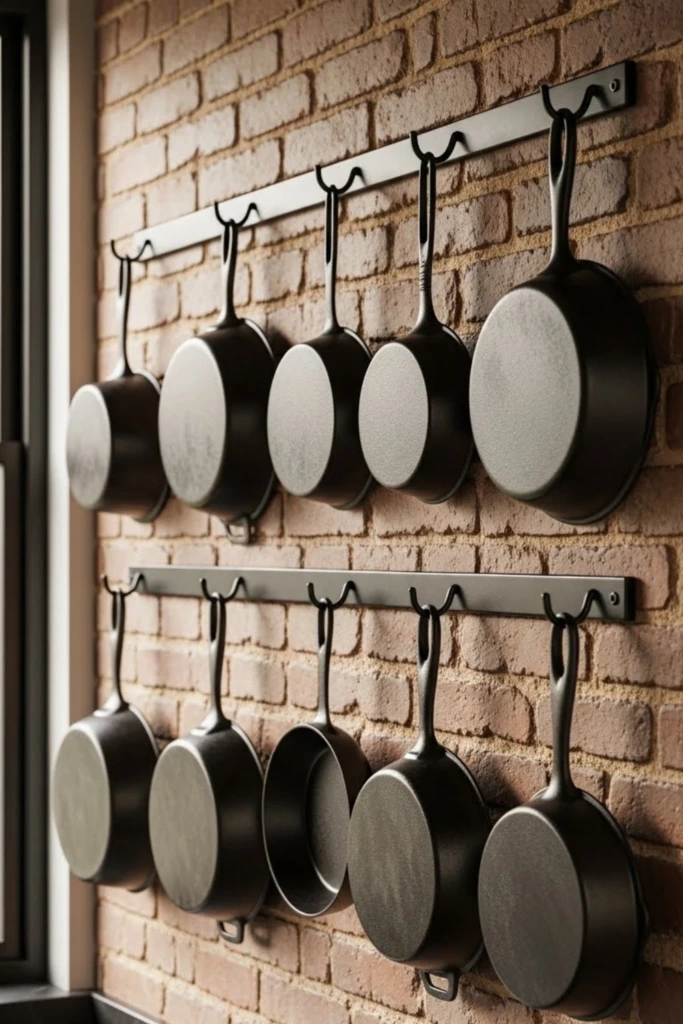
A brick wall provides a distinctive backdrop for cast iron cookware and can be a strong mounting surface when the installation is planned correctly. The contrast between dark metal and textured masonry works especially well in rustic and industrial kitchens.
First, determine whether the wall is solid brick, hollow masonry, or a decorative brick veneer. These surfaces require different mounting methods, and a decorative facing should not automatically be treated as structural support.
Use masonry-compatible fasteners and brackets selected for the wall type and the expected load. The number and placement of mounting points should account for the weight of the cookware as well as the forces created when pans are lifted off their hooks.
If the brickwork is old, cracked, or deteriorating, have its condition assessed before installation. Drilling into mortar joints or brick may be appropriate in some situations, but the correct location depends on the masonry and fastening system.
A long rail can create a neat row of pans, while individual brackets allow for a more flexible arrangement. Leave enough clearance to handle every piece comfortably and clean the surrounding wall without difficulty.
16. Rail With Shelves
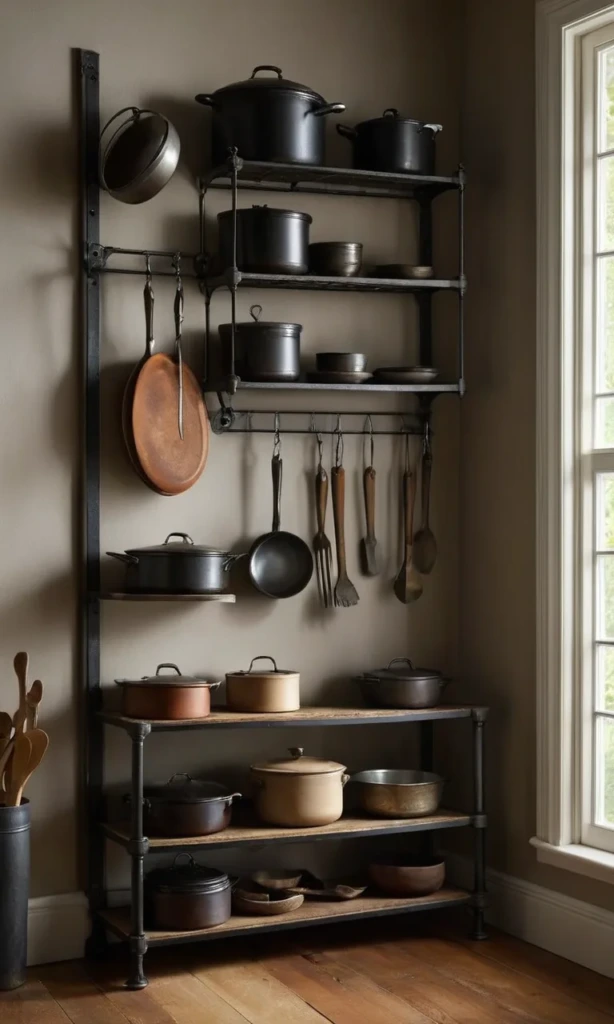
A rail with shelves combines hanging storage with a place for lighter kitchen essentials. It is a versatile option for cooks who want their cast iron collection organized alongside lids, utensils, and other accessories.
A typical arrangement includes a wall-mounted rail with hooks below and one or more shelves above. Keep the heaviest pans on the properly supported hooks, and reserve the shelves for items whose weight falls within the shelf system's limits.
You can dedicate one shelf to lids or trivets and use another for small baskets or frequently used accessories. However, avoid placing heavy objects high above the cooking area where they could fall during everyday use.
Measure the total depth of the system before installation. The combination of shelves and hanging pans can project farther into the room than expected, especially when large skillets are included.
For a balanced design, use matching materials across the rail and shelves. Wood and black metal create a classic combination, while stainless steel works well in kitchens with contemporary appliances.
This system is most useful when you want to consolidate several small storage areas into one organized wall feature.
FAQs
Cast iron wall storage is practical when the mounting system is selected for the cookware's weight and the surrounding wall is suitable for installation. The following answers address common concerns about protecting both your pans and your kitchen.
Can cast iron be stored on a wall safely?
Yes, cast iron cookware can be stored on a wall safely when the rack, hooks, fasteners, and supporting structure are appropriate for the combined load. Because cast iron is considerably heavier than many other types of cookware, a mounting system that works for lightweight utensils may not be sufficient.
Whenever possible, secure rails and racks directly to wall studs or use a properly engineered mounting system designed for the particular wall material. For masonry, choose suitable masonry fasteners. Do not rely on ordinary drywall anchors alone for a collection of heavy pans.
Use hooks that fit securely through the handles and allow each pan to hang without slipping. Distribute the weight across the rack, and avoid placing cookware where it could fall onto a busy walkway, a child's play area, or a fragile countertop.
Check the mounting hardware periodically for looseness, damage, or signs of movement. Also consider how easily you can lift each pan down, since an awkwardly positioned skillet can be difficult to handle even when its hook is secure.
Finally, keep the cookware clean and dry before hanging it. A safe rack protects people from falling objects, while proper cookware care helps prevent rust and deterioration.
Do cast-iron pans damage walls over time?
Cast iron pans can mark or damage walls if they repeatedly strike the surface, rub against the finish, or hang from poorly installed hardware. Their weight can also contribute to mounting damage when fasteners loosen or the supporting wall is unsuitable.
To prevent scuffs, leave a little clearance between the pans and the wall. Choose hooks that hold cookware at a stable angle, and avoid overcrowding the rack. If pans tend to swing, reposition the hooks or select a design that limits unnecessary movement.
Wall finishes matter, too. Painted drywall is more vulnerable to dents and scratches than many durable panel surfaces. A protective backer board, washable wall panel, or suitable backsplash can provide an additional layer of protection behind the cookware.
Inspect the rack occasionally, especially if you use it every day. Tighten hardware only as appropriate for the fastening system, and investigate any cracking, loose anchors, or movement before continuing to load the rack.
With proper installation and enough clearance, cast iron cookware should not routinely damage the wall. A well-designed storage arrangement keeps the pans stable, preserves the surrounding finish, and makes your kitchen easier to use.
Conclusion
Cast iron wall storage can make a kitchen more functional while showcasing cookware that is built to last. Whether you prefer a simple wooden rail, a flexible pegboard, a brick-wall display, or a combination of shelves and hooks, choose a design that suits your available space and collection.
Prioritize secure mounting, sensible spacing, and easy access to every pan. Keep your cookware dry before storing it, inspect the hardware regularly, and avoid overloading shelves or rails. With these precautions, you can create an attractive storage solution that keeps your cast iron organized and ready for the next meal.