18 Storage Ottoman Ideas for 2026 to Keep Your Home Organized
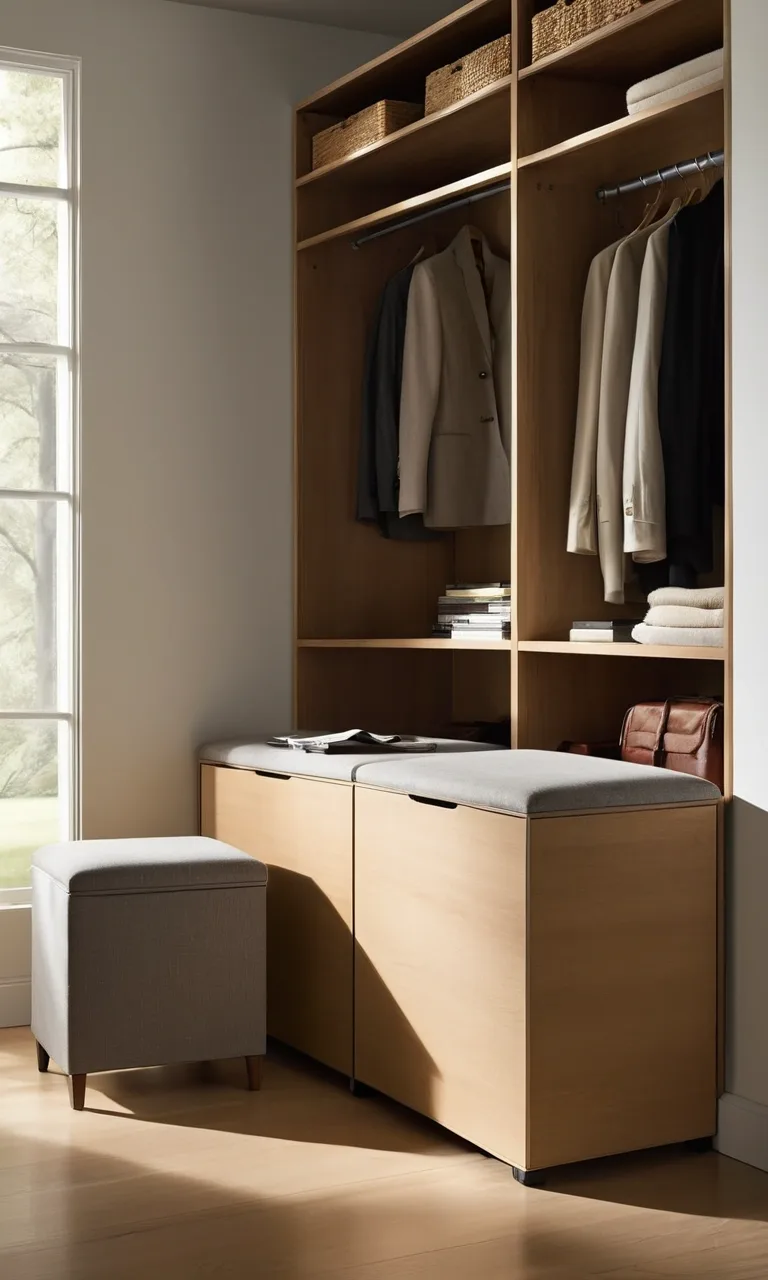
A storage ottoman is more than a comfortable footrest. It can provide extra seating, hide everyday clutter, hold household essentials, and bring a polished look to almost any room. Whether you live in a small apartment or have a spacious family home, the right ottoman can help you make better use of your available space without adding bulky furniture.
From practical shoe storage to a stylish coffee table alternative, these 18 storage ottoman ideas offer creative ways to combine comfort, functionality, and attractive design.
How Can a Storage Ottoman Transform Your Living Room Organization?
A storage ottoman gives you a convenient place to put things away while keeping them close at hand. Instead of leaving blankets on the sofa, magazines on the coffee table, or children's toys scattered across the floor, you can store these items inside a single piece of furniture.
The key is choosing an ottoman that suits your room and your daily habits. A large rectangular design works well in front of a sectional sofa, while a small round option fits comfortably beside an armchair. Models with removable lids offer straightforward access, and hinged versions make opening and closing the compartment easier.
Storage ottomans also serve multiple purposes. Depending on their design, they can function as footrests, extra seats, bedside benches, or even coffee tables. Select durable upholstery, a practical interior capacity, and a shape that leaves enough room to move around the furniture.
1. Hidden Office
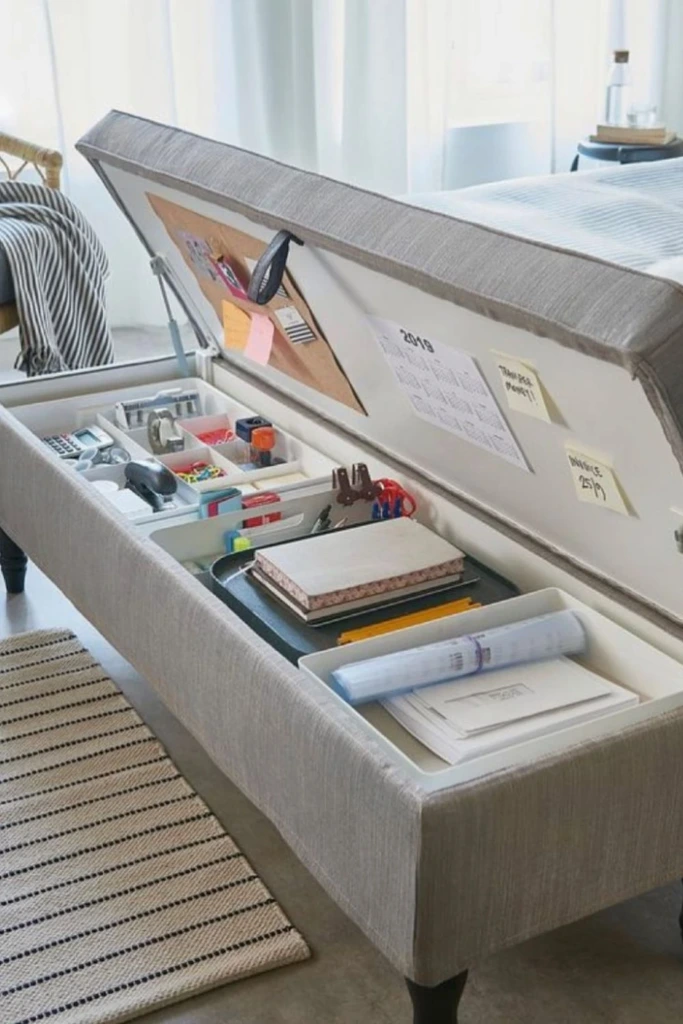
A storage ottoman can help keep a living room office tidy without making the entire space look like a workplace. If you occasionally work from your sofa or use a corner as a study area, choose an ottoman with enough interior space for notebooks, chargers, stationery, and small office accessories.
At the end of the day, these supplies can be tucked away rather than left on display. A neutral fabric or leather-look finish can blend with your existing furniture, making the office setup feel like a natural part of the room.
For the best results, use small pouches or divided organizers inside the ottoman. Keep frequently used items near the top so you can find them quickly. Avoid storing laptops or electronics in a damp, poorly ventilated compartment, and never use a soft ottoman lid as a work surface unless it is specifically designed to support that purpose.
2. Dual Surface
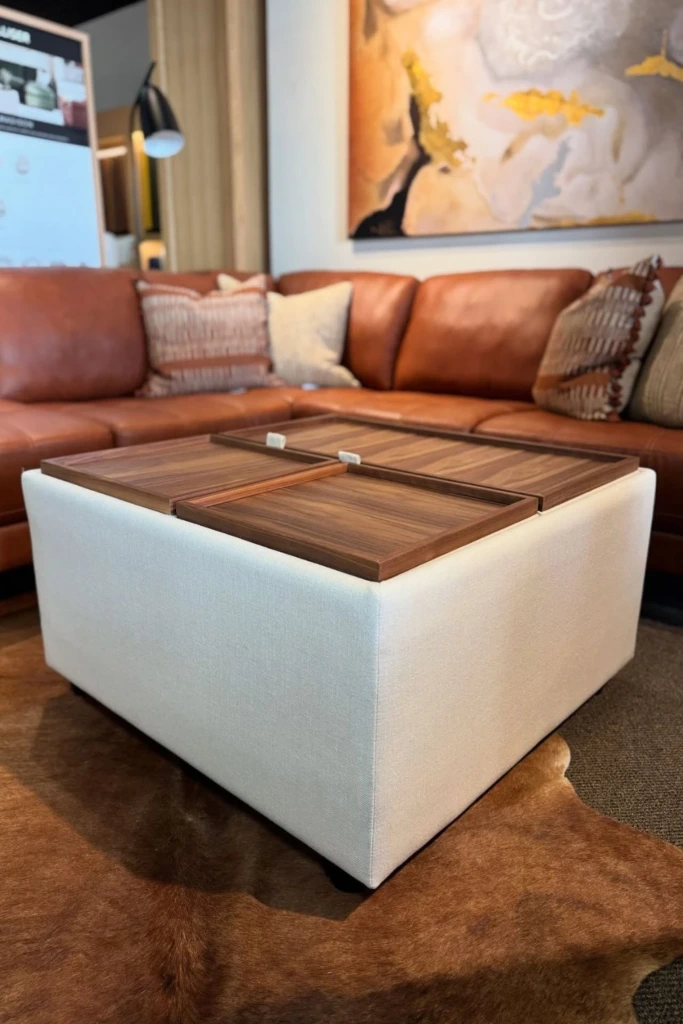
A dual-surface storage ottoman offers more than one way to use its top. Some designs feature reversible lids, with one side upholstered for comfortable seating and the other finished with a firm surface suitable for placing a drink or book.
This arrangement can be especially useful in compact living rooms where a separate coffee table would take up valuable floor space. Flip the lid when you need a more stable surface, then turn it back when you want a comfortable footrest.
Before buying one, check whether the hard side is intended for everyday tabletop use and whether it sits securely in place. A tray can provide an additional stable surface for serving snacks or organizing remote controls. Keep hot cookware and heavy objects away from surfaces that are not designed to withstand them.
3. Soft Minimal
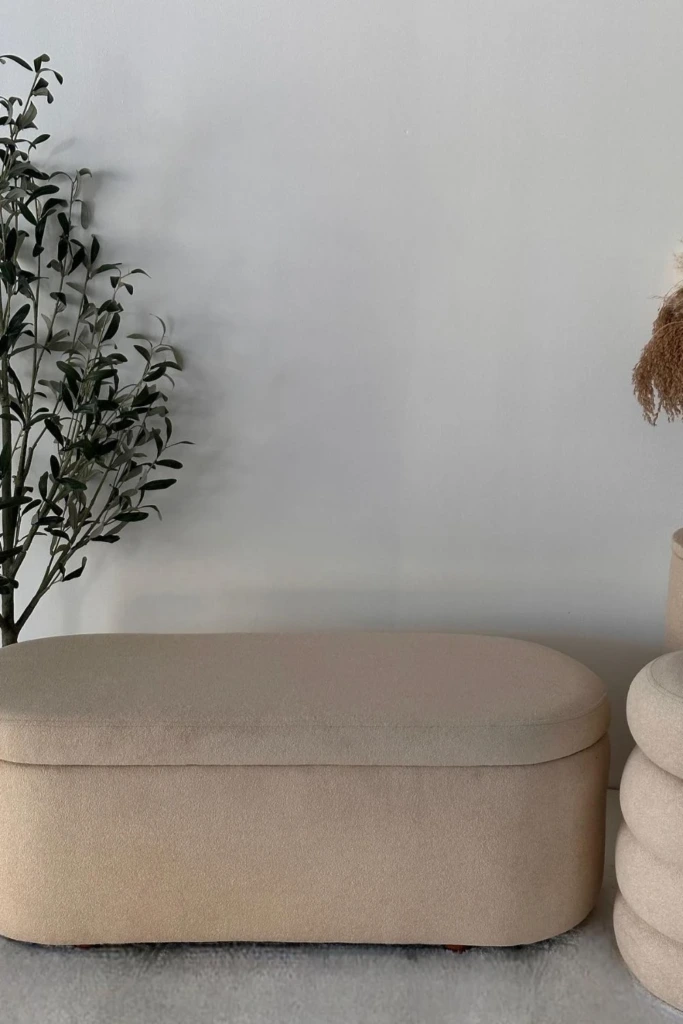
If you prefer a calm, uncluttered interior, choose a storage ottoman with a simple silhouette, subtle upholstery, and minimal decorative details. Shades such as cream, beige, warm gray, and muted taupe work particularly well in relaxed, contemporary spaces.
A soft, rounded ottoman can balance the sharp lines of a modern sofa, while a low rectangular design can reinforce a clean and understated layout. Textured fabrics add visual interest without requiring bold colors or complicated patterns.
The storage compartment helps maintain the minimalist look by concealing spare cushions, reading materials, and other everyday belongings. For easier upkeep, consider a removable cover or a fabric that can be cleaned according to the manufacturer's instructions. Pair the ottoman with only a few carefully chosen accessories to avoid making the room feel crowded.
4. Cushion Storage
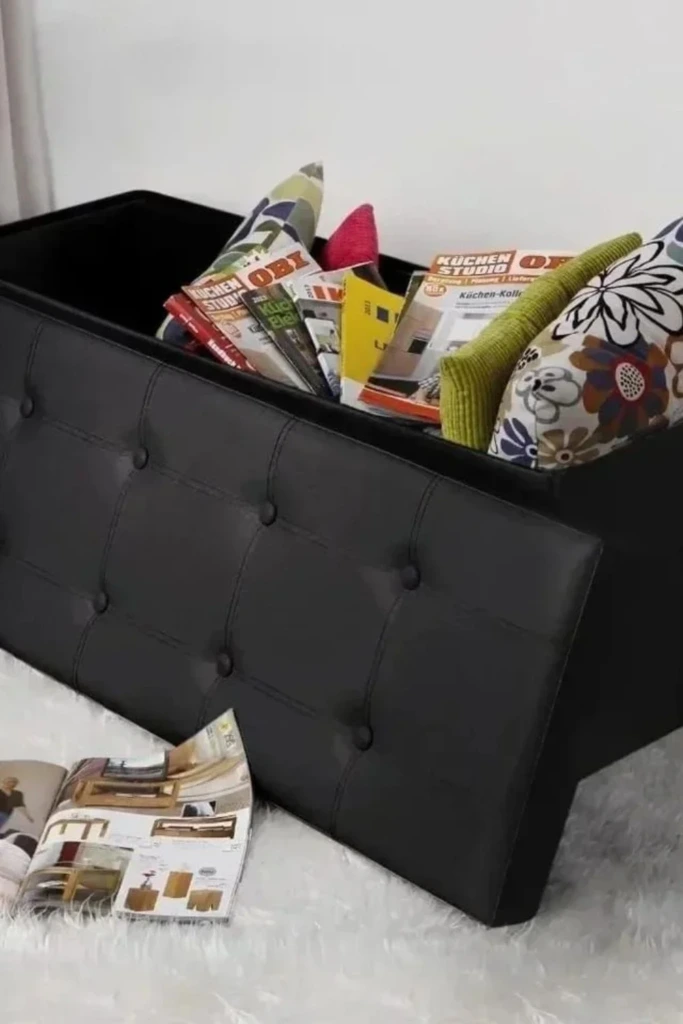
Extra cushions make a living room more comfortable, but they can quickly occupy an entire chair or sofa when they are not in use. A storage ottoman offers a simple place to keep spare cushion covers, decorative pillows, and smaller cushions until you need them.
Choose a compartment large enough to accommodate your cushions without forcing them inside. Overstuffing can make the lid difficult to close and may flatten delicate inserts over time. If you have several cushions in different sizes, place the smaller ones inside larger covers or use breathable fabric bags to keep matching sets together.
Store only clean, completely dry cushions to prevent musty odors. You can also dedicate one section of the compartment to seasonal cushion covers, making it easier to refresh your living room's appearance whenever you want a change.
5. Shoe Storage
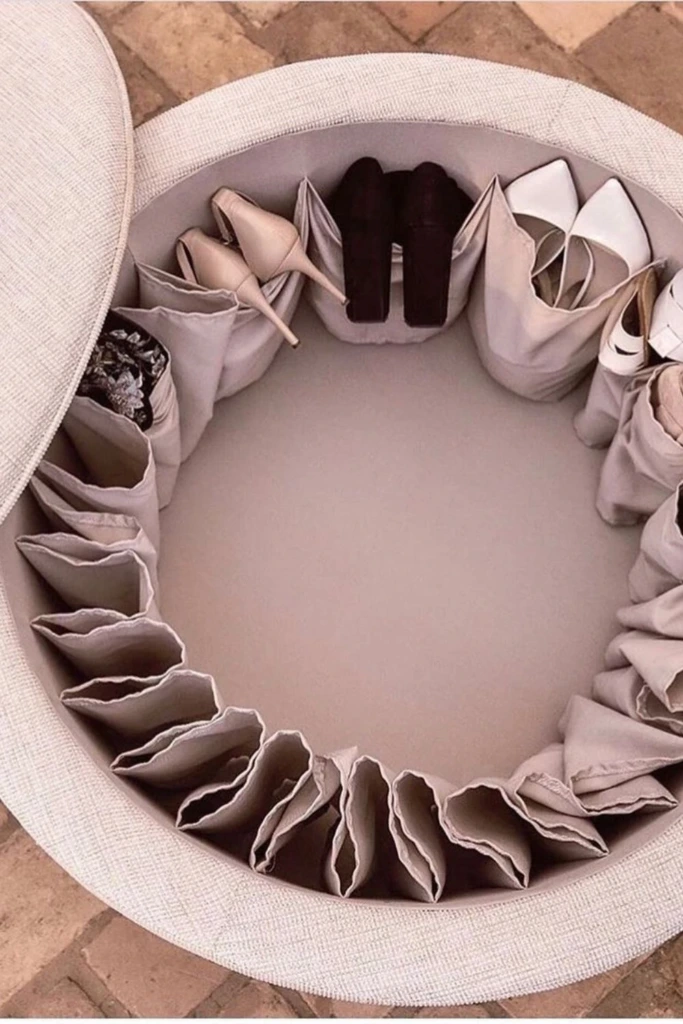
A storage ottoman near the entrance can keep everyday footwear out of sight and reduce clutter around the doorway. It is a practical option for apartments and homes where a full-size shoe cabinet would take up too much space.
Look for a model with a wide opening and enough interior height for the shoes you plan to store. Flats, sandals, and slippers fit into many standard compartments, while bulky trainers and ankle boots may require a deeper design.
Place a washable liner or removable tray inside to catch minor dirt, and make sure shoes are completely dry before storing them. Avoid putting muddy footwear directly onto upholstered surfaces. If you need to store several pairs, arrange them in rows or use compact shoe organizers to make better use of the available space.
An ottoman with a firm, weight-rated top can also provide a convenient seat for putting on shoes. This makes it useful as both an entryway organizer and a comfortable place to get ready before leaving home.
6. Linen Storage
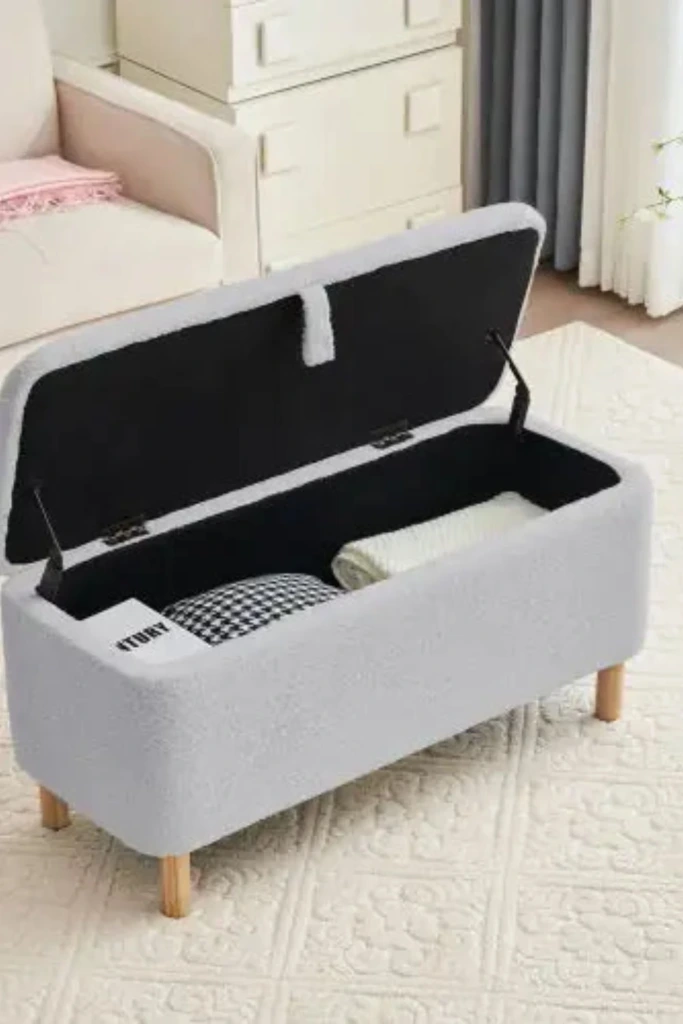
Extra sheets, pillowcases, lightweight blankets, and guest towels can be difficult to organize when closet space is limited. A storage ottoman in a bedroom or guest room can provide an accessible alternative for keeping these items together.
Choose a design with enough room to hold folded linen without compressing it excessively. Stack matching sheets and pillowcases together, or place each bedding set inside one of its own pillowcases so the pieces remain easy to identify.
Breathable cotton bags can help protect clean linens from dust while allowing some air circulation. Avoid storing damp towels or freshly washed bedding that has not dried completely. Moisture trapped inside a closed ottoman can cause unpleasant smells and damage fabric.
For a coordinated bedroom, choose upholstery that complements the bedding or curtains. A well-positioned linen ottoman can also serve as a comfortable seat at the foot of the bed.
7. Bedside Bench
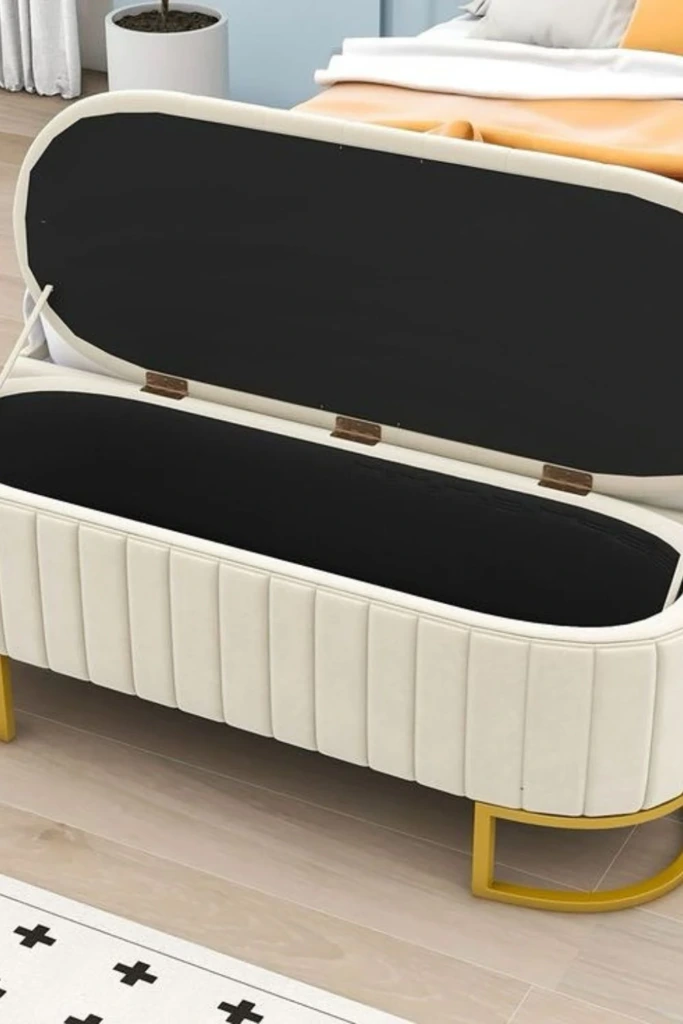
A storage ottoman placed beside or at the foot of a bed can provide the convenience of a bench without requiring additional storage furniture. It creates a handy place to sit while dressing and offers concealed space for slippers, sleepwear, spare blankets, or accessories.
For use at the foot of the bed, select a length that looks balanced with the mattress while leaving enough room to walk around it. A padded rectangular ottoman can create a traditional bedroom-bench appearance, whereas a curved design suits softer, more contemporary interiors.
Check the height before purchasing. An ottoman that is too low may be uncomfortable for dressing, while an oversized model can make the bedroom feel cramped. If you plan to sit on it regularly, confirm the manufacturer's weight limit and choose a sturdy frame.
Keep bedside essentials in small containers inside the compartment so they do not become mixed together. This makes the furniture more useful without sacrificing the bedroom's peaceful atmosphere.
8. Compact Storage
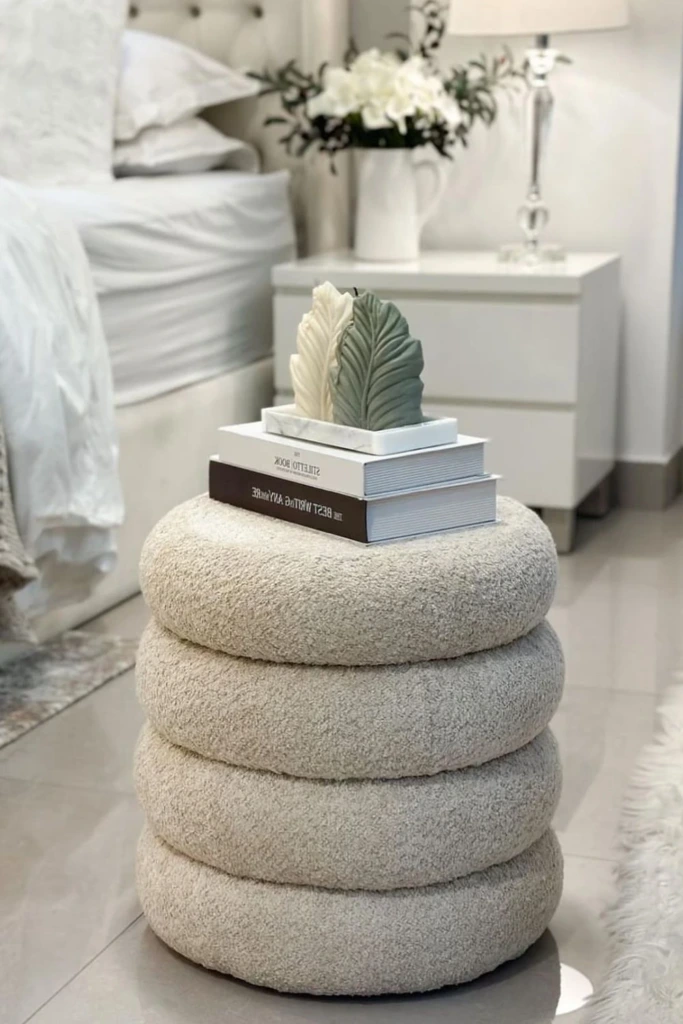
Small rooms benefit from furniture that performs several jobs without overwhelming the available floor area. A compact storage ottoman can provide a footrest, occasional seat, and concealed compartment in a much smaller footprint than several separate pieces of furniture.
Round ottomans are often useful beside armchairs or in tight corners because they have no sharp corners to navigate around. Square and rectangular designs may fit more efficiently against a wall or beneath a desk, depending on the layout.
Before purchasing, measure the area where the ottoman will sit and consider how far the lid needs to open. Some models require extra clearance, which can be inconvenient in narrow spaces. If you want to move the ottoman frequently, a lightweight design with handles may be easier to manage.
Choose a size that comfortably accommodates the items you actually intend to store. A smaller ottoman with a clear purpose is often more practical than a larger one that blocks walkways or makes the room feel crowded.
9. Hidden Essentials
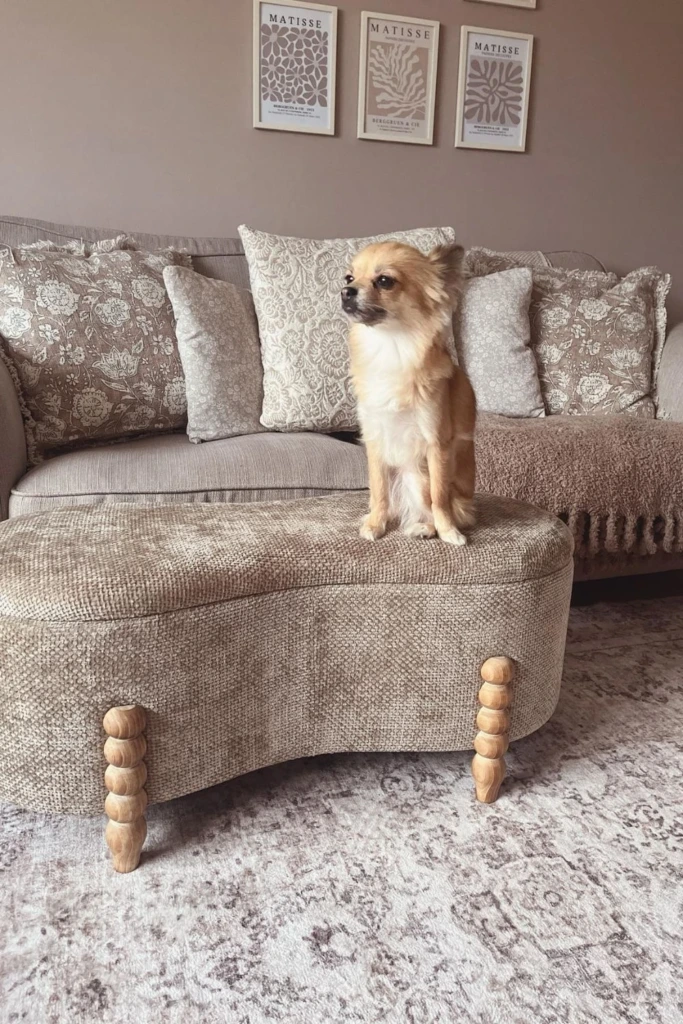
Many living rooms contain small items that are useful but not particularly attractive to display. Charging cables, spare batteries, coasters, card games, and remote controls can all contribute to visual clutter when they lack a designated home.
A storage ottoman provides a discreet place for these everyday essentials. Instead of mixing everything into one pile, divide the interior into categories using small baskets, zippered pouches, or removable containers.
For example, keep entertainment accessories together, household odds and ends in another container, and frequently used items near the top. Labeling the containers can make it easier for other household members to return things to the correct place.
Avoid storing loose batteries alongside metal objects, and keep sharp tools or small hazardous items away from children. If the ottoman has a heavy lid, consider a model with a safe hinge or lid support, particularly in a family home.
10. Shoe Bench
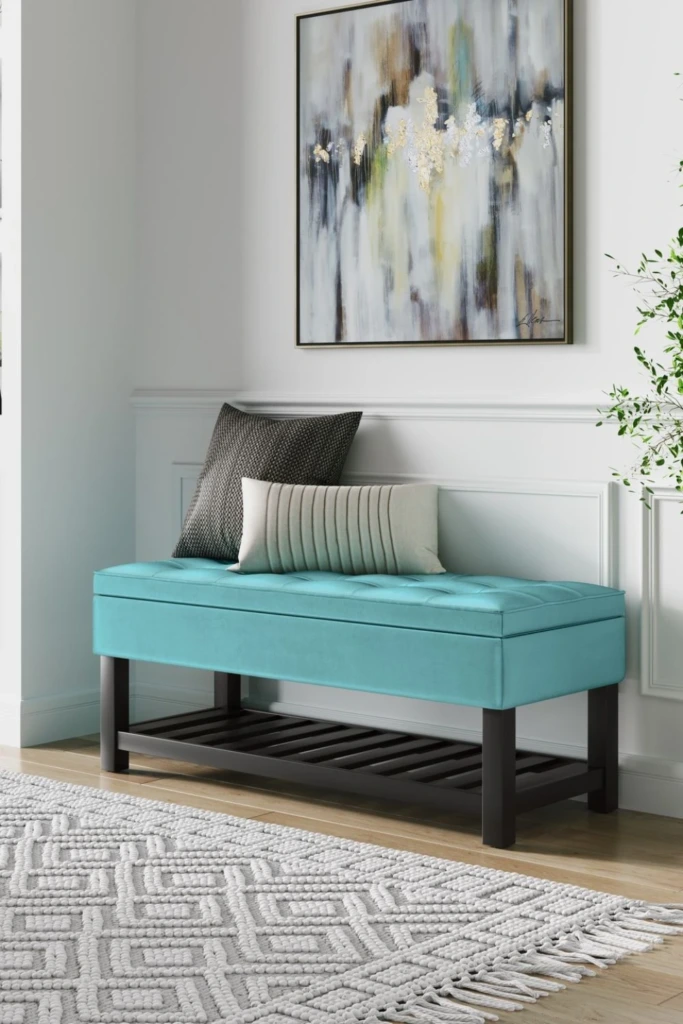
An upholstered storage ottoman with a sturdy, flat top can work as a practical shoe bench near the entrance. It gives family members and visitors a comfortable place to sit while putting on or removing footwear, while the interior keeps frequently worn shoes organized.
A rectangular model generally provides more usable seating space than a small round ottoman. Look for durable upholstery that can handle regular contact with clothing and shoes, as well as a stable frame designed to support seated weight.
Placement matters, especially in narrow entryways. Leave enough room for the lid to open fully without hitting the wall, door, or nearby furniture. A washable cushion cover or easily cleaned fabric can also be helpful in a high-traffic area.
Inside, arrange shoes by how often they are worn. Keep everyday pairs toward the front and reserve less accessible areas for occasional footwear. This makes the bench easier to use during busy mornings and helps prevent shoes from accumulating around the doorway.
11. Modular Storage
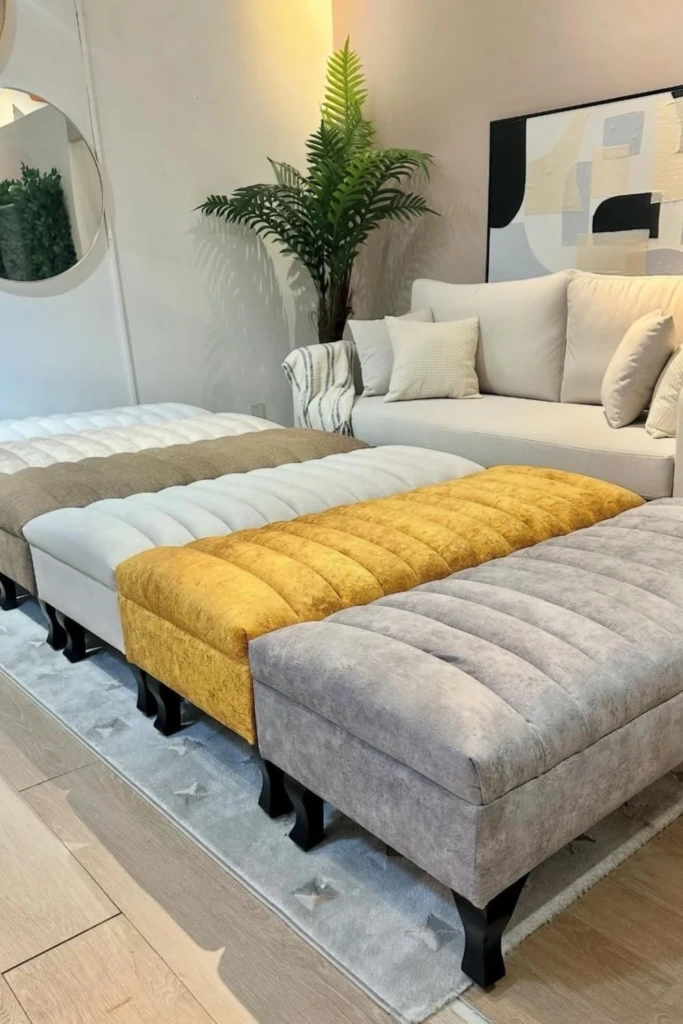
Modular storage ottomans offer flexibility for homes where furniture needs change over time. Depending on the design, individual units can be arranged together to create a longer seating area, separated to provide extra seats, or repositioned to suit different activities.
For example, two matching ottomans can sit beside a sofa during everyday use and move closer to the seating area when guests arrive. Smaller units may also fit beneath a console table or in a bedroom when they are not needed in the living room.
Some modular designs include separate storage compartments, allowing you to assign a specific purpose to each unit. One can hold blankets, another can store toys, and a third can keep board games or magazines organized.
Before combining multiple pieces, check that their heights and proportions work together. If the ottomans will be used as seating, ensure each unit is independently stable and rated for the intended weight. Consistent colors and upholstery can help separate modules look like one coordinated furniture arrangement.
12. Kid Storage
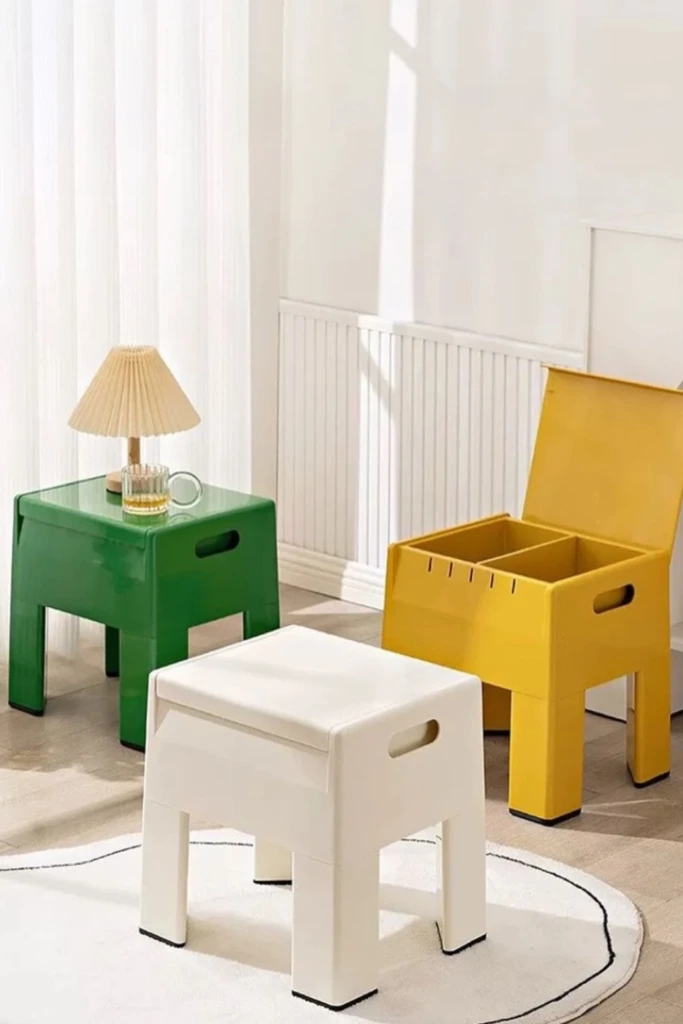
A storage ottoman can make toy cleanup easier by giving children an obvious place to put their belongings. Soft toys, building blocks, dress-up clothes, and children's books may all fit inside, depending on the compartment size.
Choose a durable, easy-to-clean design that can withstand everyday family use. Rounded corners and stable construction are useful features, particularly in play areas. For younger children, avoid heavy lids that can fall unexpectedly, and select a product designed with appropriate safety features.
Make organizing simple by using small baskets or separate fabric bags for different toy categories. You might reserve one container for soft toys and another for puzzles or art supplies. Children are more likely to put things away when the system is straightforward and the compartments are easy to reach.
Keep the ottoman from becoming a catch-all for broken toys, packaging, and unrelated household items. A quick sorting session every week helps maintain usable storage space and makes it easier to notice toys that children have outgrown.
13. Cozy Storage
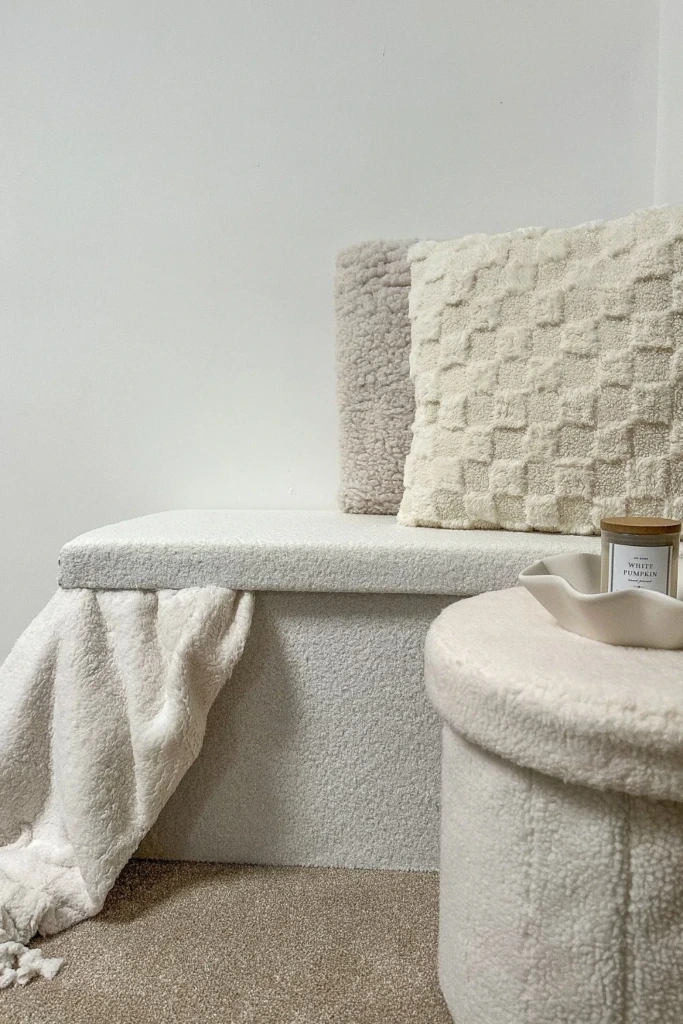
For a warm and inviting living room, consider an ottoman upholstered in plush fabric, soft chenille, velvet, or a textured weave. These materials can add depth and comfort, particularly when paired with layered throws, cushions, and warm lighting.
The interior can hold the very items that help create a cozy atmosphere, including knitted blankets, spare pillow covers, and lightweight shawls. When the temperature changes or guests arrive, everything is close at hand without remaining scattered across the furniture.
Choose upholstery that suits your household's needs as well as your preferred style. Velvet and textured fabrics can look luxurious, but their cleaning requirements vary. If you have pets or young children, check the manufacturer's cleaning instructions before buying.
A rounded ottoman in a warm neutral shade works well with many decorating styles, while a deeper color can create a more dramatic accent. The goal is to combine a comfortable appearance with storage that supports your everyday routine.
14. Coffee Storage
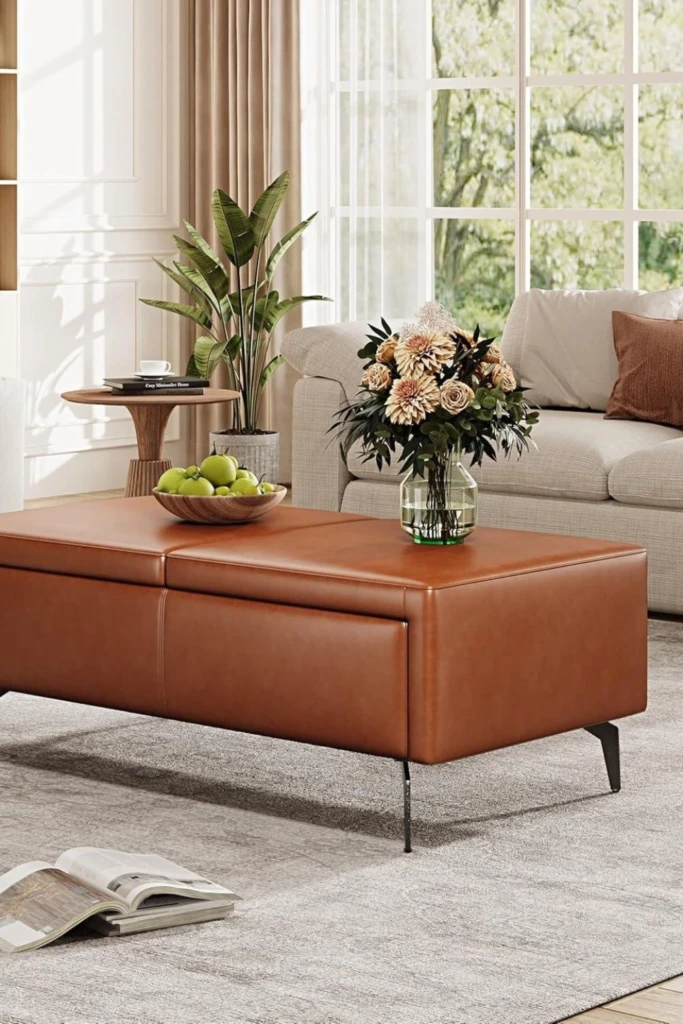
A storage ottoman can replace a conventional coffee table when you want a softer, more versatile centerpiece. The compartment can hold magazines, remote controls, coasters, board games, and other living room accessories that would otherwise occupy the tabletop.
To make the ottoman suitable for coffee-table duties, select a model with a firm, stable top. An upholstered lid alone may not provide a reliable surface for drinks or serving dishes, so check whether the manufacturer recommends a tray or a separate tabletop accessory.
A large rectangular ottoman works particularly well in front of a sofa because it provides plenty of usable surface area. A round version can soften a room filled with straight furniture lines and is often easier to move around in a small seating arrangement.
Keep the top relatively clear, using a tray to group a few essentials such as coasters, a small decorative object, or reading material. This creates a useful focal point without losing the ottoman's main advantage: hidden storage that keeps the room tidy.
15. Central Storage
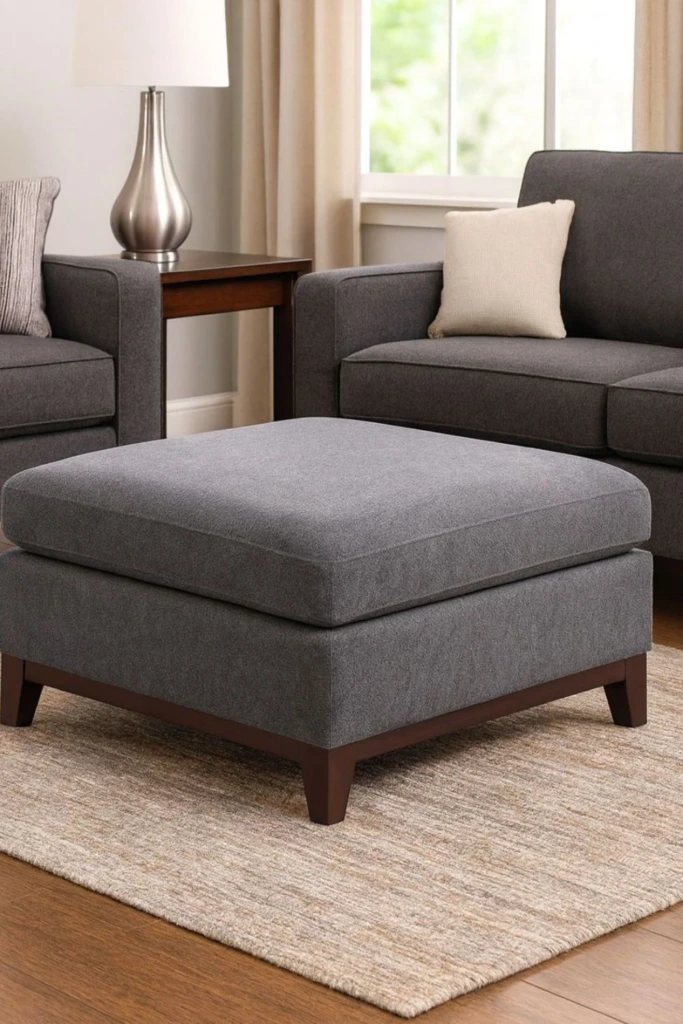
In a family living room, the space between the sofa and television often becomes a gathering point for everyday belongings. A centrally positioned storage ottoman can turn this area into a practical hub for frequently used items.
Use the compartment for board games, blankets, controllers, or shared entertainment accessories. When everyone knows where these items belong, it becomes easier to tidy up after movie nights or family activities.
The size and shape should suit the seating arrangement. A rectangular ottoman can complement a long sofa, while a square design may work better with a compact seating group. Leave sufficient clearance around it so people can walk through the room without bumping into the furniture.
If several people use the ottoman as a footrest or seat, prioritize sturdy construction and suitable weight capacity. For households with children, a lid that stays open safely can also make accessing the contents more convenient.
16. Blanket Storage
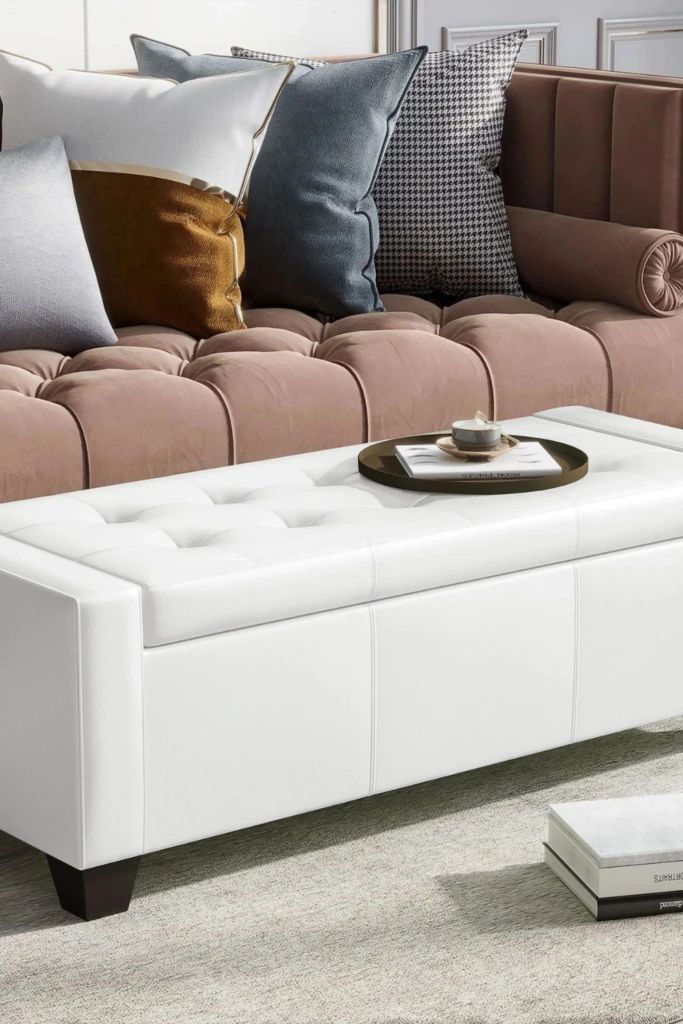
Blankets are among the most useful items to store in an ottoman because they are frequently needed but can make a room look untidy when left in piles. A spacious compartment provides an easy place to keep throws for movie nights, cool evenings, or visiting guests.
Fold blankets into manageable rectangles and stack them loosely enough that you can remove one without disturbing the entire pile. If you have several sizes, place smaller throws on top and larger blankets underneath.
You can also separate blankets by season or intended use. Keep lightweight throws accessible during warmer months and move thicker blankets into the ottoman when temperatures drop. A breathable fabric organizer can help keep different blankets together.
Always make sure blankets are clean and dry before storing them. If the ottoman sits in a humid room, inspect the compartment periodically and allow it to air out when needed. These simple habits help prevent stale odors and keep your textiles ready for use.
17. Statement Storage
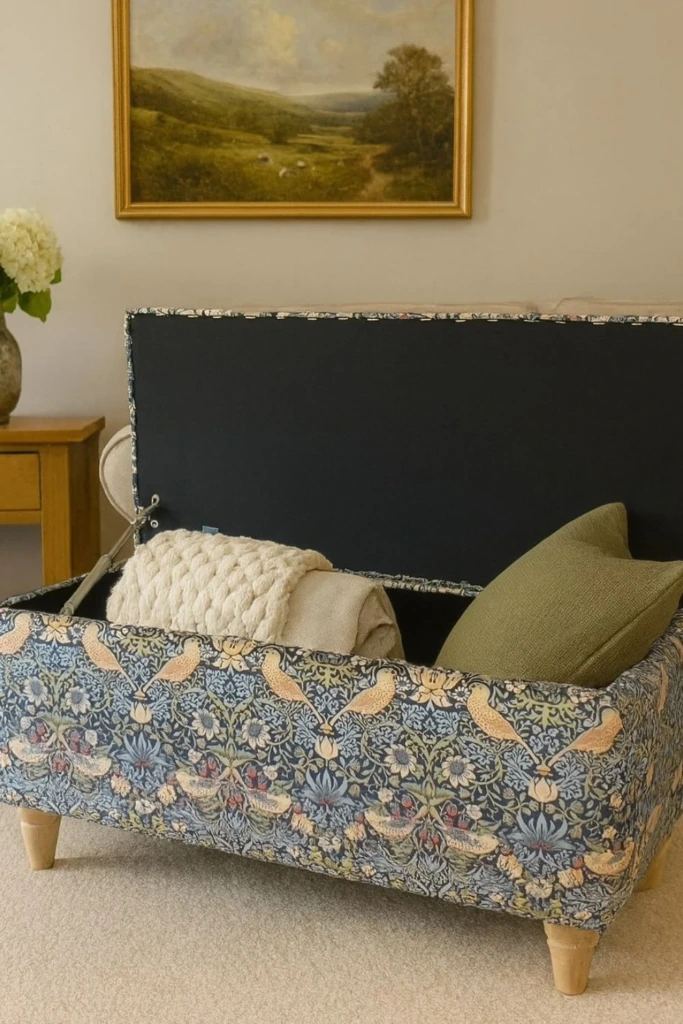
A storage ottoman does not have to disappear into the background. A distinctive design can serve as a focal point while providing useful space for household items.
Consider a jewel-toned velvet ottoman, a patterned upholstered piece, or a sculptural design with an unusual shape. These options can introduce personality into a neutral living room without requiring a major furniture change.
If the ottoman has a bold color or elaborate texture, keep nearby accessories relatively simple so the room feels balanced. Alternatively, repeat one of its colors in a cushion, rug, or decorative object to create a more coordinated look.
Function still matters when choosing a statement piece. Check the interior dimensions, lid mechanism, upholstery durability, and seating capacity before making a purchase. An attractive ottoman is most valuable when its storage works well for the things you need to keep close by.
18. Accent Storage
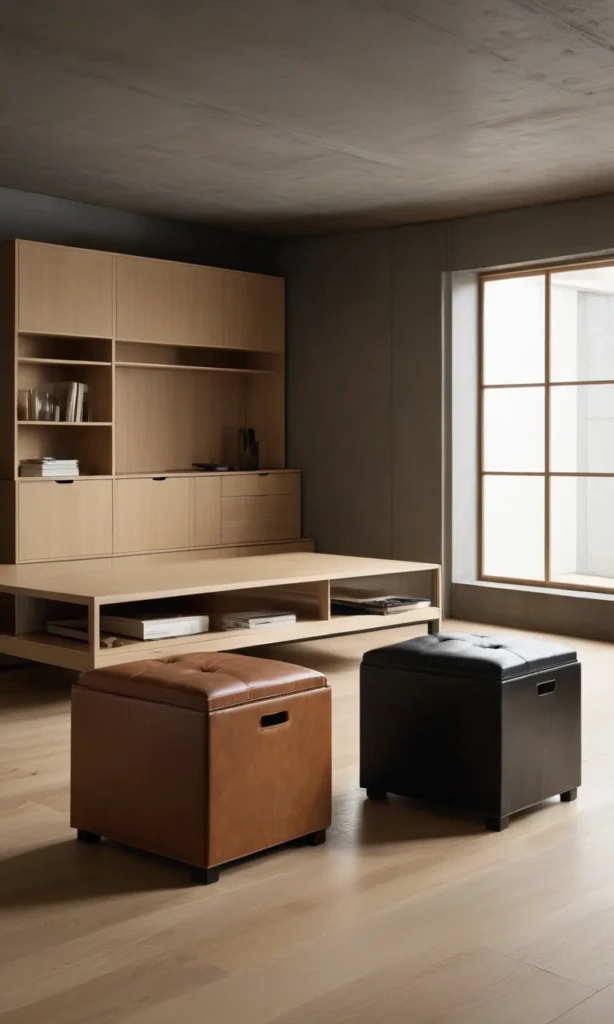
An accent storage ottoman can fill an unused corner or add a small decorative detail beside a sofa, armchair, or bed. Unlike a large central model, a compact accent piece can be chosen primarily for its color, texture, and ability to complement nearby furniture.
Use it to store reading glasses, small accessories, spare pillow covers, or other lightweight items that you want to keep accessible. A small compartment is particularly useful when you do not need substantial storage but still want to reduce clutter.
For a cohesive interior, coordinate the ottoman with existing finishes rather than matching every item exactly. A contrasting shade can create visual interest, while a similar fabric or color can help the piece blend into the room.
Consider the ottoman's location before selecting its shape. A narrow rectangular model may fit beside a bed, whereas a round design can work well next to an armchair. Make sure it does not obstruct drawers, doors, or walking paths.
FAQs
Storage ottomans are versatile, but their usefulness depends on how well the size, construction, and interior layout match your household's needs. The following answers cover two common questions about using them effectively.
Are storage ottomans actually useful for everyday living rooms?
Yes, a storage ottoman can be genuinely useful in an everyday living room because it combines several functions in one piece of furniture. It can provide a footrest, occasional seating, concealed storage, and, with an appropriate firm top or tray, an alternative to a traditional coffee table.
Its biggest advantage is convenience. Items such as blankets, remote controls, magazines, and board games can be stored close to where they are used, making it easier to keep shared spaces organized.
Storage ottomans are especially valuable in smaller homes where adding separate furniture for every purpose is impractical. However, not every model suits every task. A soft upholstered ottoman may be excellent for putting your feet up but unsuitable for supporting drinks or serving dishes without a stable tray.
For everyday use, prioritize a durable frame, easy-to-clean upholstery, adequate interior capacity, and a lid that is simple and safe to operate. Choosing a design around your actual storage needs will make it more useful than selecting one based on appearance alone.
How do you keep a storage ottoman organized instead of messy inside?
The easiest way to keep a storage ottoman organized is to give its contents a clear purpose. Decide what belongs inside before filling it, whether that means blankets, children's toys, entertainment accessories, or bedroom linens.
Use small baskets, dividers, or fabric pouches to separate different categories. This prevents smaller items from disappearing beneath larger belongings and makes it easier to retrieve what you need. If the compartment is deep, place frequently used items near the top and reserve the bottom for things you use less often.
Avoid treating the ottoman as a general dumping ground. When you bring an item out, return it to its designated place once you finish using it. Remove unnecessary belongings regularly so the compartment does not become overcrowded.
It also helps to avoid mixing items with very different storage requirements. Clean textiles should be kept separate from dirty shoes, and damp objects should never be placed inside a closed compartment. If the ottoman stores seasonal items, review them whenever the season changes.
A quick weekly check is usually enough to maintain order. With a simple system and consistent habits, your storage ottoman can remain a practical part of your home rather than another place where clutter accumulates.
Final Thoughts
A storage ottoman can make your home more comfortable and organized without requiring additional cabinets or bulky furniture. From storing blankets and shoes to keeping toys and office supplies out of sight, the right design can serve several purposes while complementing your interior style.
Start by identifying the items you need to store, measuring the available space, and deciding whether you want extra seating, a coffee-table alternative, or a compact accent piece. With a suitable size and a straightforward organizing system, a storage ottoman can become one of the most useful pieces of furniture in your home.