20 Dress Up Storage Ideas for 2026
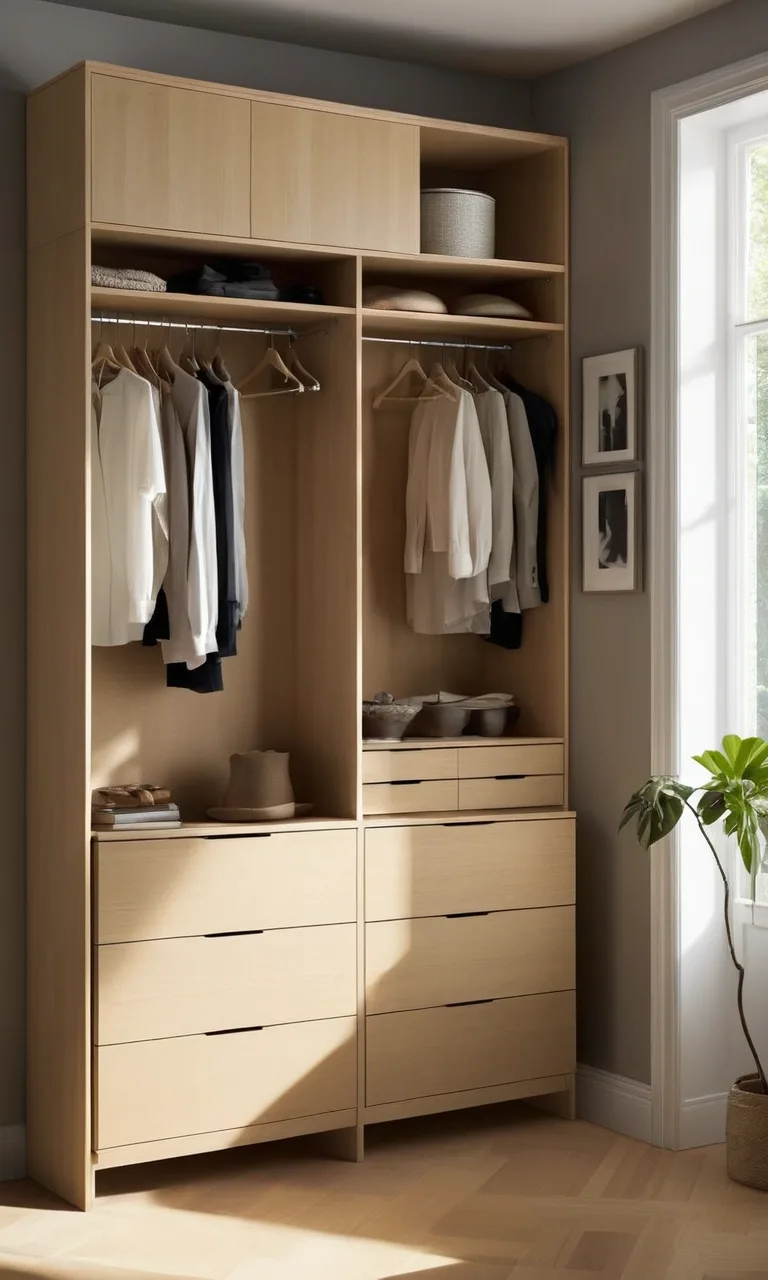
Dress-up clothes make imaginative play more exciting, whether children love pretending to be superheroes, fairytale characters, doctors, or adventurous explorers. However, costumes, accessories, shoes, and props can quickly take over a bedroom or playroom without a practical storage system. The right setup keeps everything organized while making it easy for children to choose outfits and put them away independently.
From compact clothing racks and creative DIY closets to dedicated dress-up stations, these ideas offer options for different room sizes, budgets, and decorating styles.
What Is the Best Way to Store Dress-Up Clothes?
The best way to store dress-up clothes is to combine accessible hanging space with clearly organized containers for smaller items. Costumes that wrinkle easily or have delicate details benefit from hangers, while capes, masks, hats, shoes, and toy accessories can be stored in labeled bins or divided baskets.
Choose a storage system that matches the number of costumes your child owns and the available floor space. A low rack works well for everyday play, while a wardrobe with shelves provides room for a larger collection. If space is limited, wall-mounted hooks and under-bed containers can help keep everything tidy.
For easier organization, group outfits by theme, character, or type. Keep frequently used costumes within your child's reach and reserve higher shelves for seasonal outfits or delicate accessories. Avoid overcrowding hangers, and make sure shelves, racks, and furniture are stable and appropriate for the child's age.
1. Rotating Tower Station with Built-In Mirror
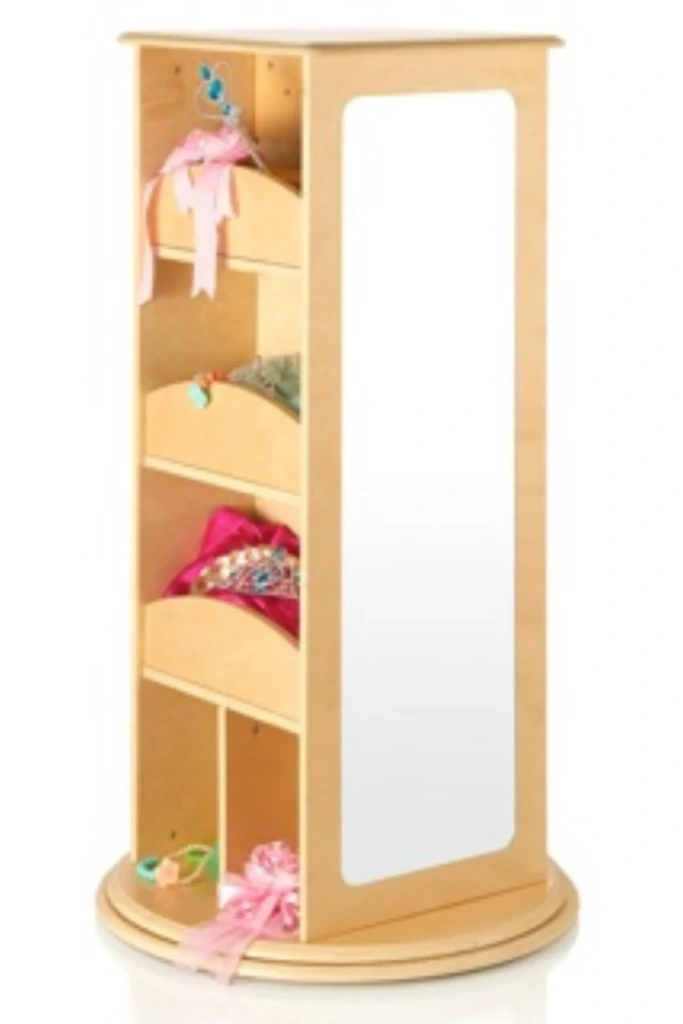
A rotating storage tower is an interesting choice for a playroom that needs both organization and an element of fun. Its vertical design can provide several levels for hanging costumes, displaying accessories, and storing small toys without spreading everything across the floor.
A built-in mirror makes the station more engaging because children can see their outfits as they dress up. Depending on the design, the shelves may hold shoes, crowns, costume jewelry, or folded clothing.
This setup is particularly useful when several children share a play space. Before purchasing one, check that the base is sturdy, the rotating mechanism moves smoothly, and the mirror is securely attached. Keep heavier objects on lower shelves to improve stability.
2. Pink Mini Wardrobe with Hanging Rail
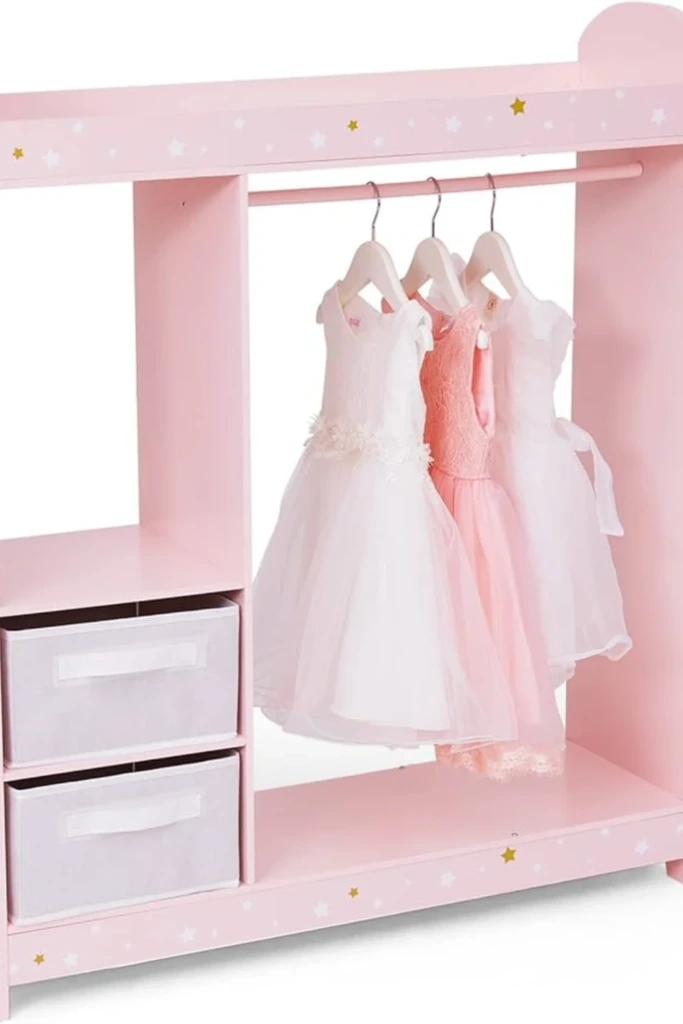
A pink mini wardrobe creates a dedicated home for dress-up clothes while adding a cheerful touch to a child's bedroom. Its compact proportions make it suitable for smaller rooms where a full-size closet would feel excessive.
Use the hanging rail for dresses, capes, jackets, and other pieces that benefit from being stored on hangers. If the wardrobe includes shelves or drawers, dedicate them to shoes, hats, gloves, and accessories.
Choose child-sized hangers so garments stay in place without stretching at the shoulders. A wardrobe with an open front or easy-to-operate doors also helps children select outfits without needing an adult to manage the storage area.
3. Simple Clothing Rack with Top Shelf
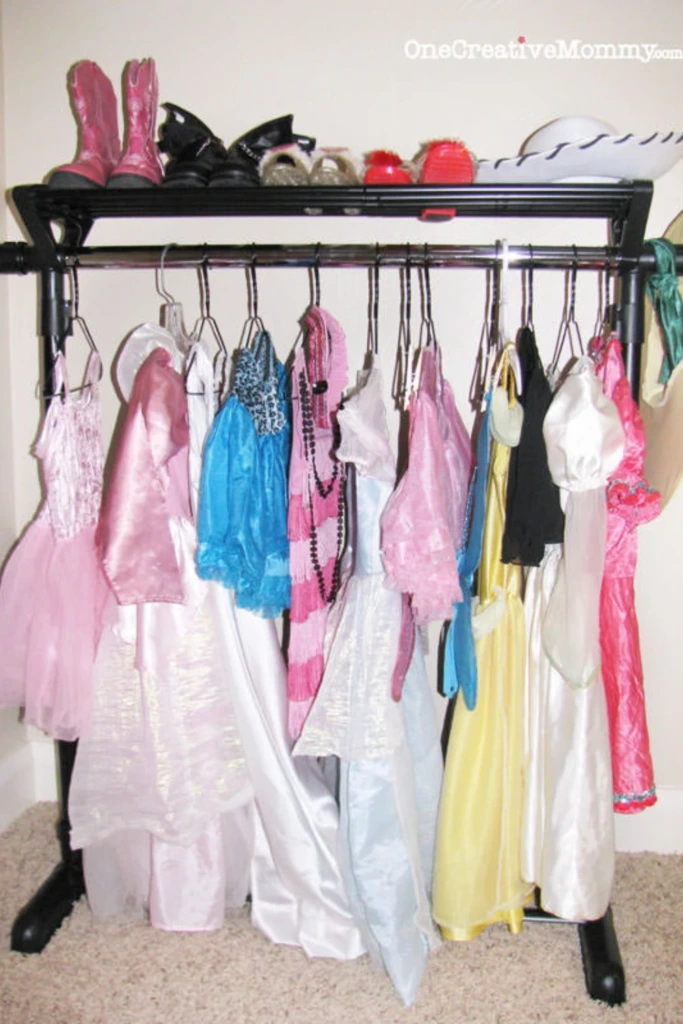
A basic clothing rack is an affordable and flexible solution for organizing a growing costume collection. The hanging bar keeps garments visible, while the upper shelf provides additional room for baskets, folded accessories, or decorative storage boxes.
This style works especially well in shared bedrooms, playrooms, and temporary dress-up corners. Because the clothes remain on display, children can quickly find what they want instead of searching through a pile.
Use lightweight baskets on the top shelf to prevent small items from becoming scattered. If you choose a freestanding rack, select one with a stable base and an appropriate weight capacity. Secure it against tipping when necessary, particularly in a room used by young children.
4. House-Shaped Dress-Up Closet with Floral Top
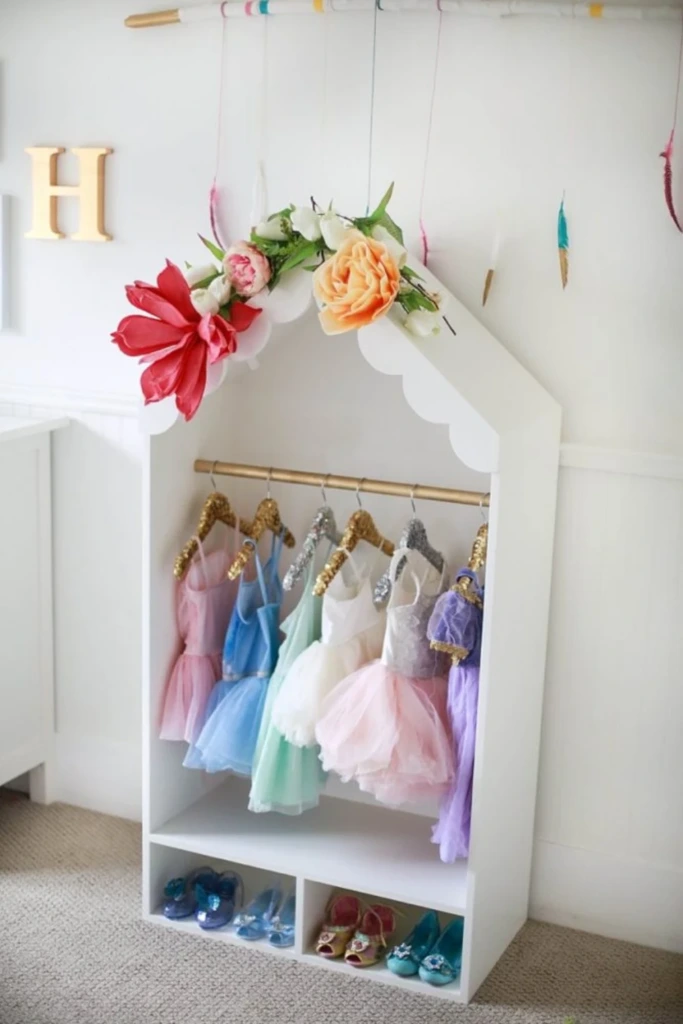
A house-shaped dress-up closet combines practical clothing storage with a playful, decorative appearance. Its roof-like silhouette can make an ordinary wardrobe feel like a miniature playhouse, helping create a special spot for imaginative activities.
A floral detail along the top adds softness and personality, especially in rooms decorated with pastel colors or garden-inspired themes. Inside, organize costumes on a hanging rail and use lower shelves for shoes, bags, and character accessories.
You can recreate the look with a suitable wooden wardrobe, decorative trim, and child-safe paint. Keep flowers and embellishments securely attached, and avoid heavy decorations above the storage area. The finished station should be attractive without sacrificing accessibility or stability.
5. Vanity-Style Dress-Up Station with Lighted Mirror
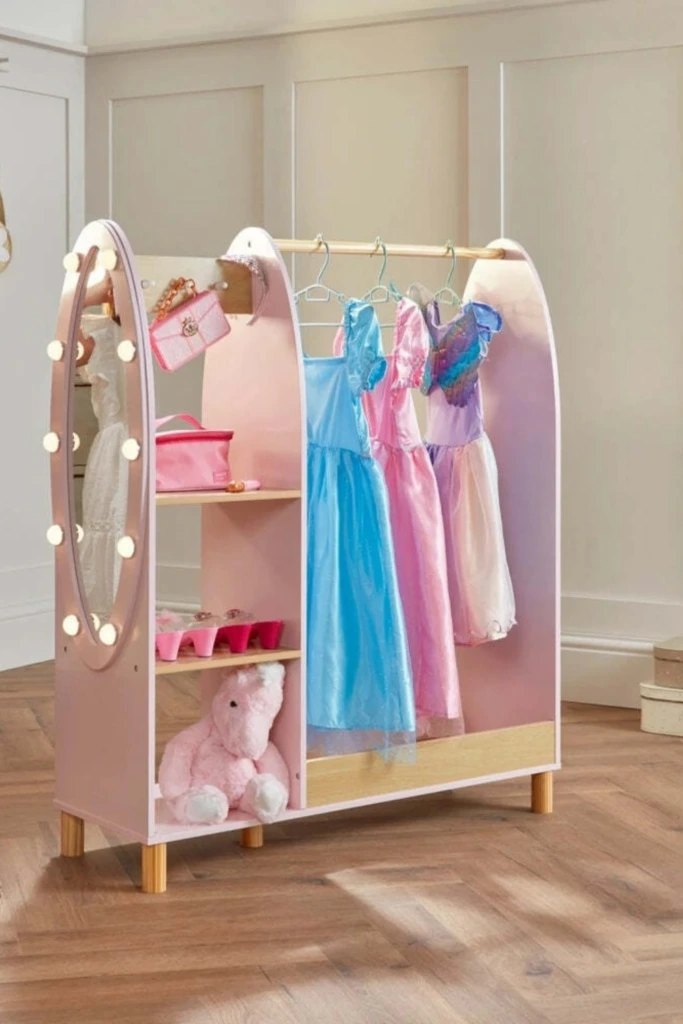
A vanity-style station is ideal for children who enjoy completing their costumes with pretend makeup, hair accessories, or jewelry. Pairing a mirror with clothing storage creates one convenient area for choosing an outfit and finishing the look.
Place costume jewelry, brushes, crowns, and hairbands in divided trays or shallow drawers. Hang dresses and other garments nearby so the entire routine can happen in one place.
Soft lighting around the mirror can improve visibility and add a theatrical touch. Choose securely installed, low-heat lighting designed for the intended setting, and keep cords out of children's reach. Store small accessories and pretend cosmetics appropriately for the child's age, especially when younger siblings share the room.
6. Scalloped Mini Wardrobe with Side Mirror
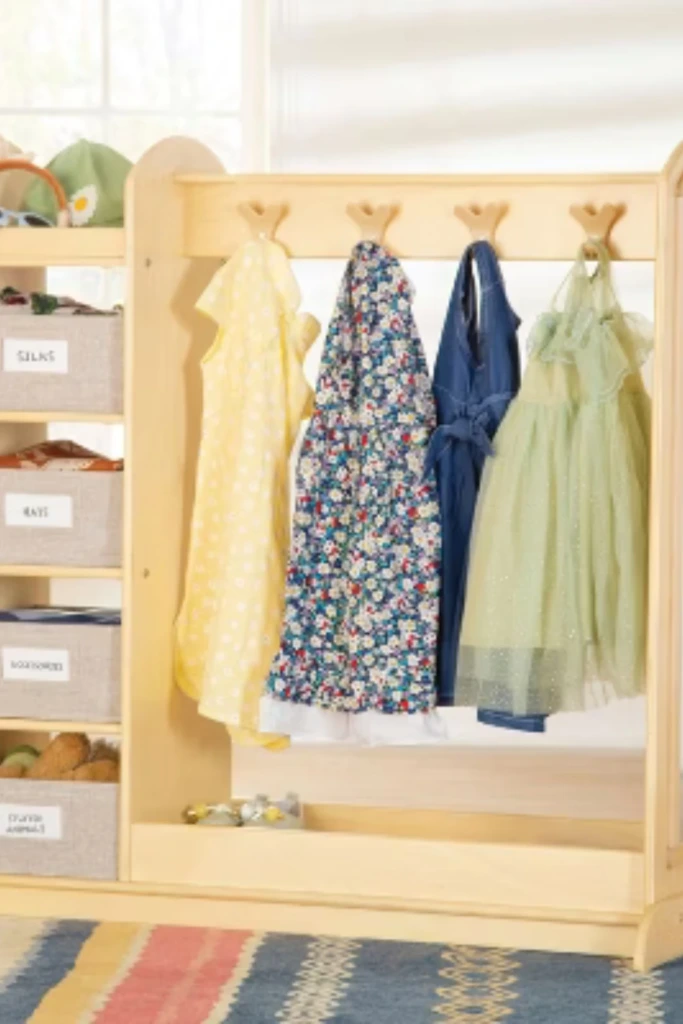
A mini wardrobe with scalloped edges offers a decorative alternative to conventional storage furniture. Its curved detailing can complement vintage-inspired, whimsical, or pastel playroom decor, while a side mirror adds a practical dressing feature.
Use the main compartment for hanging outfits and reserve shelves or drawers for smaller pieces. A small basket beside the wardrobe can hold frequently used accessories, making cleanup quicker after playtime.
This design is a good option when you want the storage area to feel like part of the room's decor rather than a collection of plastic containers. For everyday use, prioritize smooth edges, durable finishes, and a mirror that is firmly secured to the furniture.
7. Pink Open Wardrobe with Side Shelves
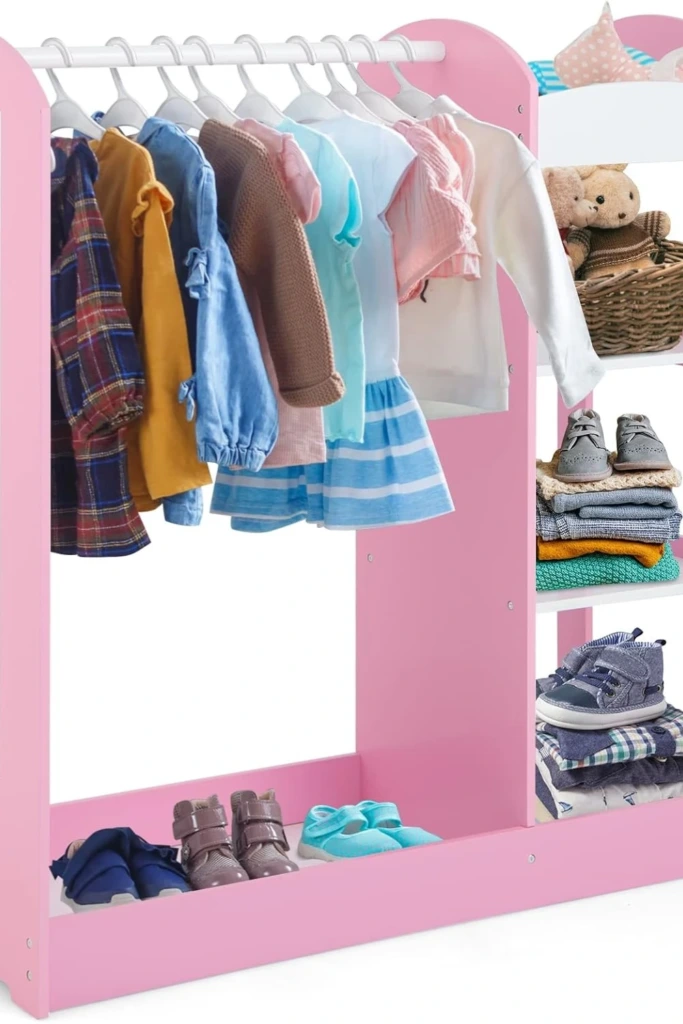
An open pink wardrobe with side shelves gives children a clear view of their dress-up collection. The central rail accommodates longer garments, while the side sections provide convenient space for bags, shoes, hats, and folded costume pieces.
Arrange the clothing by category or color to make the display visually appealing and easier to navigate. Place the most frequently worn outfits at the front and store accessories in small bins to prevent clutter from building up.
Because this design has no doors to open, it is particularly useful for children who like to change costumes several times during play. Make sure the shelves do not protrude into walkways and that the unit is anchored securely if its construction requires it.
8. Built-In Closet with Layered Hanging Space
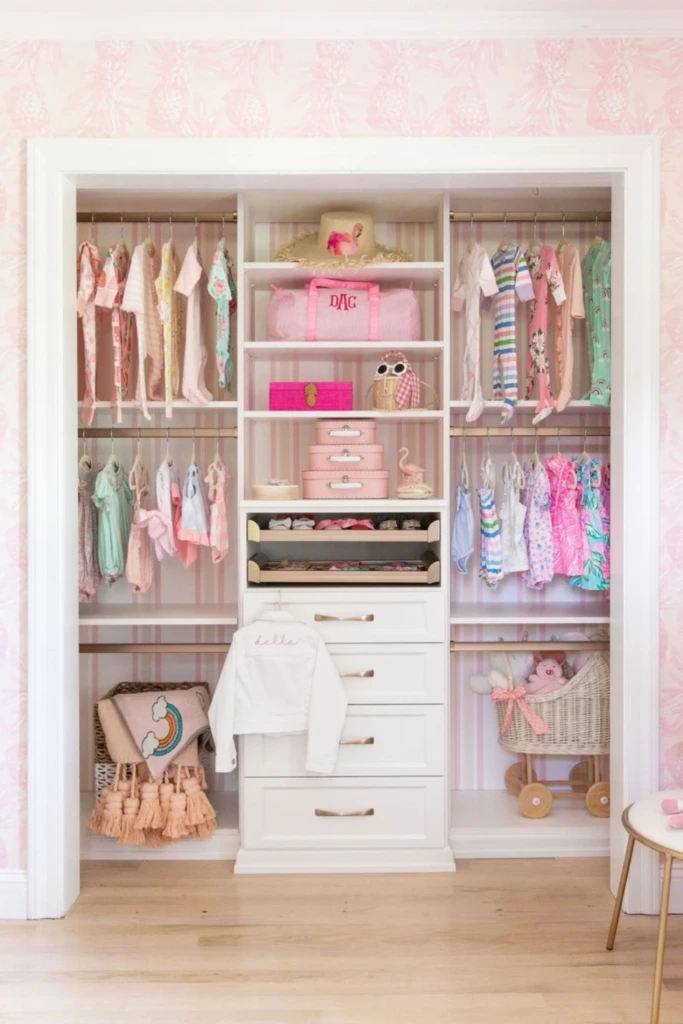
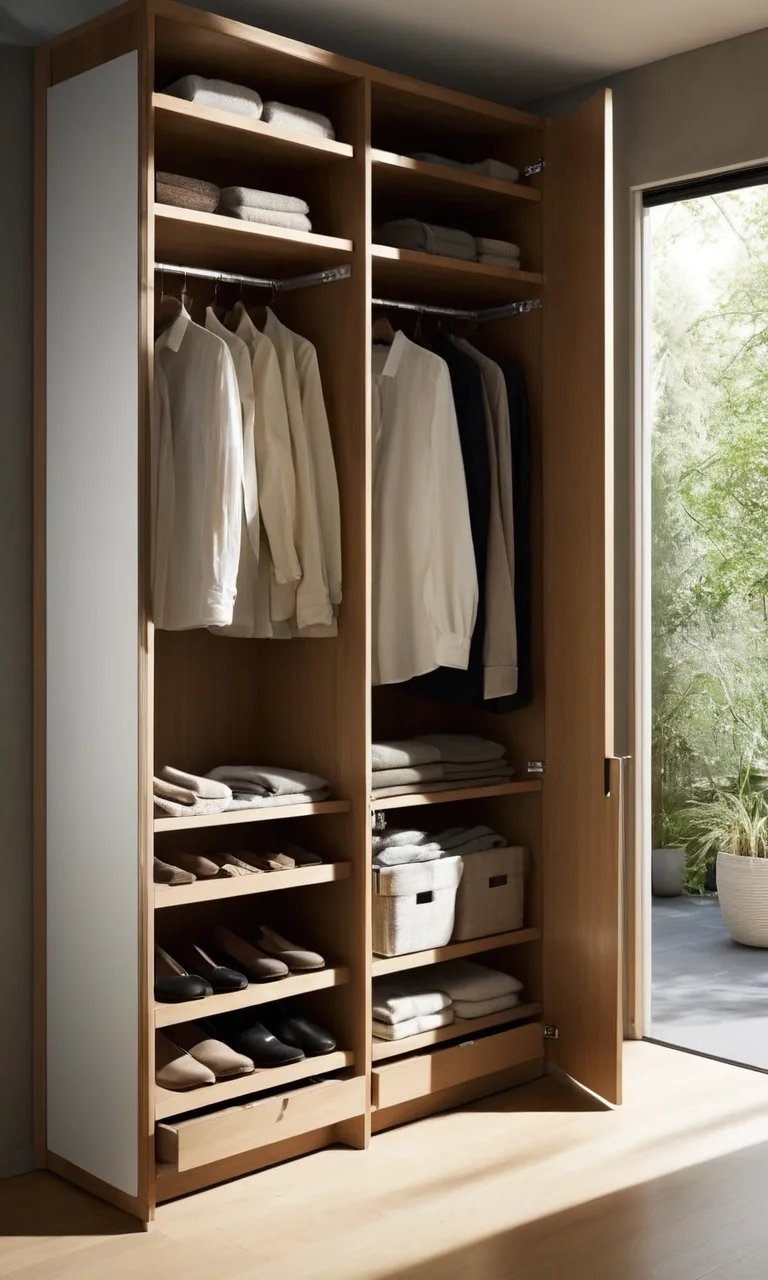
A built-in closet makes efficient use of a wall recess or an existing wardrobe area. Adding two levels of hanging space can increase capacity, especially when the collection includes shorter garments such as vests, skirts, jackets, and superhero costumes.
Keep longer dresses and capes on a full-height section so they do not drag along the floor. Use the upper rail for less frequently used outfits and the lower rail for everyday favorites, provided children can reach it safely.
Shelves above or below the rails can accommodate labeled bins for masks, shoes, crowns, and props. If you are modifying an existing closet, measure the garments before installing rails and leave enough clearance for hangers to slide easily.
9. Low Dress-Up Rack with Bottom Bin
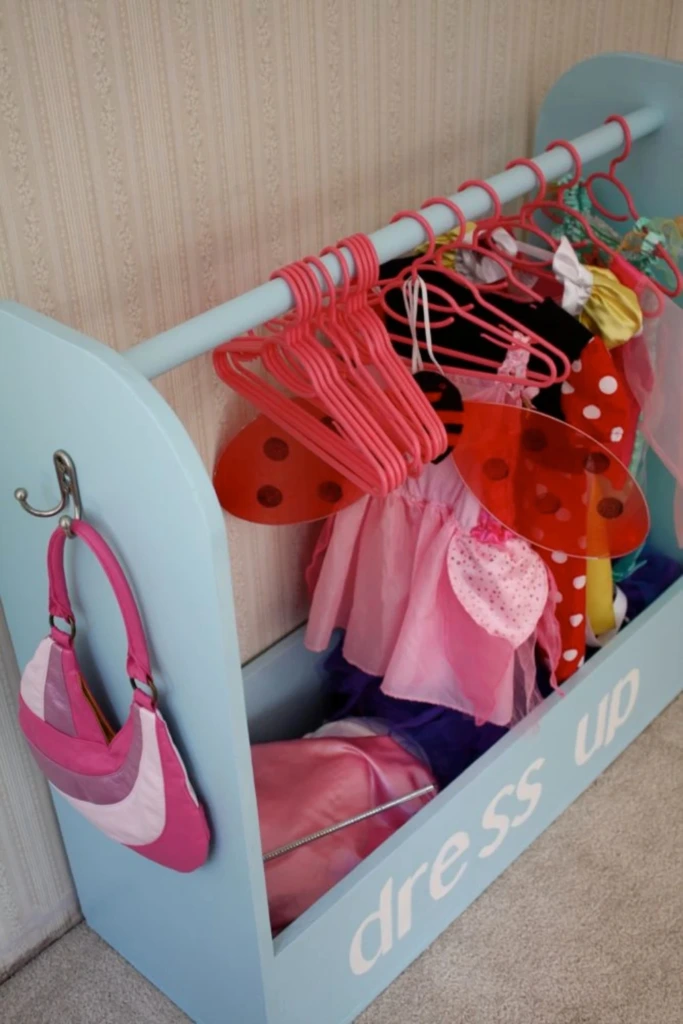
A low clothing rack is an excellent choice for toddlers and younger children who are learning to manage their own belongings. Its accessible height allows them to browse outfits, select costumes, and return clothing without depending on an adult for every step.
A bin underneath the hanging rail creates a natural home for accessories that do not fit on hangers. Fill it with soft hats, fabric wings, play scarves, and other lightweight items, using smaller containers inside if needed.
Avoid filling the bin so deeply that children must empty it to find one item. A compact selection of costumes also helps prevent overcrowding. Choose a sturdy rack with a broad base, smooth edges, and no exposed hardware that could catch clothing.
10. Montessori-Inspired Open Wardrobe
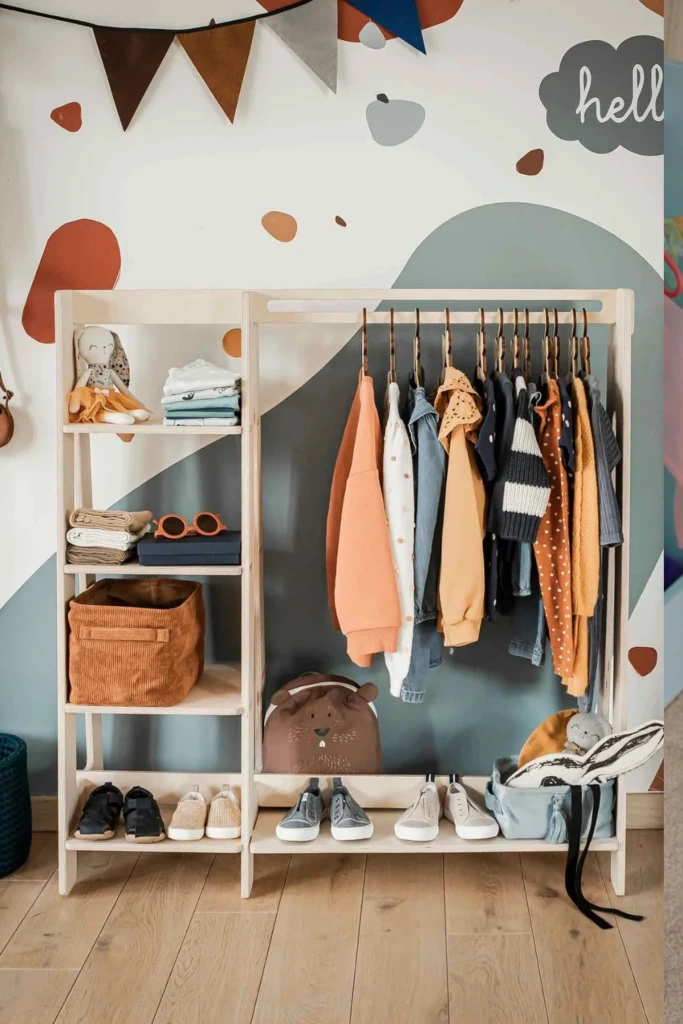
A Montessori-inspired wardrobe emphasizes independence by making clothing and accessories visible, reachable, and easy to return. Instead of hiding everything behind closed doors, this setup presents a manageable selection of costumes at the child's level.
Provide a short hanging rail, a low shelf for shoes, and one or two baskets for accessories. Keeping the collection small enough to browse comfortably helps children make choices without becoming overwhelmed.
Rotate the available outfits every few weeks if the wardrobe becomes crowded. Store the remaining costumes elsewhere and bring them back when interest changes. The goal is not to create a perfect display but to establish a simple routine that encourages children to participate in tidying up.
11. Cube Shelf Hack with Hanging Rod
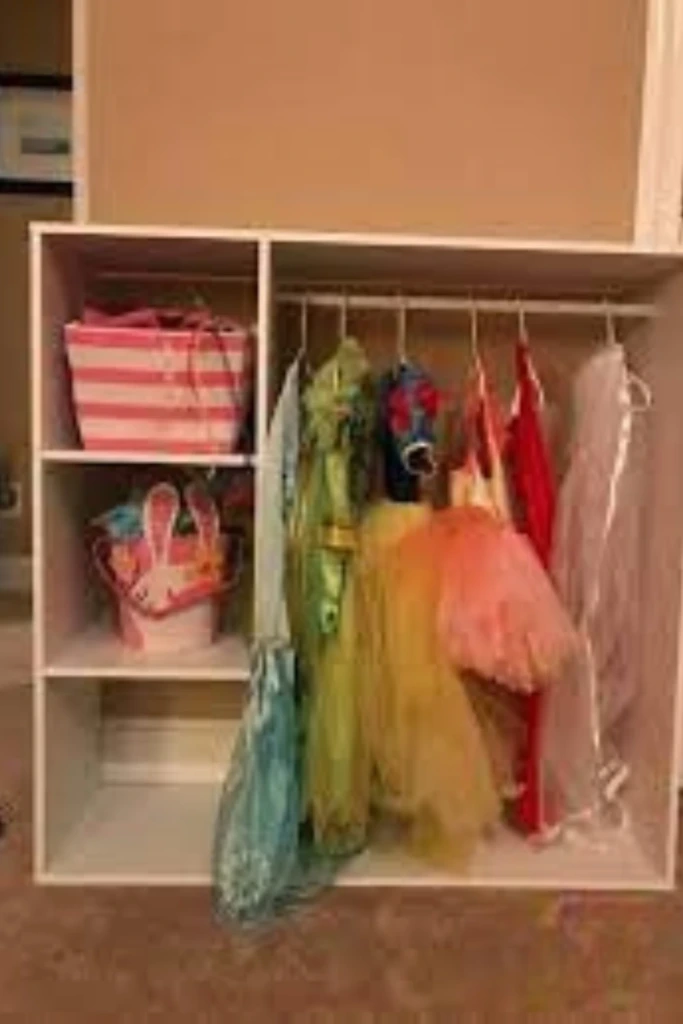
A cube storage shelf can be converted into a useful dress-up station with the addition of a properly supported hanging rod. The cubes provide compartments for folded costumes, shoes, bags, and accessories, while the rod creates space for garments that need to hang.
Before modifying a shelf, confirm that its material and structure can support the proposed attachment. Use suitable brackets and hardware, and avoid attaching a loaded rod to a lightweight panel that could bend or break.
Assign each cube a specific purpose, such as hats, masks, shoes, or themed accessories. Fabric bins can conceal smaller items while maintaining a coordinated appearance. This approach is particularly practical for families who already own cube shelving and want to repurpose it rather than purchase another storage unit.
12. White Open Storage Rack with Shelving
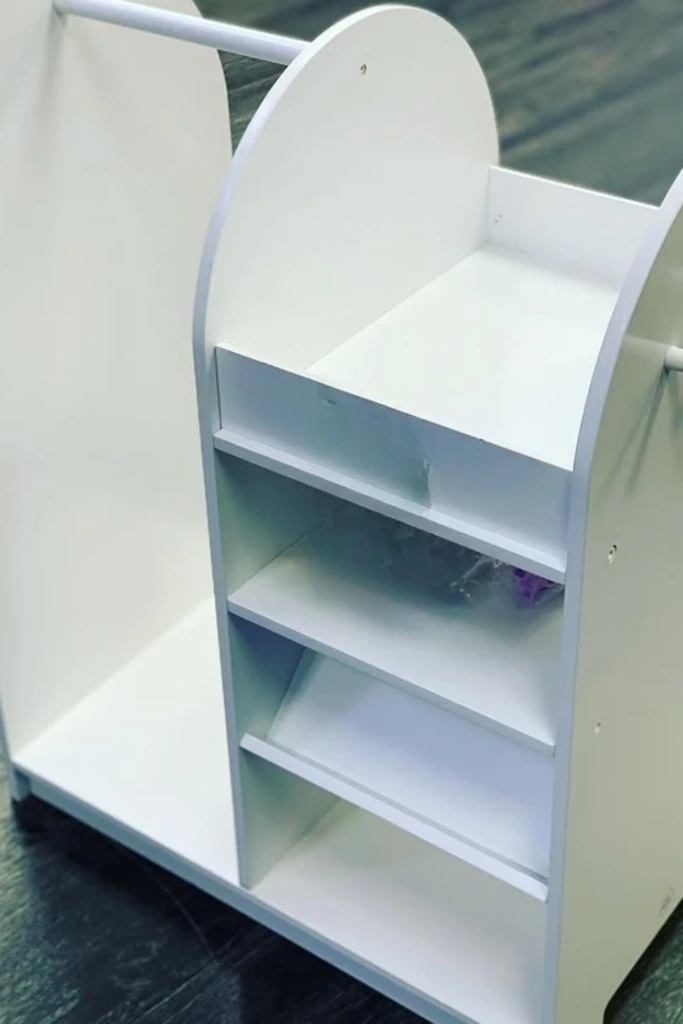
A white open rack provides a clean, versatile background for colorful costumes. Its neutral finish works with many decorating styles, from bright playrooms to understated bedrooms, and the open layout makes individual pieces easy to identify.
Use the hanging section for dresses, coats, and capes, then arrange shelves with baskets for shoes, masks, and small props. Keeping similar accessories together prevents the rack from becoming visually messy.
If you want a more coordinated appearance, use matching bins and simple labels. However, transparent containers can be more useful for younger children who cannot yet read. Select a rack with sufficient depth and a stable structure so costumes remain in place when children browse through them.
13. Luxe Walk-In Closet with Ambient Lighting
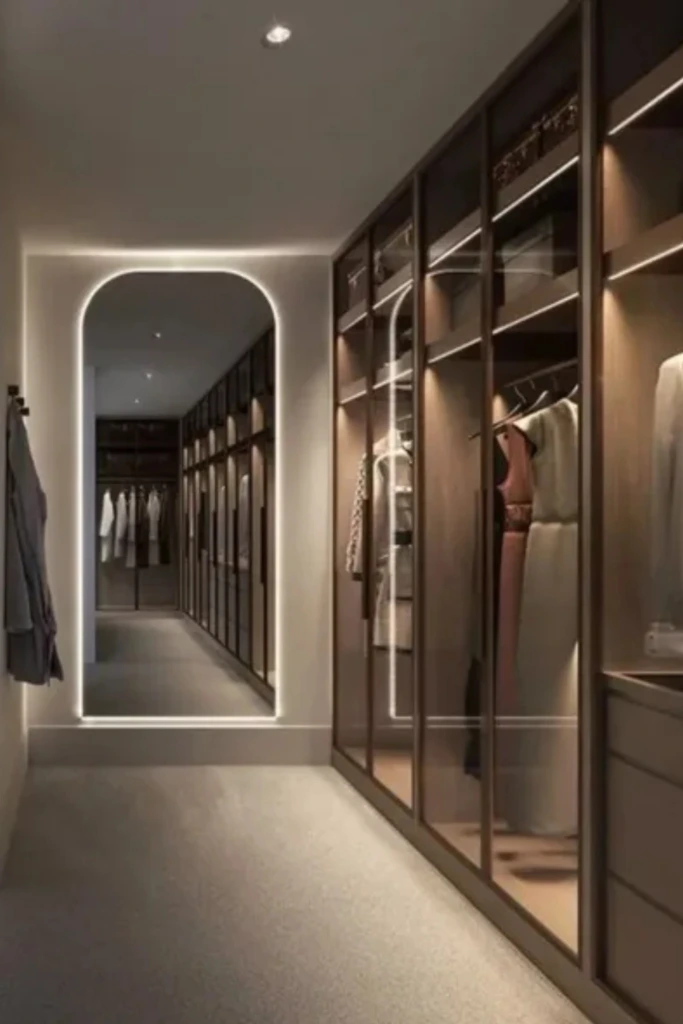
A walk-in dress-up closet can turn a large costume collection into a dedicated play destination. If you have a spare closet or a generous corner of a bedroom, separate the area into zones for hanging clothes, storing accessories, and getting dressed.
Use different hanging sections for dresses, uniforms, capes, and seasonal costumes. Drawers or compartmentalized organizers can hold smaller items, while shelves accommodate shoes and bags. A mirror near the entrance gives children space to check their outfits before heading back into the playroom.
Ambient lighting can make the closet feel inviting, but functionality should come first. Choose lighting appropriate for enclosed spaces, keep electrical components safely installed, and leave a clear route through the area. Make sure every frequently used item remains accessible without climbing or reaching overhead.
14. Minimal A-Frame Clothing Rack
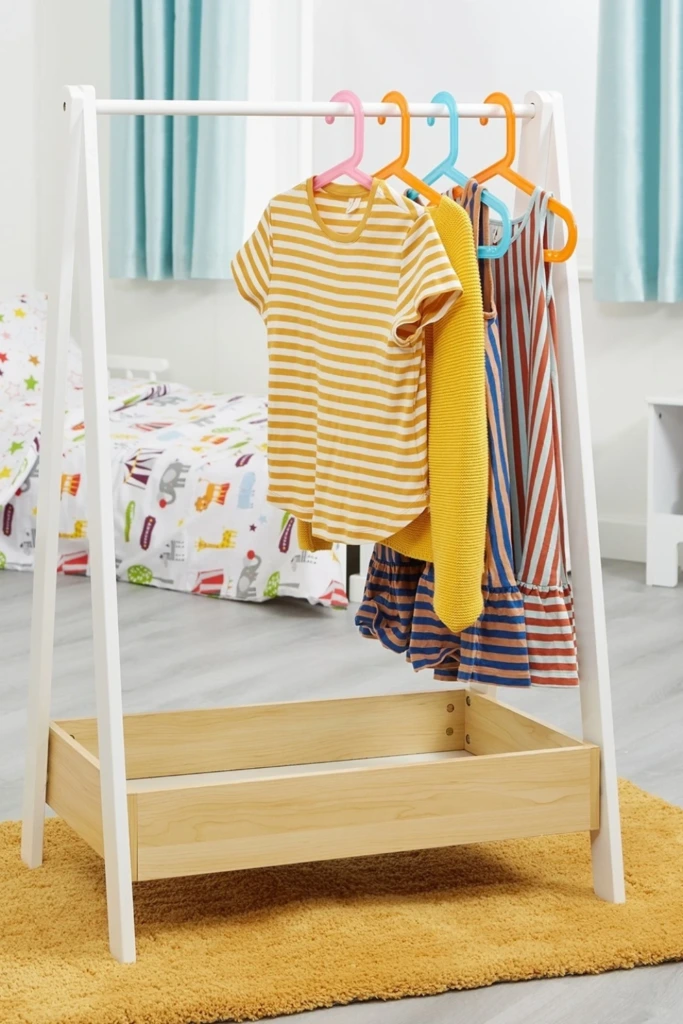
An A-frame clothing rack has a simple silhouette that suits modern bedrooms, Scandinavian-inspired interiors, and uncluttered playrooms. Its angled supports give it a distinctive appearance, while the central rail provides straightforward storage for costumes.
This style is particularly effective when the collection is relatively small. Hang a curated selection of favorite outfits and use a separate basket for shoes and accessories. The result feels more like a miniature boutique than a crowded storage corner.
Check the rack's dimensions before buying, since some A-frame designs take up more floor space than expected. Choose a model with secure joints and a stable footprint, and avoid hanging more weight on one side than the structure is designed to handle.
15. Costume Rack with Metal Hanging Bar
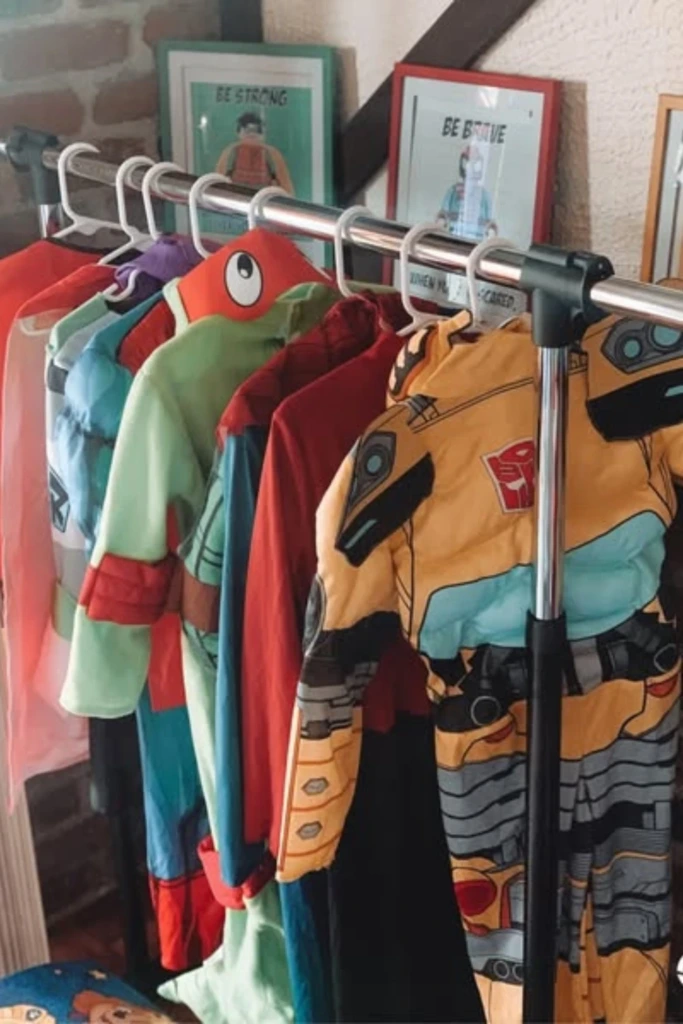
A costume rack with a metal hanging bar offers a durable option for frequent dress-up sessions. Metal rails are often well suited to repeated use, although the quality of the frame, connectors, and base determines how stable the complete rack will be.
Hang heavier costumes toward the center of the rail and distribute the weight evenly. Use appropriate hangers for delicate garments, and place a basket below the rack for accessories that children can easily drop or misplace.
This arrangement can work well in playrooms, classrooms, and family activity areas where costumes are used regularly. Look for rounded ends and a finish that resists chipping. If the rack has wheels, choose locking casters and engage the brakes before children begin using it.
16. House-Shaped Wardrobe with Oval Mirror
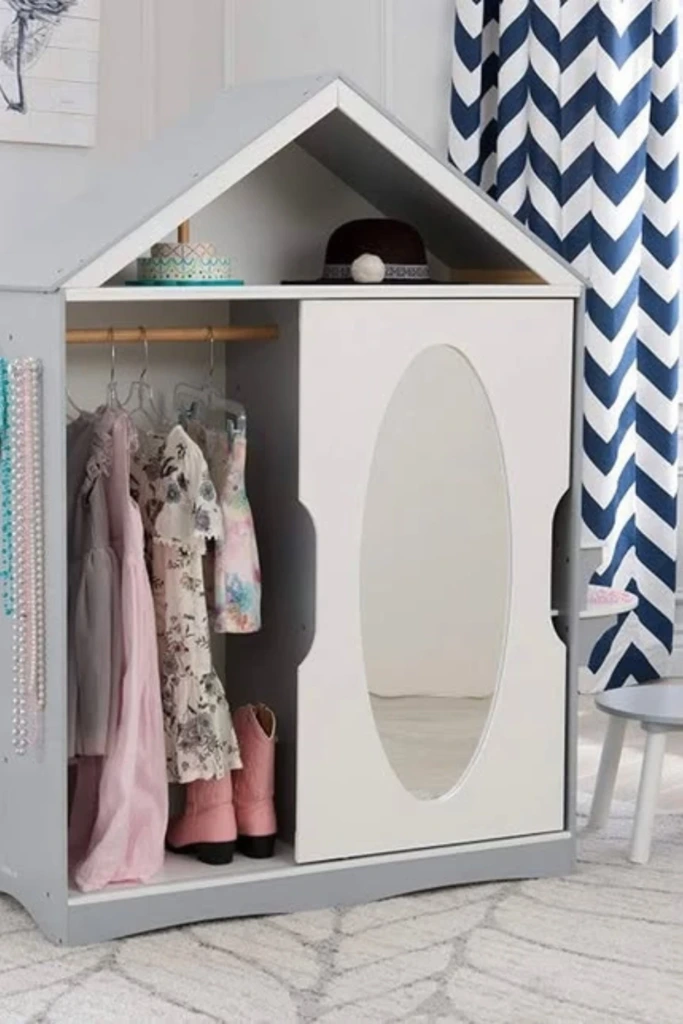
A house-shaped wardrobe with an oval mirror brings a storybook quality to a child's dressing area. Its architectural outline makes the storage piece a decorative feature, while the mirror adds a useful place to check hats, capes, and complete outfits.
Inside, keep the hanging rail dedicated to garments and use lower compartments for shoes and accessories. A small tray can hold crowns, toy jewelry, or other finishing touches, helping children find matching pieces quickly.
This style works particularly well in themed bedrooms or playrooms where furniture contributes to the imaginative atmosphere. When selecting one, pay attention to the available hanging height and interior width. A charming design is most useful when it can accommodate the actual costumes your child owns.
17. DIY Floral Dress-Up Closet
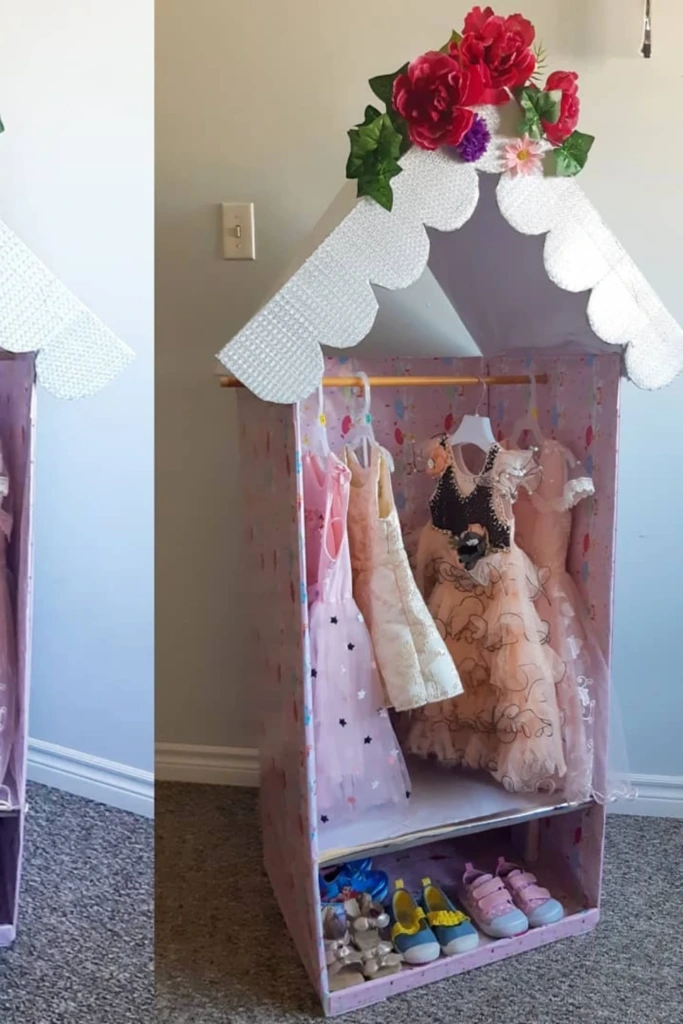
A DIY floral dress-up closet allows you to personalize storage using an existing wardrobe, bookcase, or suitable wooden cabinet. A fresh coat of paint, floral accents, and a simple hanging rail can transform an ordinary piece of furniture into a dedicated costume area.
Begin by measuring the available space and deciding where garments, accessories, and shoes will go. Add a rail for clothing and use baskets or small containers to separate the smaller items. Decorative flowers can be painted directly onto the furniture or added as securely attached embellishments.
Choose finishes that are appropriate for indoor furniture and allow paint or adhesive products to cure fully before use. Sand rough surfaces and remove splinters, particularly when repurposing older furniture. If the project involves drilling, installing a rail, or altering a cabinet, make sure the resulting structure can safely carry its intended load.
18. White Storage Station with Side Bins
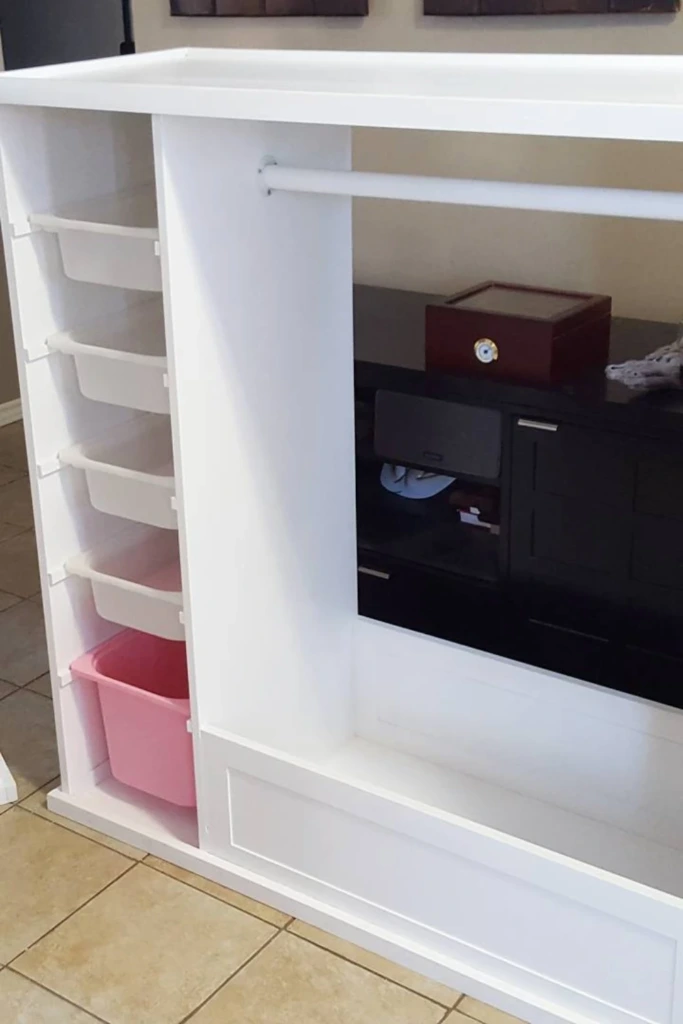
A white storage station with side bins combines hanging space with dedicated compartments for smaller costume essentials. Its neutral appearance keeps the setup looking organized, while the bins make it easier to separate items by type.
Use the main rail for dresses and other garments, then assign each bin a category such as hats, shoes, masks, or bags. Clear or open-front containers are helpful when children need to identify their belongings quickly.
For a polished result, choose bins that fit the available compartments without protruding into walkways. Label them with words or pictures according to your child's age. This simple system also makes cleanup easier because every accessory has a designated place.
19. Dresser Trunk Storage with Mini Hanging Bar
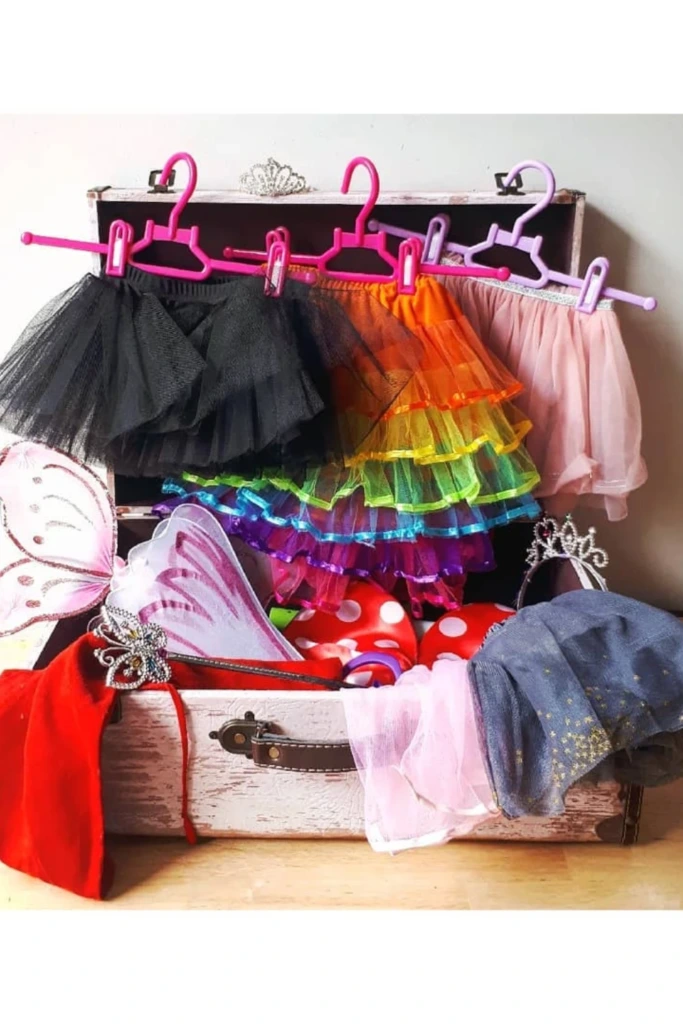
A dresser trunk with a mini hanging bar is useful when you need both concealed storage and a small display area for costumes. The hanging section can accommodate a few favorite garments, while the trunk holds folded outfits, accessories, shoes, and props.
This combination is especially practical in bedrooms where there is not enough space for a separate wardrobe and dresser. Organize the interior with fabric dividers or smaller boxes so accessories do not become mixed together.
Before using a trunk for children's belongings, check its lid and hinges for pinch hazards. Avoid heavy lids that can fall unexpectedly, and never allow a child to climb inside or use the trunk as a hiding place. A design intended for regular children's use should prioritize safe access over appearance.
20. Wall-Mounted Hanging Station
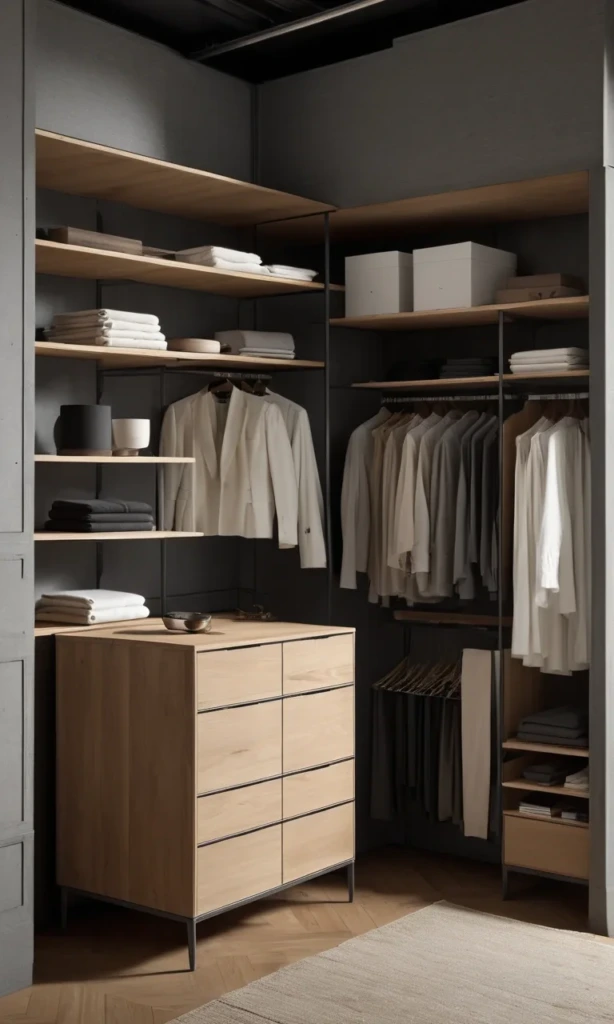
A wall-mounted hanging station is a smart alternative for small bedrooms, narrow playrooms, or areas where floor space is limited. A securely installed rail or row of hooks can keep selected costumes off the ground without requiring a freestanding wardrobe.
Use the rail for lightweight garments and reserve hooks for capes, dress-up bags, and accessories that are easy to hang. A narrow shelf above the rail can hold baskets, provided the shelf and its supports are rated for the intended weight.
Install the station at a height that suits the child, while ensuring that the rail and any shelf are properly anchored to suitable wall supports. Avoid sharp hooks and protruding hardware. For a flexible setup, mount several hooks alongside the rail so frequently used accessories have their own places.
FAQs
Choosing dress-up storage becomes easier when you consider how much clothing you have, how often your child plays with it, and how independently they can manage their belongings. The following answers cover common questions about selecting materials and deciding what belongs in a dress-up area.
What material is best for storing dress-up clothes?
The best material depends on the type of storage you need. Solid wood and well-made engineered wood can provide sturdy wardrobes and shelving, while metal is often a good choice for hanging rails and clothing racks. Fabric bins are useful for lightweight accessories, and transparent plastic containers make small items easy to see.
For the garments themselves, breathable fabric storage bags or clean cotton covers can help protect special costumes from dust while allowing some air circulation. Avoid packing damp clothing into sealed containers, as trapped moisture can encourage mildew. Keep delicate fabrics away from direct sunlight, excessive heat, and humid areas.
For children's furniture, prioritize smooth surfaces, stable construction, secure fittings, and finishes suitable for the intended use. The most suitable material is one that protects the costumes while remaining practical for everyday handling.
What should go in a dress-up storage area?
A well-organized dress-up area should contain the items children need to assemble and enjoy their costumes without becoming overcrowded. The exact contents depend on their interests, but most setups benefit from a few basic categories.
Costumes and clothing: Dresses, capes, superhero outfits, uniforms, vests, skirts, and other themed garments.
Accessories: Hats, crowns, masks, scarves, toy jewelry, belts, and costume wings.
Footwear: Dress-up shoes, boots, and other safe play footwear that fits the child.
Props: Toy stethoscopes, pretend tools, wands, bags, and other age-appropriate accessories.
Organization supplies: Child-sized hangers, labeled bins, baskets, dividers, and small trays.
Dressing essentials: A securely mounted mirror and, if space allows, a small bench or stool suitable for the child's age.
Keep potentially hazardous props, small choking-risk items, and delicate accessories out of reach when necessary. Store frequently used belongings at an accessible height and leave enough open space for children to dress comfortably. Reviewing the collection occasionally also helps you remove damaged items and make room for new favorites.
Final Thoughts
The best dress-up storage system is one that keeps costumes protected, accessories easy to find, and cleanup manageable. Whether you choose a simple clothing rack, a colorful mini wardrobe, a DIY closet, or a wall-mounted station, focus on the space available and your child's needs.
With clear categories, accessible storage, and a stable setup, you can create an inviting dress-up corner that encourages creativity while keeping the room organized.