23 Under Desk Storage Ideas for 2026
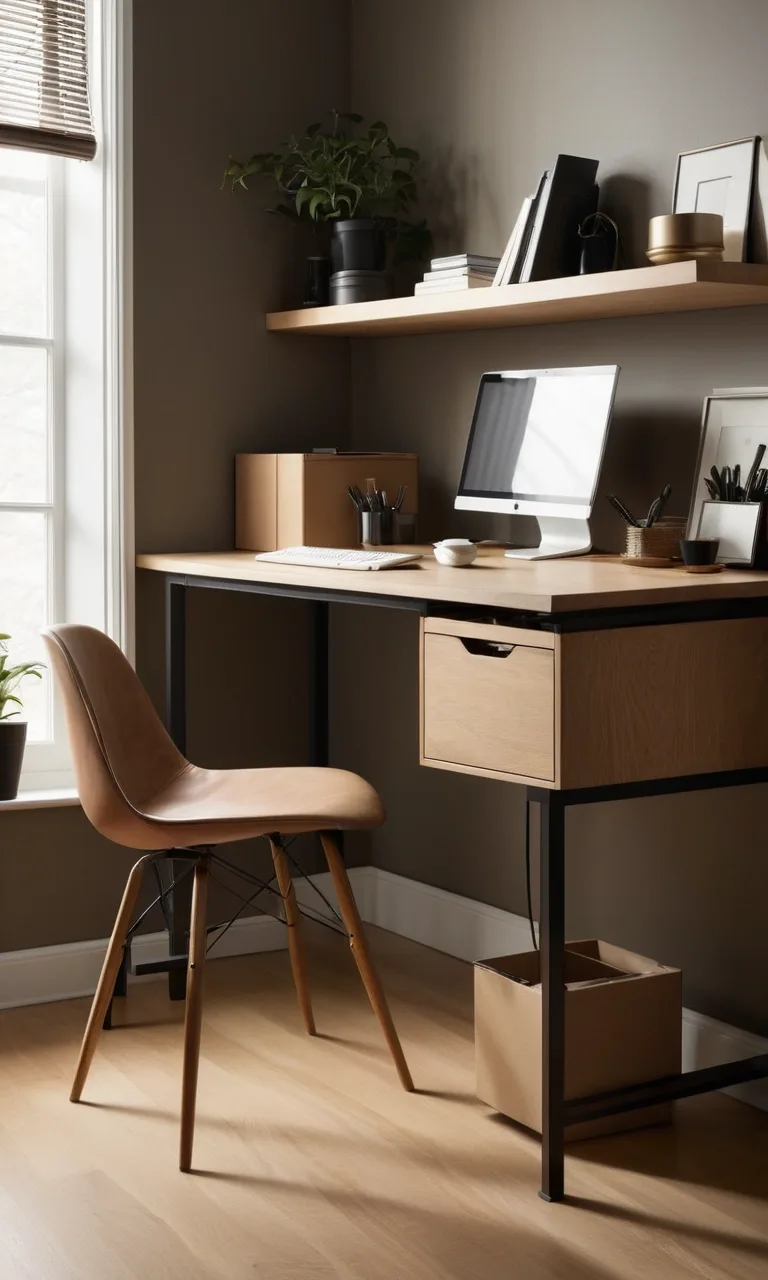
A well-organized workspace can make everyday tasks easier, but finding enough storage around a desk isn't always simple. Papers, office supplies, electronics, and personal belongings can quickly take over your working area, especially when your desk has limited drawers.
The good news is that you don't need a large office or expensive furniture to solve the problem. With thoughtful under desk storage ideas, you can make better use of overlooked spaces while keeping your workspace comfortable and organized.
Whether you're setting up a home office, organizing a study corner, or improving a small workstation, these 22 practical ideas will help you create storage that suits your available space and daily routine.
How to add storage under a desk?
The easiest way to create additional desk storage is to identify unused areas beneath and beside your work surface. Before buying organizers or installing drawers, measure the desk's width, depth, and available height.
Consider how much room your knees and feet need when you're seated. A storage solution should make your workspace more convenient without restricting movement or interfering with your chair.
You can introduce compact drawer cabinets, mounted organizers, narrow shelving, or movable storage units depending on your desk design. For smaller spaces, choosing furniture with multiple functions can also help.
Keep frequently used supplies accessible, place heavier belongings in stable lower compartments, and avoid blocking electrical outlets or computer ventilation.
Here are 22 ways to organize the space around your desk.
1. Flush Side Drawers
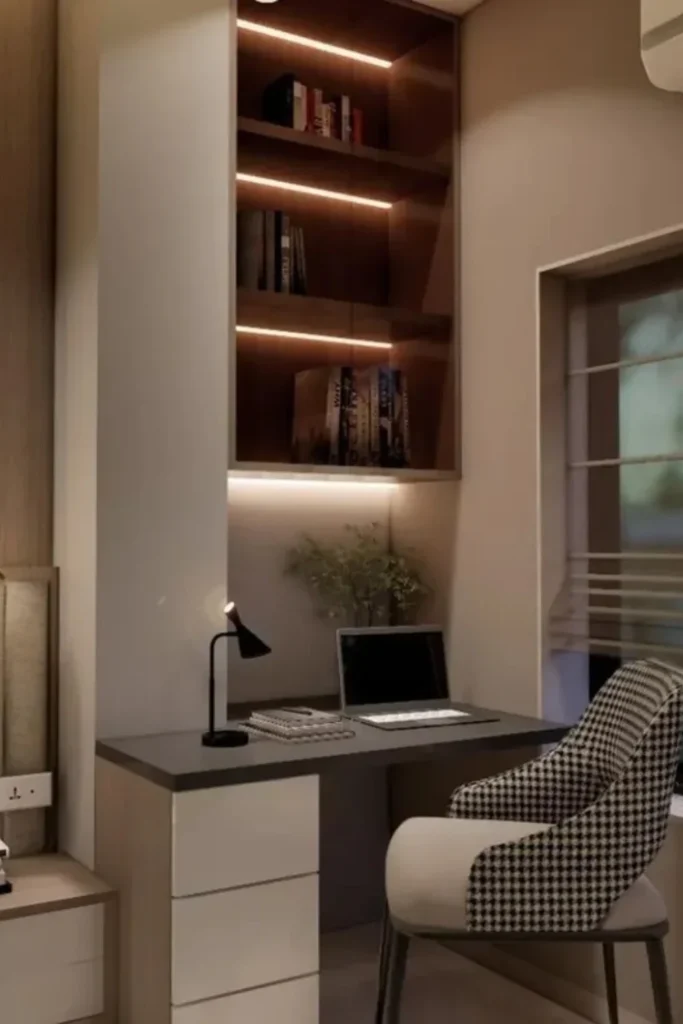
Flush side drawers provide discreet storage without disrupting the appearance of your workspace. These drawers fit neatly within the desk's side structure, making them particularly suitable for modern furniture and custom office setups.
Use them to organize writing materials, important papers, charging accessories, and other small essentials. Drawer dividers can prevent loose items from becoming mixed together.
Choose handles that don't protrude into walkways, or consider recessed pulls for a streamlined finish. This design works especially well when you want additional storage without introducing a separate cabinet.
2. Desk-Back Cabinets
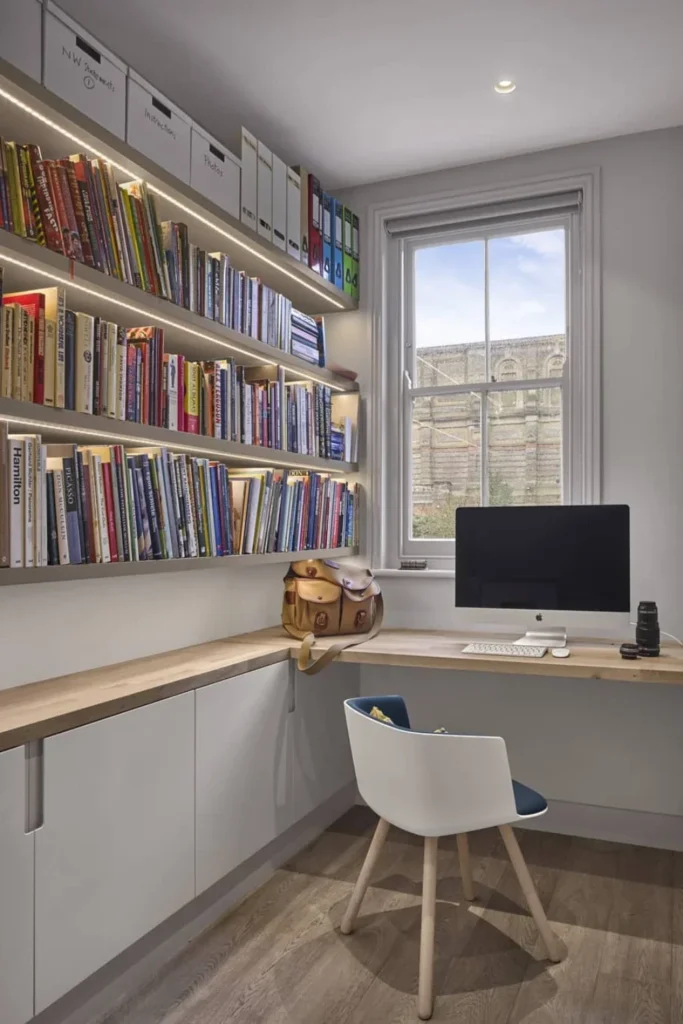
The space toward the rear of a large desk can accommodate useful storage, particularly in corner workstations or custom-built arrangements.
Low cabinets positioned against the back wall can hold reference materials, equipment accessories, and supplies that aren't needed throughout the day.
For convenient access, consider cabinets with sliding doors or drawers that open from the sides. Make sure the furniture doesn't obstruct power connections, cables, or necessary ventilation.
This arrangement can help maintain a tidy working surface while giving less frequently used belongings a designated place.
3. Open Side Shelf
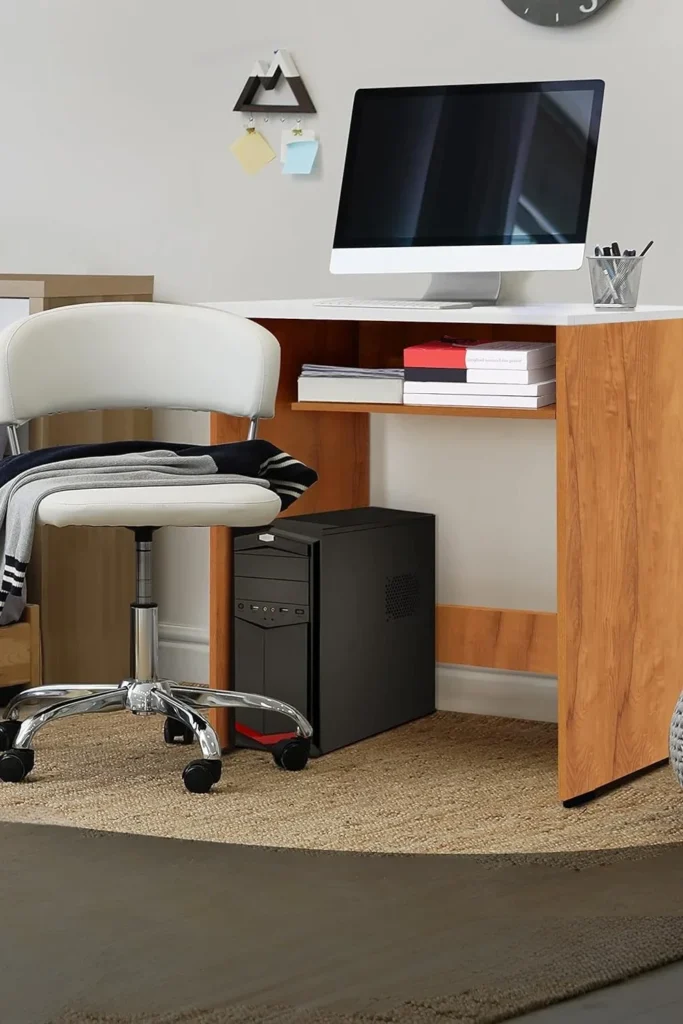
An open shelf beneath one side of a desk offers a simple way to organize items without completely enclosing the space.
It's an excellent option for books, notebooks, document trays, and small storage baskets. Because everything remains visible, you can quickly locate supplies without opening multiple drawers.
Adjustable shelving makes it easier to accommodate objects of different heights. Decorative baskets can also help conceal smaller accessories while maintaining an attractive appearance.
Install the shelf away from your knees and check its weight capacity before placing heavy books or equipment on it.
4. Stair-Side Drawers
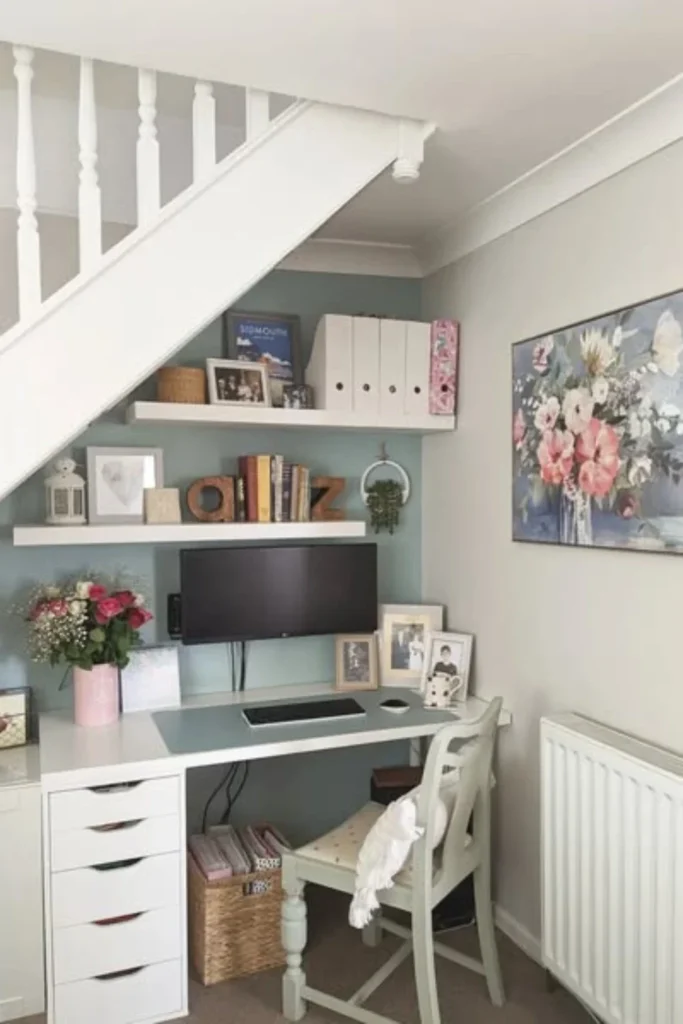
Workspaces built beneath staircases often have unusual dimensions, but those awkward corners can become valuable storage areas.
A set of drawers arranged along the taller side of the staircase can provide organized compartments without taking up the main seating area.
Choose drawer sizes based on the available height. Taller sections can accommodate office supplies and folders, while shorter sections may be suitable for flat documents and smaller accessories.
Custom measurements are especially important for this layout because staircase angles and structural supports vary.
5. Built-In Cabinets
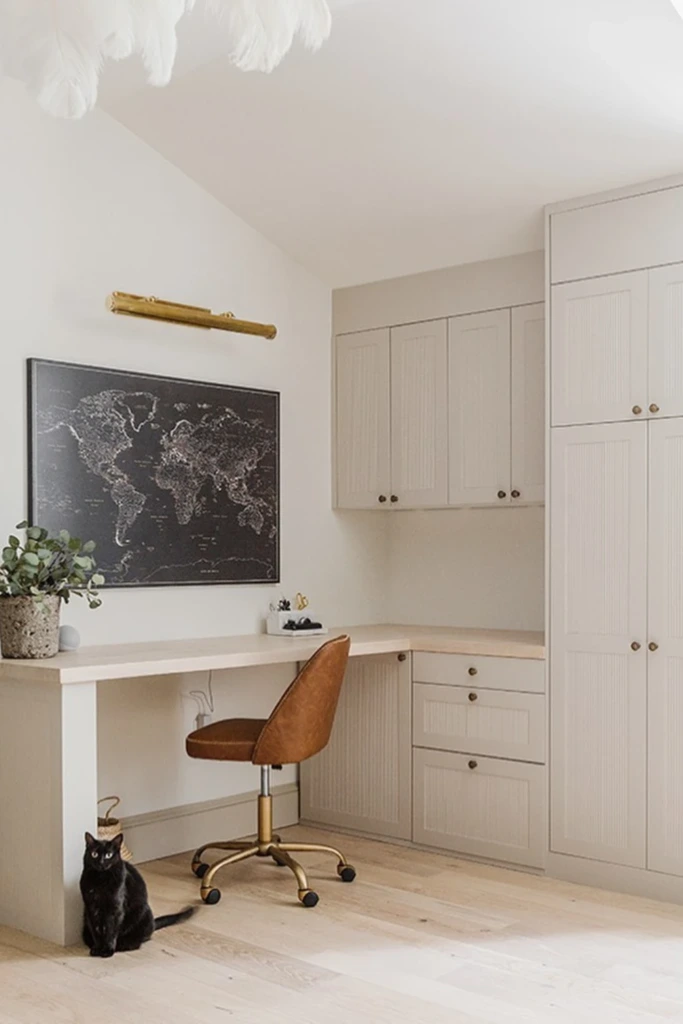
Built-in cabinets are a practical choice when you're planning a permanent home office or upgrading an existing workstation.
They can be designed to match the desk's dimensions, allowing you to create dedicated compartments for documents, stationery, and office equipment.
Cabinets with doors are particularly helpful when you prefer a workspace where supplies remain out of sight.
Consider adjustable internal shelves so the storage can adapt as your needs change. Leave sufficient space for your chair, legs, and any equipment that requires airflow.
6. Slim Drawer Unit
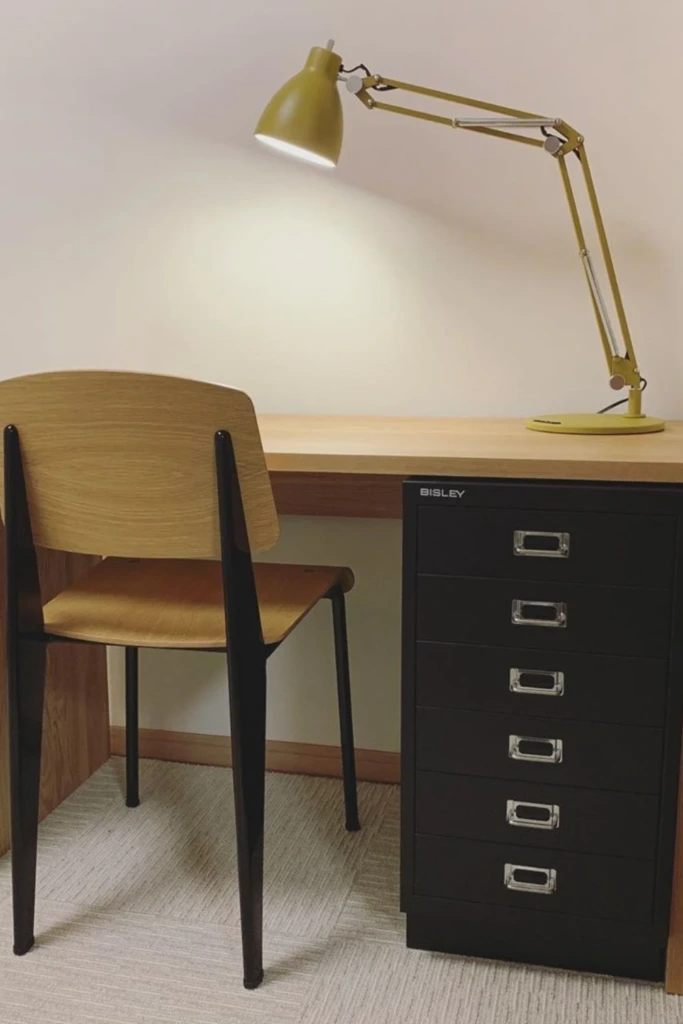
A narrow drawer cabinet can provide substantial storage even when there isn't enough room for a full-sized filing unit.
Position it beneath one end of the desk, where it won't interfere with your seated posture. Its compact design makes it useful for apartments, bedrooms, and shared workspaces.
Use the smaller compartments for pens, sticky notes, cables, and other everyday accessories. Larger drawers can accommodate notebooks, folders, and spare supplies.
If you choose a freestanding model, check that it remains stable when the drawers are extended. A unit with wheels can provide additional flexibility.
7. Ladder Desk Storage
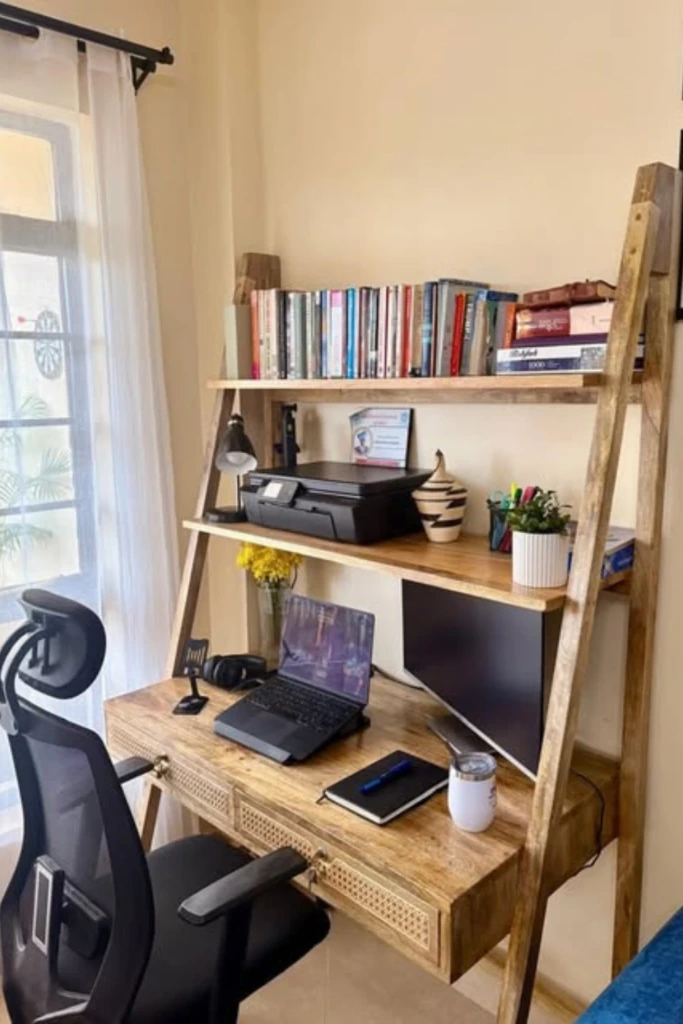
Ladder-style desks combine a work surface with shelving arranged vertically along a supporting frame.
This design is especially useful when floor space is limited because it creates storage above the desk while leaving much of the area beneath available for comfortable seating.
The shelves can hold books, decorative containers, reference materials, and lightweight office accessories.
Place heavier objects on lower shelves and secure the furniture to the wall when required by the manufacturer's instructions.
Ladder desks are particularly appealing for compact home offices where furniture needs to serve more than one purpose.
8. Split Side Drawers
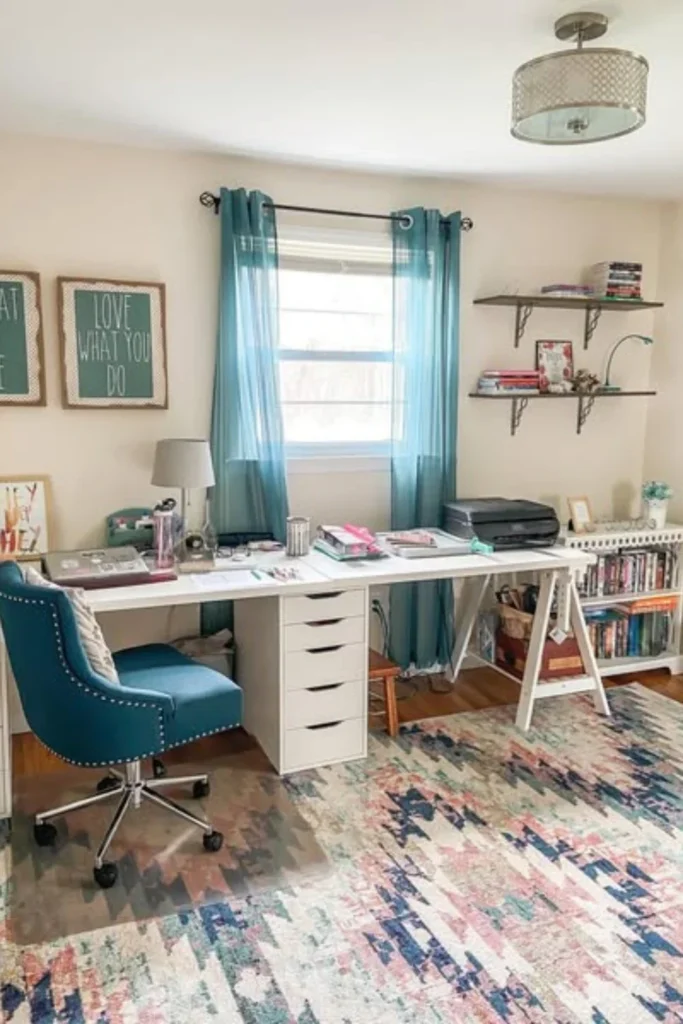
Placing drawer storage on opposite sides of a desk allows you to organize belongings into separate categories.
For example, one cabinet might contain work documents and stationery, while the other stores electronics, personal items, or creative supplies.
This arrangement can be particularly effective with wider desks because it leaves a dedicated seating area between the storage units.
Choose cabinets with appropriate dimensions rather than automatically selecting matching sizes. The goal is to create useful storage while preserving sufficient room for movement.
9. Priority Top Drawers
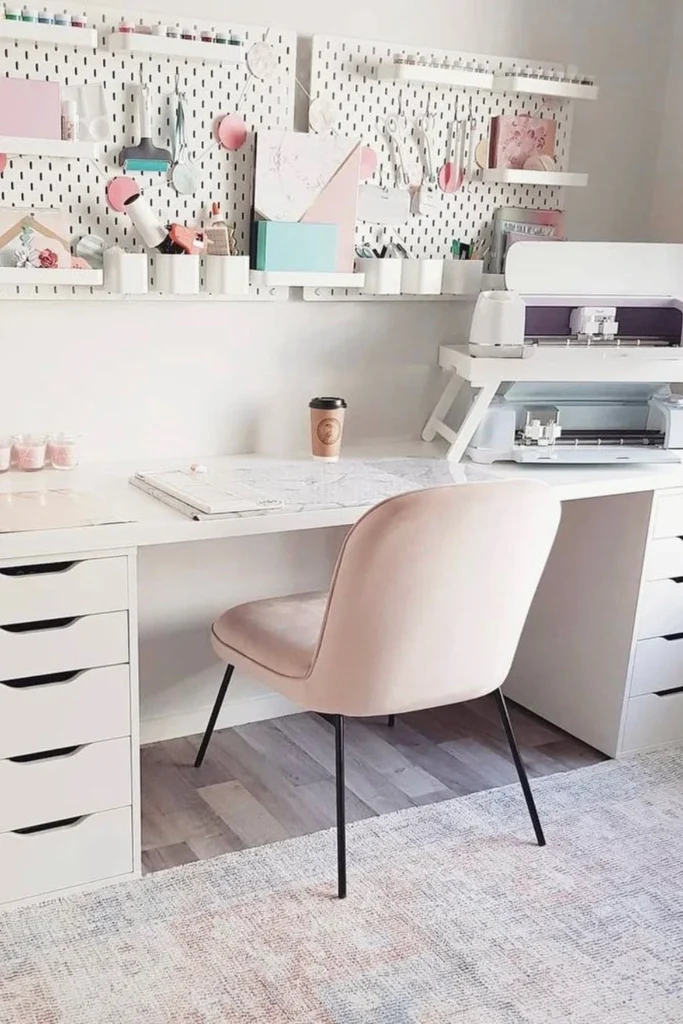
Not every drawer needs to hold the same type of belongings. Organizing storage according to how frequently you use items can make your daily routine more efficient.
Reserve the easiest-to-reach drawers for supplies you use regularly, such as notebooks, pens, headphones, and charging cables.
Less frequently needed materials can go in lower or deeper compartments.
Small trays and dividers are useful for preventing items from collecting in one corner. This approach makes it easier to maintain order because everything has an obvious place.
10. Balanced Twin Drawers
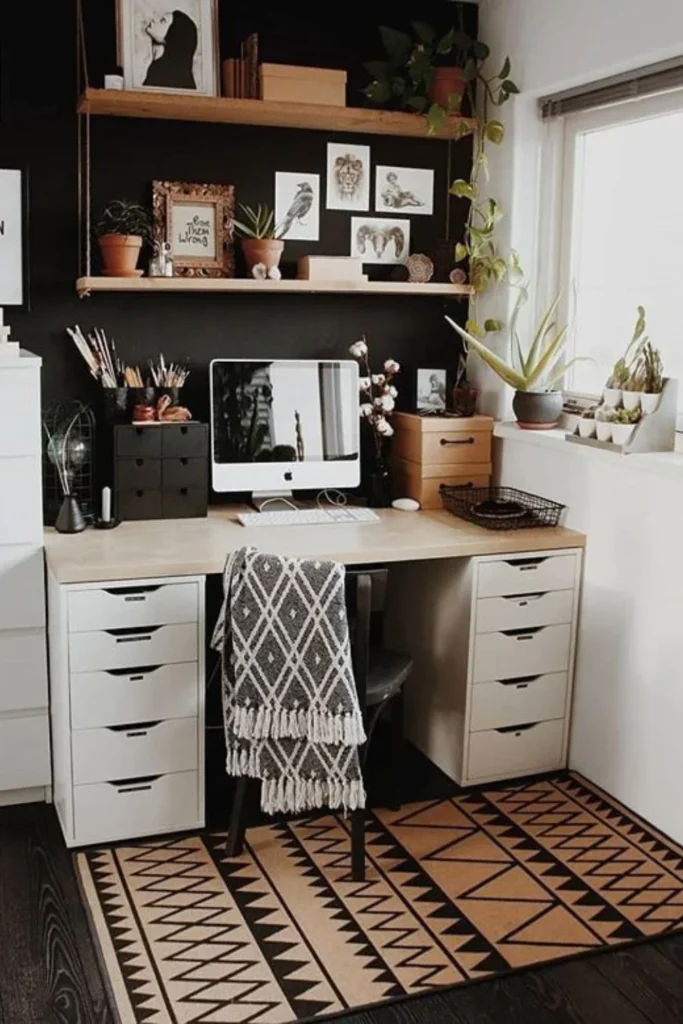
Two coordinating drawer units can create a symmetrical desk arrangement while providing convenient storage on both sides.
This setup works well with a long desktop supported by sturdy cabinets, provided the furniture is designed or properly secured for that configuration.
You can organize office materials in one unit and keep personal accessories or household paperwork in the other.
Matching finishes create a cohesive appearance, while consistent cabinet heights help maintain a balanced design.
Before assembling this arrangement, confirm that the desktop has adequate structural support and that the central opening comfortably accommodates your chair.
11. Side Wall Storage
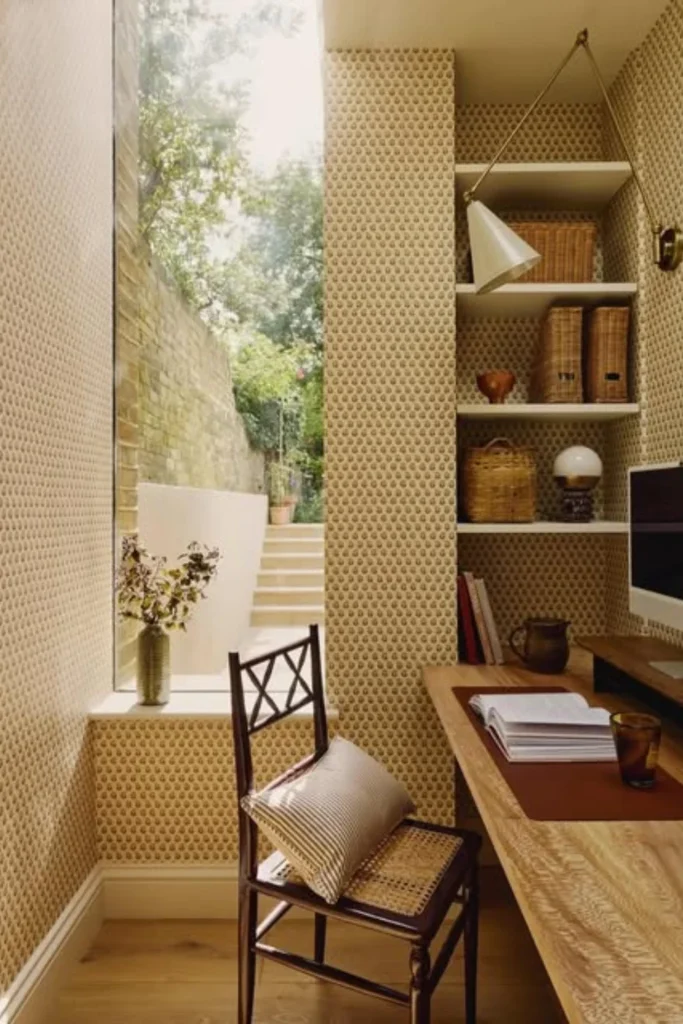
When the area directly beneath your desk is too small, the nearby wall can provide an alternative storage location.
Install narrow shelves, compact wall cabinets, or hanging organizers beside the workstation to keep supplies within reach.
This solution is particularly helpful for small rooms because it reduces the need for additional floor-standing furniture.
Use wall storage for books, folders, containers, and lightweight accessories. Secure mounted units with fixings appropriate for the wall material and expected load.
Keeping the floor clear can also make vacuuming and moving your chair much easier.
12. Zoned Drawer Storage
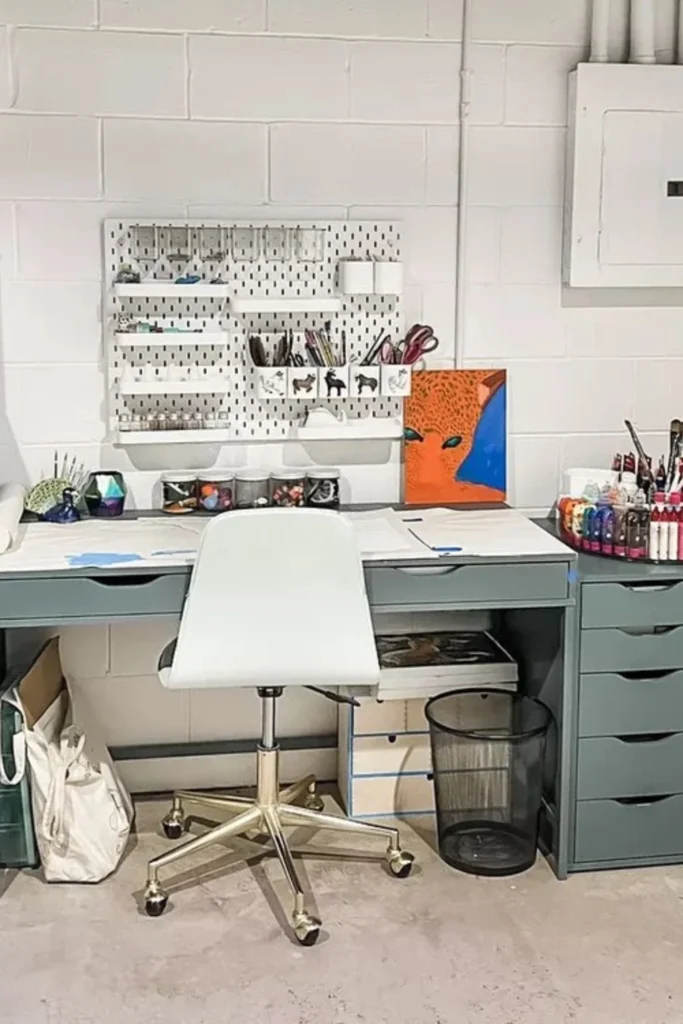
Creating separate storage zones helps prevent a busy desk from becoming disorganized.
Instead of placing items wherever there's an empty drawer, assign each compartment a particular function.
You might dedicate one section to active projects, another to office stationery, and another to electronic accessories.
Labeling drawers can be especially helpful in shared workspaces or when several people use the same office supplies.
Review the contents occasionally and remove unnecessary duplicates. Clear storage categories make it easier to find what you need and return everything afterward.
13. Shallow Built-Ins
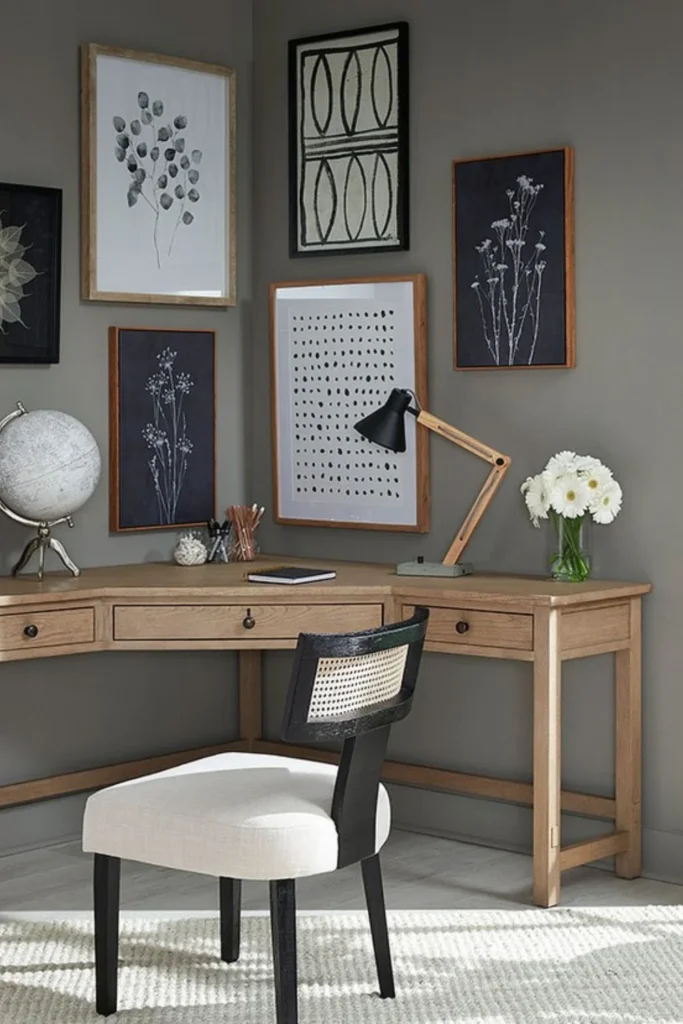
Shallow drawers installed beneath a desktop are ideal for organizing small objects without requiring a large cabinet.
They can hold stationery, charging accessories, calculators, note cards, and other lightweight items.
Because the compartments are relatively shallow, supplies are less likely to become buried beneath one another.
Measure the clearance between the underside of the desk and your thighs before installation. Drawer slides, handles, and mounting hardware all require additional space.
This option is particularly suitable for custom desks and workstations where maintaining an uncluttered appearance is important.
14. Spread-Out Cabinets
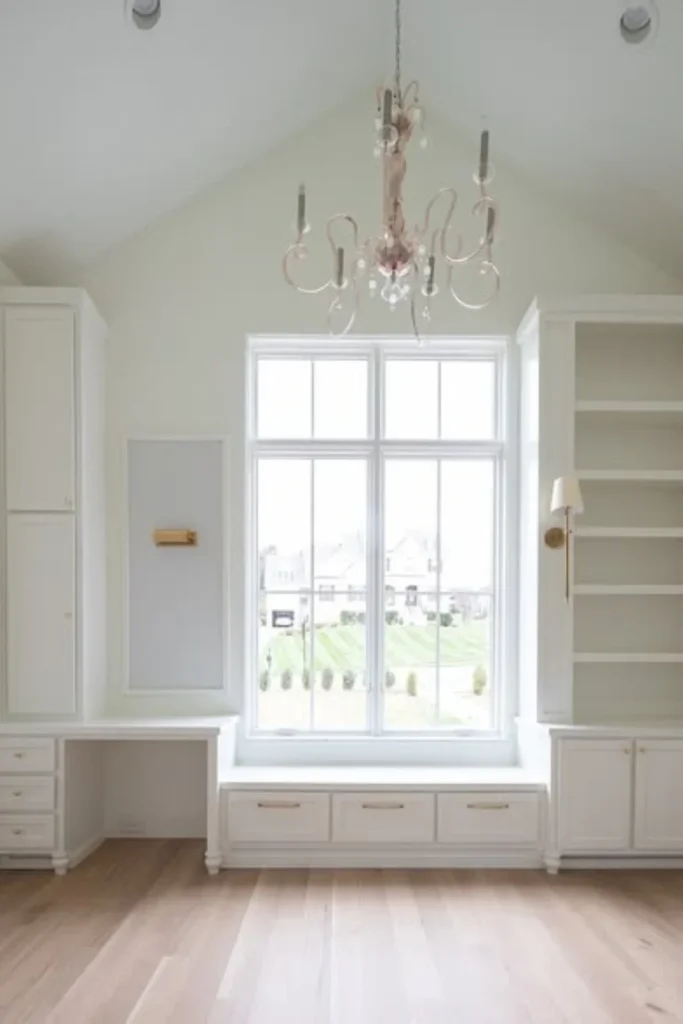
A spacious workstation doesn't need all its storage concentrated directly beneath the desktop.
Positioning cabinets at opposite ends of a long desk or along the surrounding walls can create a more open and accessible layout.
This approach provides room for documents, equipment, craft supplies, and other materials without overcrowding the central working area.
Mixing closed cabinets with open shelving can also make the room feel less visually heavy.
For the best results, arrange storage according to your workflow and keep the supplies you use most often within easy reach.
15. Bench Drawer Storage
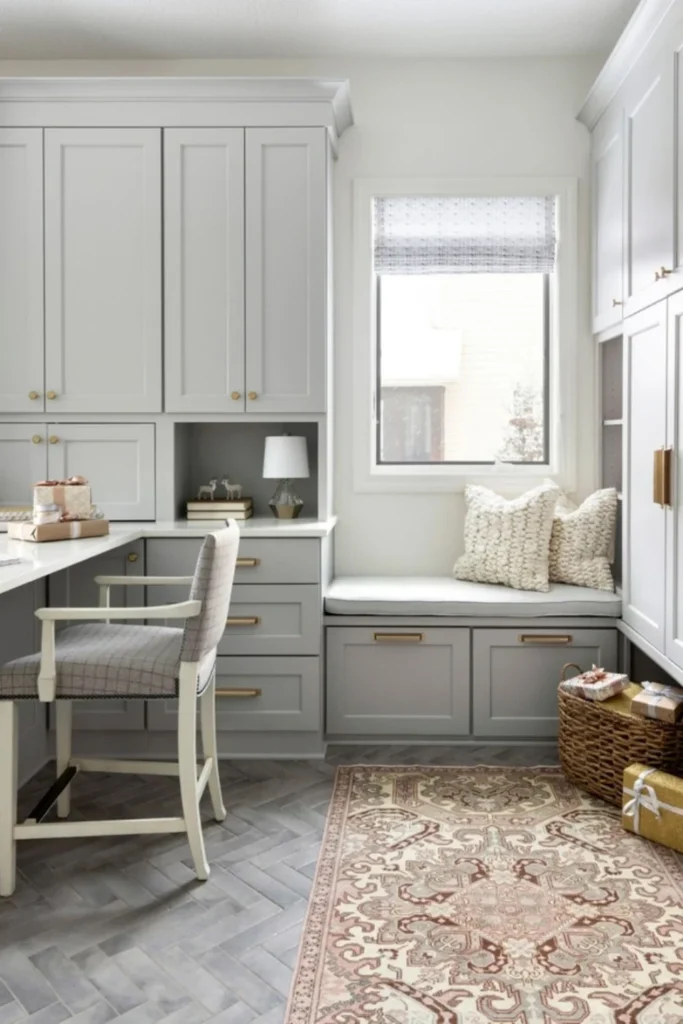
A nearby bench with integrated drawers can provide additional storage while serving as occasional seating.
This arrangement works particularly well in home offices located beside windows, within alcoves, or in multipurpose rooms.
Use the bench compartments for spare notebooks, reference books, seasonal supplies, or other belongings that don't need immediate access.
Cushioned bench tops can make the furniture more versatile, but only use the bench for seating if it's designed to support a person's weight.
This solution keeps larger items away from the desk while maintaining a coordinated room design.
16. Single Side Drawer
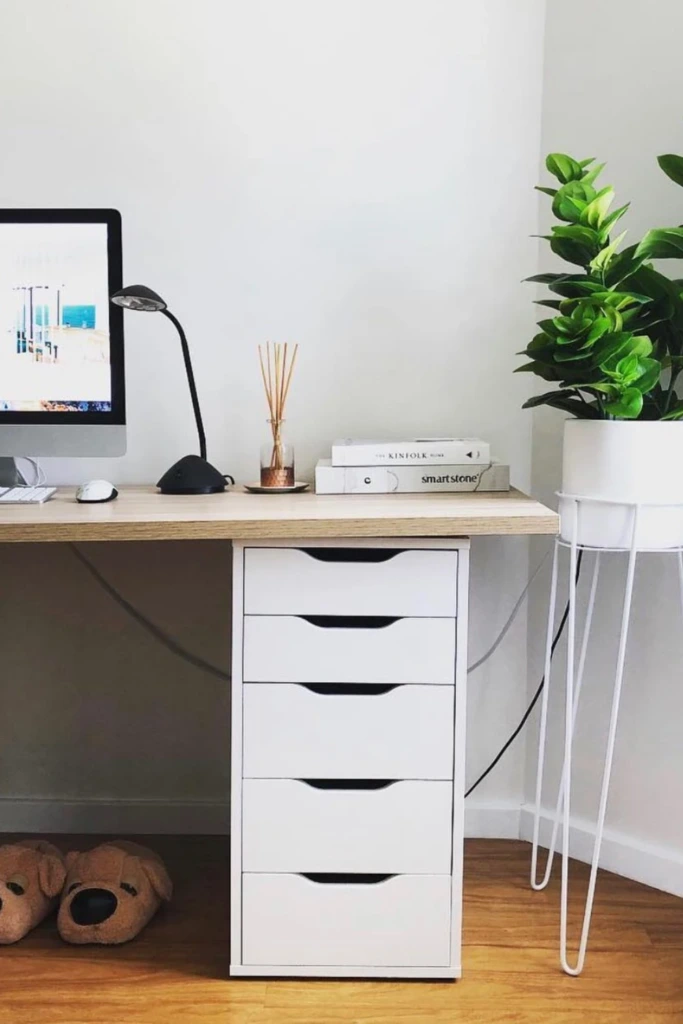
Sometimes one compact drawer unit is enough to make a noticeable difference in your workspace.
Placing a small cabinet beneath one side of the desk provides a convenient location for essentials without occupying the entire area below.
This option is particularly suitable for minimalist setups, student desks, and small home offices.
Organize the drawers according to your daily activities and avoid filling them with objects that belong elsewhere.
A single cabinet is also easier to reposition if you decide to change the room layout later.
17. Intentional Desk Drawer
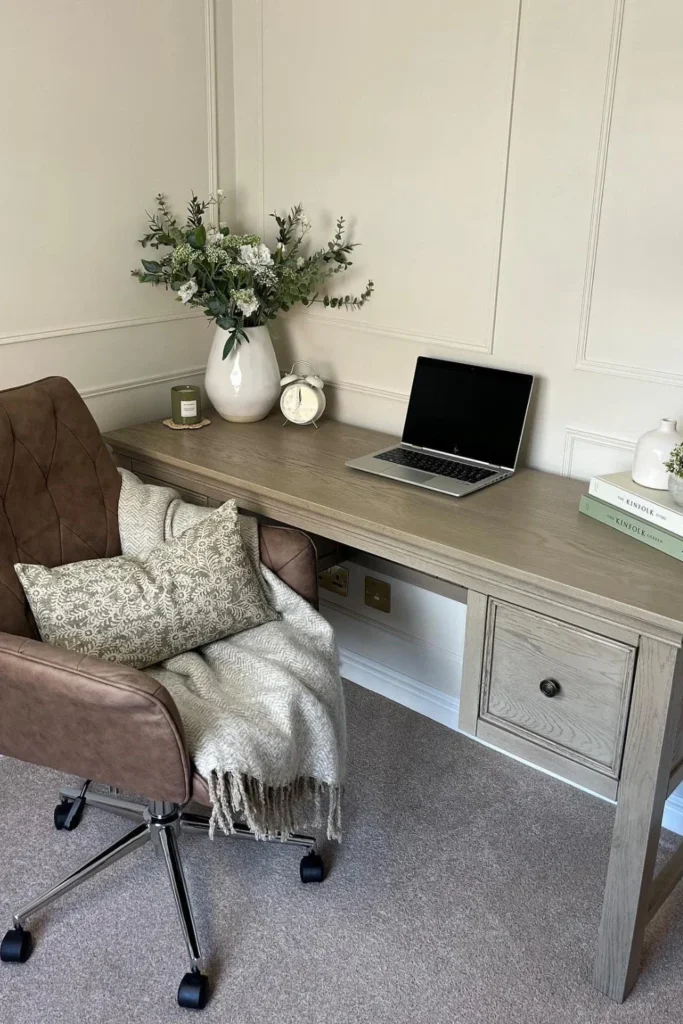
A thoughtfully designed desk drawer can be more useful than several poorly organized compartments.
Start by identifying the items you regularly need while working. These might include writing tools, a notebook, USB accessories, or small office supplies.
Choose a drawer with enough room for these essentials, then introduce dividers to keep everything separated.
Avoid storing oversized objects that make the drawer difficult to open or close.
The purpose is to create a convenient, accessible storage space that supports your everyday tasks without encouraging unnecessary clutter.
18. Corner Cabinet Fit
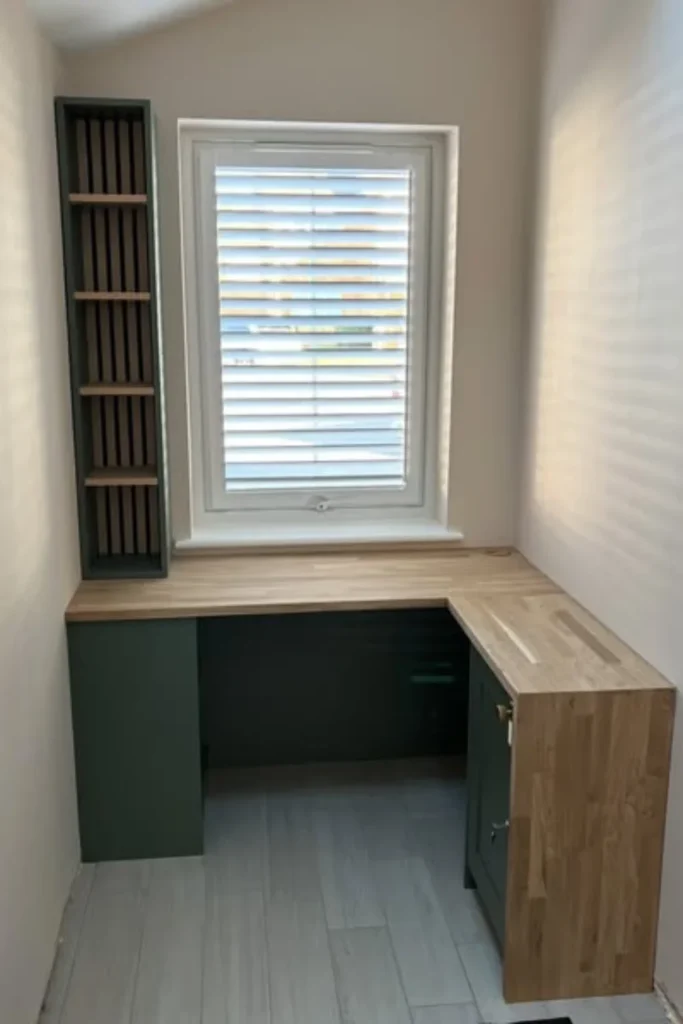
Corners beside or beneath a desk are often overlooked, particularly in small rooms with unusual layouts.
A compact cabinet positioned in an unused corner can provide extra storage without taking over the main workspace.
Choose a design that fits the available dimensions and allows its doors or drawers to open completely.
Corner cabinets are useful for storing archived documents, spare supplies, and materials you only need occasionally.
Before purchasing, consider nearby baseboards, electrical outlets, and desk supports that might affect how closely the cabinet fits against the wall.
19. Adjacent Low Storage
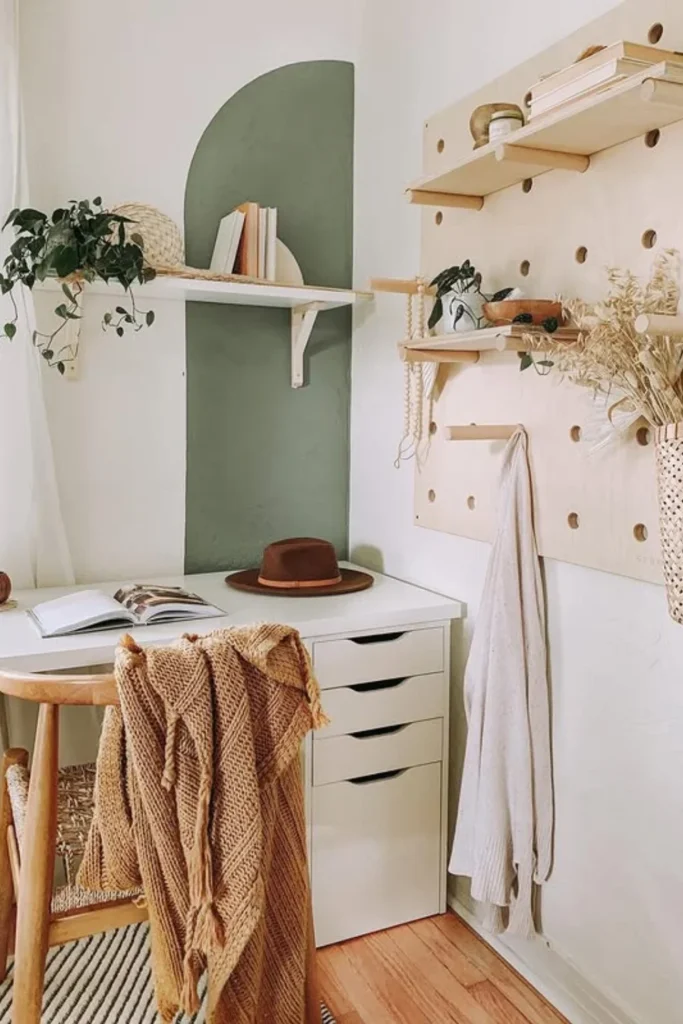
Low storage units positioned beside a desk can offer many of the benefits of under-desk organization without limiting your legroom.
Cube shelves, short cabinets, and compact drawer units are all useful options.
Open compartments provide quick access to frequently used materials, while baskets and closed containers help conceal smaller belongings.
You can also use the top surface of a sturdy cabinet for a printer or other equipment, provided it can safely support the weight.
This flexible arrangement works well for people who prefer an open seating area or frequently rearrange their workspace.
20. Compact File Cabinet
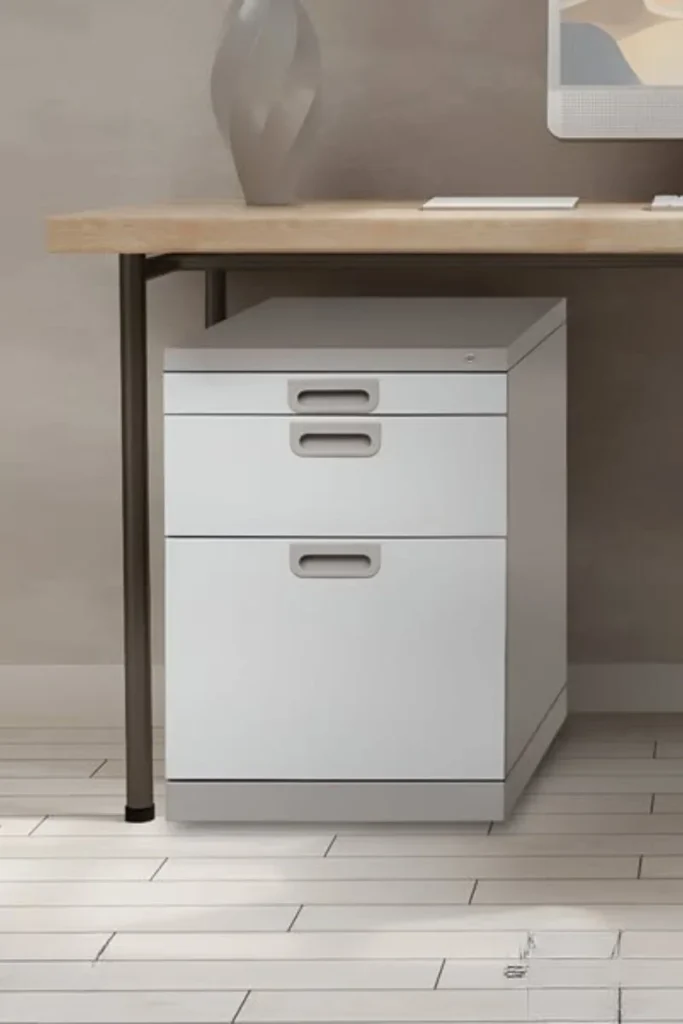
A small filing cabinet is an excellent choice for anyone who regularly handles printed documents.
Look for a model that fits beneath the desk without interfering with chair movement or access to nearby furniture.
Hanging file folders, labeled dividers, and clearly defined categories can make paperwork much easier to manage.
Keep current documents in the most accessible drawer and store older records separately.
For safety, choose a stable cabinet with appropriate anti-tip features, especially if it contains heavy files. Avoid opening multiple loaded drawers simultaneously.
21. Movement-First Storage
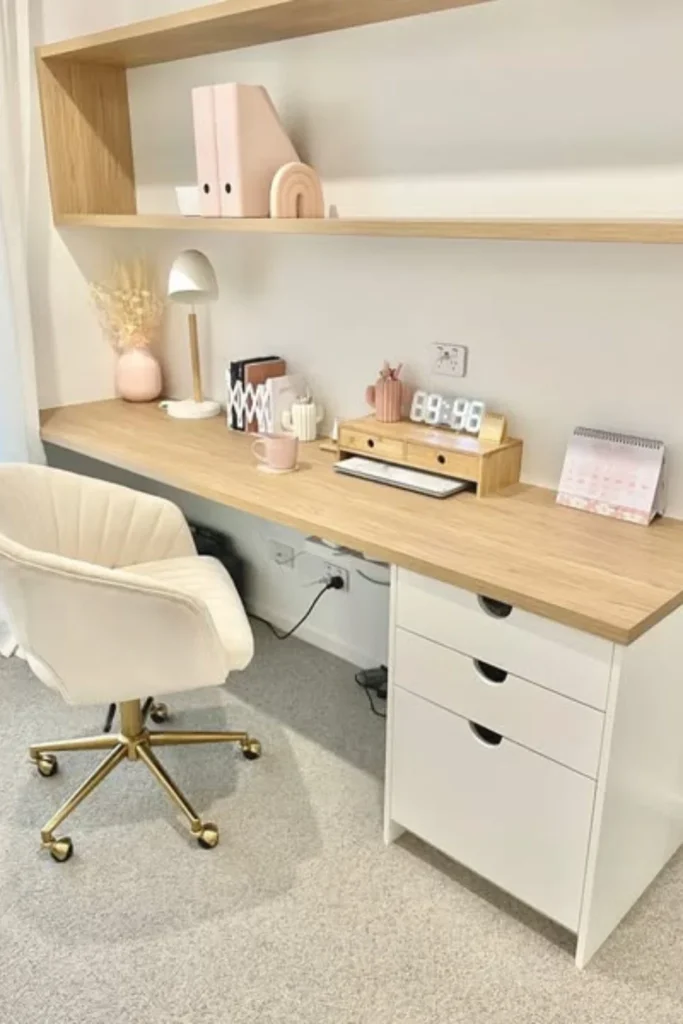
Comfort should be a priority when organizing the area beneath your desk.
Before choosing a cabinet or drawer system, observe where your feet naturally rest and how far your chair moves during the day.
Position storage outside those areas so you can change sitting positions without bumping into furniture.
Wall-mounted organizers, slim side cabinets, and compact drawers can all help maintain a more open workspace.
Leave adequate room for cables, ventilation, and access to electrical connections.
A successful setup should allow you to work comfortably without constantly adjusting your posture to accommodate storage.
22. Rolling Drawer Flex
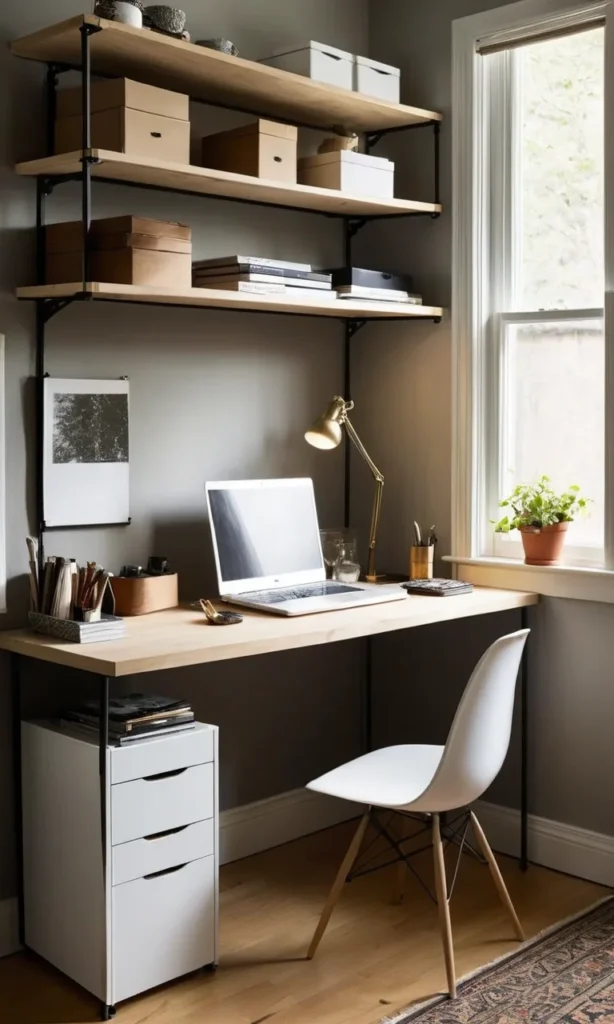
A mobile drawer cabinet is a versatile option for workspaces where storage needs change throughout the day.
Choose a compact unit with smooth-rolling wheels so it can move easily between positions.
You can keep it beneath the desk while working and pull it out when you need additional supplies or temporary surface space.
Rolling cabinets are particularly useful in shared offices, creative workspaces, and rooms that serve multiple purposes.
Models with locking casters offer greater stability when stationary. Check the floor surface and cabinet dimensions to ensure the unit moves safely and fits where you intend to store it.
How do you choose the right under-desk storage without losing comfort?
Start by measuring the available space and checking how much room you need for your legs, feet, and office chair.
Choose organizers that fit along the sides of your desk rather than occupying the central seating area. Shallow drawers, compact cabinets, and mounted storage can be particularly effective.
Consider the items you need to store and how frequently you'll access them. Everyday essentials should remain easy to reach without requiring awkward bending or stretching.
If a storage unit makes it difficult to sit naturally or move your chair, consider a smaller option or place it beside the desk instead.
What’s the biggest mistake people make with under-desk storage?
One of the most common mistakes is trying to use every available inch beneath the desk for storage.
Although this may initially seem efficient, overcrowding can restrict leg movement, make cleaning difficult, and create problems with cables or equipment ventilation.
Another mistake is purchasing organizers without measuring the space or considering how drawers will open.
The best approach is to prioritize the supplies you genuinely need nearby and move less frequently used belongings to another storage location.
Under-desk organization works best when it improves accessibility and comfort rather than simply maximizing the number of items you can fit into a small area.
23. Love this idea? Save it for later.
A clutter-free desk can make your home office feel more spacious, welcoming, and easier to use. Whether you prefer built-in cabinets, compact drawers, or flexible rolling storage, the right arrangement depends on your workspace and daily habits.
Save these under desk storage ideas for your next office organization project, and choose a solution that gives your belongings a practical home without sacrificing comfort.