17 DIY Sensory Bin Ideas for 2026
Keeping children entertained doesn't always require expensive toys or complicated activities. Sometimes, a plastic container filled with everyday materials can provide an exciting opportunity to explore, discover, and learn.
DIY sensory bins encourage children to experiment with different textures, practice hand movements, and use their imagination. They're also easy to customize around your child's interests, whether that's dinosaurs, gardening, animals, or colorful objects.
Here are 17 creative DIY sensory bin ideas that use simple supplies and offer plenty of opportunities for hands-on fun.
What are Easy DIY Sensory Activities?
Easy DIY sensory activities are playful experiences that engage children's senses using familiar household materials. They might involve scooping rice, squeezing soft objects, transferring water, or searching for hidden toys.
Sensory play can support fine motor development, hand-eye coordination, language, and early problem-solving skills. Children also get opportunities to experiment independently and discover how different materials behave.
A basic sensory bin usually requires a shallow container, a suitable filler, and a few accessories such as cups, spoons, or toy figures.
Choose materials according to your child's age and abilities. Small objects, dry beans, beads, and similar fillers can pose choking risks for young children. Always supervise sensory activities, particularly when water or loose materials are involved.
1. Dinosaur World Play
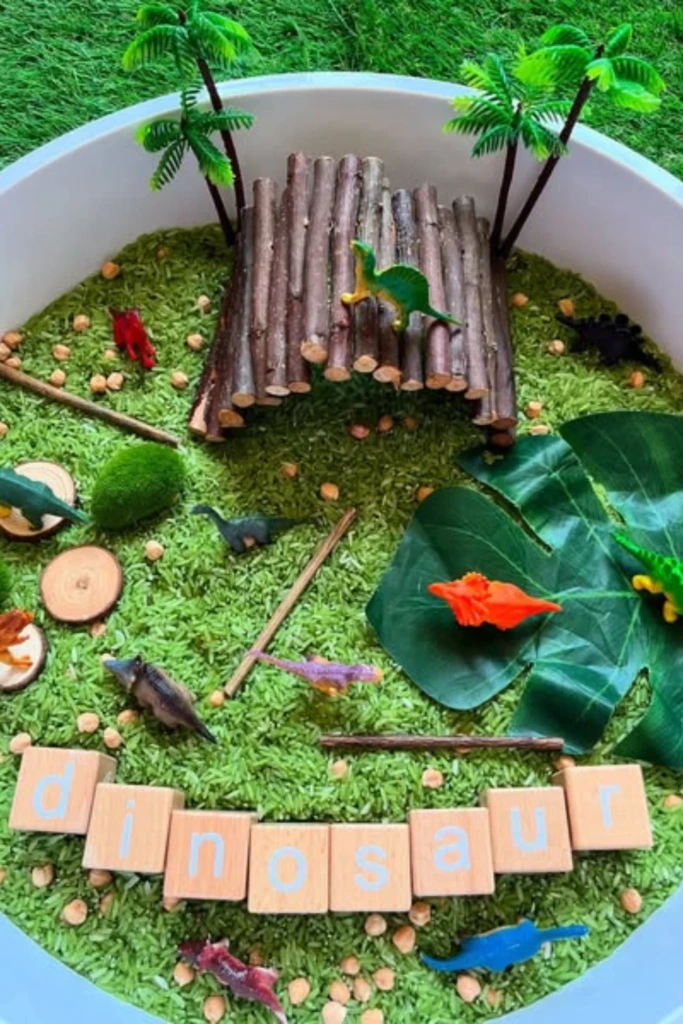
Turn an ordinary storage container into a miniature prehistoric landscape using colored rice, toy dinosaurs, and artificial plants.
Create hills with small containers covered in green fabric or paper. Add smooth stones and miniature trees to give the dinosaurs interesting places to explore.
Children can create dinosaur footprints, build imaginary habitats, and invent adventures involving their favorite prehistoric creatures.
This activity combines storytelling with tactile exploration and works particularly well for children fascinated by dinosaurs.
2. Land Water Sorting
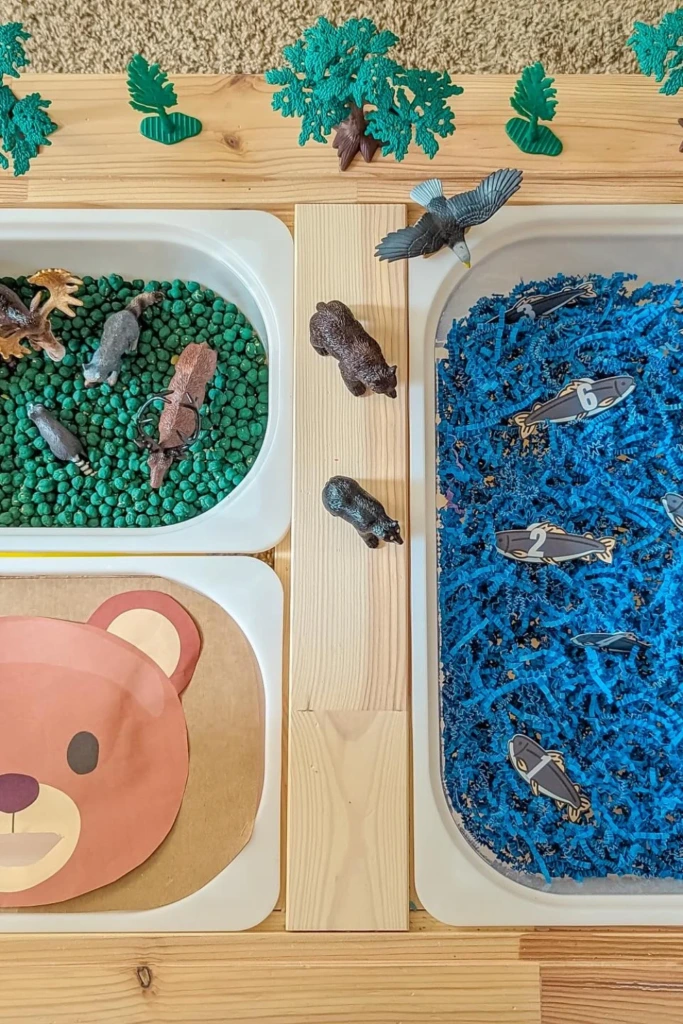
Introduce the difference between land and aquatic habitats with a sensory bin divided into two distinct areas.
Use green fabric strips or shredded paper for the land section and blue fabric or paper for the water section. Include plastic animals such as turtles, elephants, dolphins, and lions.
Encourage children to decide where each animal belongs and explain their choices.
For older preschoolers, introduce animals that live in both environments, such as frogs and crocodiles, to encourage more thoughtful discussions.
3. Garden Plant Play
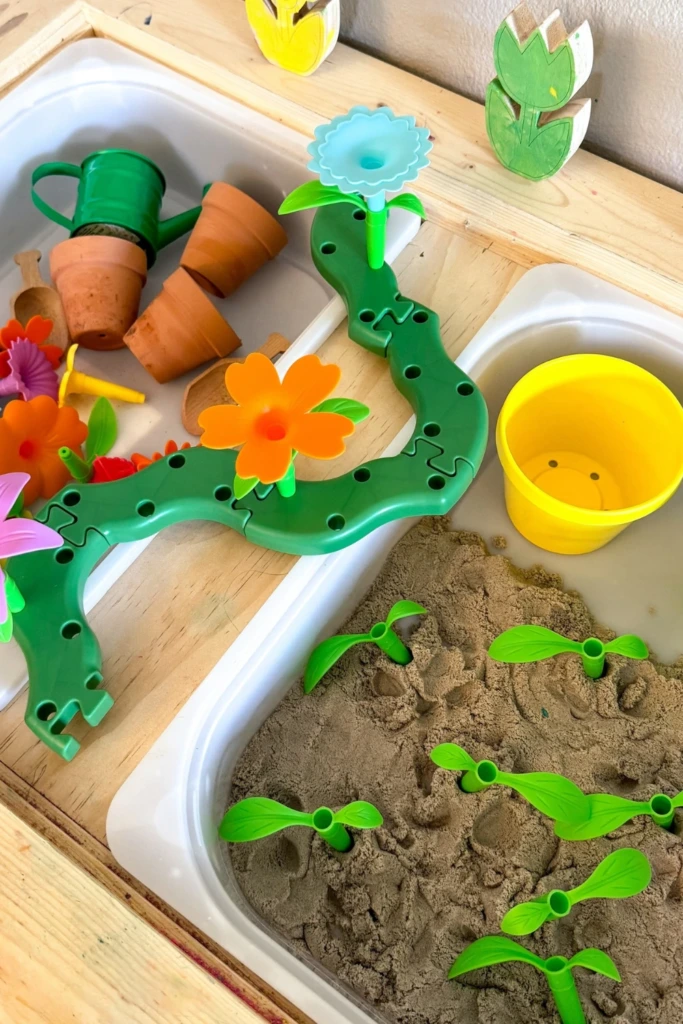
Create a miniature gardening experience without needing an outdoor garden.
Fill a container with kinetic sand and provide small flowerpots, artificial flowers, child-sized gardening tools, and a watering can.
Children can dig planting holes, arrange flowers, and pretend to maintain their own garden.
Adding flower labels or colorful plant markers introduces opportunities for recognizing colors and learning basic plant vocabulary.
The repeated actions of digging, filling, and arranging also help children practice controlled hand movements.
4. Ice Dig Rescue
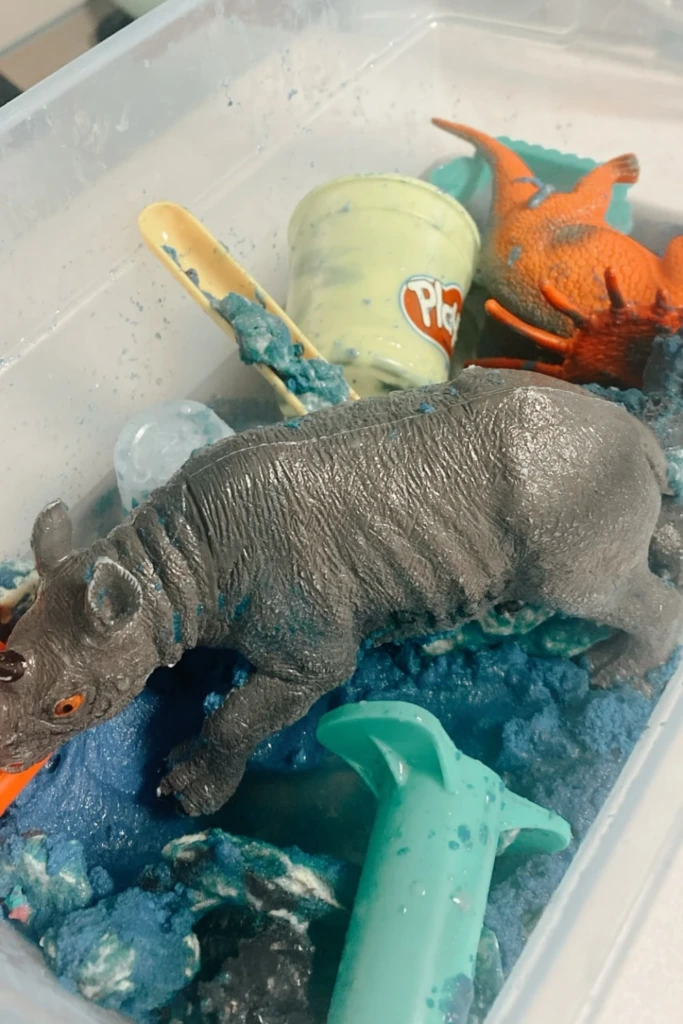
An ice rescue sensory bin offers an exciting combination of temperature exploration and problem-solving.
Freeze small, age-appropriate plastic toys inside containers of water. Once frozen, place the ice blocks in a shallow tray with a little lukewarm water.
Give children plastic spoons, soft brushes, or squeeze bottles filled with lukewarm water to help release the trapped toys.
They can observe how ice gradually melts and experiment with different rescue methods.
Avoid sharp tools and very hot water. This activity is best suited to supervised play, with toy sizes selected to prevent choking hazards.
5. Construction Letter Dig
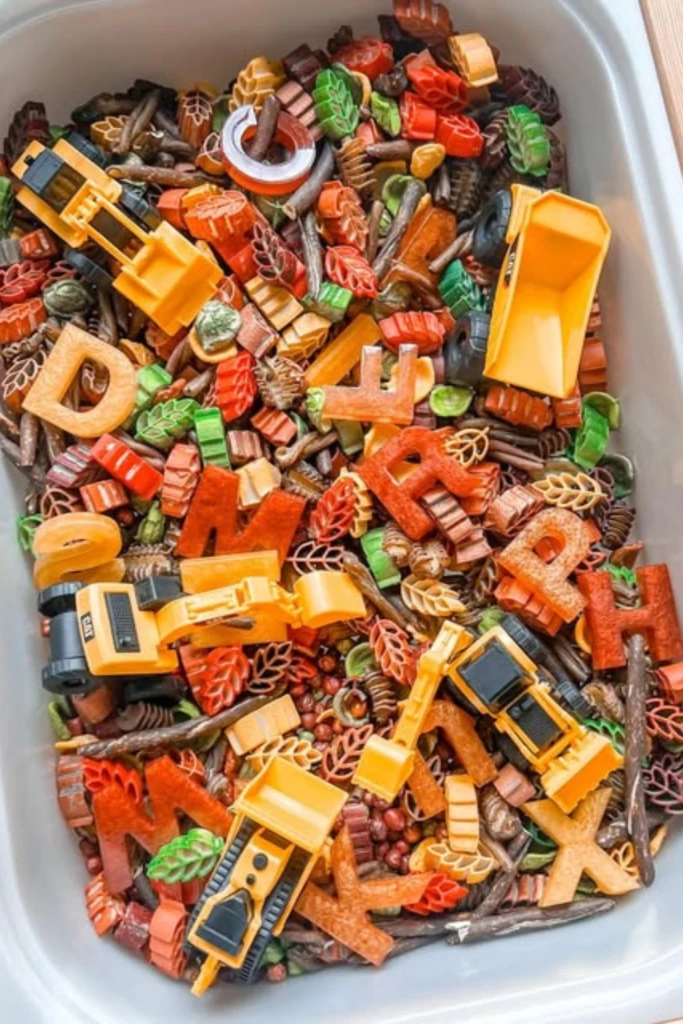
Combine construction-themed pretend play with early alphabet recognition.
Fill a sensory container with shredded paper or another age-appropriate filler, then hide large plastic or wooden alphabet letters throughout the material.
Add toy excavators, dump trucks, and small scoops so children can uncover the letters as they work.
Once a letter is discovered, encourage children to identify it or think of a word beginning with that sound.
You can also challenge older children to collect the letters needed to spell their names.
6. Scoop And Pour
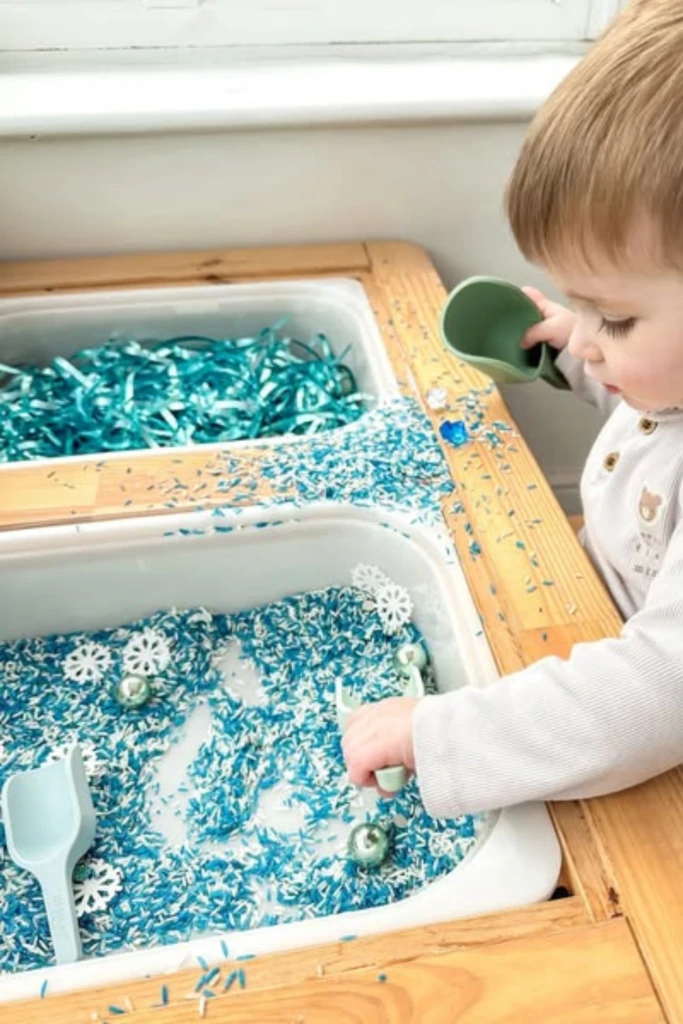
A simple scooping station can provide plenty of entertainment without elaborate decorations.
Fill a shallow container with rolled oats or another suitable sensory material. Arrange measuring cups, plastic bowls, funnels, and spoons around the edges.
Children can transfer materials between containers, compare quantities, and explore what happens when they pour quickly or slowly.
Try using cups of different sizes to introduce basic concepts such as full, empty, more, and less.
For younger children, a small amount of water with large plastic cups can be an alternative, provided an adult remains within arm's reach.
7. Carrot Patch Dig
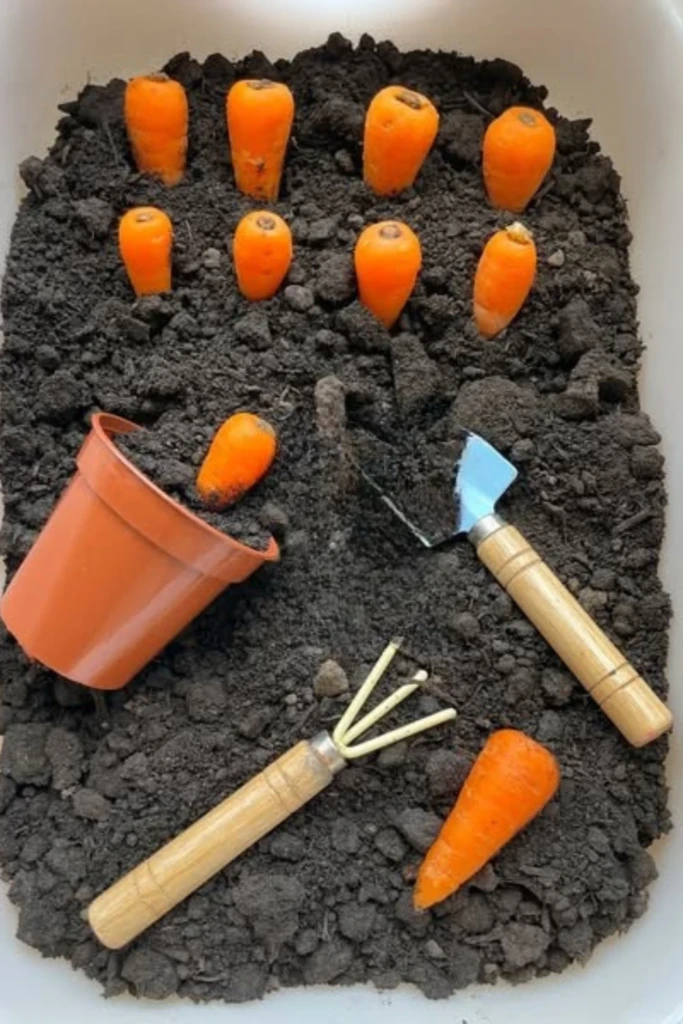
Bring the excitement of harvesting vegetables indoors with a pretend carrot garden.
Place kinetic sand inside a container and partially bury several large toy carrots, leaving their green tops visible.
Provide small shovels and baskets so children can carefully uncover and collect their vegetables.
You can make reusable carrots from felt, provided all pieces are securely attached and appropriate for your child's age.
This playful gardening activity encourages gripping, pulling, and coordinated movements while introducing children to how vegetables grow.
8. Woodland Counting Play
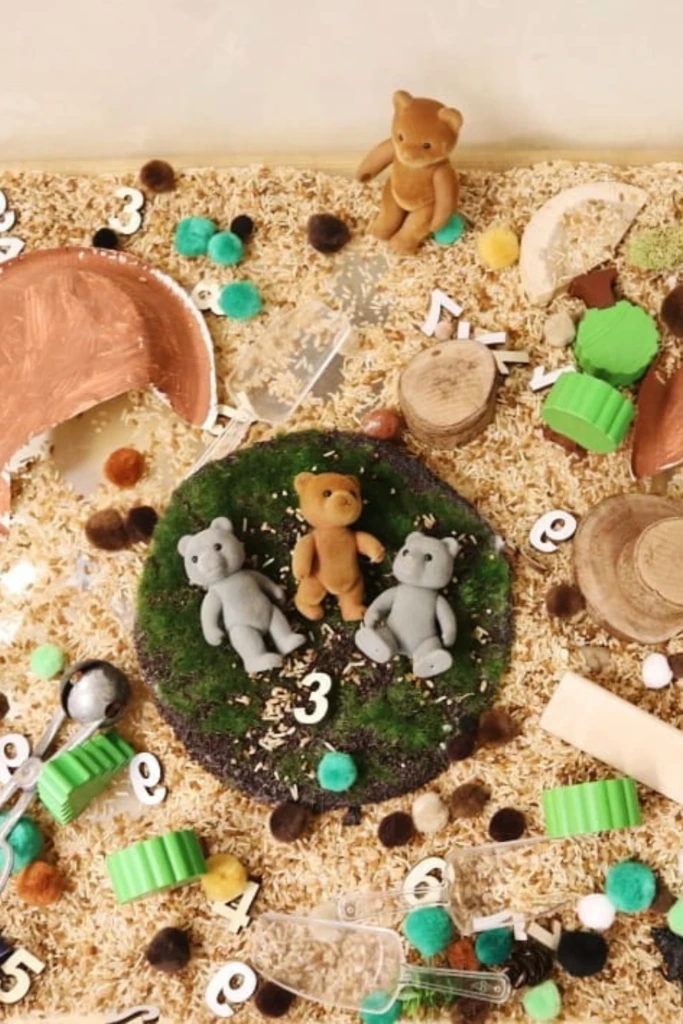
Create a forest-inspired counting station with shredded brown paper, felt leaves, miniature trees, and woodland animal figures.
Arrange large number cards around the container and invite children to match groups of animals to the corresponding numbers.
For example, they might place three bears beside the number three or count five pretend mushrooms.
You can also introduce simple storytelling by asking children to create homes for the animals.
The combination of imaginative play and counting makes this an engaging early mathematics activity.
9. Earth Sensory Map
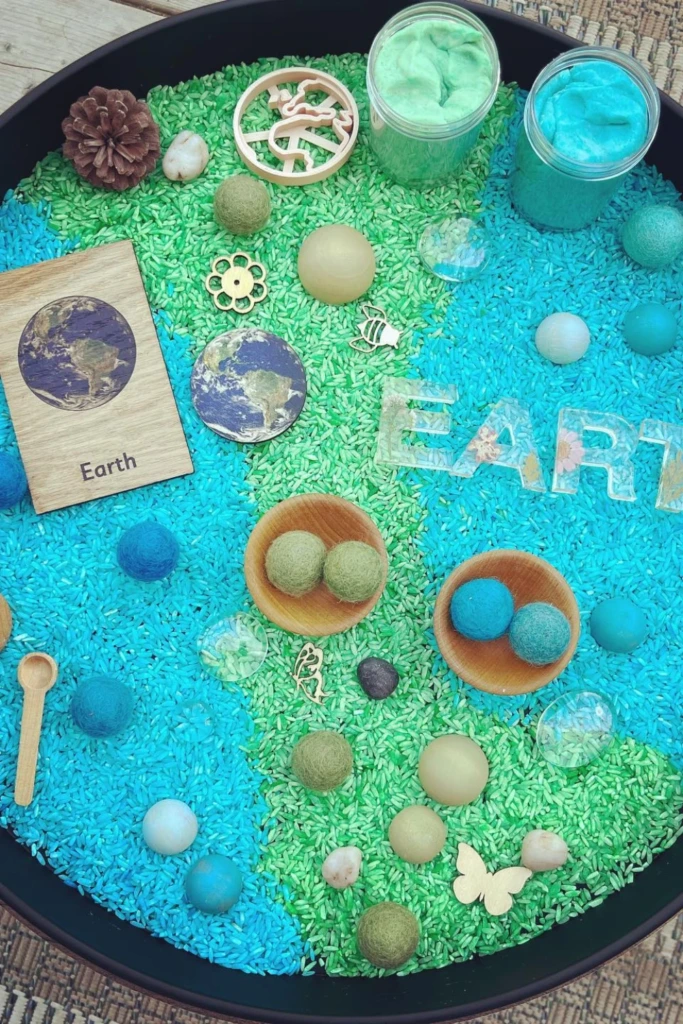
Explore basic geography with a sensory bin inspired by the planet's oceans and continents.
Arrange blue and green fabric pieces inside a wide tray to represent water and land. Add large animal figures, toy boats, and simple continent-shaped cutouts.
Children can move objects between different areas while learning that Earth contains both landmasses and bodies of water.
For school-age children, introduce a printed world map and encourage them to identify oceans or continents.
This activity provides a visual introduction to geography while allowing plenty of creative exploration.
10. Farm Sorting Station
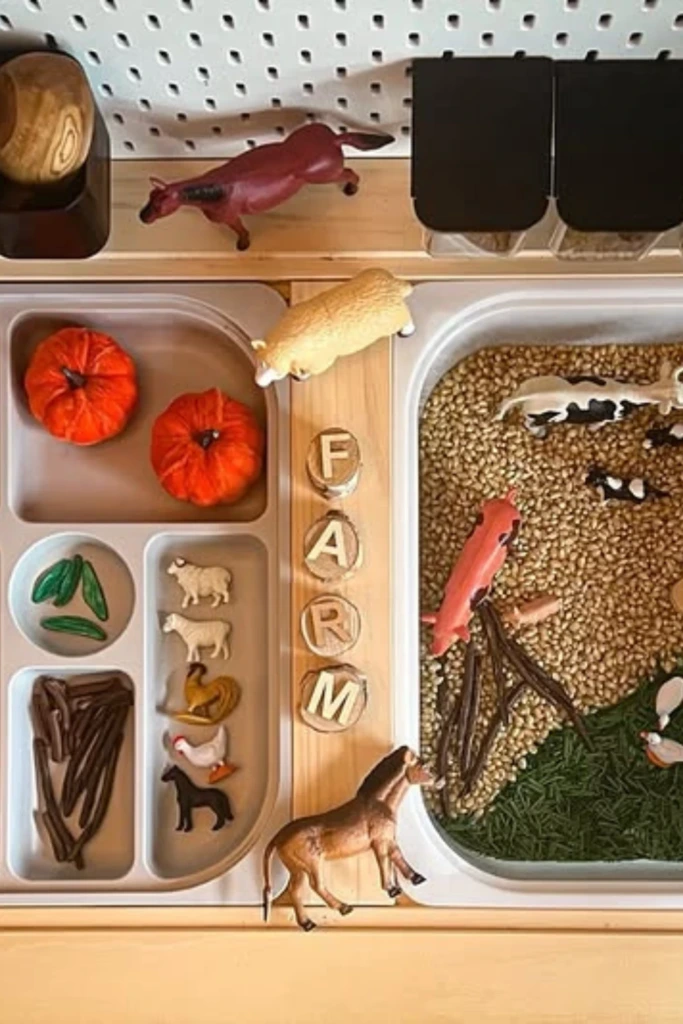
Build a miniature farm using divided sections of a large sensory container.
Use green felt for grassy fields, brown paper for soil, and a small cardboard structure as a barn.
Include farm animal figures, toy tractors, fences, and large pretend vegetables.
Children can organize animals into groups, transport crops, or create their own farm routines.
Ask questions about animal sounds, habitats, and the foods produced on farms to extend the learning experience.
11. Rainbow Texture Mix
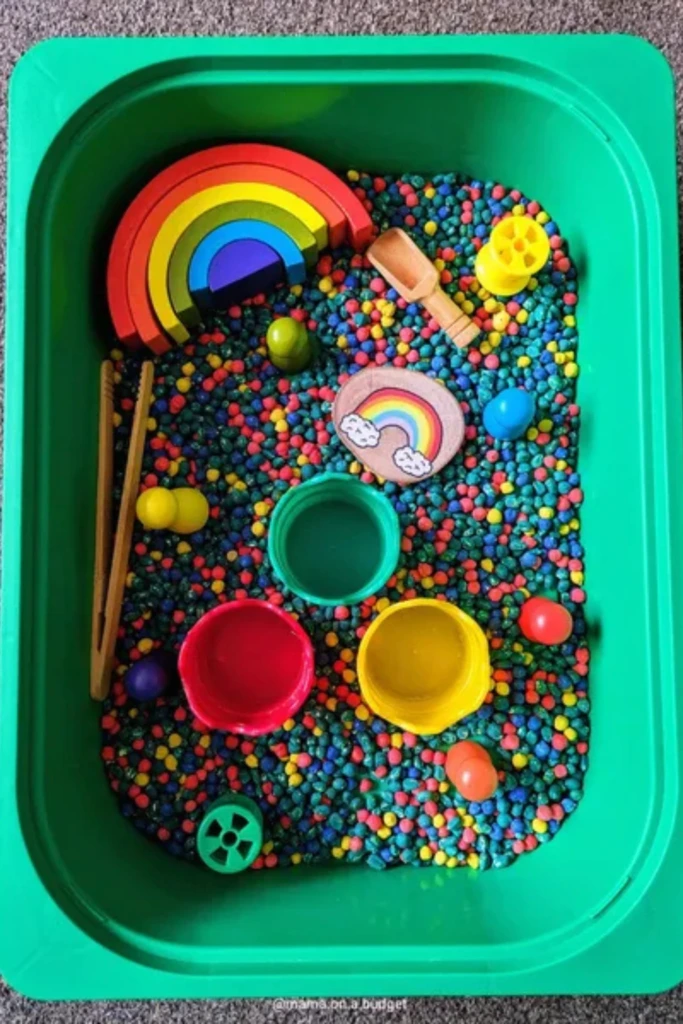
A rainbow-themed sensory bin introduces children to bright colors and contrasting textures.
Arrange sections of colored fabric, large felt shapes, or dyed cooked pasta in a shallow container. Add matching cups and oversized sorting objects.
Children can explore the materials, group items by color, and create colorful arrangements.
For an extra challenge, provide color cards and ask children to recreate simple patterns.
Avoid water beads and other small, expandable materials. Select fillers carefully, especially for children who may put objects in their mouths.
12. Winter Snow Scene
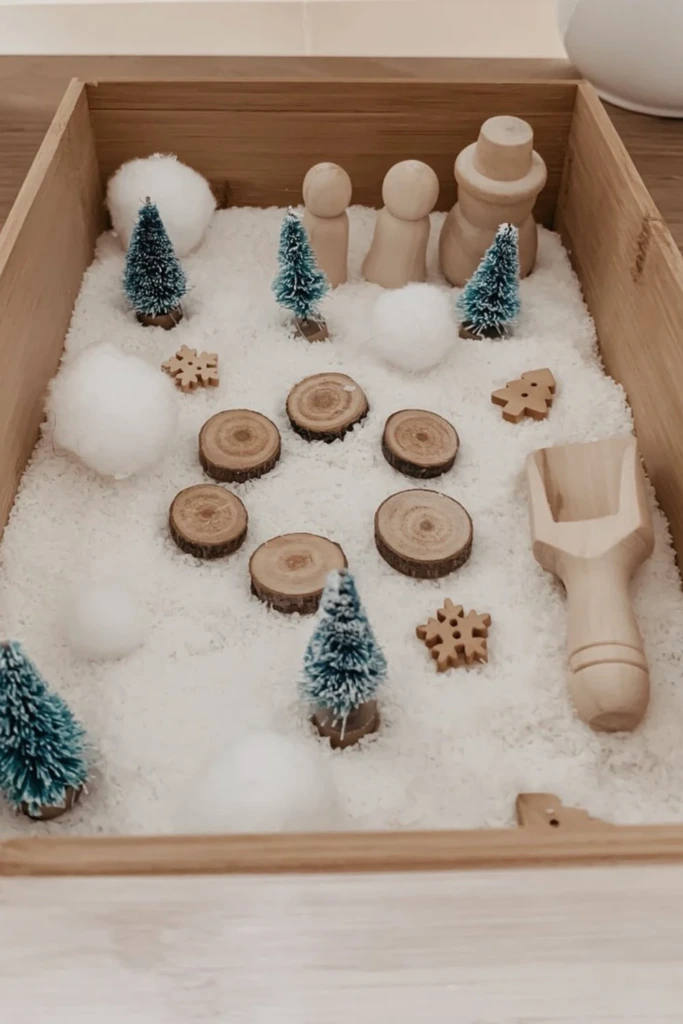
Bring a snowy winter landscape indoors using a soft, homemade sensory base.
For children old enough to use it safely, combine cornstarch with a small amount of water to create an interesting snow-like texture. Alternatively, use white fabric pieces or crumpled tissue paper for a dry setup.
Add large toy trees, winter animal figures, and small containers for building imaginary snowbanks.
Children can create winter scenes, move animals through the landscape, or explore how the materials feel.
Use the activity to discuss winter weather, cold environments, and how animals adapt to different seasons.
13. Garden Pattern Rows
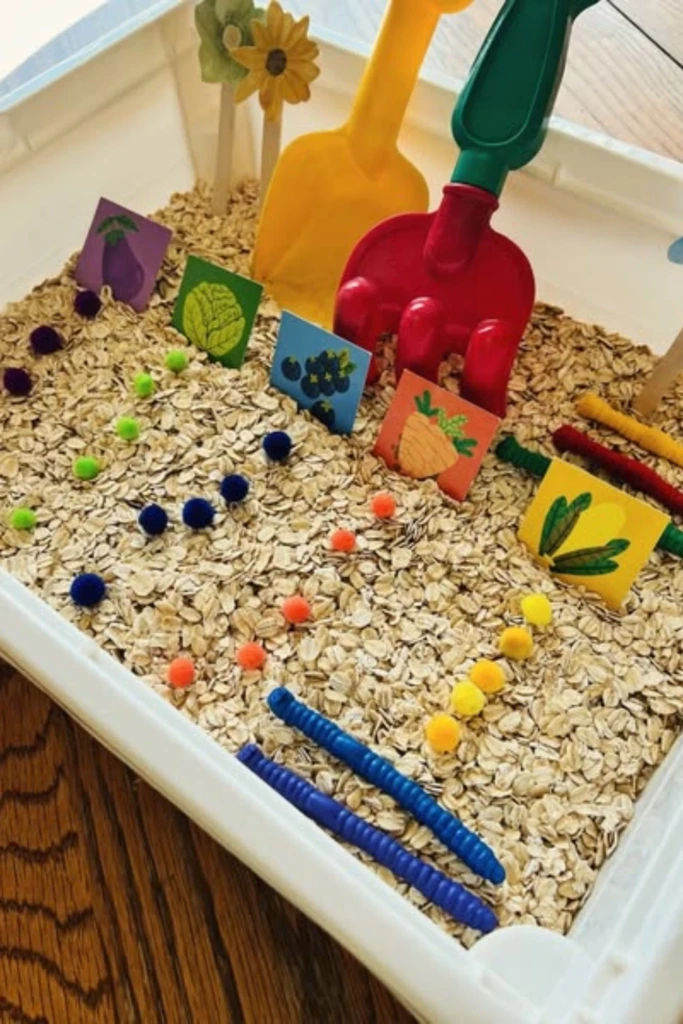
Introduce early pattern recognition through a pretend vegetable garden.
Fill a shallow tray with rolled oats and create several planting rows using cardboard dividers.
Provide large colored felt circles or other age-appropriate pretend seeds and simple pattern cards.
Start with alternating colors, such as red, yellow, red, yellow. Once children understand the sequence, introduce patterns involving three colors or different shapes.
The gardening theme makes mathematical concepts feel playful rather than formal.
14. Pom Pom Transfer
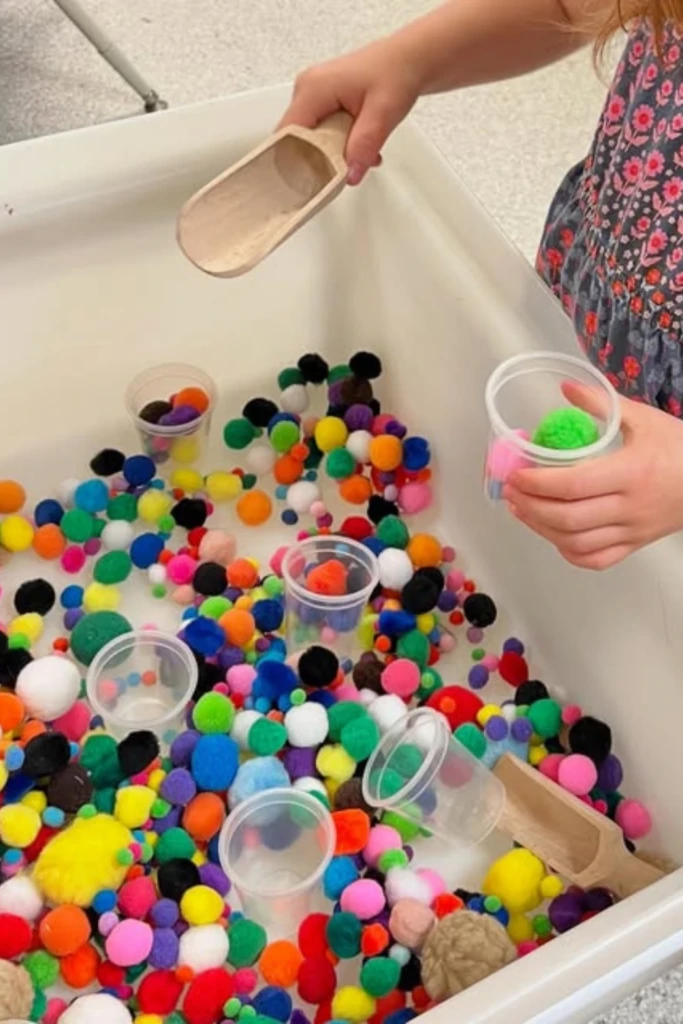
A pom-pom transfer station is an easy way to practice hand coordination and sorting.
Place oversized pom-poms in a container alongside plastic bowls, scoops, and child-friendly tongs.
Children can move the pom-poms between containers, organize them by color, or fill matching cups.
For older preschoolers, use tweezers or tongs to add a little more challenge.
Pom-poms can be choking hazards, so use this activity only with children who no longer mouth objects and supervise closely.
15. Bug Garden Dig
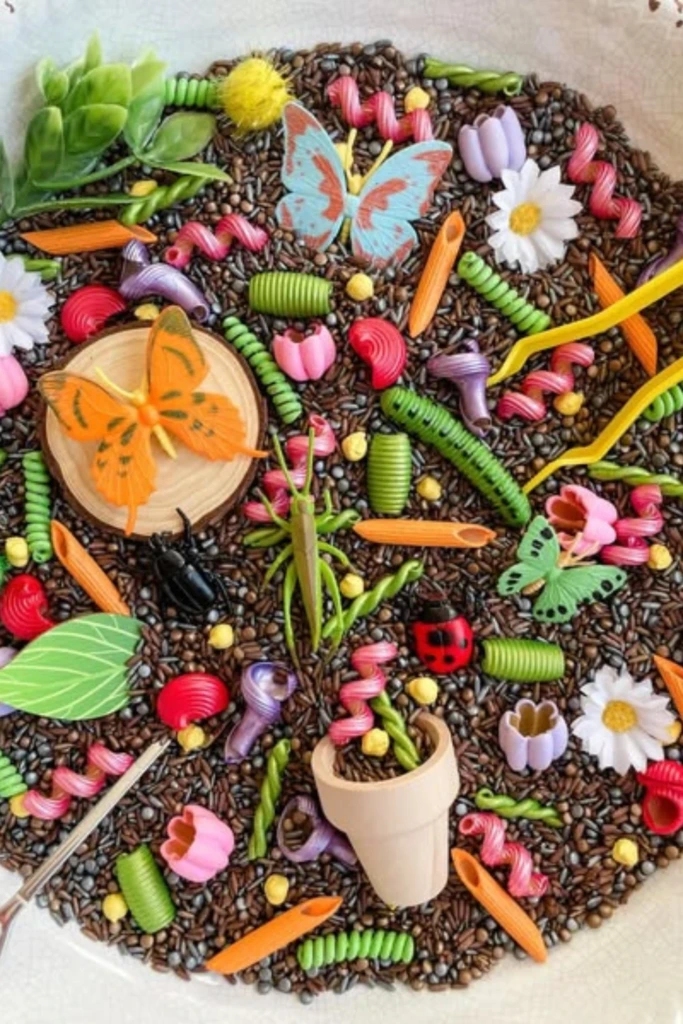
Create a miniature insect habitat with shredded paper, artificial leaves, toy flowers, and plastic insects.
Hide the insects beneath the materials and invite children to search for them using scoops or soft brushes.
As they discover each insect, talk about its name, body parts, and role in nature.
Older children can sort the insects by characteristics such as wings, legs, or colors.
This sensory activity encourages observation and can help children become more curious about the natural world.
16. Color Sorting Wheel
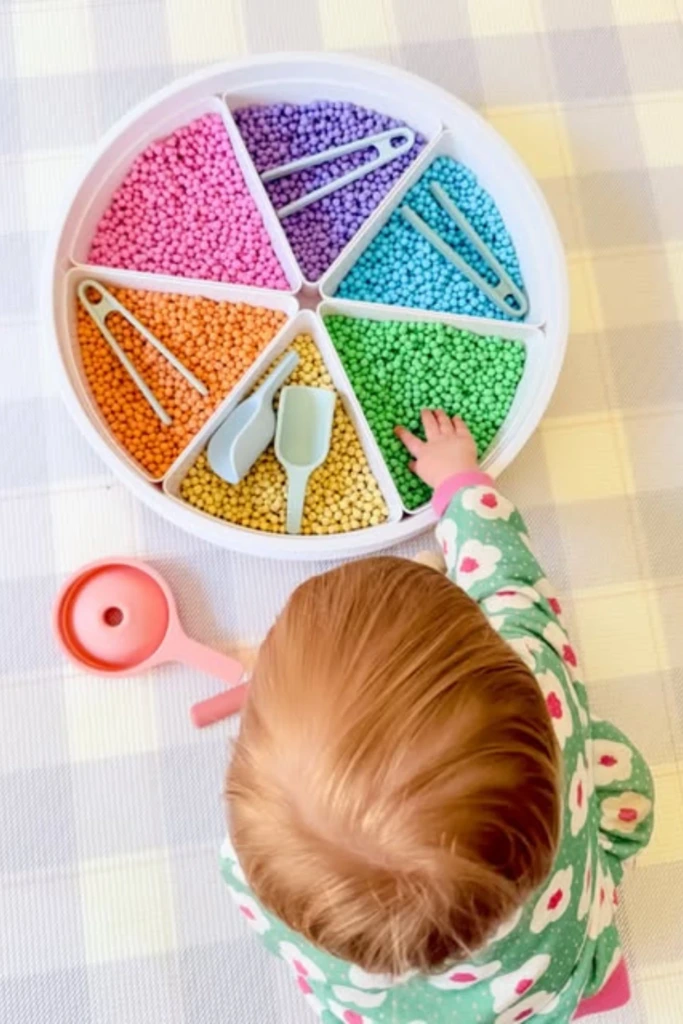
Transform a divided serving tray into a colorful sorting activity.
Place a different colored paper circle inside each compartment and provide matching large blocks, felt shapes, or other safe sorting pieces.
Children can use their hands or small scoops to move each object into the correct section.
Begin with two or three colors before gradually adding more.
You can also introduce counting by asking children to place a specific number of objects into each compartment.
This straightforward setup helps develop color recognition, visual discrimination, and hand-eye coordination.
17. Carrot Wrap Station
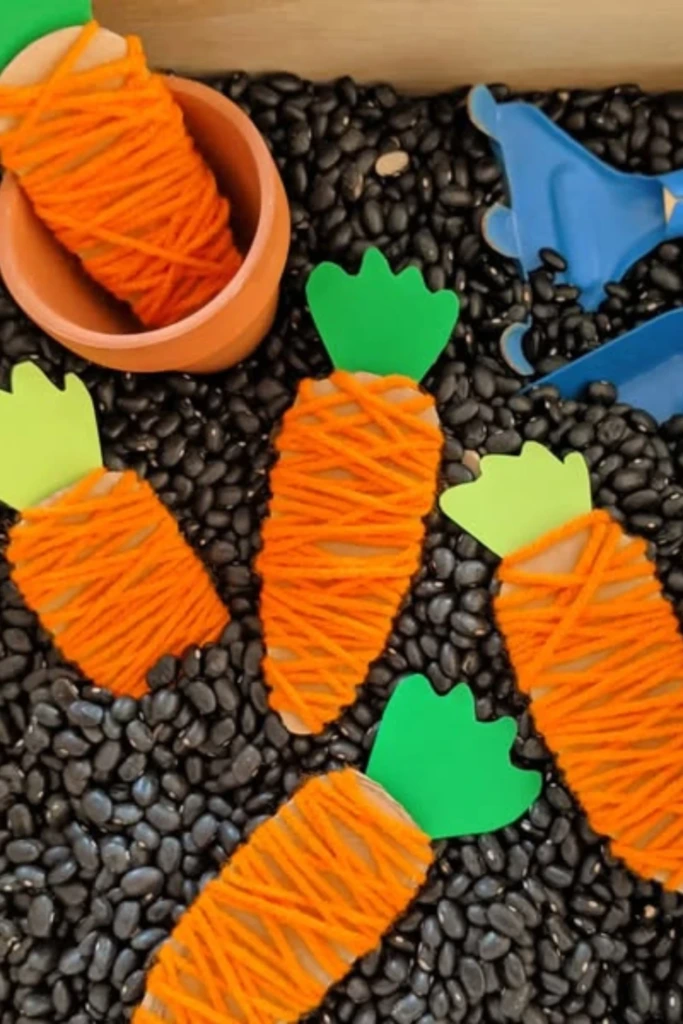
A carrot wrapping activity gives children an opportunity to practice careful finger movements.
Cut large carrot shapes from sturdy cardboard and cover any sharp edges. Provide short lengths of thick orange yarn for wrapping around each carrot.
Children can wind the yarn around the shapes, adjust its position, and unwind it to begin again.
For added variety, create vegetables in different colors and sizes.
This activity encourages bilateral coordination, as children use one hand to stabilize the cardboard while the other guides the yarn.
Keep yarn lengths short and supervise closely to prevent entanglement. This activity is not appropriate for children who may wrap strings around their necks.
How do I keep sensory play from turning into a mess?
Choose a deep-sided container with enough room for children to move materials without constantly spilling them.
Place the bin on a washable mat, old bedsheet, or large towel to catch anything that escapes. Avoid overfilling the container, and offer only a few accessories at a time.
Establish simple expectations before starting, such as keeping the materials inside the play area.
For easier cleanup, begin with dry fillers or large reusable objects. Keep a small container nearby for collecting materials when playtime ends.
Which sensory bin fillers work best for toddlers?
The safest choices depend on a toddler's developmental stage, particularly whether they still explore objects with their mouths.
For children who mouth objects, consider supervised water play with large cups, washable fabric pieces, or other age-appropriate materials that cannot be swallowed.
Older toddlers who no longer mouth objects may enjoy rolled oats or cooked pasta, provided the materials are suitable for their age and any allergies are considered.
Avoid water beads, small beans, loose beads, and other choking hazards. Edible materials are not automatically safe for sensory play, and children should never be left unattended with a sensory bin.
A successful DIY sensory bin doesn't need dozens of supplies or an elaborate theme. Start with a simple container, choose safe materials, and let your child's interests guide the activity. Even small changes to familiar setups can create fresh opportunities for exploration, creativity, and learning.