27 Shed Organization Ideas for 2026
A well-organized shed can make gardening, home repairs, and weekend DIY projects much easier. Instead of digging through crowded shelves or stepping around scattered equipment, you can create a practical storage space where everything has a designated place.
Whether you have a small backyard shed or a spacious workshop, the right storage solutions can help you use every available inch. From simple wall hooks to custom tool racks, these 26 shed organization ideas will help you reduce clutter, protect your equipment, and create a space that works for your needs.
1. Magnetic and Small Parts Storage
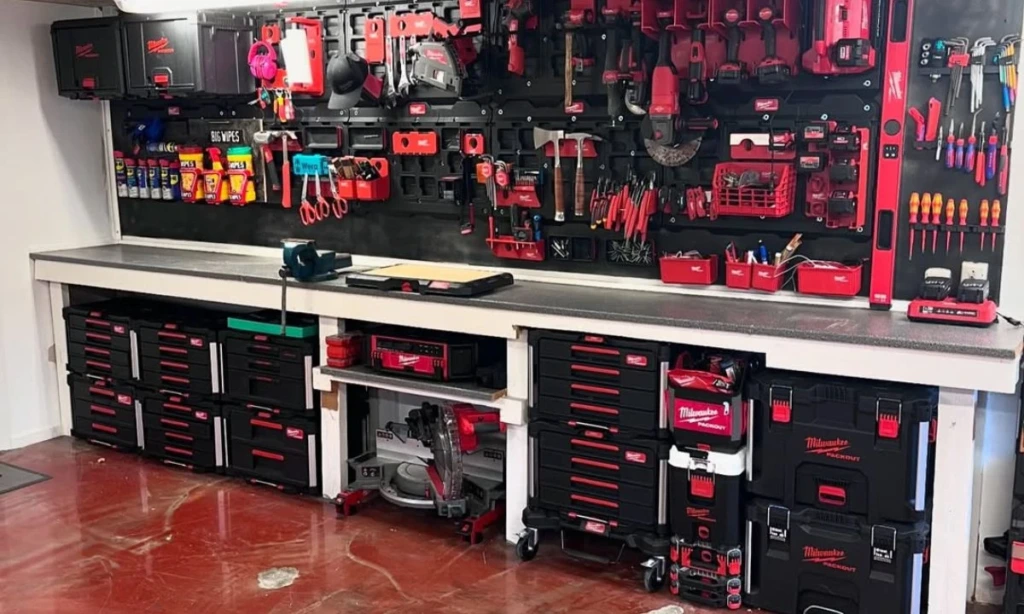
Small hardware items are often the first things to disappear in a cluttered shed. Magnetic tool holders and compartmentalized containers offer an easy way to keep these essentials organized without occupying valuable work surfaces.
Install a magnetic strip above your workbench to hold frequently used metal tools, such as screwdrivers, pliers, and small wrenches. For screws, washers, nails, and other loose hardware, use transparent containers with clearly marked labels.
Keep similar items together and position your most frequently used supplies within easy reach. Choose containers with secure lids to prevent accidental spills, especially if you regularly move supplies between projects.
2. Shed Organization Ideas
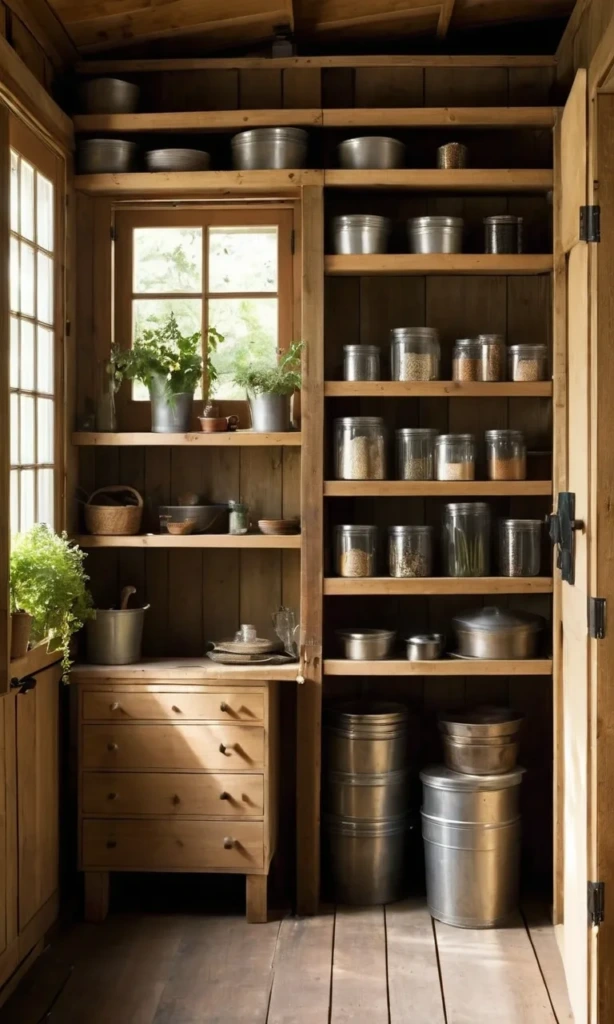
The best shed storage system depends on what you keep inside and how often you use it. A gardening shed may need vertical racks and waterproof containers, while a woodworking space benefits from organized hand tools and sturdy work surfaces.
The following ideas offer practical solutions for different shed sizes, storage requirements, and budgets.
3. Pegboard Wall
A pegboard wall is one of the most flexible ways to organize tools in a shed. Its evenly spaced holes allow you to rearrange hooks, baskets, and holders whenever your storage needs change.
Mount a durable pegboard above a workbench or along an empty wall. Arrange frequently used items at eye level, with lightweight accessories such as measuring tapes, safety glasses, and paintbrushes nearby.
Use compatible locking hooks to prevent tools from falling when removed. You can also outline frequently used tools to make it obvious where each belongs after a project.
For damp sheds, moisture-resistant pegboard materials are worth considering.
4. Wood Tool Rack
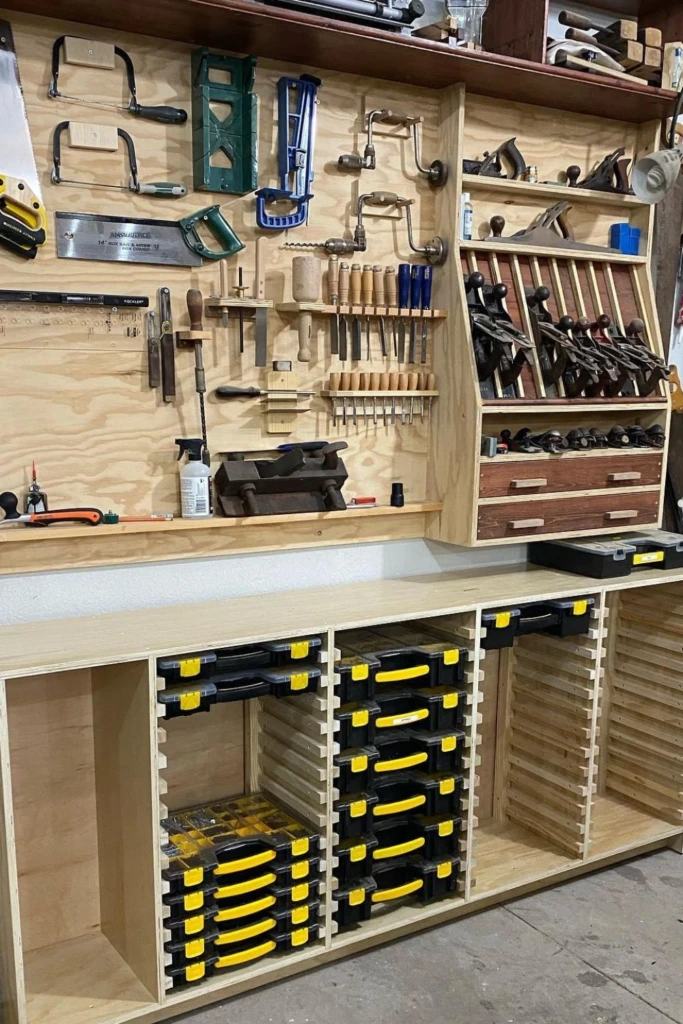
A homemade wooden tool rack offers customized storage for woodworking equipment and other hand tools.
Build a rack using plywood or solid wood, adding appropriately sized slots for chisels, hand saws, files, and similar equipment. Position each tool so its handle remains accessible without exposing sharp edges to accidental contact.
Separate delicate cutting tools to protect their blades from damage. A narrow shelf underneath can hold sharpening accessories or small measuring instruments.
This approach works particularly well when standard organizers cannot accommodate your collection of tools.
5. Tactical Case
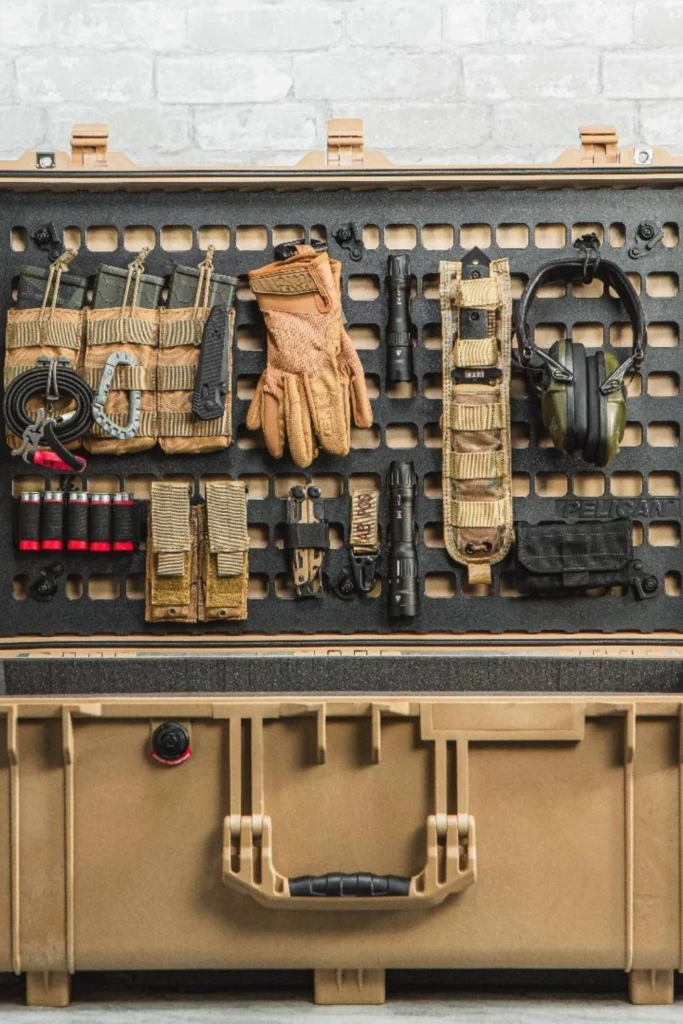
A tactical-style storage case provides a portable solution for keeping important equipment together.
Choose a durable case with adjustable compartments, padded dividers, or customizable foam inserts. Organize items such as flashlights, spare batteries, protective gloves, measuring devices, and compact repair tools.
A weather-resistant case is especially useful when you frequently carry equipment between the shed, garage, vehicle, and outdoor work areas.
Keep the contents limited to items that belong together, such as an emergency repair kit or electrical troubleshooting supplies. This makes the case easier to transport and helps prevent unnecessary clutter.
6. Pallet Stand
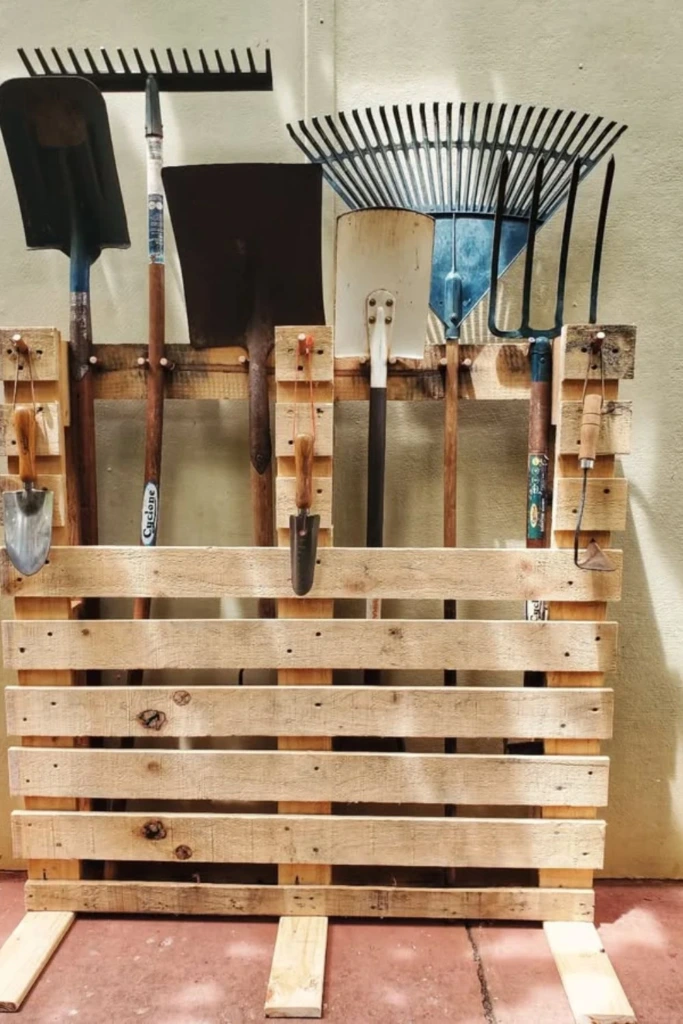
An unused wooden pallet can become a practical storage rack for long-handled gardening equipment.
Secure a clean, structurally sound pallet to a stable support and use its openings to separate rakes, shovels, brooms, and hoes. Depending on the pallet's construction, you may need to add wooden dividers to keep the handles upright.
Sand rough surfaces to remove splinters and check for protruding nails before using the pallet.
Position the stand near the shed entrance if you frequently work in the garden. This keeps muddy equipment away from your main workspace while making everyday tools convenient to access.
7. Wall Hook Zone
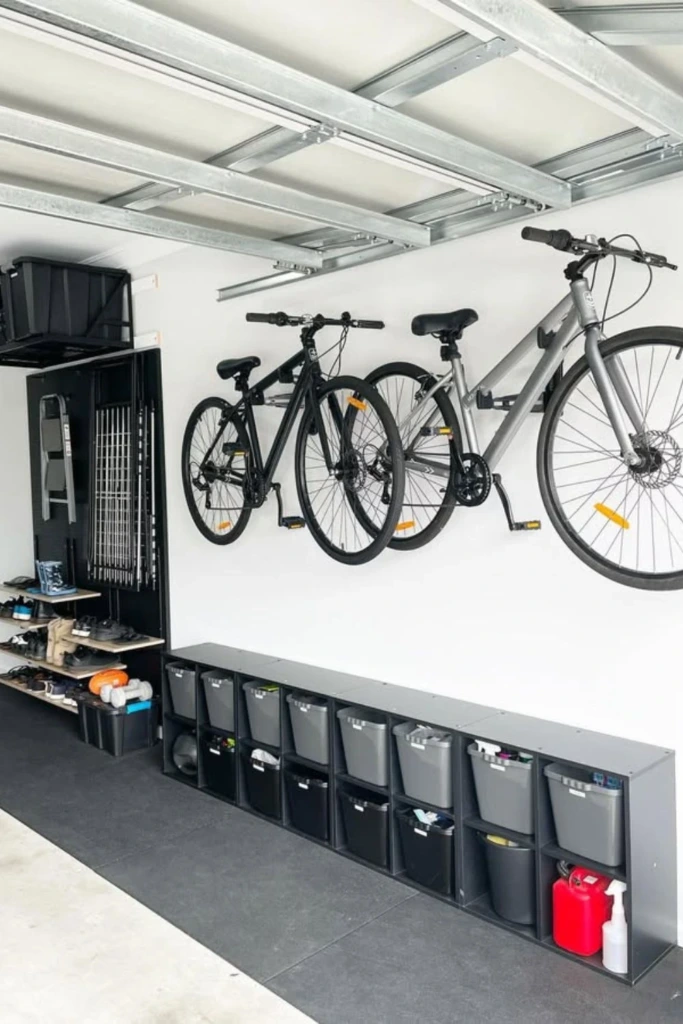
A dedicated wall hook area helps prevent frequently used equipment from accumulating on the floor.
Install sturdy hooks for garden hoses, extension cords, helmets, folding chairs, and lightweight outdoor accessories. Use properly anchored, weight-rated mounts for heavier equipment such as bicycles.
Organize the wall into sections based on activity. Gardening supplies can occupy one area, while recreational gear and maintenance equipment have separate spaces.
Add a narrow shelf or small basket beneath the hooks for accessories that are difficult to hang. Keeping related items together makes the entire storage area easier to maintain.
8. Fitness Rack
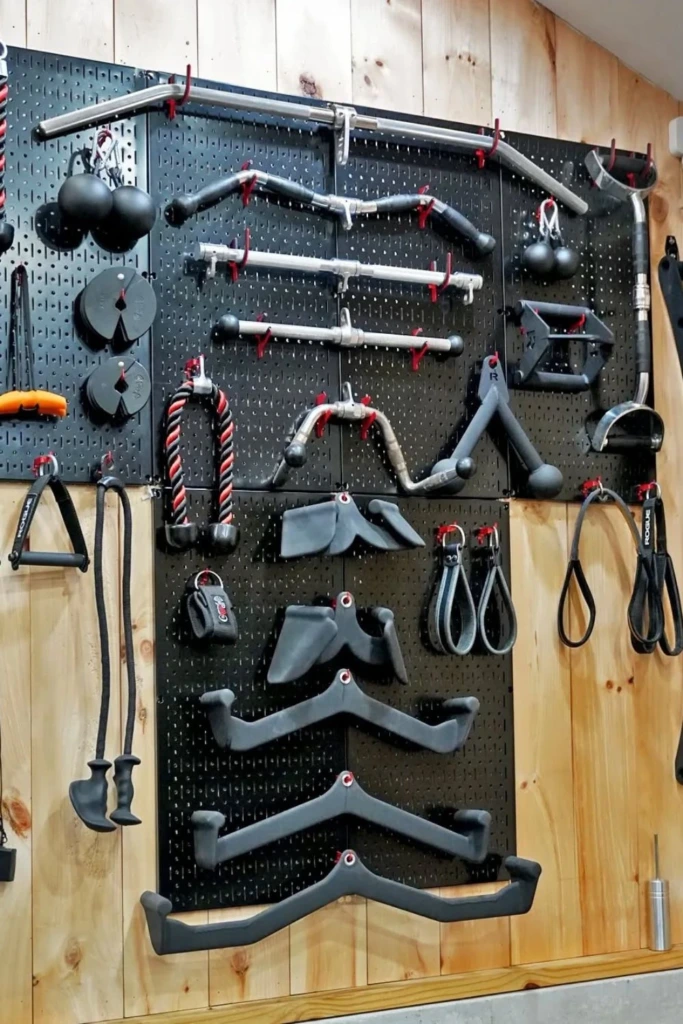
If your shed doubles as a workout space, a dedicated fitness rack can keep exercise equipment organized between sessions.
Install a strong wall-mounted storage system for resistance bands, jump ropes, cable attachments, and lightweight training accessories. Heavier equipment, including dumbbells and kettlebells, should rest on shelves specifically designed for their weight.
Arrange items according to how frequently you use them, keeping everyday workout essentials accessible.
Before storing exercise equipment in a shed, check for excessive moisture, poor ventilation, and extreme temperatures. These conditions can damage certain materials and make the space uncomfortable for workouts.
9. Socket Drawer
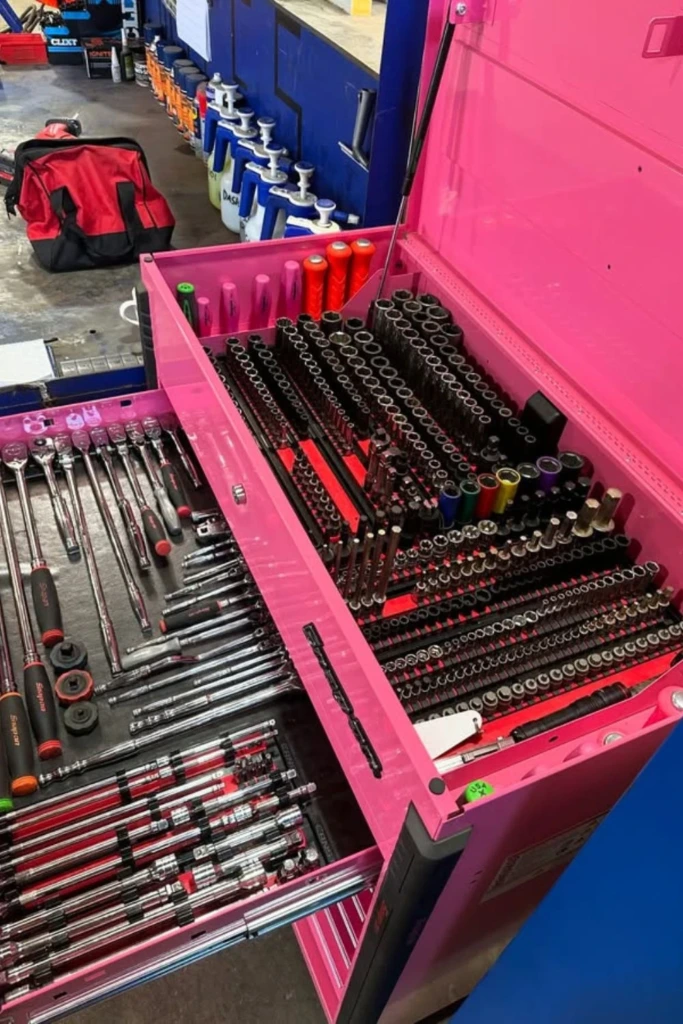
A socket drawer keeps automotive and mechanical tools organized by size, making repairs faster and less frustrating.
Use socket rails or molded trays to separate metric and imperial sockets. Arrange them in numerical order and reserve individual spaces for ratchets, adapters, and extensions.
Place labels where they remain visible even when the drawer is full. This helps you identify missing pieces before putting everything away.
A drawer liner can reduce sliding and rattling when the cabinet opens. For deep drawers, consider tiered organizers that improve visibility without requiring you to remove multiple trays.
10. Mobile Workstation
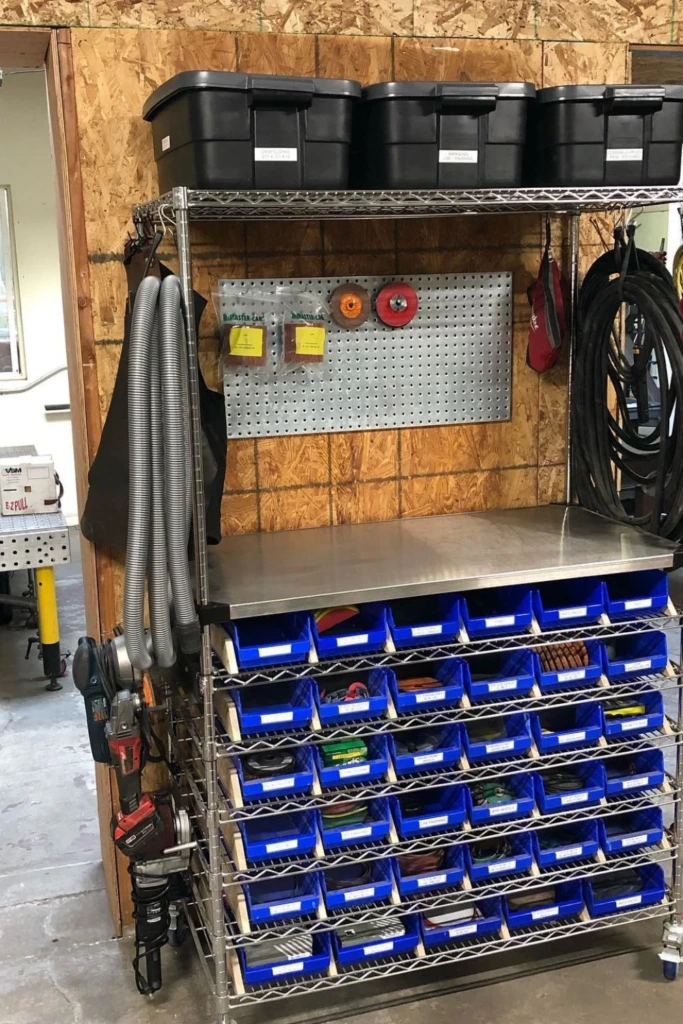
A mobile workstation is an excellent solution for sheds where one area serves several purposes.
Start with a sturdy rolling tool cart or compact workbench fitted with locking casters. Add drawers for small hardware, side-mounted hooks for hand tools, and a flat surface for repairs or assembly work.
You can move the workstation toward the shed entrance for outdoor projects or position it against a wall when additional floor space is needed.
Keep heavier supplies on the lower shelves to improve stability. Always lock the wheels before working, particularly when cutting, drilling, or applying pressure to materials.
11. Bit Shelf Wall
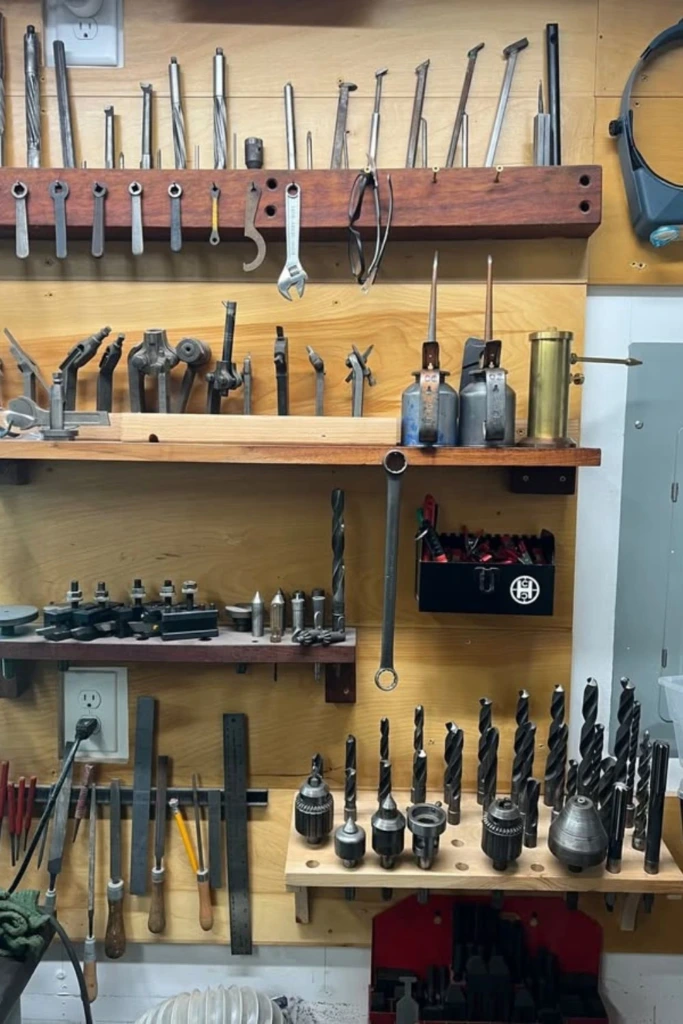
Drill bits and precision accessories are easier to manage when each piece has a designated storage position.
Create a wall-mounted shelf with drilled wooden blocks or purpose-made holders sized for your collection. Separate twist bits, masonry bits, spade bits, and specialty attachments into clearly identified groups.
Arrange frequently used sizes toward the front, leaving additional space for future purchases.
Store bits clean and dry to reduce corrosion. For very small pieces, use labeled cases rather than open holders if there is a risk of them falling or becoming mixed together.
12. Pegboard Bench
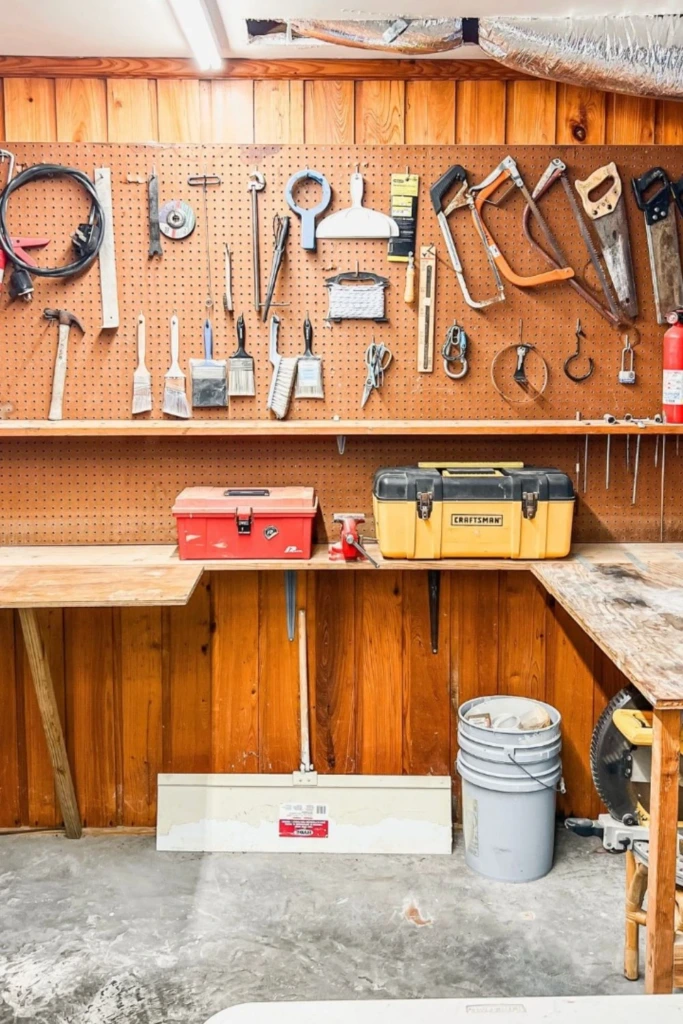
Combining a pegboard with a workbench creates an efficient station for everyday maintenance and DIY projects.
Install the pegboard directly above a stable work surface, allowing enough clearance for taller tools and materials. Use hooks for hand tools, small baskets for accessories, and shelves for lightweight supplies.
Keep the central section of the workbench open so you have room to measure, assemble, and repair items.
A fold-down extension can provide additional workspace in a narrow shed. When the project is finished, the extra surface folds away to restore walking space.
13. Drawer Stack Hub
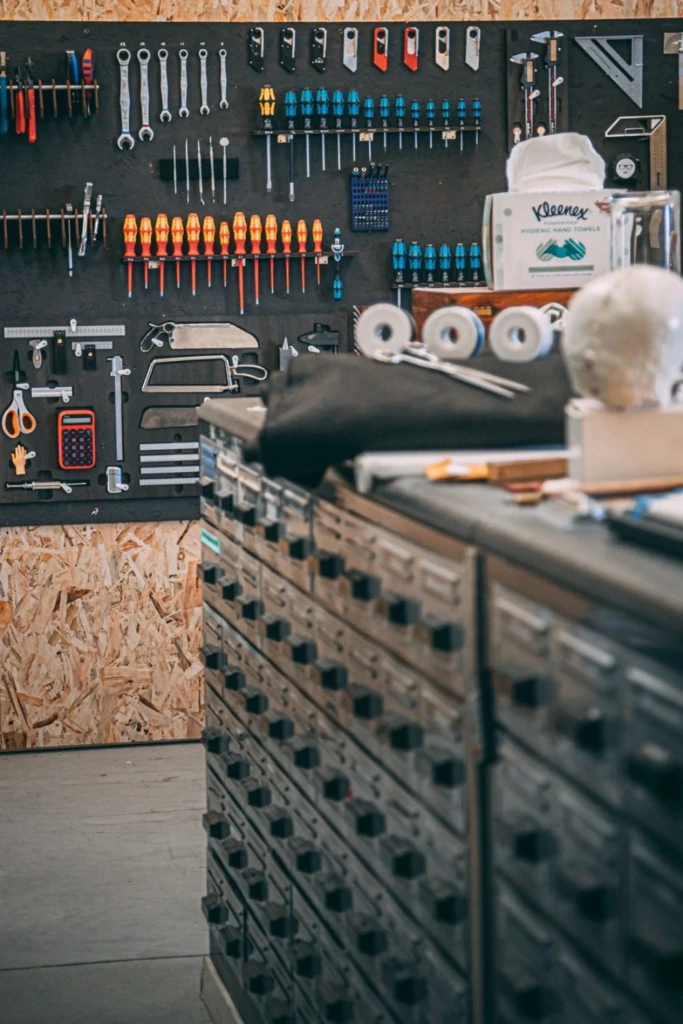
A stack of small storage drawers is particularly useful for organizing the many components that accumulate in a busy shed.
Assign individual drawers to screws, nuts, bolts, anchors, electrical connectors, and other small supplies. Label each drawer by item type and size rather than relying only on color.
Position the drawer cabinet close to your primary work area so you can retrieve components without interrupting a project.
For better efficiency, keep a small inventory of frequently used hardware. Refill nearly empty drawers before starting major repairs, and avoid mixing unrelated parts simply because space is available.
14. Stackable Boxes
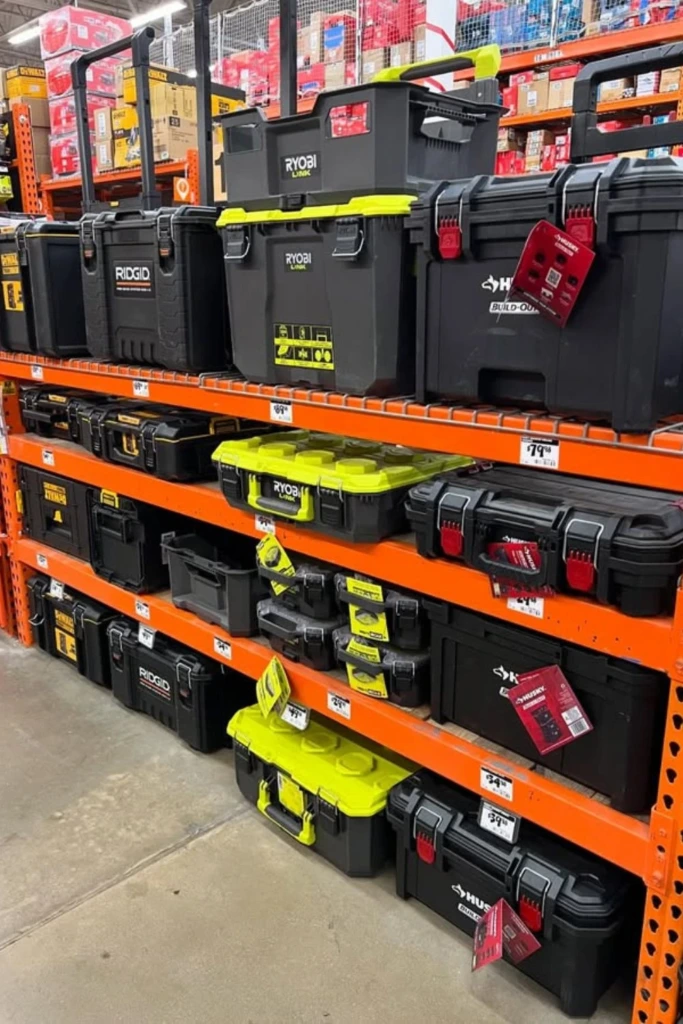
Stackable storage boxes make it easier to organize equipment without installing permanent cabinets.
Choose sturdy, compatible containers that fit securely together. Use smaller boxes for hardware and accessories, medium containers for power tools, and larger units for seasonal supplies.
Transparent boxes simplify identification, while opaque containers benefit from large labels on the front and top.
Place heavier boxes at the bottom and avoid stacking beyond the manufacturer's recommended limits. If you transport tools frequently, interlocking boxes with handles or wheeled bases can make moving equipment more convenient.
15. Workshop Wall
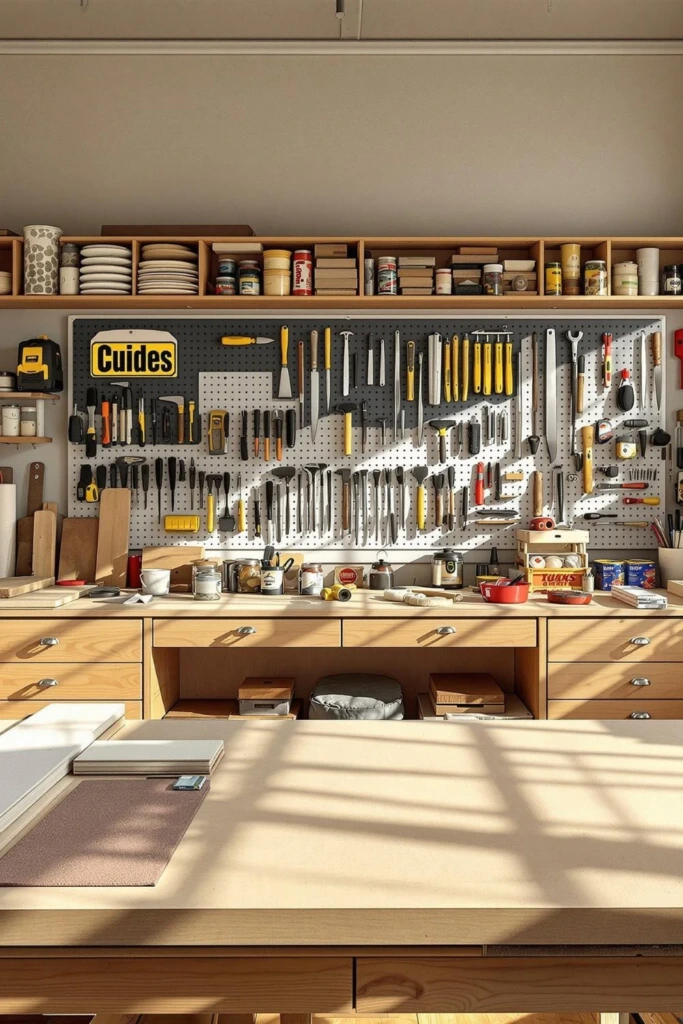
A workshop wall brings multiple storage methods together in one organized area.
Combine open shelving, pegboards, drawers, and tool holders to accommodate equipment of different sizes. Keep frequently used hand tools visible, while storing less-used accessories in labeled containers.
A simple layout works best: place small tools at comfortable reaching height, bulky items lower down, and lightweight seasonal supplies on upper shelves.
Use consistent labels and leave some empty space for new equipment. Avoid covering every available surface, as an overcrowded wall can become difficult to use and maintain.
16. Tool Grid Board
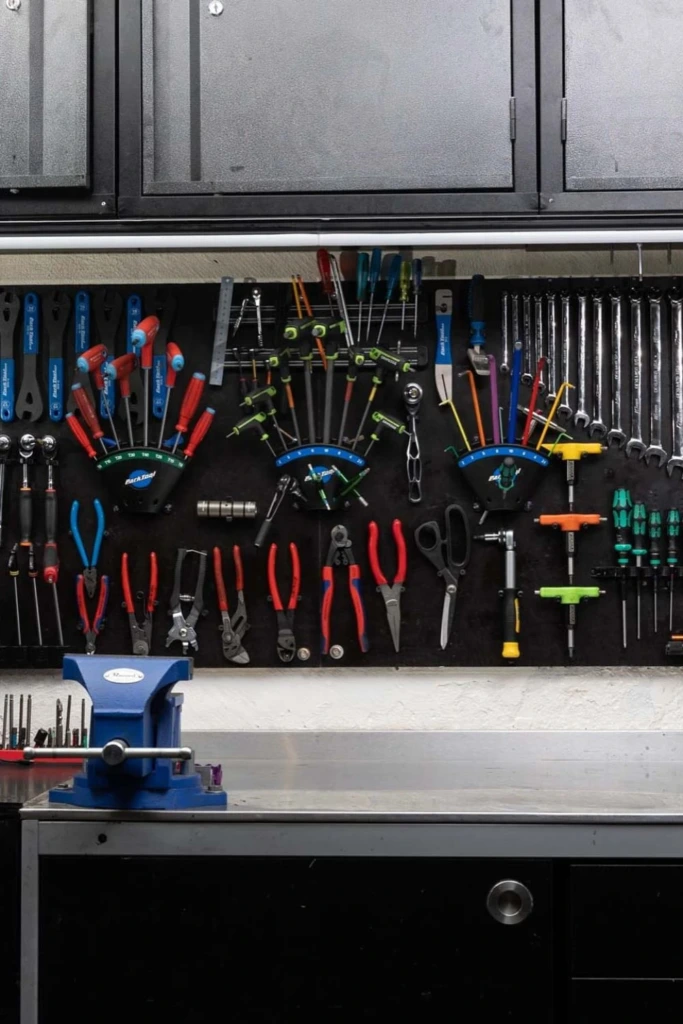
A tool grid board provides a structured storage solution for hand tools that need to remain visible.
Use a metal grid panel or a compatible modular tool board with hooks and holders designed for its openings. Arrange pliers, adjustable wrenches, measuring tools, and other frequently used items in clearly defined sections.
Group equipment by purpose rather than simply filling available spaces. For example, keep measuring and marking tools together and place gripping tools in another section.
Mount the board securely and follow its weight limits. A well-planned arrangement reduces the time spent searching for tools and makes cleanup more straightforward.
17. Lumber Wall Rack
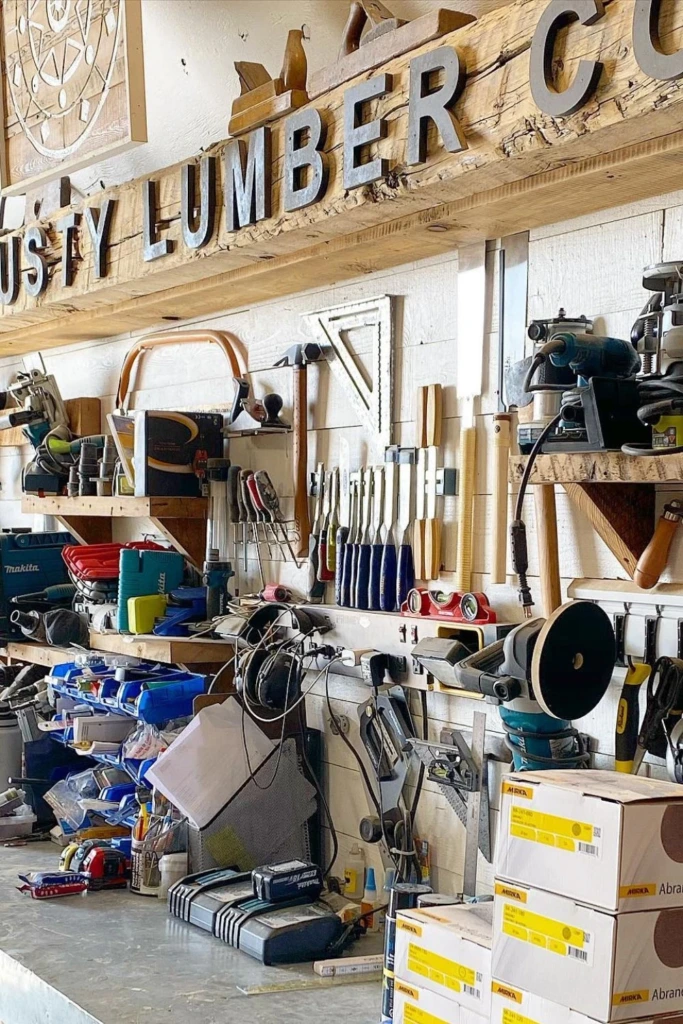
A wall-mounted lumber rack helps keep boards, trim, and leftover wood off the shed floor.
Install strong horizontal supports into suitable structural framing, spacing them to support the length and weight of your materials. Sort wood by dimensions and type so you can quickly identify usable pieces.
Store long boards horizontally with adequate support to reduce bending. Keep wood away from damp walls and standing water, and allow airflow around stored materials.
A separate container beneath the rack can hold smaller offcuts. Review these leftovers occasionally and discard pieces that are damaged or unlikely to be used.
18. Peg Tool Wall
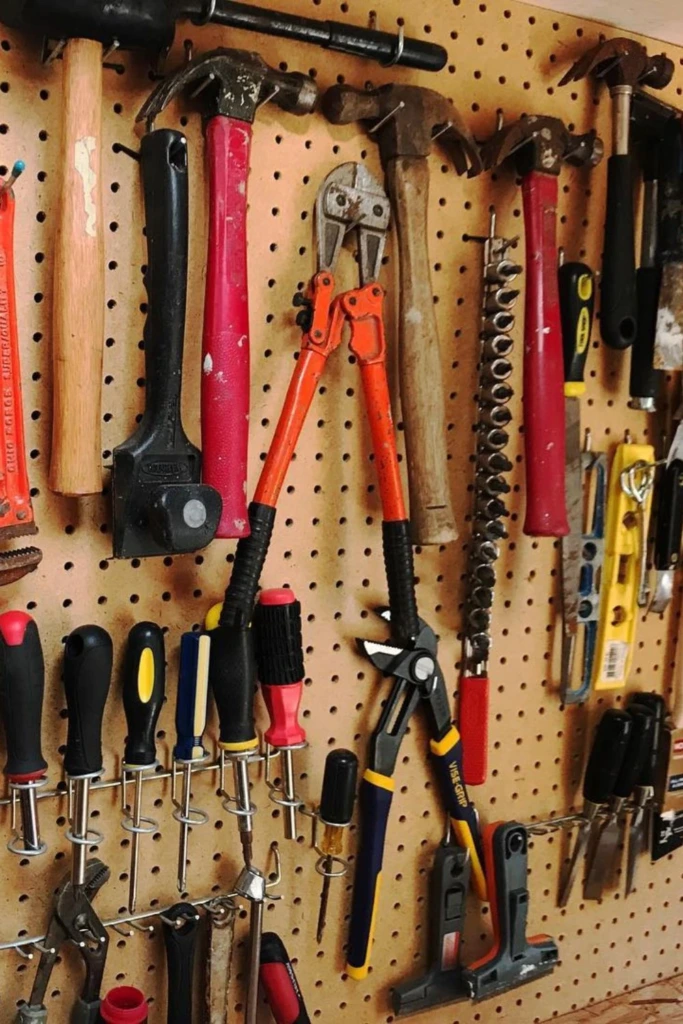
A peg tool wall creates a simple storage system for everyday repair and maintenance equipment.
Unlike a traditional pegboard, this design can use individual wooden pegs mounted into a solid backing board. Space the pegs according to the tools you want to store.
Hang hammers, tape measures, small hand saws, and other compatible items in dedicated positions. Add simple labels to make returning equipment easier.
Use rounded, securely fitted pegs and avoid placing heavy or sharp tools where they could fall onto someone.
A natural wood finish can also give the shed a warm, traditional workshop appearance.
19. Power Tool Rack
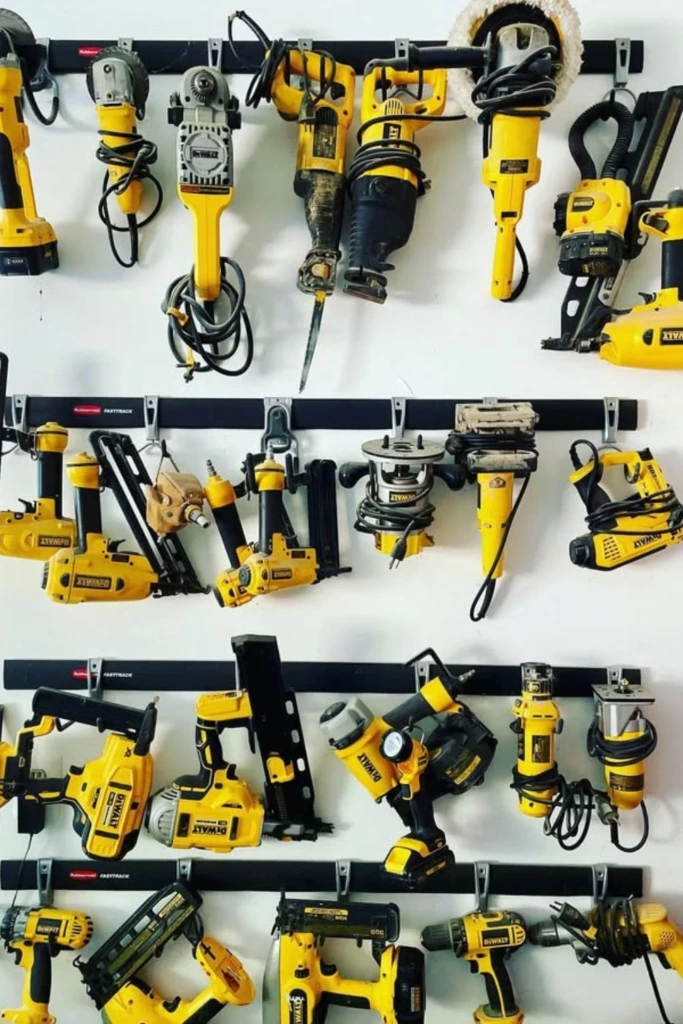
Power tools require organized storage that protects them from accidental damage and keeps accessories together.
Install a wall-mounted rack with individual compartments for cordless drills, impact drivers, sanders, and similar equipment. Ensure the rack is strong enough to support the combined weight.
Store tools according to the manufacturer's guidance, and keep loose attachments in labeled containers nearby.
Create a separate charging station in a dry, ventilated location with suitable electrical protection. Avoid charging batteries near flammable materials, and follow the manufacturer's temperature and charging recommendations.
This arrangement keeps expensive equipment accessible without leaving it scattered across the workbench.
20. Precision Board
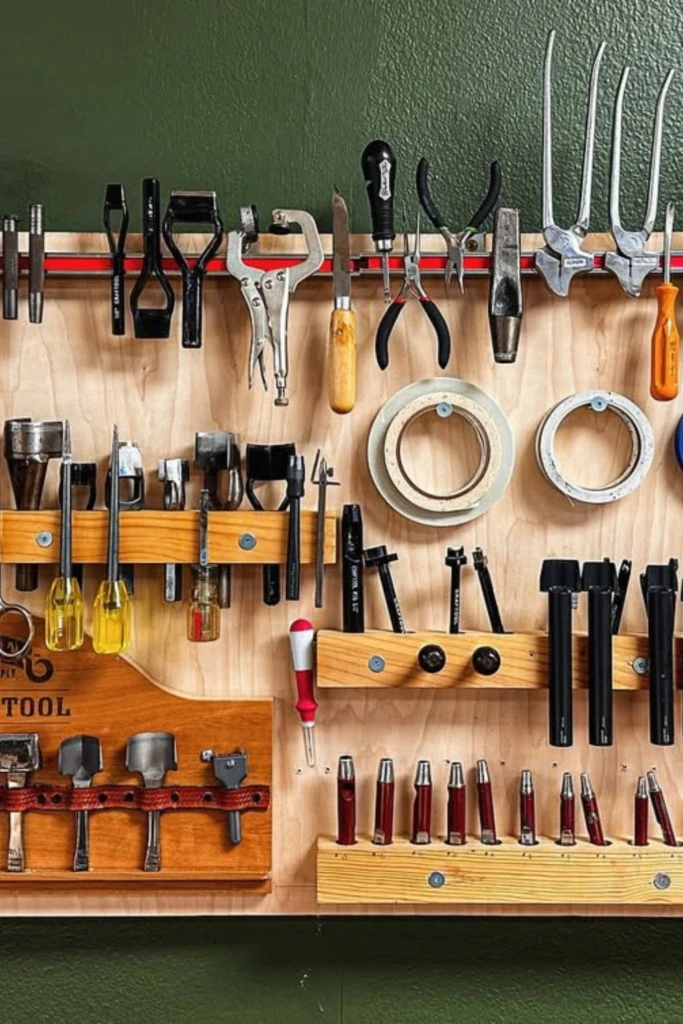
A precision board is ideal for organizing delicate measuring tools and specialized equipment.
Use a rigid backing panel with custom holders, shallow shelves, or fitted compartments for calipers, squares, gauges, and other precision instruments.
Give each item enough space to prevent contact with neighboring tools. Protective cases are preferable for instruments that can be damaged by dust, moisture, or impact.
Position the board away from areas where sawing, sanding, or grinding creates airborne debris.
Clear labels and consistent placement make it easier to find the right instrument while helping you notice when something has not been returned.
21. Wall Slat Rack
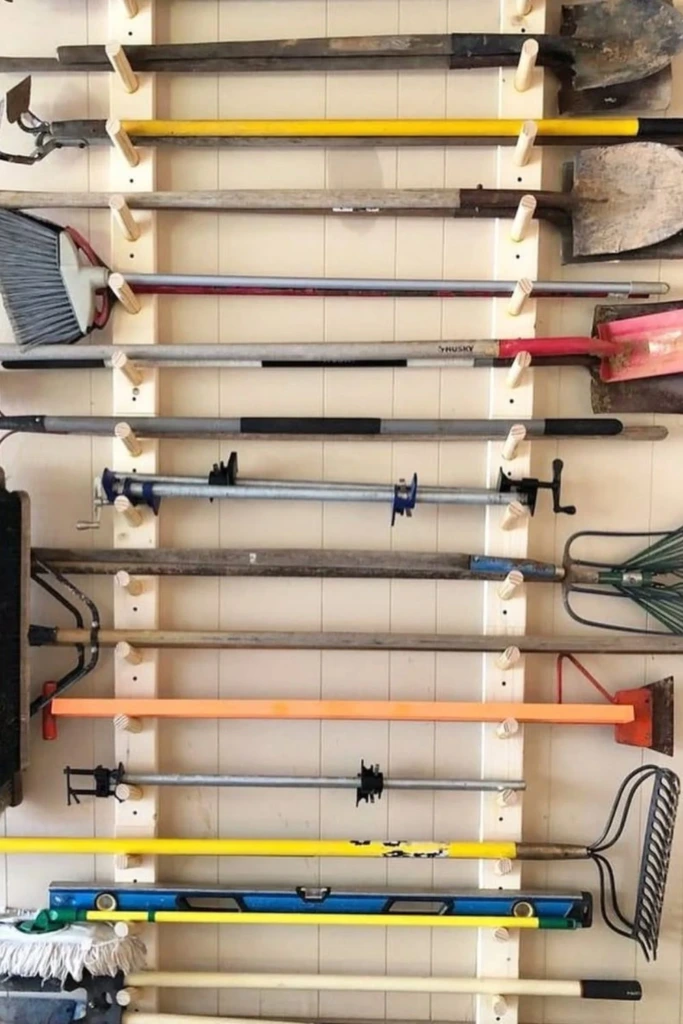
A wall slat rack offers adjustable storage for gardening tools with long handles.
Install horizontal wooden slats or a purpose-built slatwall system, then add suitable hooks and brackets for rakes, spades, hoes, and brooms.
Space the holders so that tool heads do not overlap excessively. This allows you to remove one item without knocking others loose.
Position heavier tools at a comfortable height and secure all brackets to suitable structural supports.
A slat-based system is especially useful when your equipment collection changes throughout the year because many compatible accessories can be repositioned.
22. Garden Shed Setup
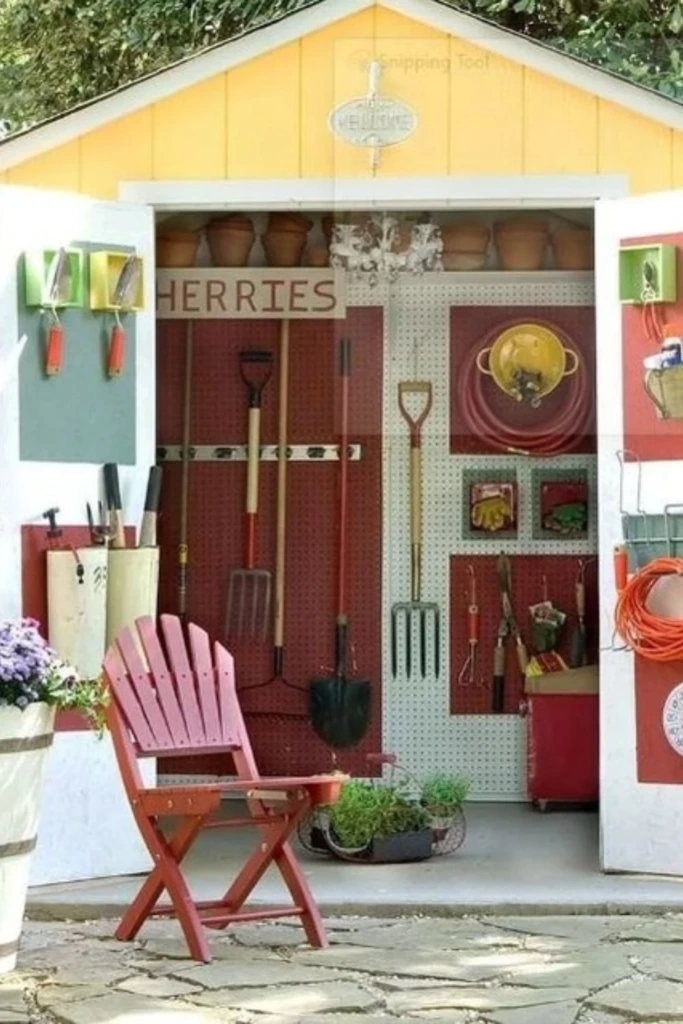
A dedicated gardening shed works best when supplies are arranged around common outdoor tasks.
Create separate areas for planting, pruning, watering, and general maintenance. Store hand tools close to a potting surface, keep empty pots on shelves, and place watering accessories near the entrance.
Use washable containers for gloves, plant labels, twine, and other small gardening essentials.
Keep fertilizers, pesticides, and other garden chemicals in their original labeled containers, secured according to product instructions and away from children, pets, and incompatible materials.
Good ventilation, dry shelving, and a clear walkway make the shed more pleasant and practical throughout the growing season.
23. Stud Frame Rack
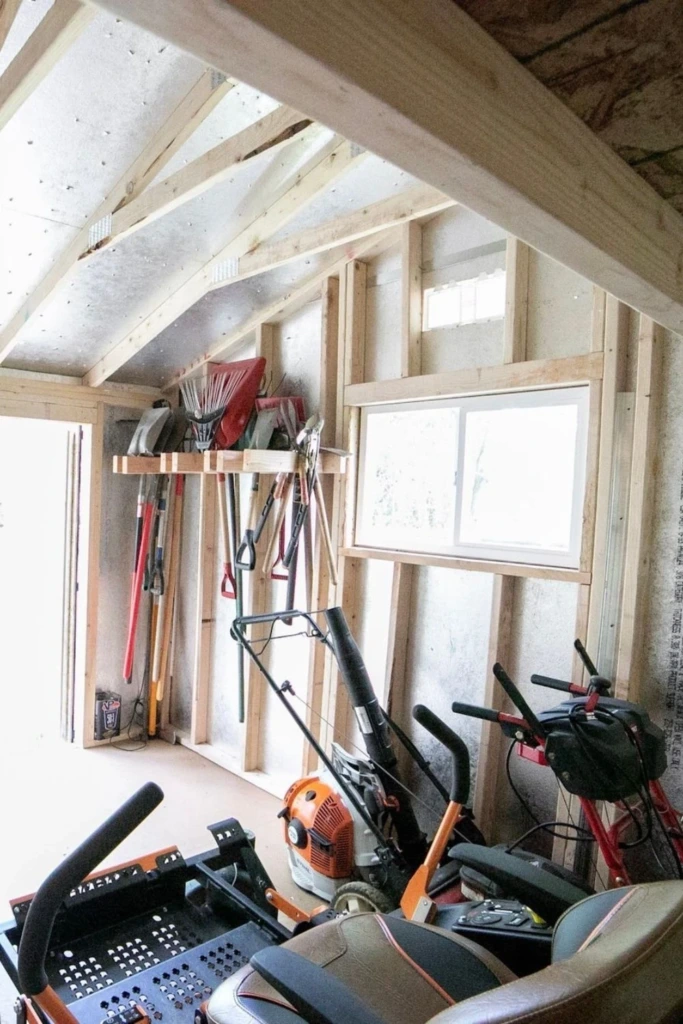
Unfinished shed walls often have exposed framing that can provide useful storage space.
The gaps between wall studs can accommodate narrow tools, lightweight supplies, and custom-built storage compartments.
Install horizontal supports or retaining strips where necessary to keep stored items from falling forward. Long-handled tools may fit vertically, while smaller accessories can sit on shallow shelves.
Avoid cutting, weakening, or overloading structural framing. Also check for electrical wiring or plumbing before installing fasteners.
This approach can be particularly effective in compact sheds where conventional cabinets would extend too far into the room.
24. Tactical Light Board
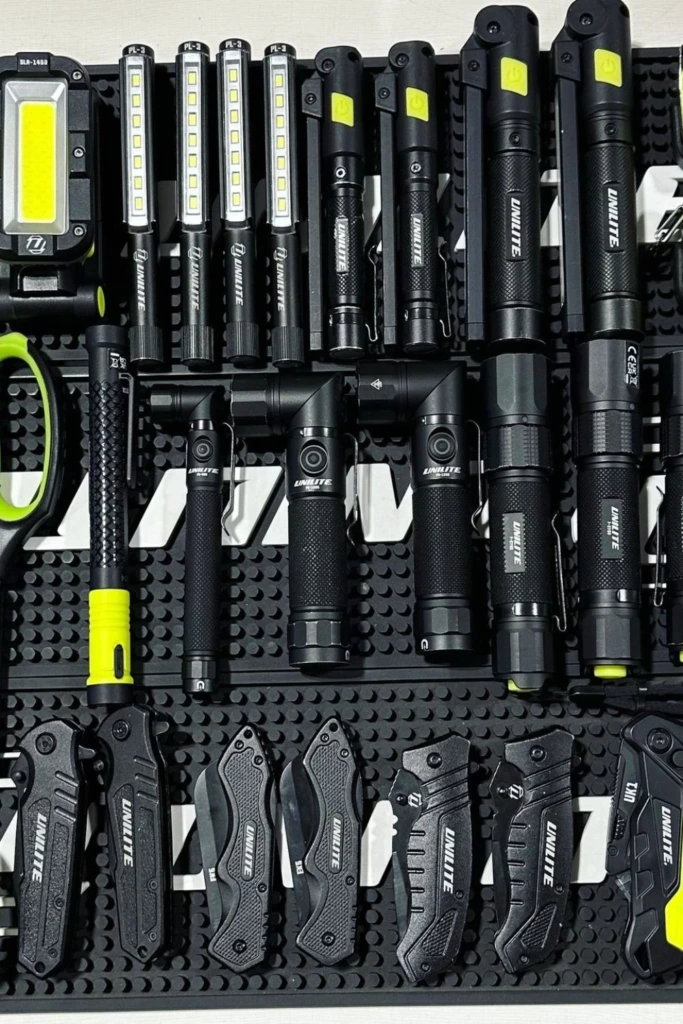
A tactical light board creates a dedicated station for portable lighting and compact emergency equipment.
Install a pegboard, slotted panel, or shallow organizer to hold flashlights, headlamps, charging cables, and related accessories. Use labeled holders so each item can be returned to the correct location.
Separate rechargeable equipment from spare disposable batteries and follow the storage recommendations for each battery type.
Consider adding a small checklist for periodic flashlight testing and battery replacement.
Place the board close to the shed entrance so lighting equipment is easy to locate during a power outage or when working after dark.
25. Block Shelf Display
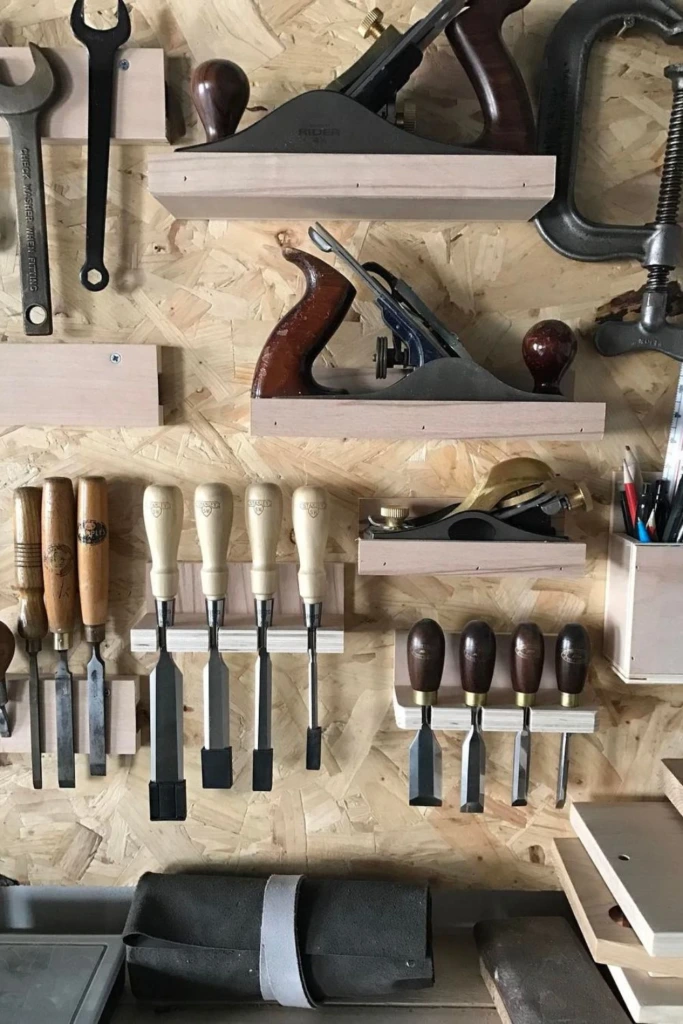
A wooden block shelf combines organized storage with a clean, handcrafted appearance.
Use solid wood blocks or thick shelves with carefully sized openings for chisels, carving tools, marking gauges, and other small woodworking equipment.
Smooth the edges of each opening to avoid scratching handles. Sharp blades should be protected or positioned so they cannot be touched accidentally.
Arrange tools according to their purpose and frequency of use, keeping the most important items near your main work area.
A simple protective finish can make the wood easier to clean while preserving its natural appearance.
26. Full Wall Build
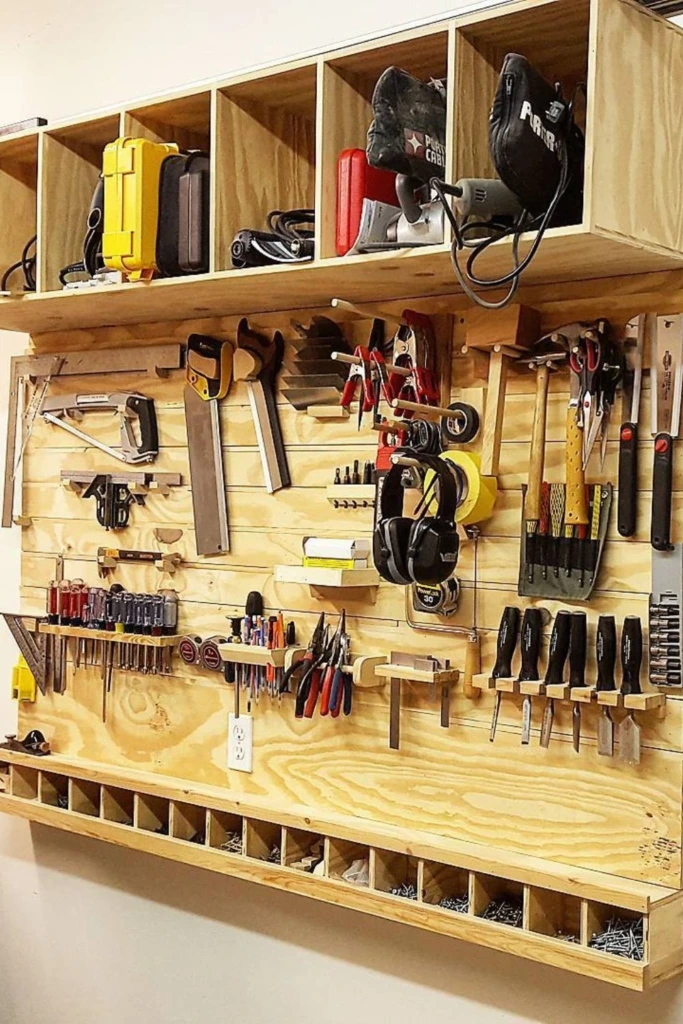
A full-wall storage system makes use of vertical space from near the floor to the upper sections of a shed.
Plan the layout before building, accounting for tool dimensions, shelf depth, and available walking room. Combine sturdy shelves, hanging rails, small drawers, and open compartments to create storage for different categories of equipment.
Keep heavy tools and containers low, everyday supplies around waist or shoulder height, and rarely used lightweight items higher up.
Anchor the structure securely and avoid blocking windows, ventilation openings, or electrical access.
A modular design allows you to add or rearrange storage components as your needs change.
27. Gear Wall Setup
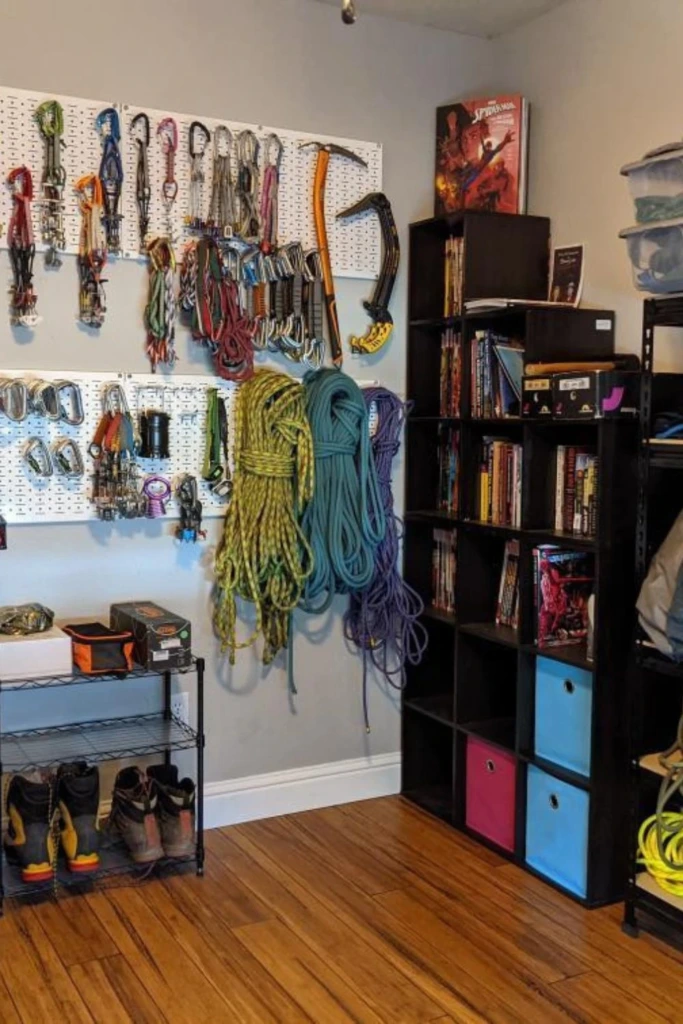
A gear wall is a convenient solution for organizing outdoor recreation equipment alongside regular