21 Small Fridge Organization Ideas for 2026
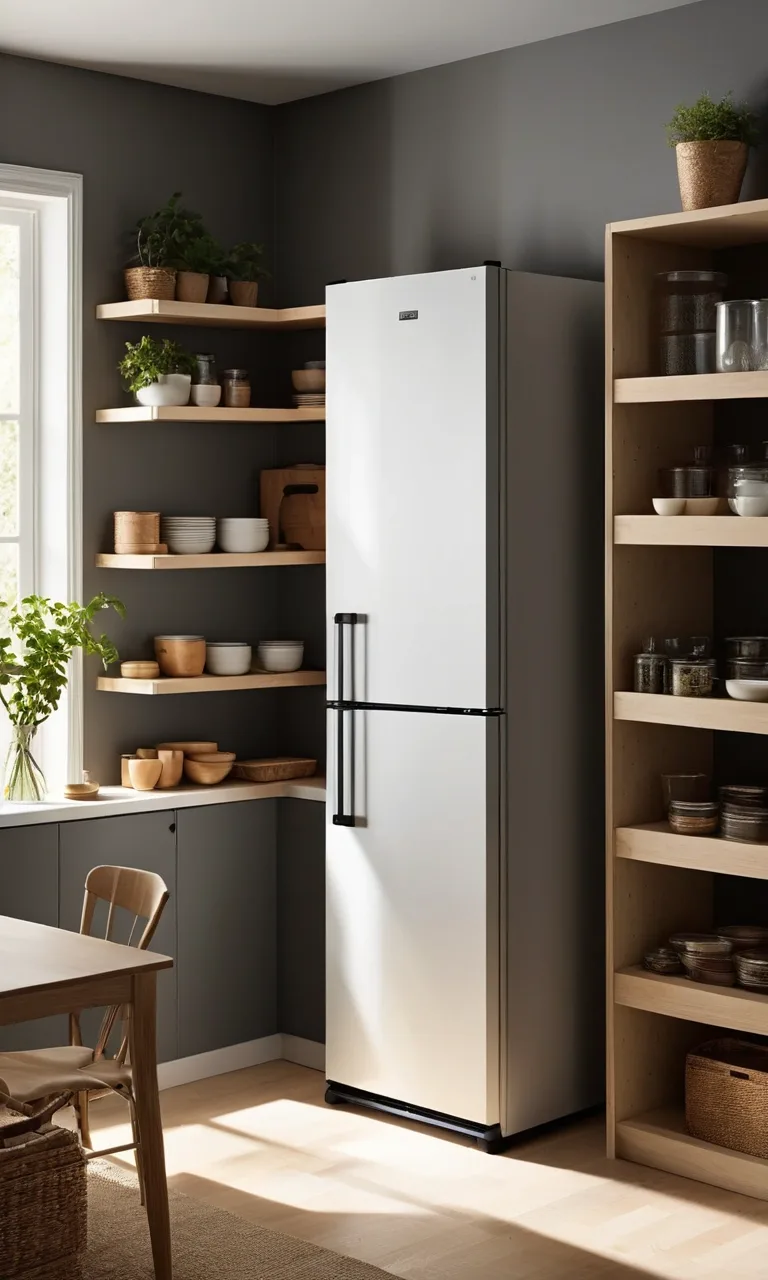
A small refrigerator can feel crowded even when you haven't bought many groceries. A few containers, fresh vegetables, and leftover meals can quickly fill the shelves, leaving little room for anything else.
Fortunately, organizing a compact fridge doesn't require expensive accessories or a complete kitchen makeover. Simple storage solutions, thoughtful food placement, and a few everyday habits can make a noticeable difference.
Whether you're working with an apartment refrigerator, a mini fridge, or a smaller family kitchen, these 21 small fridge organization ideas will help you create more usable space, keep food accessible, and reduce unnecessary waste.
What Are the Best Storage Containers for a Small Refrigerator?
The best containers for compact refrigerators are transparent, easy to clean, and appropriately sized for the available shelf space.
Rectangular and square containers are particularly practical because they sit neatly alongside one another. Stackable designs can also help you use the space above shorter food items.
Clear plastic bins are lightweight and convenient for organizing packaged snacks, while glass containers with secure lids work well for leftovers and prepared meals.
Before purchasing organizers, measure the depth, width, and height of your refrigerator shelves. Choose food-safe, refrigerator-compatible containers, and avoid filling shelves so tightly that cold air cannot circulate.
1. Shelf Zoning
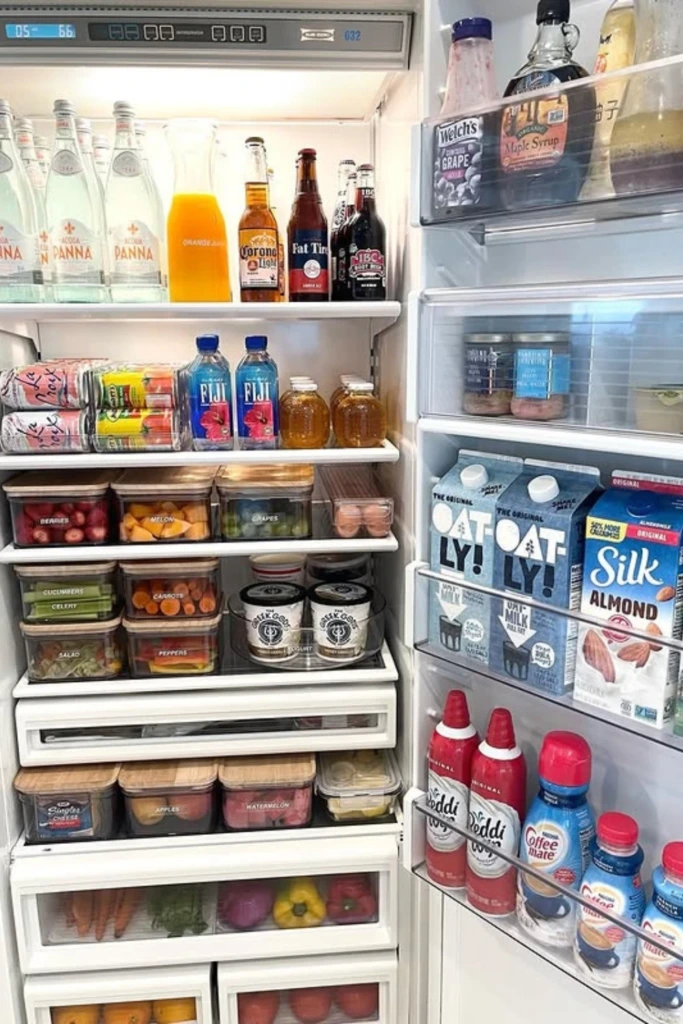
Dividing your refrigerator into dedicated storage areas makes a compact space easier to manage.
Assign different sections to leftovers, dairy products, beverages, and fresh ingredients. Keep frequently used foods near the front so you can retrieve them without rearranging everything.
Place raw meat and seafood in leakproof containers on the lowest suitable shelf to prevent drips onto other foods. Store ready-to-eat foods above them.
A consistent shelf arrangement also helps everyone in the household return groceries to the correct places.
2. Clear Stacking
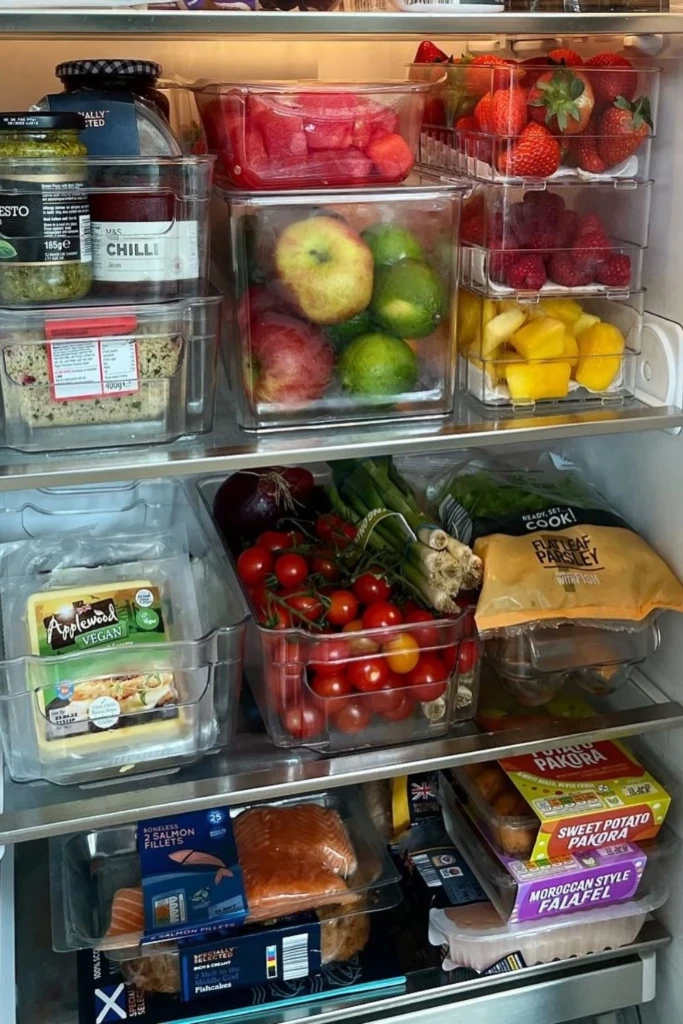
Transparent stacking containers are an excellent solution when refrigerator shelves have unused space above shorter items.
Use shallow, lidded containers for sliced fruit, prepared vegetables, cheese, and leftovers. Their see-through sides make it easier to identify contents without opening every box.
Choose containers designed for secure stacking, with larger and heavier items at the bottom.
Leave enough clearance to remove containers comfortably and avoid stacking anything in front of refrigerator vents.
3. Produce Bins
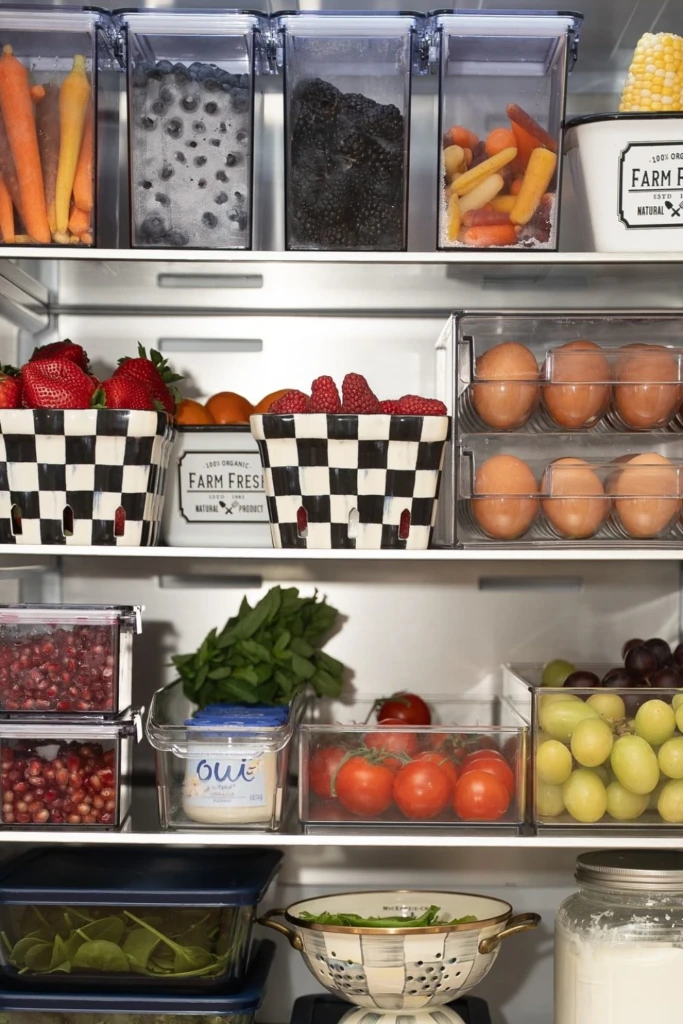
Dedicated produce bins help prevent fruits and vegetables from becoming scattered throughout the refrigerator.
Use smaller containers for berries, grapes, and delicate ingredients, while larger bins can accommodate leafy greens, peppers, and carrots.
Choose ventilated containers when appropriate, and adjust moisture levels according to the produce. Leafy greens often benefit from humidity, while excess moisture can encourage berries to spoil.
Keeping produce visible makes it easier to plan meals around ingredients that need to be used soon.
4. Color Coding
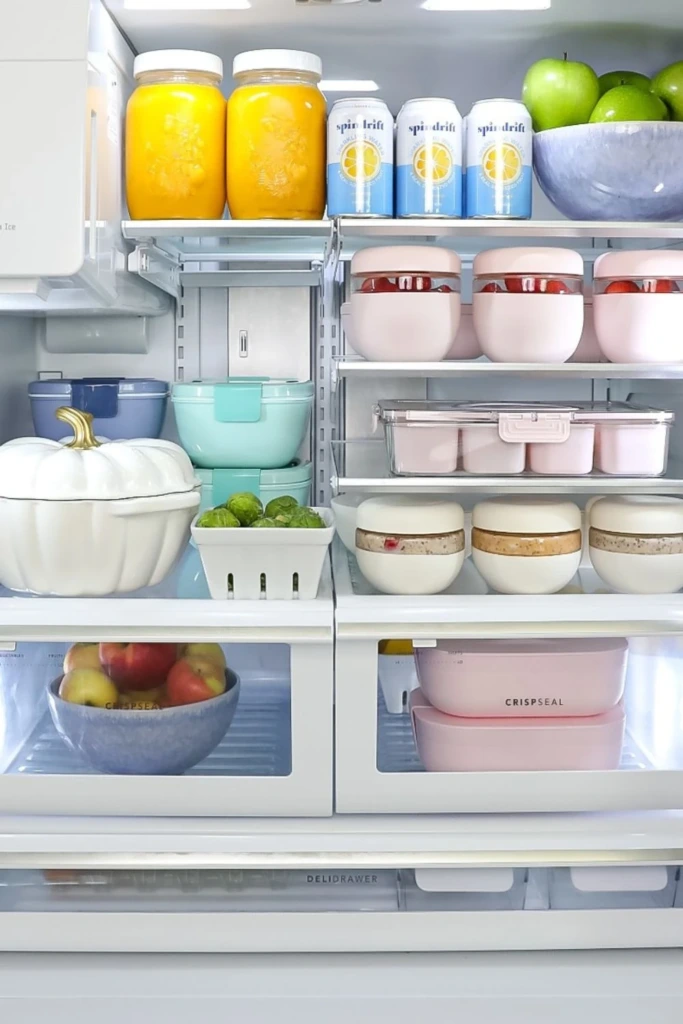
Color coding offers a simple way to make refrigerator organization more intuitive.
You can assign different colored labels or container lids to specific food categories. For example, green could identify vegetables, blue could indicate dairy, and yellow could represent ready-to-eat snacks.
This approach is especially useful in shared households where multiple people put groceries away.
You don't need to purchase a complete matching storage collection. A few washable labels or colored stickers can create a consistent system using containers you already own.
5. Vertical Storage
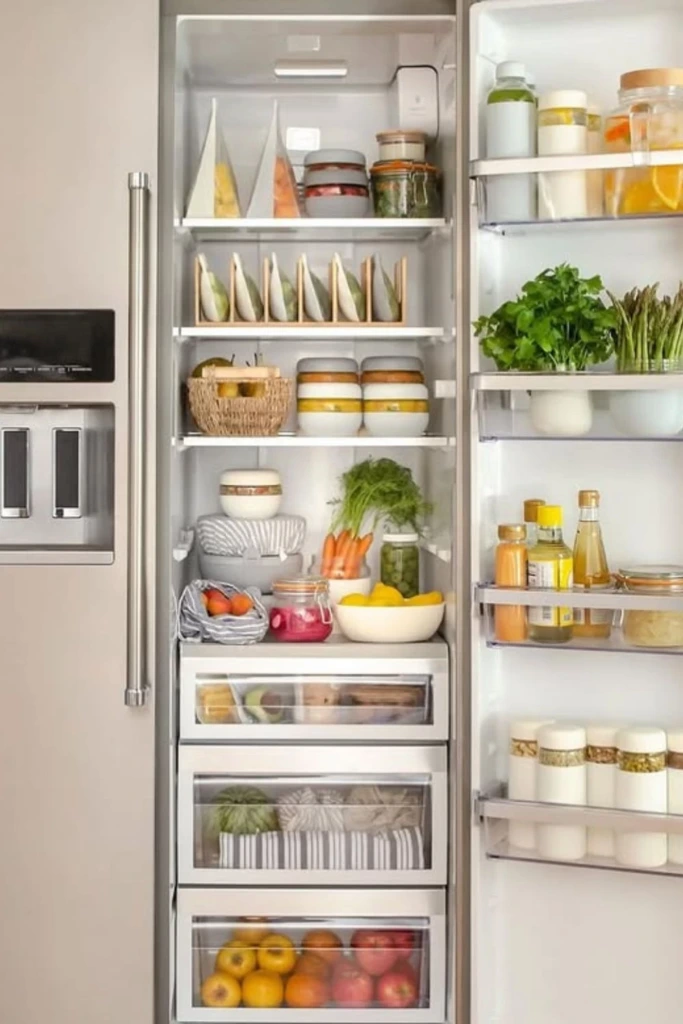
Making better use of shelf height can significantly improve storage capacity in a small fridge.
Tall, narrow containers are useful for upright vegetables, sealed food pouches, and compact ingredient packages. Stackable containers also allow you to store several portions within a smaller footprint.
Adjust removable shelves when possible to accommodate taller items without wasting space.
However, avoid placing heavy containers on unstable stacks or blocking airflow. The goal is to use available height safely, not fill every inch.
6. Labeled Bins
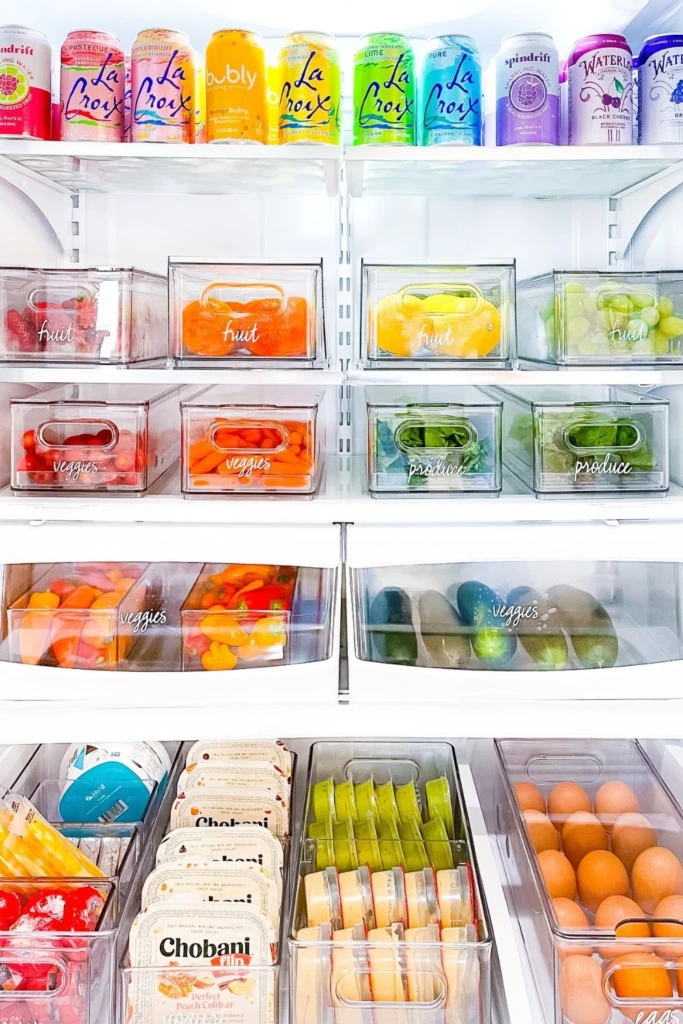
Labels make it easier to maintain refrigerator organization after the initial cleanup.
Place simple category labels on clear bins, such as "Fruit," "Snacks," "Cheese," or "Meal Prep." This helps prevent unrelated items from accumulating in the same container.
Reusable waterproof labels are particularly convenient because you can update them when your grocery habits change.
For prepared foods and leftovers, add the preparation or storage date. This makes it easier to identify older meals and use them within recommended food-safety timeframes.
7. Category Grouping
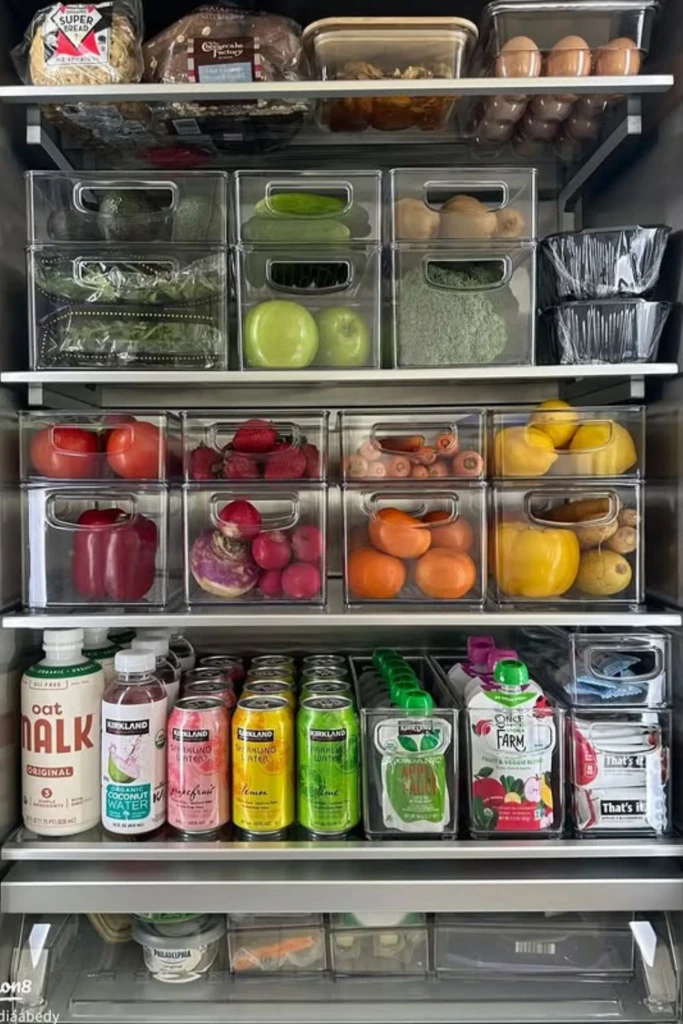
Keeping similar groceries together reduces the time spent searching through refrigerator shelves.
Create separate groups for dairy products, condiments, drinks, fresh produce, and prepared meals. Use narrow organizers to keep smaller packages from spreading into neighboring areas.
For example, place yogurt cups and cheese portions in one section while keeping sandwich ingredients together in another.
Grouping also makes grocery shopping more efficient because you can quickly see which categories are running low.
8. Produce Sections
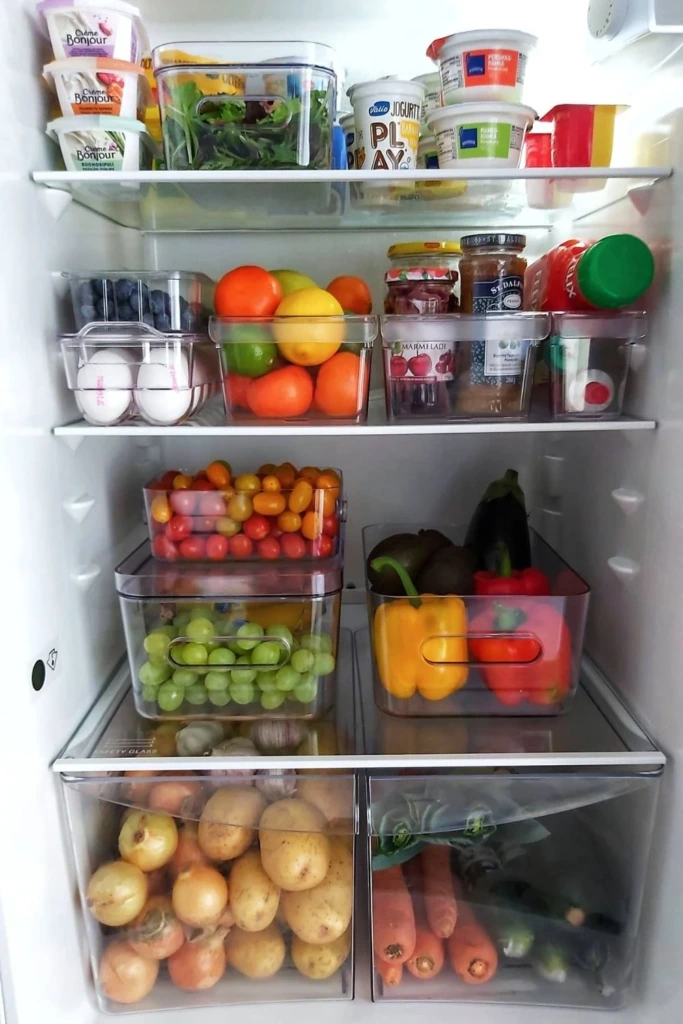
Separating different types of produce can help protect delicate ingredients and simplify meal preparation.
Use shallow containers for berries and grapes, larger compartments for vegetables, and appropriate crisper drawers for leafy greens.
Avoid placing heavy vegetables directly on top of soft fruit. Also consider the storage requirements of individual ingredients rather than assuming everything belongs in the refrigerator.
For instance, whole potatoes and dry onions generally store better in a cool, dry, ventilated location outside the fridge.
An organized produce section should support freshness as well as appearance.
9. Drawer Bins
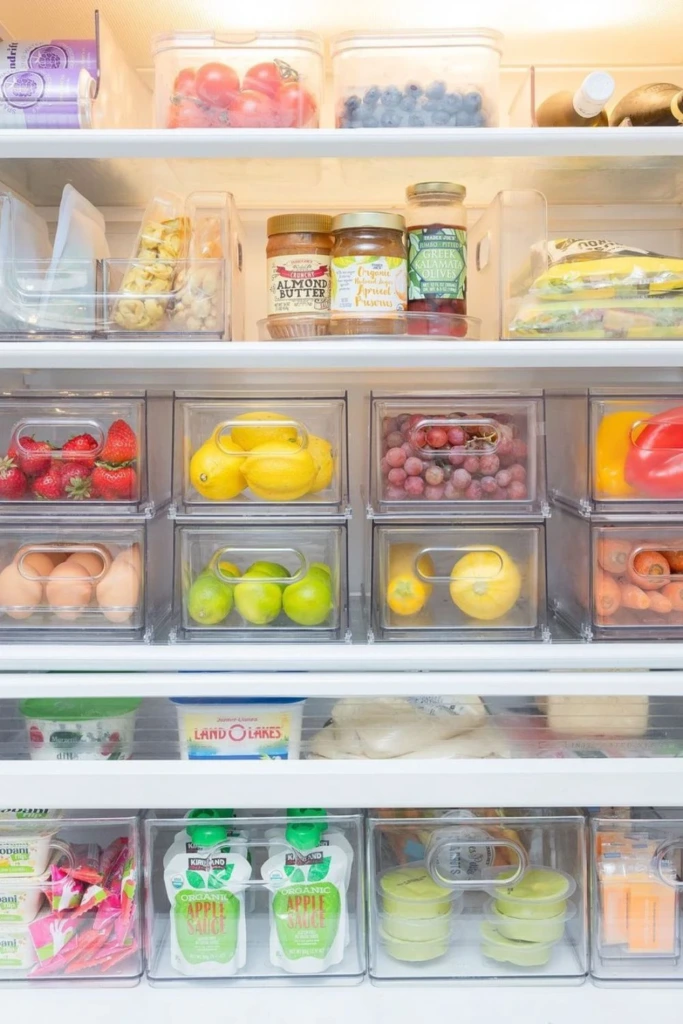
Pull-out drawer bins are particularly useful for refrigerators with deep shelves.
Instead of reaching behind several containers, you can slide a bin forward to access items stored near the back.
Choose lightweight organizers with comfortable handles and enough clearance to move smoothly. Narrow drawers work well for cheese sticks, snack packets, small produce, and packaged ingredients.
Avoid overloading them, especially if they rest on glass shelves.
For best results, select bins that can be removed completely for regular washing.
10. Jar Storage
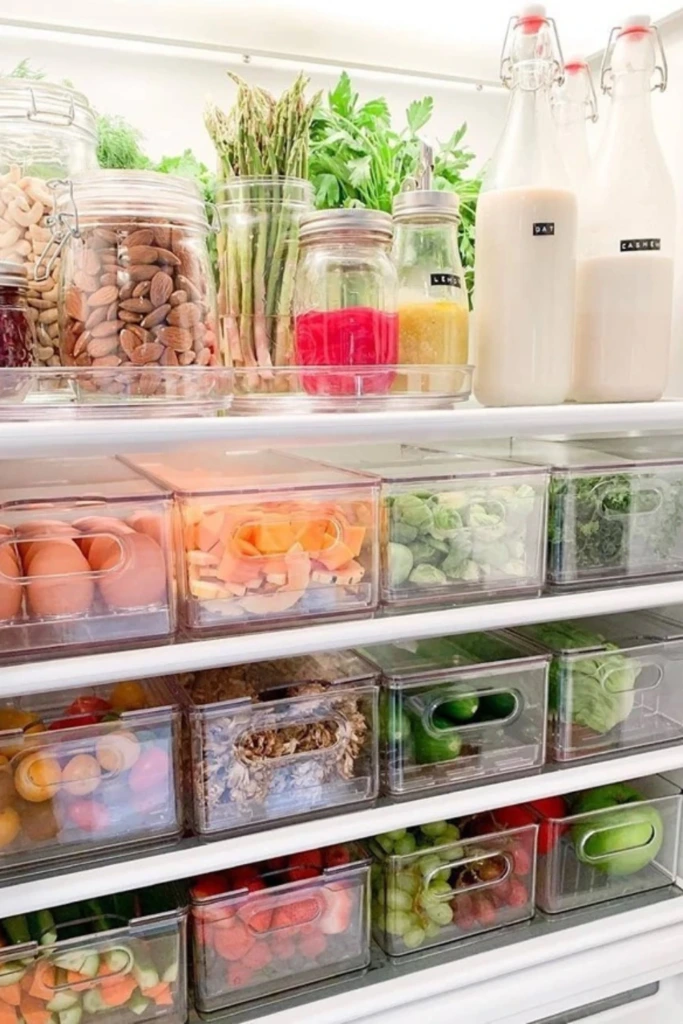
Reusable jars provide a compact way to store certain prepared ingredients and small food portions.
Glass jars with secure lids are useful for homemade dressings, sauces, overnight oats, and chopped ingredients that require refrigeration.
Choose straight-sided jars where possible because they are easier to arrange closely together. Smaller jars are especially helpful for preventing partially used ingredients from occupying oversized containers.
Always use food-safe jars and refrigerate perishable contents promptly.
Dry pantry foods, such as unopened nuts or seeds, generally don't need refrigerator space unless their packaging or storage requirements indicate otherwise.
11. Vertical Bins
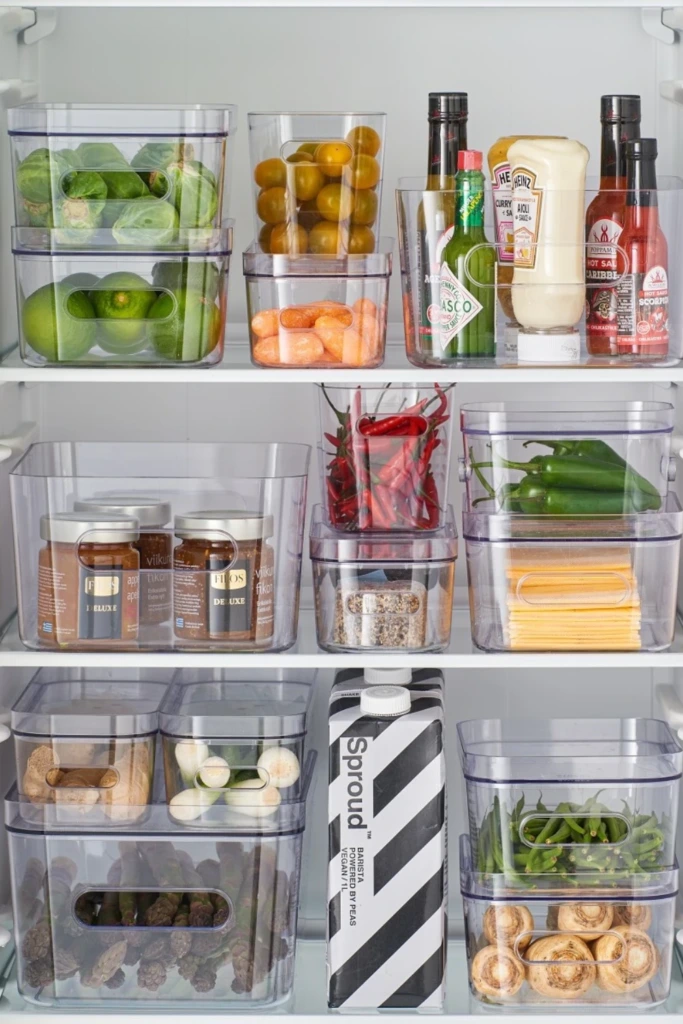
Vertical bins are ideal for keeping narrow food packages and smaller ingredients organized without spreading them across an entire shelf.
Look for slim containers with straight sides and easy-grip handles. These can hold condiment packets, packaged snacks, small vegetables, or individual servings.
Some designs are stackable, allowing you to create additional storage levels when shelf height permits.
Measure carefully before buying, since tall bins can become inconvenient if there isn't enough space to lift or pull them out.
A practical vertical storage arrangement should allow every item to remain accessible.
12. Meal Prep
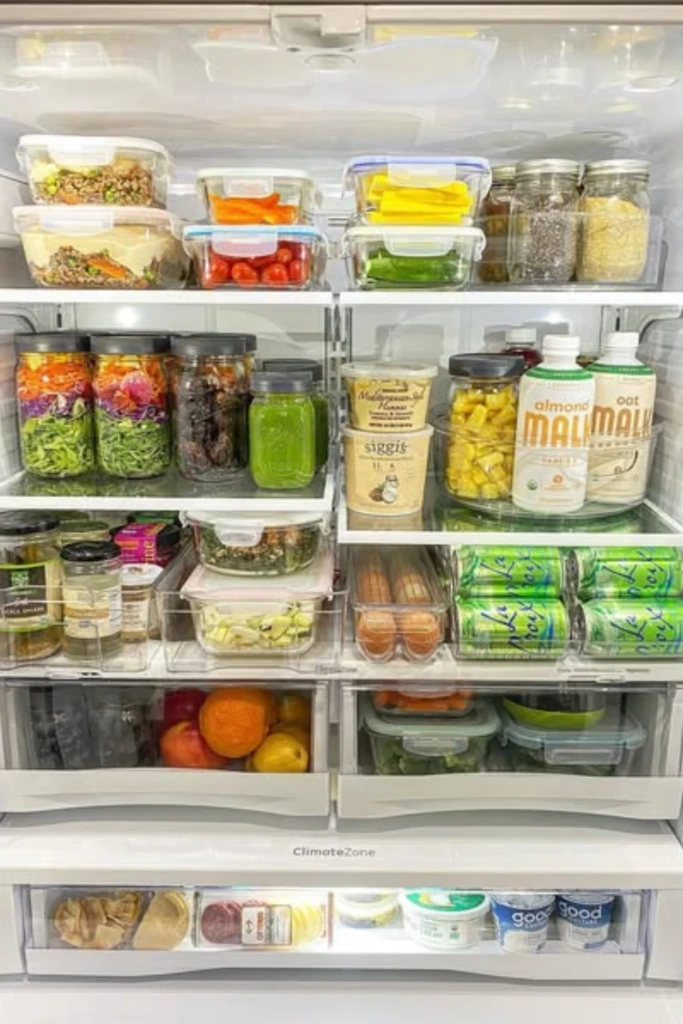
Preparing meals ahead of time can simplify refrigerator organization by reducing the number of loose ingredients and bulky packages.
Store individual meals in portion-sized, airtight containers that stack securely. Rectangular containers are especially useful for arranging several lunches or dinners together.
Keep sauces and dressings separate when necessary to preserve texture.
Label prepared meals with dates, and refrigerate promptly. Most cooked leftovers should be eaten within three to four days when stored at 40°F (4°C) or below.
A designated meal-prep area also makes it easier to see what is ready to eat before cooking something new.
13. Snack Stations
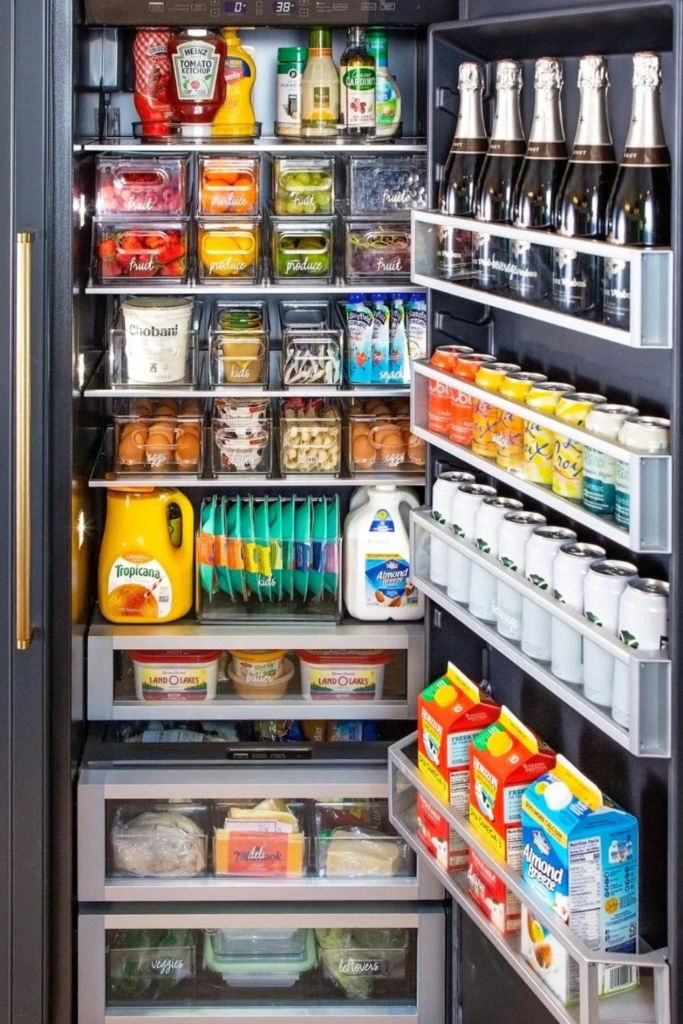
A dedicated snack station can keep frequently requested foods from taking over the refrigerator.
Use one or two small bins for yogurt cups, washed fruit, cheese portions, and other refrigerated snacks.
If children use the fridge independently, place age-appropriate snacks on a shelf they can reach safely.
Choose containers that are easy to remove and return, and avoid creating so many categories that the system becomes difficult to maintain.
Keeping a few ready-to-eat options together can make busy mornings and afternoon snack times more convenient.
14. Shelf Labels
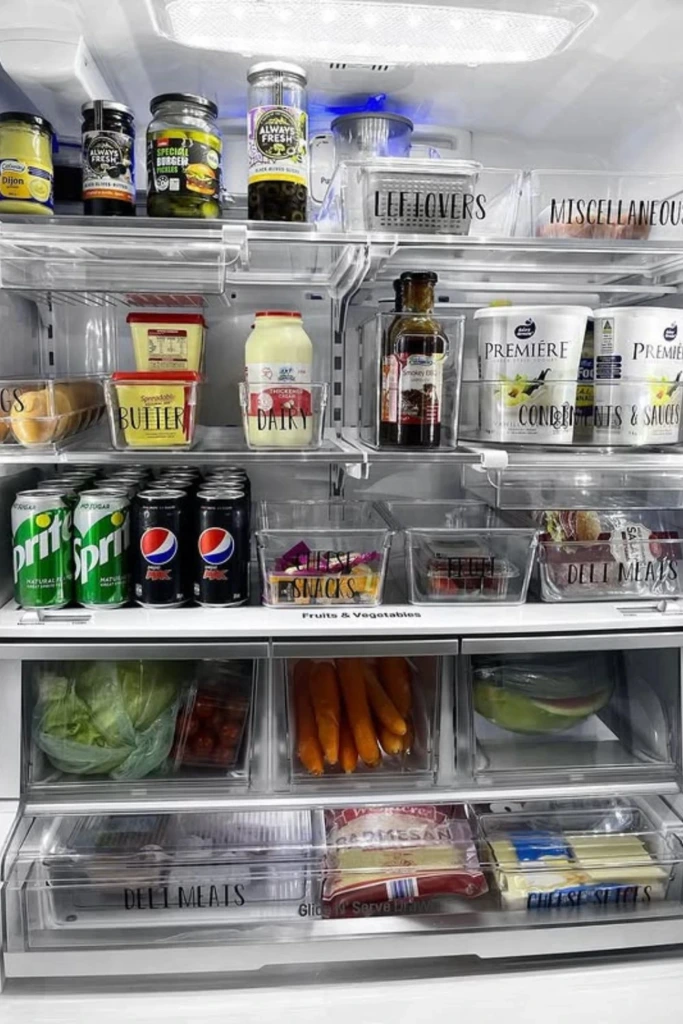
Shelf labels help establish a predictable layout, especially in refrigerators used by several people.
You might designate sections for "Leftovers," "Breakfast," "Dairy," and "Ready to Eat." Place labels along the front edges of shelves or directly on removable organizers.
Keep the wording short and easy to understand.
Labels can also encourage better food rotation. A small "Eat First" section is useful for leftovers and ingredients approaching their recommended use-by dates.
Remember that labels should guide organization without overriding proper food-safety placement.
15. Drink Row
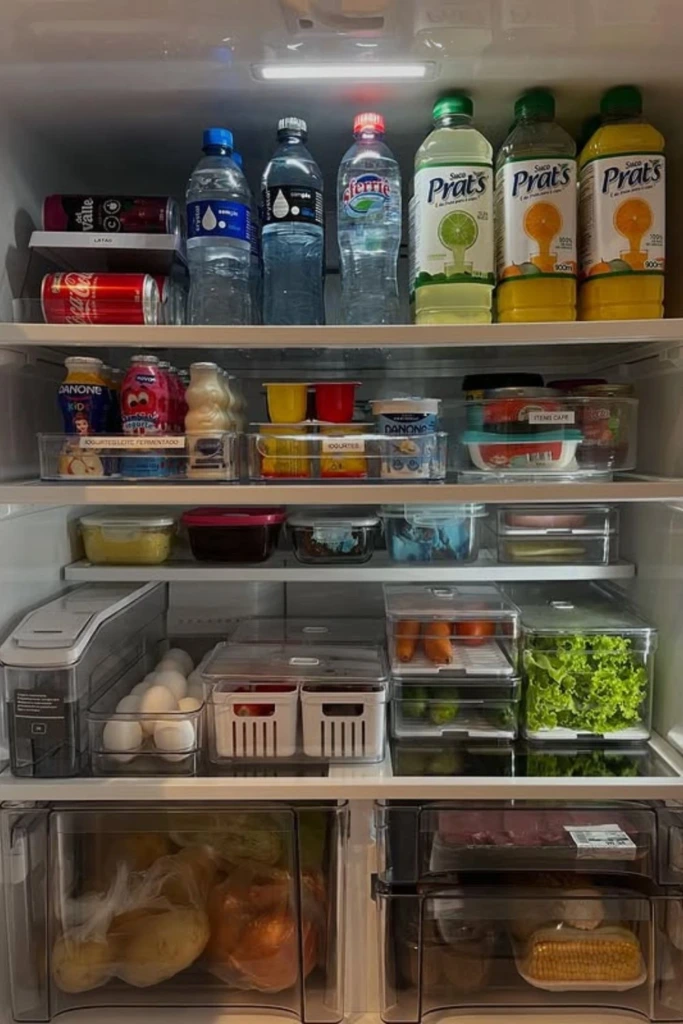
Bottles and cans can occupy a surprising amount of refrigerator space when stored in several different locations.
Creating a dedicated drink row keeps beverages contained and makes the remaining shelves easier to organize.
Arrange bottles upright and group similar sizes together. A narrow beverage organizer can help prevent cans from rolling.
If space is extremely limited, refrigerate only the drinks you expect to use soon and keep unopened shelf-stable beverages elsewhere.
Avoid placing drinks in front of cooling vents or overcrowding the shelf.
16. Fresh Herb Storage
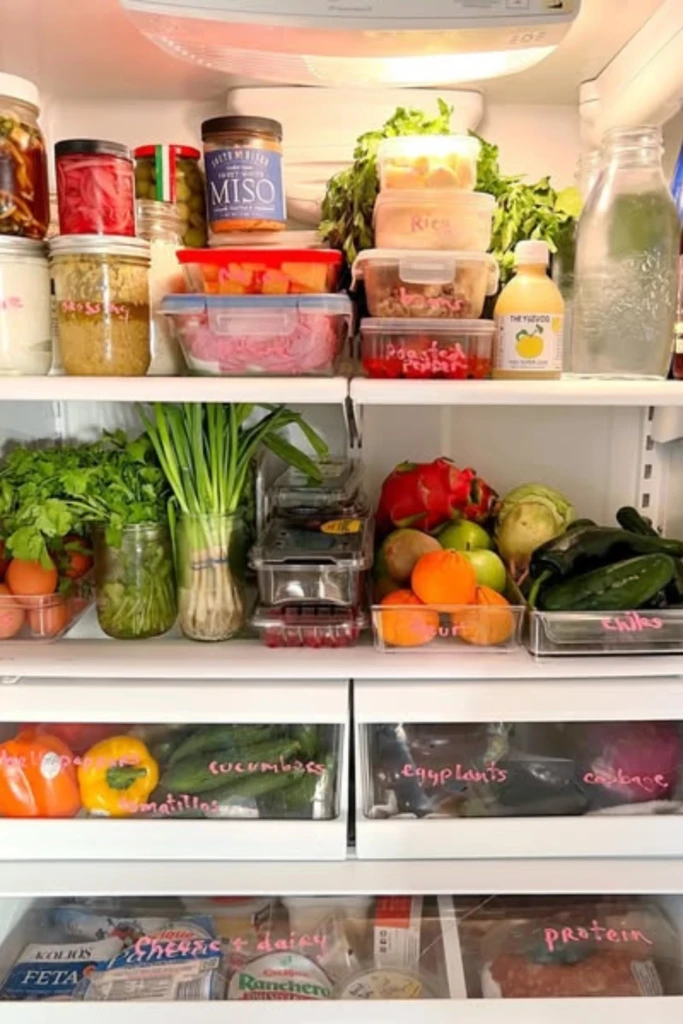
Fresh herbs are easy to damage when tucked between larger groceries.
For tender herbs such as parsley and cilantro, trim the stems and place them in a small jar containing a little water. Loosely cover the leaves when appropriate and keep the jar upright in the refrigerator.
Change the water as needed and remove any damaged leaves.
Other herbs require different treatment. Basil, for example, is sensitive to cold and often keeps better at room temperature for short periods.
Choosing the right storage method helps preserve flavor while keeping delicate herbs separate from heavier ingredients.
17. Category Zones
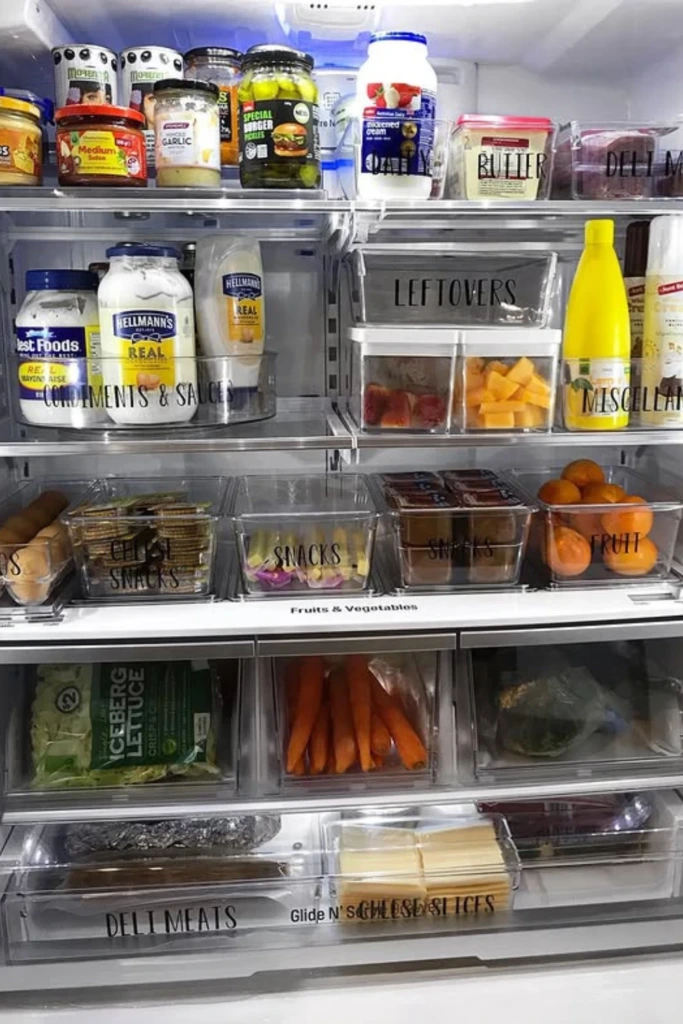
Category zones can make a small refrigerator feel more functional by giving each type of food a predictable location.
Unlike a rigid shelf-by-shelf system, these zones can be adjusted according to your weekly grocery needs.
For example, reserve one area for breakfast ingredients, another for lunch supplies, and a separate section for cooking essentials.
Use removable bins so you can expand or reduce each zone as necessary.
Keep temperature-sensitive foods in suitable locations, regardless of category. This flexible approach combines convenience with proper food storage.
18. Stack System
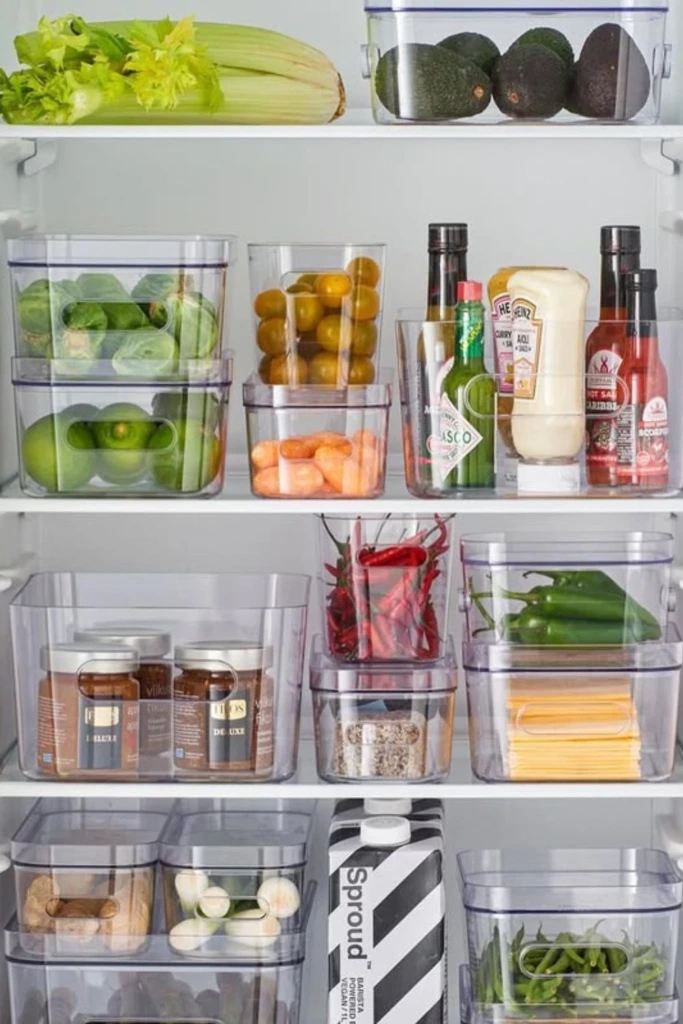
A coordinated stacking system can help maximize shelf space without making the refrigerator difficult to navigate.
Select a few container sizes that work together, such as shallow boxes for small portions and deeper containers for larger meals.
Place heavier containers underneath lighter ones and avoid unstable towers.
Containers with flat lids are generally easier to stack than irregularly shaped dishes.
You don't need to transfer every grocery item into matching boxes. Focus on leftovers and loose ingredients where stacking provides a genuine space-saving benefit.
19. Drink Baskets
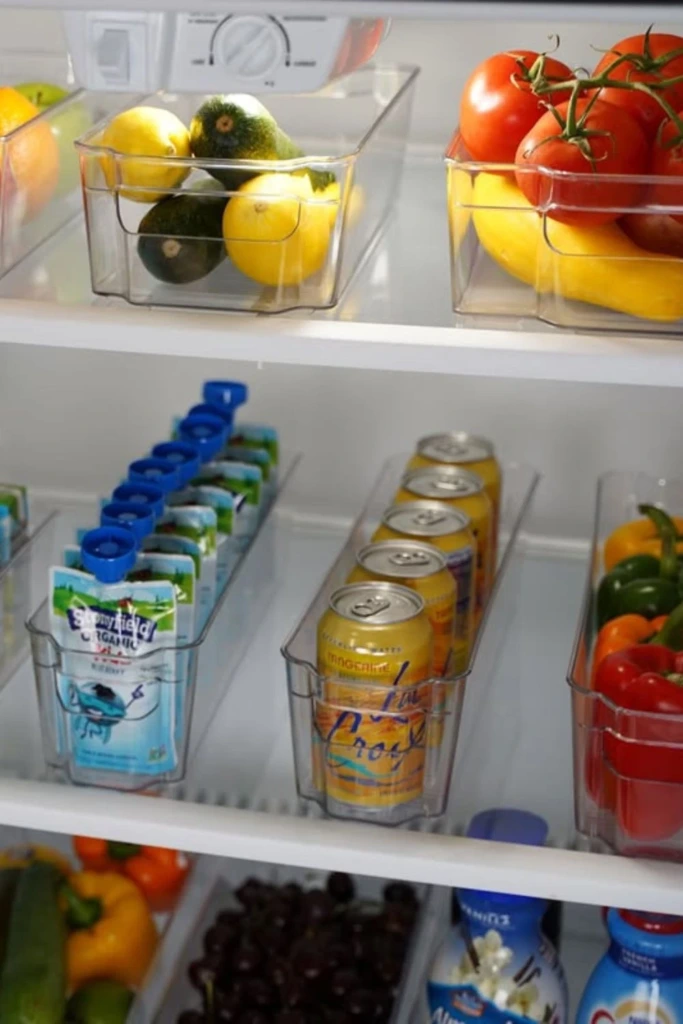
Slim beverage baskets can keep juice boxes, small bottles, and cans neatly contained.
Choose baskets that fit the depth of your shelves and have low enough sides for easy access.
Handles are helpful when you need to remove several drinks at once. Open-sided designs can also make labels easier to see.
Avoid stacking loose cans where they might roll or fall when the basket moves.
For households that frequently refrigerate individual drinks, one designated basket can prevent beverages from spreading throughout the fridge.
20. Produce Dividers
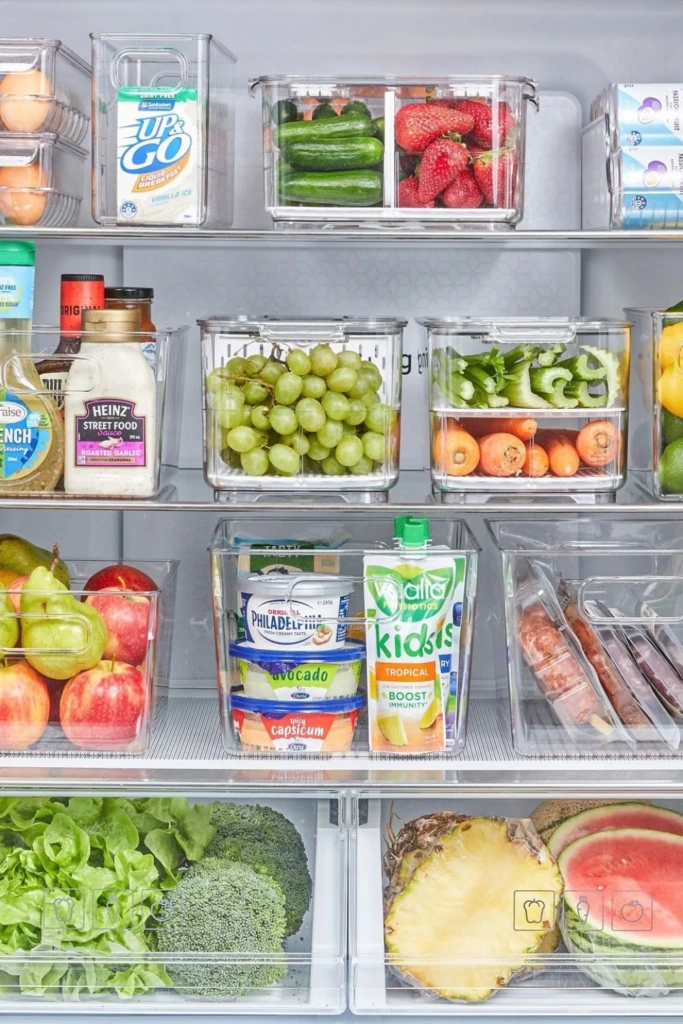
Divided produce containers allow you to organize multiple ingredients within a single storage box.
They're especially useful for small portions of cut vegetables, snack ingredients, and meal-preparation supplies.
For example, you could keep carrot sticks in one compartment and sliced bell peppers in another, provided the container is suitable for both.
Choose removable dividers when possible so the compartments can accommodate different quantities.
Keep cut produce refrigerated in clean, covered containers, and avoid combining ingredients with incompatible moisture or storage requirements.
21. Lazy Turntable
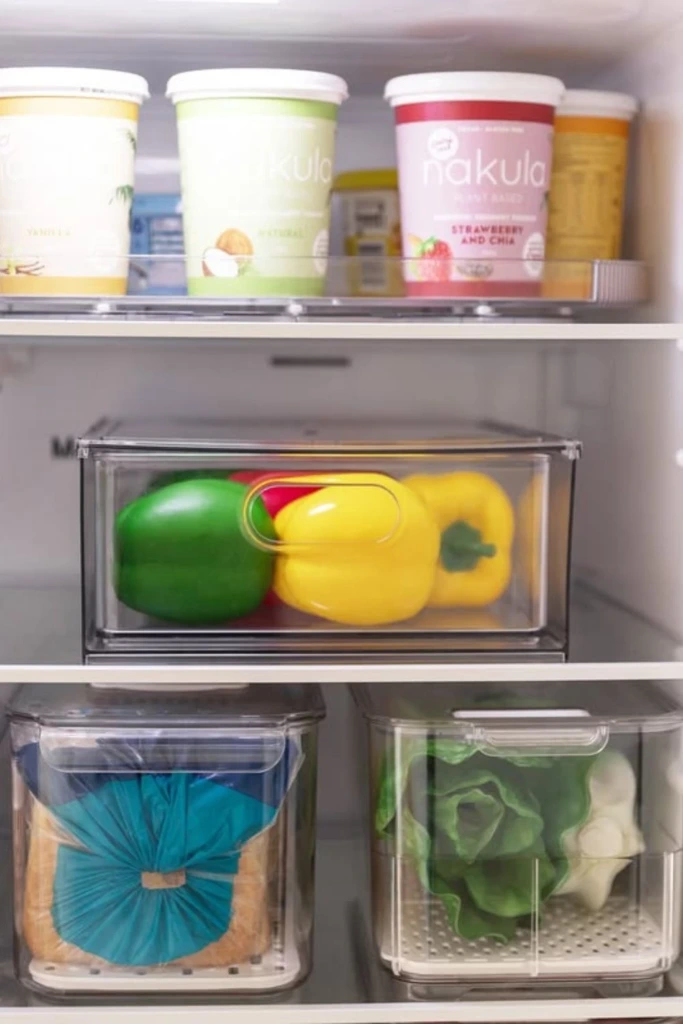
A compact rotating organizer can make items at the back of a refrigerator shelf easier to reach.
A small turntable works particularly well for jars of condiments, sauces, and other frequently used containers.
Choose a model with a raised edge to help prevent items from sliding off during rotation.
Before purchasing, check that the turntable can rotate freely without hitting the refrigerator walls, shelf supports, or nearby groceries.
This solution is most useful on shelves with sufficient depth. In extremely narrow refrigerators, a rectangular pull-out bin may use space more efficiently.
How do you maximize space in a small refrigerator?
Start by removing expired food, unnecessary packaging, and items that don't require refrigeration.
Next, group similar groceries and use appropriately sized containers to reduce wasted shelf space. Stackable rectangular boxes, slim bins, and adjustable shelves can help accommodate more food without creating clutter.
Keep frequently used items accessible and designate a small section for foods that should be eaten soon.
Finally, avoid overfilling the refrigerator. Cold air needs room to circulate to maintain safe, consistent temperatures.
What foods should not be stored in the refrigerator door?
The refrigerator door experiences more temperature changes than the interior shelves because it is exposed to warmer air whenever the door opens.
For this reason, highly perishable foods such as raw meat, seafood, eggs, and milk are better stored in the main refrigerator compartment.
The door is generally more suitable for condiments, pickles, bottled sauces, and other products that tolerate minor temperature fluctuations, provided their storage instructions allow it.
Keep the refrigerator at or below 40°F (4°C), ideally around 37°F (3°C), and use a refrigerator thermometer to verify the temperature.
With a thoughtful layout and a few well-chosen organizers, even a compact refrigerator can provide practical storage for everyday groceries. The most effective system is one that keeps food safe, makes ingredients easy to find, and remains simple to maintain throughout the week.