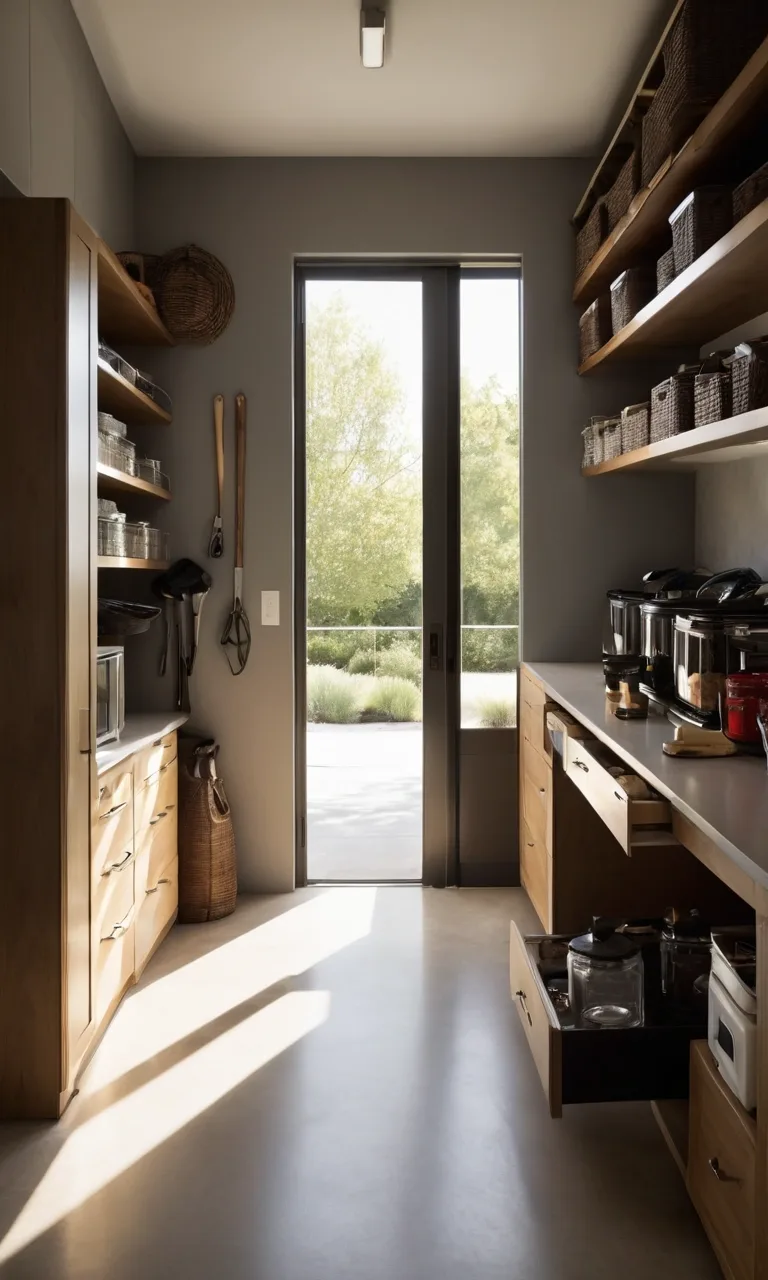
27 Garage Tool Organization Ideas for 2026
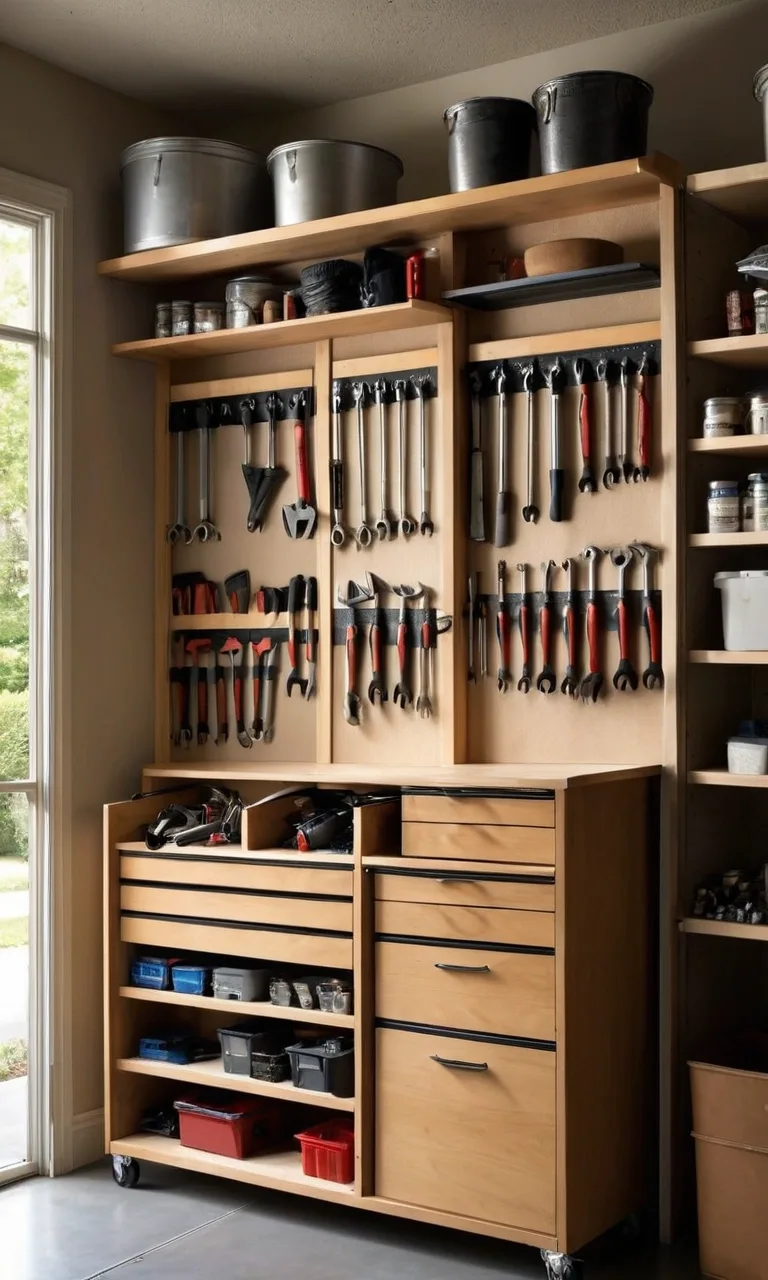
A well-organized garage makes home repairs, woodworking, and weekend DIY projects much easier. Instead of searching through crowded drawers or stepping around scattered equipment, you can create a practical storage system that keeps everything accessible and protected.
The best garage tool organization ideas make use of wall space, adjustable storage, portable workstations, and dedicated compartments. Whether you have a spacious workshop or a small garage shared with your car, there are plenty of ways to organize your tools without sacrificing valuable floor space.
These 26 ideas will help you create a cleaner, more functional garage that suits your tools, projects, and everyday routine.
1. Drawer and Cabinet Systems
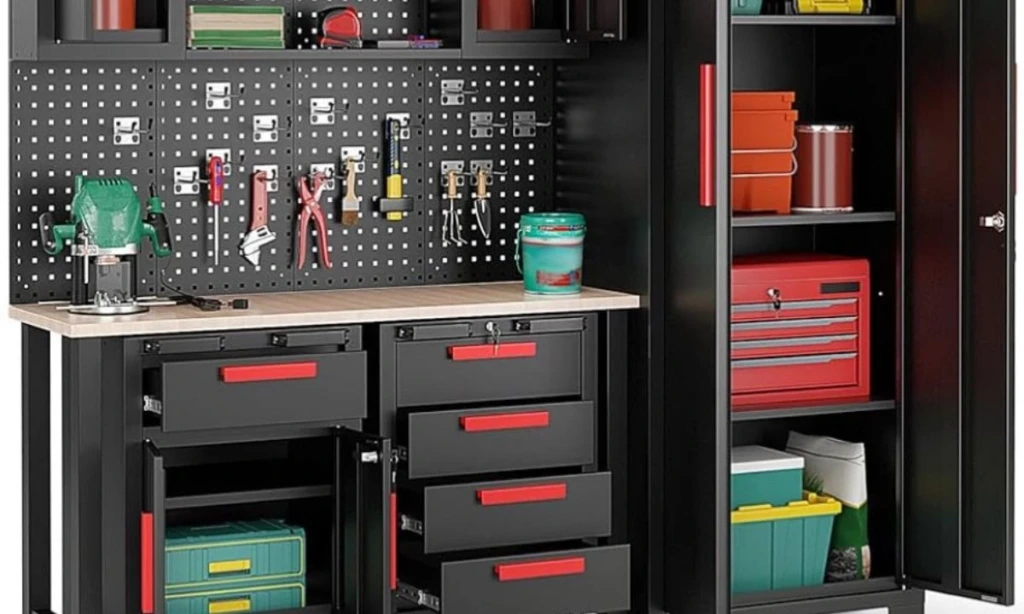
Drawer and cabinet systems provide a reliable foundation for organizing garage tools of different sizes. They keep frequently used equipment within reach while protecting delicate instruments and metal tools from unnecessary exposure to dust and moisture.
Choose deep drawers for bulky equipment, shallow compartments for hand tools, and adjustable dividers for smaller accessories. Foam liners can prevent tools from sliding around, while labels make it easier to return everything to its designated location.
For garages with limited space, consider stacking cabinets or combining a drawer unit with a workbench. Lockable cabinets are particularly useful for keeping sharp tools and hazardous supplies away from children.
2. Mobile Peg Cart
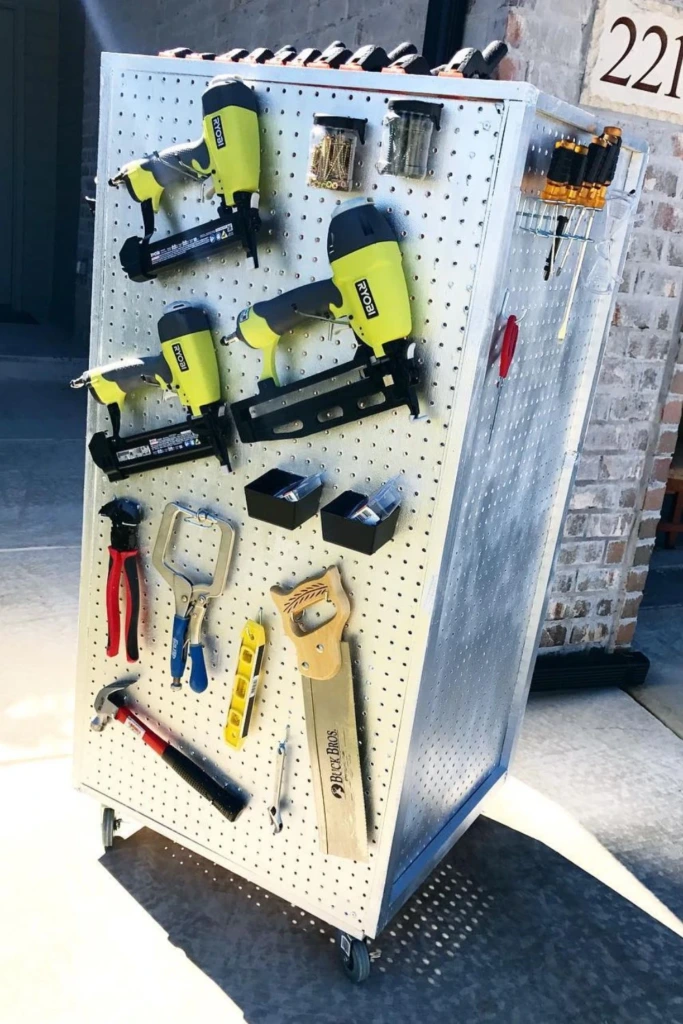
A mobile peg cart offers flexible storage for anyone who works in different areas of the garage. By attaching pegboard panels to a sturdy rolling frame, you can organize hand tools vertically and move them wherever your project takes you.
Use hooks for hammers, pliers, and measuring tapes, then add small baskets for screws and drill bits. Locking caster wheels are important because they keep the cart stationary while you work.
A double-sided design increases storage capacity without requiring additional floor space. Keep heavier items near the bottom to improve stability.
3. Compact Tool Case
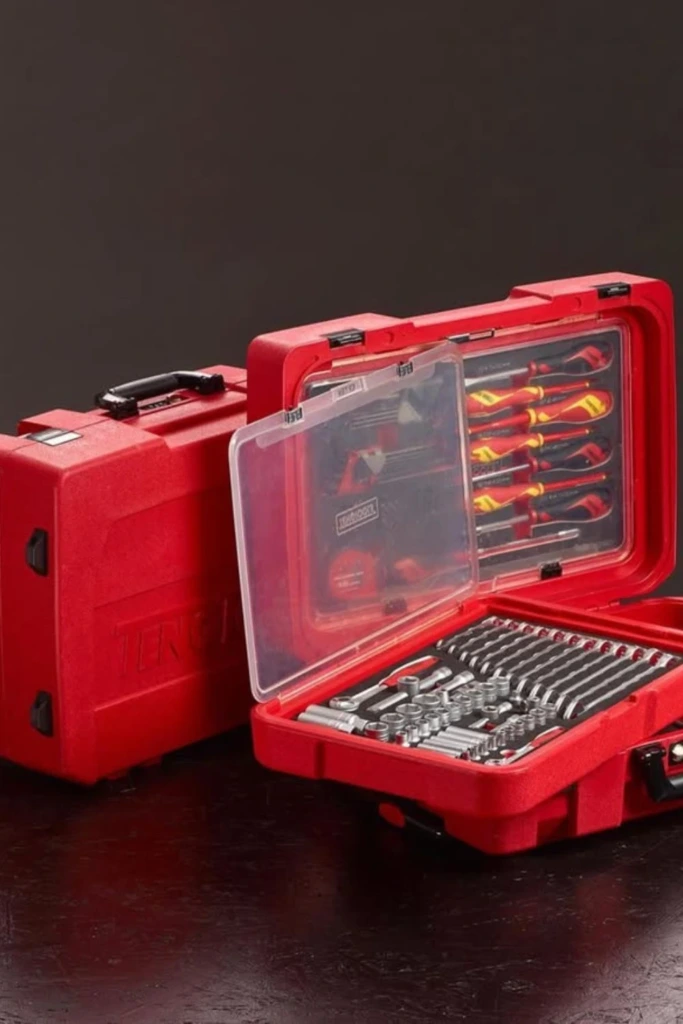
A compact tool case is an excellent option for organizing essential tools without investing in large storage furniture. It works especially well for homeowners who occasionally handle repairs or need to carry equipment between locations.
Look for a case with removable dividers, secure closures, and compartments sized for your tools. Arrange sockets, screwdrivers, and wrenches by type so you can identify missing pieces quickly.
A molded or padded interior helps protect equipment during transportation. Store the case on a dedicated garage shelf so it is always ready when needed.
4. Wire Basket Wall
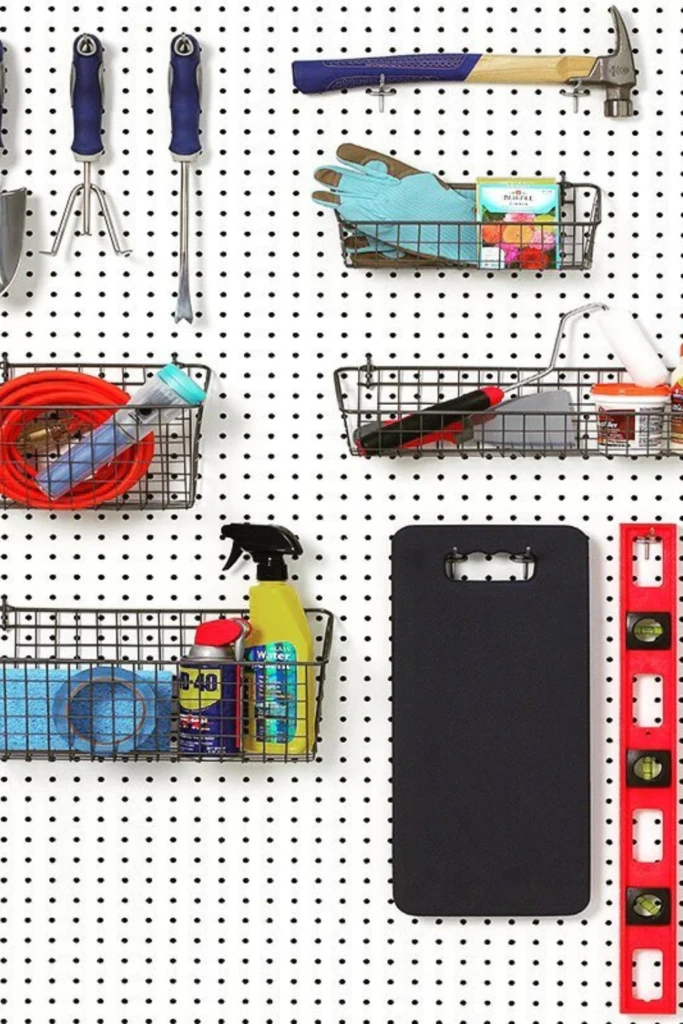
Wire baskets turn unused garage walls into convenient storage areas for items that are difficult to hang individually.
Mount several sturdy baskets on a wall-mounted rail or compatible pegboard system. Use them to organize work gloves, sanding blocks, safety glasses, extension cords, and gardening accessories.
Open baskets allow you to see their contents without removing everything. Position frequently used supplies at a comfortable height and reserve upper baskets for lightweight items you need less often.
Choose corrosion-resistant baskets if your garage experiences high humidity.
5. Wall Panel System
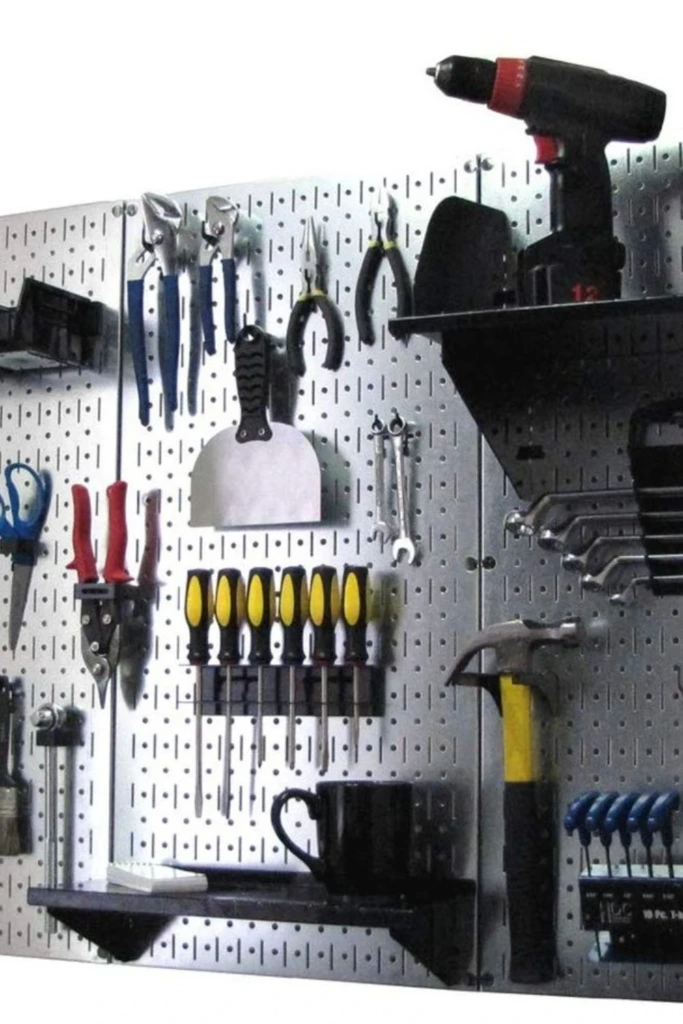
A wall panel system creates a flexible storage area that can change as your tool collection grows. Metal pegboards, slatwall panels, and modular wall tracks are all practical choices.
Start by grouping equipment according to how you use it. Keep screwdrivers and pliers together, reserve another section for drilling accessories, and provide separate hooks for measuring tools.
Attach shelves or small containers for accessories that cannot hang securely. Before installation, check the manufacturer's weight limits and fasten the system to suitable structural supports.
The main advantage is adaptability. You can rearrange holders whenever your projects or storage requirements change.
6. Corner Peg Layout
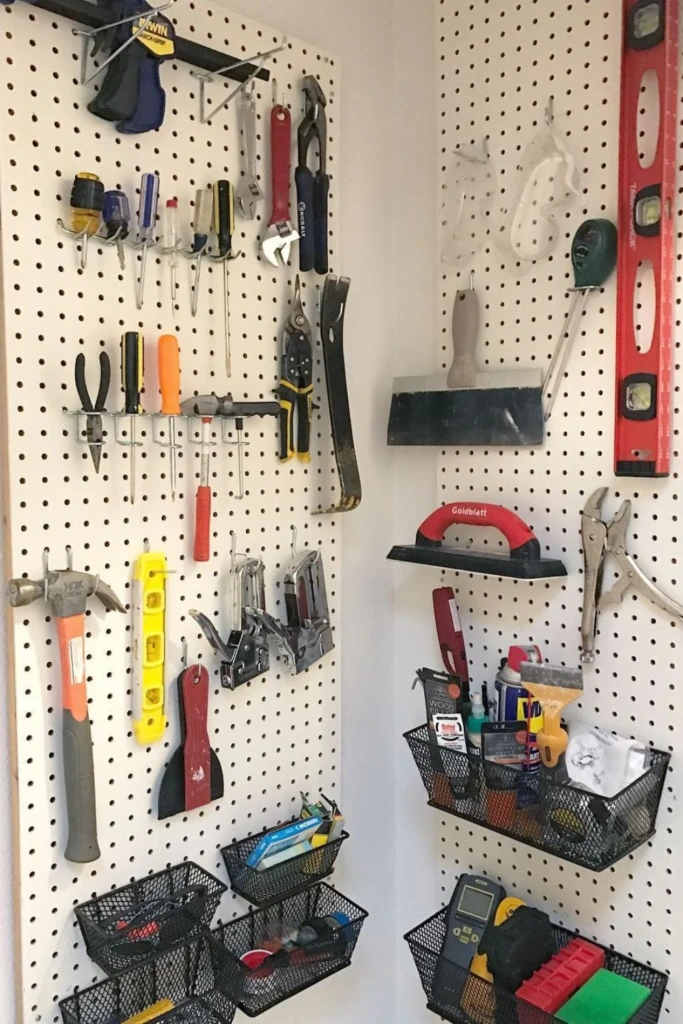
Garage corners often remain empty because traditional shelving does not fit comfortably into them. Installing pegboards on adjoining walls makes these overlooked spaces useful.
Position your most frequently used hand tools near the center of the corner so they are easy to reach. Smaller hooks can hold tape measures, utility knives, and paintbrushes, while attached baskets accommodate loose accessories.
Leave enough clearance to remove tools without hitting the opposite wall. This arrangement works particularly well beside a compact workbench or repair station.
7. Bench Wall Combo
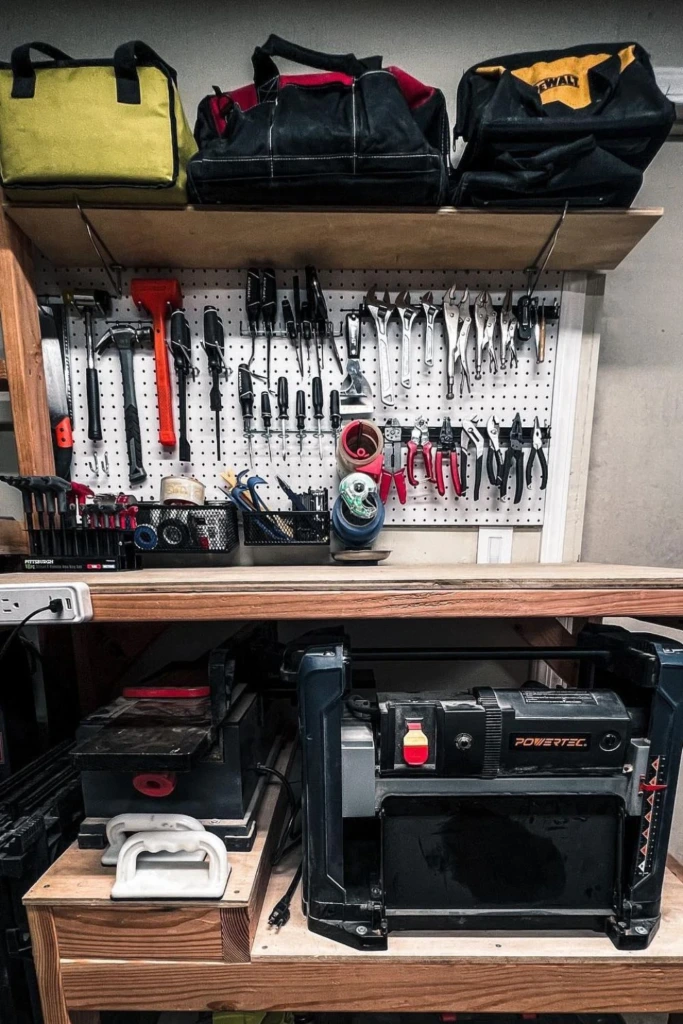
Combining a workbench with wall-mounted storage keeps your tools close to the area where you actually use them.
Install a pegboard or tool rail directly above the bench for screwdrivers, squares, clamps, and other everyday essentials. Use the space beneath the work surface for larger equipment, storage boxes, or a small drawer cabinet.
Keep the center of the workbench clear for assembling, cutting, and repairing materials. Place heavy equipment on stable lower shelves rather than overhead.
Good task lighting above the bench can make detailed projects easier and safer.
8. Labeled Bin Rack
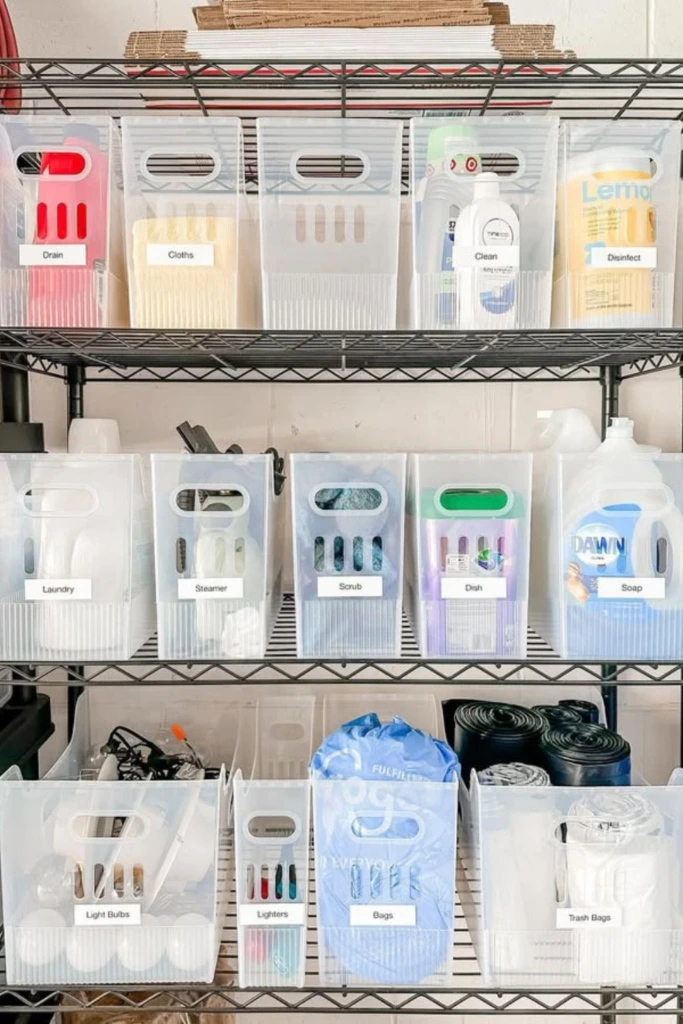
A labeled bin rack simplifies the storage of small garage supplies that tend to disappear into drawers and toolboxes.
Use stackable containers or a shelving unit with individual bins for nails, screws, anchors, washers, and spare hardware. Separate items by size and purpose rather than mixing unrelated pieces.
Clear containers are helpful, but visible labels are still important. Include measurements on labels when storing fasteners, such as screw length or diameter.
For frequently used hardware, choose bins that can be removed individually and carried to your work area.
9. Power Tool Wall
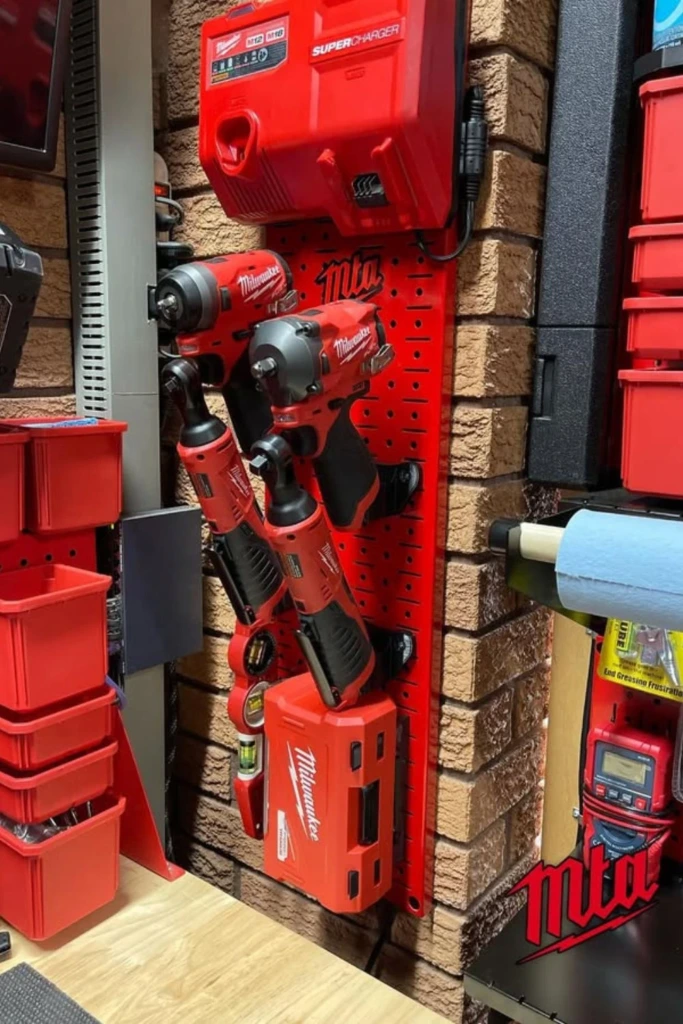
A dedicated power tool wall keeps drills, impact drivers, sanders, and their accessories organized without occupying your workbench.
Install compatible holders or sturdy shelves designed for the weight and shape of each tool. Position frequently used equipment at an accessible height and store heavier tools securely.
Create a separate charging area nearby, following battery and charger manufacturer instructions. Avoid overloaded outlets, damaged cords, and enclosed charging spaces that trap excessive heat.
Organizing batteries, chargers, and accessories alongside their tools can make project preparation much faster.
10. Wall Zone System
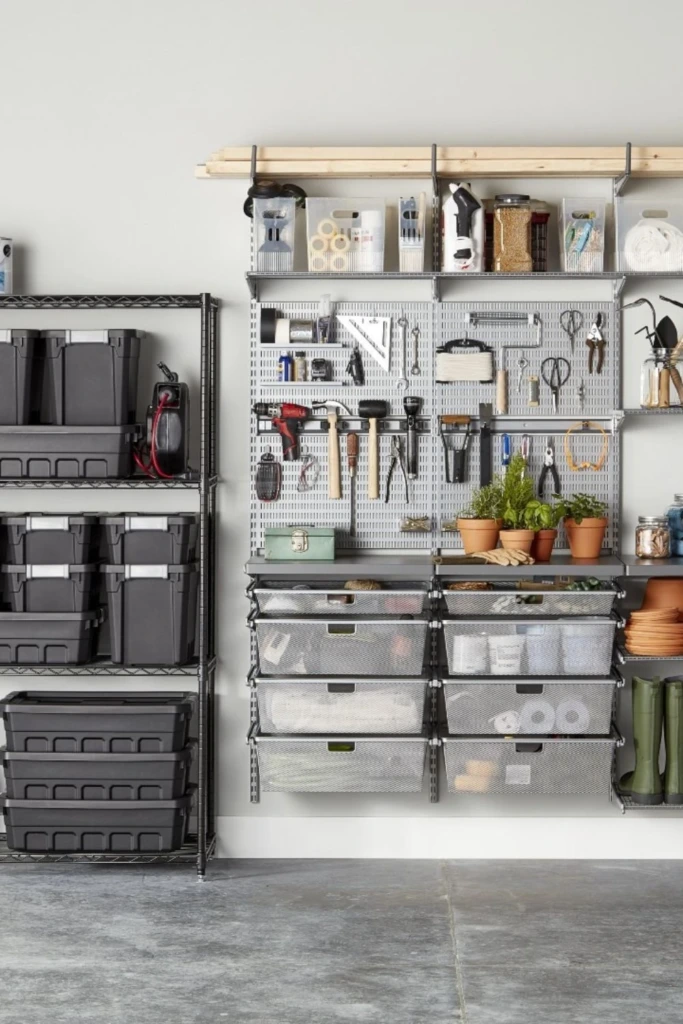
Dividing a garage wall into dedicated storage zones makes it easier to manage different types of equipment in one shared space.
You might assign one section to automotive tools, another to woodworking equipment, and a third to gardening supplies. Combine wall hooks, shelves, bins, and pegboards according to what each category requires.
Keep frequently used tools at eye level and store seasonal equipment higher up. Paints, fuels, and other hazardous materials should be stored according to their labels and applicable safety guidance, rather than mixed indiscriminately with everyday tools.
Clear categories also make cleanup easier because every item has an obvious destination.
11. L-Shape Station
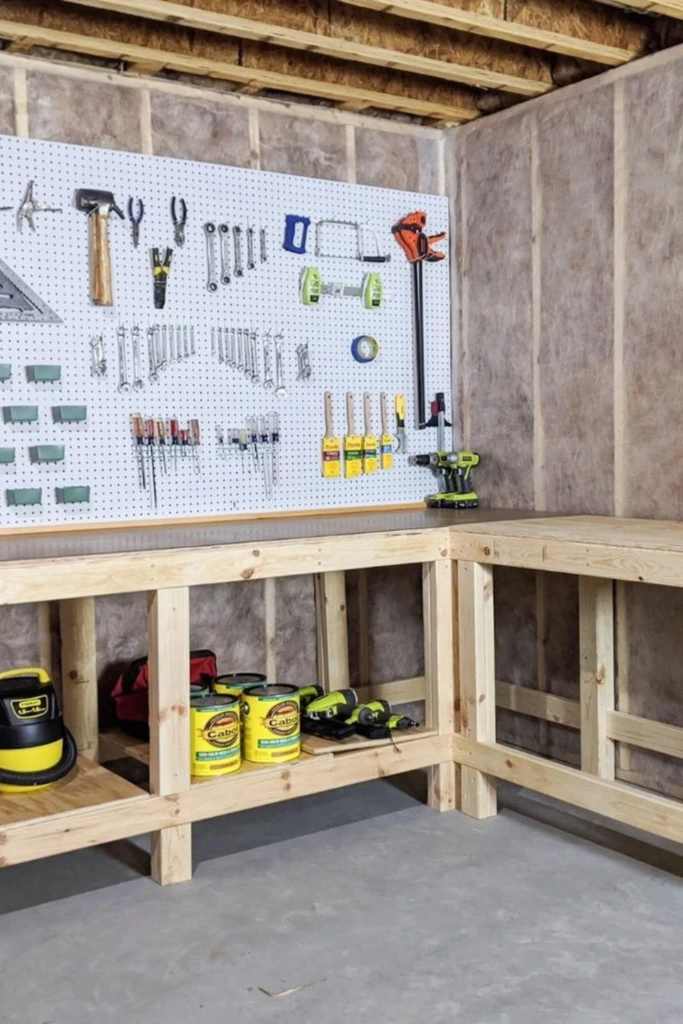
An L-shaped workstation uses two connecting walls to create a larger working and storage area without placing everything along one straight wall.
Use one side for assembly or woodworking and the other for tool storage, measuring, or smaller repairs. Wall-mounted organizers above both surfaces can keep frequently used equipment accessible.
Drawers beneath the bench provide space for hardware and hand tools, while lower shelves can accommodate heavier machines.
Pay particular attention to the inside corner. A rotating organizer or accessible corner shelf can prevent that area from becoming wasted storage.
12. Yard Tool Wall
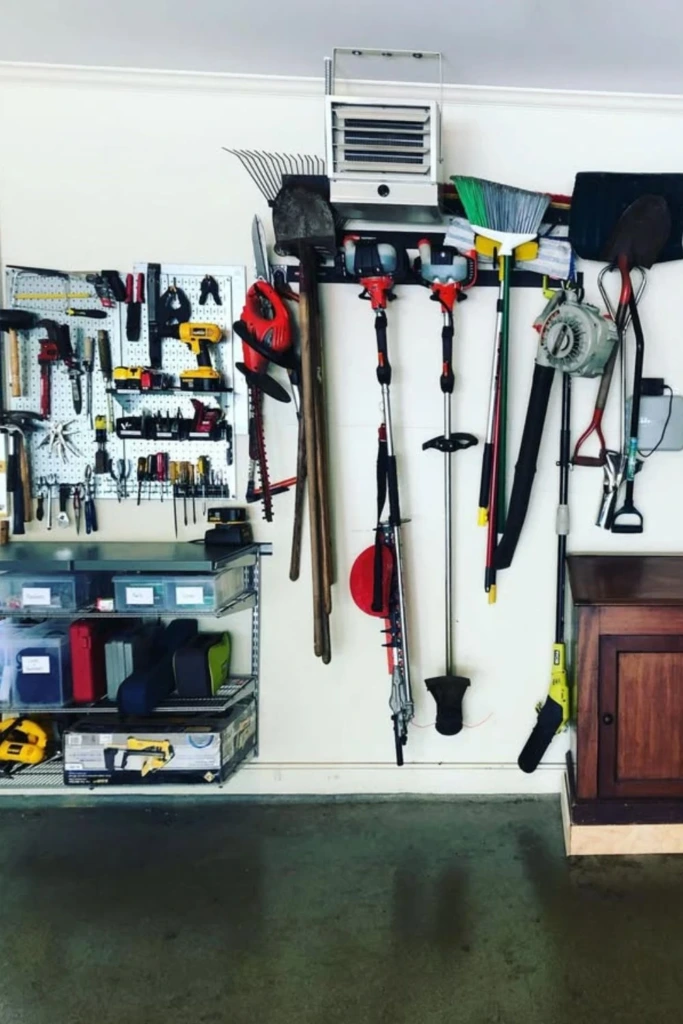
Long-handled gardening tools can create clutter when leaned against garage walls. A dedicated yard tool wall keeps them upright and off the floor.
Install strong wall hooks or a purpose-built rack for shovels, rakes, brooms, and trimming equipment. Arrange tools so sharp or pointed ends do not project into walking areas.
Use nearby baskets for gardening gloves, protective eyewear, and smaller hand tools. A separate holder for hose attachments and watering accessories can complete the setup.
Allow wet or muddy equipment to dry before putting it away to reduce moisture buildup and corrosion.
13. Power Cabinet
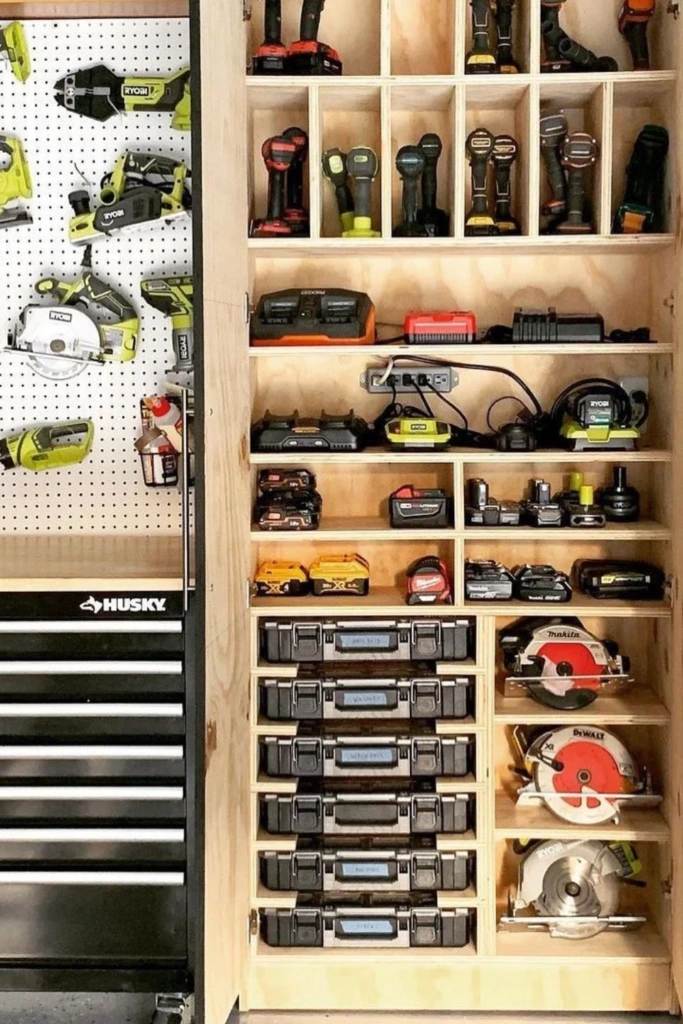
A power cabinet provides a centralized home for cordless equipment and accessories while keeping the garage visually tidy.
Divide the cabinet into sections for drills, saws, batteries, chargers, and interchangeable attachments. Adjustable shelves are useful because power tools vary considerably in size.
Use lower compartments for heavier equipment and shallow drawers for blades, bits, and other accessories.
If the cabinet includes a charging station, ensure adequate ventilation and follow the equipment manufacturer's electrical and battery safety instructions. Avoid charging batteries inside a tightly enclosed cabinet unless the setup is specifically designed for it.
14. Garden Tool Nook
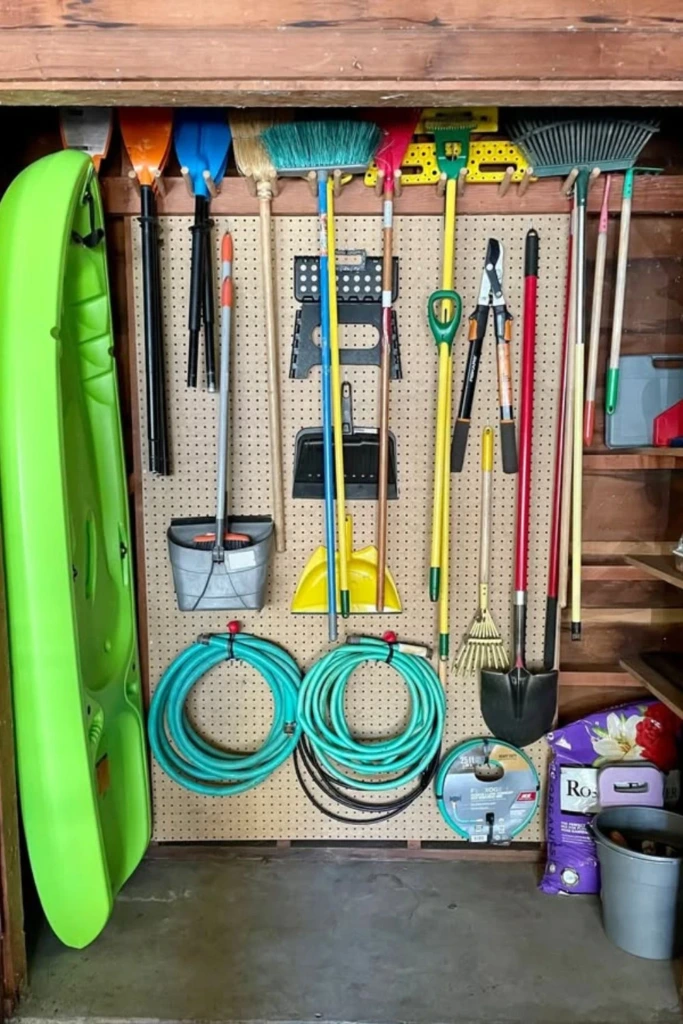
A narrow garden tool nook can turn a small section of garage wall into a practical storage station.
Install vertical holders for brooms, rakes, and shovels, then add shelves or hooks for pruning shears, garden gloves, and hose accessories. A low basket can hold watering attachments or small outdoor supplies.
Choose a location near the garage entrance so you can retrieve outdoor equipment without walking through the entire workspace.
This setup is especially useful when your garage serves as both a workshop and a storage area for lawn maintenance equipment.
15. Pegboard Wall Grid
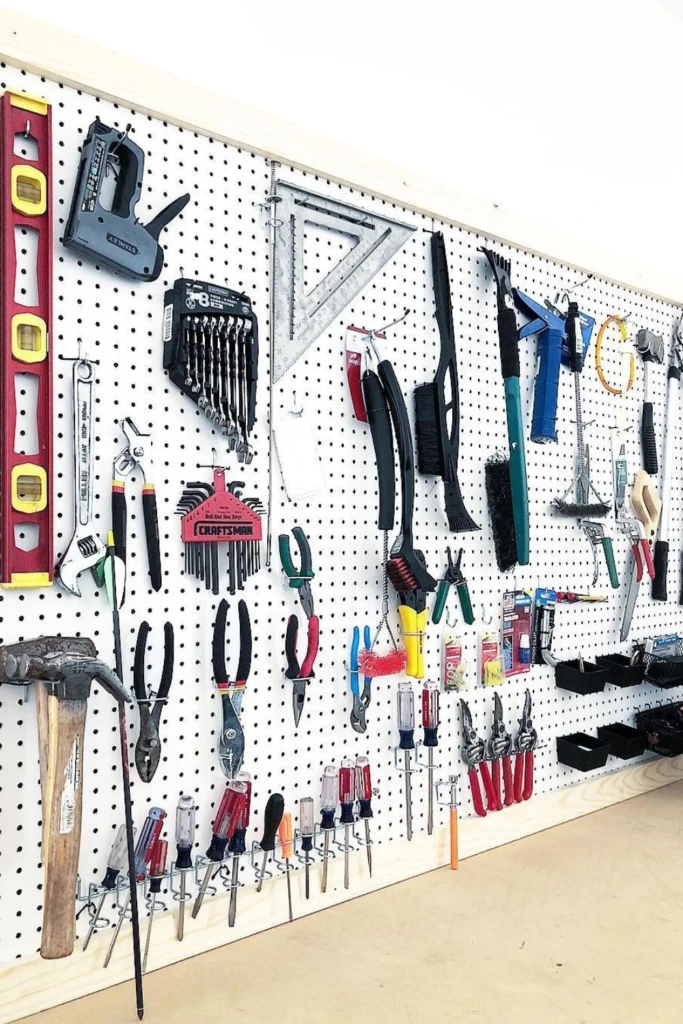
A pegboard wall grid offers an affordable way to organize a collection of hand tools while keeping everything visible.
Arrange tools in clearly defined rows or sections. For example, keep pliers together, hang screwdrivers by size, and reserve another area for measuring equipment.
Choose hooks that fit securely into the pegboard holes. Locking accessories can prevent hooks from coming loose when you remove tools.
You can also mark tool positions with labels or outlines to make it easier to notice missing items after a project.
16. Rolling Workstation
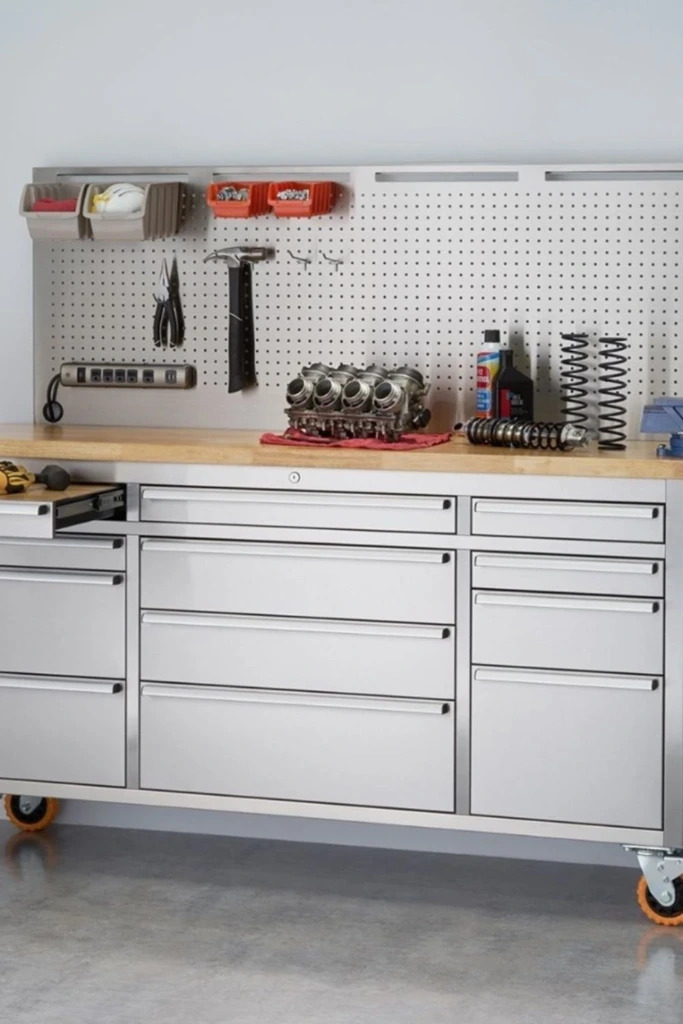
A rolling workstation combines a portable work surface with storage for tools and supplies.
Look for a model with a sturdy top, smooth-moving drawers, and caster wheels that can be locked securely. A work surface made from hardwood or another durable material is useful for everyday assembly and maintenance tasks.
Organize the drawers according to frequency of use, keeping essential hand tools near the top and heavier equipment below.
Before moving the workstation, secure loose items and close the drawers. Avoid using it as a platform for heavy stationary machinery unless it is designed to support that equipment.
17. Sleek Tool Panel
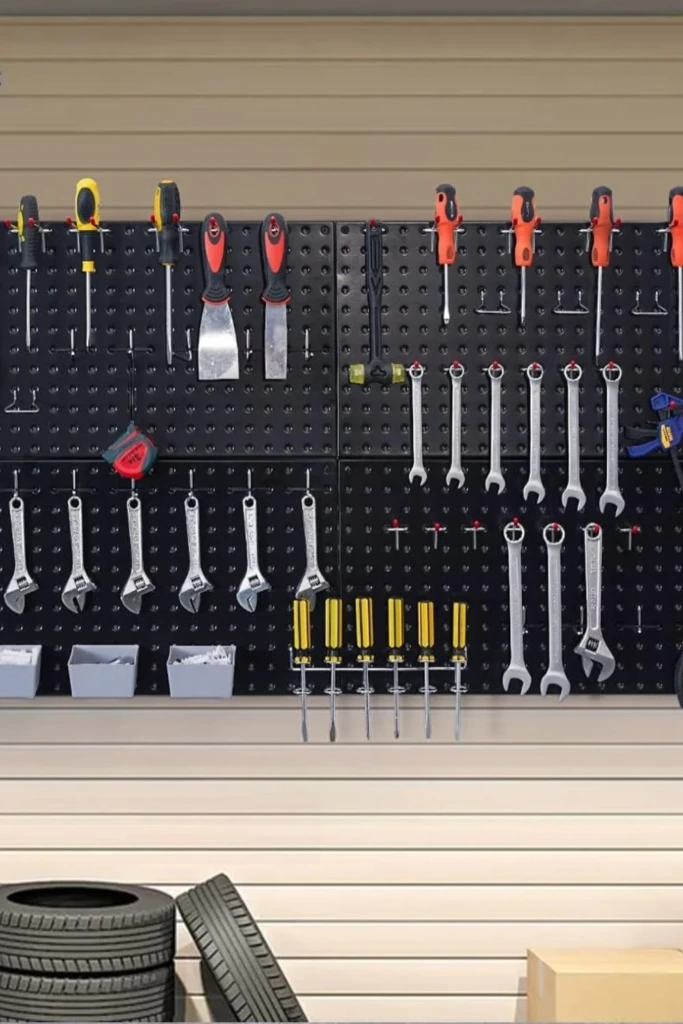
A sleek tool panel can make a garage look more polished while improving everyday functionality.
Choose a consistent panel finish, such as matte black metal or natural wood, and pair it with matching hooks and storage accessories. Arrange tools in balanced groups rather than spreading them randomly across the wall.
Keep essential tools within easy reach and use small containers for items that would otherwise interrupt the clean appearance.
A simple layout with enough space between tools is often easier to maintain than a densely packed display.
18. Mini Parts Drawer
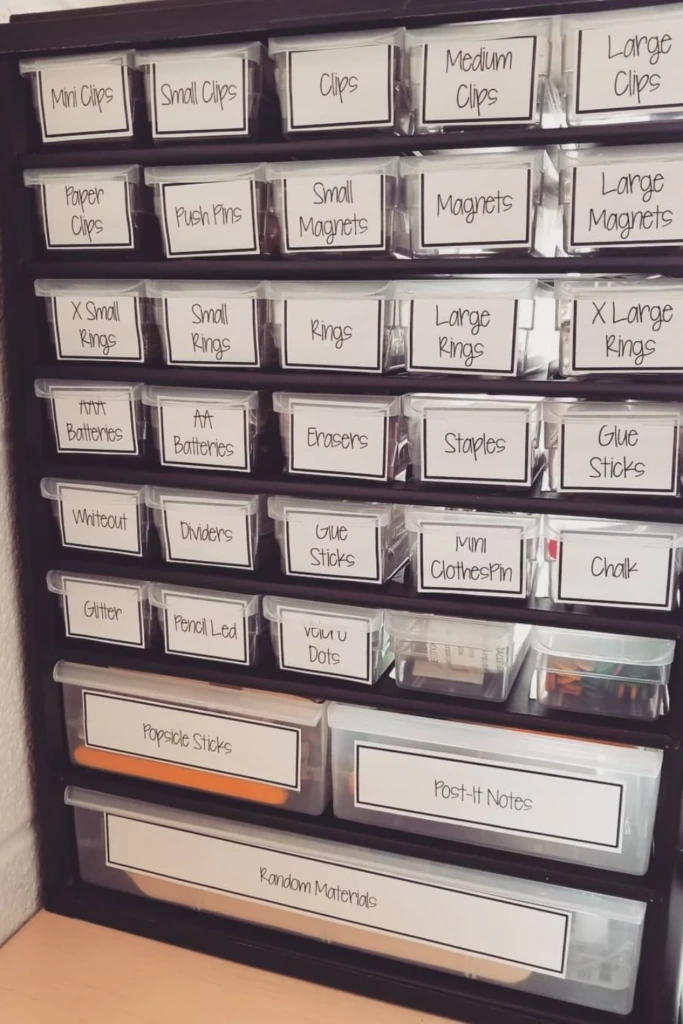
Mini parts drawers are ideal for storing small items that can easily get lost in larger toolboxes.
Use a multi-drawer organizer for screws, nuts, washers, electrical connectors, wall anchors, and replacement components. Label each drawer clearly, including sizes where relevant.
Avoid filling drawers completely, as this makes small parts harder to retrieve and increases the chance of spills.
If you frequently work with different fastener sizes, separate metric and imperial hardware to prevent confusion during repairs.
19. Detailing Tool Peg
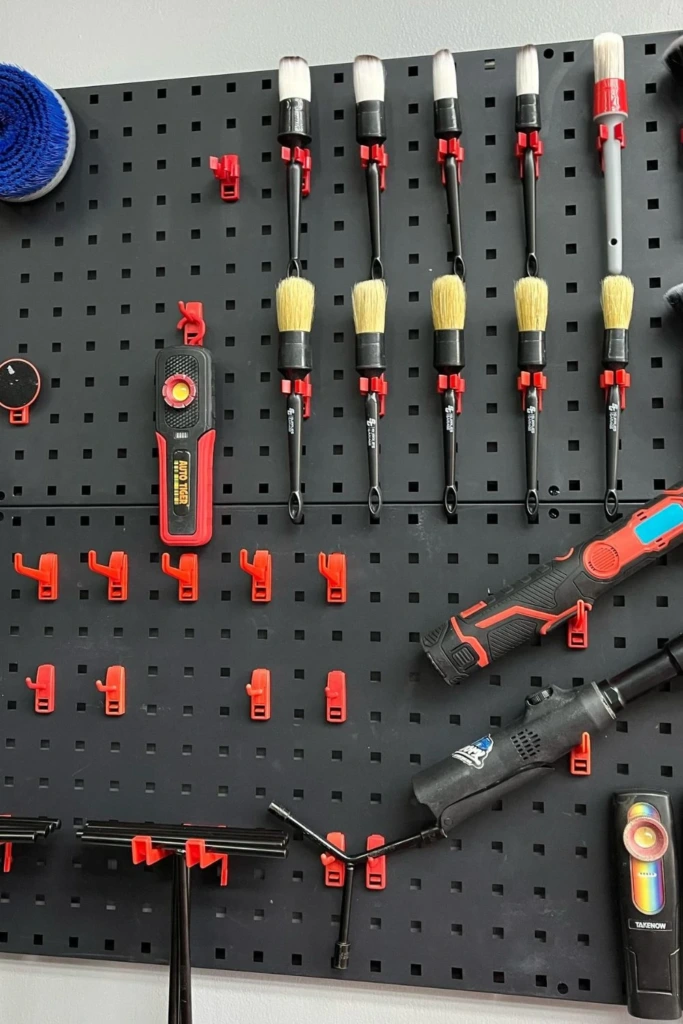
A detailing tool pegboard creates a dedicated storage area for automotive cleaning and finishing equipment.
Install hooks for detailing brushes, microfiber accessories, polishing pads, and compatible handheld tools. Use shelves or baskets for clean cloths and smaller supplies.
Keep clean polishing equipment away from dirty brushes and abrasive materials to avoid transferring grit onto vehicle surfaces.
Store chemical cleaners according to their labels, and keep liquids away from electrical equipment. A designated detailing area helps make car maintenance more efficient while protecting sensitive accessories.
20. Compact Drawer Cart
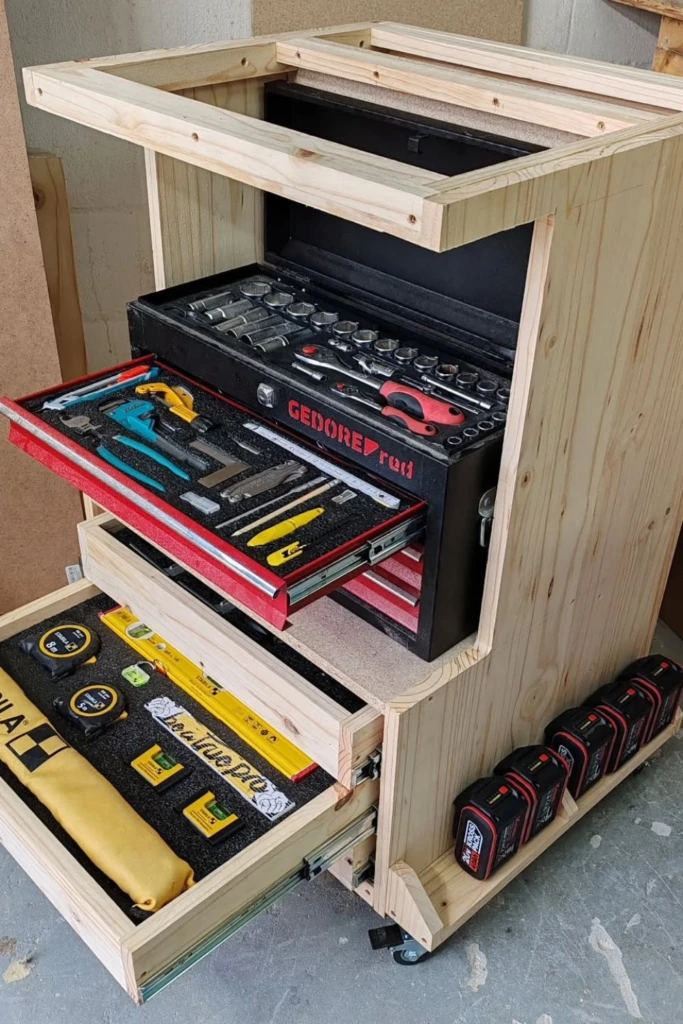
A compact drawer cart provides substantial storage without taking up the space required by a full-size tool cabinet.
Choose a cart with several drawer depths so you can accommodate everything from sockets and pliers to measuring tools and cordless accessories.
Use foam inserts, drawer trays, or adjustable dividers to keep tools separated. Position heavier equipment in lower drawers to improve balance.
A cart with locking wheels and secure drawer latches is especially useful when you need to move tools between a workbench and a vehicle.
21. Adventure Gear Wall
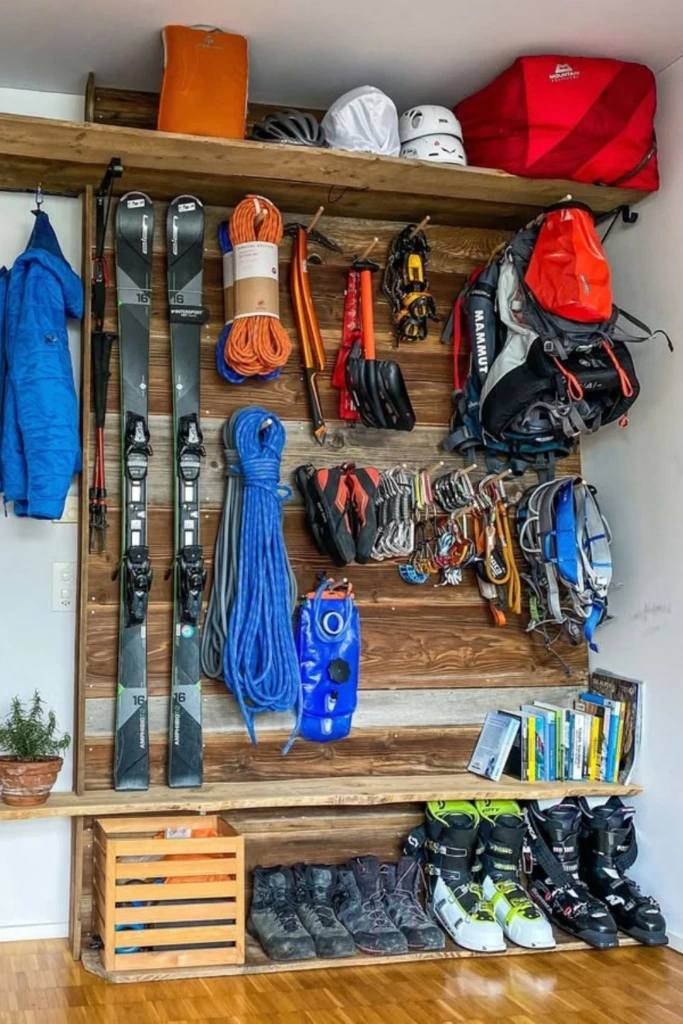
Garage organization is not limited to repair equipment. A dedicated adventure gear wall helps prevent camping, hiking, climbing, and recreational accessories from mixing with workshop tools.
Install sturdy hooks for backpacks, helmets, ropes, and outdoor bags. Add open shelving for boots, protective gear, and storage containers.
Keep damp equipment in a ventilated area until completely dry. For safety-critical climbing equipment, follow manufacturer storage guidance and avoid prolonged exposure to chemicals, excessive heat, and sunlight.
Grouping outdoor gear separately makes it easier to pack for trips and inspect equipment before use.
22. Precision Socket Tray
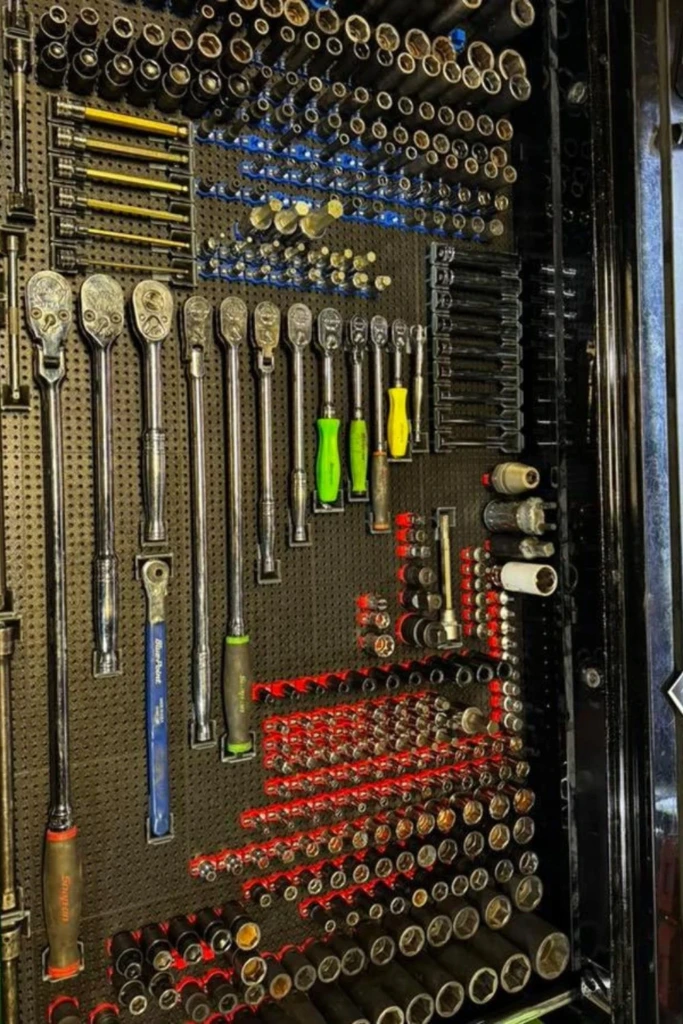
A precision socket tray keeps socket sets organized by size, making automotive and mechanical work more efficient.
Choose a tray with clearly marked positions for each socket. Separate metric and SAE sizes, and group sockets according to drive size.
Magnetic holders, socket rails, and fitted foam inserts are all useful options. Foam inserts are particularly helpful in drawers because they prevent tools from shifting when opened or closed.
Leave room for extensions, adapters, and ratchets so the entire socket collection stays together.
23. Slat Wall Mount

A slat wall mount provides adjustable storage for tools with different shapes and dimensions.
Install a compatible slatwall system and select hooks, shelves, and holders suited to your equipment. This arrangement works well for clamps, hand saws, wrenches, and woodworking accessories.
Unlike fixed storage layouts, slatwall accessories can often be repositioned without drilling new holes.
For a warmer workshop appearance, consider wood-finish panels. Always verify the load capacity of both the panels and their accessories before hanging heavy tools.
24. Drawer Top Organizer
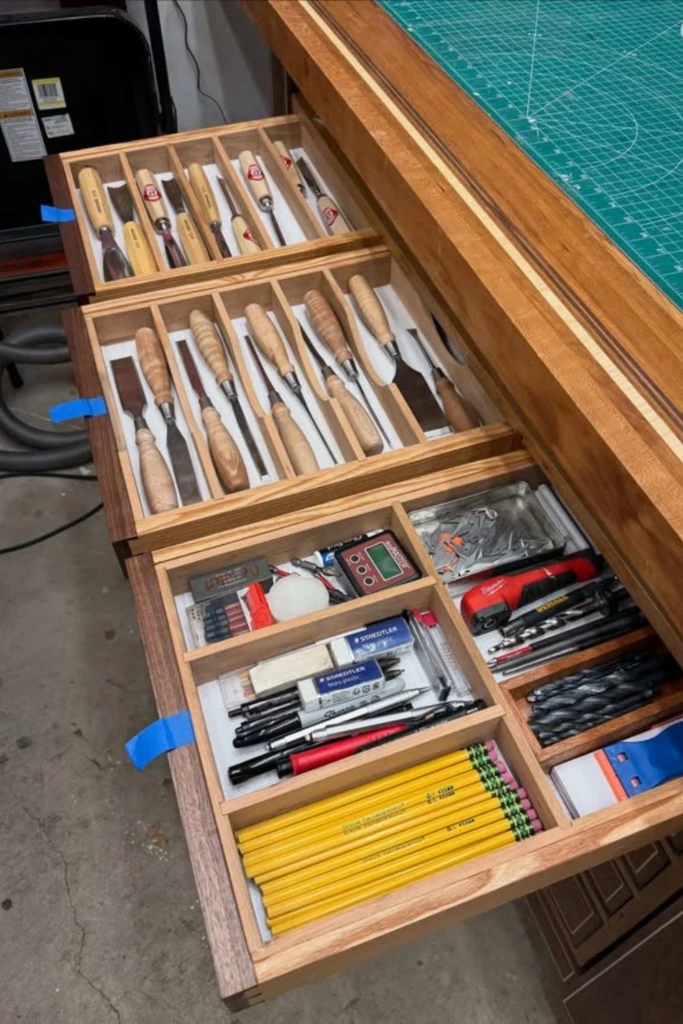
A drawer top organizer helps make better use of wide or deep tool drawers.
Use shallow trays or custom dividers to separate measuring tapes, chisels, marking pencils, drill accessories, and other small equipment. Arrange items by task so the tools needed for a particular project are stored together.
Measure the drawer's internal dimensions before buying inserts. Leave enough clearance for the drawer to close without pressing against tool handles.
Removable trays can also be useful when you want to carry a selection of tools directly to your workbench.
25. Rainbow Wall Layout
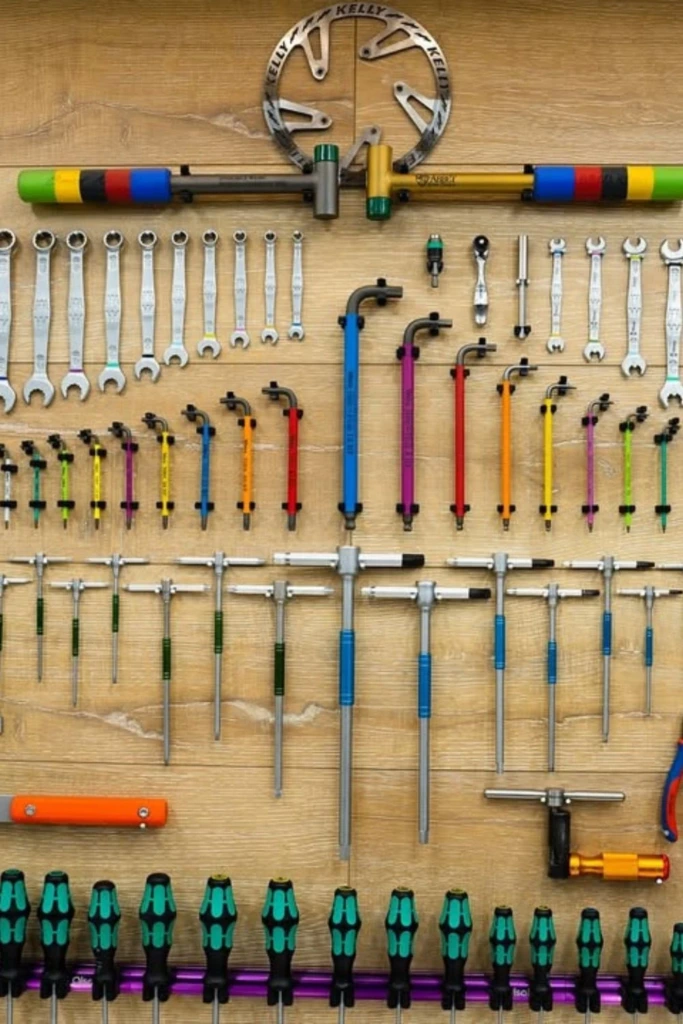
A rainbow wall layout introduces color into garage storage while making equipment easier to identify.
Arrange tools or their holders in coordinated color groups, or assign different colors to categories such as electrical work, automotive repairs, and woodworking.
Color-coded labels can be particularly helpful in a shared garage where several people use the same equipment.
Keep the arrangement practical by prioritizing tool type, weight, and frequency of use. The color scheme should support the organization system rather than make commonly used tools harder to reach.
26. Lock-In Panel Grid
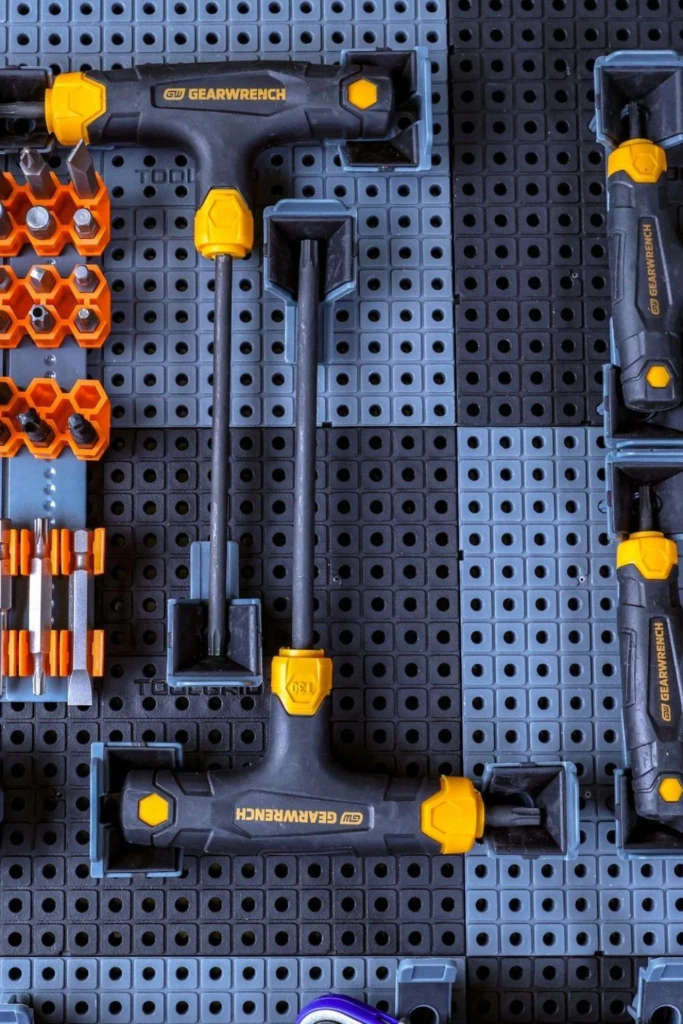
A lock-in panel grid offers a structured storage solution for mechanics and DIY enthusiasts who want tools to stay securely positioned.
Modular grid organizers use fitted holders or clips to keep individual tools separated. They are particularly useful for T-handle wrenches, socket drivers, pliers, and other frequently used equipment.
Plan the layout before installing the holders, leaving enough room to remove tools comfortably.
Choose a system compatible with your tool dimensions, and make sure the mounting hardware can support the combined weight. Secure holders can also reduce unwanted movement in mobile tool cabinets.
27. PDR Tool Station
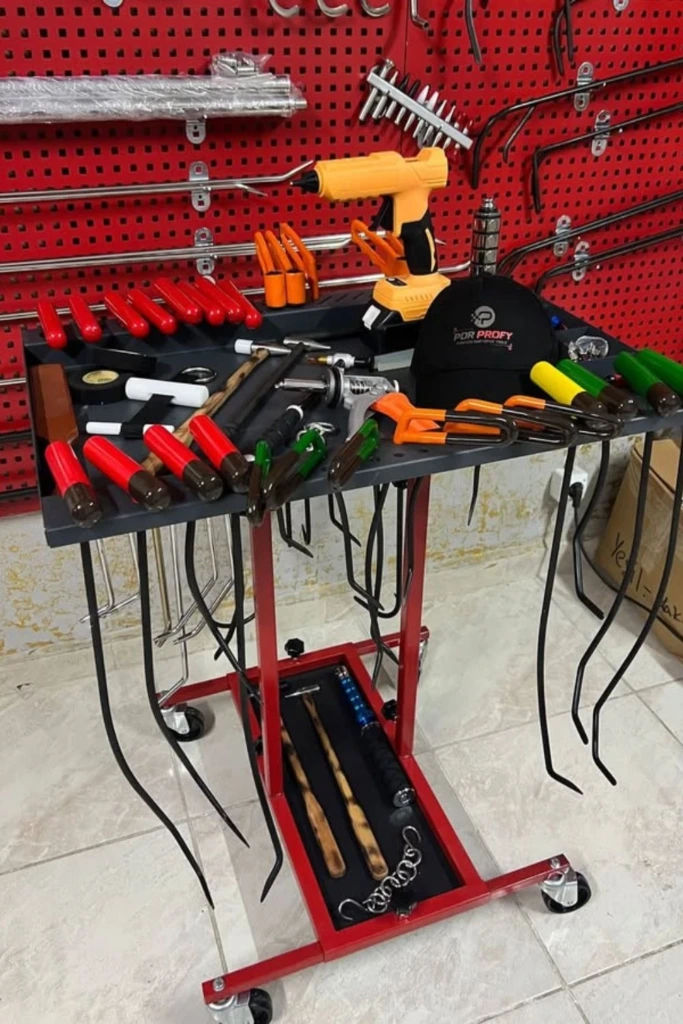
A paintless dent repair (PDR) tool station is designed for organizing specialized automotive equipment, including dent rods, picks, and related accessories.
Long tools benefit from horizontal racks or vertical holders that prevent bending and tangling. Smaller attachments can be stored in labeled trays, while a rolling cart provides convenient access during vehicle repairs.
Use padded holders or protective sleeves for delicate tool surfaces. Keep tools grouped by length and application so you can select the appropriate equipment without searching through a crowded collection.
For professional or dedicated automotive workshops, a well-planned PDR station can improve workflow and help protect precision tools from accidental damage.
Final Thoughts
Organizing garage tools does not require an expensive renovation or a completely new storage system. Simple changes, such as installing a pegboard, labeling small parts drawers, or adding a rolling tool cart, can make a noticeable difference.
Start by sorting your tools into categories and identifying which items you use most often. Then choose storage solutions that fit your available space, budget, and working habits.
The most effective garage tool organization ideas are those you can maintain consistently. With secure storage, clear categories, and a dedicated place for each tool, your garage can become a safer, cleaner, and more enjoyable place to work.