16 Cucumber Trellis DIY Ideas for 2026
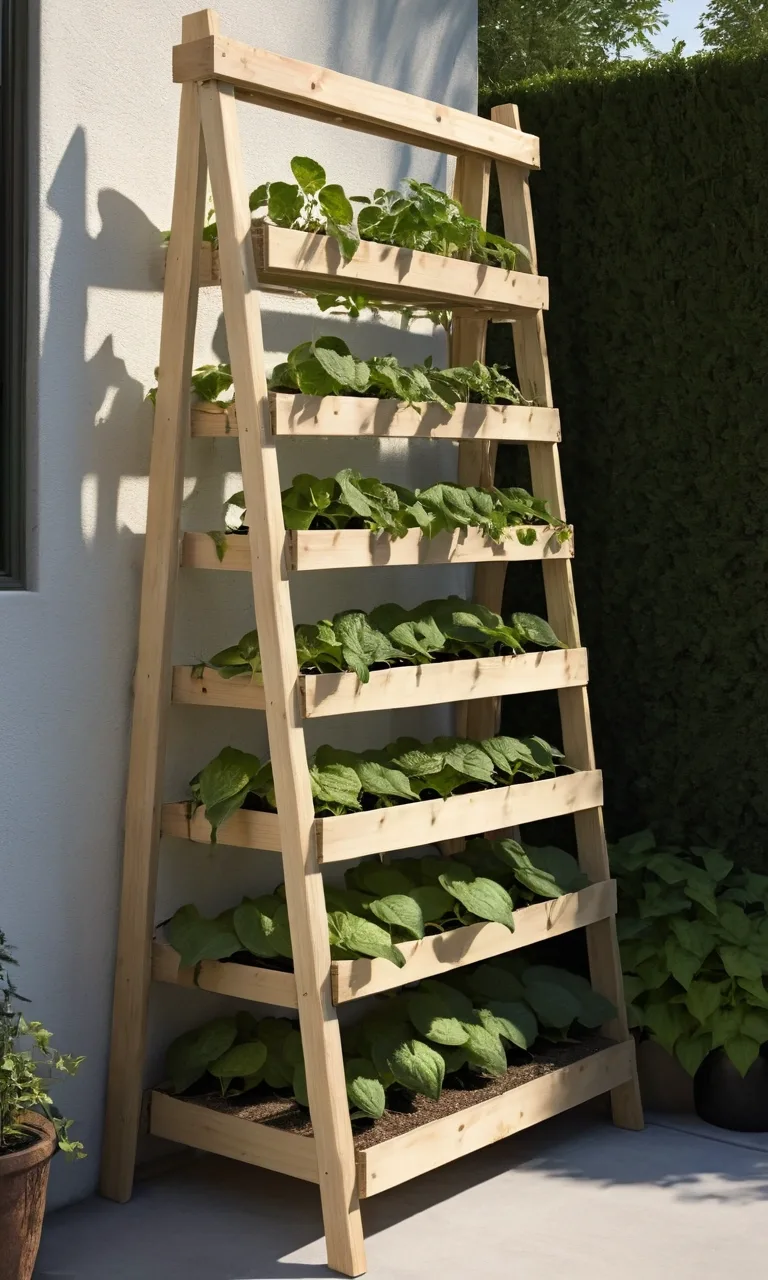
Growing cucumbers doesn't have to mean dealing with tangled vines spreading across your garden. With the right DIY cucumber trellis, you can turn even a small growing area into an organized, productive space filled with fresh cucumbers.
Cucumber plants naturally produce climbing tendrils, making them excellent candidates for vertical gardening. Giving these vines something sturdy to climb helps keep developing fruits away from damp soil, improves air circulation around the leaves, and makes spotting ripe cucumbers much easier.
The best part? You don't need expensive gardening equipment or advanced building skills. From bamboo poles and recycled furniture to wire fencing and simple wooden frames, there are plenty of affordable ways to support your plants.
Whether you're growing cucumbers in containers, raised beds, or a traditional backyard garden, these 15 DIY cucumber trellis ideas offer practical solutions for different spaces and budgets.
1. Budget-Friendly Tips

Building a cucumber trellis can be surprisingly inexpensive when you choose materials carefully and work with what you already have.
Start by checking your garage, shed, or storage area for unused wooden stakes, bamboo canes, wire mesh, or leftover fencing. Many of these materials can become reliable plant supports with minimal modification.
Here are a few ways to keep your project affordable:
Reuse existing materials: Old garden fencing, wooden frames, and metal grids can often be repurposed instead of discarded.
Choose natural supports: Bamboo poles and untreated wooden stakes are practical options for lightweight structures.
Plan for mature vines: Build a support strong enough to hold fully grown cucumber plants, including their foliage and developing fruit.
Secure the base: Anchor your trellis firmly in the soil or attach it to a stable structure to prevent tipping during windy weather.
Use suitable climbing surfaces: Wire mesh, garden netting, and tightly secured strings provide places for cucumber tendrils to grip.
Consider seasonal storage: Removable or folding designs are especially useful when garden space is limited.
For most vining cucumber varieties, a trellis approximately 5 to 6 feet tall provides a useful growing area, although the ideal height depends on the variety and your ability to reach the harvest.
Install the support before the vines become large. This reduces the risk of damaging established roots or breaking delicate stems later.
2. Vertical Pot Trellis
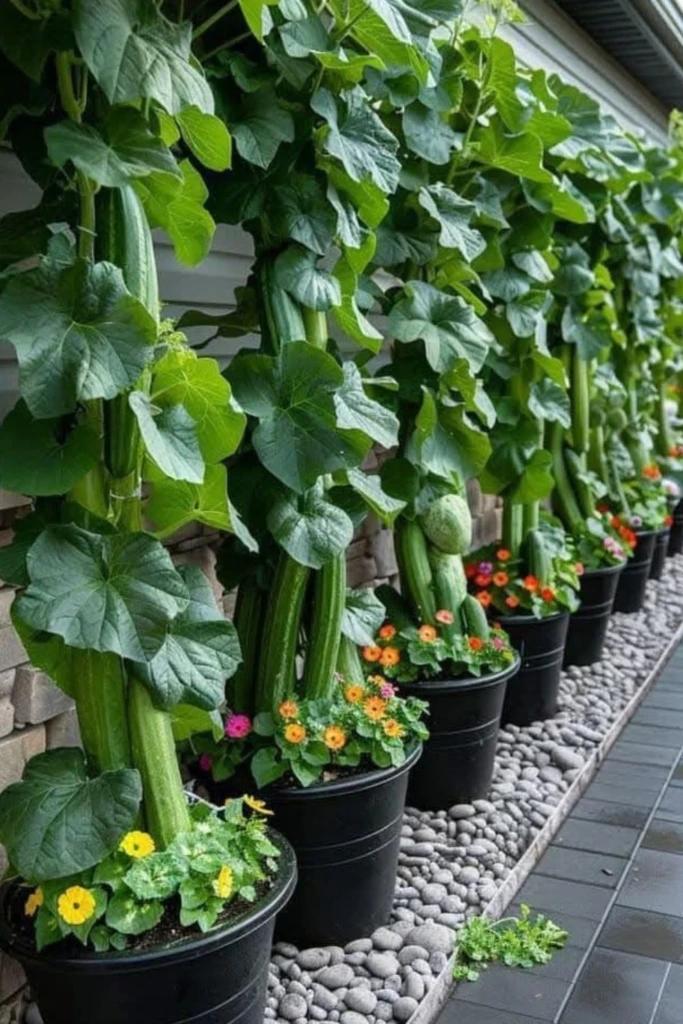
A vertical pot trellis is an excellent solution for gardeners who want to grow cucumbers without dedicating an entire garden bed to them.
Start with a large container that has drainage holes and enough room for healthy root development. Position it near a sturdy wall, railing, or freestanding support frame.
Attach a metal grid or weather-resistant garden netting to the frame, making sure it can support the weight of mature vines. As the cucumber plant grows, gently direct its stems toward the climbing surface.
This arrangement works particularly well on patios, terraces, and narrow outdoor spaces.
Choose a container holding at least 5 gallons of potting mix for one compact cucumber plant, and consider a larger pot for vigorous varieties.
You can also place small flowering plants nearby to create a more attractive display and encourage pollinating insects to visit your growing area.
3. Bamboo House Frame
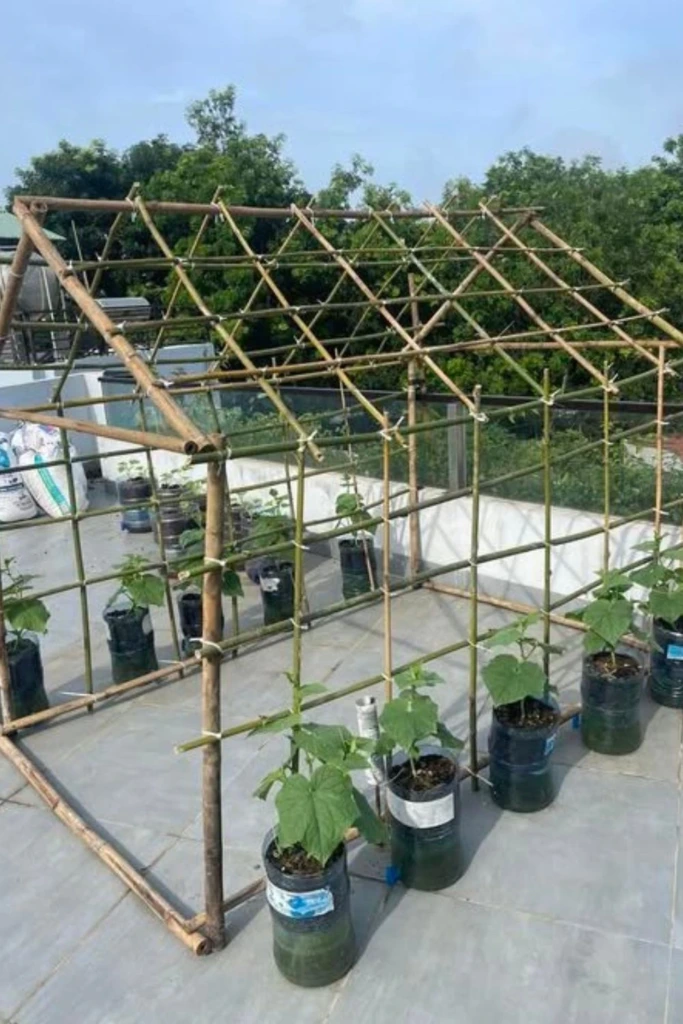
If you enjoy natural-looking garden structures, a bamboo house frame offers an appealing way to support climbing cucumbers.
The design resembles a small open-sided shelter, with upright bamboo poles connected by horizontal pieces and a pitched roof.
To build one, place four sturdy bamboo poles into the ground to form the corners. Connect the upper ends with additional poles, creating a stable roof-shaped structure.
Add horizontal bamboo pieces or garden twine along the sides to give cucumber vines multiple climbing points.
Secure each connection with strong garden cord or weather-resistant ties.
This design is particularly useful in raised beds, rooftop gardens, and outdoor growing areas where appearance matters.
Bamboo is lightweight and relatively easy to work with, but the frame should be firmly anchored, especially in exposed locations.
As the plants mature, their foliage can cover much of the structure, creating an attractive green feature while keeping the vines organized.
4. A-Frame Trellis
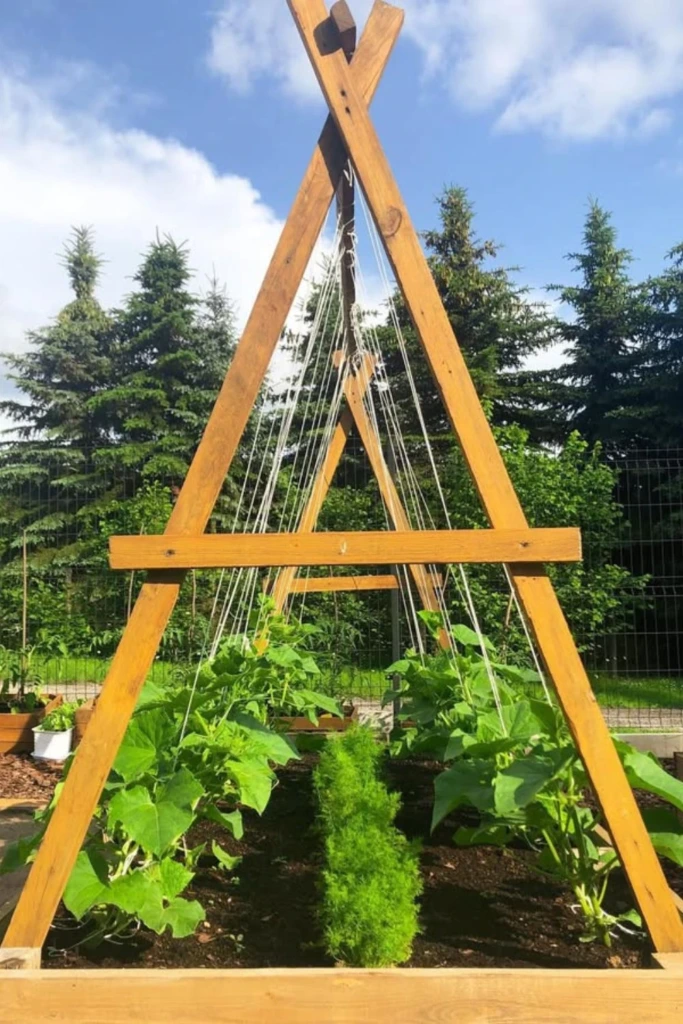
An A-frame trellis is one of the most practical cucumber supports for raised beds and vegetable gardens.
Its triangular shape provides stability while offering climbing space on both sides.
You can construct the frame using wooden boards, bamboo poles, or metal stakes. Join the supports at the top and spread their lower ends apart to form an A shape.
Install horizontal wires, garden netting, or wooden crosspieces between the supports.
Plant cucumbers near the base of either side, leaving enough room for each variety to develop properly.
As the vines climb, their leaves spread across the sloping surfaces, making it easier to inspect the plants and harvest cucumbers.
A well-positioned A-frame also allows light and air to move through the growing area.
For additional garden efficiency, consider growing low-growing vegetables nearby, provided they receive sufficient sunlight and aren't crowded by the cucumber foliage.
5. PVC Dome Tunnel
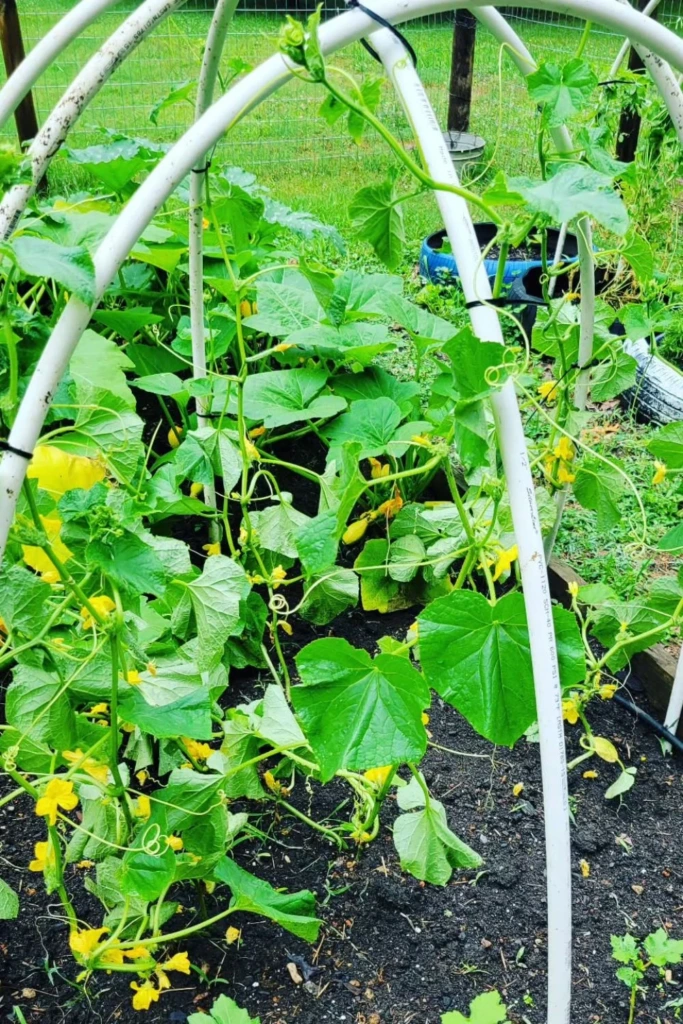
A PVC dome tunnel creates an interesting overhead growing structure using lightweight, flexible materials.
This design is especially useful when you want to create a garden walkway surrounded by climbing cucumber plants.
Begin by placing sturdy ground anchors or metal stakes along both sides of the intended tunnel.
Bend appropriately sized flexible PVC pipes into arches and secure their ends to the anchors.
Connect the arches with horizontal supports to reduce movement, then attach garden netting over the framework.
Plant cucumbers along the outside edges and encourage the vines to grow upward and across the curved surface.
Once the plants establish themselves, the tunnel gradually becomes covered in green foliage.
Some cucumbers may develop beneath the arch, where they are easier to see and pick.
Use UV-resistant materials where possible, and reinforce the tunnel for wind exposure and the weight of mature plants. A lightweight PVC frame may not be suitable for particularly heavy crops without additional bracing.
6. Bamboo Row Trellis
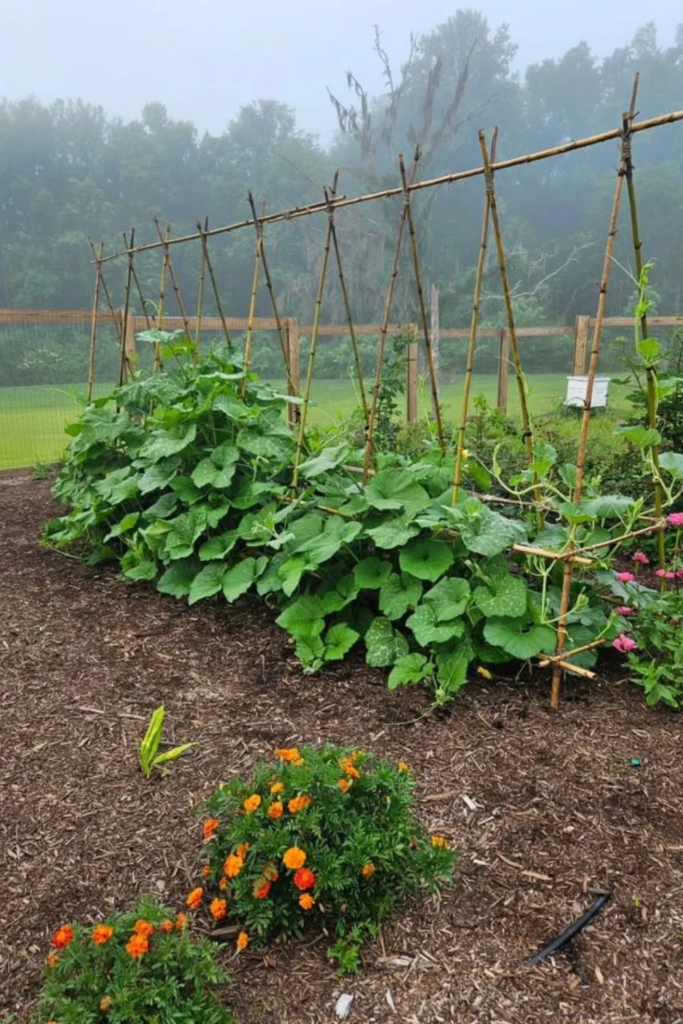
A bamboo row trellis is a straightforward option for growing several cucumber plants in a continuous garden bed.
Instead of constructing individual supports, you create one long structure that serves an entire row.
Insert pairs of bamboo poles into the ground at regular intervals, leaning each pair inward so the upper ends meet.
Tie the tops together and run a horizontal bamboo pole along the ridge to connect the sections.
For additional climbing support, attach horizontal strings or garden netting between the poles.
This setup gives cucumber vines plenty of vertical space without requiring expensive materials.
It is particularly suitable for larger vegetable gardens where multiple plants are grown together.
Bamboo also blends naturally with surrounding greenery, making the structure attractive without additional decoration.
Check the ties occasionally throughout the growing season, as wind and increasing plant weight can loosen connections.
7. Wire Tunnel Arch
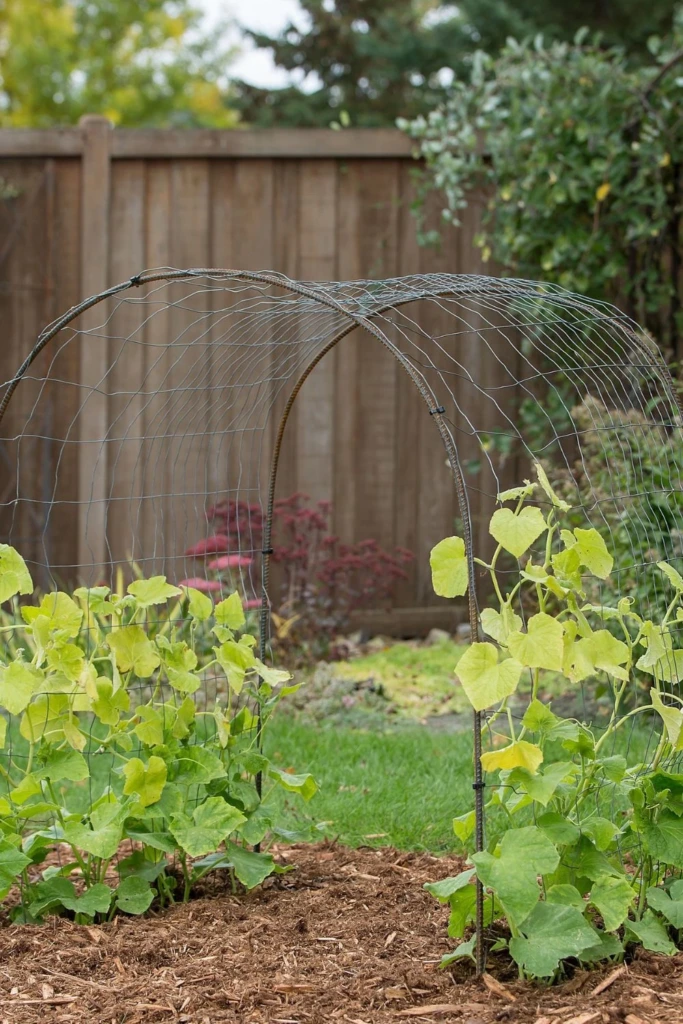
A wire tunnel arch is a durable choice for gardeners who want a climbing structure that can remain in place for several growing seasons.
Welded wire fencing or a suitable rigid livestock panel can form the curved surface.
Choose a panel with openings large enough for vines to grow through and for your hands to reach the cucumbers during harvesting.
Position the panel between two garden beds or across a pathway, bending it into an arch and securing both sides to deeply installed posts.
Because metal panels can spring back during installation, use appropriate protective equipment and assistance when handling large sections.
Once secured, plant cucumbers near the base and train the young vines upward.
As the plants spread, the arch develops into a leafy canopy.
The open wire design provides good visibility and allows fruits to hang beneath the foliage.
This structure is also useful for other climbing vegetables, making it a versatile addition to a productive backyard garden.
8. Compact Pot Trellis
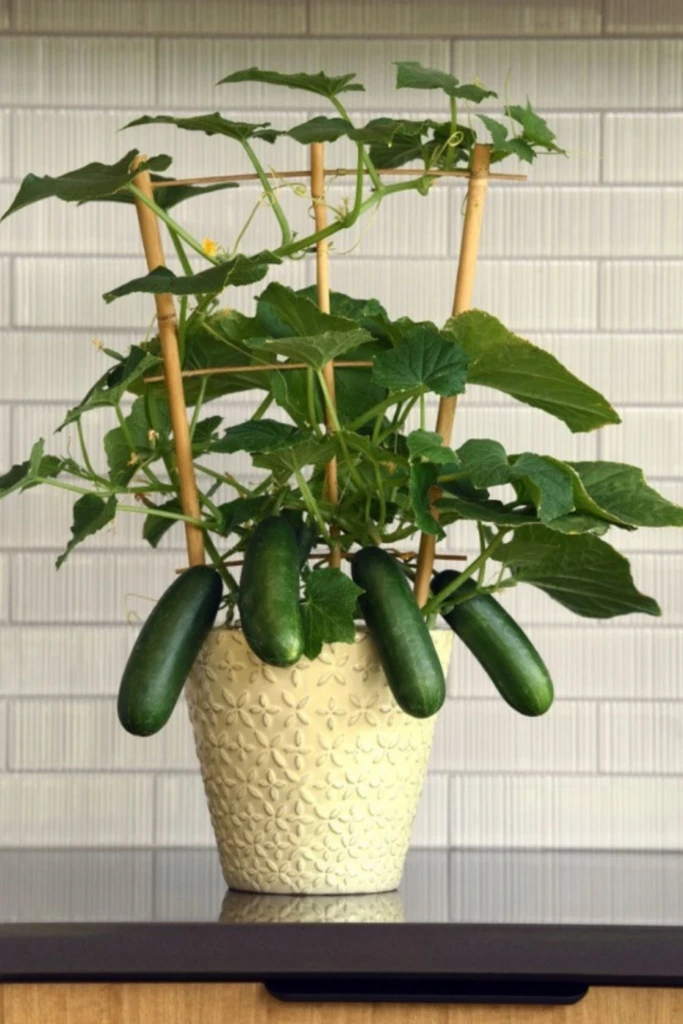
A compact pot trellis makes growing cucumbers possible in places where traditional garden beds aren't available.
It's particularly well suited to balconies, small patios, and sunny apartment outdoor spaces.
Select a container with adequate drainage and fill it with quality potting mix.
Place three or four sturdy bamboo stakes around the outer edge of the pot, then tie their upper ends together to create a small climbing tower.
You can also connect the stakes with garden twine to provide additional support.
Choose a compact or container-friendly cucumber variety rather than one that produces exceptionally long vines.
Position the pot where the plant can receive approximately 6 to 8 hours of direct sunlight daily.
Container-grown cucumbers often need frequent watering during hot weather because their soil dries more quickly than garden beds.
Check moisture regularly and water thoroughly when needed, allowing excess water to drain away.
9. Basket Teepee Trellis
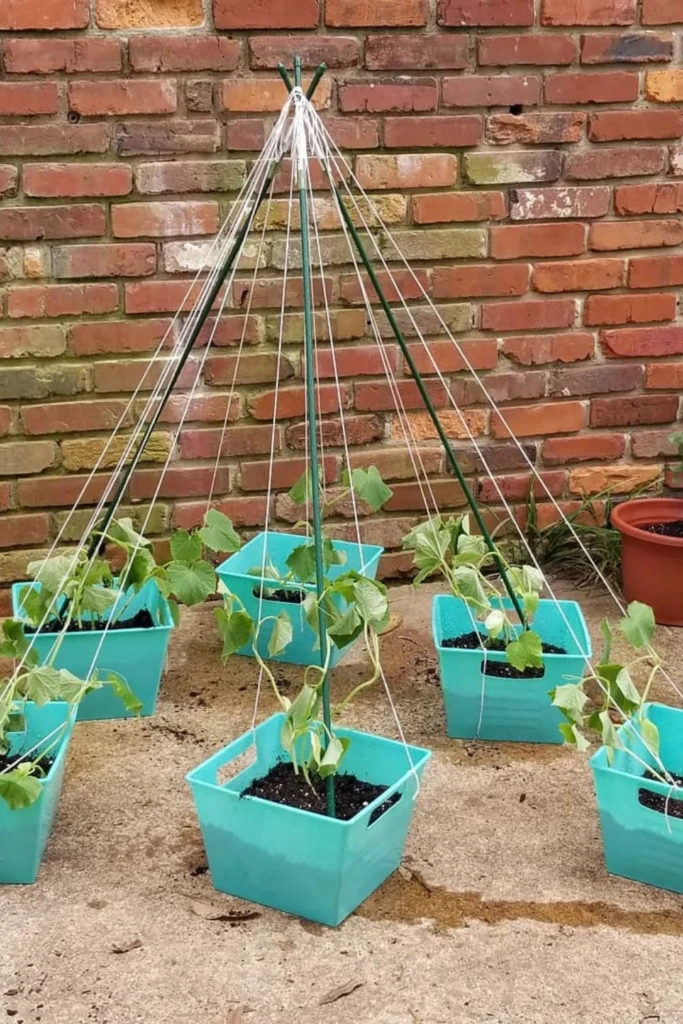
A basket teepee trellis combines container gardening with a decorative vertical structure.
Instead of using one large growing bed, arrange several sturdy planting baskets or pots around a central support.
Install a tall central pole and connect strong garden strings from its upper section down toward the individual containers.
Each string creates a climbing route for a cucumber plant.
As the vines grow, guide them along the strings to develop a cone-shaped display.
This arrangement works nicely in paved courtyards, patios, and other areas where planting directly into the ground isn't possible.
For the best results, use containers large enough to accommodate cucumber roots and ensure every basket has proper drainage.
The central pole should be anchored independently rather than relying on lightweight containers for stability.
You can choose matching containers for a coordinated appearance or mix colors to create a more playful garden feature.
Remember that multiple cucumber plants growing close together require consistent watering, feeding, and adequate spacing to remain productive.
10. String Line Trellis
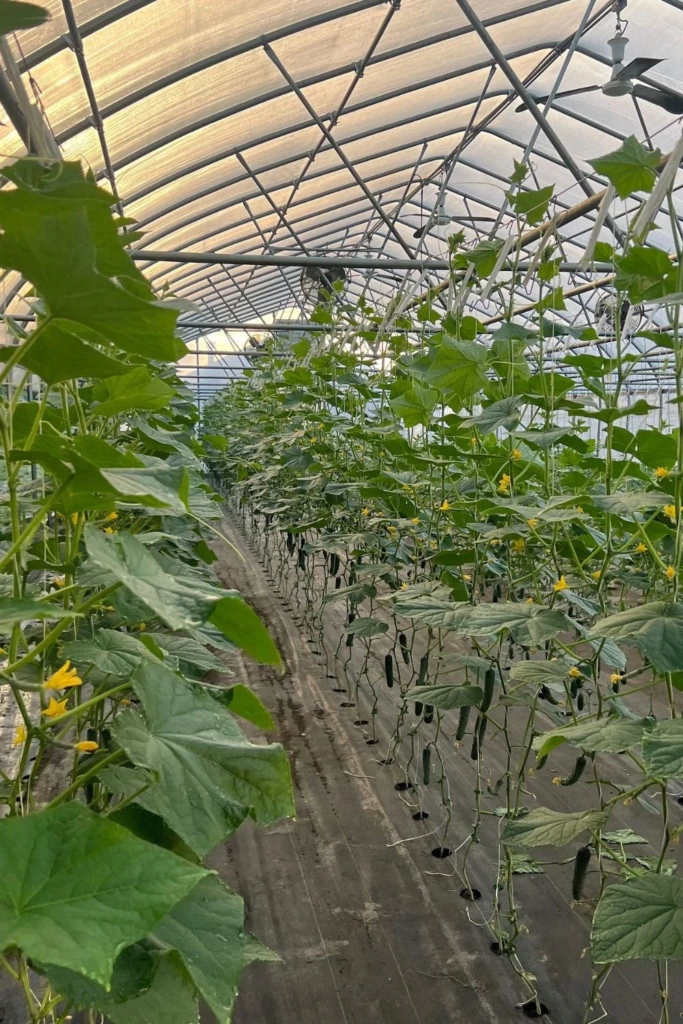
A string line trellis is a simple way to train cucumber plants vertically, especially inside greenhouses or along organized vegetable rows.
The system uses individual lengths of strong string suspended from a secure overhead support.
Install a horizontal bar or wire above the planting area, then attach one string for each cucumber plant.
Secure the lower end near the base of the plant without tightly tying it around the stem.
As the cucumber vine grows, carefully guide it around the string or attach it using soft plant clips.
This method keeps plants growing in a relatively narrow space and makes routine maintenance easier.
It is particularly useful for greenhouse cucumber varieties that are commonly trained to a single main stem.
However, the overhead support must be strong enough to carry mature plants, and the string should be suitable for outdoor or greenhouse use.
Inspect the vines regularly and adjust their position before they become tangled.
11. Angled Rail Trellis
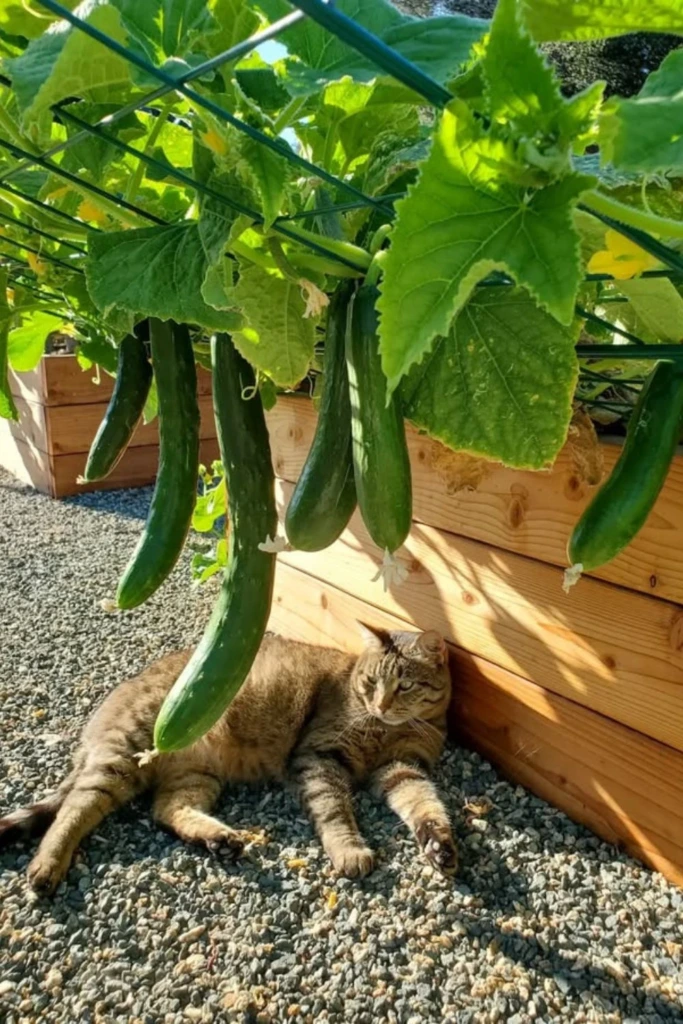
An angled rail trellis is a smart option for gardeners who want to make better use of the space beside a raised bed.
Unlike a vertical trellis, this structure leans outward at an angle, allowing cucumber vines to spread over an elevated surface.
Build a sturdy frame using wooden posts or metal supports, then attach a rigid wire panel at the desired slope.
Secure the upper and lower edges carefully so the structure cannot shift under the weight of mature plants.
Place cucumber seedlings near the lower edge and guide their vines onto the grid.
As the plants climb, some developing cucumbers will hang beneath the angled surface, making them easier to locate.
The foliage can also provide partial shade underneath the structure.
This shaded area may be useful for certain low-growing crops in hot climates, although the amount of light reaching them will vary.
Make sure the trellis is positioned so it doesn't unnecessarily shade vegetables that need full sun.
12. Net Panel Trellis
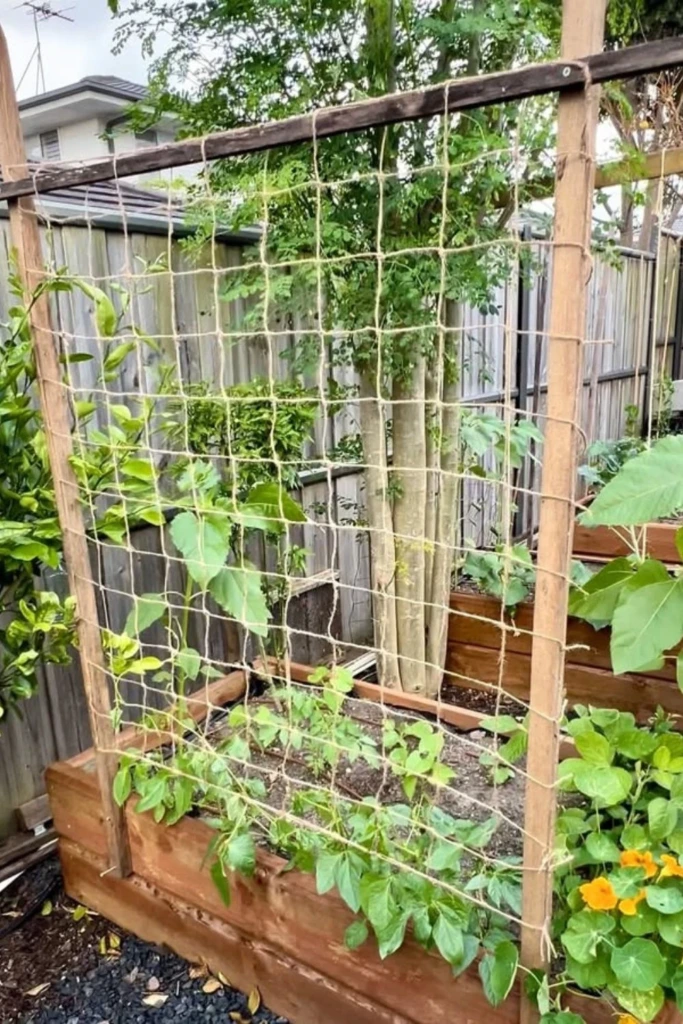
A net panel trellis is among the easiest cucumber supports to assemble using basic gardening supplies.
You only need two strong posts, a length of garden netting, and suitable fasteners.
Install the posts securely at opposite ends of your planting area.
Stretch the netting between them and attach it firmly at the top, middle, and bottom.
The material should remain reasonably taut without being pulled so tightly that it tears.
Choose netting with openings that allow cucumber tendrils to attach and make harvesting convenient.
For longer spans, add a central support to prevent sagging.
This design works especially well in narrow raised beds, small backyard gardens, and spaces alongside existing fences.
Natural-fiber netting can offer a rustic appearance, although it may deteriorate more quickly than durable synthetic alternatives.
Whichever material you choose, inspect it throughout the season and repair loose sections before they affect the plants.
13. Wall Trellis Tower
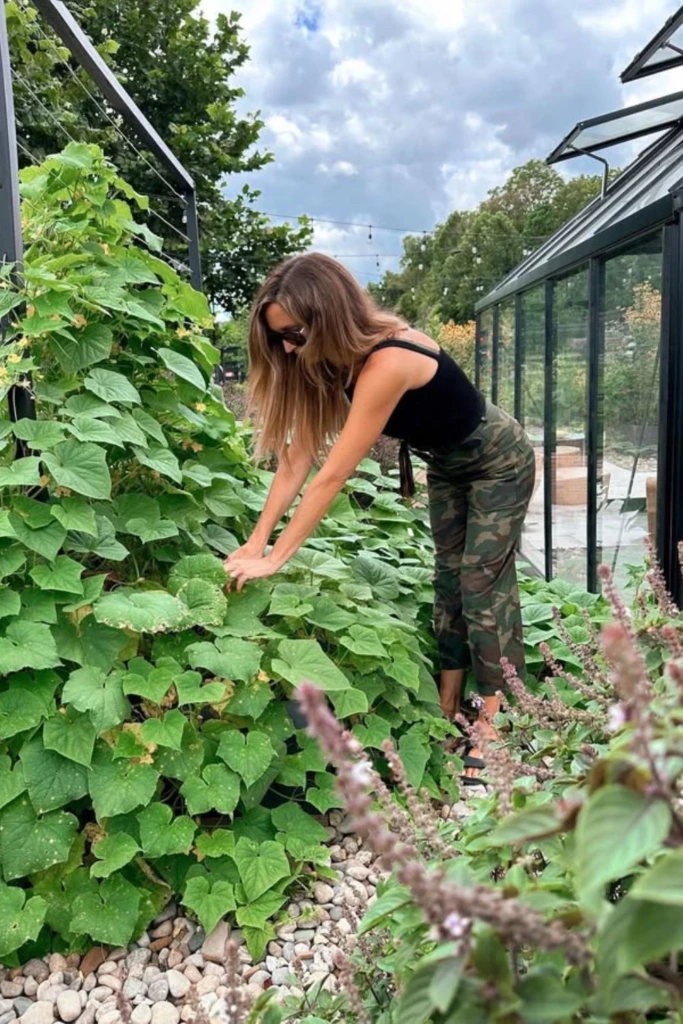
A wall trellis tower allows you to use vertical growing space along a sturdy exterior wall or fence.
This is particularly helpful in gardens where ground space is limited but an unused vertical surface is available.
Construct a tall rectangular frame from treated-for-outdoor-use lumber or suitable metal supports.
Attach welded wire mesh or a rigid garden grid to the frame, creating multiple climbing points.
Secure the structure properly and leave a small gap between the climbing surface and the wall to encourage airflow.
Plant cucumbers in the ground or in large containers at the base.
As the vines grow, direct them upward and spread them across the available support.
Over time, the plants can create a green screen that adds texture and privacy to the outdoor space.
Choose a location with sufficient direct sunlight and avoid placing the structure where it blocks essential ventilation or access.
For masonry walls, use appropriate fixings. For siding or delicate surfaces, a freestanding frame may be the safer choice.
14. Upcycled Headboard Trellis
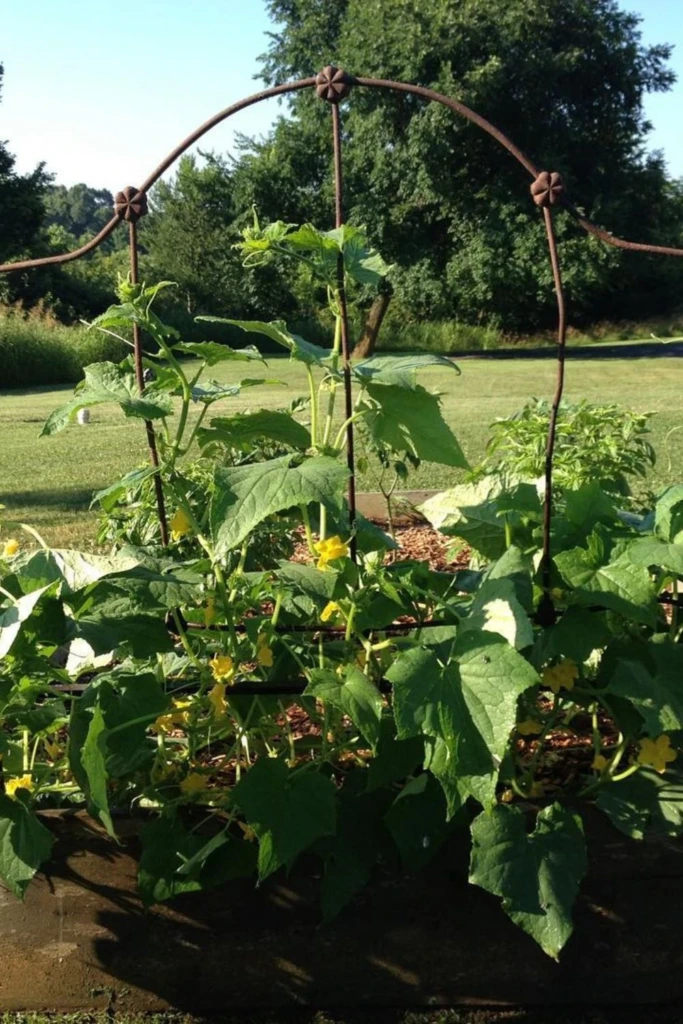
An old metal headboard can become a distinctive cucumber trellis with very little construction work.
Look for a headboard with open metal bars, sturdy joints, and enough height to support climbing vines.
Before installing it, remove any sharp edges, loose paint, or damaged components.
Avoid using items with deteriorating coatings that could contaminate your garden soil.
Position the headboard upright in a sunny planting area and secure it to strong posts or suitable ground anchors.
The existing bars provide climbing surfaces for cucumber tendrils.
If the gaps between the bars are too wide, attach additional garden twine or wire mesh to help young vines find support.
Plant cucumbers along the base and gently train them onto the frame.
This project is especially appealing for cottage-style gardens or outdoor spaces that incorporate vintage decorations.
It also gives unwanted furniture a practical second purpose without requiring a completely new structure.
15. Simple Wire Fence
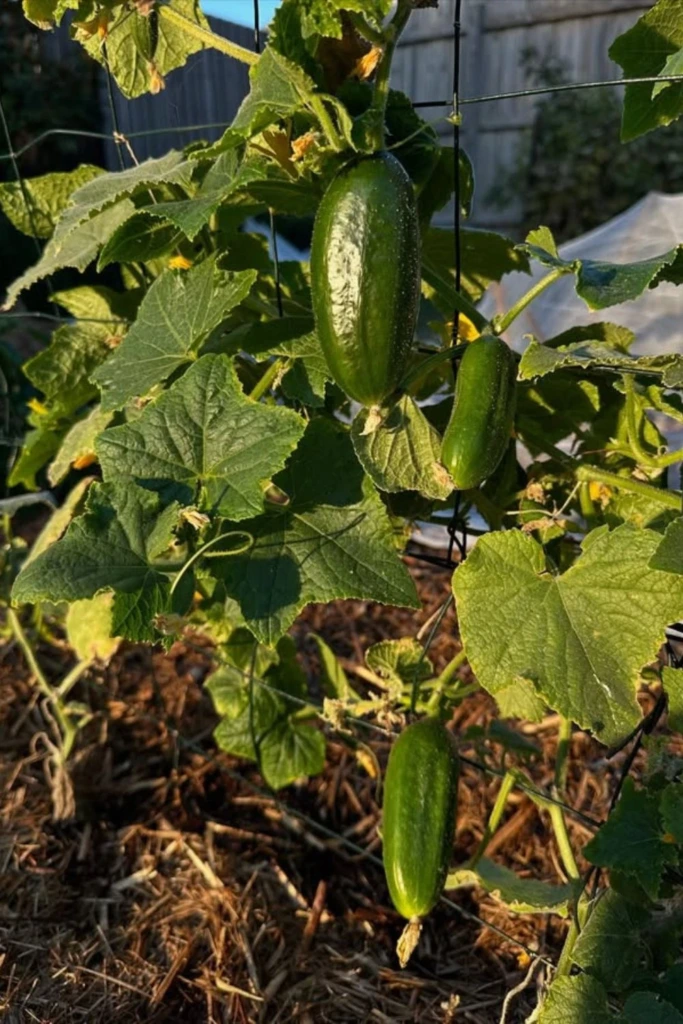
A simple wire fence trellis is a reliable option when function matters more than decorative details.
It requires only strong posts, rigid wire fencing, and appropriate fasteners.
Install wooden or metal posts along the cucumber row, spacing them according to the strength of the fencing material.
Attach the wire panel securely and ensure its lower edge is positioned where young vines can reach it.
For vigorous cucumber varieties, choose fencing that can withstand the combined weight of leaves, stems, and fruit.
The grid provides numerous attachment points, allowing cucumber tendrils to climb naturally.
It also keeps the growing area relatively open, which makes watering, pruning when appropriate, and harvesting more convenient.
This design works well in vegetable plots, raised beds, and along sunny garden boundaries.
If you already have a sturdy fence with suitable openings, you may be able to use it directly instead of building a separate support.
Just make sure the fence receives enough sunlight and is free from materials that could harm edible plants.
16. Foldable A-Frame
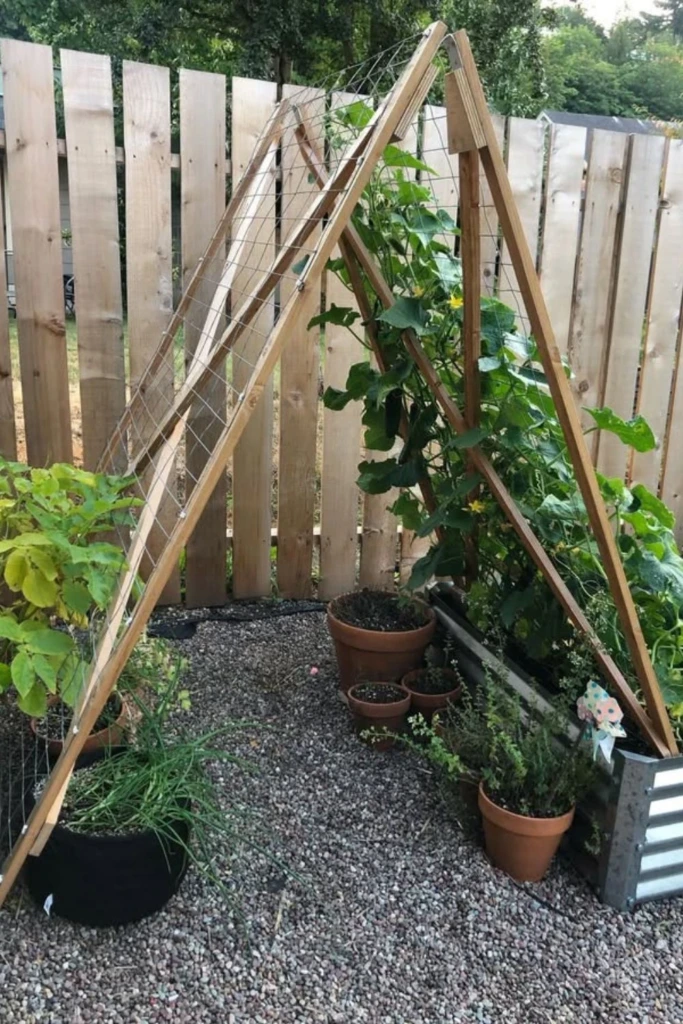
A foldable A-frame trellis offers the advantages of a traditional triangular support while making seasonal storage much easier.
This is particularly useful for gardeners who rearrange raised beds or prefer to remove growing structures during winter.
Build two matching rectangular wooden frames and attach rigid wire mesh to each one.
Join the upper edges with strong hinges so the frames can open into an A shape.
Add chains, braces, or other locking supports between the sides to prevent the structure from spreading too far.
When opened and secured, the trellis provides two sloping surfaces for climbing cucumber plants.
At the end of the growing season, remove the vines, clean the frame, and fold the two sections together.
The flattened structure can then be stored against a shed wall or in another dry location.
Use corrosion-resistant hinges and outdoor-appropriate materials to improve durability.
Before planting, make sure the frame is anchored securely so it cannot collapse or shift in strong winds.
A well-built folding trellis can serve your vegetable garden for multiple seasons while taking up minimal storage space.
Whether you prefer a simple bamboo support, a decorative garden arch, or a practical folding frame, the right cucumber trellis can make growing and harvesting much more manageable. Choose a design that suits your available space, the cucumber varieties you're planting, and the materials you already have.
With a stable structure, adequate sunlight, consistent watering, and a little guidance as the vines grow, your DIY cucumber trellis can become a valuable part of a healthy and productive vegetable garden.