20 Suitcase Storage Ideas for 2026
Suitcases are essential for travel, but finding a place to keep them between trips can be challenging, especially when you live in a small apartment. Bulky luggage can take up valuable closet space, crowd your bedroom, or become an obstacle in a hallway. The good news is that you can store your bags neatly without sacrificing comfort or style.
From clever shelving arrangements to hidden cabinets and multipurpose furniture, these suitcase storage ideas will help you make the most of your available space. Whether you own one carry-on or several large suitcases, there is a practical solution for keeping your luggage accessible, protected, and out of the way.
What Are the Best Suitcase Storage Ideas for Small Apartments?
The best suitcase storage solution depends on the size of your luggage, how frequently you travel, and how much unused space your apartment offers. Vertical storage, furniture with concealed compartments, and unused closet corners are particularly useful when floor space is limited.
Before choosing a storage method, measure your largest suitcase, including its wheels and handles. Consider the space needed to pull it out easily, and avoid placing heavy luggage somewhere that requires awkward lifting.
You can also make storage more efficient by emptying your suitcases after each trip, cleaning them thoroughly, and storing smaller bags inside larger ones when their shapes and materials allow it. Here are 20 practical ways to organize your luggage without making your home feel crowded.
1. Cube Shelves
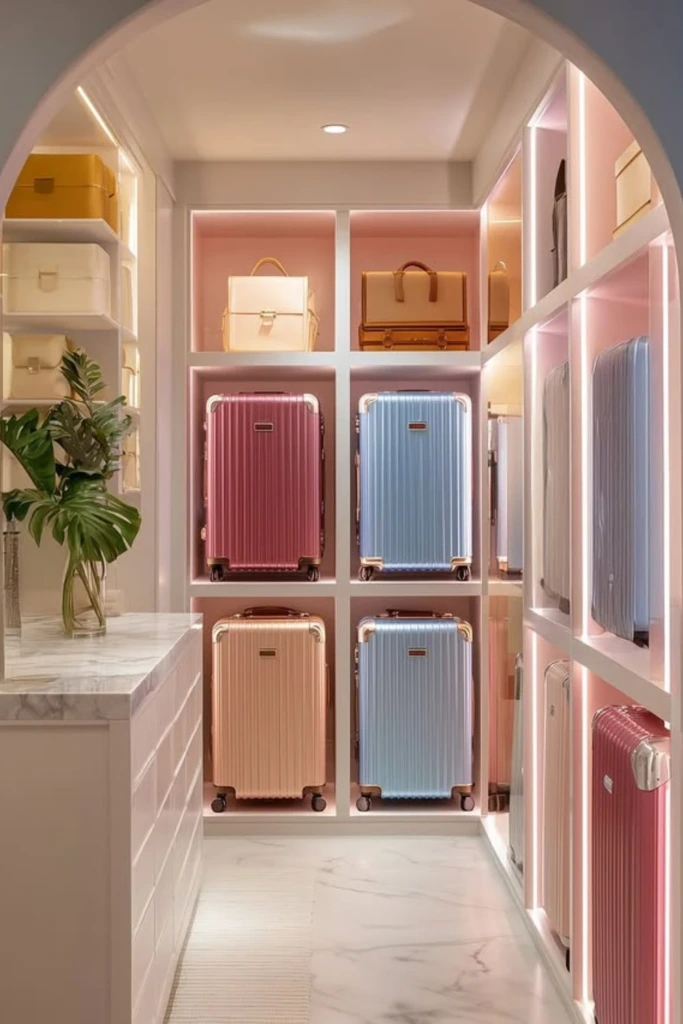
Cube shelving provides a straightforward way to organize luggage in a bedroom, closet, or spare room. Individual compartments can hold compact suitcases, travel backpacks, and packing accessories, making it easier to keep everything in one place.
Choose cubes that are wide and deep enough for your bags rather than forcing oversized luggage into small compartments. If you use an open shelving unit, arrange your suitcases by size and frequency of use. Keep everyday travel bags at a comfortable height and reserve higher compartments for luggage you rarely need.
For heavier suitcases, check the shelf's weight capacity and secure tall shelving units to the wall when appropriate.
2. Shelf Row
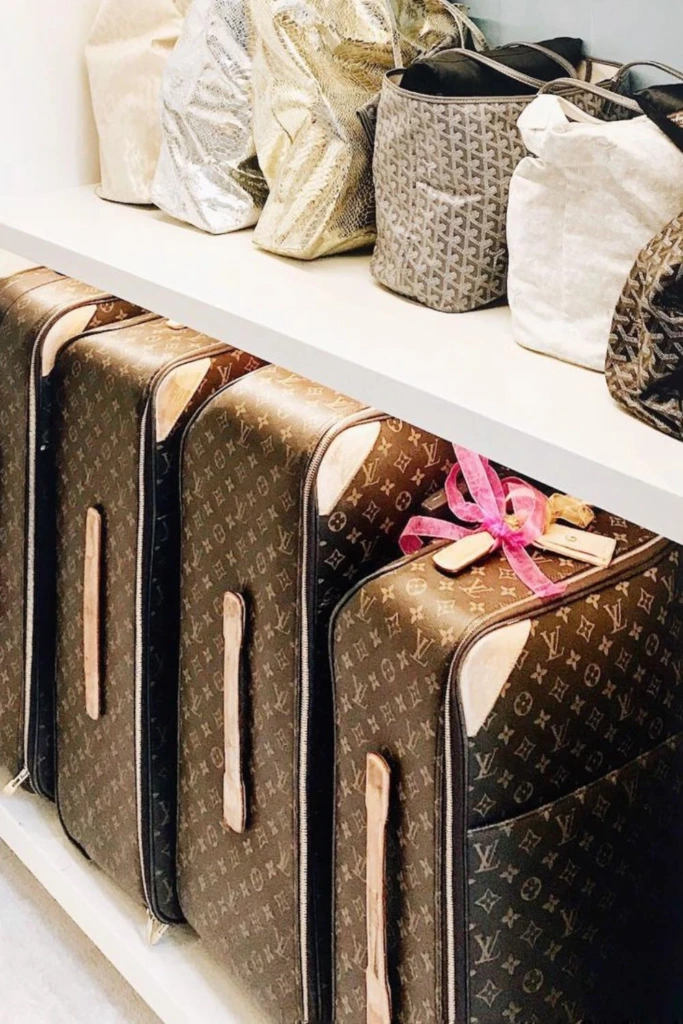
A horizontal row of sturdy shelves can turn an otherwise empty wall into a useful luggage storage area. This arrangement works well in a walk-in closet, utility room, or spare bedroom where there is enough clearance to access the bags.
Install shelves with sufficient depth to support your suitcases securely. Leave enough vertical room between levels for handles and wheels, and avoid placing heavy bags on shelves that are difficult to reach.
You can dedicate one shelf to carry-ons, another to medium suitcases, and a separate section to travel accessories. Consistent placement makes it easier to find the right bag when preparing for a trip.
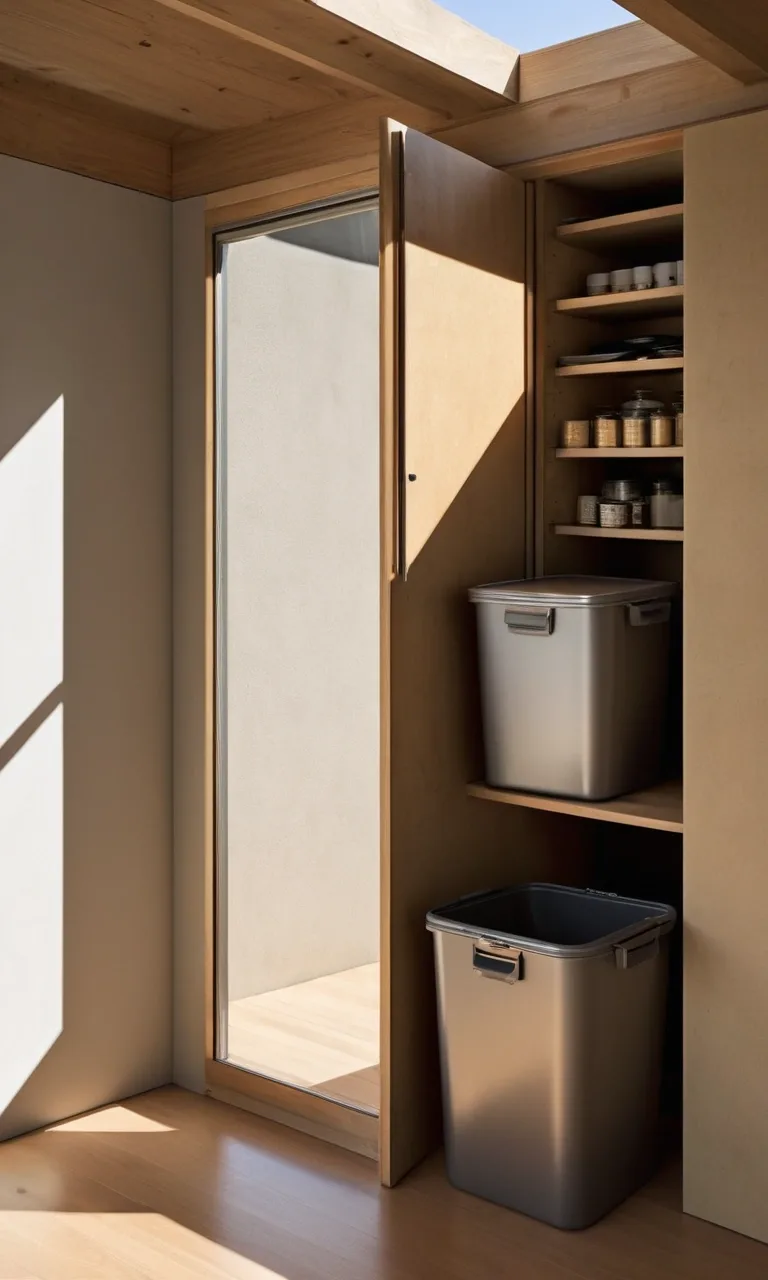
3. Hidden Cabinet
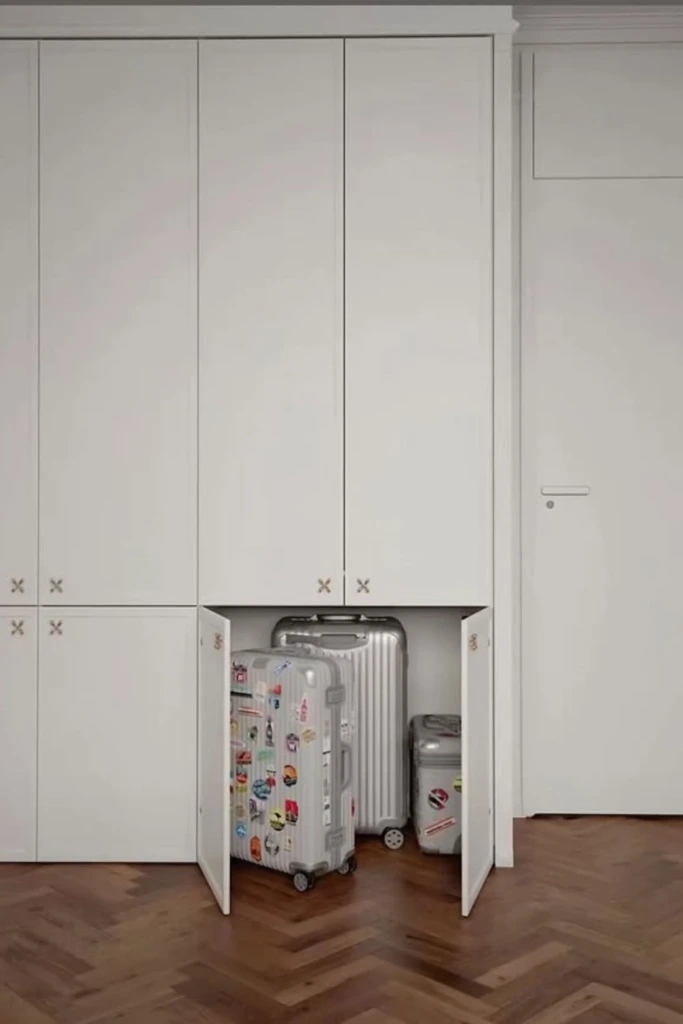
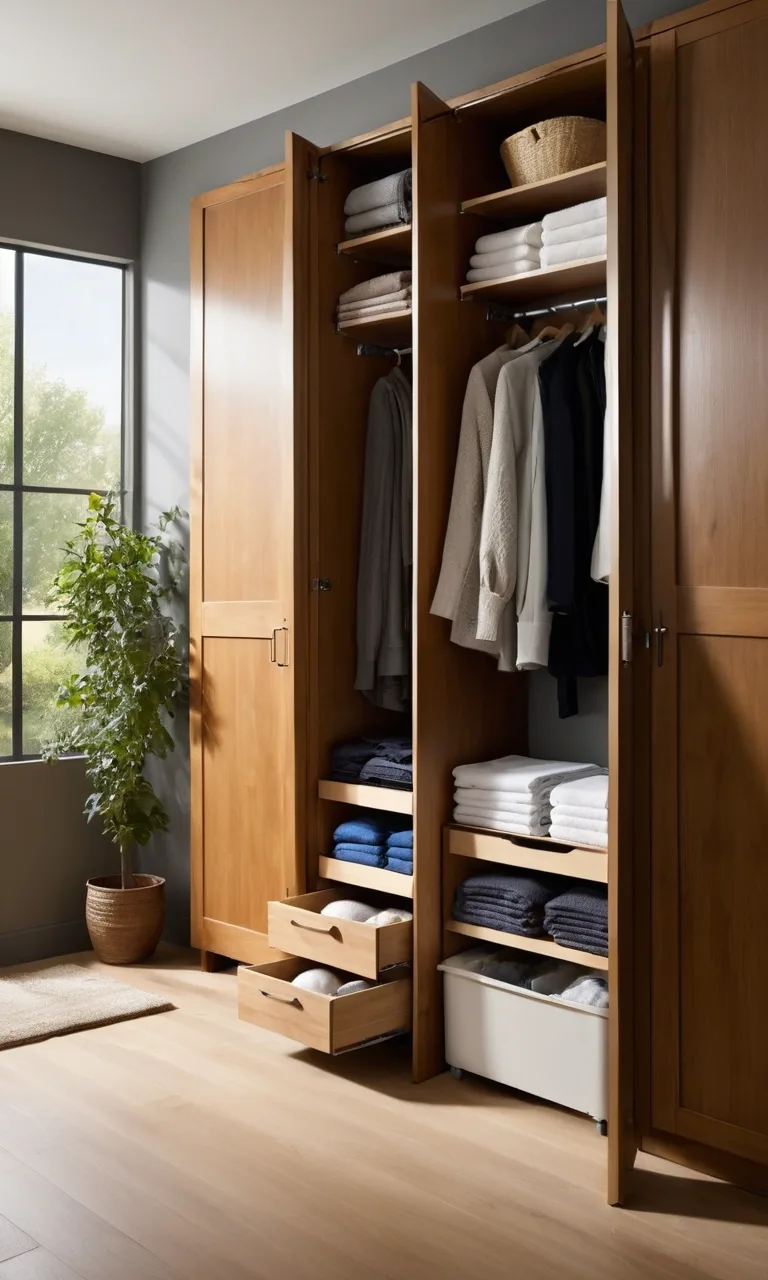
A cabinet with doors is an excellent option if you prefer a tidy interior without visible luggage. It can blend into a hallway, bedroom, or living room while concealing suitcases behind a clean, simple exterior.
Look for a tall storage cabinet or a purpose-built cupboard with enough interior clearance for your largest bag. Adjustable shelves may accommodate smaller cases and travel essentials alongside the main luggage.
Make sure the cabinet has adequate ventilation, particularly if you store bags after traveling in wet weather. Always dry luggage completely before putting it away, and avoid cramming the cabinet so tightly that removing a suitcase becomes difficult.
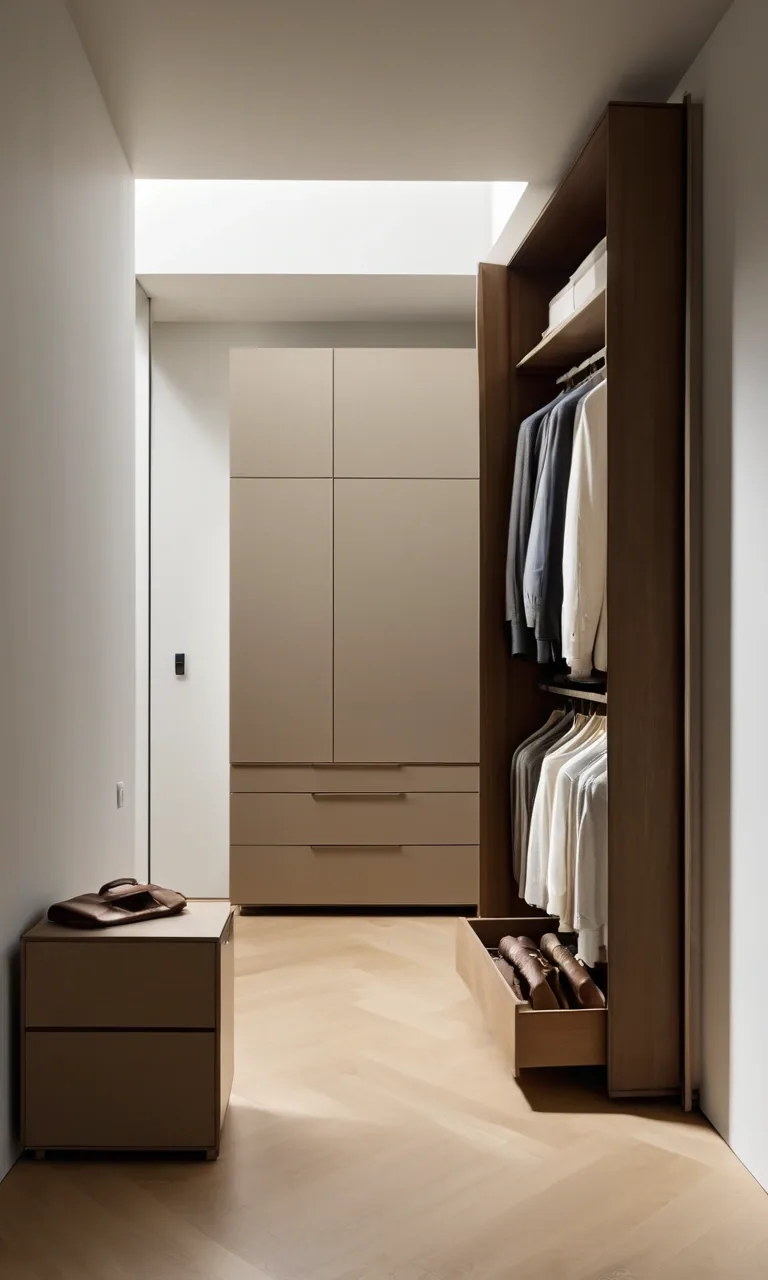
4. Closet Corner
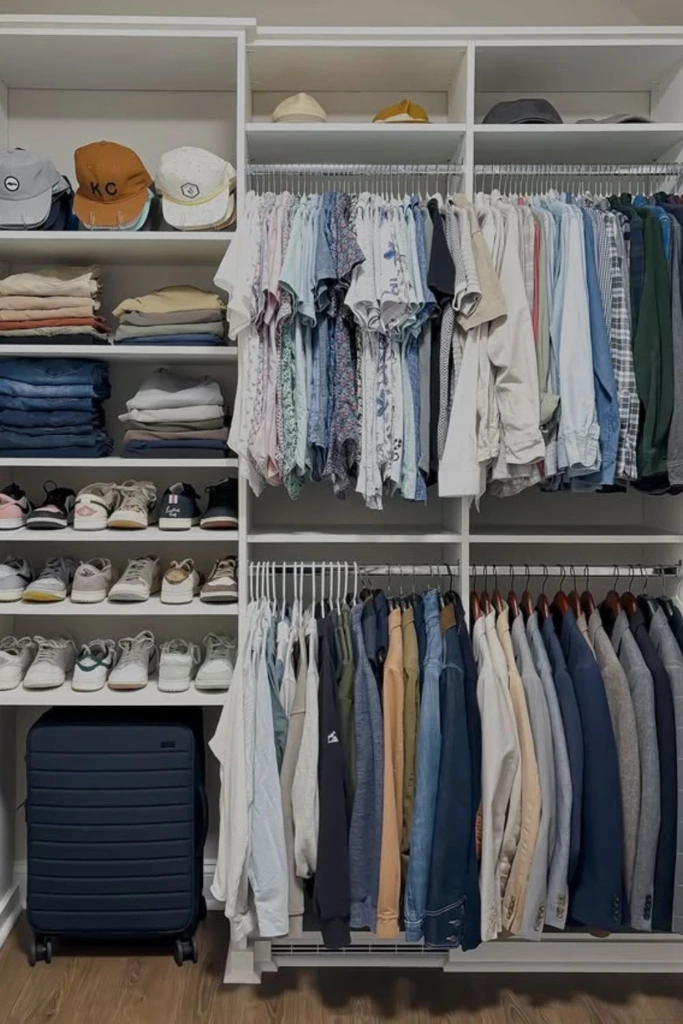
An unused corner of a wardrobe can provide valuable storage without requiring additional furniture. Stand suitcases upright where possible, placing larger cases toward the back and smaller bags in front.
If the closet has a high shelf, reserve it for lightweight carry-ons or soft-sided bags that are easy to lift. Heavier suitcases are generally safer on the floor or a low, reinforced shelf.
Use a small basket nearby for luggage tags, travel adapters, packing cubes, and other accessories. Keeping these items together prevents them from becoming scattered throughout the apartment.
5. Display Shelf
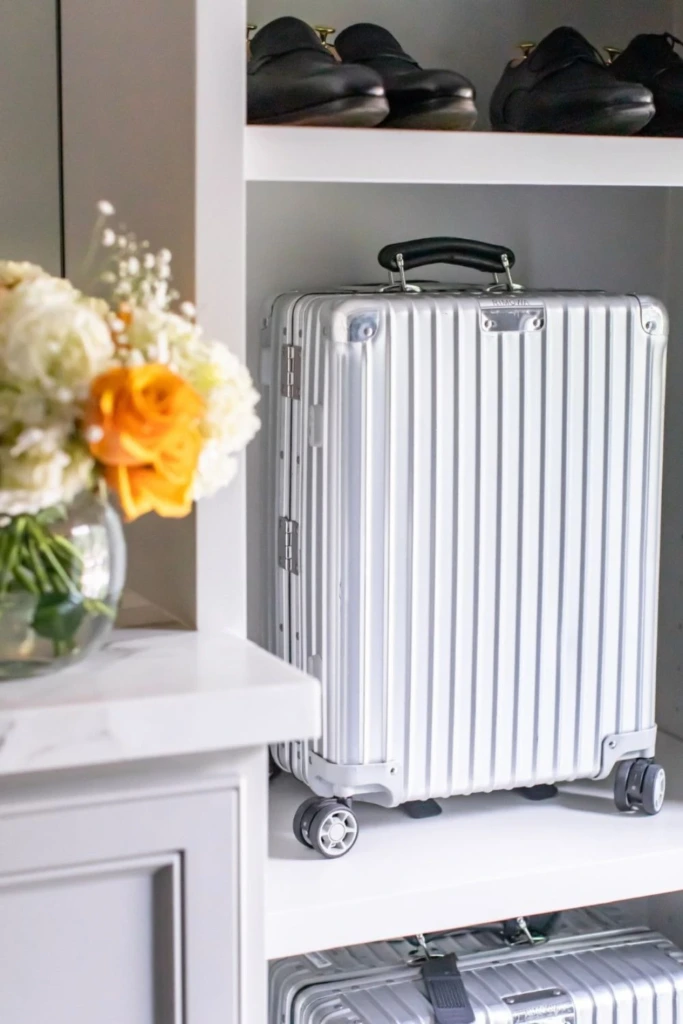
If your luggage has an attractive design, a sturdy display shelf can turn it into part of your room's decor. This approach is particularly suitable for stylish carry-ons, colorful weekend bags, or vintage cases that complement your interior.
Choose a shelf with adequate depth and a suitable weight rating. Keep the arrangement simple so the space looks intentional rather than cluttered, and avoid displaying expensive luggage in a location where it could easily be knocked down.
For a coordinated appearance, place matching bags together and use nearby decorative objects sparingly. If you prefer a minimalist room, choose a closed shelf or cabinet instead.
6. Desk Space
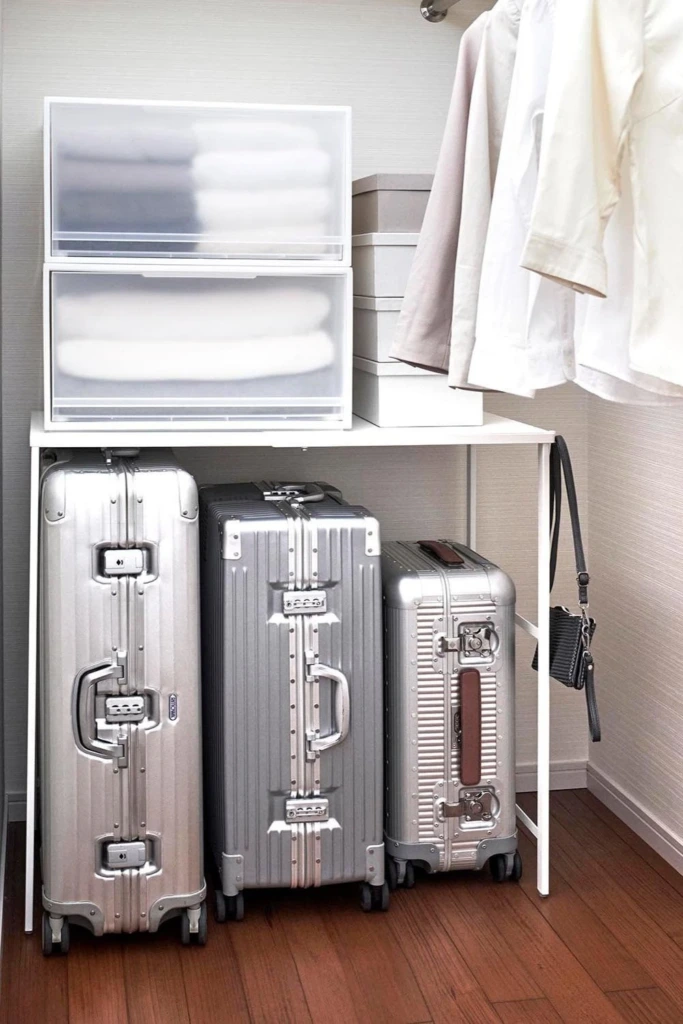
The area beneath a desk can offer a convenient storage spot for a small suitcase, especially in a studio apartment where every section of the room needs to serve a purpose.
Measure the available height and width before sliding a bag underneath. Make sure it does not interfere with your chair, legroom, electrical cables, or access to drawers.
A compact carry-on can fit neatly beneath a desk that has open clearance. If the space is used for work every day, keep the suitcase toward one side so it does not become an obstacle. Avoid storing luggage where it could block ventilation openings or press against sensitive electronic equipment.
7. Travel Zone
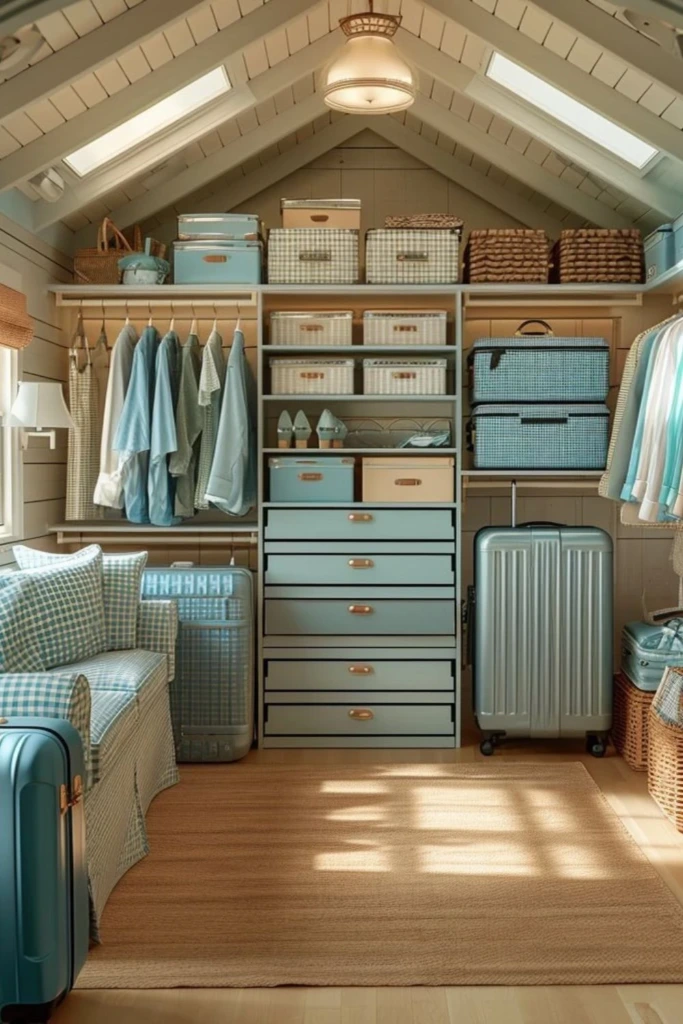
Creating a dedicated travel zone makes packing and unpacking easier while keeping luggage from spreading throughout the apartment. You can establish this area inside a closet, near the entrance, or along one wall of a bedroom.
Keep suitcases together with frequently used travel supplies, such as packing cubes, toiletry bags, luggage scales, and document organizers. A small set of labeled bins can separate accessories by purpose or traveler.
If space permits, leave a little clear floor area where you can open a suitcase before a trip. After returning home, use the same zone to unpack, air out the bag, and prepare it for storage.
8. Island Storage
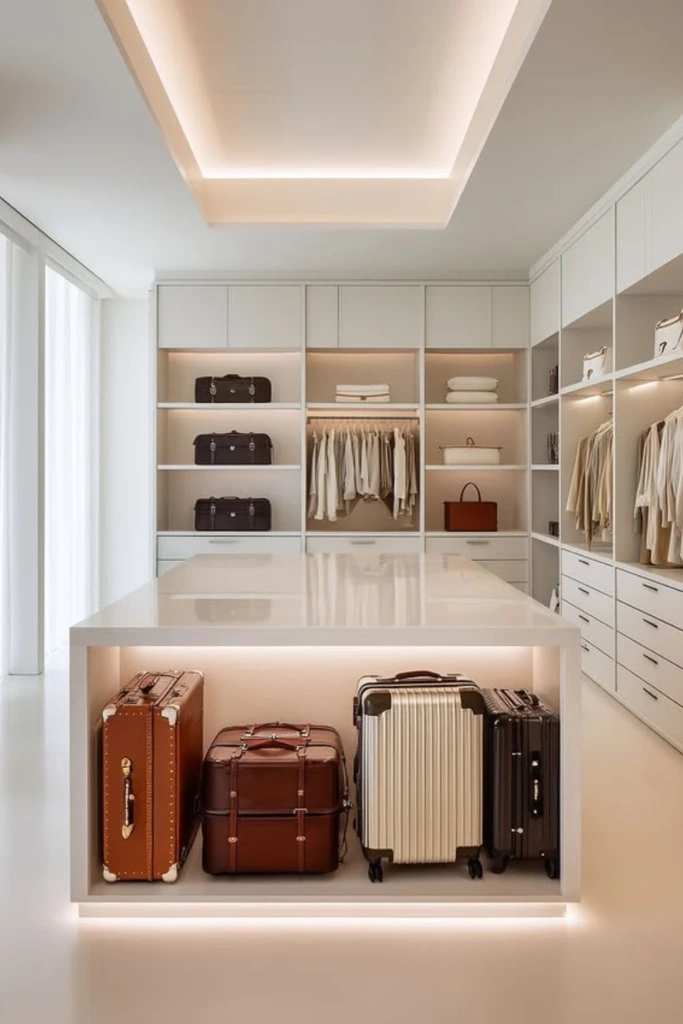
A kitchen or utility island with enclosed compartments can sometimes accommodate small luggage, provided the design includes a suitable empty cabinet or deep storage section. This option is most practical in larger open-plan apartments with multipurpose furniture.
Check the dimensions carefully, as kitchen cabinets are not always deep or tall enough for travel bags. Never force a suitcase into a compartment that obstructs plumbing, electrical connections, or access to appliances.
If the island is used for food preparation, keep luggage separate from food, cookware, and pantry supplies. A dedicated non-food storage compartment is preferable to mixing travel gear with kitchen essentials.
9. Corner Shelves
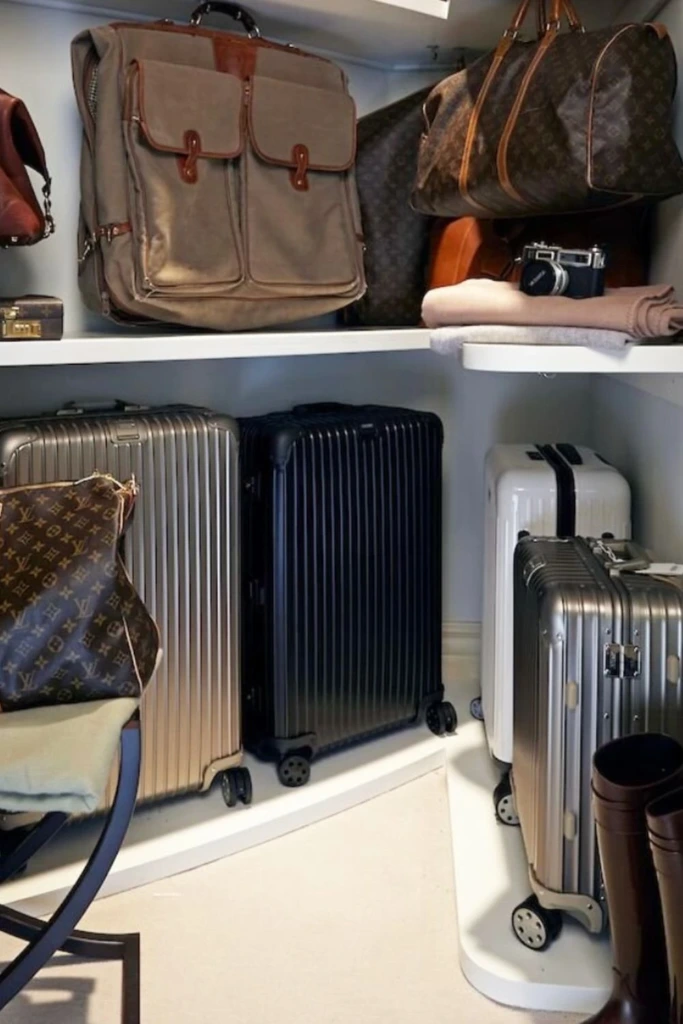
Corner shelving helps make use of awkward spaces that conventional furniture may leave empty. A well-positioned unit can hold small suitcases, duffel bags, and travel accessories in a bedroom, hallway, or storage room.
Select shelves with enough depth to support your luggage rather than allowing wheels or handles to extend into a walkway. For a compact corner, narrow vertical shelving may work better than a wide unit that consumes valuable floor area.
Arrange the heaviest bags on the bottom shelves and lighter items above them. If the shelving is tall, anchor it appropriately to reduce the risk of tipping.
10. Locker Storage
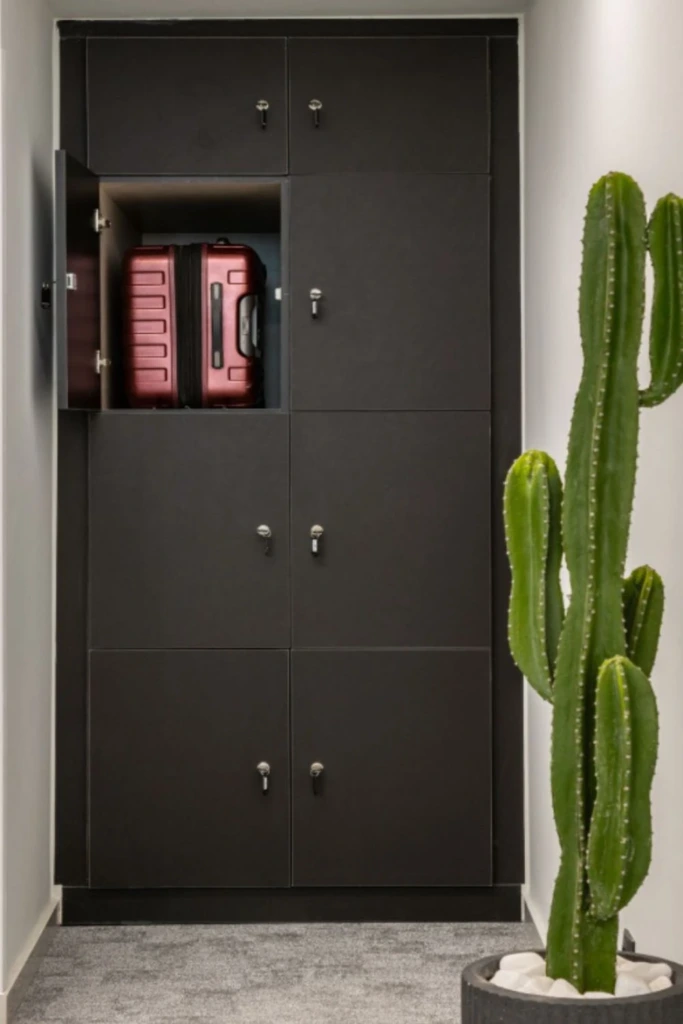
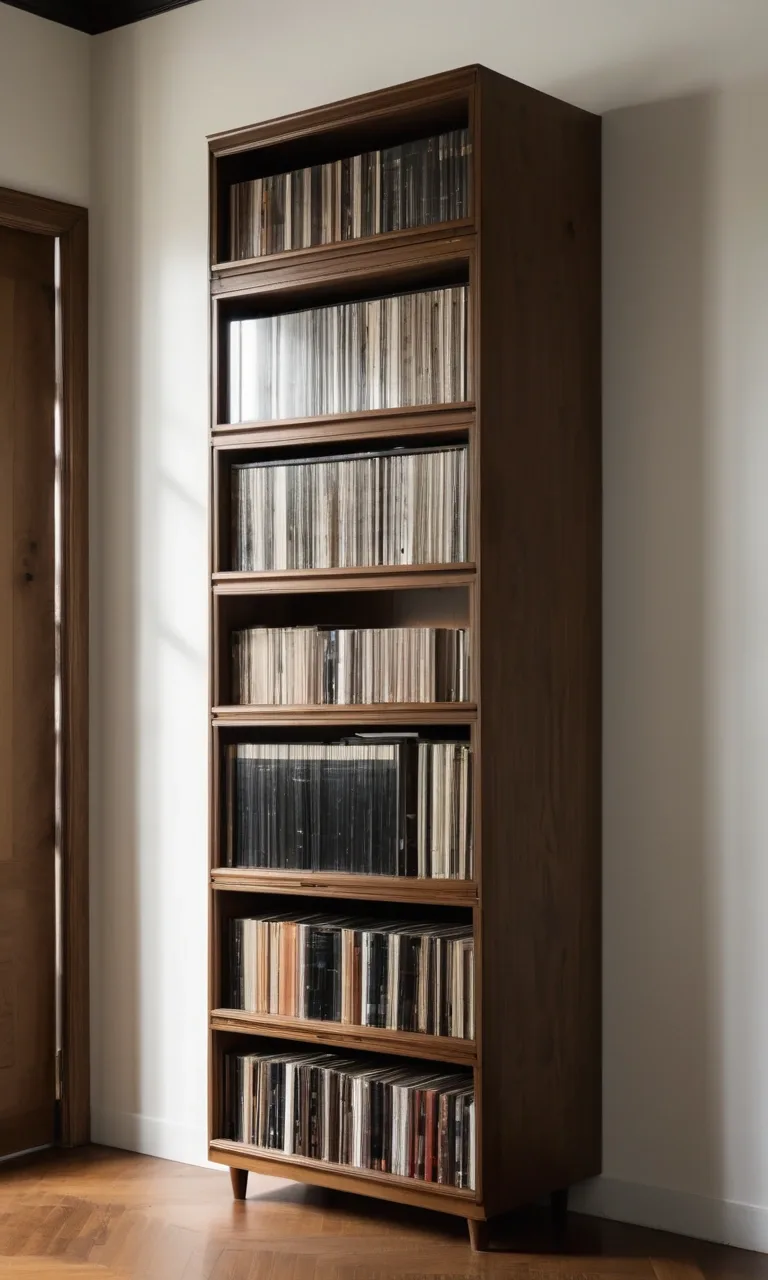
A tall locker-style cabinet offers enclosed compartments for luggage and travel accessories. Its vertical design can be especially helpful in apartments with limited floor space, while its doors keep bags hidden from view.
Choose a locker with a compartment large enough for your biggest suitcase, or use multiple sections to separate different bags. Adjustable shelves and wide doors make it easier to organize irregularly shaped luggage.
Metal lockers suit industrial-style interiors, while wooden or laminate versions can feel more at home in a bedroom. Before buying one, check the cabinet's footprint, door clearance, ventilation, and load limits.
11. Wall Shelves
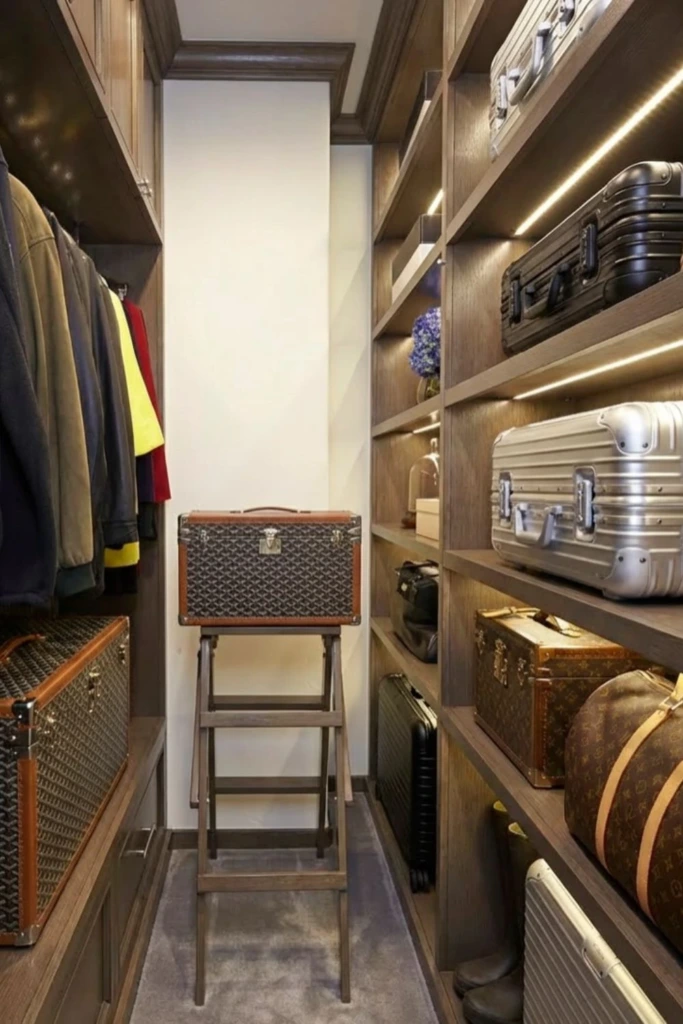
Wall-mounted shelves can free up floor space by placing suitable luggage above ground level. They work particularly well in storage rooms, large closets, or utility areas with strong walls and enough overhead clearance.
Use shelving and mounting hardware rated for the combined weight of the shelf and luggage. The fixings must be appropriate for the wall material, and heavier bags should not be stored overhead if lifting them would be unsafe.
Keep frequently used suitcases at an accessible height and reserve higher shelves for lightweight bags. Avoid installing shelves above beds, seating areas, or busy walkways when a falling suitcase could cause injury.
12. Stacked Cubes
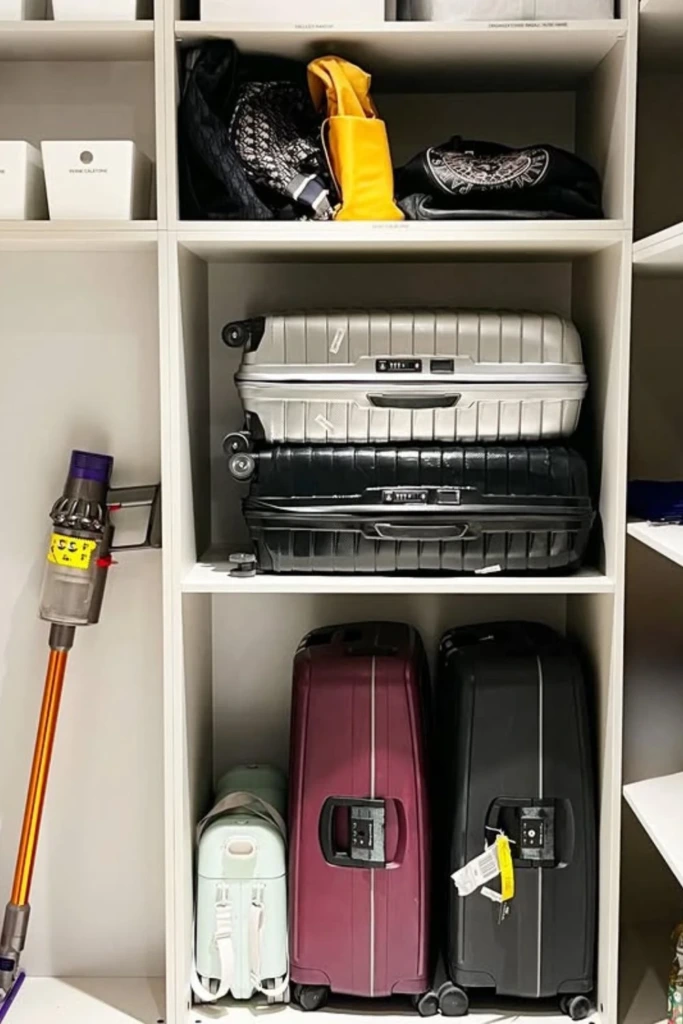
Stackable storage cubes provide a flexible arrangement that can grow as your luggage collection changes. You might start with a few compartments for carry-ons and add more later for larger cases or travel accessories.
Choose a modular system designed to support the intended load. Not every decorative cube is strong enough for heavy suitcases, and stacking units beyond their recommended height can create a tipping hazard.
For easier organization, group similar items together and label closed compartments. Keep heavier luggage in the bottom section, and ensure that each suitcase can be removed without destabilizing the surrounding structure.
13. Luggage Stand
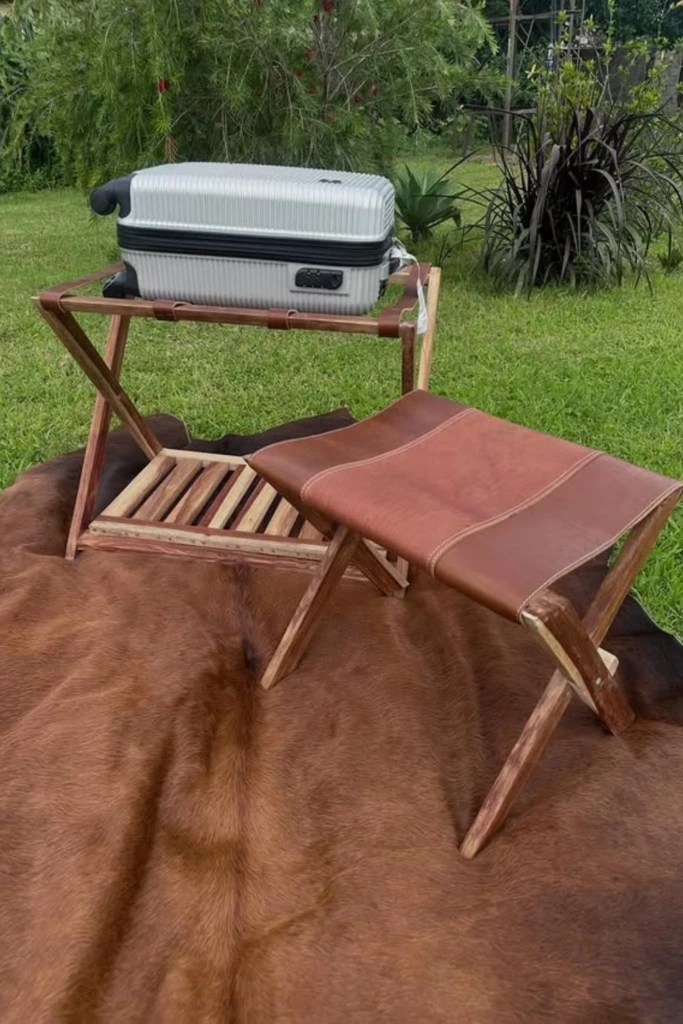
A luggage stand is not only useful when packing for a trip; it can also provide a temporary parking place for a suitcase in a compact apartment. Some stands fold flat when not in use, making them easy to tuck inside a closet.
Choose a stand with a weight capacity suitable for your bag and a stable frame that will not wobble. It can be convenient when unpacking, cleaning a suitcase, or preparing clothing for an upcoming journey.
For long-term storage, make sure the stand does not block a doorway or create a tripping hazard. If you have several suitcases, a shelf or dedicated luggage rack may be more space-efficient than separate stands.
14. Garage Racks
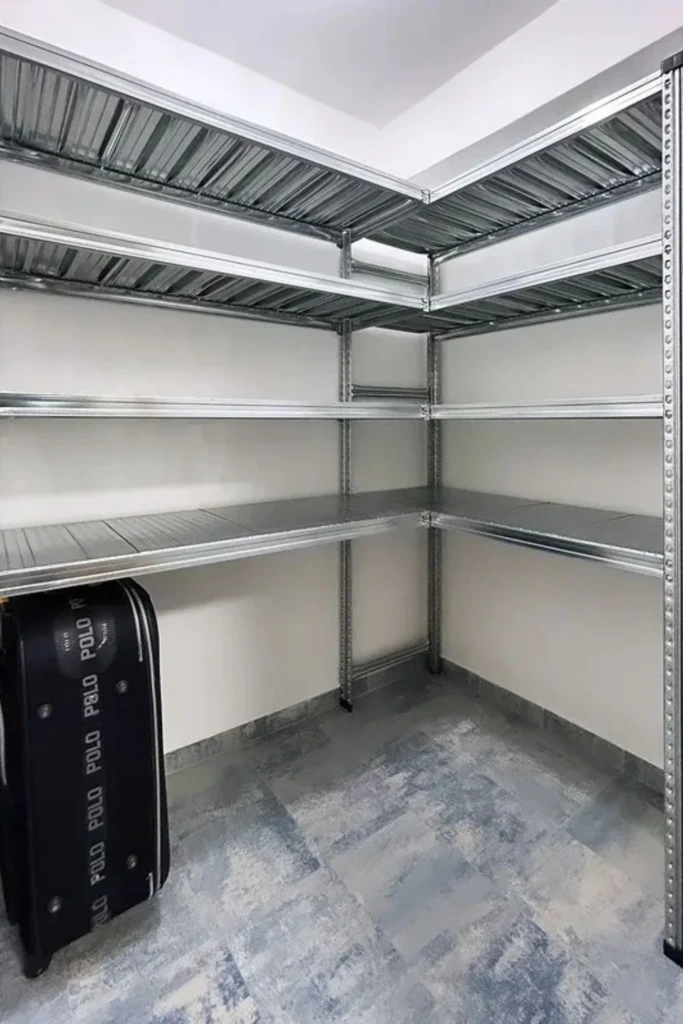
If your apartment has access to a private garage or a secure storage room, a freestanding rack can keep suitcases off the floor and organized by size. Heavy-duty shelving is particularly useful for households with several large cases.
Check the environment before storing luggage there. Garages can experience temperature swings, moisture, dust, and pests, all of which may damage fabric, leather, zippers, or interior linings.
Use a dry location, clean the suitcases before storing them, and consider breathable protective covers. Avoid placing bags directly against damp walls or on a garage floor that may become wet. If the garage is humid or exposed to leaks, indoor storage is the safer choice.
15. Table Hideout
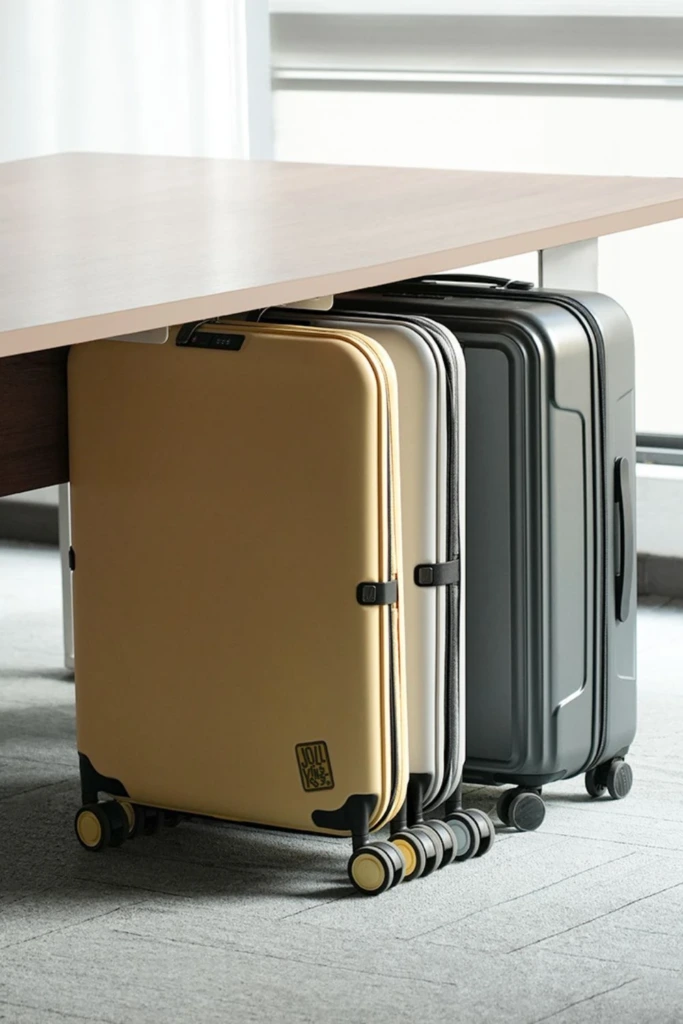
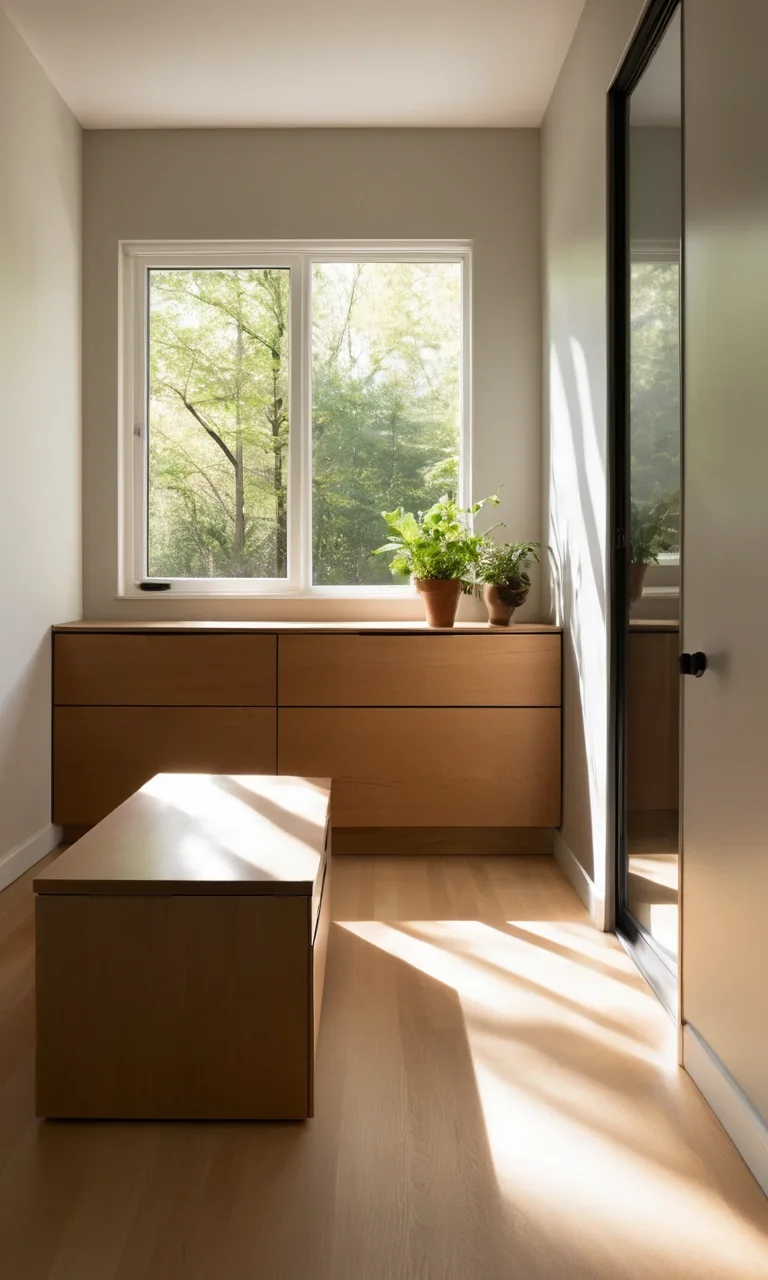
The open area beneath a console table, side table, or sturdy entryway table can conceal a small suitcase without requiring another piece of furniture. This works best when the table has enough height and depth to accommodate the bag.
Measure the space carefully and consider how the suitcase will look from different angles. A matching cover can make the arrangement less noticeable, while a compact bag can fit behind the table legs without dominating the room.
Do not overload the table or use a suitcase as a structural support. Keep the surrounding floor clear so that the luggage does not interfere with walking or opening nearby doors.
16. Luggage Wall
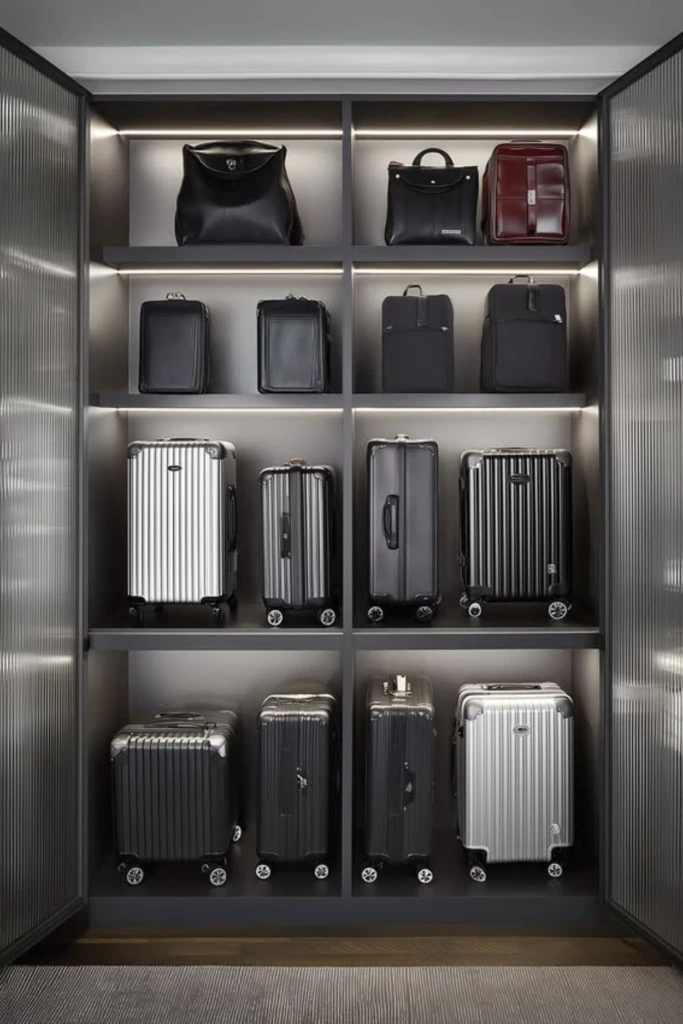
A dedicated luggage wall creates a central place for storing several suitcases vertically or on separate shelves. It is a useful option for frequent travelers, couples, or families who own different sizes of luggage.
You can create the arrangement with a tall shelving unit, a built-in cupboard, or a combination of low cabinets and overhead shelves. Place the largest cases near the bottom, keep smaller bags together, and use a separate container for accessories.
If you prefer a clean appearance, install doors or curtains to hide the collection. In an open storage arrangement, leave enough room between bags to remove each one without shifting the others.
17. Closet Nook
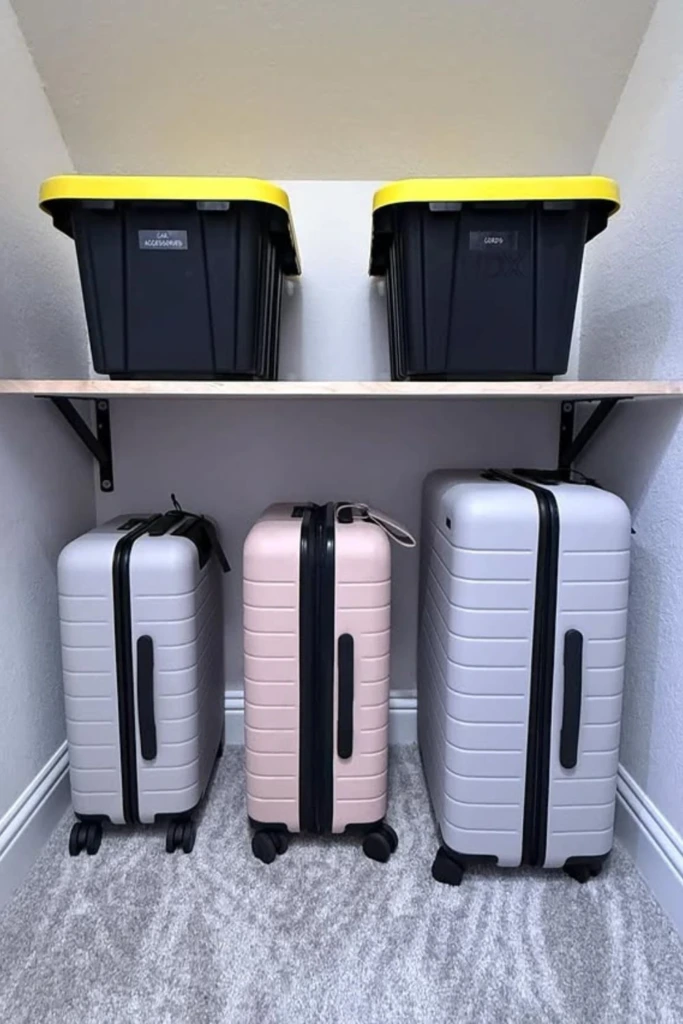
A small recess inside a bedroom wardrobe or hallway closet can become a dedicated home for a suitcase. These tucked-away spaces are particularly useful when the main closet is already filled with clothing.
Stand the suitcase on its side if the manufacturer permits and the case remains stable. Otherwise, store it flat on the floor or a suitable low shelf. Keep clothing rails, drawers, and doors fully functional rather than sacrificing everyday access for extra storage.
A soft protective cover can help prevent dust from collecting on luggage stored for long periods. If the nook is poorly ventilated, check it occasionally for dampness and allow bags to air out when necessary.
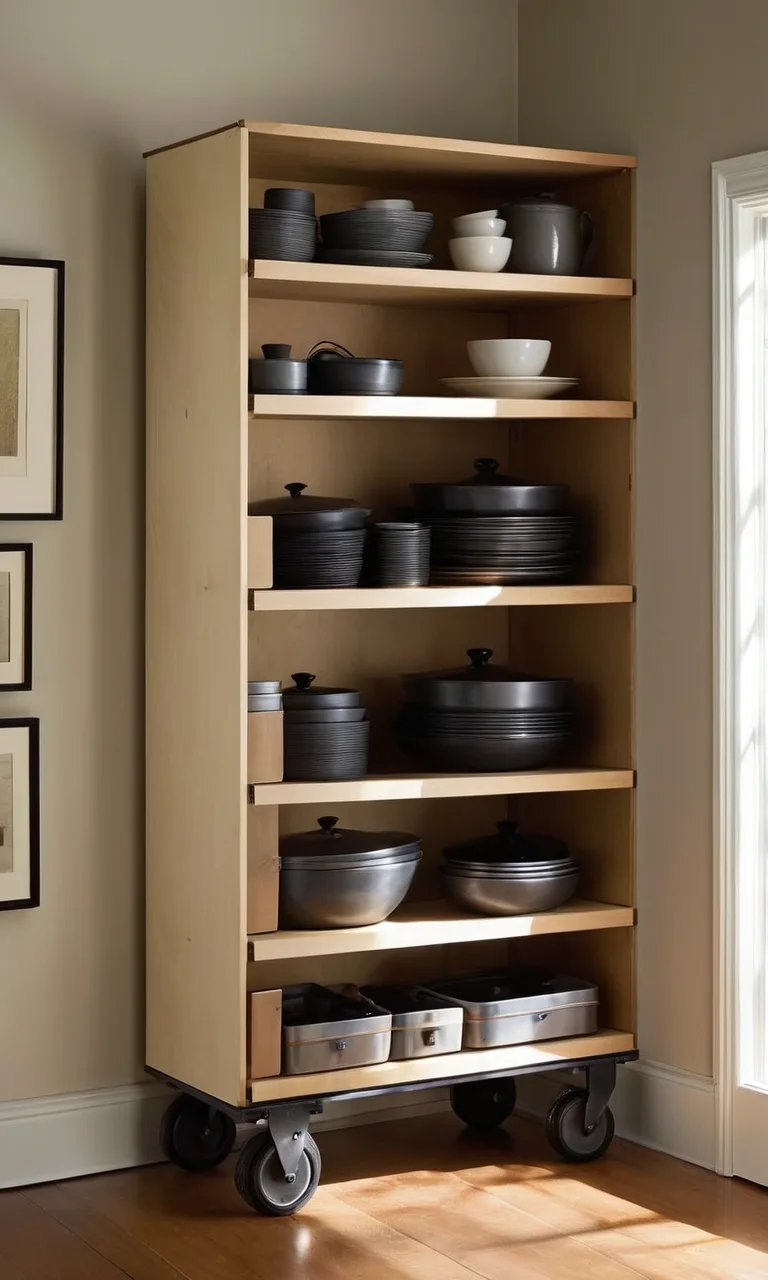
18. Rolling Rack
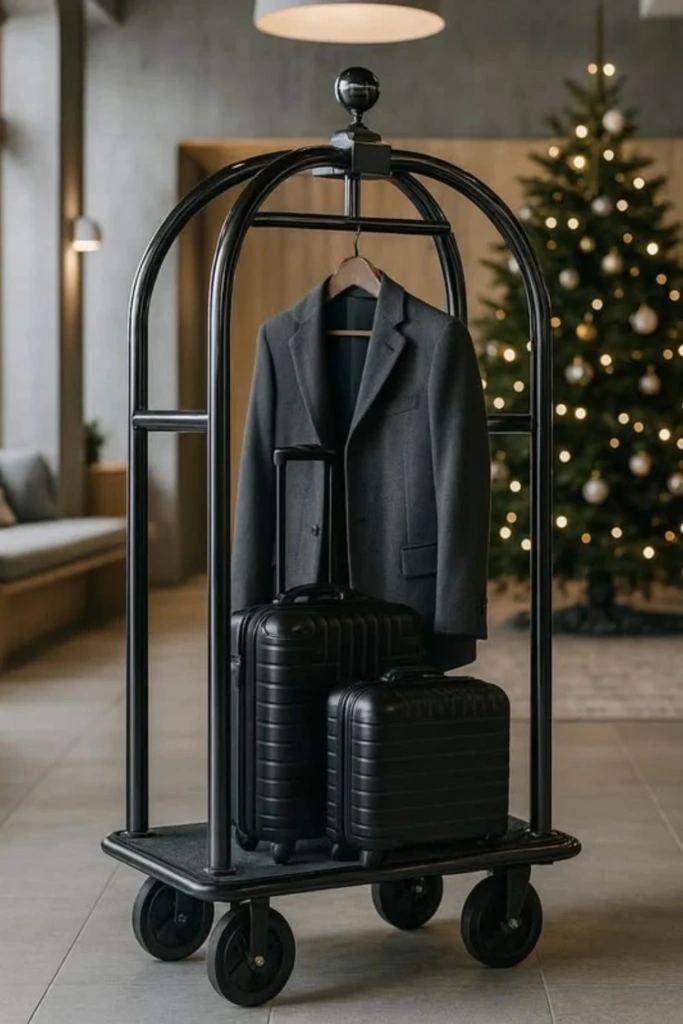
A rolling storage rack makes it easier to move luggage around a home, particularly when the storage area doubles as a packing station. It can be useful in a spare room, large closet, or utility area where bags need to move between shelves and open floor space.
Select a rack with sturdy construction, a suitable weight rating, and locking wheels. Make sure its shelves are wide enough for your suitcases and that the frame remains stable when the bags are loaded.
Place heavier luggage on the bottom level to lower the center of gravity. Lock the wheels before removing a bag, and avoid rolling a heavily loaded rack over uneven flooring or thresholds that could cause it to tip.
19. Vintage Stack
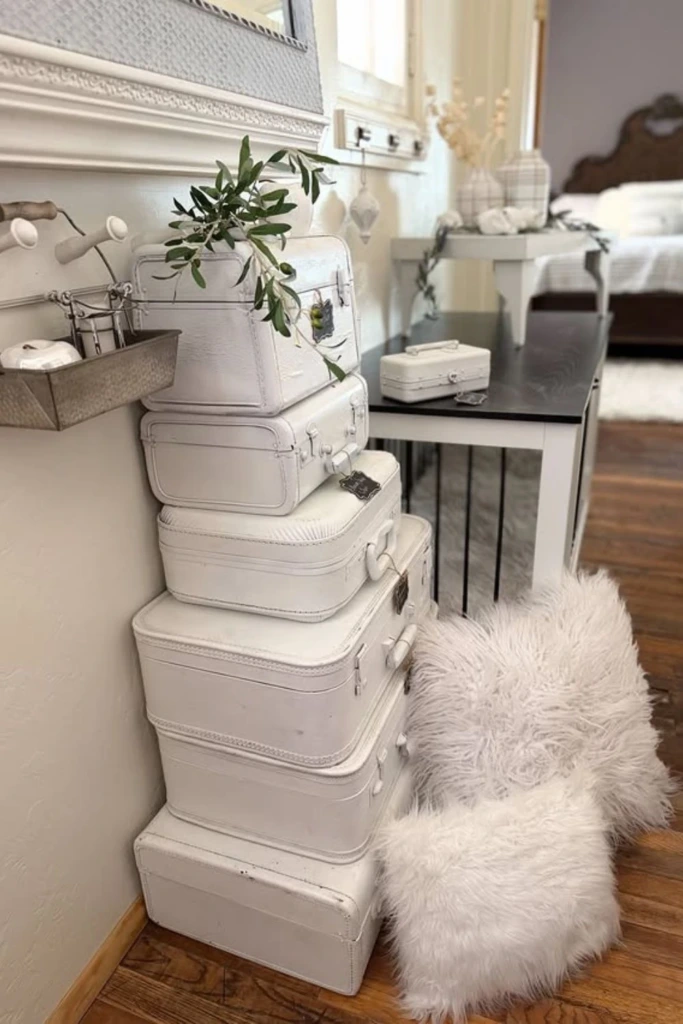
Vintage suitcases can serve as decorative storage when their appearance suits your home. A carefully arranged stack may add character to a bedroom, reading corner, or guest room while keeping smaller travel items contained.
Before stacking old cases, inspect their hinges, handles, clasps, and bases. Antique luggage may not be designed to bear substantial weight, so avoid placing heavy suitcases on fragile pieces. Use stable, level surfaces and keep the stack low enough to remain secure.
The interiors can hold lightweight items such as scarves, spare linens, or travel accessories, provided the cases are clean and dry. For valuable vintage luggage, avoid overloading it or using it as a substitute for a proper storage cabinet.
20. Split Cabinet
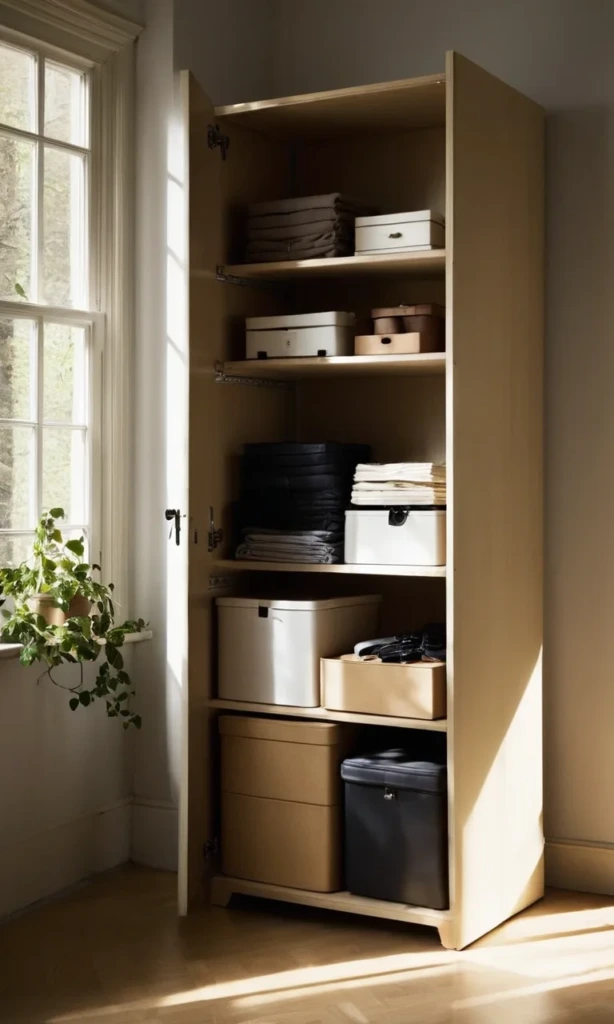
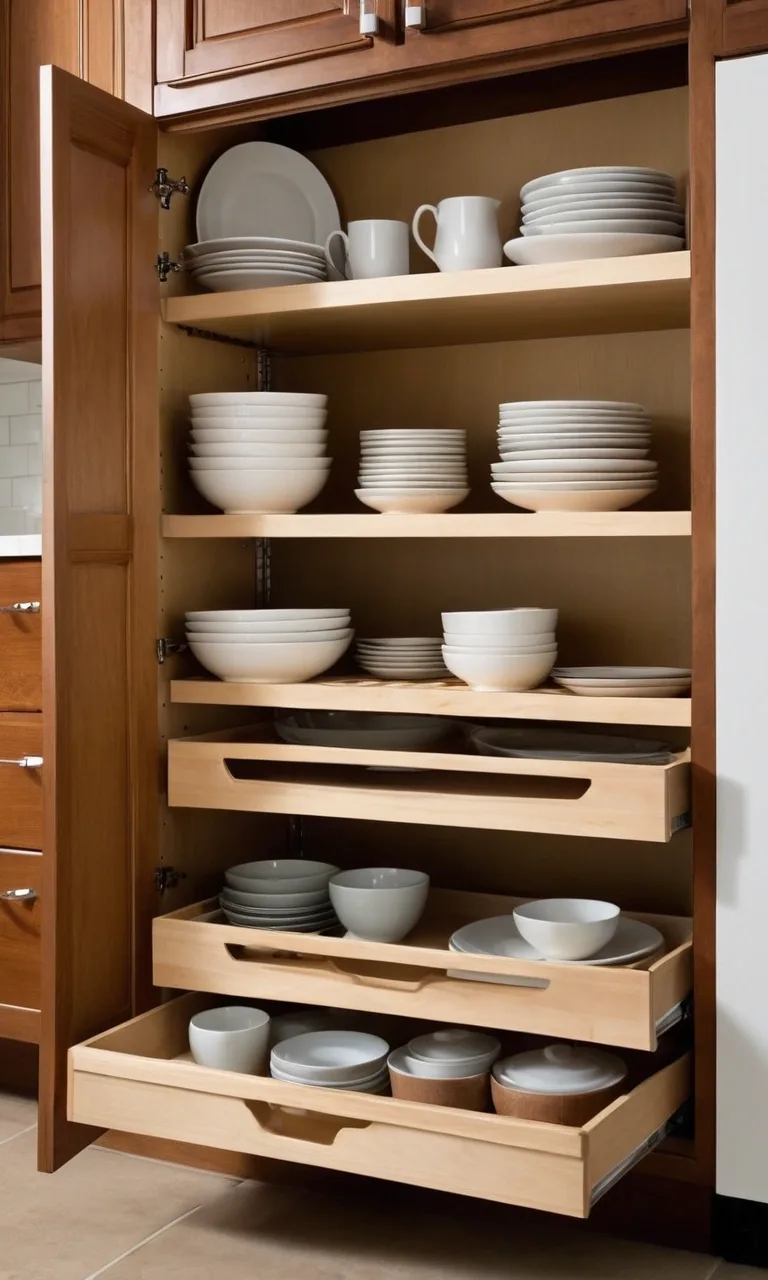
A divided cabinet can organize luggage and related supplies in separate sections. For example, one compartment might hold a medium suitcase, another could accommodate a carry-on, and smaller shelves could store packing organizers or travel bags.
Adjustable dividers are useful if your collection includes cases of different sizes. If the cabinet has doors, check that the handles and wheels do not prevent them from closing properly.
Plan the layout around the luggage you actually own instead of choosing compartments based on appearance alone. Keep heavy items low, store frequently used bags within easy reach, and avoid overloading shelves that were intended for lightweight household items.
FAQs
Choosing the right suitcase storage arrangement often comes down to available space, how frequently you travel, and the conditions in your home. A few simple habits can also help protect your luggage and make it easier to retrieve when you need it.
Where should suitcases be stored in a small apartment?
The best place is usually an unused closet corner, a low storage shelf, a space beneath a desk, or a cabinet that can accommodate the suitcase without obstructing everyday activities. If your apartment has high ceilings, vertical storage may help you use space that would otherwise go unused.
Choose a location that is dry, reasonably cool, and away from direct sunlight. Before putting a suitcase away, empty it, remove dirt, and allow any moisture to dry completely. Store heavier bags where you can lift them safely, and avoid blocking exits, ventilation openings, or access to electrical equipment.
If you have several suitcases, nesting compatible bags together can reduce the amount of space they occupy.
Is it okay to store suitcases inside each other?
Yes, storing smaller suitcases inside larger ones is generally a practical way to save space, provided the bags fit comfortably and are compatible in shape. This technique works especially well with empty hard-shell cases and soft-sided luggage that can retain its shape without excessive pressure.
Before nesting them, clean and dry every suitcase. Remove loose items from pockets, protect delicate linings, and avoid forcing one case into another. Pressure can strain zippers, distort shells, or damage internal frames.
Place a clean cloth or lightweight protective layer between nested cases if you want to reduce scuffs. Do not store a damp suitcase inside another, as trapped moisture can lead to unpleasant odors or mold. Keep the largest case in an accessible position so you can remove the smaller bags without unnecessary lifting.
Final Thoughts
Keeping suitcases organized in a small apartment is easier when you use overlooked spaces, choose storage furniture that suits your luggage, and maintain a simple system for packing accessories. Cube shelves, closet corners, cabinets, rolling racks, and under-desk spaces can all help reduce clutter when selected carefully.
Measure your luggage before committing to a storage solution, protect it from moisture and dust, and prioritize safe access over squeezing bags into every available gap. With a practical setup, your suitcases can stay neatly stored and ready for your next adventure without taking over your home.