20 Outdoor Garbage Can Storage Ideas for 2026
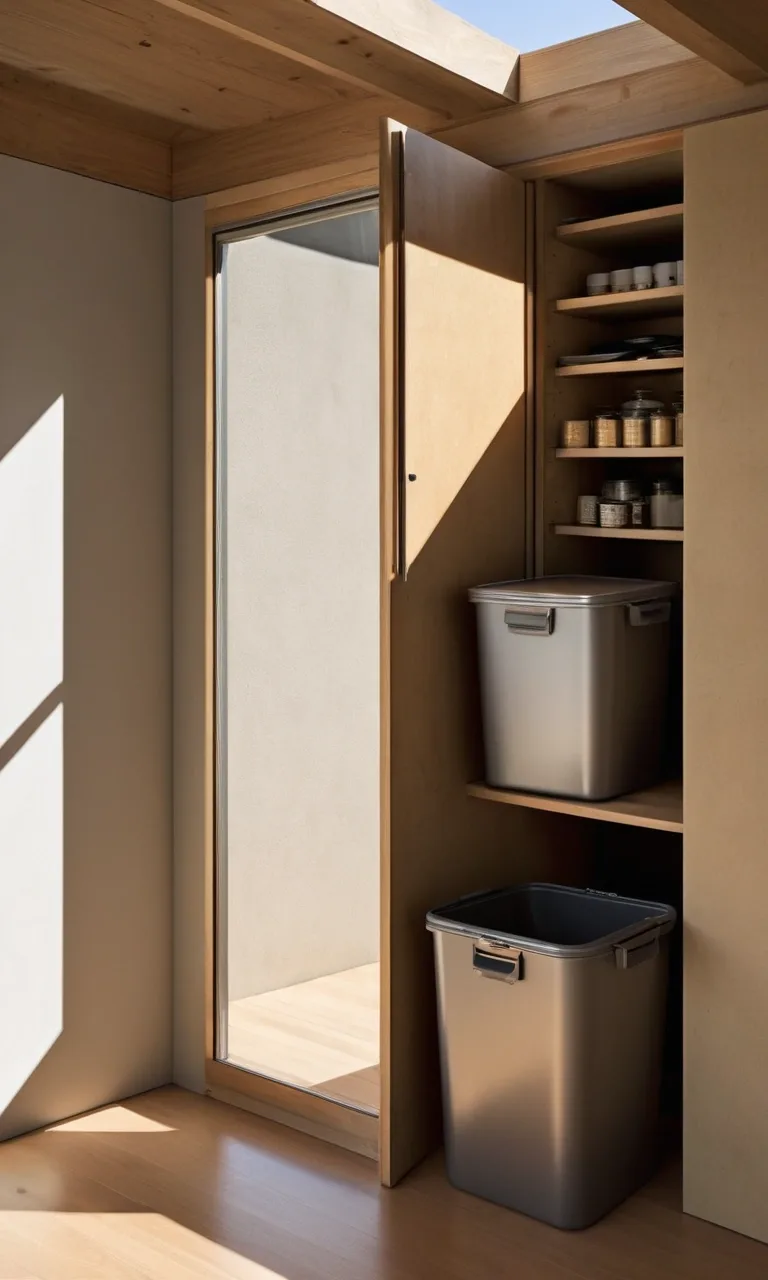
Outdoor garbage cans are essential for everyday household waste, but they can make an otherwise attractive yard, patio, or driveway look cluttered. Exposed bins may also attract pests, spread unpleasant odors, or become difficult to manage during windy weather. A well-planned storage solution keeps containers accessible while helping your outdoor space look neat and organized.
From contemporary metal enclosures to rustic wooden screens and compact plastic sheds, there are plenty of ways to conceal garbage cans without sacrificing convenience. The right option depends on your available space, the number of bins you own, your budget, and the weather conditions in your area.
1. Benefits of Proper Garbage Can Storage
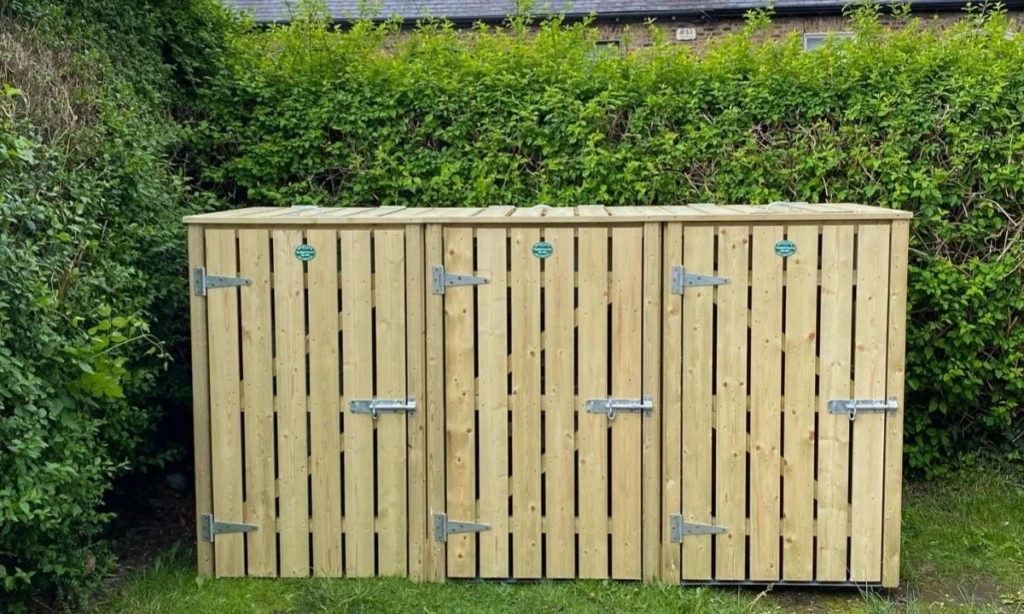
A dedicated storage area for garbage cans offers several practical advantages beyond improving the appearance of your property.
Improves curb appeal: Concealing colorful or oversized bins creates a cleaner, more coordinated look around your entrance, driveway, or garden.
Helps discourage pests: A sturdy enclosure with secure closures can make it harder for rodents and other animals to reach household waste.
Provides weather protection: A suitable shelter helps shield bins from direct sunlight, heavy rain, and strong winds, potentially extending their useful life.
Keeps outdoor areas organized: Giving each container a designated place prevents bins from blocking pathways, doors, or parking spaces.
Makes waste management easier: A thoughtfully designed enclosure keeps recycling, general waste, and garden waste containers together in one convenient location.
Reduces visual clutter: Matching the enclosure to your fencing, landscaping, or exterior finishes helps the storage area blend into its surroundings.
For the best results, choose a design that allows adequate ventilation, easy access for collection day, and enough room to move each bin without lifting it awkwardly. Keep containers on a level, washable surface and follow local waste collection requirements.
2. Garbage Can Storage Outdoor Ideas
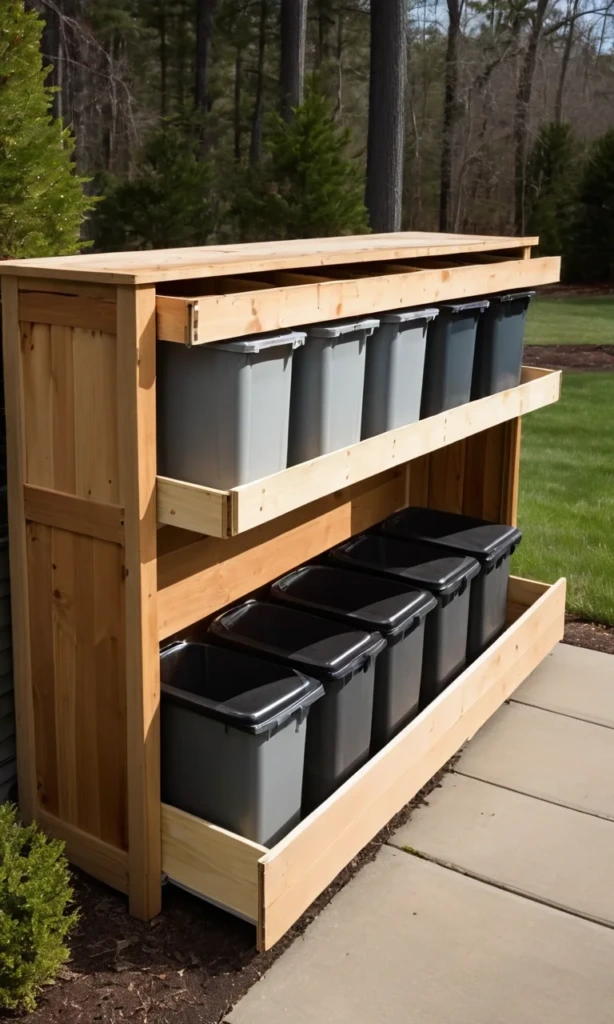
Outdoor garbage can storage can be as simple as a decorative screen or as substantial as a purpose-built shed. Before choosing a design, measure your bins with their lids open and account for handles, wheels, and the clearance needed to pull them out.
Consider the location carefully. A storage unit near the driveway can simplify collection, while a screen beside a garden wall may keep bins out of sight from the patio. Materials should suit the local climate, and the enclosure should remain practical in wet weather.
The following ideas offer different ways to combine functionality, durability, and attractive outdoor design.
3. Sleek Metal Enclosure
A metal enclosure is an excellent choice for homes with contemporary landscaping and clean architectural lines. Powder-coated steel or weather-resistant aluminum can create a crisp, understated appearance while providing a durable structure for concealing several garbage cans.
Choose a design with hinged doors or removable panels so the bins can be accessed without difficulty. A dark gray, black, or muted bronze finish can complement modern fencing and outdoor lighting.
Metal surfaces are generally easy to wipe clean, although the quality of the coating matters in humid or rainy environments. Make sure the enclosure has suitable ventilation and drainage, and check that its base can support the full weight of the bins. Secure the structure properly if strong winds are common in your area.
4. Bright White Panels
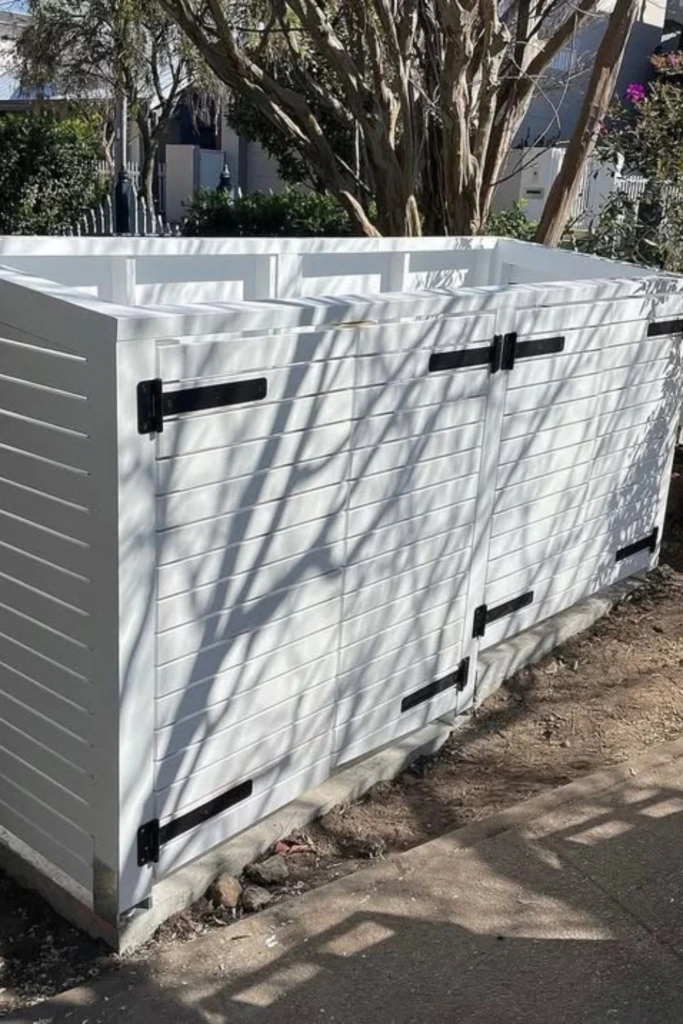
White panels create a fresh, tidy look that works particularly well in cottage gardens, coastal-inspired yards, and homes with light-colored exterior finishes. A white enclosure can make a small outdoor corner feel visually lighter while hiding the containers behind a uniform surface.
Painted timber, weather-resistant composite boards, and suitable outdoor-grade panels can all work for this design. Add simple black hardware for contrast or match the hinges and handles to the surrounding fence.
White surfaces may show dirt and splashes more readily than darker finishes, so choose a washable material and a durable exterior coating. Position the enclosure on a stable surface and leave enough room for its doors to swing open. Regular cleaning will help maintain the bright appearance.
5. Urban Plastic Cover
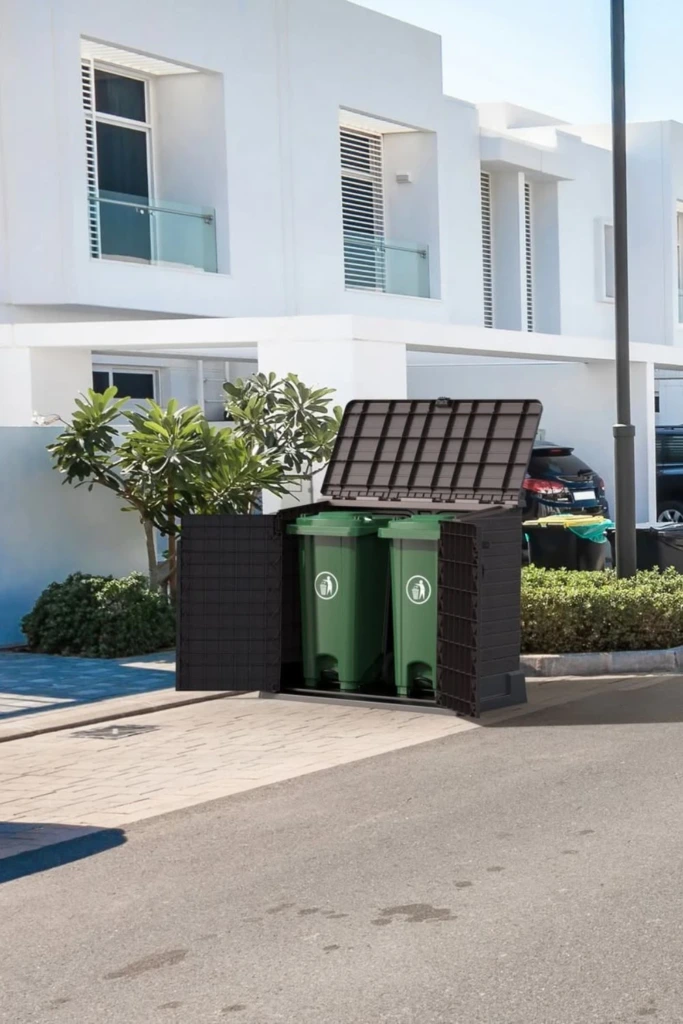
A molded plastic garbage can cover is a practical solution for smaller yards, paved side passages, and modern homes where low-maintenance storage is a priority. These covers are often lightweight, resist moisture, and require less upkeep than untreated wood.
Look for a model sized specifically for your containers, with a lid that opens conveniently and enough internal space to move the bins. Neutral colors such as charcoal, brown, or dark green can help the unit blend into its surroundings.
Plastic covers vary considerably in strength and UV resistance. Outdoor exposure can make lower-quality plastic brittle or cause fading over time, so choose a product designed for exterior use. Anchor it when necessary, and avoid assuming that an ordinary storage cover is animal-proof unless its construction and closures are designed for that purpose.
6. Natural Wood Slats
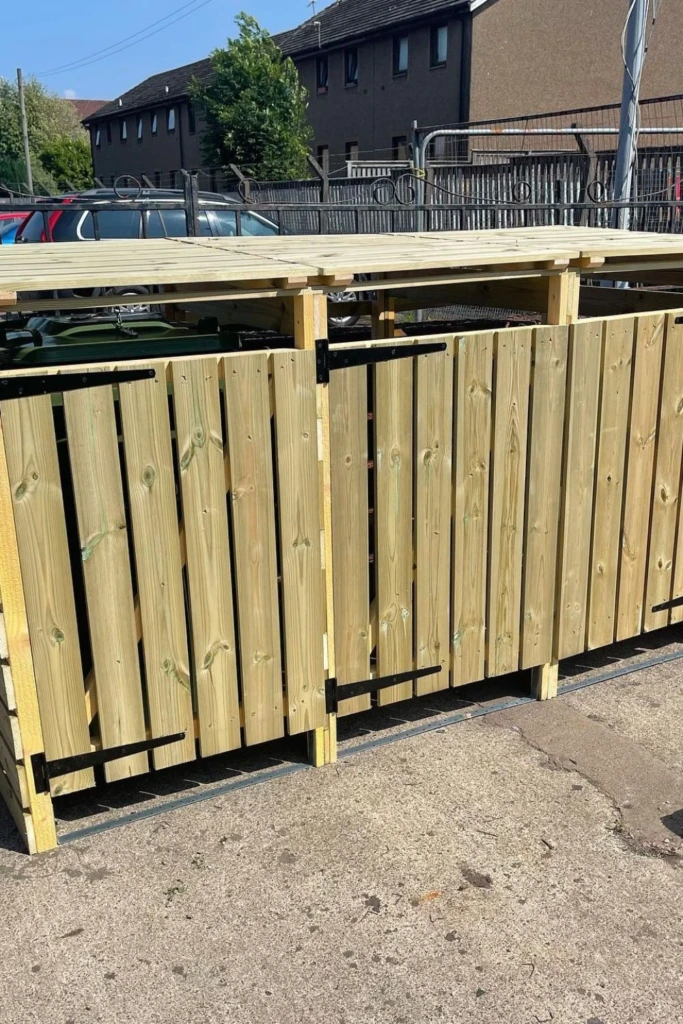
A slatted wooden enclosure brings warmth and texture to an outdoor space. Its natural finish works beautifully alongside raised garden beds, timber fencing, stone paths, and leafy planting.
Arrange horizontal or vertical boards with small, consistent gaps between them. These openings create a lighter appearance than solid panels while allowing air to circulate around the bins. You can leave the wood in its natural tone, apply a transparent outdoor finish, or stain it to match existing garden structures.
Use exterior-rated timber and corrosion-resistant screws to help the enclosure withstand changing weather conditions. Keep the bottom edges away from standing water, and maintain the finish as recommended for the chosen wood. The slats should be sturdy enough to resist everyday knocks without obstructing access to the containers.
7. Muted Gray Slats
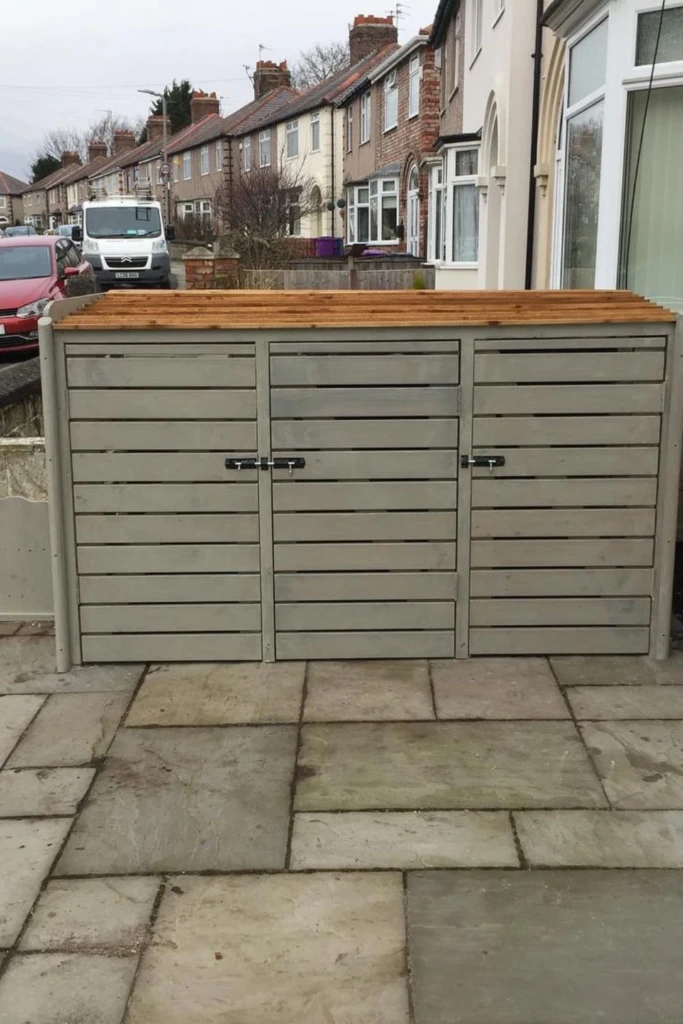
Gray slats provide a modern alternative to traditional brown timber. Soft gray, charcoal, and weathered stone shades pair well with concrete paving, minimalist gardens, and contemporary house exteriors.
A horizontal slat design can make a narrow outdoor area appear longer, while vertical boards emphasize height. Choose a finish that coordinates with nearby gates or fencing to create a unified appearance.
Gray composite boards offer a relatively low-maintenance option, while painted timber allows more flexibility in sizing and style. If using wood, prepare the surface properly before applying exterior paint or stain. Leave appropriate gaps for airflow and ensure the finished structure is strong enough to stay stable when the doors are opened or bins are moved.
8. Lift-Up Timber Lid
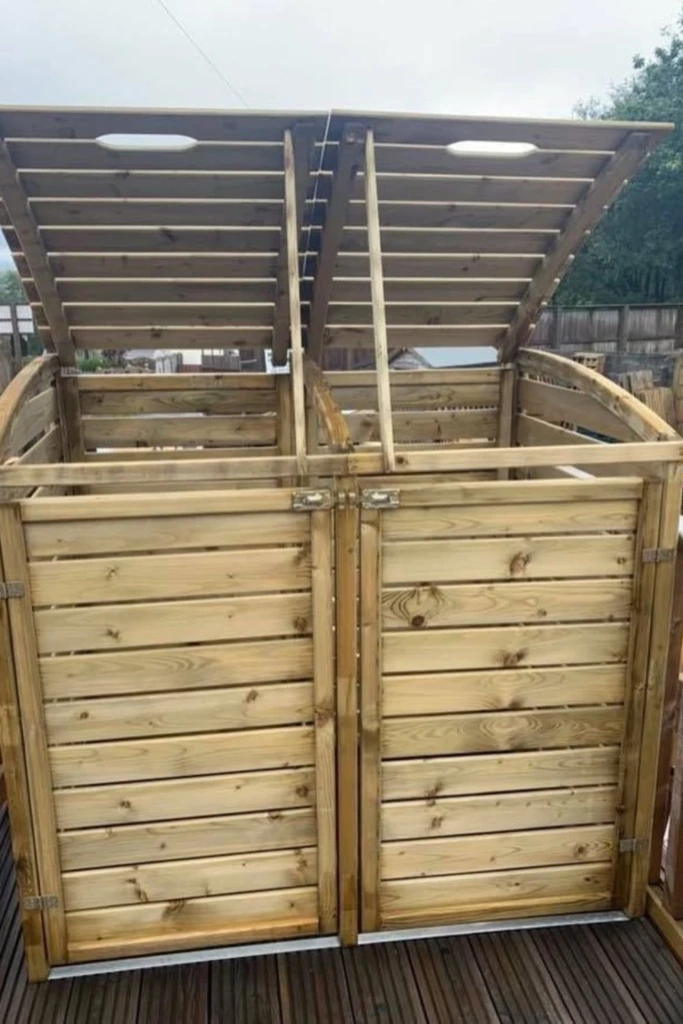
A lift-up timber lid offers convenient access when you need to reach the tops of your garbage cans. This design is particularly useful when the enclosure sits beneath a wall, beside a garden boundary, or in another location where front access alone may be awkward.
Construct the lid from exterior-grade boards supported by a sturdy frame. Weather-resistant hinges can connect it to the enclosure, while a handle makes lifting easier. If the lid is heavy, consider a suitable support mechanism that prevents it from dropping unexpectedly.
Check the height of your bins before building so the cover can open far enough for waste disposal. The lid should not interfere with the container lids or collection process. Allow water to drain rather than pool on the surface, and keep the timber properly treated to reduce weather damage.
9. Green Garden Hideaway
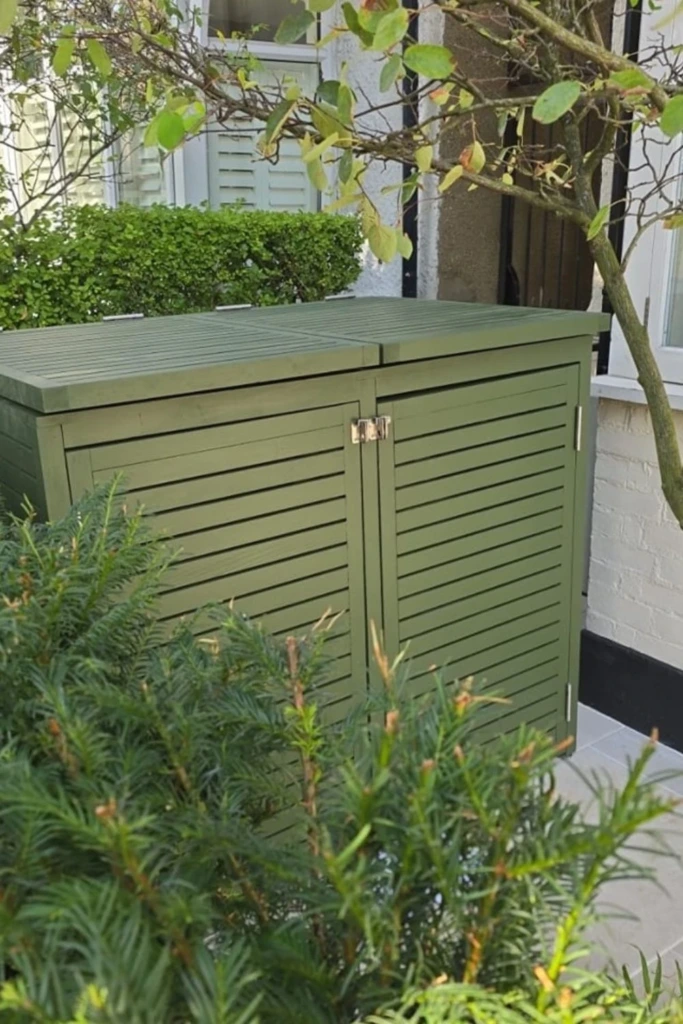
A garden hideaway uses planting and natural colors to help garbage storage disappear into the landscape. Instead of making the enclosure a focal point, place it beside an existing hedge, along a garden boundary, or behind a decorative planting bed.
A timber screen painted deep green can blend with surrounding foliage, while shrubs in nearby beds provide a softer visual transition. Climbing plants may also work on a separate trellis positioned beside the storage area.
Keep plants far enough away from doors and lids to avoid blocking access. Do not allow dense growth to trap moisture against wooden panels or conceal damaged hinges. Choose plants suited to your climate, and avoid placing the bins so deeply behind landscaping that moving them to the curb becomes inconvenient.
10. Single Bin Shed
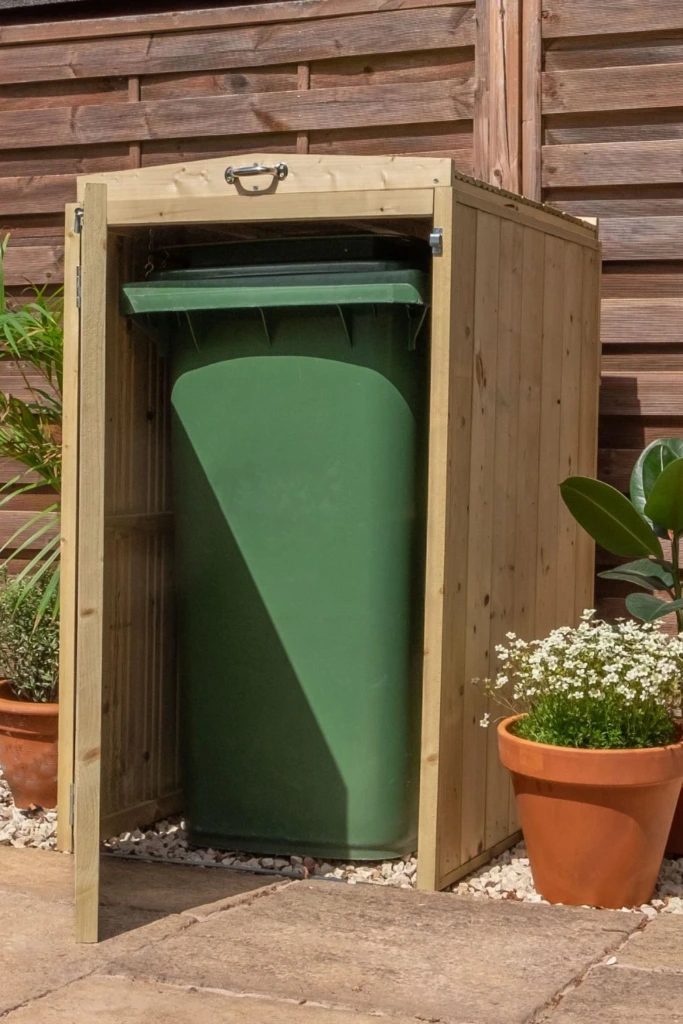
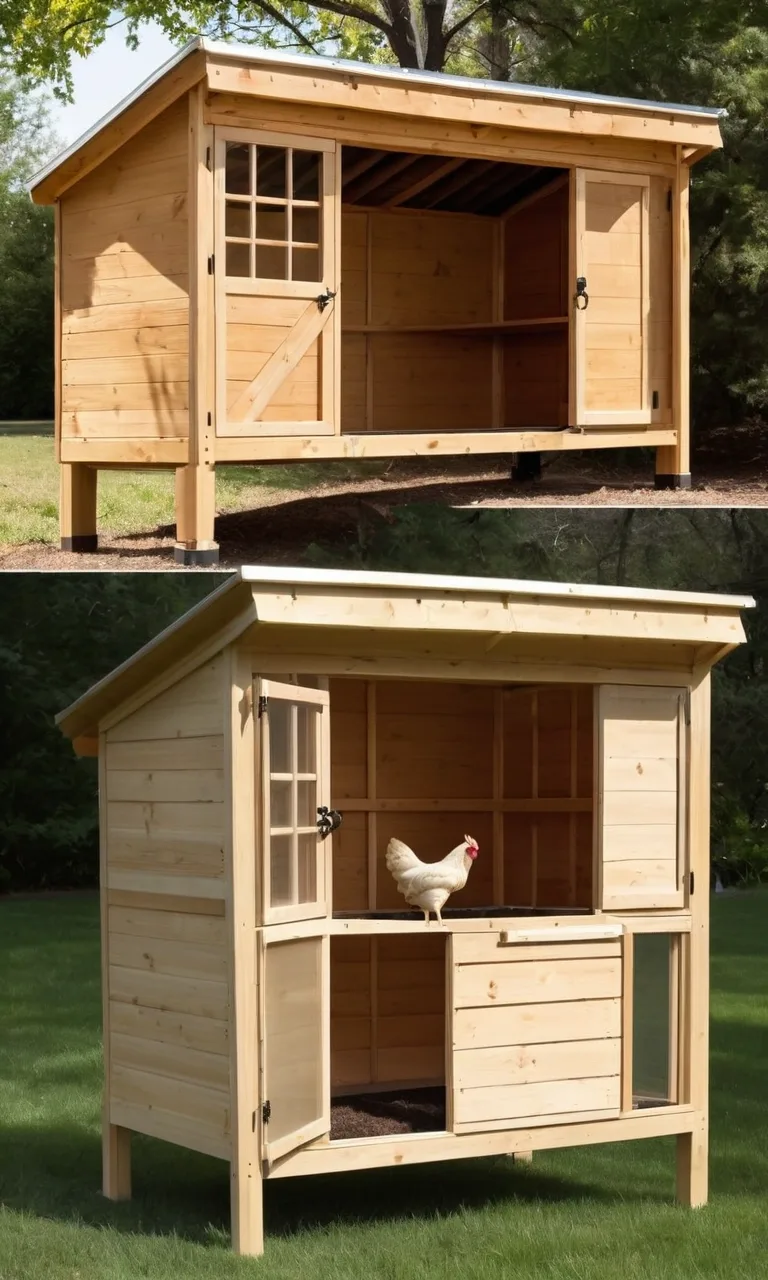
A compact shed designed for one garbage can is ideal for households with limited outdoor space or a dedicated container for food scraps or garden waste. Its enclosed structure creates a defined storage point without requiring a large installation.
Look for a unit with a front door wide enough to remove the bin and a top opening if you want to dispose of waste without opening the entire enclosure. Weather-resistant resin, treated timber, and coated metal are common material choices.
Measure the container carefully, including the handle and lid when open. Leave clearance around the sides so the bin does not become stuck inside. A single-bin shed should also sit on a level, durable base and include suitable ventilation. If you store food waste, clean the container regularly to minimize odors and discourage insects.
11. Contrast Wood Frame
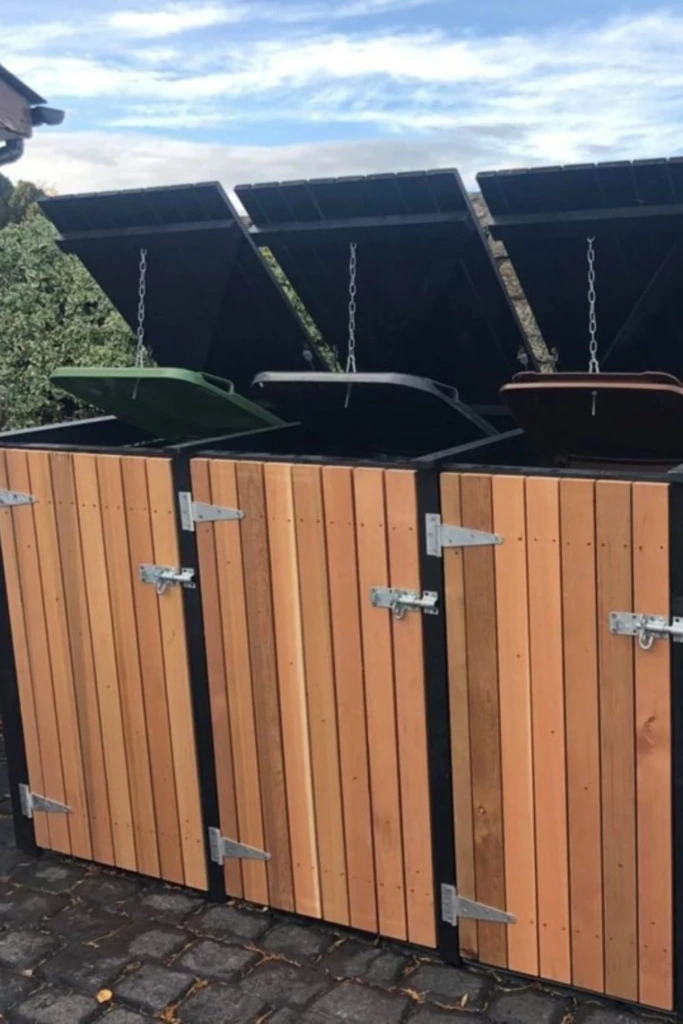
A contrasting wood frame adds visual interest by combining two finishes in one enclosure. For example, a dark-stained structural frame can surround pale timber panels, or natural wood can be paired with black-painted battens and hardware.
This approach works well when you want the garbage storage area to look like a deliberate part of the garden design rather than a purely functional structure. Repeating colors found in nearby furniture, fences, or planters helps tie everything together.
Build the frame from durable exterior timber and attach the panels securely. Different materials may weather at different rates, so select compatible finishes and prepare each surface appropriately. The frame should remain rigid when the doors are in use, and the opening should be wide enough for every container you plan to store.
12. Lattice Screen Corner
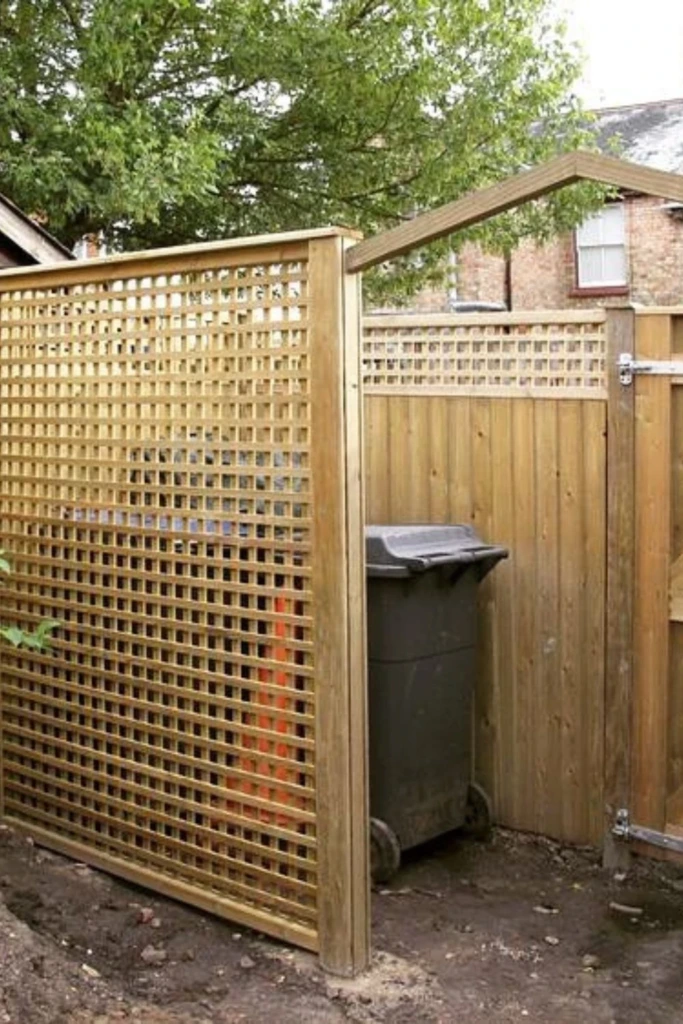
A lattice screen can conceal garbage cans in a garden corner without making the space feel enclosed or heavy. Its open pattern allows light and air to pass through, making it suitable for smaller patios and planted areas.
Install two or three lattice panels to form an L-shaped or U-shaped screen around the bins. Timber lattice provides a natural look, while outdoor-rated composite or metal versions can suit more contemporary settings.
Because lattice has openings, it offers visual screening rather than complete concealment. It may not be the best choice if you need to keep animals away from waste or hide bins entirely. Secure the panels to stable posts, and consider adding a solid lower section if you want to block the view of the containers more effectively.
13. Rustic Crate Style
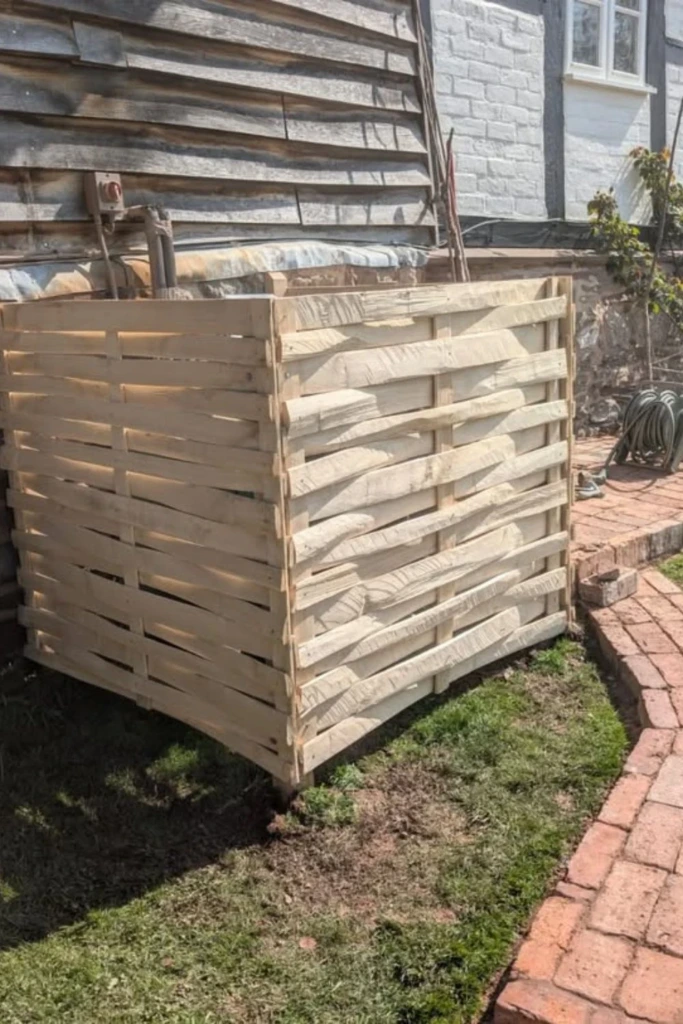
A crate-inspired enclosure brings a relaxed, farmhouse character to an outdoor utility area. Its broad wooden boards and simple construction can complement gravel paths, cottage gardens, and natural landscaping.
Use sturdy timber boards arranged around a rectangular frame, with a hinged front panel or double doors for access. A slightly weathered finish can create a rustic effect, while a protective outdoor stain helps preserve the material.
The design should be more substantial than a decorative shipping crate, particularly when it needs to accommodate heavy rolling bins. Avoid untreated reclaimed wood that may contain contaminants, protruding nails, or signs of rot. Keep the base dry and the door hardware secure so the structure remains practical as well as attractive.
14. Modern Wood Combo
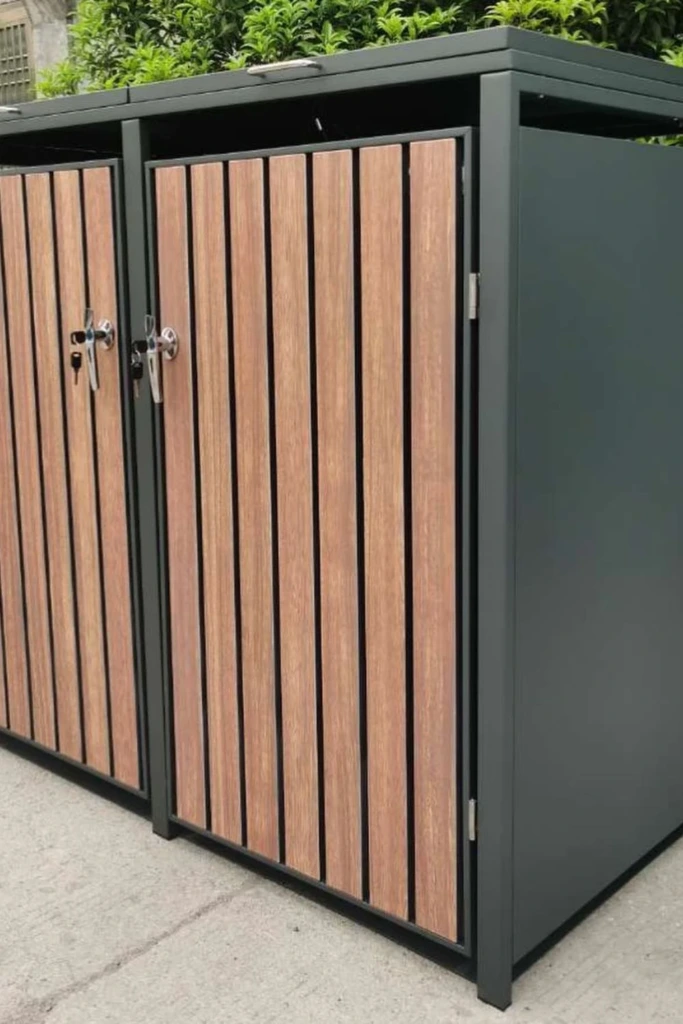
A modern wood combination enclosure blends natural timber with another material, such as metal framing, composite panels, or a concrete-look base. This mixture creates a balanced appearance that feels warm without looking old-fashioned.
For instance, slim timber slats can sit within a dark metal frame, or a wooden door can be paired with a weather-resistant side panel. The combination allows you to coordinate the enclosure with both natural landscaping and contemporary architectural details.
Select materials with similar durability requirements and ensure their connections can handle outdoor exposure. Different components may expand, contract, or weather differently, so use suitable fixings and follow the manufacturer's installation recommendations. Keep the overall design simple, with clear access and enough ventilation for the number of containers stored inside.
15. Compact Courtyard Fit
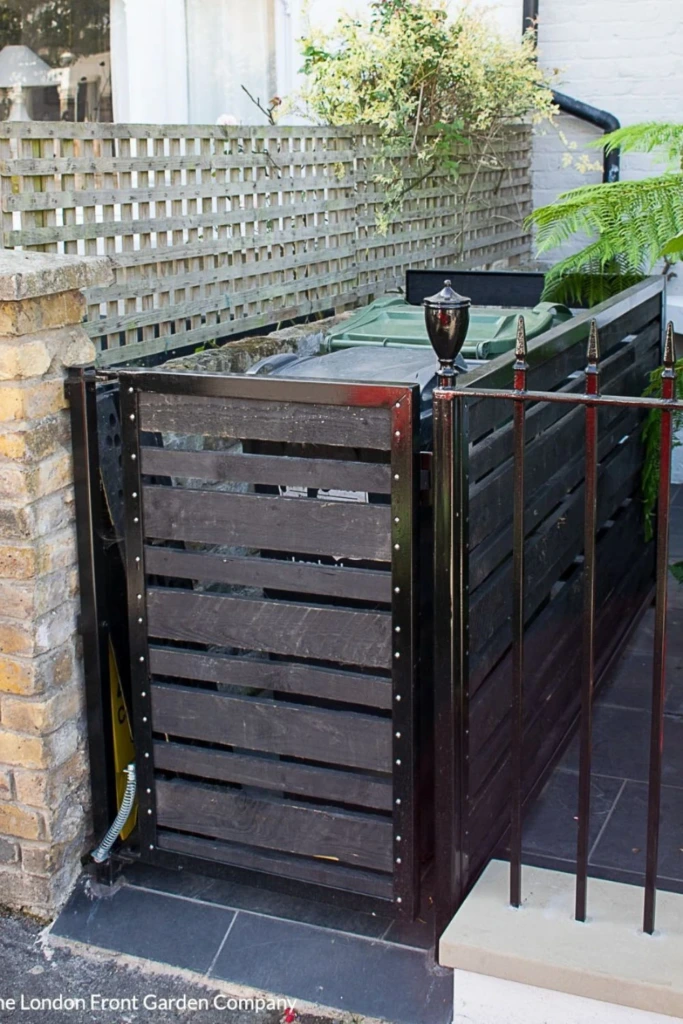
A compact courtyard requires storage that makes efficient use of every available inch. Positioning garbage cans against an existing wall or inside an unused corner can preserve the main walking area while keeping containers close to the house.
A narrow enclosure with front-opening doors is often more practical than a deep cabinet with a large lid. If space permits, arrange the bins side by side and make sure each one can be removed independently. A simple screen that matches the courtyard fencing may be sufficient when complete enclosure is unnecessary.
Measure doorways, paths, and the bins themselves before committing to a design. Account for the room needed to open the enclosure and maneuver the containers. Avoid obstructing drains, ventilation openings, utility access points, or emergency routes, and use a base that can be washed down easily.
16. Full Panel Concealment
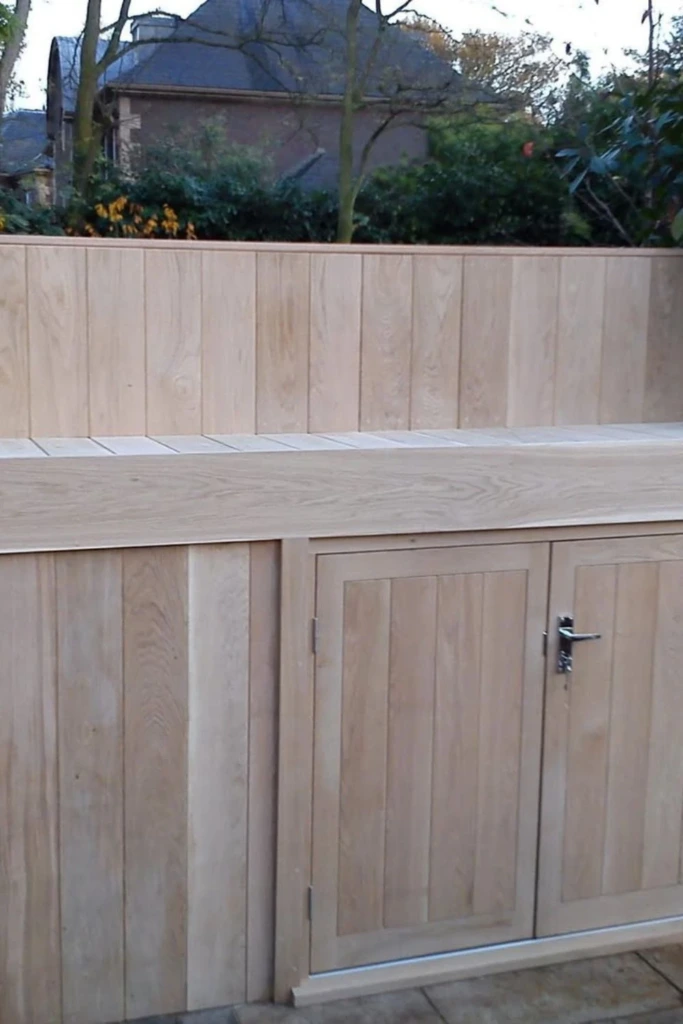
Full panel concealment is a good option when you want garbage cans completely hidden from the main outdoor living area. Solid doors and side panels create a neat, uninterrupted appearance and can coordinate closely with an existing fence or exterior wall.
Materials such as treated timber, exterior-grade composite, and coated metal are suitable depending on your budget and preferred style. A pair of front doors makes it easier to retrieve individual bins, while a wide opening can accommodate larger wheeled containers.
Although the panels are solid, the storage area should not be completely airtight. Allow for ventilation and drainage, particularly if you store organic waste. Use secure hinges and latches, but make sure the doors open easily on collection day. Full enclosure can improve appearance, but it will not automatically prevent odors or pests without proper waste handling and suitable construction.
17. Angled Slat Shelter
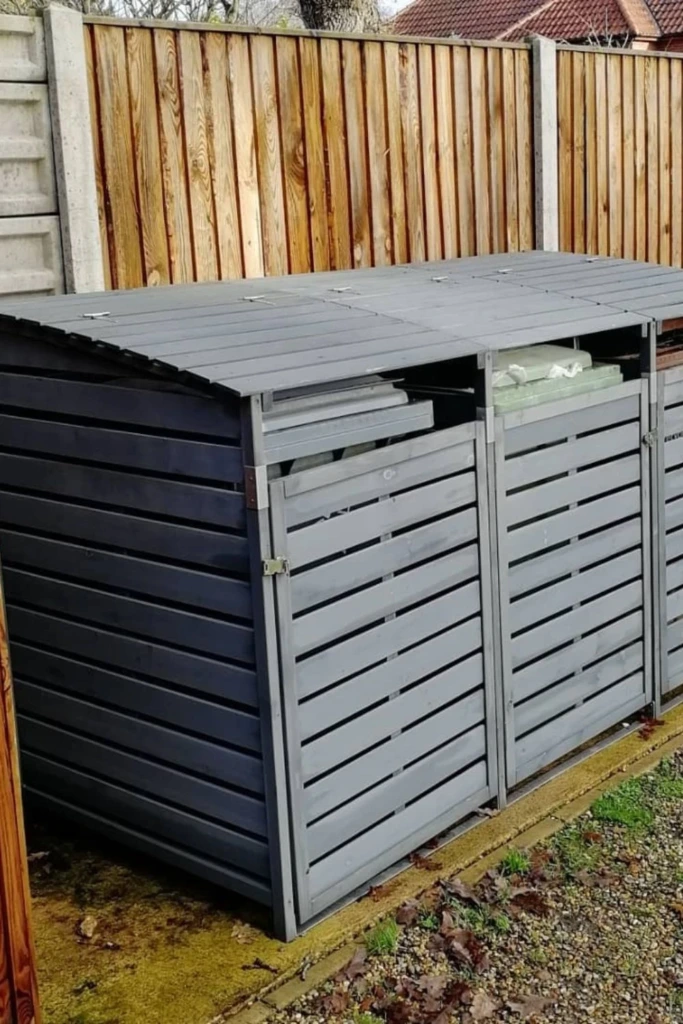
An angled slat shelter offers a distinctive alternative to standard horizontal or vertical boards. Diagonal panels create movement across the enclosure's surface, giving a functional structure a more decorative finish.
This design works well in contemporary gardens where geometric patterns and clean lines are already present. The slats can be mounted on a strong timber or metal frame, with the spacing adjusted to balance airflow and privacy.
Careful measuring is important because angled cuts require more preparation than straight boards. Ensure that the frame is square and rigid before fixing the slats in place. Use exterior-rated materials and protect exposed cut edges according to the manufacturer's guidance. Keep the doors simple so the decorative pattern does not make everyday access unnecessarily complicated.
18. Textured Panel Design
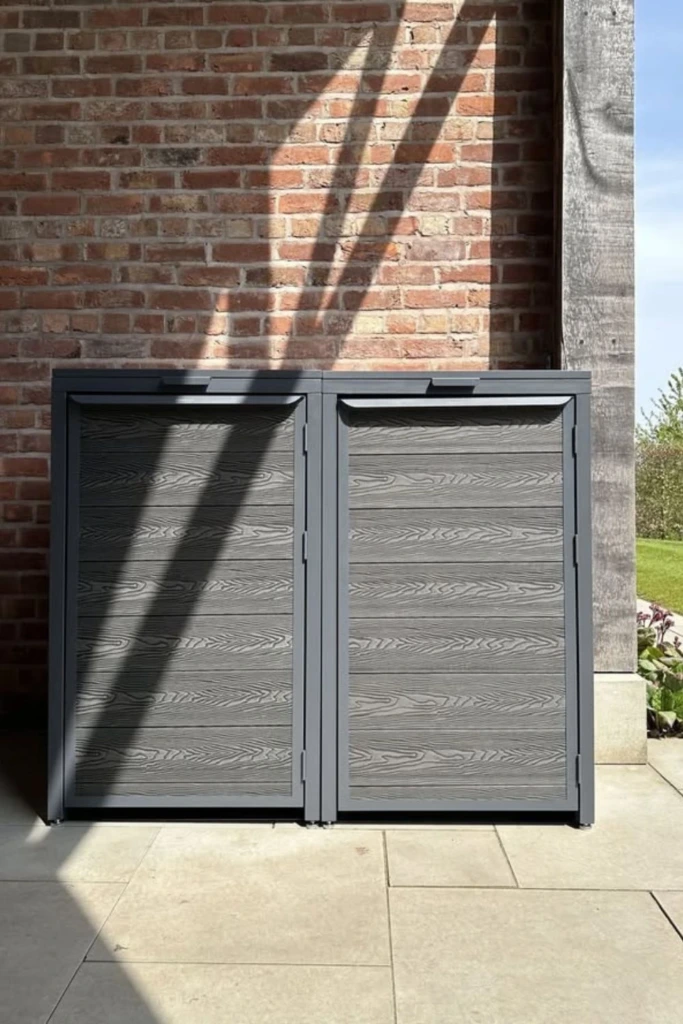
Textured panels can turn an ordinary garbage can enclosure into an attractive feature that complements the home's exterior. Options include ribbed metal sheets, grooved composite boards, molded resin panels, and timber with a pronounced grain.
Choose a texture that suits the rest of your outdoor finishes. Subtle grooves can create a refined modern look, while deeper patterns may provide visual depth against plain paving or a simple fence.
Consider cleaning requirements before selecting a surface. Deep grooves and intricate patterns may collect dust, leaves, or grime more readily than smooth panels. Make sure the material is rated for outdoor exposure and that any metal finish is suitable for your climate. A restrained color palette will help the textured surface add interest without making the storage area look overly busy.
19. Plastic Utility Box
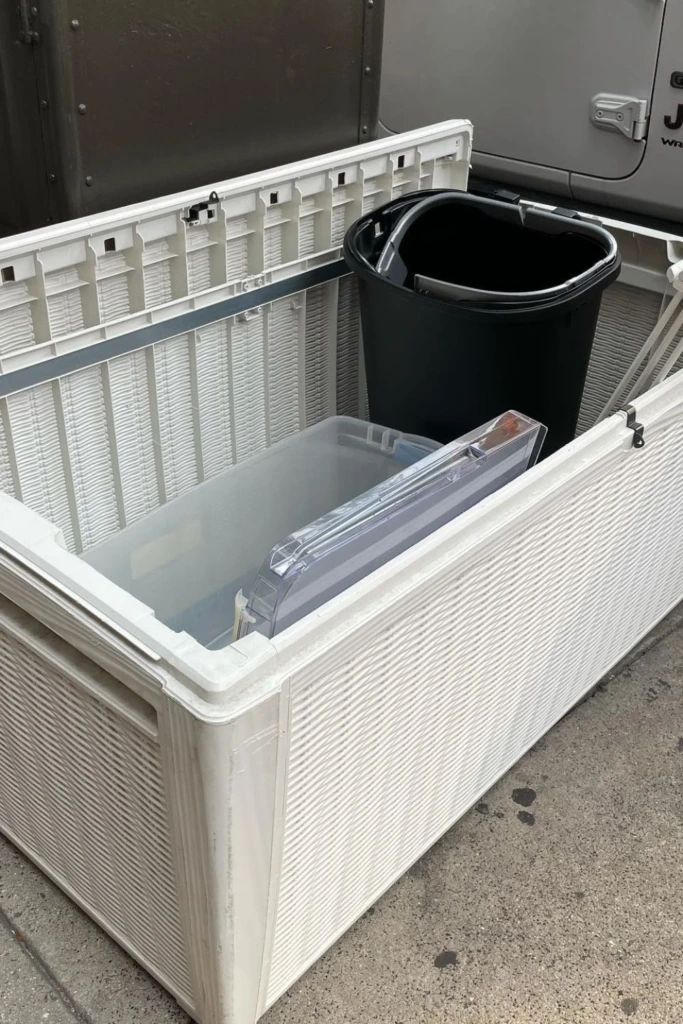
A plastic utility box is a straightforward storage option for homeowners who value convenience and minimal maintenance. These units are available in different sizes and can conceal bins, cleaning supplies, or other outdoor items when the internal layout permits.
Choose a model with a reinforced structure, weather-resistant construction, and doors or a lid that are easy to operate. Some larger units can accommodate multiple containers, but their internal dimensions should be checked carefully rather than judged by exterior size alone.
Plastic is generally resistant to rust and does not require routine painting, although prolonged sunlight can affect some products. A UV-resistant finish can help reduce fading and brittleness. Place the box on level ground, secure it if necessary, and confirm that its ventilation and drainage arrangements are appropriate for garbage storage.
20. Slatted Rustic Frame
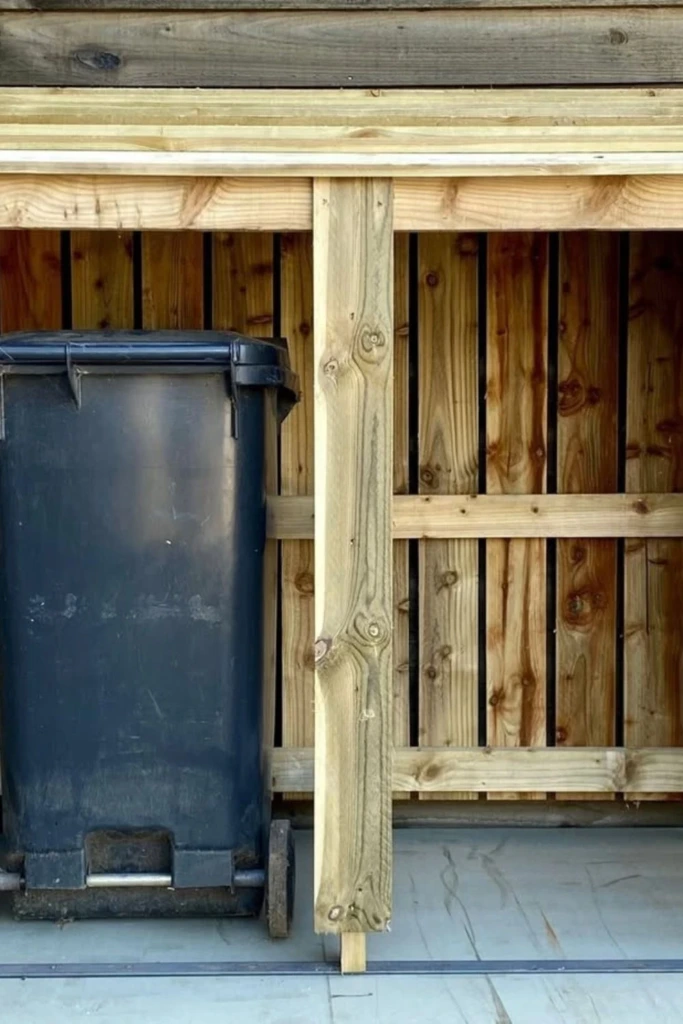
A slatted rustic frame combines the openness of a screened enclosure with the warm appearance of natural wood. The exposed frame gives the structure a handcrafted character, while evenly spaced boards hide much of the visual clutter without making the storage area feel bulky.
This style suits country gardens, timber fencing, and outdoor spaces featuring natural stone or wooden planters. You can leave the boards in a natural finish, apply a warm brown stain, or use a muted color to match the surrounding landscape.
Build the frame securely and space the slats consistently for a balanced appearance. Use weather-resistant timber, corrosion-resistant fasteners, and suitable protective finishes. Add a hinged front panel if you need to remove bins frequently, and make sure the structure remains stable on its base. Regularly inspect the wood for moisture damage and tighten any loose hardware.
Final Thoughts
The best outdoor garbage can storage solution is one that keeps bins organized, protects them from everyday weather, and fits naturally into your available space. Metal enclosures offer a modern finish, wooden screens add warmth, and plastic storage units provide a convenient low-maintenance alternative.
Before choosing a design, consider the number and dimensions of your bins, the clearance required for collection day, and the amount of upkeep you are willing to handle. Prioritize ventilation, drainage, secure construction, and easy access. With the right combination of materials and thoughtful placement, you can keep your garbage cans out of sight while making your outdoor area cleaner, more functional, and more inviting.