21 Vinyl Record Storage Ideas for 2026
Vinyl records deserve a storage setup that protects their sound quality while making your collection easy to browse and enjoy. Whether you own a handful of favorite albums or hundreds of records, the right arrangement can help prevent warped discs, damaged sleeves, and unnecessary clutter.
The good news is that you don't need a dedicated music room to organize your collection. A sturdy bookshelf, a compact media cabinet, or an unused corner can become a practical home for your records. The key is choosing furniture that supports their weight, keeps them upright, and protects them from excessive heat and moisture.
Below are 21 vinyl record storage ideas that combine everyday convenience with attractive design, helping you create a listening space that suits your collection and your home.
What is the Proper Way to Store Vinyl Records?
Proper vinyl storage starts with three priorities: keeping records upright, providing adequate support, and maintaining a stable environment. Records stored horizontally in heavy piles can develop pressure-related damage, while discs that lean excessively may gradually become distorted.
Choose shelving that can handle the combined weight of your collection without sagging. Store albums vertically with enough room to slide them out comfortably, but avoid leaving so much empty space that they fall sideways. Inner sleeves and protective outer covers can help keep dust away and reduce wear on album jackets.
Temperature and humidity also matter. Keep your records away from radiators, direct sunlight, damp basements, and other locations with large environmental fluctuations. Clean, dry storage and careful handling will help preserve both your vinyl and its packaging.
1. Cube Shelf System
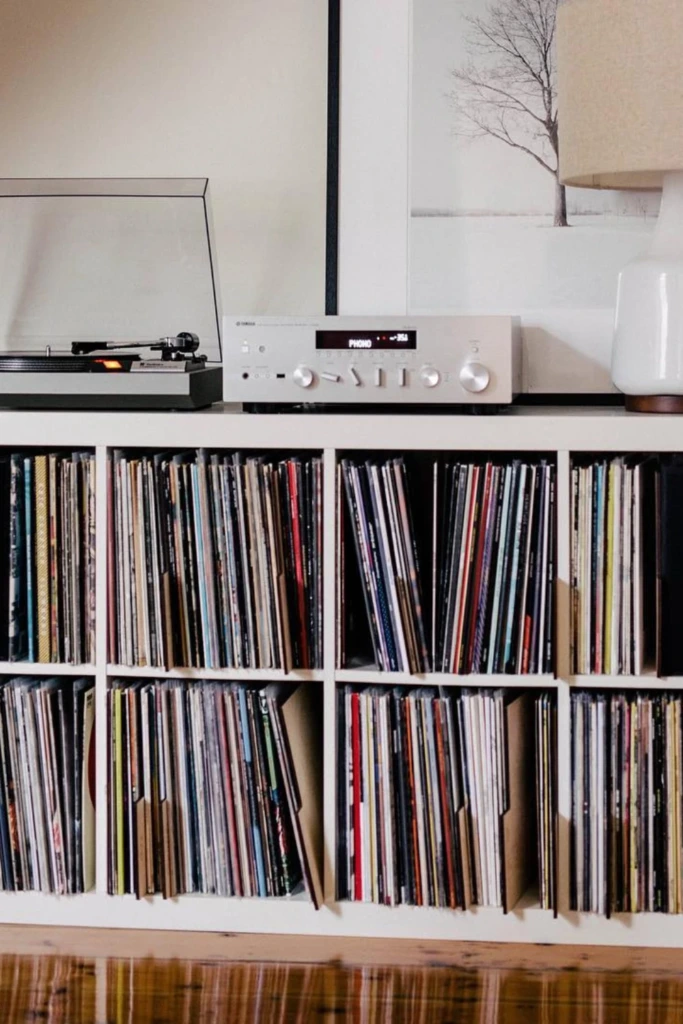
Cube shelving is a straightforward choice for collectors who want organized storage without investing in custom furniture. Each compartment creates a separate space for a portion of your collection, making it easier to sort albums by genre, artist, or decade.
Choose a sturdy unit with compartments large enough for record jackets and reinforced construction that can support the weight. Avoid filling every cube beyond its comfortable capacity, and use dividers if you need extra organization.
You can also place a turntable on a suitable, level surface nearby or above the shelving if the furniture is designed to support it. A warm table lamp and a few decorative accessories can make the arrangement feel like a natural part of your living room.
2. Low Media Console
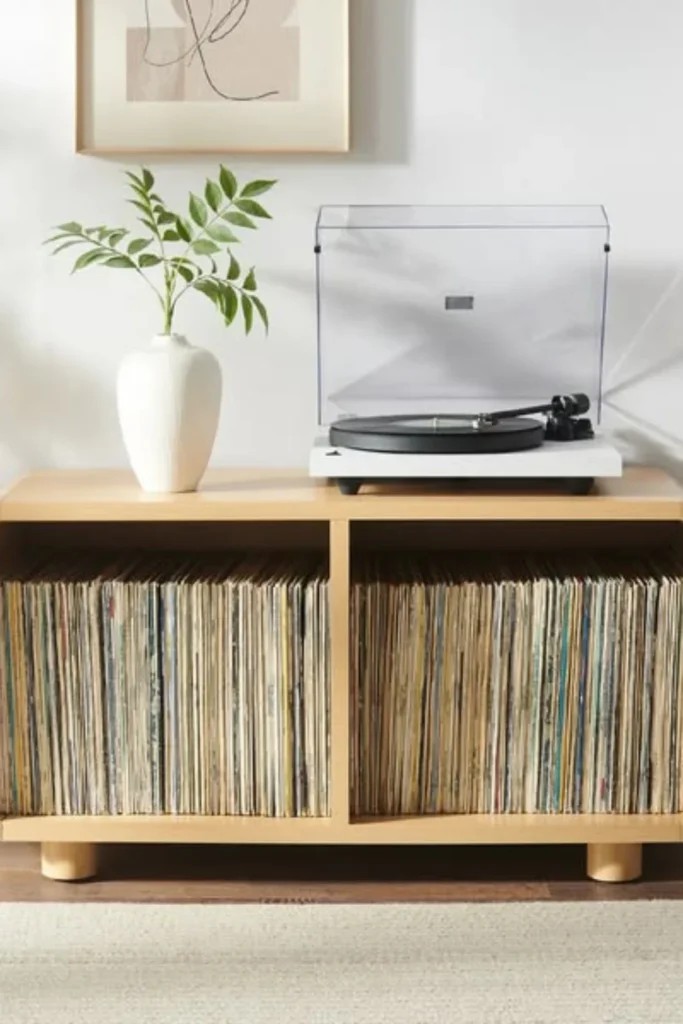
A low media console works especially well when you want your record collection to share space with your television, speakers, or other entertainment equipment. Its horizontal shape keeps albums accessible without making the room feel crowded.
Look for a console with sufficient internal depth and strong shelves. Open compartments allow you to flip through records easily, while closed cabinets can conceal cables, cleaning brushes, and other accessories.
Before placing a turntable on top, check that the surface is level and stable. If speakers share the same furniture, consider vibration isolation to help reduce unwanted interference during playback.
3. Mixed Storage Console
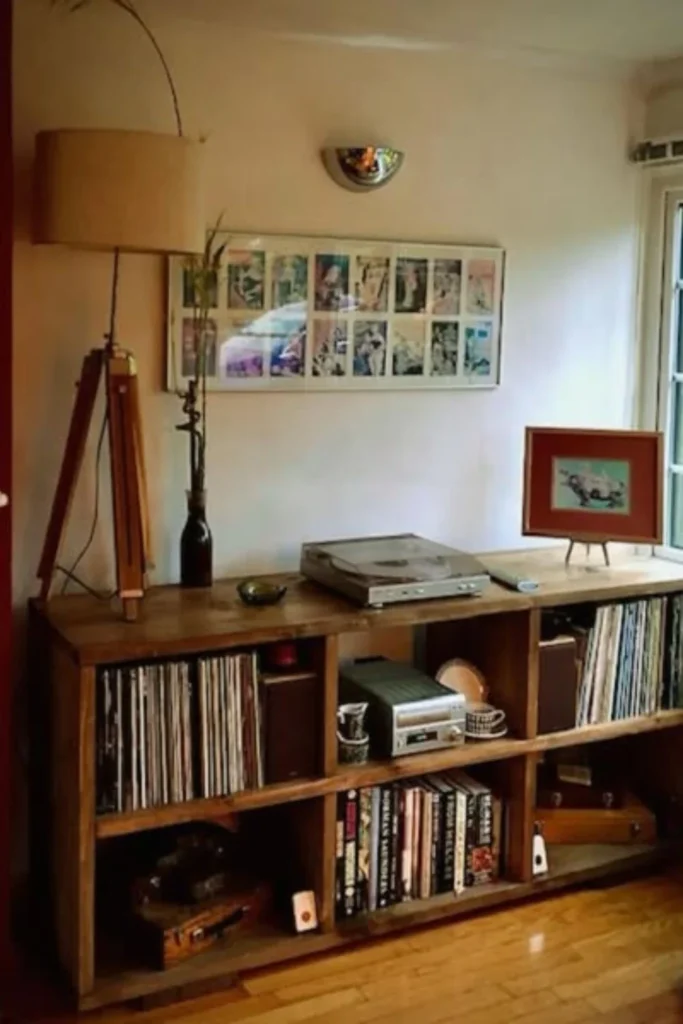
If your living room doubles as a reading area or home office, a mixed storage console helps different interests coexist in one place. You can store records alongside books, headphones, small speakers, and music-related collectibles.
The most important detail is shelf strength. Vinyl is heavier than it looks when collected in large quantities, so choose furniture designed to carry the load rather than relying on decorative shelving alone.
Keep albums upright in their own section instead of squeezing them between oversized books or equipment. Grouping related items together will make the console easier to maintain and help you find your favorite records quickly.
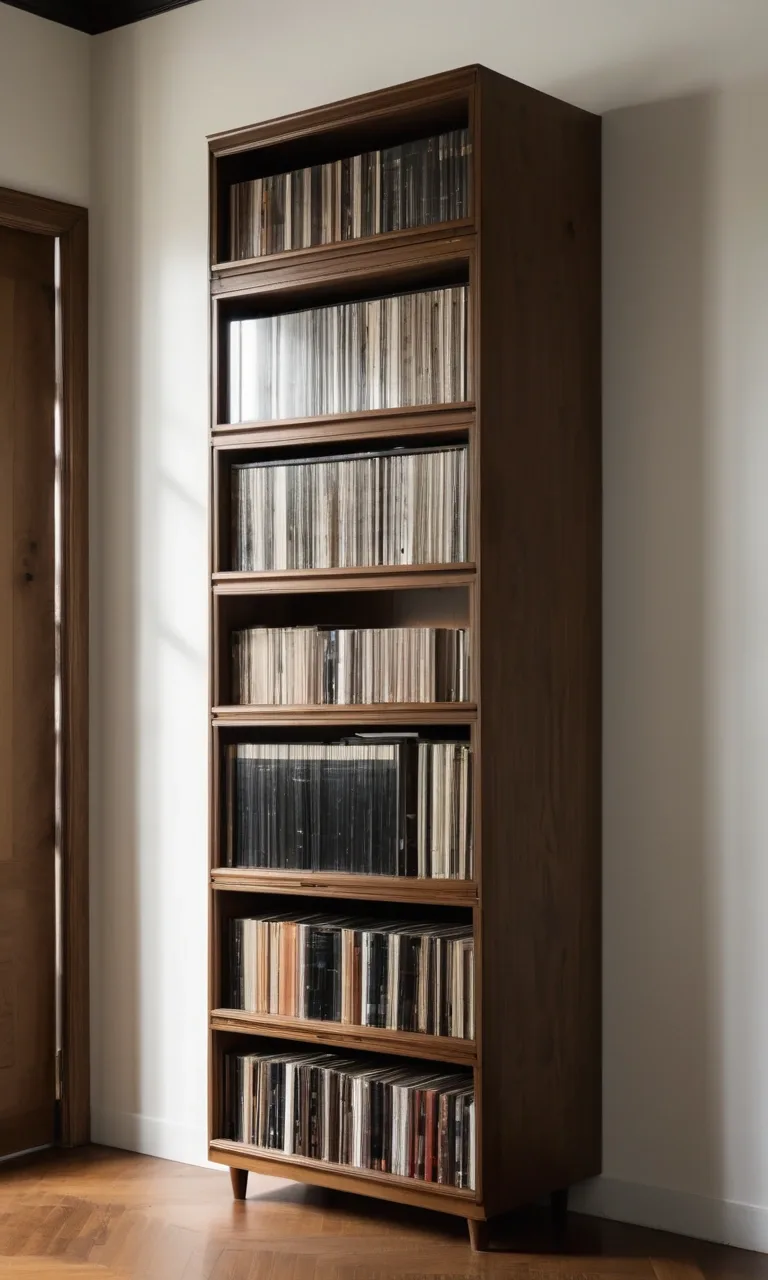
4. Vertical Display Cabinet
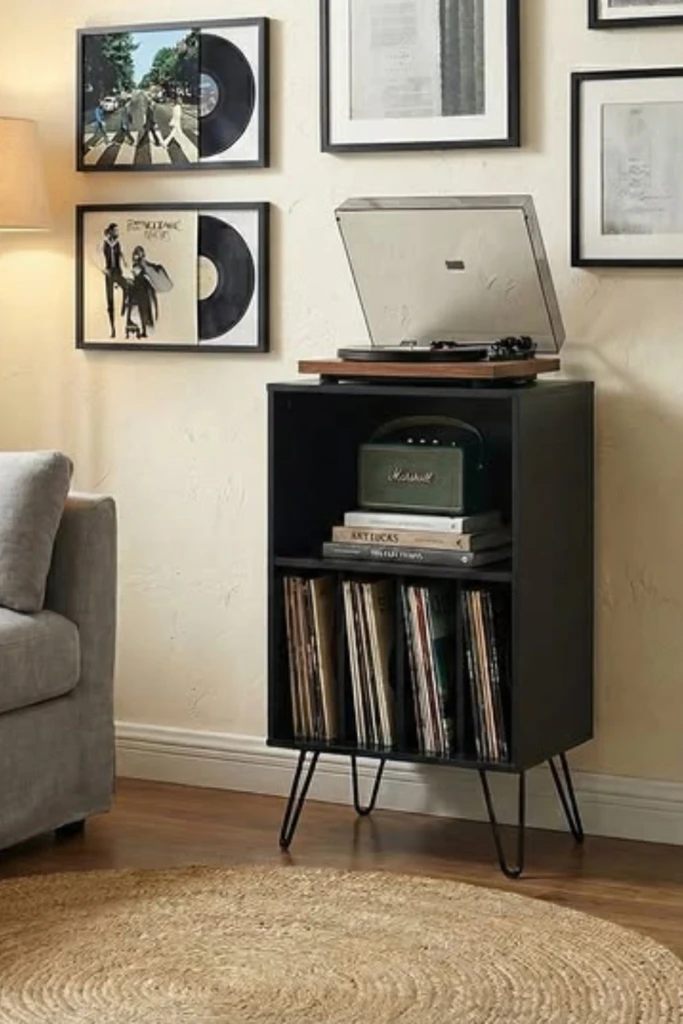
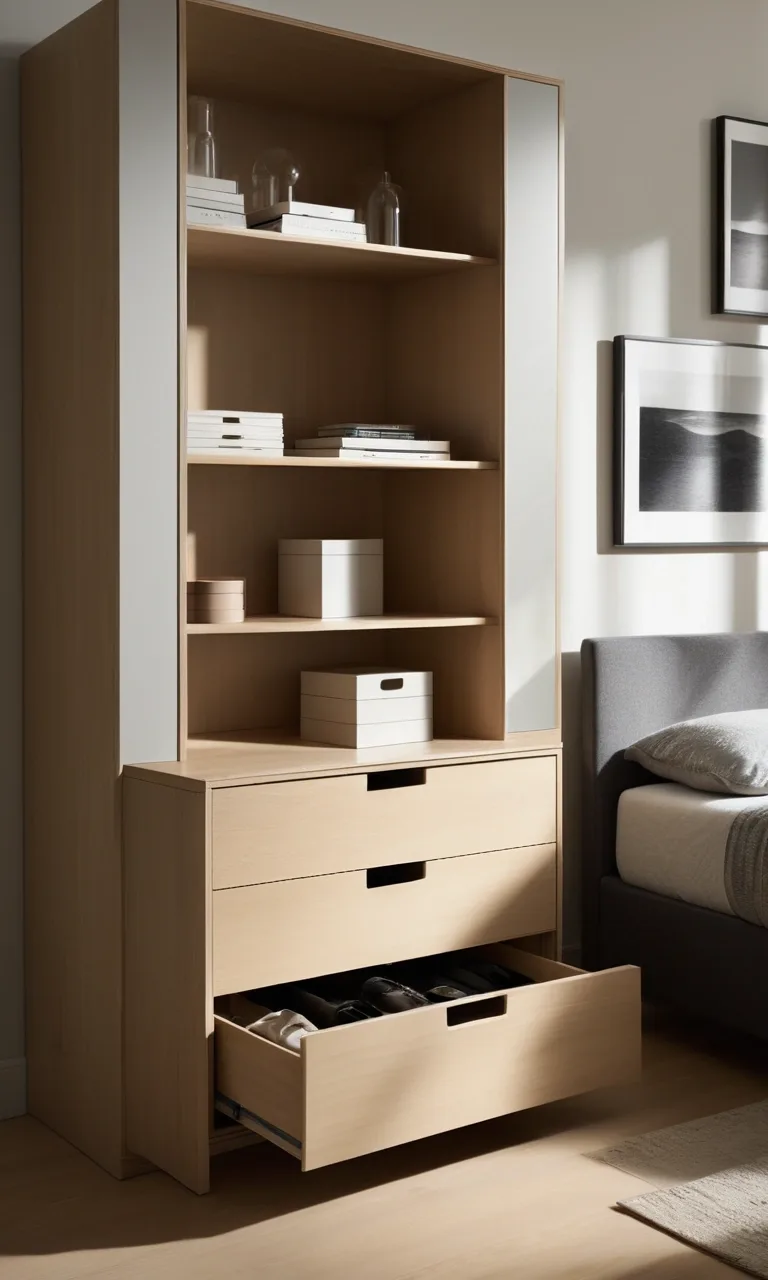
A tall display cabinet makes efficient use of vertical space, making it useful for apartments, small bedrooms, and compact listening corners. Instead of spreading your collection across a long wall, you can organize albums on several levels.
Select a cabinet with shelves sized for LP jackets and enough structural support to prevent bending under weight. If the unit is tall or narrow, secure it to the wall according to the manufacturer's instructions to reduce tipping risks.
Use lower shelves for heavier collections and reserve upper areas for lightweight accessories or decorative objects. Warm, indirect lighting can highlight the cabinet without exposing your records to unnecessary heat or prolonged sunlight.
5. Modular Display Rack
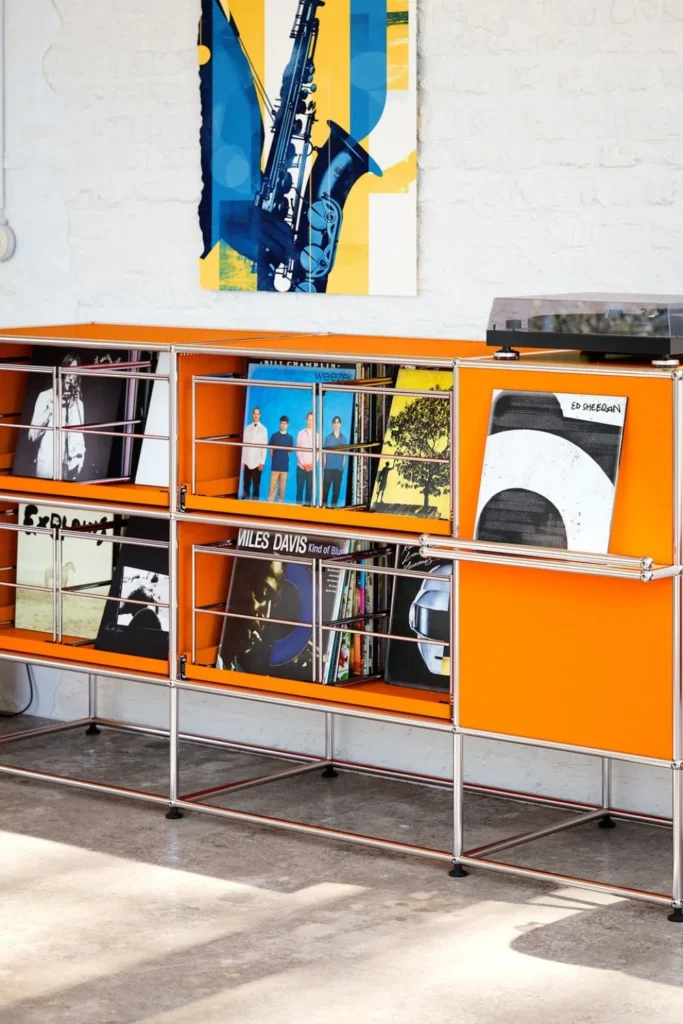
Modular racks are ideal for collectors who expect their libraries to grow. Their adaptable design lets you expand storage gradually rather than replacing an entire shelving system whenever you acquire more albums.
Choose a rack with strong horizontal supports and side panels or rails that keep records from slipping. Each section should accommodate your albums comfortably without forcing the jackets together or allowing them to tilt.
This style can work particularly well in music rooms, creative studios, and contemporary interiors. Arrange records by category, then use a small section for recently purchased albums so you can enjoy new additions without searching through the entire collection.
6. Open Grid Shelving
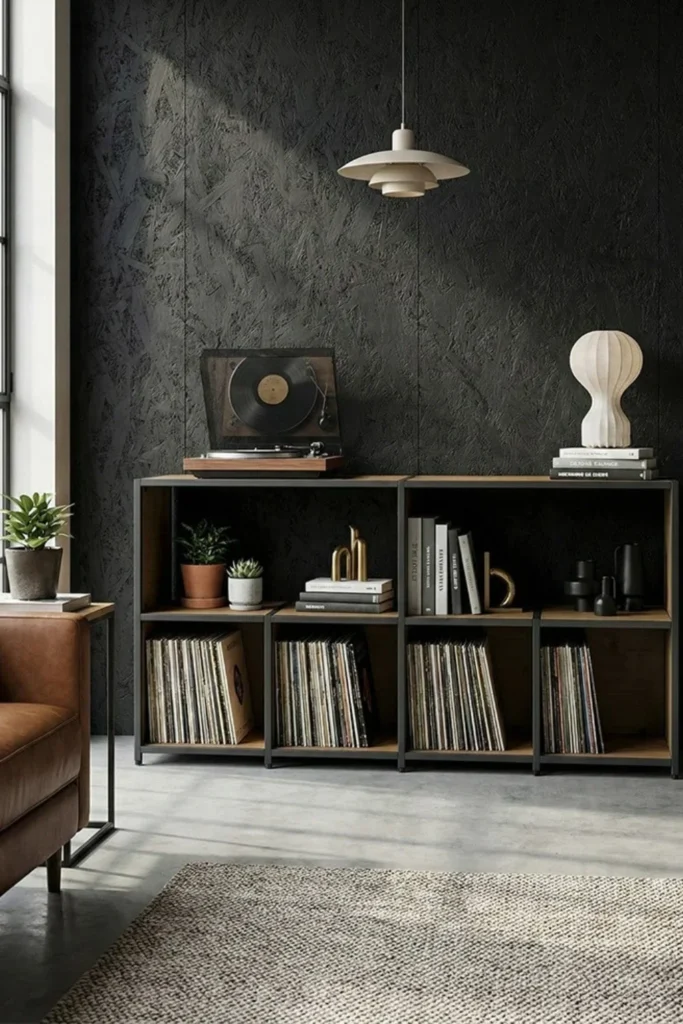
Open grid shelving gives a record collection an airy, contemporary appearance. The visible framework makes albums easy to access and can complement industrial interiors, lofts, and minimalist living spaces.
For a practical setup, select shelves with flat, stable surfaces rather than narrow bars that provide inadequate support. Check the load rating before filling the unit, particularly if you plan to store several dozen records in one section.
Because the collection remains exposed, regular dusting is important. Position the shelving away from direct sunlight and damp areas, and use discreet bookends or dividers to prevent partially filled rows from leaning.
7. Low Profile Credenza
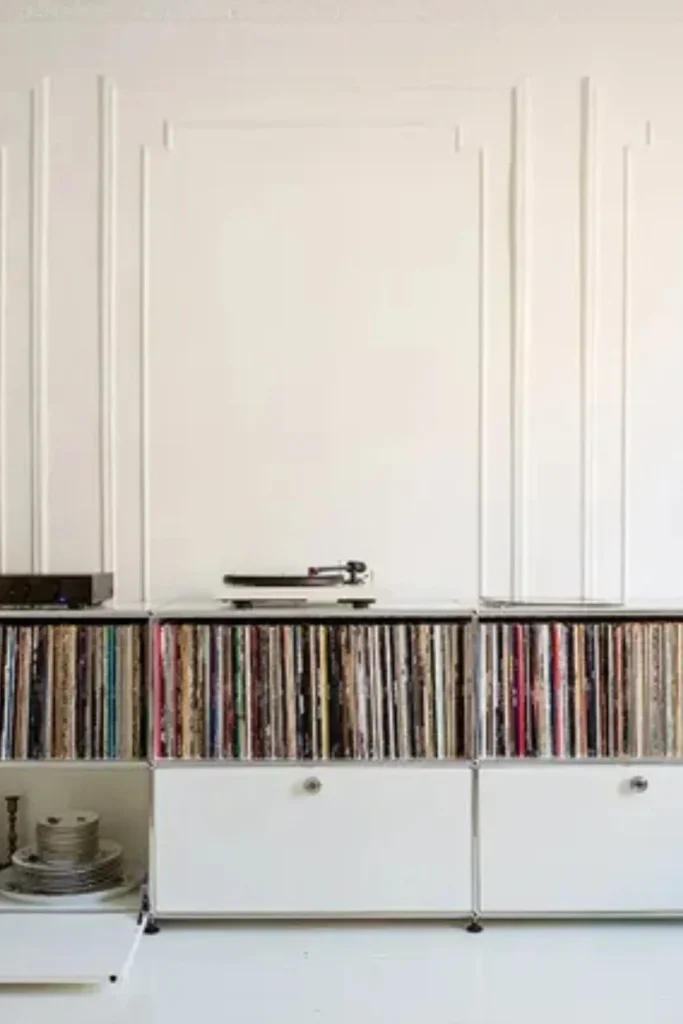
A credenza is an attractive solution for anyone who prefers furniture that looks refined while offering generous storage. Its long, low silhouette can accommodate a sizable collection and provide room for audio equipment on top.
Choose a model with sufficiently deep compartments and shelves that can support the combined weight of your albums. Closed doors keep the collection less exposed to dust, while open sections make frequently played records easier to reach.
You can organize the interior with dividers and reserve a drawer for record-cleaning supplies. Avoid overloading unsupported shelf spans, since a bowed shelf can place uneven pressure on stored albums and make them harder to retrieve.
8. Wall-Paired Console
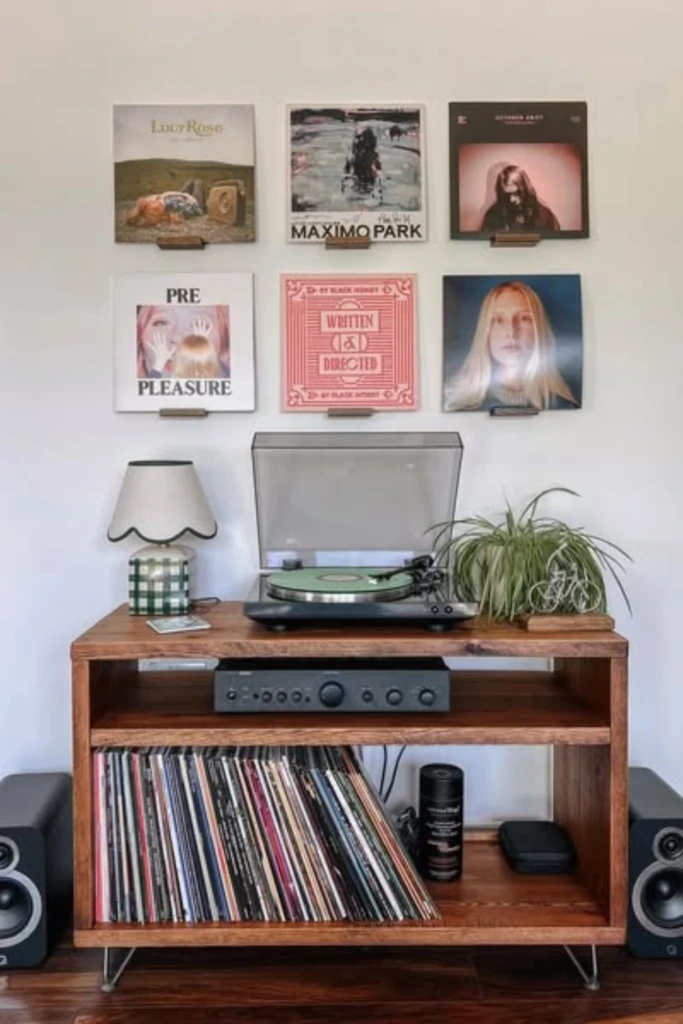
Pairing a storage console with album artwork creates a dedicated music corner without requiring an entire room. The console keeps your records organized at floor level, while framed covers above it give the space a personal touch.
Choose a solid, stable console with compartments designed for LPs. Store the albums vertically, leaving enough room to browse, and use separate organizers for accessories that might otherwise become mixed with the collection.
When hanging artwork, use appropriate wall fixings and keep frames securely mounted. Indirect lighting can bring out the colors of your favorite album covers without exposing the stored records to harsh illumination.
9. Open Side Rack
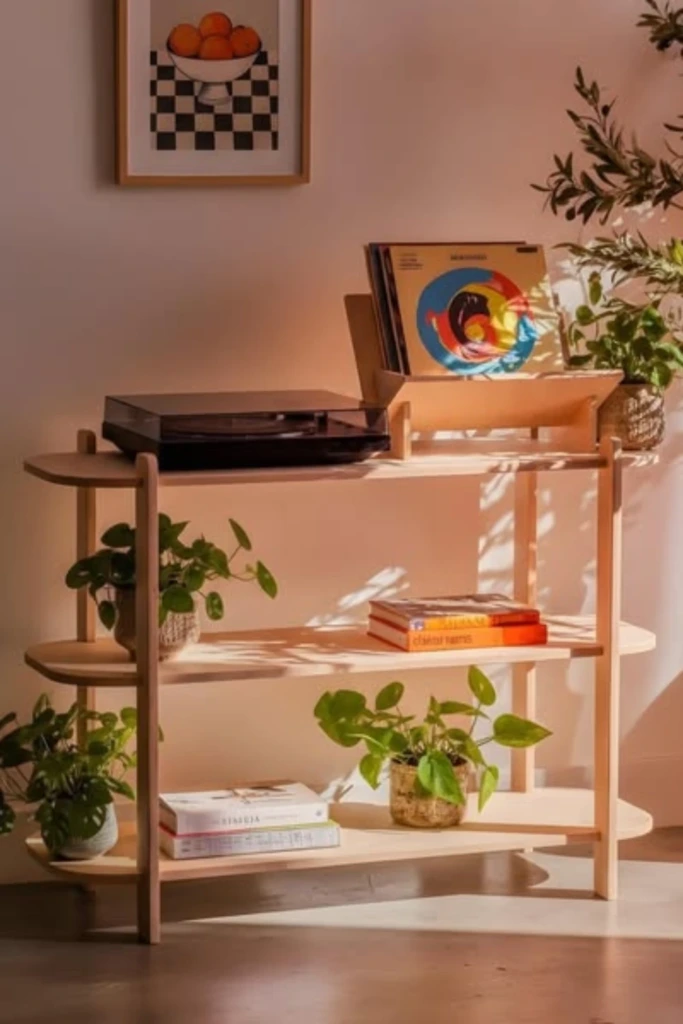
An open-sided rack is a good option for anyone who wants functional storage without the visual bulk of a large cabinet. Its lighter appearance suits bedrooms, small apartments, and multipurpose studios.
Look for a design with a strong base, smooth shelf surfaces, and enough width to keep albums upright. Open sides make browsing convenient, although they also leave records more exposed to dust than enclosed storage does.
Place the rack where it won't obstruct walking paths or sit directly beside a heat source. A nearby chair, a small reading lamp, and a compact speaker setup can turn the area into a comfortable place to listen to music.
10. Drawer Storage Wall
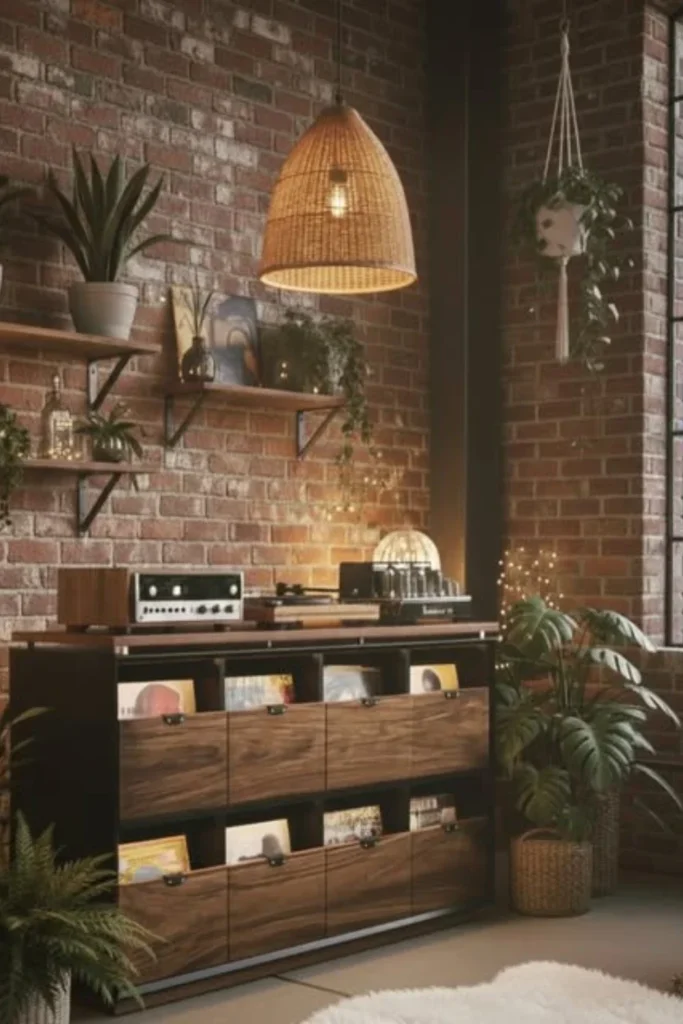
Drawer-based storage is useful when you prefer a tidy room and don't want every album visible. A low cabinet with suitably sized drawers can protect jackets from excessive light while keeping the collection organized.
The drawers must be deep and tall enough for records to stand upright. Add dividers to separate genres or collections, and make sure the drawer bottoms and runners can handle the weight without sagging or sticking.
Keep decorative objects on top of the cabinet and use nearby open shelves for lightweight accessories. This arrangement is particularly appealing in rooms where you want the collection to remain accessible but visually understated.
11. Flip-Front Showcase
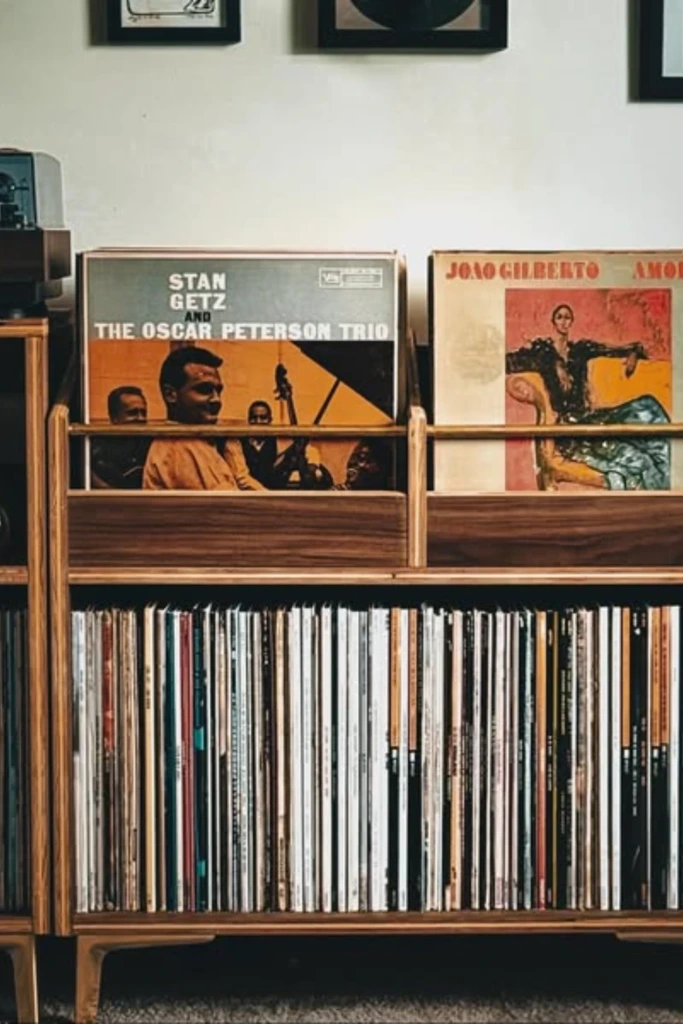
A flip-front showcase makes browsing feel more like visiting a record shop. It allows you to display selected album covers prominently while keeping the rest of your collection stored neatly underneath.
Choose furniture with a secure front ledge or a purpose-built display mechanism that holds jackets safely. Rotate the featured albums whenever you want a fresh look, and store the remaining records upright in well-supported compartments.
This arrangement works nicely in entertainment rooms and casual living spaces. It also makes it easy to highlight seasonal favorites, new purchases, or albums you want to remember to play.
12. Sunlit Listening Stand

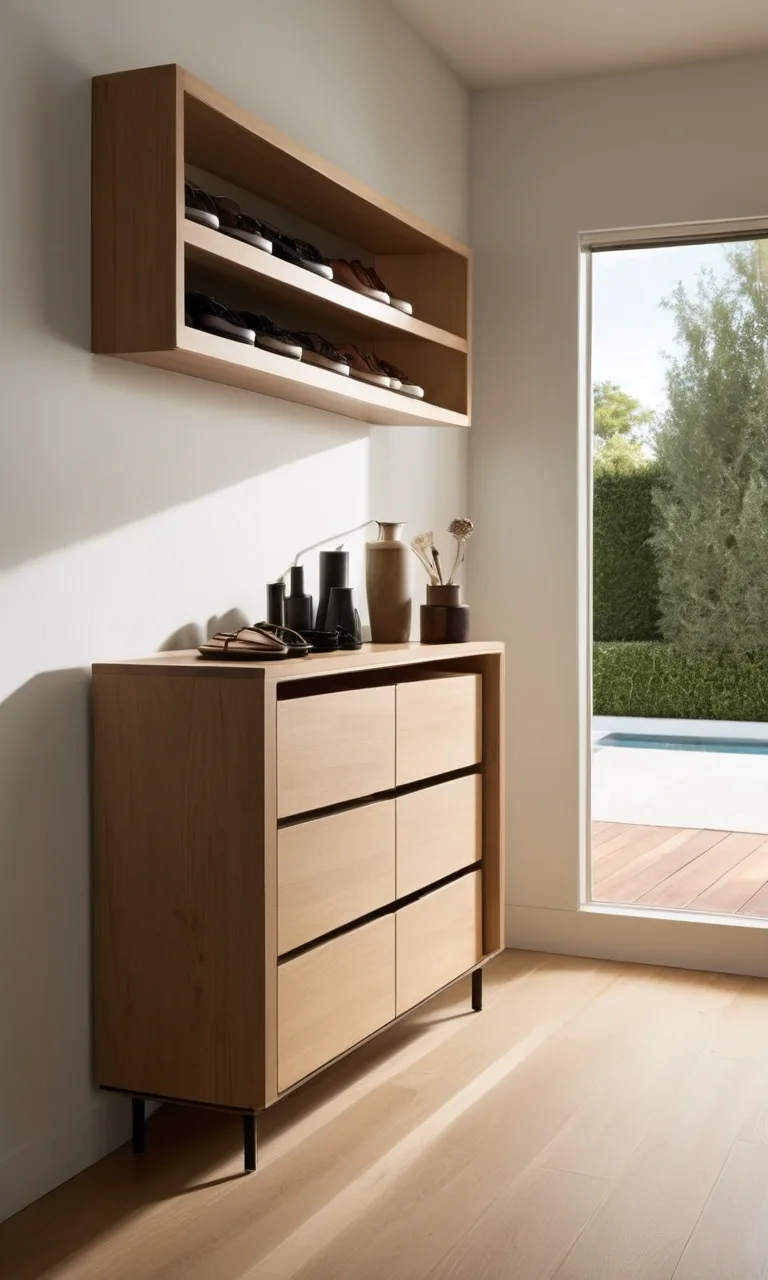
A listening stand beside a bright window can create a pleasant place to enjoy music during the day. Natural light brings warmth to the room, but protecting the records requires careful positioning.
Keep the storage unit out of direct sunlight, even if the window makes the space look appealing. Prolonged exposure can heat vinyl and fade album artwork, while temperature changes near windows may also affect the storage environment.
Choose a slim, stable console with upright storage below and a level surface for your turntable. Sheer curtains can soften incoming light, but they should not be treated as complete protection against ultraviolet exposure or heat.
13. Built-In Vinyl Wall
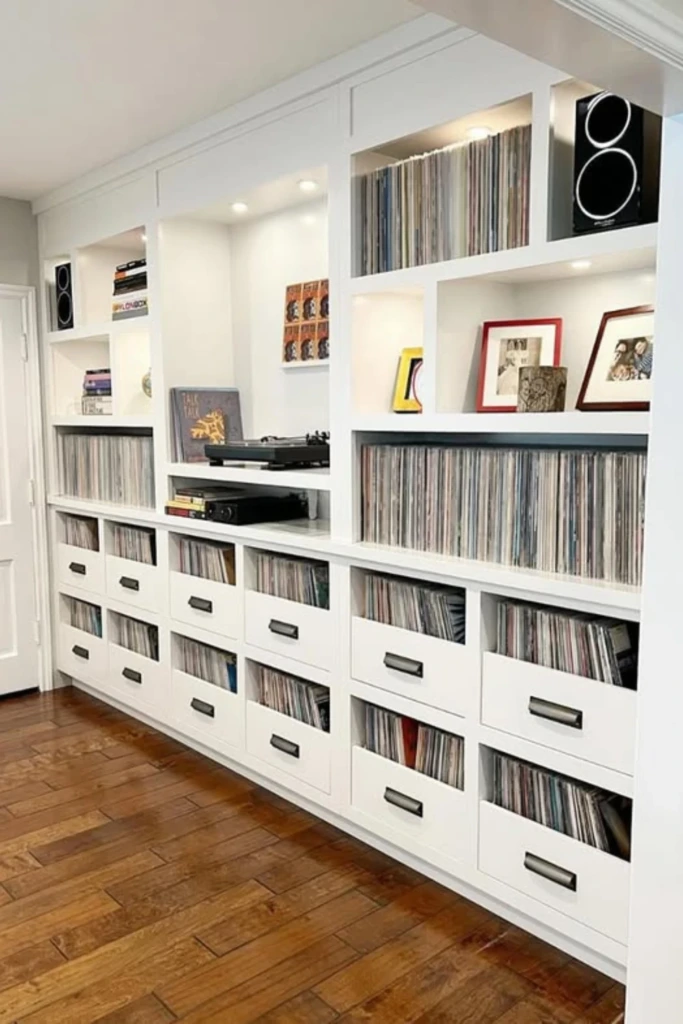
A built-in vinyl wall offers a permanent storage solution for collectors with extensive libraries. Custom shelving can be designed around the dimensions of LP jackets, audio equipment, and the available wall space.
Planning is essential before installation. Calculate the approximate weight of your collection, choose appropriate materials, and make sure the shelves and wall attachments are engineered to support the load. Long shelves may need additional supports to prevent bowing.
A combination of open shelving and closed cupboards can balance display with practical storage. Use the open sections for frequently played albums and the concealed areas for accessories, spare sleeves, and maintenance supplies.
14. Compact Listening Console

A compact listening console is perfect for collectors who want a dedicated music setup without giving up much floor space. It can fit beside a sofa, in a bedroom corner, or near a comfortable reading chair.
Prioritize a stable top for your turntable and a lower compartment that accommodates records upright. Even a small collection can become heavy, so check the furniture's weight capacity instead of assuming a compact unit will be sufficient.
Use the available surface carefully. A small tray for cleaning accessories and a nearby headphone stand can keep essentials within reach without crowding the equipment.
15. Corner Vinyl Library
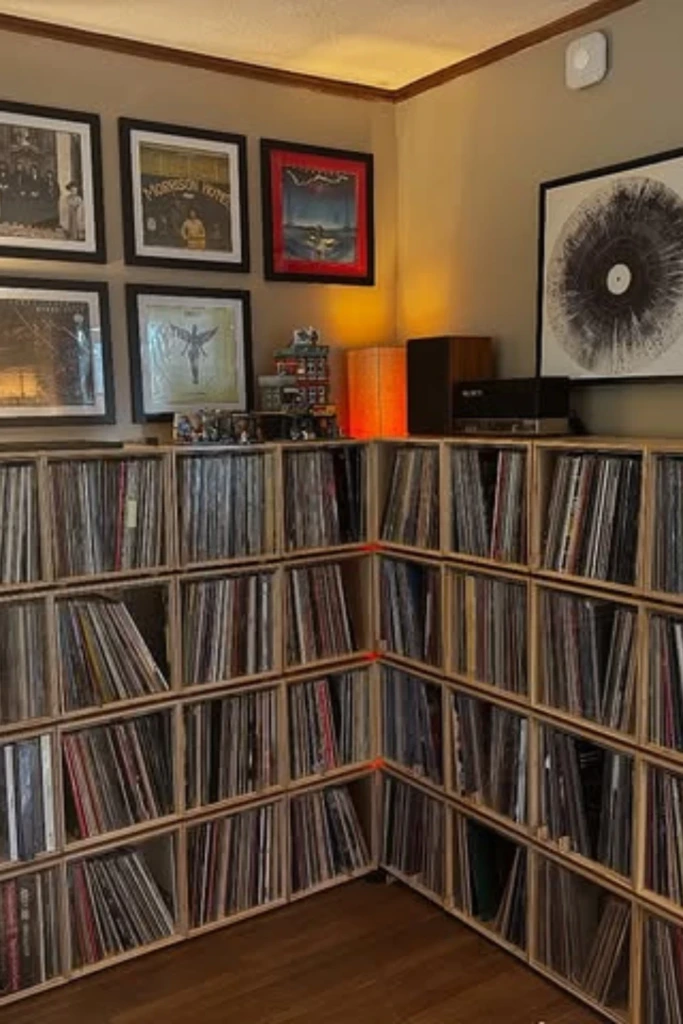
An unused corner can become a surprisingly effective record library. By arranging shelving along two adjoining walls, you can create substantial storage without placing furniture across the middle of the room.
Measure both walls before choosing the shelves, paying attention to doors, windows, and electrical outlets. Keep the arrangement consistent so that albums remain easy to browse and the collection's weight is distributed appropriately.
Use sturdy corner-compatible units or securely installed shelving rather than forcing standard shelves into an unstable arrangement. A comfortable chair and focused reading light can complete the space, turning an overlooked corner into a favorite listening spot.
16. Framed Record Gallery
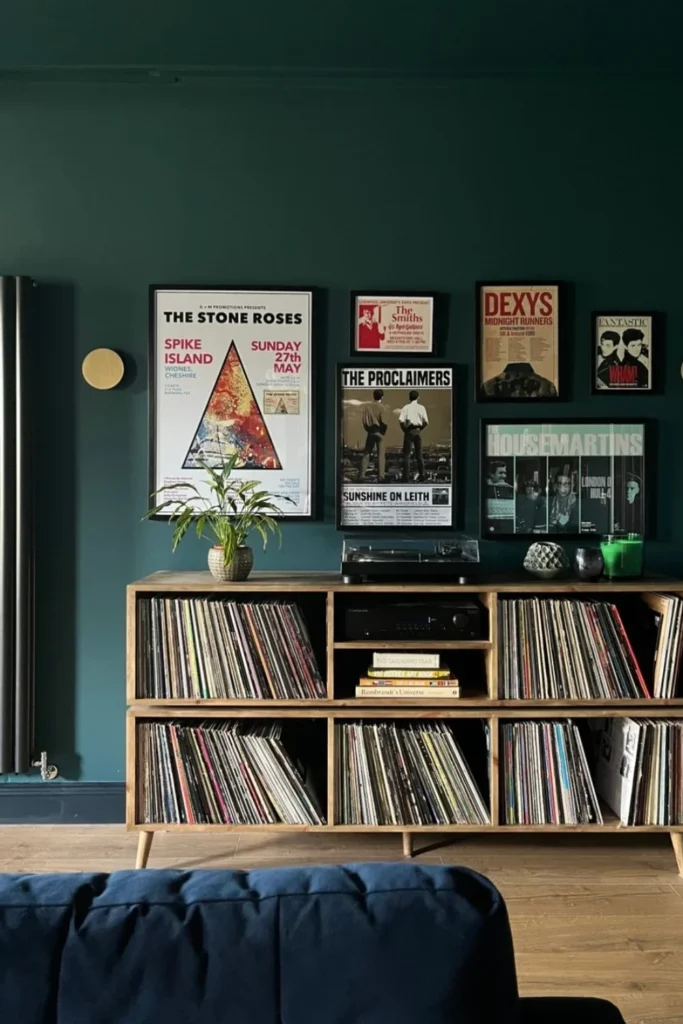
If album artwork is part of the appeal of collecting records, a gallery-style arrangement lets you enjoy it even when the music isn't playing. Combine organized shelf storage with a few framed covers that reflect your favorite artists or musical eras.
Keep the displayed records separate from the albums stored for regular listening if you want to minimize handling. Use suitable frames and mounting hardware, and avoid hanging valuable jackets where direct sunlight could fade them.
A long console underneath the gallery provides practical storage while keeping the display visually balanced. You can change the featured artwork occasionally without reorganizing the entire collection.
17. Alcove Cube Storage
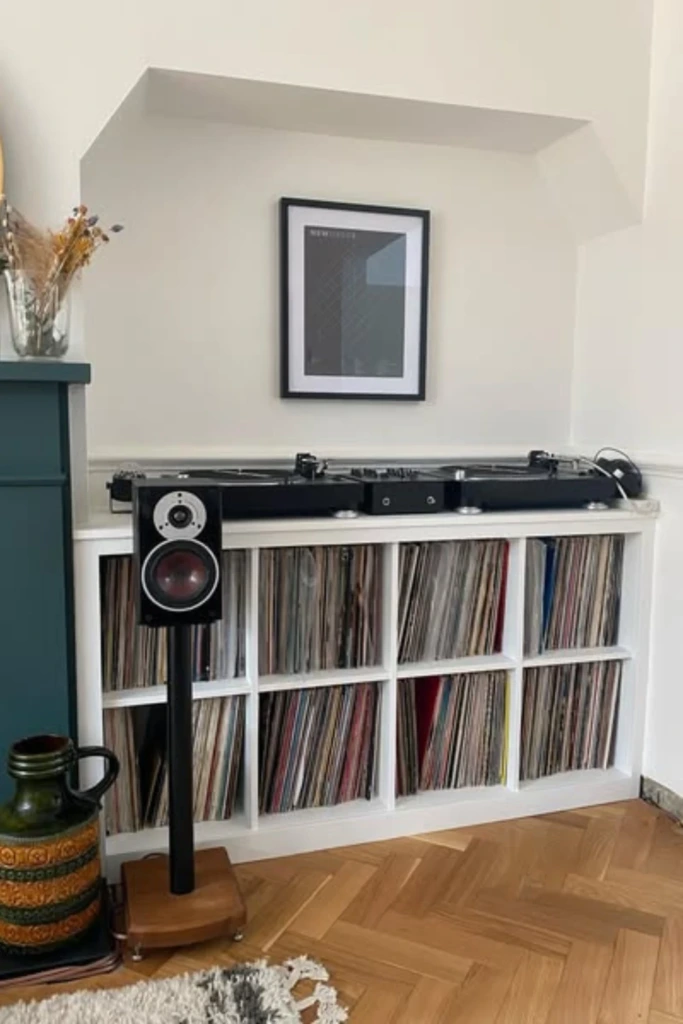
A recessed alcove can provide a natural home for record storage, especially in living rooms with built-in niches or unused wall recesses. Fitting shelves into this space makes the most of an area that might otherwise remain empty.
Measure the opening carefully and ensure each shelf is deep enough for the records. If the alcove is enclosed on several sides, leave adequate clearance for handling albums and allow the space to remain clean and dry.
A turntable can sit on a reinforced shelf or separate stand if the surface is level and isolated from excessive vibration. Soft lighting will make the collection easier to browse, while closed compartments below can hide smaller accessories.
18. Vertical Wall Shelves
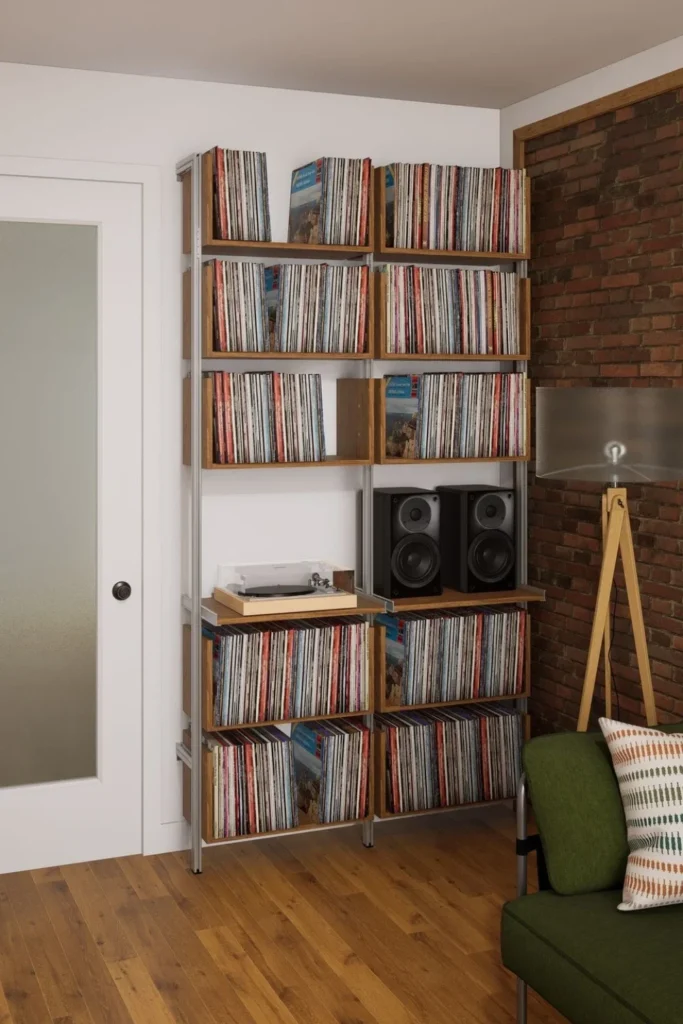
Vertical shelving is useful when floor space is limited but wall height is available. A tall unit can hold records across multiple levels, making it practical for spare rooms, studios, and compact listening areas.
The shelves must be deep enough to support LP jackets and strong enough to carry the weight of each row. If you're mounting shelving directly to a wall, use fixings suited to the wall material and follow the manufacturer's load specifications.
Distribute albums across the available sections rather than concentrating the entire collection on one shelf. Keep frequently played records at a comfortable height and reserve the highest levels for lighter items that you don't need to access regularly.
19. Full-Wall Archive
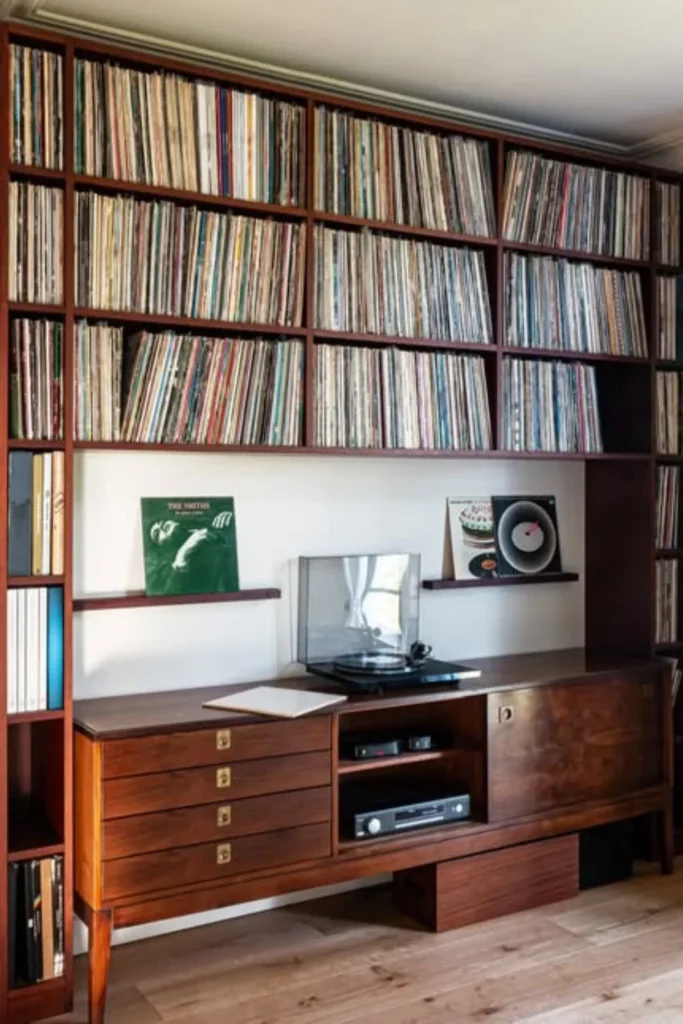
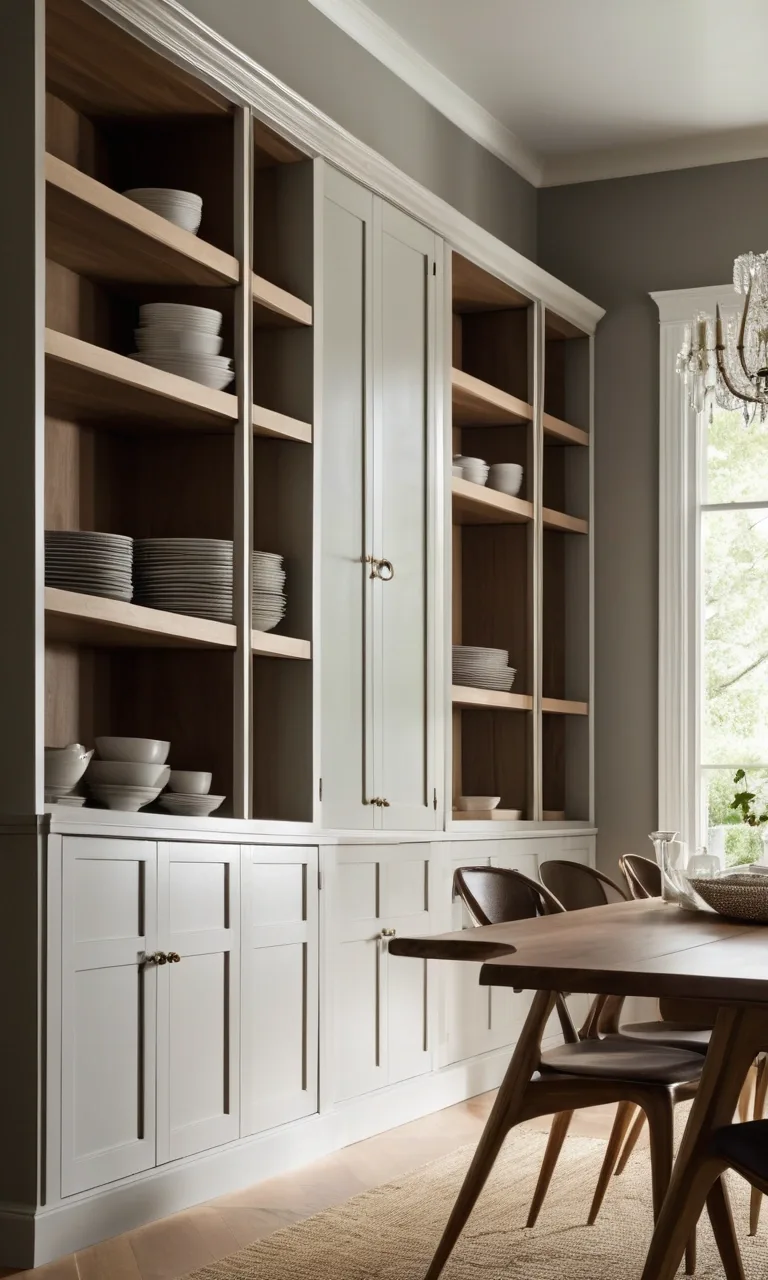
A full-wall archive is suited to serious collectors who have outgrown smaller storage units. It creates a unified home for hundreds of albums and makes it possible to organize the collection into clearly defined sections.
Before installing a large shelving system, estimate the total load and assess the floor, shelves, and wall supports. A wall of records can be exceptionally heavy, so substantial collections may require professionally designed cabinetry.
Arrange albums by a system that makes sense to you, such as artist name, genre, or release era. Lower cupboards can hold spare inner sleeves, record brushes, and other supplies, leaving the main shelves dedicated to the collection itself.
20. Boxed Display Cubes
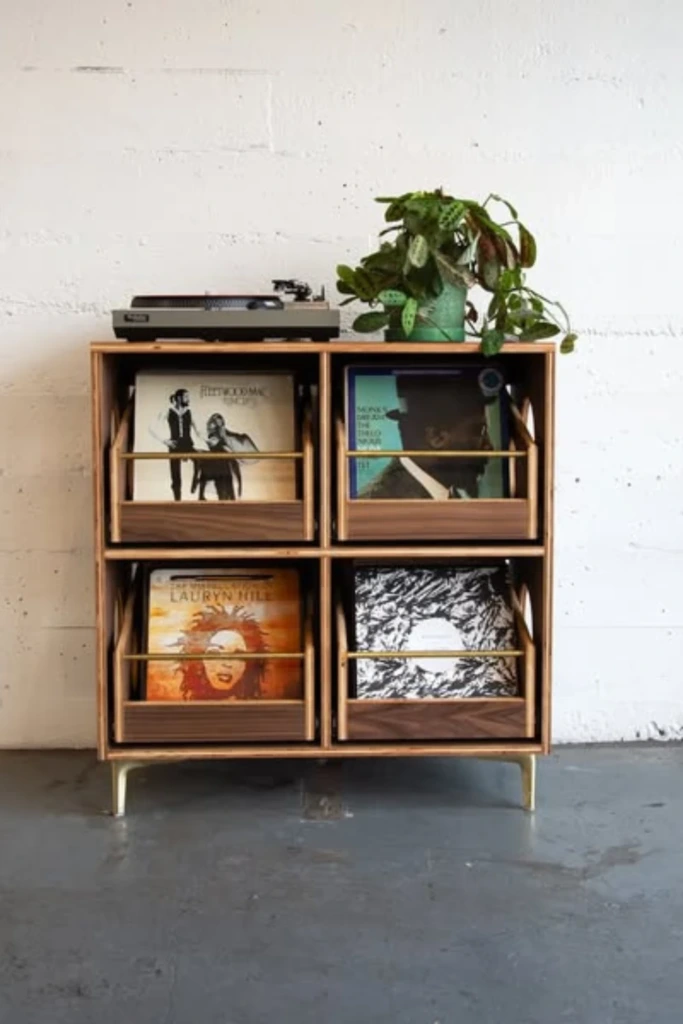
Box-style display cubes combine the simplicity of compartmentalized storage with the visual appeal of showing off selected album covers. They work well in music rooms and casual living spaces where browsing is part of the experience.
Choose cubes that provide full support beneath the records and enough space to remove individual albums without forcing them out. Front-facing displays should have a secure ledge or backing that keeps jackets from slipping.
Use separate compartments for different categories or rotate the featured albums as your listening preferences change. Keeping the display organized prevents the storage area from becoming crowded and helps protect the jackets from unnecessary bending.
21. Window-Edge Console
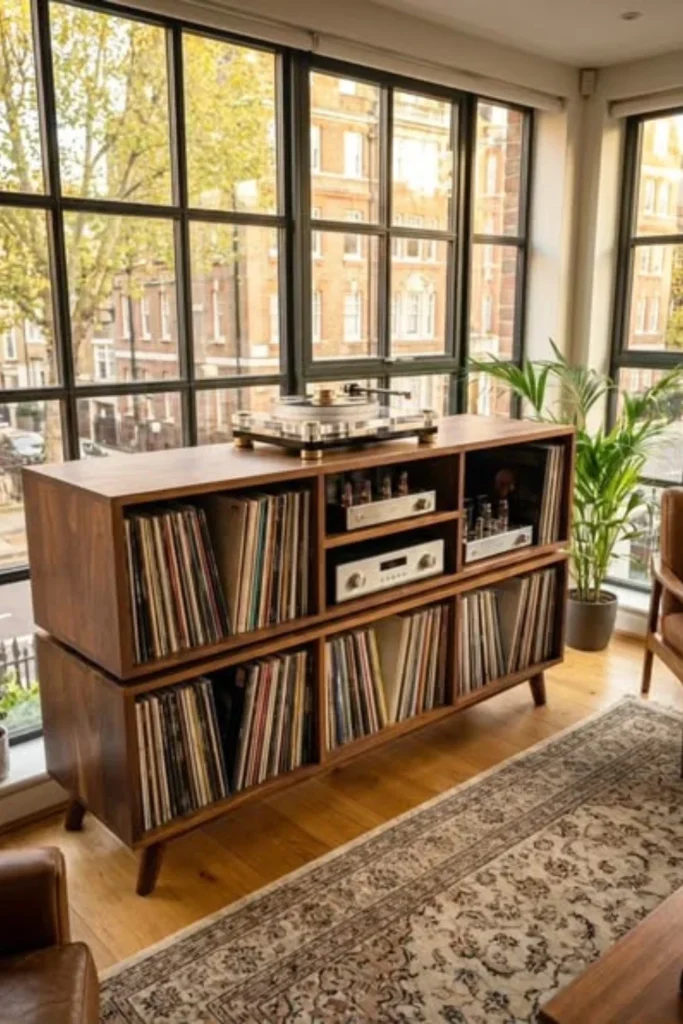
A console near a window can make a listening area feel open and inviting, particularly in rooms with limited natural light. The trick is to enjoy the brightness without allowing sunlight to damage your records.
Position the furniture outside the path of direct sun whenever possible, and check whether the area becomes hot during the afternoon. Curtains and blinds can reduce exposure, but the safest arrangement keeps the collection away from intense sunlight altogether.
Choose a sturdy console with upright record compartments and enough room for easy browsing. A nearby lamp can provide comfortable illumination after dark without requiring the collection to remain beside the brightest part of the room.
Can vinyl records be stored in boxes long-term?
Yes, vinyl records can be stored in boxes for extended periods when the containers provide adequate support and the surrounding environment is suitable. Purpose-built record boxes are often preferable to flimsy cardboard cartons or general-purpose bins because they are designed with the dimensions and weight of albums in mind.
Keep records standing vertically rather than laying them in tall horizontal piles. They should fit securely without being compressed tightly together or left leaning at a severe angle. If you use cardboard boxes, choose sturdy ones and inspect them periodically for damage, moisture, or sagging.
Where you store the boxes is just as important as the containers themselves. Avoid damp basements, hot attics, garages with large temperature swings, and locations exposed to sunlight. A cool, dry indoor space with relatively stable conditions is generally a better choice.
For especially valuable or collectible albums, use protective inner sleeves and outer jacket covers, and check the collection occasionally for signs of moisture or deterioration.
How much space should vinyl records have on a shelf?
Vinyl records need enough room to remain upright and slide out without excessive force. The ideal spacing depends on the shelf dimensions and the thickness of your album jackets, so there isn't one exact gap that works for every collection.
A practical rule is to arrange records closely enough to support one another while leaving sufficient room to browse. If you must pull hard to remove an album, the shelf is probably too crowded. On the other hand, a nearly empty row may allow the records to lean and place uneven pressure on their edges.
Use bookends or adjustable dividers to stabilize partially filled sections. As your collection grows, add another shelf or compartment instead of squeezing more albums into an already full space.
Good shelf spacing makes everyday listening easier and helps reduce unnecessary wear on record sleeves and jackets.