26 Dining Room Storage Ideas for 2026
A dining room should be a comfortable place to enjoy meals, entertain guests, and spend time with family. However, when dishes, table linens, serving trays, and other essentials start accumulating, even a spacious dining area can feel disorganized.
The right dining room storage ideas can help you create a practical, welcoming space without sacrificing style. From custom cabinetry and elegant sideboards to space-saving corner units, there are plenty of ways to keep everything organized and accessible.
Whether you're decorating a compact dining nook or upgrading a formal dining room, these 26 storage solutions offer inspiration for making better use of your available space.
How Do I Organize a Dining Room with Limited Space?
Organizing a small dining room starts with identifying the items you regularly use. Keep everyday dishes, placemats, and serving accessories nearby while relocating rarely used belongings to less accessible storage areas.
Choose furniture that serves multiple purposes, such as a dining bench with built-in drawers or a sideboard that doubles as a serving surface. Wall-mounted shelves and tall cabinets can provide additional storage without occupying much floor space.
Before purchasing furniture, measure the room carefully and account for the space needed to pull out chairs and move around the table. Aim for approximately 36 inches of clearance where possible, with additional room along busy walkways.
Combining concealed storage with a few thoughtfully arranged displays helps maintain a clean appearance while keeping frequently used essentials easy to reach.
1. Built-In Wall Storage
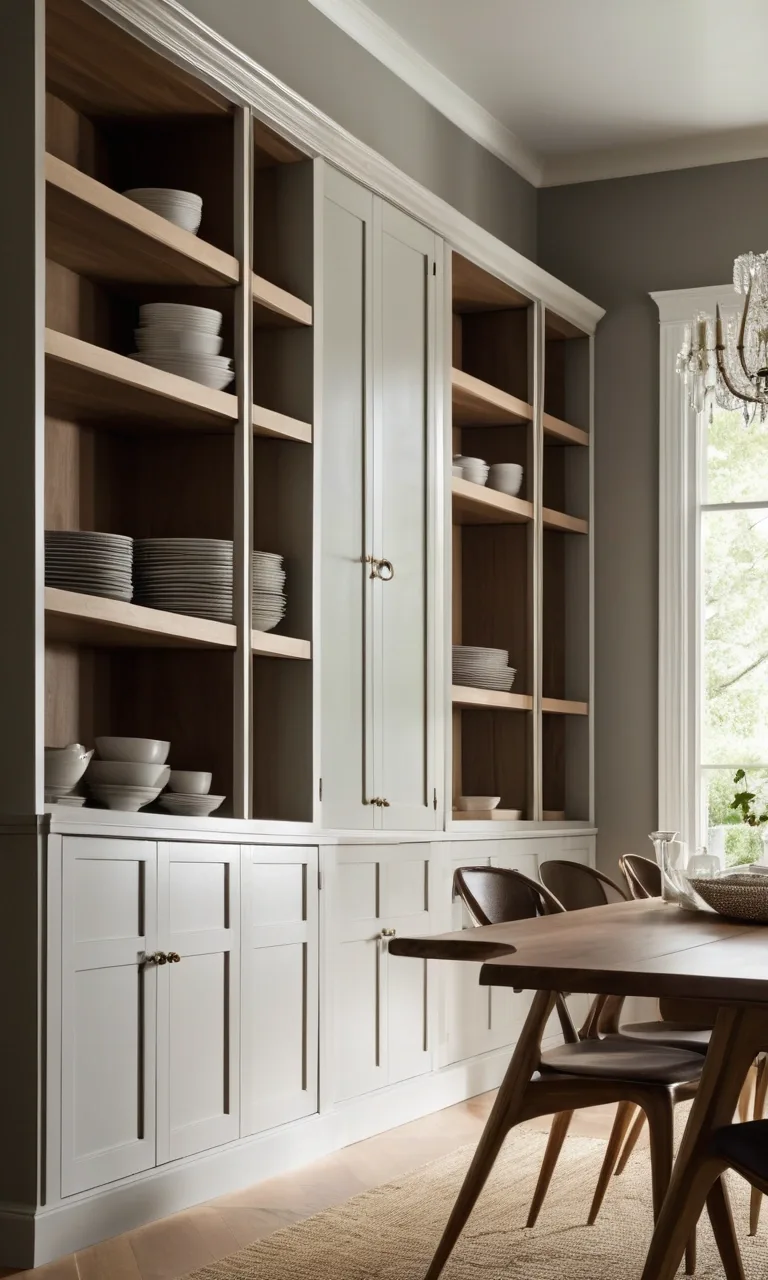
Built-in wall storage offers a streamlined solution for dining rooms that need additional organization without bulky freestanding furniture.
Custom cabinets can be designed around the room's dimensions, allowing you to use awkward wall sections and otherwise wasted space. Lower cupboards are ideal for storing tablecloths, serving platters, and seasonal decorations, while upper shelves can display attractive dinnerware.
Consider painting the cabinetry the same color as the surrounding walls for a cohesive appearance. Alternatively, contrasting wood finishes can introduce warmth and texture.
Integrated lighting beneath shelves can make the arrangement more inviting while improving visibility during evening gatherings.
2. Glass Cabinet Storage
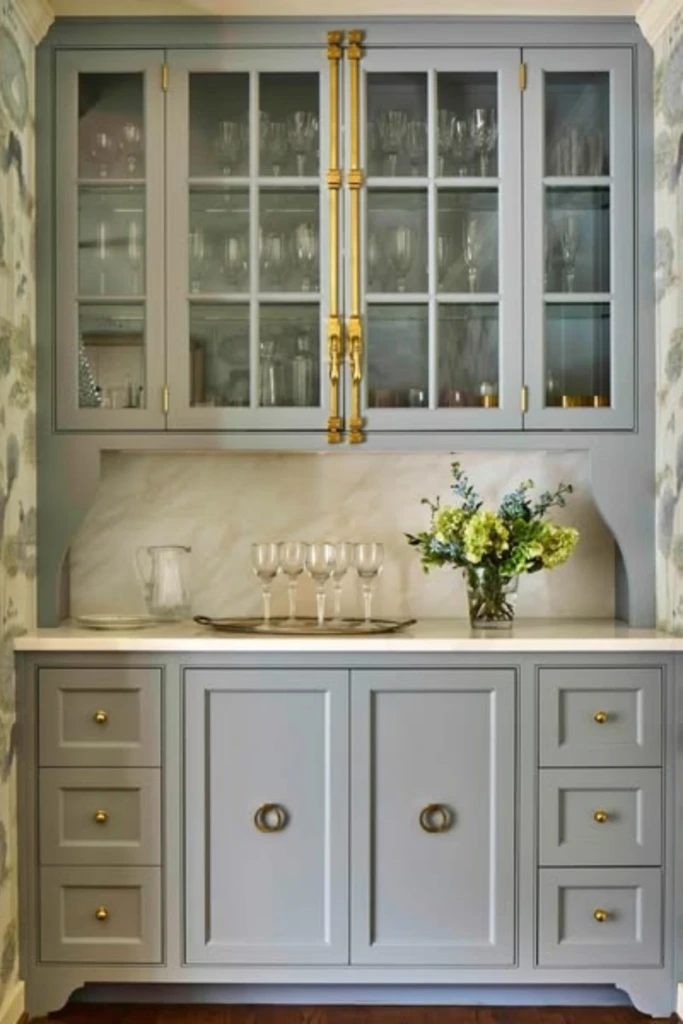
Glass-front cabinets combine practical storage with an opportunity to showcase beautiful dishes and glassware.
Unlike fully open shelving, enclosed glass cabinets help protect their contents from dust while keeping everything visible. They're especially useful for displaying matching dinnerware sets, decorative bowls, and special-occasion serving pieces.
Arrange heavier items on lower shelves and reserve upper sections for lighter collections. Adjustable shelves make it easier to accommodate items of different heights.
For a sophisticated finish, consider fluted glass, slim metal handles, or interior LED lighting. These details can turn an ordinary cabinet into an attractive dining room feature.
3. Full-Wall Storage
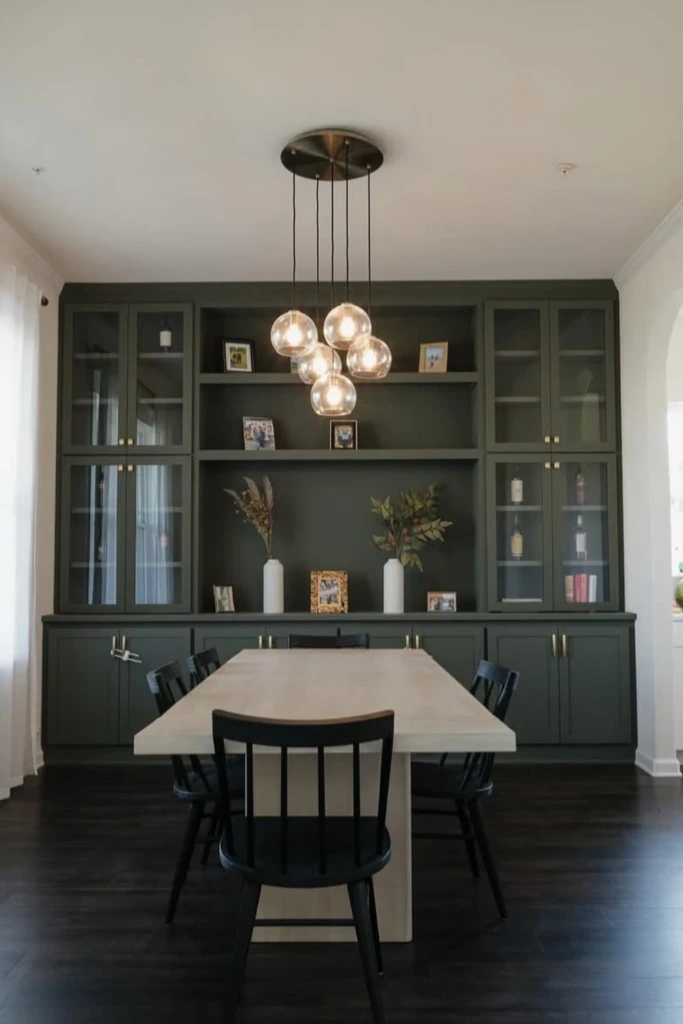
A full-wall storage system can transform an underused wall into a highly functional organizational area.
This approach works particularly well in larger dining rooms where extensive storage is needed for dinnerware, linens, and entertaining supplies.
Combine tall cupboards, spacious drawers, and open display sections to accommodate different belongings. Closed cabinetry keeps miscellaneous items out of sight, while selected open compartments prevent the design from appearing too solid.
Choose consistent finishes and simple hardware to create a unified look. In smaller rooms, lighter cabinetry can help maintain a spacious atmosphere.
4. Display-First Storage
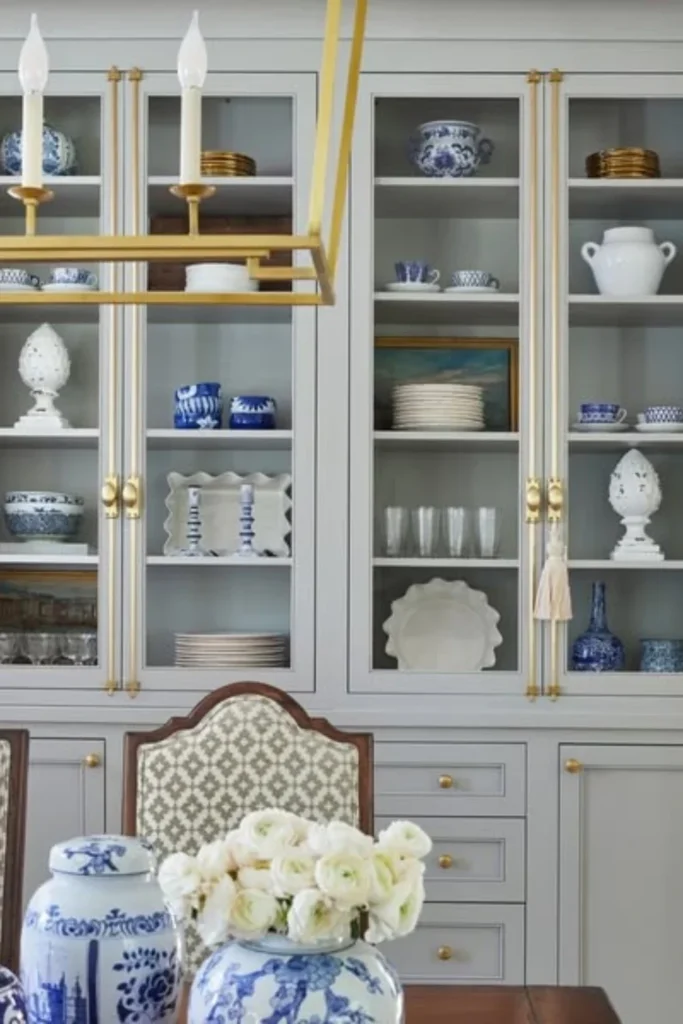
Display-first storage allows your favorite dining accessories to become part of the room's decoration.
Instead of hiding every plate and glass behind solid doors, dedicate visible shelving to items with attractive shapes, colors, or textures.
Ceramic pitchers, stacked plates, glass bowls, and coordinated serving pieces can create an appealing arrangement. Group similar objects together and vary their heights to introduce visual interest.
Avoid filling every available shelf. Leaving some empty space makes individual pieces stand out and helps the entire display feel organized.
Keep less decorative essentials inside nearby drawers or cabinets for a balanced combination of style and practicality.
5. Entertaining Storage Wall
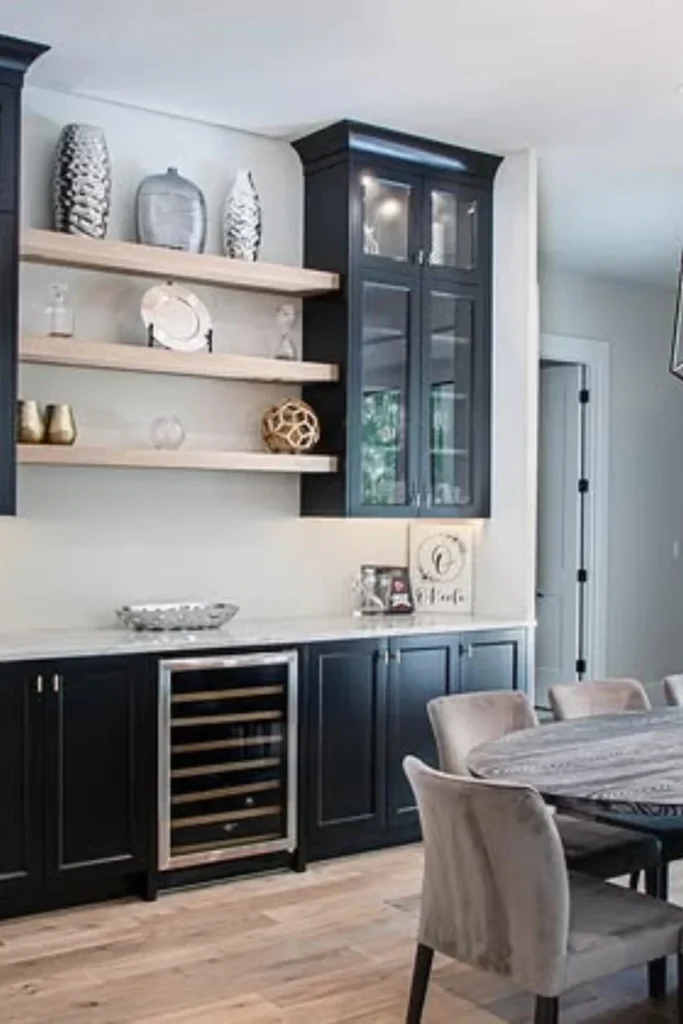
An entertaining storage wall brings serving essentials together in one convenient location, making gatherings easier to manage.
A combination of cupboards, drawers, and countertop space can accommodate glasses, serving trays, napkins, and beverage accessories.
If the room allows, include a dedicated beverage refrigerator or compact drink preparation area. Open shelves above the counter can hold frequently used glassware, while lower cabinets provide room for larger supplies.
Choose durable countertop materials that are easy to clean, particularly if drinks and refreshments will be prepared regularly.
This setup is especially useful in homes where the dining room connects directly to the kitchen or living area.
6. Sideboard Cabinet Setup
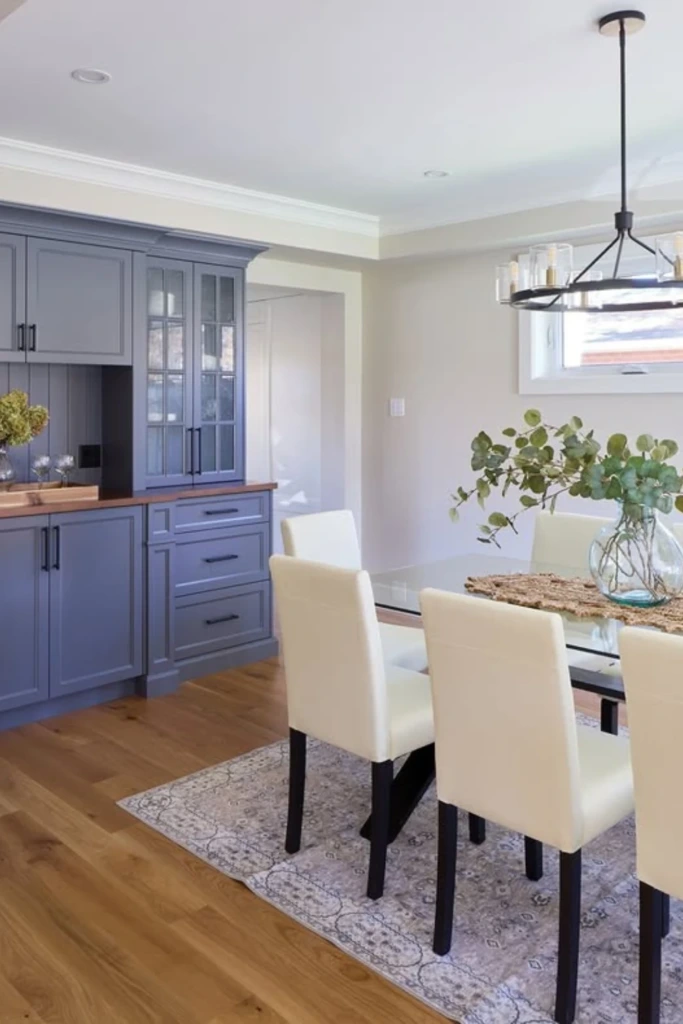
A sideboard cabinet provides valuable storage while creating an additional surface for serving food or displaying decorations.
Choose a design with a combination of drawers and cupboards to organize items according to their size and frequency of use.
Shallow drawers work well for cutlery, napkin rings, and placemats. Larger compartments can accommodate serving bowls, table linens, and extra dinnerware.
Position the sideboard along a wall that doesn't interfere with dining chairs or doorways. A mirror, artwork, or decorative lamp above it can complete the arrangement.
For a modern dining room, consider a cabinet with clean lines and minimal handles. Traditional interiors may benefit from detailed woodwork and warm finishes.
7. Slim China Cabinet
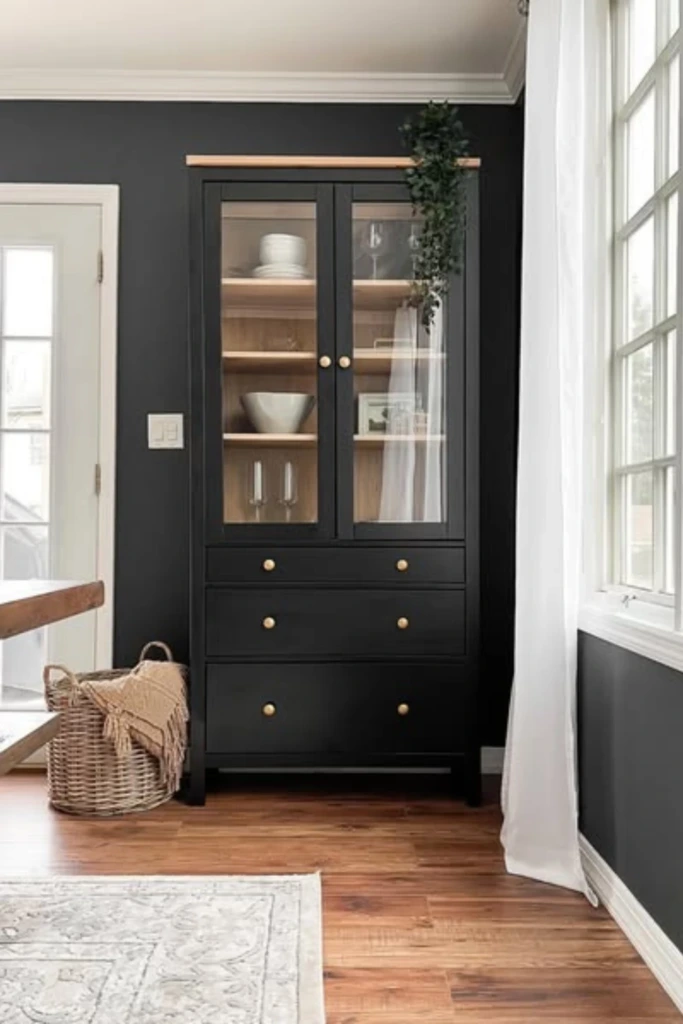
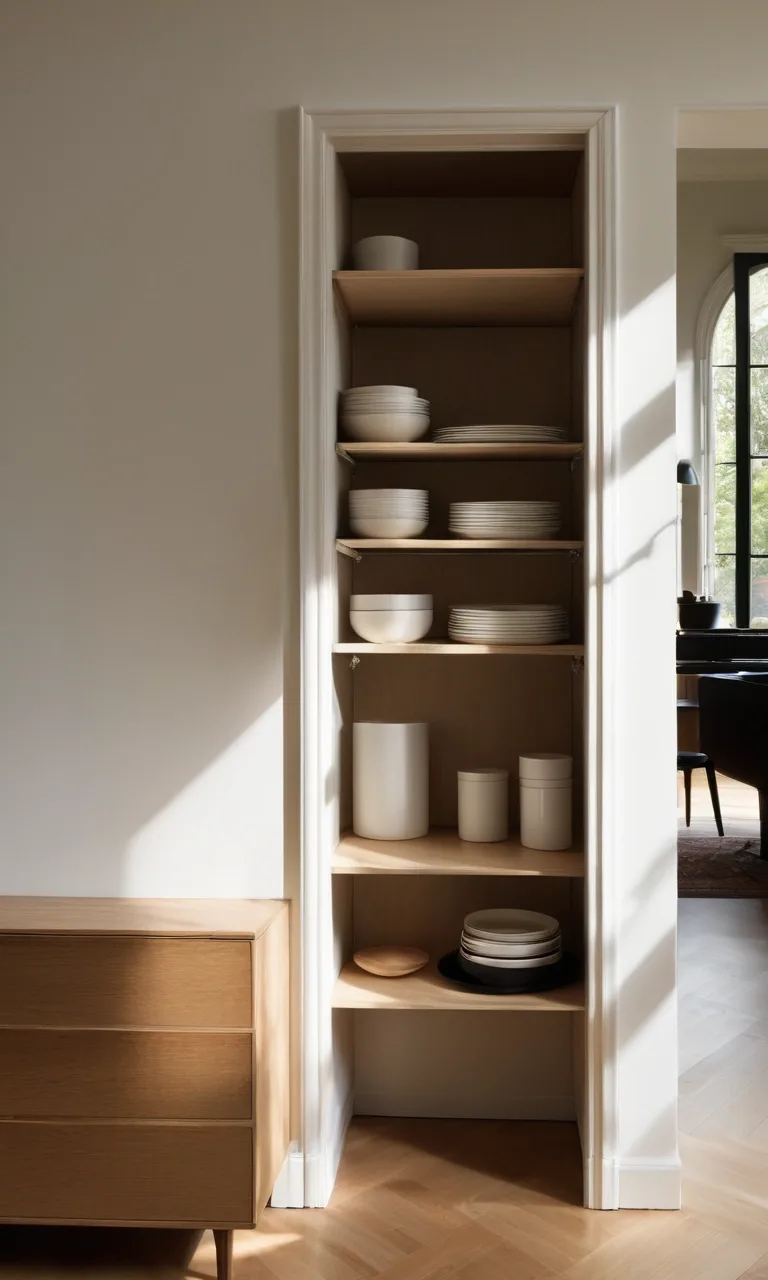
A slim china cabinet is a practical choice when floor space is limited but vertical storage is available.
Its narrow footprint allows it to fit beside a doorway, near a window, or along an unused wall without dominating the room.
Look for a model with glass-front upper shelves and enclosed lower compartments. This arrangement provides room for displaying special dishes while concealing everyday accessories.
A cabinet with adjustable shelves offers greater flexibility as your storage needs change.
Secure tall, narrow cabinets to the wall using appropriate anti-tip hardware, particularly in households with children or pets.
8. Bar Cabinet Niche
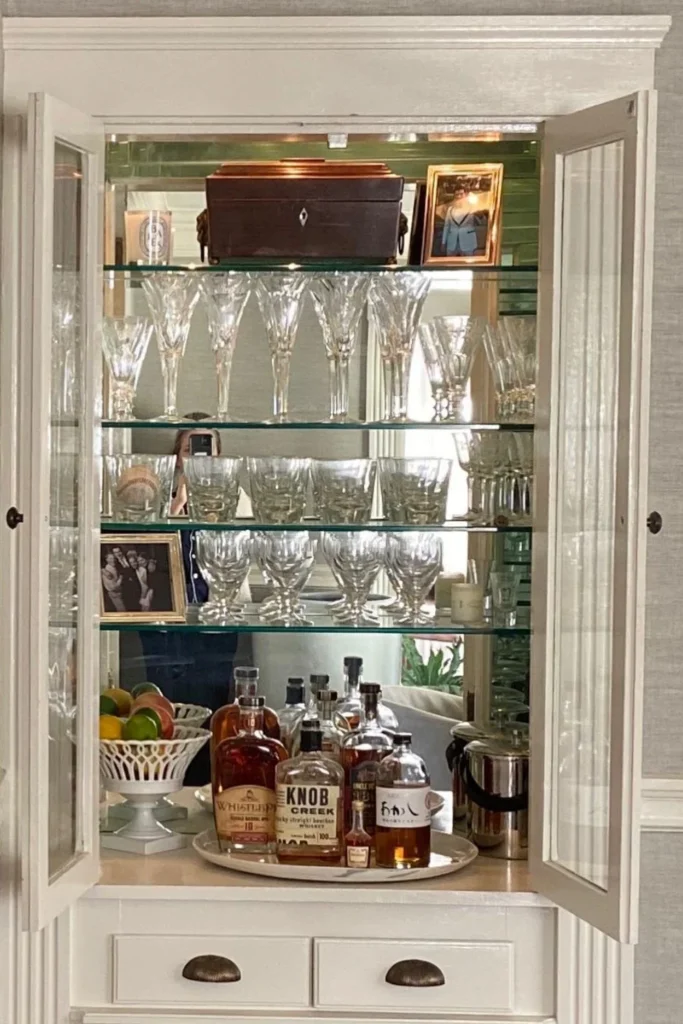
An unused wall recess can become an attractive bar cabinet niche without requiring a large piece of furniture.
Install shelves sized for glassware and beverage accessories, then add a small countertop or lower cupboard for additional organization.
Mirrored panels can create a sense of depth, while warm integrated lighting makes the niche stand out in the evening.
Choose moisture-resistant finishes around surfaces where drinks may spill. Small trays and drawer organizers can help keep accessories neatly arranged.
For a more understated design, use matching cabinet doors that allow the niche to blend into the surrounding wall when not in use.
9. Symmetrical Storage Run
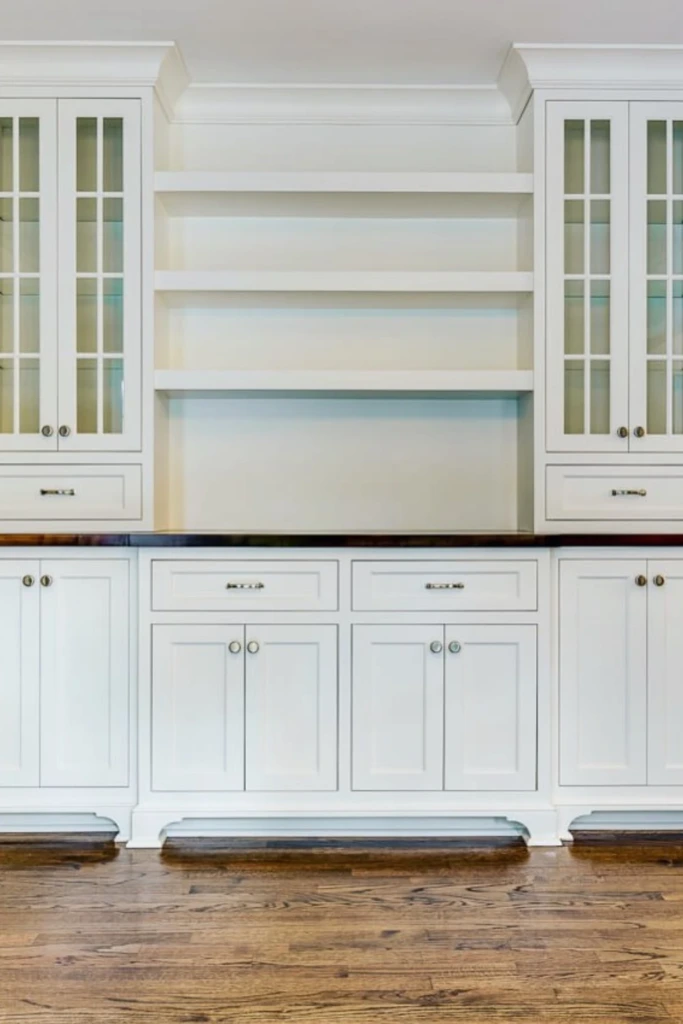
Symmetrical cabinetry creates a sense of order and balance, making it particularly appealing in formal dining rooms.
Start with matching storage units at opposite ends of a wall, then connect them with lower cabinets or a central serving counter.
Glass-front display towers can showcase dinnerware, while enclosed sections keep practical necessities hidden.
Using the same hardware, finishes, and shelf proportions throughout the arrangement helps establish a coordinated appearance.
A decorative mirror, framed artwork, or statement centerpiece between the cabinets can provide a focal point without disrupting the balanced design.
10. Fireplace Storage Moment
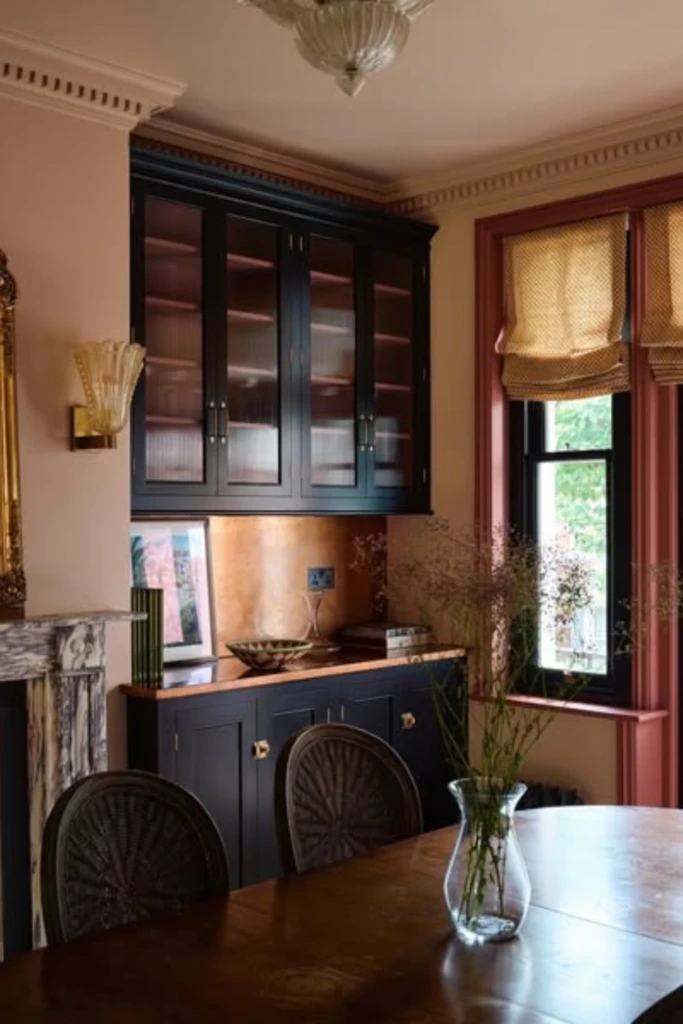
If your dining room features a fireplace, the surrounding wall may offer useful opportunities for additional storage.
Built-in cabinets on either side of the fireplace can accommodate dinnerware, serving accessories, and decorative collections.
Keep the cabinetry visually balanced so the fireplace remains the room's main feature. Lower cupboards with upper display shelves are a versatile option.
Materials and installation details should be selected according to the fireplace manufacturer's clearance requirements and applicable building codes.
Warm wall lighting and coordinated cabinet finishes can make the arrangement feel like an intentional architectural feature rather than an afterthought.
11. Pantry-Style Storage
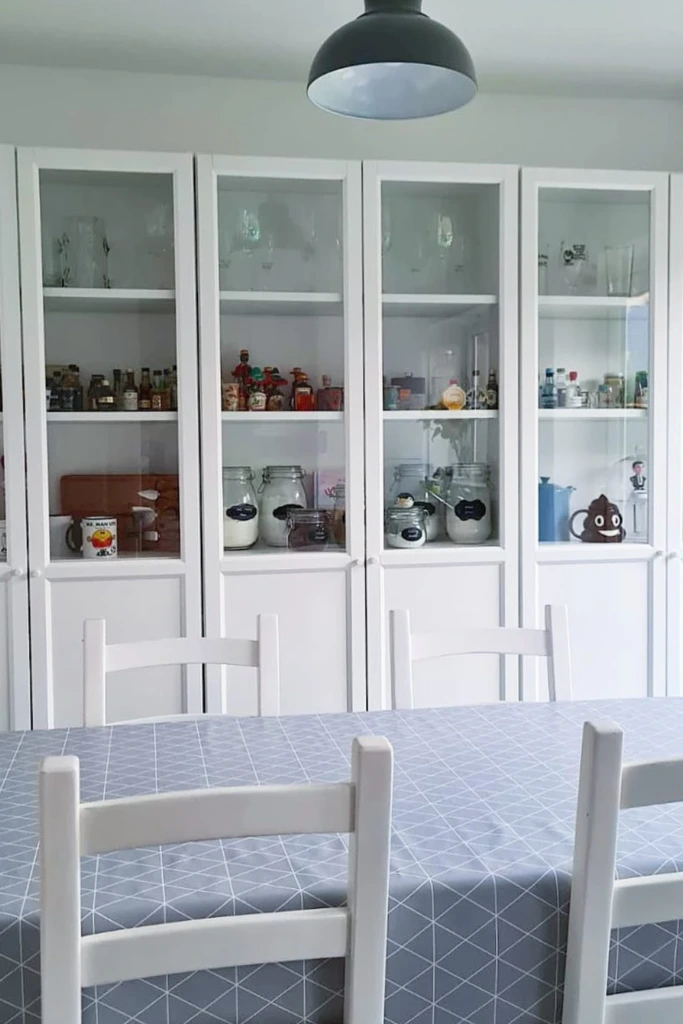
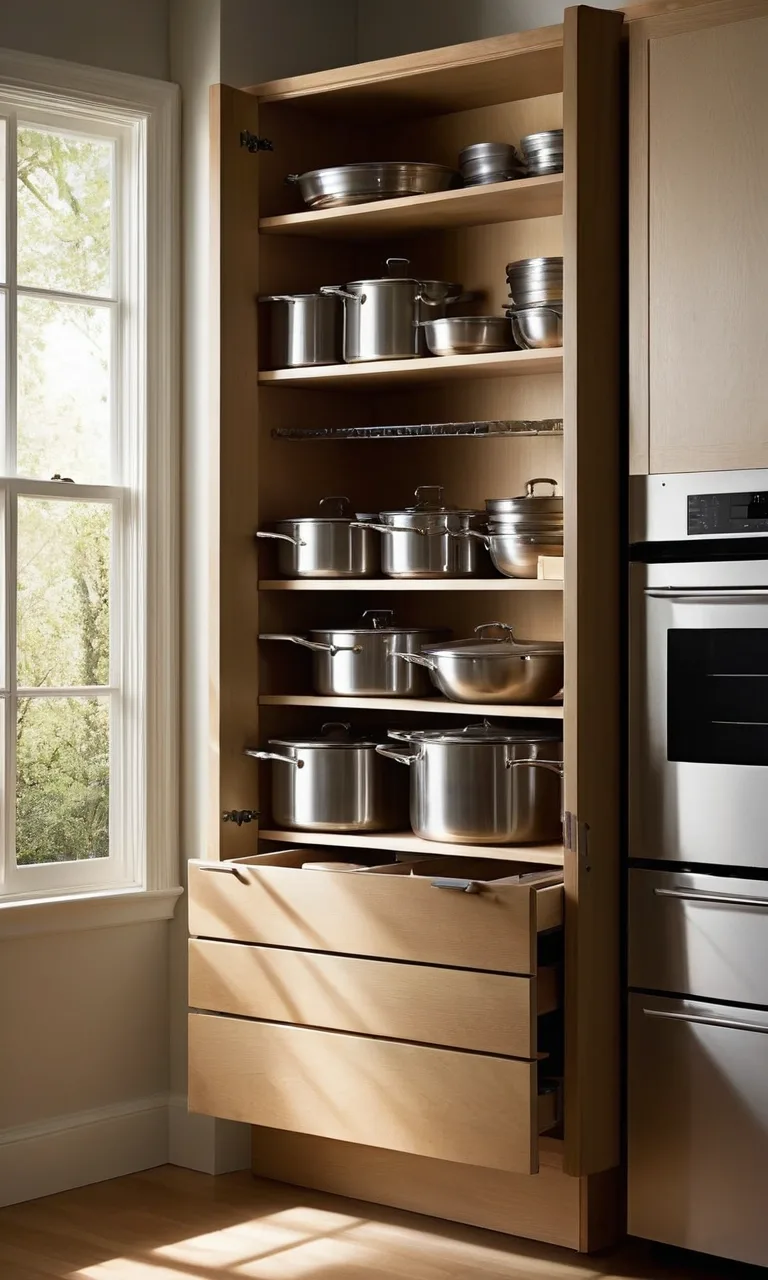
Pantry-style storage brings the convenience of kitchen organization into the dining area.
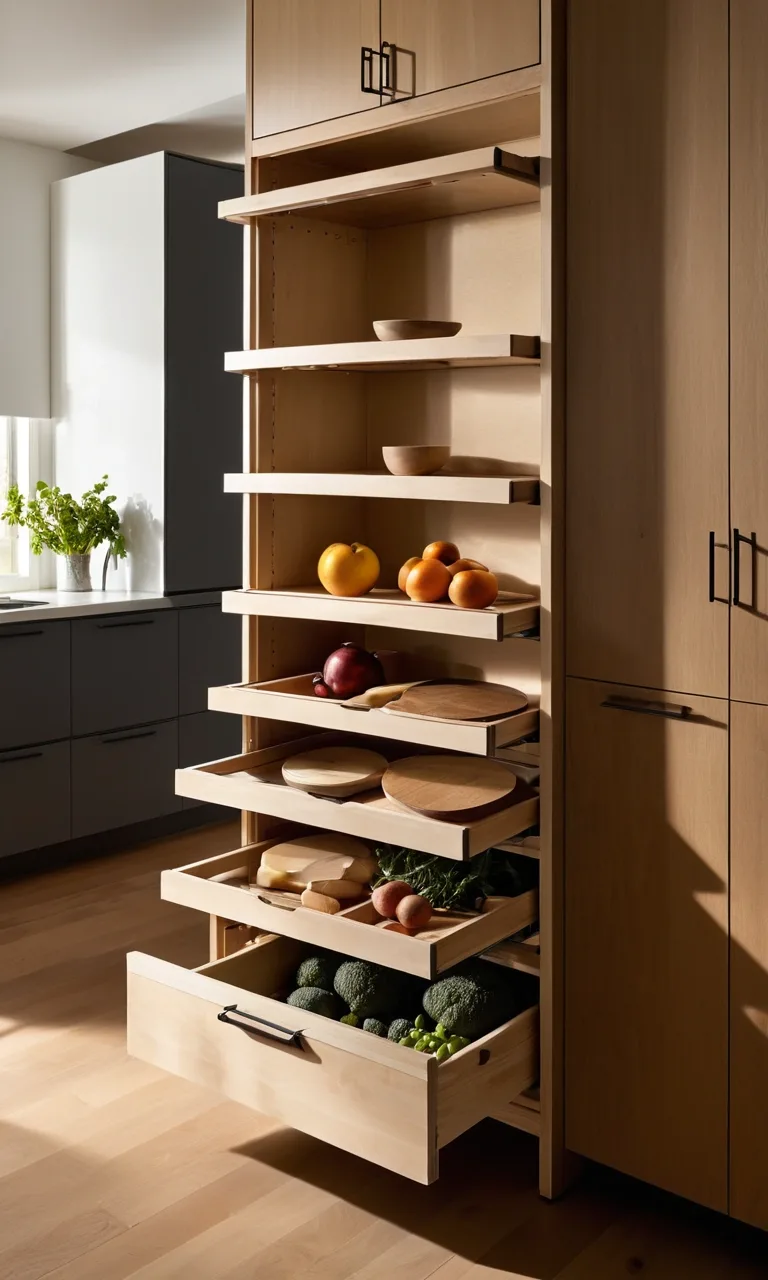
Tall cabinets with adjustable shelves can hold extra dishes, packaged refreshments, table linens, and entertaining supplies.
Clear containers and labeled baskets help keep smaller items grouped together. Frequently used belongings should remain at comfortable reaching height, while occasional-use supplies can occupy upper shelves.
If the cabinets include glass doors, consider using matching containers to maintain a tidy appearance.
This arrangement is particularly helpful for families who use their dining room for everyday meals and need quick access to supplies.
12. Beverage Storage Center
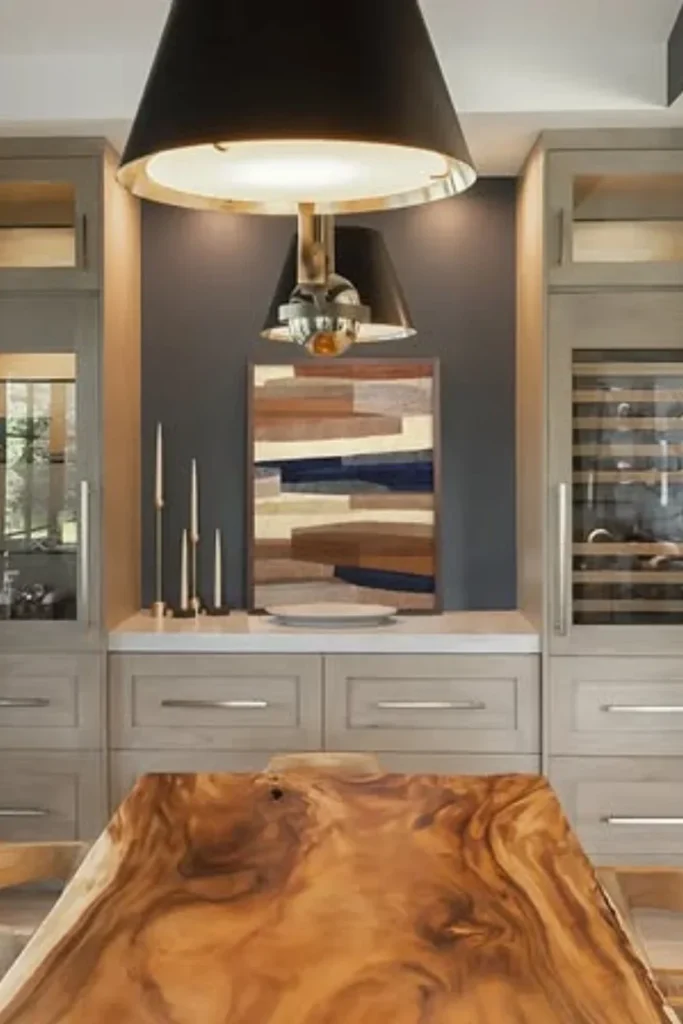
A dedicated beverage storage center can make morning routines and social gatherings more convenient.
Create a compact station with a countertop for preparing drinks, cupboards for mugs and glasses, and drawers for accessories.
A coffee machine, electric kettle, or other small appliance can be included if there is suitable electrical access and sufficient ventilation.
Tall cabinets on either side can provide extra storage without spreading equipment throughout the room.
Use washable surfaces and keep frequently used supplies within easy reach. A small tray for cups and accessories can prevent the countertop from becoming cluttered.
13. Library Wall Storage
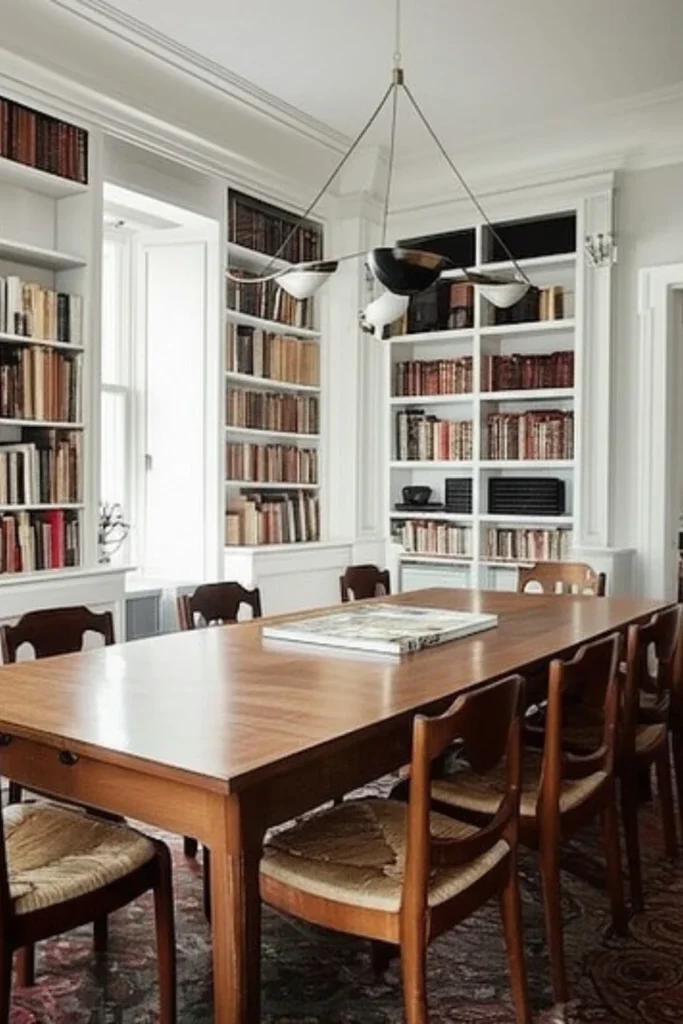
A dining room library wall introduces character while providing generous storage for books, decorative objects, and dining essentials.
Floor-to-ceiling shelving makes effective use of vertical space and can create a cozy atmosphere, particularly in traditional or transitional interiors.
Combine books with ceramic bowls, baskets, and selected serving pieces to create a varied but cohesive display.
Adjustable shelves accommodate changing collections, while closed cabinets along the bottom provide concealed storage for less attractive items.
Make sure shelving is securely installed and capable of supporting the intended weight, especially when storing large collections of books or heavy dishes.
14. Balanced Beverage Storage
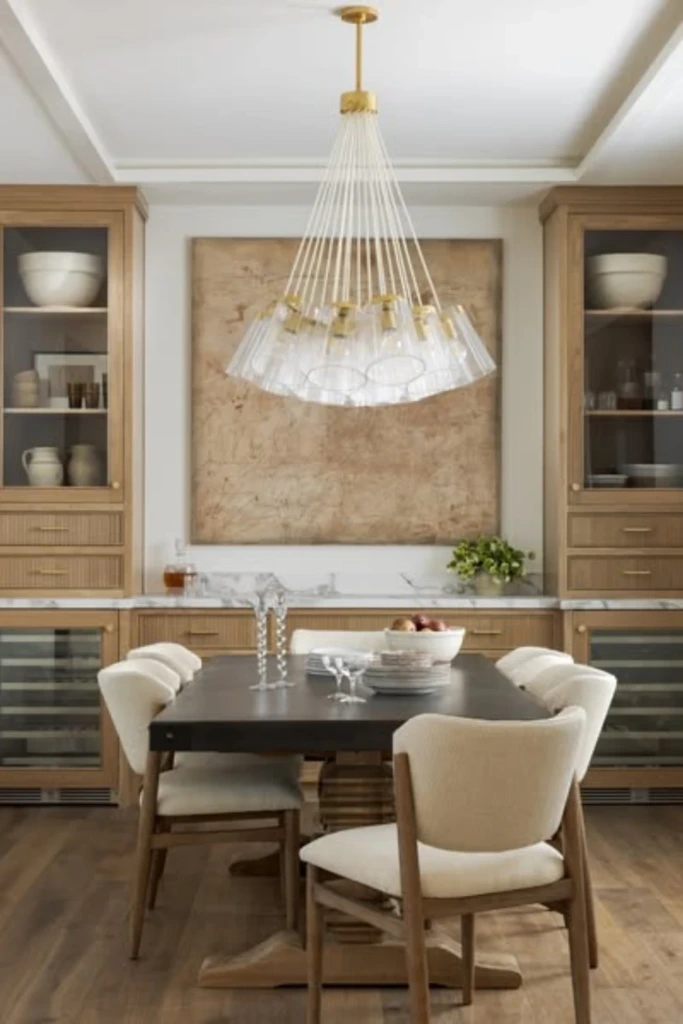
Balanced beverage storage combines functional organization with an elegant, structured design.
Position matching cabinets on either side of a central counter to create a dedicated area for preparing and serving refreshments.
Lower drawers can hold accessories, coasters, and linens, while upper compartments accommodate glasses and other supplies.
If you include a beverage refrigerator, allow the ventilation space specified by the manufacturer.
A decorative backsplash, coordinated hardware, and subtle lighting can make the central counter a distinctive feature.
This design works well in dining rooms that regularly accommodate guests but still need to maintain a polished everyday appearance.
15. Low Sideboard Storage
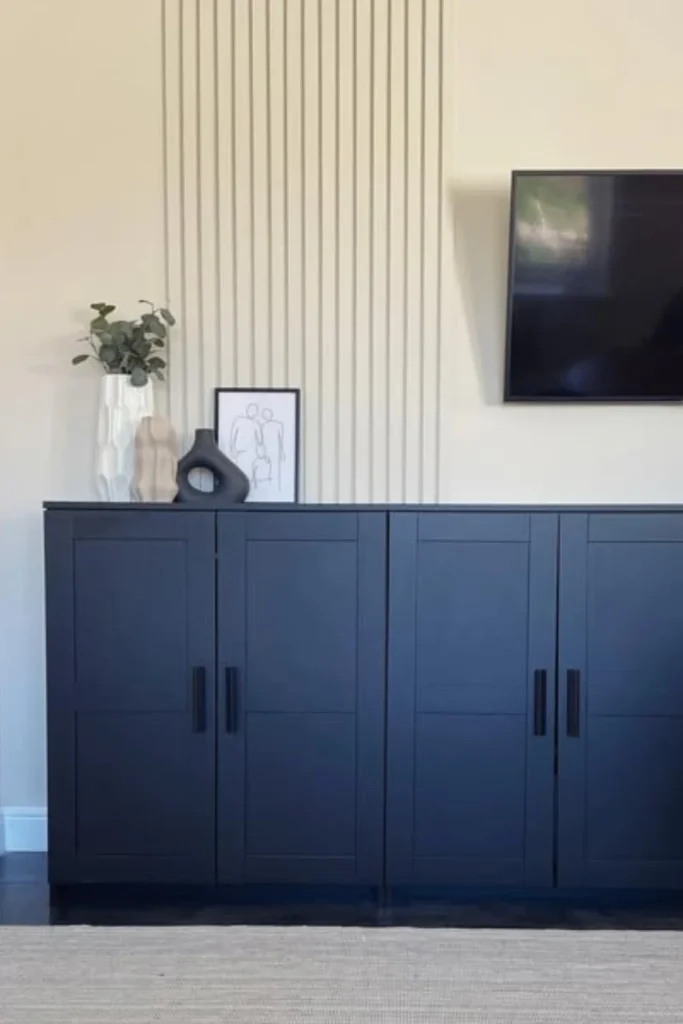
A low sideboard is an excellent option for dining rooms where tall furniture might overwhelm the space.
Its horizontal shape provides useful storage while leaving the wall above available for artwork, mirrors, or decorative lighting.
Choose a sideboard with spacious cupboards for larger serving pieces and drawers for smaller accessories. Interior dividers can prevent items from shifting or becoming mixed together.
A low-profile design also works well in open-plan homes because it can define the dining area without blocking sightlines.
For added practicality, select a durable top surface that can accommodate serving dishes during family meals or celebrations.
16. Vintage Hutch Storage
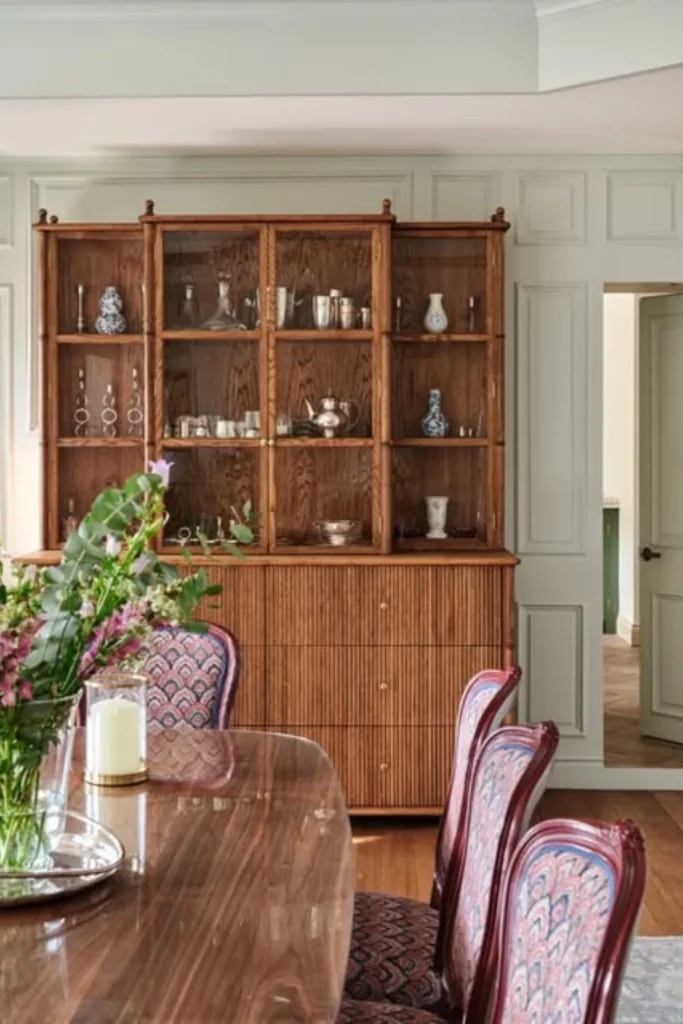
A vintage hutch adds personality and useful storage to a dining room, making it an appealing alternative to modern cabinetry.
Many traditional hutches feature open shelves or glass doors above a series of drawers and cupboards.
Use the upper section for decorative dishes, inherited china, or glassware. Lower compartments can hold linens, candles, and less frequently used serving accessories.
If the finish feels outdated, consider refinishing the wood or repainting the exterior while preserving attractive original details.
Mixing a vintage hutch with contemporary dining furniture can create an inviting, collected-over-time appearance.
17. Floor-to-Ceiling Cabinets
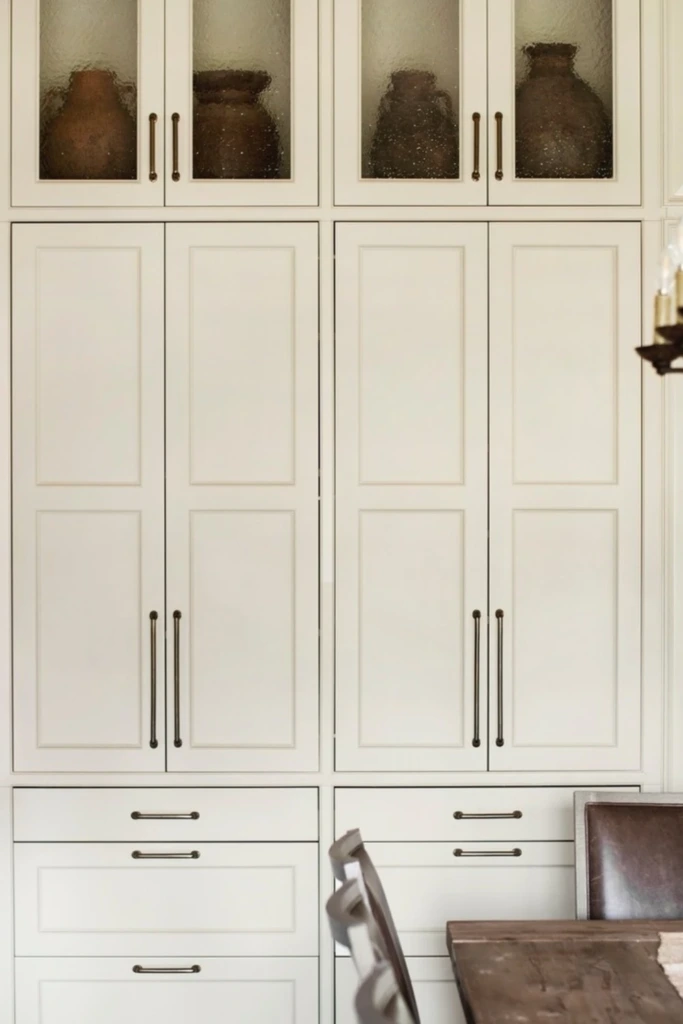
Floor-to-ceiling cabinets maximize storage capacity by using the full height of a dining room wall.
They are particularly useful when there are many belongings to organize but limited space for additional furniture.
Design the lower compartments for everyday essentials and reserve higher shelves for holiday decorations, special dinnerware, and occasional-use supplies.
Pull-out trays, adjustable shelves, and internal organizers can improve accessibility.
Choose cabinet finishes that complement the room's proportions. Matching the wall color can make tall cabinetry appear more integrated, while natural wood adds warmth and texture.
Store heavier items in lower compartments and use a stable step stool when accessing upper shelves.
18. Wine Storage Feature
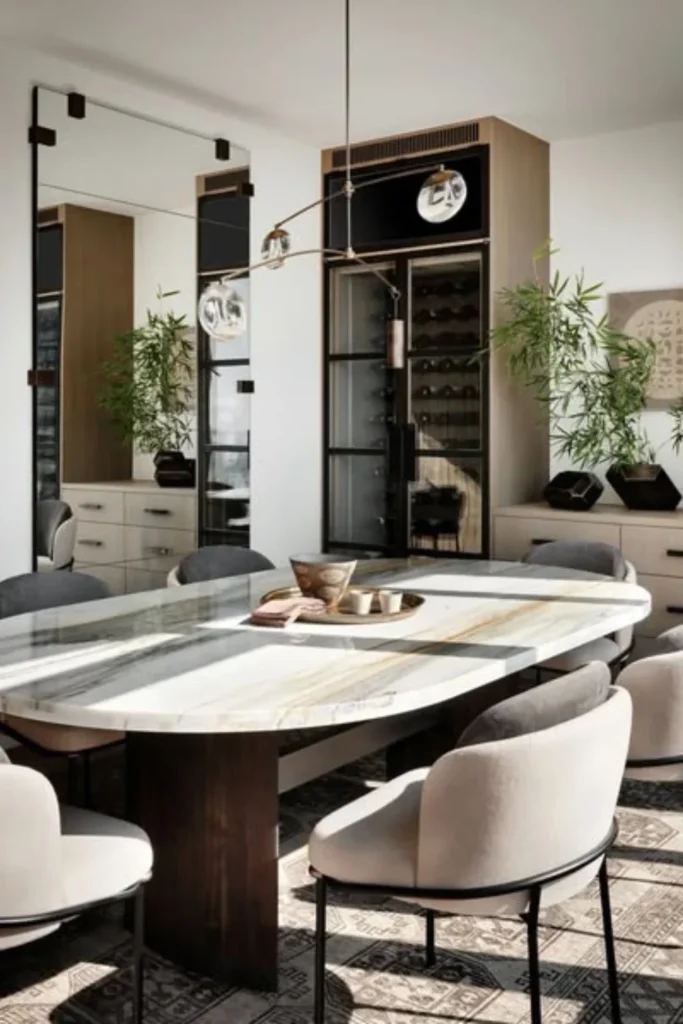
A wine storage feature can introduce a distinctive design element while keeping bottles and serving accessories organized.
Depending on your needs, this might involve a compact wine rack, a dedicated cabinet, or a temperature-controlled storage unit.
Vertical shelving can make use of narrow wall sections, while nearby drawers provide convenient space for corkscrews, coasters, and other accessories.
For bottles intended for long-term aging, consider appropriate temperature, humidity, light exposure, and vibration conditions.
Glass-front cabinetry and subtle interior lighting can create an attractive display, provided the storage environment remains suitable for the contents.
19. Kitchen-Style Storage
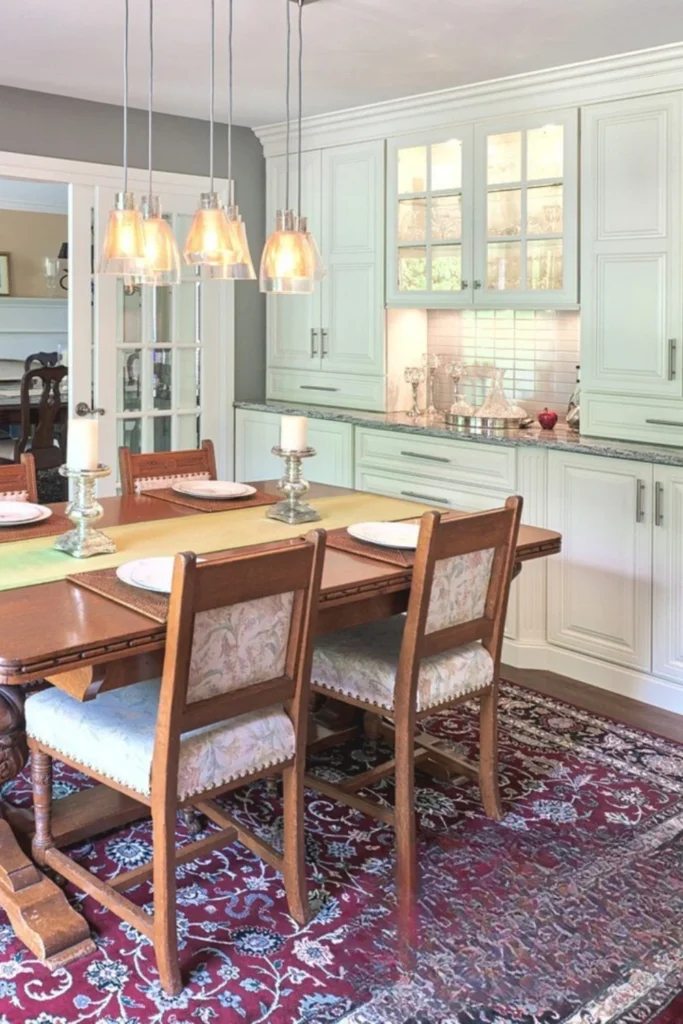
Kitchen-style storage brings practical cabinet layouts into the dining room, creating a convenient extension of the home's food preparation and serving areas.
Install lower cupboards with a countertop for arranging dishes, preparing beverages, or setting out refreshments.
Upper cabinets can store glasses, plates, and smaller serving pieces, while deep drawers below accommodate larger accessories.
Choose finishes that coordinate with the nearby kitchen to create a natural visual connection between the spaces.
Under-cabinet lighting can improve countertop visibility, and a durable backsplash makes the area easier to maintain.
This approach is especially helpful in open-plan homes where the dining area serves several everyday functions.
20. Open Shelf Balance
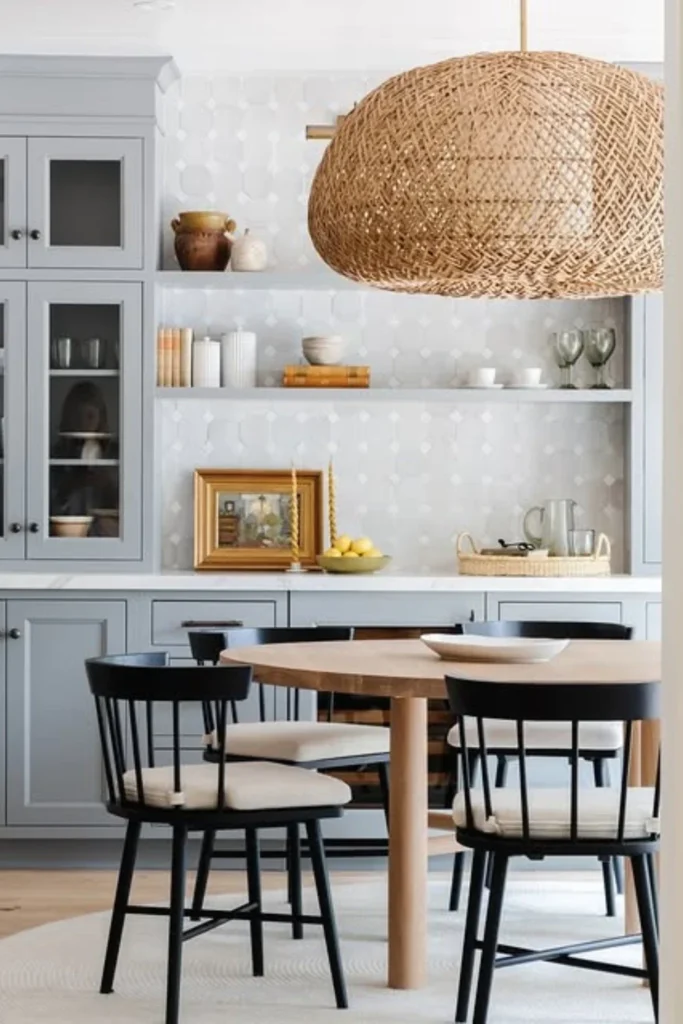
Open shelving can make dining room storage feel relaxed and accessible, particularly when combined with enclosed cabinetry.
Rather than filling an entire wall with exposed shelves, install a limited number above a sideboard or lower cabinet.
Use the shelves for attractive everyday dishes, small plants, and decorative accessories. Keep additional supplies behind closed doors to reduce visual clutter.
Repeating similar materials and colors helps create a consistent arrangement.
Because open shelves collect dust more readily than enclosed cabinets, reserve them for items you use or clean regularly.
21. Bar Drawer Storage
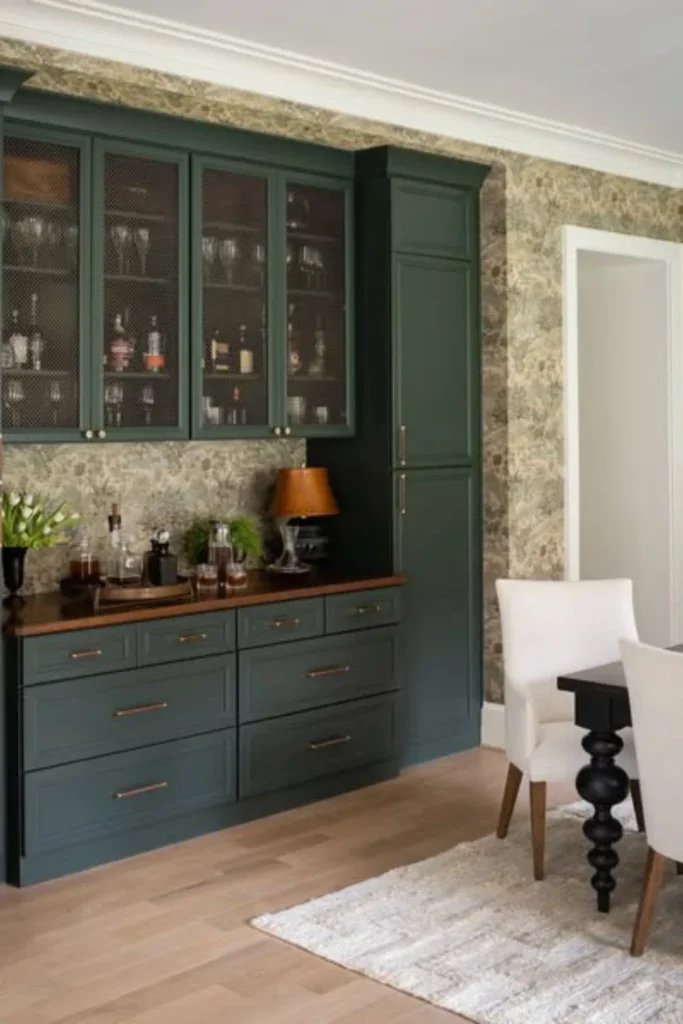
Drawer-based bar storage keeps small accessories organized without requiring everything to remain visible.
Deep drawers can accommodate beverage supplies, while shallow compartments are useful for coasters, napkins, openers, and other tools.
Install adjustable dividers to separate different categories and prevent items from shifting when drawers are opened.
For glass bottles, use appropriately rated drawers with secure dividers or purpose-built inserts. Check the hardware's weight capacity before loading heavy contents.
A nearby countertop provides a convenient place to prepare refreshments, while upper cabinets can store glasses and serving trays.
This arrangement keeps the dining room looking tidy between gatherings.
22. Storage Seating Combo
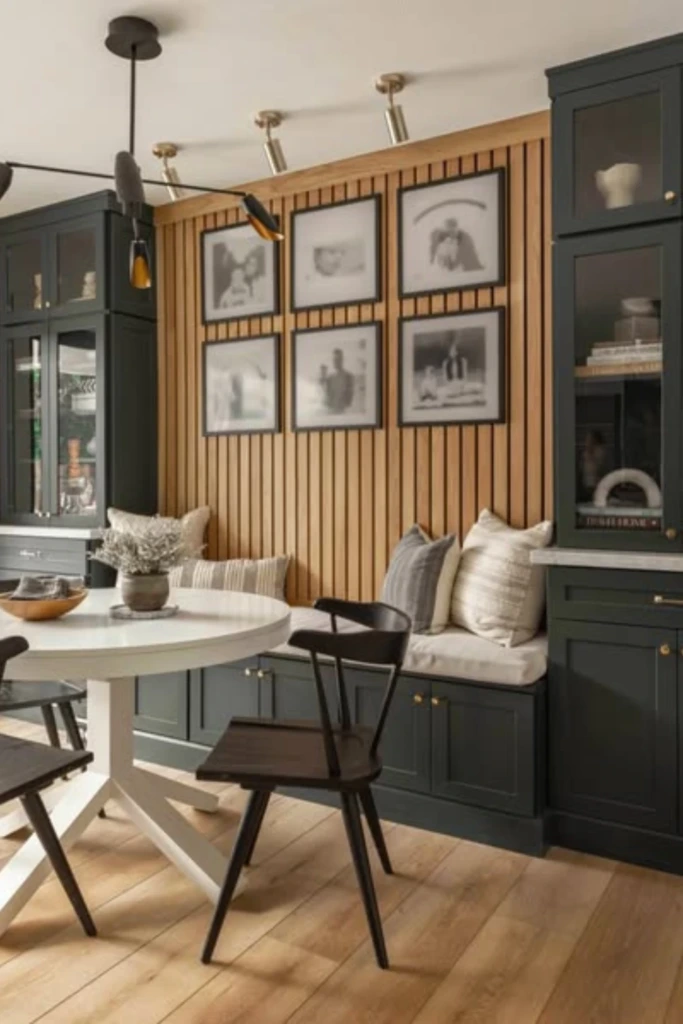
Combining seating and storage is one of the most effective ways to maximize a compact dining area.
A built-in bench with drawers or lift-up compartments provides seating while creating hidden space for table linens, seasonal accessories, and other belongings.
Position the bench against a wall to reduce the space needed behind chairs. This works especially well in breakfast nooks and narrow dining rooms.
Drawers are convenient for frequently used items, while lift-up seats may offer more room for bulky belongings.
Choose durable upholstery and easy-to-clean materials for everyday use. If using a hinged seat, select appropriate safety hinges to prevent accidental closing.
23. Art-Centered Storage
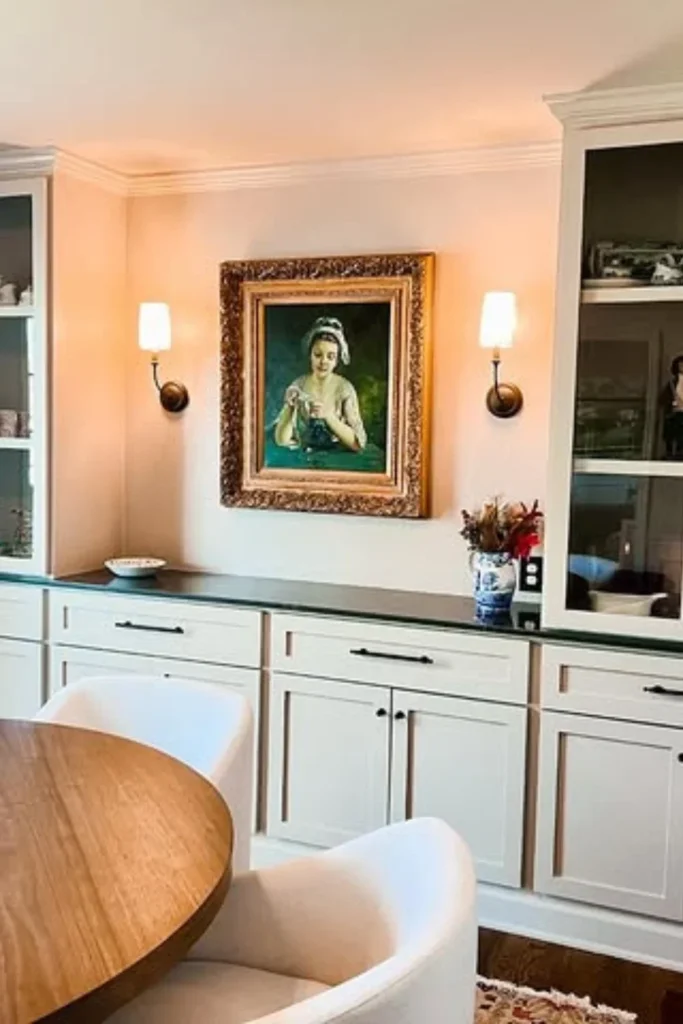
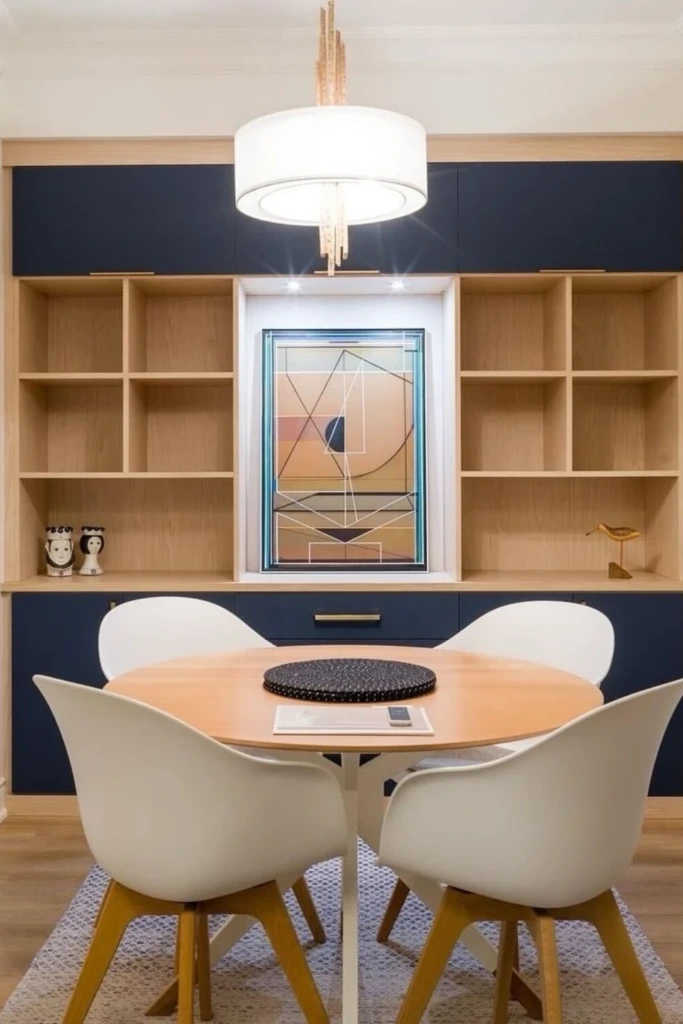
Art-centered storage combines functional cabinetry with a decorative focal point.
Install low cabinets along a dining room wall, then reserve the central area above them for a large painting, framed print, or statement mirror.
Tall display units on either side can create a structured arrangement without distracting from the artwork.
Keep cabinet finishes understated so the decorative centerpiece remains prominent.
Picture lights or wall sconces can highlight the display and introduce a warm evening atmosphere.
This approach is ideal for dining rooms where storage is necessary but the overall design should still feel refined and welcoming.
24. Corner Display Cabinet
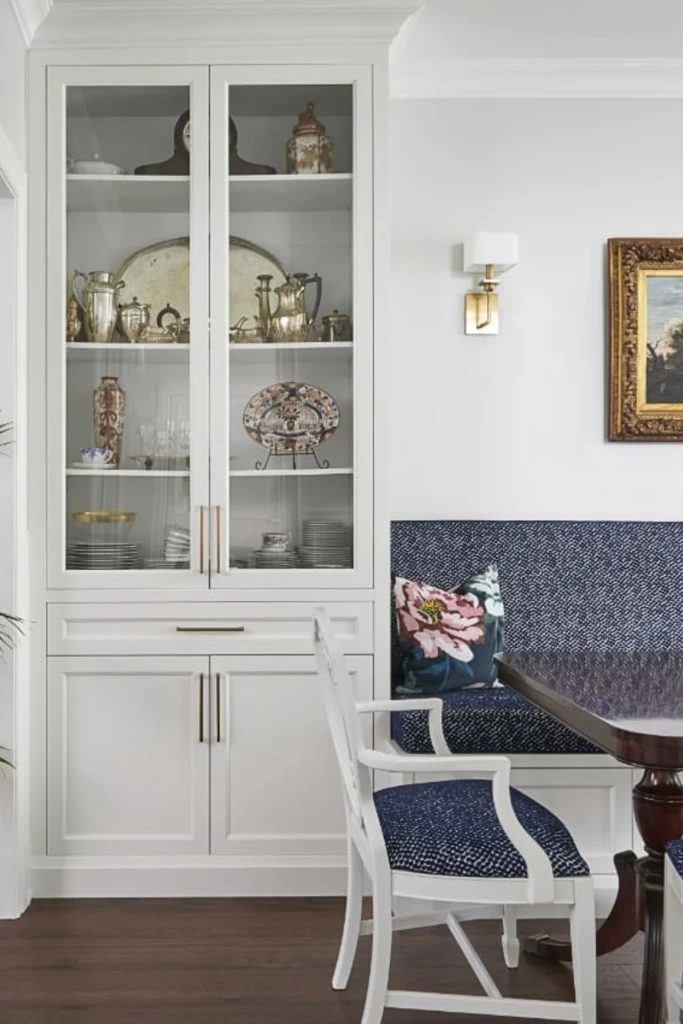
A corner display cabinet turns an often-neglected part of the dining room into a practical storage feature.
Choose a cabinet specifically designed for corner placement to make the best use of the available dimensions.
Glass doors can showcase decorative plates, glassware, and small collections, while enclosed lower sections provide additional storage.
A compact cabinet works particularly well near a dining banquette or in a room with limited uninterrupted wall space.
Before installation, check that cabinet doors can open fully without hitting nearby chairs, tables, or architectural features.
Soft lighting inside the cabinet can help brighten a darker corner.
25. Glass Wall Storage
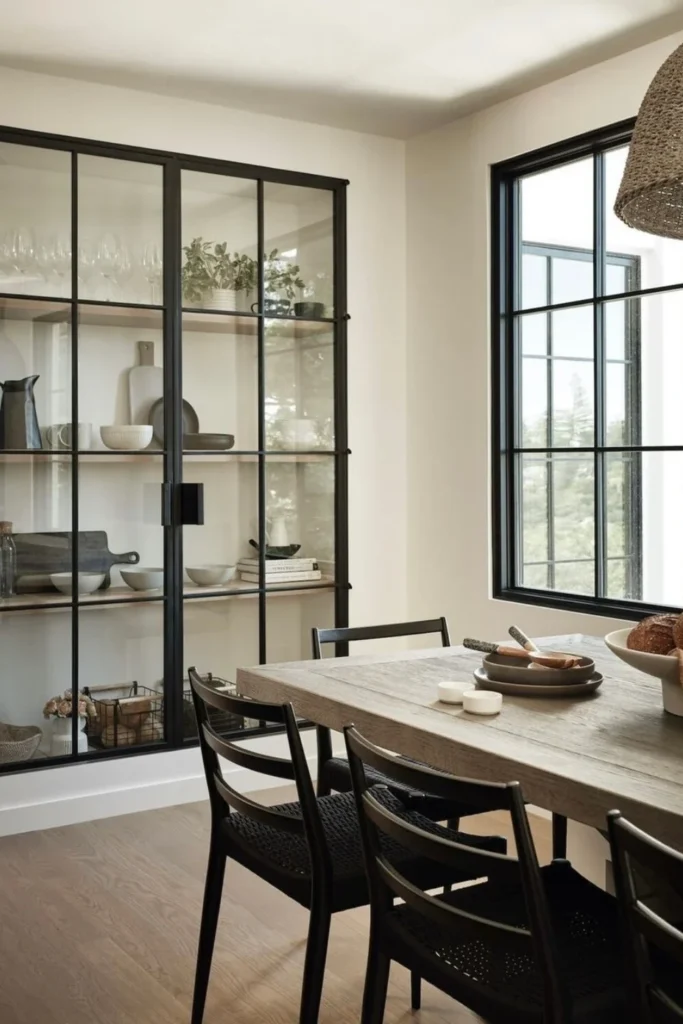
Glass wall storage offers an airy alternative to heavy, solid-front cabinetry.
Large glass-front cabinets can accommodate dinnerware and decorative objects while allowing the contents to remain part of the room's visual design.
Slim frames and simple handles help maintain a contemporary appearance. For a more traditional style, choose divided glass doors with painted wood framing.
Arrange contents by category and avoid overcrowding the shelves.
If the cabinet is located near a busy walkway, choose appropriate safety glazing and ensure the unit is securely installed.
Pairing glass cabinetry with natural light and understated decorative accents can help maintain a bright, open atmosphere.
26. Tall Corner Storage
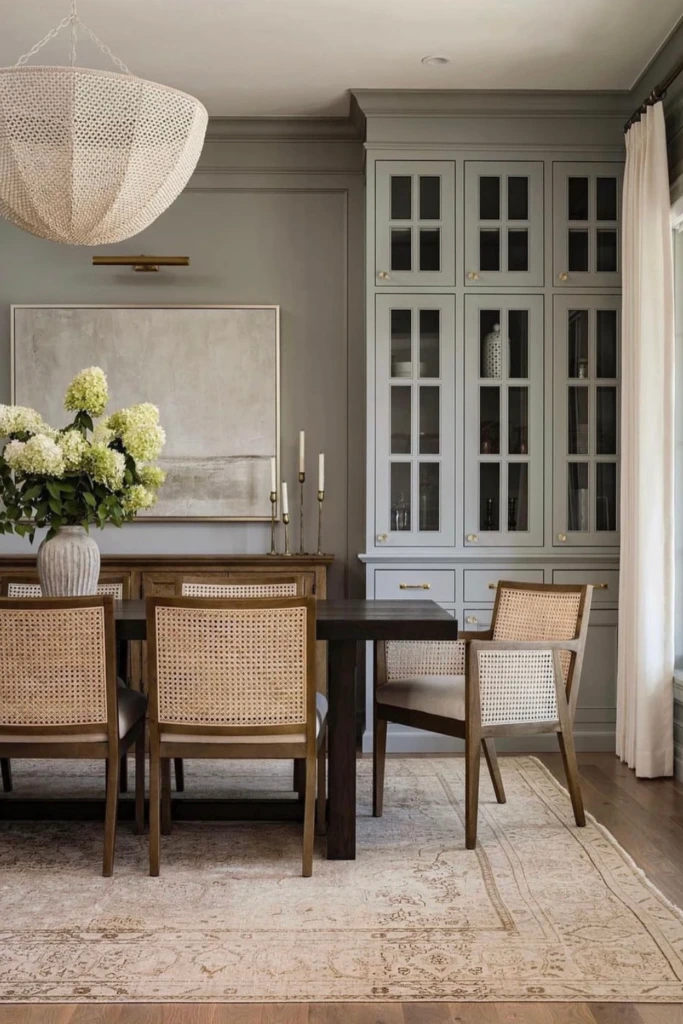
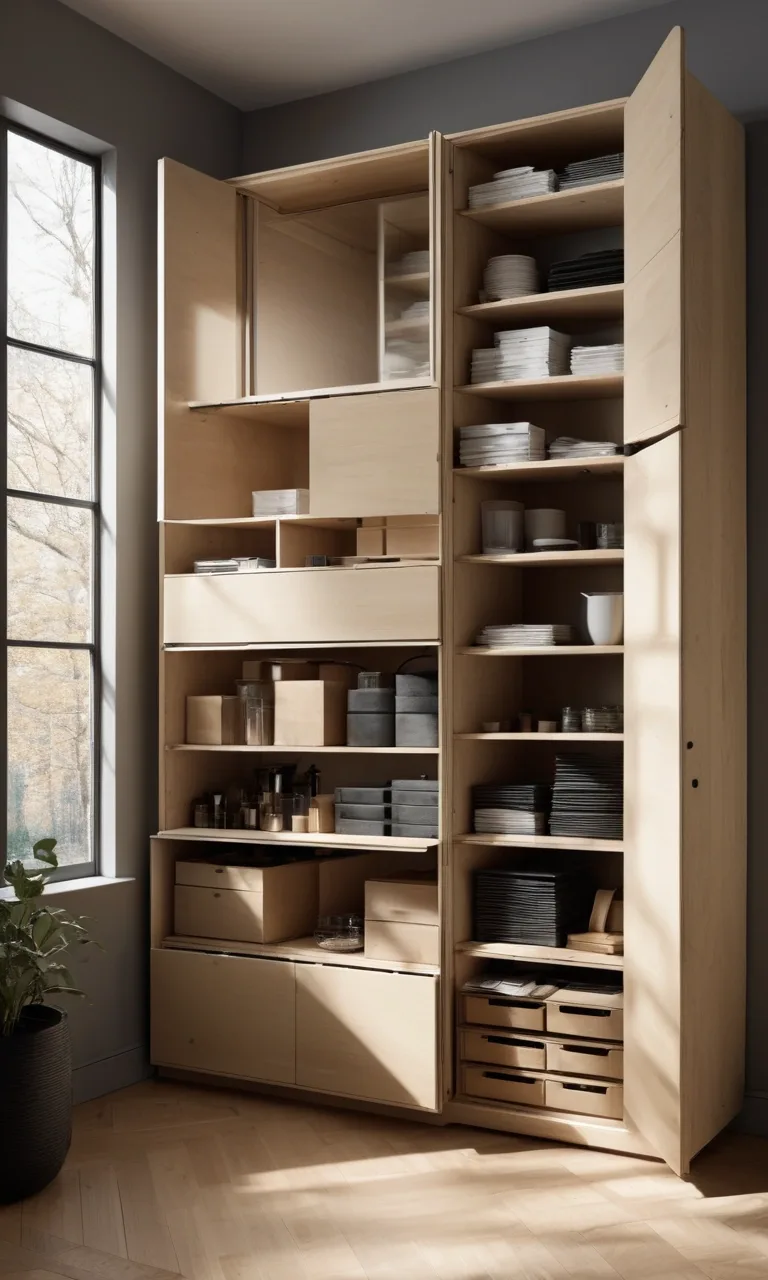
Tall corner storage is especially useful in dining rooms where windows, doorways, or furniture limit the available wall space.
A narrow, full-height cabinet can accommodate a surprising amount of dinnerware without requiring a large footprint.
Choose adjustable shelving to fit different serving pieces, and use the lower compartments for heavier belongings.
Glass-front designs can make the cabinet feel visually lighter, while closed doors provide a cleaner appearance for mixed storage.
Consider matching the cabinet finish to the surrounding walls or nearby furniture to help it blend into the room.
Proper wall anchoring is essential for tall units, particularly those with a narrow base.
What’s the best storage furniture for a small dining room?
The best storage furniture for a small dining room usually combines a compact footprint with generous storage capacity.
A narrow china cabinet, slim sideboard, or tall cupboard can provide organization without taking up excessive floor space. Built-in benches with hidden compartments are another excellent option because they serve two purposes.
Look for furniture with adjustable shelves, drawers, and enclosed compartments to accommodate different items.
Before choosing a piece, measure the available wall space and make sure there is enough clearance for chairs, cabinet doors, and comfortable movement around the dining table.
How do I keep open shelves from looking cluttered?
Start by limiting the number of objects displayed and organizing them into clear groups.
Stack similar plates together, arrange glasses in coordinated sets, and use matching baskets for smaller accessories.
Maintain some empty space between groups so the shelves don't appear overcrowded. Repeating a few colors or materials can also create a more unified appearance.
Keep practical but unattractive belongings in closed cabinets and reserve exposed shelves for items that contribute to the room's overall design.
Review the display occasionally and remove anything that no longer serves a useful or decorative purpose.
With the right combination of cabinetry, shelving, and multifunctional furniture, dining room storage can improve both organization and comfort. Focus on solutions that suit your room's dimensions, daily habits, and decorating style to create a space that's easier to use and enjoyable to spend time in.