20 Cutting Board Storage Ideas For 2026
Cutting boards are essential kitchen tools, but storing them neatly can be surprisingly difficult. Large boards take up valuable cupboard space, while smaller ones often slide around or get buried beneath other kitchen essentials. A little planning can make them easier to access and keep your countertops clear.
The best storage solution depends on your kitchen layout, the number of boards you own, and how frequently you cook. Some households benefit from simple wall hooks, while others need built-in dividers or dedicated drawers. You can also turn attractive wooden boards into part of your kitchen decor instead of hiding them away.
These 21 cutting board storage ideas offer practical ways to organize your collection, use overlooked spaces, and create a kitchen that feels more functional.
How Can You Store Cutting Boards Without Taking Counter Space?
When countertop space is limited, look for storage opportunities inside cabinets, along walls, and beneath existing shelves. You don't necessarily need another bulky organizer to keep your cutting boards under control.
Vertical dividers are particularly useful because they allow boards to stand separately instead of forming an unstable stack. Cabinet-door organizers and wall-mounted hooks can also make use of spaces that would otherwise remain empty.
If you're planning a kitchen renovation, consider incorporating a narrow pullout cabinet or a dedicated drawer for boards and food preparation tools. For a simpler update, a compact countertop stand placed near your main preparation area can make everyday cooking more convenient.
1. Wall Hooks
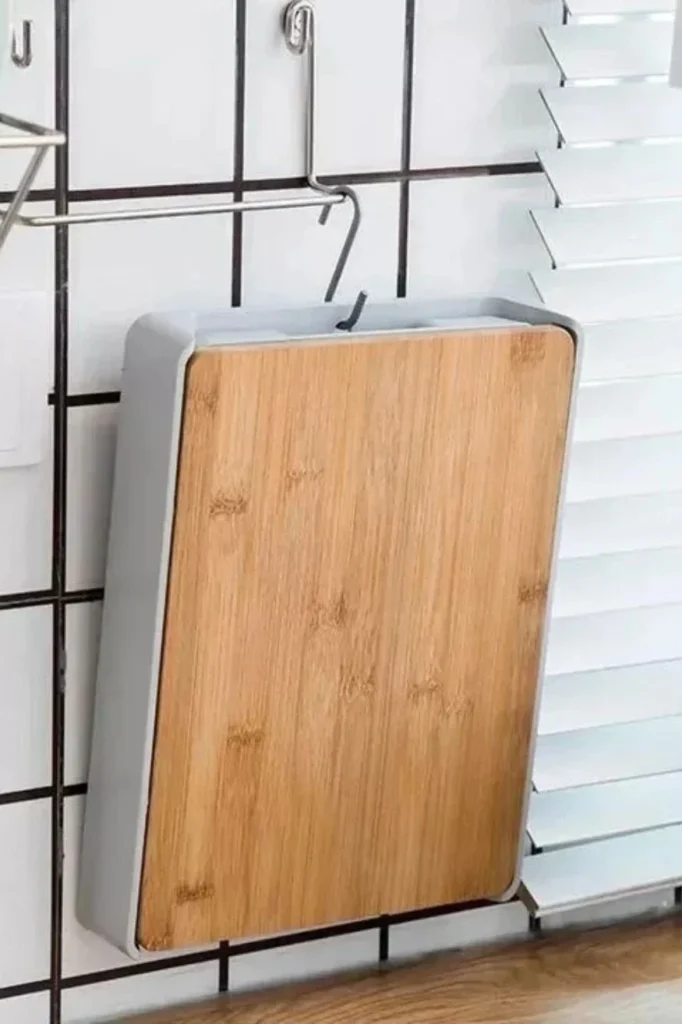
Wall hooks offer an affordable way to keep cutting boards accessible without sacrificing cupboard or counter space. Install a sturdy hook system on an available wall, inside a suitable cabinet door, or beside your food preparation station.
Boards with handles are especially easy to hang, although compatible hooks can accommodate other shapes as well. Choose a location where the boards won't interfere with cooking activities or create an obstacle in a walkway.
This arrangement also allows washed boards to dry more effectively when they are hung with enough clearance and airflow. Make sure each board is thoroughly cleaned before storage and that the hooks can safely support its weight.
2. Hidden Rack
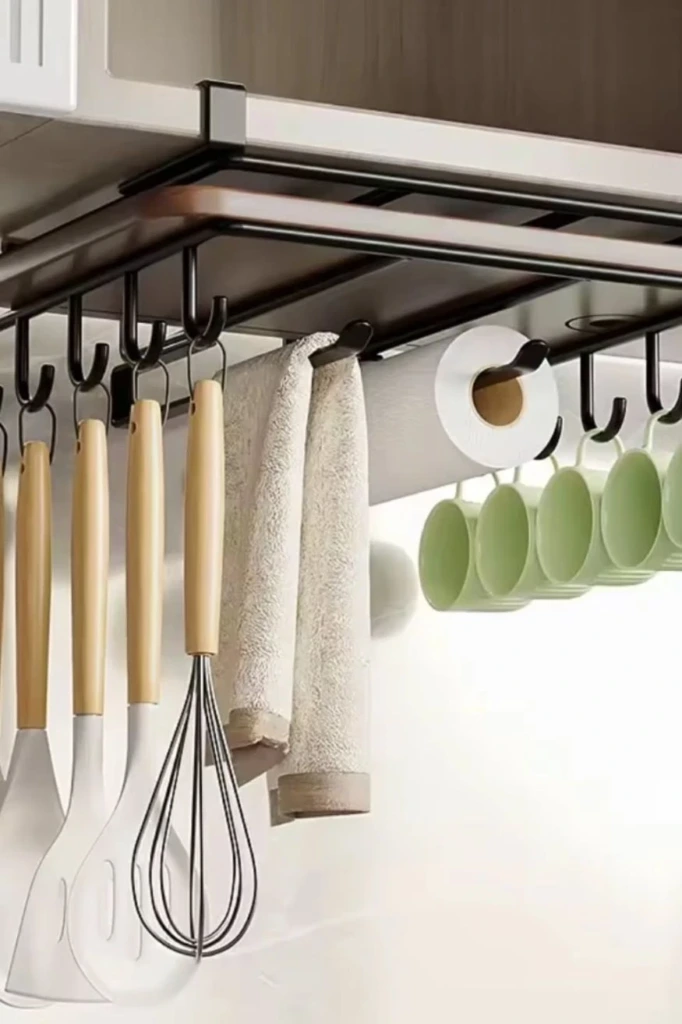
The underside of an upper kitchen cabinet can provide useful storage for items that don't fit comfortably inside drawers. A slim rack mounted beneath the cabinet creates an additional place for lightweight cutting boards, serving boards, or other suitable kitchen accessories.
This approach works particularly well in compact kitchens where every shelf and drawer already has a purpose. Keeping thinner boards in a dedicated holder also makes them easier to retrieve without disturbing other items.
Before installing an under-cabinet rack, check the available clearance and confirm that the mounting hardware is appropriate for the cabinet material. Position the rack away from direct heat and ensure stored boards won't obstruct appliances or food preparation.
3. Divider Stand
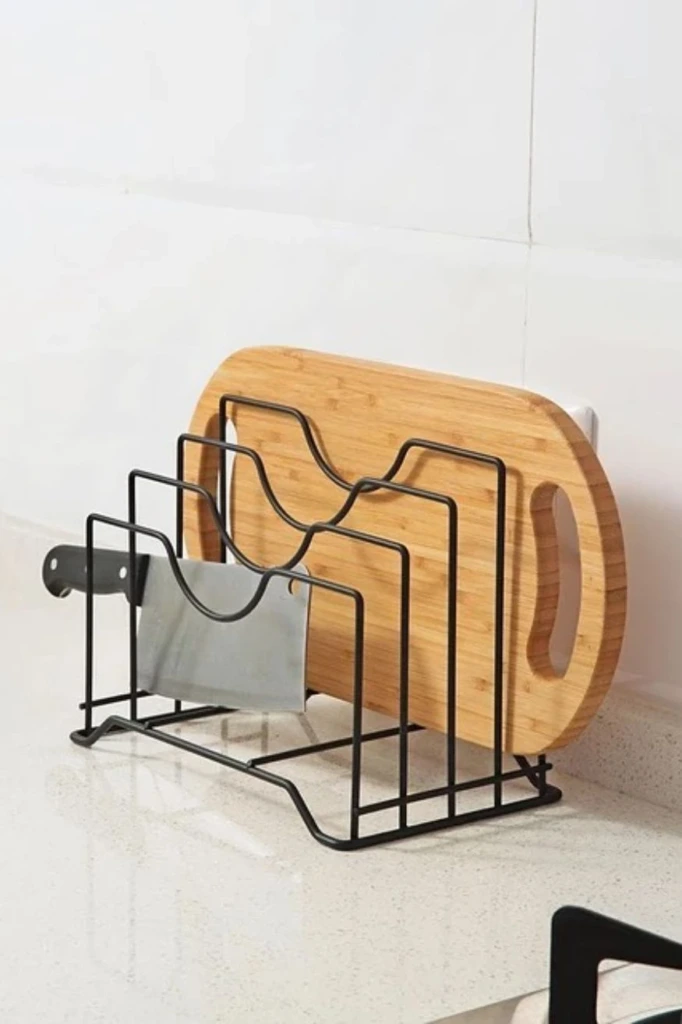
A divider stand gives each cutting board its own compartment, preventing the familiar problem of boards leaning against one another and falling over whenever you remove one.
Look for a stand with slots wide enough to accommodate your thickest board. A model with a stable base is particularly important when storing heavy wooden boards or several items together.
Place the organizer inside a deep cabinet or in an unused corner of your countertop. This arrangement is especially convenient for households that use separate boards for different ingredients, since each board remains visible and easy to reach.
Choose a design that allows air to circulate around the boards after washing. Keeping them separated helps reduce trapped moisture and makes the collection easier to maintain.
4. Shelf Display
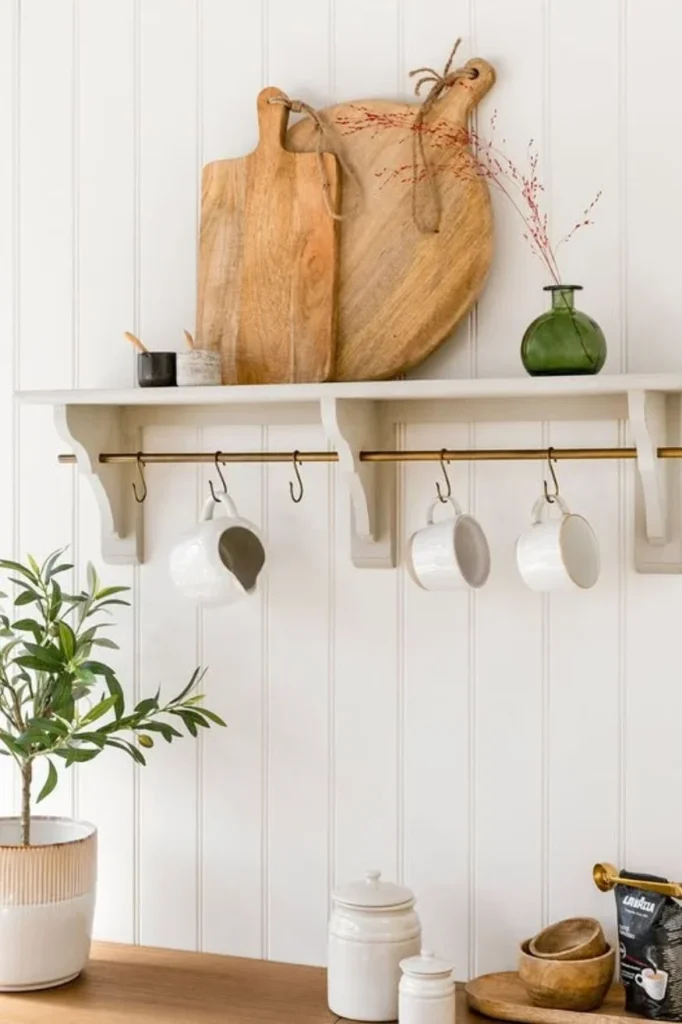
If you own attractive wooden cutting or serving boards, an open shelf can turn practical storage into a decorative feature. Different wood grains, shapes, and sizes can add warmth and texture to a kitchen, particularly in farmhouse, rustic, or traditional interiors.
Stand the boards securely against a wall or arrange them in a suitable rack on the shelf. Keep frequently used boards within easy reach and reserve higher shelves for decorative pieces or serving boards used occasionally.
Open storage is most successful when the boards are clean, dry, and arranged without overcrowding. You can also use the surrounding shelf space for lightweight kitchen accessories, provided everything remains stable and easy to remove.
5. Drawer Insert
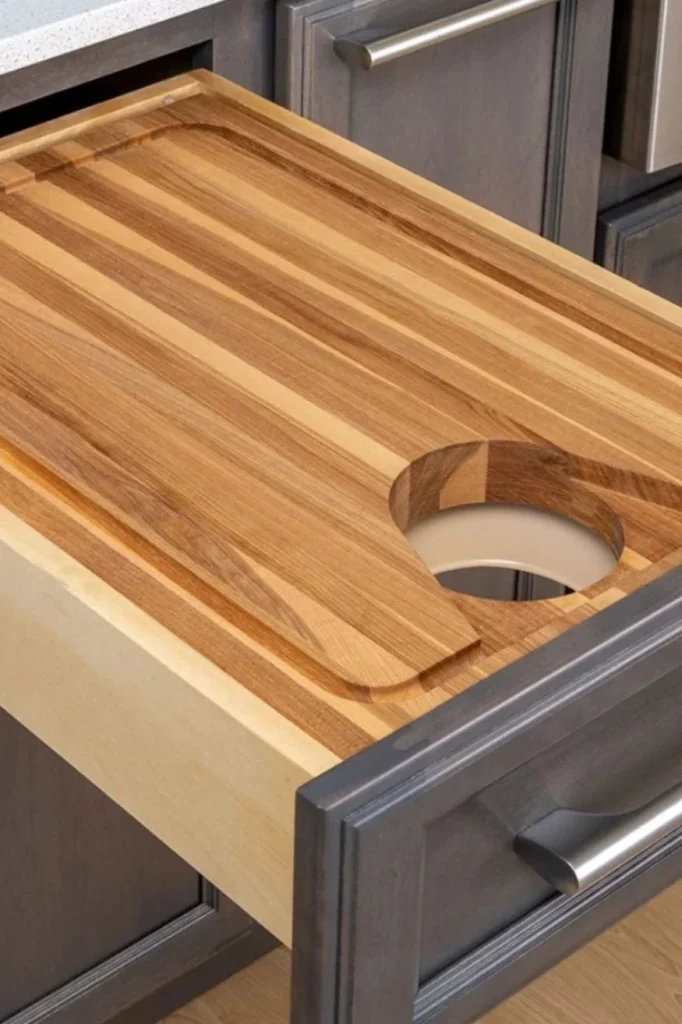
A dedicated drawer insert is a smart option if you prefer a clean countertop and concealed storage. Dividers help keep cutting boards separated, making it easier to find the right size without lifting an entire pile.
Measure the drawer's interior before choosing an insert, paying attention to its depth and usable height. Some drawers work best with horizontal compartments, while deeper drawers may accommodate boards stored upright in appropriately designed sections.
You can assign separate spaces to everyday chopping boards, smaller preparation boards, and serving pieces. This arrangement is particularly useful in modern kitchens where uncluttered surfaces are a priority.
Always store boards only after they are dry, and avoid placing heavy items on top of them where they could become difficult to retrieve.
6. Hook Rails
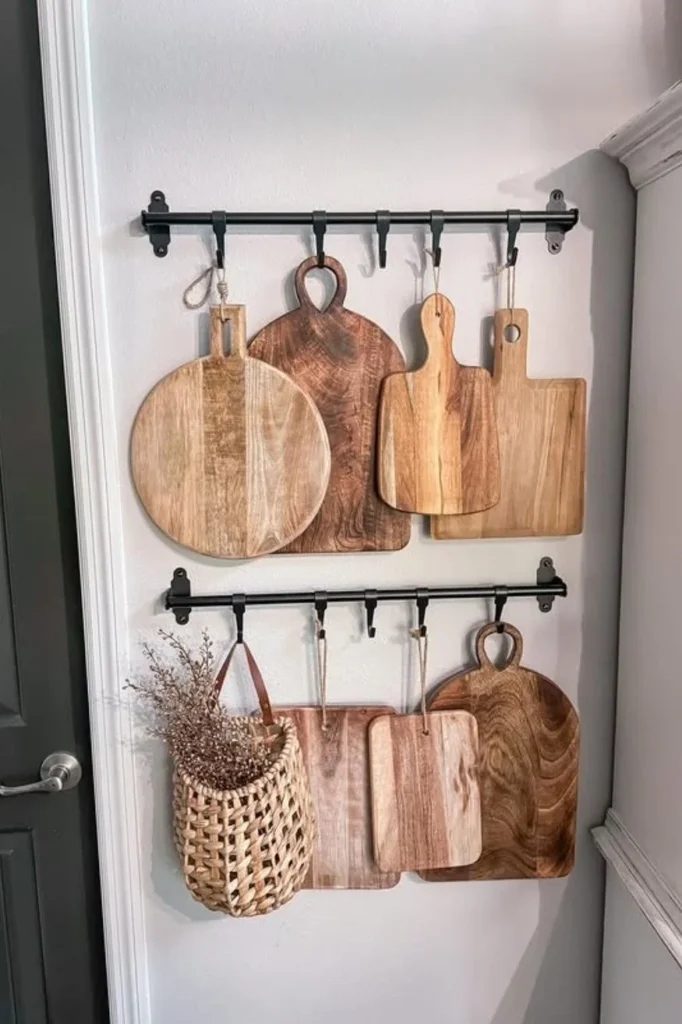
A hook rail provides a simple, organized way to hang several cutting boards along an unused section of wall. It can accommodate boards of different sizes, especially designs with handles or openings that fit securely over the hooks.
For a coordinated appearance, choose a rail that complements your cabinet hardware or kitchen finishes. Wooden boards look particularly attractive against neutral walls, while a metal rail can suit industrial or contemporary interiors.
Keep frequently used boards at a comfortable height so you can reach them without stretching. Decorative serving boards can occupy less convenient positions, leaving the most accessible hooks available for daily cooking.
Make sure the rail is firmly attached to suitable wall support and that the hooks prevent boards from slipping off accidentally.
7. Combo Holder
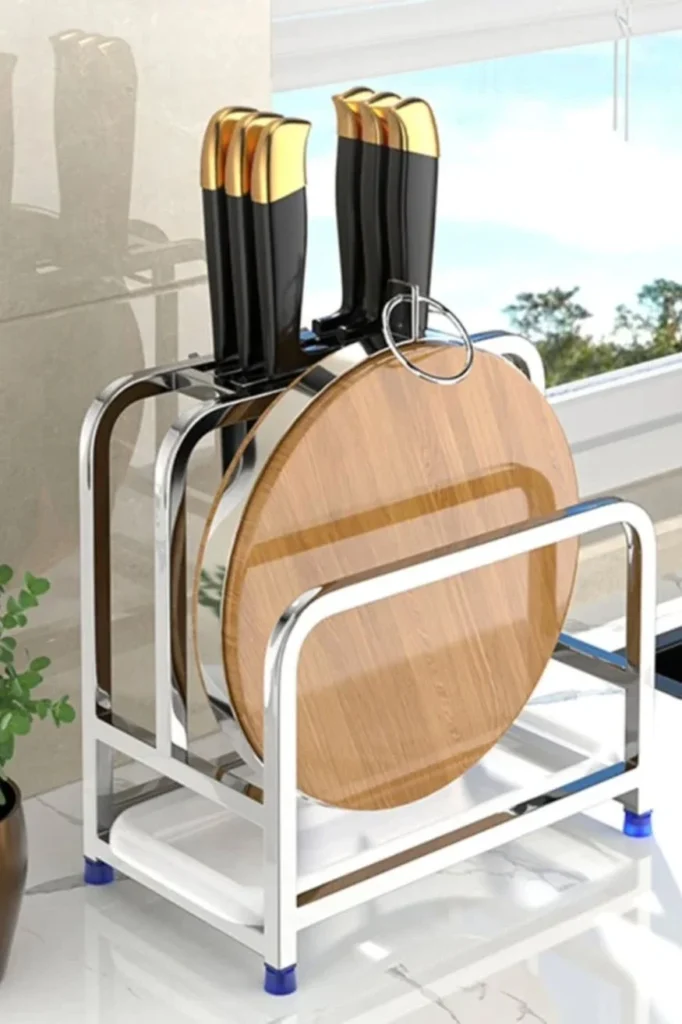
A combination holder brings several frequently used kitchen items together in one compact organizer. Depending on the design, it may include separate sections for cutting boards, knife storage, lids, or other accessories.
Position the holder near your preparation area so you can collect everything needed for chopping without searching through multiple cupboards. Upright compartments are especially useful for keeping boards organized by size or intended use.
Before purchasing a combination rack, consider which items you genuinely need to store together. An organizer that accommodates your everyday essentials without becoming overcrowded will be more useful than one with unnecessary compartments.
If knives are included, make sure they fit securely into their designated slots and remain protected from accidental contact.
8. Gallery Wall
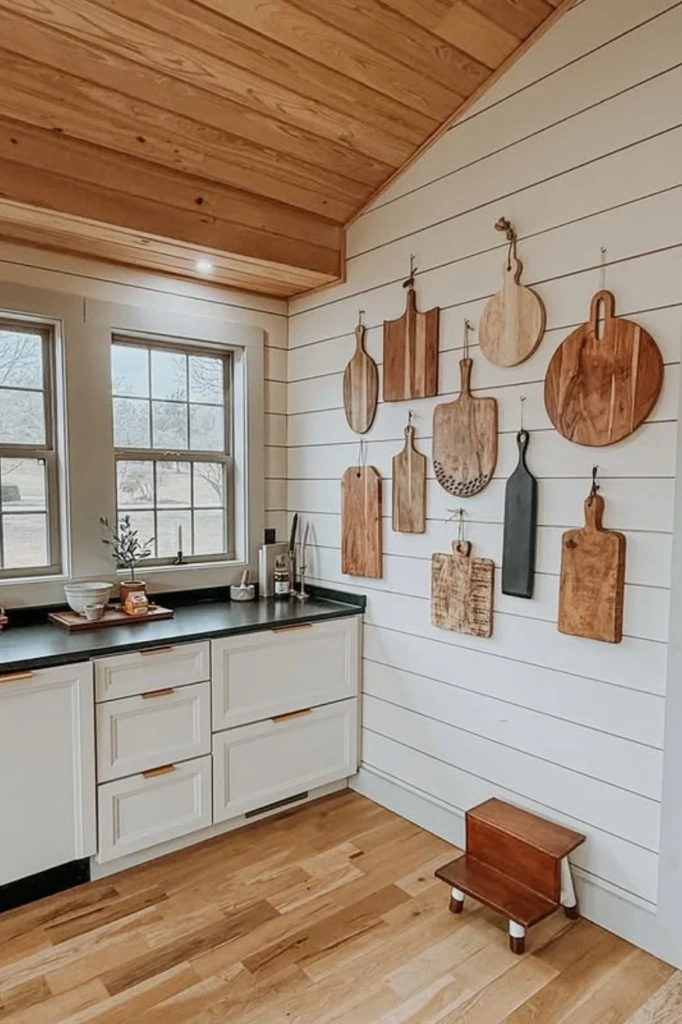
An unused kitchen wall can become an attractive display for cutting boards that would otherwise occupy valuable cabinet space. Wooden boards with distinctive grain patterns, paddle handles, or interesting shapes can contribute to a collected, homey look.
Arrange the boards in a balanced composition, varying their sizes while leaving enough space between them. A coordinated collection creates a more intentional display than hanging every board without considering its position.
Place everyday boards where they are convenient to remove and return. Keep decorative pieces higher if necessary, but avoid positioning heavy boards above areas where someone could be injured if a mounting fails.
Use secure hanging hardware appropriate for each board's weight. The display should remain practical as well as attractive, with enough clearance to clean the wall and handle the boards safely.
9. Labeled Boards
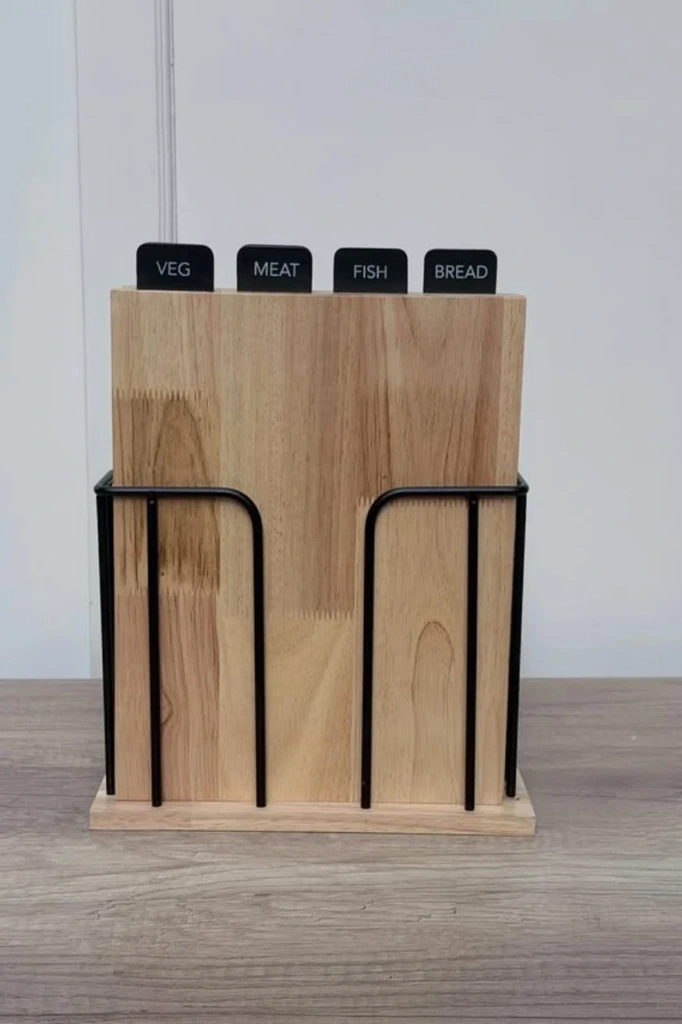
Labels make a multi-board collection easier to manage, particularly when different boards are designated for meat, vegetables, bread, fish, or cooked foods.
You can use discreet tags, color-coded markers, or labels on the organizer rather than permanently marking the board itself. Each item should have a clearly defined storage position so everyone in the household knows where it belongs.
This system supports safer food preparation by helping prevent the same board from being used for raw animal products and ready-to-eat ingredients without proper cleaning and sanitizing. Separate boards are useful, but they do not replace appropriate food-safety practices.
Choose labels that withstand regular kitchen use, and keep the storage arrangement simple enough for everyone to follow. Clear identification is especially helpful when several family members prepare meals.
10. Wooden Rack
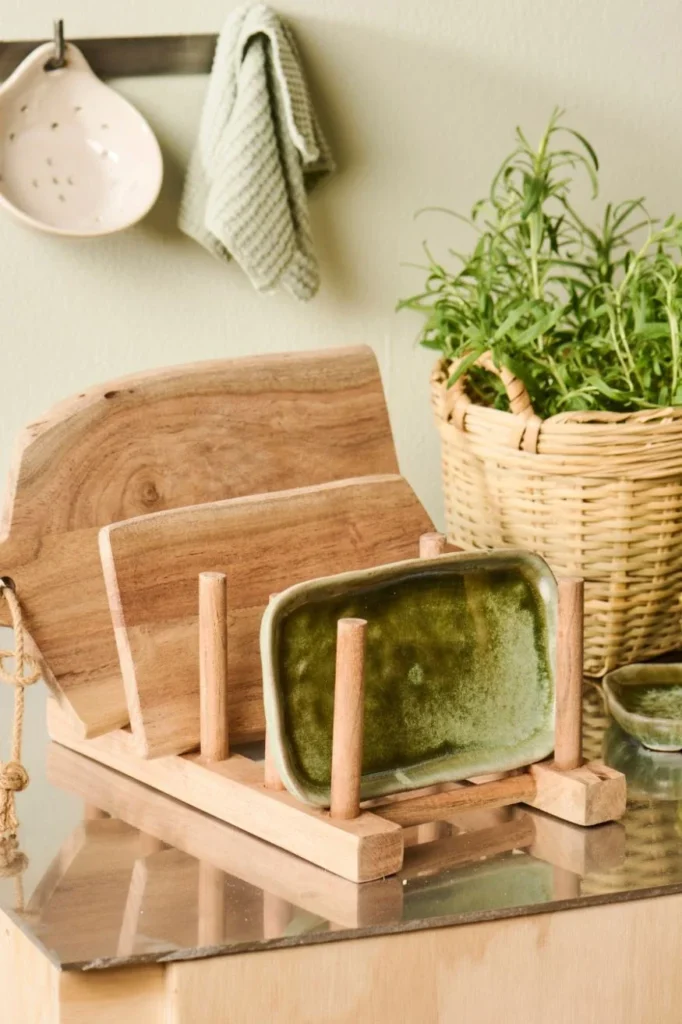
A wooden rack can combine useful organization with a natural decorative finish. Its warm appearance works well in farmhouse kitchens, traditional spaces, and rooms that feature wood cabinets or open shelving.
Use the rack to hold cutting boards, serving trays, or other appropriately sized kitchen pieces. Vertical slots help prevent items from sliding into one another, while an open structure provides better airflow than a tightly packed stack.
For smaller kitchens, choose a narrow tabletop model that fits beside the main preparation area without obstructing your workspace. A simple design is often sufficient if you only need to organize a few boards.
Check that the rack has a stable base and smooth edges. Clean it regularly and allow both the rack and the boards to dry properly to prevent moisture buildup.
11. Slim Organizer
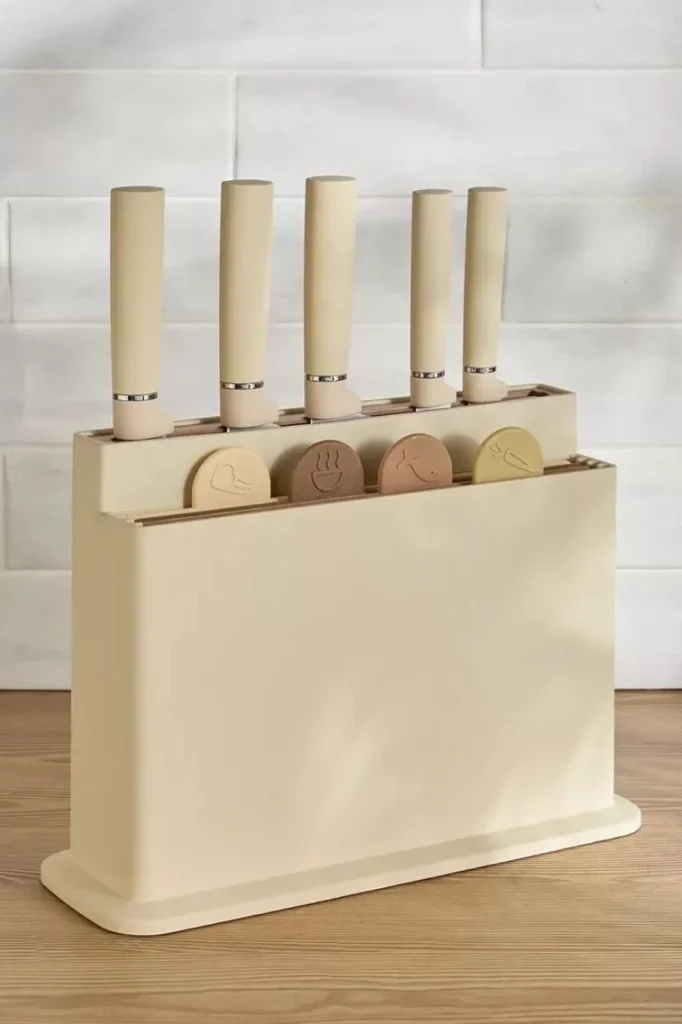
A slim organizer is ideal for kitchens with limited cabinet space or narrow gaps between existing storage areas. Its vertical compartments can hold several cutting boards while occupying a relatively small footprint.
Measure the intended location before selecting a model, and check that the slots can accommodate your largest board. A stand that is too narrow or shallow may tip when loaded with heavier pieces.
Separate compartments make it easy to arrange boards by size, material, or purpose. They also prevent boards from rubbing together unnecessarily and allow you to remove one without disturbing the others.
For a streamlined kitchen, choose a finish that blends with your cabinets or countertops. Keep the organizer away from excessive heat and store only clean, fully dry boards inside it.
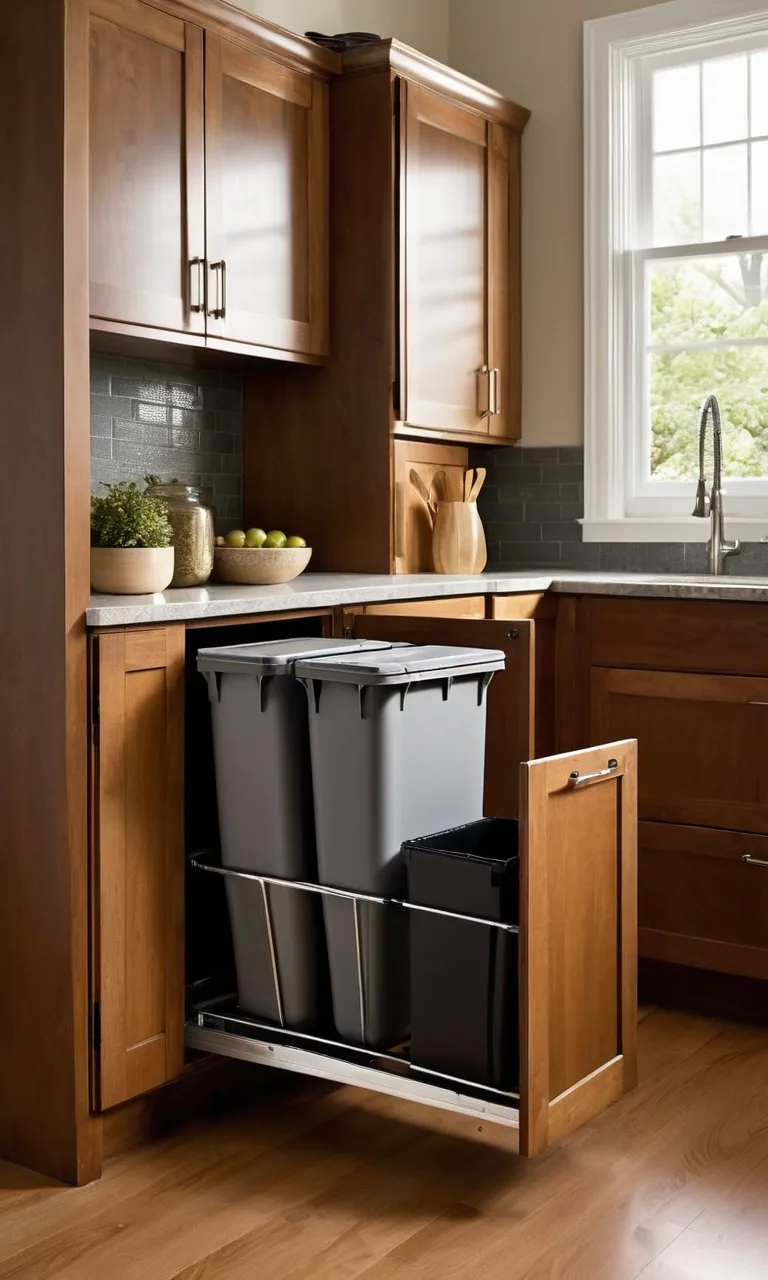
12. Pullout Cabinet
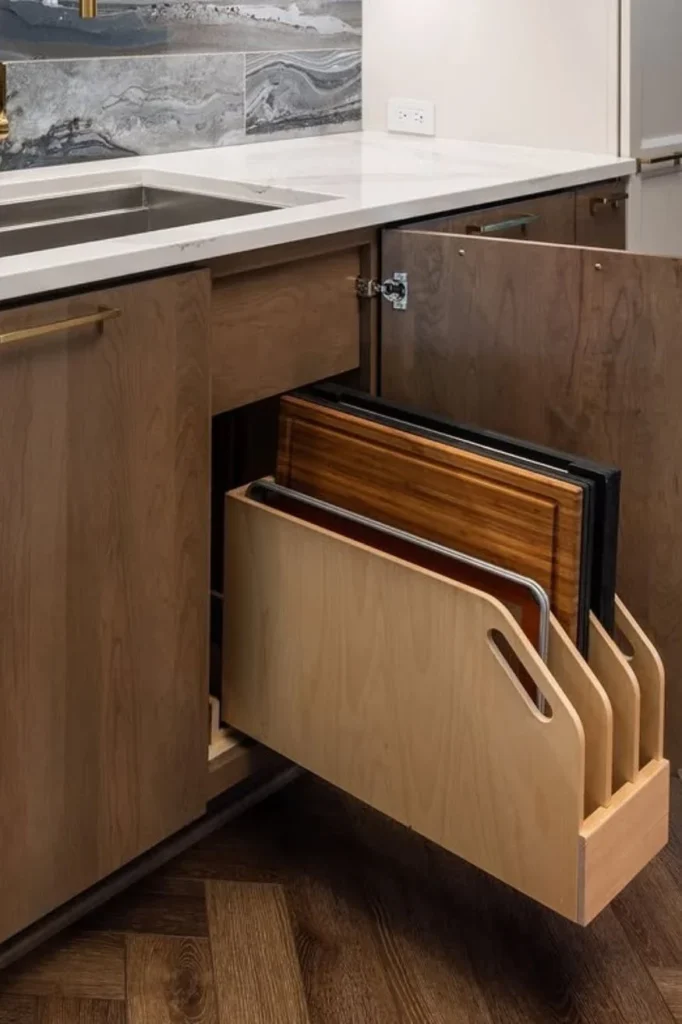
A pullout cabinet can make deep or awkward storage areas much more useful. Instead of reaching into the back of a cupboard, you slide the organizer forward to access boards, trays, and other flat kitchen essentials.
Internal dividers help keep larger boards upright and prevent them from falling against neighboring items. This is particularly valuable for heavy wooden boards that are difficult to lift from a crowded stack.
A pullout arrangement works best when its width and depth match the items you plan to store. Consider the cabinet's available clearance and the combined weight of the boards before installing a sliding system.
For households that cook frequently, placing this storage near the main worktop can reduce unnecessary movement and make meal preparation more efficient.
13. Prep Drawer
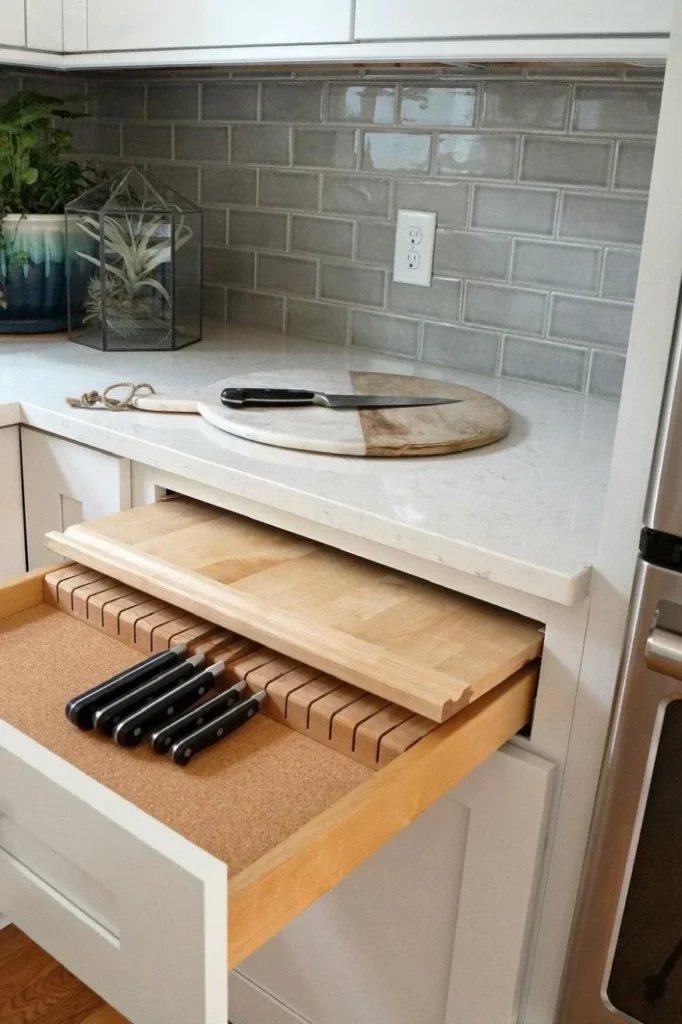
A dedicated preparation drawer keeps cutting boards close to the area where you chop ingredients. Instead of searching through several cupboards, you can retrieve the board and other necessary tools from one convenient location.
Organize the drawer with separate sections for boards of different sizes. If the design includes knife storage, use compartments that hold each knife securely and keep sharp edges protected.
This solution can be particularly helpful in smaller kitchens because it makes better use of existing cabinetry rather than adding another countertop organizer.
Before committing to a built-in drawer, check that the interior can accommodate your largest board and that the drawer slides can support the intended load. Keep the drawer clean, dry, and free of loose food debris.
14. Cabinet Slots
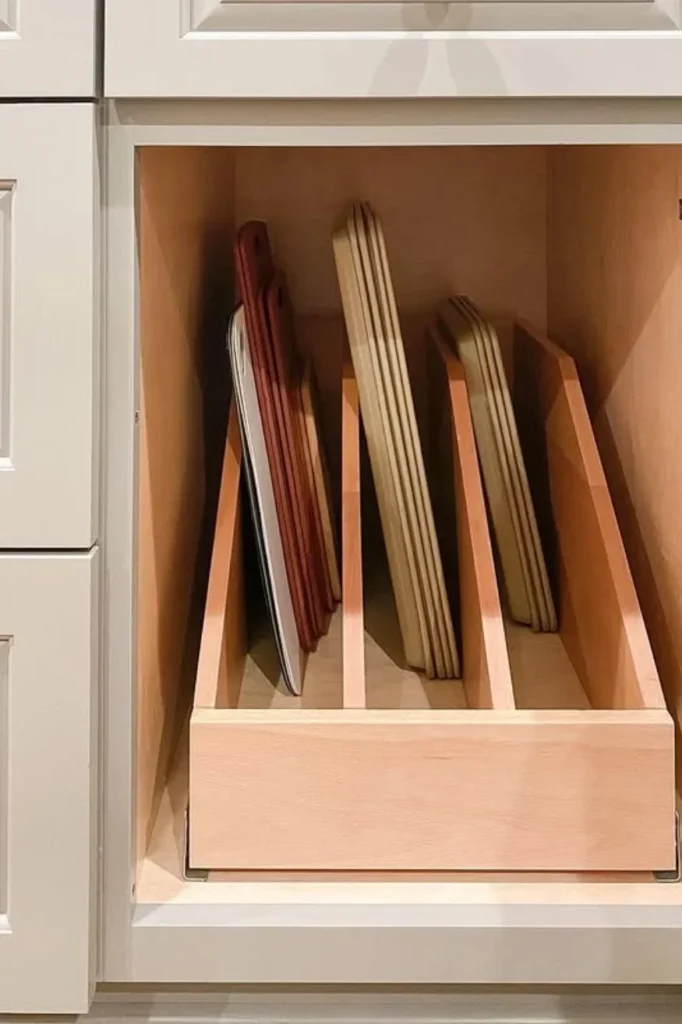
Vertical cabinet slots offer a straightforward way to organize cutting boards without using additional drawer space. Each board stands in its own section, so you can select the one you need without shifting the others.
Wooden dividers are a practical option for deep lower cabinets, while adjustable metal or plastic organizers can offer flexibility when your collection changes.
Arrange the boards according to size or purpose, placing your most frequently used options toward the front. Make sure the compartments are wide enough for thicker boards and that the cabinet remains easy to open and close.
Allow adequate space between boards for airflow, particularly after cleaning. Never put damp boards into a closed cabinet, since retained moisture can encourage odors, mold, or damage to some materials.
15. Corner Storage
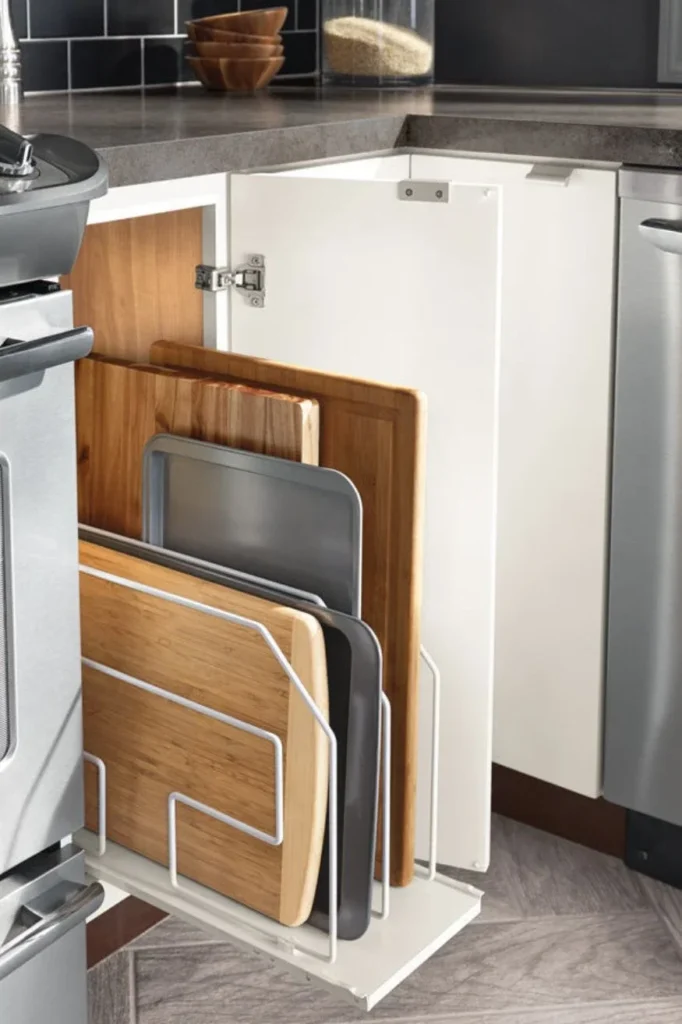
Kitchen corners can be difficult to organize because their depth often makes items hard to reach. A suitable corner rack or pullout organizer can turn this overlooked space into a useful home for cutting boards and baking trays.
Store boards vertically in separate sections so they remain visible and can be removed individually. A pullout mechanism is especially convenient when the cabinet extends far beyond the opening.
This arrangement is useful in narrow kitchens where countertop space is limited and large boards are awkward to store elsewhere. It can also keep heavier boards from becoming trapped beneath other kitchen equipment.
Choose a system designed for the cabinet's actual dimensions, and check its stability before loading it. Keep the contents organized by size to prevent the corner from becoming another crowded storage area.
16. Hidden Drawer
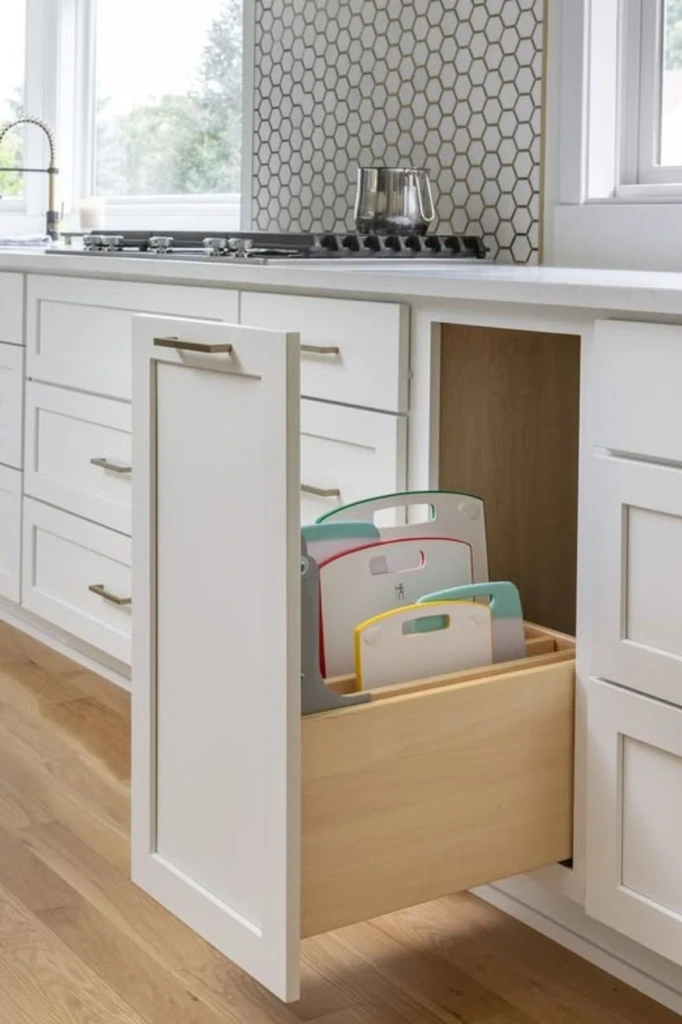
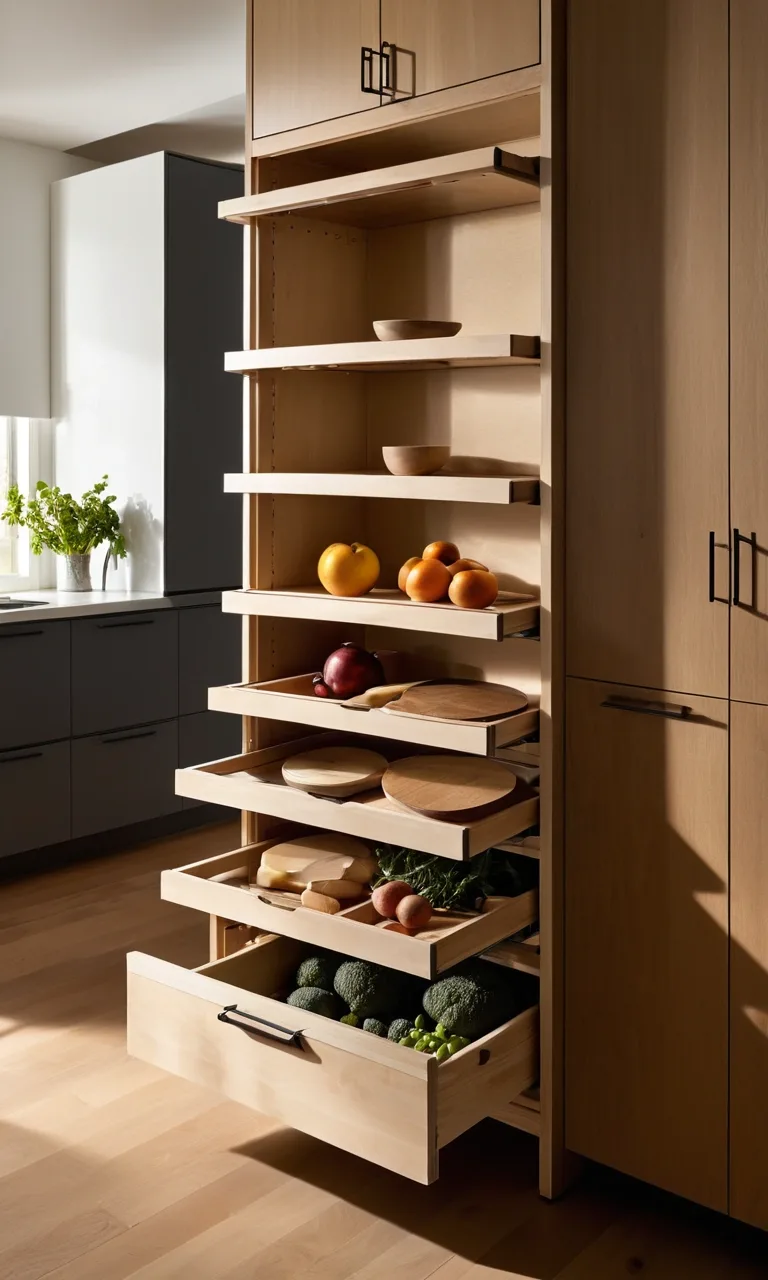
A narrow pullout drawer can make excellent use of the slim spaces between kitchen cabinets or beside existing appliances. When designed for flat kitchen items, it offers concealed storage without taking up valuable countertop room.
Internal dividers allow cutting boards to stand upright and remain separated. You can organize them by thickness, size, or intended use, making the drawer easier to navigate during busy meal preparation.
This solution suits contemporary kitchens where visible clutter is best kept to a minimum. It is also useful for homeowners who want a dedicated storage area without changing the main cabinet layout.
Before installing a narrow drawer, measure the opening and check for plumbing, electrical connections, and appliance clearances. Use smooth partitions that won't damage the boards, and make sure the sliding hardware can support the contents.
17. Sink Cabinet
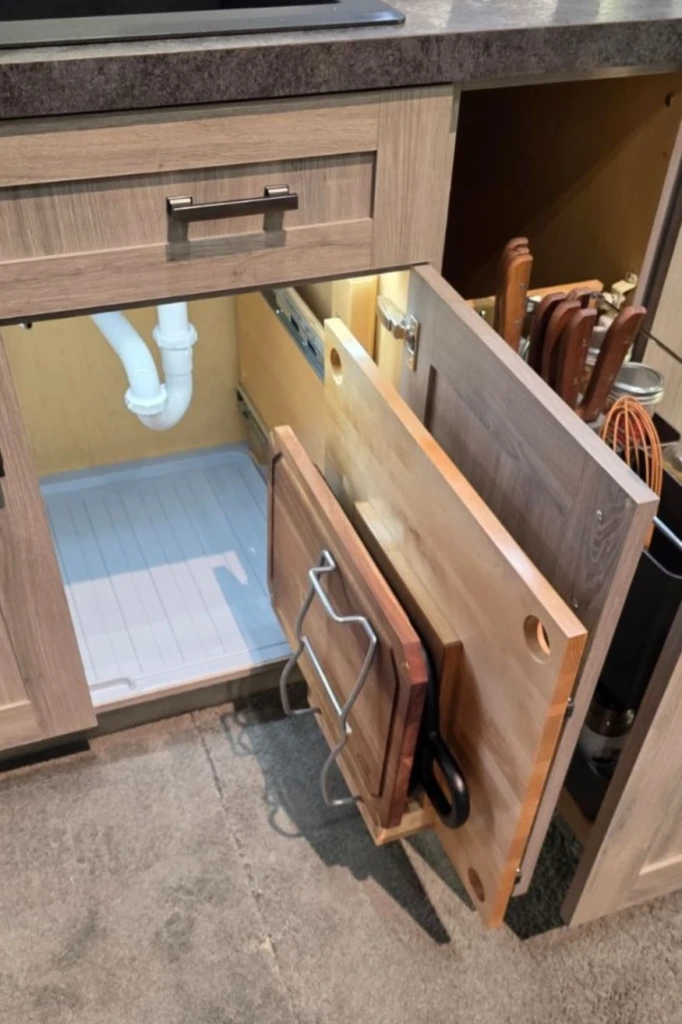
The cabinetry near the sink can be a convenient place to store cutting boards because washing and food preparation often happen in the same part of the kitchen. A dedicated pullout rack makes it easier to retrieve boards without crossing the room.
Use dividers to separate boards, trays, and other suitable flat items. Keeping them upright makes individual pieces easier to access and helps prevent the clutter associated with stacked storage.
However, the area beneath a sink may be exposed to plumbing leaks, cleaning products, and excess humidity. If you choose this location, use a dry, protected compartment away from chemicals and check it regularly for signs of moisture.
A narrow cabinet beside the sink may be a better alternative when under-sink conditions are unsuitable. The goal is to improve access without compromising the cleanliness or condition of your cutting boards.
18. Styled Stand
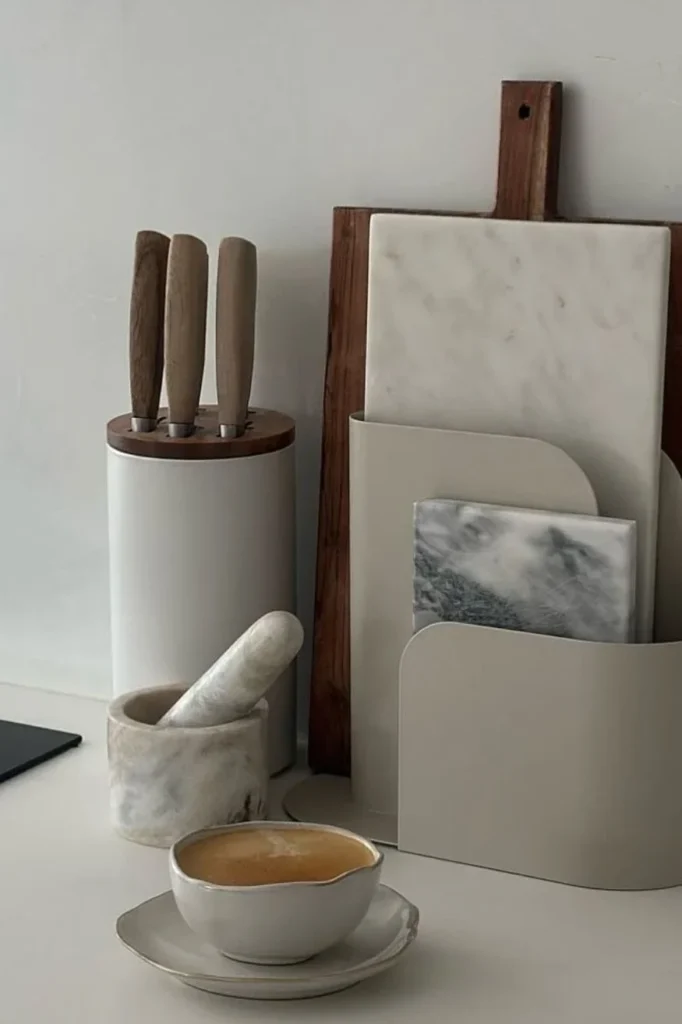
A well-designed stand can make cutting board storage look like a deliberate part of your kitchen rather than an afterthought. Neutral colors, simple lines, and coordinated materials work particularly well in minimalist and contemporary spaces.
Arrange larger boards toward the back and smaller ones toward the front, ensuring each piece remains stable and easy to remove. If you store marble serving slabs or other heavy accessories alongside the boards, confirm that the stand is designed to support their weight.
Choose an organizer that fits the available counter or shelf space without interfering with food preparation. A compact footprint and a sturdy base are more important than decorative details alone.
For a cohesive appearance, coordinate the stand with nearby cabinetry, utensils, or countertop accessories. Keeping only the boards you use regularly in the display can prevent it from becoming overcrowded.
19. Dual Storage
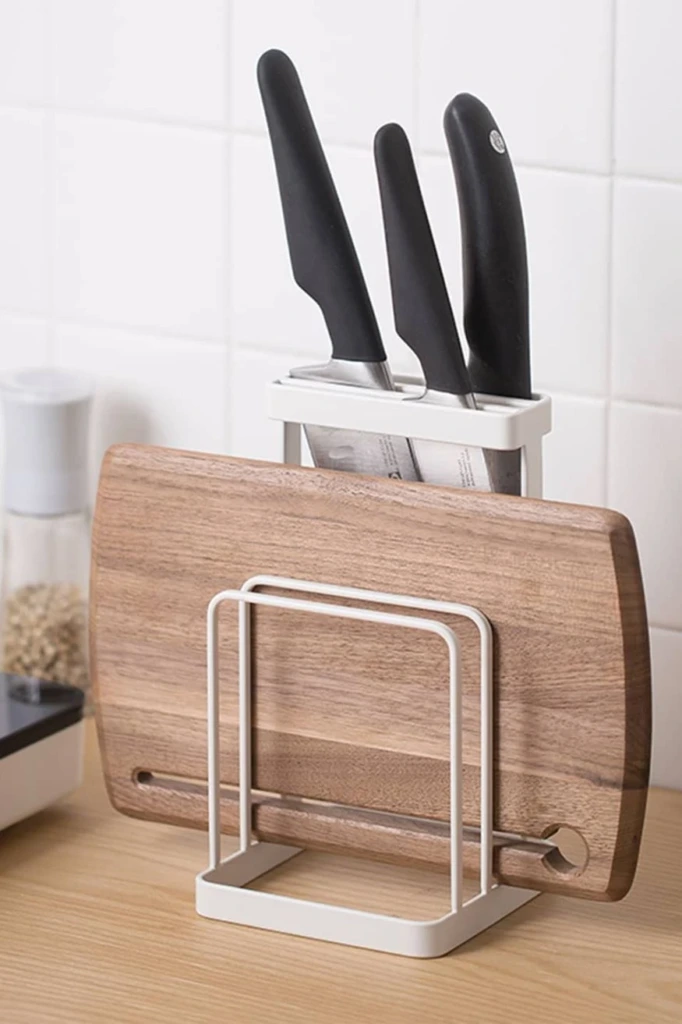
A dual-purpose organizer combines cutting board storage with a separate section for knives or other preparation tools. This arrangement keeps essential equipment together and reduces the time spent looking for individual items.
Look for a model that holds boards upright and provides secure, purpose-built knife compartments. The board slots should be spacious enough to allow easy removal, while the knife section should prevent blades from shifting or becoming exposed unnecessarily.
Place the organizer near your main preparation area, away from children and busy walkways. Keep raw food residue off the storage surfaces and clean the organizer regularly according to its material and design.
For small kitchens, combining two storage functions in one stable unit can be more practical than using several separate organizers. Just make sure the holder is not so crowded that removing one item disturbs the others.
20. Kitchen Drawer
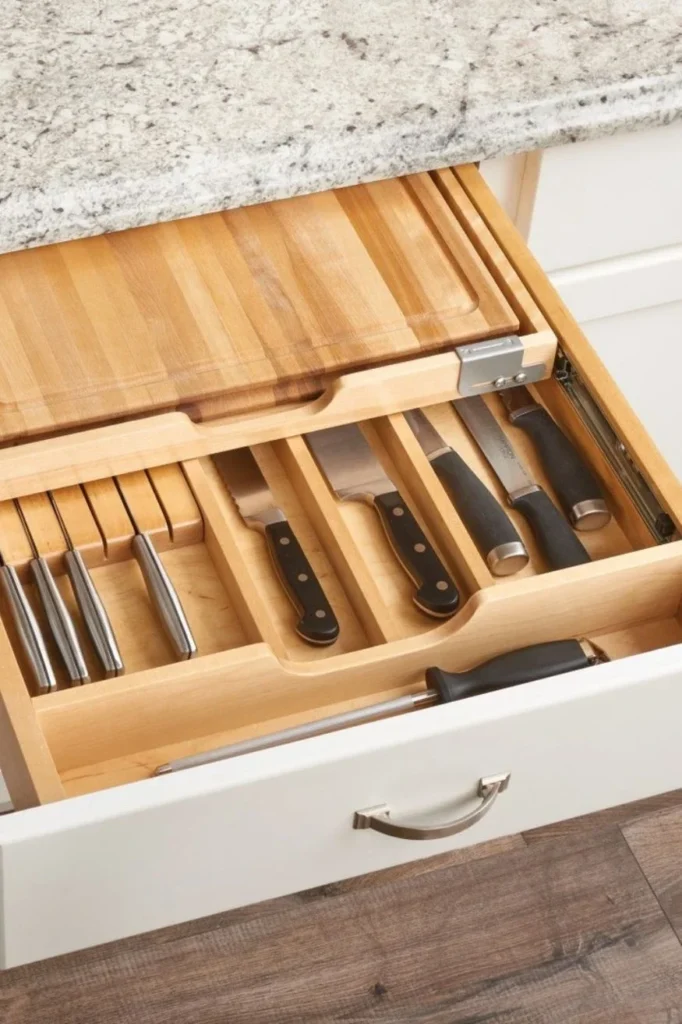
A kitchen drawer can provide concealed storage for cutting boards while keeping everyday preparation tools close at hand. Depending on its dimensions, the drawer may accommodate boards in a flat arrangement or in dedicated upright compartments.
Dividers are useful for separating boards from utensils and preventing items from shifting whenever the drawer opens. If knives are stored in the same unit, use an insert specifically designed to hold them safely.
A well-planned drawer can make a busy kitchen feel tidier because boards and accessories remain out of sight when not in use. It is especially useful when you want a clear countertop but still need quick access to essential tools.
Measure the drawer before choosing an organizer, and account for the height of the boards and the clearance needed to close it properly. Store only dry boards, and avoid placing heavy objects where they could make the drawer difficult to operate.
Where should cutting boards be stored in a small kitchen?
The best location is usually an unused vertical space inside a cabinet, along a suitable wall, or within a narrow pullout organizer. These options keep boards accessible without occupying valuable countertop space.
If you rent your home or cannot drill into walls, consider a freestanding divider rack, a cabinet-door organizer designed for your cabinetry, or an existing drawer with adjustable inserts.
Choose a location close to your food preparation area, but keep boards away from direct heat and areas where water regularly splashes. Make sure every board is clean and completely dry before putting it away.
Is it better to store cutting boards vertically or flat?
For most kitchens, vertical storage is a convenient choice because individual boards remain easier to identify and remove. Separating them also allows air to circulate around their surfaces, provided the rack has enough room.
Flat storage can work well when boards are kept in a clean, dry drawer or on a suitable shelf. However, stacking several boards directly on top of one another can make the bottom pieces difficult to reach and may trap moisture if any board is still damp.
The best method depends on the board's material, the available space, and the manufacturer's care instructions. Regardless of the arrangement, clean each board properly, dry it thoroughly, and avoid storing it while wet.