Bathroom Towel Storage Ideas: Practical Ways to Keep Towels Neat and Accessible
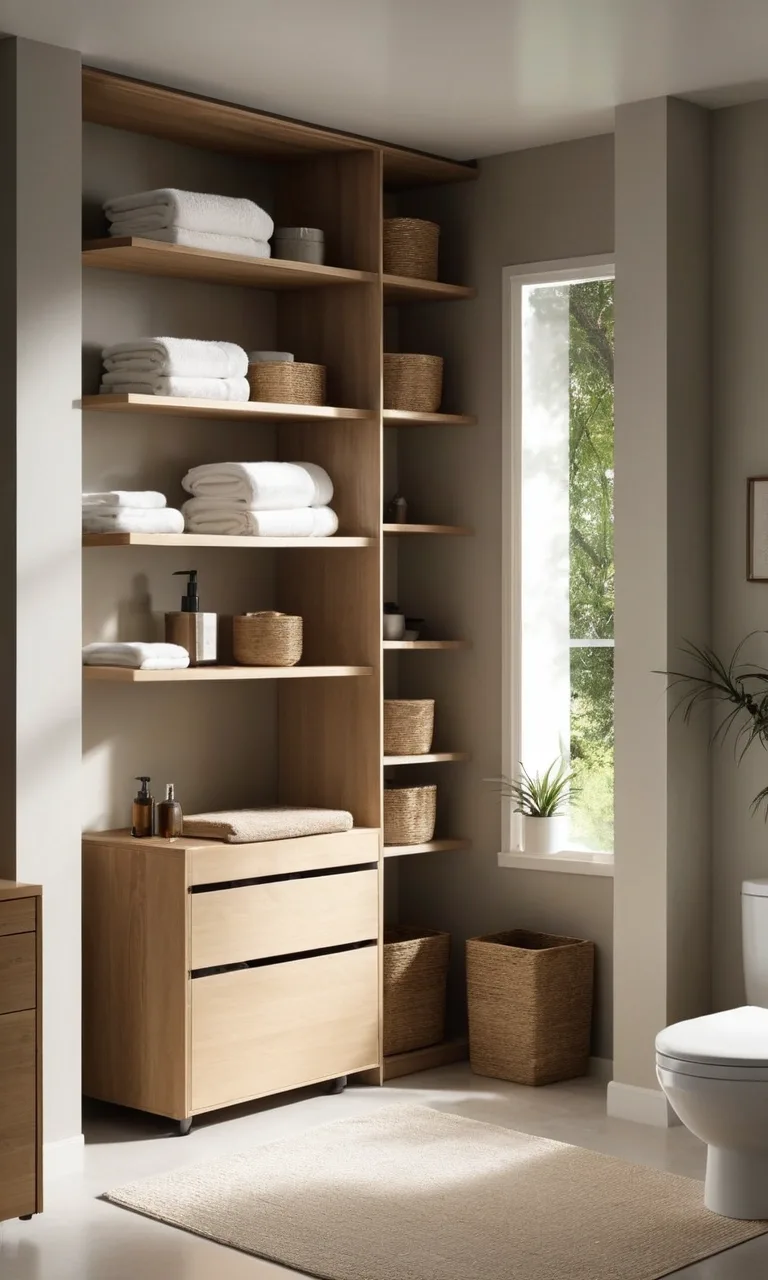
Bathroom towels are essential, but finding a place for bath sheets, hand towels, washcloths, and clean backups can be difficult when space is limited. A well-organized storage system keeps your bathroom tidy, makes daily routines easier, and helps towels dry properly between uses.
The best solution depends on your bathroom layout, the number of people sharing the space, and your decorating style. From wall-mounted racks and floating shelves to woven baskets and compact cabinets, there are plenty of ways to store towels without overcrowding your bathroom.
Whether you're organizing a small apartment bathroom or refreshing a spacious family bathroom, these ideas can help you make better use of every available inch.
What is the best way to store towels in the bathroom?
The most effective towel storage combines easy access with good ventilation. Give wet towels enough room to dry and keep fresh towels in a separate, clean location. This simple distinction helps prevent musty odors and keeps your bathroom organized.
Wall-mounted towel bars, hooks, and vertical racks are excellent choices when floor space is scarce. If your bathroom has room for shelves or a cabinet, use them for folded towels and spare linens. Keep frequently used towels at a convenient height and reserve higher shelves for extras.
1. Compact Open Shelving
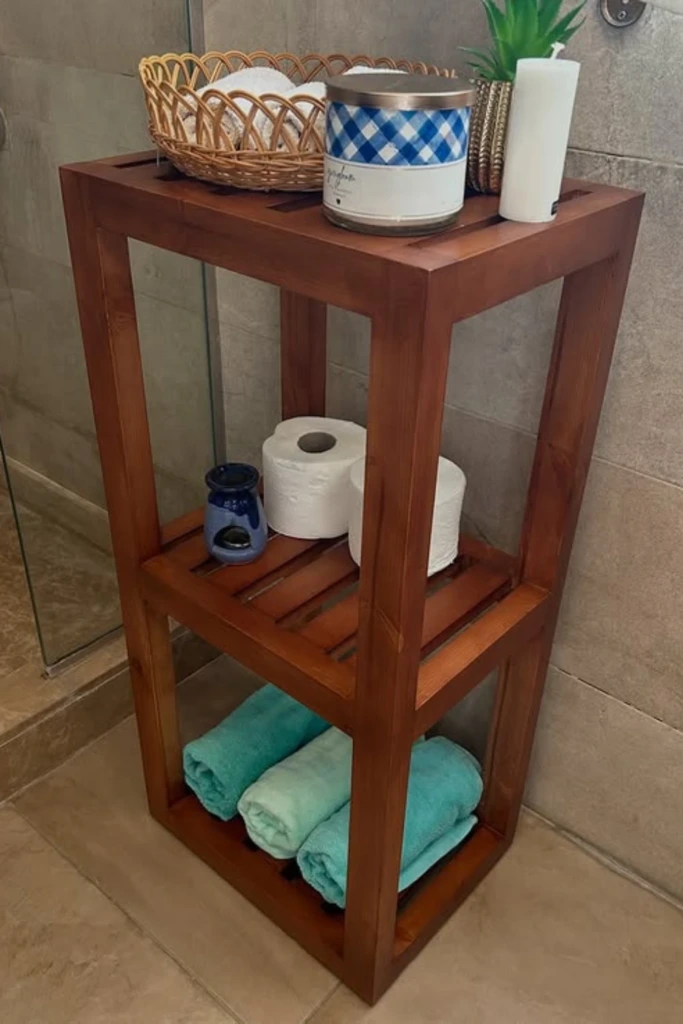
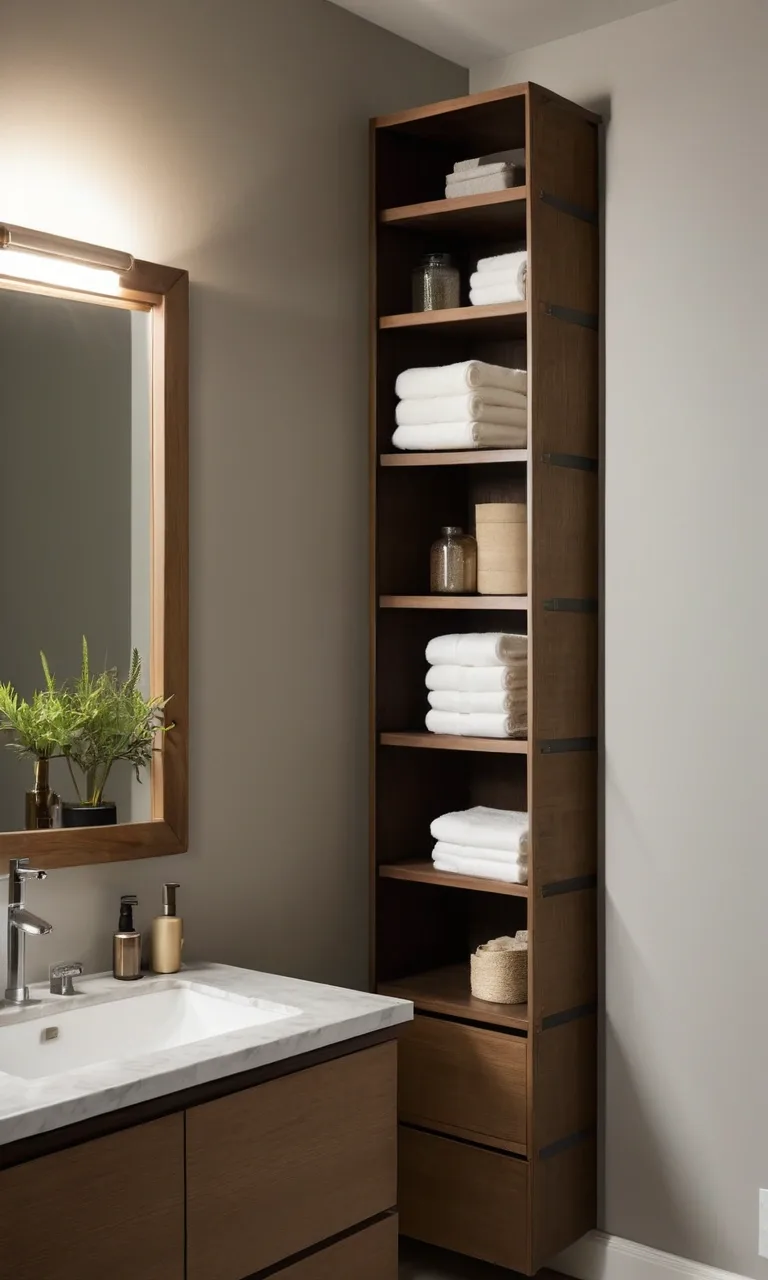
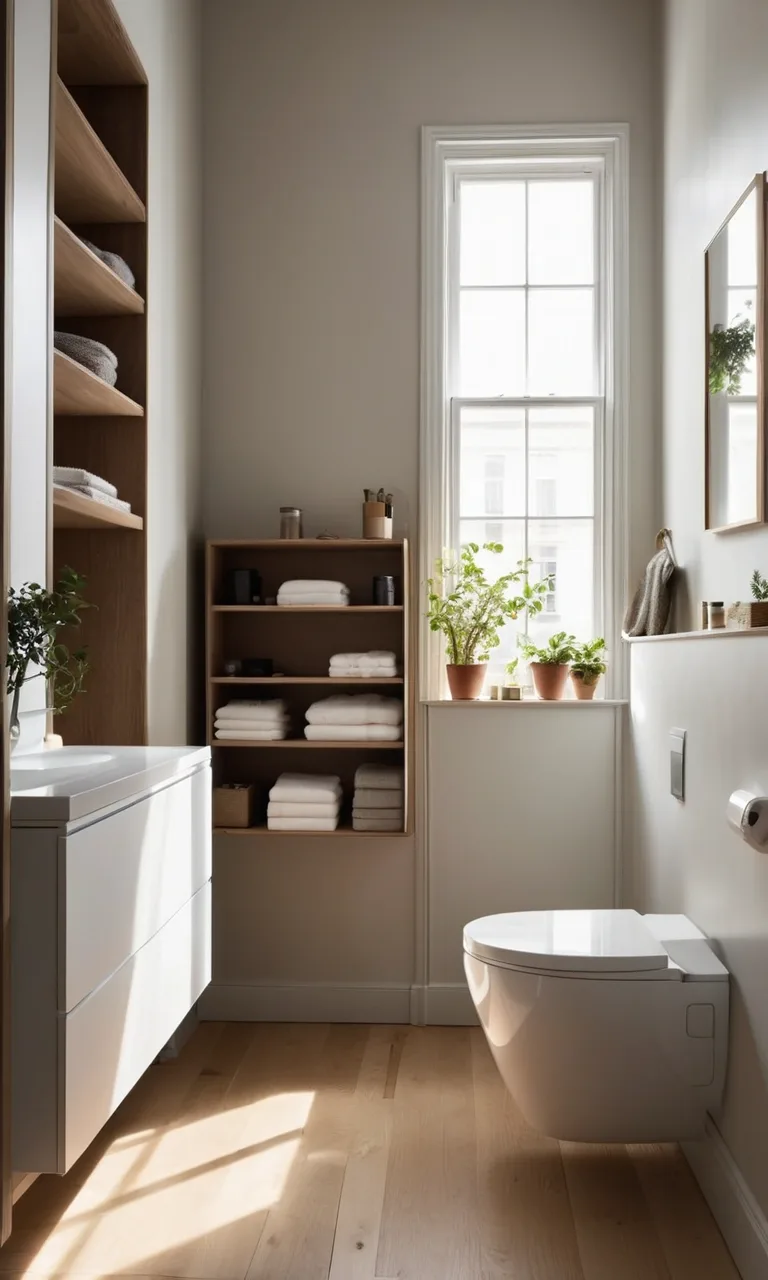
A narrow open shelving unit can turn an unused bathroom corner into a practical linen station. Choose a design that fits between existing fixtures without blocking the walkway.
Arrange folded bath towels on the lower shelves and place smaller hand towels or washcloths above them. You can also use a small tray for everyday toiletries, keeping the arrangement useful rather than overcrowded.
Wood adds warmth to a bathroom with white tiles, while a moisture-resistant finish helps protect the shelving from humidity. Leave enough space between items to make towels easy to remove and replace.
2. Closet Shelf System
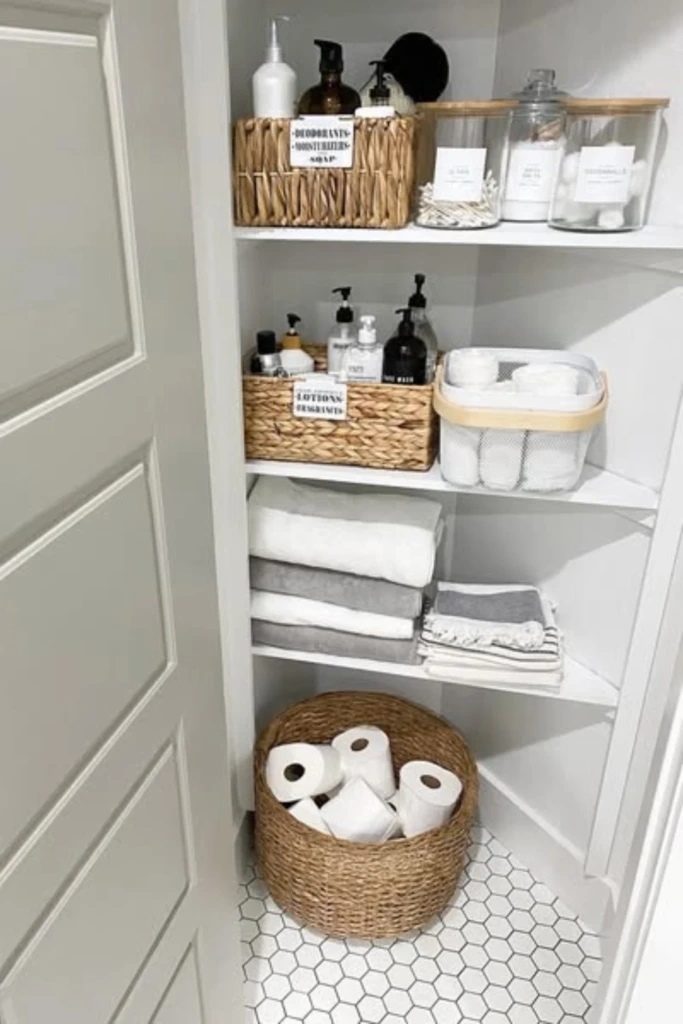
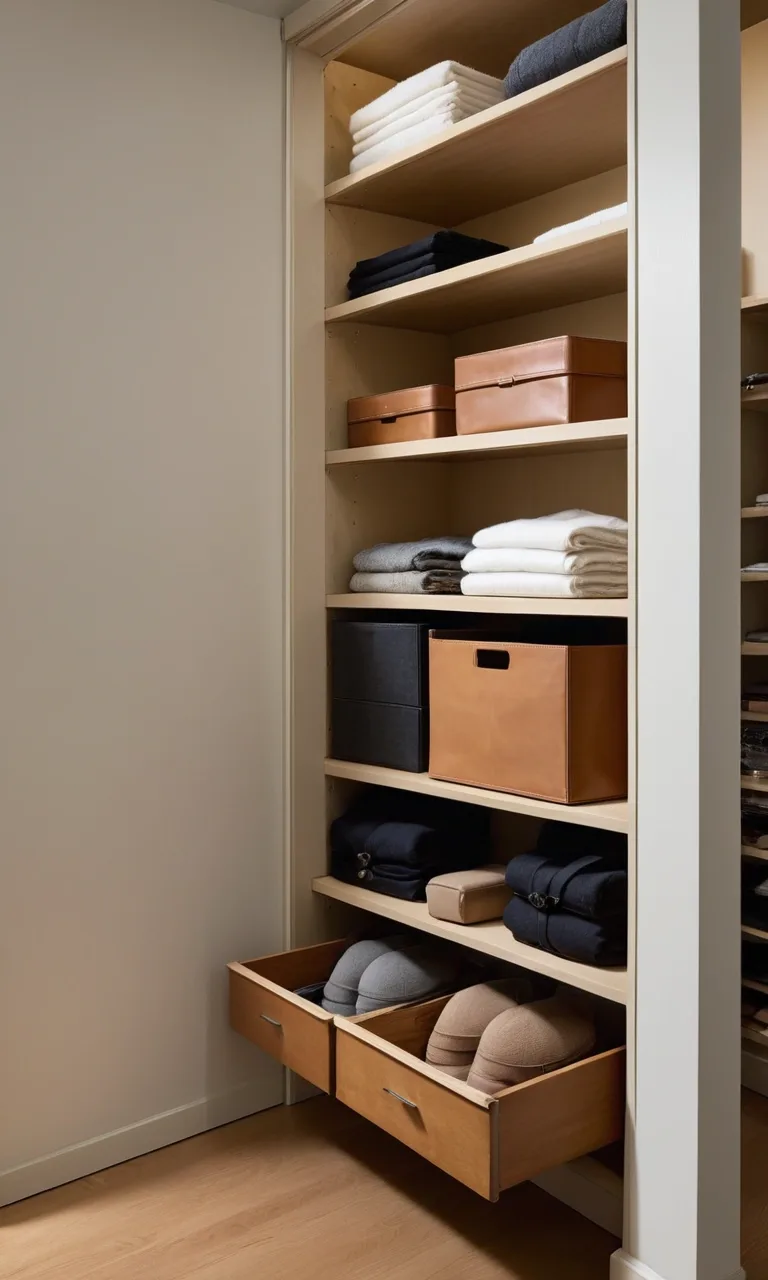
A dedicated closet makes it easier to store extra towels without filling every available bathroom surface. Even a shallow cupboard can hold a surprisingly useful collection of linens when its shelves are arranged thoughtfully.
Group towels by size and purpose. Keep bath towels together, place hand towels in another stack, and use baskets for washcloths or smaller accessories. Frequently used items should sit at eye level, while seasonal linens and spare sets can go higher.
Avoid packing the shelves too tightly. A little breathing room makes it easier to remove towels without disturbing the rest of the stack. If the closet is deep, consider pull-out baskets so items at the back remain accessible.
3. Vertical Wall Slot
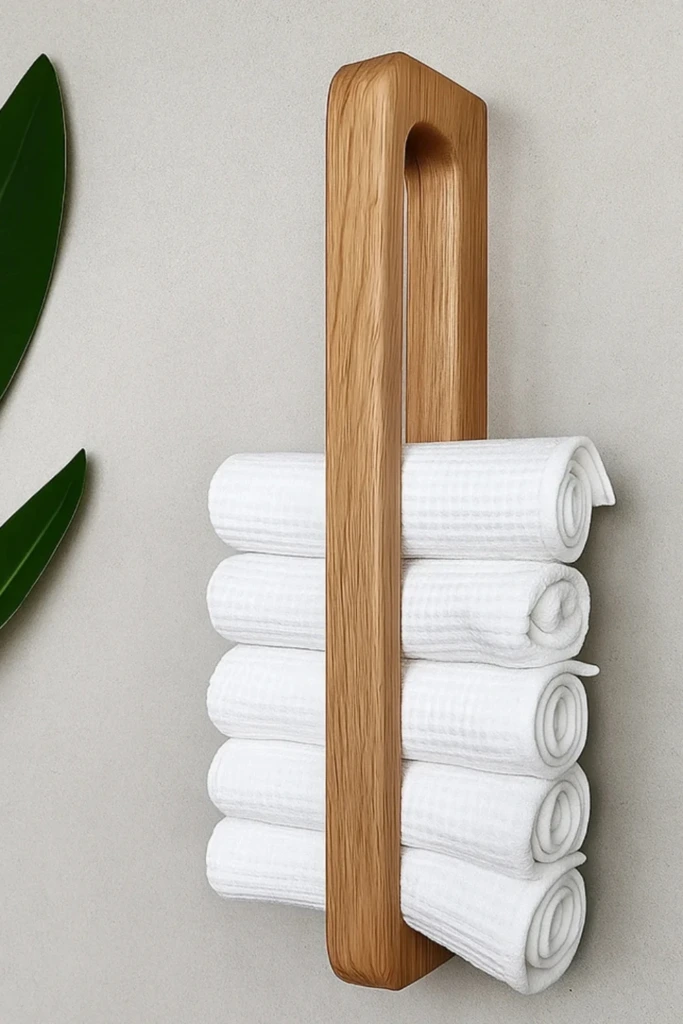
A vertical towel holder makes efficient use of wall height instead of spreading storage across the floor. Its narrow footprint suits small bathrooms, guest bathrooms, and spaces beside a shower.
Choose a wall-mounted design with individual openings or supports for rolled towels. The separate spaces help prevent towels from slipping into an untidy pile, while the exposed arrangement makes it easy to see which towels are available.
Natural wood works well in spa-inspired interiors, whereas black metal suits contemporary bathrooms. Install the holder securely and position it away from direct splashes to help keep clean towels dry.
4. Hidden Cabinet Stack
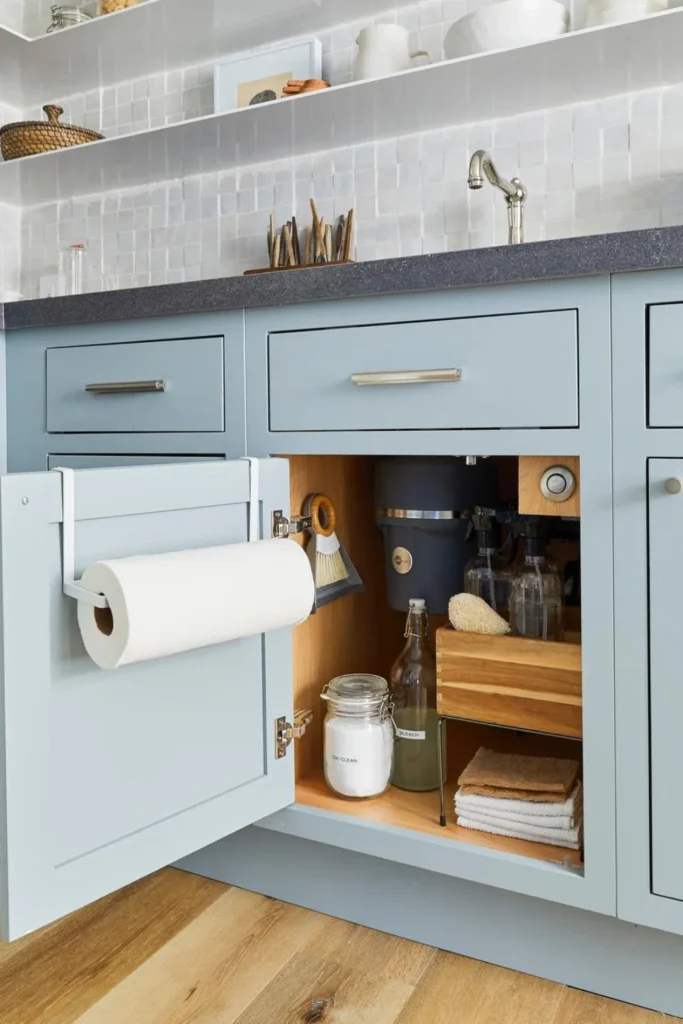
If you prefer a clean countertop, concealed cabinet storage keeps towels out of sight while leaving them close at hand. The cabinet beneath a vanity can be particularly useful when there is no separate linen closet.
Use shelf dividers to create distinct sections for bath towels, hand towels, and washcloths. Folding towels into compact rectangles allows you to arrange them in orderly rows without creating tall, unstable piles.
For deeper cabinets, store towels upright in bins rather than burying them beneath other linens. This makes it easier to take out one towel at a time. Keep towels away from plumbing leaks and allow the cabinet to dry completely if moisture accumulates inside.
5. Modular Crate Stacks
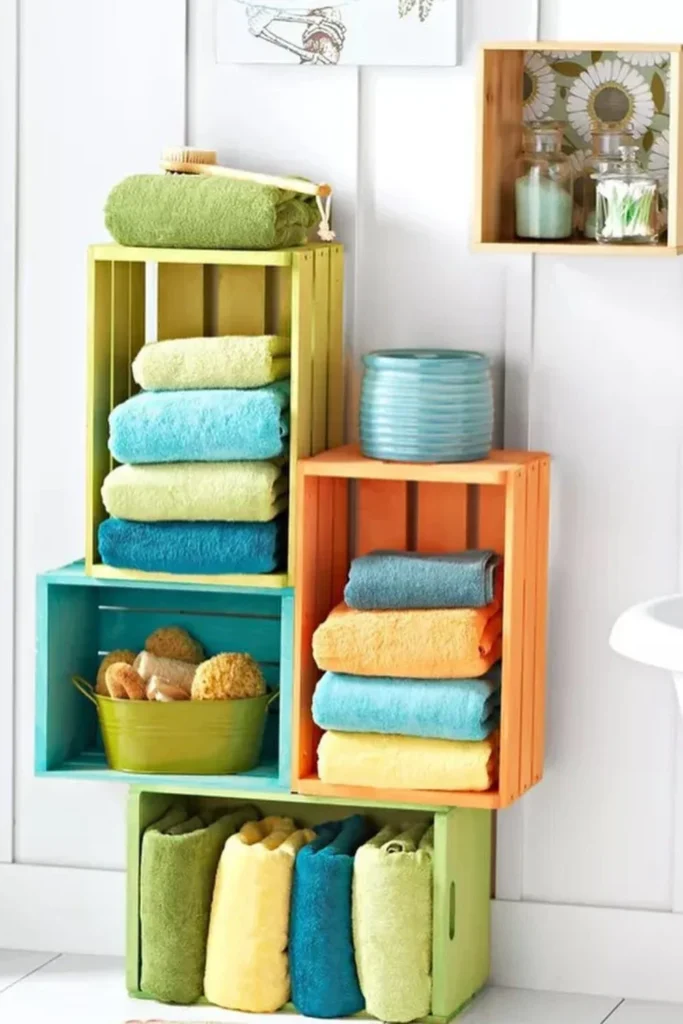
Wooden crates offer a flexible storage option for bathrooms that need extra shelving without the cost of custom cabinetry. Their open construction also makes the contents easy to identify.
Stack two or three sturdy crates to create a compact storage tower, or arrange them side by side for a wider display. Place heavier towels in the bottom crate to improve stability and lighter linens on the upper levels.
Painted crates can introduce color into a neutral bathroom, while natural wood complements rustic or farmhouse decor. Secure stacked units so they cannot shift or tip, and choose a finish suitable for humid indoor spaces.
6. Built-In Wall Cubes
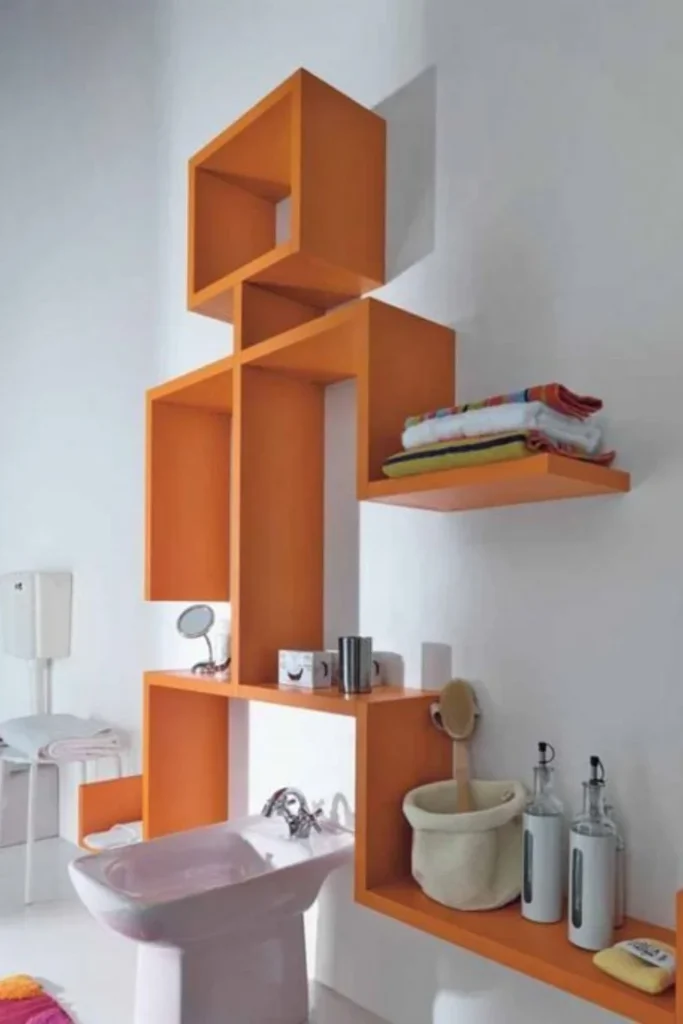
Wall-mounted cubes provide individual compartments for towels while turning an empty wall into a decorative feature. They work especially well in modern bathrooms where conventional shelving might look too plain.
Arrange several cubes in a vertical line or an asymmetrical pattern, depending on the available wall space. Place rolled towels inside each compartment and dedicate separate cubes to hand towels, washcloths, or guest linens.
Open-front designs make supplies easy to reach and avoid the enclosed feel of bulky cabinets. Before installation, check the wall structure and use appropriate fixings for the combined weight of the shelves and towels.
7. Basket Vanity Storage
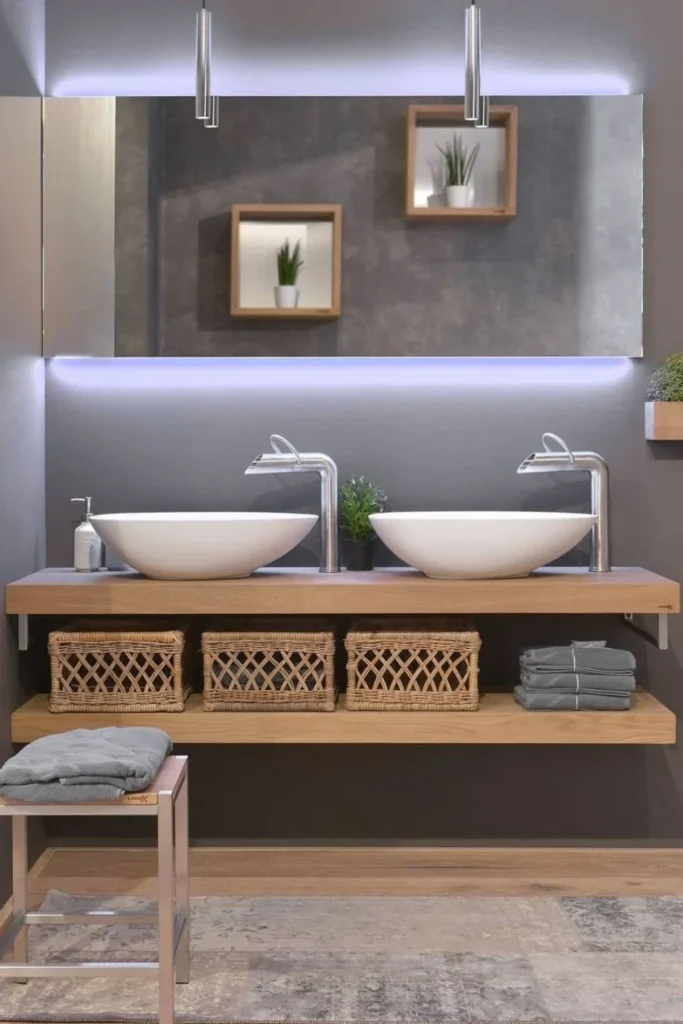
The space beneath a bathroom vanity can become a useful linen area with a few well-sized baskets. This approach works particularly well when plumbing leaves awkward gaps that ordinary shelves cannot accommodate.
Measure the available clearance first, then choose baskets that slide in and out comfortably. Assign one basket to bath towels, another to hand towels, and a smaller container to washcloths.
Woven baskets introduce texture and a relaxed appearance, while washable fabric bins offer a softer alternative. For bathrooms with persistent humidity, consider washable plastic or ventilated containers that are easy to clean. Store only completely dry towels inside, and leave space around plumbing for inspection and maintenance.
8. Mobile Towel Stand
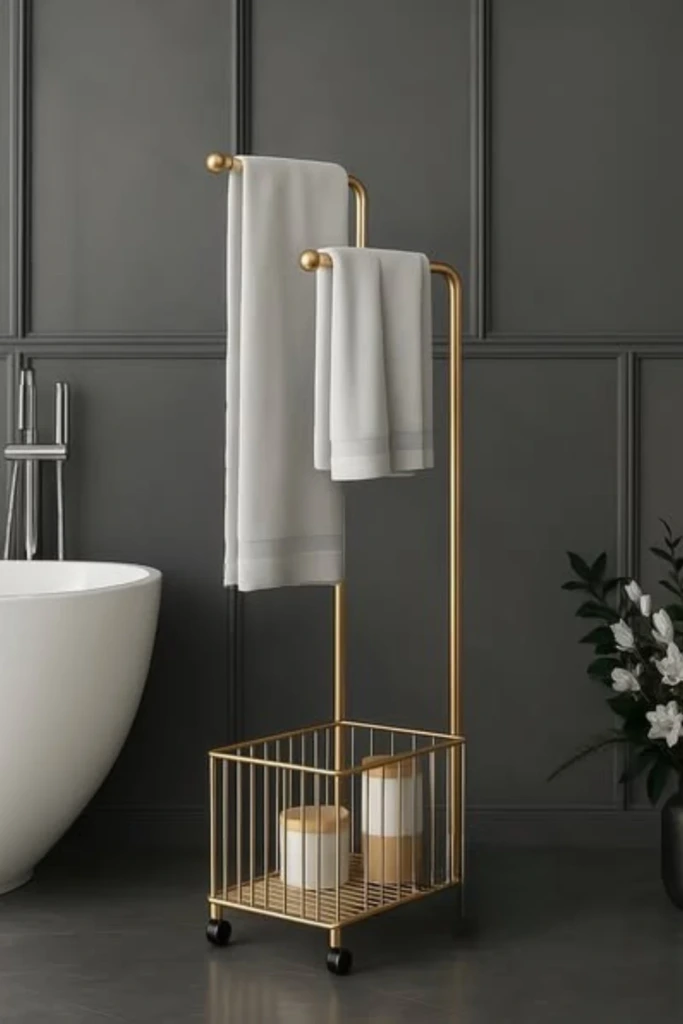
A mobile towel stand is useful when permanent wall fixtures are impractical or when the bathroom layout changes frequently. Its movable design allows you to position towels beside a bathtub, shower, or vanity as needed.
Select a model with multiple bars so wet towels can hang separately rather than overlapping. Wider spacing encourages airflow and helps towels dry more evenly.
Lockable wheels are worth considering, particularly on smooth bathroom flooring. Before buying, check the stand's height, width, and stability to ensure it fits comfortably without obstructing doors or walkways.
9. Shelf Bar Combo
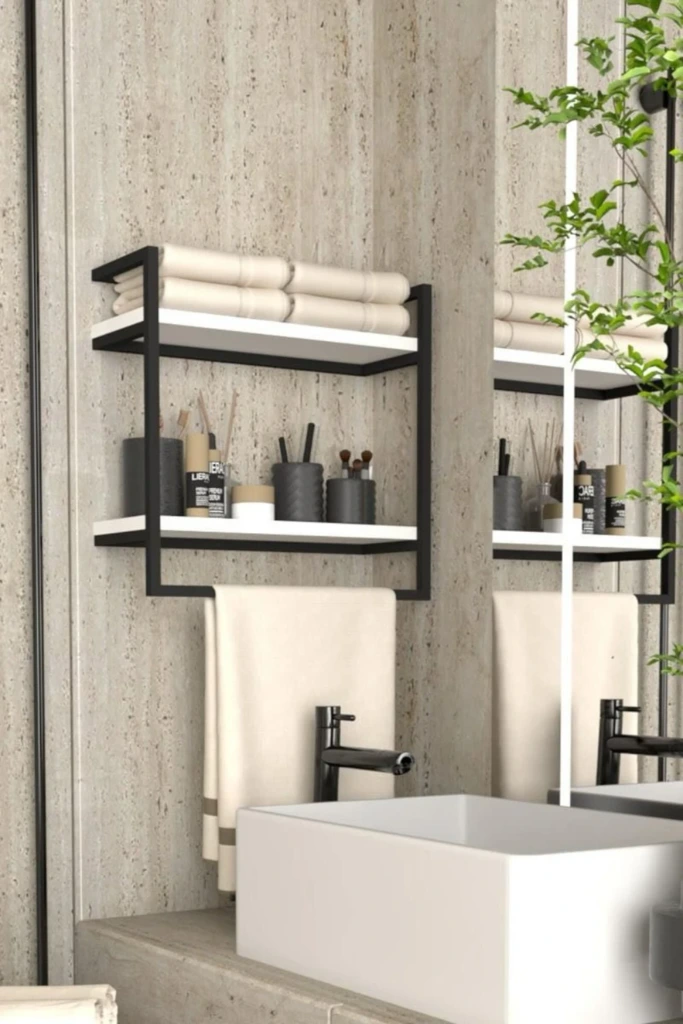
A shelf combined with a towel rail provides two useful functions in one compact fixture. The upper surface holds folded linens or small bathroom essentials, while the lower bar provides a place for a towel to hang between uses.
This arrangement is especially practical beside a sink or near a shower entrance. Keep spare towels on the shelf and reserve the rail for the towel currently in use.
Wooden shelves paired with black or brushed-metal rails can complement a range of bathroom styles. Make sure the shelf is securely mounted and that hanging towels have enough clearance from nearby counters and fixtures.
10. Door-Mounted Rack
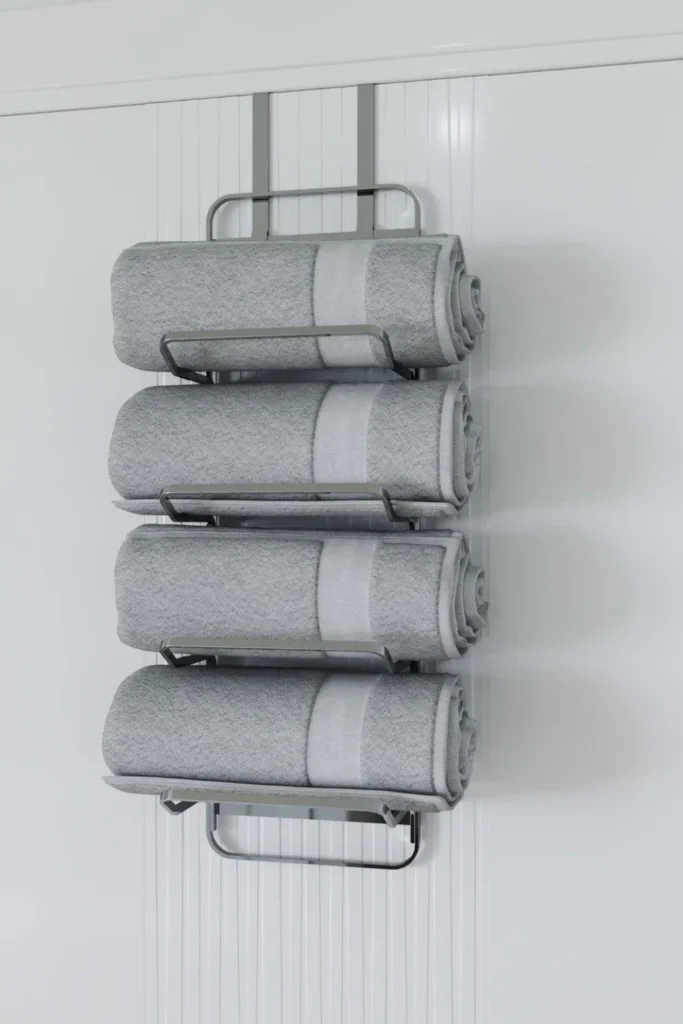
The back of a bathroom door is often overlooked, even though it can provide valuable storage in a compact room. An over-the-door rack creates hanging space without requiring a separate wall installation.
Choose a rack designed to fit the door's thickness and leave enough clearance for it to open and close freely. Spread towels across the available bars instead of stacking them tightly, allowing moisture to escape.
This option is ideal for rental homes or bathrooms with limited wall space. Keep heavier towels on lower bars if the rack design permits, and avoid overloading the door or its hinges.
11. Slim Floor Ladder
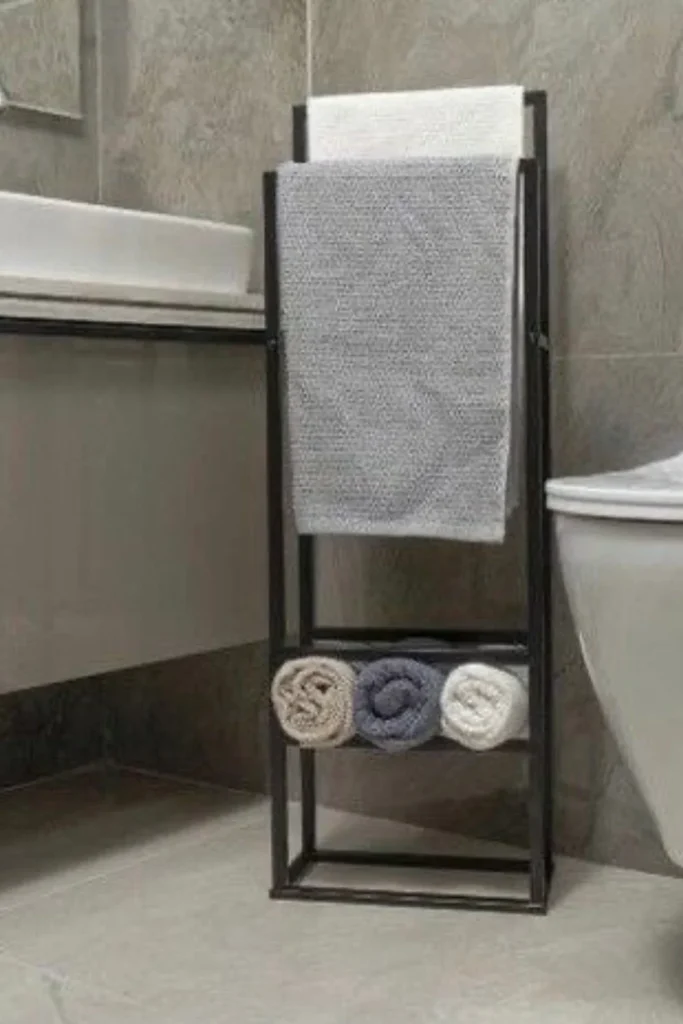
A slim ladder rack can fit into a narrow gap beside a vanity, bathtub, or wall. Its open frame provides several hanging levels without the visual bulk of a conventional cabinet.
Use the upper rungs for towels that need to dry and lower rungs for lighter towels or washcloths. Alternatively, place a small basket underneath for clean, folded linens.
Wooden ladders suit warm, natural interiors, while metal versions offer a more industrial look. Choose a model with a stable base and secure it according to the manufacturer's instructions, particularly if children use the bathroom.
12. Lighted Linen Nook
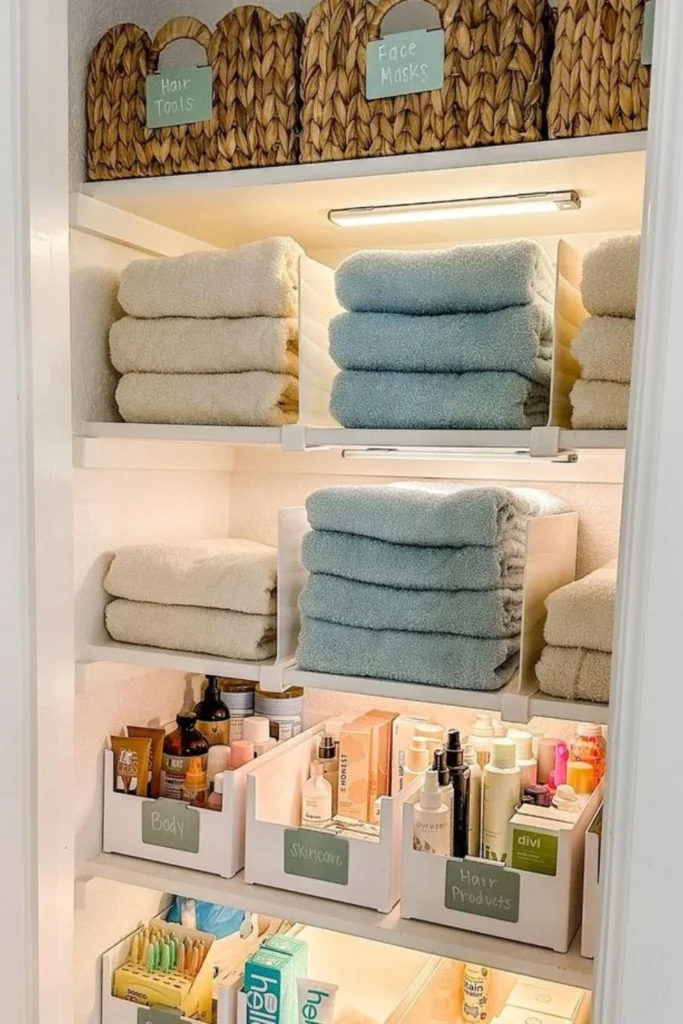
A recessed linen nook makes use of a wall cavity or an existing built-in alcove to store towels without extending far into the room. Integrated lighting makes the shelves easier to use and can give the storage area a polished appearance.
Arrange clean towels by size, keeping everyday items toward the front. Use the lower shelves for heavier bath towels and upper compartments for lightweight linens or backup supplies.
This design can be planned during a renovation or incorporated into suitable existing built-in storage. Before creating a recessed niche, have a qualified professional check for plumbing, electrical wiring, and structural elements inside the wall. Choose lighting and electrical components rated for the bathroom location.
13. Leaning Shelf Tower
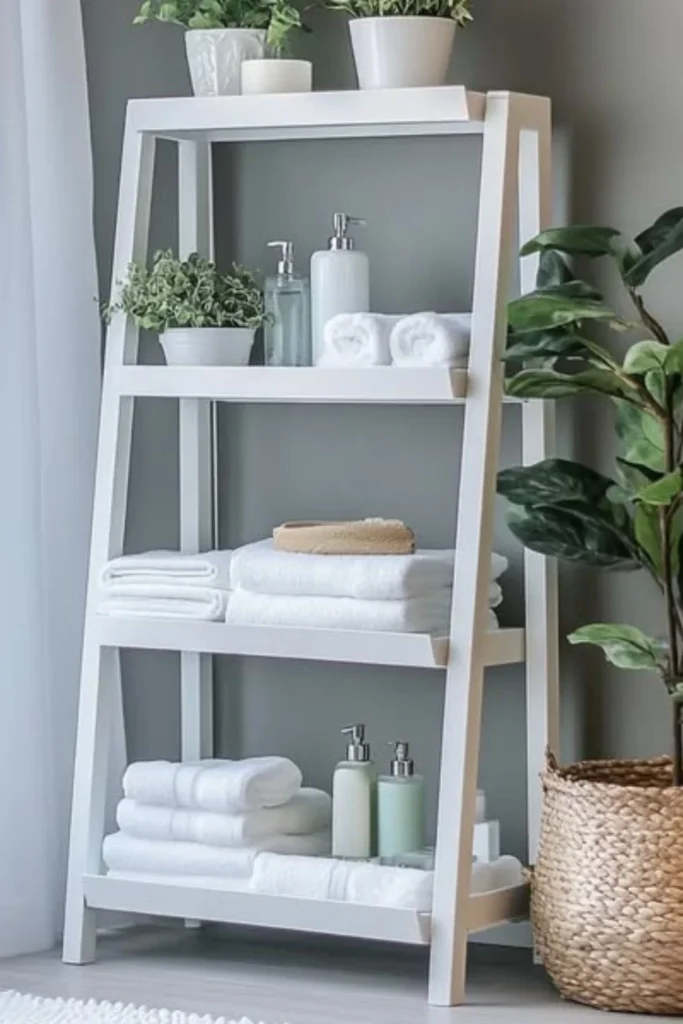
A leaning shelf tower offers multiple storage levels without the appearance of a large enclosed cabinet. It can be a practical choice for renters or anyone who wants a flexible bathroom organization system.
Arrange neatly folded towels on the lower shelves and keep smaller washcloths or toiletries within easy reach. Decorative baskets can contain loose accessories and give the shelves a more coordinated appearance.
Look for a unit with deep enough shelves to support towels securely. Although some models lean against the wall, they should still be installed or restrained according to the manufacturer's safety guidance to prevent tipping.
14. Bamboo Laundry Tower
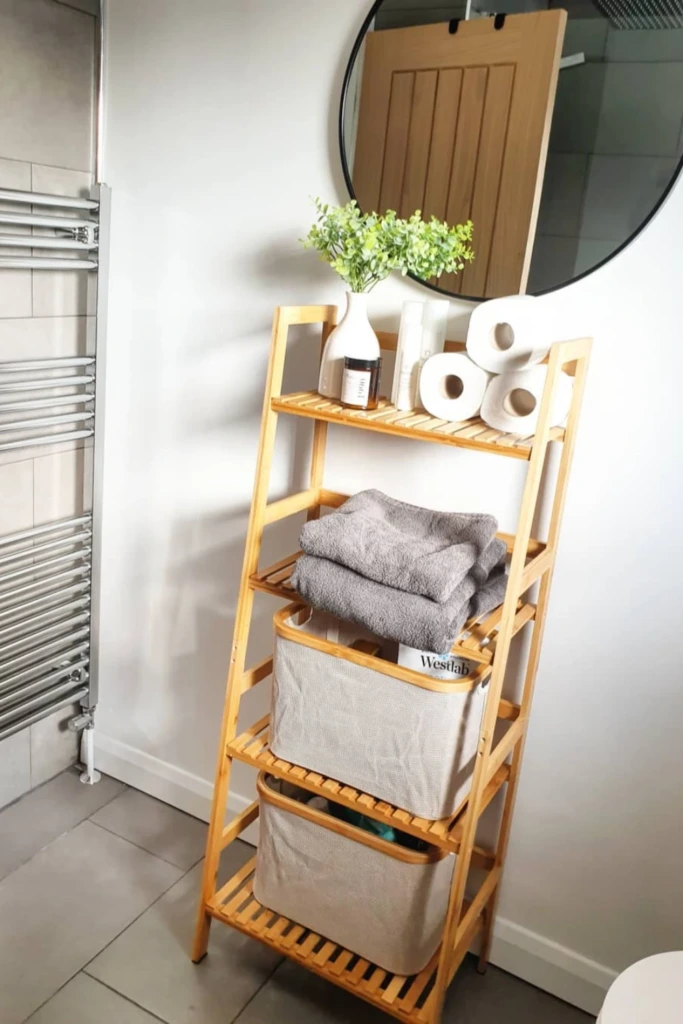
A bamboo laundry tower combines clean-towel storage with a place for used linens. This dual-purpose design is particularly convenient in family bathrooms where fresh towels and laundry accumulate quickly.
Keep clean, folded towels on the upper shelves and place a removable laundry bag or hamper in the lower section. Separating these areas helps prevent used, damp towels from coming into contact with clean ones.
Bamboo brings a natural finish to the bathroom, but it still needs sensible moisture management. Wipe away splashes, allow the unit to dry, and avoid leaving wet laundry inside for extended periods.
15. Hanging Rail Shelf
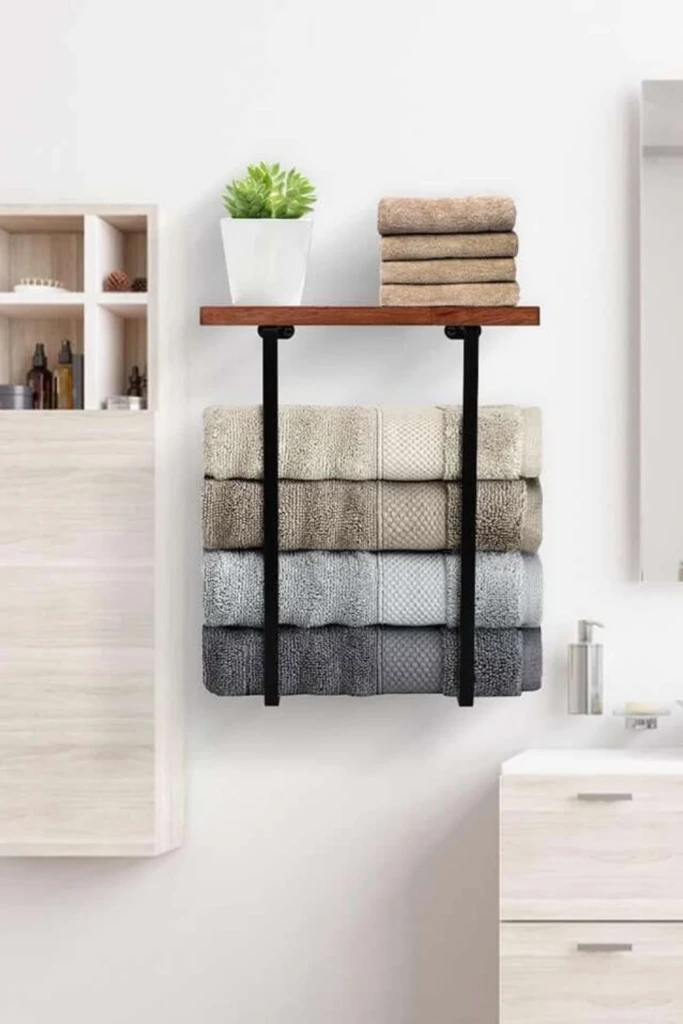
A hanging rail shelf makes good use of the wall above a towel bar or beside the sink. It combines a small storage surface with an open rail, providing space for both folded linens and towels in use.
Place clean hand towels or washcloths on the shelf and hang a frequently used towel below. A shallow upper ledge can also hold a small basket of spare linens, provided the shelf is securely mounted.
This design is useful in compact bathrooms because it keeps supplies off the countertop. Avoid placing the shelf where dripping towels could wet stored linens or damage nearby finishes.
16. Stacked Wall Frames
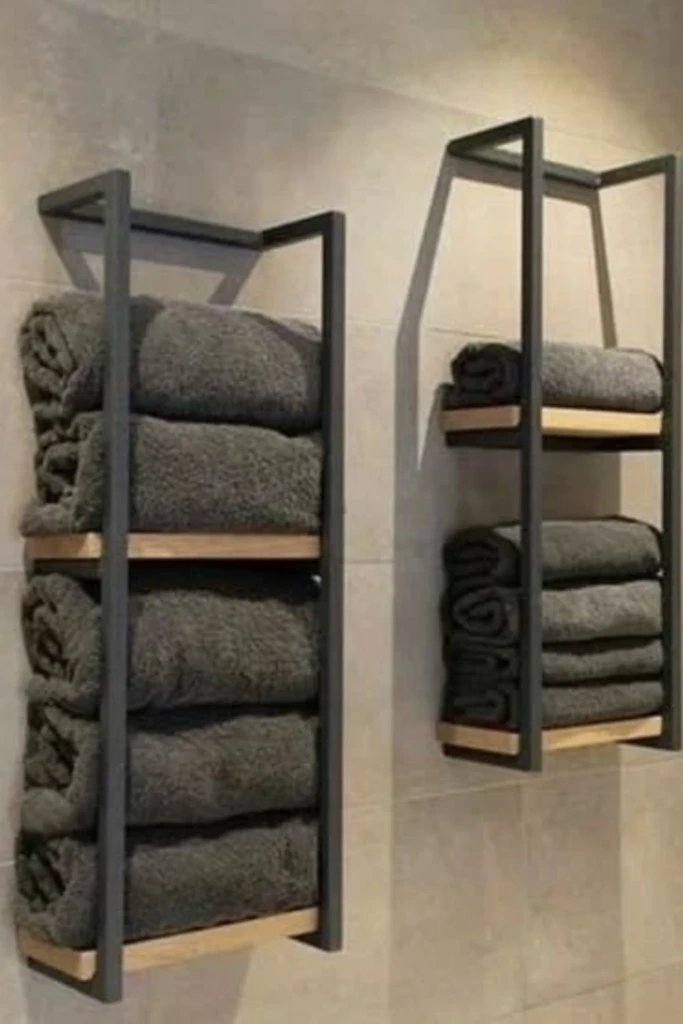
Several wall-mounted frames can create a vertical towel station where floor space is limited. Each frame offers a separate place for rolled or folded towels, making it easier to organize linens by size or by household member.
Position the units so the lower compartments remain easy to reach. A combination of metal supports and wooden shelves adds visual interest without making the wall feel too heavy.
This setup works best on a sturdy wall with suitable mounting hardware. Keep the arrangement balanced and leave enough room between compartments to remove towels without snagging or compressing them.
17. Framed Towel Stack

A framed towel holder turns a simple stack of linens into a deliberate part of the bathroom decor. Its open structure keeps towels visible, making it a good option for guest bathrooms and carefully styled spaces.
Fold towels into consistent sizes before placing them inside the frame. This creates a tidy appearance and makes it easier to identify the right towel at a glance.
Choose a frame finish that complements your vanity, mirror, or other fixtures. Because the towels remain exposed, position the holder away from direct water spray and clean it regularly to prevent dust from collecting on the linens.
18. Multi-Bar Drying Rack
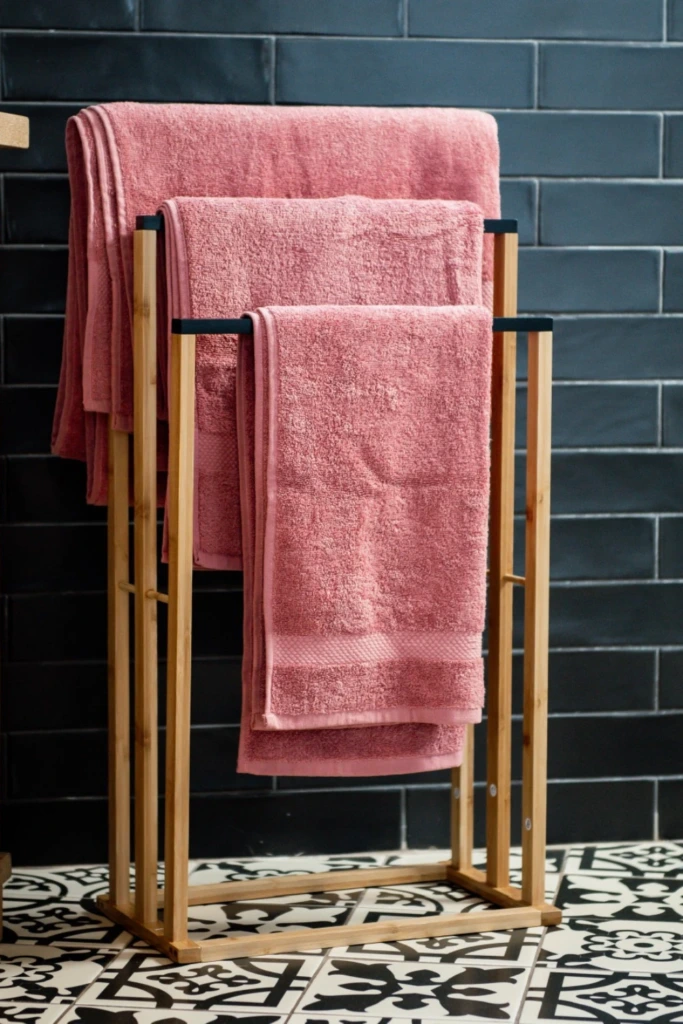
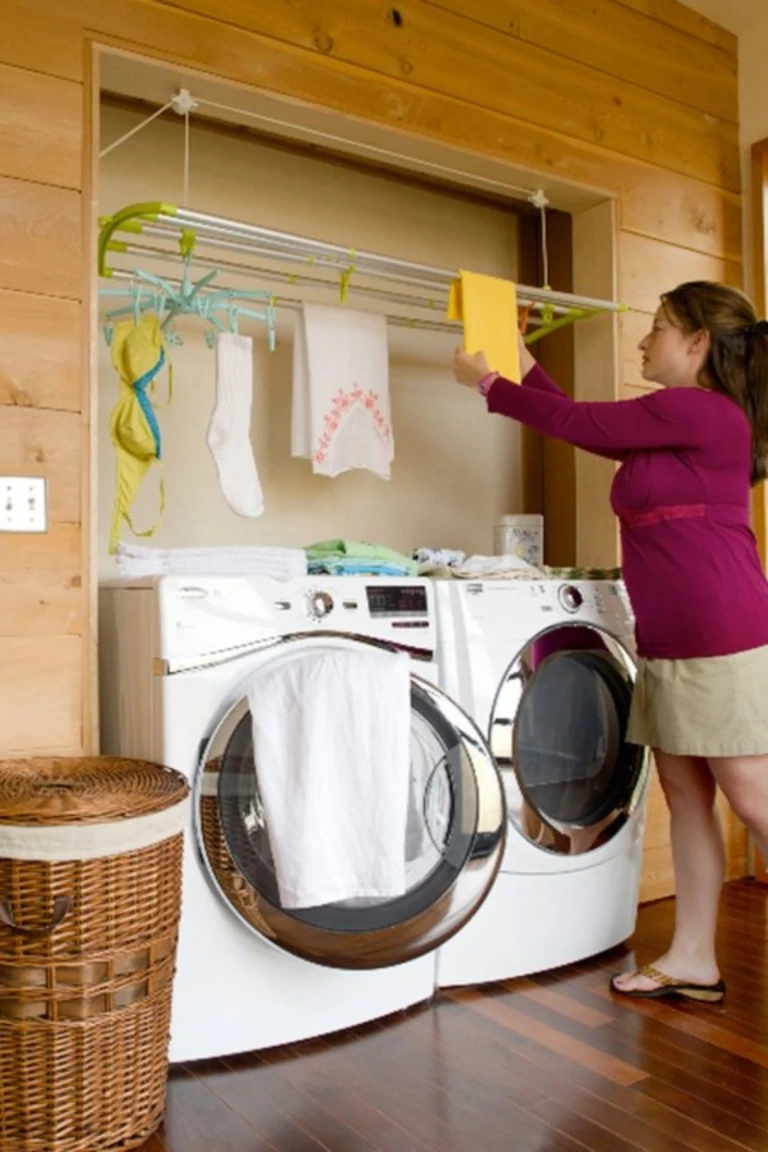
When towels stay damp for too long, additional drying space may be more useful than another storage cabinet. A multi-bar rack lets several towels hang separately, improving air circulation around the fabric.
Spread each towel across its own bar rather than folding it into a thick bundle. Place the rack where air can move freely, ideally away from cramped corners and areas where towels will brush against walls.
Choose a sturdy, rust-resistant model that suits the room's humidity. Good ventilation is essential, and a bathroom exhaust fan can help control moisture when windows are unavailable.
19. Glass Front Cabinet
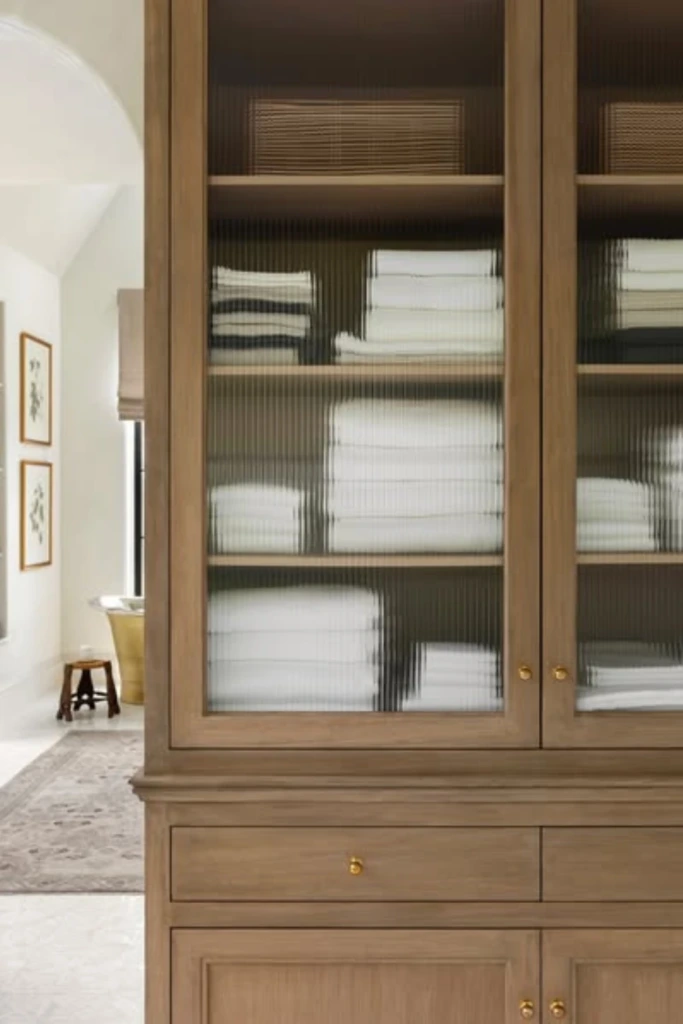
A glass-front cabinet offers a balance between concealed storage and a decorative display. The doors protect towels from much of the dust that can settle on open shelves while allowing the organized stacks to remain visible.
Fold towels consistently and group similar colors together for a coordinated look. If the cabinet has adjustable shelves, set their heights to accommodate both bulky bath towels and smaller hand towels.
Textured or frosted glass provides a softer appearance than completely clear panels. Keep the cabinet in a dry, ventilated location, and avoid filling it so tightly that retrieving one towel disturbs the others.
20. Floating Frame Columns
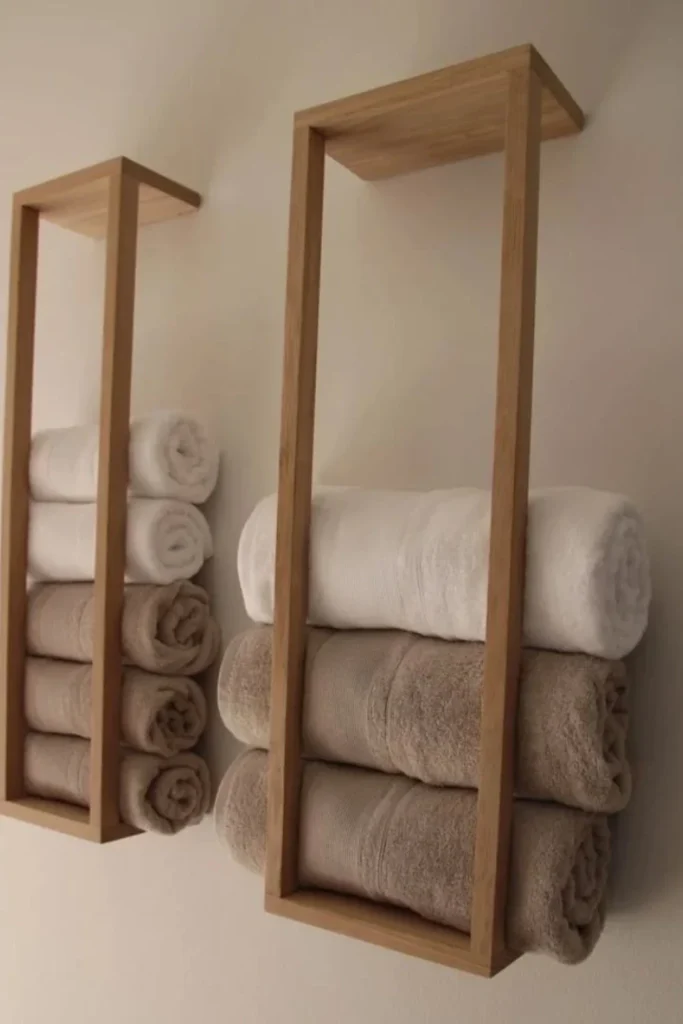
Floating frame columns use vertical wall space to hold rolled towels in a narrow, decorative arrangement. They are particularly useful in bathrooms with slim wall sections that cannot accommodate a deep cupboard.
Arrange the rolls so each one fits securely within its frame. Keep frequently used towels in the easiest-to-reach section and place extra linens higher up if the installation allows.
The open design helps avoid the bulky appearance of enclosed furniture. Choose durable materials and suitable wall anchors, and make sure the frames are spaced far enough apart to remove towels without difficulty.
21. Tiered Towel Rails
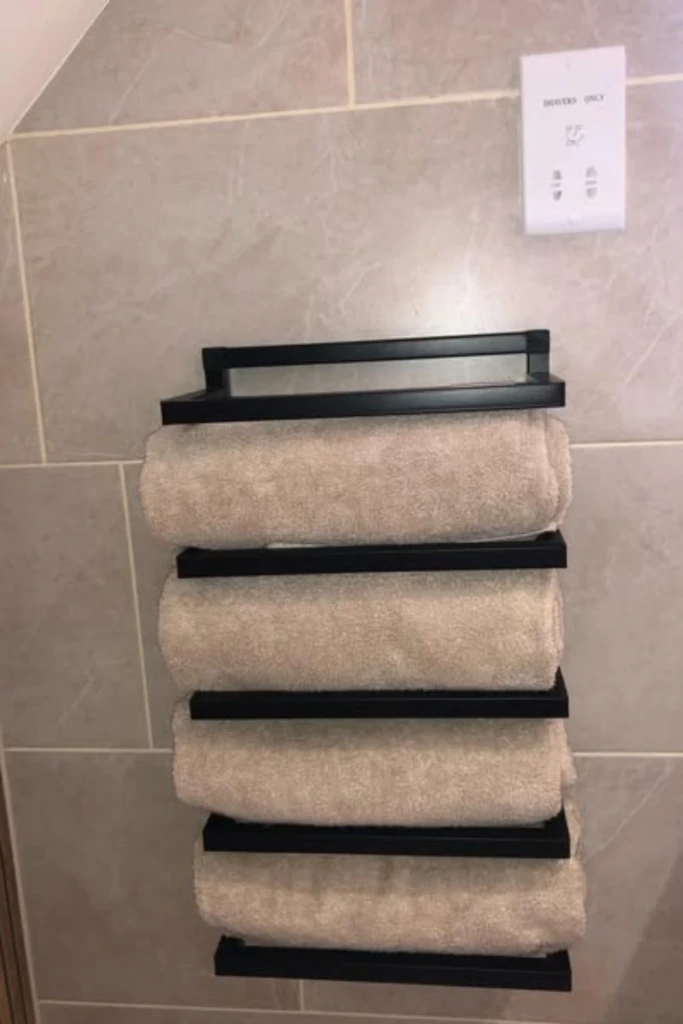
Tiered towel rails create several hanging positions in a compact vertical area. Instead of spreading towels across a long wall, you can organize them at different heights near the shower or bathtub.
Use separate rails for different household members or towel types. Leave enough room between bars so the fabric can hang freely rather than overlapping in thick layers.
For a shared bathroom, consider who needs to reach each rail comfortably. Choose corrosion-resistant hardware and mount the unit securely, particularly when it will support large, water-heavy bath towels.
How many towels should a bathroom store?
A practical starting point is two or three towels per person: one for current use, one clean replacement, and an optional spare. The ideal number depends on how often you do laundry, how quickly towels dry, and how many people share the bathroom.
For a household that washes towels frequently, a smaller supply may be sufficient. Families that prefer longer laundry intervals may need additional sets.
To keep the bathroom from becoming crowded, store only the towels you regularly need in the room. Keep bulk supplies in a linen closet or another dry storage area, and replenish the bathroom as necessary.
Should towels be stored folded or rolled?
Both methods work well, but the best choice depends on the storage space and how the towels will be used.
Folded towels fit neatly into cabinets, cupboards, and conventional shelves. They are particularly useful when you want to stack several sizes together or keep a linen closet orderly.
Rolled towels suit open cubbies, narrow baskets, and vertical holders where conventional stacks might be awkward. They can also make a small display look tidy and inviting.
For towels that are still damp, neither folding nor rolling is a substitute for proper drying. Hang used towels fully open on a rail or bar before putting them away. Store only completely dry towels in cabinets and baskets to help prevent unpleasant odors and mildew.