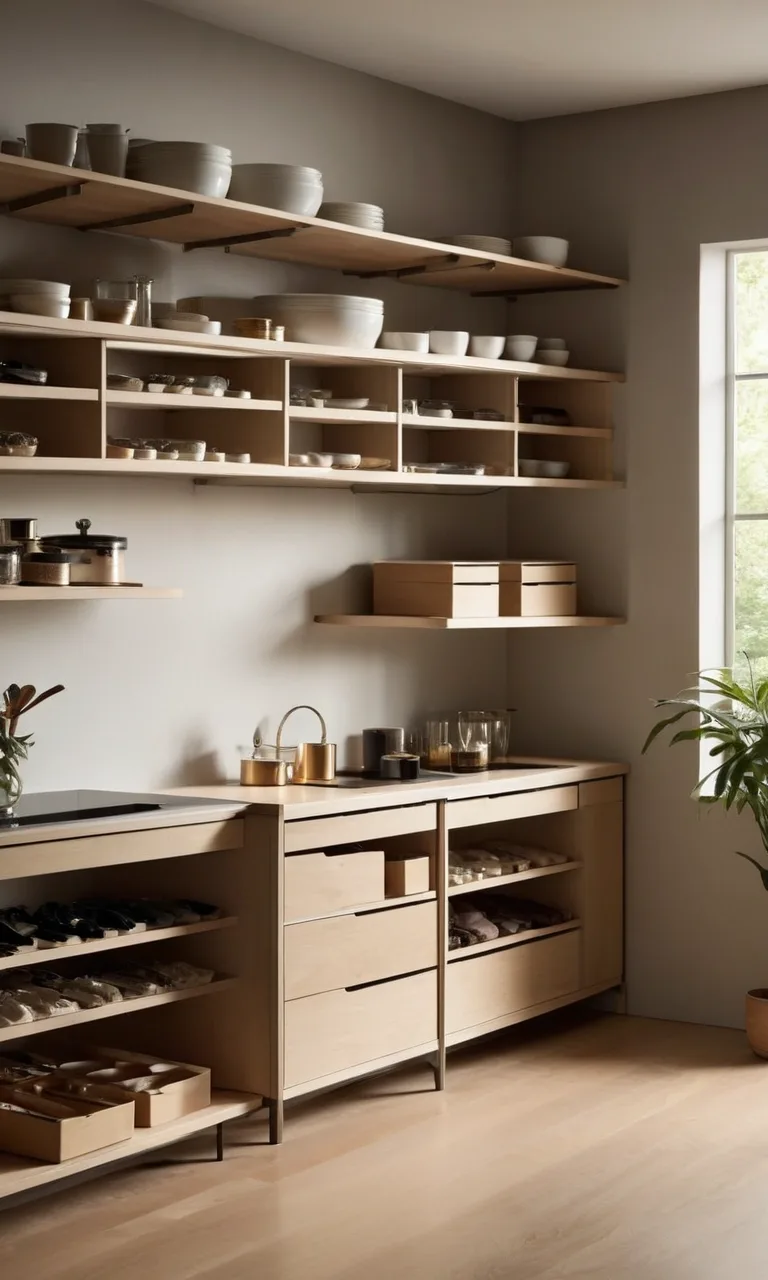
25 Rolling Cart Organization Ideas for 2026
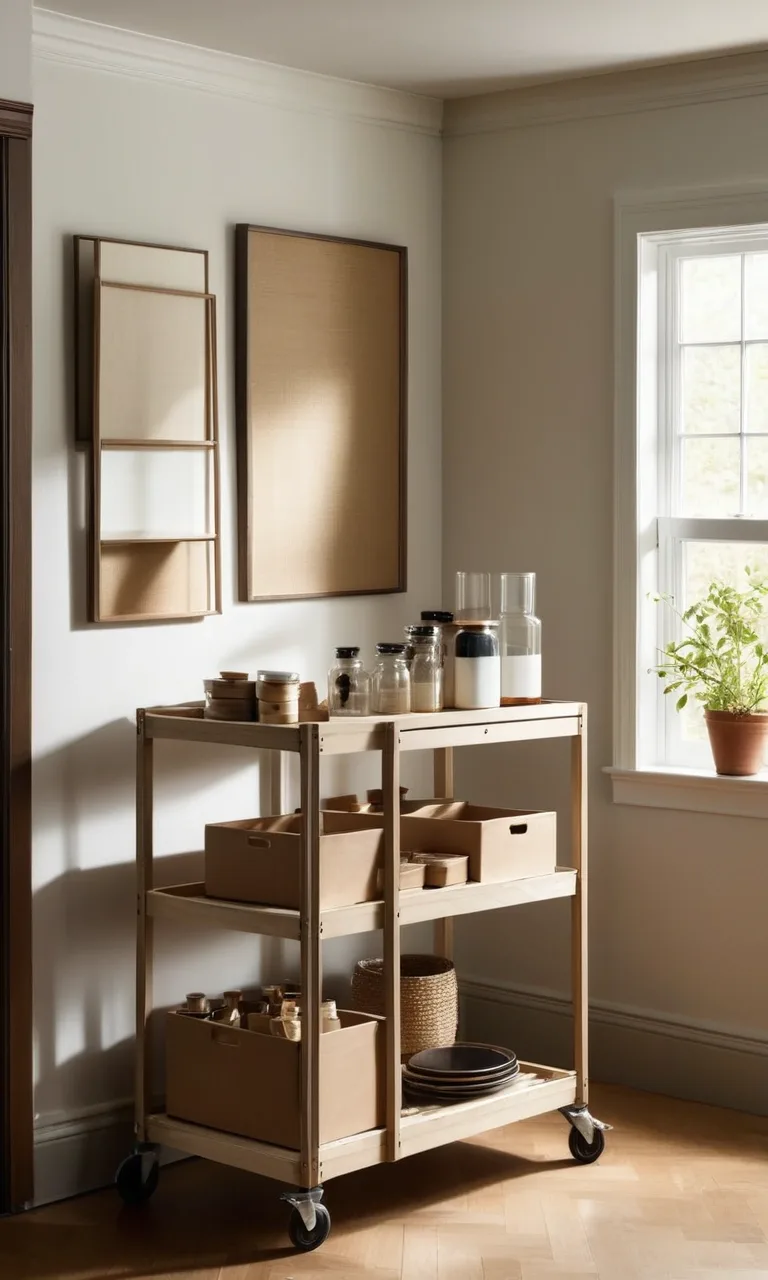
A rolling cart can be one of the most versatile storage solutions in your home, but its usefulness depends on how you arrange it. Without a clear system, everyday essentials can quickly turn into a jumble of supplies, tools, and miscellaneous items. A few thoughtful changes can make the cart easier to use and maintain.
Whether you need extra storage for crafts, kitchen essentials, office supplies, beauty products, or household cleaning tools, a well-organized cart can help you make better use of limited space. Its movable design also allows you to bring supplies wherever they are needed.
These 25 rolling cart organization ideas offer practical ways to create a storage system that fits your routine, keeps frequently used items accessible, and makes tidying up less time-consuming.
How Should a Rolling Cart Be Organized?
Start by identifying the main job of your cart. A cart used for art projects needs a different arrangement from one holding bathroom products or kitchen ingredients. Giving it a specific purpose prevents unrelated items from competing for space.
Use the upper tier for lightweight essentials you reach for regularly. The middle tier can hold supporting supplies, while the bottom shelf is ideal for heavier items and refills. This arrangement also helps keep the cart stable when you move it.
Small baskets, divided containers, and readable labels make it easier to maintain the setup. Before adding organizers, remove anything you no longer need and measure the shelves to ensure the containers fit properly. Leave some open space so you can return items without rearranging everything.
1. Purpose-Based Tiers
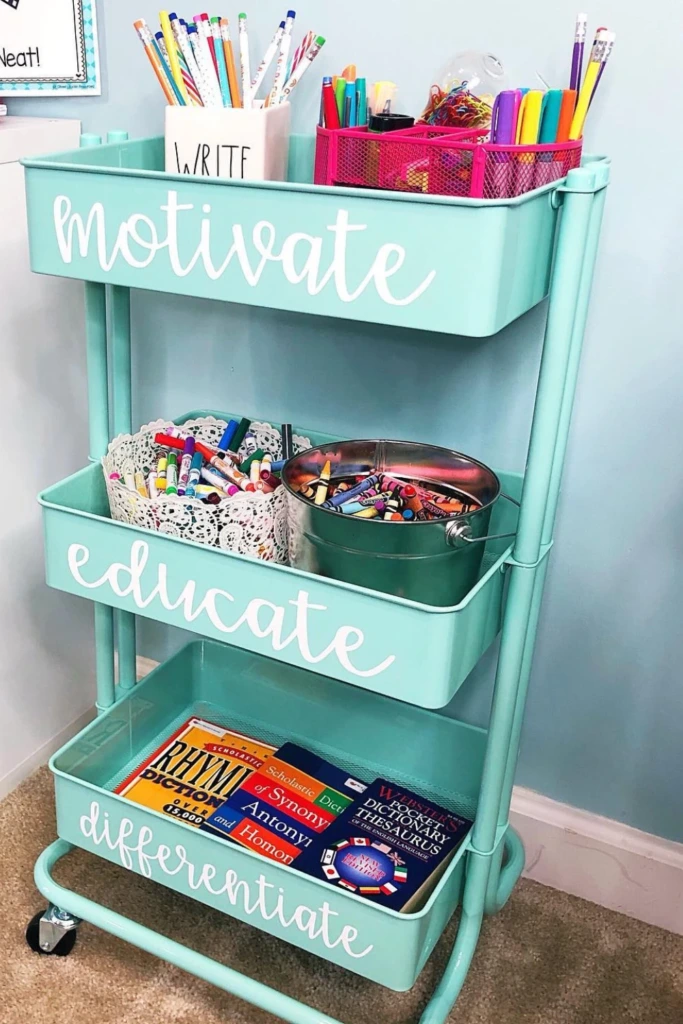
Turn a basic cart into a practical workstation by assigning a separate function to each shelf. For example, the top tier can hold pens and markers, the middle can store notebooks and activity materials, and the bottom can accommodate textbooks or extra supplies.
Use small containers to keep similar items together and label each section so everyone knows where things belong. A consistent color scheme can make the arrangement easier to scan without relying on decorative accessories.
This approach works particularly well in classrooms, study areas, and shared family workspaces where multiple people need to find supplies quickly.
2. Vertical Supply Sorting
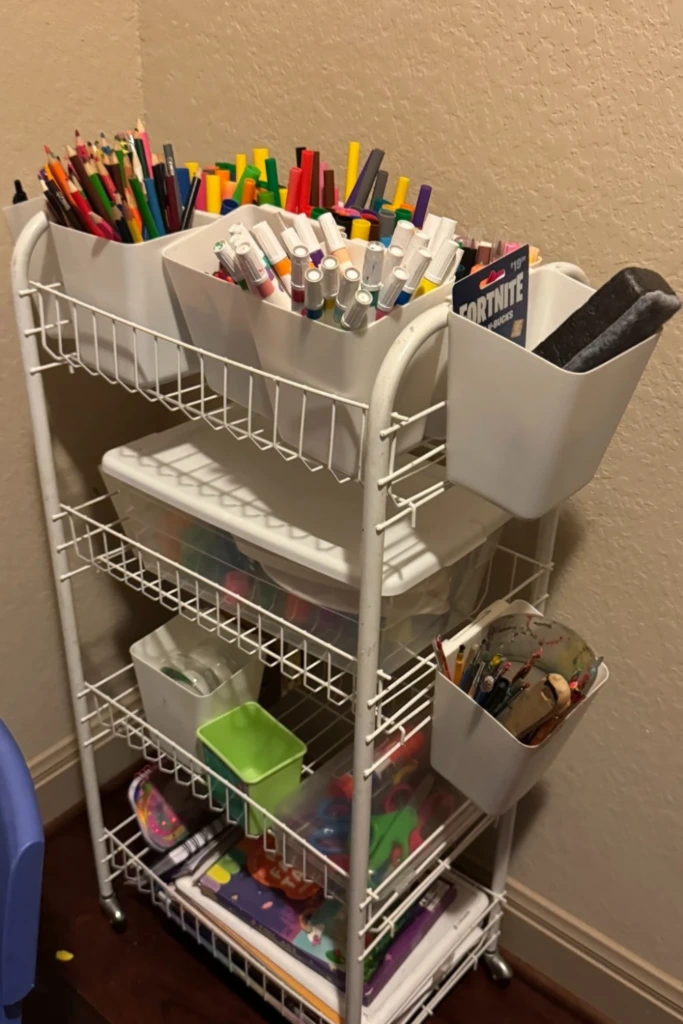
Make the most of a narrow cart by storing suitable supplies vertically instead of laying them flat. Tall cups, pencil holders, and narrow bins are useful for scissors, rulers, paintbrushes, pens, and other long tools.
Attach compatible containers to the sides if the design allows it, keeping smaller tools accessible without taking up valuable shelf space. Open wire shelves also make it easy to see what is available.
This arrangement is especially useful in small craft rooms, apartments, and home offices where floor and desk space are limited. Keep sharp tools secured and avoid placing heavy objects in unstable side containers.
3. Yarn Ready Cart
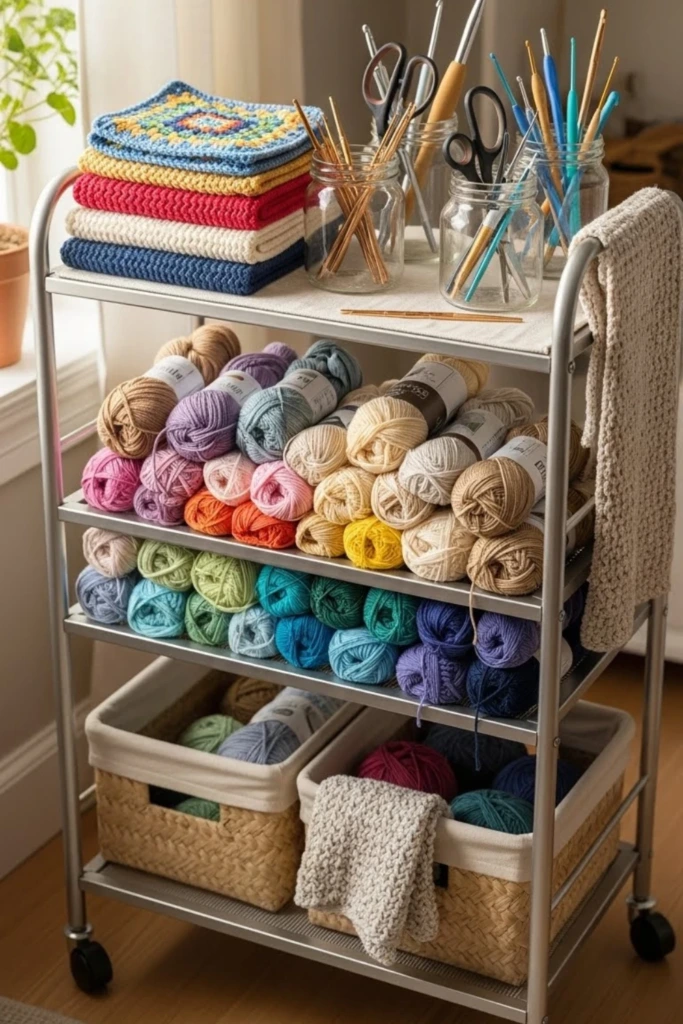
Keep your knitting and crochet supplies together in a mobile cart that supports your current projects. Arrange yarn by color, fiber type, or project so you can quickly locate the material you need.
Use the upper shelf for your active project, crochet hooks, knitting needles, and small accessories. Store yarn in open baskets or divided compartments on the middle tier, and reserve the bottom for larger skeins, project bags, or completed pieces.
Transparent containers are useful for buttons, stitch markers, and other small notions. Avoid packing the shelves too tightly, as compressed yarn can become difficult to remove without disturbing the rest of your supplies.
4. Clear Kitchen Station
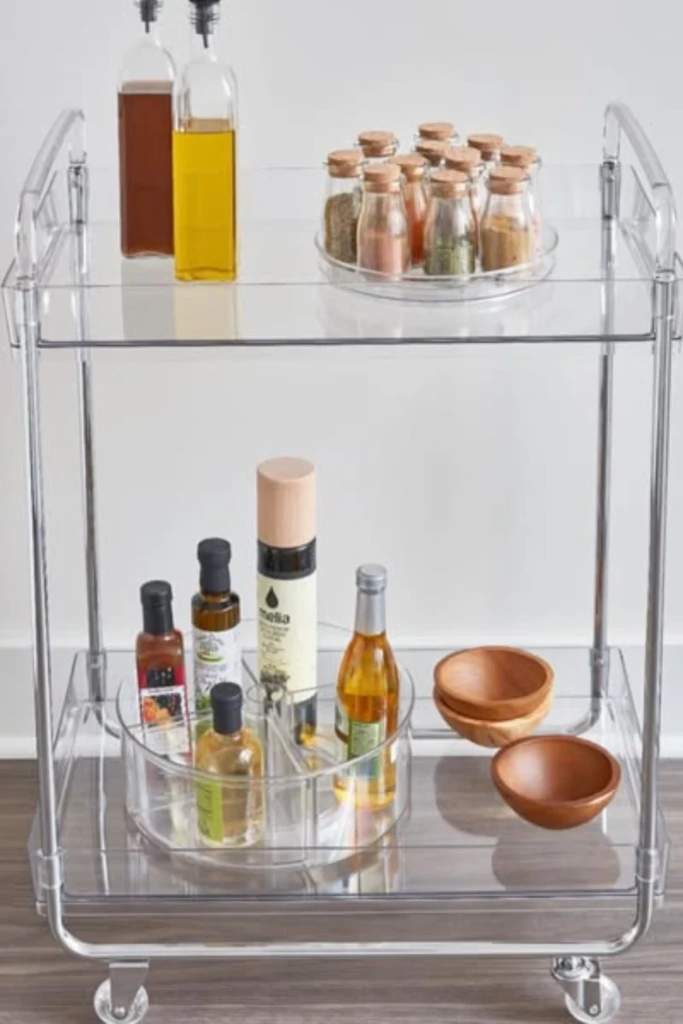
A transparent cart can provide extra kitchen storage without making a small room feel visually crowded. Use it for frequently needed cooking ingredients, seasonings, measuring tools, or other dry kitchen essentials.
Group related items in shallow trays so you can move several products together when cooking. A small turntable can help make bottles at the back easier to reach, provided it fits securely on the shelf.
Keep heavier jars and backup supplies on the lower tier. Wipe up spills promptly, and make sure containers are suitable for food storage. If the cart holds oils or ingredients, position it away from heat, direct sunlight, and areas where splashes are common.
5. Color-Coded Crafting
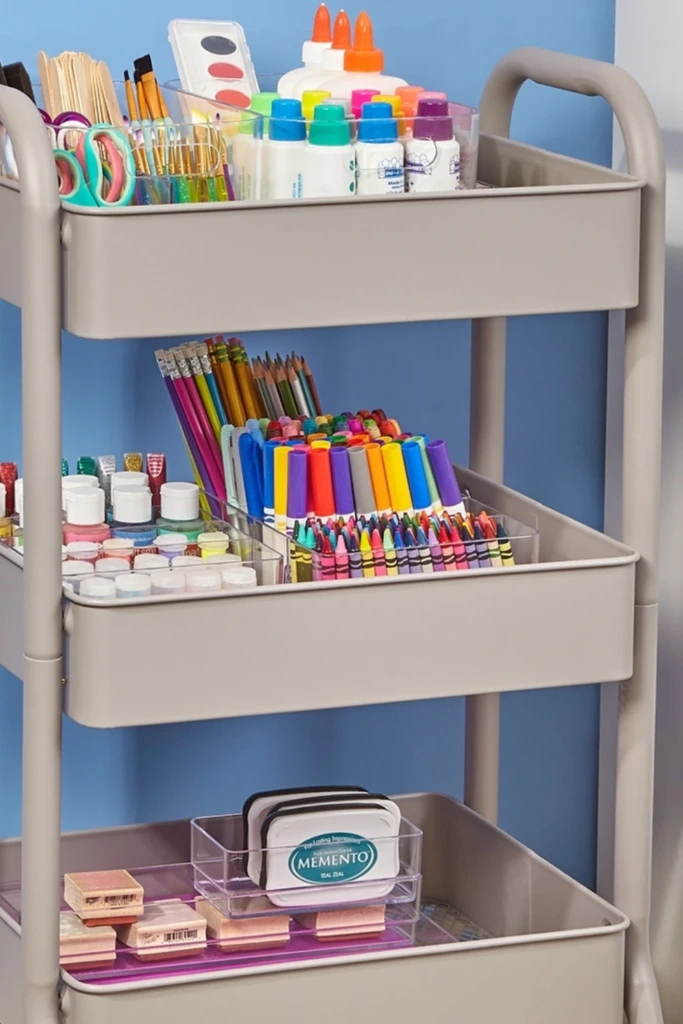
Color-coding can make a large collection of craft materials easier to manage. Separate markers, colored pencils, paints, paper supplies, and embellishments into individual containers, then arrange them by color when that makes sense for the activity.
For example, children can return markers to matching sections, while adults can group paints by shade or type. Keep the materials used most often on a convenient shelf and store bulk refills underneath.
Clear bins help you check quantities at a glance, while simple labels identify each category. This system works well in playrooms, classrooms, art studios, and shared crafting areas.
6. Desk-Side Storage
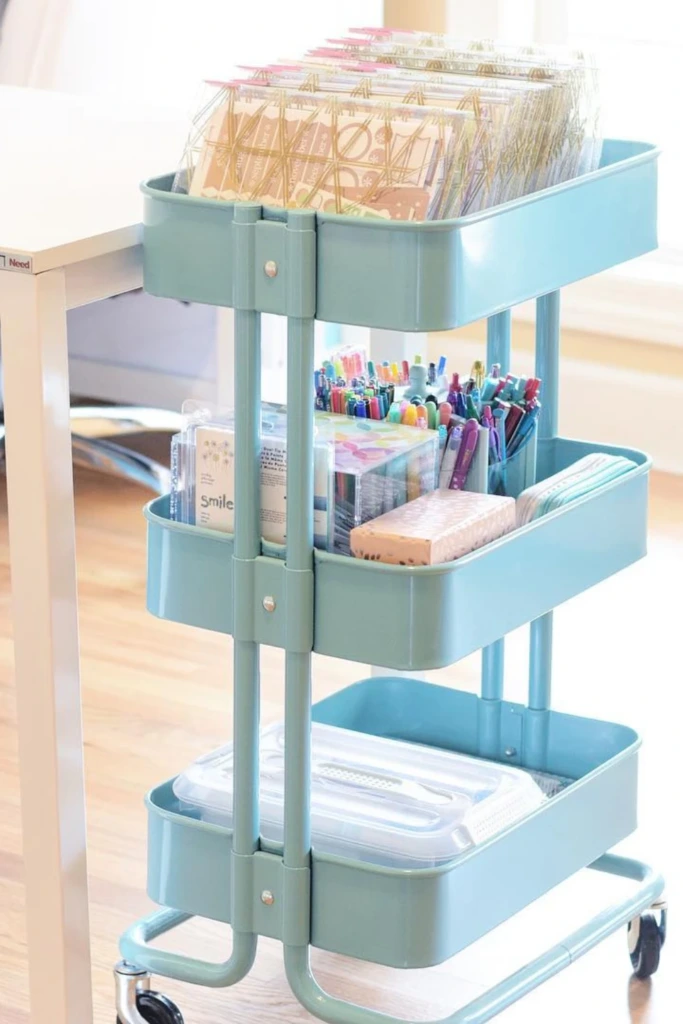
An office cart can function as an extension of your desk, particularly when the work surface is too small for everything you use throughout the day.
Place pens, sticky notes, a planner, and frequently consulted documents on the top shelf. Use the middle tier for notebooks, folders, and ongoing projects, with printer paper or less frequently used supplies stored below.
Slim organizers prevent small objects from spreading across the shelves. Choose a cart that fits beside or beneath your desk, and keep its wheels accessible so you can move it when you need more working room.
7. Nursery Essentials Cart
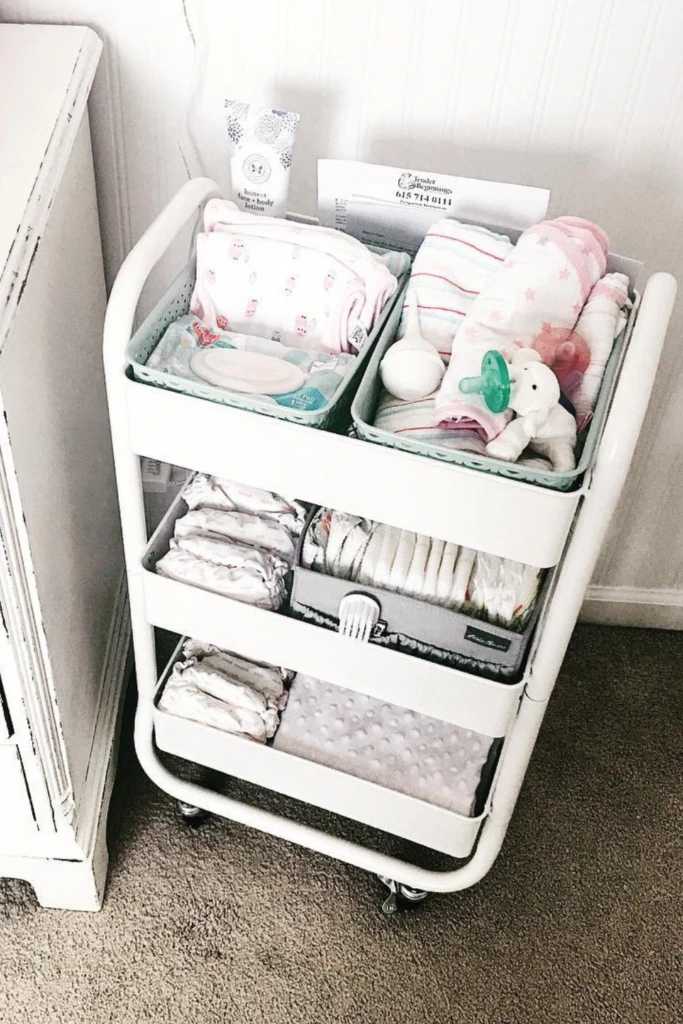
A nursery cart can keep everyday baby-care supplies together, reducing the need to search through drawers during a busy day or nighttime change.
Store diapers, wipes, and a few frequently used care products on the upper tier. Fold spare clothes and keep burp cloths in a separate basket on the middle shelf, with additional supplies organized below.
Use washable containers that are easy to clean and large enough to prevent items from spilling out. Keep medicines, creams that could be swallowed, small accessories, and other potentially hazardous items securely out of children's reach.
Position the cart where an adult can access it comfortably, but never leave a baby unattended on a changing surface or allow the cart to obstruct a safe nursery layout.
8. Classroom Rotation Cart
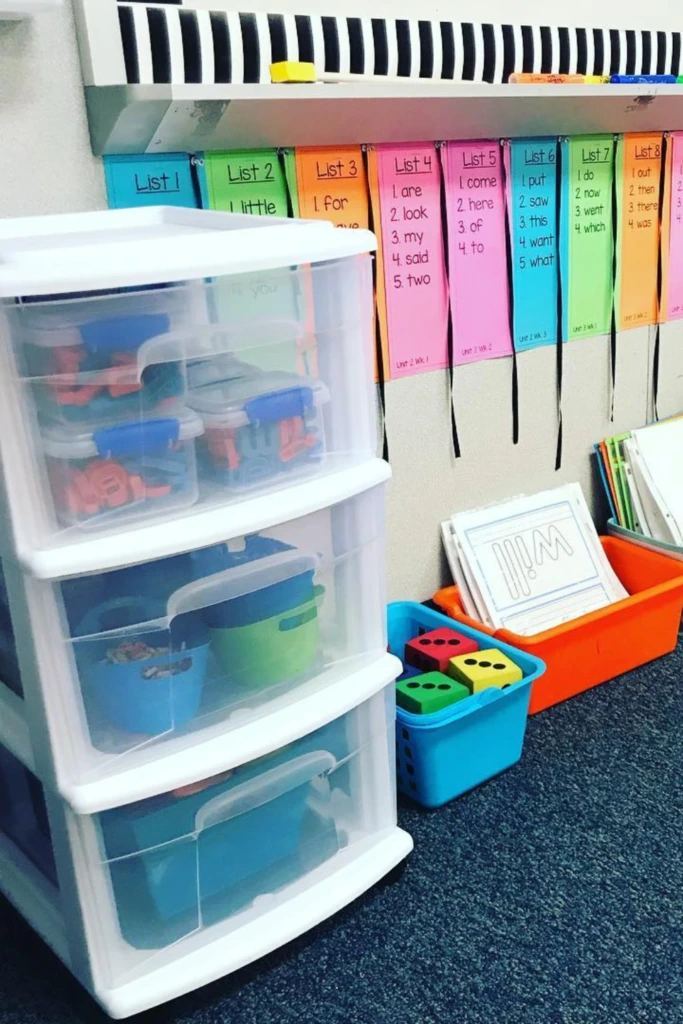
Make classroom transitions easier by preparing a separate container for each lesson or learning activity. One bin might hold reading materials, another could contain math manipulatives, and a third might store art supplies.
Label the bins clearly so students can collect what they need and return it after the activity. Keep materials for the next lesson together rather than scattering them across several shelves.
Bright containers can help younger students distinguish between activities, while a simple written system works well for older learners. A movable cart is especially helpful when a classroom serves multiple groups or needs to change layouts throughout the day.
9. Pantry Refill Cart
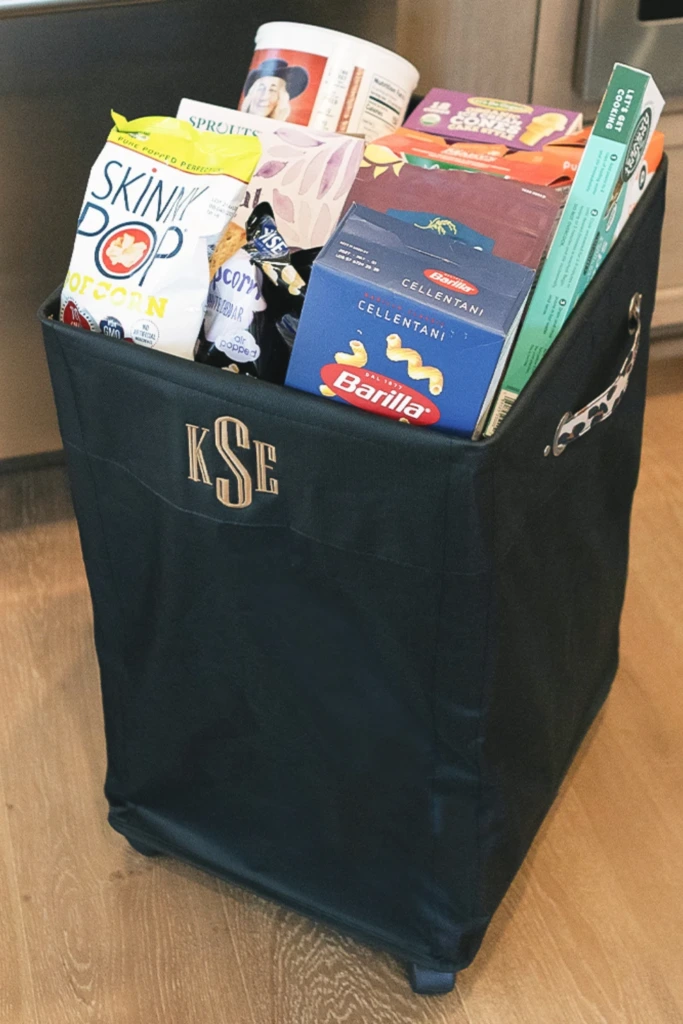
If your pantry lacks enough room for extra groceries, use a rolling cart to hold selected overflow items. Packaged snacks, unopened dry goods, baking supplies, and spare pantry staples can all benefit from a dedicated storage area.
Place heavier packages and bulk items on the bottom shelf, with frequently used snacks or ingredients above. Baskets help prevent small packets from slipping through wire shelves or becoming scattered.
Check expiration dates regularly and keep similar foods together. Store food in sealed, food-safe containers when appropriate, and keep the cart away from damp areas, heat sources, and direct sunlight.
A slim design is particularly useful in a kitchen corner or beside a pantry cabinet, provided it does not interfere with doors or walkways.
10. Lunch Prep Station
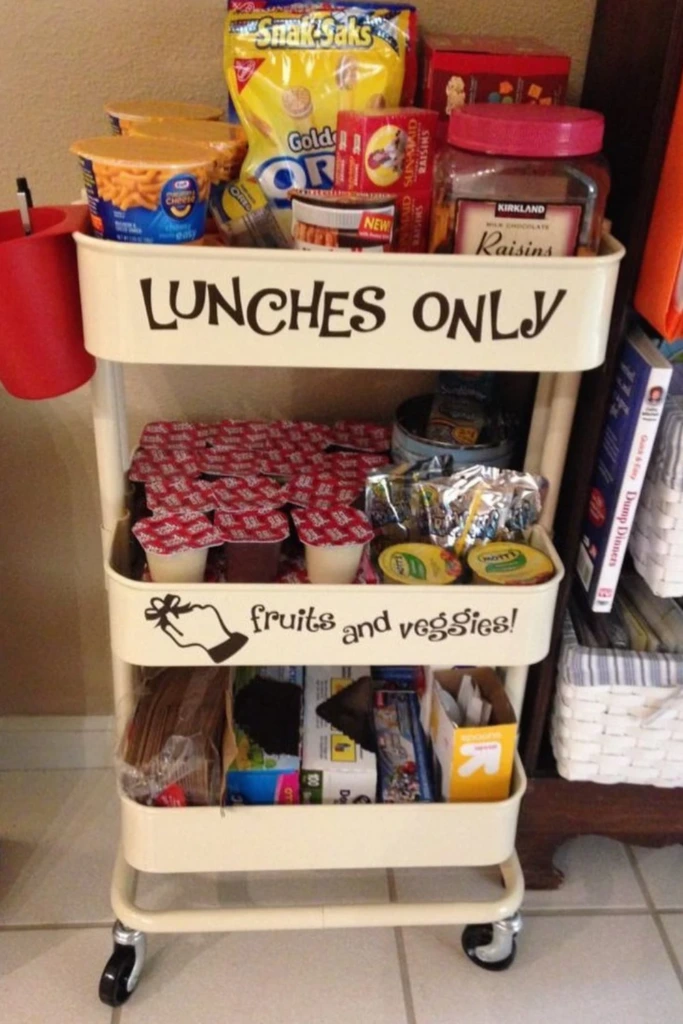
Create a dedicated lunch-preparation station to make school and work mornings less hectic. Store lunchboxes, reusable snack containers, napkins, and other everyday accessories together so you can assemble meals without searching multiple cabinets.
Use small baskets to separate snacks by type or by family member. Keep lunch bags and frequently used containers within easy reach, while extra packaging and backup supplies can occupy a lower shelf.
Labels help family members return items to the correct place after unpacking lunchboxes. For food safety, keep perishable ingredients refrigerated until needed rather than leaving them on an unrefrigerated cart.
Once groceries are unpacked, restock the station so the supplies are ready for the next morning.
11. Marker Reset Zone
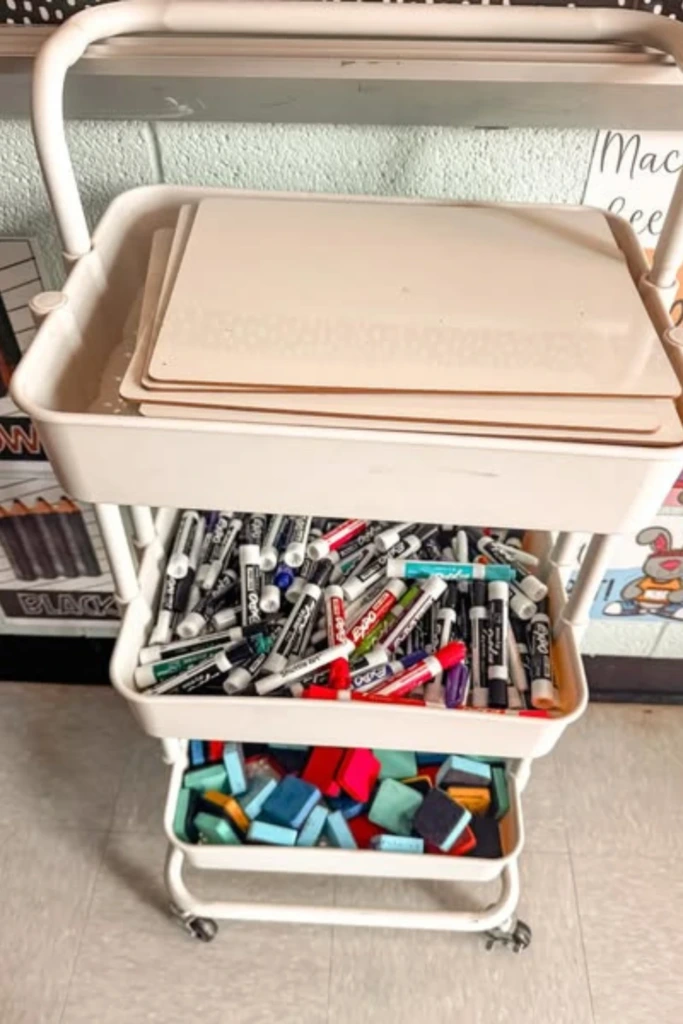
Markers and whiteboard accessories are easy to lose when they do not have a consistent storage system. A dedicated reset cart gives teachers, students, and workshop participants a convenient place to collect and return these supplies.
Use one container for working markers, another for dry or damaged ones that need checking, and a separate compartment for erasers and cleaning cloths. Keep spare markers in their original packaging on a lower shelf.
Organizing by condition helps you identify supplies that need replacing instead of repeatedly searching through mixed containers. A simple return routine at the end of each class keeps the cart ready for the next session.
12. Home Gym Cart
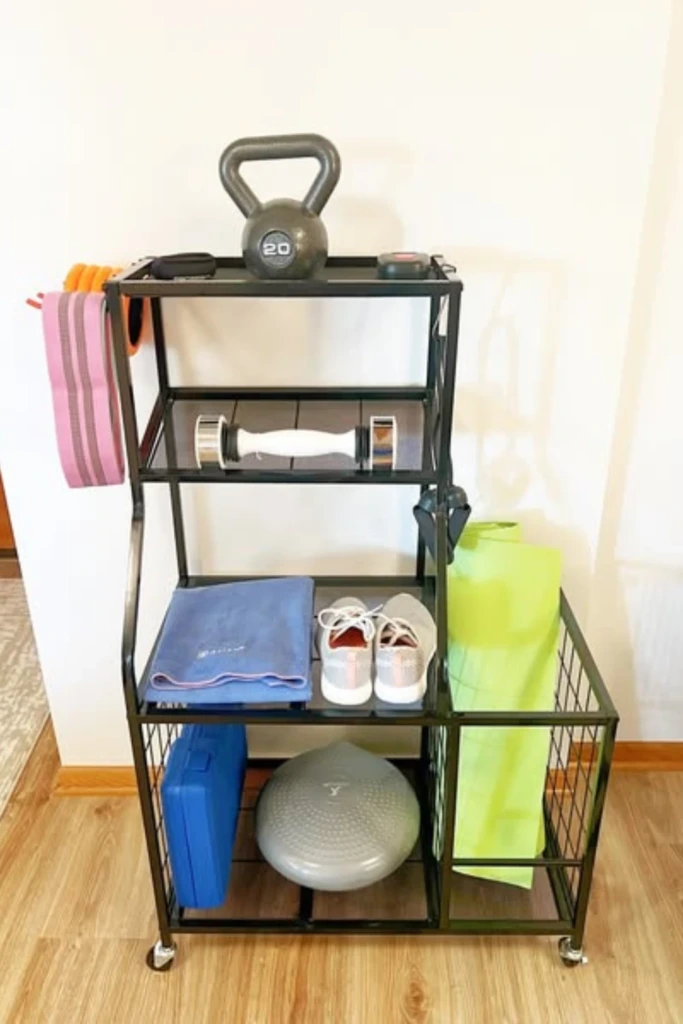
Keep compact workout accessories together with a cart that can move between your exercise area and storage space. Resistance bands, jump ropes, yoga straps, towels, and small mobility tools are suitable options.
Place lightweight accessories in divided containers on the top shelf and roll up bands or straps to prevent tangling. Store heavier equipment on the bottom tier to improve stability, while keeping enough room for items to be removed without lifting the entire load.
Use baskets that can be wiped clean after workouts, and avoid exceeding the cart's weight capacity. Large weights and bulky equipment are better stored on a stable surface designed to support them.
13. Paint Supply Flow
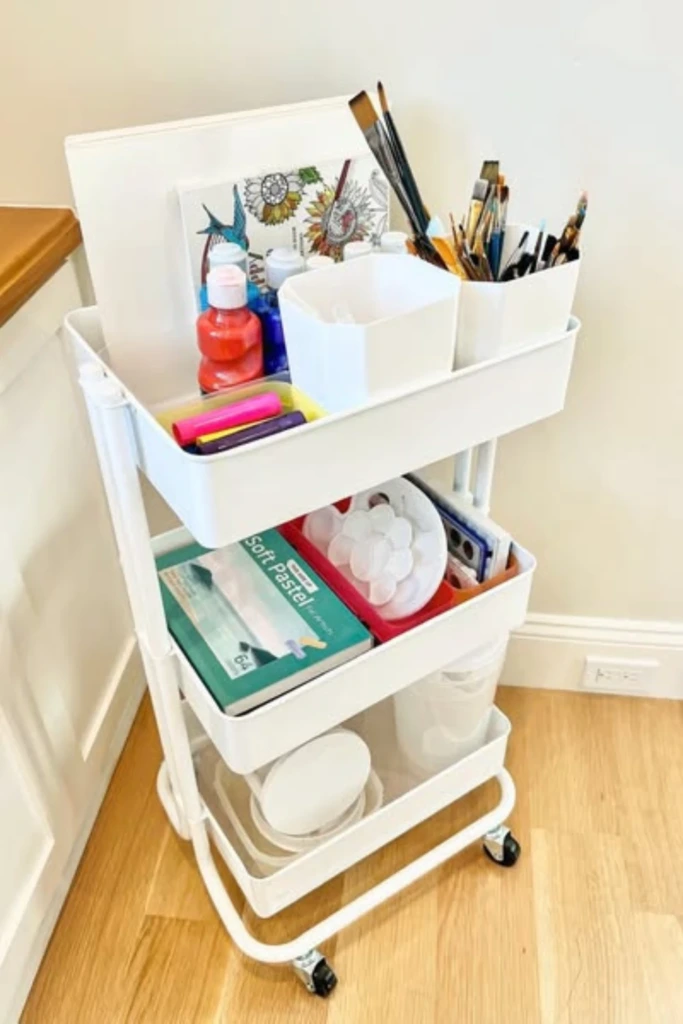
An art cart becomes more practical when materials are arranged according to the stages of a painting project. Keep commonly used paints, brushes, palettes, and water containers near the top, with sketchbooks and clean paper on a separate shelf.
Use upright holders for brushes and small divided boxes for tubes of paint. Place unopened refills and less frequently used materials below, keeping liquids in secure containers to reduce spills.
Protect paper from moisture and avoid stacking paint tubes where they can roll off the shelves. If children use the cart, choose age-appropriate materials and store potentially hazardous products safely.
This setup is useful for hobby painters, family art corners, and studios where projects may continue over several sessions.
14. Category Split Carts
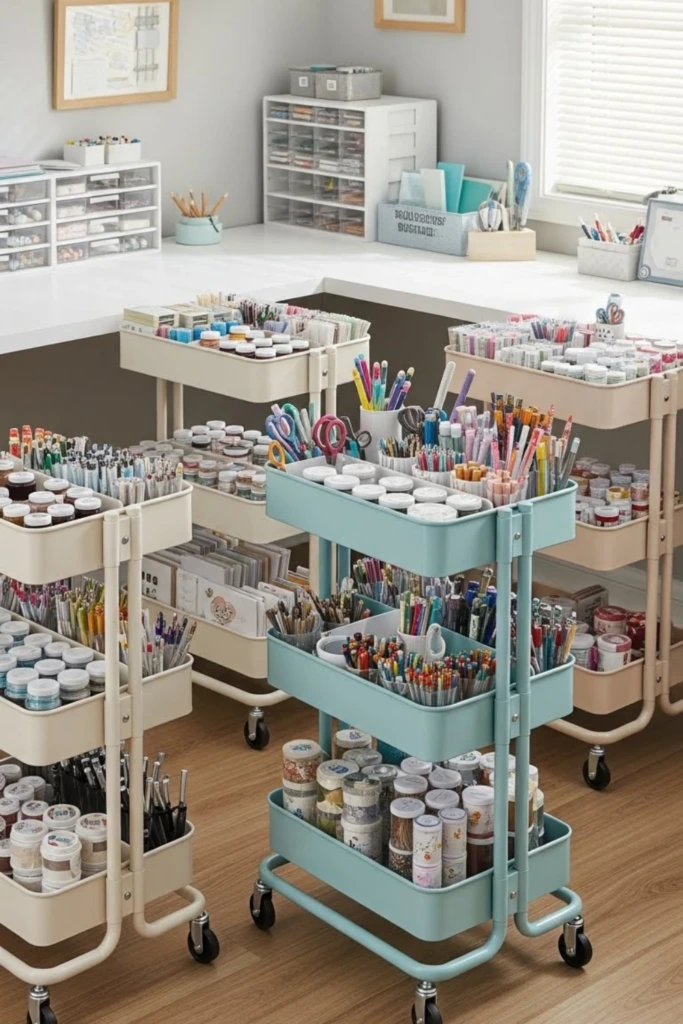
When one cart can no longer hold everything comfortably, dividing supplies between two carts may be more effective than adding more containers to an overcrowded shelf.
Assign each cart a specific category. For example, one can hold paper, markers, and cutting tools, while the other stores yarn, fabric, and sewing accessories. Keep the items associated with each project together so you can move the appropriate cart to your work area.
Matching colors or container styles can create a coordinated appearance without mixing unrelated supplies. Leave enough space between carts to move them independently, and ensure both remain stable when loaded.
15. Living Room Planner
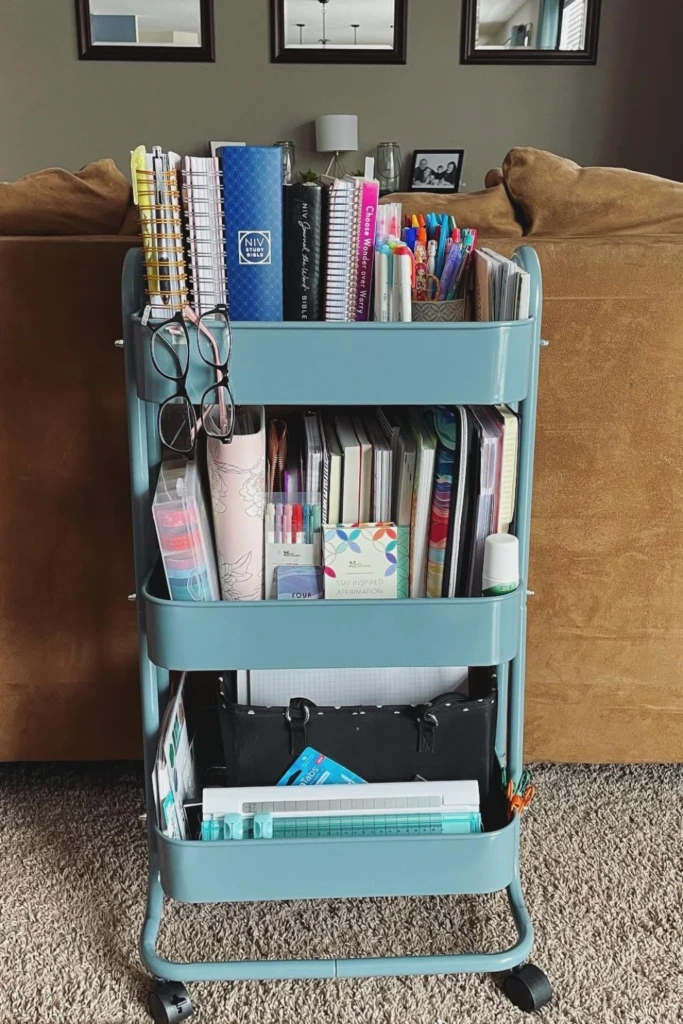
A rolling cart can create a compact planning station in a living room without requiring a permanent desk. It is especially useful if you manage household schedules, personal projects, journaling, or family paperwork.
Store planners, notebooks, and folders vertically so you can browse them easily. Use a small holder for pens and highlighters, and reserve another container for sticky notes, clips, and other stationery.
Keep heavier binders and reference materials on the bottom shelf to maintain balance. A neutral finish can help the cart blend with your furniture, while a small tray on top provides a convenient place for your current planning materials.
16. Bathroom Care Cart
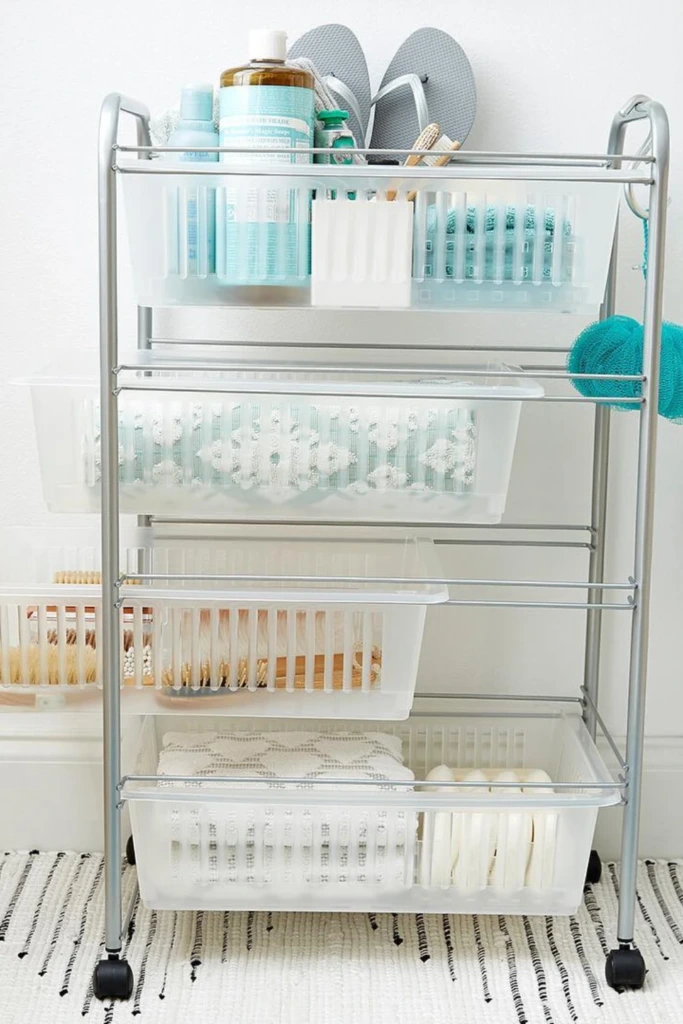
A bathroom cart can keep everyday personal-care products together, especially when cabinet space is limited or several people share the same bathroom.
Arrange frequently used skincare, hairbrushes, and grooming accessories on the top shelf. Use separate bins for hair products, facial care, and personal hygiene supplies, with unopened toiletries and spare towels stored below.
Choose moisture-resistant containers that are easy to wipe clean. Keep products closed, remove any leaking bottles promptly, and avoid storing items where water can collect.
If the bathroom becomes humid after showers, move moisture-sensitive products to a cooler, drier location when necessary. Clear containers also make it easier to notice which essentials are running low.
17. Kids Activity Cart
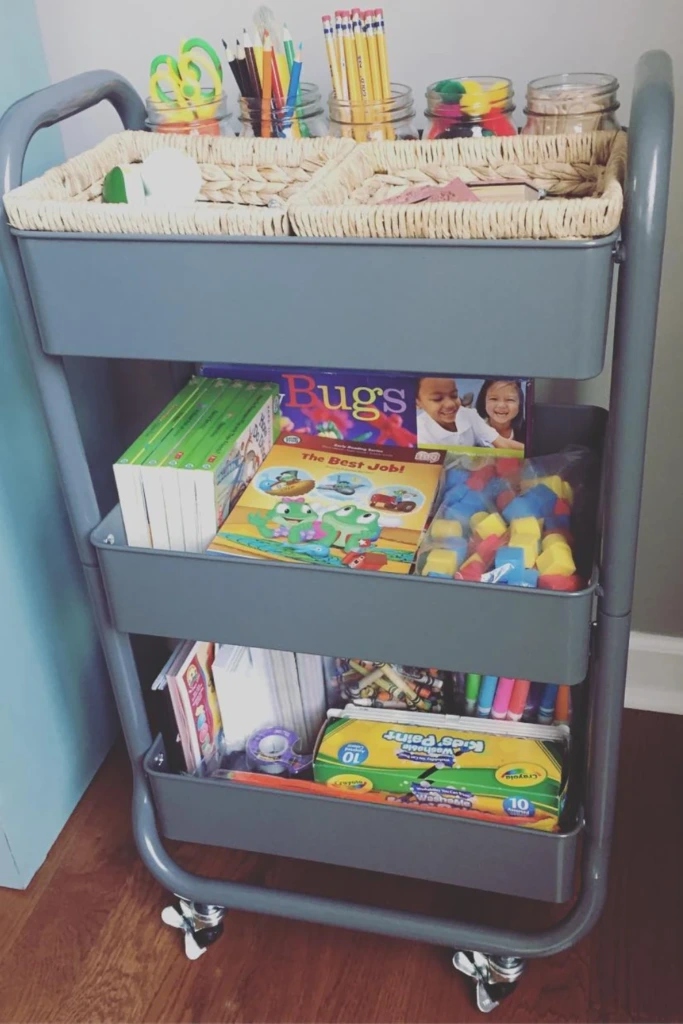
Encourage independent play by creating a cart that makes age-appropriate activities easy to find and put away. Store coloring supplies, simple puzzles, picture books, and selected building toys in separate containers.
Keep the items children use most often at a comfortable height, with heavier toys placed lower for better balance. Small jars or cups can hold crayons and pencils, while baskets are useful for larger toys and activity sets.
Rotate some supplies every few weeks to keep the selection interesting without filling every shelf. Make sure small parts, sharp tools, and materials unsuitable for younger children remain securely stored out of reach.
A clearly organized cart helps children learn where things belong and makes cleanup more manageable for the whole family.
18. Device Charging Cart
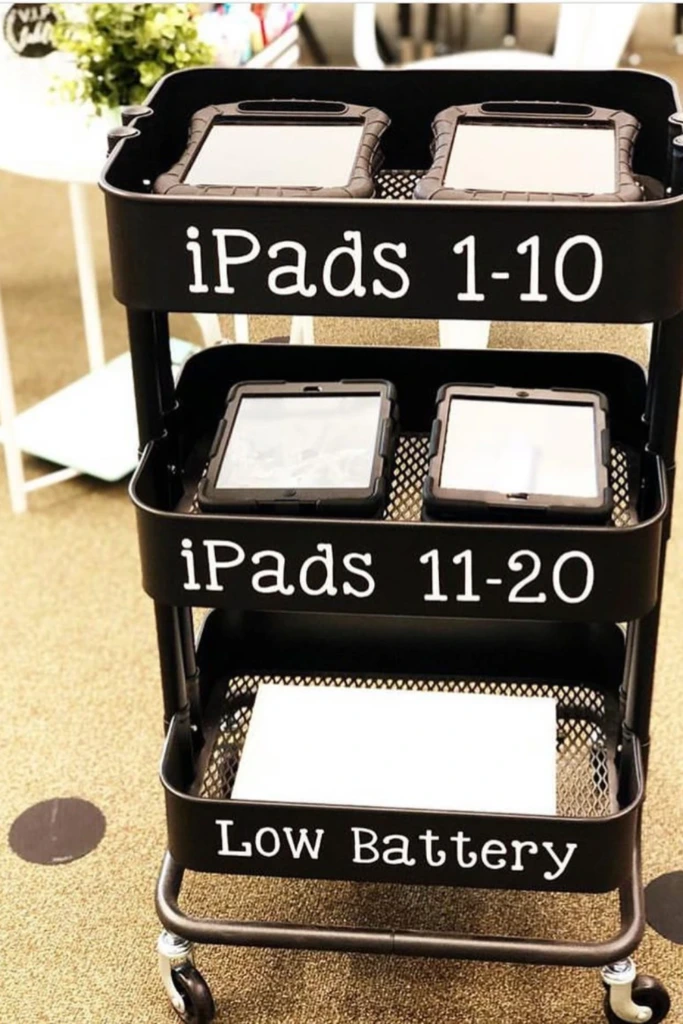
A designated technology cart can help manage tablets, phones, and other shared devices in a classroom, office, or household. Assign each device a labeled space so it can be returned to the correct location after use.
Keep charging cables organized with suitable clips or cable-management accessories. Avoid letting cords dangle where they can snag, and make sure each device has adequate ventilation while charging.
Choose a cart with shelves and electrical arrangements designed for the devices you intend to store. Use compatible chargers and follow the manufacturers' charging guidance. Do not overload extension cords or power strips, and keep the setup away from liquids.
A clear return system makes it easier to identify devices that need charging and reduces the risk of misplaced equipment.
19. Classroom Workflow Cart
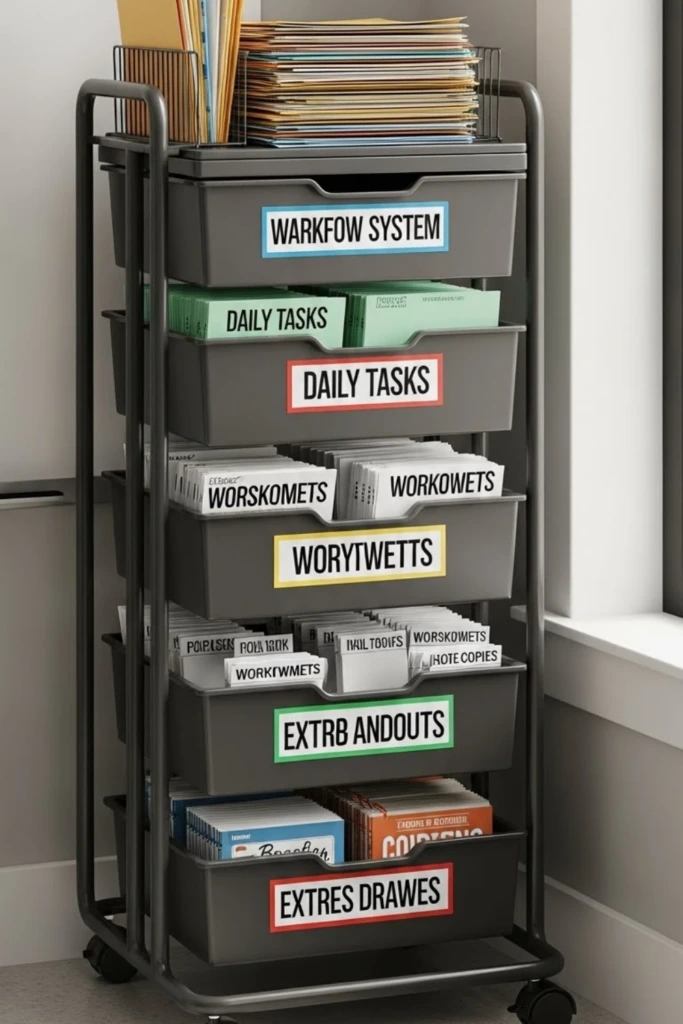
Teachers often handle worksheets, completed assignments, handouts, and administrative paperwork throughout the day. A rolling cart with labeled trays or drawers can help keep those materials moving through a consistent process.
Create separate sections for work that needs grading, documents ready to return, upcoming lesson materials, and papers that require filing. Adjust the categories to match the classroom's actual workflow rather than creating unnecessary steps.
Use labels that students and staff can understand immediately. Keep active paperwork at a convenient height and archive older materials elsewhere to prevent the cart from becoming a long-term dumping ground.
This system is particularly useful in busy classrooms where documents need to move between teachers, students, and learning stations.
20. Makeup Routine Cart
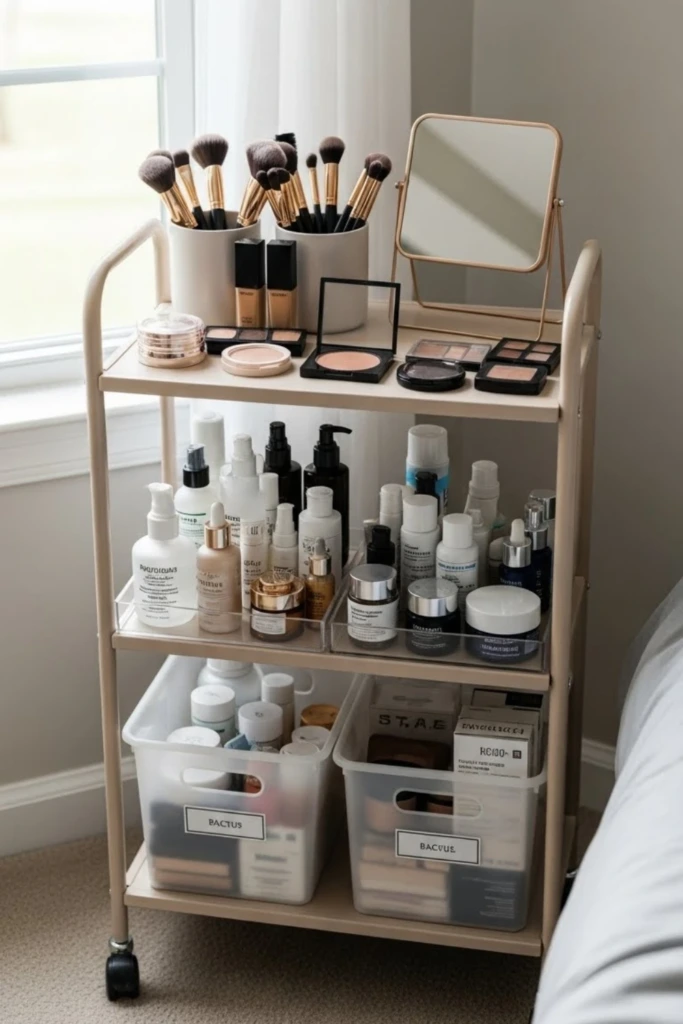
Organize beauty products around the order in which you use them. Keep everyday makeup, brushes, and frequently used accessories on the top shelf, with skincare products and additional cosmetics arranged below.
Use small compartments for lip products, pencils, and other items that tend to disappear among larger containers. Clear organizers help you see what you already own, making it easier to avoid buying duplicates.
Store backup products and less frequently used palettes on the bottom tier. Keep makeup brushes clean and dry, close all containers after use, and discard products according to their labels and condition.
If your vanity has limited space, choose a narrow cart that can slide beside the table when you finish getting ready.
21. Laundry Supply Cart
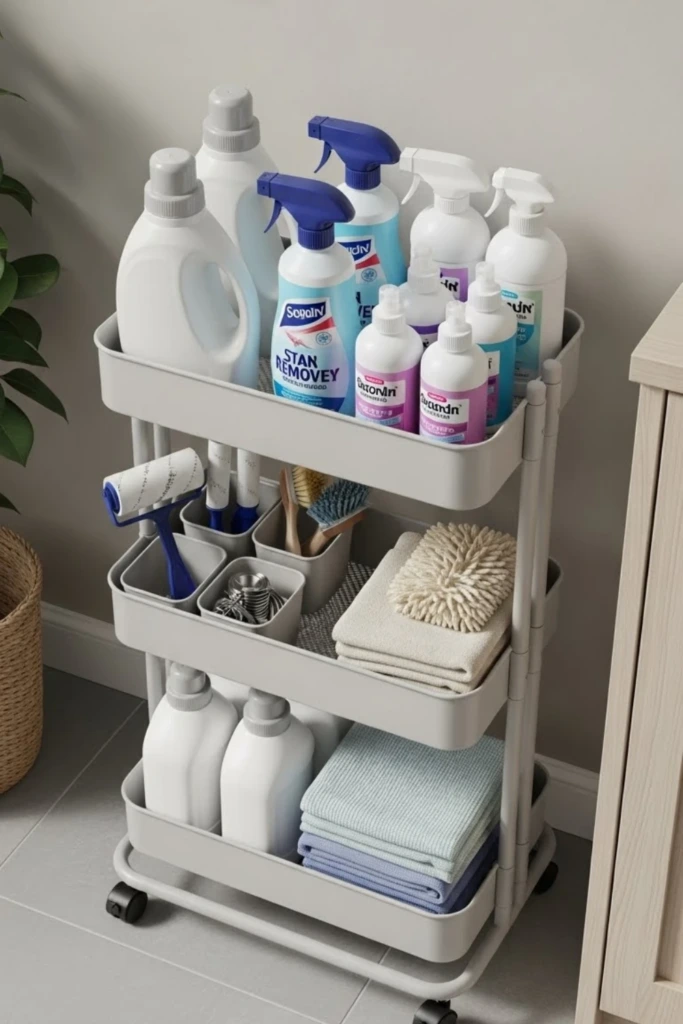
Make laundry day more efficient by keeping washing supplies and garment-care tools in one mobile location. A cart can hold detergent, stain-treatment products, lint rollers, laundry brushes, and mesh bags for delicate clothing.
Use a tray to contain bottles and prevent drips from spreading across the shelves. Store heavier detergent containers on the bottom tier and place smaller accessories in baskets so they remain easy to find.
Keep refill products together and check containers periodically for leaks. Cleaning chemicals should remain in their original labeled packaging and be stored securely away from children and pets.
A narrow cart can fit beside a washing machine or in a laundry closet, allowing you to move supplies where they are needed without carrying several items at once.
22. Coffee Bar Cart
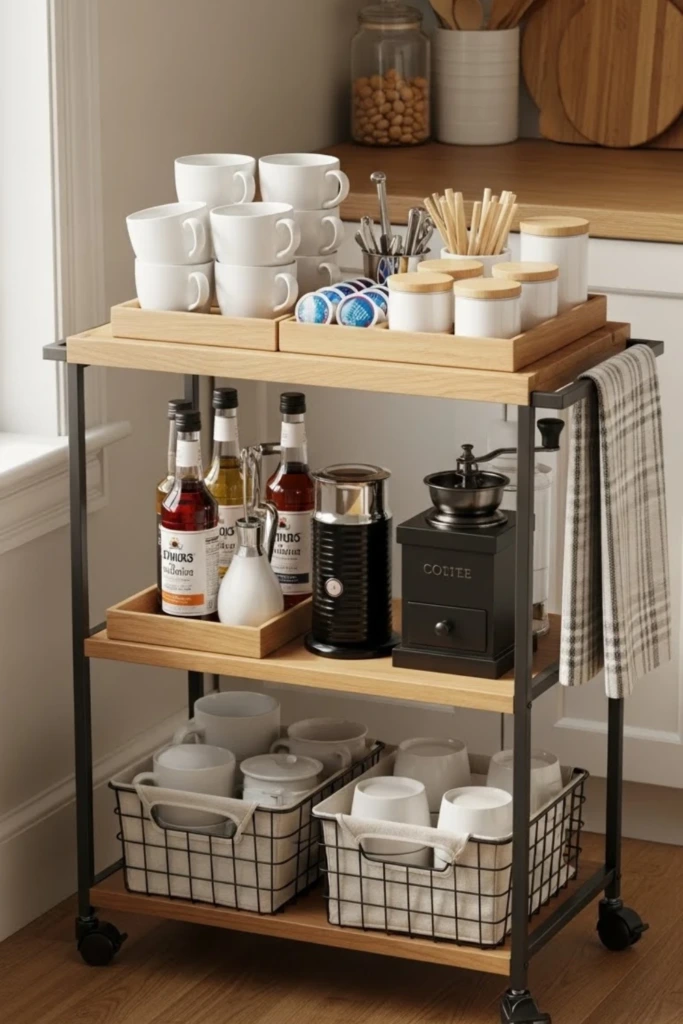
A coffee cart provides a dedicated home for brewing accessories without taking over the main kitchen counter. Depending on its size and weight capacity, it can hold mugs, coffee beans, pods, filters, spoons, and sweeteners.
Place frequently used accessories on the top shelf and arrange smaller items in trays to keep them from spreading out. Use the middle tier for sealed coffee supplies, syrups, and measuring tools, while extra mugs and unopened packages can go below.
If you plan to place a coffee maker on the cart, verify that the surface can support its weight and that the appliance can be operated safely. Keep hot liquids away from the cart's edges, manage electrical cords carefully, and leave sufficient space for ventilation and cleaning.
This arrangement works well in a kitchen corner, dining area, or dedicated beverage station.
23. Cleaning Caddy Cart
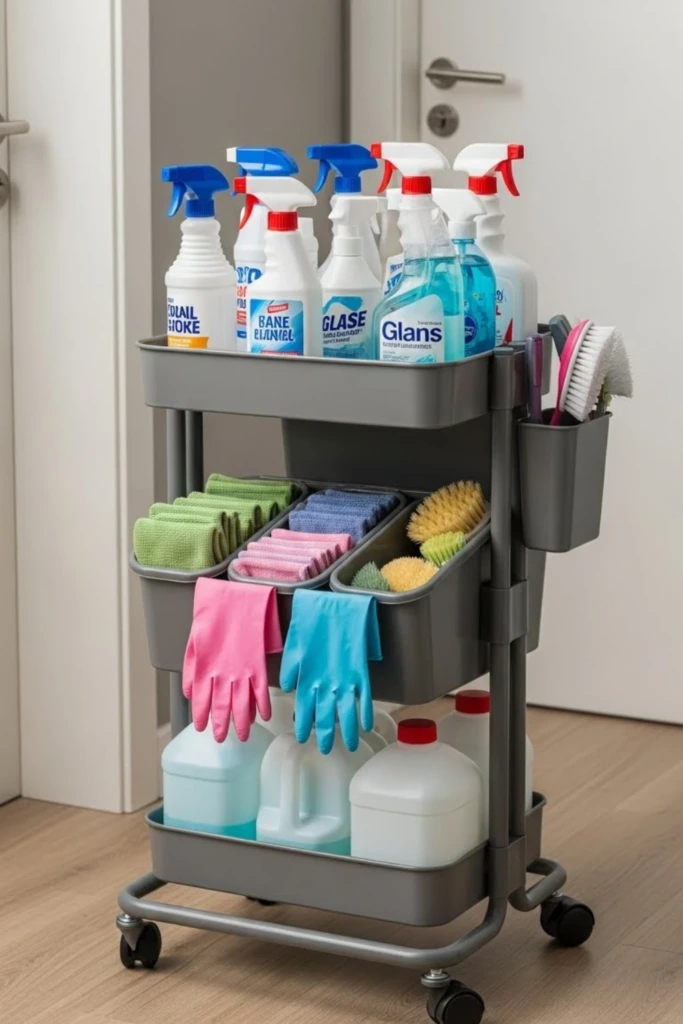
Collect your everyday cleaning tools in one mobile cart so you can move between rooms without repeatedly returning to a cupboard. Store suitable surface cleaners, microfiber cloths, sponges, gloves, and scrub brushes in separate sections.
Place frequently used products on the upper shelf and arrange cloths or smaller tools in washable baskets. Keep larger refill bottles on the bottom tier, ensuring the weight is distributed evenly.
Use leak-resistant containers and clean the cart regularly to remove dust, residue, and spills. Never mix cleaning chemicals, particularly bleach with ammonia or acidic products, and keep hazardous cleaners in their original packaging away from children and pets.
For larger homes, a mobile cart can reduce trips between rooms. In smaller apartments, a compact model can be stored in a utility cupboard when it is not needed.
24. Sewing Project Cart
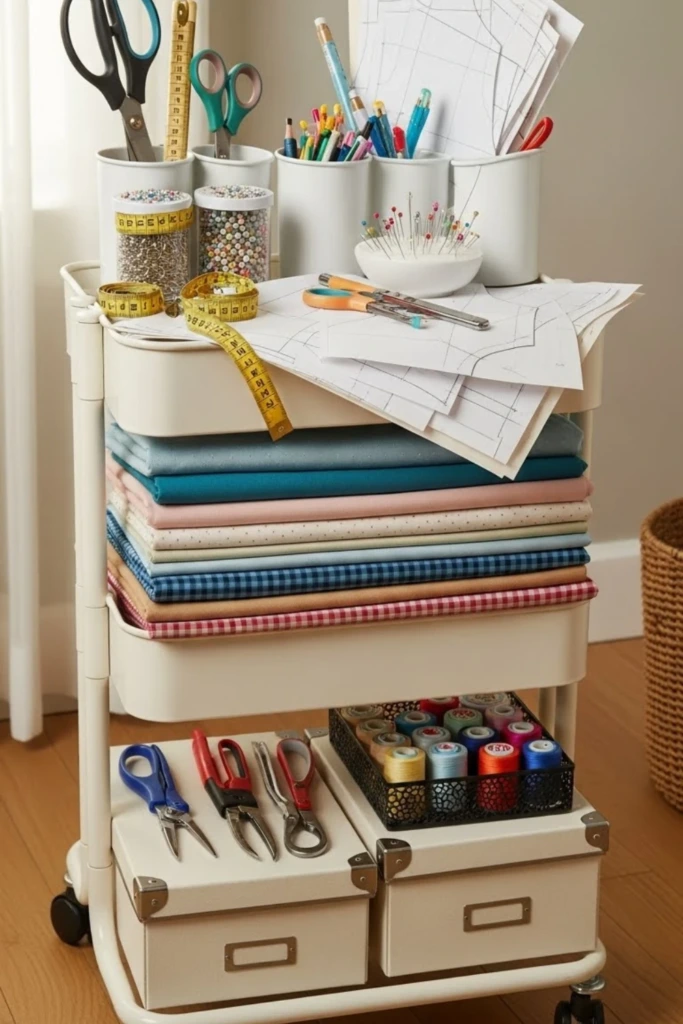
Keep your current sewing project organized by grouping the materials and tools needed to complete it. Store patterns, measuring tapes, thread, pins, and scissors in designated containers so you can start working without searching through multiple drawers.
Fold or roll fabric on the middle shelf according to the size of each piece. Use divided boxes for buttons, needles, bobbins, and other small notions, and keep the active pattern or project instructions near the top.
Reserve the bottom tier for heavier fabric bundles or storage boxes. If your sewing machine is too heavy or unstable for the cart, leave it on a dedicated table and use the cart for supporting supplies instead.
This setup is especially convenient for people who work on several projects or need to clear their sewing table between sessions.
25. Entryway Drop Cart
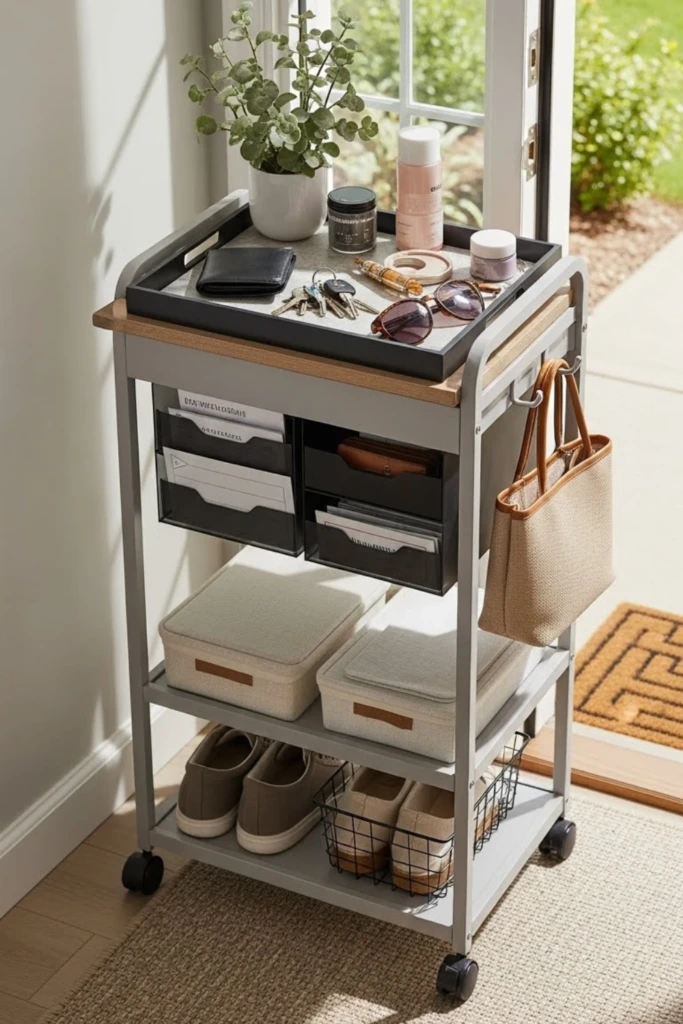
Create a designated landing area for the items that tend to collect near the front door. A small rolling cart can hold keys, sunglasses, wallets, incoming mail, reusable shopping bags, and other everyday essentials.
Use a shallow tray on top for small belongings and a basket on the middle shelf for mail or accessories. Shoes, folded shopping bags, or other suitable heavier items can occupy the bottom tier.
Give each family member a labeled container if several people share the space. Review mail regularly instead of letting it accumulate, and return keys and wallets to their designated spots after arriving home.
Choose a compact cart that does not block the doorway or create a tripping hazard. Lock the wheels when it is parked, especially on smooth floors or near a frequently used entrance.
What can I store in a rolling cart?
A rolling cart can accommodate many different household and work supplies, provided its shelves are suitable for their size and weight. Common choices include stationery, craft materials, books, pantry goods, beauty products, bathroom essentials, laundry supplies, cleaning tools, children's activities, and compact fitness accessories.
The most effective arrangement keeps items with a shared purpose together. For example, a craft cart might have one shelf for paper, another for drawing tools, and a third for refills. A kitchen cart could separate everyday ingredients from backup supplies.
Before loading the cart, check its weight capacity and make sure the items fit securely. Place heavier objects near the bottom, avoid unstable stacks, and keep frequently used supplies easy to reach.
How do I stop a rolling cart from getting messy?
The easiest way to prevent clutter is to establish a permanent place for every item. Decide what each shelf will hold and avoid using empty spaces as temporary storage for unrelated belongings.
Use appropriately sized bins to contain loose supplies, and add labels when they make the system easier to follow. Do not fill every available inch; leaving a little room makes it simpler to retrieve items and return them after use.
Spend a few minutes resetting the cart regularly. Remove empty packaging, return misplaced items, check supplies that need replenishing, and discard anything that no longer belongs there.
Finally, review the arrangement whenever your needs change. If the cart repeatedly becomes overcrowded, move backup items elsewhere or dedicate a second cart to a different category. A simple system that matches your daily habits will be much easier to maintain than an elaborate setup that requires constant rearranging.