
16 Plastic Bag Organization Ideas for 2026
This post contains affiliate links. As an Amazon Associate, Cozylis earns from qualifying purchases at no extra cost to you.
Plastic grocery bags have a way of accumulating in unexpected places. One day, you have a few tucked beneath the kitchen sink, and before long, an entire drawer is overflowing with them. Finding a practical storage solution can make your kitchen feel more organized while keeping reusable bags within easy reach.
Need storage for handbags, totes and backpacks? See our bag organization ideas.
The good news is that organizing plastic bags doesn’t require expensive containers or a complete kitchen makeover. From hanging dispensers and drawer dividers to simple DIY fabric holders, there are plenty of creative ways to manage your collection.
These 16 plastic bag organization ideas for 2026 will help you reduce clutter, maximize available space, and create a storage system that works with your everyday routine.
Jump to section (4)
Our Top Picks


How Often Should I Declutter Stored Plastic Bags?
Plastic bags can accumulate surprisingly quickly, especially in households that frequently purchase groceries or order takeout. Reviewing your collection every one to three months is a practical way to prevent unnecessary buildup.
Start by emptying your current storage area and separating usable bags from damaged ones. Discard bags that are torn, excessively dirty, or no longer suitable for reuse, following local waste-disposal guidelines.
Next, consider how many bags your household actually uses. If you regularly reuse grocery bags for small trash bins or other household tasks, keeping a modest supply makes sense. However, storing hundreds of bags that never get used only wastes valuable space.
Choose a dedicated container and establish a simple rule: once it reaches capacity, use up your existing supply before adding more. Clean, dry bags you no longer need may be accepted at designated plastic-film recycling collection points, depending on local facilities.
Making bag organization part of your regular kitchen cleaning routine helps maintain a clutter-free home without adding another complicated chore.
Hanging Mesh Dispenser

A hanging mesh dispenser is an excellent solution for households with limited cabinet or drawer space. Its vertical design allows you to store numerous lightweight bags without occupying valuable shelving.
Attach the dispenser to a pantry door, utility room wall, or cabinet interior using a suitable hook. Insert folded or loosely gathered bags through the upper opening and remove them from the bottom whenever needed.
The breathable mesh construction makes it easy to identify how many bags remain inside. It also helps prevent moisture from becoming trapped around bags that have been properly cleaned and dried.
Choose a washable dispenser with reinforced stitching for better durability. A neutral-colored design can blend naturally into your kitchen, while a colorful version adds personality to an otherwise plain storage corner.
Wall-Mounted Dispensers

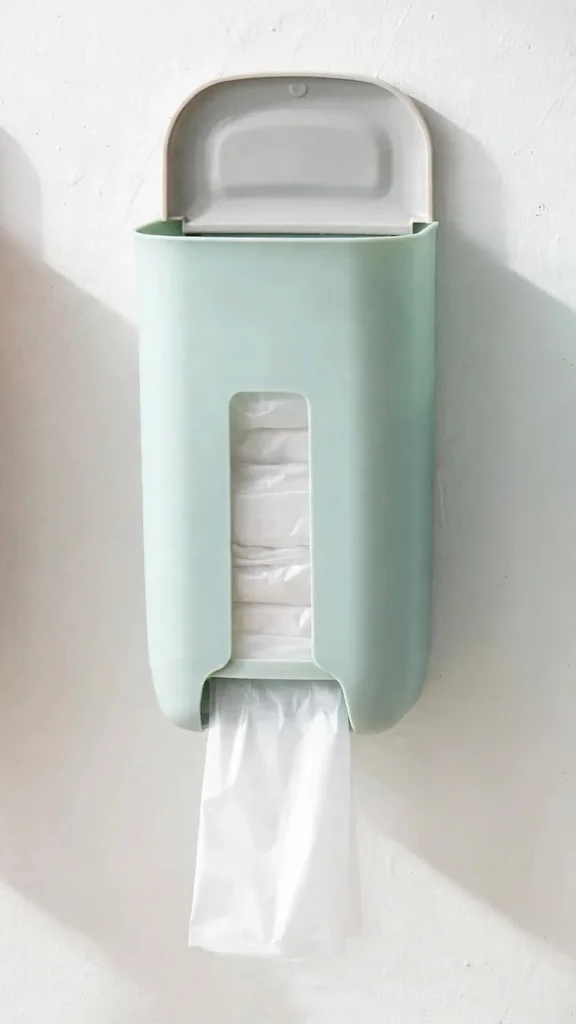
Wall-mounted plastic bag dispensers provide a permanent storage location while keeping countertops and drawers available for other essentials.
These organizers typically feature a top opening for loading bags and a lower slot for removing them individually. Some designs use adhesive mounting strips, while others require screws for a more secure installation.
Position the dispenser near your kitchen trash can, pantry entrance, or laundry area to make retrieving bags convenient.
For smaller kitchens, a narrow dispenser installed along an unused wall section can make a noticeable difference. Select a finish that complements your cabinets or appliances for a coordinated appearance.
Avoid filling the container too tightly, as compressed bags can become difficult to remove.
Countertop Bag Tower

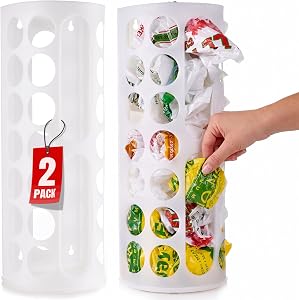
A countertop bag tower offers a convenient storage option for anyone who prefers keeping everyday supplies visible and accessible.
Unlike hanging organizers, these upright containers sit directly on a counter or shelf. Their compact footprint makes them suitable for kitchens with sufficient surface space.
To create an orderly arrangement, flatten each bag, fold it into a manageable shape, and stack it inside the tower. Depending on the dispenser design, bags can be removed through a front or bottom opening.
Choose a lightweight container that is easy to clean, particularly if it sits near food preparation areas.
A simple white, gray, or transparent tower works well in modern kitchens. If your countertops are already crowded, place the organizer on an accessible pantry shelf instead.
Inside-Cabinet Rolls

Inside-cabinet roll storage is ideal for people who want to keep plastic bags completely out of sight.
This method involves folding or rolling individual bags into compact bundles and arranging them inside a holder mounted to the cabinet wall or door.
You can use a purpose-built dispenser or repurpose a narrow organizer with separate compartments. Keeping the rolls aligned makes it easier to remove one without disturbing the rest.
Install the holder near your waste bin or cleaning supplies, provided it doesn’t interfere with plumbing or cabinet hinges.
Before mounting anything, measure the available clearance and check whether the cabinet door can close comfortably.
This storage approach is especially useful in apartments where every drawer and shelf needs to serve a specific purpose.
Door Basket Storage

The inside of a cabinet door often provides unused space that can become surprisingly valuable for organization.
An over-the-door wire basket transforms that empty area into a convenient place for storing folded grocery bags. Since many models hang over the cabinet edge, installation may require no drilling.
Arrange the bags loosely inside the basket, keeping the most frequently used sizes near the front.
Wire baskets offer good visibility and allow air to circulate around the contents. They are also versatile enough to hold reusable shopping totes or small cleaning accessories.
Choose a shallow basket so it doesn’t collide with shelves, pipes, or items already stored inside the cabinet.
For a more organized appearance, consider matching baskets across multiple cabinet doors.
Color-Coded Tubes
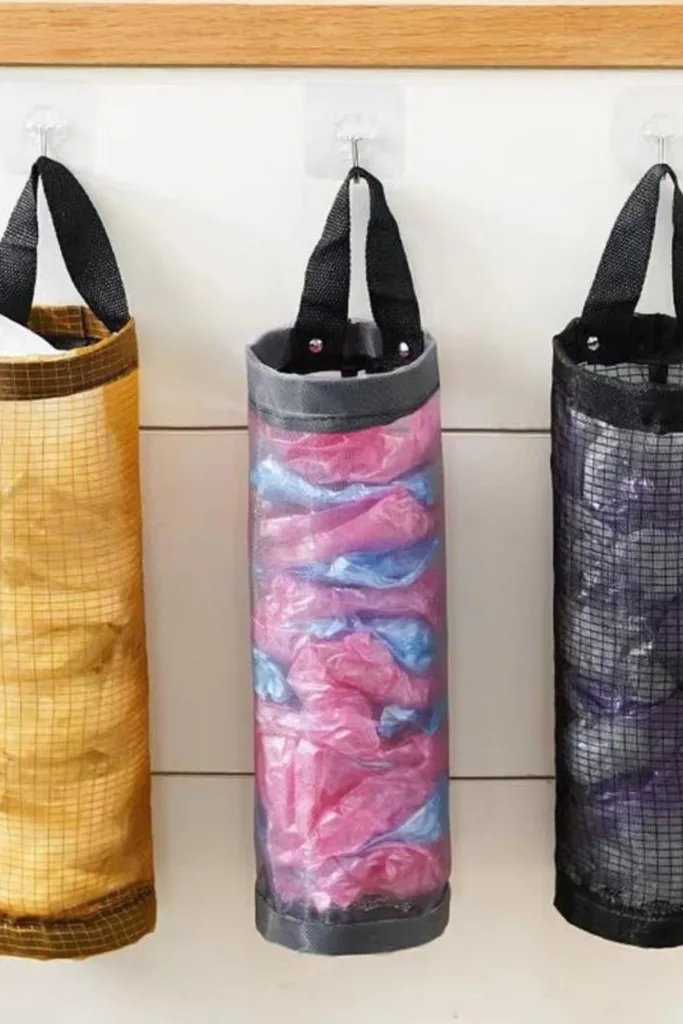
Color-coded storage tubes make it easier to separate different types of plastic bags without opening multiple containers.
Assign a different color to each category. For example, use one tube for small grocery bags, another for larger shopping bags, and a third for lightweight bags used during household cleaning.
Hang the tubes side by side in a pantry, laundry room, or utility closet.
Mesh tubes are particularly useful because their flexible material accommodates irregularly folded bags while keeping the contents visible.
You can also attach small labels to make the system understandable for everyone in the household.
This approach works especially well for families that reuse bags for several purposes and want to avoid mixing different sizes.
High-Use Dispenser

When plastic bags are part of your daily routine, convenience matters more than elaborate folding techniques.
A high-use dispenser provides a designated location where bags can be inserted quickly and retrieved with minimal effort.
Choose a model with a wide loading opening and a smaller dispensing hole that helps control how many bags come out at once.
Mount it near a frequently used trash bin, inside a pantry, or beside your kitchen cleaning station.
For smoother operation, avoid compressing the contents into a tightly packed bundle. Leaving some space allows individual bags to move toward the opening.
A durable, washable dispenser is a practical choice for busy households where several family members access the same supplies.
Crocheted Bag Sleeve

A crocheted bag sleeve combines everyday storage with handmade decorative charm.
This organizer resembles a long fabric tube with an upper opening for inserting bags and a narrower opening at the bottom for removing them.
You can purchase a handmade sleeve or create one using cotton yarn and a simple crochet pattern.
Hang it from a wall hook, cabinet knob, or pantry rail where it remains easy to reach.
For a farmhouse-inspired kitchen, consider cream, beige, or muted green yarn. Bright patterns can add a playful accent to laundry rooms or craft spaces.
Cotton yarn is often a practical choice because it can be washed according to the yarn’s care instructions.
The finished sleeve keeps lightweight bags contained while adding texture and personality to your storage area.
Drawstring Fabric Sack

A drawstring fabric sack offers a flexible alternative to rigid plastic containers.
Its soft construction allows it to fit into narrow spaces, making it suitable for pantry doors, utility closets, and compact kitchens.
Look for a design with a drawstring closure at the top and a dedicated dispensing opening near the bottom.
To use it, insert clean, dry bags through the upper opening and remove them individually as needed.
If you enjoy sewing, this organizer can also become a simple DIY project using leftover cotton fabric.
Choose a washable material and reinforce the hanging loop to support repeated use.
A patterned fabric sack can double as a decorative accessory, while a plain design blends into minimalist interiors.
Peg Hook Hang

Sometimes the simplest organization methods are the most effective.
A sturdy peg hook provides an easy place to hang plastic bags without purchasing a specialized dispenser.
Install a hook inside a utility closet, garage, or pantry, then gather bags by their handles and hang them together.
For better organization, separate small and large bags onto different hooks.
This arrangement works best for a limited collection because too many bags can create a bulky, tangled cluster.
Use hooks with smooth edges to reduce the likelihood of tearing thin plastic handles.
If you’re renting, removable adhesive hooks may be suitable for lightweight loads when used according to the manufacturer’s instructions.
Cabinet Door Cylinder

A cabinet door cylinder provides discreet storage while making plastic bags accessible whenever you need them.
These cylindrical holders are typically designed with an opening at the top and a dispensing cutout along the front or bottom.
Mount the organizer on the interior of a cabinet door, ideally close to where you regularly use the bags.
The vertical shape keeps bags gathered in one location rather than scattered across shelves.
Before installation, check the cylinder’s depth to ensure it won’t interfere with the cabinet’s contents.
Choose a smooth, easy-to-wipe material for convenient maintenance.
This method is particularly effective in kitchens where maintaining a clean, uncluttered appearance is a priority.
Slim Wall Slots

Slim wall-slot organizers are designed for narrow areas where traditional storage baskets would take up too much room.
These low-profile holders keep folded plastic bags arranged in compact stacks that can be accessed through an opening.
Install one on an unused pantry wall, beside a cabinet, or inside a narrow storage cupboard.
Fold bags into similarly sized rectangles before placing them inside. Consistent folding makes the stack more stable and prevents individual bags from catching on one another.
If you have several bag sizes, use separate slots to keep them organized.
Choose an organizer with rounded edges to avoid damaging delicate plastic.
This solution works particularly well in small kitchens where maximizing vertical space is essential.
Drawer Bag Sorting
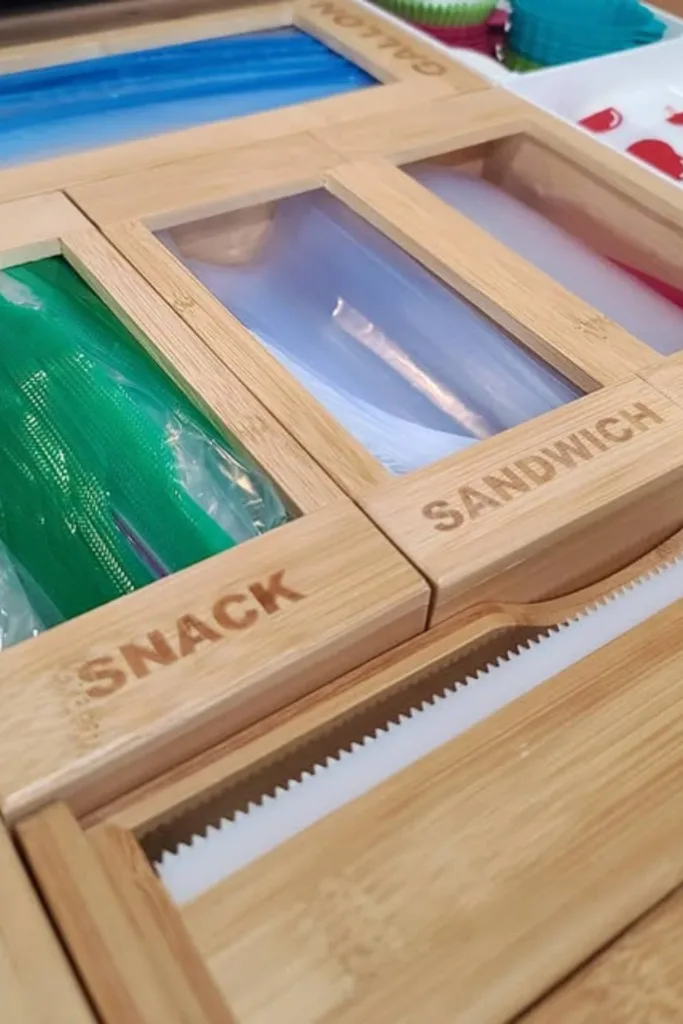
A dedicated drawer can become an efficient plastic bag storage station when its contents are divided into clearly defined sections.
Start by removing everything from the drawer and measuring the available space.
Use adjustable dividers, small trays, or shallow containers to create separate areas for different bag sizes.
Fold bags flat or into compact triangles before placing them into their assigned sections.
For example, one compartment might contain small shopping bags, while another holds larger bags suitable for lining household wastebaskets.
Avoid stacking bags so high that the drawer becomes difficult to close.
This method makes it easy to see your remaining supply and helps prevent new bags from being pushed randomly into the back.
Clear Drawer Inserts

Clear drawer inserts are an excellent option for anyone who appreciates a neat, visually organized storage system.
Transparent organizers allow you to identify bag categories immediately without moving containers around.
Select inserts that fit securely inside your drawer, leaving enough room for smooth opening and closing.
Arrange folded bags vertically when possible so individual pieces remain visible from above.
You can dedicate separate compartments to grocery bags, produce bags, and reusable shopping accessories.
Clear acrylic or plastic inserts are generally easy to wipe clean, making them suitable for kitchen storage.
For added convenience, label each section and maintain a reasonable quantity rather than allowing every compartment to overflow.
Tube Grid Wall

A tube grid wall turns unused vertical space into an organized display of neatly rolled plastic bags.
The concept involves mounting several short storage tubes in a grid pattern, creating individual compartments for different bag categories.
You can use a manufactured organizer or create a DIY version using lightweight tubes securely attached to a backing board.
Roll each bag into a compact cylinder and place it inside one of the openings.
Group similar sizes together to make selection easier.
This system works particularly well in garages, utility rooms, and larger pantries where wall space is available.
If making your own organizer, smooth any cut edges and ensure the mounting hardware can safely support the structure.
A symmetrical layout can make even a practical storage wall look intentional and attractive.
Open Mesh Pocket

An open mesh pocket provides a straightforward storage solution for households that want quick access without spending time folding every bag.
Mount the pocket inside a pantry, along a utility wall, or on the back of a cabinet door.
Simply place clean, dry bags into the upper opening and retrieve them whenever needed.
The mesh construction makes the contents visible, helping you monitor the supply without opening a container.
Look for a pocket with strong stitching and a secure hanging mechanism, particularly if it will be used frequently.
Because the material is flexible, it can accommodate bags of different shapes without requiring precise folding.
Keep the pocket moderately filled so bags remain easy to separate and remove.
FAQs
How many plastic bags should you actually keep?
The ideal number depends on your household size and how frequently you reuse plastic bags.
For many households, keeping approximately 10 to 20 bags is a reasonable starting point. Families that regularly use bags for small wastebaskets or other chores may need more.
Rather than focusing on a strict number, consider how many bags you typically use between shopping trips.
Choose one dedicated storage container and limit your collection to what fits comfortably inside it.
If you consistently have more bags than you need, switch to reusable shopping totes where practical and check whether local recycling facilities accept clean plastic bags.
Should plastic bags be cleaned before storing?
Yes. Plastic bags should be clean and completely dry before being placed in long-term storage.
Bags that previously held dry, packaged groceries may only need a quick inspection to remove crumbs or debris.
If a bag has been exposed to moisture or minor spills, clean it when appropriate and allow it to air-dry thoroughly before storing.
Avoid keeping bags with lingering odors, sticky residue, or visible contamination. Bags that carried raw meat, poultry, or fish should not be reused for food storage because of the risk of cross-contamination.
Regularly cleaning your bag organizer also helps prevent dust, unpleasant smells, and accumulated debris.
Conclusion
Organizing plastic bags is a small household improvement that can make everyday kitchen tasks easier. Whether you prefer a hanging mesh dispenser, a hidden cabinet organizer, a fabric sleeve, or neatly divided drawers, the best solution is one that fits your available space and daily habits.
Start with a manageable supply, give every bag a designated storage location, and review your collection regularly. With these 16 plastic bag organization ideas for 2026, you can maintain a tidier kitchen, reduce unnecessary clutter, and make better use of the bags you already own.





One Comment