18 Pan Storage Ideas for 2026
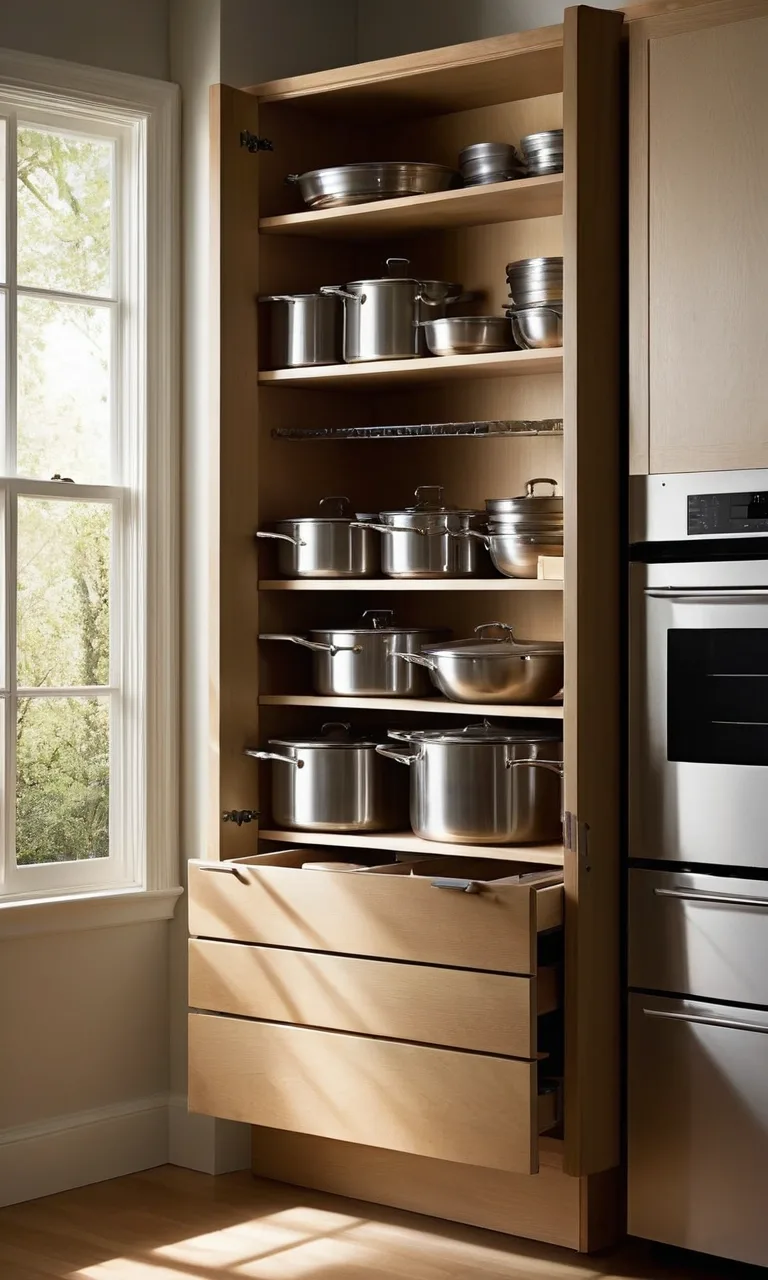
Keeping pots and pans organized can make a noticeable difference in how your kitchen functions. When cookware is piled inside a cabinet, finding the right skillet often means lifting heavy pots, moving lids, and rearranging everything afterward. This problem becomes even more frustrating in small kitchens where every inch of storage matters.
The good news is that you can improve your kitchen organization without replacing all your cabinets. Simple dividers, pull-out organizers, hanging rails, and well-planned shelves can turn crowded storage areas into practical spaces. The right solution depends on your cookware collection, available cabinet dimensions, and how frequently you cook.
These 18 pan storage ideas offer practical ways to arrange cookware, protect delicate surfaces, and make everyday cooking more convenient.
How Do You Store Pans Without Wasting Cabinet Space?
The most effective way to organize pans is to give each piece enough room to be removed without disturbing the others. Traditional stacking may seem convenient, but it can make frequently used cookware difficult to reach and increase the risk of scratches.
Vertical organizers are particularly useful because they allow frying pans and shallow cookware to stand on their sides. Deep drawers, adjustable shelf dividers, and pull-out racks are other excellent options for making cabinets easier to navigate.
Before buying an organizer, measure the cabinet's width, depth, and height. Consider the size of your largest skillet, the length of its handle, and the weight the storage system must support.
Keep your everyday cookware near the stove and place heavier pots on lower shelves. Use soft pan protectors when stacking items that could damage one another, and store lids separately if they make the cabinet difficult to close.
1. Pan Slots
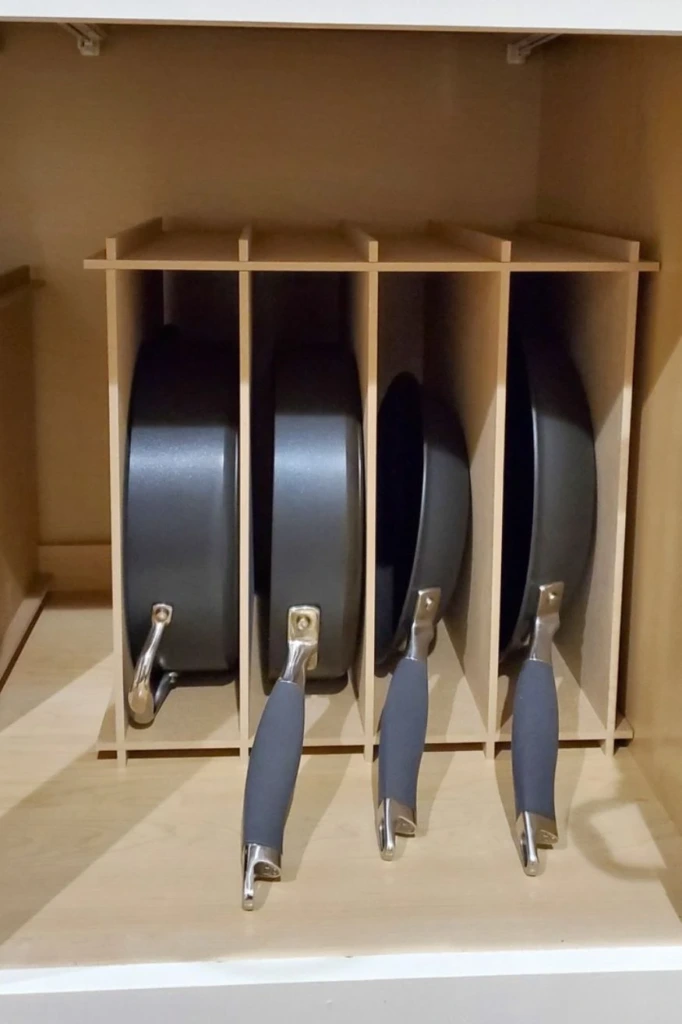
Vertical pan slots create individual spaces for cookware, preventing everything from becoming one unstable stack. A divider system works especially well in lower cabinets where pans are otherwise difficult to reach.
Arrange the slots according to the dimensions of your cookware. Narrow sections can accommodate smaller frying pans, while wider openings provide room for deep skillets and larger sauté pans.
You can install a purpose-built pan organizer or use adjustable cabinet dividers to achieve a similar result. Wooden separators are another option for homeowners who prefer a built-in appearance.
This arrangement is particularly helpful for nonstick cookware because it reduces direct contact between pan surfaces. Add protective guards where necessary, especially if the dividers are rigid or the pans have delicate coatings.
2. Drawer Space
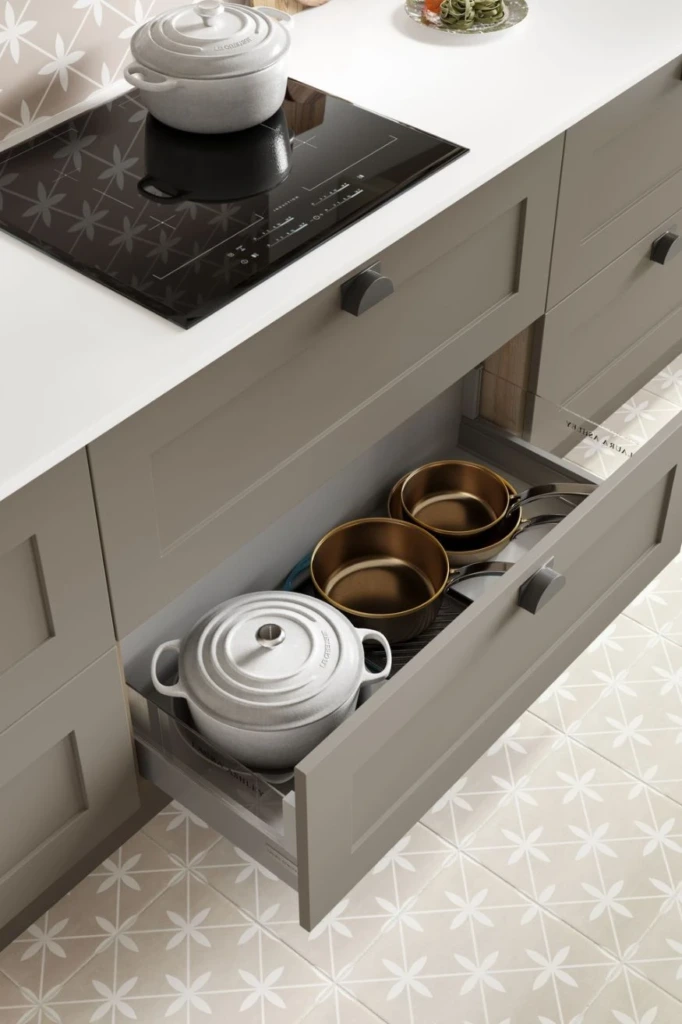
Deep kitchen drawers provide an accessible alternative to traditional cabinets. Instead of reaching into a dark cupboard, you can pull out the entire drawer and see your cookware at a glance.
Place frequently used frying pans in an easy-to-reach drawer near the cooking area. Smaller saucepans can occupy one section, while larger pots and Dutch ovens can be arranged in another.
Drawer dividers help keep cookware from shifting whenever the drawer opens or closes. A nonslip liner can provide additional stability, and protective pads can prevent stacked pans from rubbing against each other.
If you are designing a new kitchen, consider incorporating wide, deep drawers into the lower cabinetry. For an existing kitchen, check the available drawer dimensions and weight capacity before choosing an organizer.
3. Hook Hanger
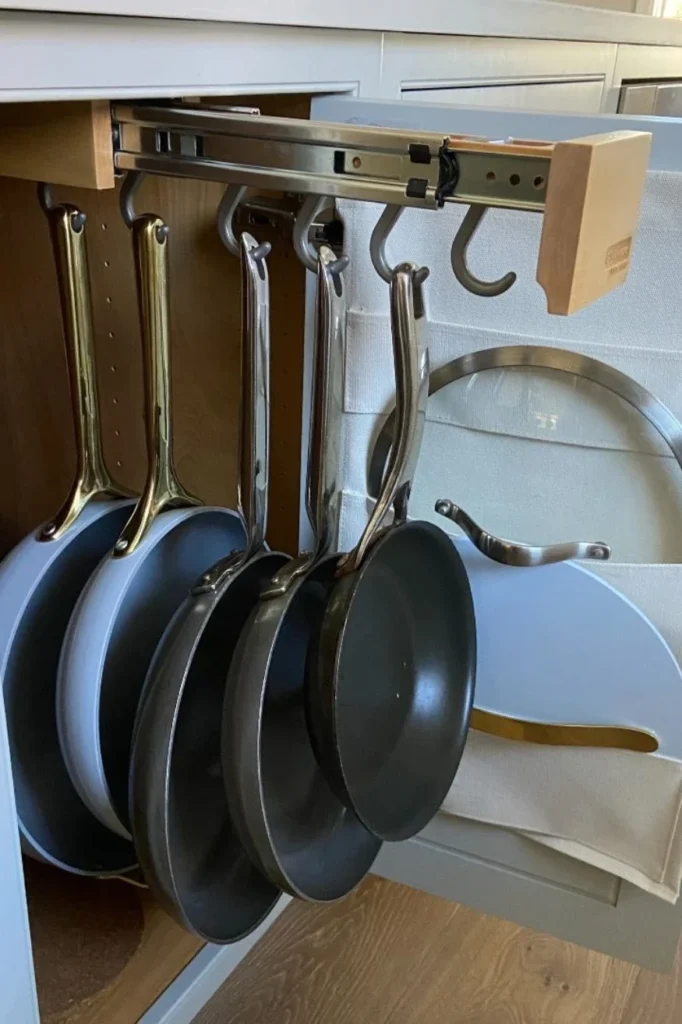
Hanging pans individually can free up valuable shelf space and make frequently used cookware easier to grab. A sliding hook system installed inside a suitable cabinet lets each pan hang separately rather than resting in a pile.
Choose hooks that fit securely around the pan handles and a rail designed to support the combined weight of your cookware. Heavy cast-iron skillets require particularly sturdy hardware and secure installation.
This approach works well in a lower cabinet near the stove, provided there is enough clearance for the pans and their handles. It may be less suitable for shallow cabinets or cookware with unusually heavy handles.
You can also use the inside of a cabinet door to hold compatible lids, provided the door has sufficient clearance and the mounting hardware can support them.
4. Bin Storage
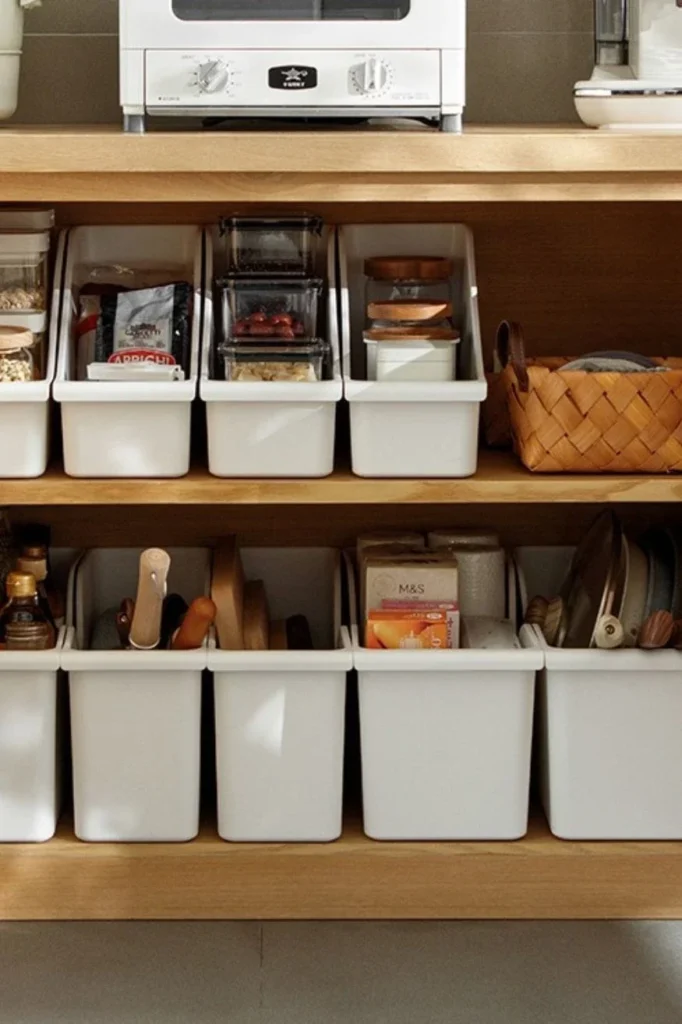
Storage bins make it easier to divide a crowded cabinet into manageable sections. Rather than allowing lids, smaller pans, and cooking accessories to mix together, assign each category its own container.
For example, one bin can hold smaller saucepans, another can contain lids, and a third can keep lightweight cookware accessories together. This arrangement is particularly useful for deep cabinets where small items tend to disappear toward the back.
Pull-out bins offer an additional advantage because you can bring the entire collection forward without reaching into the cabinet. Choose containers that fit comfortably on the shelf and leave enough room for easy movement.
Avoid placing heavy cookware in flimsy plastic bins. Sturdy containers or metal baskets are better choices for items that are frequently removed and returned.
5. Rack Pullout
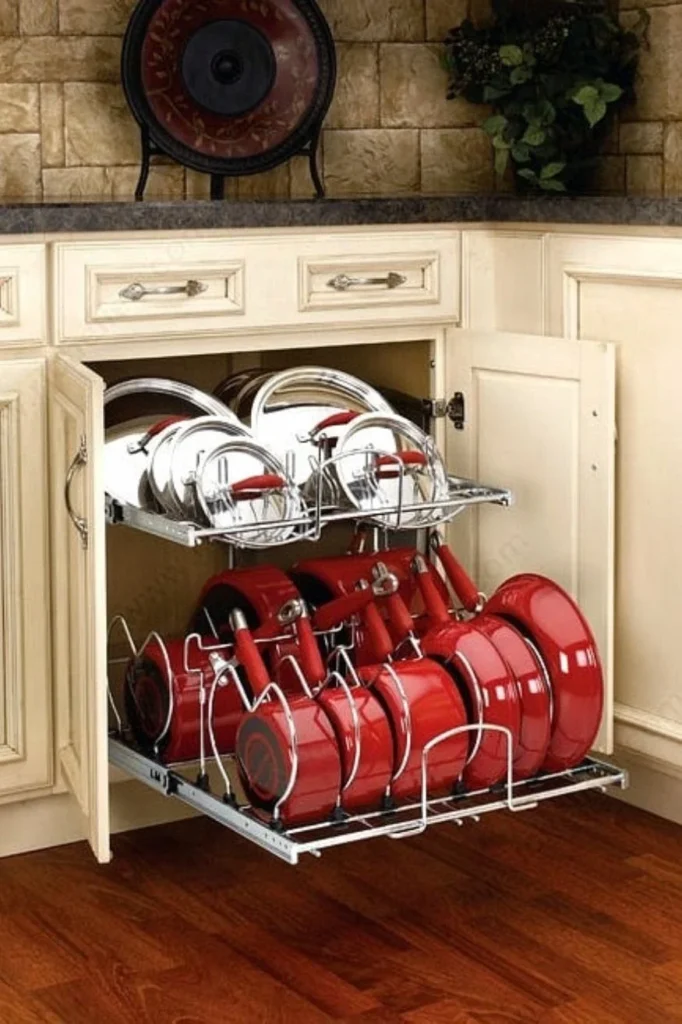
A pull-out rack makes deep or awkward cabinets considerably easier to use. Instead of reaching around other cookware, you slide the organizer forward to access the pans stored inside.
Different rack designs provide separate sections for frying pans, saucepans, lids, and larger pots. Some models use adjustable dividers, allowing you to customize the layout as your cookware collection changes.
Corner cabinets can benefit from this arrangement, particularly when their depth makes ordinary shelves inconvenient. A pull-out system can also help prevent smaller items from being forgotten at the back.
Pay attention to the quality of the sliding mechanism. Cookware is often heavy, so the rack should have an appropriate weight rating and move smoothly when fully loaded.
6. Slide Hooks
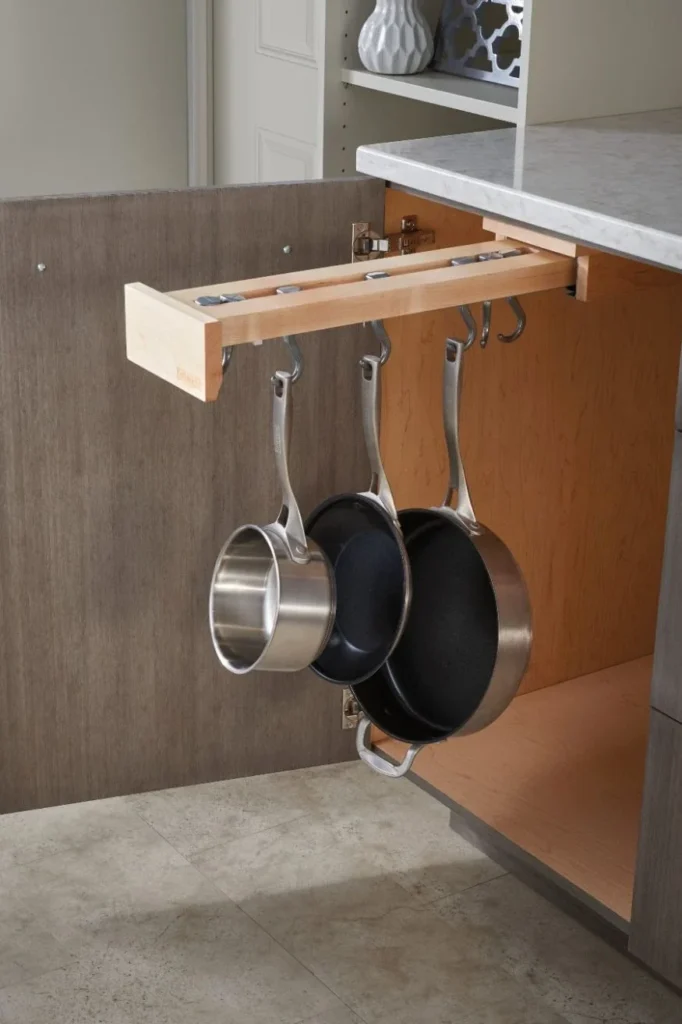
Sliding hook bars offer another way to use cabinet space that might otherwise remain empty. By suspending cookware from a movable rail, you can separate pans and avoid lifting several pieces to reach the one you need.
This option is useful when the cabinet has sufficient vertical clearance above its shelves. A pull-out rail brings the cookware closer to you, making it easier to identify individual pieces.
Use durable metal hooks and hardware suited to the weight of the pans. Arrange cookware so that handles do not collide and heavier items remain securely supported.
If your collection includes nonstick pans, leave enough space between them to prevent unnecessary contact. You can also reserve the rail for lighter frying pans and store heavier cast-iron cookware on a lower shelf.
7. Shelf Tower
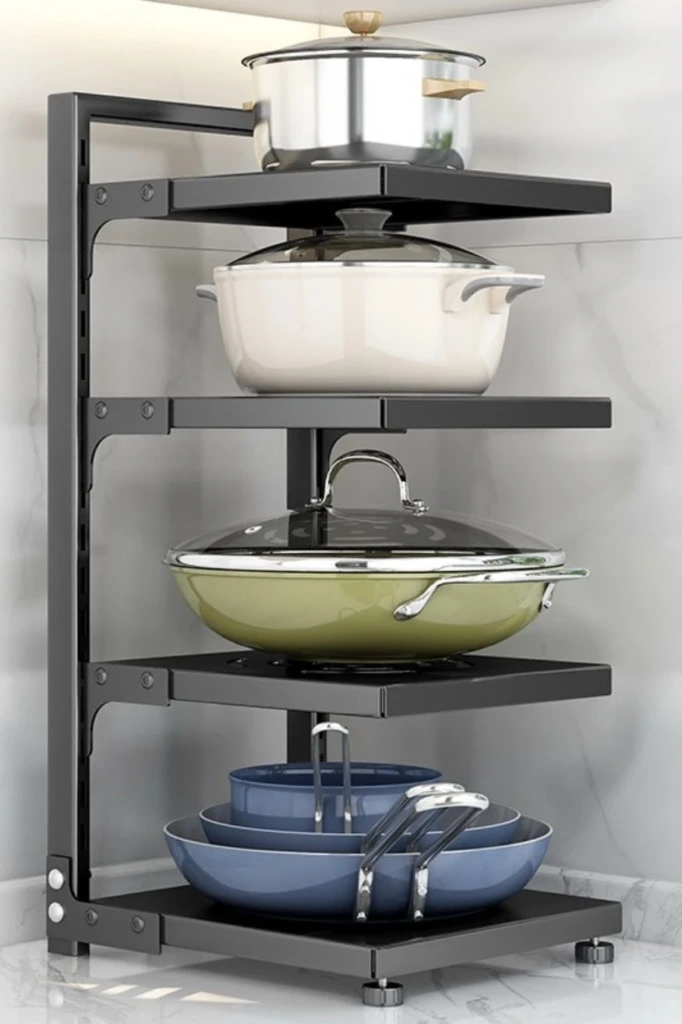
A freestanding shelf tower can transform an unused countertop corner into a dedicated cookware station. Its vertical design takes advantage of height instead of spreading pots and pans across a larger area.
Arrange your cookware according to size and weight. Larger pots belong on sturdy lower shelves, while lighter frying pans and accessories can occupy the upper levels.
Adjustable metal shelving is especially useful when your cookware varies in diameter or height. You can change the spacing to accommodate a new skillet or a taller stockpot without replacing the entire unit.
This solution is convenient for apartment kitchens and homes with limited cabinet space. To maintain a tidy appearance, avoid overcrowding the shelves and choose a rack with enough clearance for handles.
Place protective pads beneath cookware when needed to prevent metal surfaces from scratching the shelves. If the rack is tall or heavily loaded, make sure it stands securely and cannot tip easily.
8. Panel Rack
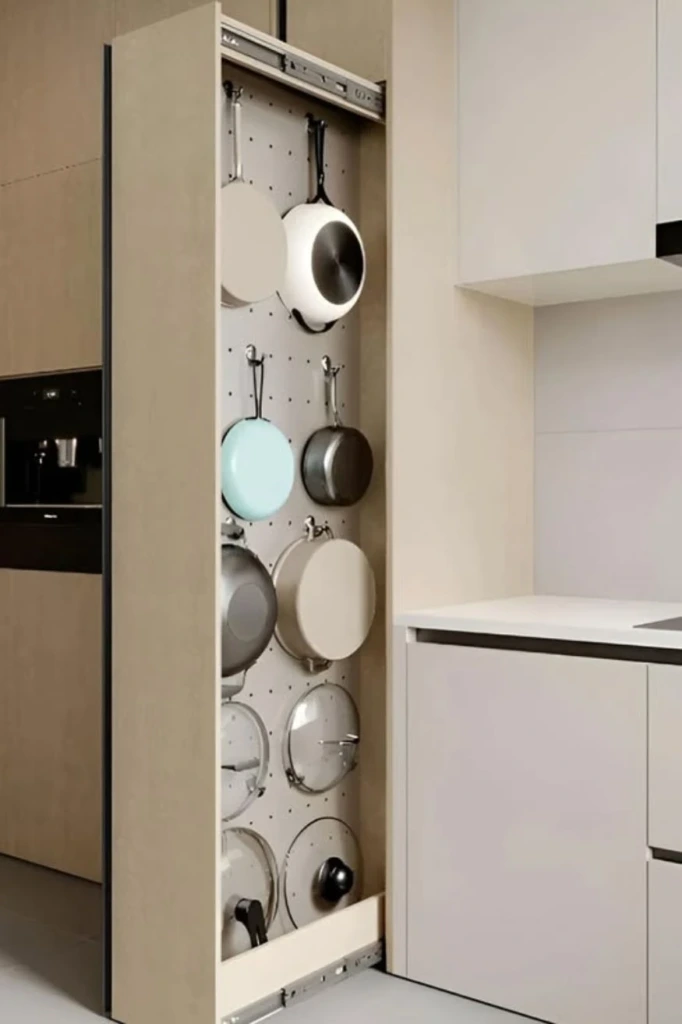
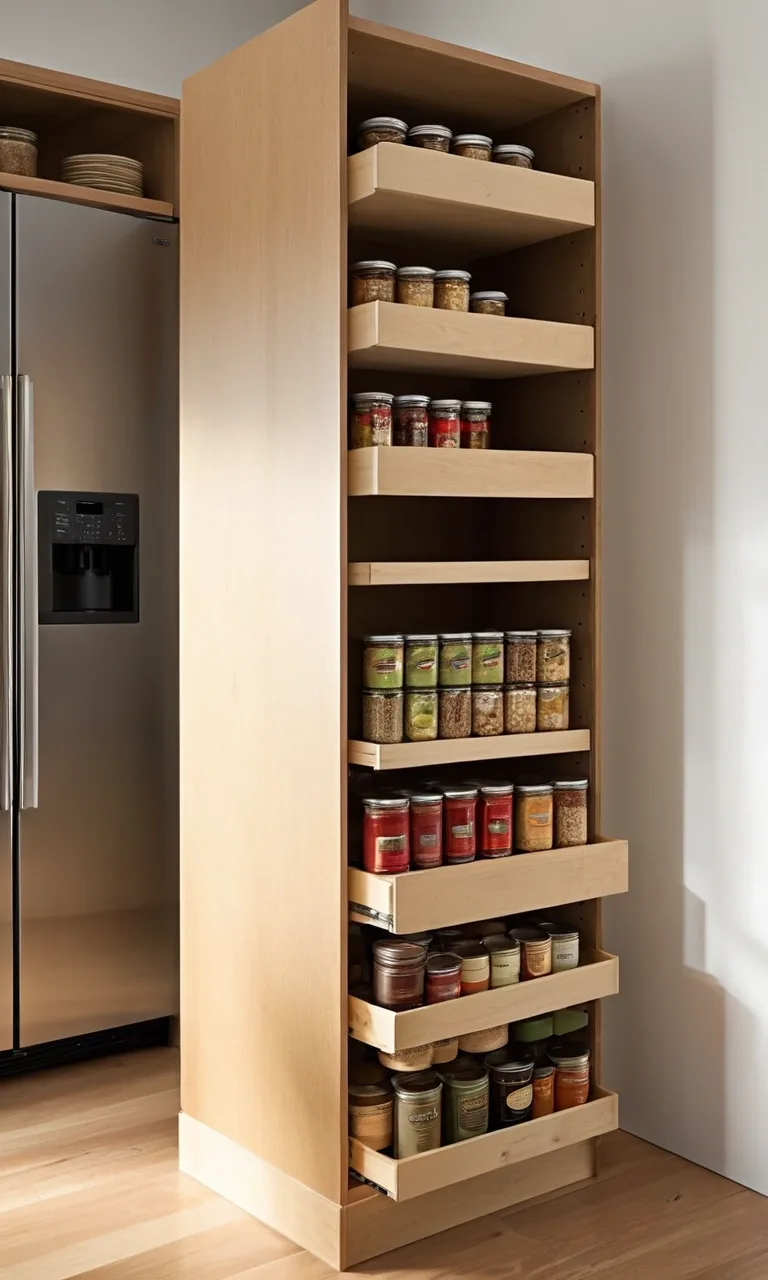
Narrow gaps beside refrigerators, pantry cabinets, or other appliances can sometimes accommodate a slim pull-out storage panel. These organizers make otherwise overlooked spaces useful without requiring a large cabinet.
Depending on its design, a panel rack can hold frying pans, lids, and lightweight cookware vertically. Some systems include adjustable hooks or dividers that can be repositioned to fit different items.
Before installing one, measure the available width carefully and account for handles, hinges, and nearby appliances. The rack must slide freely without obstructing doors or drawers.
A slim organizer is best suited to cookware that fits within its dimensions. Larger or heavier pieces should only be stored there when the panel and mounting hardware are specifically designed to support them.
9. Corner Shelves
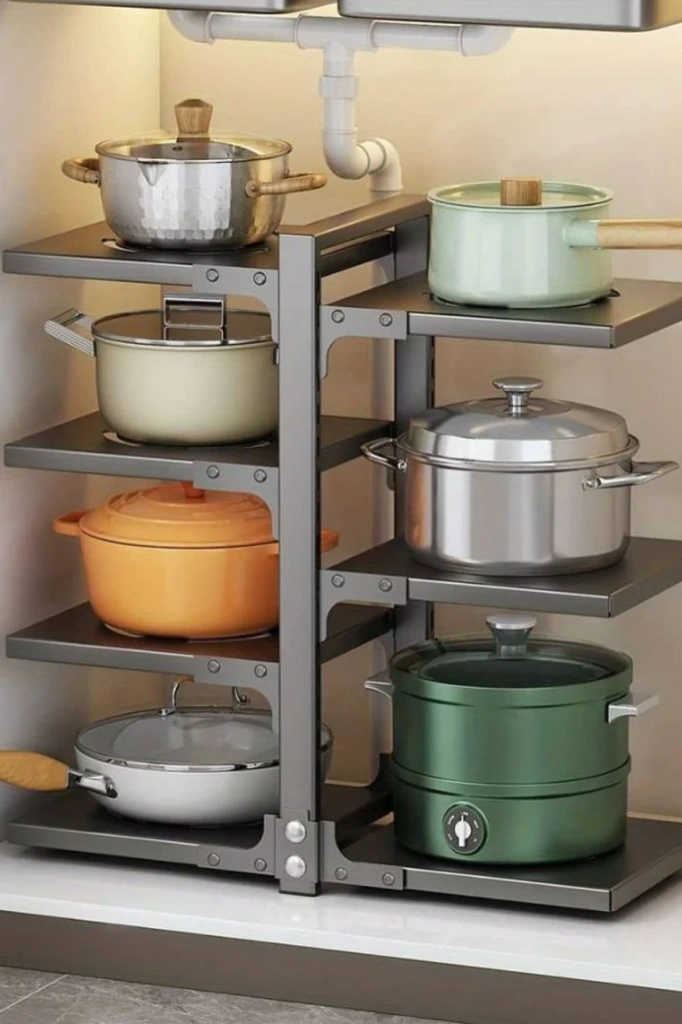
Corner shelves can help you make better use of cabinet areas that are difficult to organize. Instead of piling every pot together, use separate levels to keep cookware visible and accessible.
Adjustable shelf inserts are particularly useful when your collection includes shallow frying pans, medium saucepans, and tall stockpots. Assign each level a purpose so that items remain easy to locate.
Keep heavier cookware on the bottom shelf to improve stability and reduce the effort required to lift it. Lighter pans and frequently used accessories can occupy higher levels when they remain within comfortable reach.
Corner shelving may also work in a large under-sink cabinet, but check for pipes, cleaning supplies, and moisture before placing cookware there. A clean, dry cabinet with enough vertical clearance will provide a safer storage environment.
10. Rack Divider
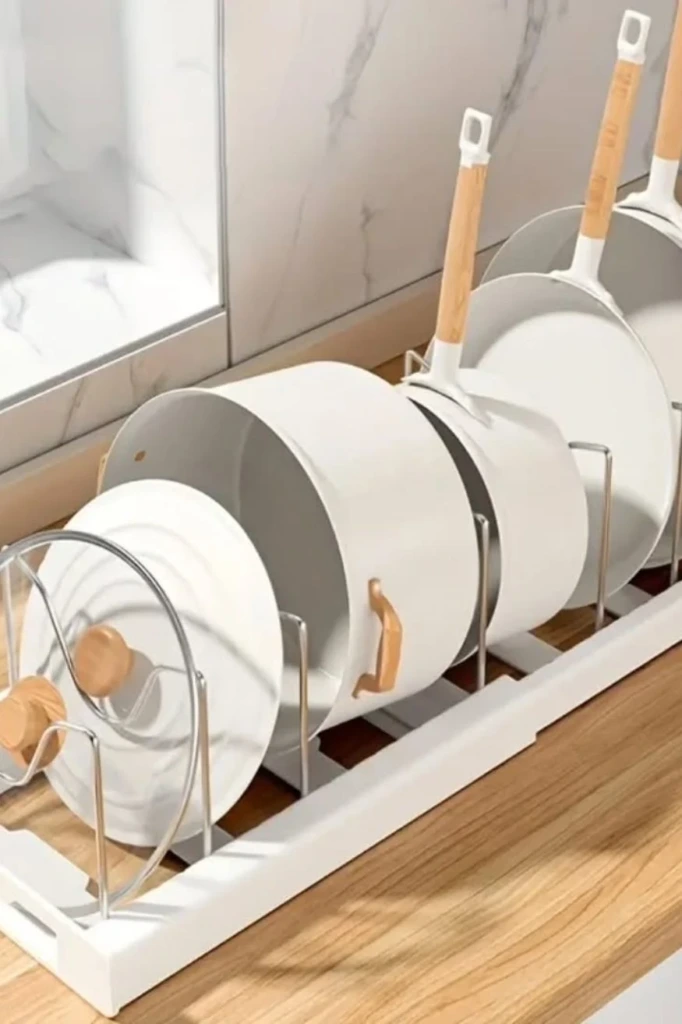
A rack divider separates individual pans into upright compartments, making it easier to remove one piece without disturbing the rest. It is a straightforward solution for cabinets that contain several frying pans of different sizes.
Choose an organizer with adjustable sections if you have both compact skillets and wide sauté pans. This allows you to create larger spaces for bulky cookware while keeping smaller pieces neatly arranged.
Some racks can also accommodate pot lids, helping you keep matching pieces close together. Position lids in a way that prevents them from sliding out whenever you open the cabinet.
This type of organizer works well on lower shelves or inside pantry cabinets with enough depth. If the rack is freestanding, ensure it remains stable when you remove a pan from one of the compartments.
11. Hidden Wall
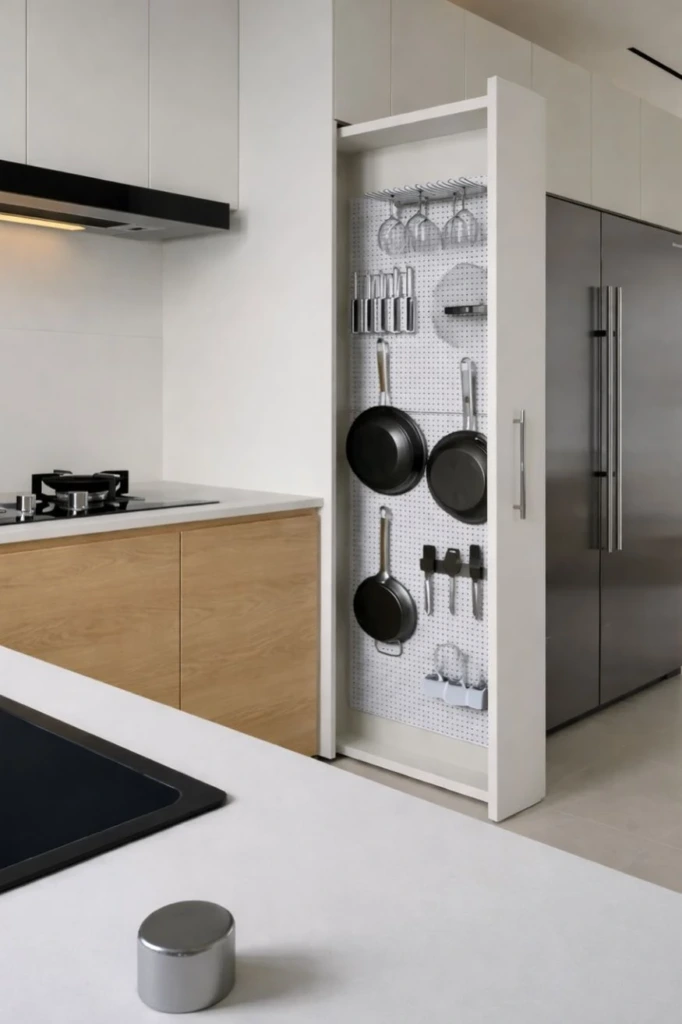
A concealed wall organizer can provide extra cookware storage without taking up the floor or countertop. One approach is to install a narrow pull-out panel inside a suitable cabinet or beside a pantry unit.
Pegboard-style systems with adjustable hooks can hold compatible pans, lids, and lightweight utensils. Because the items hang vertically, you can quickly identify what you need instead of searching through stacked cookware.
This arrangement is especially useful near the cooking area, where easy access can simplify meal preparation. It can also make use of narrow spaces that would otherwise serve little purpose.
Plan the installation carefully to ensure the panel has sufficient support and clearance. If you are storing heavier cookware, verify that the mounting system is rated for the load and that the hooks cannot slip free.
For an exposed wall, consider a securely mounted rail or pegboard that complements your kitchen design. Keep the display selective so that frequently used pieces remain accessible without making the room look crowded.
12. Door Lids
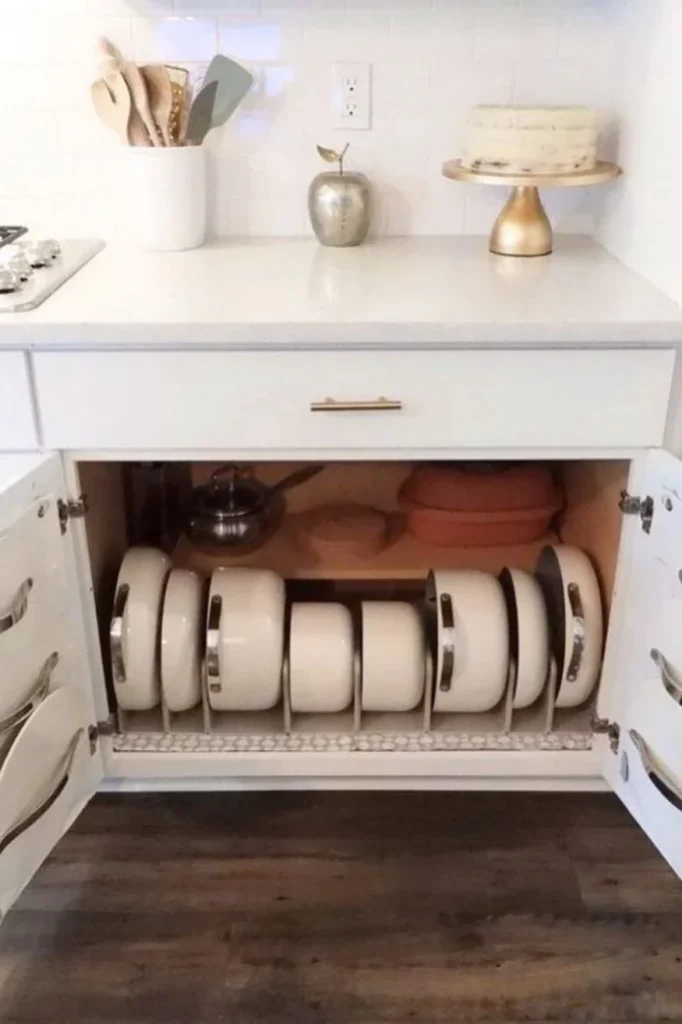
Cabinet doors can provide useful storage for pot lids that would otherwise occupy an entire shelf. A dedicated lid holder keeps these pieces organized vertically and makes matching cookware easier to find.
Choose a door-mounted organizer that fits the cabinet's dimensions and accommodates the sizes of your lids. Before attaching it, check that the door can close completely without the holder or its contents hitting the shelves.
Adhesive-mounted systems may suit lightweight lids, while heavier glass lids generally need more secure support. Follow the manufacturer's installation and weight guidelines.
With lids moved to the door, the main cabinet shelf becomes available for pans and pots. You can improve the arrangement further by placing frying pans in vertical dividers and keeping heavier cookware on lower shelves.
This method is especially useful in kitchens where cabinet space is limited but the doors offer enough clearance for additional storage.
13. Shelf Zones
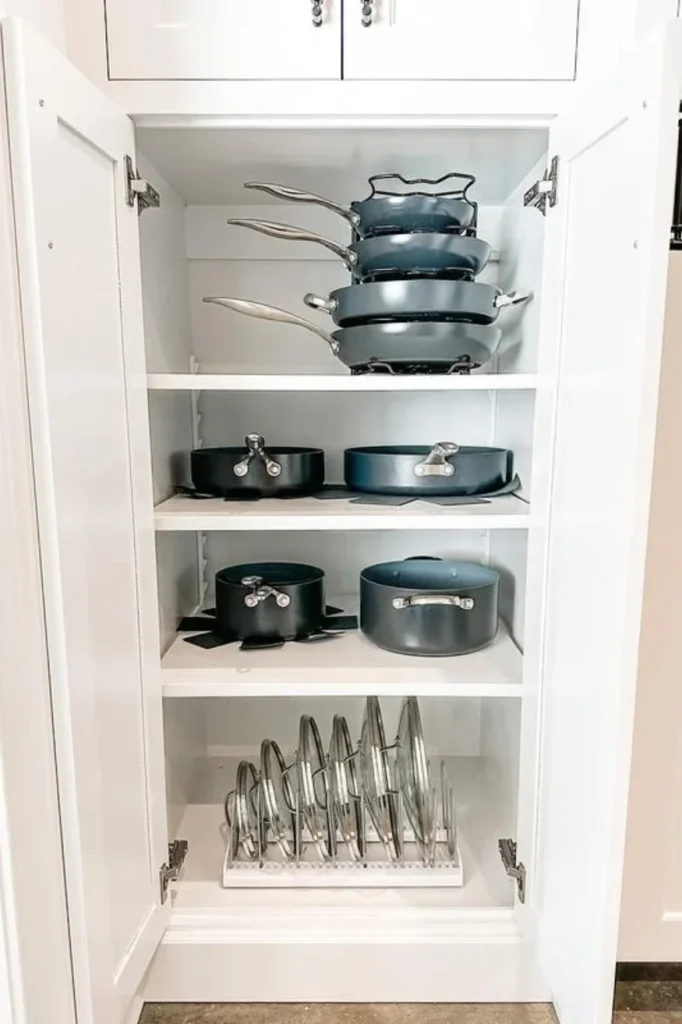
Assigning a specific purpose to each shelf makes a pantry-style cabinet easier to maintain. Instead of mixing every type of cookware together, create separate areas for frying pans, saucepans, large pots, and lids.
Place frequently used pieces on shelves that are easy to reach. Larger, heavier cookware should generally remain lower, while lightweight accessories can be stored higher up.
A vertical lid holder can keep covers organized without consuming much shelf space. If you need to stack compatible pans, place suitable protective guards between them to reduce scratches.
This system works well in tall cabinets because it uses the available height efficiently. Adjustable shelves allow you to change the spacing whenever your cookware collection grows or your storage needs change.
Keep the most frequently used items together and return them to their designated shelves after cleaning. Consistent placement helps prevent the cabinet from becoming cluttered again.
14. Drawer Lines
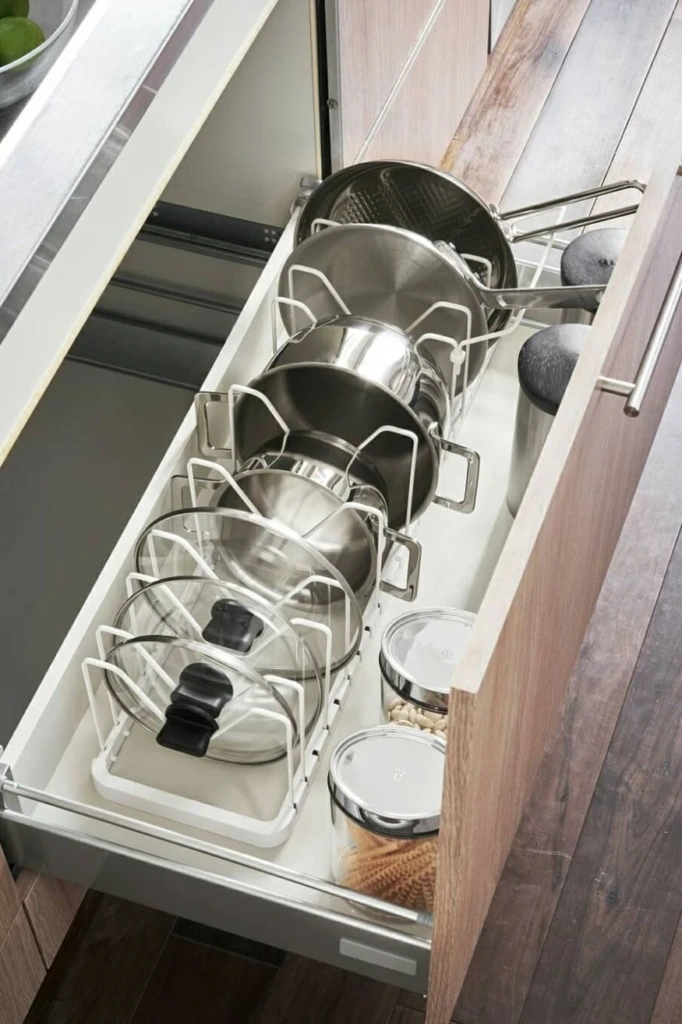
Wide kitchen drawers can hold a surprising amount of cookware when each section is organized intentionally. Dividers create separate spaces for pots, frying pans, and lids, preventing items from shifting into one another.
Adjustable wire or solid dividers are useful because they can be repositioned to fit cookware of different sizes. Arrange pans so their handles do not become tangled, and leave enough clearance for the drawer to close without pressure.
Glass lids deserve particular attention because their handles and rims can be damaged by heavy cookware. Store them in dedicated compartments or upright holders instead of placing heavy pots on top of them.
A nonslip drawer liner helps prevent cookware from sliding whenever the drawer moves. Make sure the drawer's runners and base can safely support the combined weight of the contents.
For convenience, position the drawer near your stove or food-preparation area. Keeping everyday cookware close at hand can reduce unnecessary movement while cooking.
15. Corner Spin
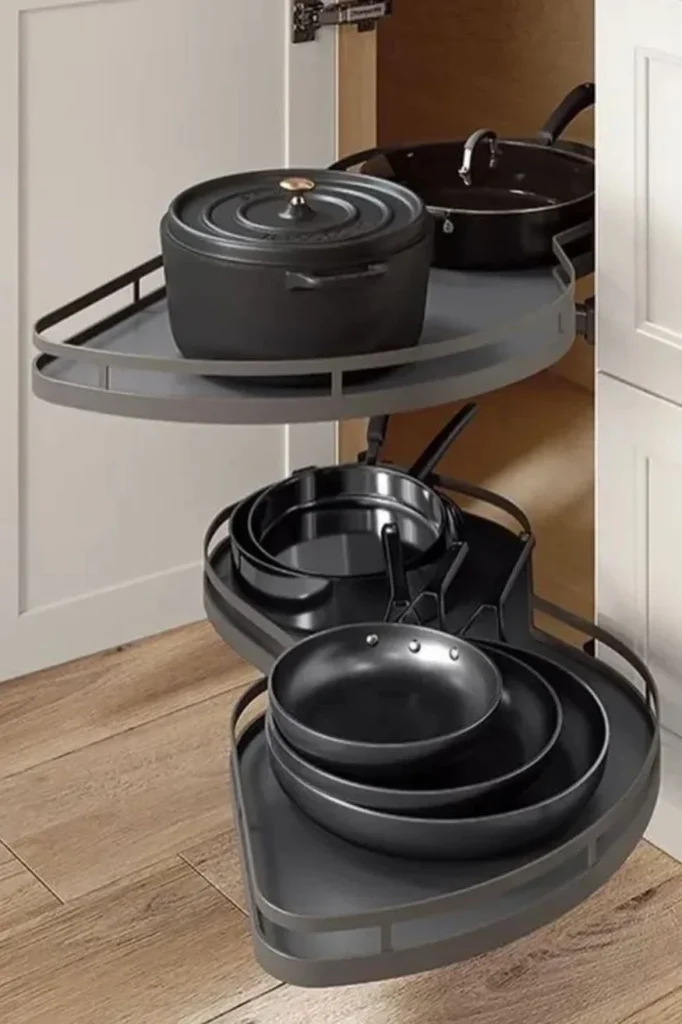
Rotating or pull-out corner organizers help make deep cabinets more accessible. Instead of reaching toward the back for a hidden pan, you can bring the storage surface closer to the cabinet opening.
Depending on the cabinet design, a rotating shelf, sliding tray, or specialized corner mechanism can accommodate frying pans, stockpots, and other cookware. Separate the items by size so that you can remove one without disturbing the rest.
This solution is particularly helpful for blind-corner cabinets, where ordinary shelves often leave some space difficult to reach.
Choose hardware that is designed for the weight of your cookware and fits the cabinet's dimensions. Smooth movement, adequate clearance, and a secure mounting system are important for preventing heavy items from shifting or tipping.
If you are renovating your kitchen, consider the organizer before finalizing the cabinet layout. For an existing cabinet, measure carefully to determine whether a compatible retrofit system is available.
16. Cabinet Rows
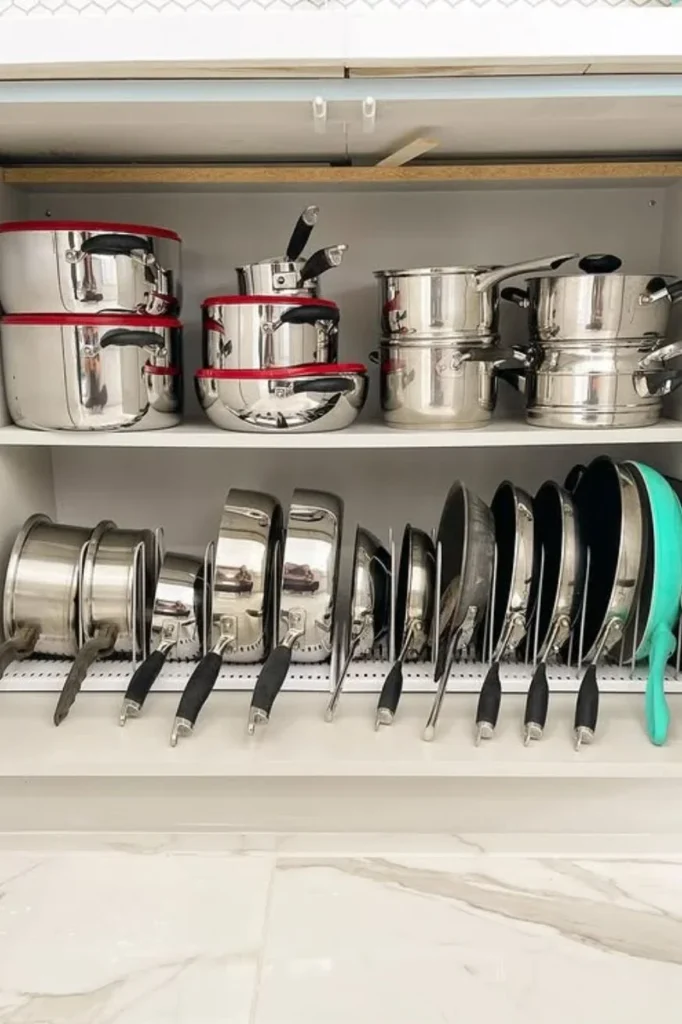
Organizing pans into individual rows creates a straightforward storage system for lower kitchen cabinets. Rather than allowing skillets to lean against one another, use vertical dividers to give each piece its own space.
Adjust the compartments according to the width of your cookware. Larger pans need more room, while smaller frying pans can fit into narrower sections.
If the cabinet has multiple shelves, use one area for frying pans and another for compatible pots. Keeping lids in a separate holder can make the entire arrangement easier to navigate.
This method works particularly well in wide base cabinets with enough room for pan handles. Arrange your most frequently used cookware near the front and reserve less accessible sections for occasional-use items.
You can create individual rows with a commercial organizer or adjustable dividers that fit your existing cabinetry. The aim is to make each pan easy to remove and return without shifting the entire collection.
17. Hanging Rails
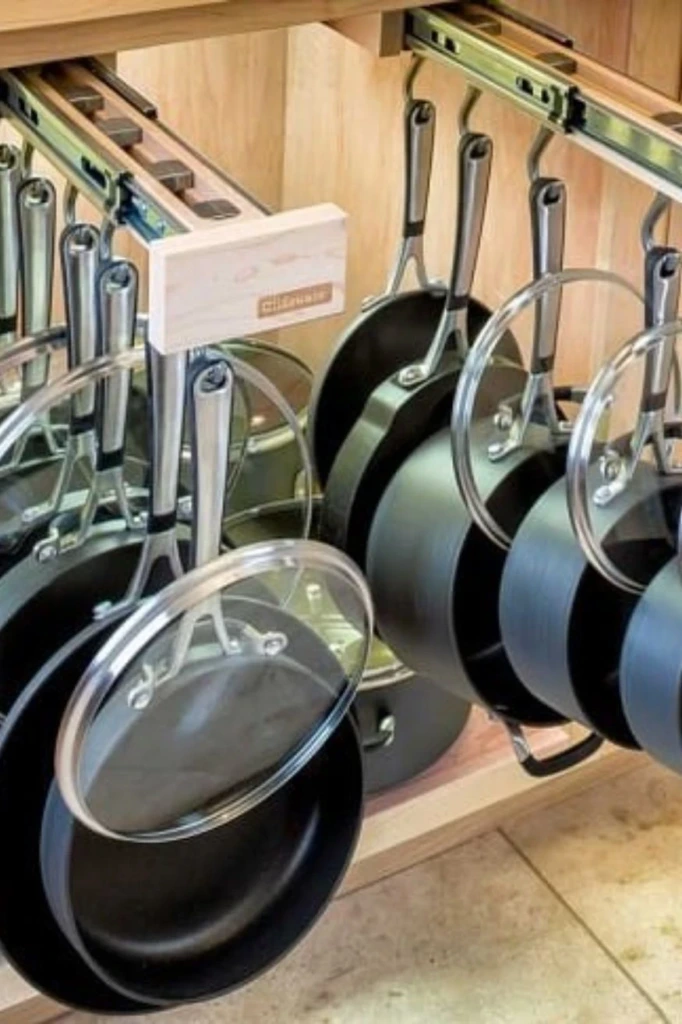
A hanging rail can keep pots and pans separated while freeing up cabinet shelves for other kitchen essentials. Pull-out versions are especially practical because they bring suspended cookware forward when you need it.
Use hooks that fit securely around the handles and a rail that can support the full weight of the cookware. If you own heavy cast-iron pans, confirm that the rail, mounting brackets, and cabinet structure are suitable for their combined load.
Arrange pans with enough space between them to prevent handles from catching on neighboring pieces. Matching lids can be stored nearby in a dedicated holder, making it easier to find everything required for a meal.
Deep lower cabinets often provide the clearance needed for this arrangement. Measure the available space before installing the rail, and make sure the cookware will not strike shelves or the cabinet frame when moved.
A well-planned hanging system keeps frequently used pieces accessible while reducing the need to stack and unstack heavy cookware.
18. Counter Rack
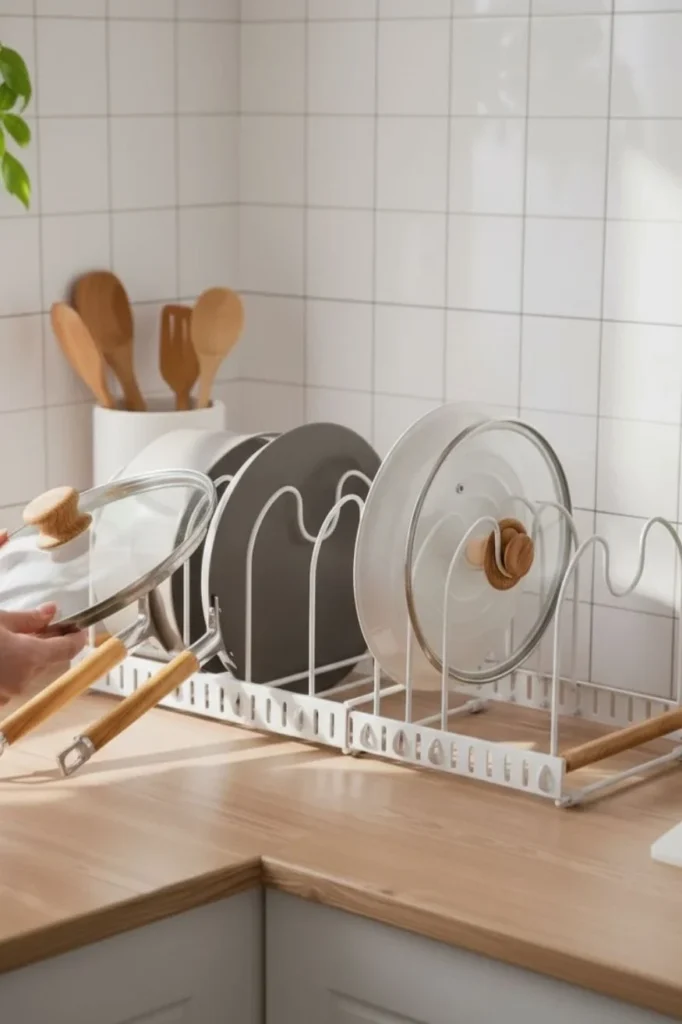
A countertop rack offers an accessible place to store pans when cabinet space is already occupied. A slim vertical organizer can fit beside a backsplash or in an unused corner without taking over the entire work surface.
Choose a rack with compartments wide enough for your frying pans and lids. Adjustable dividers make it easier to accommodate different sizes, while a stable base helps prevent the organizer from tipping when cookware is removed.
Keep the arrangement limited to the pieces you use regularly. Storing every pot and pan on the counter can create clutter and reduce the space available for food preparation.
For a tidier setup, position the rack near your cooking area and group compatible cookware together. Make sure the organizer is kept clean and dry, particularly if you return pans before they have completely dried.
This approach is particularly suitable for small kitchens where accessible vertical storage is more practical than adding another cabinet.
What is the most space-efficient way to store pans in a kitchen cabinet?
For many kitchens, storing frying pans vertically in a cabinet organizer is one of the most space-efficient options. Instead of creating a tall stack, you arrange the pans side by side so that each piece can be removed independently.
Adjustable dividers allow you to customize the available space for different pan sizes. They also help prevent cookware from sliding around and reduce contact between delicate cooking surfaces.
If vertical storage is not practical, consider a deep drawer with dividers or a pull-out rack. These alternatives can make better use of difficult-to-reach cabinet space while keeping cookware visible.
Before choosing an organizer, measure your cabinet and check the clearance required for handles. The best solution is one that fits your available space, supports the cookware safely, and remains convenient to use every day.
Where should pans be stored for the easiest access while cooking?
The most convenient location is usually a cabinet or drawer near the stove or cooktop. Keeping everyday frying pans and saucepans nearby means you can reach for them without crossing the kitchen.
Deep drawers, vertical pan dividers, and pull-out organizers are all useful options. Choose the arrangement that allows you to see the cookware clearly and remove individual pieces without lifting heavy items out of the way.
Store your most frequently used pans at a comfortable height and place heavier cookware on lower shelves whenever possible. Less frequently used specialty pans can occupy higher or more distant storage areas.
If the kitchen is small, a slim countertop rack or a properly installed hanging rail can provide additional access without requiring a major renovation. Whichever method you choose, prioritize secure storage, easy access, and protection for your cookware.