22 Spice Jar Storage Ideas for 2026
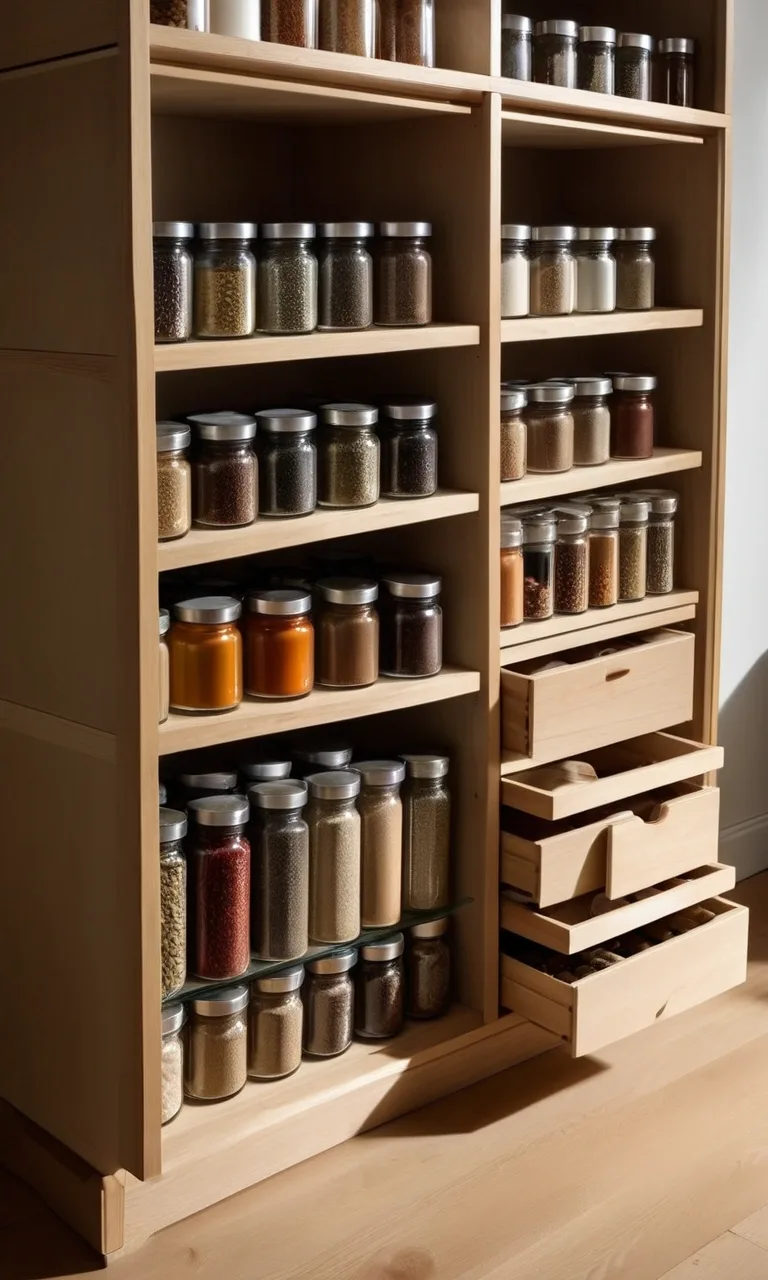
Spice jars are small, but a growing collection can quickly turn a tidy kitchen into a frustrating mess. When containers are tucked behind one another, labels are difficult to read, and frequently used seasonings are scattered across different shelves, even preparing a simple meal becomes less convenient.
The good news is that you don't need a larger kitchen to get your spices under control. A few thoughtful storage changes can help you use existing cabinet space, keep your favorite seasonings accessible, and create a setup that looks good, too.
Whether you have a spacious pantry, a narrow kitchen, or only a small drawer to work with, these 22 spice jar storage ideas offer practical ways to organize your collection. From compact countertop stands to clever wall-mounted solutions, there is an option for almost every kitchen layout.
How Can You Organize Spice Jars to Save Kitchen Space?
Start by taking every spice jar out of its current storage area. Check the contents, remove duplicates you don't need, and discard anything that has lost its aroma or passed its useful life. This gives you a clearer picture of how much storage you actually need.
Next, group your seasonings according to how you cook. Everyday essentials can stay close to your food preparation area, while specialty spices and occasional ingredients can occupy a separate shelf or drawer.
Choose a storage system that allows you to identify each container without moving several others. Tiered organizers work well in cupboards, angled inserts make drawer labels easier to read, and wall-mounted racks free up valuable shelf space.
Uniform containers can also make a noticeable difference, particularly when you're working with limited room. Add clear labels, keep the arrangement consistent, and leave enough space to remove jars comfortably. The best system is one that remains easy to maintain after a busy week of cooking.
1. Tiered Rack
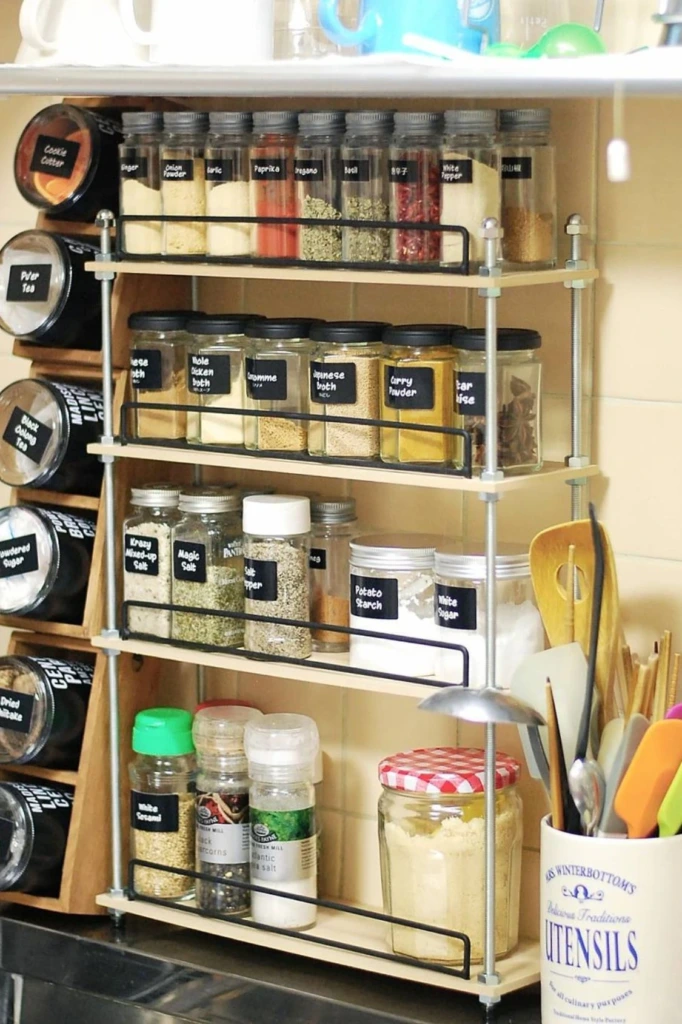
A tiered spice rack makes better use of cabinet depth by arranging containers at different heights. Instead of hiding the back row behind the front, each level raises the jars enough to make their labels easier to see.
This design is particularly useful for deep kitchen cupboards where small containers tend to disappear from view. You can purchase a ready-made organizer or choose an adjustable version that accommodates different jar sizes.
Arrange your most frequently used seasonings toward the front and reserve the higher levels for less common ingredients. Before buying a rack, measure the cabinet's width, depth, and available height to ensure the organizer fits without obstructing the door.
2. Drawer Layout
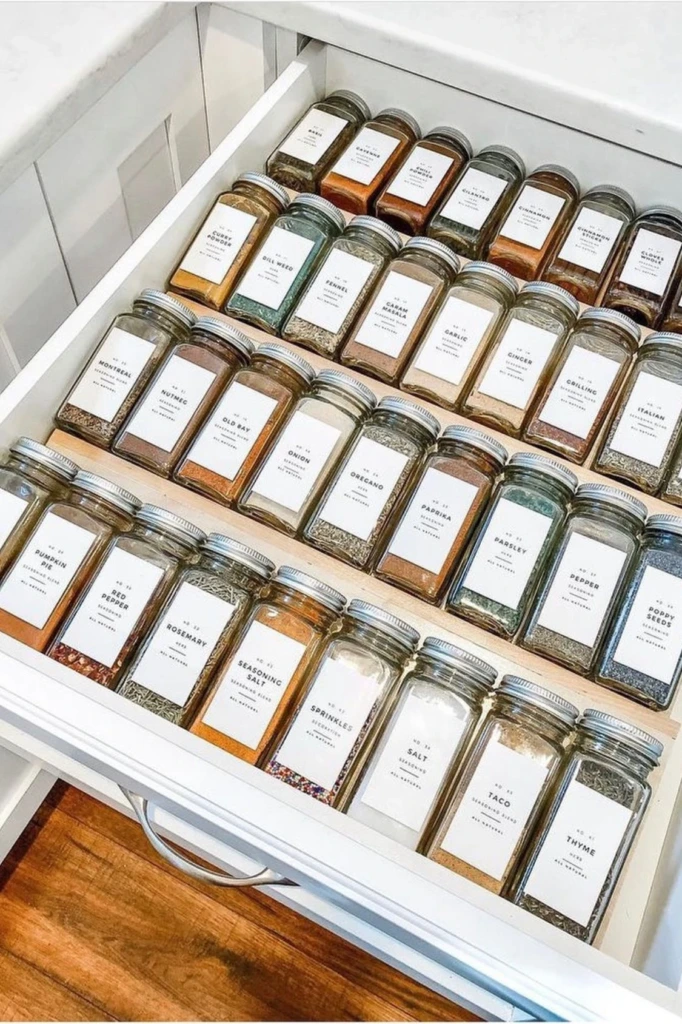
An ordinary kitchen drawer can become a convenient home for spices when you add a properly fitted insert. Containers sit in individual spaces, making it easier to identify ingredients without lifting jars or moving other items.
Angled drawer organizers are especially helpful because they present the labels toward you when the drawer opens. Wooden, plastic, and acrylic inserts are available in different configurations, so you can select one that suits your drawer dimensions.
For a neat result, use containers with similar measurements and group them by category, such as baking spices, herbs, and seasoning blends. Keep the drawer away from unnecessary clutter so every jar has a designated place.
3. Wall Shelves
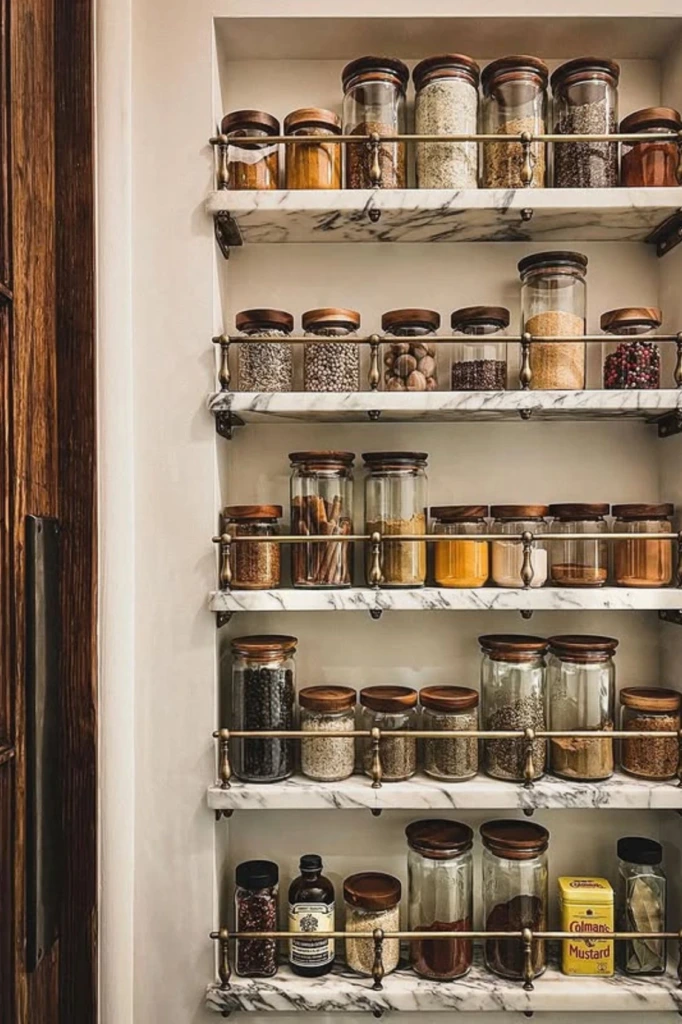
Wall shelves offer extra storage when your cabinets and countertops are already full. A few narrow shelves can hold a surprising number of spice jars without requiring another piece of kitchen furniture.
Install them near your food preparation area, provided the location is away from direct heat, excessive moisture, and strong sunlight. A small front rail helps prevent containers from slipping off, while evenly spaced shelves create a clean appearance.
Matching jars and readable labels can turn the arrangement into an attractive kitchen feature. However, measure the available wall space before installation and use appropriate fixings for the wall material and expected weight.
4. Counter Rack
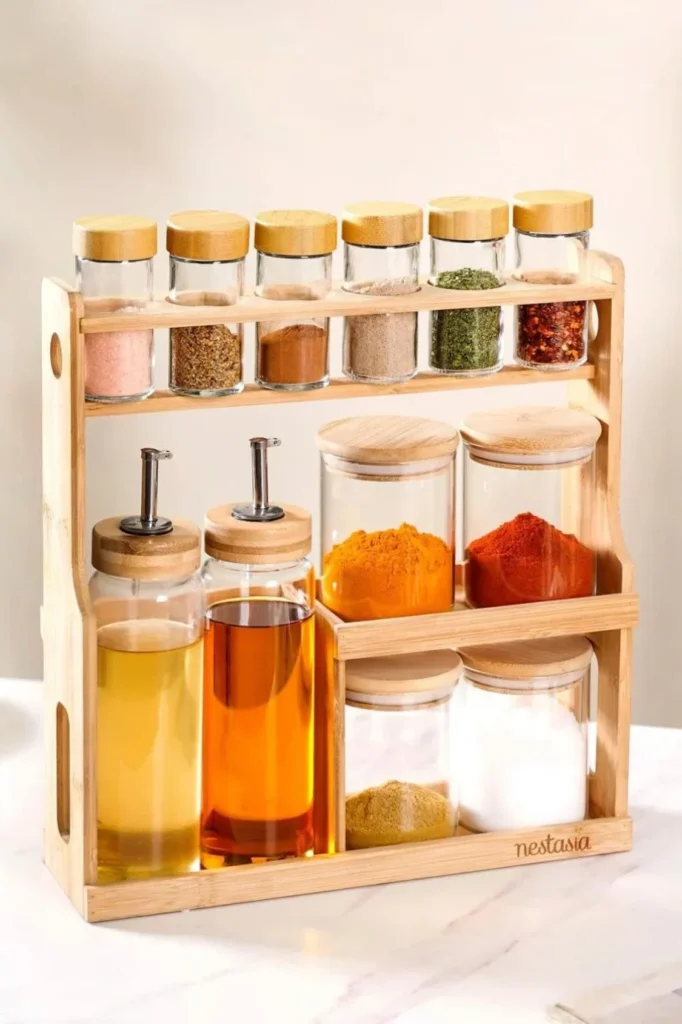
A countertop rack is a straightforward solution for anyone who reaches for the same seasonings throughout the day. It keeps everyday ingredients within easy reach and reduces the need to open several cupboards while cooking.
Look for a compact wooden, metal, or rotating stand that accommodates your most-used jars without taking over the work surface. Smaller containers can sit on upper levels, while larger seasoning bottles may fit on the bottom.
Limit the rack to your regular essentials rather than transferring your entire collection onto the counter. This helps preserve preparation space and makes cleaning easier. Keep the stand at a safe distance from burners and other heat sources to protect the quality of your spices.
5. Door Storage
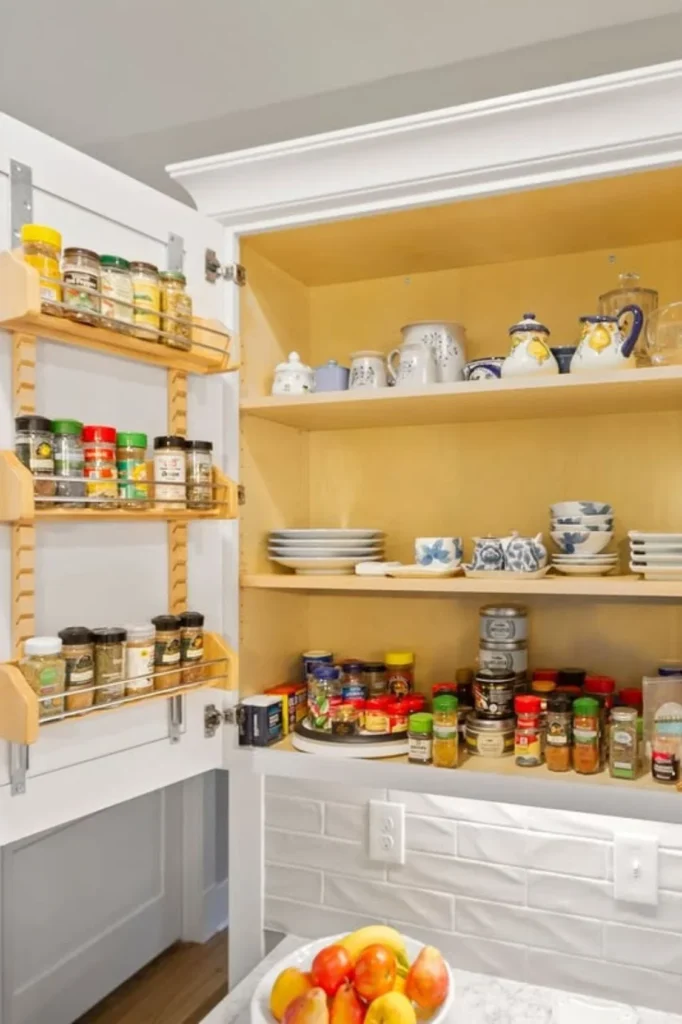
The inside of a cabinet door can provide useful storage that often goes unnoticed. Narrow racks or purpose-built spice holders can keep small jars accessible while leaving the main shelves available for larger kitchen supplies.
This approach works especially well when cabinet space is limited but the doors have enough clearance for additional storage. Before installing anything, check that the jars won't collide with interior shelves when the door closes.
Choose holders that securely accommodate your containers and keep the total weight within the mounting system's limits. If you're renting, removable organizers designed for the surface may be preferable to permanent fittings, provided their load capacity is suitable.
6. Pull System
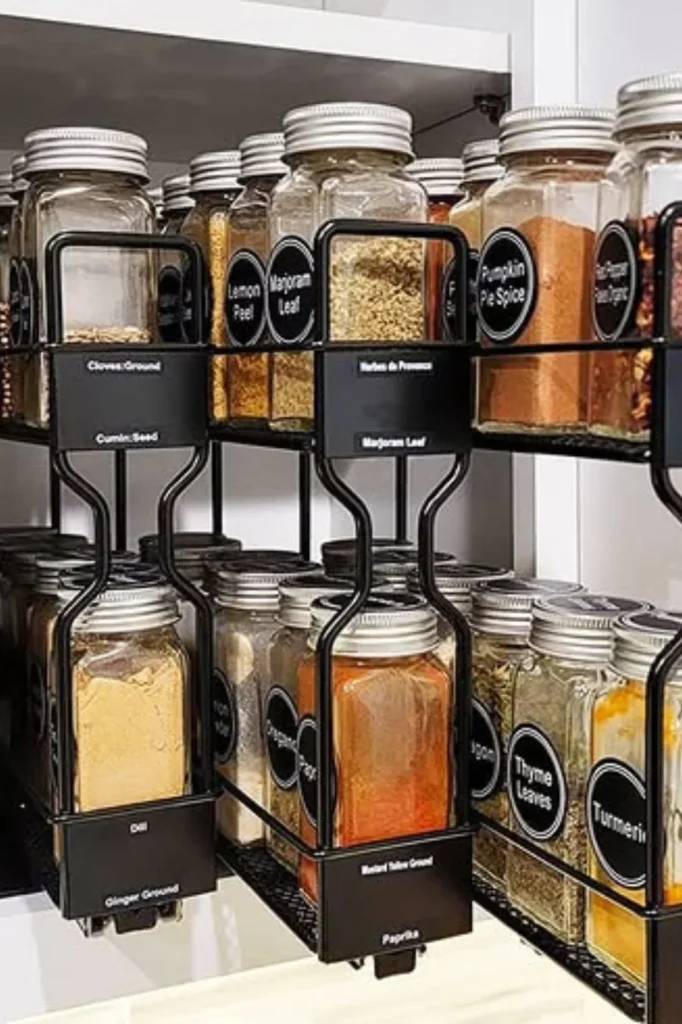
Deep cupboards are easier to manage when their contents can slide toward you. A pull-out spice organizer brings containers from the back of the cabinet into view, reducing the need to reach around other items.
Depending on your kitchen layout, you can install a sliding rack, use a freestanding pull-out organizer, or fit a narrow drawer mechanism inside an existing cabinet. Individual slots help keep jars upright as the unit moves.
This solution is particularly valuable for tall cabinets and narrow spaces beside other kitchen units. Measure the opening carefully and check the available depth before purchasing hardware. A well-fitted system can make a previously awkward cupboard much more practical.
7. Angled Stand
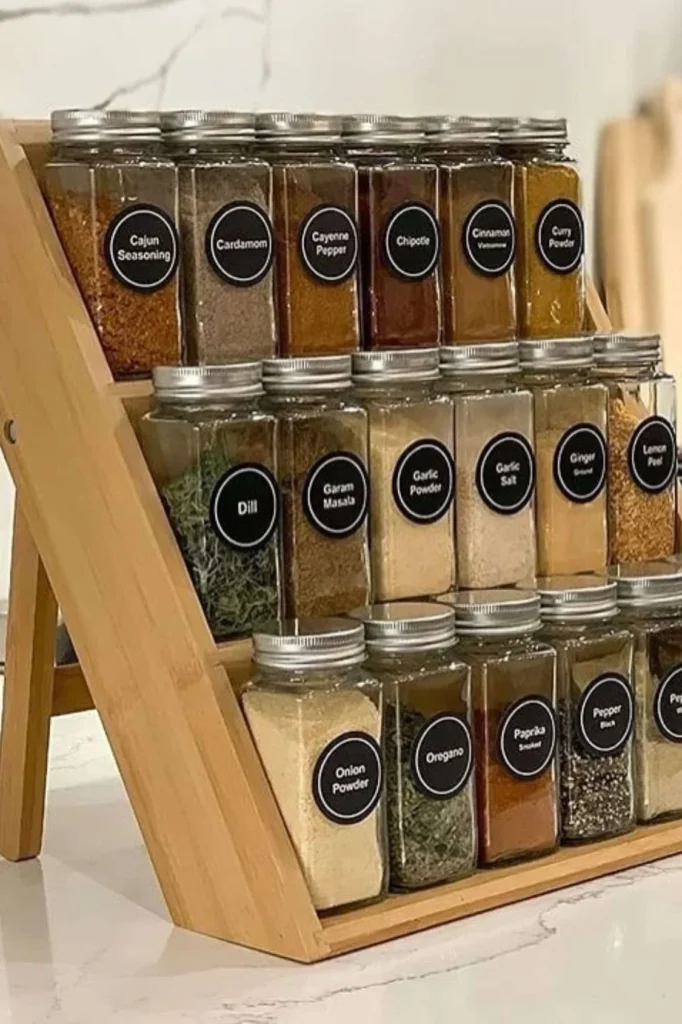
An angled spice stand positions containers so their labels face upward or forward rather than directly toward the shelf above. This makes identification easier, particularly when several jars have similar colors or shapes.
The sloped arrangement can work on a countertop, pantry shelf, or inside a suitably sized cabinet. Some designs feature individual grooves, while others use raised rows to keep the jars separated.
Choose an angle that allows you to read labels comfortably without making the containers unstable. Group similar-sized jars together and reserve the front positions for the spices you use most often. The result is an organized display that combines easy access with efficient storage.
8. Open Shelves
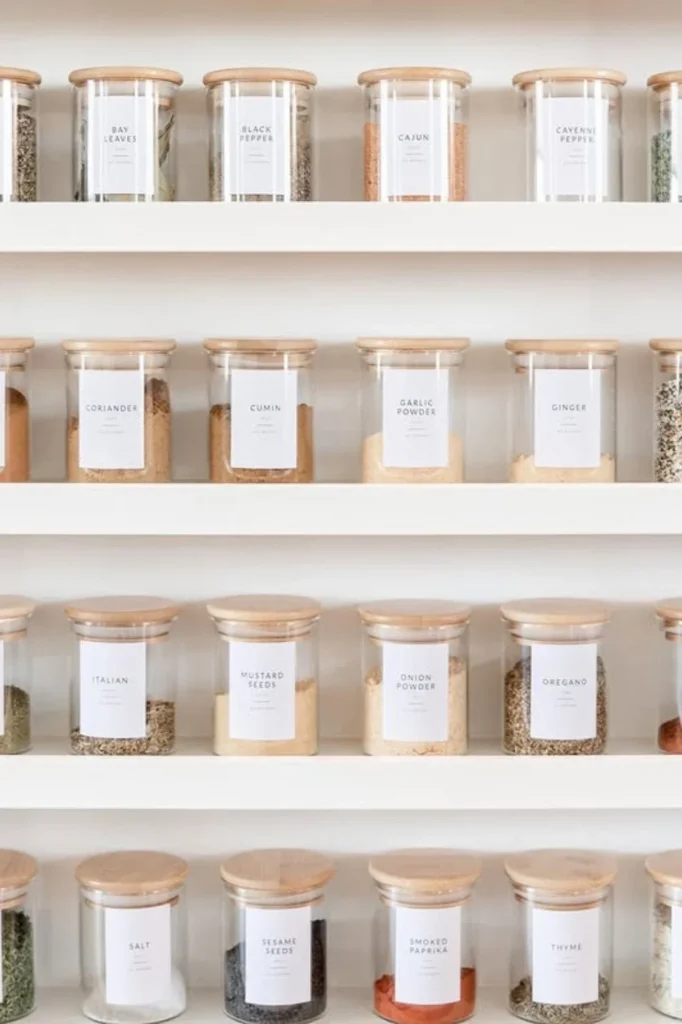
Open shelving makes a spice collection visible and easy to reach while giving your kitchen a more decorative appearance. Instead of hiding every jar behind a cupboard door, you can arrange seasonings in orderly rows along a suitable wall.
For a cohesive look, use matching containers, consistent labels, and evenly spaced shelves. You might organize the jars alphabetically or group them by cooking style, such as Mediterranean herbs, baking ingredients, and spicy seasonings.
Open storage does require regular attention. Dust, cooking residue, sunlight, and heat can affect spices over time, so choose a suitable location and keep containers tightly sealed. Store backup supplies in a cool, dark cupboard if the display area is exposed to kitchen heat or bright light.
9. Rotating Rack
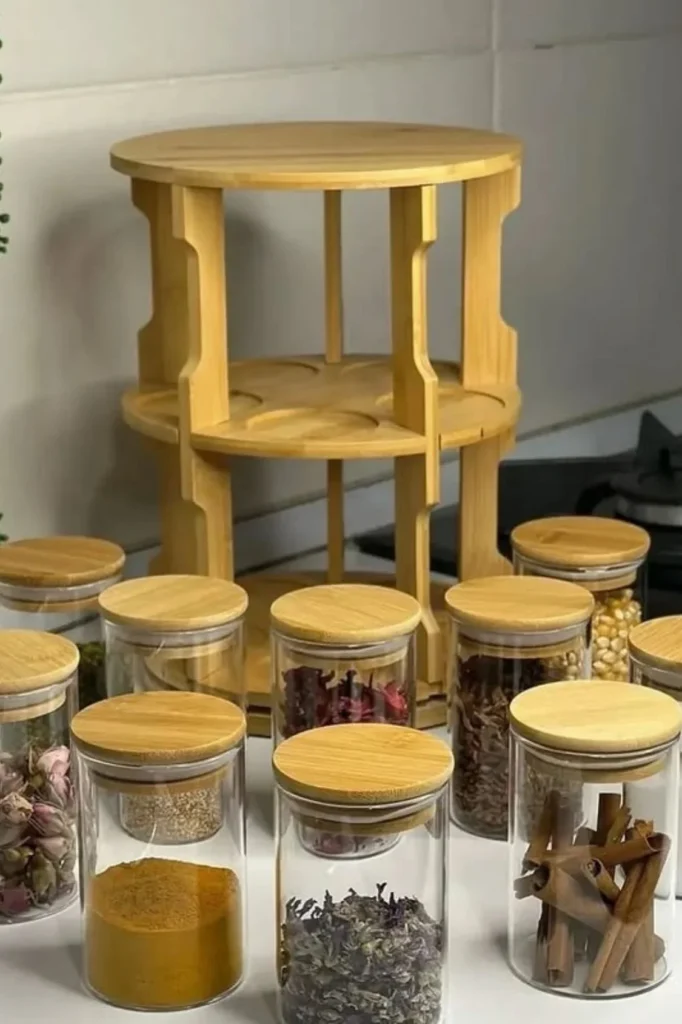
A rotating spice rack makes a collection easier to browse without requiring a wide shelf or multiple rows. Simply turn the organizer to bring the desired jar toward you.
This design is useful in pantry corners, compact cupboards, and countertops where reaching the back of a shelf can be inconvenient. Some models feature multiple levels, while others use individual compartments around a central base.
Select a rack that fits the available space and rotates smoothly when fully loaded. Keep similarly sized jars together to maintain balance, and arrange frequently used seasonings in the most convenient positions.
A rotating rack works best when the collection is edited regularly. Remove unnecessary duplicates so every container has enough room to be lifted out without disturbing its neighbors.
10. Slide Cabinets
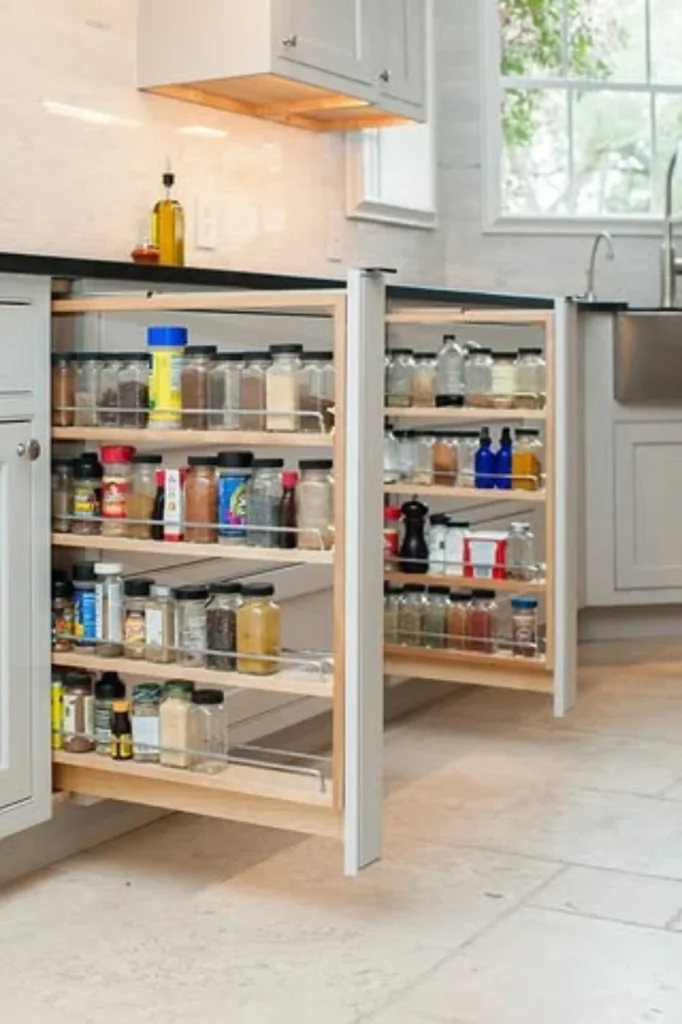
A slim pull-out cabinet can transform an otherwise unused gap into dedicated spice storage. These units are designed to fit narrow spaces between kitchen cabinets, appliances, or other built-in fixtures.
The vertical layout allows you to arrange jars on several compact shelves, while the sliding mechanism brings the entire collection into view. This is particularly useful in kitchens where conventional cupboards are already full.
Before installing a unit, measure the opening carefully and confirm that the door, runners, and shelves will clear nearby appliances and handles. Check the manufacturer's load limits as well.
If a permanent installation isn't practical, a narrow freestanding trolley or removable pull-out organizer may provide similar benefits without major changes to your kitchen.
11. Clear Tiers
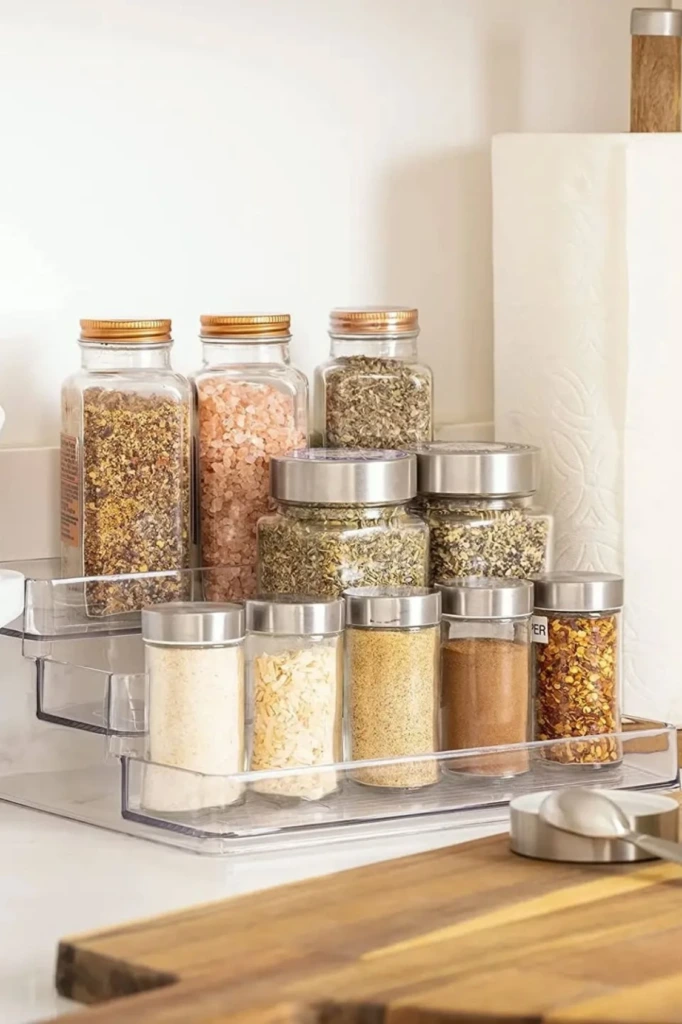
Transparent tiered organizers help you see the entire spice collection while making efficient use of shelf depth. Their raised levels allow the jars at the back to remain visible instead of disappearing behind the front row.
Acrylic designs are popular for compact cupboards and countertops because they have a relatively light visual appearance. Depending on the model, they can accommodate different jar sizes or expand to suit a wider shelf.
Arrange the containers by frequency of use or ingredient category, and place clear labels where they can be read easily. Before purchasing, check the width and depth of each tier to ensure your jars won't overhang.
This option is particularly useful when you want a simple, inexpensive improvement without installing permanent shelving.
12. Tray Setup
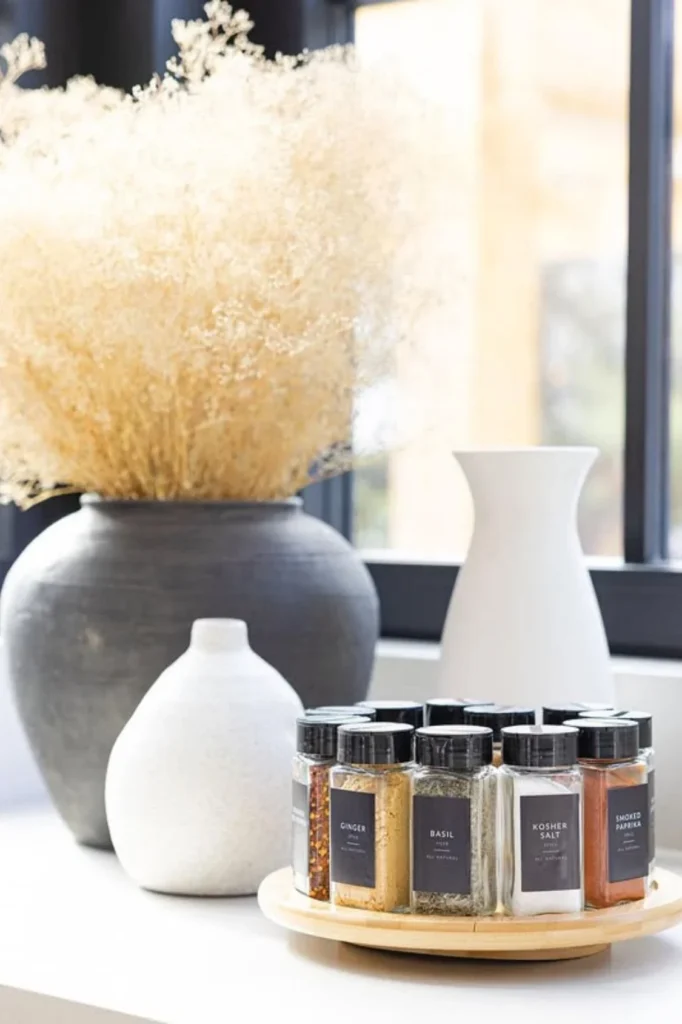
A tray creates a defined area for the seasonings you reach for most often. Rather than scattering a few jars around the cooking zone, you can keep them together on a single movable surface.
Wood, metal, ceramic, and stone trays can all work well, depending on your kitchen's style. A round tray makes it convenient to rotate the selection, while a rectangular version may fit more neatly against a wall or backsplash.
Use the tray for a limited group of everyday essentials, such as salt, pepper, garlic powder, and your favorite seasoning blends. Keeping the collection small prevents it from becoming another crowded storage area.
Choose a stable tray with enough room to lift the jars out comfortably, and move it away from the stove whenever it could be exposed to heat or splashes.
13. Acrylic Wall
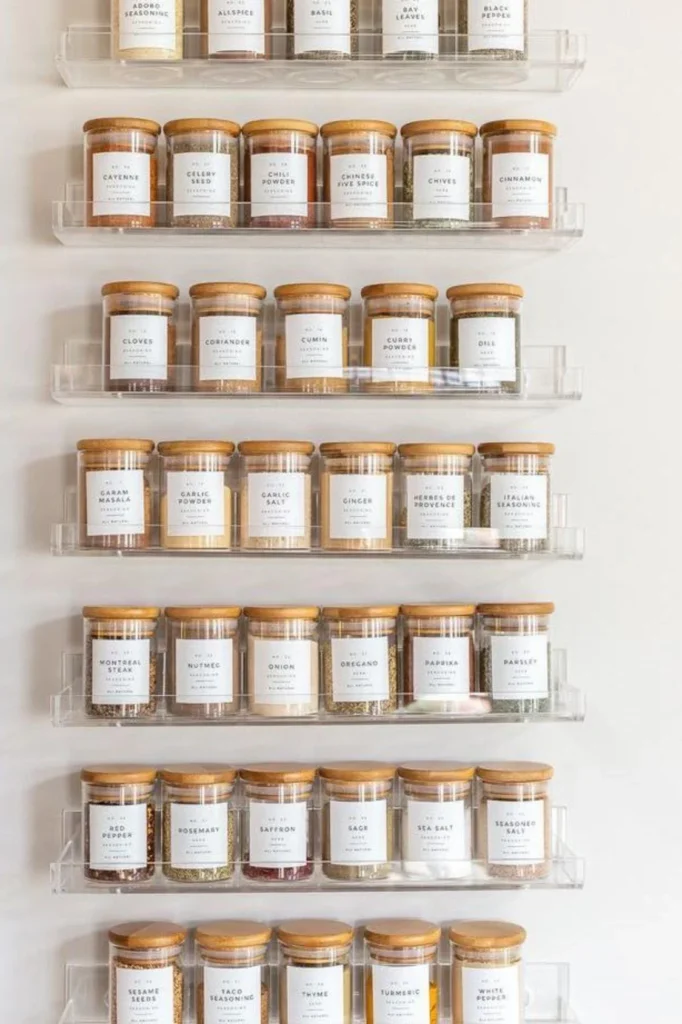
Clear wall-mounted spice racks provide storage without visually dominating a small kitchen. Because the shelves are transparent, the containers remain prominent while the organizer itself blends into the background.
This arrangement can work well beside a pantry, along an available kitchen wall, or near a preparation station. Narrow shelves are especially useful when there isn't enough room for a deeper wooden rack.
Use secure mounting hardware suitable for the wall surface and the combined weight of the jars. Check the depth before installation so containers won't project into a busy walkway.
Matching jars and legible labels give the display a coordinated appearance. To maintain spice quality, avoid placing the shelves where direct sunlight or cooking heat reaches the containers regularly.
14. Magnetic Strip
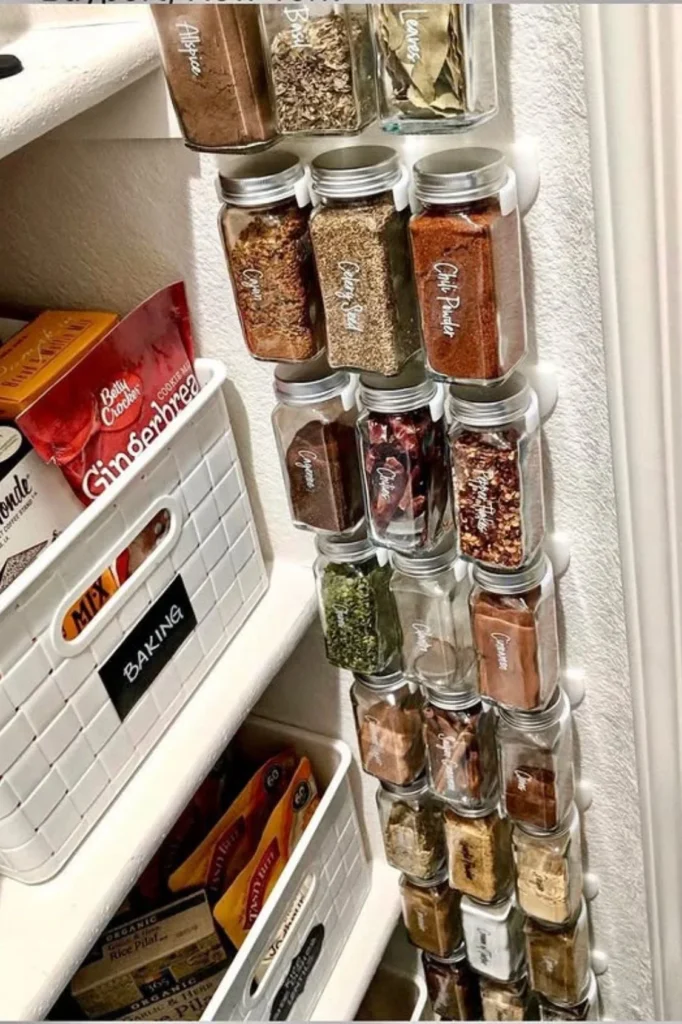
Magnetic spice storage makes use of vertical surfaces that might otherwise remain empty. Depending on the design, a magnetic rack can hold compatible metal containers against a cabinet side, refrigerator surface, or dedicated mounting panel.
This arrangement is helpful in compact kitchens where every shelf and drawer already serves another purpose. Keeping the jars upright and their labels facing outward also makes individual spices easy to identify.
Use containers and magnetic hardware specifically designed to work together. Confirm the weight capacity and make sure each jar remains secure when removed or replaced. A loose or poorly matched magnetic connection can allow containers to fall.
For the best results, keep the selection relatively small and position it somewhere convenient but away from excessive heat, moisture, and direct sunlight.
15. Chalk Wall
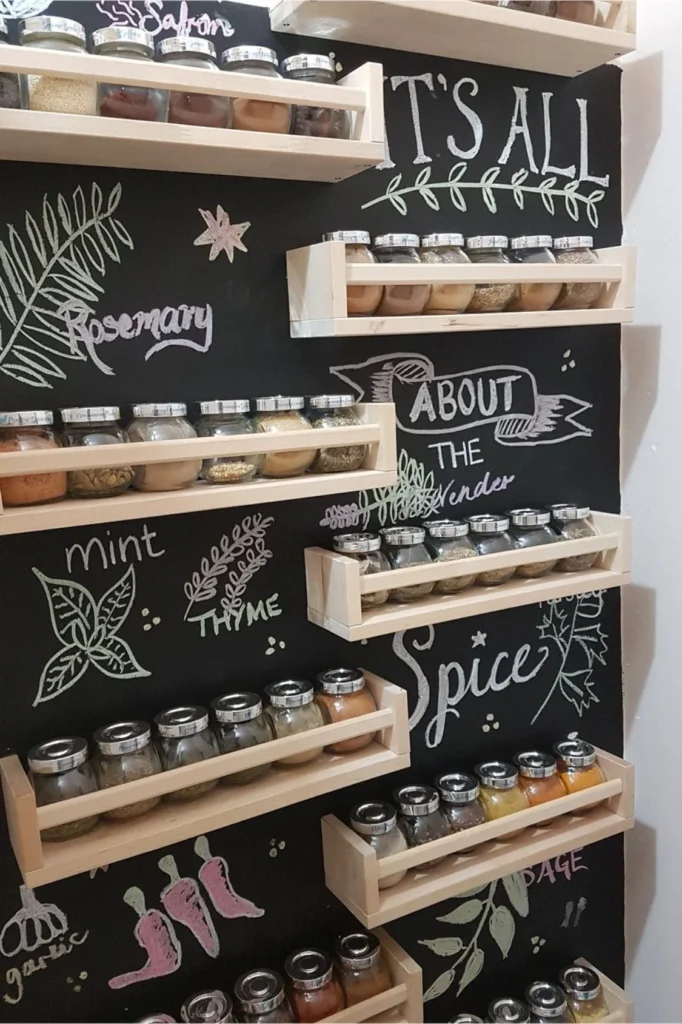
A chalkboard wall can combine practical spice storage with a creative kitchen feature. Add narrow shelves or small racks to the surface, then use the surrounding space for handwritten labels, ingredient notes, or reminders.
This approach suits kitchens where visible storage is part of the overall decor. It can also make a cooking area feel more personal without requiring additional cabinets or a large countertop organizer.
Keep the design functional by ensuring that every jar has a stable place and enough room to be removed easily. Labels should remain readable, and chalk markings shouldn't obscure ingredient names.
If you prefer a less permanent project, consider a framed chalkboard panel mounted above a small spice shelf. This gives you a similar effect without covering an entire wall.
16. Shelf Zoning
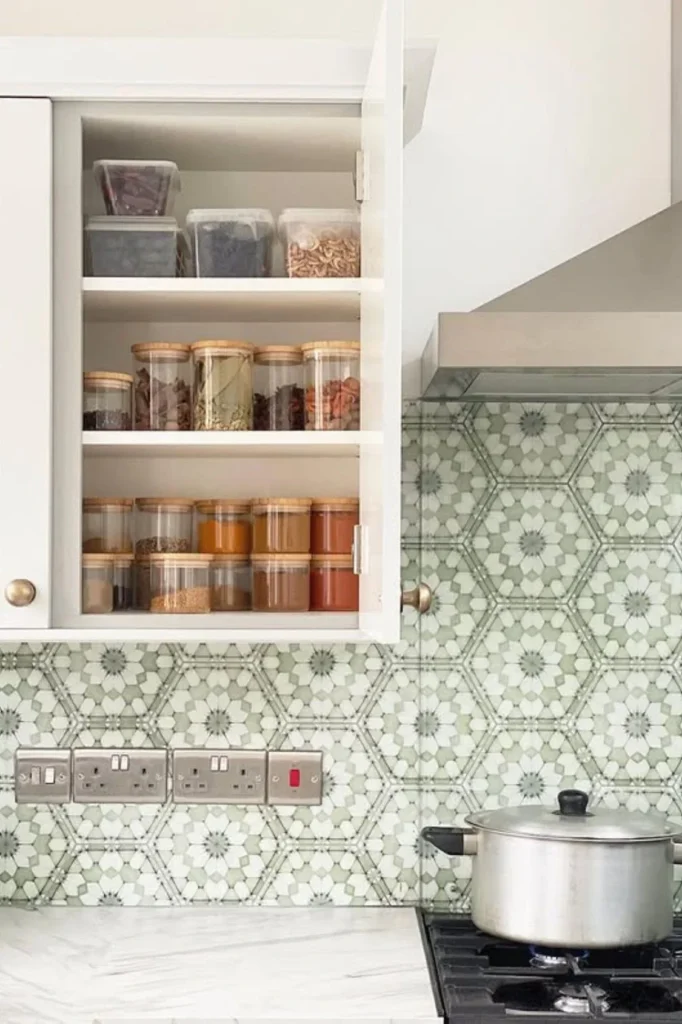
Dividing a crowded shelf into clearly defined sections can improve organization without adding any new storage furniture. Instead of placing every jar wherever it fits, assign specific areas to different types of seasonings.
For example, keep everyday cooking spices together, group dried herbs in another section, and reserve a separate area for baking ingredients or specialty blends. Small baskets or shelf dividers can help maintain these boundaries.
Arrange containers so labels remain visible, and place heavier jars on sturdy, accessible shelves. Less frequently used items can occupy higher positions if they remain safe to retrieve.
This method is particularly useful when your cabinets already have enough capacity but lack a consistent arrangement. Once each category has a designated area, returning jars after cooking becomes much easier.
17. Vertical Rack
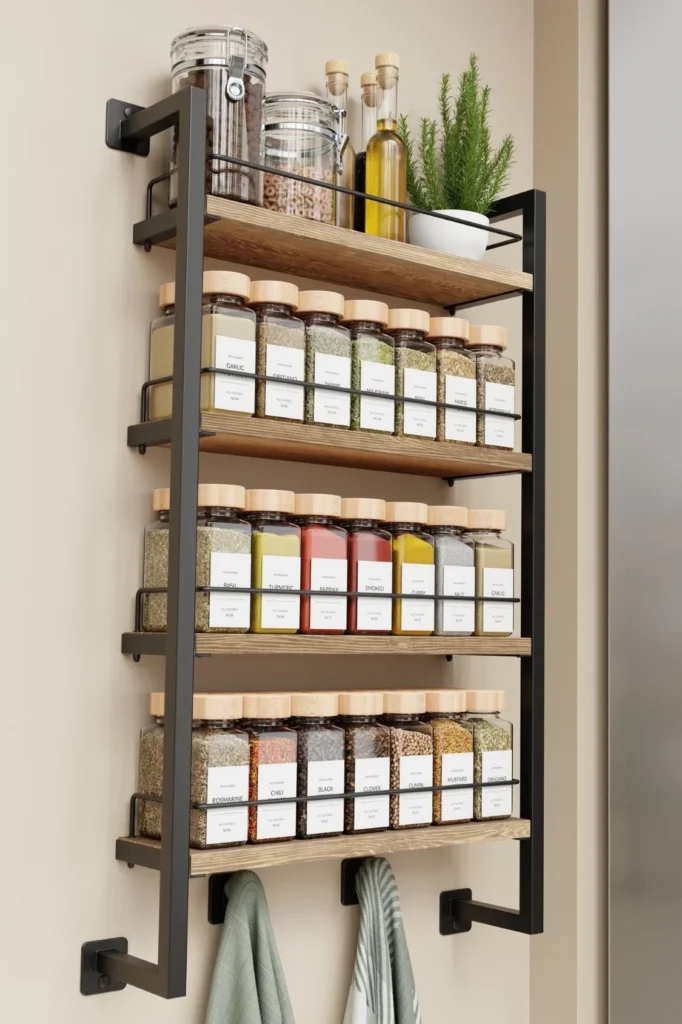
A vertical spice rack takes advantage of unused wall height rather than spreading storage across the countertop. Its narrow footprint makes it a practical option for small kitchens and compact pantry areas.
Depending on your needs, choose a wall-mounted rack with several levels or a tall freestanding organizer that fits beside a cabinet. Raised edges or individual holders help prevent jars from slipping out of position.
Arrange the spices so that frequently used ingredients are within comfortable reach. Less common seasonings can occupy the upper levels, provided they remain easy and safe to access.
Before installing a tall rack, check the wall structure, available height, and mounting requirements. Keeping the containers similar in size can make the arrangement more orderly, but adjustable shelves are useful if your collection includes larger jars.
18. Angled Holder
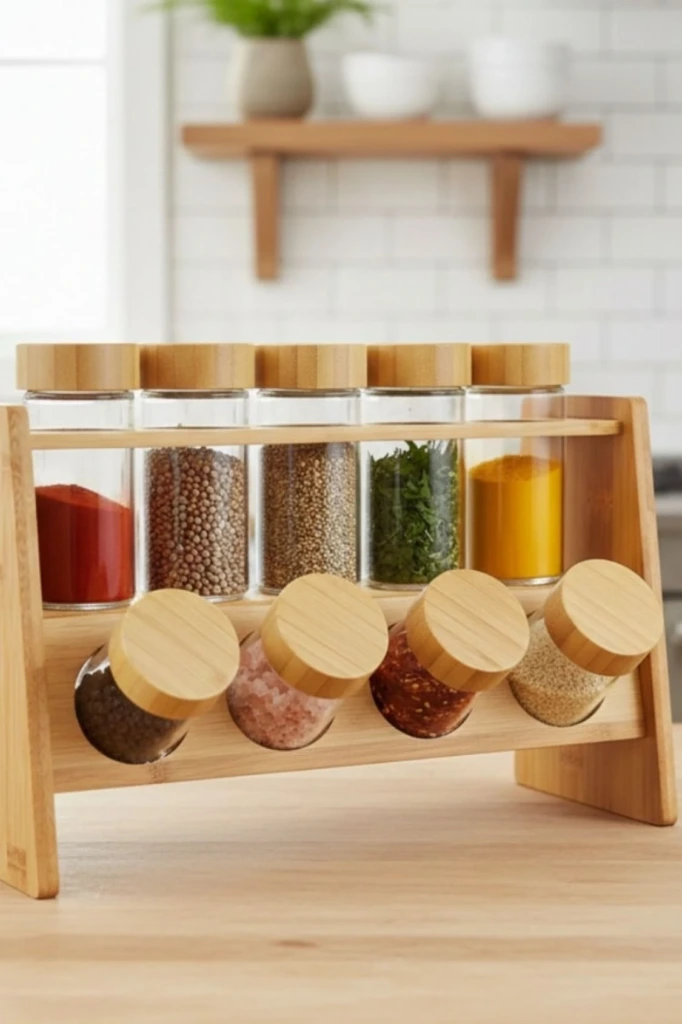
An angled spice holder positions containers at a slant, making their labels easier to read without lifting each jar. It offers a useful alternative to standard flat shelves, particularly when cabinet height or drawer space is limited.
Some holders use sloped compartments for individual containers, while others combine angled lower rows with upright storage above. The right design depends on your available space and the shapes of your jars.
Place everyday seasonings in the easiest-to-reach positions and keep specialty ingredients toward the back. Ensure that each compartment holds its jar securely so containers don't slide forward when the organizer is moved.
An angled holder is a practical choice for cooks who want better visibility without committing to a large wall-mounted system.
19. Expand Drawer
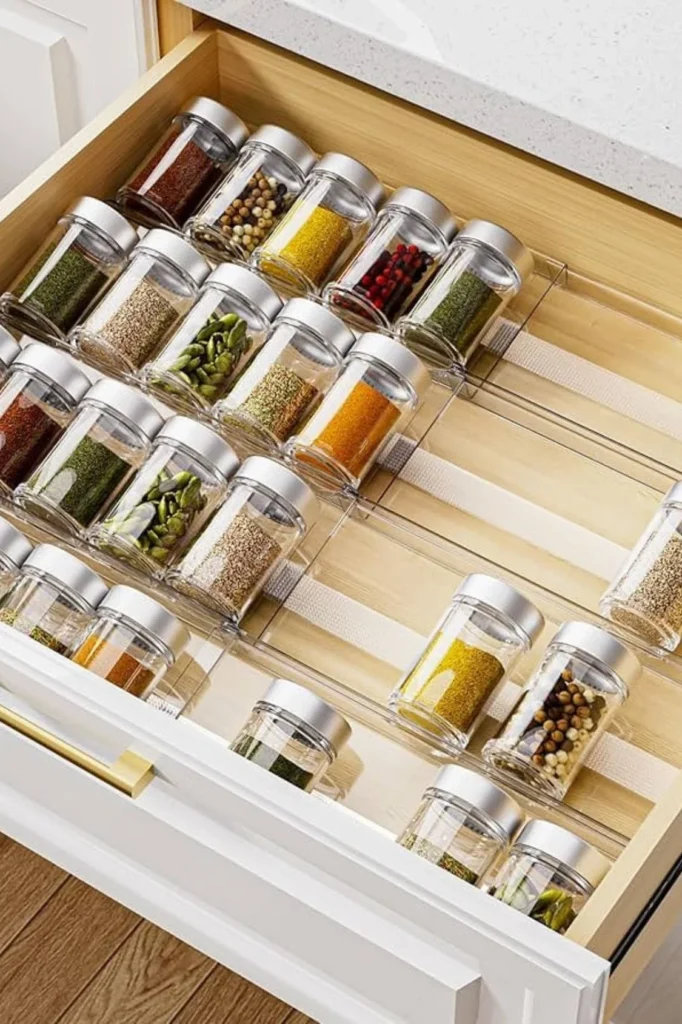
An expandable drawer organizer adjusts to fit the available width, helping you use space that might otherwise remain empty along the sides. It is particularly useful when a fixed insert doesn't match the dimensions of your kitchen drawer.
Depending on the design, the organizer may feature angled compartments, adjustable dividers, or extendable sections. These features help keep jars separated while presenting labels clearly when the drawer opens.
Measure the drawer's interior width, depth, and height before choosing a model. Allow enough clearance for the drawer to close fully without catching on the cabinet frame.
Once installed, arrange the containers by category or frequency of use. An adjustable layout also makes it easier to accommodate a growing collection without replacing the entire storage system.
20. Spice Carousel
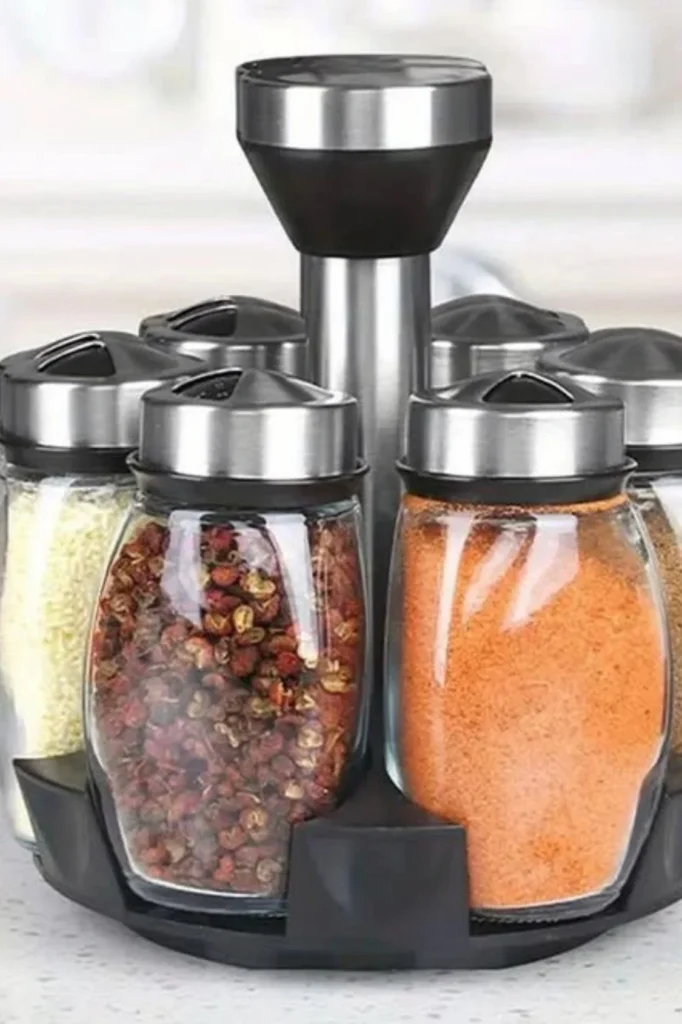
A spice carousel brings several seasonings together in a compact, rotating organizer. Instead of reaching across a shelf, you can turn the stand until the desired jar comes into view.
This setup works well for countertop cooking stations, pantry shelves, and other areas where quick access matters. Some models hold containers around a central base, while others provide multiple levels for larger collections.
Place the carousel where it can rotate freely without interfering with food preparation. Choose a model with a stable base and compartments suited to your jars.
For everyday convenience, fill it with the spices you use most frequently and store less common ingredients elsewhere. This keeps the carousel easy to turn and prevents the organizer from becoming overcrowded.
21. Mini Shelves
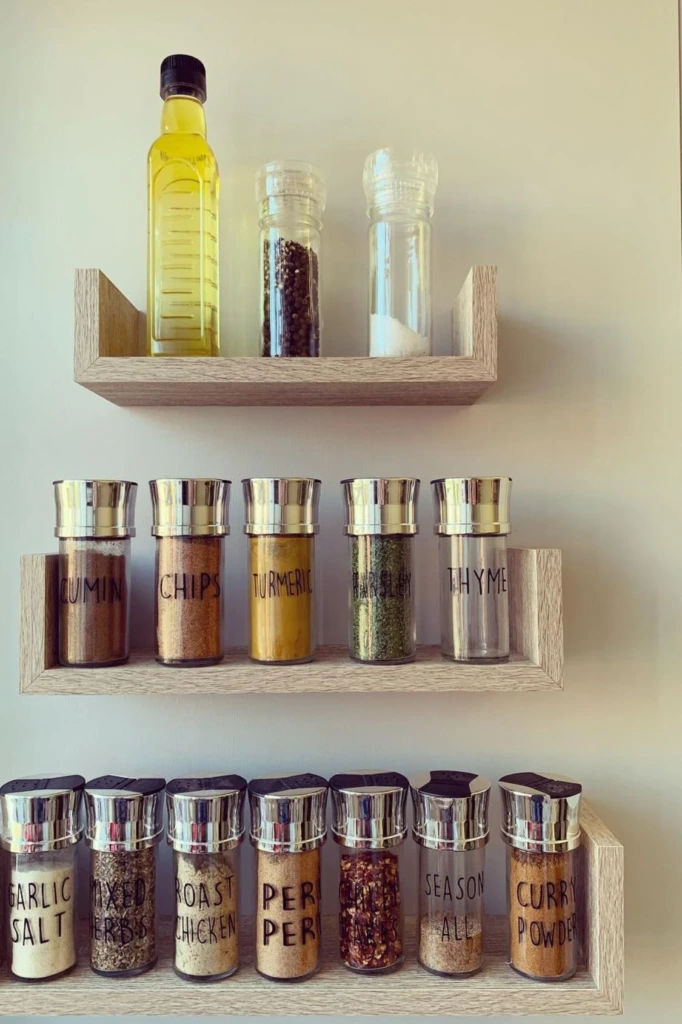
Mini shelves make it possible to create a dedicated spice area even when only a small section of wall is available. Their compact size makes them suitable for narrow spaces beside cabinets, pantry entrances, or unused wall sections.
Install two or three short shelves, depending on the available height and the number of containers you want to display. Matching jars can help maintain a tidy appearance, while small front lips provide extra security.
Keep the shelves close enough to your preparation area for convenient access, but away from heat and splashing water. Measure the jars before installation so that the shelves have adequate depth and vertical clearance.
This simple arrangement can provide useful extra storage without requiring a full cabinet renovation.
22. Deep Drawer
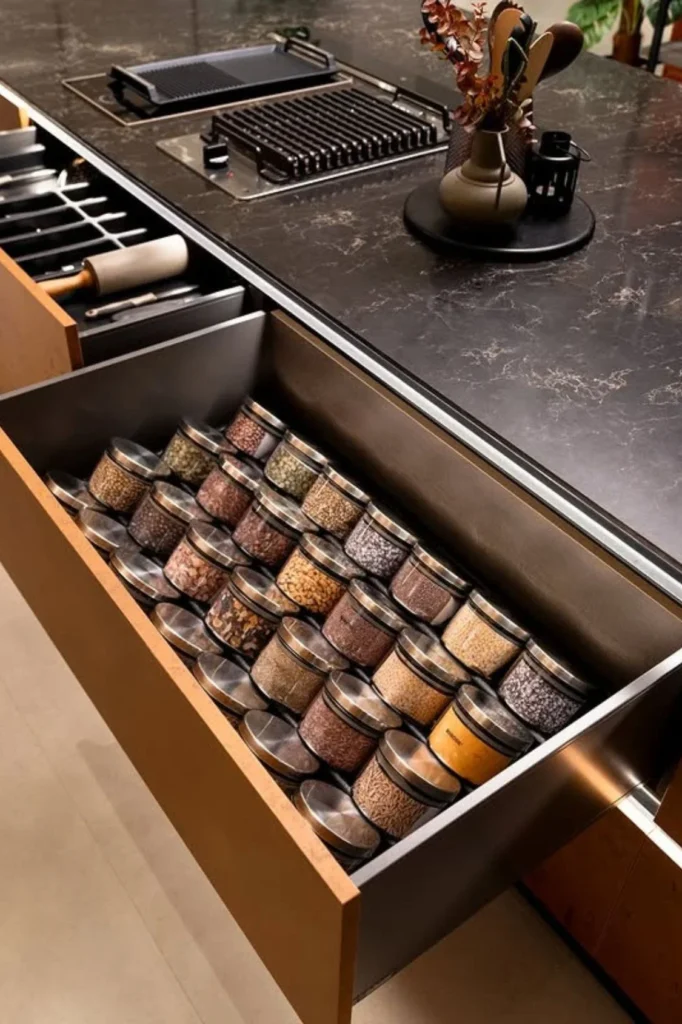
A deep drawer can hold a substantial spice collection while keeping the kitchen counters clear. With a suitable insert, containers can lie at an angle or sit in individual compartments, allowing their labels to remain visible from above.
This method works particularly well when an existing drawer is being used for miscellaneous items rather than organized storage. A well-fitted insert prevents jars from rolling around whenever the drawer opens and closes.
Measure the drawer before purchasing an organizer, paying attention to the internal height as well as the width and depth. Choose compartments that suit your container sizes, and avoid stacking jars where labels become hidden.
Group similar ingredients together and reserve the most accessible positions for everyday seasonings. The drawer can then function as a dedicated spice station that stays out of sight when not in use.
How many spice jars should you keep in your kitchen?
There is no ideal number for every household. The right collection depends on what you cook, how frequently you prepare meals at home, and whether you regularly experiment with new recipes.
Start with the spices and herbs you use throughout the week. Common essentials might include black pepper, paprika, cumin, turmeric, cinnamon, oregano, chili powder, and garlic powder, although your choices will depend on your preferred cuisine.
Add specialty seasonings when you have a clear use for them rather than buying every available option. Review your collection periodically, remove unnecessary duplicates, and replace spices that have lost their characteristic aroma or flavor.
Remember that dried spices don't necessarily become unsafe immediately after their best-quality period, but their flavor and fragrance can decline over time. Properly sealed containers stored away from heat, moisture, and sunlight generally maintain their quality better.
Is it better to store spices in drawers or cabinets?
Both options can work well, and the better choice depends on your kitchen layout, available space, and cooking habits.
Drawers are convenient because you can arrange containers in a single layer and read their labels from above. An angled insert or adjustable divider helps prevent jars from rolling around and makes the collection easier to maintain.
Cabinets offer flexibility when drawer space is limited. Tiered racks, rotating organizers, and pull-out shelves can improve visibility and prevent smaller containers from getting lost at the back.
Consider how often you use each spice, too. Keep everyday seasonings close to your preparation area, and place occasional ingredients in secondary storage. Whichever system you choose, prioritize easy access, secure containers, and a cool, dry location away from direct heat and sunlight.