35 Clever Toy Storage Ideas for 2026
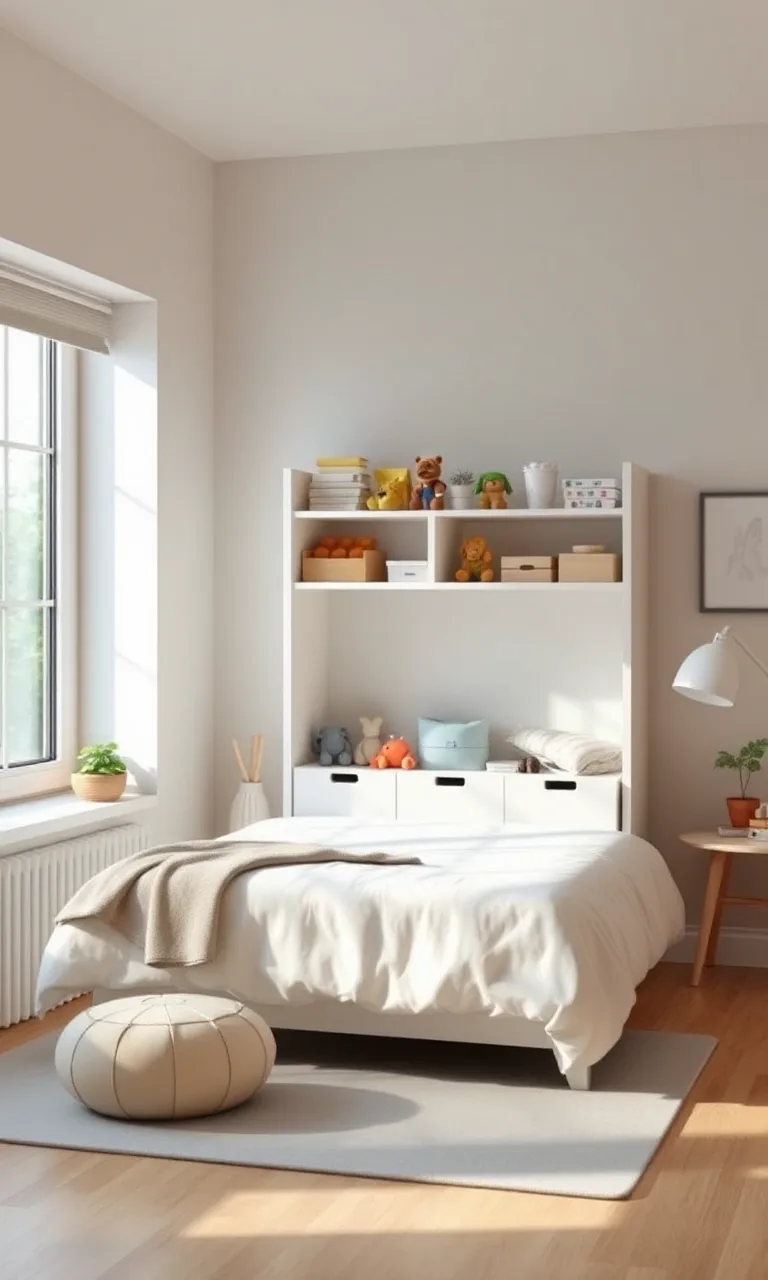
Keeping children's toys organized can feel like an endless task, especially when playthings find their way into every corner of the house. From stuffed animals and building blocks to puzzles and art supplies, finding a practical home for everything makes everyday cleanup much easier.
The good news is that toy organization doesn't require a huge playroom or expensive furniture. With creative storage solutions, you can make better use of available space while keeping toys accessible and your home looking welcoming.
These 35 clever toy storage ideas offer practical inspiration for bedrooms, playrooms, living rooms, and even outdoor spaces. Whether you're working with a small budget or planning a complete playroom makeover, there's something here to help.
1. Farmhouse Baskets and Bins
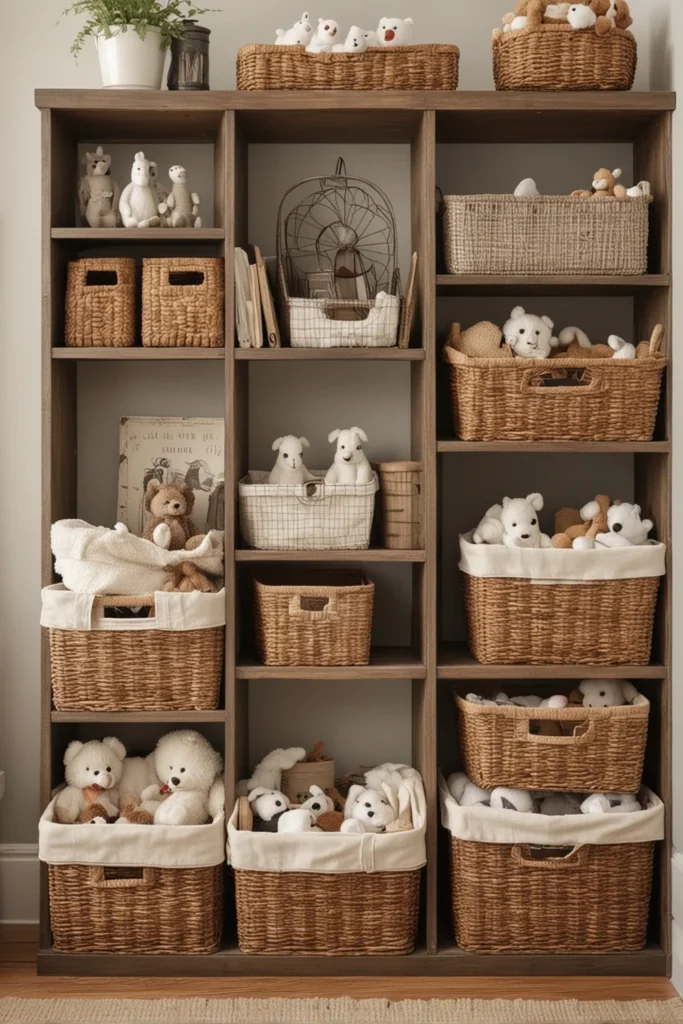
Farmhouse-style baskets bring warmth and texture to a playroom while offering flexible storage for everyday toys. Woven baskets, wooden crates, and fabric containers work particularly well in rooms with neutral colors or rustic furniture.
Use larger baskets for stuffed animals and dress-up accessories, while smaller containers can hold toy cars, blocks, and puzzles. Mixing different materials creates an interesting look without making the room feel overly decorated.
Arrange the baskets along a low shelf or beneath a console table so children can reach their belongings independently. Choose containers with smooth edges and sturdy handles for easier handling.
2. Animals Hanging Around
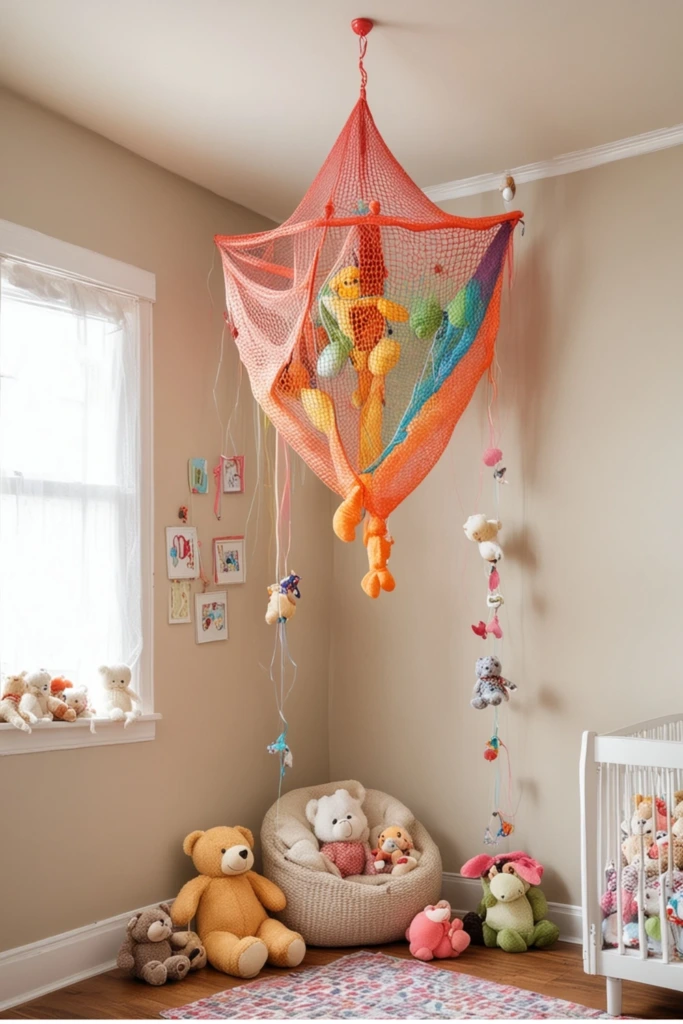
Stuffed animals can quickly take over beds, chairs, and bedroom floors. A hanging toy hammock offers a clever way to display these cuddly collections without sacrificing valuable floor space.
Install a soft mesh hammock across an unused corner, preferably somewhere children can reach safely. The open design makes it easy to spot favorite animals while keeping them together.
For larger collections, consider organizing plush toys by size, placing heavier animals toward the bottom. Secure the hammock with appropriate wall anchors and keep hanging cords out of children's reach.
3. Simple and Inexpensive Plastic Drawers
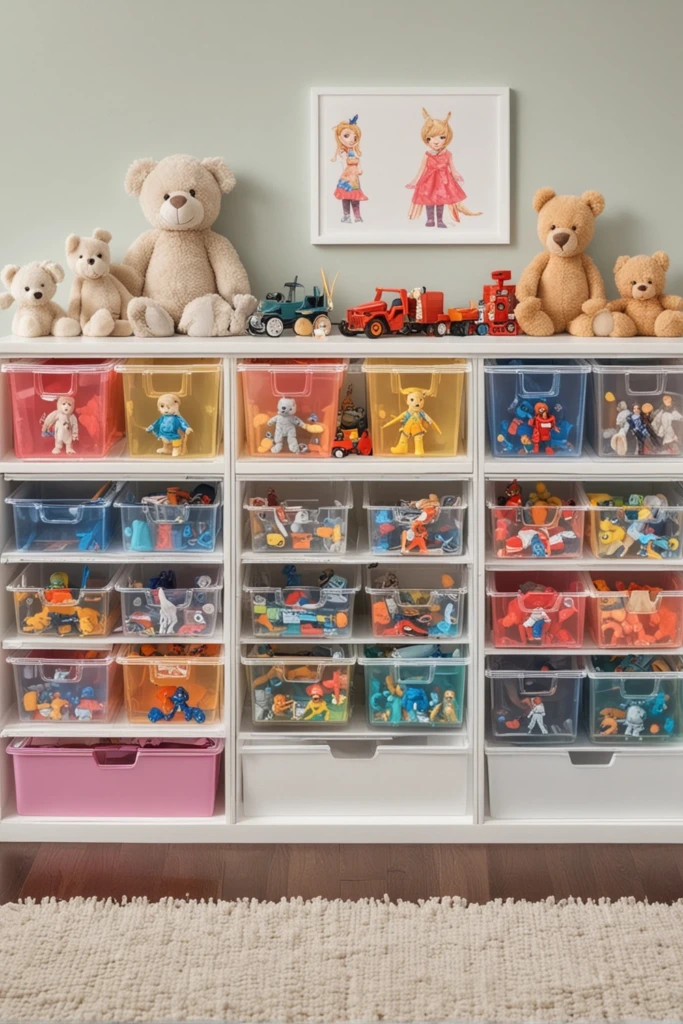
Plastic drawer organizers are an affordable option for families dealing with lots of smaller toys. Their lightweight construction and compact shape make them suitable for bedrooms, closets, and play areas.
Choose shallow drawers for miniature figures, toy accessories, and craft materials. Deeper compartments can accommodate building sets, larger dolls, and electronic toys.
Transparent drawers make identifying contents easier, while colorful versions add personality to the room. Adding simple labels to each drawer helps children learn where their belongings should go.
Place the unit on a stable surface, and secure taller organizers against tipping.
4. Reading Bench Boxes
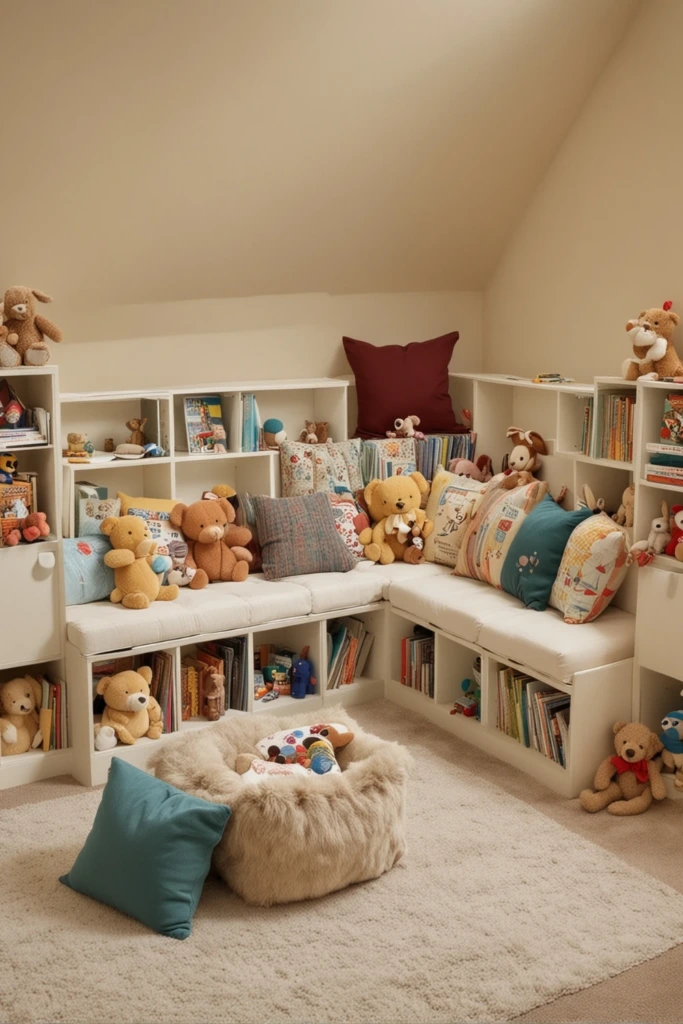
A storage bench can turn an ordinary bedroom corner into a comfortable reading area while providing extra room for toys and books.
Look for a sturdy bench with open compartments underneath. Add a washable seat cushion and a few pillows to make the space inviting. Storage boxes beneath the seat can hold picture books, soft toys, and other frequently used items.
Choose lightweight bins that children can slide out without difficulty. Keeping books close to the seating area also encourages quiet reading activities throughout the day.
5. LEGO-Themed Toy Box
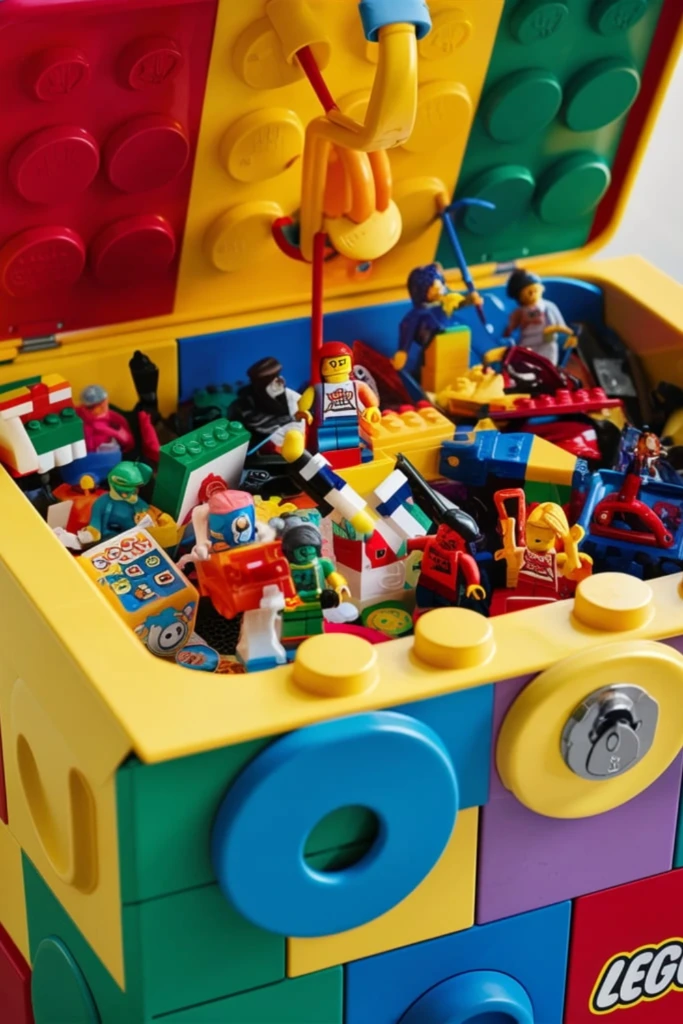
A toy box shaped like an oversized building brick adds a playful touch to a child's room while providing a dedicated place for construction toys.
These colorful containers are especially appealing in LEGO-inspired bedrooms. They can hold loose bricks, building accessories, and other small playsets.
For better organization, use separate containers for different collections rather than mixing everything into one large box.
Choose a model with a lightweight, removable lid or appropriate finger protection. Avoid heavy lids that could close unexpectedly on little hands.
6. Outdoor Ball Storage
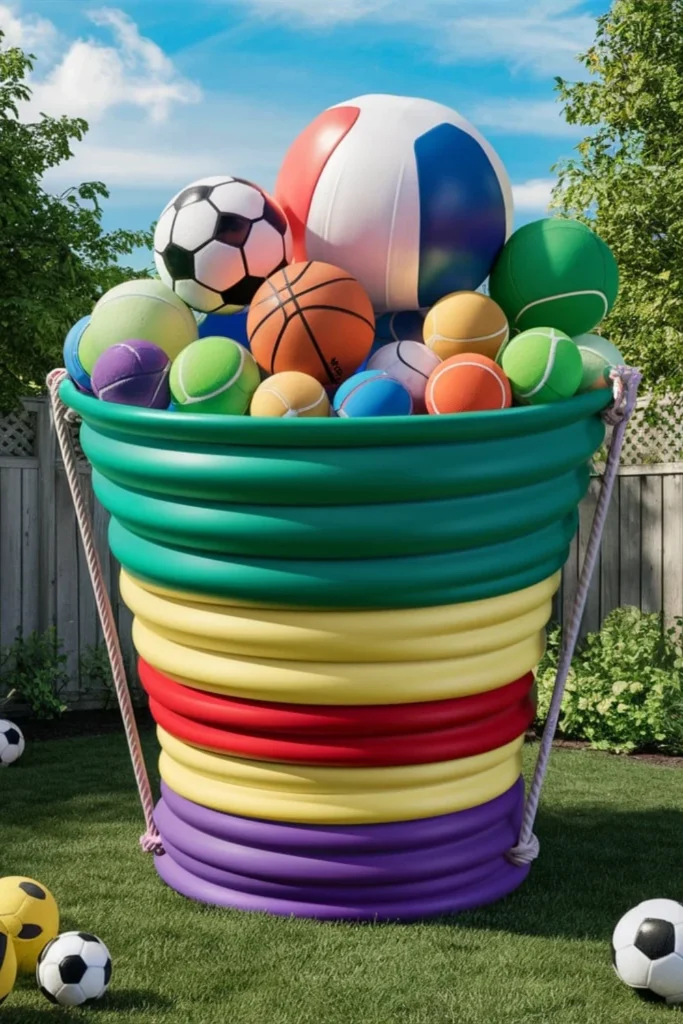
Basketballs, footballs, and playground balls are often difficult to organize because their round shapes make stacking impossible.
A vertical ball holder with flexible front cords provides an effective solution for garages, covered patios, and outdoor play areas. Children can remove individual balls without emptying the entire container.
Choose weather-resistant materials if the organizer will be exposed to humidity or occasional rain. Position it away from vehicles and walkways to prevent unnecessary obstacles.
This arrangement keeps sporting equipment together and makes outdoor cleanup quicker.
7. Repurposed Dollhouse Storage
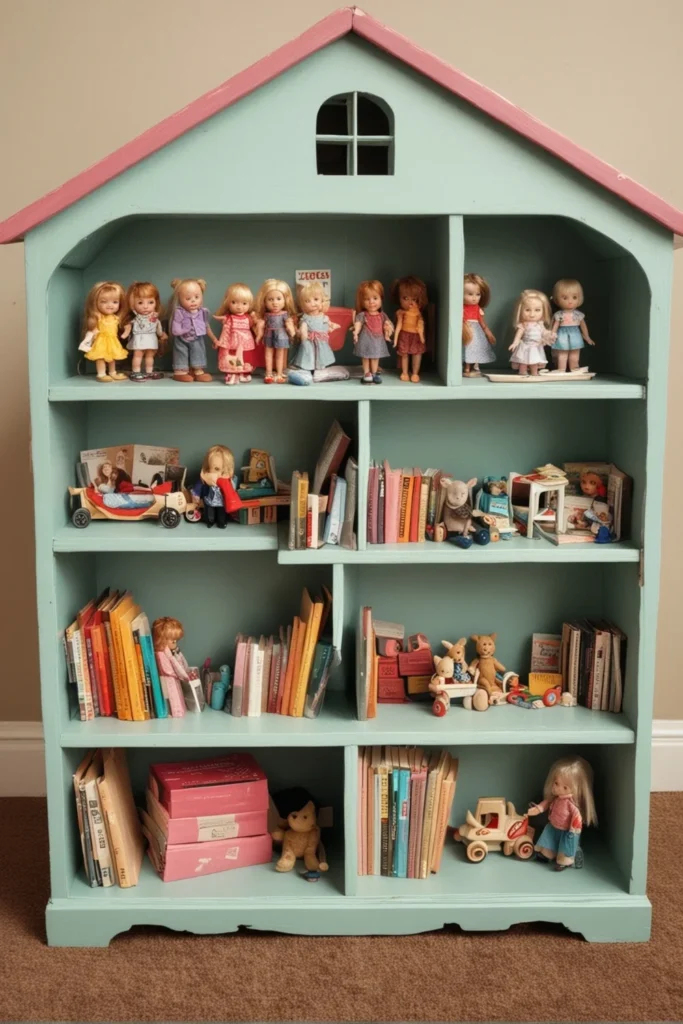
An unused dollhouse can become a charming display organizer instead of collecting dust in storage.
Start by cleaning the structure and checking for loose pieces or sharp edges. Remove unnecessary partitions if you need larger compartments, then refresh the exterior with child-safe paint.
The miniature rooms can display small dolls, animal figures, collectibles, or lightweight books. Each section naturally separates different toy categories.
Place the finished organizer on a stable, accessible surface. Larger dollhouses should be secured to prevent tipping during play.
8. Cute Animal Bins
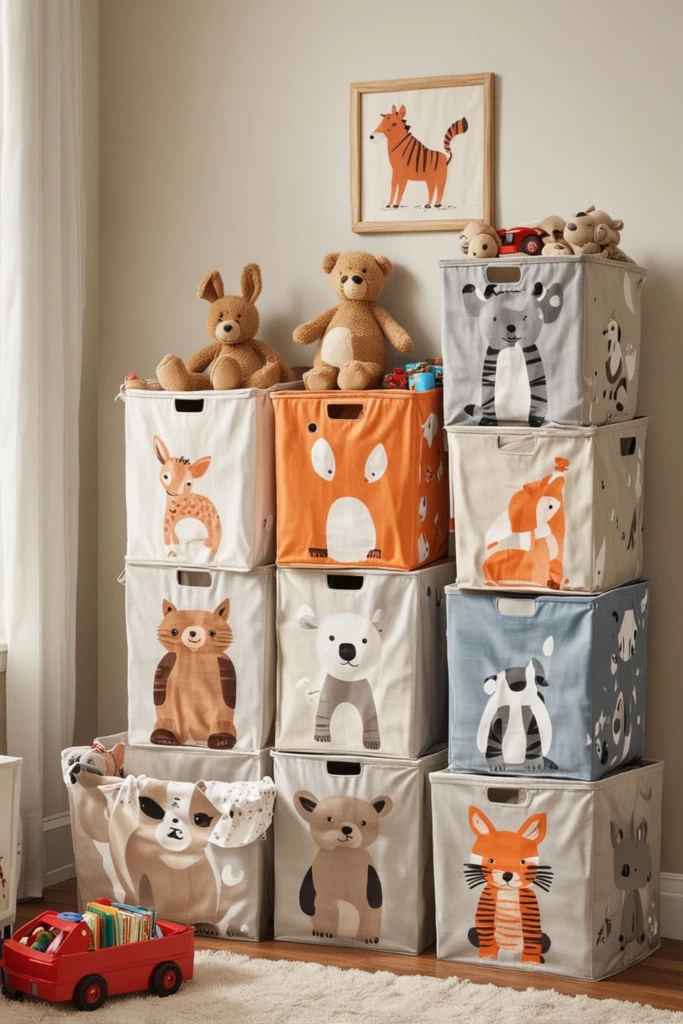
Animal-shaped storage bins combine everyday organization with imaginative design. Containers featuring bears, rabbits, dinosaurs, or other friendly characters can make tidying up feel more enjoyable.
Choose soft fabric bins for plush toys and lightweight accessories. Sturdier containers are better suited to blocks and heavier playthings.
You can even give each animal bin a specific purpose. For example, a bear might hold stuffed animals while a dinosaur collects toy vehicles.
Keeping these bins at floor level allows younger children to participate in cleanup without needing assistance.
9. Adjustable Bath Toy Basket
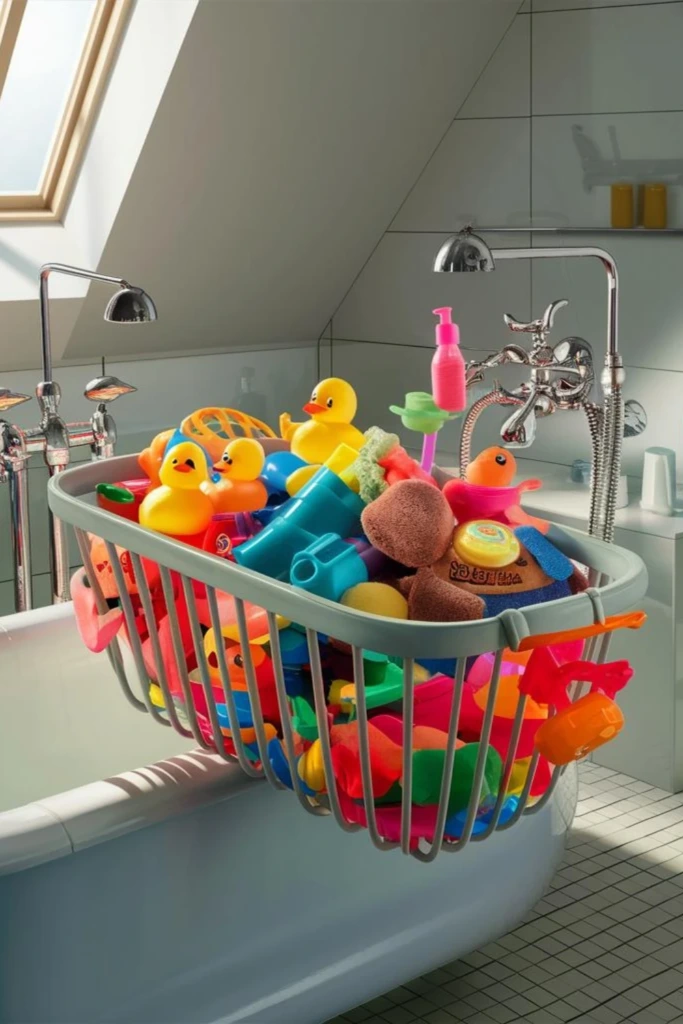
Bath toys need storage that allows water to drain away instead of collecting inside containers.
An adjustable bathtub basket provides a convenient location for rubber ducks, floating boats, and other washable toys. Many designs fit across the bathtub or attach securely to its sides.
Choose a basket with drainage openings and enough ventilation for toys to dry between baths. Empty trapped water from toys after use and clean the basket regularly to reduce buildup.
Keep the organizer positioned so it doesn't interfere with entering or leaving the bathtub.
10. Reading Nook with Cubbies
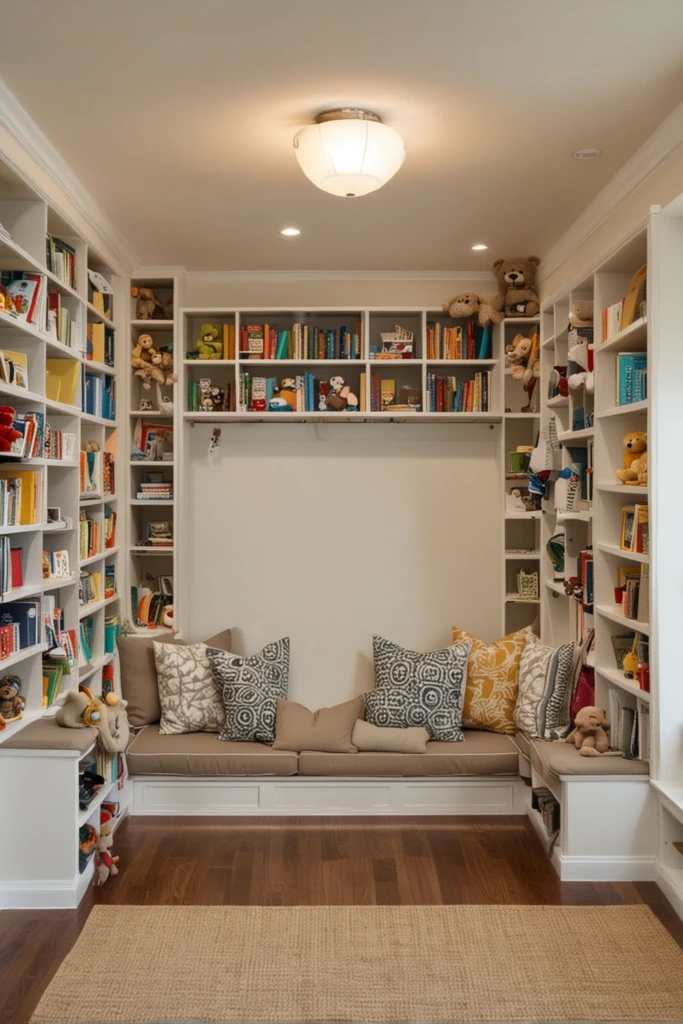
A reading nook with built-in cubbies makes excellent use of a bedroom corner, particularly when floor space is limited.
Choose a low shelving unit with a properly designed seating surface, or purchase a dedicated storage bench. Fill the compartments with favorite books, puzzles, and quiet-time activities.
A small rug, comfortable cushion, and nearby lighting can make the area feel special without requiring much decoration.
Organize books with their covers facing outward where possible, especially for younger children who recognize stories by their illustrations.
11. Space-Themed Bookcase
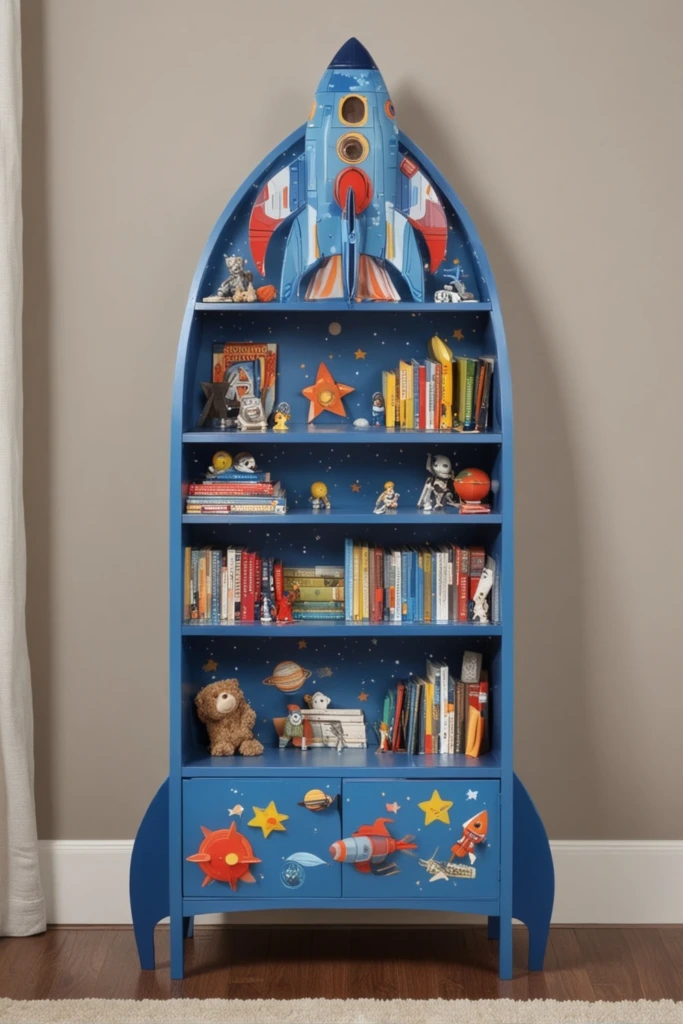
A rocket-inspired bookcase can bring excitement to a space-themed bedroom while providing useful storage.
Look for a design featuring colorful shelves, rounded corners, and compartments suitable for books and toys. Decorative details such as stars, planets, and rocket shapes can reinforce the theme.
Keep frequently used items on lower shelves and display lightweight decorations above. Small baskets can help organize miniature spacecraft, action figures, and building pieces.
Anchor the bookcase securely to the wall, particularly if children might pull on shelves while reaching for toys.
12. Mickey and Friends Toy Chest
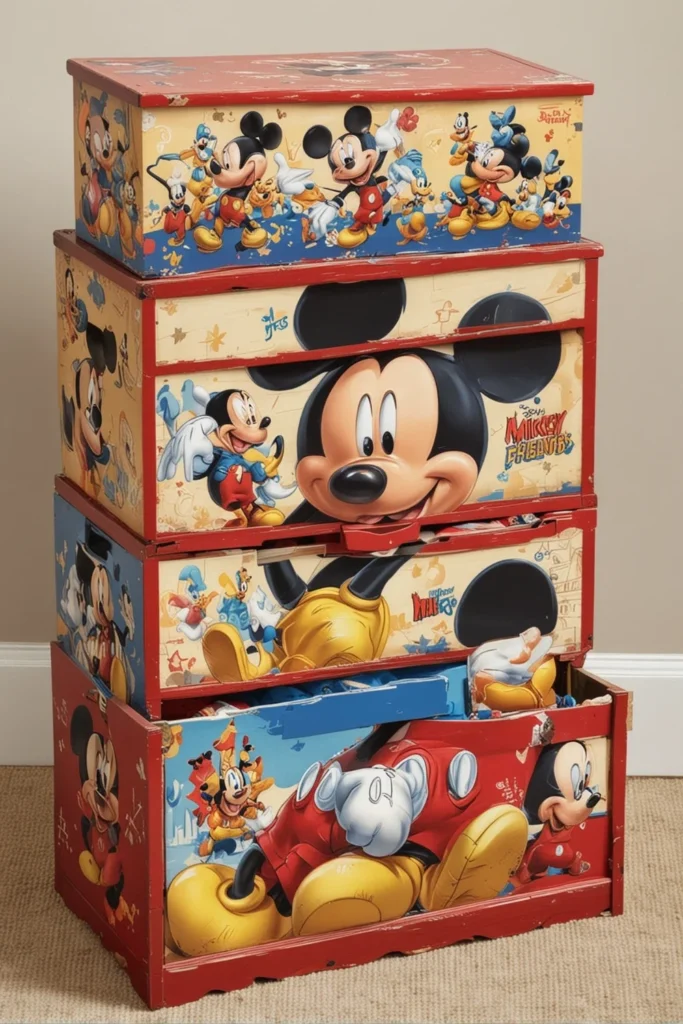
Character-themed toy organizers can make a child's bedroom feel more personal while providing designated spaces for different belongings.
A Mickey Mouse and Friends storage unit with multiple removable bins works well for organizing toys by category. Smaller containers can hold figures and accessories, while larger bins accommodate dolls and building blocks.
The familiar characters may encourage children to participate in putting things away after playtime.
Choose an organizer with smooth surfaces, stable construction, and containers that are easy for children to lift without spilling their contents.
13. Garden-Themed Bookcase
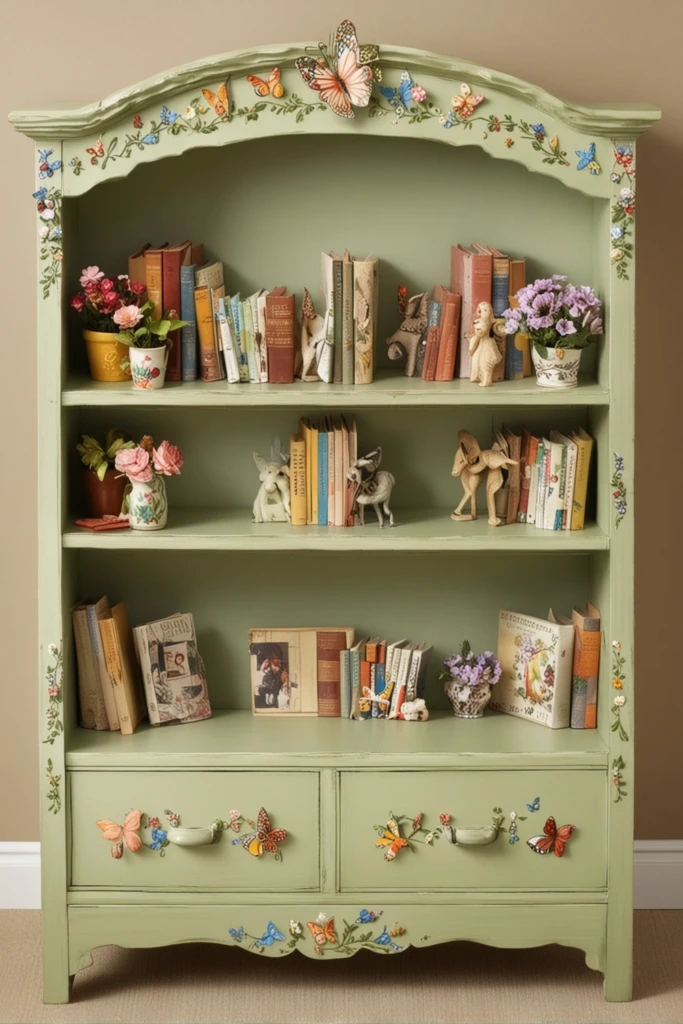
A garden-inspired bookcase adds cheerful colors and nature-themed details to a child's bedroom or playroom.
Designs featuring flowers, butterflies, leaves, or woodland creatures can complement pastel walls and playful furniture. Open shelves provide room for picture books and larger toys, while drawers conceal smaller accessories.
For a coordinated appearance, use storage baskets in soft green, yellow, or pink tones.
Keep the heaviest belongings on lower shelves and attach the bookcase to the wall using suitable anti-tip hardware.
14. Three-Tier Crayon Shelves
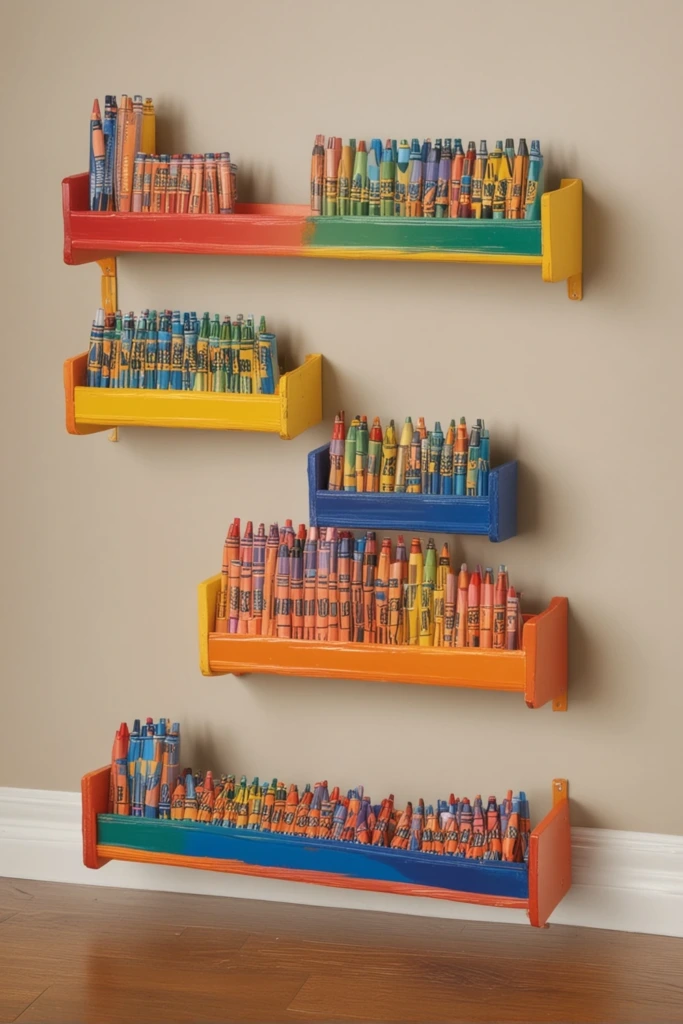
Crayon-inspired shelving is a colorful storage idea for children who enjoy drawing, painting, and creative play.
A three-tier unit offers separate levels for art supplies, books, and small toys. The playful crayon shapes can also serve as decorative accents in an otherwise simple room.
Organize supplies in washable containers to protect the shelves from marker stains and paint spills. Store paper, coloring books, and crayons in separate compartments to make activities easier to set up.
Position the shelves near an art table so children can find materials without carrying them across the room.
15. Individualized Toy Box Tags
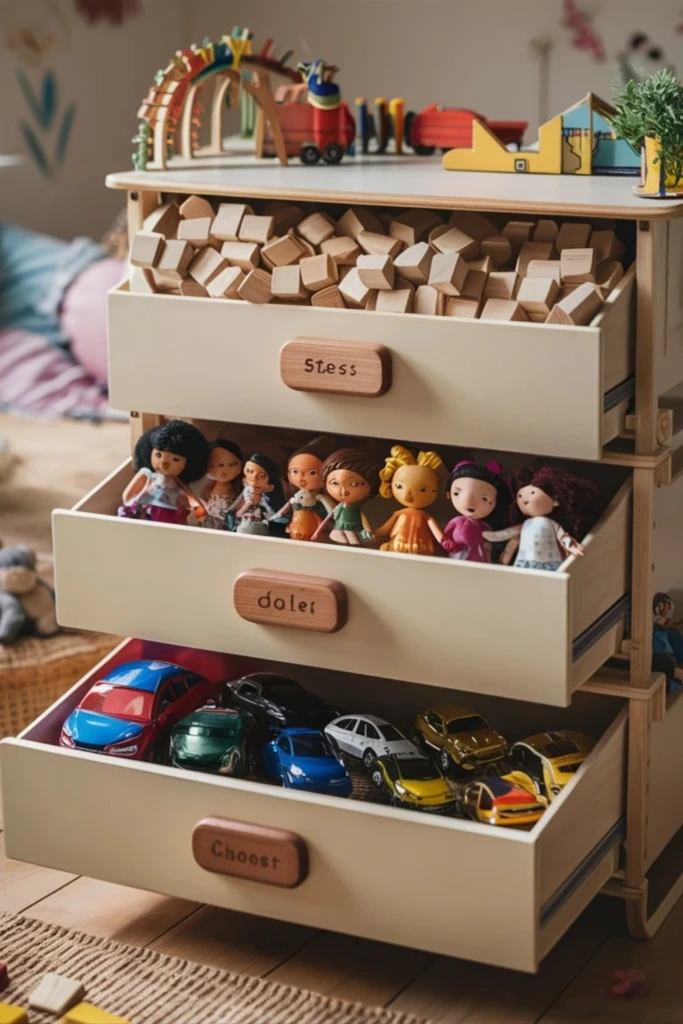
Personalized tags provide an easy way to improve an existing toy storage system without purchasing new furniture.
Wooden labels, laminated cards, and reusable tags can identify individual containers or toy categories. Consider labeling bins for dolls, vehicles, puzzles, or construction sets.
For shared bedrooms, adding children's names can help distinguish personal belongings from toys everyone uses.
Attach labels securely without leaving exposed staples, sharp fasteners, or loose strings. Large lettering and simple illustrations make the system easier for younger children to understand.
16. Woodland Fox Basket
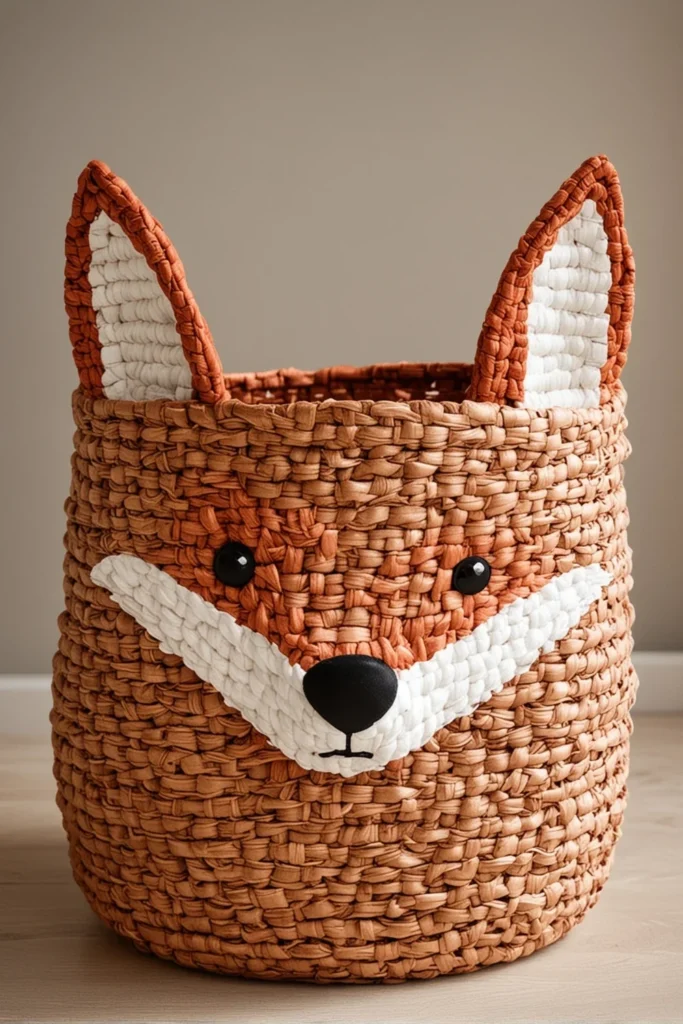
A fox-shaped basket introduces a woodland-inspired accent while giving children a convenient place to collect their favorite toys.
Soft woven or fabric baskets work particularly well for stuffed animals, blankets, and dress-up clothes. Their flexible sides make them easy to position beside a bed or play mat.
Choose a basket with a stable base and decorative features that are securely attached. Avoid loose buttons or detachable embellishments in rooms used by very young children.
Pair the fox basket with natural wood furniture and earthy colors for a cozy, coordinated appearance.
17. Stand-Up Animal Zoo
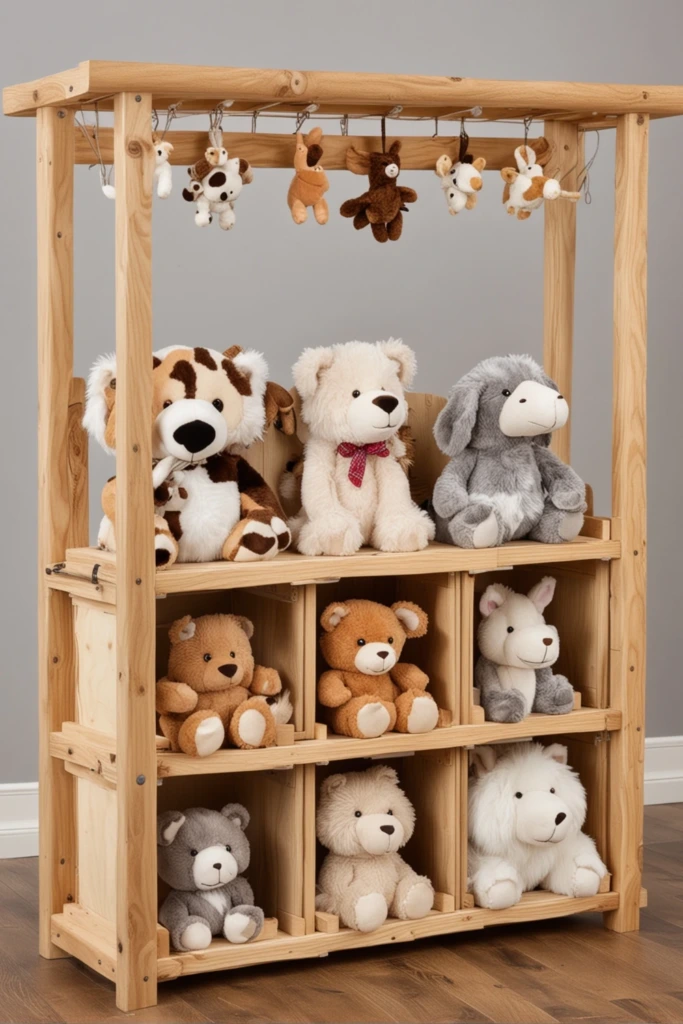
A standing stuffed-animal zoo offers a creative alternative to traditional toy boxes, especially for children with large plush collections.
The organizer typically uses a wooden frame with flexible vertical cords that hold stuffed animals inside while allowing children to pull them out.
Choose a stable design with smooth edges and securely attached cords. A wall-mounted or properly anchored version can provide additional stability.
Arrange smaller plush toys near the front and larger animals toward the back. The visible display helps children find their favorites without searching through an overflowing basket.
18. Hanging Menagerie Net
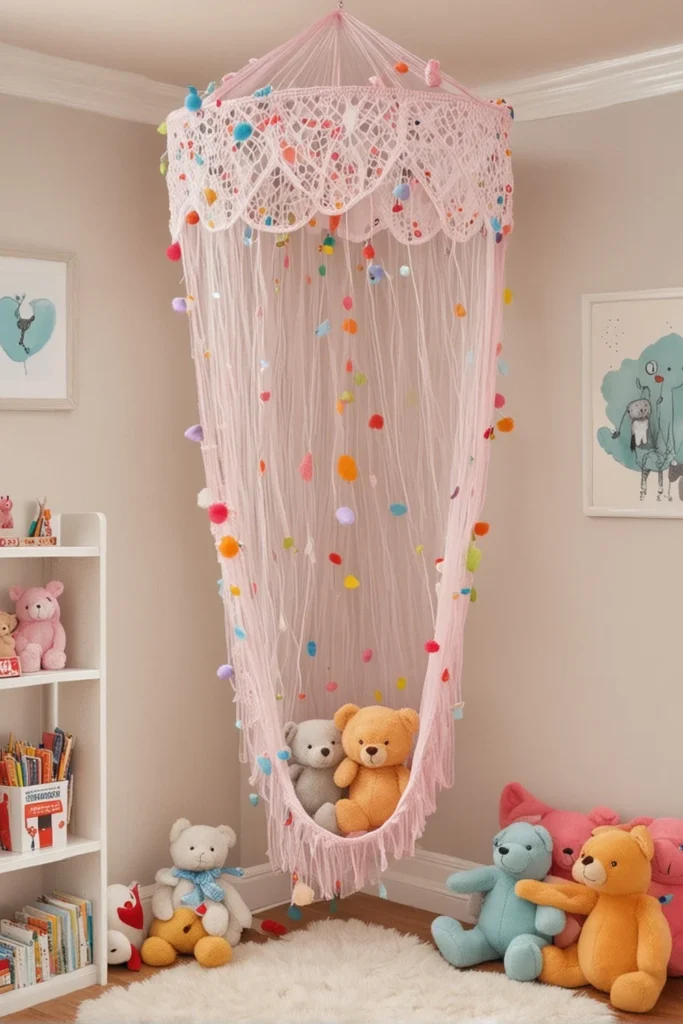
A hanging menagerie net transforms an unused bedroom corner into a practical home for soft toys.
Unlike bulky storage furniture, a suspended net occupies very little floor space. It can accommodate stuffed animals of different sizes while keeping the collection visible.
Choose a durable mesh material and secure it according to the manufacturer's instructions. Avoid installing it directly over a crib, bed, or sleeping area.
For children who enjoy displaying their collections, a colorful hammock can become part of the room's decoration rather than simply a storage accessory.
19. Paper Storage Bags
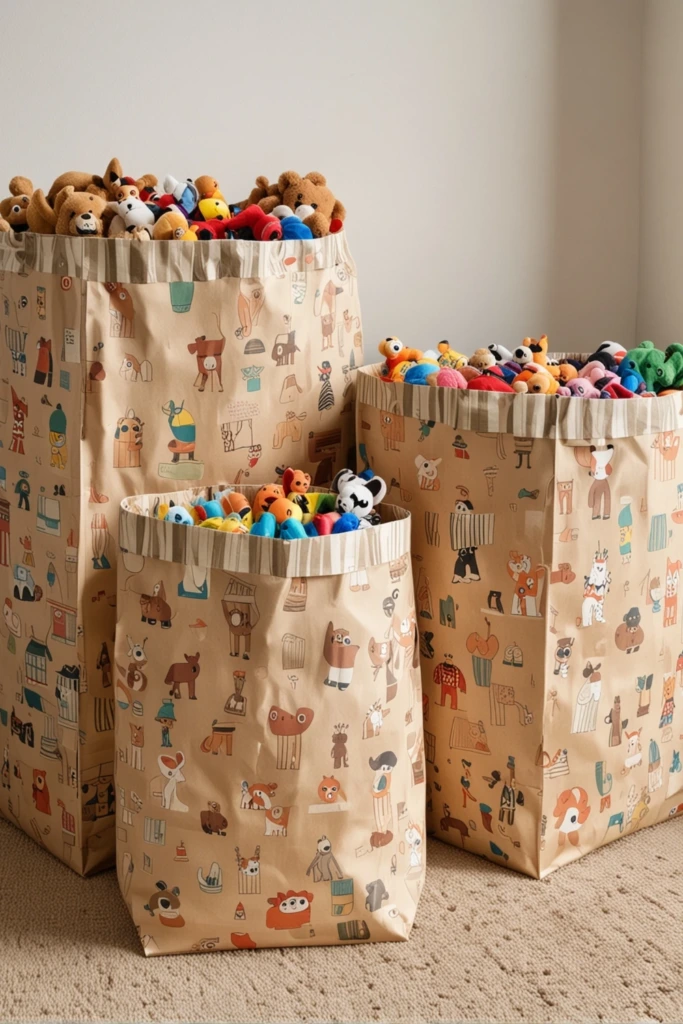
Large paper storage bags offer a simple, budget-friendly way to organize lightweight toys while adding a casual decorative touch.
Choose reinforced paper bags with wide openings and stable bottoms. They are useful for soft toys, costumes, fabric play accessories, and other items without sharp edges.
Decorate the outside with stickers, painted patterns, or illustrated labels to match the room.
Keep paper bags away from damp areas and avoid overfilling them with heavy objects. For younger children, use them under supervision and avoid designs with long handles or cords.
20. Knitted Crochet Baskets
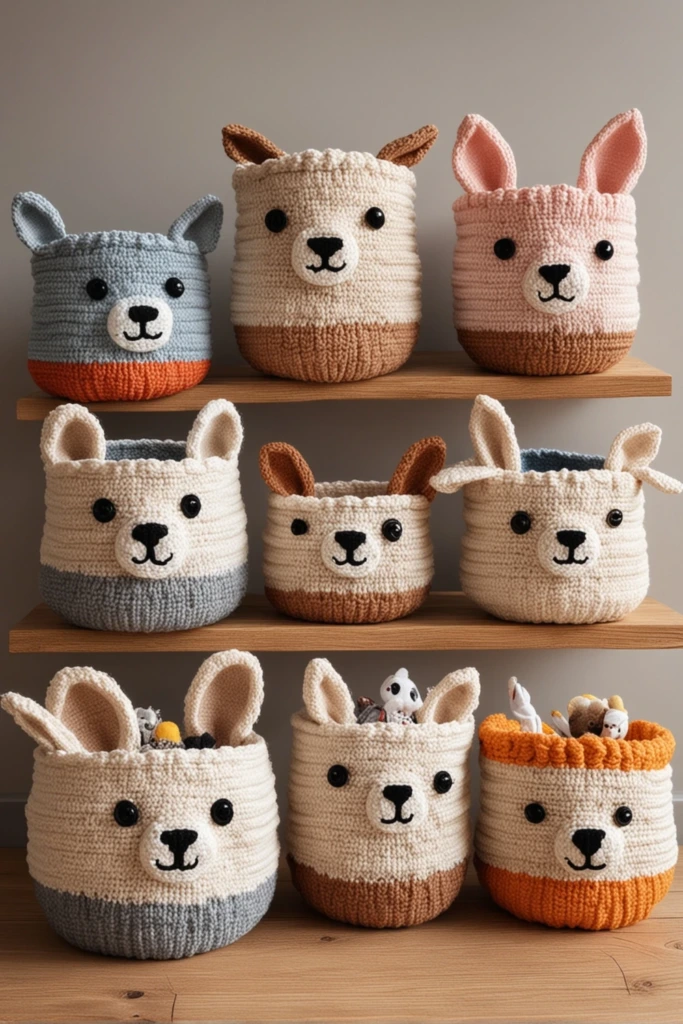
Crochet storage baskets bring softness and handmade character to a playroom or nursery.
Thick yarn baskets are suitable for plush animals, fabric toys, and other lightweight belongings. They can be made in different colors and shapes to complement existing furniture.
Character-inspired designs, such as bears or rabbits, make the containers especially appealing to children.
Choose tightly constructed baskets that hold their shape and don't have loose decorative pieces. Washable materials are particularly helpful in busy family spaces.
Group several baskets together to create a practical storage area without making the room feel crowded.
21. Hanging Three-Pocket Organizer
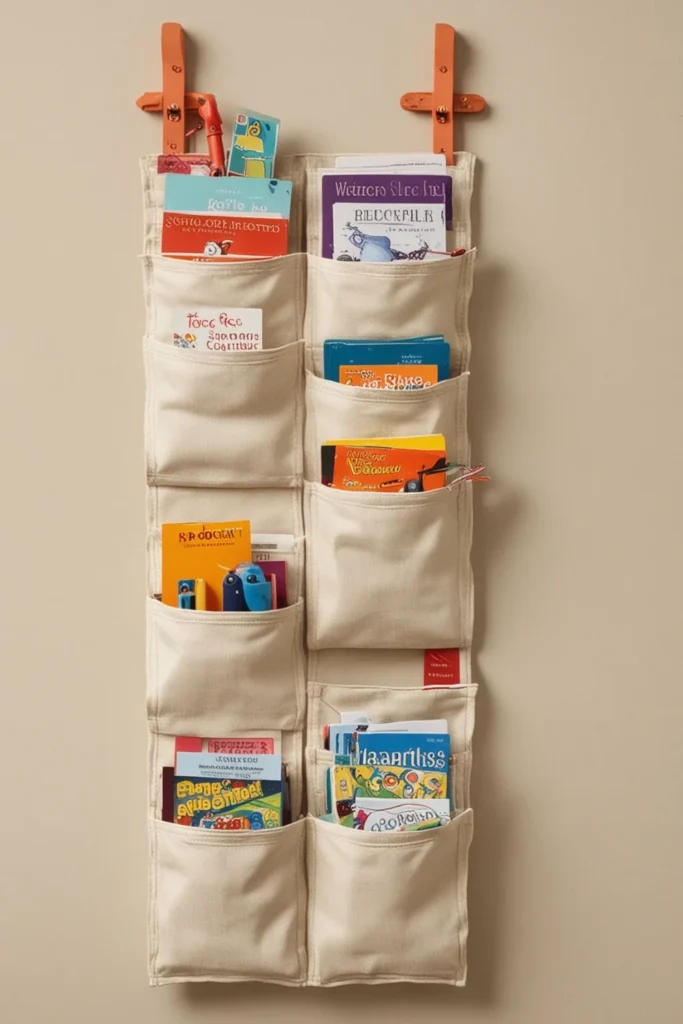
A three-pocket wall organizer is a useful choice when floor space is limited.
Mount it near a reading corner, desk, or play area to hold coloring books, small dolls, soft accessories, and other lightweight belongings.
Assigning a purpose to each pocket makes it easier to maintain order. One compartment might contain reading materials, another drawing supplies, and the third small toys.
Choose a washable fabric organizer with reinforced seams and secure wall fixings. Position it at an appropriate height so children can reach the pockets comfortably.
22. Colorblock Storage Cabinets
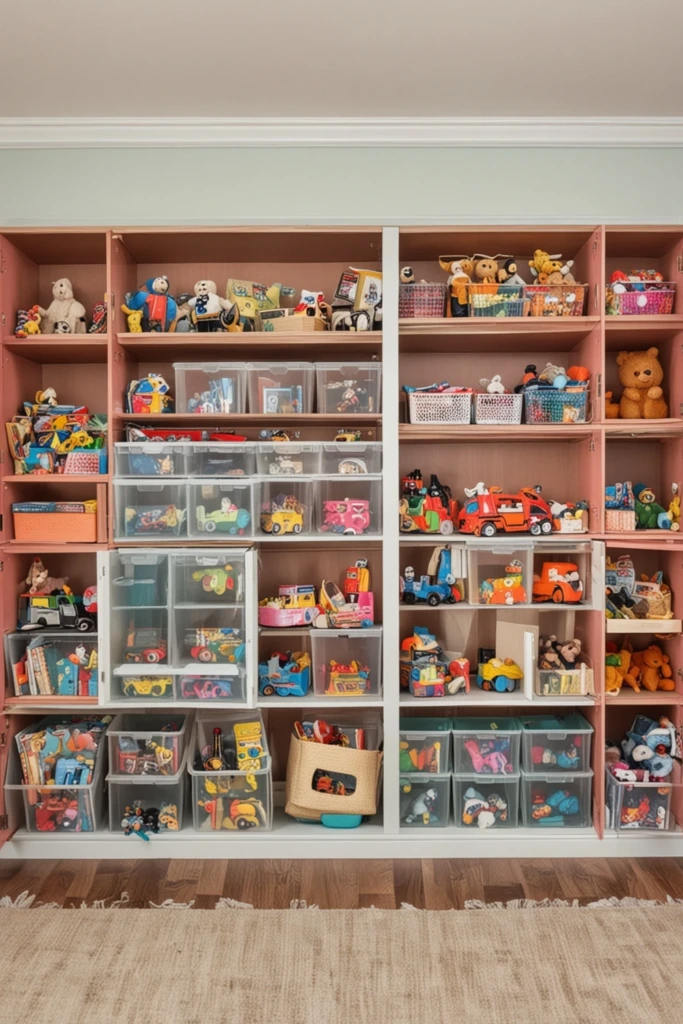
Colorblock cabinets combine practical organization with a bold, modern look.
Choose cabinets with contrasting doors or drawers in colors that complement the room. Combining two or three shades creates visual interest without making the space feel overly busy.
Use the compartments to separate board games, toy sets, craft supplies, and larger play accessories.
Closed cabinets are particularly useful in multipurpose family rooms because they hide visual clutter when playtime ends.
Select furniture with child-friendly handles, secure hinges, and appropriate wall anchoring. Soft-close features can also reduce the risk of pinched fingers.
23. Kids’ Craft Storage Drawers
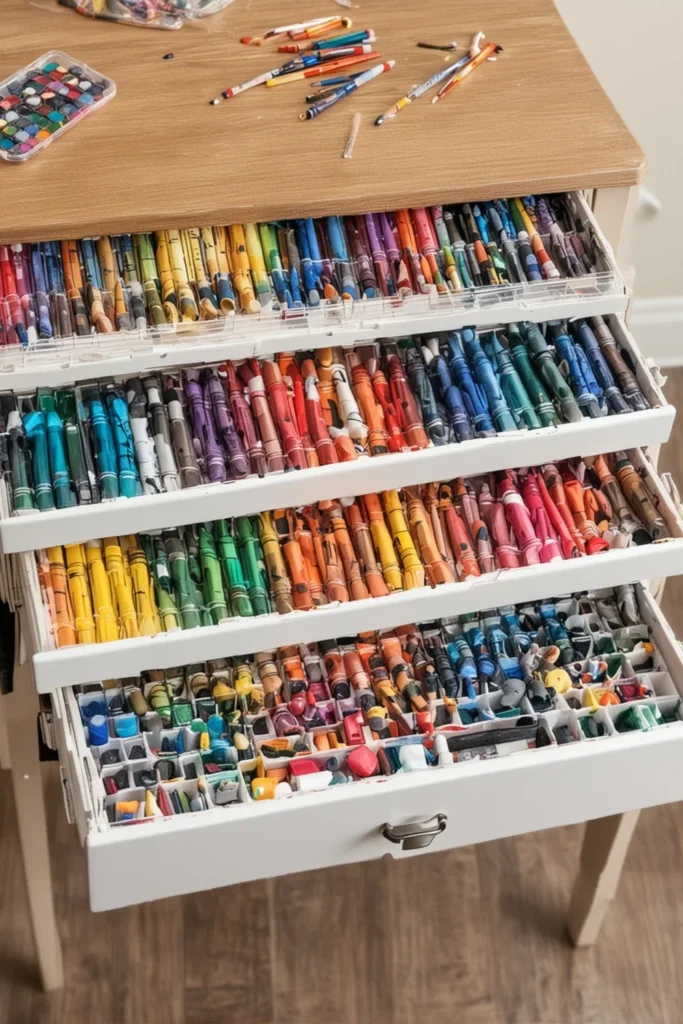
Art supplies can become disorganized quickly when markers, crayons, scissors, and paper are stored together.
A compact drawer system creates separate homes for different creative materials. Shallow drawers are ideal for pencils and stickers, while deeper compartments can accommodate paint containers and modeling supplies.
Add labels so children know where everything belongs. Keep washable supplies within reach and store sharp tools or materials requiring adult supervision separately.
Position the drawers beside a craft table to make setup and cleanup more convenient.
24. Labelled Bins with Kids’ Names
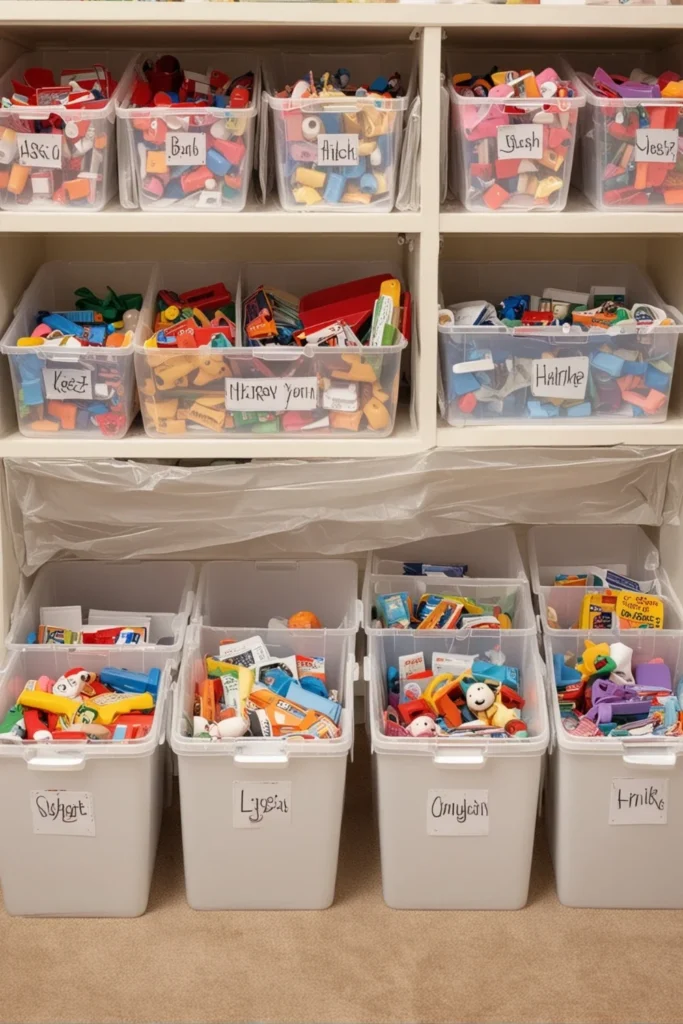
Personalized storage bins are particularly helpful in bedrooms shared by siblings.
Assign each child a set of containers marked with their name. These bins can hold personal toys, collections, and accessories that shouldn't get mixed together.
Choose different colors or symbols to help younger children identify their belongings before they can read.
A separate shared-toy basket can prevent confusion about which items belong to everyone.
Keep the containers at accessible heights and encourage children to return their belongings after using them.
25. Low Bins for Toys
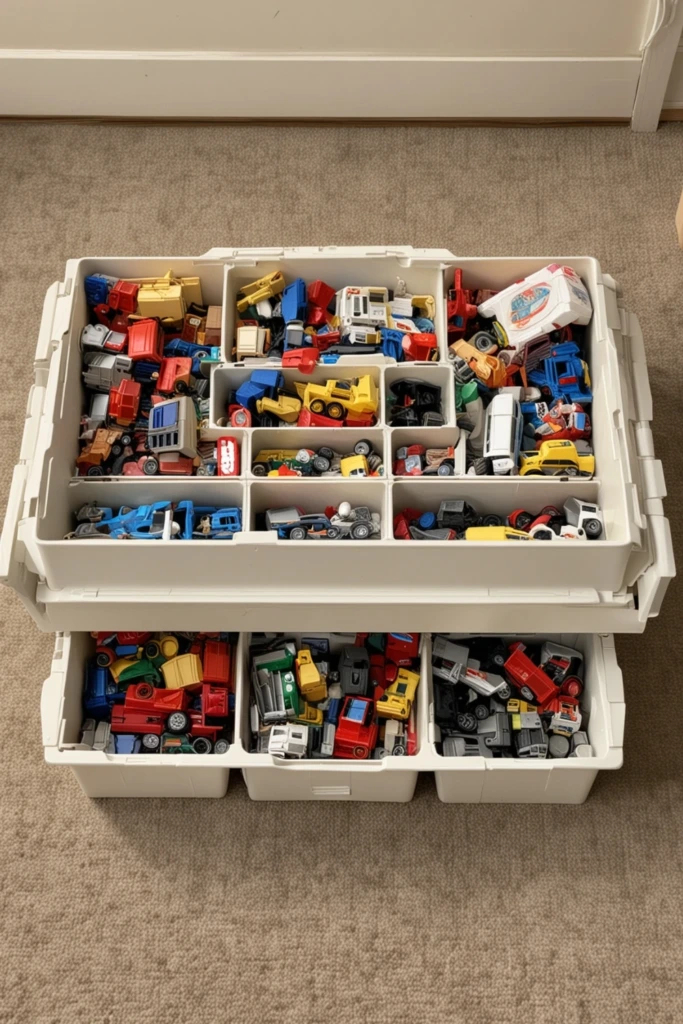
Low storage bins are one of the simplest ways to make toy organization manageable for young children.
Place open containers on the floor or inside short shelving units so children can see and reach their toys without climbing.
Wide, shallow bins are especially useful because items are less likely to become buried beneath one another.
Avoid filling each container completely. Leaving some extra room makes it easier to return toys without carefully arranging every piece.
Lightweight bins with rounded corners are a practical choice for toddler play areas.
26. Built-In Bookshelf Storage
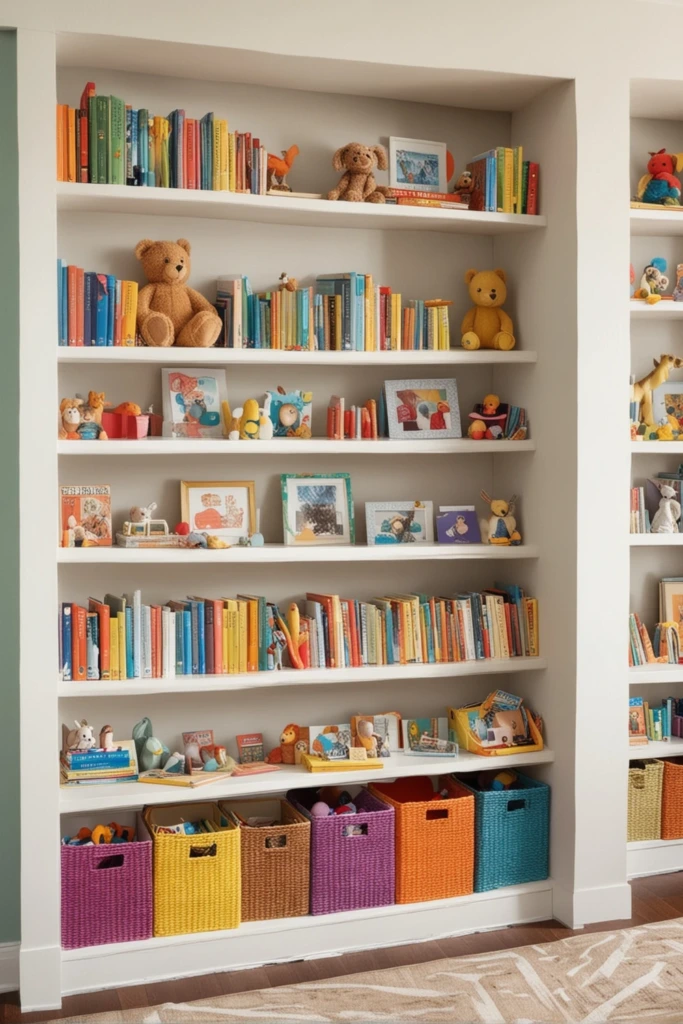
Built-in bookshelves offer a long-term storage solution that can grow with a child's changing interests.
Custom shelving makes use of wall space and can incorporate open cubbies, closed cabinets, and display areas. Lower sections can accommodate toy baskets, while upper shelves hold books and decorative pieces.
Consider including adjustable shelves so the arrangement can change as toys are replaced by school supplies and hobbies.
For a balanced appearance, combine visible books with matching storage boxes.
Professional installation may be worthwhile when dealing with uneven walls, complex layouts, or heavy shelving materials.
27. Colorful Toy Storage
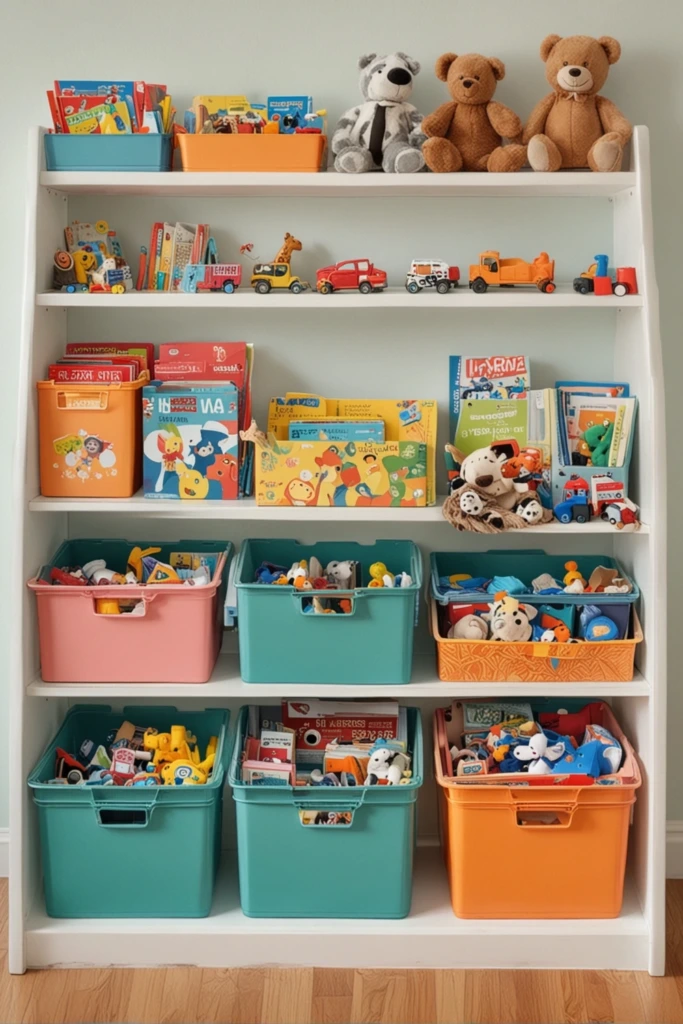
Colorful storage containers can make a playroom feel cheerful while providing an easy way to separate different types of toys.
Start with a simple color palette that suits the room. Use matching bins, baskets, or shelving accents to create a consistent appearance.
Colors can also serve an organizational purpose. For example, blue containers might hold building toys, yellow bins could store puzzles, and green baskets could contain pretend-play accessories.
Keep the system straightforward so children can remember it.
A coordinated selection of colors generally looks more intentional than using numerous unrelated shades.
28. Labeled Storage Bins
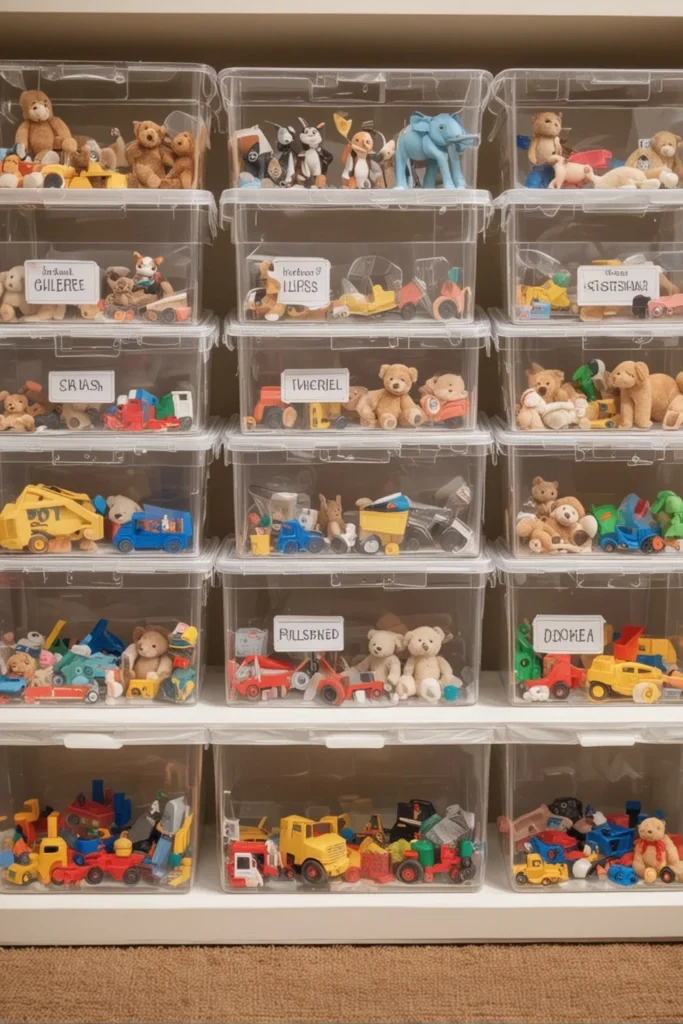
Clearly labeled bins can make everyday toy organization faster for both children and adults.
Sort toys into broad categories rather than creating too many complicated divisions. Separate containers for vehicles, dolls, building pieces, and games are usually easier to maintain.
Choose labels that are large enough to read from a distance. Transparent containers help reveal what's inside, while opaque bins create a tidier visual appearance.
For frequently used toys, open-top bins eliminate the extra step of removing lids.
Review the labels occasionally as children's interests and collections change.
29. Whimsical Dollhouse Storage
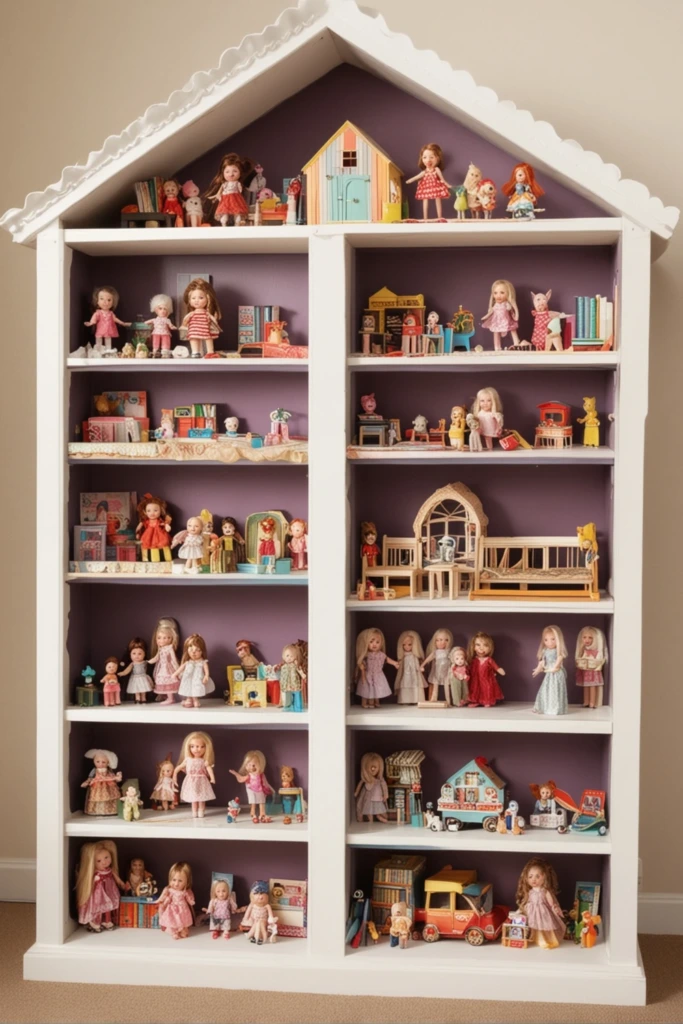
Dollhouse-shaped shelving creates an imaginative display that also functions as everyday storage.
The roofline and miniature room divisions give the furniture a playful appearance, making it suitable for bedrooms with creative or storybook themes.
Use the compartments to display dolls, figurines, small books, and decorative objects. Different sections can represent separate play zones, encouraging imaginative activities.
A simple wooden shelving unit can also be customized with a decorative roof-shaped top and painted details.
Ensure that any modifications are structurally sound and that the finished piece is securely anchored.
30. Shoe Bag Toy Storage
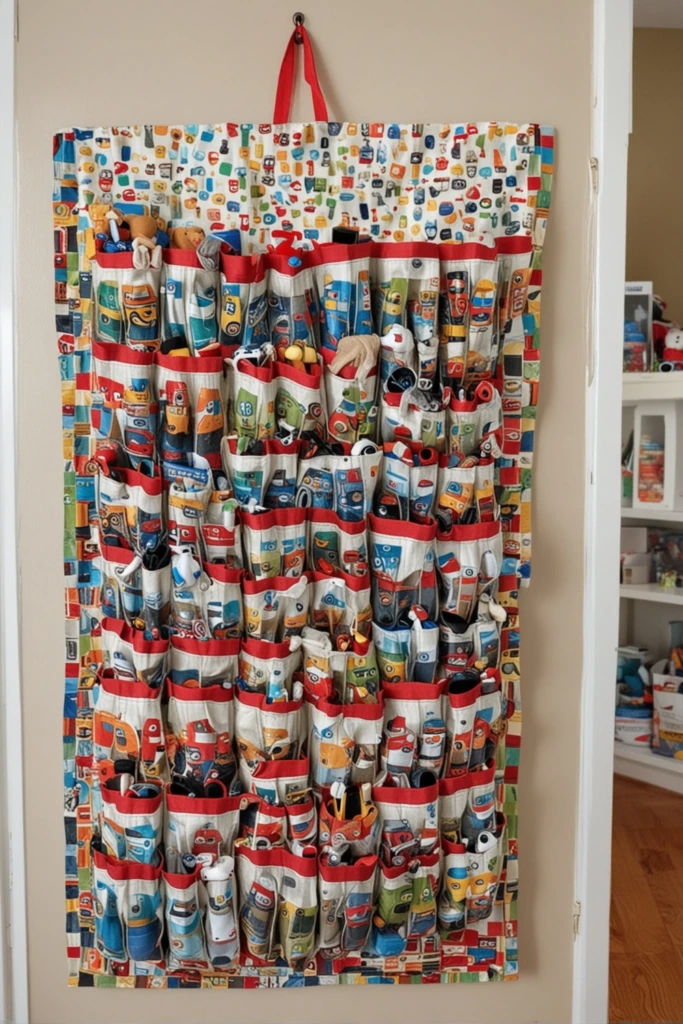
An over-the-door shoe organizer can store far more than footwear.
Its individual pockets are useful for toy cars, action figures, small dolls, and lightweight accessories. Transparent pockets are particularly convenient because children can identify items without removing everything.
Hang the organizer on a bedroom or closet door, ensuring it doesn't interfere with the door's movement.
Choose a model with securely stitched pockets and avoid overloading it.
Keep the most frequently used toys in lower compartments, and reserve upper pockets for items adults can retrieve when needed.
31. Clear Lego Storage
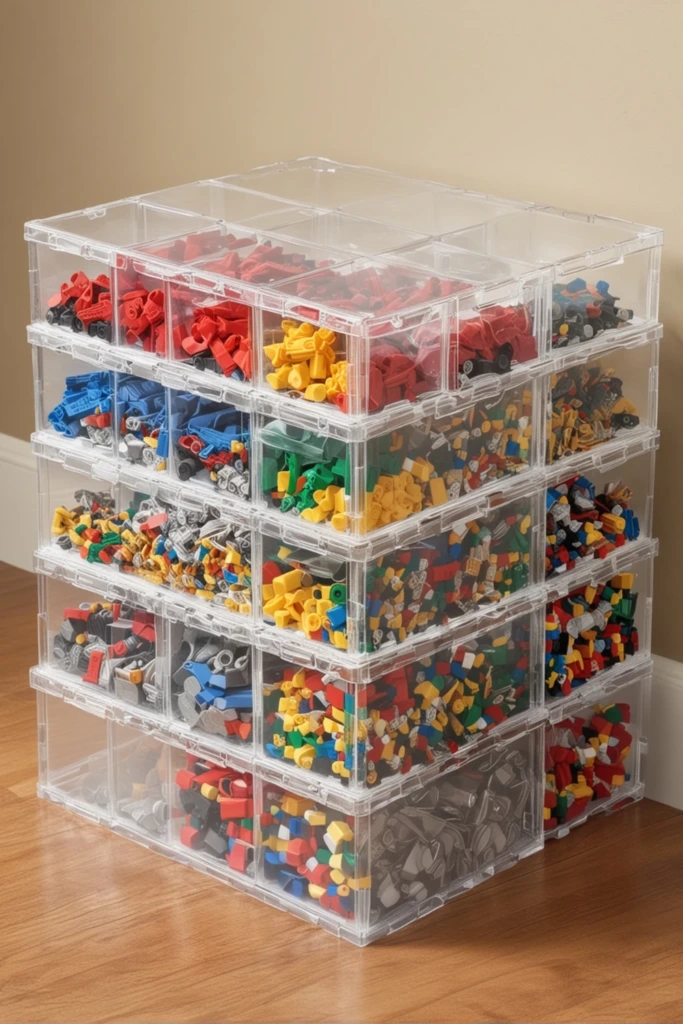
Transparent containers are particularly effective for organizing LEGO bricks and other construction pieces.
Instead of keeping an entire collection in one oversized box, divide pieces into manageable groups. Sorting by color, shape, or set can work depending on how your child prefers to build.
Shallow containers make it easier to locate specific bricks without pouring everything onto the floor.
Choose stackable boxes with secure lids, and keep instruction booklets in a separate folder.
For younger children, ensure that building pieces are appropriate for their age, since small parts can present choking hazards.
32. Under-Stairs Toy Storage
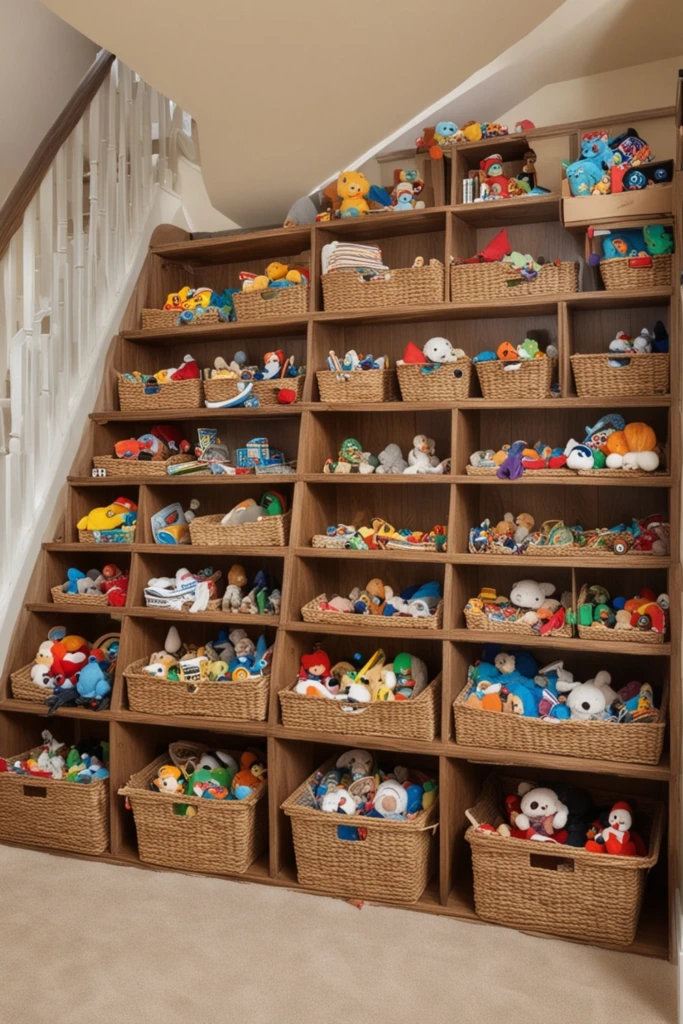
The space beneath a staircase can become a valuable storage area, particularly in homes without a dedicated playroom.
Depending on the layout, consider installing pull-out drawers, open shelves, or fitted cabinets. These can accommodate board games, toy baskets, and larger play accessories.
Deep compartments work well for bulky items, while shallow shelves keep smaller toys easier to find.
For a more finished appearance, choose cabinet fronts that match nearby walls or furniture.
Before adding built-in storage, check for electrical wiring, plumbing, ventilation, and structural components that shouldn't be altered.
33. Kid-Friendly Storage Labels
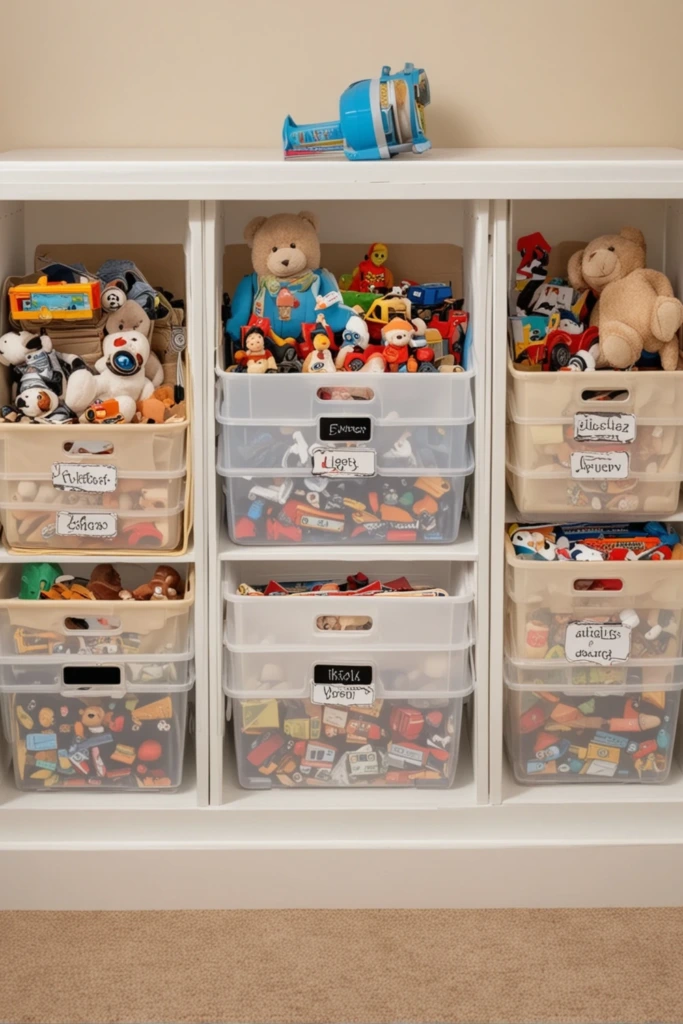
Picture-based labels help children understand toy organization even before they learn to read.
Combine simple illustrations with short words to identify the contents of each container. A drawing of a toy car, for example, can indicate where vehicles belong.
Use familiar images that clearly represent the actual toys inside.
Laminated labels are easy to wipe clean and can withstand regular handling. Attach them at children's eye level for better visibility.
As children develop reading skills, the written labels can also reinforce everyday word recognition.
34. Coffee Table Storage
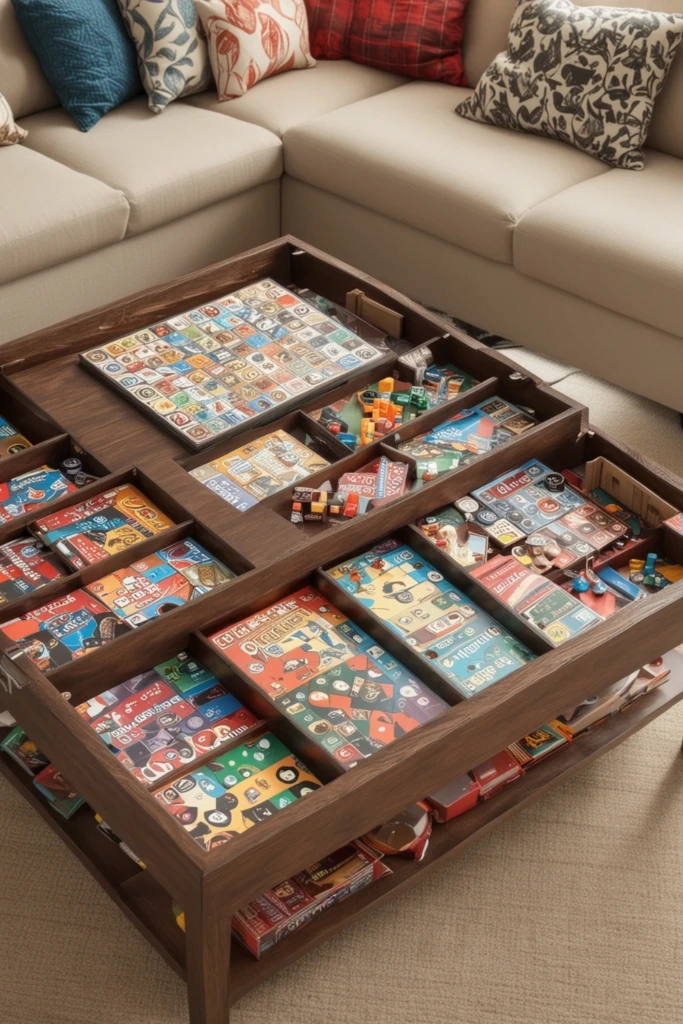
A coffee table with hidden compartments is a practical solution for families whose living rooms double as play areas.
Choose a design with drawers, shelves, or enclosed storage beneath the tabletop. These spaces can hold puzzles, card games, coloring books, and smaller toy collections.
Dividers or compact baskets prevent everything from becoming mixed together.
Look for rounded corners, stable construction, and drawers that operate smoothly. Avoid heavy lift-top mechanisms that could close unexpectedly around children.
This approach allows toys to remain nearby without leaving the living room permanently cluttered.
35. Open Shelving with Soft Bins
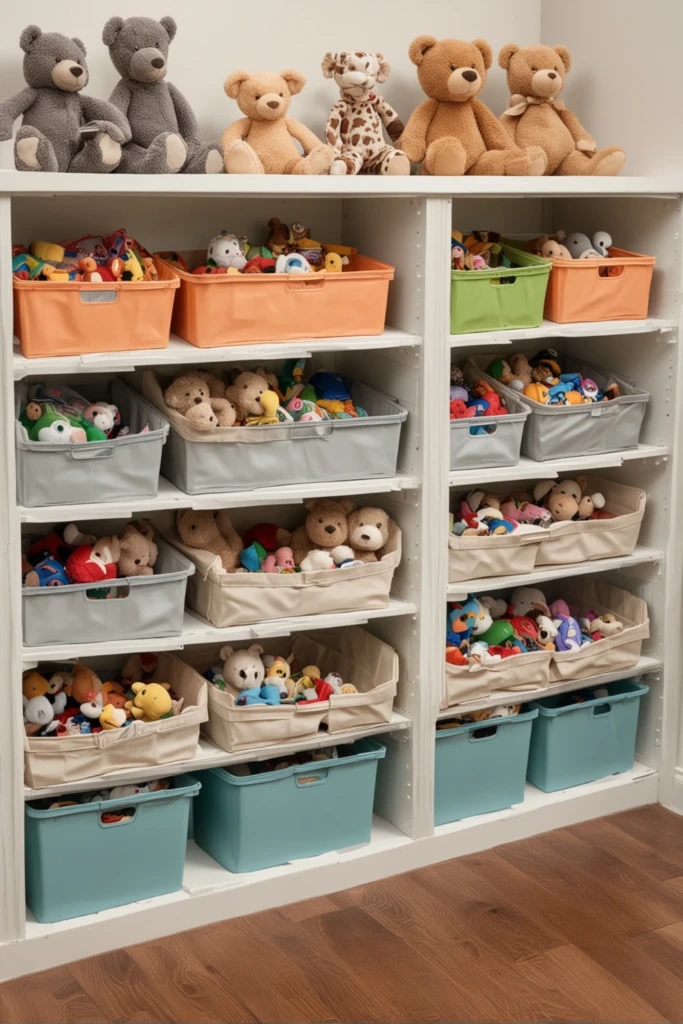
Open shelving paired with fabric bins creates a flexible storage system that works in bedrooms, playrooms, and shared family spaces.
Choose a low shelving unit with compartments large enough for removable baskets. Soft-sided bins are easy to handle and can accommodate toys with irregular shapes.
Keep everyday favorites on the lowest shelves and place less frequently used items higher up, where adults can access them.
Use matching containers for a calm, coordinated appearance, or introduce a few colors for a playful look.
Secure the shelving unit to the wall and avoid placing heavy items above children's reach.
A well-organized toy storage system doesn't have to be complicated. The most effective solutions are the ones that fit your available space, accommodate your children's favorite activities, and make cleanup easy enough to become part of the daily routine.
Start with a few practical changes, such as adding labeled baskets, using vertical space, or choosing furniture with hidden compartments. With the right toy storage ideas, you can create a home that feels more organized while still giving children plenty of freedom to play, explore, and enjoy their belongings.