22 DIY Window Boxes Ideas for 2026
I’ll create a fresh article about DIY window boxes, preserving the competitor article’s heading structure and order while writing original explanations, practical building advice, and useful planting tips.
Window boxes offer a simple way to bring color, texture, and natural beauty to your home's exterior. With a few materials and the right plants, an ordinary window can become an attractive garden feature without requiring a large yard or extensive landscaping.
Building your own window box also gives you complete control over its dimensions, finish, and planting style. Whether you prefer rustic wood, crisp modern lines, overflowing flowers, or seasonal decorations, there is a design to suit nearly every home.
1. Window Box Planting Tips
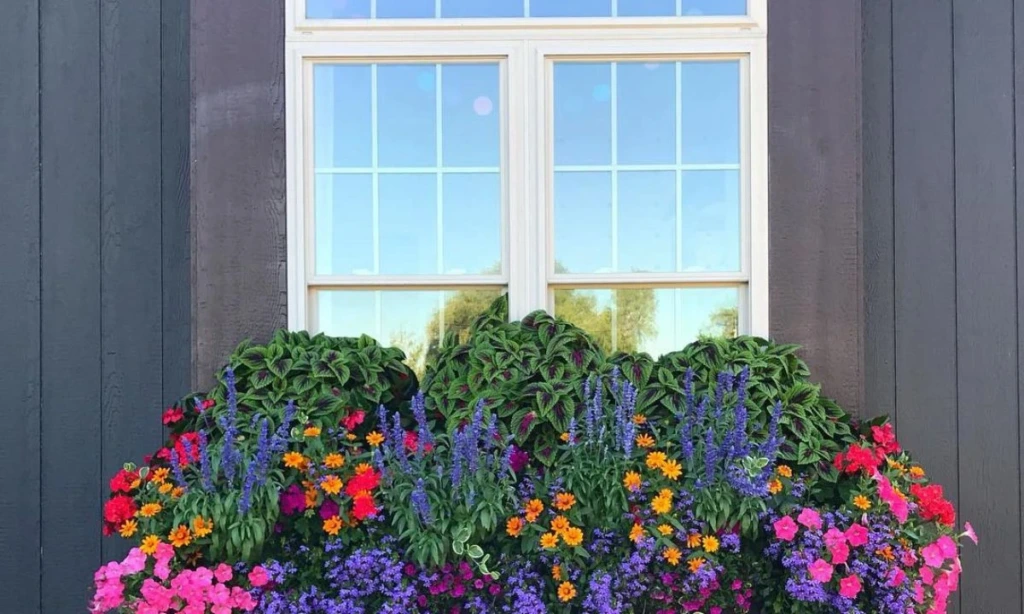
A beautiful window box begins with understanding the conditions around your window. Observe how much direct sunlight the area receives, consider your local climate, and select plants that can thrive in the available space.
For sunny locations, petunias, geraniums, marigolds, and trailing verbena can provide colorful displays. Shadier windows are better suited to plants such as impatiens, begonias, and certain ferns. Choose varieties with similar watering and light requirements so the arrangement remains healthy.
A useful planting technique is to combine three types of plants:
Thrillers: Taller plants that create height and serve as focal points, such as ornamental grasses or upright flowering varieties.
Fillers: Compact plants that occupy open spaces and make the arrangement look full, including small herbs and bushy flowers.
Spillers: Trailing varieties that soften the container's edges, such as ivy, trailing lobelia, and suitable creeping plants.
Before planting, ensure the container has drainage holes and use a quality potting mix rather than heavy garden soil. Leave enough room for roots to develop, and avoid overcrowding young plants. Remember that window boxes can dry out quickly, especially during hot weather, so check soil moisture regularly.
If you plan to mount the box outdoors, choose weather-resistant materials and secure brackets to suitable structural supports. Account for the combined weight of the container, damp soil, and mature plants before installation.
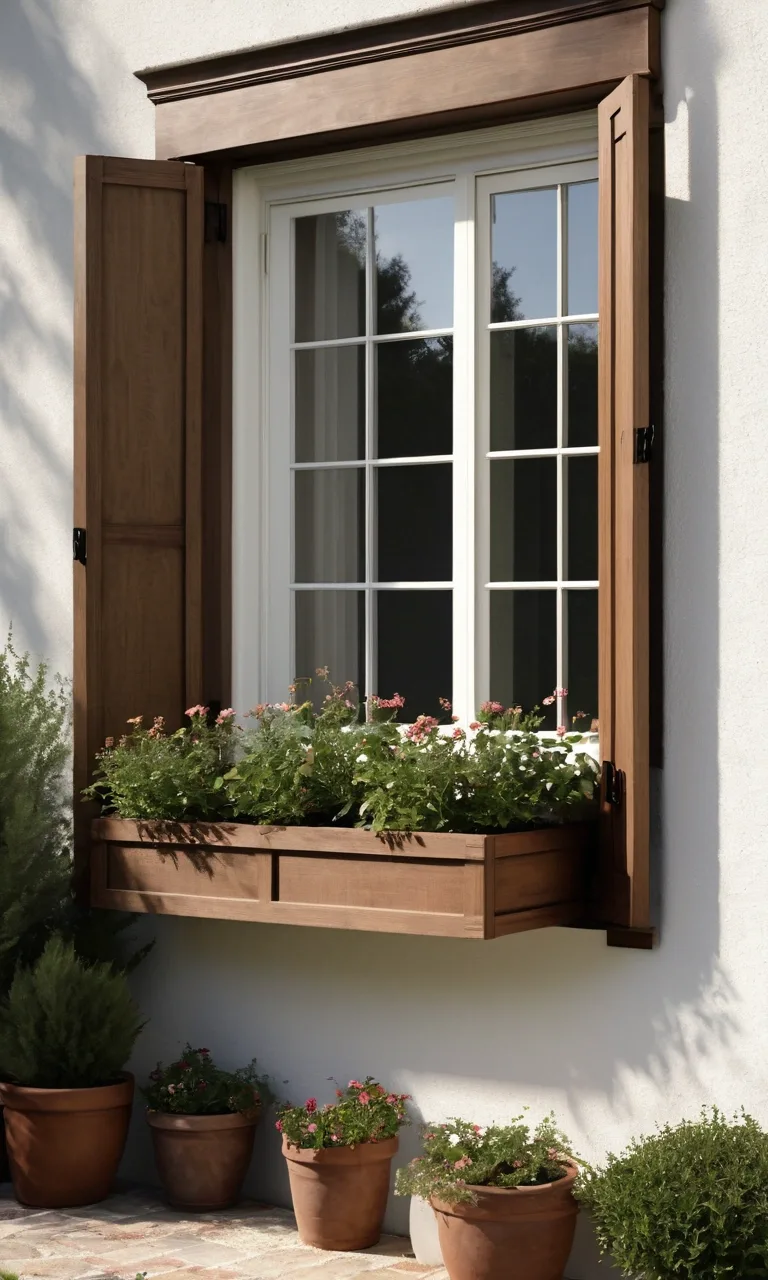
2. Climbing Charm
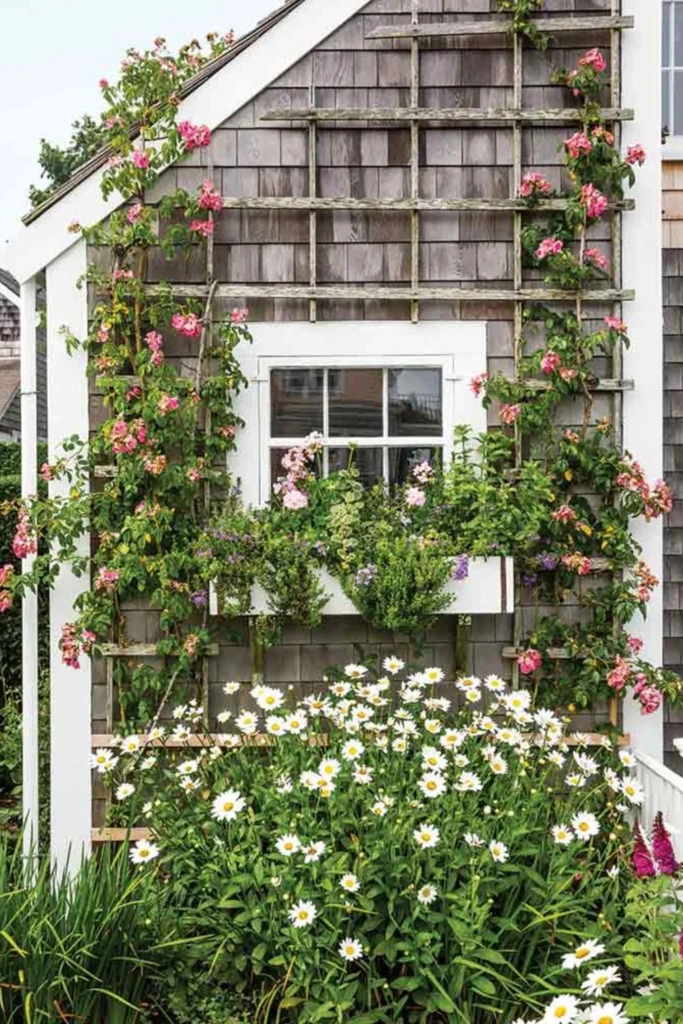
Create a romantic cottage-garden effect by combining a wooden window box with a trellis mounted above it. The vertical structure provides support for climbing roses or other suitable climbing plants, while smaller flowers and leafy greenery fill the container below.
Choose flowers that complement your home's exterior rather than competing with it. White daisies, soft pink blooms, and fresh green foliage work especially well with natural wood and traditional siding.
For an even more inviting appearance, add simple landscaping beneath the window, such as a narrow flower border or a few low-growing perennials. Make sure the trellis is firmly installed and that climbing plants have enough room to grow without blocking the window.
3. Framed Greenery
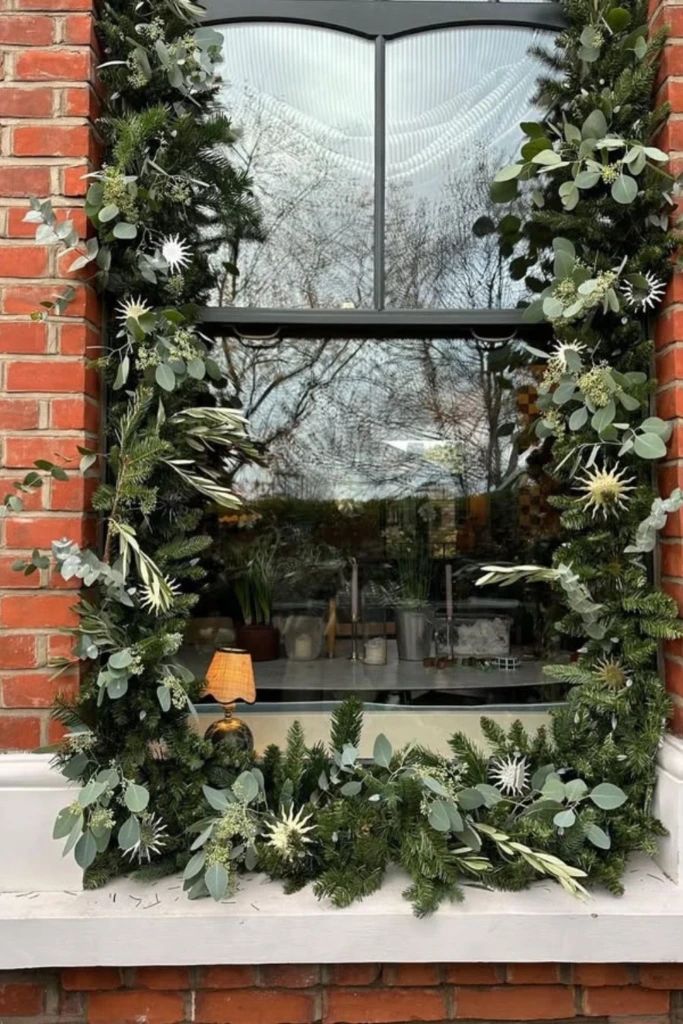
Give your windows a festive appearance with a decorative arrangement of evergreen foliage instead of traditional flowers. Eucalyptus, pine branches, and other suitable greenery can be combined to create a natural frame around the window.
Begin with a sturdy window box in a color that complements the trim. Arrange the foliage in layers, using fuller branches near the center and lighter stems toward the edges. Small decorative stars or understated seasonal ornaments can add interest without making the display feel crowded.
This design works particularly well during the winter holidays and can be adapted throughout the year. For outdoor arrangements, select greenery suited to your climate and avoid placing decorations where they could obstruct windows or become loose in strong winds.
4. Classic Contrast
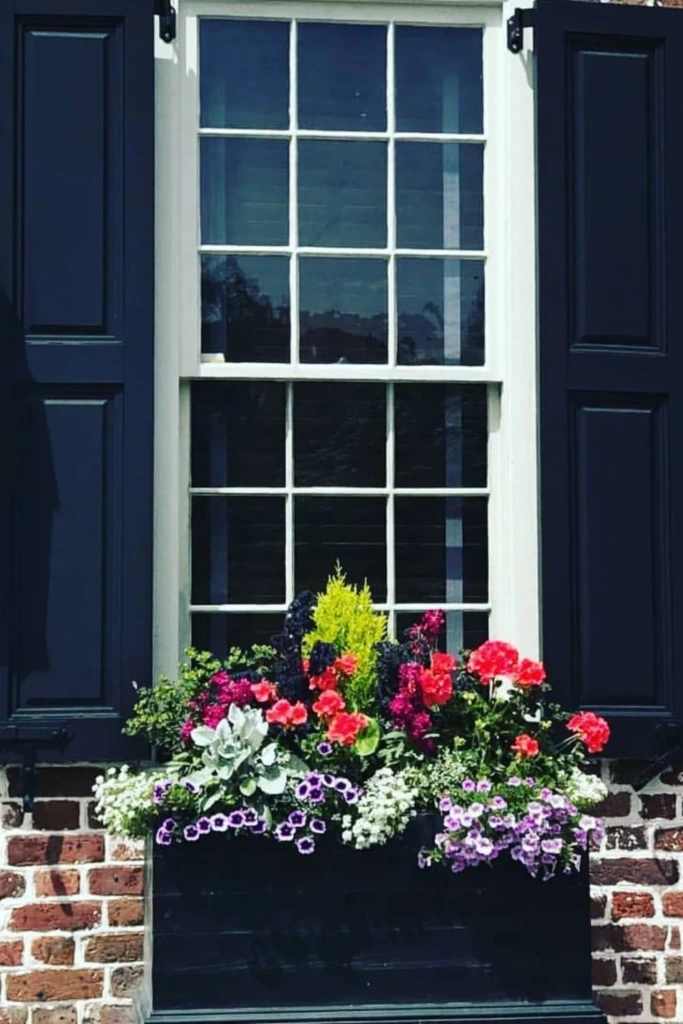
A black window box against white trim creates a timeless look that works with traditional houses as well as contemporary buildings. The contrast gives the container a defined shape while allowing colorful flowers and greenery to stand out.
Plant geraniums or petunias alongside foliage plants with different leaf shapes. You can use white flowers for a restrained arrangement or introduce pink, red, or purple blooms for a livelier display.
Keep the overall composition balanced by distributing plants evenly rather than concentrating every bright flower in one spot. This style looks especially attractive on homes with brickwork, shutters, or simple architectural details.
For durability, choose an exterior-grade finish suitable for the box's material and local weather conditions.
5. Scalloped Delight
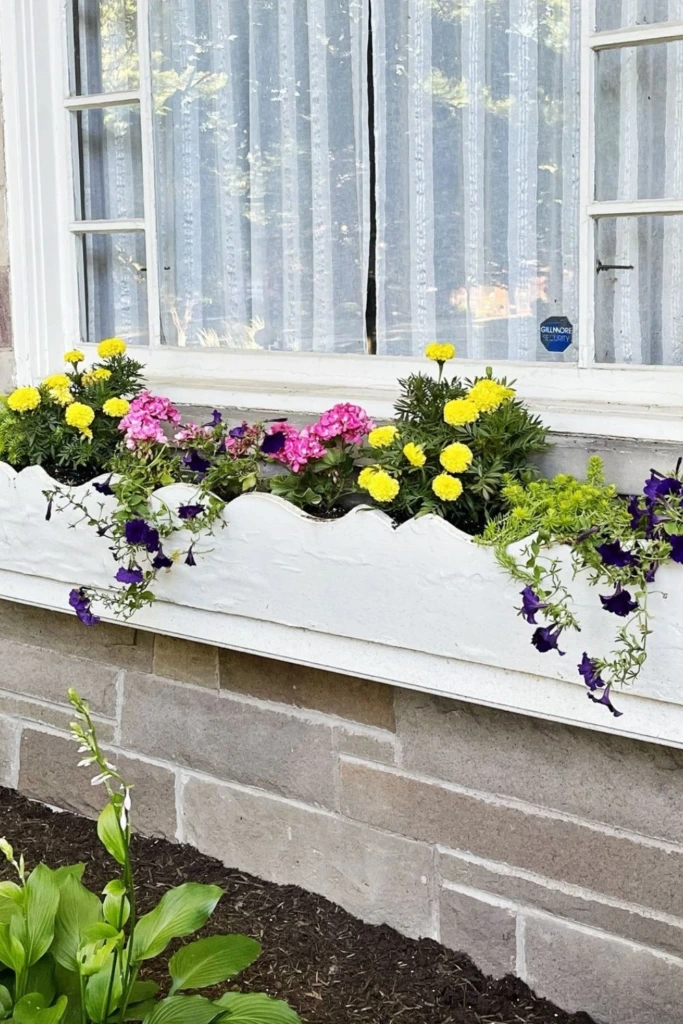
A window box with scalloped edges introduces a decorative, vintage-inspired detail to the outside of your home. A white finish highlights the curved design and pairs naturally with cheerful flowers in contrasting colors.
Try combining yellow marigolds, pink geraniums, and purple petunias for a lively seasonal arrangement. Place compact plants throughout the container and add a few trailing varieties near the front to soften the edges.
If you are building the box yourself, use a template to mark matching curves along the front board before cutting. Sand the edges carefully and apply an appropriate outdoor finish to protect the wood.
This design suits cottage-style homes, traditional porches, and informal gardens. Keep the decoration simple elsewhere so the scalloped shape remains the main feature.
6. Soft Neutrals
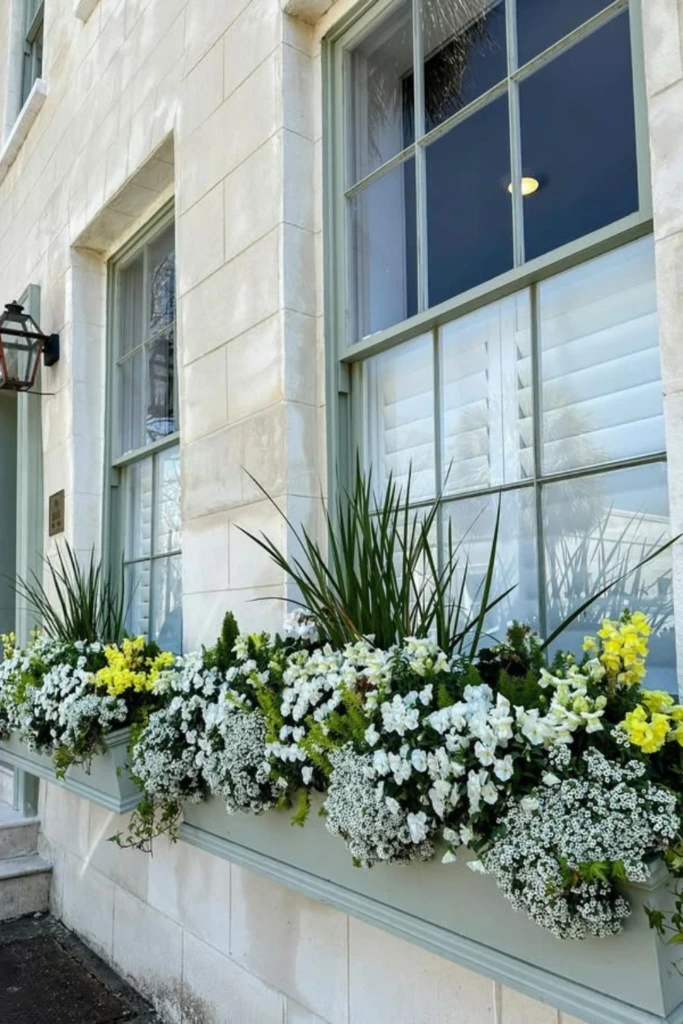
For a calm, understated window display, choose flowers in white, cream, and pale yellow, complemented by fresh green foliage. The limited color palette creates a coordinated appearance without making the window feel visually busy.
Add variety through plant shapes and textures rather than introducing too many colors. Fine, upright foliage can provide height, while rounded flowers and trailing greenery create a softer outline.
A white, beige, gray, or natural wood planter will complement this arrangement. Neutral planting schemes work well with modern homes, historic properties, and exteriors painted in muted colors.
To keep the display looking polished, remove faded flowers and damaged leaves regularly. Replacing individual plants when necessary can refresh the arrangement without requiring a complete redesign.
7. Bold Abundance
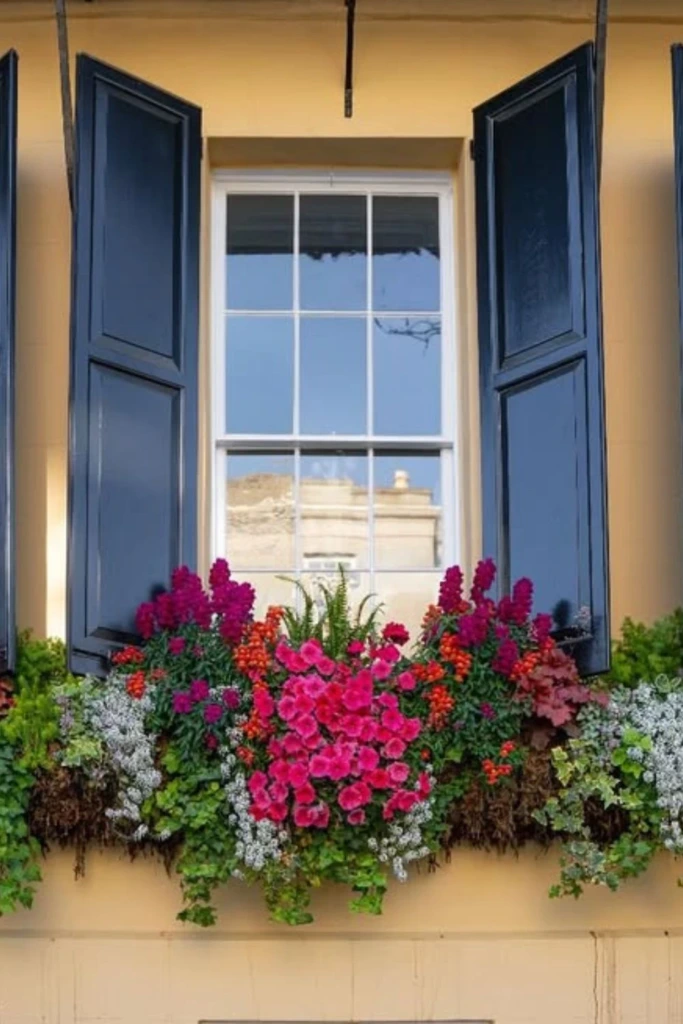
If you want your windows to become a striking feature, fill a generously sized box with vivid magenta and scarlet flowers. Silver-toned foliage provides contrast and helps the bright colors stand out against darker shutters or warm-colored walls.
Choose flowering plants with similar growing requirements and enough space to spread. Position taller varieties toward the back, compact flowers through the middle, and trailing plants along the front edge.
An abundant arrangement should feel full without becoming overcrowded. Plants need room for airflow and healthy root development, so avoid packing too many seedlings into a small container.
This style is ideal for homeowners who enjoy vibrant color and a lively garden appearance. Regular watering, feeding when appropriate, and removing spent blooms will help maintain its lush look throughout the growing season.
8. Window Peek
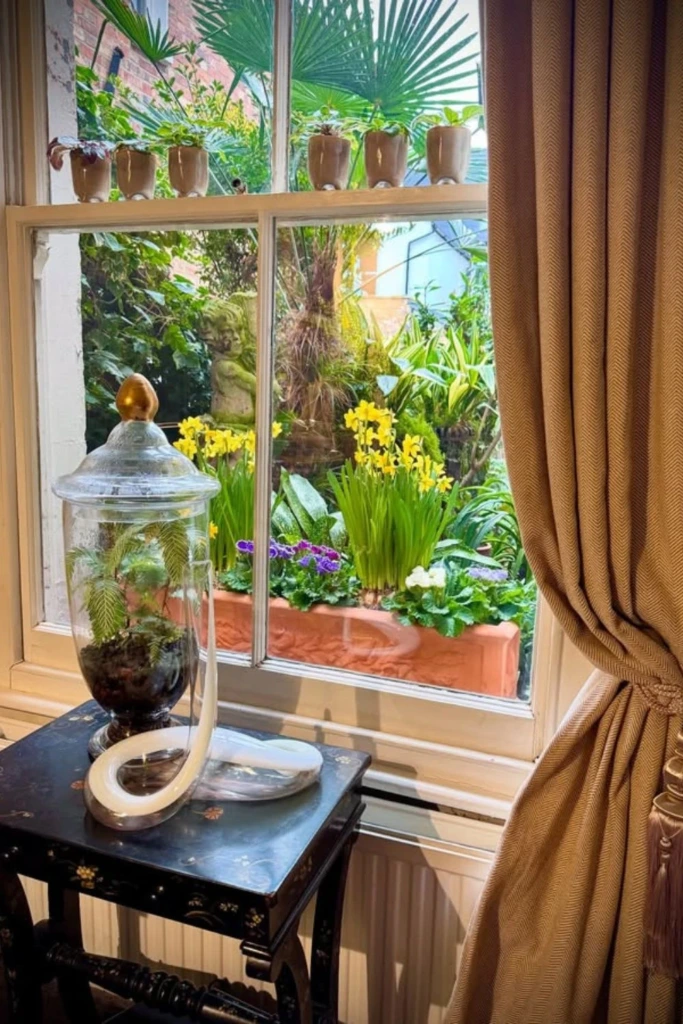
A terracotta window box filled with seasonal flowers can create an attractive view from both inside and outside the home. Daffodils, primroses, and fresh green foliage are useful choices for a cheerful spring display in suitable climates.
The earthy planter color adds warmth, while the flowers introduce gentle seasonal color. Arrange plants at different heights to make the display interesting from a distance and from inside the room.
Consider how the arrangement looks through the glass before finalizing the planting. Avoid placing tall plants directly in front of the main viewing area if you want to preserve an unobstructed outlook.
Light curtains and a tidy windowsill can complement the garden display indoors. Choose a container and mounting arrangement that allow proper drainage without directing water onto the wall or window frame.
9. Arched Garden
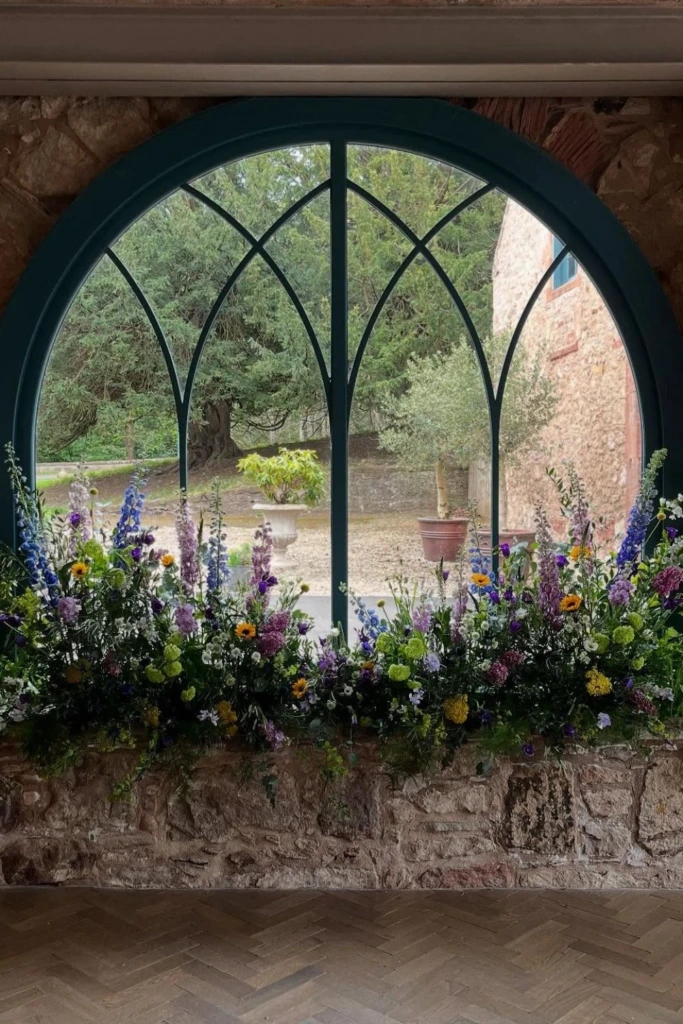
An arched window set into a stone wall offers an opportunity to create a garden-inspired focal point. A window box placed beneath the arch can soften the hard surfaces and introduce a more natural appearance.
Use a planter that complements the surrounding masonry, such as weathered wood, stone-look material, or a muted neutral finish. Fill it with airy foliage and flowers in soft pink, white, lavender, or other gentle shades.
Plants with varied heights help echo the curved architectural shape without hiding it. Small ornamental grasses and compact flowering varieties can create movement, while restrained trailing greenery adds softness along the front.
This design works particularly well in rustic gardens, country homes, and properties with textured exterior walls. Check that the mounting system is appropriate for masonry and that the planter's weight is safely supported.
10. Cool Tones
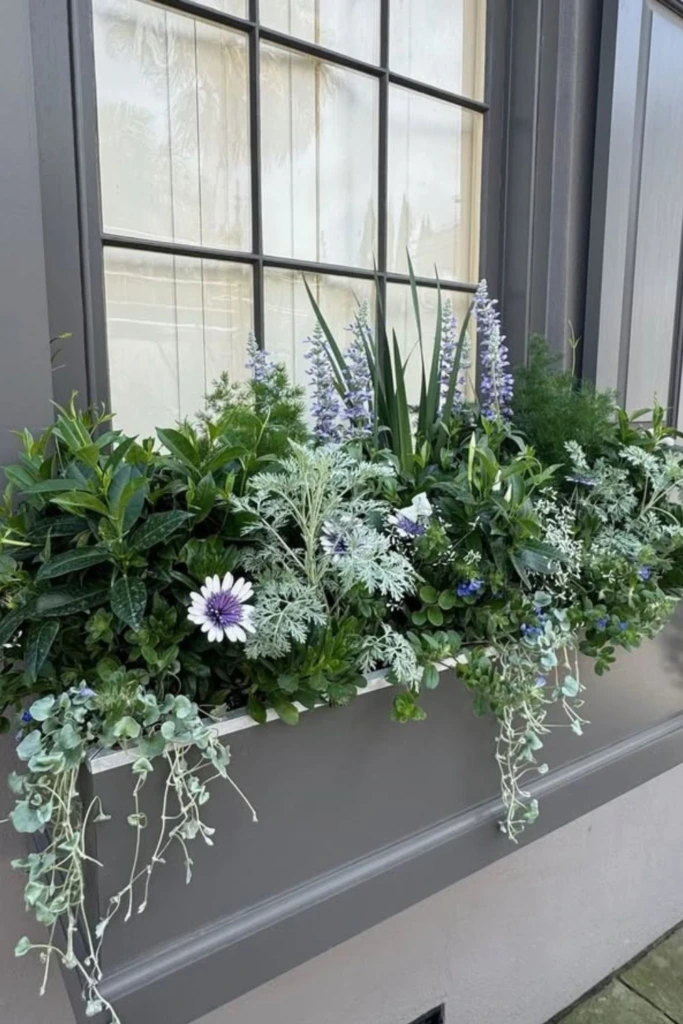
Create a refreshing, contemporary display with silvery foliage, lavender-colored flowers, and delicate white blooms. These cooler shades produce a relaxed appearance that complements gray window frames, pale siding, and coastal-inspired exteriors.
Ornamental grasses can provide height and movement, while suitable lavender varieties contribute color and fragrance. White flowering plants help brighten the arrangement, and trailing greenery can connect the different layers.
When selecting plants, consider the amount of sunlight the window receives. Lavender generally prefers sunny conditions and well-drained soil, so it may not thrive in a consistently shaded or waterlogged container.
A gray, charcoal, or natural-colored box will reinforce the understated palette. Keep the planting relatively simple and let the contrasting foliage textures provide most of the visual interest.
11. Yellow Pop
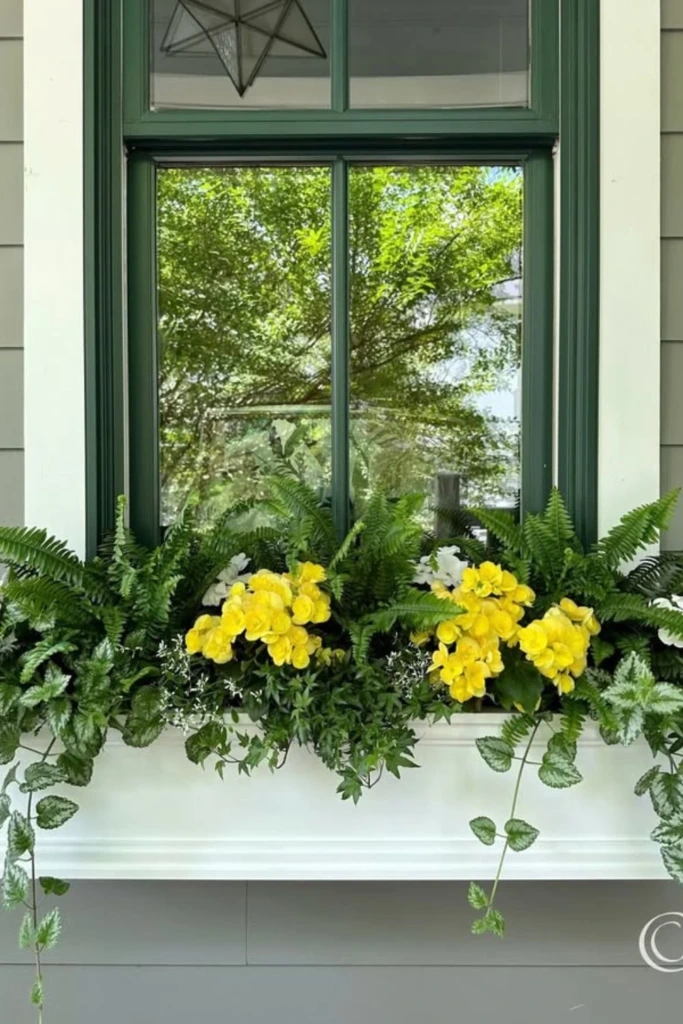
Yellow flowers bring warmth and brightness to a window, making them a strong choice for homes that need a cheerful exterior accent. Yellow begonias can provide a colorful focal point, while green foliage balances the display.
Choose a white planter for a clean, classic appearance or a darker container for a stronger contrast. Green-trimmed windows and neutral walls can help tie the arrangement together.
Ferns may work well alongside begonias in locations that provide suitable shade and moisture. For sunnier windows, choose yellow-flowering varieties adapted to stronger light rather than assuming every begonia will tolerate full sun.
Place the tallest plants toward the rear and distribute the yellow blooms throughout the box for an even effect. Check the container frequently during warm weather, as shallow planters can lose moisture faster than garden beds.
12. Tropical Touch
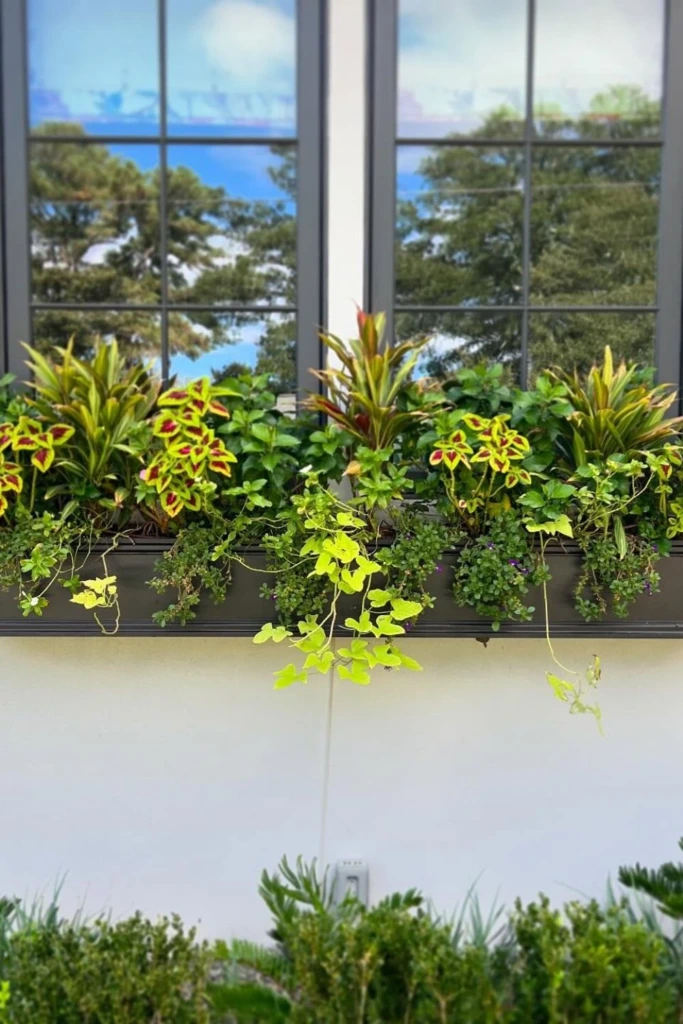
A foliage-focused window box can deliver a tropical appearance without relying on traditional flowers. Coleus is a particularly useful choice because its leaves can display striking combinations of burgundy, lime green, and other vivid shades.
Combine several foliage colors to create contrast, then add trailing green plants to soften the container's edges. A dark planter can make bright leaves stand out, while a neutral box offers a more subtle finish.
Coleus generally performs well in warm conditions, although the preferred light exposure depends on the variety. Many types appreciate partial shade, while some tolerate more sun when properly acclimated.
This arrangement is especially suitable for warm-season displays and modern homes. In colder climates, treat tender foliage plants as seasonal additions or bring suitable plants indoors before temperatures become damaging.
13. Rustic Charm
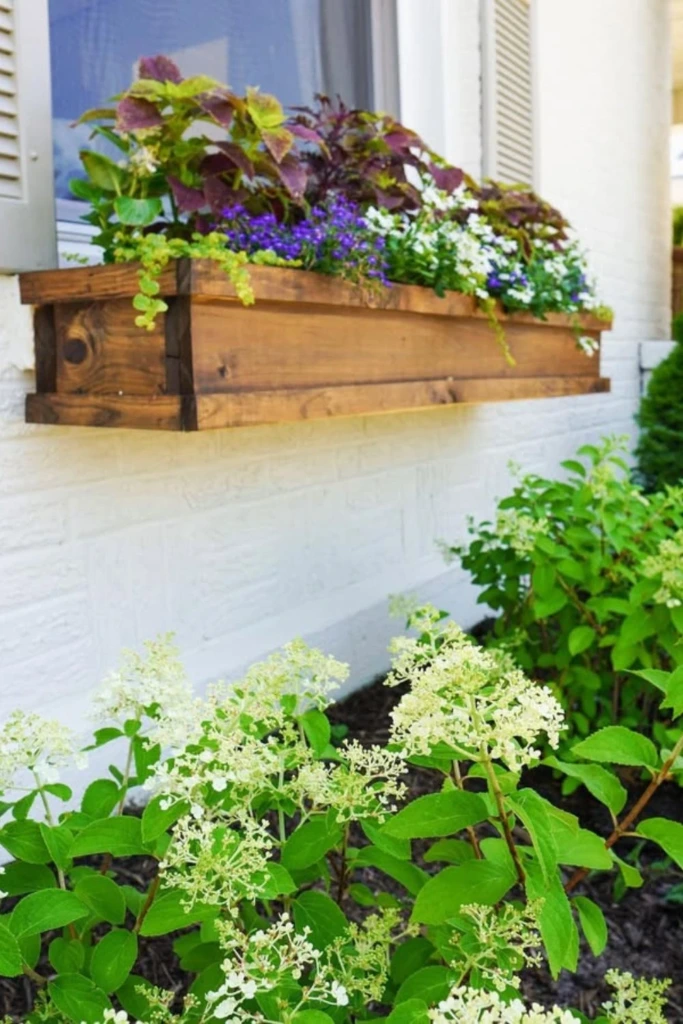
A straightforward wooden window box is an excellent starting point for a handmade garden project. Its natural grain and simple construction bring warmth to the exterior, especially when paired with relaxed planting.
Fill the box with purple and white flowers, leafy green plants, and a few trailing varieties. The combination looks attractive against cream siding, weathered timber, stone walls, and other natural finishes.
For a DIY build, use exterior-suitable lumber and assemble the boards with corrosion-resistant fasteners. Drill drainage holes and apply a finish designed for outdoor use. If the box will hold edible plants, choose materials and coatings appropriate for that purpose.
You can leave the wood in its natural color, stain it to emphasize the grain, or paint it to coordinate with your window trim. Inspect the container periodically for loose joints, damaged wood, or signs of moisture deterioration.
14. Ivy Elegance
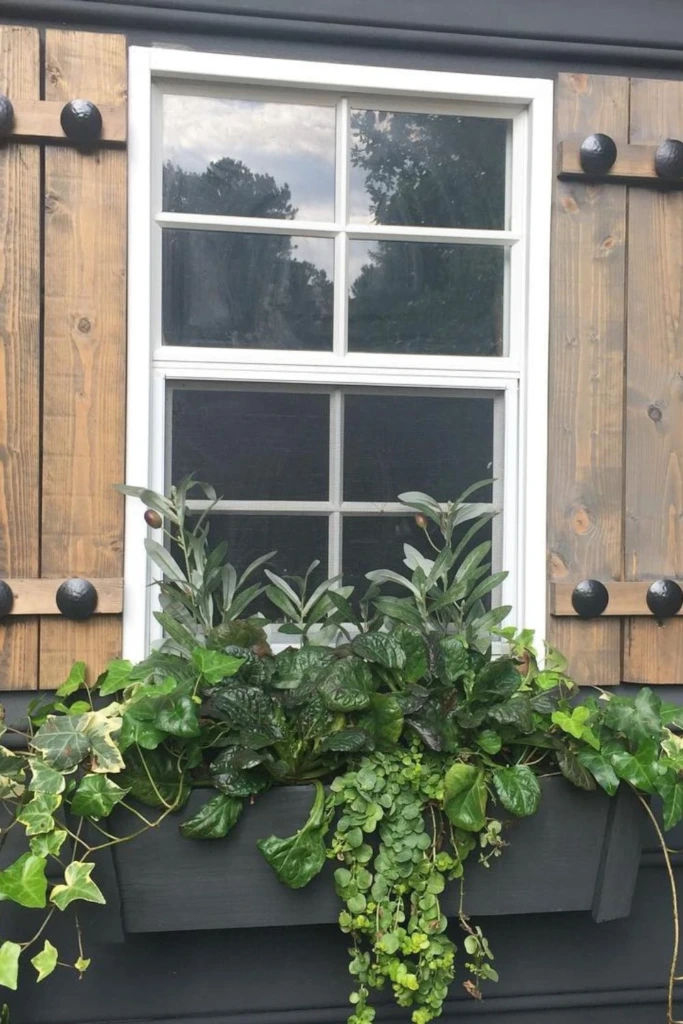
For a green, leafy display, use cascading ivy or other suitable trailing foliage as the main feature. The flowing leaves soften the straight lines of a window and provide texture without depending on colorful seasonal flowers.
A dark planter can blend into the exterior and let the greenery take center stage. Alternatively, a light-colored box creates a clear outline around the foliage.
Select a trailing variety appropriate for your climate and container conditions. Some ivy species can become invasive or spread beyond the intended area, so check local guidance and keep growth under control.
Although foliage-focused arrangements can require less frequent replanting than seasonal flower displays, they still need attention. Remove dead leaves, prune excessive growth, and check the soil before watering.
This design suits traditional homes, contemporary exteriors, and anyone who prefers a restrained green palette. If you want year-round color, select plants that can tolerate your local winter conditions.
15. Grand Drop
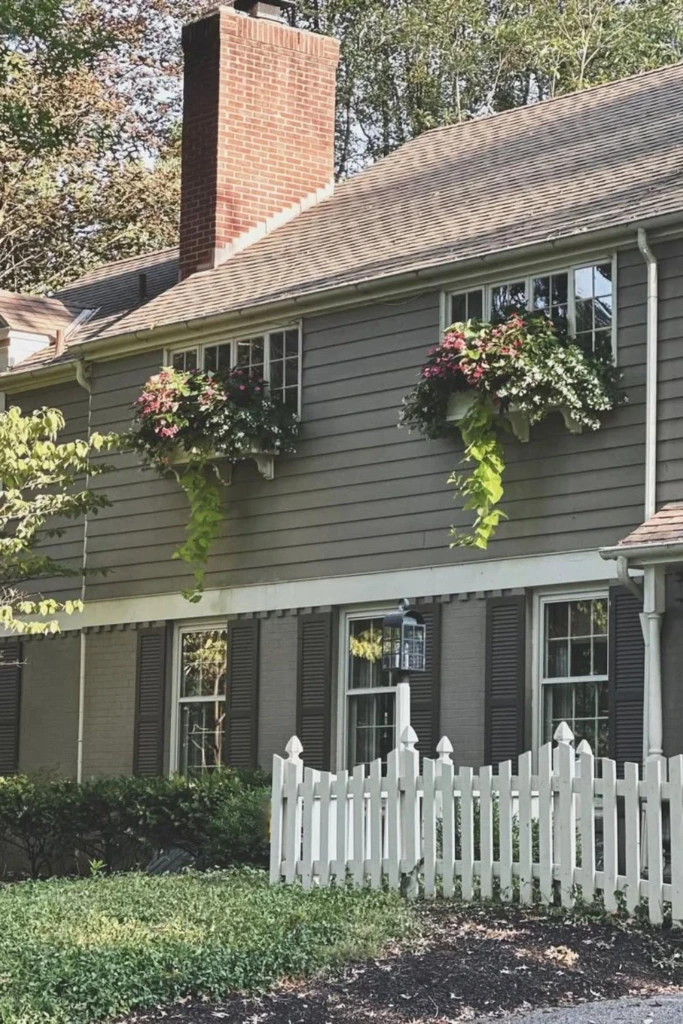
Large window boxes installed beneath second-story windows can make a tall house feel more connected to the garden below. A combination of layered foliage, pink flowers, and trailing vines creates a strong visual line along the upper exterior.
Choose a container proportionate to the window rather than one that looks too narrow or oversized. A simple, structured box helps balance the abundant planting and keeps the arrangement looking intentional.
Before installing an upper-level planter, pay particular attention to safety. Use properly rated brackets and suitable structural fixings, account for the weight of saturated soil, and ensure the installation complies with local building requirements.
Where possible, arrange access for watering and maintenance without leaning out of an upper window. Long trailing plants should be trimmed before they become tangled with nearby fixtures or obstruct pathways below.
This design works especially well on larger homes, where the additional height and greenery can make the facade appear more welcoming.
16. Soft Romance
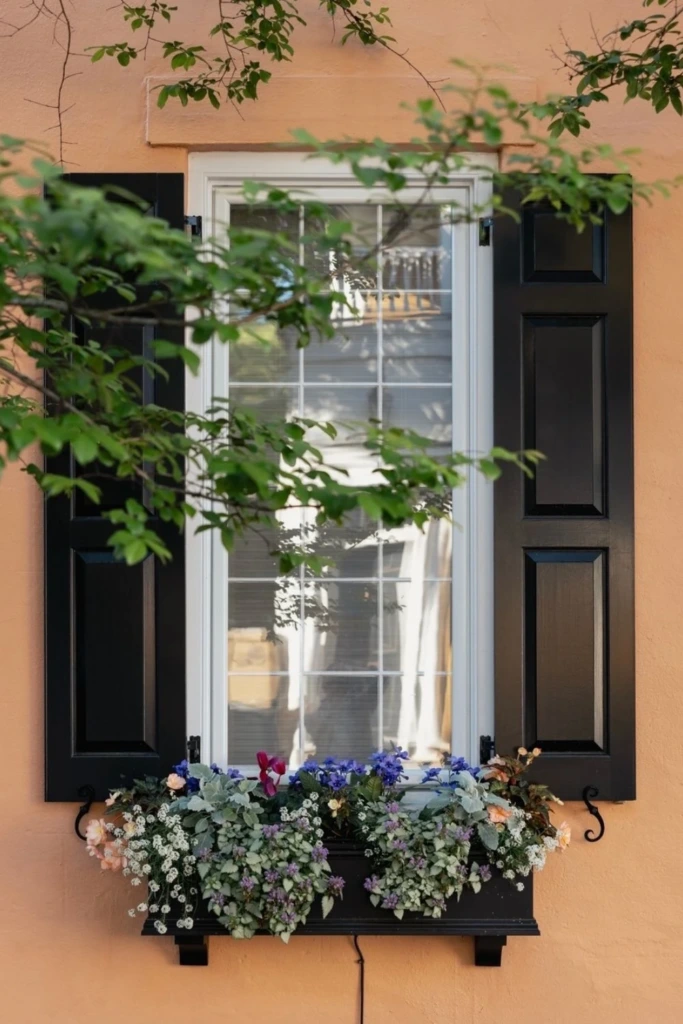
A romantic window box can be created with pastel flowers, silvery foliage, and delicate trailing plants. Shades of blush pink, peach, lavender, and cream work together to produce a gentle, layered appearance.
Pair the arrangement with a planter that complements the home's exterior. A white or pale wooden box creates a cottage-inspired look, while a dark container adds contrast against light walls.
Choose flowers with different bloom shapes and heights to keep the design interesting. Place upright plants toward the back, use compact blooms through the middle, and allow a few trailing varieties to soften the front edge.
This combination is particularly attractive against peach-colored walls, traditional shutters, and weathered wood. Deadhead flowering plants when appropriate and remove damaged foliage to keep the display looking fresh.
For the best results, select varieties suited to the same sunlight and watering conditions rather than choosing plants based on color alone.
17. Winter Wonderland
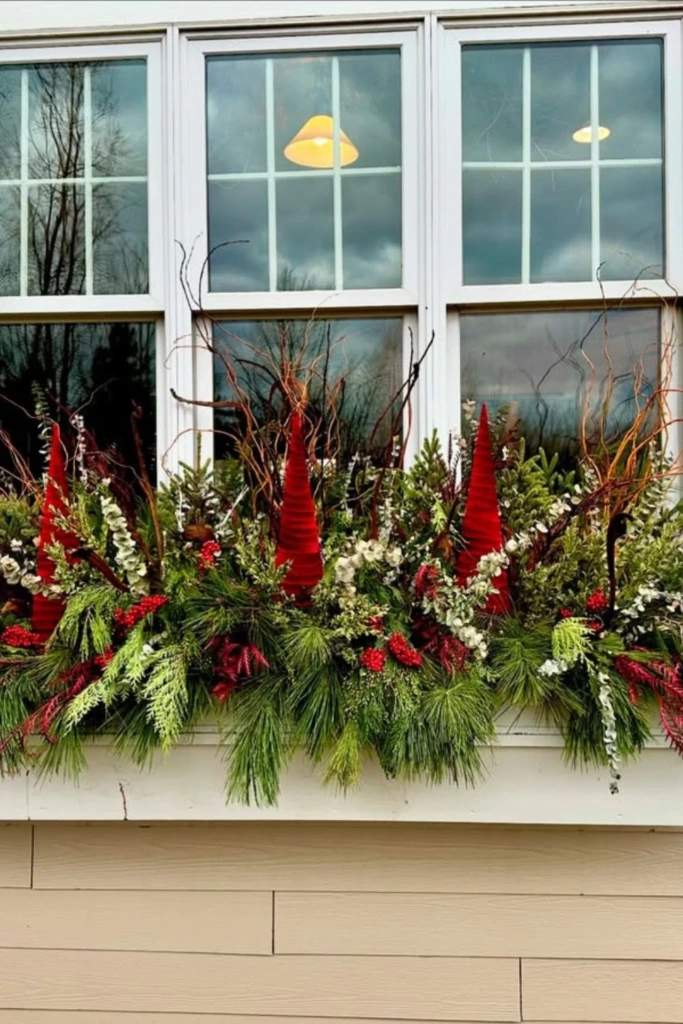
Window boxes can remain decorative even when temperatures drop and summer flowers disappear. A winter arrangement made from suitable evergreen branches, interesting twigs, and berry-like decorative accents can provide color and texture throughout the colder months.
Begin with a sturdy planter that can withstand your local weather. Arrange taller branches toward the back and add shorter evergreen cuttings in front to create depth. Red ornaments, weather-resistant decorations, or other seasonal accents can introduce a festive touch.
Use only plant materials that are safe for your household and local wildlife. If real berries are included, identify the species before using them, particularly if children or pets could reach the arrangement.
Avoid relying on tender flowering plants that cannot tolerate freezing temperatures. Where winters are severe, choose cold-hardy materials and secure lightweight decorations against strong winds.
This flower-free design is an attractive option for holiday decorating and provides visual interest during a season when many outdoor containers would otherwise look empty.
18. Twin Blooms
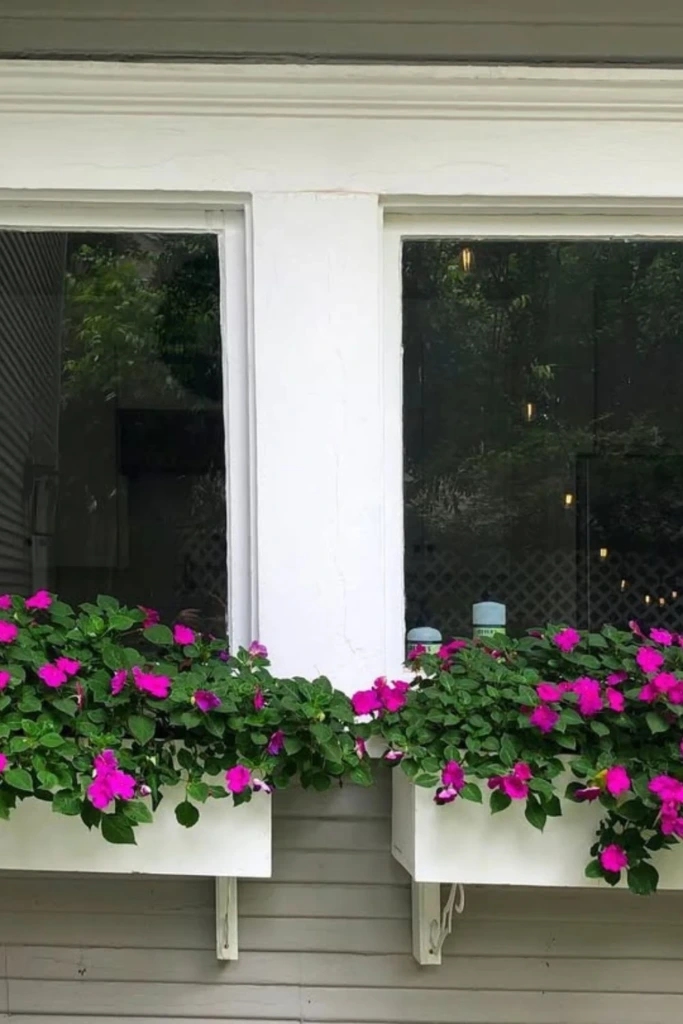
Two matching window boxes can create a balanced appearance when installed beneath neighboring windows or on either side of a porch. Repeating the same planter style and flower colors makes the exterior feel coordinated.
Pink impatiens are a useful choice for suitable shaded or partly shaded locations. Their bright blooms contrast beautifully with green leaves and white containers, producing a cheerful display without requiring a complicated color scheme.
If the windows receive different amounts of sunlight, choose plants that can tolerate the conditions at both locations or adjust the varieties while maintaining a similar appearance.
Measure carefully before installation so the boxes align visually with the windows. Use secure mounting hardware and ensure both containers have adequate drainage.
This arrangement works well with neutral siding, small porches, and traditional suburban homes. Regularly trim damaged growth and replace struggling plants to keep the two displays looking consistent.
19. Rustic Yellow
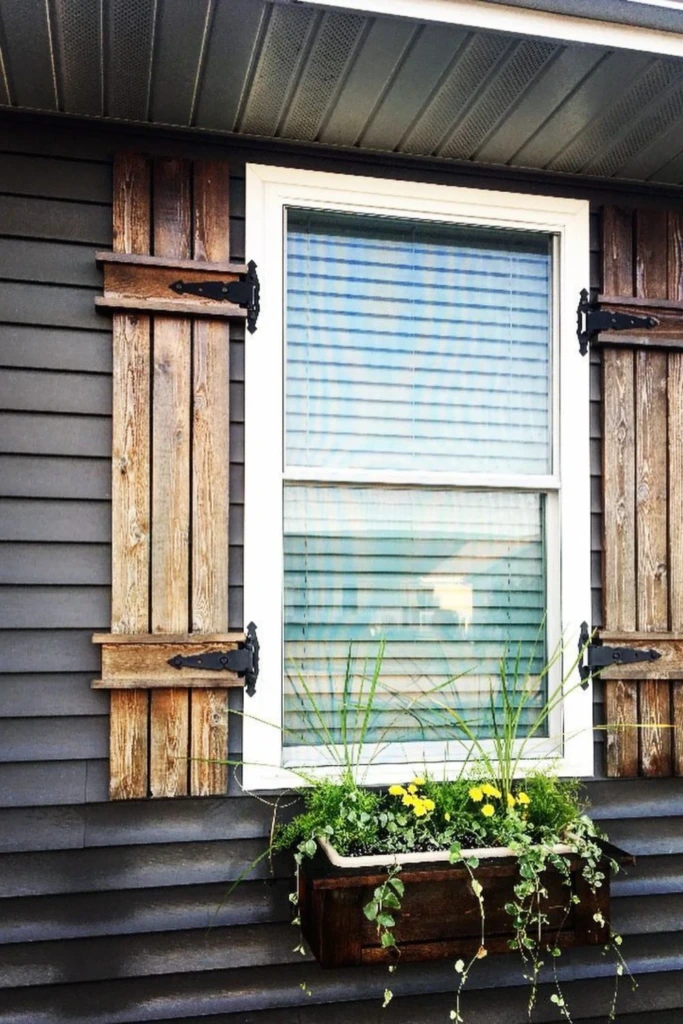
Combine the warmth of natural wood with yellow flowers, ornamental grasses, and trailing greenery for a lively farmhouse-inspired window box. The rough texture of the timber contrasts with the softer shapes of the plants.
Yellow marigolds can supply cheerful seasonal color, while suitable grasses introduce height and movement. Trailing plants along the front edge complete the arrangement and create a more relaxed outline.
Choose wood that is appropriate for outdoor use and protect it with a suitable finish. Drainage holes are essential, as trapped moisture can shorten the life of the container and damage plant roots.
This design looks especially good against dark siding, barn-style shutters, and rustic timber details. For a coordinated exterior, repeat the planter's wood tone elsewhere, such as in porch furniture or garden edging.
Keep the planting balanced by leaving room between individual plants and selecting varieties that can thrive under the same growing conditions.
20. Silver Whisper
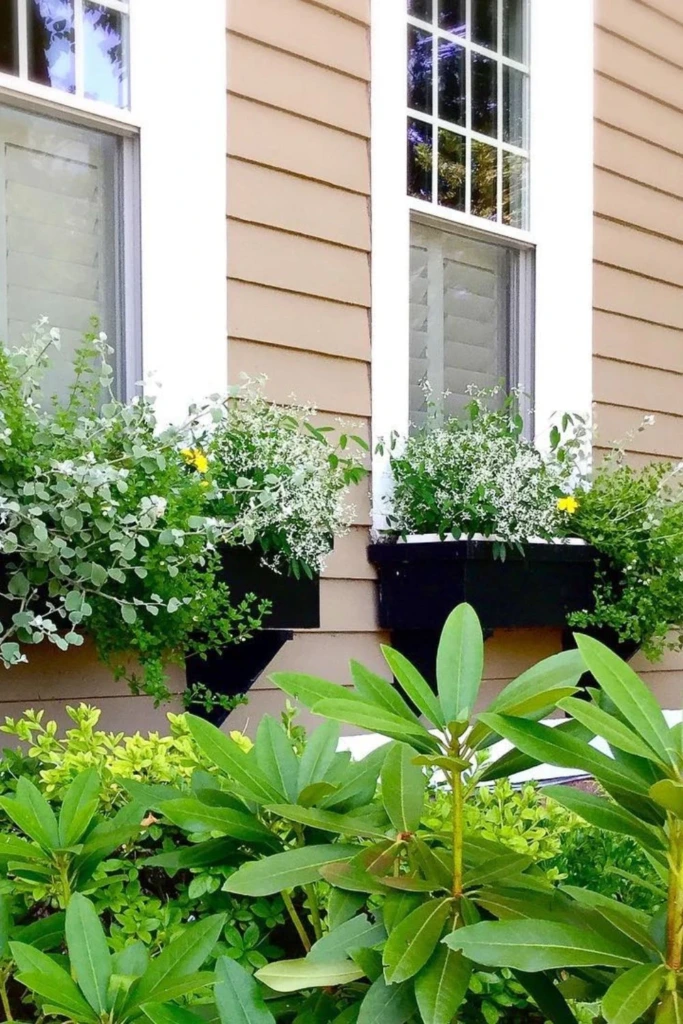
Silver-toned foliage and white flowers create a light, sophisticated window display. The combination is particularly striking in a black planter, where the pale leaves and delicate blooms stand out clearly.
Choose plants with contrasting textures, such as soft silvery leaves, upright stems, and small white flowers. A few trailing varieties can add movement without overwhelming the arrangement.
For sunny positions, consider suitable silver-leaved plants adapted to bright conditions. In shade, select foliage varieties that tolerate lower light rather than relying on plants that need direct sun.
A charcoal or black box reinforces the contemporary look, while a gray planter produces a softer effect. This palette pairs well with minimalist architecture, white walls, and neutral exterior finishes.
To maintain the clean appearance, remove faded flowers, prune uneven growth, and prevent neighboring plants from crowding one another.
21. Fall Festive
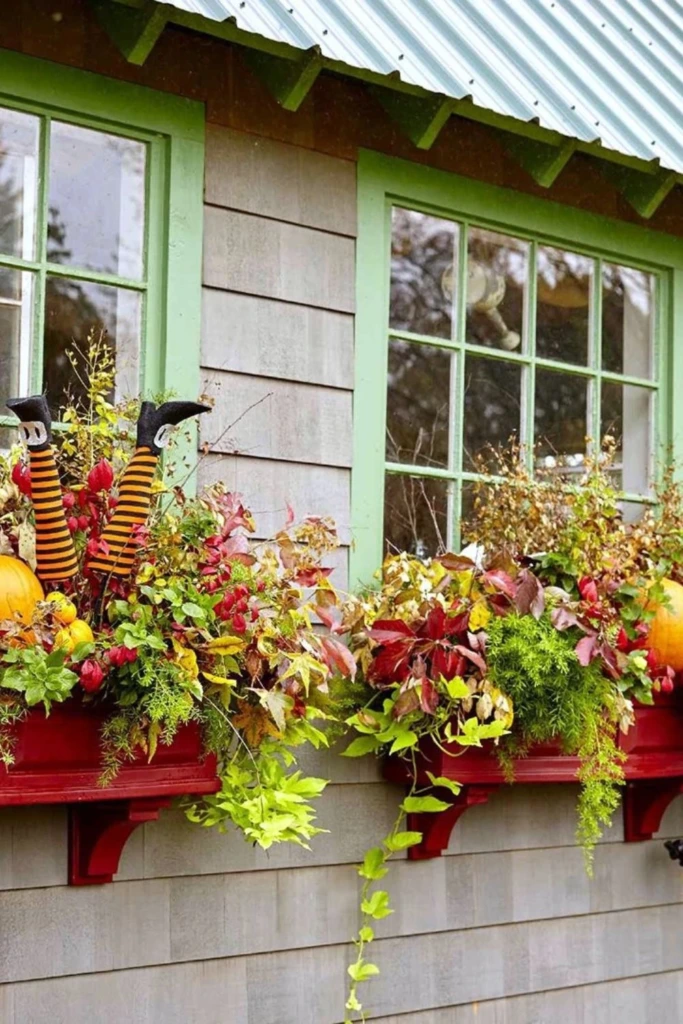
Celebrate autumn by turning your window box into a seasonal display filled with warm foliage, miniature pumpkins, and playful decorations. Rich reds, oranges, and golden tones capture the look of the harvest season.
Begin with a planter that complements your exterior, then combine seasonal plants with decorative elements. Small pumpkins can sit among the foliage, while lightweight ornaments add personality for Halloween or Thanksgiving.
If you want the display to last beyond a few weeks, use hardy seasonal plants and weather-resistant decorations. Check decorative pumpkins regularly for soft spots or decay, especially in damp conditions.
Red containers can make the colors feel especially vibrant, while wooden or dark planters provide a more rustic appearance. Keep ornaments securely positioned so they do not fall during windy weather.
This approach is easy to refresh throughout the season. Swap Halloween accessories for more understated autumn decorations when the holiday has passed, leaving the foliage and natural textures in place.
22. Edible Elegance
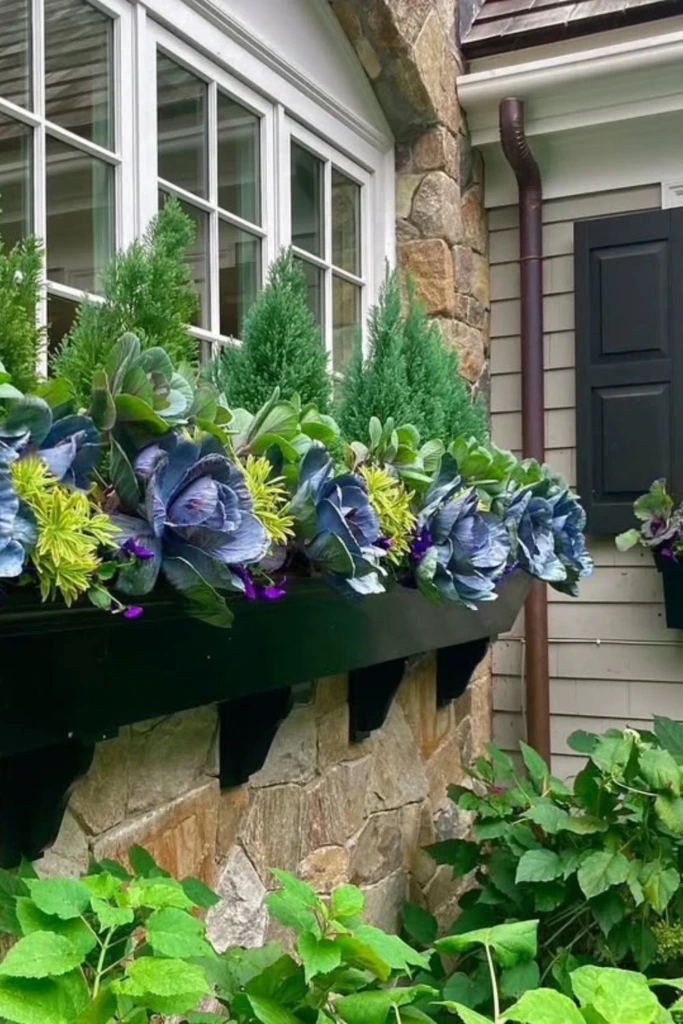
A window box can offer more than flowers or decorative greenery. Compact edible plants, leafy vegetables, and selected ornamental varieties can create a display that combines visual interest with practical gardening.
For a fall or winter arrangement, ornamental cabbage can provide bold leaf shapes and attractive color. Pair it with compact conifers or other suitable evergreen plants, adding small flowering varieties where the climate allows.
If you want to harvest food from the container, reserve space for edible plants such as compact lettuce, parsley, chives, or other herbs suited to the available light. Keep edible crops separate from ornamental plants that may have been treated with products not approved for food use.
Use a container with sufficient depth for the selected plants, good drainage, and a suitable potting mix. Check the mature size of each variety before planting so roots have enough room to develop.
A dark window box can give the arrangement a structured, contemporary finish. With thoughtful plant selection, you can create a display that remains attractive while producing fresh herbs or greens throughout the appropriate growing season.