22 DIY Dry Creek Bed For Drainage Ideas for 2026
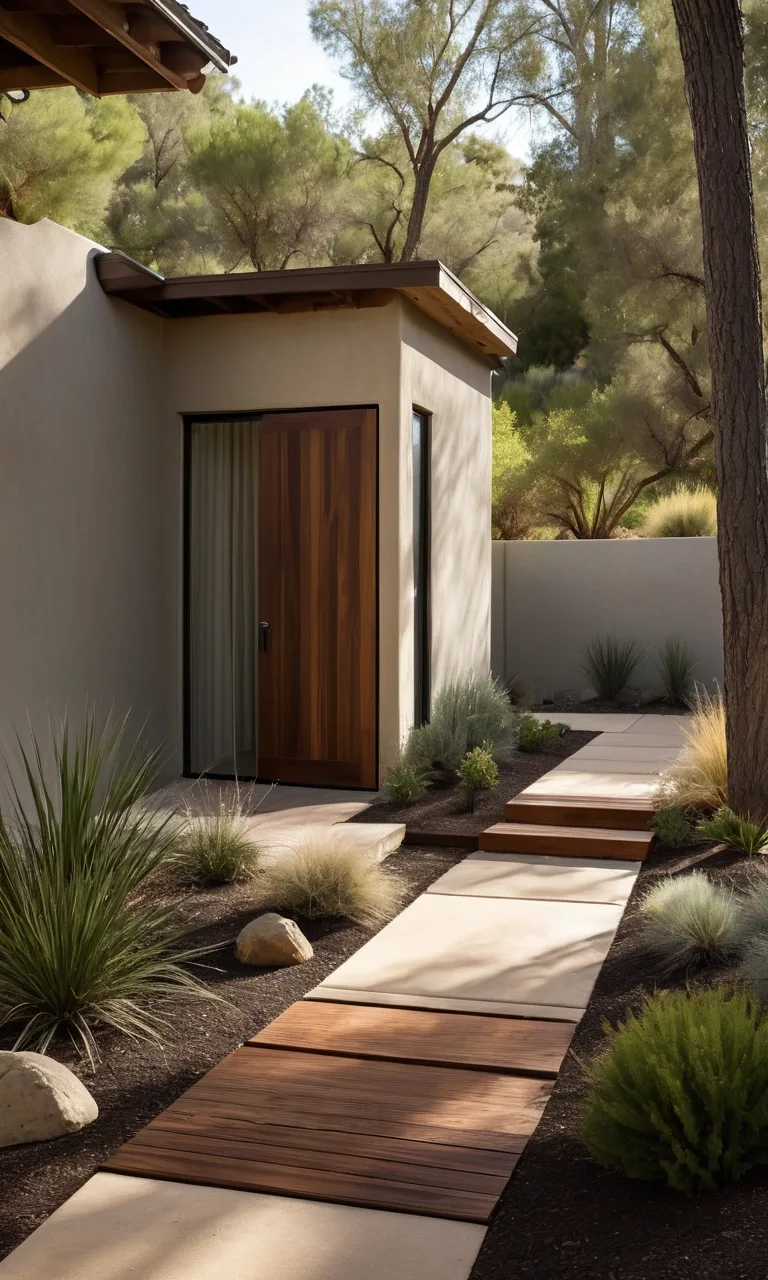
A yard that stays muddy after rainfall can quickly become a frustrating problem. Excess water may damage plants, erode soil, create puddles, and leave outdoor spaces difficult to use. Fortunately, a DIY dry creek bed offers an attractive way to manage surface runoff while adding natural character to your landscape.
A dry creek bed is a shallow, stone-lined channel designed to guide rainwater toward a suitable drainage location. When the weather is dry, it resembles a natural stream filled with decorative rocks and surrounded by plants.
Whether you're dealing with a sloped backyard, a narrow side yard, or water collecting near your driveway, these 18 DIY dry creek bed ideas can help you create a landscape feature that's both functional and beautiful.
1. Before You Build a Dry Creek Bed
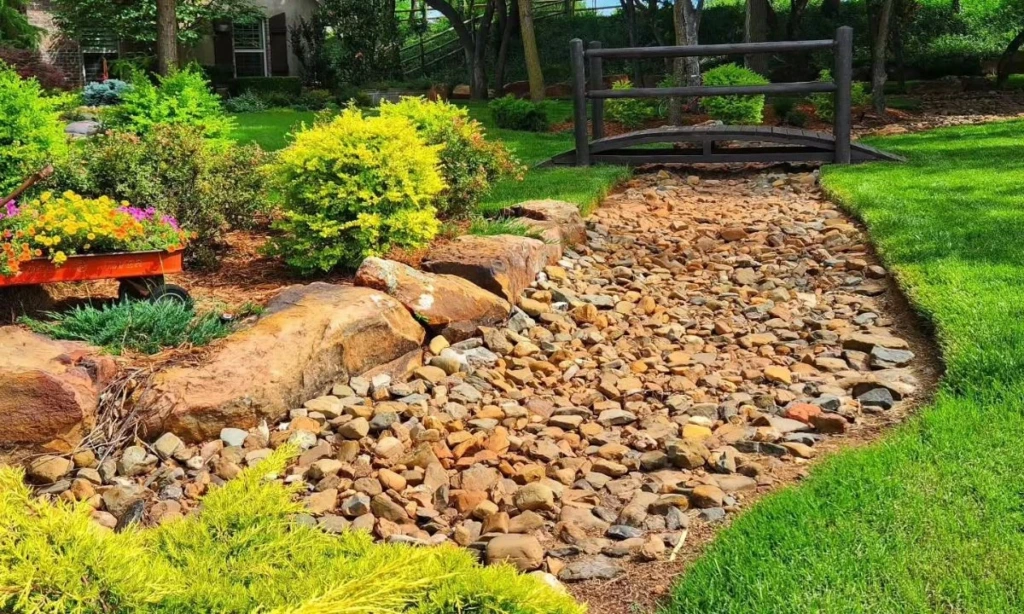
Successful drainage begins with understanding how water moves through your property. Observe your yard during rainfall and identify where runoff originates, which areas become saturated, and where water can safely discharge.
Mark a route that follows the natural downhill grade. Avoid directing water toward building foundations, neighboring properties, or locations where additional erosion could occur.
Before excavation, check for underground utilities and determine whether local drainage regulations apply.
Choose stones according to the expected water flow. Gentle runoff may require only moderate-sized rocks, while stronger currents need larger, more stable materials.
2. White Rock Channel
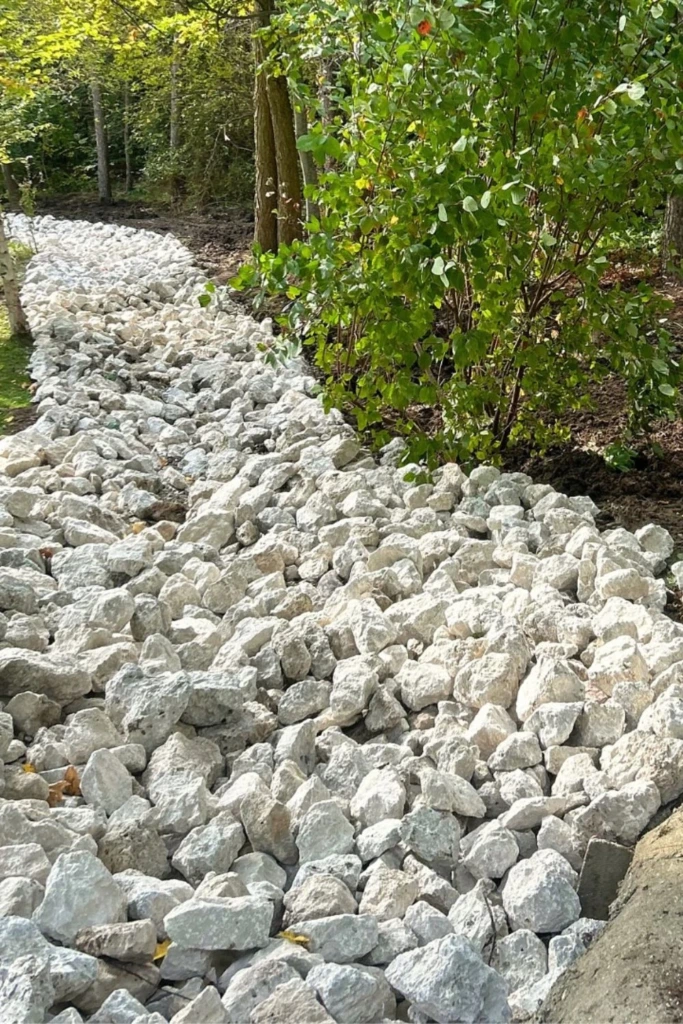
A white rock channel brings a fresh, contemporary appearance to outdoor drainage systems. Its bright surface stands out beautifully against green lawns, dark mulch, and colorful garden plants.
Create a shallow trench with a gradual slope, then install an appropriate permeable geotextile where soil separation is needed. Fill the channel with pale river stones and position larger rocks along selected sections for added stability.
Use different stone sizes to prevent the design from looking overly uniform. White limestone or light-colored river pebbles can create a striking finish, although softer stones may weather faster.
This design works particularly well in minimalist gardens and modern front yards. Regularly remove fallen leaves and accumulated dirt to preserve its clean appearance.
3. River Rock Flow
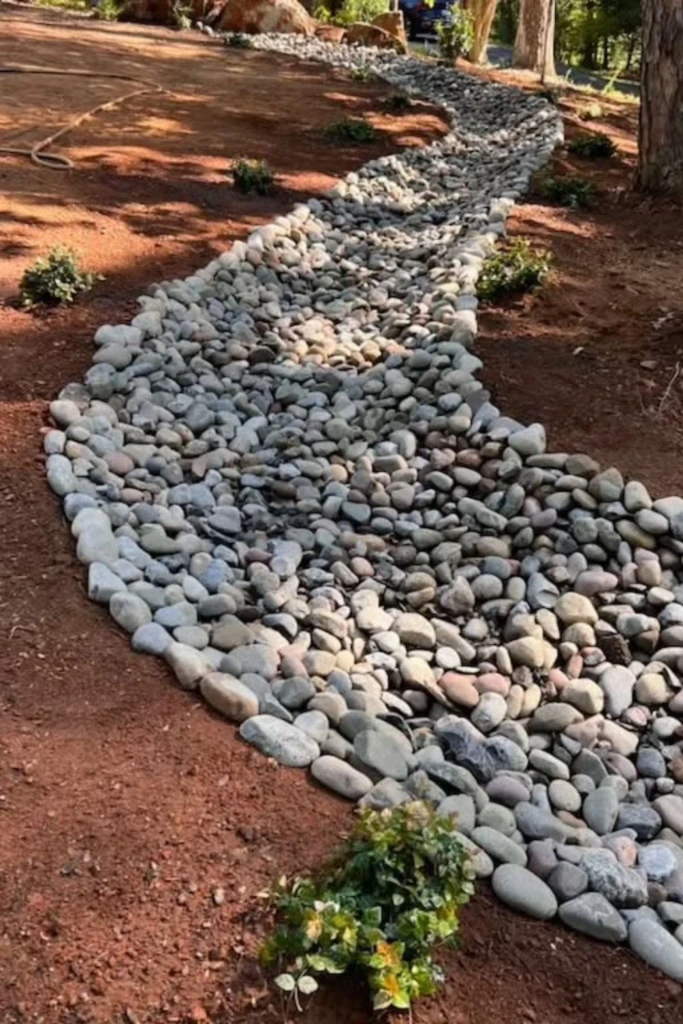
River rocks are ideal for recreating the appearance of a naturally formed stream. Their rounded shapes and varied earth tones blend easily into most garden styles.
Start with a winding channel that follows the property's existing drainage pattern. Spread medium-sized river stones across the base, adding larger rocks at bends and along vulnerable banks.
Combine gray, brown, beige, and muted reddish stones for an organic appearance. Leave occasional irregular spaces rather than arranging every rock in perfect rows.
Native grasses and low-growing plants can soften the boundaries without interfering with drainage.
A river rock creek bed is especially suitable for cottage gardens, woodland landscapes, and traditional backyards.
4. Modern Desert Creek
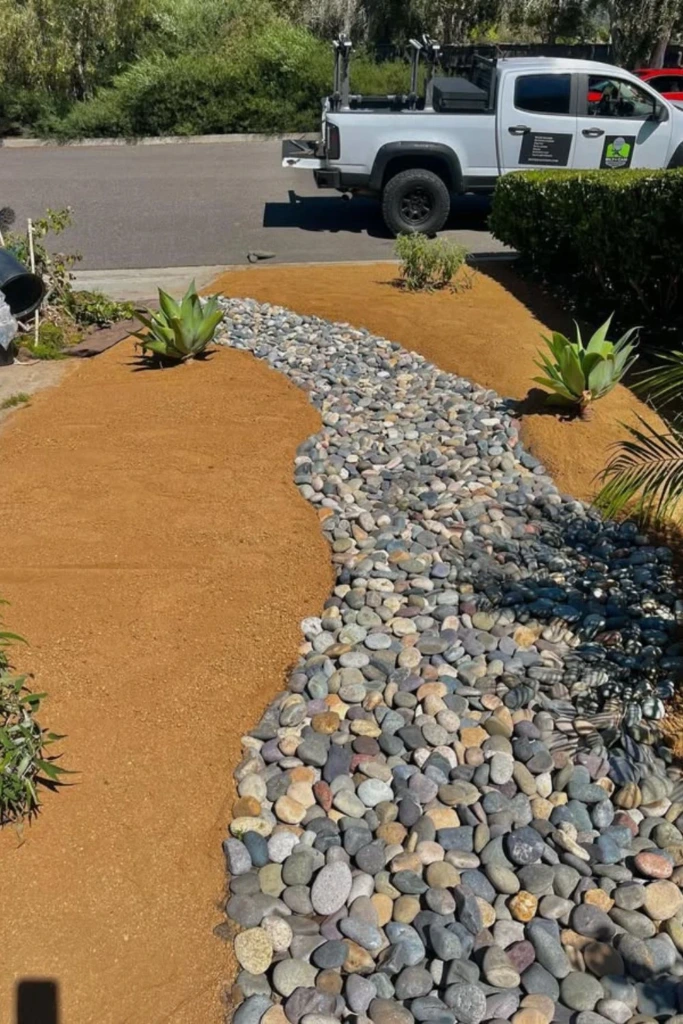
A modern desert creek bed combines practical water management with drought-tolerant landscaping. It's an excellent option for homeowners who want to reduce lawn maintenance and create an attractive xeriscape garden.
Shape a broad, gently curved channel and cover it with neutral-colored gravel or rounded stones. Add larger decorative boulders at irregular intervals to create a desert-inspired landscape.
Plant drought-adapted varieties such as agave, yucca, and suitable ornamental grasses along the banks. Select species that tolerate your local climate and soil conditions.
Keep the central watercourse free from dense vegetation so rainwater can pass through without obstruction.
The combination of stone, sculptural plants, and open ground creates a landscape that remains attractive throughout the year.
5. Rustic Boulder Border
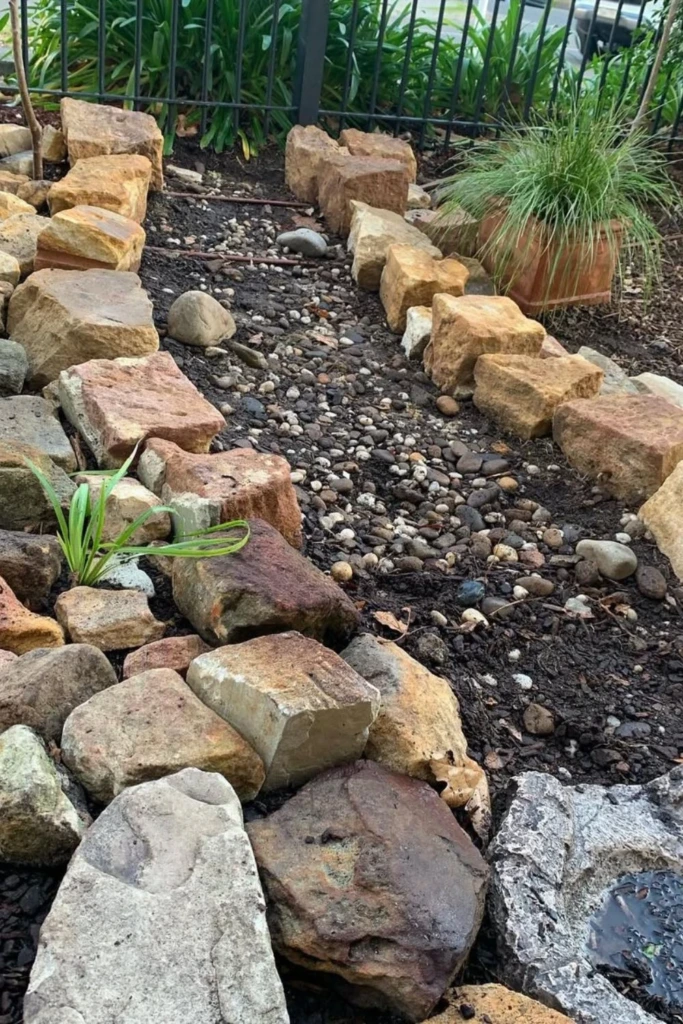
Large natural boulders can transform a simple drainage trench into a rugged landscape feature.
Begin by shaping the creek bed to accommodate the expected runoff. Place substantial boulders along selected edges, particularly around curves and areas where flowing water could disturb the soil.
Set part of each boulder below ground level for stability and a more established appearance. Fill the spaces between them with medium river rocks and smaller stones.
Choose irregularly shaped rocks in complementary earthy shades. Avoid positioning large stones in continuous, perfectly matched rows.
This approach looks especially attractive near mature trees, timber fences, rustic patios, and woodland gardens.
Because boulders are heavy, use suitable lifting equipment or professional assistance when necessary.
6. Golden Pebble Path
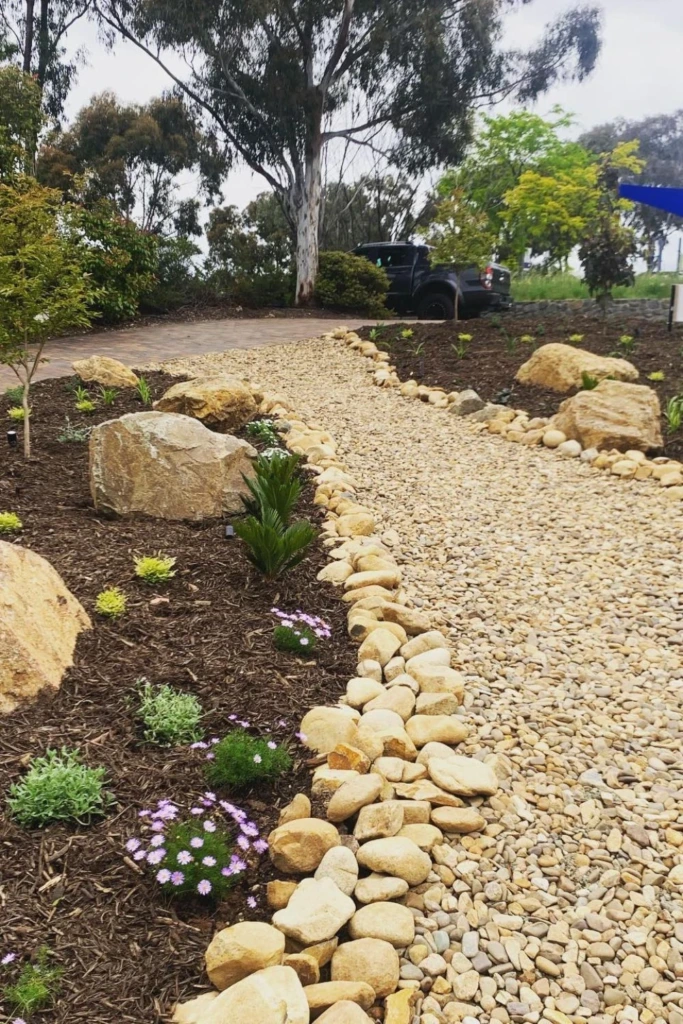
Golden pebbles introduce warmth and visual interest to a dry creek bed. Their sandy yellow and honey-colored tones complement wooden structures, terracotta pots, and natural garden materials.
Design a gently meandering channel through your landscape. Cover the base with suitable drainage stone and finish with rounded golden pebbles.
Introduce a few larger tan or brown rocks to break up the surface and strengthen the edges.
For a more natural effect, vary the channel's width slightly as it passes through planting beds.
Golden stones are particularly appealing in sunny gardens, where their colors become more noticeable.
Select pebbles large enough to remain stable during the runoff conditions expected in your yard.
7. Sideyard Streambed
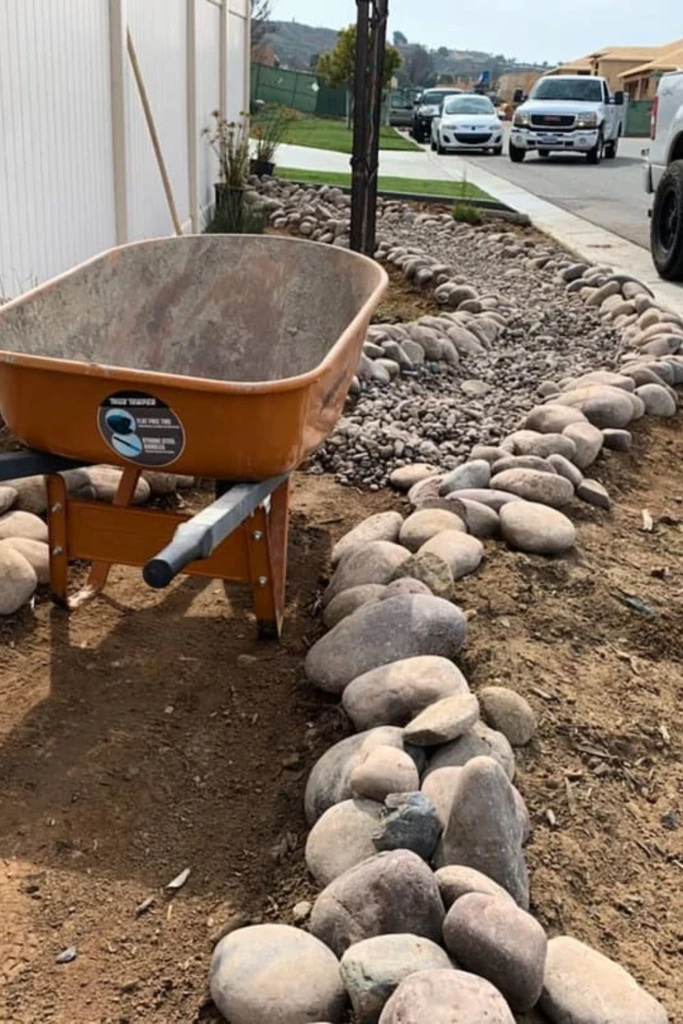
Narrow side yards often experience drainage problems because buildings, fences, and compacted soil limit how easily water can escape.
A slim dry creek bed can turn this neglected area into an organized drainage corridor.
Identify the lowest suitable route and excavate a channel that maintains a consistent downhill gradient. Use compact, medium-sized stones rather than large boulders that consume valuable space.
Consider installing a simple stepping-stone crossing if the area provides access between the front and back yards.
Shade-tolerant plants can soften the edges without overcrowding the passage.
Pay particular attention to foundation clearances, utility locations, and the final water outlet. A narrow channel is only effective when it has sufficient capacity to carry the runoff it receives.
8. Boulder Drain Channel
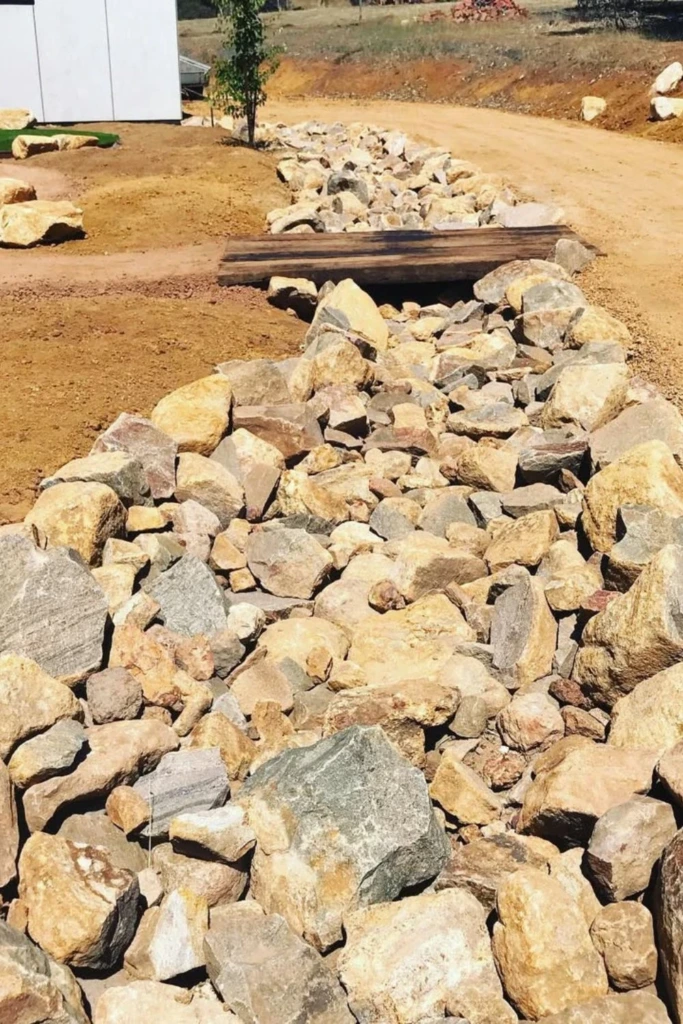
A boulder drain channel is useful for landscapes where runoff travels downhill with considerable force.
Unlike purely decorative creek beds, this design emphasizes erosion resistance and channel stability.
Excavate a drainage route with enough width and depth to accommodate the anticipated flow. Position large, durable rocks in locations where water is likely to strike the banks or accelerate around curves.
Use appropriately sized angular or rounded drainage stones between larger rocks. Properly designed rock check structures may help manage erosion on certain slopes, but poorly placed barriers can cause water to overflow.
For steep terrain or severe runoff, have the channel's dimensions and outlet evaluated by a drainage professional.
The finished feature can resemble a rocky mountain stream while providing useful stormwater control.
9. Lush Woodland Bed
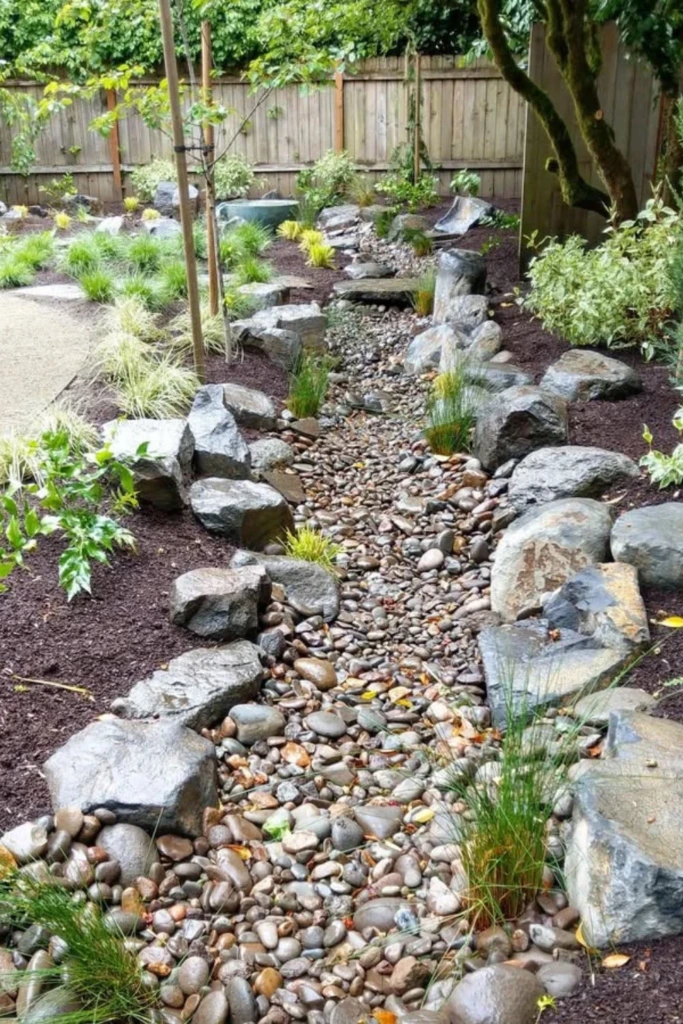
A woodland dry creek bed creates a peaceful, natural atmosphere beneath trees and among shade-loving plants.
Choose stones in subdued shades of charcoal, brown, and gray. Shape the channel with gentle curves that follow the surrounding terrain.
Position ferns, sedges, hostas, or other locally suitable shade plants along the banks. Plants should remain outside the main flow path to reduce the risk of damage during storms.
Add moss-covered accent stones where growing conditions permit, but avoid relying on moss to stabilize active drainage areas.
Fallen leaves can accumulate quickly in shaded landscapes, so inspect the creek regularly for blockages.
This style is particularly effective in established gardens with mature trees and natural planting areas.
10. Backyard Curve Bed
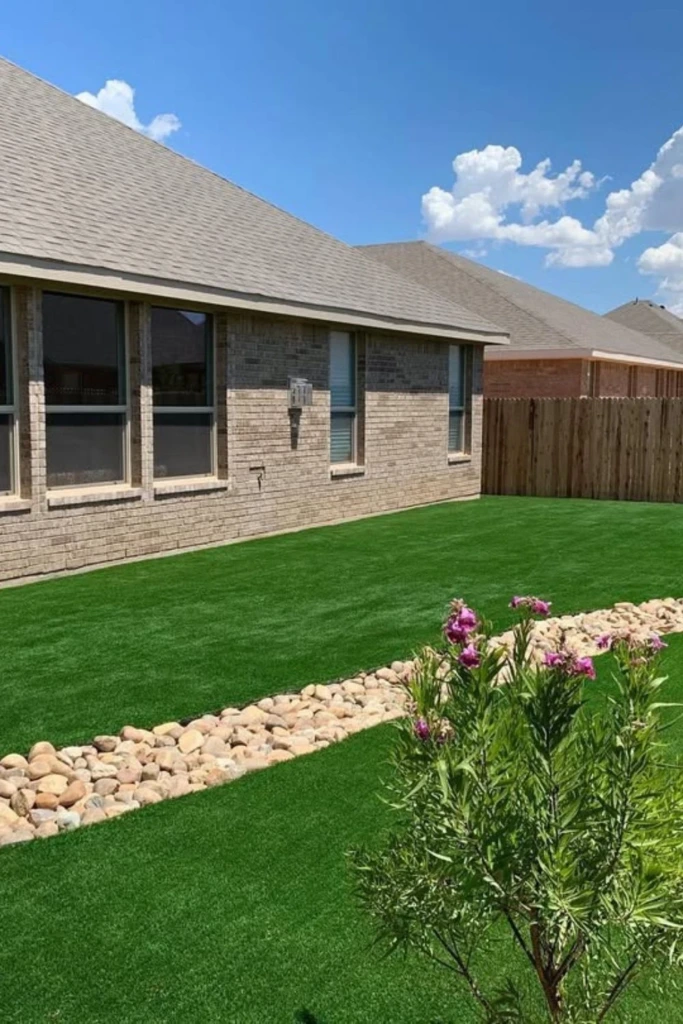
A curved dry creek bed can become a distinctive design element while helping manage excess water.
Instead of creating a straight drainage line across the backyard, follow a sweeping route that complements garden beds, patios, and lawn edges.
Use rounded stones in several sizes to establish a natural appearance. Position larger rocks near the outside of bends where flowing water may create additional erosion.
Keep curves broad enough for water to move smoothly through the channel.
Plant low shrubs or ornamental grasses along the edges to visually connect the creek with the surrounding landscape.
This design can also separate a lawn from a seating area or garden border without installing a solid barrier.
11. Woodland Edge Stream
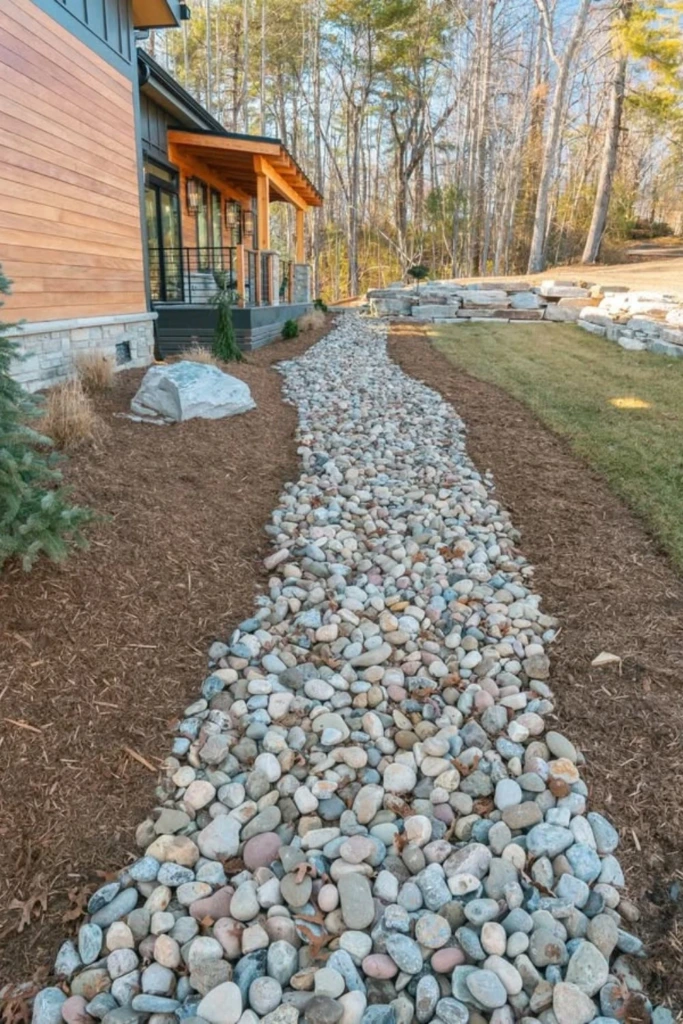
A woodland edge stream creates an attractive transition between open lawn and wooded planting areas.
Position the channel along an existing low point near the edge of the trees. Use natural-looking river rocks in mixed gray, tan, and brown shades.
Larger stones can help define the boundary between grass and woodland mulch.
Introduce shade-tolerant groundcovers along the outer banks while keeping the drainage path unobstructed.
Where tree roots are present, minimize excavation and avoid cutting major roots. Adjust the channel route when necessary to protect established trees.
This approach works particularly well for properties where rainfall naturally flows from open ground toward a lower wooded section, provided the outlet can safely handle the water.
12. Narrow Slope Runoff
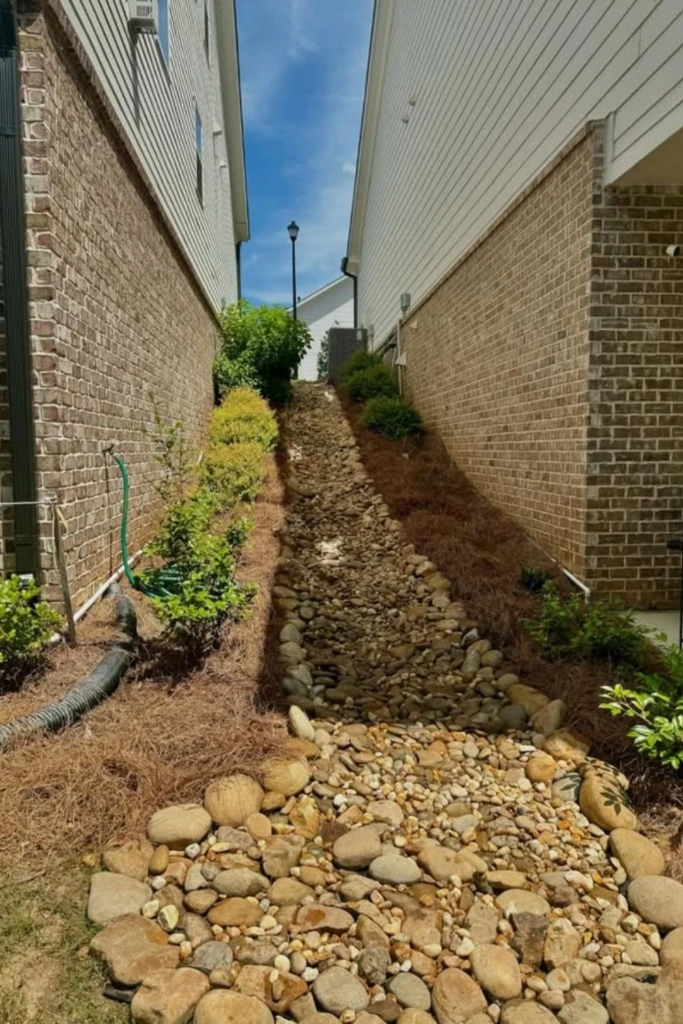
A narrow sloping yard can develop erosion channels when rainwater repeatedly follows the same downhill route.
Installing a rock-lined creek bed helps concentrate runoff in a protected channel rather than allowing it to wash away exposed soil.
Begin by assessing the slope and determining how much water enters the area. Excavate the channel along a stable route and use suitable geotextile beneath the stones where appropriate.
Choose rocks heavy enough to resist movement during storms. On steeper slopes, engineered grade-control features may be necessary to prevent excessive water velocity.
Use vegetation along the banks to stabilize surrounding soil.
Inspect the lower end of the channel carefully, since concentrated water can create erosion if discharged onto unprotected ground.
13. Gravel Drive Drain
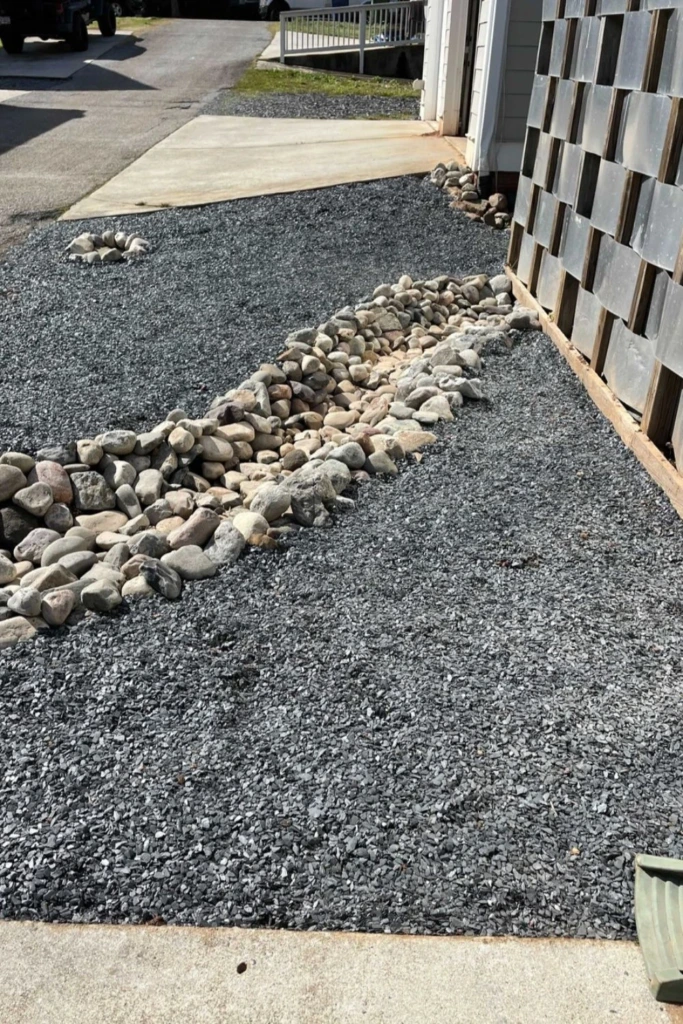
Driveways often shed large amounts of rainwater because compacted or paved surfaces allow limited infiltration.
A gravel-lined drainage channel beside the driveway can collect runoff and direct it toward an appropriate outlet.
Excavate a shallow channel along the driveway's lower edge, ensuring that water can enter without encountering a raised barrier.
Use durable drainage stone and a suitable permeable separation fabric when soil conditions require it.
Larger rocks can reinforce areas exposed to concentrated flow, while smaller gravel provides a tidy finish.
Avoid undermining the driveway base or blocking existing drainage structures.
For driveways that experience heavy vehicle traffic or substantial runoff, a properly designed trench drain or culvert may be more suitable than an open decorative creek.
14. Urban Front Drain
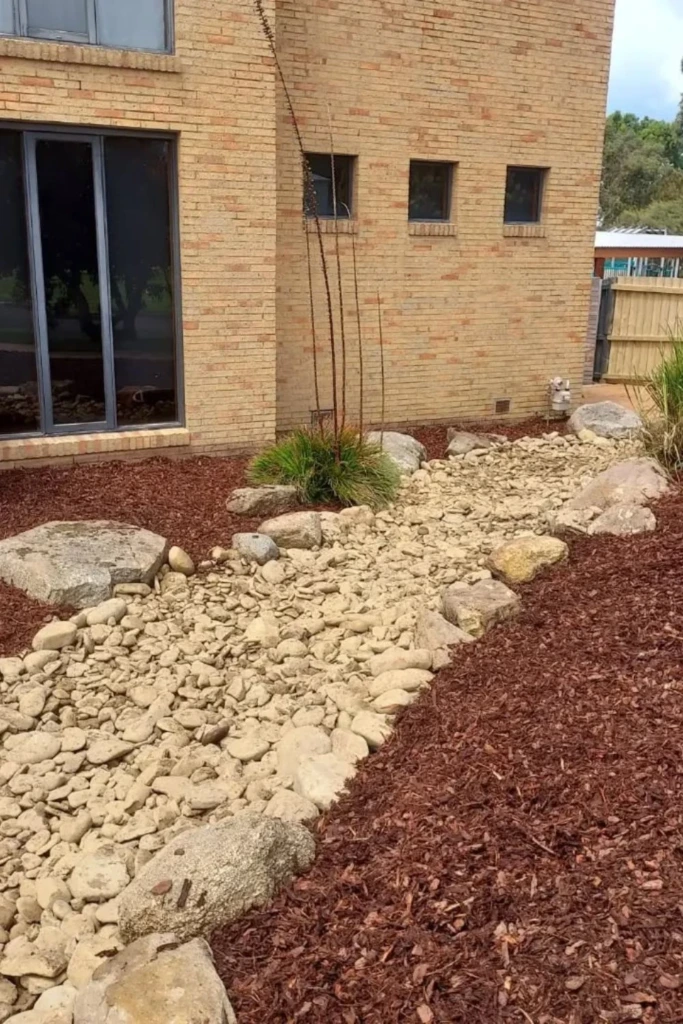
A dry creek bed can make a small urban front yard more attractive while addressing surface drainage.
Use a simple layout that follows the yard's natural grade without dominating the limited outdoor space.
Light gray gravel, smooth river rocks, and occasional larger stones create a neat, understated appearance.
Pair the channel with compact shrubs, ornamental grasses, or low-maintenance perennials that suit the local climate.
Keep planting away from entrances and pathways so the feature doesn't create access problems.
Where the drainage route approaches a sidewalk or public right-of-way, check local requirements before altering runoff patterns.
The result can be a polished landscape that incorporates drainage without looking overly engineered.
15. Lawn Edge Channel
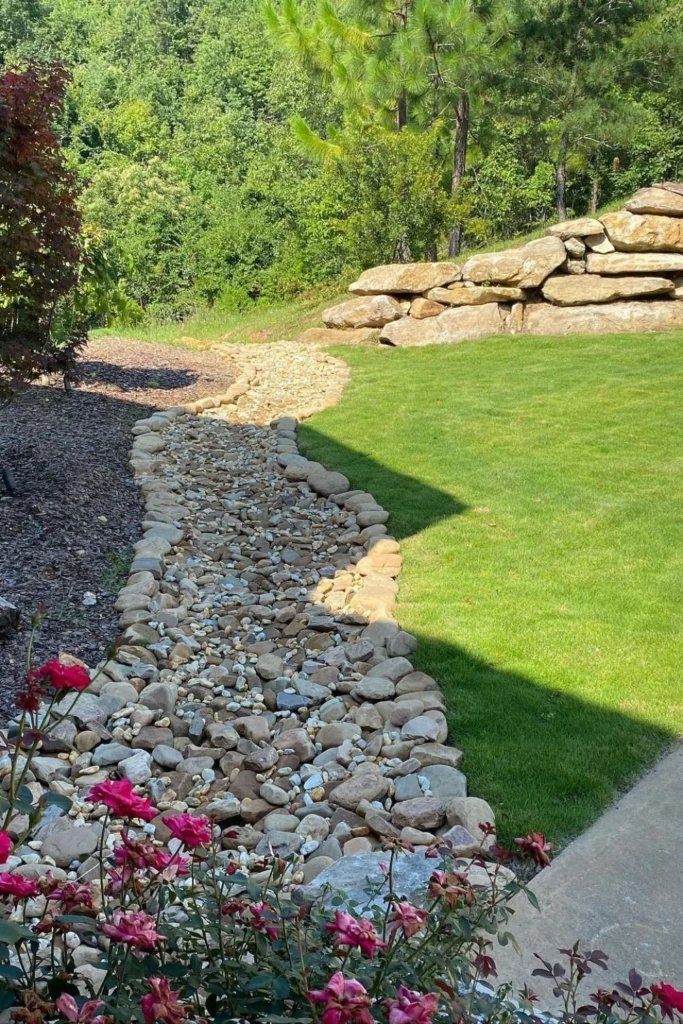
A lawn edge creek bed offers a practical way to manage water along the boundary between turf and planting beds.
Excavate a shallow channel where runoff naturally collects. Shape the banks to allow water to enter easily while keeping the surrounding lawn stable.
Fill the bed with medium river rocks and add larger stones at intervals for visual variation.
Install appropriate edging where needed to reduce grass spreading into the stone.
Allow the creek to curve gently around garden beds, but avoid unnecessary turns that could slow drainage or encourage sediment buildup.
This design also makes landscape boundaries easier to recognize and can reduce muddy patches along frequently wet lawn edges.
16. Rustic Backyard Stream
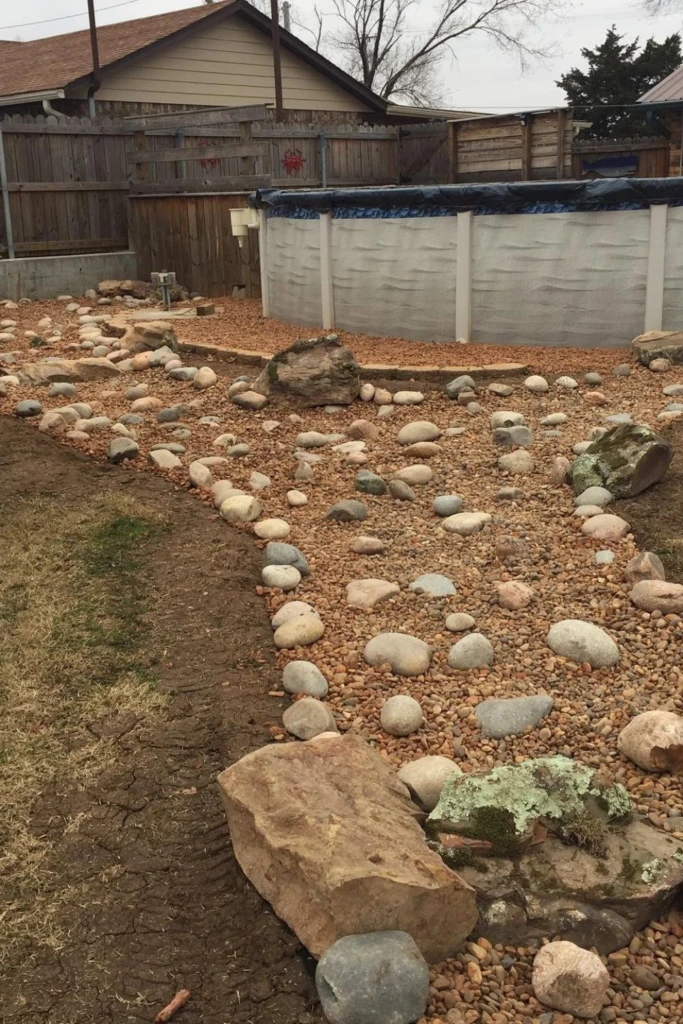
A rustic backyard stream uses natural materials to create a relaxed landscape feature that feels integrated with its surroundings.
Combine river stones, irregular boulders, weathered timber accents outside the watercourse, and informal planting.
Shape the channel to follow the existing terrain rather than forcing it into a rigid geometric pattern.
Use larger stones to anchor the design and smaller rocks to fill the spaces between them.
Native plants and ornamental grasses can make the creek appear established while helping protect the banks.
If the backyard is frequently used by children or pets, avoid unstable rocks and sharp materials. Provide a safe crossing where people regularly walk.
The finished creek bed should look inviting while remaining capable of carrying stormwater.
17. Contrast Stone Bed
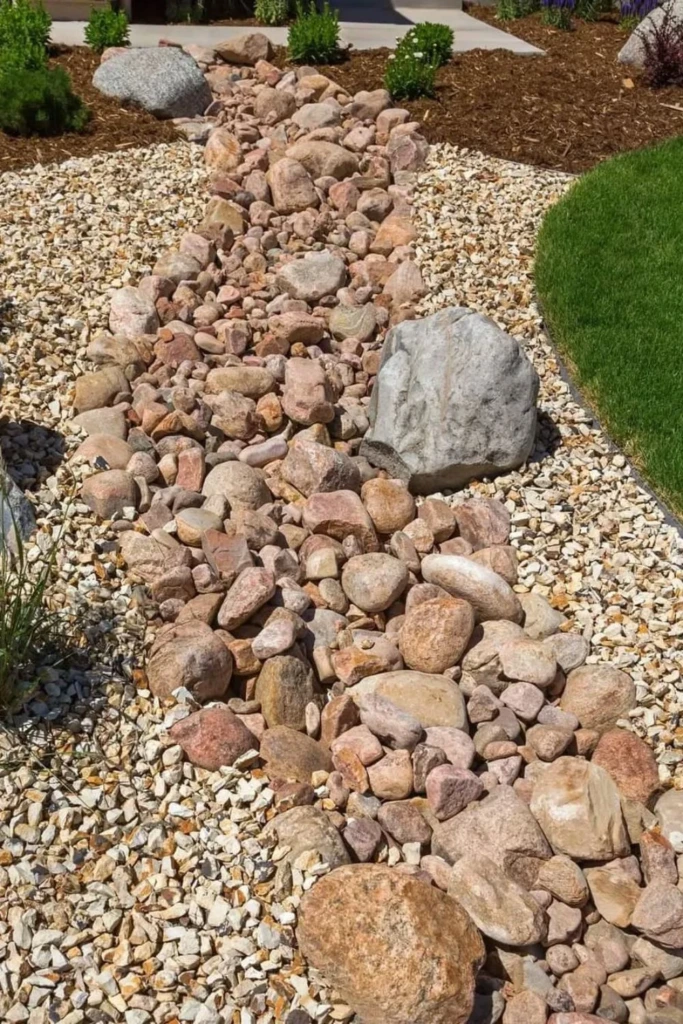
Using contrasting stone colors can turn an ordinary drainage channel into a visually striking garden feature.
Choose two complementary materials, such as charcoal river rock and pale gray gravel, or warm brown pebbles paired with cream-colored stones.
Use one color predominantly in the center and the second along selected edges or wider sections.
Avoid overly precise stripes if you want the design to resemble a natural stream.
Mix in a few larger accent stones to create depth and interrupt repetitive patterns.
Choose materials with similar durability and suitable sizes for the expected water flow.
This idea works particularly well in contemporary gardens, landscaped courtyards, and front yards with coordinated hardscape colors.
18. Shaded Fence Drain
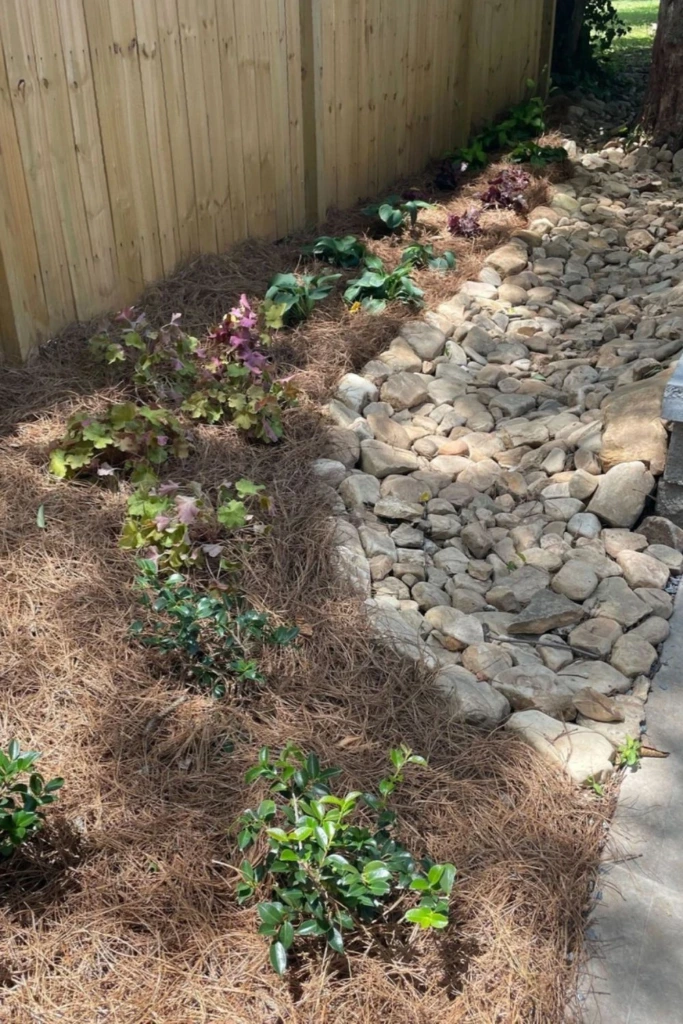
The ground beside a fence often receives little sunlight and may remain damp long after rainfall.
A narrow stone creek bed can provide a practical alternative to struggling grass or constantly muddy soil.
Excavate a channel that follows the existing drainage direction while maintaining adequate clearance from fence posts and foundations.
Use medium-sized stones that fit comfortably within the available space.
Plant shade-tolerant groundcovers or compact ferns outside the channel to soften the appearance.
Avoid allowing soil or mulch to accumulate against wooden fence components, as persistent moisture can encourage deterioration.
Make sure the water exits through a suitable drainage point rather than collecting at the end of the fence.
19. Downspout Streamlet
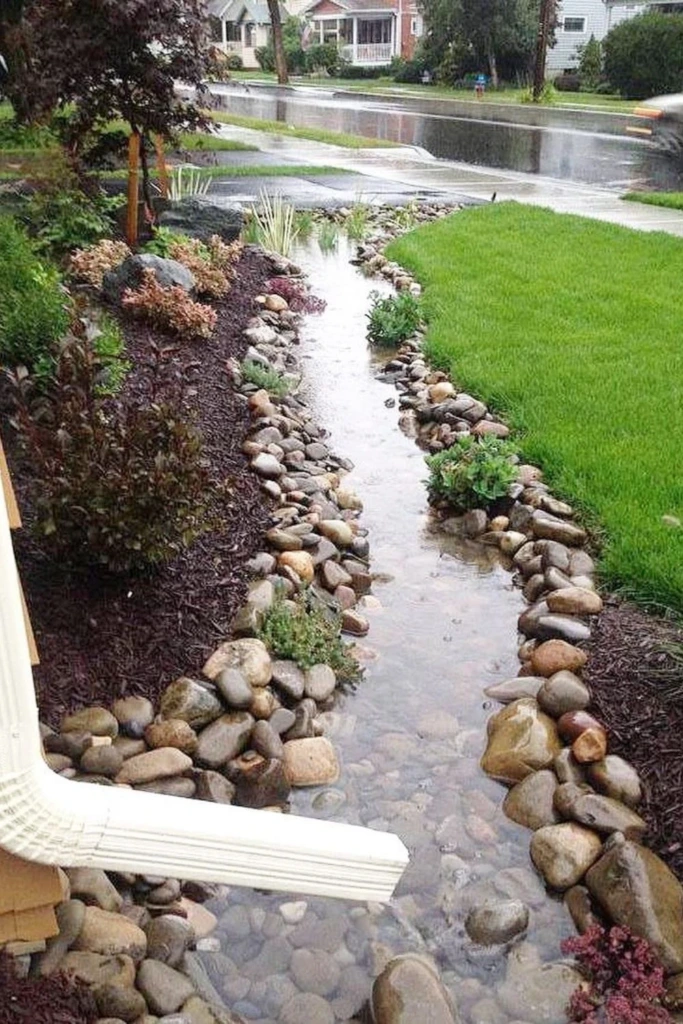
A downspout streamlet is a compact dry creek bed designed to carry roof runoff away from the house.
Begin by identifying where the downspout releases water and selecting a safe discharge location.
Connect an appropriate downspout extension or outlet to the beginning of the stone channel. The channel should slope away from the building and have sufficient capacity for heavy rainfall.
Use larger stones around the inlet to protect the soil from concentrated water.
Fill the remaining channel with appropriately sized river rocks, creating a gentle winding appearance where space permits.
Avoid discharging water directly beside the foundation or into an area that cannot absorb or convey it.
This small landscape improvement can make roof drainage more attractive while helping reduce localized erosion.
What Should Go Under a Dry Creek Bed?
The material beneath a dry creek bed depends on soil conditions, runoff volume, and the intended drainage function.
For channels carrying regular surface runoff, a suitable permeable geotextile can help prevent underlying soil from mixing with the rock layer. This is particularly useful where fine soil particles could gradually fill gaps between stones.
Before placing the fabric, remove debris, shape the channel, and compact or stabilize the base as appropriate.
Overlap adjoining fabric sections according to the manufacturer's instructions and secure them before adding rocks.
Avoid using ordinary impermeable plastic sheeting as a universal solution. It can interfere with infiltration and may create unwanted water accumulation.
A dry creek bed intended to transport water is different from a French drain, which typically uses a subsurface gravel trench and often a perforated pipe.
Choose the construction method based on the actual drainage problem rather than appearance alone.
What Size Rocks Work Best?
The best rock size depends on how quickly water flows and how steep the channel is.
For decorative areas or very gentle runoff, small pebbles and gravel can provide a smooth finish. Moderate flows generally benefit from larger river stones, while steep channels may require substantial rock protection.
A combination of stone sizes often produces the most natural appearance.
As a general landscaping approach, small gravel can fill spaces, medium stones can cover the channel, and larger rocks can reinforce selected edges and bends. However, these choices are not a substitute for hydraulic sizing where substantial stormwater is involved.
Select hard, weather-resistant materials that will not break down easily.
Avoid relying on loose, lightweight pebbles where strong currents could carry them away.
Where Should the Water End Up?
Every effective dry creek bed needs a safe destination for the water it collects.
Depending on your property and local regulations, suitable options may include an approved stormwater connection, a properly designed rain garden, or a designated infiltration area.
The outlet must have enough capacity to manage the expected runoff without causing flooding or erosion.
Never assume that directing water to the lowest corner of the yard will solve the problem. If the ground is already saturated, the water may simply remain there.
Avoid discharging runoff onto neighboring properties, public walkways, or vulnerable building foundations.
Where drainage conditions are complicated, professional assessment can help identify a reliable long-term solution.
20. Common Dry Creek Bed Mistakes
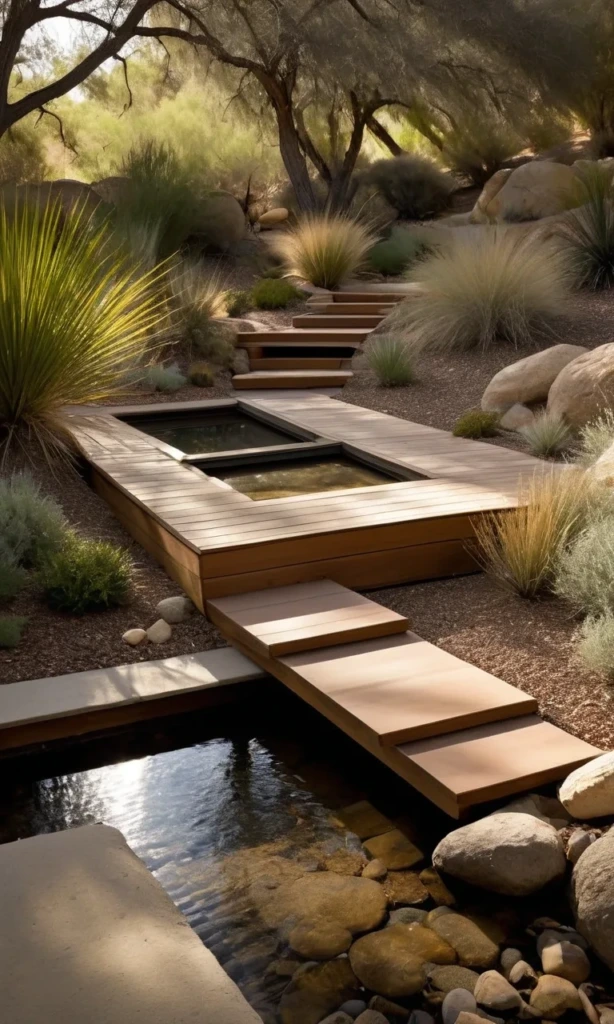
Even an attractive creek bed can fail if the underlying drainage design is incorrect.
Some of the most common mistakes include:
Ignoring the natural slope: A channel without adequate fall may collect standing water.
Choosing undersized stones: Strong runoff can displace small gravel and expose the soil beneath.
Creating an unsuitable outlet: Moving water from one wet area to another does not resolve the drainage issue.
Making the channel too narrow: Insufficient capacity can cause water to overflow during storms.
Blocking water entry: Raised borders may prevent runoff from reaching the creek bed.
Overplanting the channel: Dense roots, fallen leaves, and accumulated mulch can obstruct flow.
Skipping maintenance: Sediment and debris can gradually reduce drainage performance.
After installation, inspect the creek during a significant rainfall from a safe location. Look for overflowing sections, moving stones, or areas where water becomes trapped.
Make adjustments before small drainage problems develop into larger landscape damage.
21. How to Make a Dry Creek Bed Look More Natural
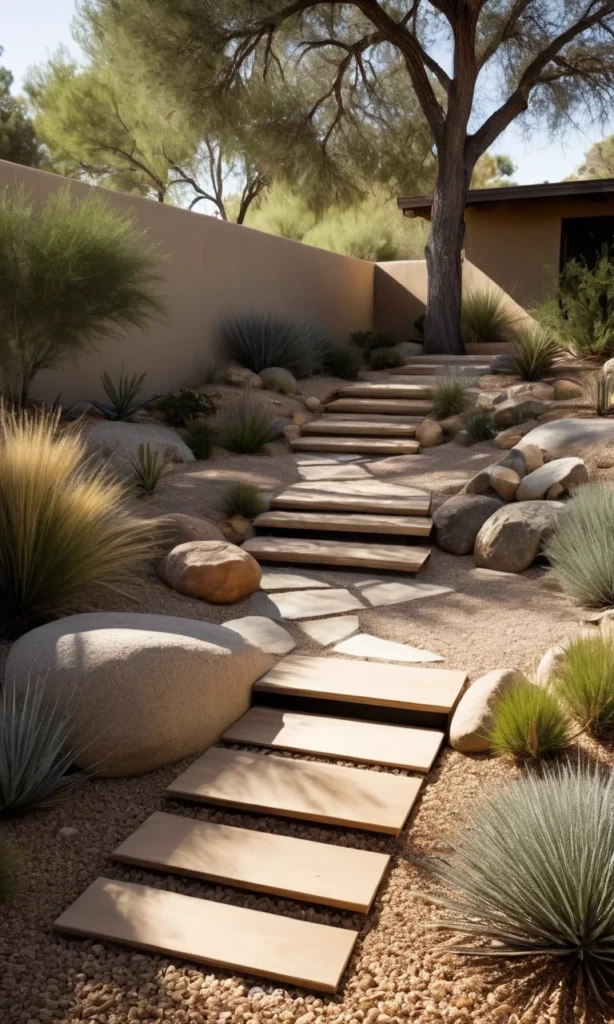
A realistic dry creek bed should resemble a feature shaped by water over time.
Start by avoiding perfectly uniform dimensions. Natural streams often vary in width, with wider sections around bends and narrower stretches between larger stones.
Use a mixture of rock sizes, textures, and compatible colors.
Partially embed selected boulders into the ground so they appear settled rather than placed on the surface.
Create irregular banks instead of sharply defined, identical edges.
Add suitable native plants, ornamental grasses, or low-growing shrubs along the sides. Keep the central flow path clear.
You can also connect the creek visually to nearby stone pathways, garden borders, or existing rock features.
The most convincing designs combine an informal appearance with a carefully planned drainage route.
22. Build the Drainage First, Then Make It Pretty
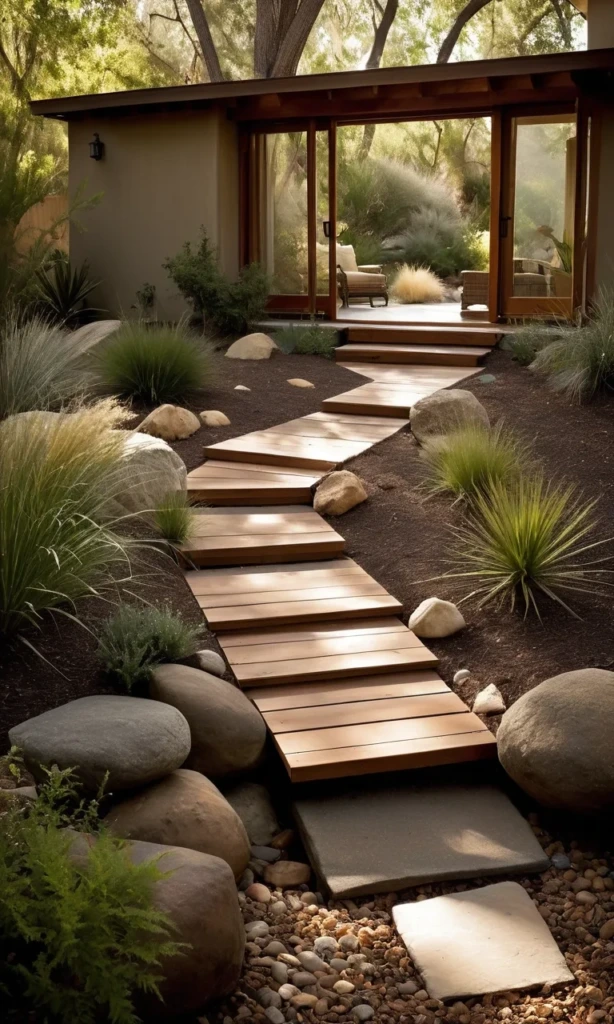
A DIY dry creek bed can be one of the most useful landscape improvements for a yard affected by surface runoff.
However, successful results depend on more than choosing attractive rocks. The channel must collect water effectively, follow a suitable slope, resist erosion, and discharge runoff safely.
Begin by studying your