20 Closet Door Storage Ideas for 2026
Closet doors can offer valuable storage space, especially when shelves and drawers are already packed. The back of a door is often overlooked, even though it can hold shoes, accessories, cleaning products, craft supplies, and everyday essentials.
With the right organizers, you can turn an unused surface into a practical storage area without making your closet feel cramped. The key is to choose slim, lightweight solutions that suit the door's size and allow it to open and close freely.
Whether you're organizing a bedroom wardrobe, linen closet, nursery, or utility cupboard, these closet door storage ideas will help you make better use of the space you already have.
What Are the Best Storage Ideas for Narrow Closet Doors?
The best storage solutions for narrow closet doors use vertical space rather than extending too far into the room. Hanging pocket organizers, compact wire baskets, slim shoe racks, and small hooks are all useful options.
Before choosing an organizer, measure the door's width and height, check the clearance around the hinges, and make sure the door can still close properly. Consider what you need to store, too. Fabric pockets are ideal for lightweight accessories, while sturdy mounted baskets can accommodate selected household supplies when the door can safely support their weight.
A well-planned setup keeps frequently used items visible and accessible while freeing up shelves, drawers, and floor space.
1. Wire Baskets
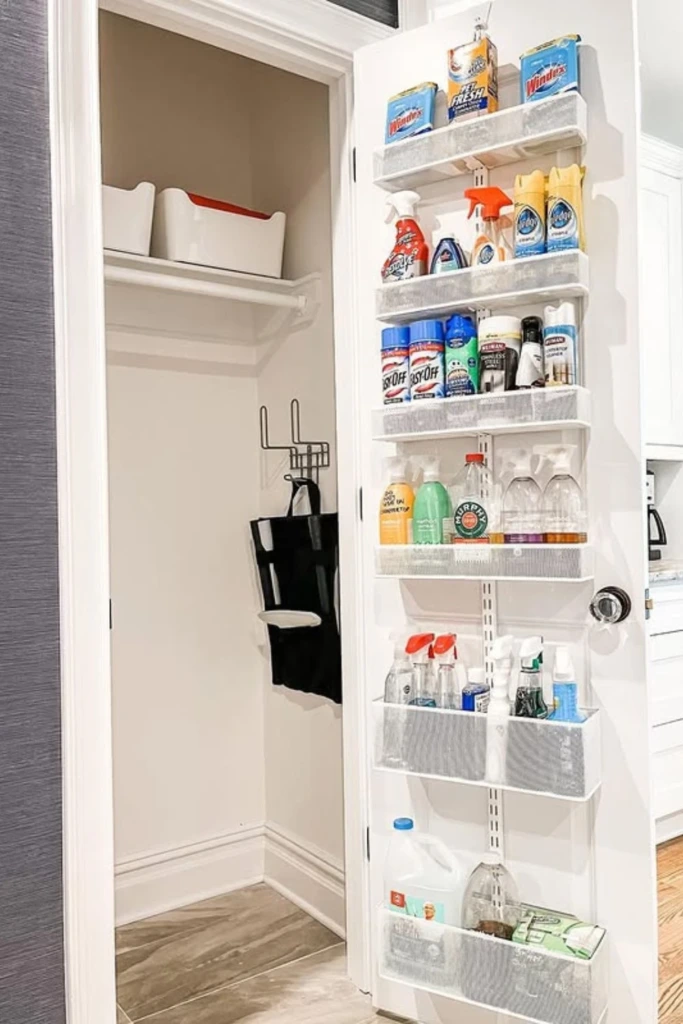
Wire baskets make it easier to organize supplies that would otherwise occupy valuable closet shelves. Their open design lets you see what's inside, making them especially useful for cleaning products, spare toiletries, and household essentials.
Arrange several shallow baskets vertically on the door, keeping smaller items near the top and heavier supplies in the lower baskets. Adjustable rails offer flexibility if your storage needs change over time.
Choose baskets with secure attachments and enough depth to hold your items without obstructing the door. This approach works particularly well in utility closets and household storage cupboards.
2. Pocket Organizer
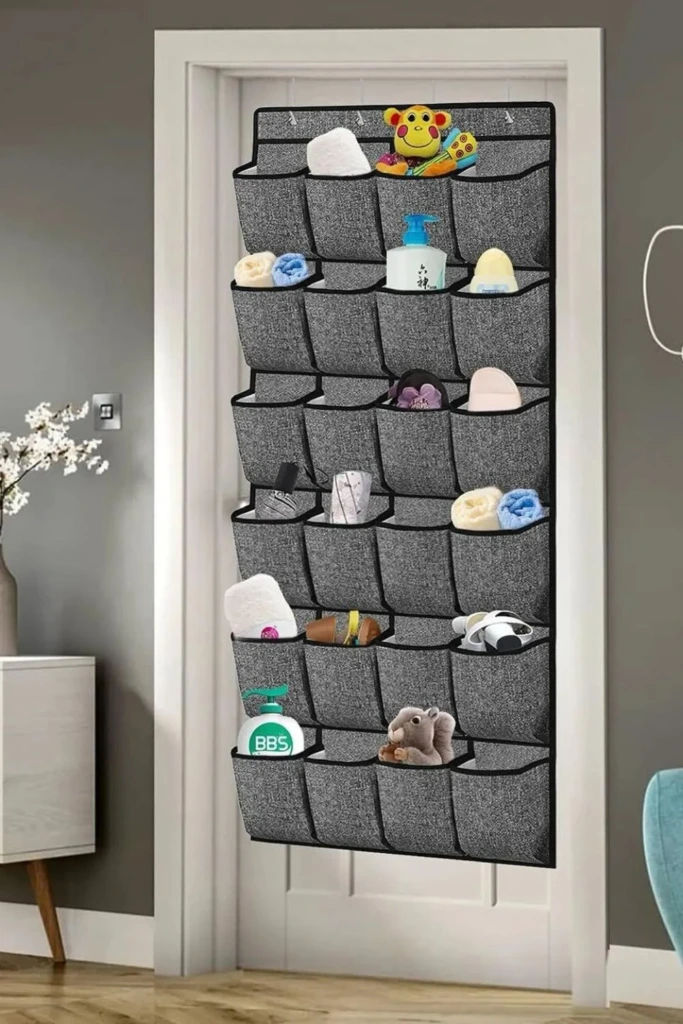
A fabric pocket organizer is a simple way to keep small belongings from disappearing into crowded drawers. Its individual compartments provide designated places for socks, scarves, hair accessories, lotions, toys, and other lightweight essentials.
Look for a design with multiple rows of pockets and sturdy hanging loops. Clear-front pockets can make it easier to identify contents, while fabric versions create a softer appearance in bedrooms and children's rooms.
Place frequently used items at a comfortable height and reserve the lower pockets for slightly larger belongings. Over-the-door models are convenient for renters because they typically require little or no drilling.
3. Door Shelves

Small shelves can transform the back of a closet door into a compact extension of your existing storage system. They're useful for folded accessories, hats, gloves, rolled clothing, and other items that need a dedicated place.
Adjustable shelving systems are particularly practical because you can change the spacing to suit different objects. Narrow shelves near the top work well for lightweight belongings, while deeper compartments below can accommodate larger items.
Measure the available clearance before installation, including the space between the door and the closet's contents. Secure each shelf according to the manufacturer's instructions, and avoid overloading the door with heavy objects.
4. Shoe Holders

Shoes can consume a surprising amount of closet floor space. Door-mounted shoe holders provide an alternative by giving individual pairs their own positions along the door's vertical surface.
Choose slim holders that support shoes securely without protruding too far into the room. Sandals, flats, slippers, and lightweight everyday footwear are generally easier to accommodate than bulky boots.
Arrange shoes in pairs and group similar styles together so you can find what you need quickly. Before installing a rack, check whether the door and its hinges can support the combined weight of the organizer and footwear.
5. Craft Shelves

Craft materials often become difficult to manage when ribbons, markers, adhesives, and small containers are mixed together in drawers. Narrow door shelves offer a dedicated place for these supplies while keeping your main work surface clear.
Install several shallow shelves to separate materials by category. One level might hold ribbon and string, another could store paint bottles, and a third could contain tape, markers, or small craft boxes.
Small containers or dividers help prevent loose items from falling when the door moves. This arrangement is especially useful in hobby rooms, sewing spaces, and wrapping stations where supplies need to remain easy to reach.
6. Bathroom Baskets
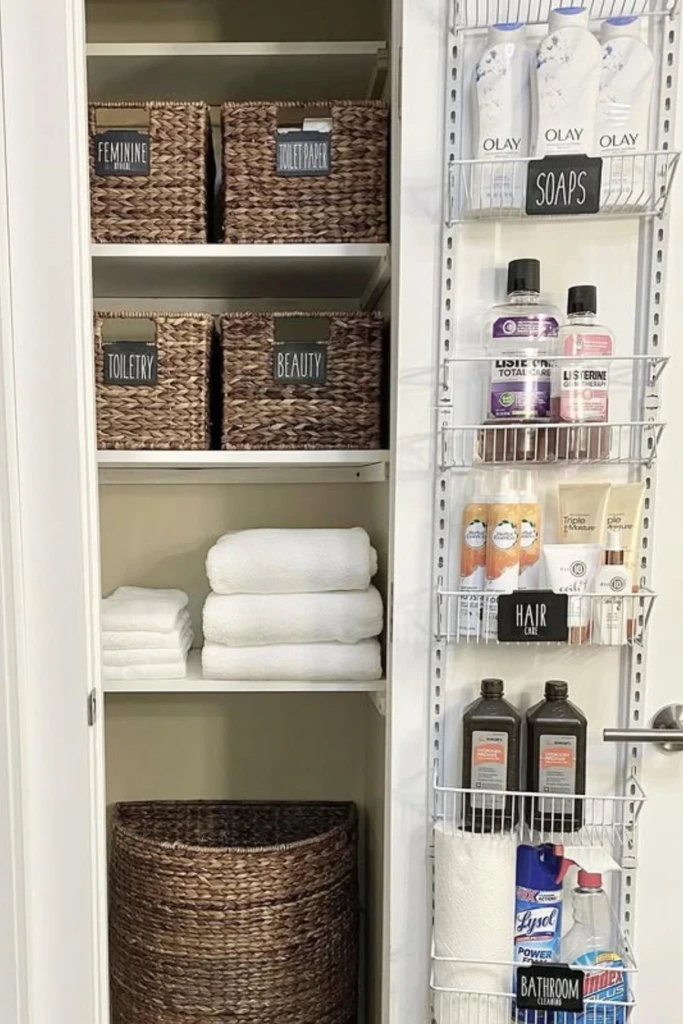
Extra bathroom supplies can quickly fill linen closet shelves, leaving little room for towels and other essentials. Door-mounted baskets provide additional space for toiletries, soap, lotions, spare toilet paper, and selected cleaning products.
Use separate baskets for different categories so everyday items don't get mixed with backup supplies. Smaller products can sit in upper baskets, while larger containers can go lower if the mounting system is designed to support them.
In humid bathrooms, choose rust-resistant materials and allow damp items to dry before storing them. Keep cleaning chemicals securely stored away from children and separate from personal-care products.
7. Laundry Storage
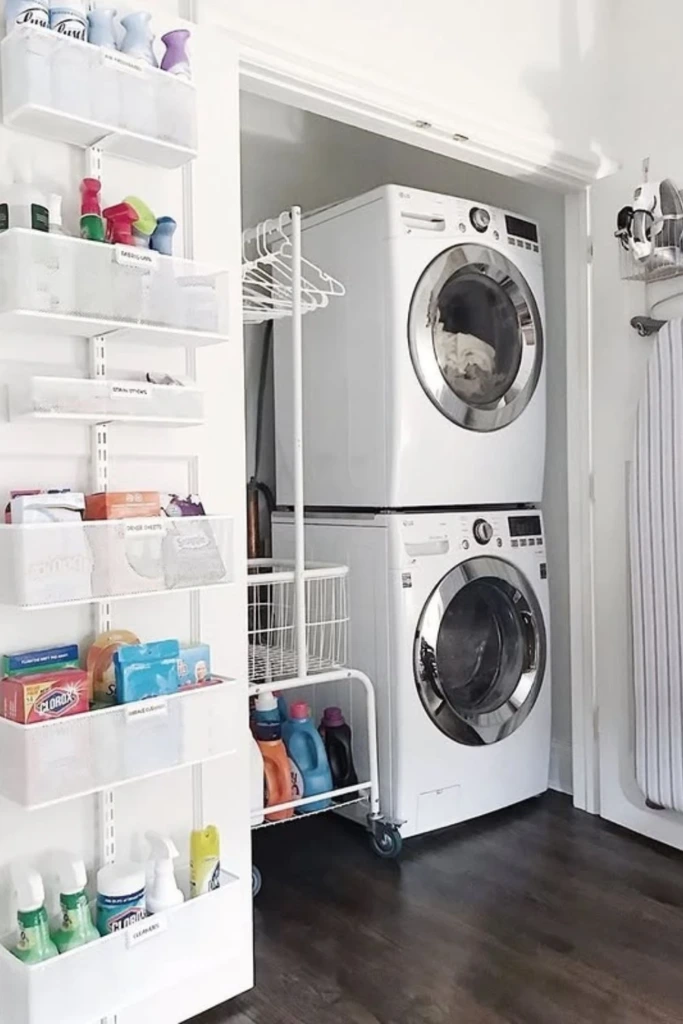
Laundry supplies are easier to manage when each product has a consistent place. A vertical organizer on the inside of a laundry closet door can hold dryer sheets, stain-treatment products, laundry bags, and other frequently used accessories.
Group products according to their purpose so you can reach for what you need without searching through crowded shelves. Smaller items fit well in shallow upper baskets, while heavier containers should only be placed in lower compartments rated to hold their weight.
Make sure detergent containers have secure lids and cannot tip when the door opens or closes. Keep laundry chemicals in their original packaging and out of children's reach.
This setup works especially well in compact laundry rooms where every shelf needs to remain available for linens, towels, or bulk supplies.
8. Entry Organizer
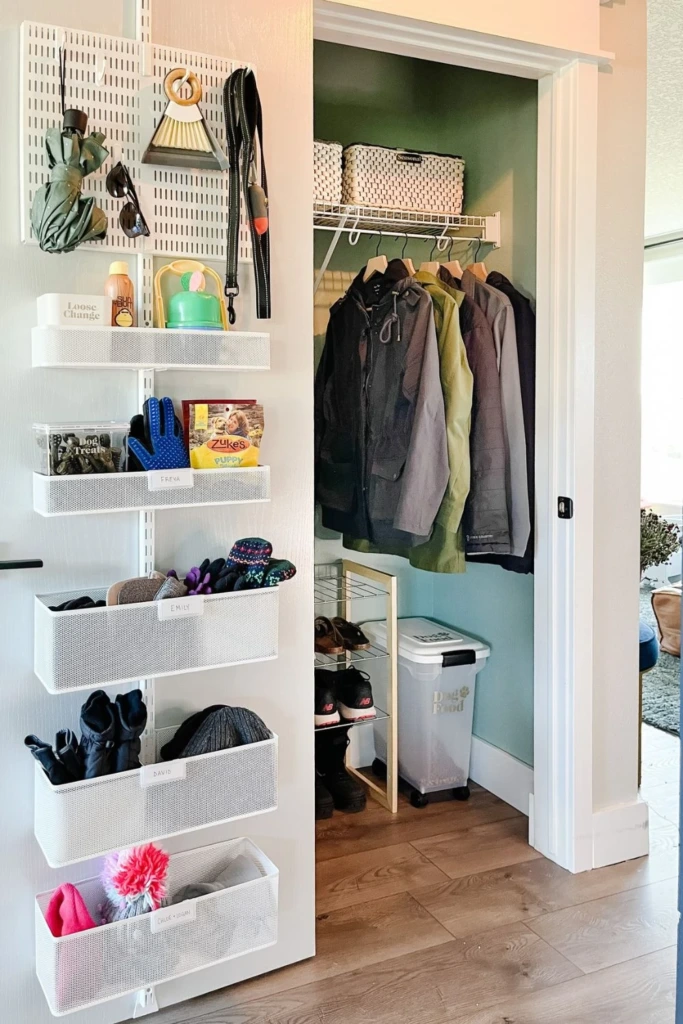
An entry closet becomes more functional when everyday accessories are organized near the door. A combination of small baskets, hooks, and a compact rail can hold sunglasses, gloves, hats, dog leashes, and other items you need before leaving home.
Assign specific compartments to different family members to prevent belongings from getting mixed together. Small labels can make the arrangement easier to maintain, particularly in a busy household.
Hooks are useful for lightweight accessories, while baskets can contain items that would otherwise fall off individual pegs. Keep frequently used essentials at eye level and reserve upper sections for less frequently needed belongings.
A thoughtfully arranged entry organizer helps make busy mornings less stressful without taking up additional floor space.
9. Hat Hooks
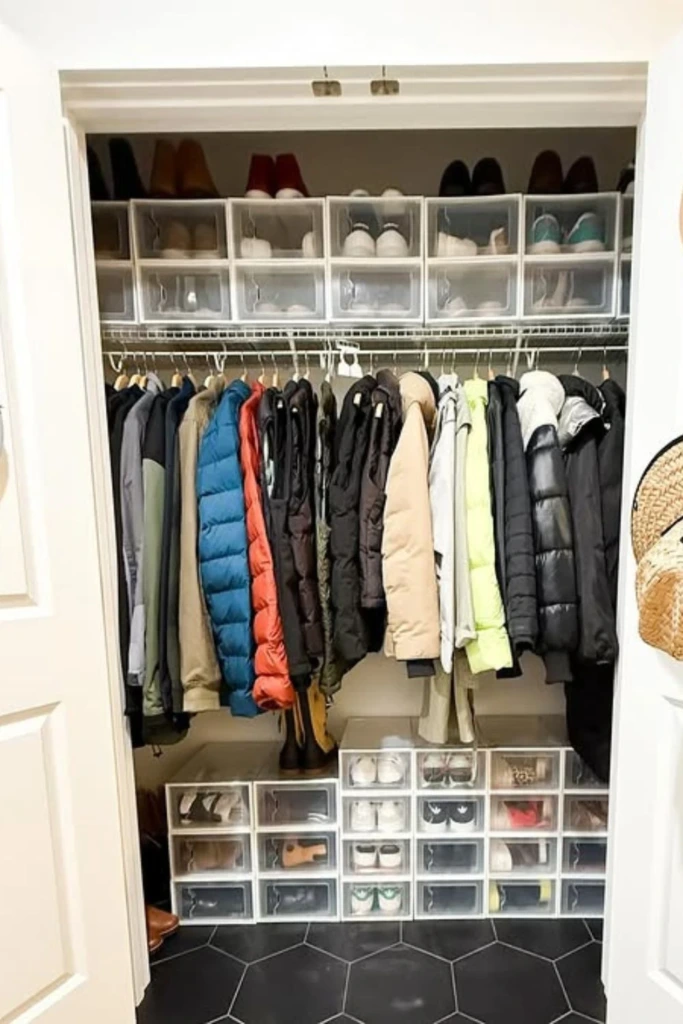
Hats often lose their shape when they're stacked under other belongings. Installing a row of hooks on the inside of a closet door keeps caps, beanies, and suitable lightweight hats visible and easy to retrieve.
Space the hooks far enough apart to prevent hats from overlapping excessively. You can arrange them in vertical rows or dedicate one section to each type of headwear.
Adhesive hooks may work for lightweight items on compatible surfaces, while screw-mounted hooks provide a more permanent option when installed correctly. Check the weight rating and surface requirements before choosing an attachment method.
For structured or delicate hats, use hooks that support them without stretching the material. This small change can keep headwear organized while freeing up shelf and drawer space.
10. Sandal Storage
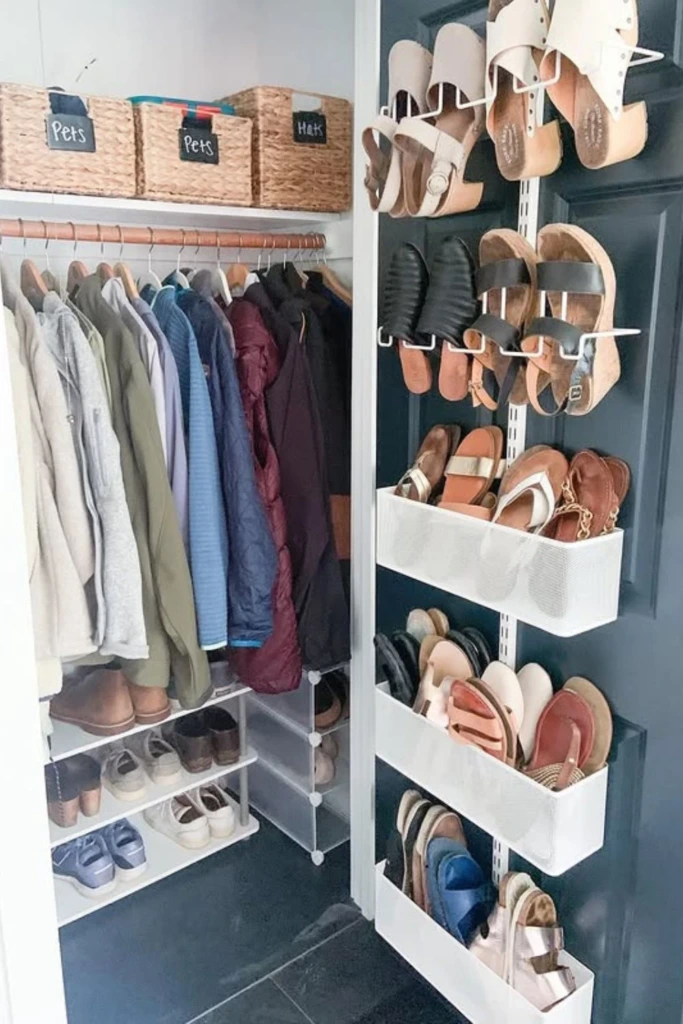
Sandals, slides, and flip-flops are easy to misplace because they're lightweight and often end up scattered across the closet floor. A vertical shoe organizer gives each pair a designated spot and keeps seasonal footwear together.
Slim shoe brackets can hold suitable sandals close to the door, while hanging fabric organizers provide another option for lightweight pairs. Arrange the footwear by style or frequency of use so your everyday favorites remain accessible.
Place heavier or bulkier shoes in lower compartments when the organizer is designed to support them. Before installation, check that the sandals won't interfere with nearby shelves or prevent the door from closing.
This solution is particularly useful in small bedrooms and seasonal wardrobes where floor space is limited.
11. Pantry Baskets
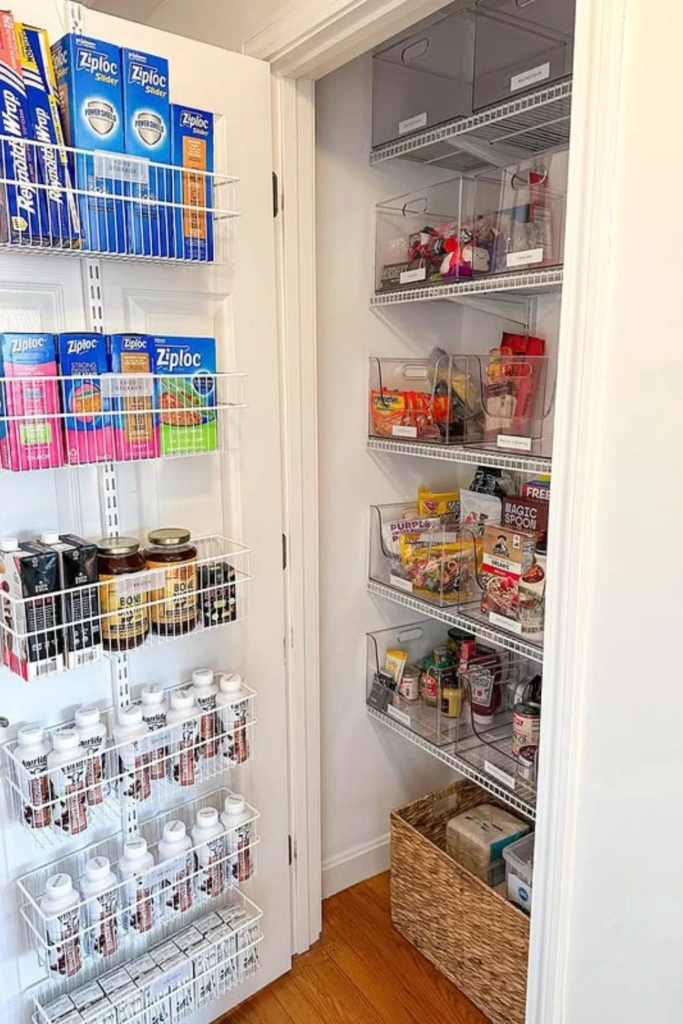
When kitchen cabinets are full, the inside of a pantry door can provide useful additional storage. A set of compact baskets can accommodate snack packets, food storage bags, aluminum foil, condiment sachets, and other lightweight kitchen essentials.
Use separate baskets for baking supplies, snacks, and food preparation accessories to keep everything organized. Reserve lower compartments for heavier items if the system is securely mounted and rated for the load.
Avoid placing heavy glass containers or unstable items in shallow door baskets. Check that the organizer won't collide with pantry shelves, packaged foods, or cabinet hardware when the door closes.
For households with limited cupboard space, this arrangement can improve access to everyday kitchen items without requiring a larger pantry.
12. Sneaker Rack
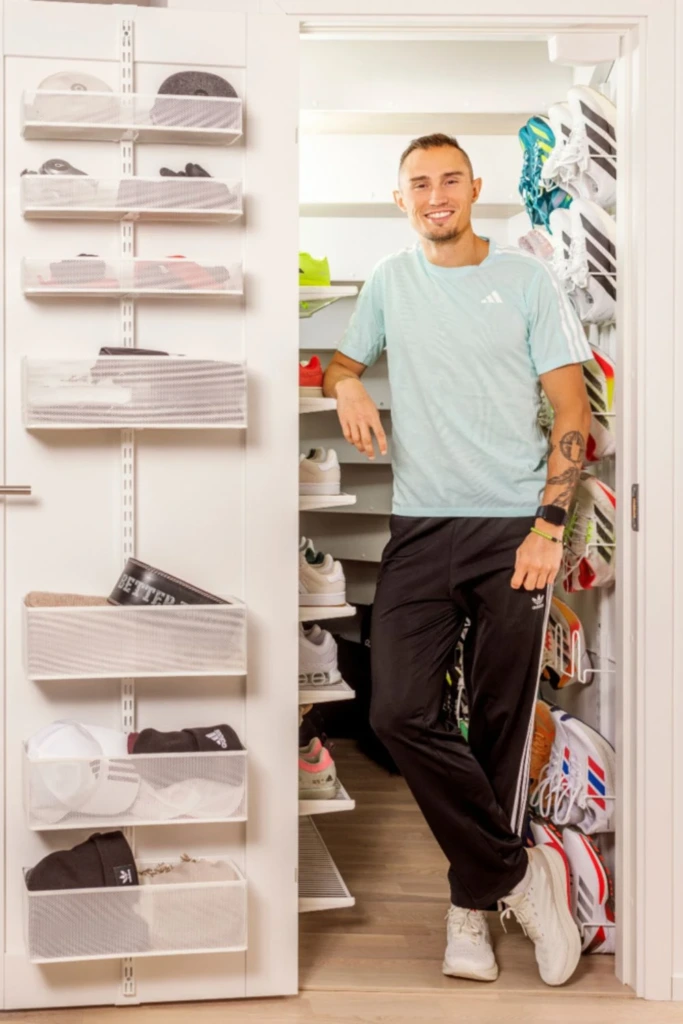
Sneakers can quickly take over closet shelves, especially when you own several pairs for exercise, casual wear, and outdoor activities. A vertical sneaker rack makes use of otherwise empty door space while keeping footwear separated.
Look for holders that support the soles securely and provide enough room for the size and shape of your shoes. Arrange frequently worn sneakers in accessible positions and move occasional-use pairs higher or lower as appropriate.
A sturdy rack can work well for athletic shoes and everyday trainers, but check its weight capacity before loading it with multiple pairs. Make sure the shoes fit within the rack's depth and that the door remains easy to operate.
Keeping sneakers organized vertically also makes it easier to spot the pair you want without moving other footwear around.
13. Bow Display
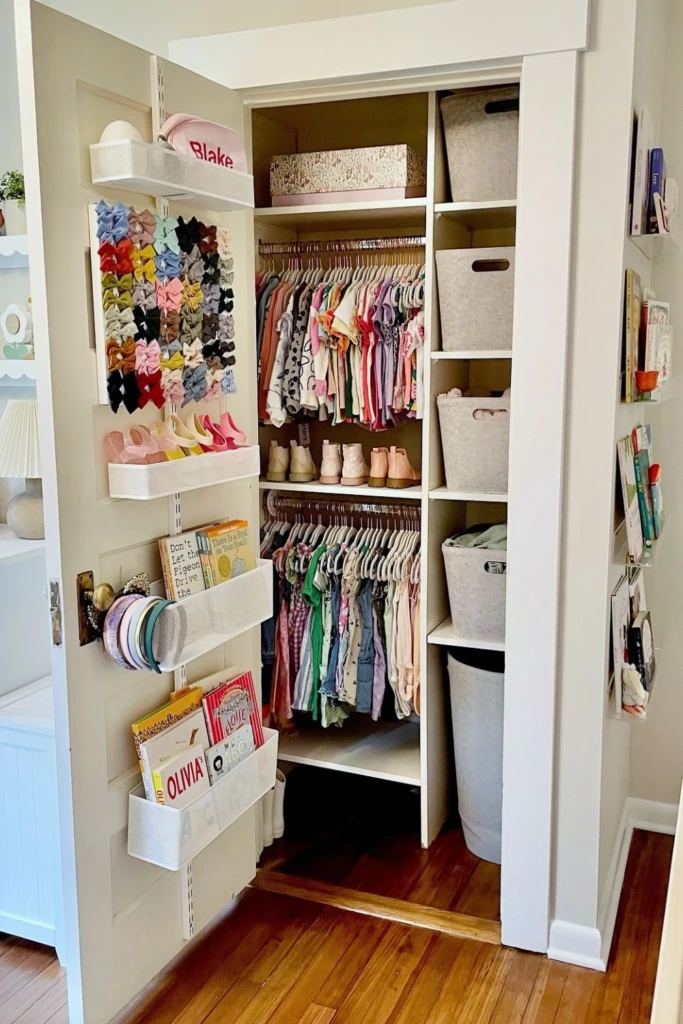
Hair bows and clips can become tangled or disappear when they're stored together in a drawer. A ribbon display mounted inside a closet door creates an attractive, easy-to-use place for organizing small accessories.
Attach several lengths of ribbon to a backing board, leaving enough room to clip bows along each strip. Arrange accessories by color, size, or occasion so matching pieces are easier to find.
You can add a small tray underneath for headbands, hair ties, and other items that don't attach easily to ribbon. Choose a lightweight backing and secure it properly so it stays in place when the door moves.
This idea is especially helpful in children's bedrooms, where an organized display can make getting ready easier and encourage kids to put accessories away after use.
14. Clear Pockets
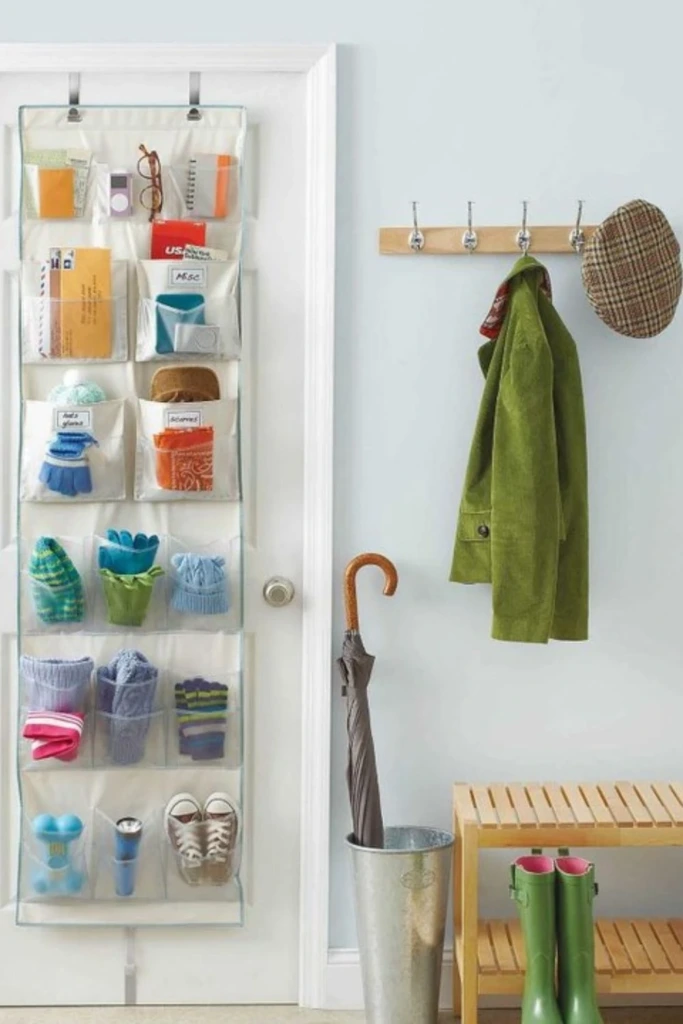
Transparent pocket organizers make small items easier to locate because you can see their contents without opening every compartment. They're useful for gloves, socks, travel accessories, glasses cases, and other lightweight belongings that tend to get lost.
Choose a model with enough pockets to separate different categories without creating unnecessary clutter. Over-the-door hooks make installation straightforward, while securely mounted alternatives are available for more permanent arrangements.
Use upper pockets for lightweight accessories and place frequently needed items where they're easy to reach. Avoid storing delicate objects loosely if they could fall out when the door swings open.
Clear pockets work particularly well in entryway closets, guest rooms, and shared wardrobes where several people need quick access to small essentials.
15. Shoe Rack
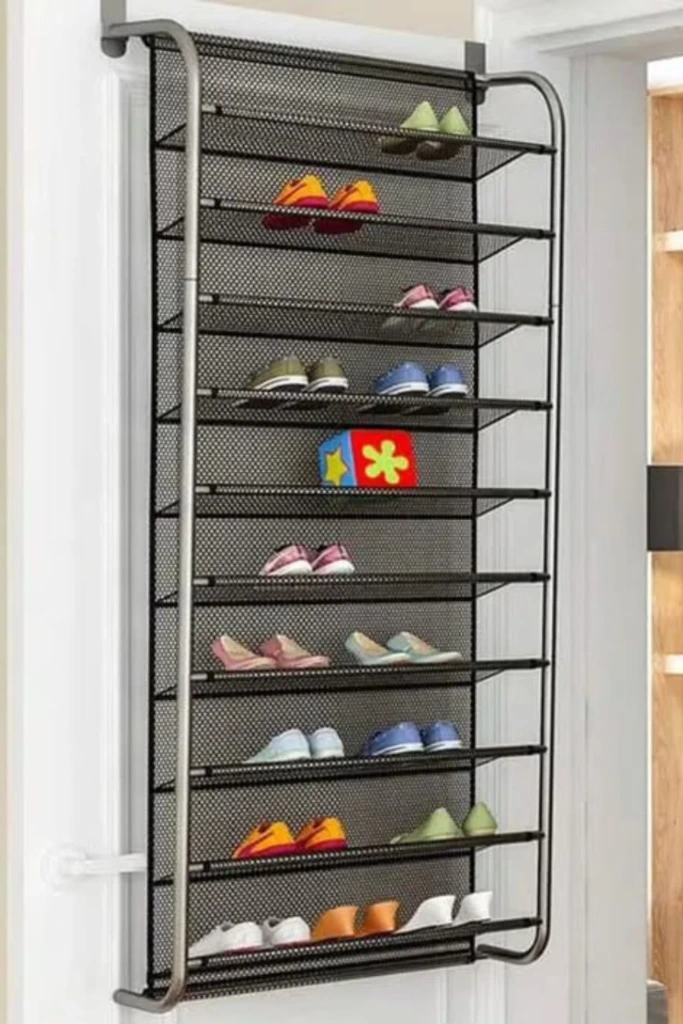
A tall shoe rack can reclaim floor space by arranging several pairs vertically along the closet door. Unlike individual hooks, a rack with separate shelves gives footwear a defined surface and keeps pairs together.
Select a design that matches your available door width and accommodates your shoes comfortably. Open shelves are convenient for flats, sandals, and many casual shoes because they make it easy to see each pair.
Over-the-door models can be practical when drilling isn't an option, provided the hooks fit the door and the added thickness doesn't interfere with the frame. Follow the manufacturer's weight limits and test the door's movement before filling the rack.
This approach is especially helpful in small apartments and compact bedrooms where conventional shoe cabinets would take up too much room.
16. Gift Station
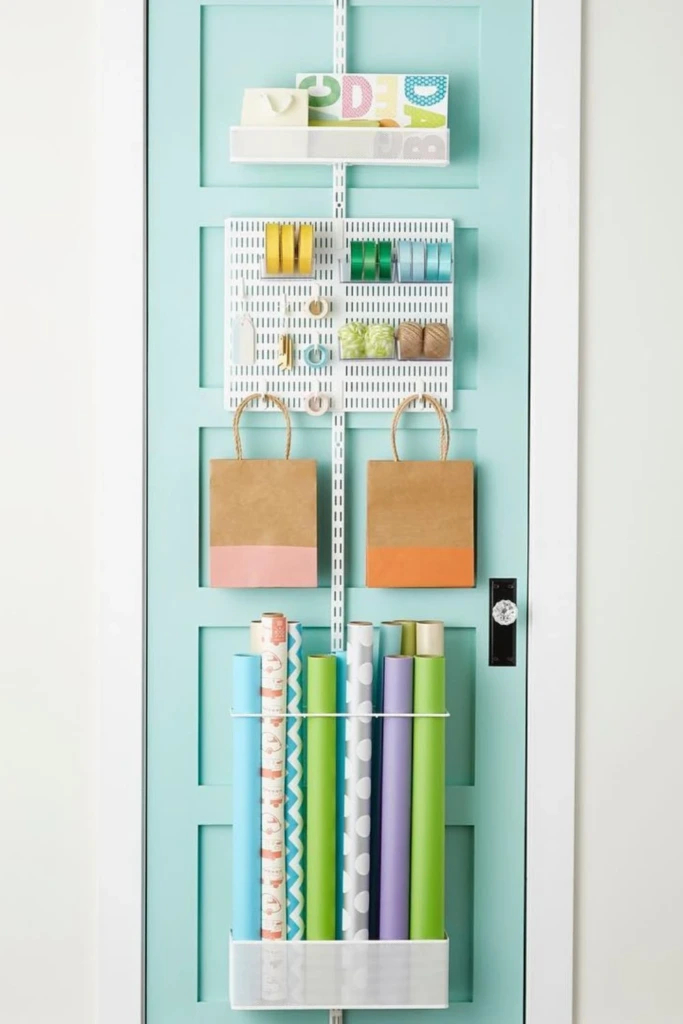
Gift-wrapping supplies are much easier to manage when everything is stored in one dedicated location. The back of a closet door can hold a compact combination of baskets, small trays, and hooks for wrapping paper, ribbons, gift bags, tape, and scissors.
Use a tall holder for paper rolls and smaller compartments for accessories that would otherwise become tangled. Hooks can support ribbon spools, while shallow trays keep tape and other small tools within reach.
Keep sharp tools in a secure compartment, especially if children can access the closet. Choose a layout that prevents long rolls from swinging into shelves when the door opens.
A door-mounted wrapping station is particularly useful in craft rooms, hall closets, and homes where gift supplies need to be stored neatly between celebrations.
17. Cleaning Grid
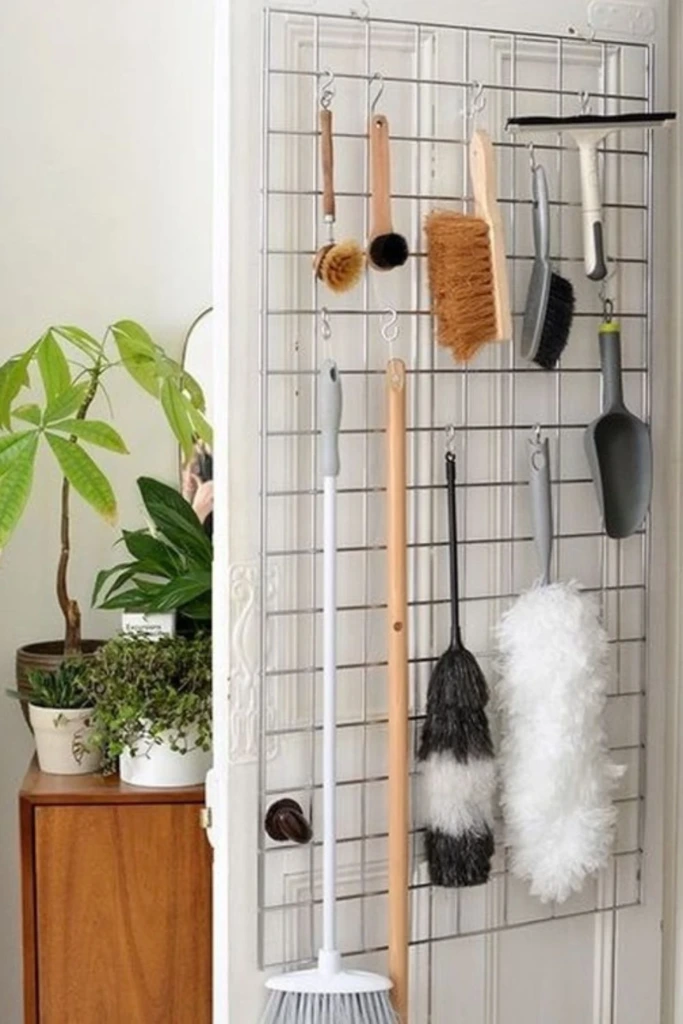
Cleaning equipment often ends up leaning against walls or piled into corners, making it difficult to find the right tool. A metal grid panel provides a flexible way to arrange lightweight cleaning accessories on the inside of a closet door.
Use movable hooks to hang dusters, scrub brushes, microfiber cloths, and small hand tools. Depending on the panel's strength and mounting system, suitable holders may also accommodate selected longer tools.
Arrange the most frequently used supplies at a comfortable height and keep heavier equipment on properly supported hooks. A grid system is particularly convenient because the hooks can be repositioned whenever your collection changes.
Before installation, confirm that the door can support the panel and its contents. Store cleaning chemicals separately and securely rather than placing heavy bottles on an unsuitable grid.
18. Toy Baskets
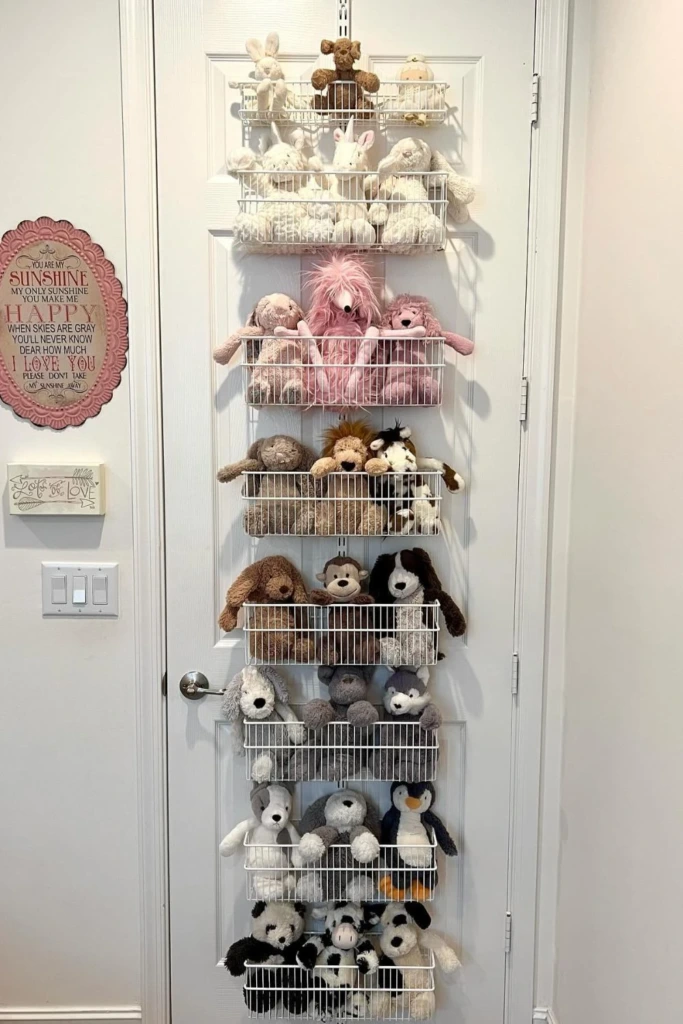
Soft toys can quickly spread across a child's bedroom, taking over beds, shelves, and the floor. Door-mounted baskets provide a designated place for stuffed animals while keeping them visible and accessible.
Arrange a few lightweight baskets vertically, allowing enough space for children to retrieve their favorite toys without pulling everything out. Smaller toys can go in upper baskets if they're safely reachable, while larger plush animals can be stored in lower compartments.
Choose baskets with smooth edges and secure fittings. Avoid overloading the door, and ensure that the organizer doesn't create pinch points or interfere with safe access to the closet.
This arrangement works well in bedrooms and playrooms because it gives toys a clear home while preserving the main closet's shelves for clothes and storage boxes.
19. Shoe Pockets
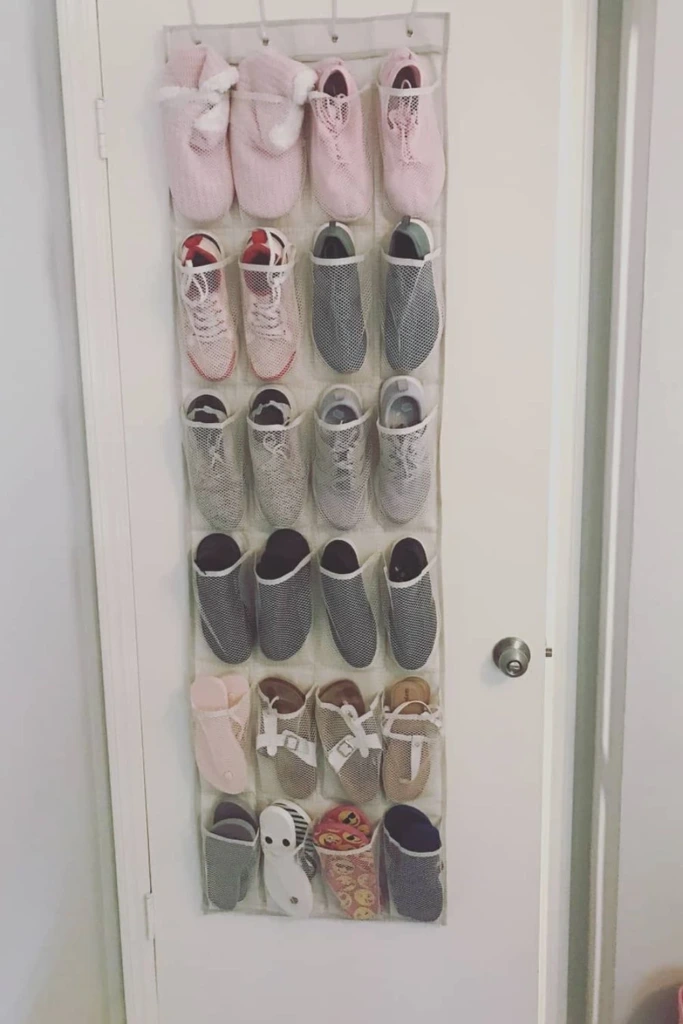
A hanging shoe-pocket organizer is a space-saving option for footwear that doesn't need to sit on a shelf. Individual compartments keep pairs separated and make it easy to identify the shoes you want.
Mesh pockets allow more airflow than solid plastic compartments, which can be helpful when storing shoes that are already dry. Let damp or sweaty footwear dry completely before putting it away to reduce moisture and odor.
Check the dimensions of each pocket before buying an organizer, particularly if you wear larger shoes or plan to store sneakers. Avoid forcing bulky footwear into compartments that are too small.
Most fabric models are lightweight and can hang from suitable over-the-door hooks. They work especially well in narrow closets where traditional shoe racks would occupy valuable floor space.
20. Nursery Storage
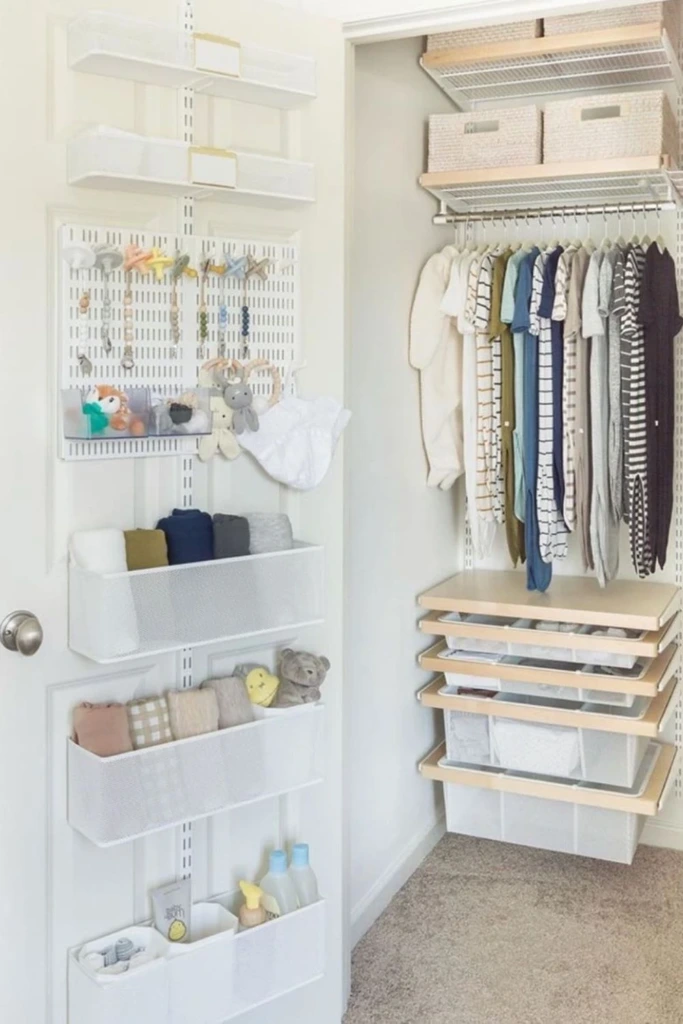
Nursery essentials are easier to manage when frequently used items have designated storage spaces. A compact door organizer can hold lightweight baby accessories, spare bibs, washcloths, wipes, and small clothing items.
Use separate compartments for different categories so you can locate supplies quickly during daily routines. Shallow baskets work well for small items, while slightly deeper compartments can accommodate folded cloths or lightweight blankets.
Keep anything needed for diaper changes within easy reach, but never position essential supplies so high that you must stretch while holding a baby. Secure the organizer firmly and inspect it regularly for loose fittings.
For safety, store medicines, creams that could be harmful if swallowed, small choking hazards, and cleaning products in appropriate secure locations away from children. Avoid placing heavy objects above the crib or changing area.
Can closet door storage damage the door over time?
Yes, an unsuitable organizer or excessive weight can damage a closet door, loosen its hinges, or affect how it closes. Hollow-core doors are particularly important to assess before installing heavy hardware because their internal structure may not provide adequate support for ordinary screws.
Choose lightweight fabric organizers, appropriately rated over-the-door hooks, or small baskets for simple storage needs. For permanent installations, use mounting hardware suited to the door's construction and follow the manufacturer's instructions.
Distribute weight evenly, avoid placing heavy bottles or bulky objects on the door, and check that nothing strikes the frame when the door moves. If the door begins sagging, rubbing, or closing unevenly, remove the load and inspect the hinges and mounting points.
How do you choose the right organizer for a narrow closet door?
Start by measuring the door's width, height, thickness, and available clearance. Check the space around the hinges and handle, along with the distance between the door and anything stored inside the closet.
For small accessories, fabric pocket organizers are often a practical choice. Shallow wire baskets work well for household supplies, while slim shoe racks are useful when floor space is limited. Hooks and compact pegboards are suitable for lightweight items that need to remain visible.
Consider the weight of the items you plan to store, the door's construction, and whether you can drill into it. Renters may prefer removable options, while homeowners may benefit from securely mounted systems.
Most importantly, choose an organizer that keeps belongings accessible without preventing the door from opening and closing smoothly. A simple, well-fitted system is usually more useful than one that adds storage but makes the closet difficult to use.