24 Hat Storage Ideas for 2026

Hats can be practical accessories, treasured collectibles, and an important part of your personal style. However, keeping them organized becomes challenging when your collection starts growing. Caps get buried in drawers, wide brims overlap on shelves, and favorite pieces can lose their shape when stored carelessly.
The right storage setup helps you protect your hats while making your collection easier to manage. Whether you prefer decorative wall displays, compact closet organizers, or simple DIY solutions, there are plenty of ways to make better use of the space you already have.
These 24 hat storage ideas offer inspiration for different rooms, collection sizes, and decorating styles. From creative hanging arrangements to dedicated shelving, you can find an option that suits your home and the types of hats you own.
What Is The Best Storage Solution For A Large Hat Collection?
The best storage solution depends on your collection's size, the shapes of your hats, and how frequently you wear them. Baseball caps are relatively easy to organize with clips and vertical racks, while structured fedoras, cowboy hats, and wide-brimmed sun hats need more room to retain their shape.
Wall-mounted hooks, hanging organizers, and adjustable shelves are particularly useful when closet space is limited. They take advantage of vertical surfaces while keeping your collection visible and accessible.
For hats you wear regularly, choose an open storage system near your wardrobe or entryway. Special-occasion hats and seasonal accessories can be kept in individual boxes or covered containers to protect them from dust.
Avoid squeezing structured hats into narrow spaces or placing heavy items on top of them. Giving each piece enough room helps preserve its appearance and makes your collection easier to maintain.
1. Hat Gallery
Turn an empty wall into a decorative feature by arranging your favorite hats as a gallery. This approach is especially attractive for straw hats, floppy sun hats, and other styles with interesting silhouettes or distinctive details.
Begin with the largest pieces and arrange smaller hats around them. Before installing anything, lay out the proposed arrangement on the floor to experiment with spacing and balance.
Choose hooks or pegs that can support the weight of each hat without damaging the material. A bench, mirror, or small console beneath the display can make the entire area feel like a thoughtfully designed dressing space.
2. Shelf Hooks

Make better use of closet shelving by attaching small hooks underneath an existing shelf. This creates a convenient place to hang baseball caps by their rear straps rather than piling them on top of one another.
The arrangement keeps your caps visible and leaves the shelf surface available for folded clothing, boxes, or accessories. It is particularly practical for people who own several caps but have limited drawer space.
Measure the available length before installing the hooks, and leave enough distance between them to prevent the hats from becoming crowded. Sorting by color, style, or frequency of use can make the collection even easier to navigate.
3. Wall Display
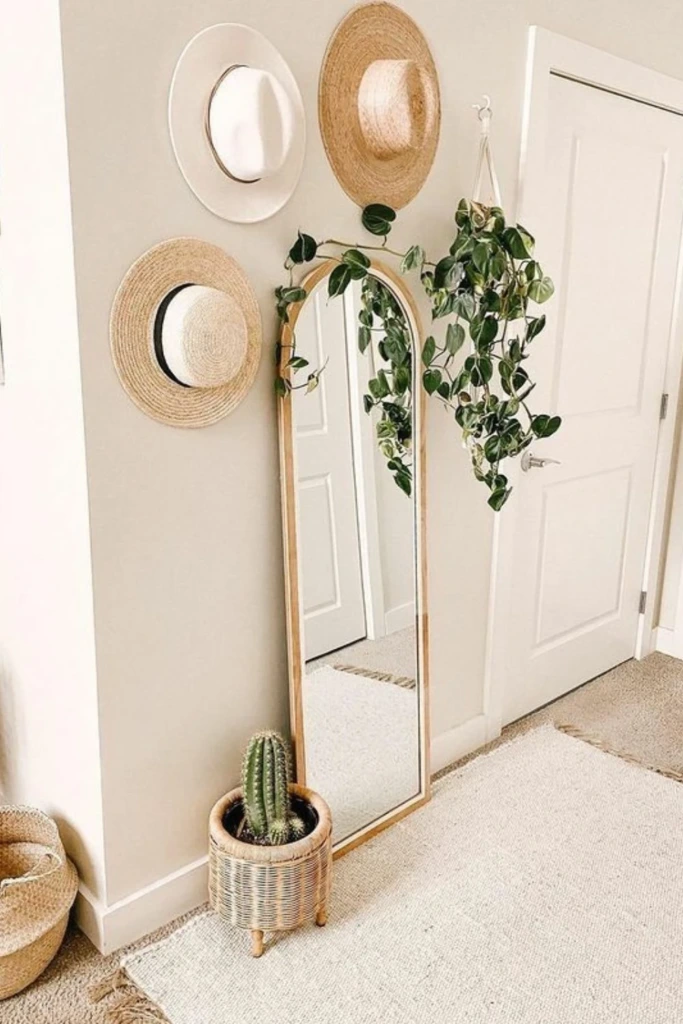
A simple wall display offers an attractive way to store hats that are too bulky for drawers. Wide-brimmed designs can create visual interest because their shapes add dimension to an otherwise plain wall.
Install appropriately sized hooks in a loose, balanced arrangement rather than placing every hat in a rigid row. Choose a location where the hats can hang without being knocked by doors or brushed against frequently.
This idea works well in bedrooms, dressing areas, and entryways. Pairing the display with a full-length mirror or a nearby clothing rack creates a useful spot for choosing accessories before heading out.
4. Door Organizer
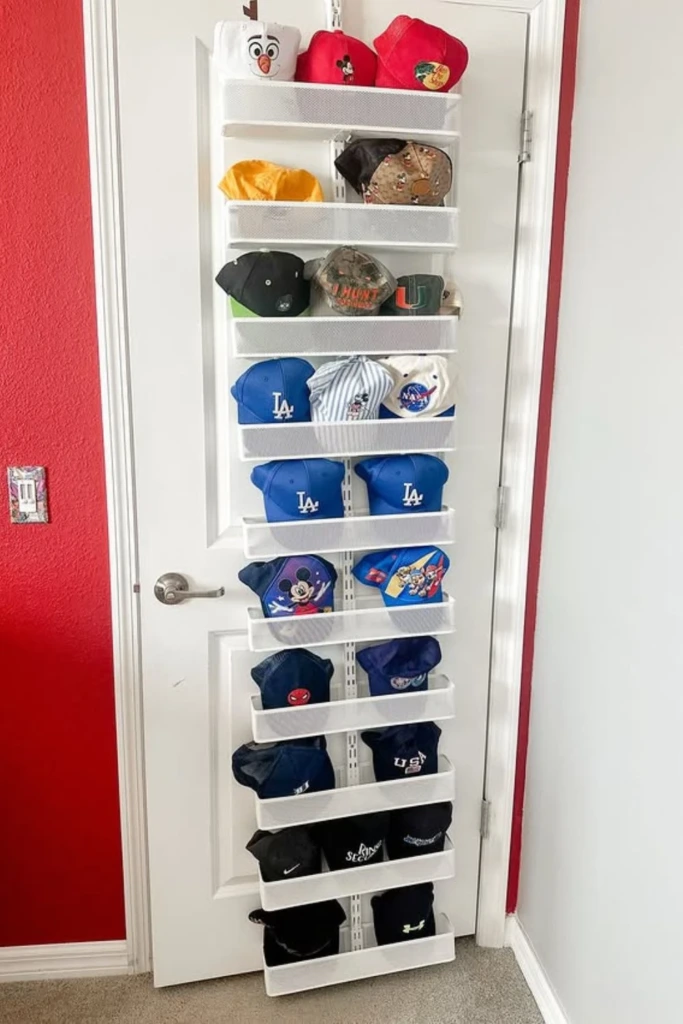
The back of a bedroom or closet door can provide valuable storage without requiring additional furniture. A hanging organizer with several shallow baskets gives you separate spaces for caps and other lightweight headwear.
Choose baskets deep enough to hold the hats securely but not so tight that they distort the crowns or brims. Open wire designs provide visibility, while fabric organizers offer a softer appearance.
Before installing the organizer, check that the door can close properly and that the mounting system supports the combined weight of your collection. Grouping everyday favorites near eye level makes this setup especially convenient.
5. Rope Rail

Create a relaxed, natural-looking hat display with a wooden rail and hanging rope loops. The combination of wood and rope works particularly well in bohemian, coastal, rustic, or minimalist interiors.
Mount a sturdy wooden dowel or rail to the wall, then attach evenly spaced cords with suitable loops or holders. Each position should support one hat without pulling on delicate sections or allowing neighboring brims to overlap excessively.
This arrangement is ideal for displaying lightweight hats in bedrooms, walk-in closets, or dressing areas. Choose rope that complements your decor, and test the strength of the fittings before placing your collection on the rail.
6. Clip Board
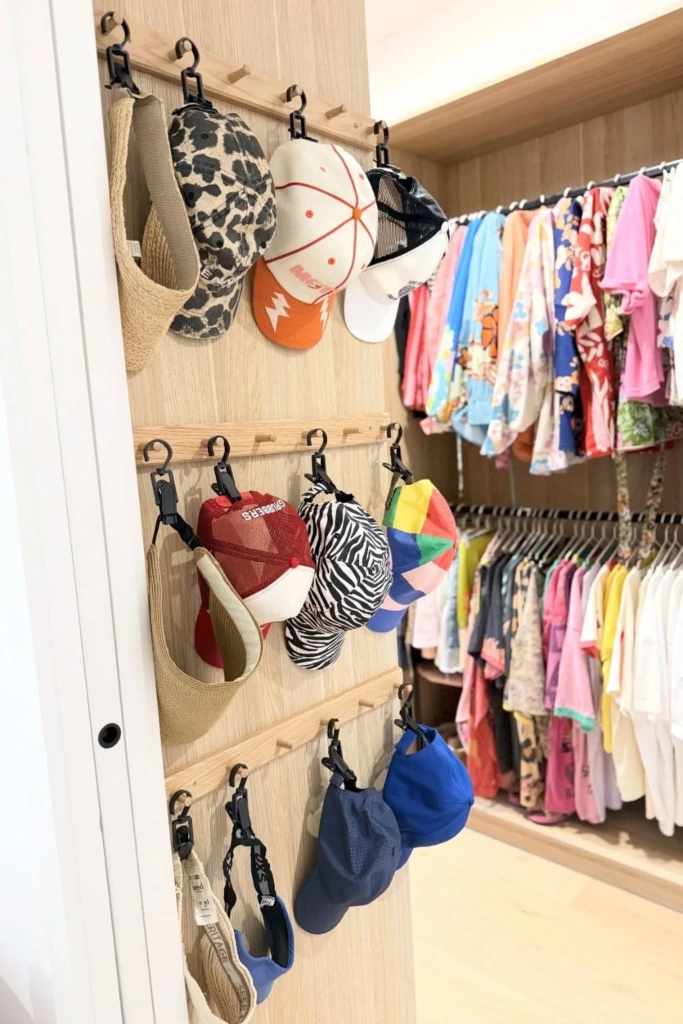
A pegboard or slatted panel fitted with clips provides flexible storage for baseball caps and other lightweight styles. Because the clips can be repositioned, the layout can change as your collection grows.
Mount the panel inside a closet or on an unused wall. Attach suitable clips that grip the rear strap or another sturdy part of each cap without leaving marks or stretching the fabric.
Arrange the clips in orderly rows for a clean appearance, leaving enough room between hats to avoid crowding. This solution is particularly useful when you want customizable storage without dedicating an entire shelf to your collection.
7. Hat Stands
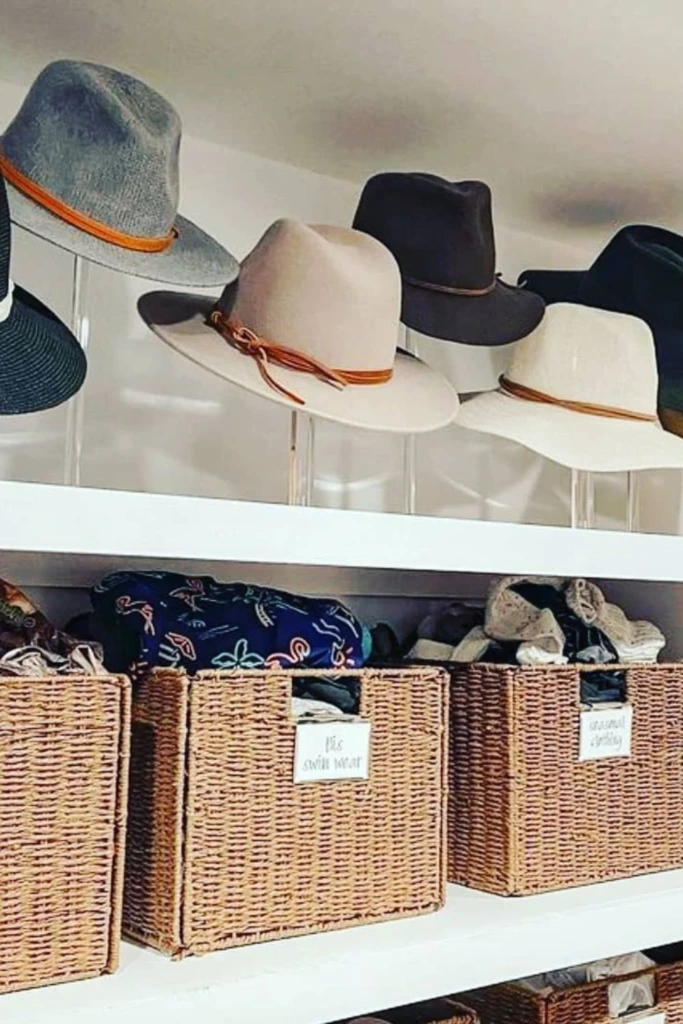
Individual hat stands give structured hats their own dedicated places. They are especially suitable for fedoras, dress hats, and other designs that need support to maintain their shape.
Arrange the stands along a closet shelf, dresser, or dressing-room counter. Select supports that fit the hat's crown appropriately, and make sure the brim has enough clearance to avoid contact with nearby objects.
Clear acrylic stands create a subtle display, while wooden or decorative stands can contribute to the room's overall style. This method is best for collections where protecting individual pieces matters more than fitting the maximum number of hats into a small space.
8. Strap Hanger
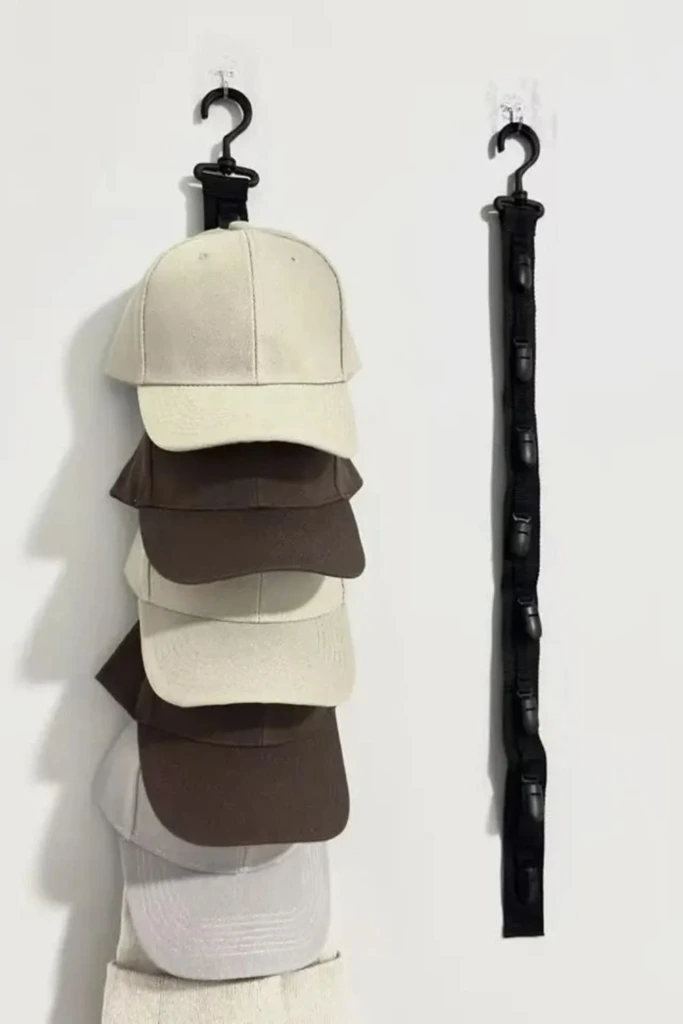
A vertical strap hanger can organize a substantial collection of baseball caps in a narrow area. Multiple clips along a single strap allow hats to hang one below another instead of spreading across a shelf.
Hang the strap from a suitable closet hook, a sturdy door-mounted fitting, or an appropriate wall attachment. Check the weight rating carefully, especially if the hanger will hold many caps.
Choose clips that hold each hat securely without crushing the crown or damaging the fabric. This is a practical option for dorm rooms, small bedrooms, and crowded closets where floor space is limited.
9. Rail Display
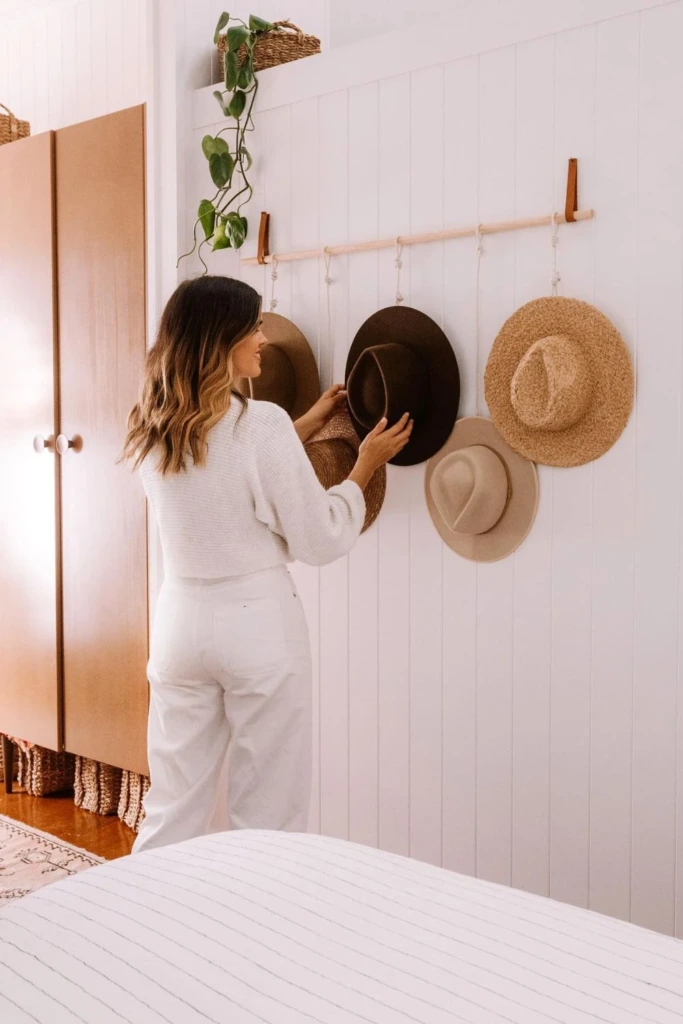
A horizontal rail provides a straightforward way to arrange hats along an empty wall. Wooden dowels, metal bars, and decorative rails can all work, provided the mounting hardware is strong enough for the intended load.
Use individual loops or suitable hooks to keep the hats separated. Consistent spacing creates a polished display, while a more relaxed arrangement can suit casual interiors.
Position the rail at a comfortable viewing height so you can choose and retrieve hats easily. This solution works particularly well for everyday accessories that you want to keep visible without using a freestanding rack.
10. Closet Shelf
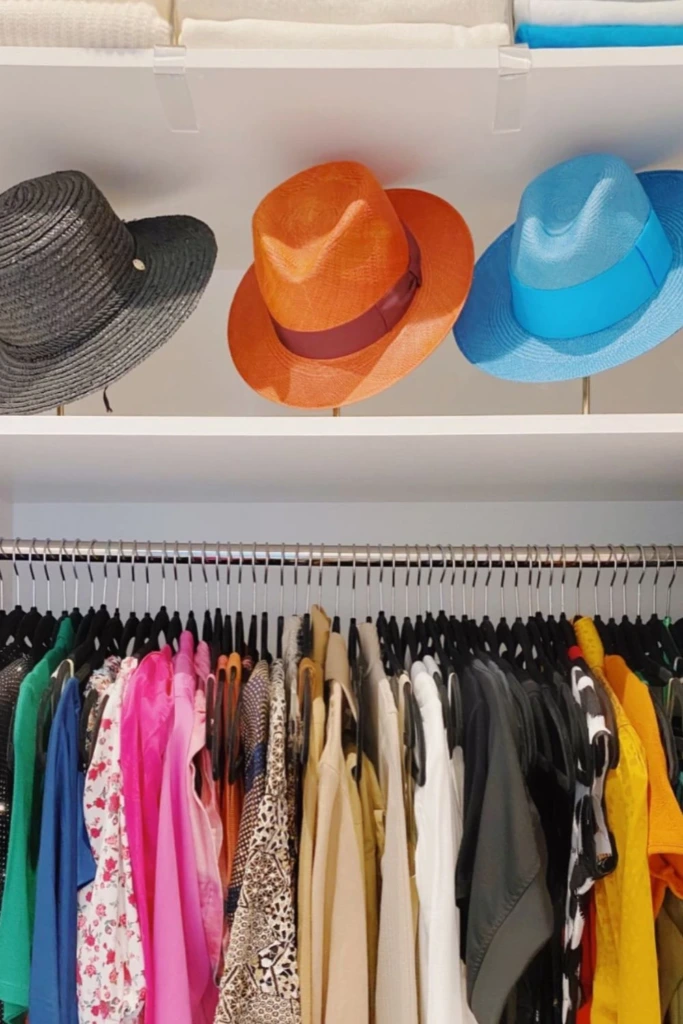
A dedicated closet shelf keeps hats together and protects them from being scattered among clothing and other accessories. It is especially useful for collections containing several structured styles that need individual spaces.
Arrange hats in a single layer whenever possible, using appropriate stands or supports for pieces that require extra care. Avoid compressing soft materials or allowing heavy hats to rest on delicate brims.
If the shelf is high, place frequently worn hats closer to the front and reserve less accessible positions for occasional-use pieces. Dividers or small containers can help separate different styles while keeping the shelf organized.
11. Hat Wall
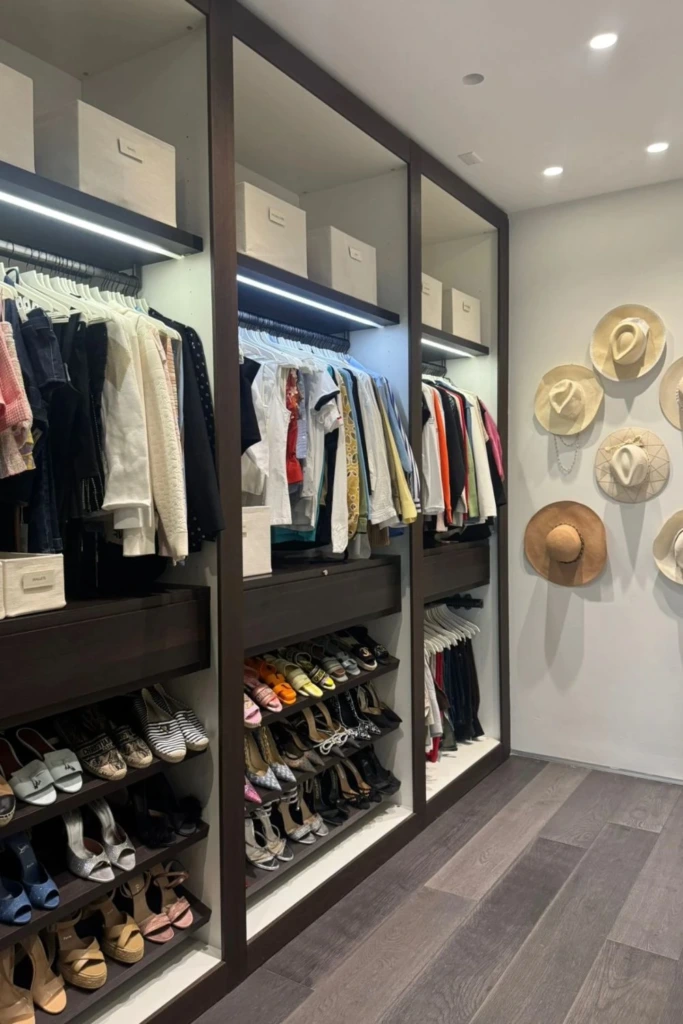
A dedicated hat wall turns a collection into a feature of your dressing room or walk-in closet. It can accommodate everything from felt hats to straw designs, provided each piece receives suitable support.
Use wall pegs or hooks selected for the size and weight of your hats. Arrange the largest pieces first, then fill the remaining spaces with smaller designs while maintaining enough clearance around each brim.
For a coordinated look, organize the collection by color, material, or style. Keep the wall away from direct sunlight and sources of heat to reduce fading and material deterioration.
12. Macrame Holder
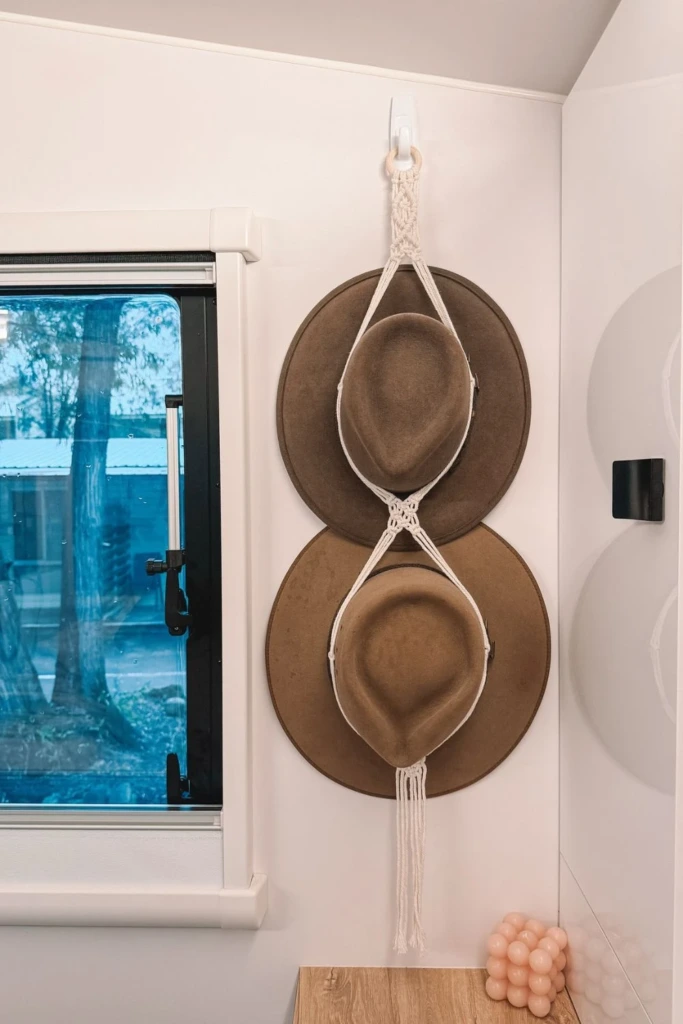
A macrame hat holder combines textile craftsmanship with space-saving organization. Its hanging loops create separate positions for hats while adding texture to the wall.
Choose a design with loops wide enough to accommodate your hats without squeezing the crowns. Cotton cord and other soft materials can complement neutral interiors, bohemian bedrooms, and relaxed dressing spaces.
Hang the holder from a properly secured wall fitting, making sure the combined weight stays within the hardware's limits. This vertical arrangement is especially useful in narrow areas beside a wardrobe, dresser, or window.
13. Pocket Organizer

A hanging pocket organizer provides compact storage for caps and lightweight accessories. Clear pockets make it easy to identify individual hats without pulling everything out to find the one you want.
Choose pockets large enough to accommodate your caps without forcing their brims into awkward positions. If maintaining the shape of structured caps is important, check that each compartment offers sufficient room.
Attach the organizer to a suitable door, closet panel, or other sturdy surface. Sorting hats into groups, such as sports caps, casual favorites, and seasonal designs, makes the collection easier to manage.
14. Shelf Hooks
Combine a narrow wall shelf with hooks underneath to create a two-level storage area. The shelf can hold small decorative objects, storage baskets, or accessories, while the lower hooks keep hats accessible.
This arrangement is particularly attractive in entryways, rustic bedrooms, and homes with natural wood finishes. Choose hooks that suit the hats you own, allowing enough room for wider brims to hang without overlapping too much.
Secure the shelf and hooks properly, especially if you plan to store heavier accessories. Keeping everyday hats on the lower row makes them convenient to grab while the upper surface provides additional organization.
15. Hat Tapestry

A hat tapestry uses a frame, rod, or sturdy hanging rail with vertical cords to create a decorative storage installation. Each cord provides a separate place for a hat, allowing the collection to become part of the room's visual design.
Choose materials that match your interior, such as natural rope for a relaxed space or a simple metal frame for a contemporary room. Arrange the hanging points so that hats remain easy to remove and do not press against one another.
This idea works well on larger walls in bedrooms, dressing areas, or creative spaces. Make sure the frame is securely mounted and that the cords support the hats without stretching or distorting them.
16. Rack Hooks

A freestanding rack offers flexible hat storage without requiring permanent wall installation. Its vertical design makes it useful for entryways, apartment corners, and other spaces where floor area is limited.
Select a rack with enough hooks to accommodate your collection without forcing the hats together. Wide-brimmed styles need more clearance than baseball caps, so consider the shape of your headwear before choosing a model.
Some racks also include a lower rail for coats or jackets, allowing you to organize several everyday accessories in one place. A stable base is essential to prevent the rack from tipping when hats and outerwear are added or removed.
17. Hanger Rack
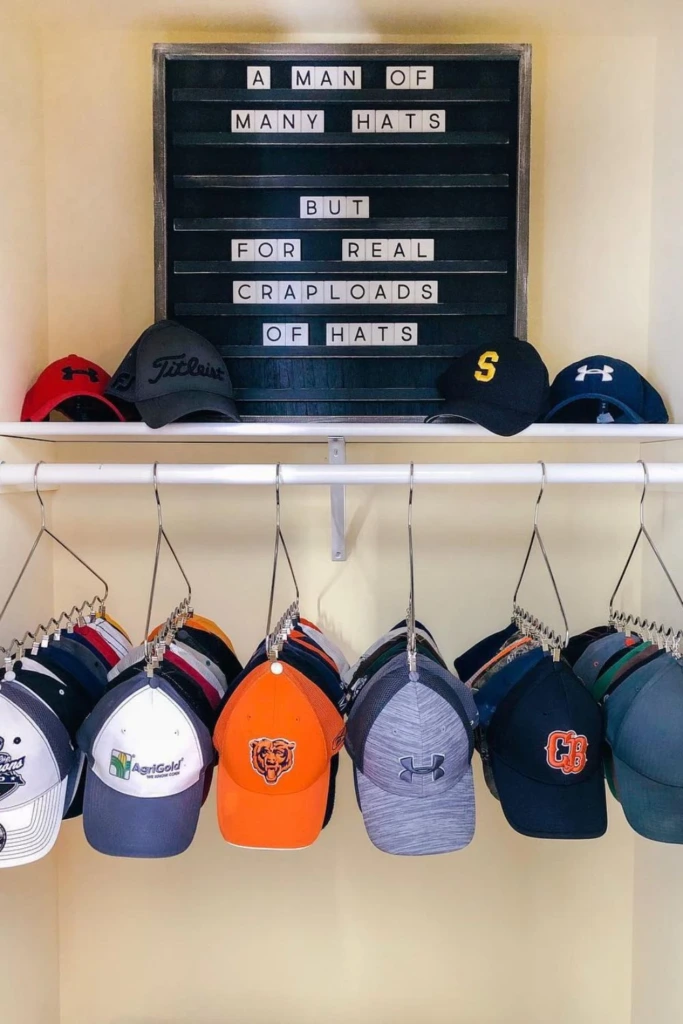
A closet rod paired with multi-clip hangers offers a compact solution for organizing numerous baseball caps. Instead of occupying a shelf, the hats hang vertically, making it easier to see different colors and designs.
Choose hangers with clips that hold securely without damaging the fabric or stretching the cap's rear opening. Leave enough space between the hangers so the hats can be removed without disturbing the rest of the collection.
This arrangement works well in shared closets, small wardrobes, and dressing areas. If space permits, use the shelf above the rod for hat boxes or accessories that need additional protection.
18. Wall Rack
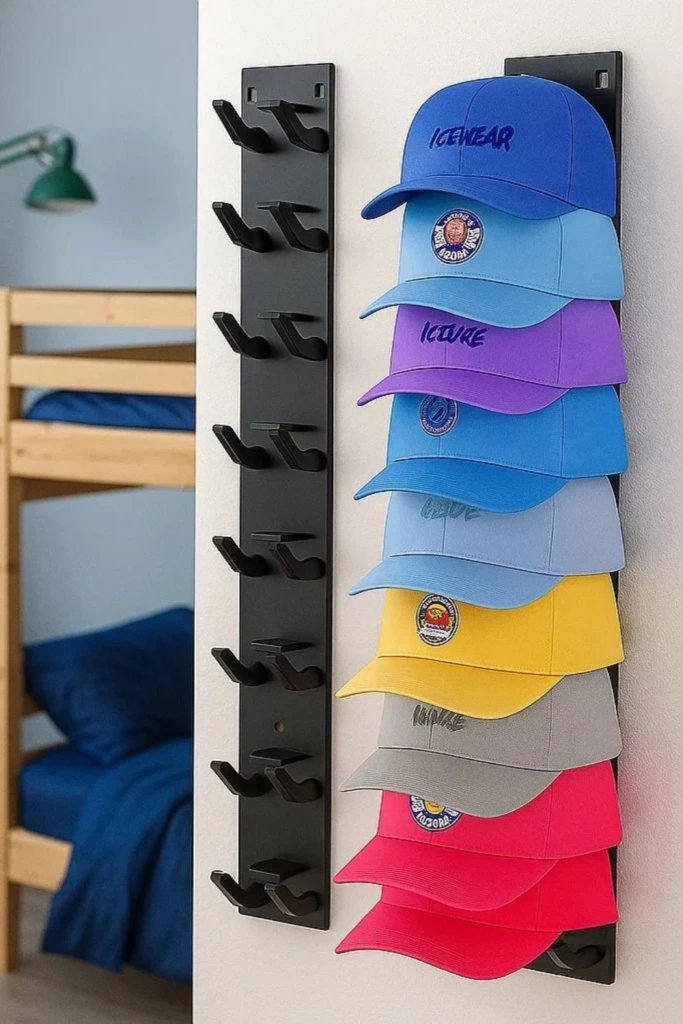
A wall-mounted cap rack is ideal for organizing a collection in a narrow section of a bedroom or closet. Individual hooks hold the hats in separate positions, leaving shelves and drawers available for other belongings.
Choose a rack designed for the type of headwear you own. Some models support caps by their rear openings, while others use clips or shaped holders to provide a more secure fit.
Install the rack at an accessible height and leave sufficient space between neighboring hats. For a neat appearance, arrange the caps by color, team, or style, and make sure the wall fittings are appropriate for the wall material.
19. Bar Holder
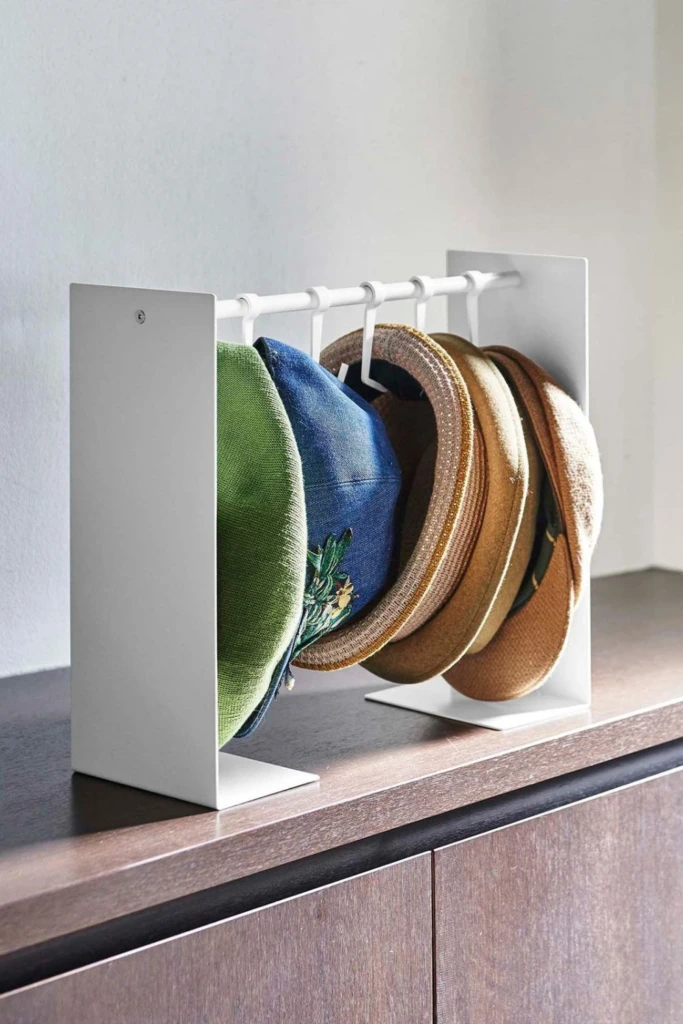
A bar-style hat holder creates a tidy display on a dresser, closet shelf, or entryway console. Depending on its design, the holder may support hats on a horizontal rod or use individual fittings to keep each piece in place.
This type of organizer is generally best for lightweight caps and compatible hat styles. Check that the support points do not stretch the material or put pressure on delicate sections of the crown.
Choose a compact holder if you have limited counter space, or a longer version for a larger collection. Keeping a little space between hats makes the arrangement easier to use and helps prevent them from becoming tangled.
20. Macrame Rack
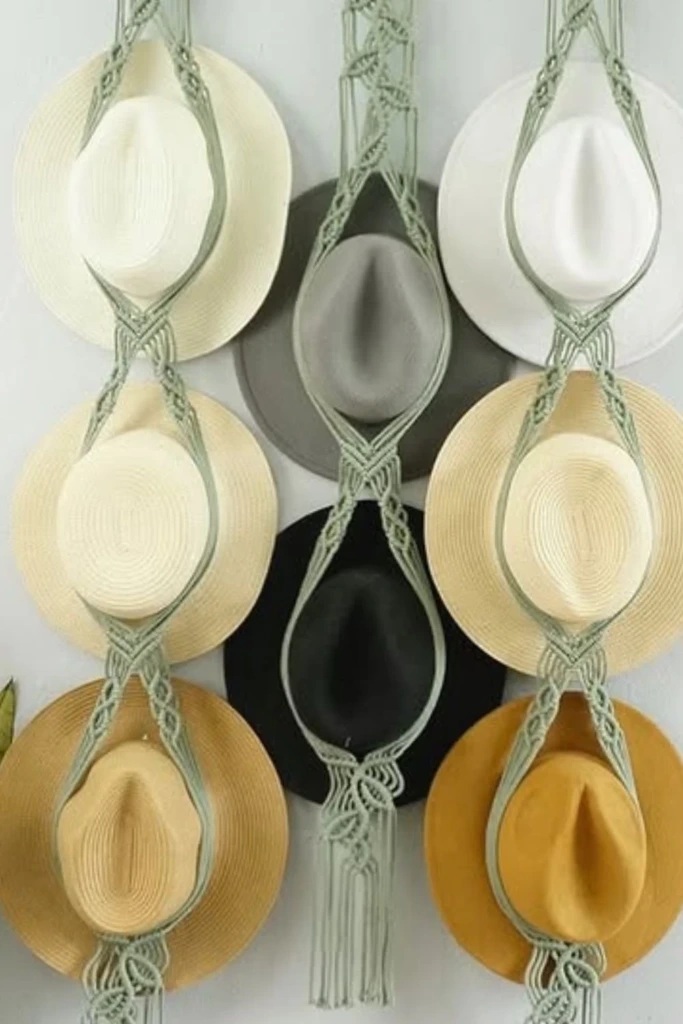
A macrame rack offers another decorative way to store hats vertically. A wooden dowel supports woven loops or pockets, giving each hat a separate position along the hanging organizer.
The woven design works especially well in bedrooms, dressing rooms, and relaxed, natural-style interiors. It also makes use of wall height instead of requiring a wide shelf or bulky storage unit.
When choosing a rack, check the dimensions of the loops and the weight capacity of the hanging hardware. Larger hats may need more space than smaller caps, so select a design that accommodates your collection without squeezing the brims.
21. Rod Rack
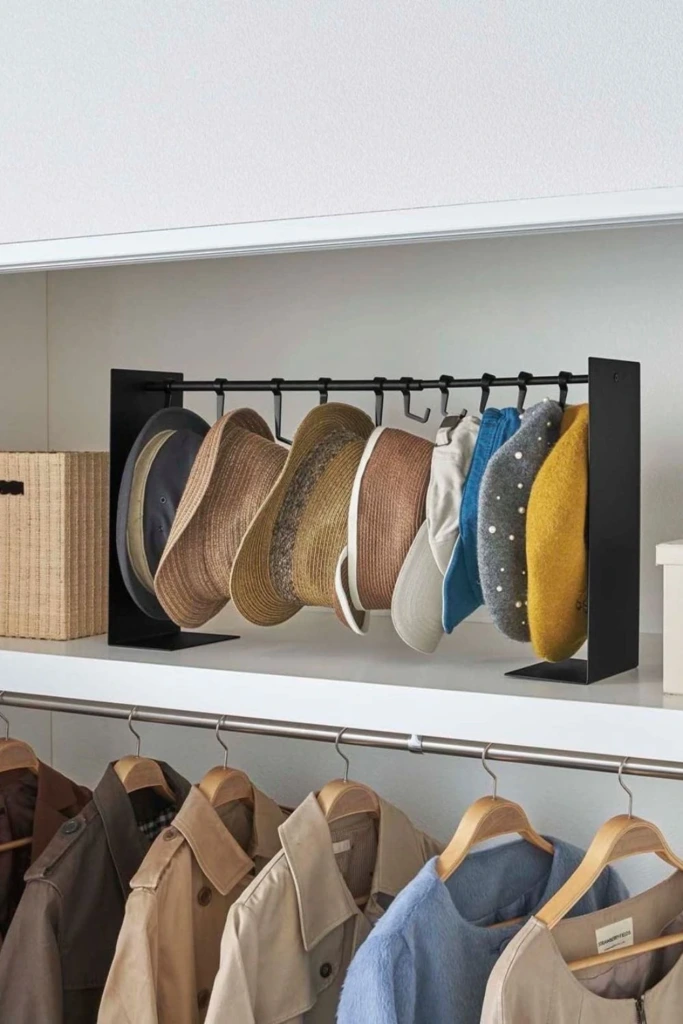
A rod rack provides a simple way to keep hats organized along a closet shelf or wardrobe. Depending on its construction, the rod may support hats through their crowns or work with individual hooks and holders.
The main advantage is visibility: each hat has a defined position, making it easier to choose one without disturbing the others. A properly sized rack can also make use of space above clothing rails or on otherwise underused shelves.
Before installation, measure the available width and check the clearance needed for the largest hat. Select a sturdy rod and suitable brackets, and avoid designs that place excessive pressure on delicate materials.
22. Decor Hooks
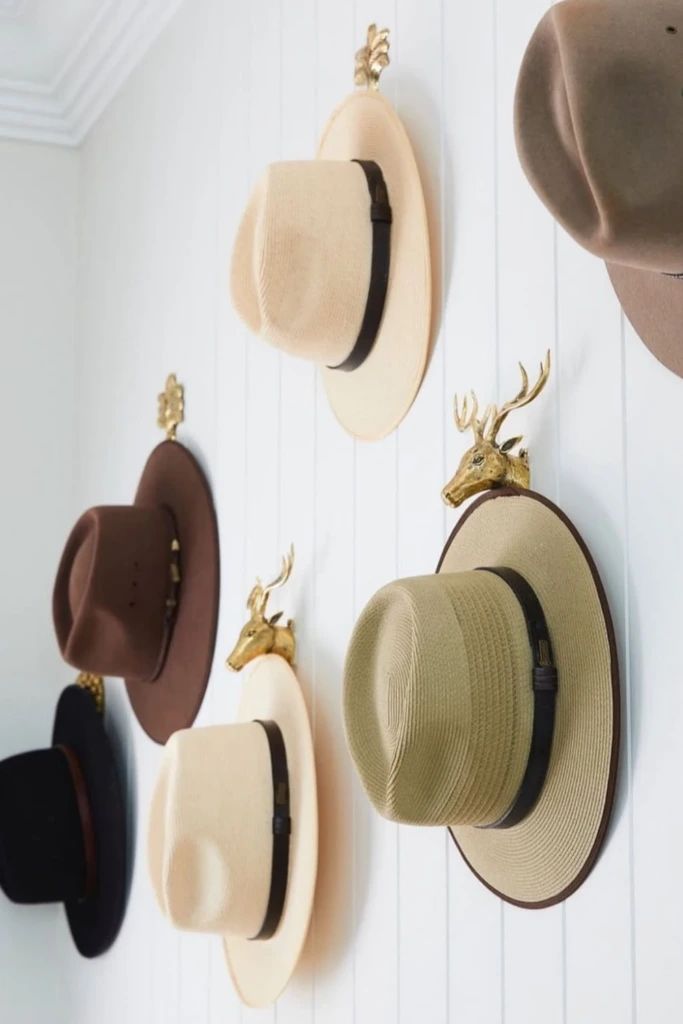
Decorative hooks allow hat storage to contribute to your room's overall design. Options made from wood, brass-finished metal, ceramic, or sculptural materials can complement different decorating styles.
Arrange the hooks across an accent wall or near a dressing mirror. Choose shapes that support your hats comfortably, avoiding narrow projections that could stretch the crown or leave unwanted marks.
This approach is particularly suitable for a small collection of favorite pieces that you wear often. Keep the spacing generous enough for the brims, and select hook finishes that coordinate with nearby furniture or hardware.
23. Ball Hooks
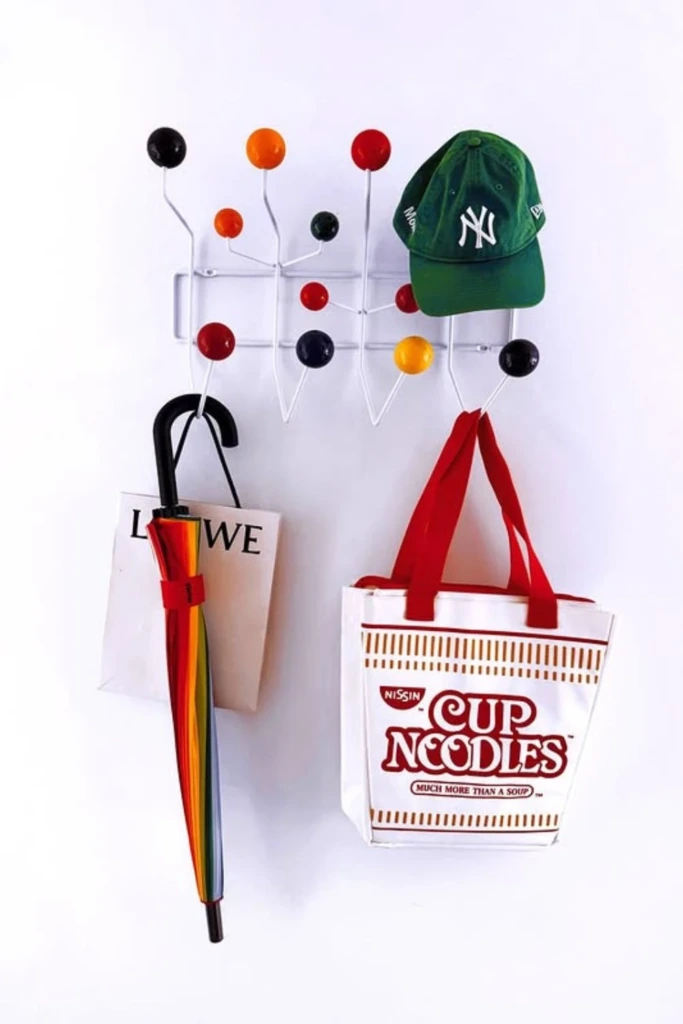
Rounded ball hooks provide a simple and colorful way to organize everyday caps. Their decorative appearance makes them suitable for bedrooms, entryways, children's rooms, and compact apartments.
Choose hooks with a suitable diameter and surface finish so that hats remain secure without being stretched or damaged. For caps designed to hang by their rear opening, check that the hook shape fits comfortably.
A row of differently colored hooks can create a playful accent, while matching finishes produce a more understated look. You can also dedicate separate hooks to lightweight bags or other accessories, provided the combined load remains within the hardware's limits.
24. Window Hooks
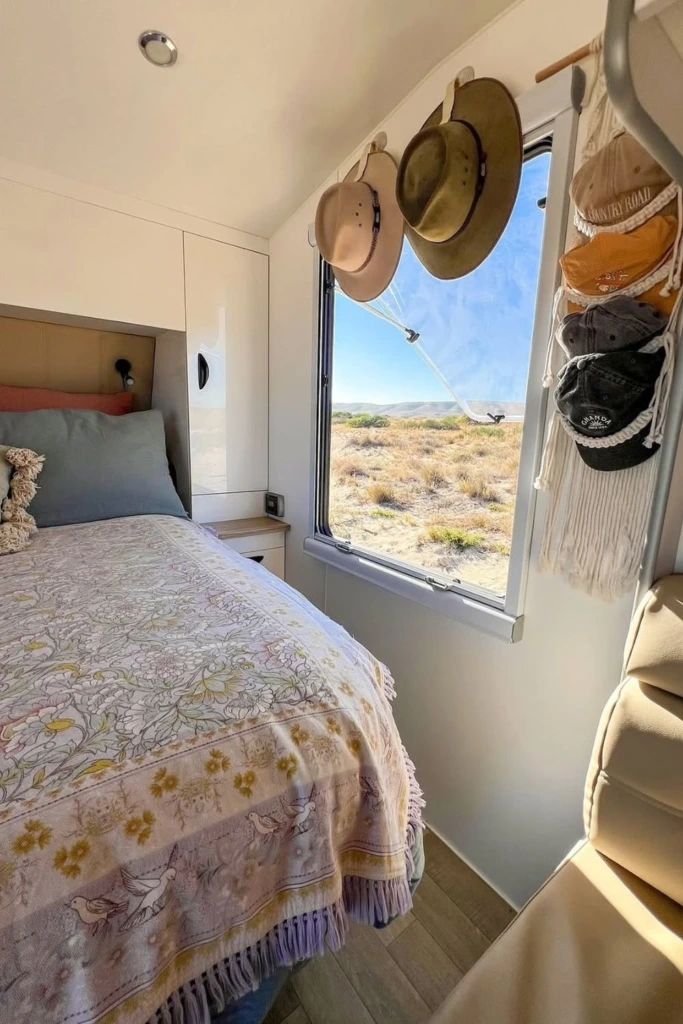
The wall area above a window can provide useful storage when closet space is scarce. A carefully positioned row of hooks allows lightweight hats to hang in an otherwise overlooked part of the room.
This approach can work well in small bedrooms, compact apartments, and recreational vehicles where storage options are limited. Measure the available space before installation and ensure that the hats will not interfere with window operation, curtains, or blinds.
Leave enough distance between hooks to accommodate wider brims, and avoid placing hats where direct sunlight will reach them for long periods. A nearby organizer can provide additional space for smaller caps and accessories.
What is the best way to store hats without ruining their shape?
The best method depends on the hat's construction. Structured hats generally benefit from a properly fitted stand, a supportive shelf arrangement, or a suitable storage box that prevents pressure on the crown and brim. Baseball caps can often be kept on dedicated racks or hangers designed for their shape.
Avoid piling heavy items on top of hats or forcing them into spaces that are too small. For long-term storage, choose a clean, dry location away from direct sunlight and excessive humidity. Breathable storage materials are often preferable for natural fibers and other materials that can be affected by trapped moisture.
How can you store a large hat collection in a small space?
Use vertical space wherever possible. Wall-mounted racks, hanging straps, over-the-door organizers, and closet-mounted systems can hold many hats without taking up valuable floor space.
Keep everyday favorites within easy reach and place occasional-use hats in suitable boxes or containers. Organizing your collection by type, color, or season helps you find specific pieces quickly.
Most importantly, select a storage method that fits your hats rather than forcing the entire collection into one crowded area. A combination of wall storage, closet shelving, and protective containers often provides the best balance between accessibility and preservation.