24 Under Stair Storage Ideas for 2026
The area beneath your staircase might be one of the most overlooked storage opportunities in your home. Whether it's filled with forgotten boxes, scattered shoes, or completely empty, that awkward space has the potential to become something genuinely useful.
With thoughtful planning, you can transform it into organized cabinets, practical drawers, a cozy reading corner, or even a compact workspace. The best part is that you don't necessarily need a large budget or a complete home renovation.
These 23 under stair storage ideas will help you make better use of every available inch while keeping your home comfortable, organized, and visually appealing.
How to Use Storage Space Under Stairs?
Start by examining the shape, height, and depth of the area beneath your staircase. Because staircases slope downward, conventional furniture doesn't always fit efficiently. Choosing storage that accommodates the available dimensions makes a significant difference.
Consider what your household needs most. An entryway staircase might benefit from shoe compartments and coat storage, while stairs near a living room could accommodate bookshelves or entertainment accessories.
Keep frequently used belongings near the opening and reserve deeper sections for occasional-use items. Drawers, sliding racks, and adjustable shelving can make otherwise inaccessible corners functional.
Before making structural changes, check for electrical wiring, plumbing, ventilation, and load-bearing components. Stair enclosures may also have fire-safety requirements. Proper lighting and secure installation will make your new storage more convenient and safer to use.
1. Built-In Drawers
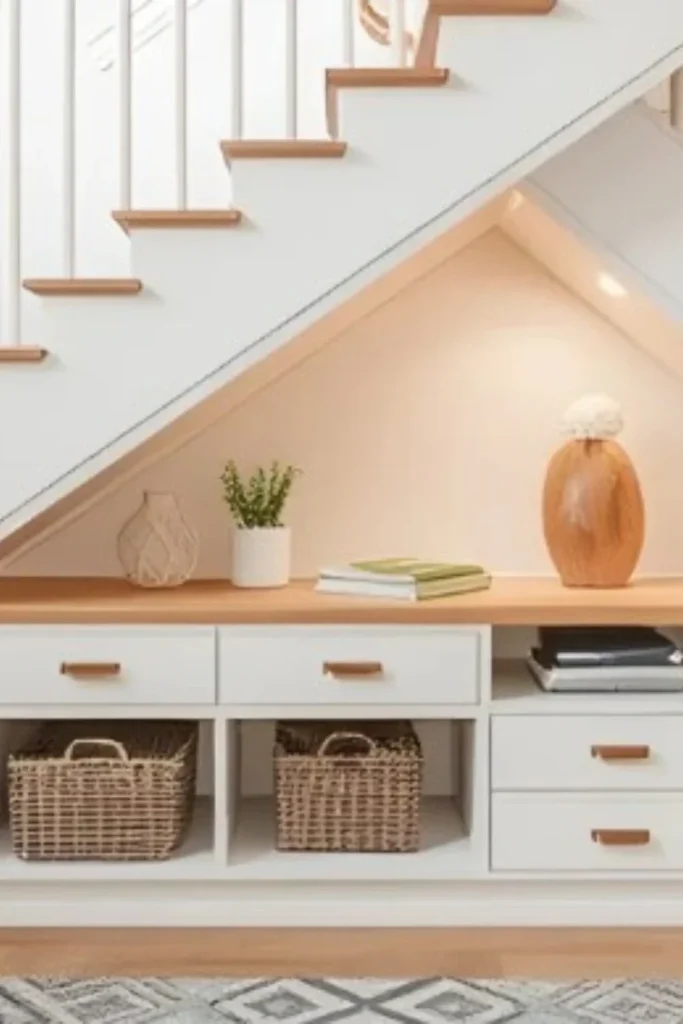
Custom-built drawers are an excellent solution for making irregular spaces beneath a staircase functional. Instead of leaving belongings hidden in inaccessible corners, drawers bring everything forward when opened.
You can arrange smaller compartments for documents, batteries, and household accessories while reserving larger drawers for blankets, board games, or seasonal decorations.
Choose full-extension drawer slides to reach items stored at the back. Matching the drawer fronts to your existing walls or staircase creates a coordinated appearance that feels like part of the home's original design.
2. Hidden Bench Storage
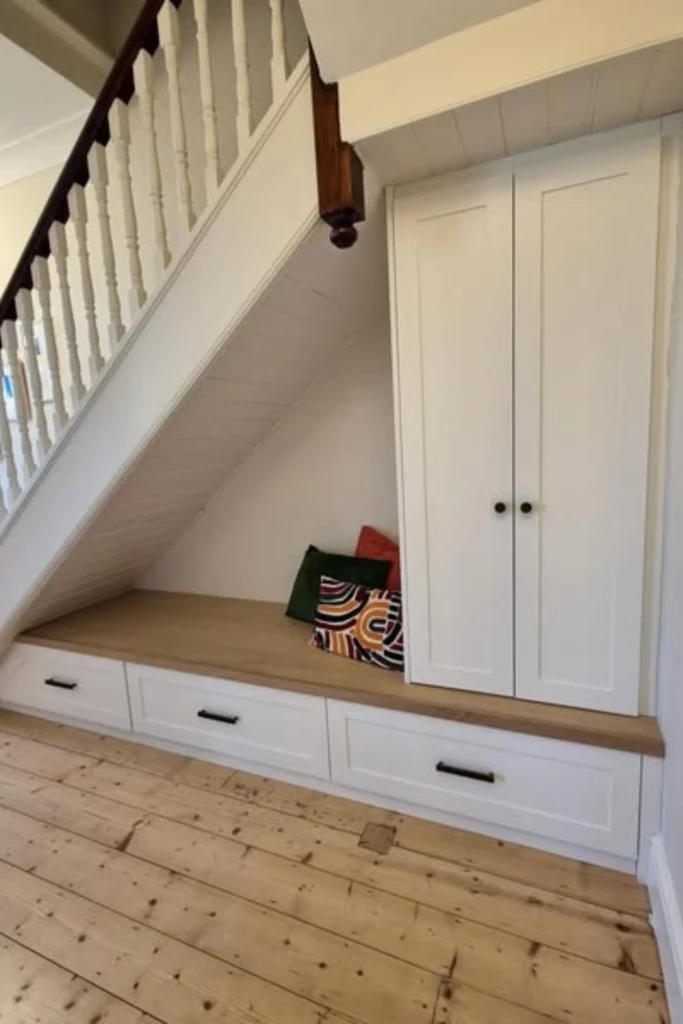
A storage bench beneath the stairs provides comfortable seating while offering a convenient place to keep everyday belongings.
This arrangement works particularly well near an entrance, where family members need somewhere to sit while putting on shoes. Compartments beneath the seat can accommodate footwear, shopping bags, and outdoor accessories.
A hinged seat offers access to one large storage compartment, while individual drawers make organizing smaller belongings easier.
Add a durable seat cushion and washable fabric for comfort. If the area allows, install hooks nearby to create a compact entryway station without occupying additional floor space.
3. Accent Cabinet Storage
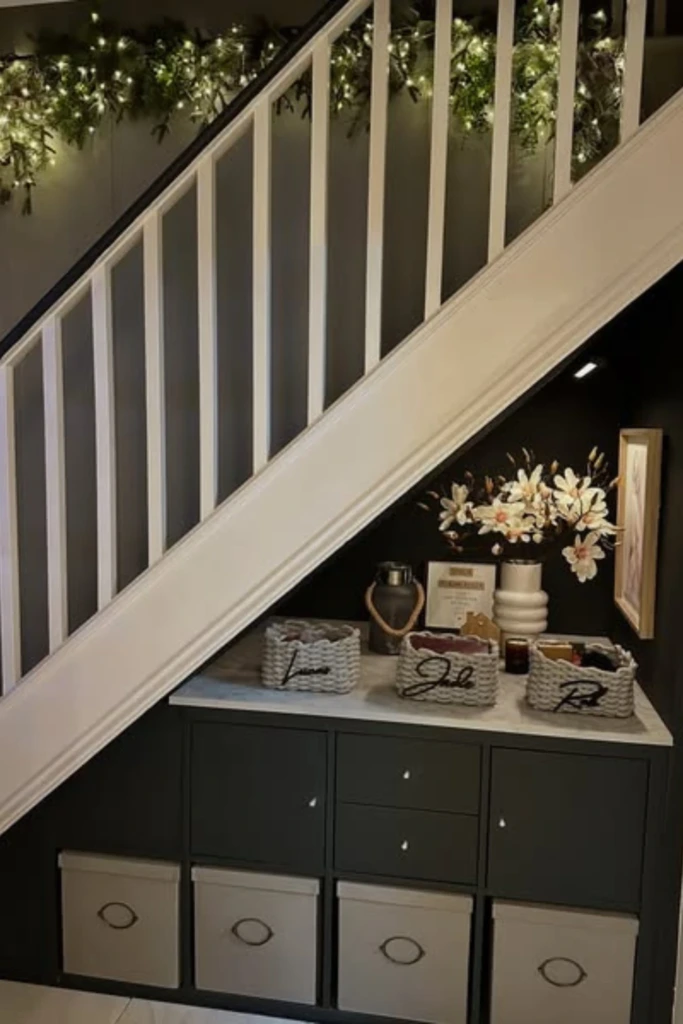
Storage doesn't always need to disappear into the background. An attractive accent cabinet can turn an ordinary staircase corner into a stylish interior feature.
Consider cabinets with textured wood, painted doors, or decorative hardware that complements the surrounding room. Rich colors can create contrast, while natural finishes introduce warmth.
Inside, adjustable shelves provide flexibility for storing books, household essentials, and decorative accessories.
Keep the arrangement visually balanced by avoiding oversized furniture that overwhelms the staircase. A well-proportioned cabinet can provide useful storage while enhancing the room's overall character.
4. Reading Nook Storage
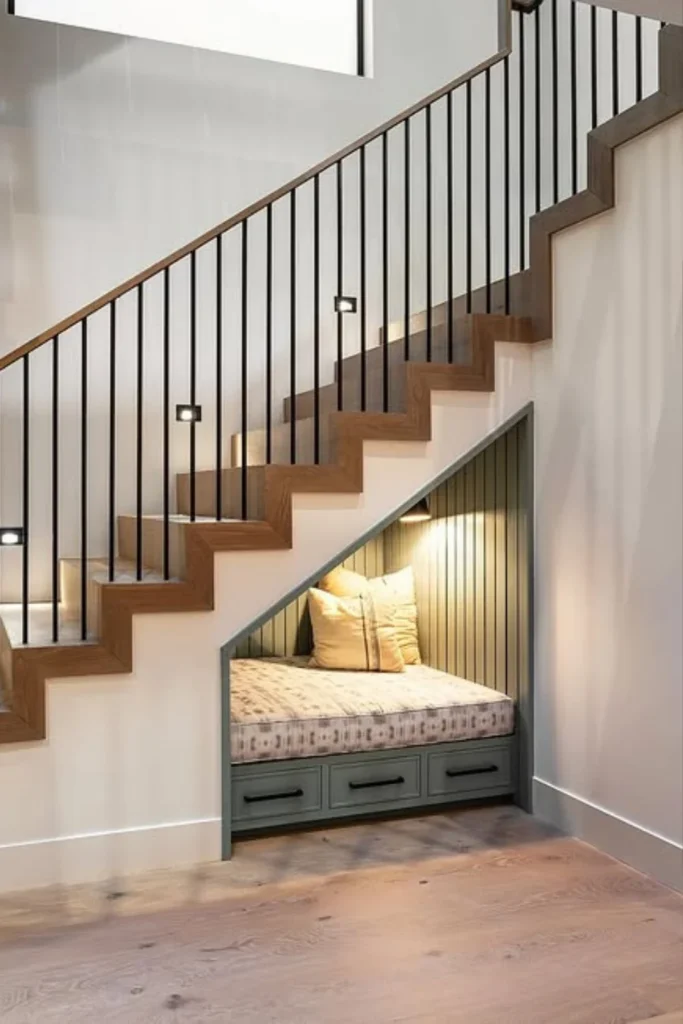
An unused staircase corner can become a relaxing reading retreat with a comfortable seat and thoughtfully arranged book storage.
Begin with a built-in bench or a compact armchair, depending on the available height. Install bookshelves along the taller wall and use baskets beneath the seating area for magazines, blankets, and reading accessories.
Soft cushions and warm lighting make the space inviting without requiring elaborate decoration.
A wall-mounted reading lamp is especially useful because it provides focused illumination without occupying shelf space. Choose a seat position that allows comfortable head clearance, making the nook pleasant for longer reading sessions.
5. Work Nook Storage
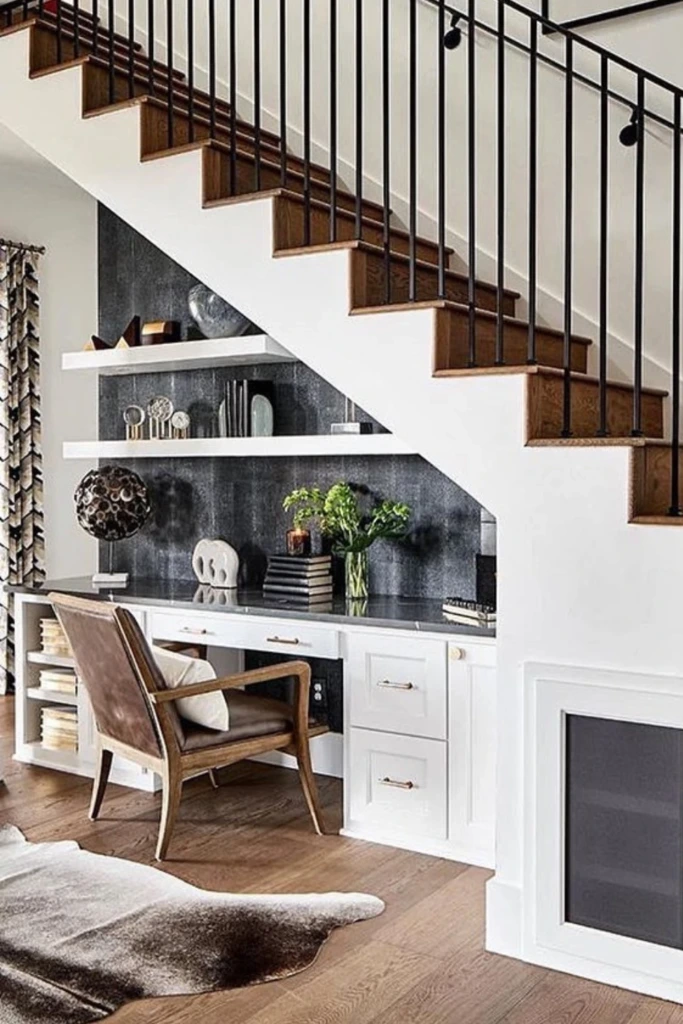
A staircase alcove can accommodate a surprisingly practical home office, especially when a separate workspace isn't available.
Install a narrow desk beneath the highest section of the stairs, leaving sufficient room for comfortable seating and movement. Wall shelves can hold notebooks and reference materials, while compact drawers keep stationery and electronic accessories organized.
Cable management is important in smaller work areas. Use concealed cable channels or desk grommets to prevent wires from becoming tangled.
Good task lighting and access to electrical outlets will make the workspace more functional. For regular computer work, prioritize comfortable posture and adequate legroom over maximizing storage.
6. Full-Height Cabinet
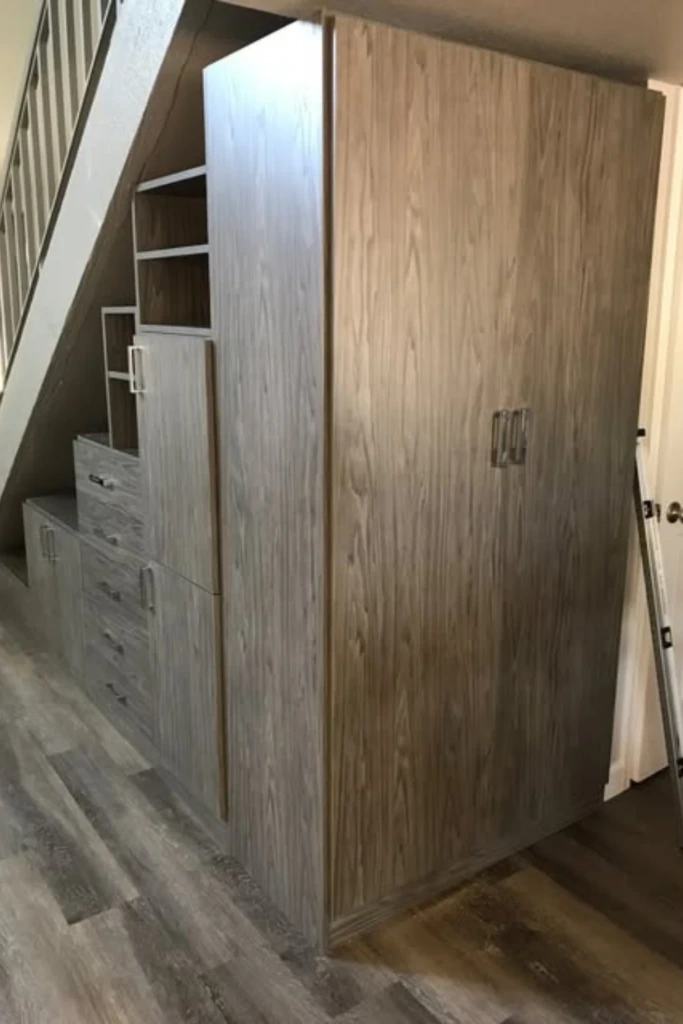
A tall cabinet system can take advantage of the staircase's changing height while providing substantial concealed storage.
Position the tallest compartment beneath the upper section of the staircase for items such as vacuum cleaners, folding equipment, or luggage. Shorter compartments can accommodate baskets, footwear, and household supplies.
Adjustable shelving allows the interior to adapt as your storage needs change.
For a polished finish, choose cabinet doors that align neatly with the surrounding wall. Secure tall units properly and consider soft-close hinges to reduce noise and wear during everyday use.
7. Open Desk Storage
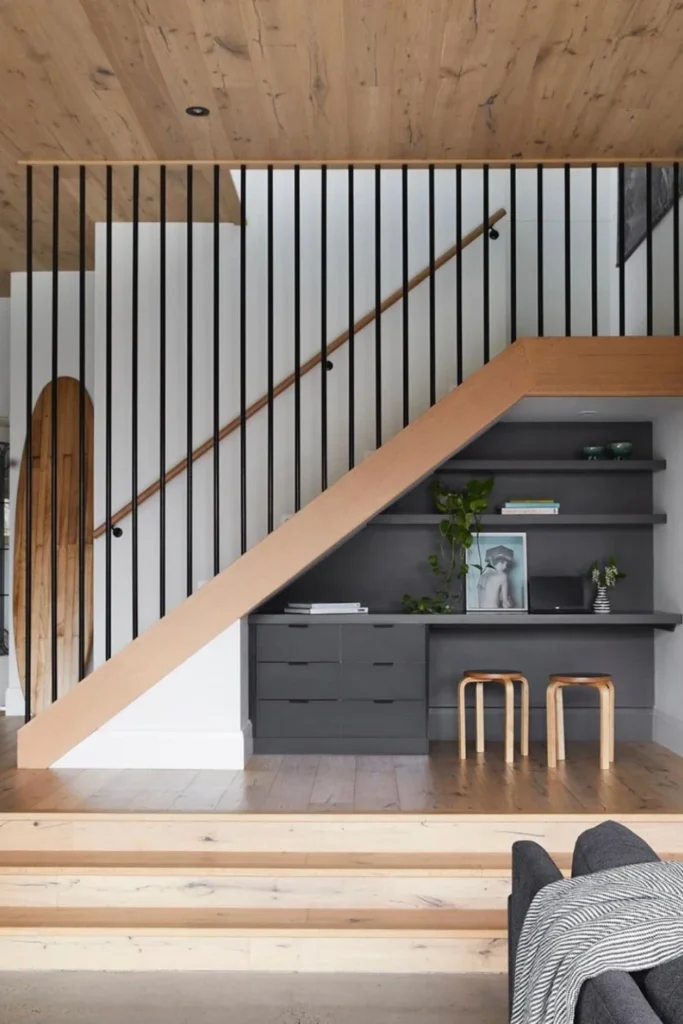
An open desk arrangement is ideal for homeowners who want a functional workspace without making the staircase area feel enclosed.
A floating desktop creates a clean appearance and leaves the floor relatively unobstructed. Add narrow shelves above the work surface for books, decorative objects, or small organizers.
Low-profile drawer units can store paperwork and office supplies without crowding the seating area.
Use a consistent color palette to visually connect the desk with the staircase. Keeping shelves lightly arranged will help the space remain open and comfortable rather than cluttered.
8. Soft-Tone Cabinets
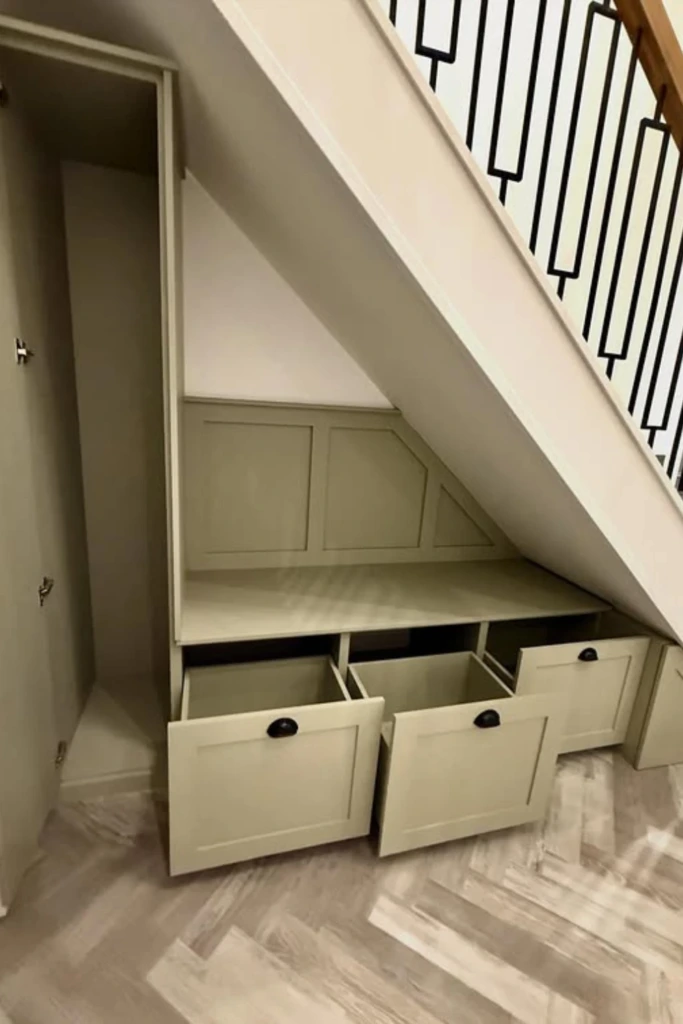
Cabinetry finished in gentle, neutral colors can provide generous storage without drawing unnecessary attention to the staircase.
Shades such as warm white, pale gray, muted beige, and soft sage work particularly well in hallways and contemporary interiors.
Consider combining larger cabinets with smaller drawers to accommodate belongings of different sizes. Recessed handles or push-to-open mechanisms can create a smooth, understated appearance.
Choose a durable, wipe-clean finish, especially in busy family homes. Subtle interior lighting can improve visibility while maintaining the cabinetry's calm, uncluttered appearance.
9. Under-Stair Powder Room
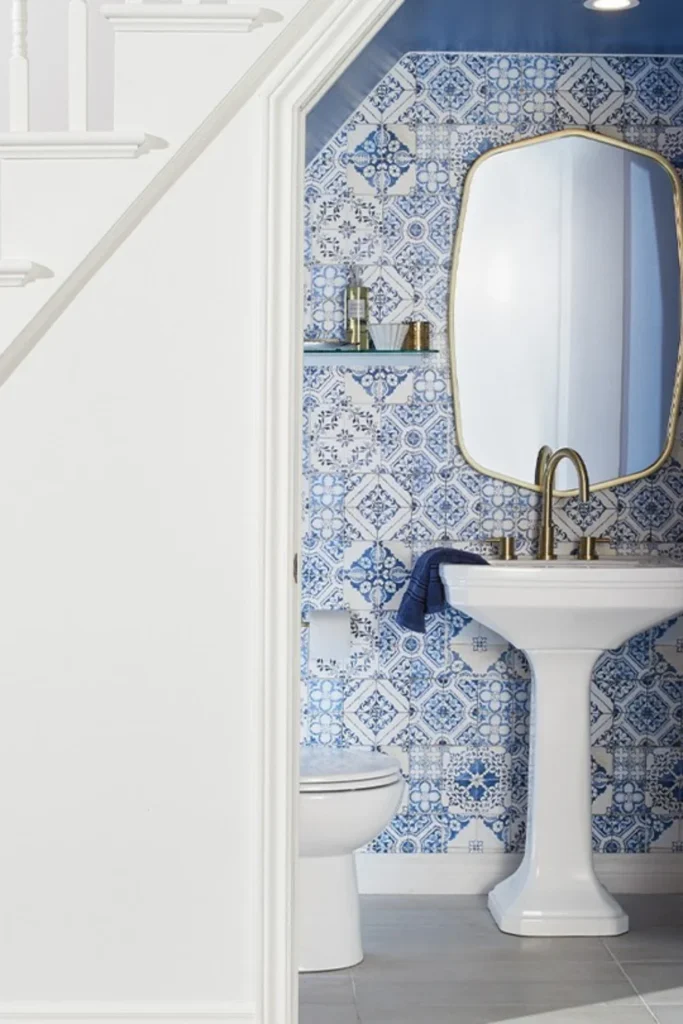
Where sufficient space and plumbing access are available, the area beneath a staircase may be suitable for a compact guest bathroom.
A small toilet and corner basin can fit into carefully planned layouts, although the required dimensions depend on local building regulations.
Position fixtures where users have adequate standing and head clearance. A wall-mounted sink can preserve floor space, while recessed shelving offers storage for toilet paper and toiletries.
Ventilation, waterproof finishes, drainage, and suitable lighting are essential considerations.
Because this conversion involves plumbing and potentially structural work, consult qualified professionals before proceeding.
10. Pull-Out Drawers
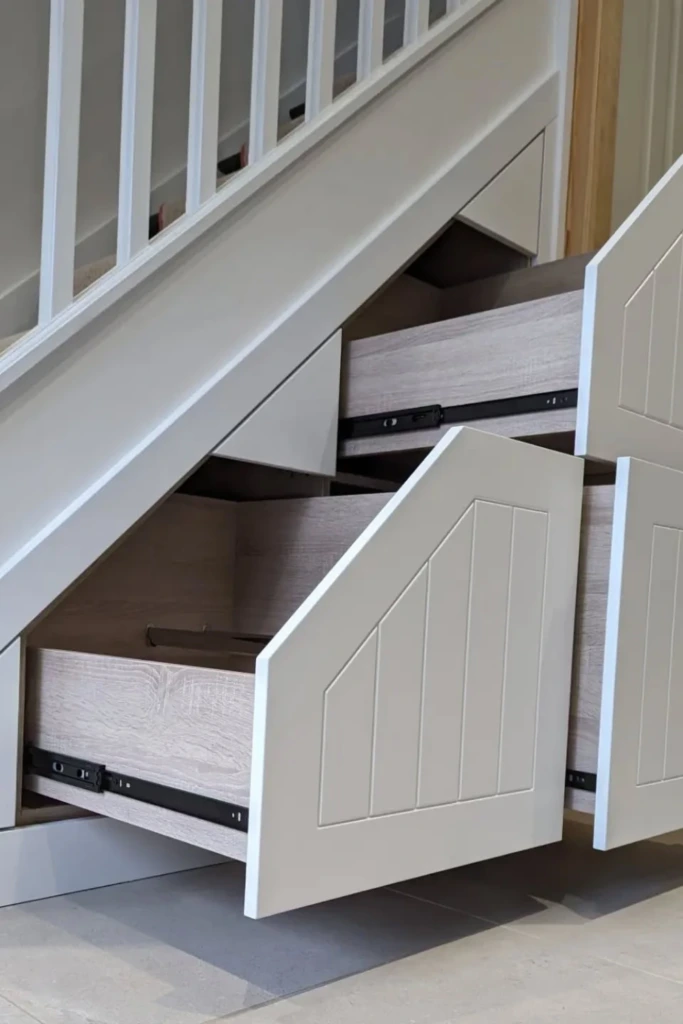
Large pull-out drawers offer an effective way to access storage beneath deep staircases without crawling into narrow spaces.
Unlike fixed shelves, these compartments allow you to see and retrieve belongings from nearly the entire storage depth.
Use larger drawers for bedding, winter clothing, or household equipment. Smaller drawers can hold shoes, toys, and cleaning accessories.
Select drawer runners rated for the expected weight, particularly when storing heavy objects. Internal dividers and labeled containers will help prevent belongings from shifting or becoming disorganized.
11. Display Shelf Storage
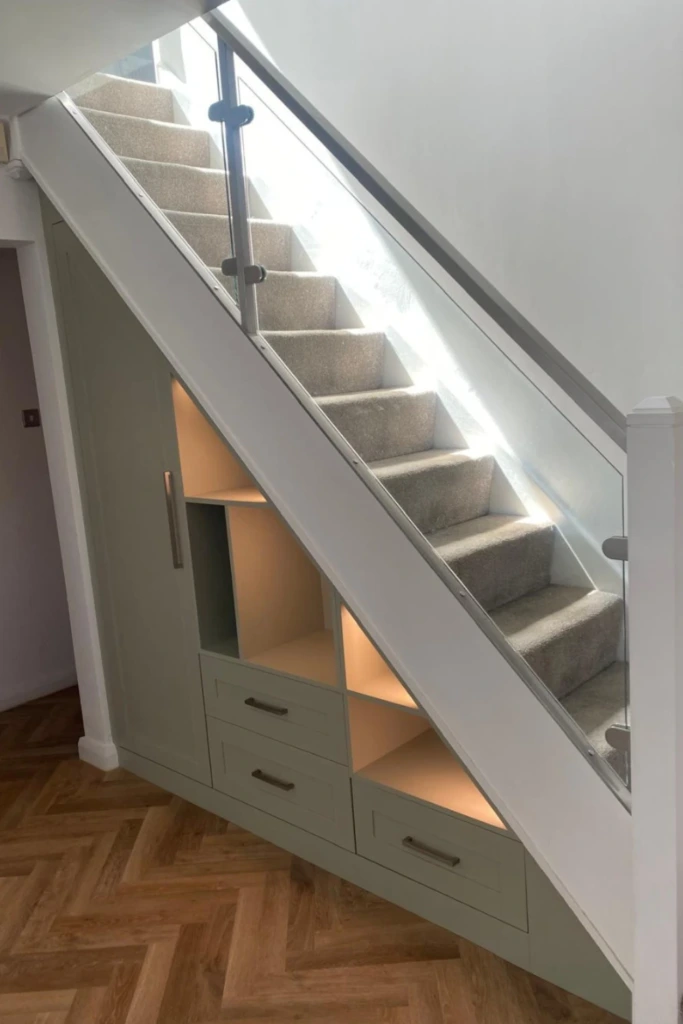
Open display shelves can turn the space beneath a staircase into an attractive focal point while providing accessible storage.
Arrange books, framed photographs, ceramics, and decorative baskets on shelves that follow the staircase's shape.
Combining different shelf heights allows you to display objects of varying sizes without making the arrangement look crowded.
For practical organization, place frequently used belongings at comfortable reaching heights and reserve upper shelves for decorative pieces.
Integrated LED lighting can highlight your favorite objects and brighten a staircase area that receives limited natural light.
12. Lounge Bench Storage
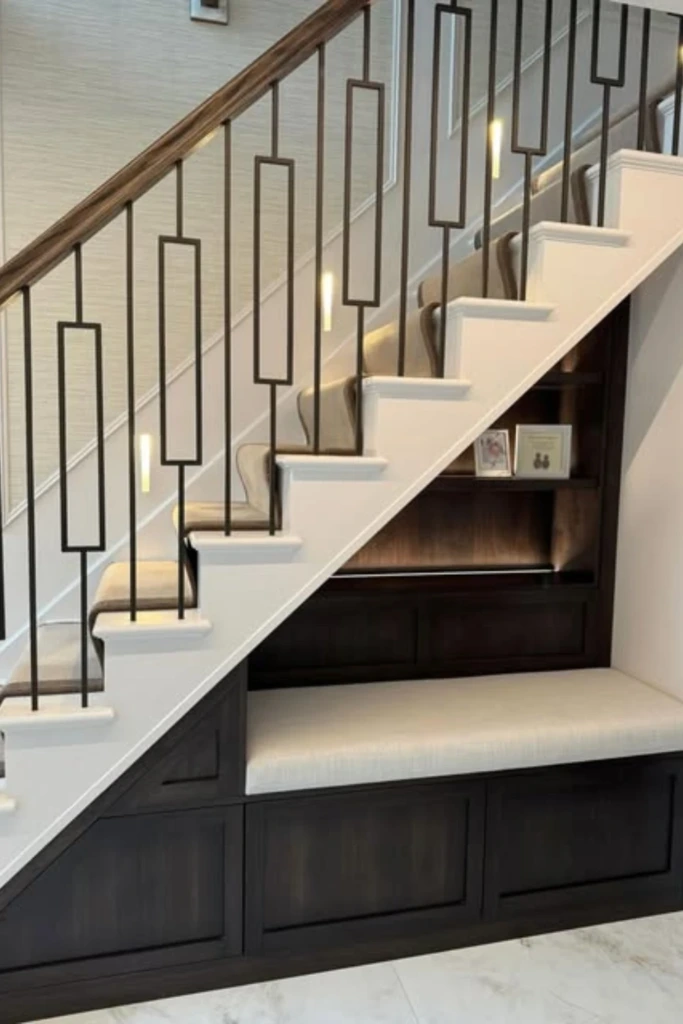
A lounge bench creates a comfortable resting place beneath the staircase while concealing useful storage compartments.
This design is particularly suitable for spacious hallways or living areas where additional seating would be welcome.
Build drawers or cabinets into the bench base for storing blankets, cushions, shoes, and other household belongings.
Choose upholstery that complements nearby furniture, and consider stain-resistant materials for high-traffic locations.
A combination of supportive cushions and accessible compartments will make the bench both comfortable and practical.
13. Sliding Shelf Storage
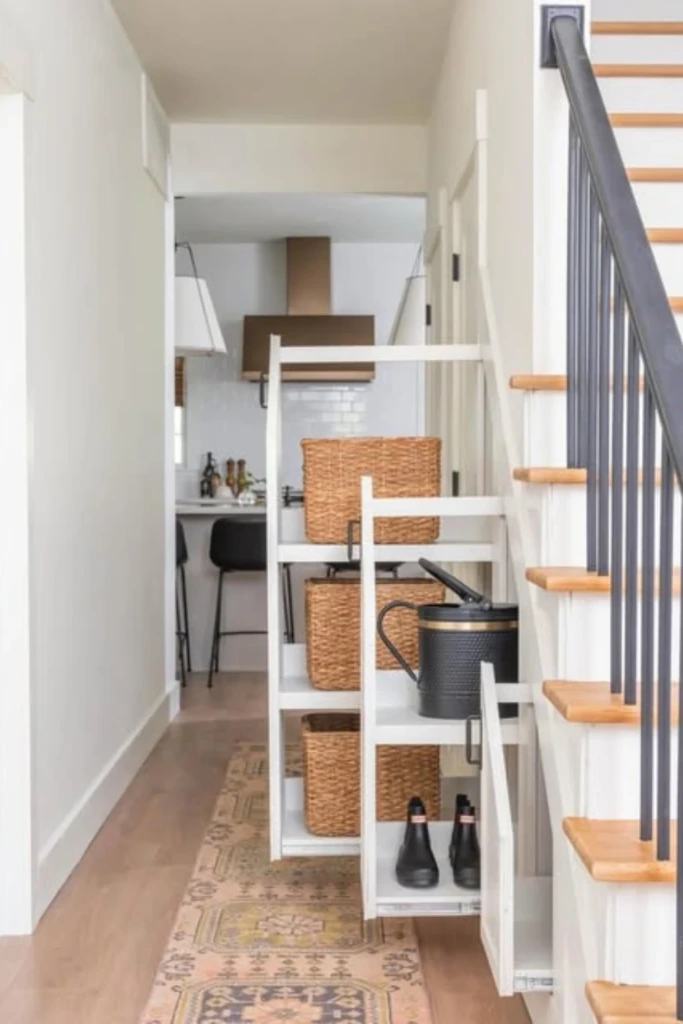
Sliding shelves provide convenient access to narrow or deep areas that would otherwise be difficult to organize.
These units move outward on runners, allowing you to reach items stored toward the back without rearranging everything in front.
Slim sliding shelves are especially useful for cleaning products, household tools, pantry supplies, or small storage baskets.
Measure the available clearance carefully before installation. The shelves must extend without obstructing doors, walkways, or nearby furniture.
Choose sturdy hardware and secure the framework to support the stored weight safely.
14. Concealed Utility Storage
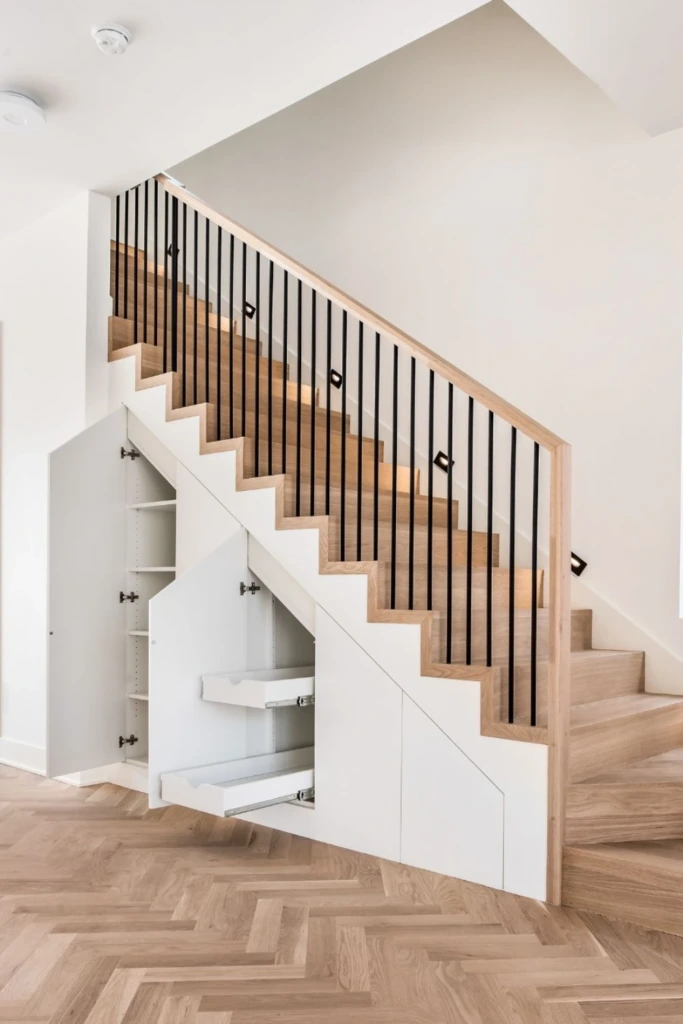
If you prefer a minimalist interior, concealed utility cabinets can keep practical household equipment completely out of sight.
Install doors that blend with the surrounding wall to create a streamlined appearance. Inside, include dedicated spaces for vacuum cleaners, mops, buckets, and other cleaning equipment.
Hooks and adjustable racks help organize long-handled tools, while shallow shelves keep smaller accessories accessible.
Provide suitable ventilation for damp equipment, and store household chemicals securely away from children and pets.
A dedicated utility compartment can make everyday cleaning more efficient without sacrificing the room's appearance.
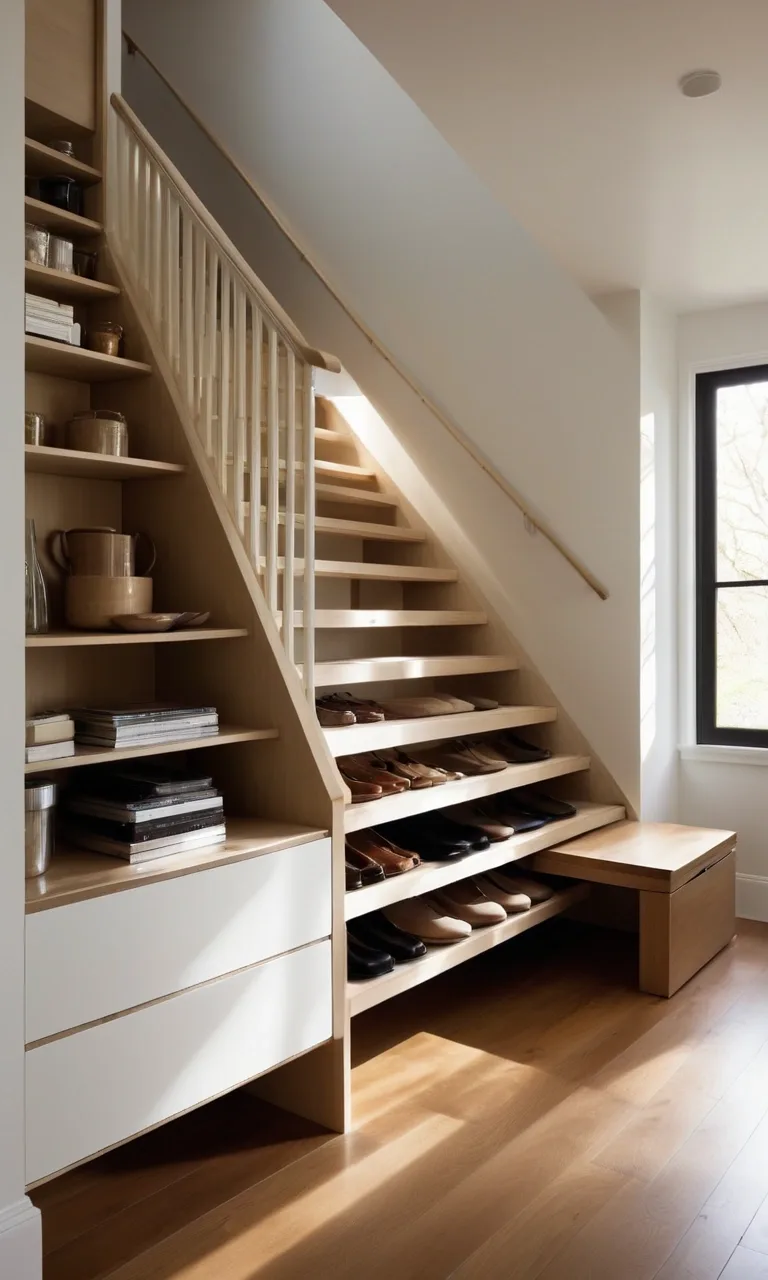
15. Shoe Drawer Storage
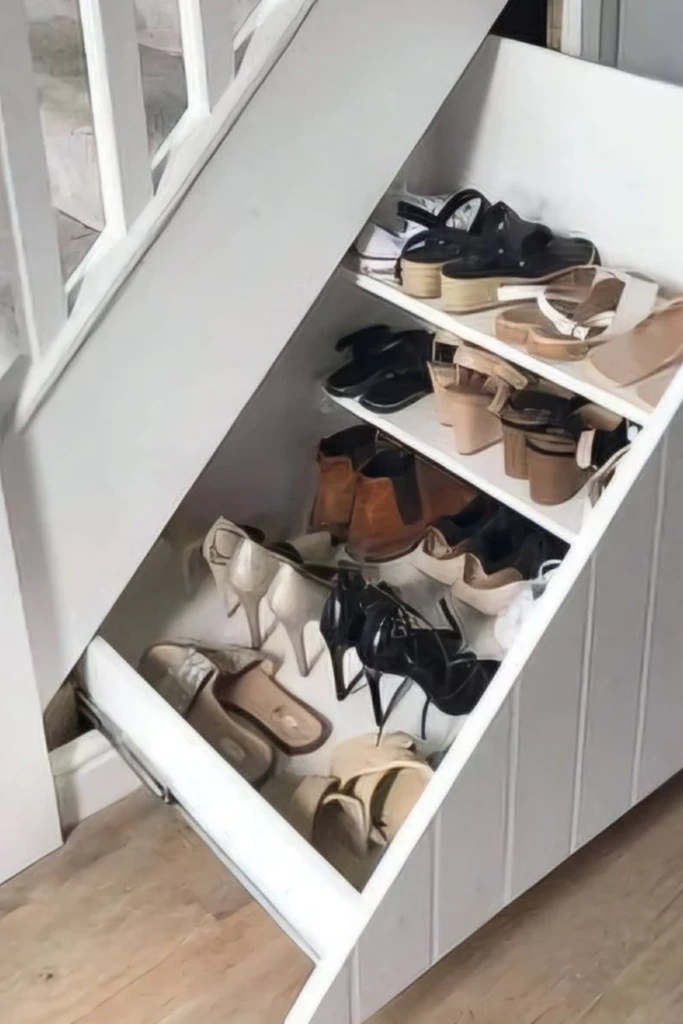
Shoes can quickly create clutter around staircases, especially when the stairs are close to the main entrance.
Dedicated shoe drawers provide an organized alternative to leaving footwear scattered across the floor.
Consider shallow drawers for flats and sandals, with deeper compartments for trainers, boots, and bulkier footwear.
Removable dividers can help separate pairs and prevent shoes from becoming mixed together.
Choose easy-to-clean drawer liners and allow wet footwear to dry before storing it in enclosed cabinetry. This helps reduce trapped moisture and unpleasant odors.
16. Mudroom Storage Zone
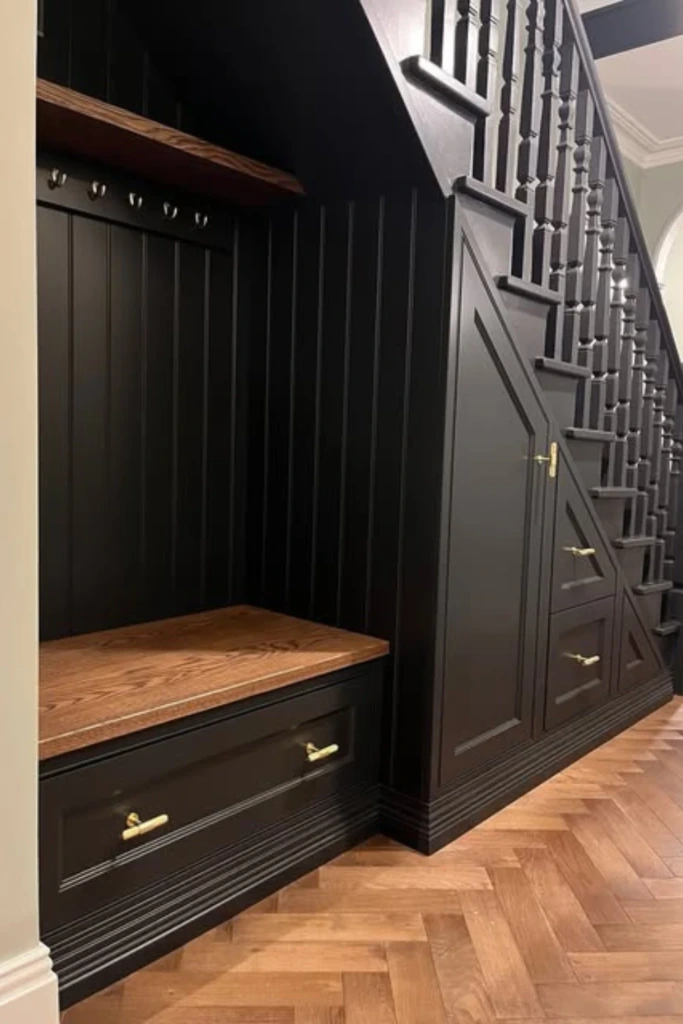
A staircase near the entrance can become a practical mini mudroom that keeps outdoor belongings organized.
Install sturdy hooks for coats and backpacks, along with low compartments for shoes and everyday accessories.
A small bench provides a convenient place to change footwear, while upper cabinets can hold less frequently used items.
Assigning individual baskets or hooks to family members can make the system easier to maintain.
Choose durable surfaces that tolerate frequent cleaning, particularly if children regularly bring muddy shoes or sports equipment indoors.
17. Tiered Shoe Storage
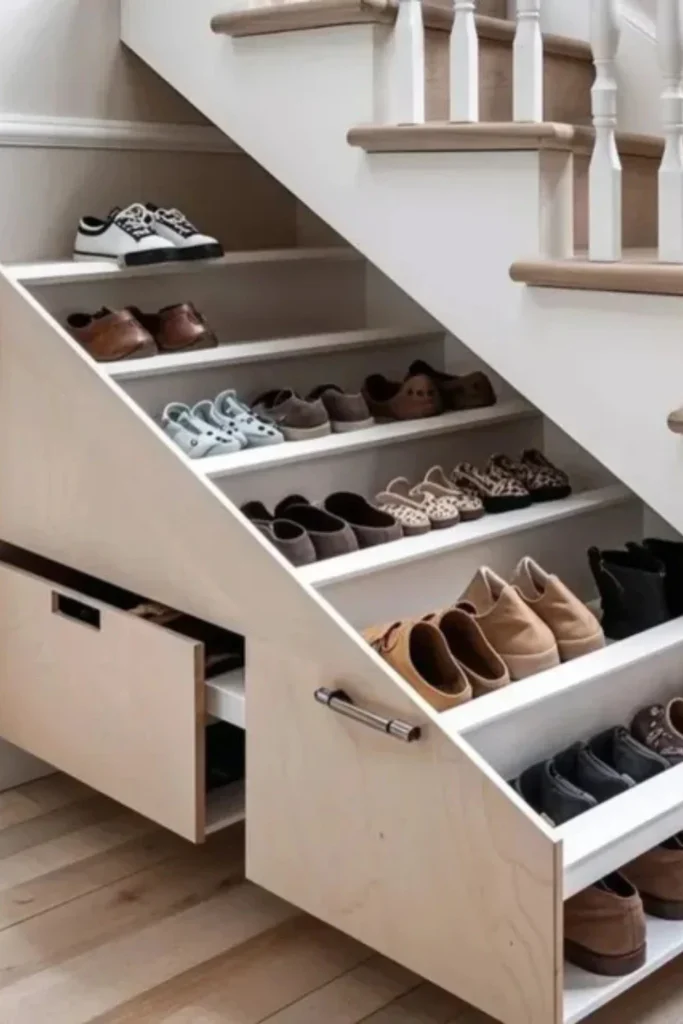
Tiered shelving makes it easier to organize a larger footwear collection without using excessive floor space.
Instead of stacking shoes in boxes, arrange pairs across multiple levels so they remain visible and accessible.
Pull-out tiered racks work particularly well beneath staircases because they can accommodate changing ceiling heights.
Adjustable shelves offer flexibility for different shoe sizes, while non-slip surfaces help keep footwear securely positioned.
Measure your tallest shoes before selecting the spacing between tiers. Leaving enough room for boots and high-top footwear will prevent the system from becoming inconvenient.
18. Staggered Drawer Storage
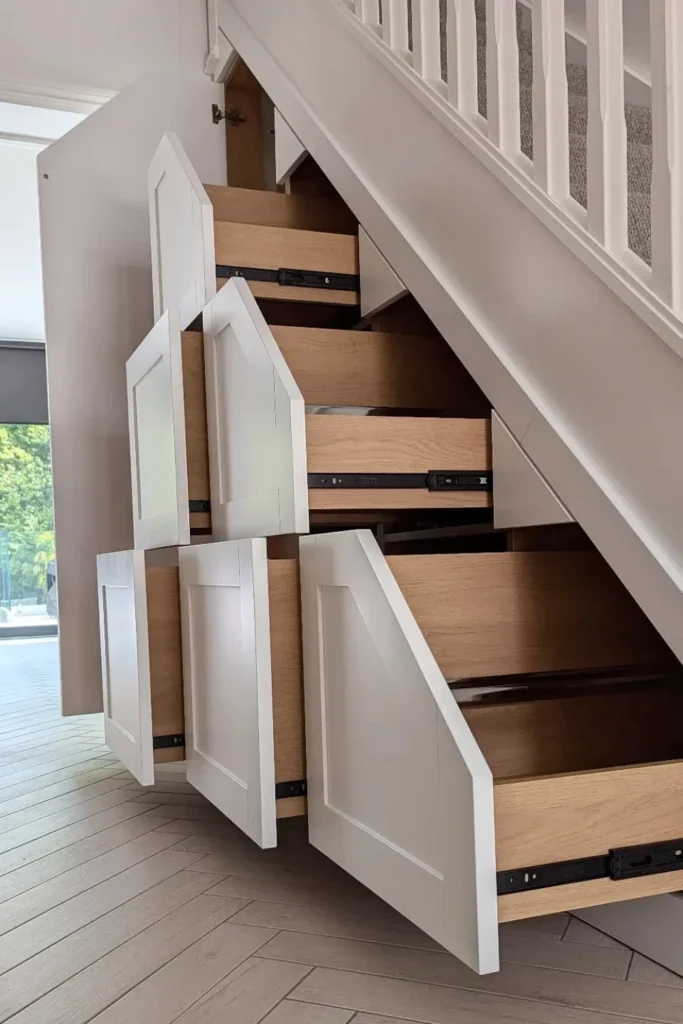
Staggered drawers are designed to take advantage of the staircase's descending shape.
Rather than forcing identical drawers into an irregular opening, this arrangement uses compartments of different heights and depths.
Larger drawers beneath the taller section can hold bulky belongings, while smaller units beneath the lower steps are suitable for accessories, documents, or compact household items.
Maintain consistent drawer-front finishes for a cohesive appearance.
Accurate measurements and quality hardware are especially important because each compartment may require a different configuration.
19. Open Shelf Display
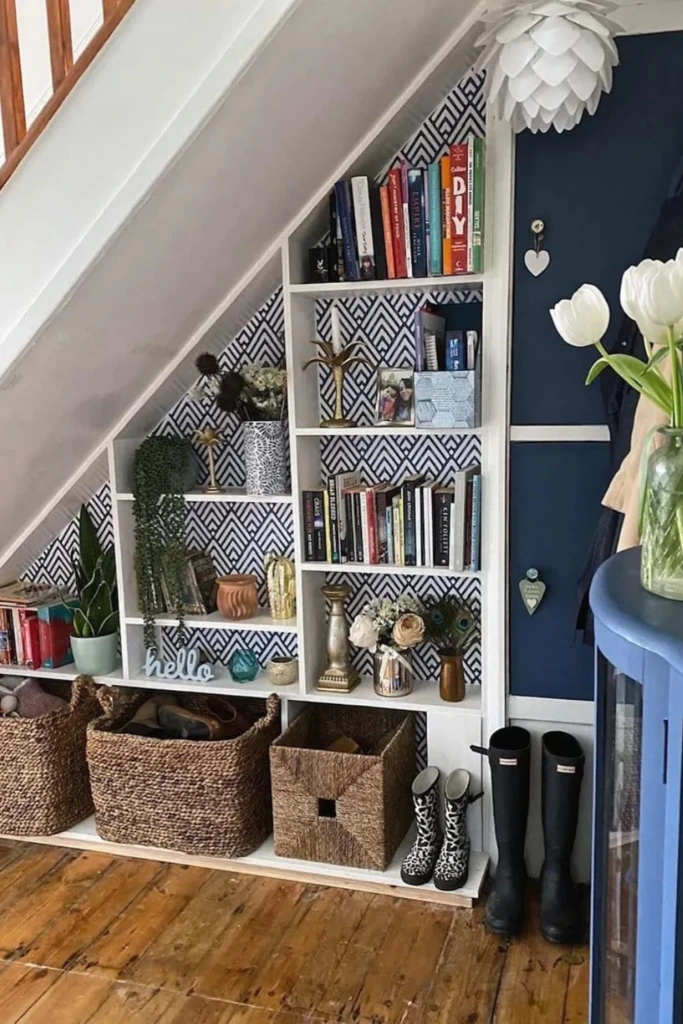
Open shelving provides a flexible way to use the space beneath the stairs without completely enclosing it.
This approach works well in living rooms where books, plants, and decorative accessories contribute to the interior design.
Install shelves that gradually decrease in height along the staircase slope. Use the larger openings for books and decorative objects, and smaller compartments for baskets or compact accessories.
Leave some sections intentionally empty to prevent the arrangement from appearing overcrowded.
If you display plants, choose varieties suited to the available light and avoid watering directly above electrical fittings or moisture-sensitive materials.
20. Sports Gear Storage
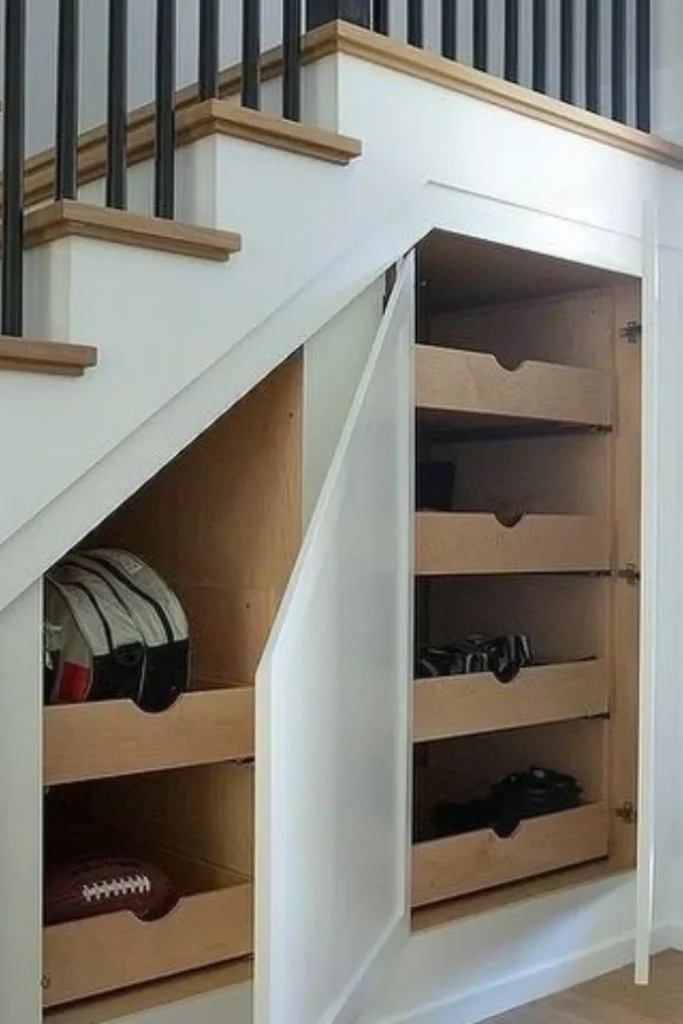
Sports equipment often comes in awkward shapes, making it difficult to organize in ordinary cupboards.
The space beneath your staircase can provide a dedicated location for helmets, rackets, balls, protective equipment, and outdoor accessories.
Use large baskets for smaller items, wall hooks for lightweight equipment, and adjustable shelves for larger belongings.
Ventilated containers are useful for equipment that may retain moisture after use.
Keep frequently used sports gear near the front and place seasonal equipment farther inside. This arrangement makes preparing for activities quicker and reduces clutter elsewhere in the home.
21. Pull-Out Wardrobe
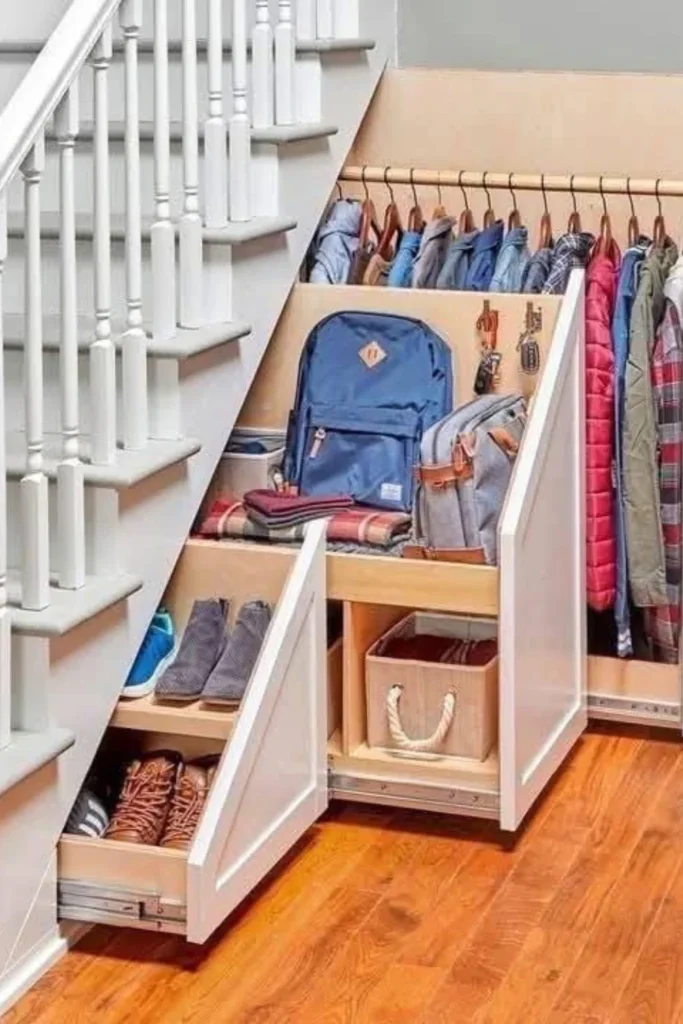
A pull-out wardrobe can transform the taller section beneath a staircase into convenient clothing storage.
Sliding hanging rails allow coats, jackets, and other garments to move outward for easy access.
Below the hanging area, install drawers for scarves, gloves, hats, and footwear.
This solution is particularly helpful near entrances where a traditional coat closet isn't available.
Choose strong runners designed to support the weight of hanging clothing, and make sure garments have enough clearance to move without catching on cabinet edges.
22. Step Drawer Storage
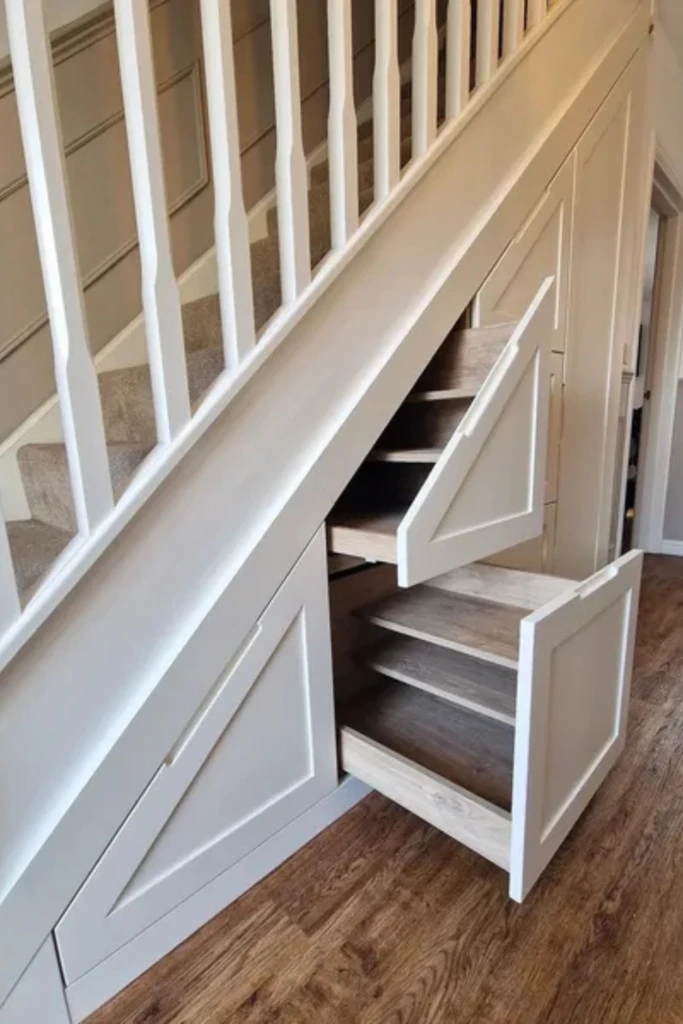
Step drawer storage uses the staircase's stepped profile to create individual compartments beneath the stair structure.
Each drawer can be sized according to its position, allowing the available space to be used efficiently.
These compartments are useful for organizing small household belongings, shoes, craft supplies, and occasional-use accessories.
Matching drawer fronts can give the staircase a tidy, architectural appearance.
Avoid modifying structural stair components without professional assessment. A qualified carpenter or staircase specialist can determine where drawers can be installed without compromising strength or safety.
23. Shoe Cabinet Drawers
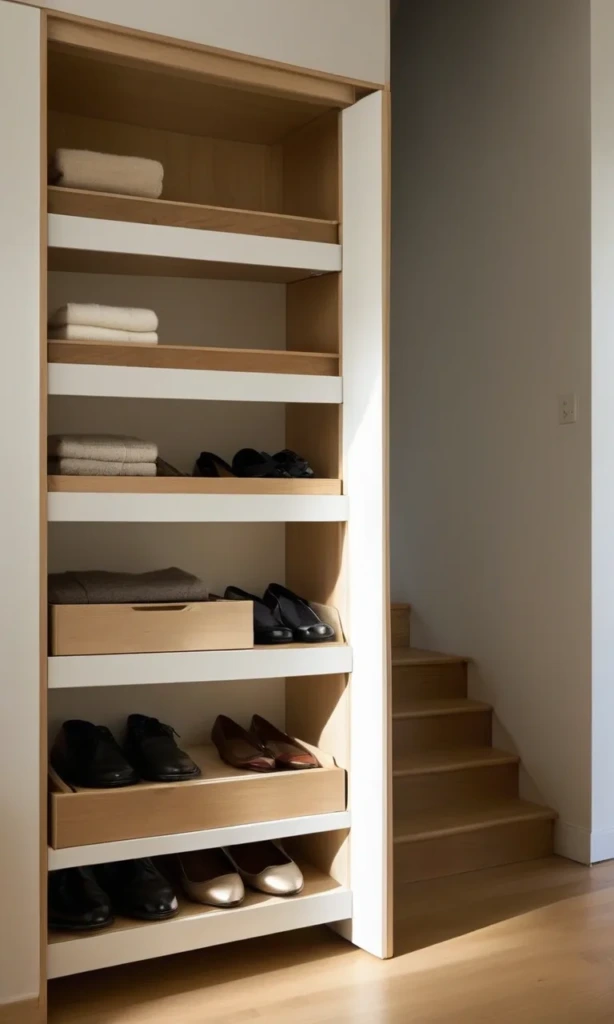
Built-in shoe cabinet drawers offer a clean and organized solution for storing footwear beneath a staircase.
Unlike freestanding shoe racks, fitted cabinets can follow the staircase slope and make use of irregular corners.
Divide the interior into sections for different types of footwear, keeping everyday pairs in the most accessible compartments.
Full-extension runners make it easier to see shoes at the back, while washable liners simplify maintenance.
For a seamless look, coordinate the cabinet fronts with nearby doors, skirting boards, or staircase finishes. This creates a storage system that feels integrated rather than added as an afterthought.
Can under-stair storage be added without custom carpentry?
Yes. Many under-stair storage solutions can be created using freestanding furniture, modular shelving, stackable containers, and ready-made storage units.
Start by measuring the available width, depth, and height. Look for adjustable shelves or narrow cabinets that fit comfortably beneath the staircase.
Storage baskets, tension-free organizers, and lightweight shelving can be practical options for renters or homeowners who want to avoid extensive renovation work.
However, custom cabinetry is often more effective when the space has steep angles, limited access, or unusual dimensions.
For safety, secure freestanding units where necessary and avoid drilling into structural staircase components without checking what lies behind them.
What should you avoid storing under the stairs?
Certain belongings are unsuitable for under-stair storage, particularly when the area has poor ventilation, excessive humidity, or limited access.
Avoid keeping flammable liquids, fuel containers, and other hazardous materials in enclosed spaces near escape routes. Important documents, valuable electronics, and delicate fabrics may also suffer damage if the area is damp.
Perishable food should only be stored where temperature, cleanliness, and ventilation conditions are appropriate.
Keep electrical panels, plumbing access points, and ventilation openings unobstructed.
Before using the space, check for signs of leaks, condensation, pests, or excessive heat. Choose storage containers that protect belongings without creating additional safety risks.
24. Love this idea? Save it for later.
An organized staircase area can make a noticeable difference to how your home functions. Whether you choose simple baskets, fitted drawers, decorative shelves, or a complete storage wall, the most successful solution is one that suits your space and daily routine.
Start with accurate measurements, prioritize easy access, and choose materials that will withstand regular use. Even a modest improvement can turn an overlooked corner into valuable storage.
Save these under stair storage ideas for your next home organization project and use them as inspiration to create a space that's both practical and beautiful.