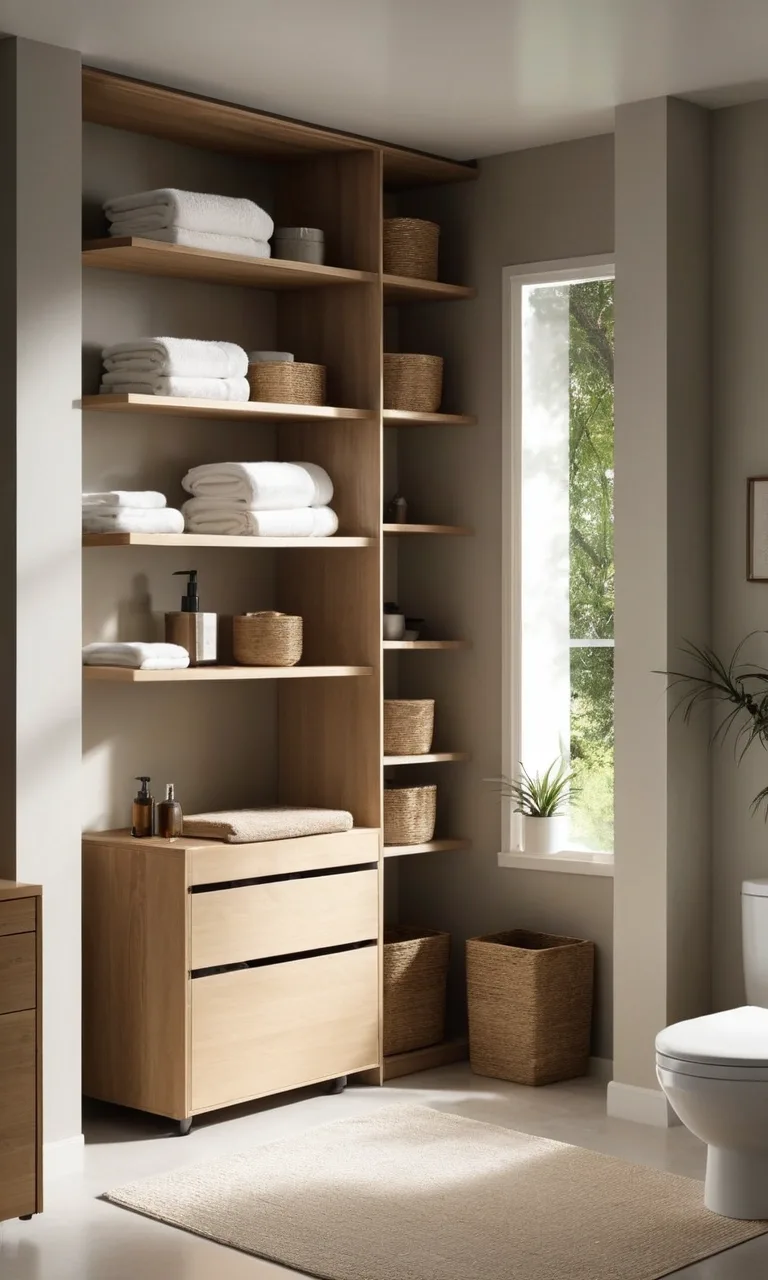
22 Mudroom Storage Ideas for 2026
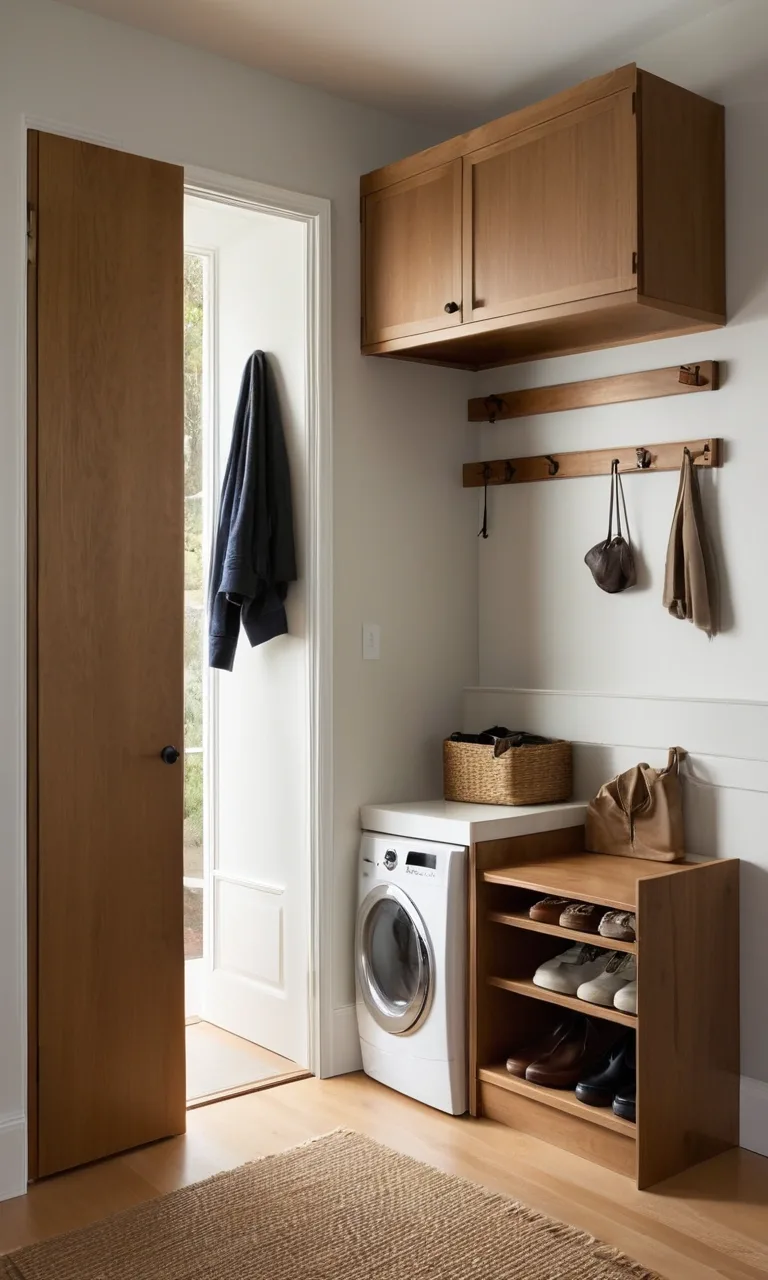
A mudroom can quickly become one of the busiest and messiest areas in your home. Between muddy shoes, jackets, backpacks, and everyday essentials, even a spacious entryway can feel overcrowded.
The good news is that an organized mudroom doesn't require a complete renovation. Thoughtful storage choices can transform an overlooked corner into a practical space that makes daily routines easier.
Whether you have a narrow hallway, a dedicated mudroom, or a small entrance beside your kitchen, there are plenty of ways to create storage without sacrificing style.
These 22 mudroom storage ideas for 2026 combine clever cabinetry, comfortable seating, accessible hooks, and space-saving designs to help you make the most of your entryway.
What Do People Store in a Mudroom?
A mudroom usually holds the belongings people need when leaving or returning home. Common essentials include footwear, outdoor clothing, handbags, school backpacks, umbrellas, and seasonal accessories.
Depending on your household, you might also need room for dog leashes, cleaning supplies, reusable shopping bags, or sports equipment.
The most effective approach is to organize belongings according to how frequently they're used. Everyday items should remain within easy reach, while occasional accessories can go into higher shelves or enclosed cabinets.
Including a comfortable place to sit, a designated shoe area, and enough hanging space can make the entire entryway easier to maintain.
1. Vertical Drop Zone
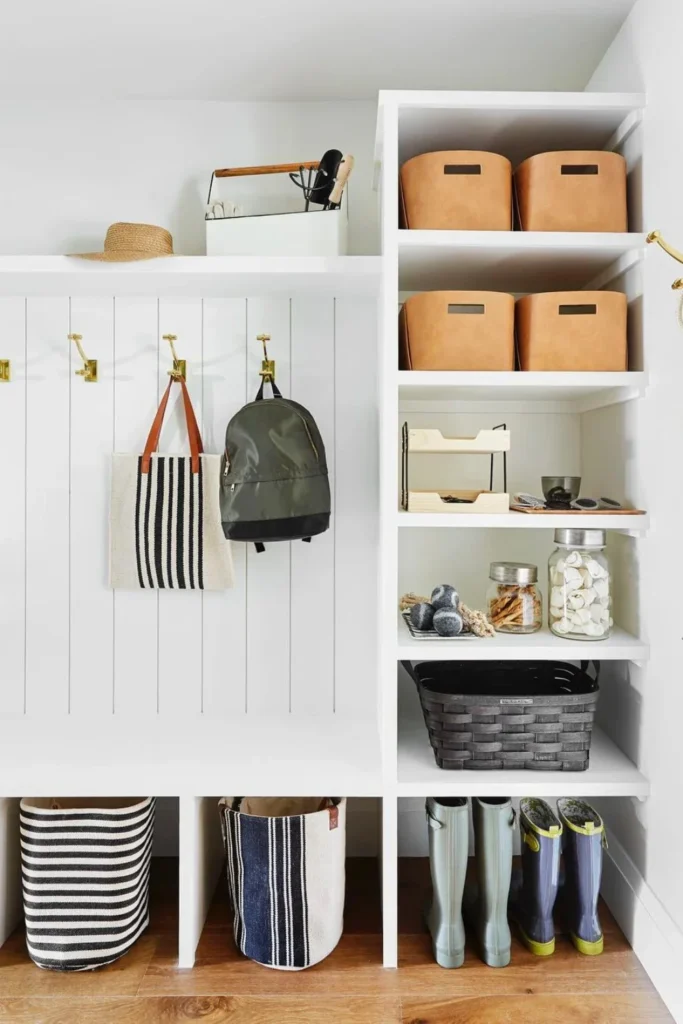
A vertical drop zone makes excellent use of an empty wall, especially when your entryway doesn't have enough room for large furniture.
Install several sturdy hooks for jackets, backpacks, and handbags, then position a narrow bench or shoe organizer underneath. Wall-mounted shelves above the hooks can accommodate labeled baskets for smaller accessories.
Keep frequently used belongings at comfortable reaching heights and reserve upper shelves for lightweight seasonal items.
Choose durable wall finishes and bright lighting to make this compact arrangement feel welcoming rather than crowded.
2. Built-In Bench Lockers
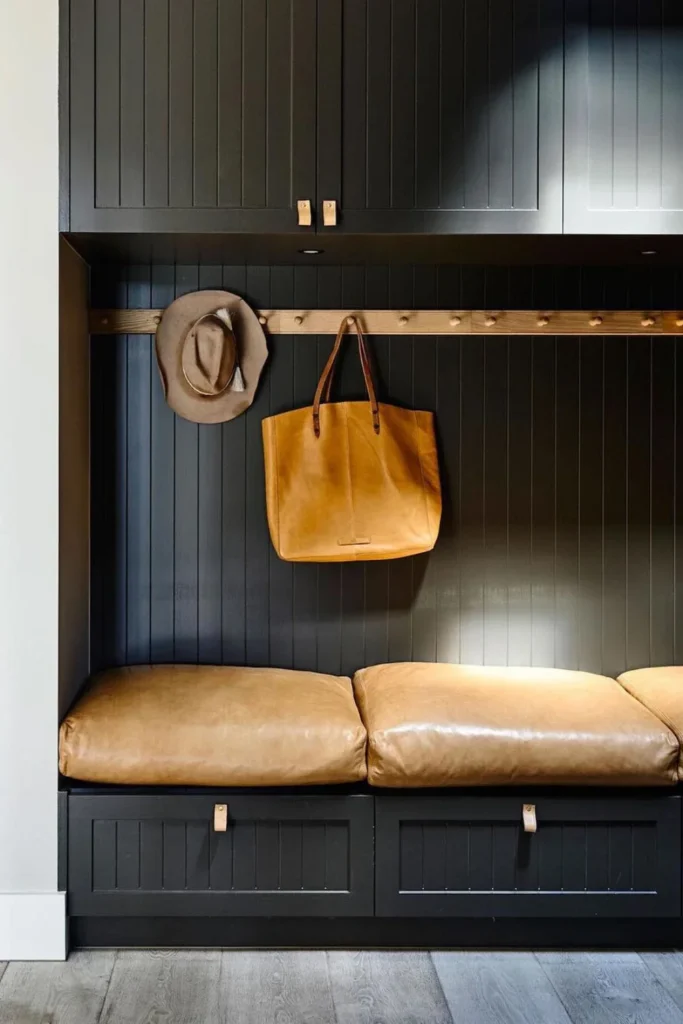
Built-in bench lockers combine seating and concealed storage into one coordinated design.
Start with a comfortable bench featuring drawers or compartments underneath. Add enclosed cabinets above or beside the seating area to accommodate outerwear, backpacks, and other bulky belongings.
This arrangement is particularly helpful when you prefer a tidy appearance without displaying everything stored in your mudroom.
Choose moisture-resistant materials near exterior entrances, and include ventilation where damp footwear or clothing might otherwise remain trapped.
3. Slim Wall Cubbies
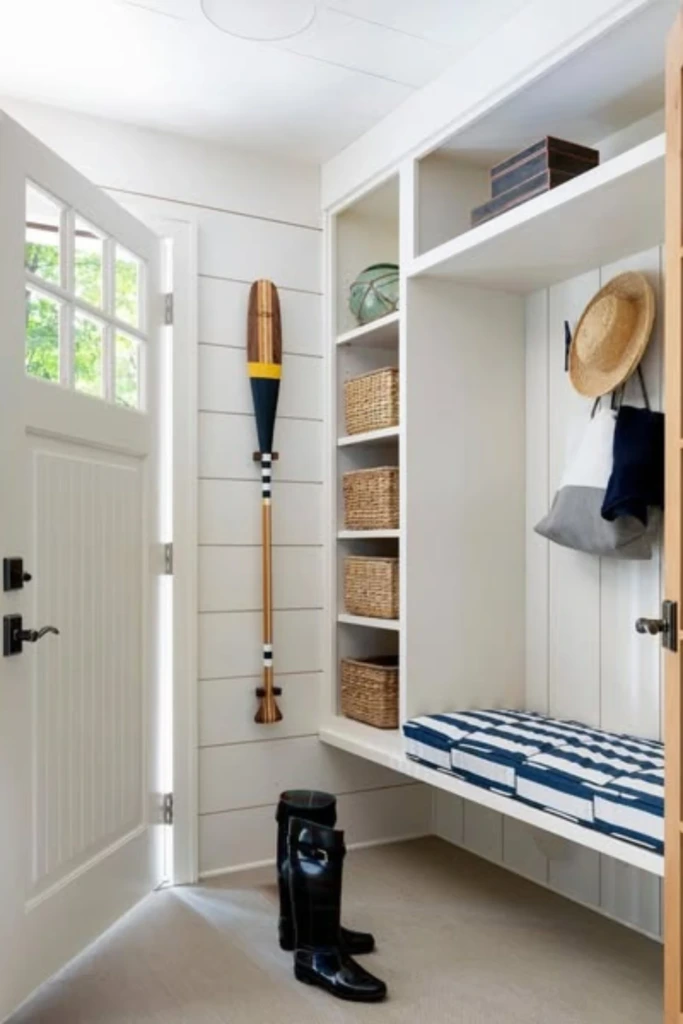
Limited floor space doesn't have to prevent you from creating an organized entrance.
Slim wall cubbies provide individual compartments for shoes, bags, and everyday accessories without requiring deep cabinetry. Their shallow profile makes them especially suitable for narrow hallways.
Arrange the cubbies vertically and use matching containers to prevent smaller belongings from becoming scattered.
A compact bench beneath the shelving can provide convenient seating while preserving enough room for people to walk comfortably through the entryway.
4. Full-Height Cabinets
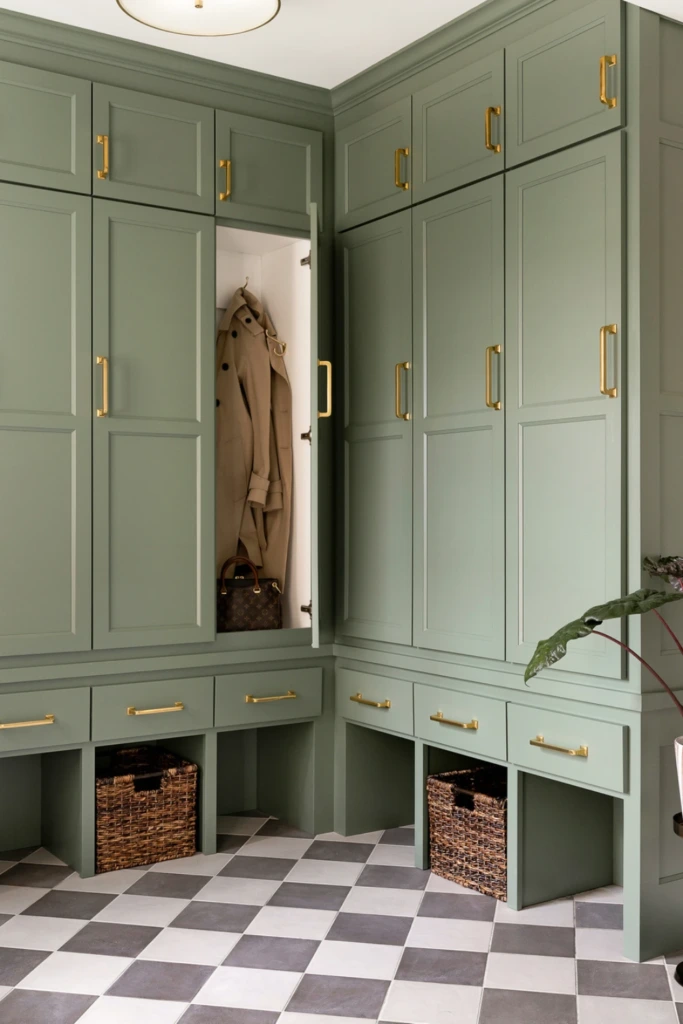
Floor-to-ceiling cabinetry is an effective choice for households needing generous storage in a relatively small footprint.
Tall cabinets can accommodate long coats, boots, sports equipment, and seasonal belongings. Adjustable interior shelves allow you to change the layout as your storage needs evolve.
Use lower compartments for items accessed daily and reserve the highest sections for belongings that rarely leave storage.
Cabinet doors with simple handles and finishes that complement nearby rooms can help the mudroom feel like a natural extension of your home.
5. Locker-Style Wall
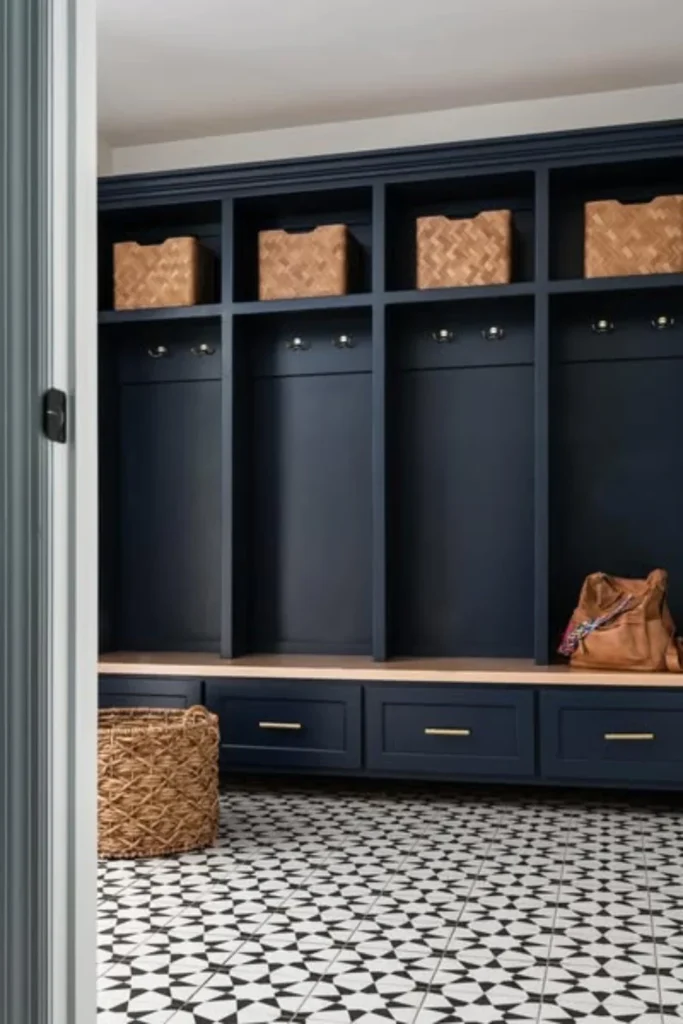
A locker-style wall gives every household member a dedicated place for personal belongings.
Create separate vertical compartments with individual coat hooks, shoe storage, and small shelves. Assigning a section to each person makes it easier to identify where backpacks, jackets, and accessories belong.
This design works particularly well for families with children because it encourages independent organization.
Consider adding name labels and positioning children's hooks lower so they can manage their belongings without assistance.
6. Cabinet-Framed Bench
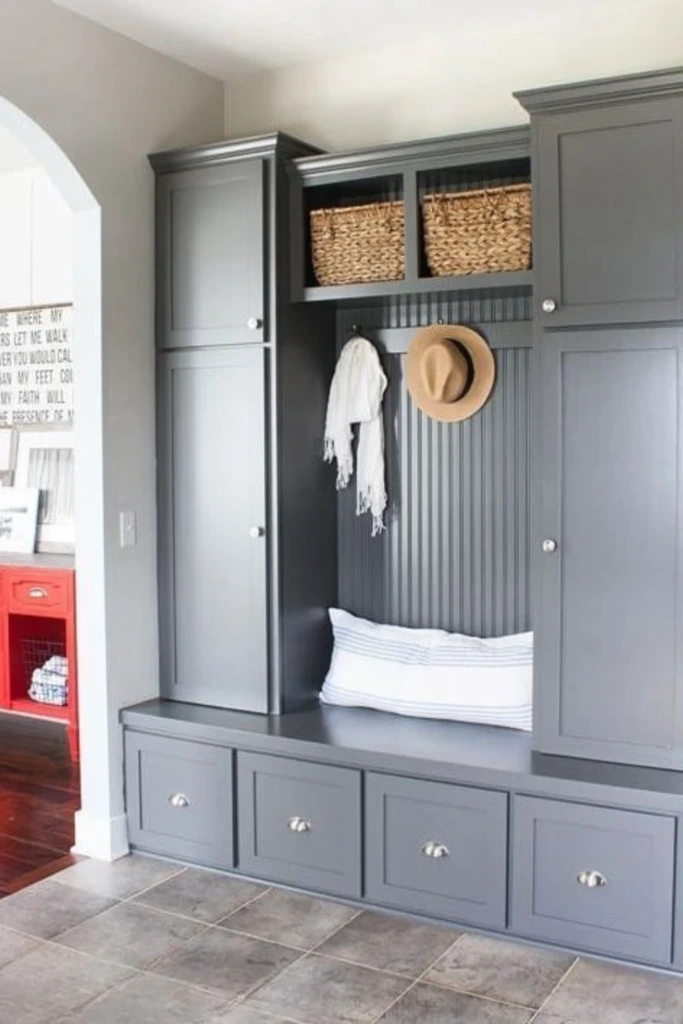
A bench positioned between two tall cabinets creates an attractive storage feature while making efficient use of one wall.
The side cabinets can conceal coats, cleaning supplies, and oversized accessories, while the center bench provides a comfortable spot for changing shoes.
Drawers or open compartments beneath the seat offer additional footwear storage.
For a polished appearance, use matching cabinet finishes and add a durable wall panel behind the bench to protect the surface from scuffs and everyday wear.
7. Slatted Wall System
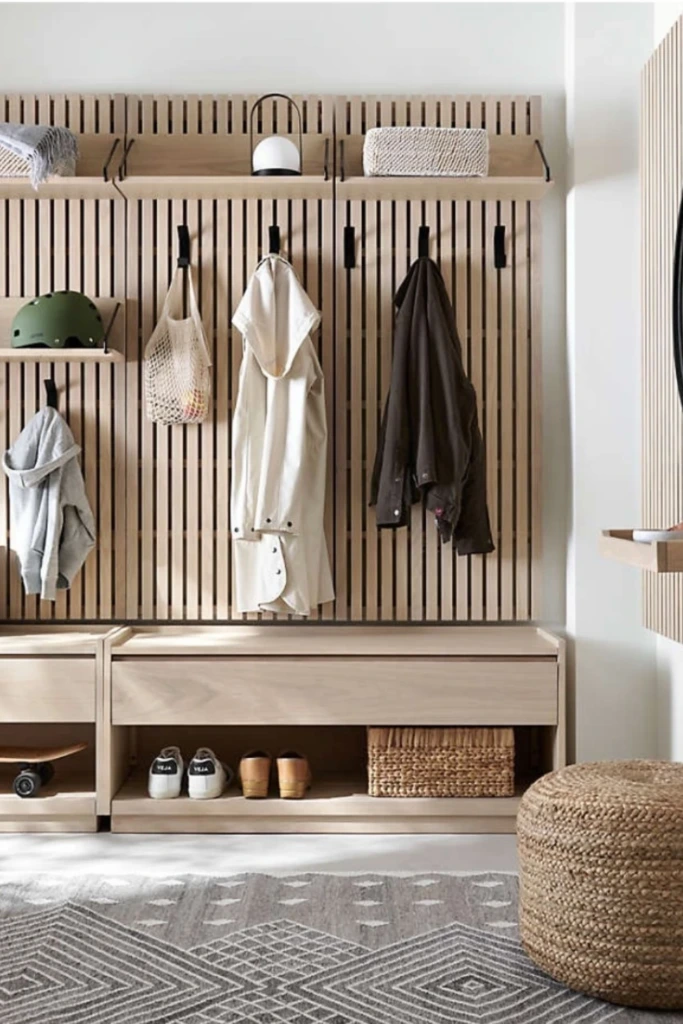
A slatted wall system introduces texture while providing adaptable storage for frequently used belongings.
Depending on the system, compatible hooks, shelves, and hanging accessories can be repositioned as your needs change. This flexibility is useful when different seasons require different types of storage.
Pair the wall panels with a floating bench or compact shoe cabinet to keep the floor organized.
Natural wood finishes can create a warm, contemporary appearance, while painted slats work beautifully in minimalist interiors.
8. Glass-Front Storage
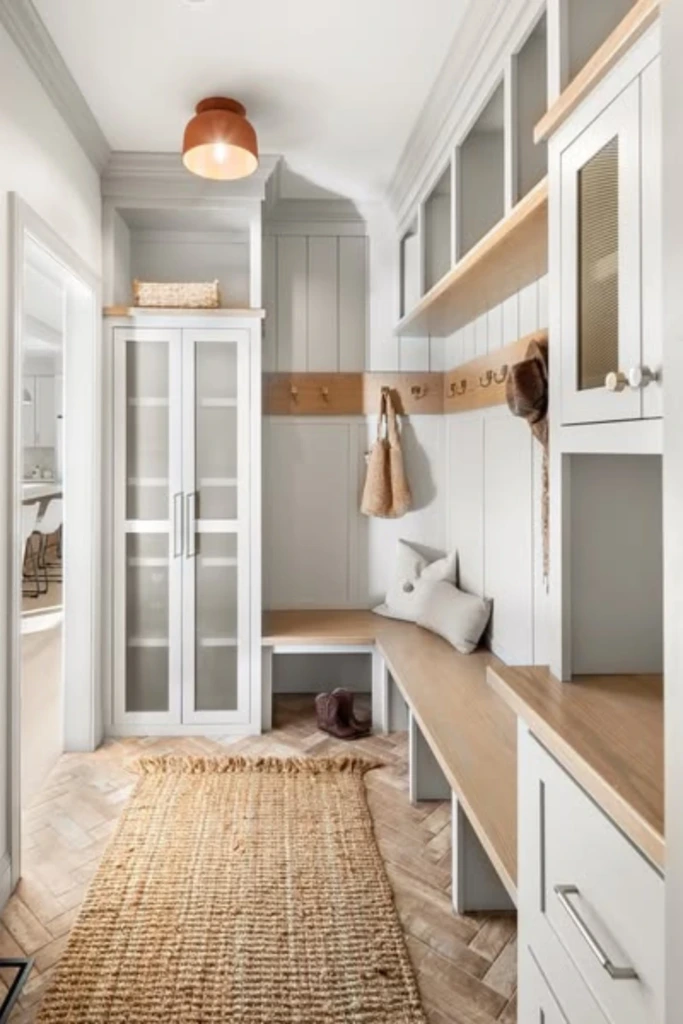
Glass-front cabinets offer an elegant alternative to traditional solid cabinet doors.
They work especially well for neatly arranged baskets, folded accessories, or decorative storage containers. Because the contents remain visible, it's easier to locate belongings without opening several cabinets.
Frosted or textured glass provides a softer appearance when you prefer to conceal some of the contents.
Combine upper glass-front cabinetry with closed lower drawers to balance decorative appeal and practical organization.
9. Vented Upper Cabinets
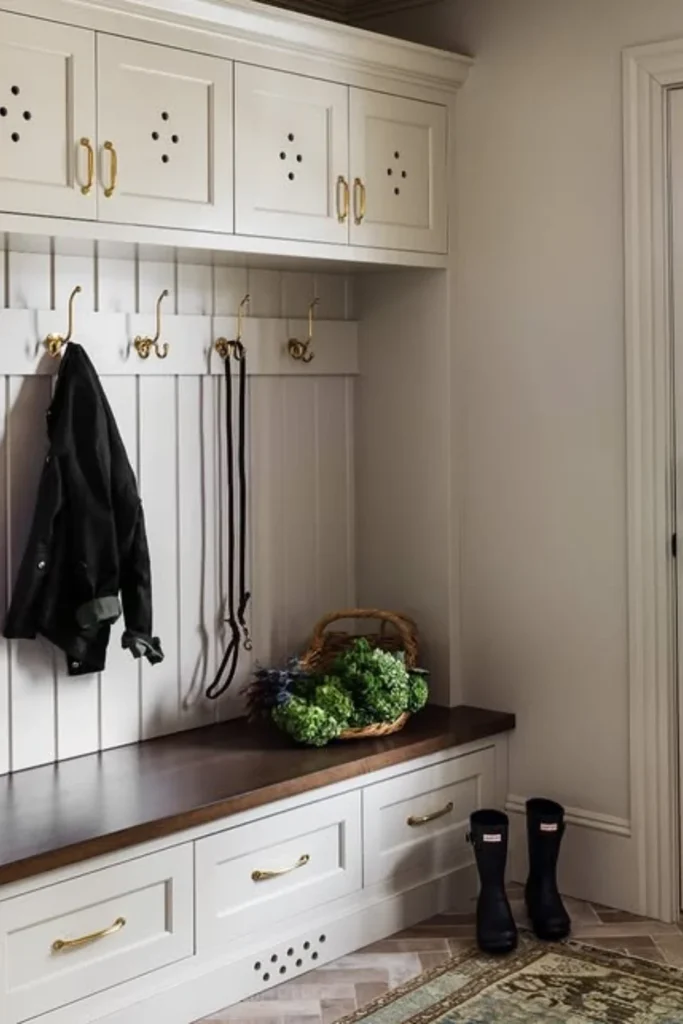
Ventilated cabinets are worth considering in mudrooms that regularly handle damp outdoor clothing.
Cabinet doors with perforated panels, louvers, or mesh inserts can encourage air movement around stored belongings.
Use these compartments for dry or mostly dry outdoor accessories that benefit from breathable storage.
Wet coats and boots should be allowed to dry thoroughly before being enclosed, since ventilation panels alone may not prevent moisture buildup.
Position a washable mat near the entrance to collect water and dirt before they spread across the room.
10. Framed Bench Niche
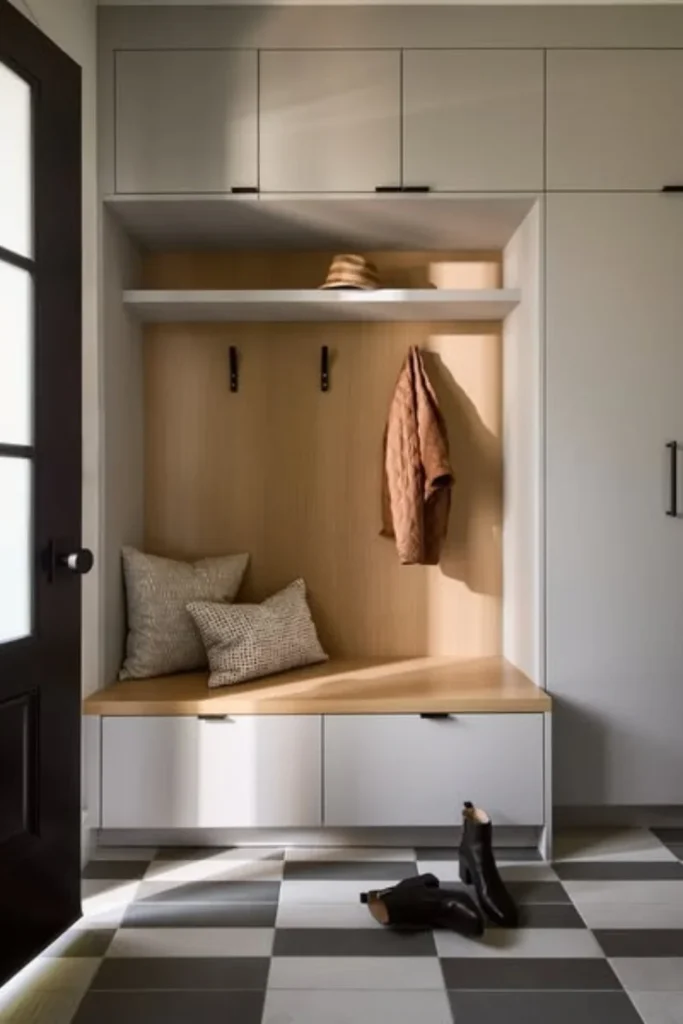
A framed bench niche creates a dedicated seating area without requiring a separate piece of furniture.
The design typically features a recessed bench surrounded by cabinetry or decorative wall framing. Hooks above the seating area provide accessible storage for coats and bags.
Choose a sturdy seat surface and add a washable cushion if you want extra comfort.
This arrangement is particularly attractive in compact entrances because the storage feels integrated into the architecture rather than added as an afterthought.
11. Basket Upper Cubbies
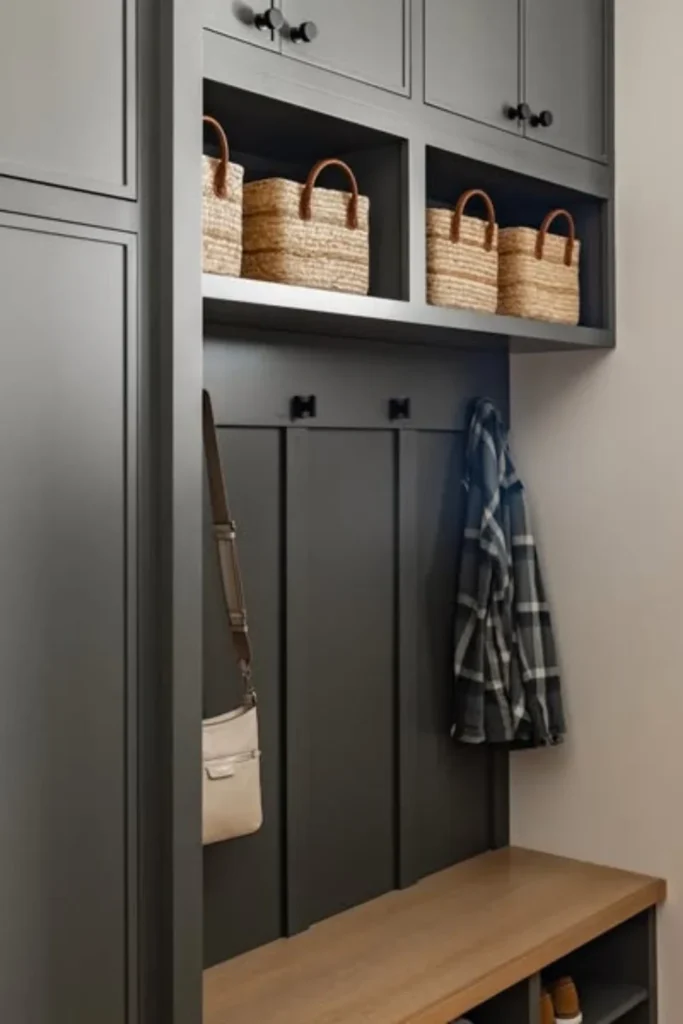
Upper cubbies fitted with baskets provide an easy solution for organizing small accessories that might otherwise disappear into drawers.
Use separate baskets for scarves, gloves, hats, and other seasonal essentials. Labels can make shared storage easier for everyone to navigate.
Lightweight woven or fabric baskets are suitable for higher shelves, especially when they have handles for safer retrieval.
Keep heavier belongings at lower levels and avoid overfilling the baskets so they remain easy to remove.
12. Layered Open Shelves
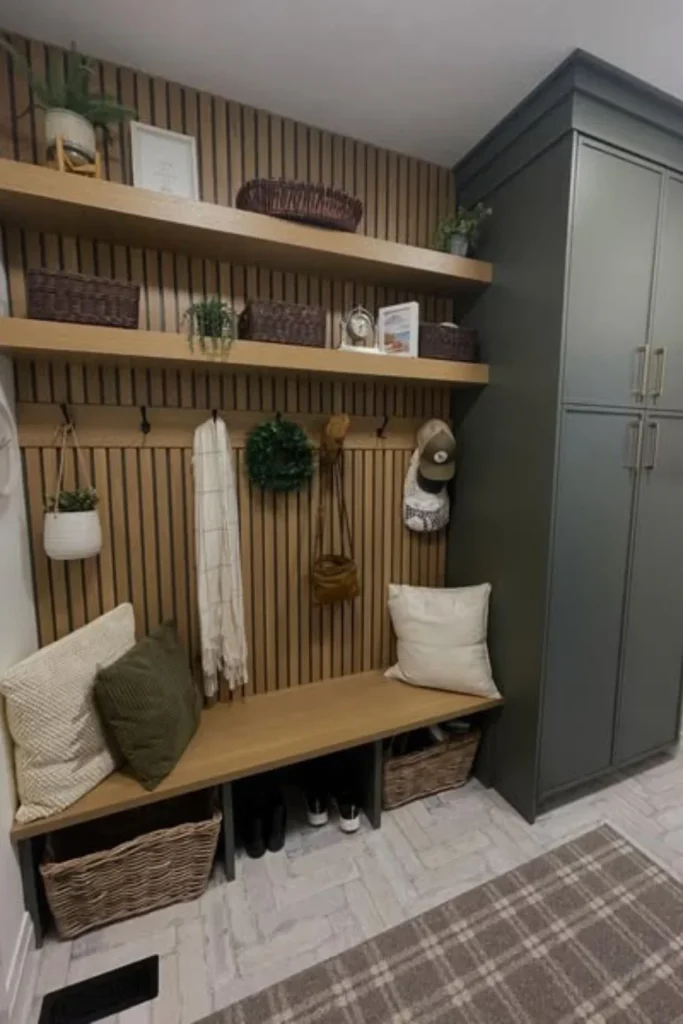
Layered open shelving creates flexible storage without the visual weight of large enclosed cabinets.
Install shelves at different heights to accommodate storage baskets, decorative containers, and frequently used accessories.
A combination of wood shelves and metal brackets can suit farmhouse, industrial, or contemporary interiors.
Keep the arrangement practical by grouping similar items and leaving some open space between containers. Too many objects on display can make the entryway appear cluttered.
13. Arched Storage Nook
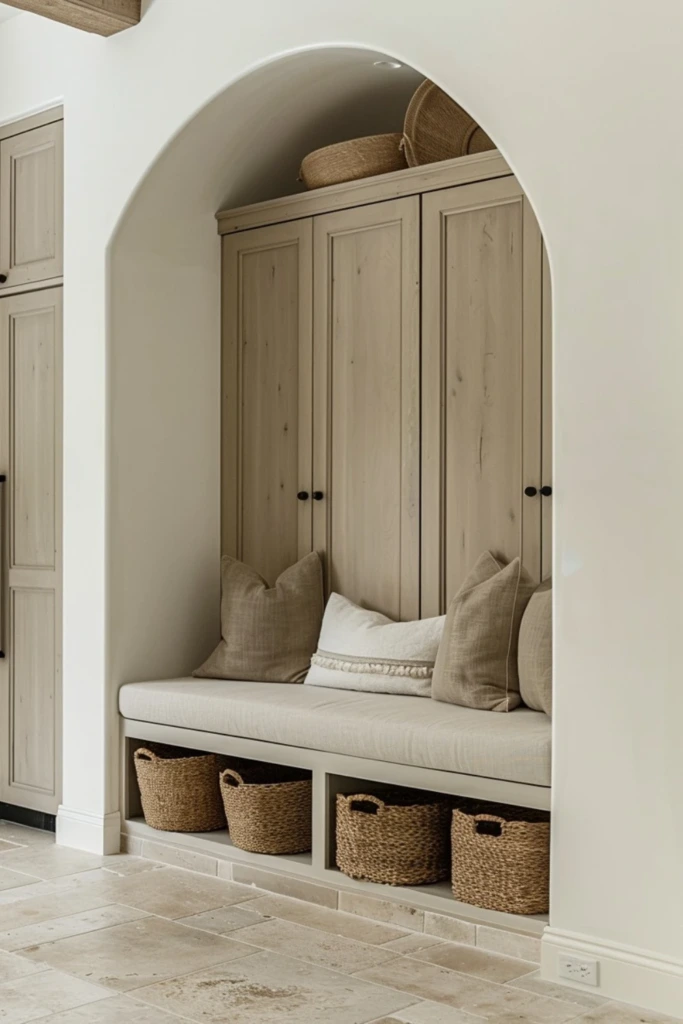
An arched storage nook brings architectural character to a functional mudroom.
The curved opening can frame a built-in bench, coat hooks, and lower shoe compartments, turning a basic storage area into a distinctive design feature.
Use a contrasting paint color or wood backing to emphasize the shape of the arch.
For additional storage, incorporate cabinets around the niche where wall depth permits. This design works particularly well in homes with traditional, cottage-inspired, or transitional interiors.
14. Utility Storage Tower
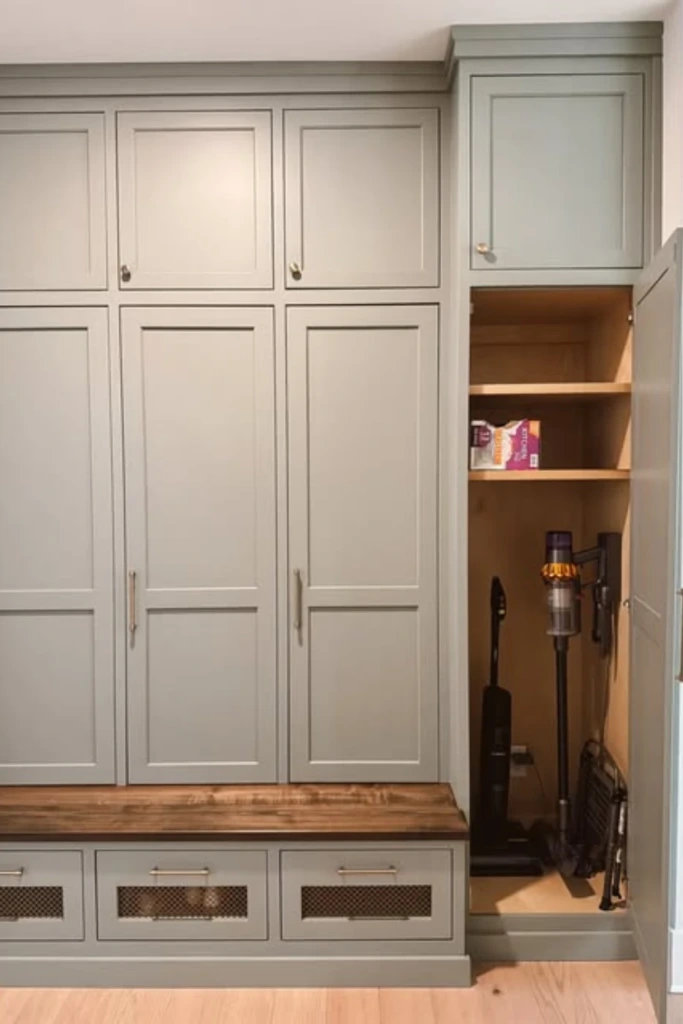
A utility storage tower keeps taller household equipment organized without taking over the entire mudroom.
Dedicate a narrow, full-height cabinet to items such as a broom, vacuum, dustpan, and cleaning accessories.
Adjustable shelves can hold smaller supplies, while wall-mounted clips prevent long-handled tools from falling over.
If storing cleaning products, keep them secured away from children and pets. A separate ventilated area is preferable for damp cleaning equipment.
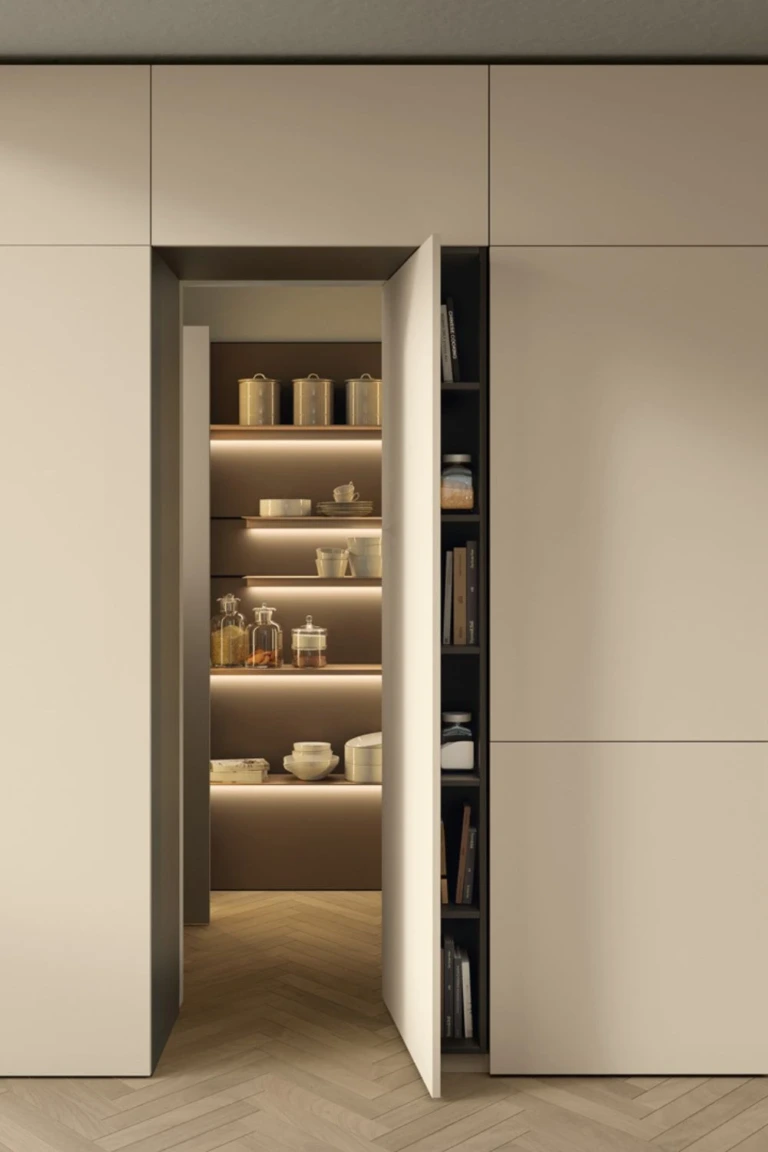
15. Mudroom-Pantry Combo
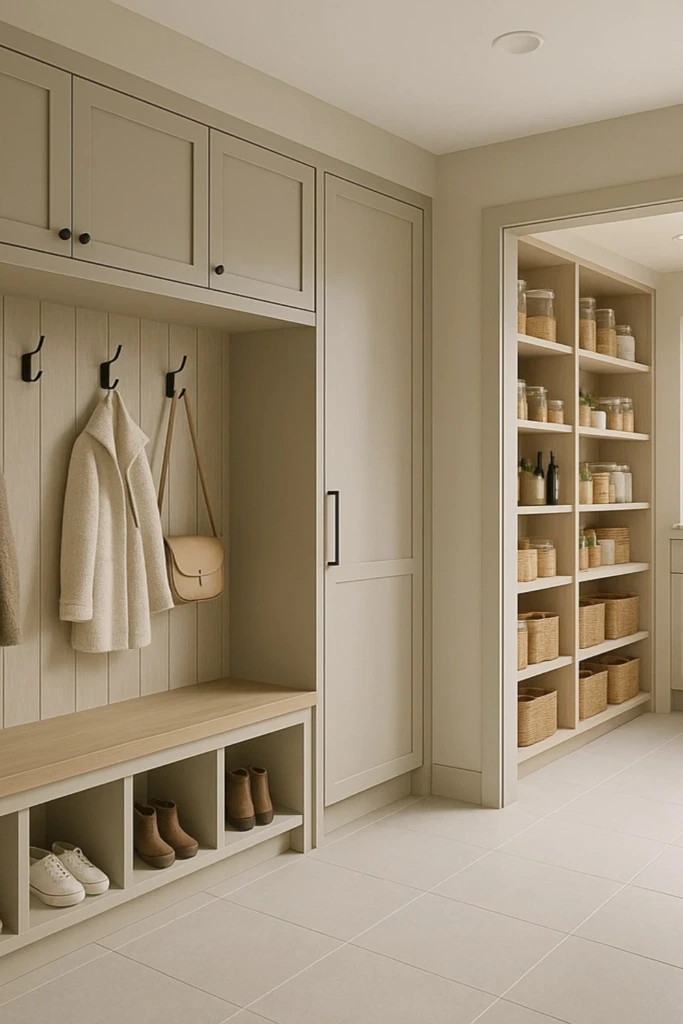
Combining a mudroom with an adjacent pantry can make efficient use of space near the kitchen.
Create separate zones so outdoor belongings remain near the entrance while food and household supplies have their own organized storage.
A bench with coat hooks can serve the mudroom side, while enclosed cabinets or pantry shelving accommodate dry groceries and kitchen extras.
Choose easy-clean surfaces and keep dirty shoes, wet clothing, and cleaning chemicals away from food storage.
Clear separation between the two functions helps the shared space remain hygienic and convenient.
16. Window Seat Dropzone
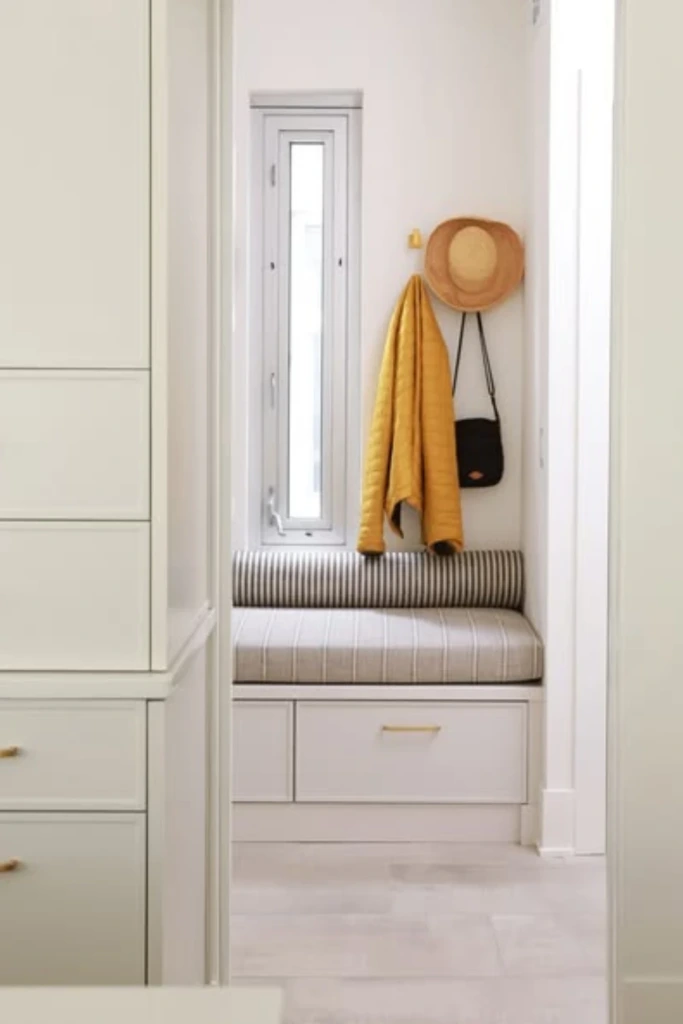
A window seat can transform an underused entryway wall into a comfortable and practical storage area.
Install a bench beneath the window with drawers or cubbies for shoes and everyday accessories.
Natural daylight makes the seating area pleasant, while a durable cushion adds comfort.
Avoid placing tall cabinets where they would block the window. Instead, consider shallow shelves or storage units on either side if space allows.
This design is especially useful when you want a mudroom that feels bright and connected to the rest of your home.
17. Zoned Storage Wall
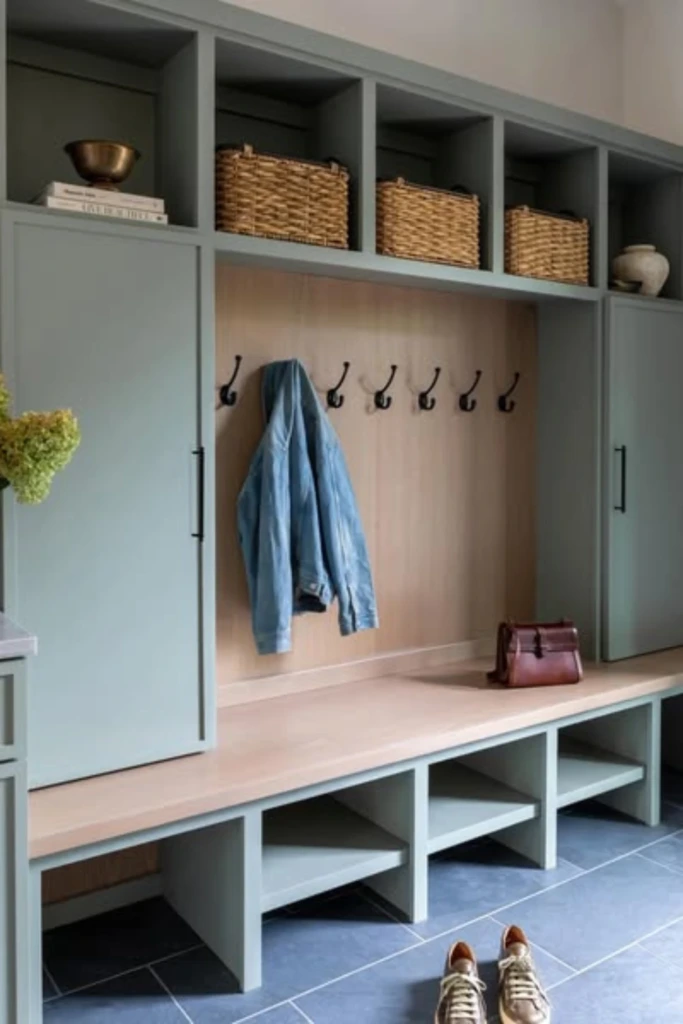
A zoned storage wall organizes different belongings according to their purpose.
Divide the wall into sections for hanging coats, storing footwear, organizing accessories, and keeping seasonal equipment.
For example, hooks can occupy the center, shoe compartments can sit beneath them, and upper cabinets can hold less frequently used items.
This arrangement helps prevent unrelated belongings from becoming mixed together.
Before installing cabinetry, measure your largest items and plan enough clearance for doors, drawers, and comfortable movement.
18. Mixed Material Zones
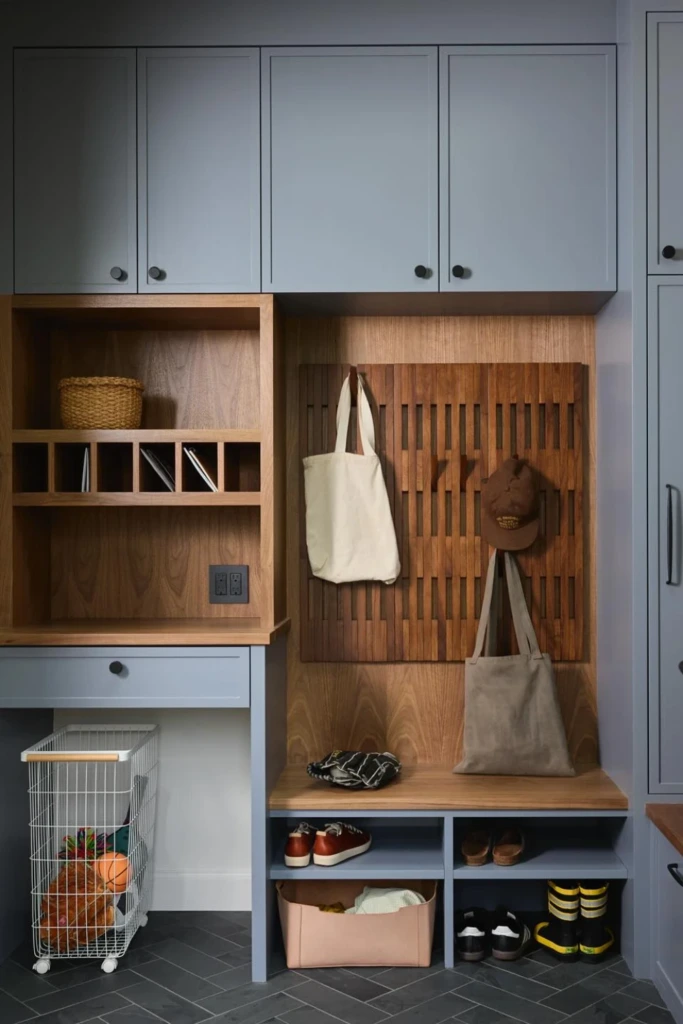
Combining different materials can give your mudroom a custom-designed appearance.
Try pairing natural wood wall panels with painted cabinetry, metal hooks, and woven storage baskets. The contrast adds visual interest while allowing each storage element to serve a practical purpose.
Wood finishes introduce warmth, while smooth painted cabinets are generally easy to wipe clean.
Choose materials suited to moisture, dirt, and frequent contact, especially around the bench and shoe storage.
Keeping the color palette coordinated prevents the mixture of finishes from overwhelming a smaller room.
19. Corner Bench Storage
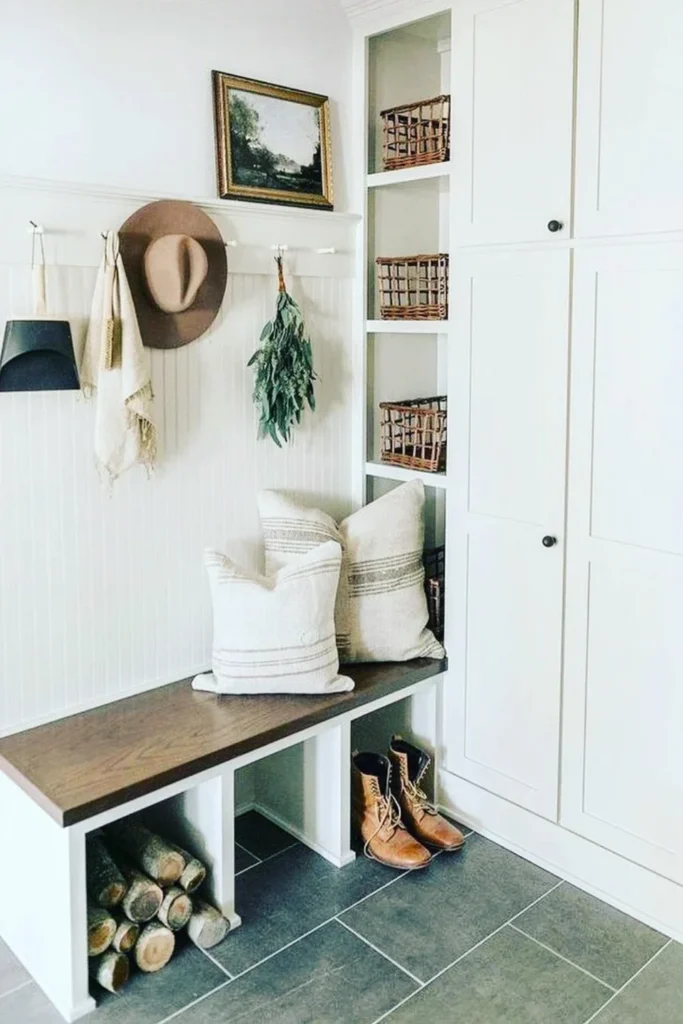
An unused corner can become valuable storage space with a carefully planned bench.
An L-shaped seat provides room for more than one person, while compartments beneath the seating can accommodate shoes and baskets.
Install hooks or shallow shelves above the bench to take advantage of the surrounding walls.
Consider using drawers in the most accessible sections and open cubbies in areas where drawer clearance would be restricted.
This arrangement works well in square mudrooms or entrances with awkward layouts.
20. LED Bench Niche
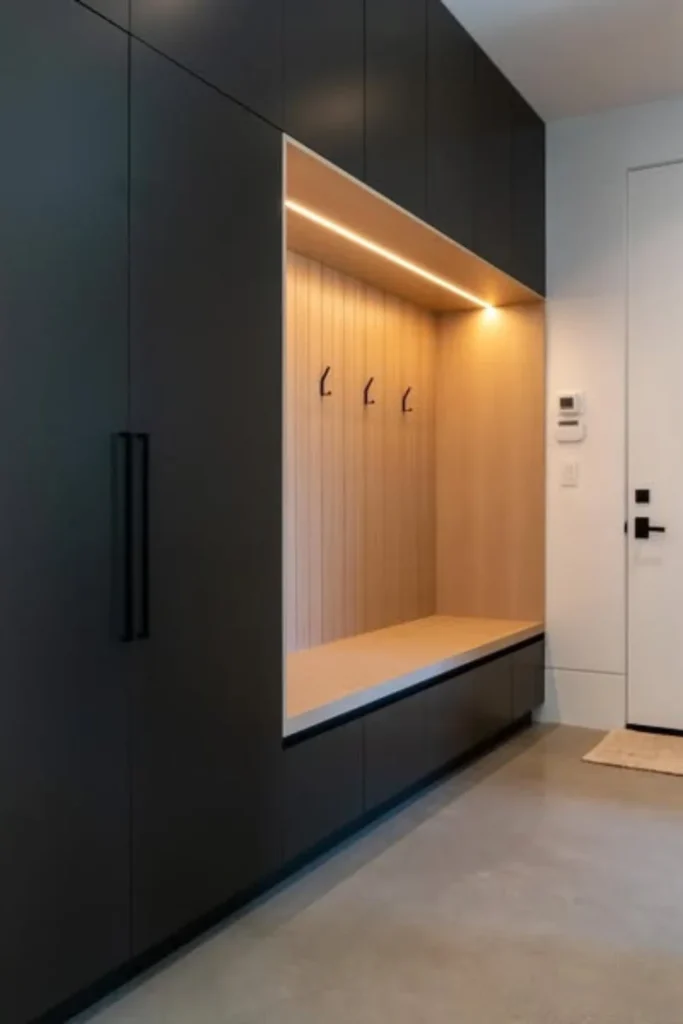
Integrated lighting can make a compact mudroom more functional and visually appealing.
Install an LED strip beneath an upper shelf or inside a recessed bench area to illuminate coat hooks and frequently used belongings.
Warm-white lighting creates a comfortable atmosphere, while a diffuser helps prevent harsh points of light.
Pair the accent lighting with adequate overhead illumination so the entire space remains safe to navigate.
Choose lighting products appropriate for the installation environment and keep electrical components protected from moisture.
21. Open Rail System
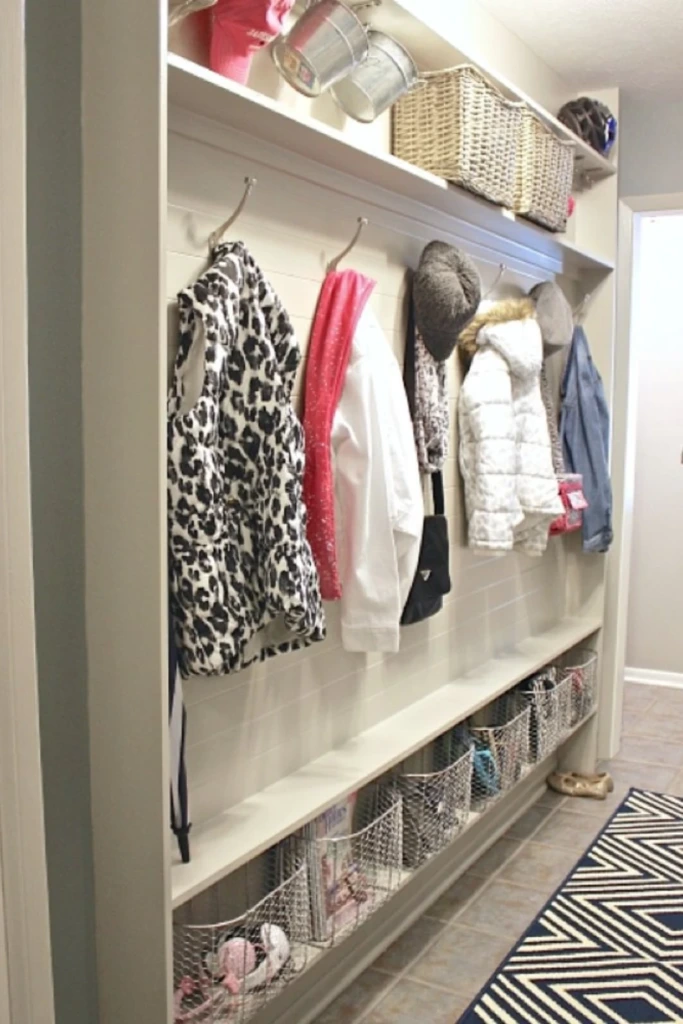
An open rail system offers straightforward storage that can be installed without custom cabinetry.
Mount a strong horizontal rail with hooks for coats, backpacks, hats, and reusable bags.
Below the rail, position wire baskets or open shoe racks to organize footwear and accessories.
This arrangement is particularly convenient for busy households because belongings remain visible and accessible.
Secure the rail into suitable wall supports and check its load rating before hanging heavy bags or multiple winter coats.
22. Drawer Bench Storage
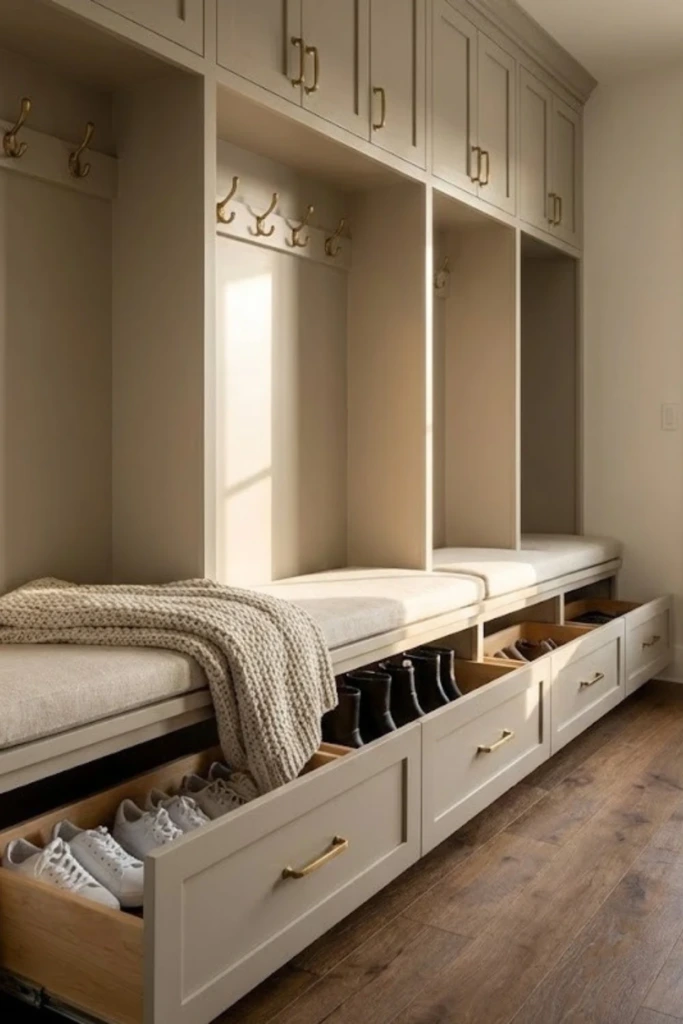
A bench with built-in drawers provides comfortable seating while keeping footwear and accessories out of sight.
Deep drawers can accommodate shoes, while shallower compartments are useful for gloves, keys, and smaller essentials.
Full-extension drawer runners make it easier to reach items stored toward the back.
Choose durable hardware that can withstand frequent opening and closing, and consider removable drawer liners to simplify cleaning.
This storage solution is ideal for mudrooms where maintaining a neat, uncluttered appearance is a priority.
How much storage does a mudroom really need?
The amount of storage depends on household size, daily activities, and the types of belongings kept near the entrance.
A practical starting point is to provide each person with space for their everyday coat, bag, and frequently worn shoes. Additional compartments may be necessary for seasonal footwear, sports equipment, and pet accessories.
Rather than filling every available wall with cabinets, evaluate what actually needs to remain in the mudroom.
Prioritizing accessible storage and leaving some extra capacity will make the space easier to maintain as household needs change.
Should mudroom storage be open or closed?
Both open and closed storage have advantages, and combining them is often the most practical solution.
Open hooks, shelves, and shoe racks provide quick access to frequently used belongings. They can also help damp items dry when the room has adequate ventilation.
Closed cabinets and drawers are better suited to seasonal accessories, miscellaneous supplies, and belongings you prefer to keep out of sight.
For a balanced mudroom, place daily essentials in accessible open storage and reserve enclosed compartments for less frequently used items. This approach creates an entryway that is organized, comfortable, and easy to use throughout the year.