22 Bathroom Wall Storage Ideas for 2026
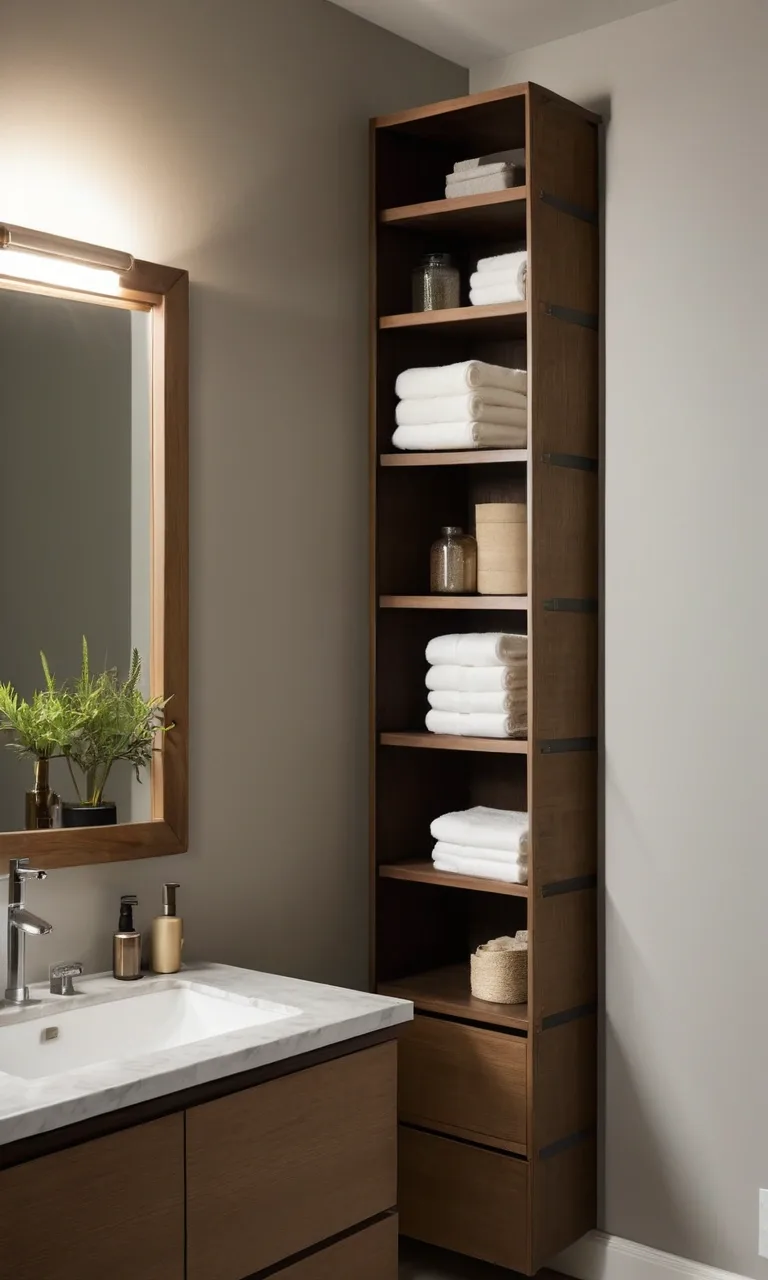
A bathroom can become cluttered surprisingly quickly, even when you have only a few daily essentials. Shampoo bottles, skincare products, fresh towels, and spare toilet paper all need a place, and limited counter space makes keeping everything organized a challenge.
The solution is often to make better use of your walls. Vertical storage helps free up valuable floor and counter space while keeping frequently used items within reach. From sleek floating shelves to concealed cabinets, there are plenty of ways to improve bathroom organization without sacrificing style.
Whether you're working with a compact powder room or a shared family bathroom, the right storage arrangement can make the space feel more practical and comfortable. Here are 22 bathroom wall storage ideas to help you create a tidier, more functional room.
Which Wall Shelving Solutions Work Best for Tiny Bathrooms?
Small bathrooms benefit most from storage that provides enough room for essentials without extending too far into the space. Deep shelves and oversized cabinets can make narrow areas feel crowded, so consider slim profiles and thoughtful placement.
Floating shelves work well beside mirrors or above toilets, while corner units make use of areas that might otherwise remain empty. If you prefer a cleaner appearance, enclosed cabinets hide toiletries and spare supplies behind doors.
Choose shelving according to what you need to store. Lightweight products and decorative accessories can sit on open shelves, while heavier bottles and bulky items need sturdy supports. Keeping frequently used products at a comfortable height also makes everyday routines easier.
1. Hidden Cabinet
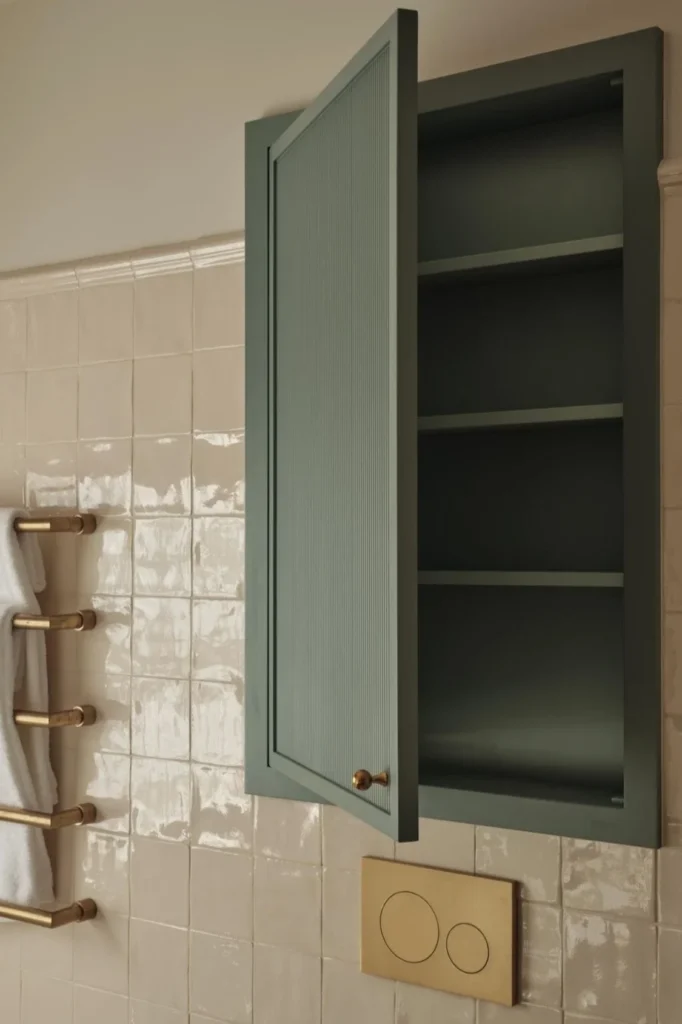
A slim wall-mounted cabinet offers a convenient way to store bathroom essentials without leaving everything on display. Install one above the toilet or beside the vanity to take advantage of unused wall space.
Use the interior for skincare products, spare toiletries, cleaning supplies, or other items that tend to accumulate around the sink. Adjustable shelves can help accommodate containers of different sizes.
For a seamless look, choose a cabinet that matches your wall color or existing finishes. Alternatively, a contrasting finish can turn a practical storage feature into an attractive design detail. Make sure the cabinet is securely mounted and positioned where its doors can open freely.
2. Wall Baskets
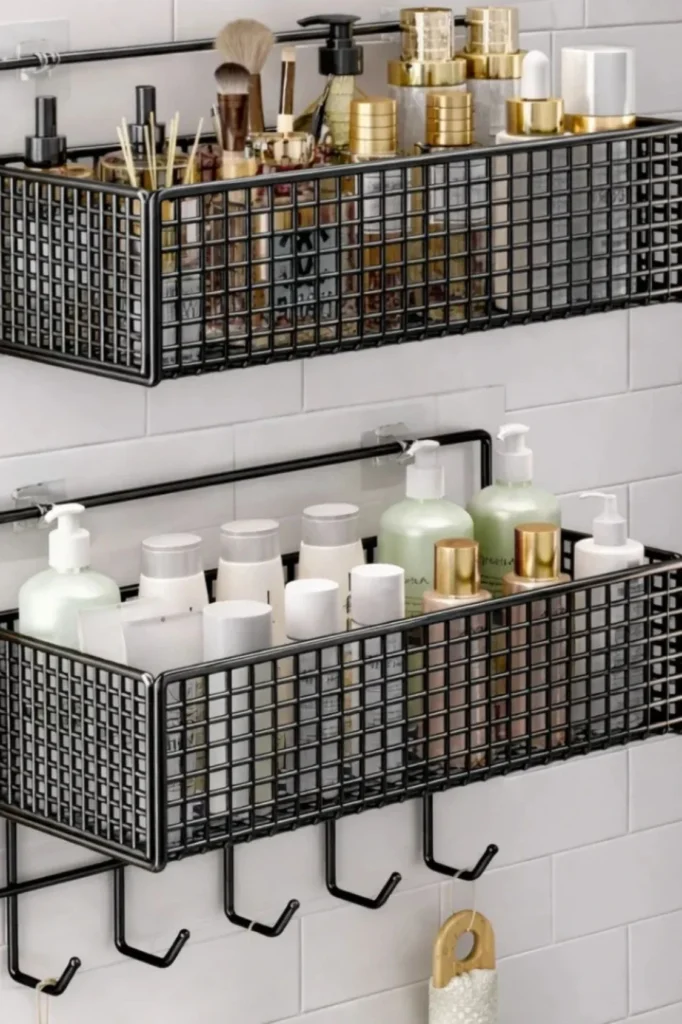
Wall-mounted baskets provide accessible storage for everyday products that would otherwise occupy the countertop. They work particularly well beside a vanity, near a mirror, or inside a shower area when the materials are suitable for wet conditions.
Arrange two or three baskets vertically to separate skincare products, makeup, toiletries, and backup supplies. Smaller items can go in the upper basket, while larger containers fit comfortably below.
Open wire baskets make it easy to see what you have and allow water to drain when used in appropriate shower locations. Some designs also include hooks for washcloths, loofahs, and small brushes.
Choose rust-resistant materials for damp areas, and check the mounting system's weight limit before loading the baskets.
3. Floating Shelves
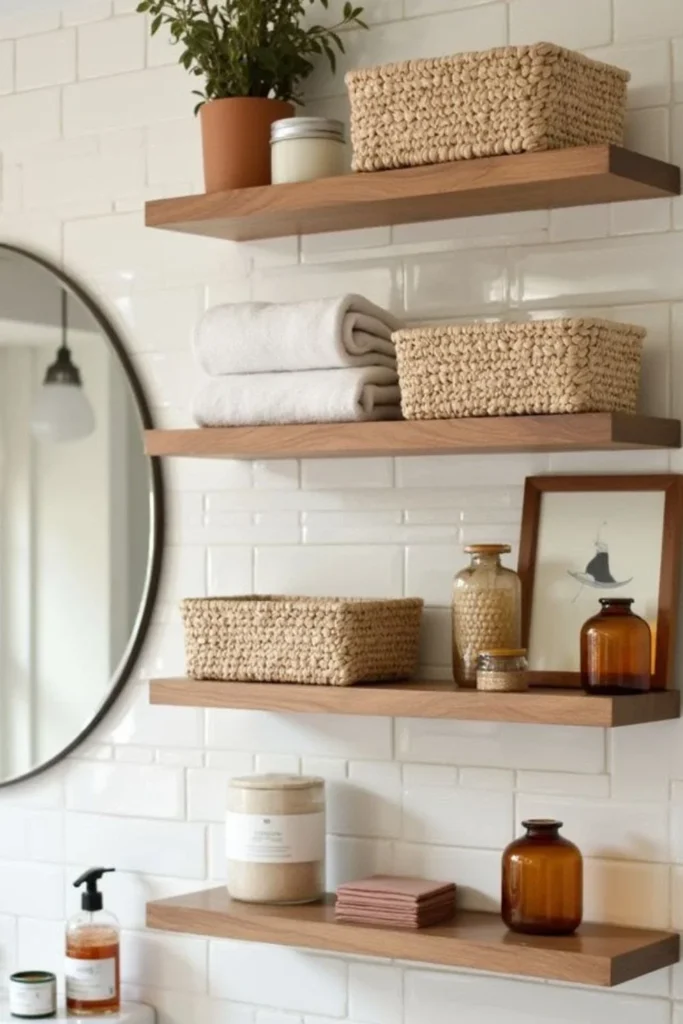
Floating shelves are a simple way to turn an empty wall into useful storage without introducing bulky furniture. A short arrangement beside the bathroom mirror can provide space for neatly folded hand towels, skincare products, and small organizers.
Wooden shelves add warmth to bathrooms dominated by cool tiles, glass, and metal fixtures. White or light-colored shelves, meanwhile, can blend into the wall for a more understated appearance.
Give each shelf a specific purpose instead of filling every available inch. Small baskets can contain loose accessories, while a little decorative space keeps the arrangement from feeling overcrowded.
In narrow bathrooms, shallow shelves are usually more practical because they leave room for movement around the sink. Use suitable wall anchors and keep the shelves within easy reach.
4. Layered Shelves
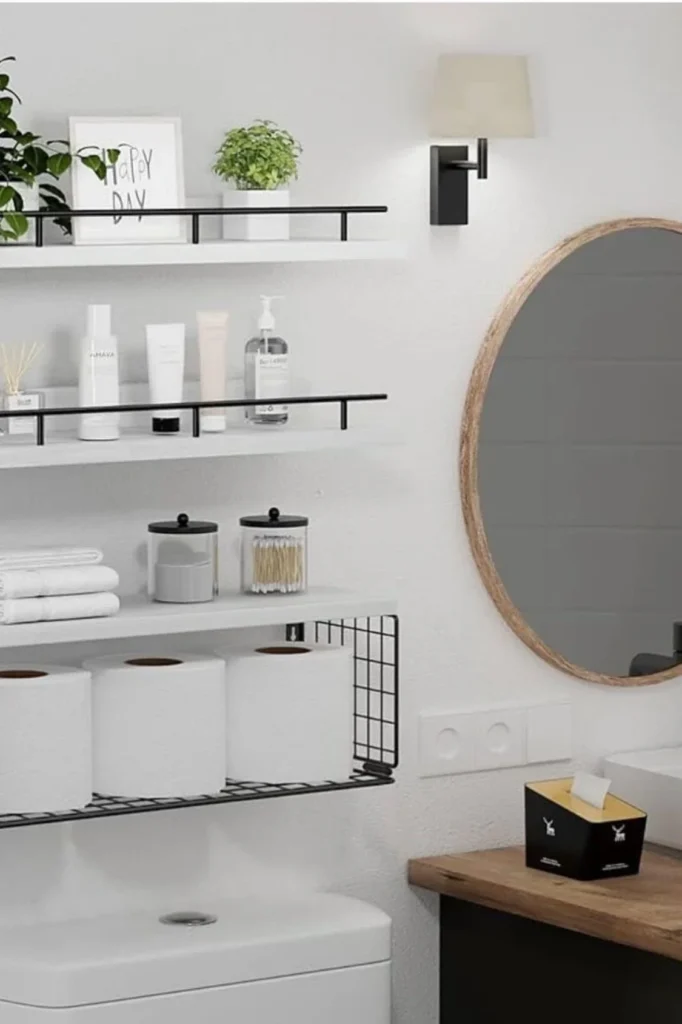
The wall above a toilet can provide several levels of useful storage without taking up additional floor space. Combining narrow shelves with a small basket rack creates separate places for toiletries, towels, and decorative accents.
Reserve the middle shelves for items you reach for regularly, such as facial cleansers and personal care products. Less frequently used supplies can go higher, provided they remain safely accessible.
A basket beneath the shelves is useful for toilet paper rolls or other items that look untidy when left loose. Small plants or simple decorative pieces can occupy the top shelf if the bathroom receives enough light.
Keep the spacing consistent and avoid overcrowding the arrangement. Light finishes can help the shelving blend into a small room rather than dominate the wall.
5. Combo Rack
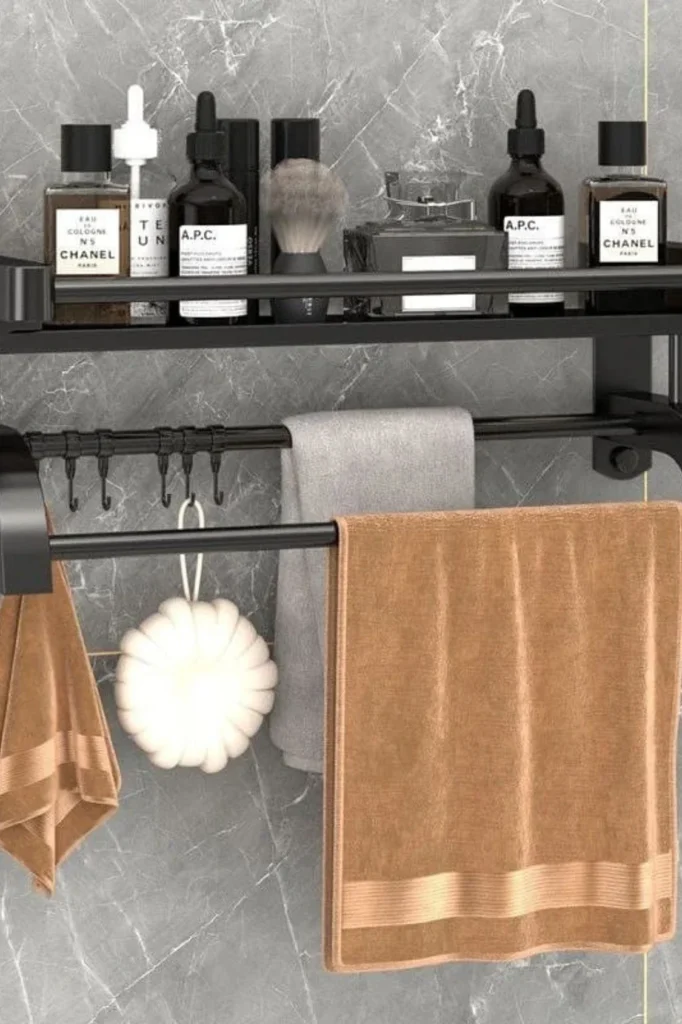
A combination rack brings several storage functions together in one compact unit. Depending on the design, it may include a shelf, towel bar, and hooks for accessories.
Position it near the sink to keep daily toiletries and hand towels conveniently available. In a shower or bathing area, choose a model specifically designed for moisture exposure.
Use the upper shelf for a few frequently used products, the bar for a towel, and the hooks for lightweight accessories. This arrangement reduces the need for several separate fixtures.
Sturdy metal construction is a practical choice, particularly when the rack will hold bottles or multiple towels. Before installation, confirm that the wall and mounting hardware can support the intended load.
6. Basket Storage
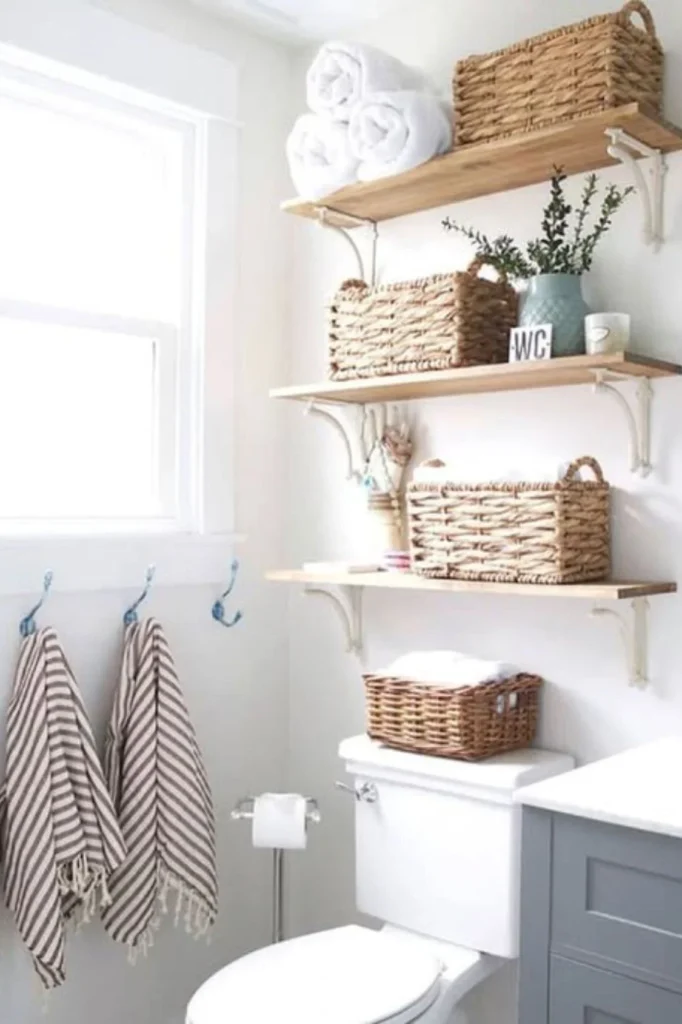
Storage baskets make open shelving easier to maintain by grouping similar items together. Instead of leaving spare toilet paper, washcloths, and toiletries scattered across several shelves, place them in separate containers.
Woven baskets introduce texture and warmth, while plastic or coated options are easier to clean in areas exposed to moisture. Select materials according to where the baskets will be used.
For a coordinated appearance, choose baskets in similar colors or matching shapes. Labeling them can also help family members find supplies and return items to the correct place.
Arrange heavier contents on lower shelves and lighter items above. Leave enough room to remove each basket comfortably, and avoid storing damp towels in closed containers where moisture can accumulate.
7. Towel Rack
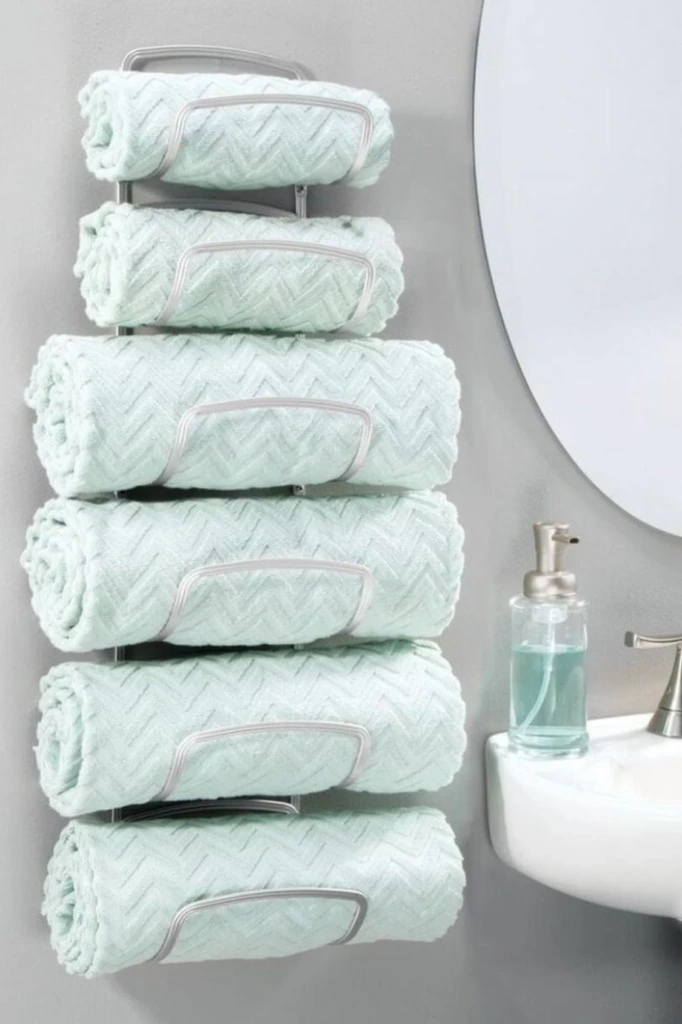
A vertical towel rack helps keep clean towels organized when bathroom cabinets have limited space. Its narrow footprint makes it particularly useful beside a vanity, near the shower entrance, or on an otherwise empty wall.
Some models hold rolled towels in individual compartments, while others feature multiple horizontal bars for folded or hanging towels. Choose the arrangement that suits your household's habits and available space.
Rolling towels can create a uniform appearance and make efficient use of compact compartments. If you prefer folded towels, look for a rack with enough depth and support to prevent stacks from slipping.
A lightweight metal frame can complement modern bathrooms without making the wall feel crowded. Check the rack's capacity and secure it properly before storing several towels.
8. Tiered Shelves
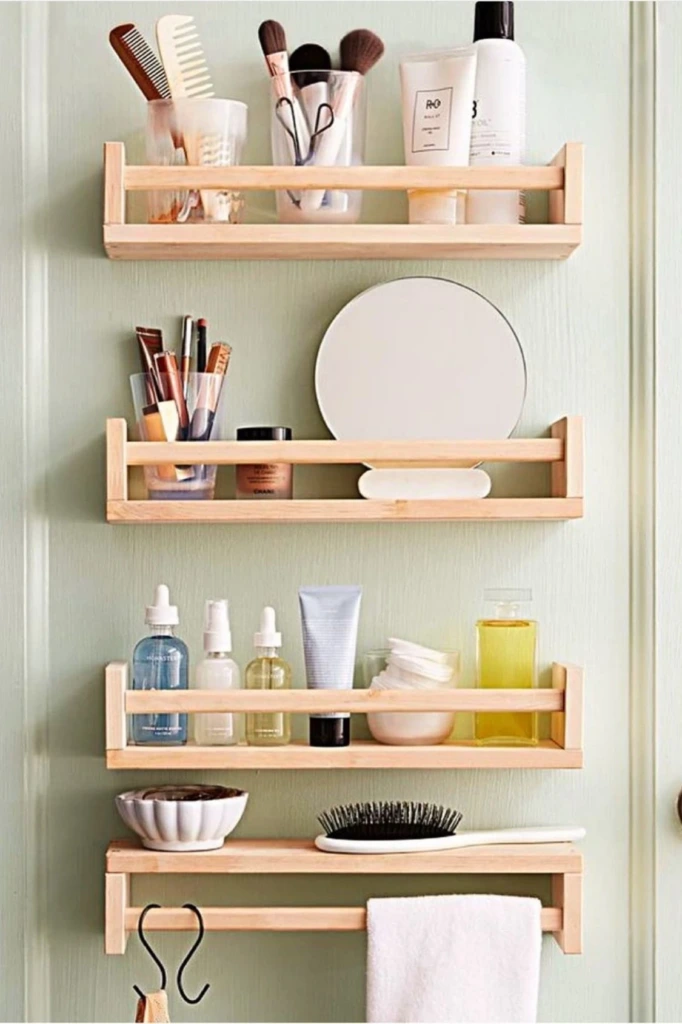
Tiered shelves provide an organized home for the different products used during a morning or evening routine. By arranging storage vertically, you can separate essentials without spreading them across the vanity.
Assign each level a purpose. Brushes and hair accessories might occupy the top shelf, everyday skincare can sit in the middle, and backup products can be placed lower down.
Slim wooden shelves add a natural finish, while small raised edges help prevent bottles and containers from sliding off. You can also introduce compact trays to keep small items grouped together.
Place heavier products on lower levels and leave sufficient clearance between shelves for the tallest containers. A consistent layout makes it easier to find things and helps prevent clutter from returning.
9. Shower Shelf
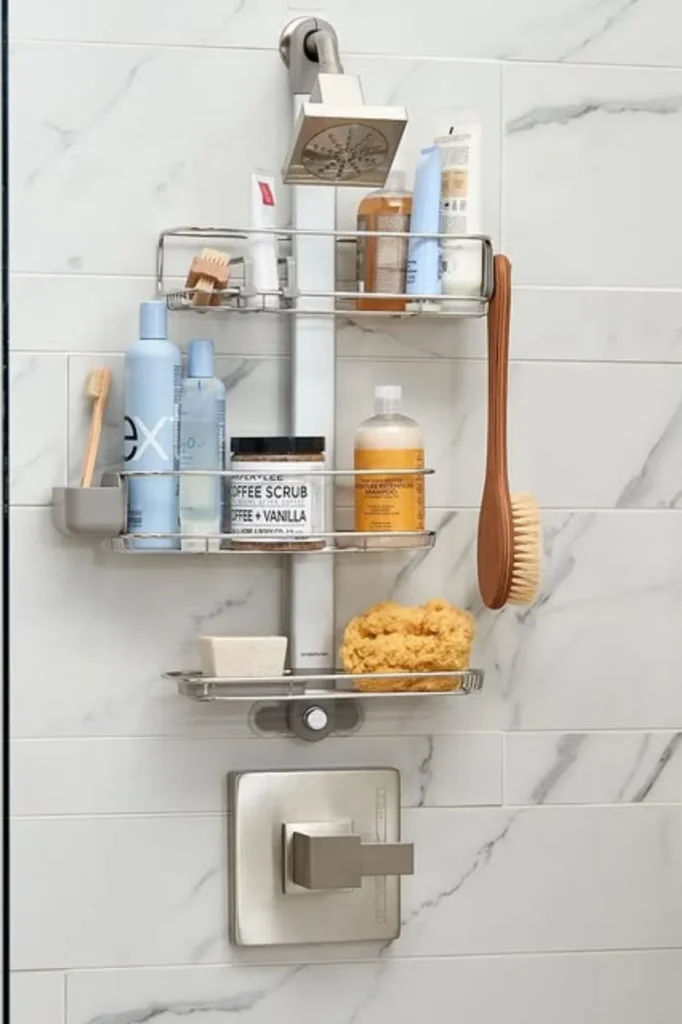
A dedicated shower shelf keeps shampoo, conditioner, body wash, and soap within reach while freeing up the floor and bathtub edges. Corner-mounted designs are particularly useful because they take advantage of space that might otherwise go unused.
Choose a shelf with drainage openings so water does not collect around the products. Stainless steel, suitable aluminum, and other moisture-resistant materials can work well, depending on their finish and construction.
Arrange taller bottles on the most accessible level and smaller items where they can be reached without bending awkwardly. Side hooks provide additional room for washcloths or shower accessories when included in the design.
For a rental bathroom, consider a compatible adhesive or tension-mounted option if drilling is not permitted. Always check the manufacturer's installation instructions and weight limits before use.
10. Wall Organizer
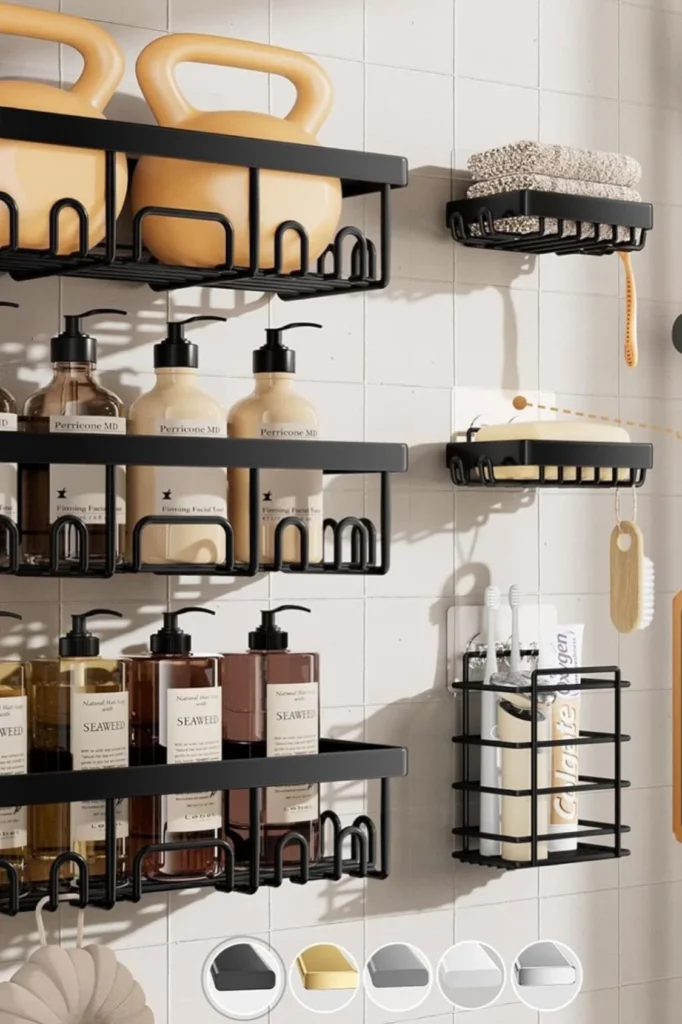
A wall organizer can turn a section of the bathroom into a dedicated storage station. Multi-level systems often combine shelves, small compartments, and accessory holders, making them useful for busy households with numerous personal care products.
Install the organizer where it will not interfere with taps, shower controls, doors, or normal movement. Near a mirror, it can hold grooming products; inside a shower, a moisture-resistant model can accommodate bathing essentials.
Separate products by category so that each compartment has a clear purpose. Daily necessities should remain easy to reach, while replacement bottles and less frequently used items can occupy higher or lower sections.
Check the organizer's total load capacity, especially when it will hold full-size bottles. Adhesive systems must be suitable for the wall surface and the conditions in which they will be used.
11. Ladder Shelf
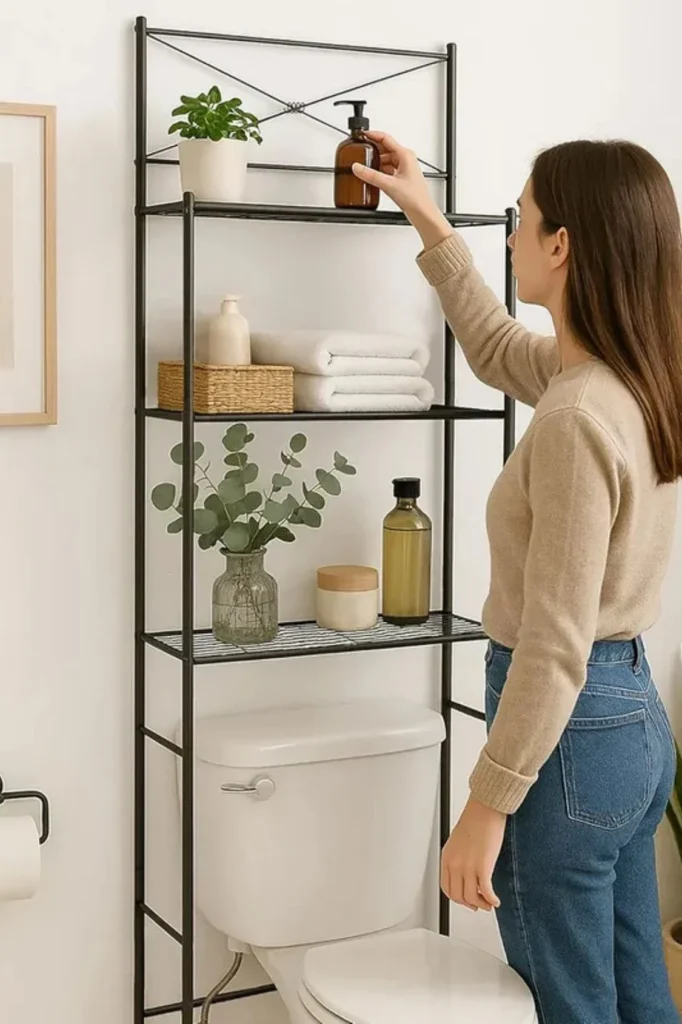
A ladder-style shelf adds multiple storage levels while using relatively little floor space. Models designed to stand over a toilet can make an underused area more functional without requiring a traditional wall cabinet.
Use the lower shelves for folded towels or baskets, the middle levels for toiletries, and the upper shelves for lightweight decorative objects. Keeping heavier items low helps improve stability.
Open frames can create a lighter appearance than solid cupboards, which is helpful in smaller bathrooms. Wood works well in warm, natural interiors, while metal suits contemporary designs.
Not every ladder shelf is designed to stand independently over a toilet, so check the product dimensions and intended placement before purchasing. If the unit is freestanding, make sure it cannot wobble or tip during everyday use.
12. Towel Shelf
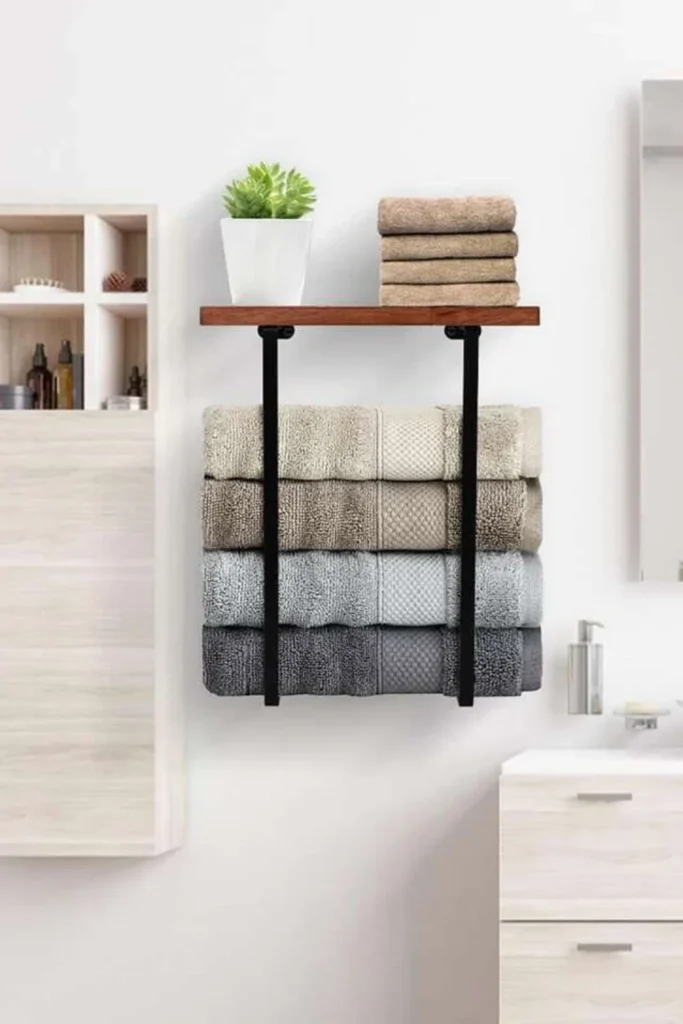
A wall-mounted towel shelf combines a dedicated place for clean towels with convenient access to additional storage. Some designs include a top ledge and lower bars, allowing you to keep several towels in one compact area.
Install the shelf near the shower or vanity so clean towels are available when needed. The upper surface can hold spare towels, a small basket, or a simple decorative accent.
Fold or roll towels according to the shelf dimensions to make the most of the available room. Avoid stacking them too high, as unstable piles can fall when you remove the bottom towel.
Choose a sturdy design with appropriate brackets and fixings for the weight of the towels. For bathrooms used by several people, a combination shelf and hanging rail can provide a useful balance of storage and convenience.
13. Niche Shelves
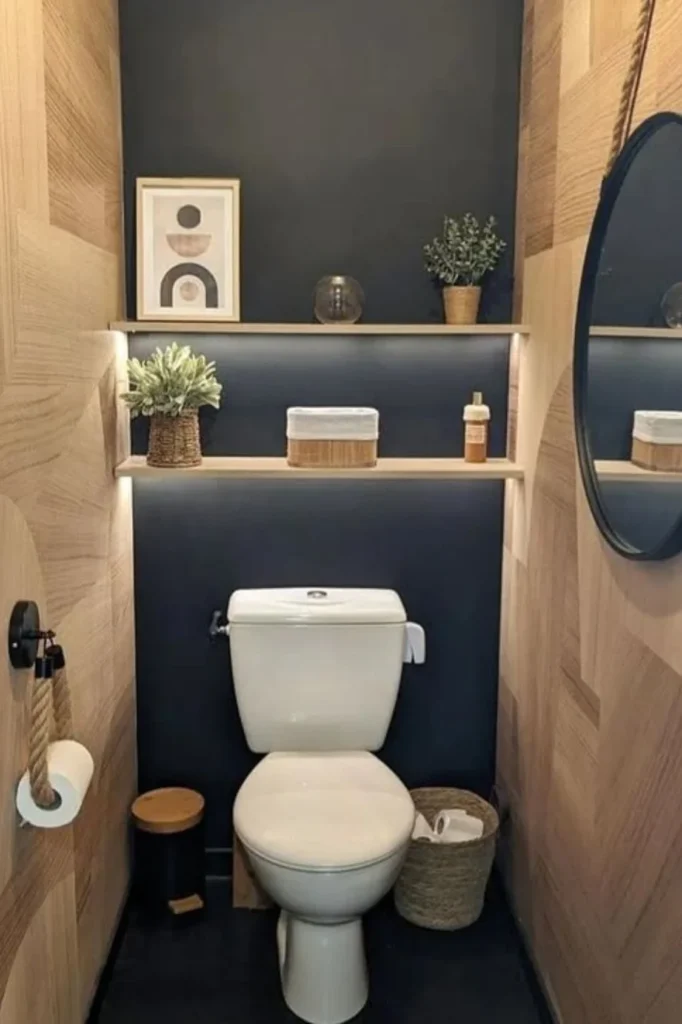
Recessed niche shelves provide storage within a wall cavity rather than projecting into the bathroom. They are especially useful in showers, around bathtubs, or in planned renovations where the wall structure allows a recess to be created safely.
A niche can hold shampoo bottles, soap, skincare products, or a few decorative items without requiring a separate shelf. Multiple compartments can separate different categories and reduce clutter around the sink or shower.
In wet areas, waterproofing is essential. Shower niches need properly detailed waterproof membranes, suitable materials, and correctly sloped horizontal surfaces to help prevent water from entering the wall.
For an existing bathroom, a shallow surface-mounted niche-style unit may offer a similar appearance without major construction. Recessed storage should be planned carefully because plumbing, wiring, and structural elements can restrict where a wall can be cut.
14. Mirror Cabinet
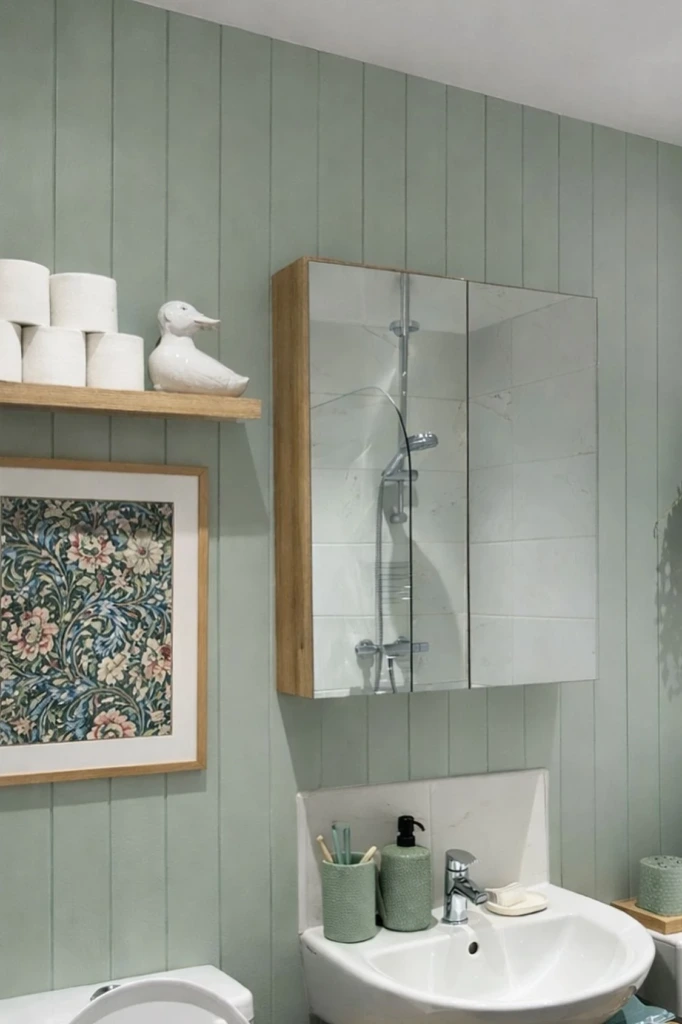
A mirror cabinet combines two everyday bathroom functions in one fixture. It provides a reflective surface above the vanity while concealing toiletries, grooming tools, and small personal care items behind the mirror.
This design is particularly useful when the bathroom has little counter space or no convenient medicine cabinet. Shelves inside the cabinet can separate toothbrushes, skincare products, and other essentials.
Choose a cabinet with enough depth for the products you intend to store, but avoid an oversized unit that overwhelms the vanity. Adjustable interior shelves can make the available space more versatile.
A mirrored surface can also reflect light around the room, helping the bathroom feel brighter. Keep the interior organized with small containers so items do not disappear behind larger bottles.
15. Dual Cabinet
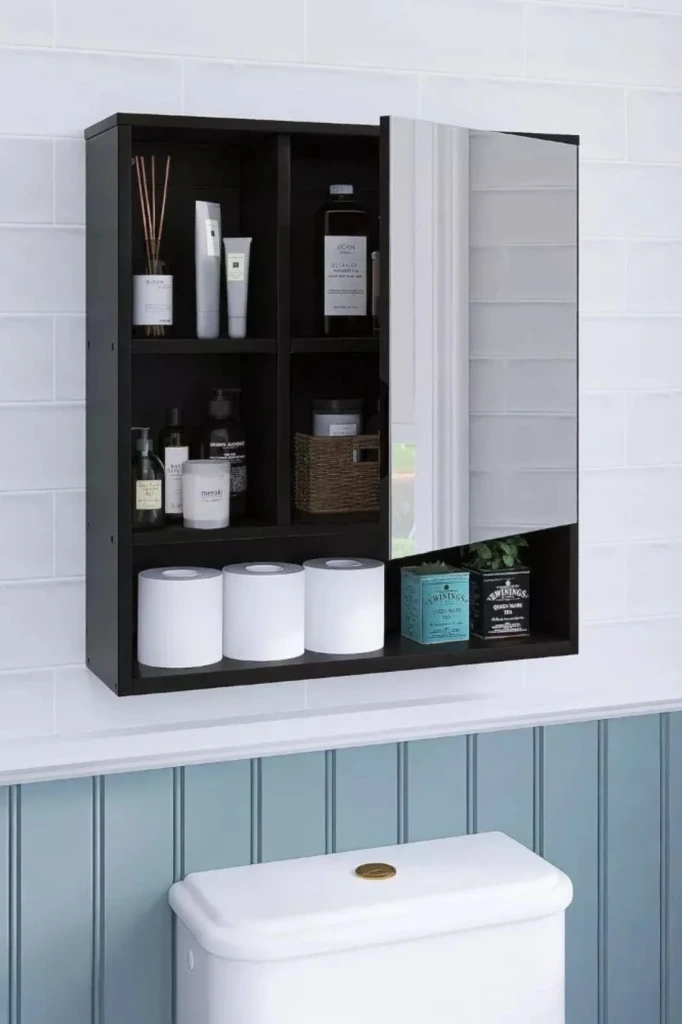
A dual-storage cabinet combines concealed compartments with open shelving. This arrangement gives you a place to hide less attractive necessities while keeping frequently used items readily accessible.
Position it above the toilet or beside the vanity, depending on the room layout. The closed section can store spare toiletries, cleaning products, and other supplies, while the open section can hold hand towels or a small basket.
This combination works well for households that want both practical storage and a display area. It also reduces the need to install several separate units.
Choose a compact design that leaves enough clearance for nearby fixtures and doors. Keep the open shelves relatively uncluttered, and store heavy products securely inside the cabinet according to its load limits.
16. Stacked Shelves
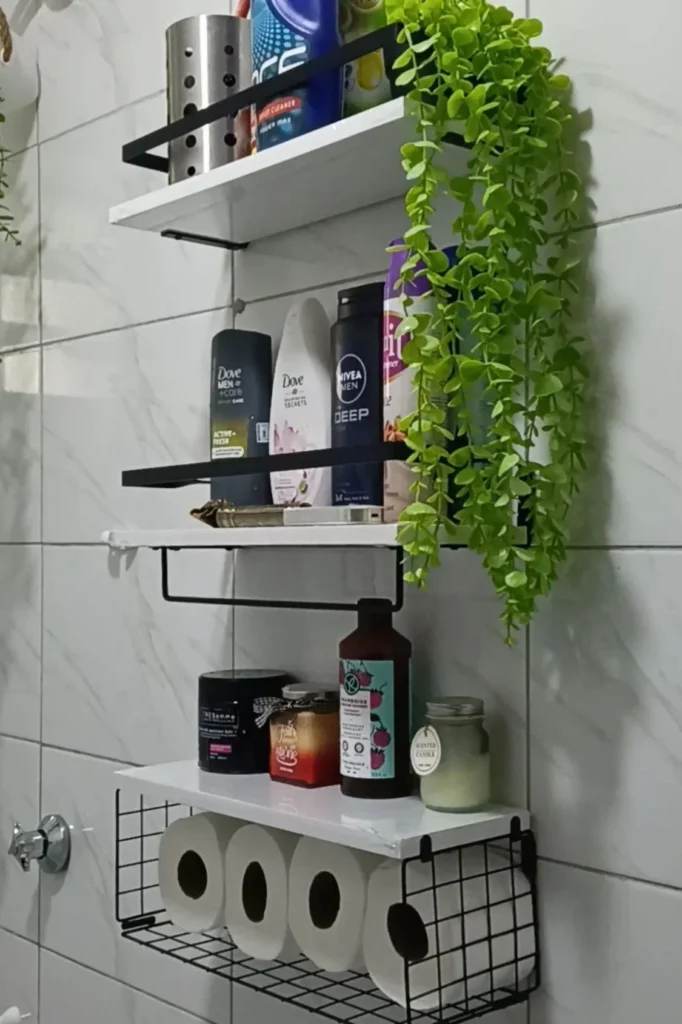
Stacked shelves make use of vertical wall space by providing several separate levels for bathroom essentials. They are a good option when a single shelf cannot accommodate everything you need.
A narrow arrangement above the toilet or beside the mirror can hold folded washcloths, skincare products, small containers, and decorative accessories. Adding a basket to one level helps contain loose items such as toilet paper rolls.
Place heavier bottles and jars on the lower shelves, with lighter products and decorative objects higher up. This creates a more balanced arrangement and makes heavier items easier to retrieve.
Before installation, measure the available wall height and allow enough clearance for each container. Secure every shelf with fixings suited to the wall material, and avoid placing heavy items directly above areas where people sit or stand for extended periods.
17. Toilet Cabinet
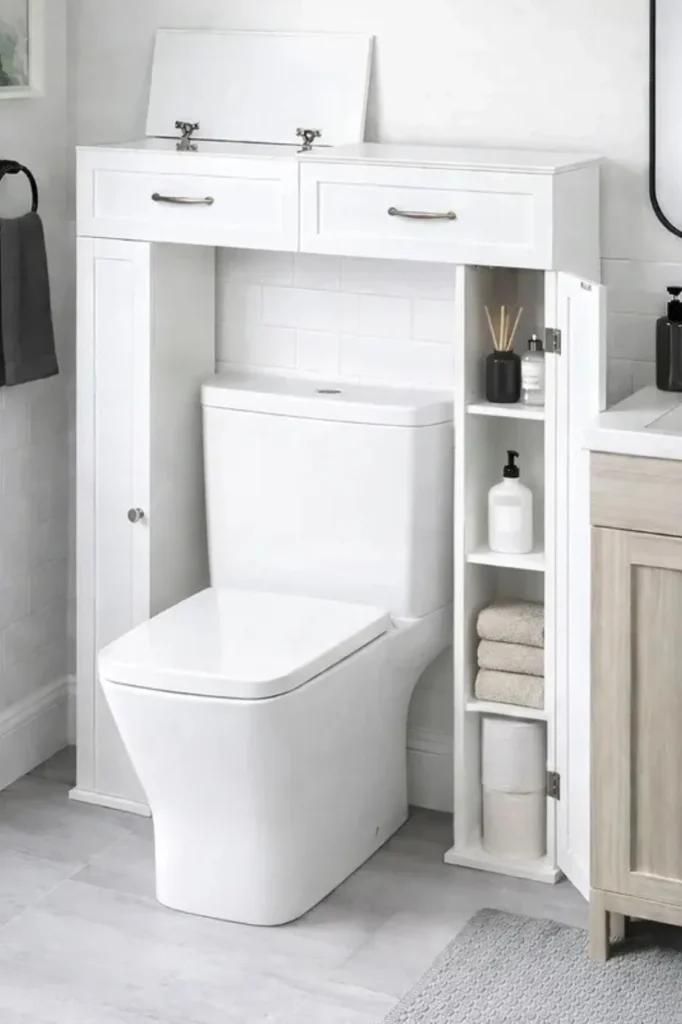
The area surrounding a toilet often offers valuable storage potential, particularly in bathrooms without a linen cupboard. A purpose-built toilet cabinet can organize supplies in one place instead of spreading them around the room.
Tall side compartments are useful for spare toilet paper, cleaning products, and folded towels. Depending on the design, open shelves can hold everyday necessities, while closed sections keep less attractive items out of sight.
Some units fit around the toilet, while others stand above the tank or beside it. Measure the available width, depth, and height before choosing a model, and ensure it does not interfere with plumbing access or normal use.
A well-fitted cabinet can make a small bathroom feel more orderly. Select a finish that coordinates with the vanity or other fixtures for a cohesive appearance.
18. Tissue Cabinet

A dedicated tissue cabinet provides a simple solution for keeping tissue boxes off the vanity. Mounted near the sink or toilet, it allows convenient access while freeing up a little counter space.
Choose a compact design that accommodates the tissue box size you normally purchase. A front opening or dispensing slot should allow tissues to be removed easily without requiring you to open the entire cabinet.
An enclosed holder can protect tissues from some splashes, although it should not be treated as waterproof unless specifically designed for that purpose. Avoid placing it where direct shower spray or persistent condensation could damage the contents.
Match the cabinet's finish to nearby hardware or accessories if you want it to blend into the bathroom. Even a small dedicated holder can make the surrounding area look less cluttered.
19. Corner Shelf
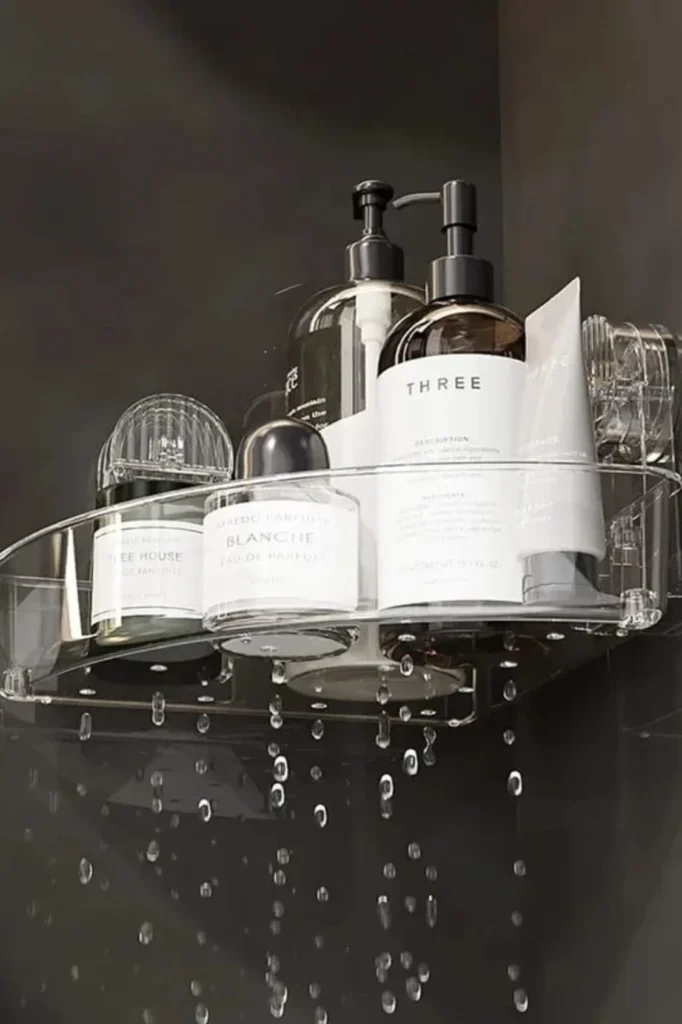
Corner shelves are an effective way to use awkward spaces that ordinary shelving cannot occupy. They are especially popular in showers, where a compact unit can keep bottles accessible without reducing much usable room.
Install the shelf at a comfortable height for the products you use most often. Raised edges help keep containers in place, while drainage openings allow water to escape.
Use separate levels for shampoo, conditioner, body wash, and smaller bathing products. Avoid overcrowding the shelf, as tightly packed bottles are harder to retrieve and may trap moisture.
Select materials and mounting hardware designed for humid environments. If using adhesive mounting, confirm that the wall finish is compatible and allow the specified curing time before adding products.
20. Wall Holders
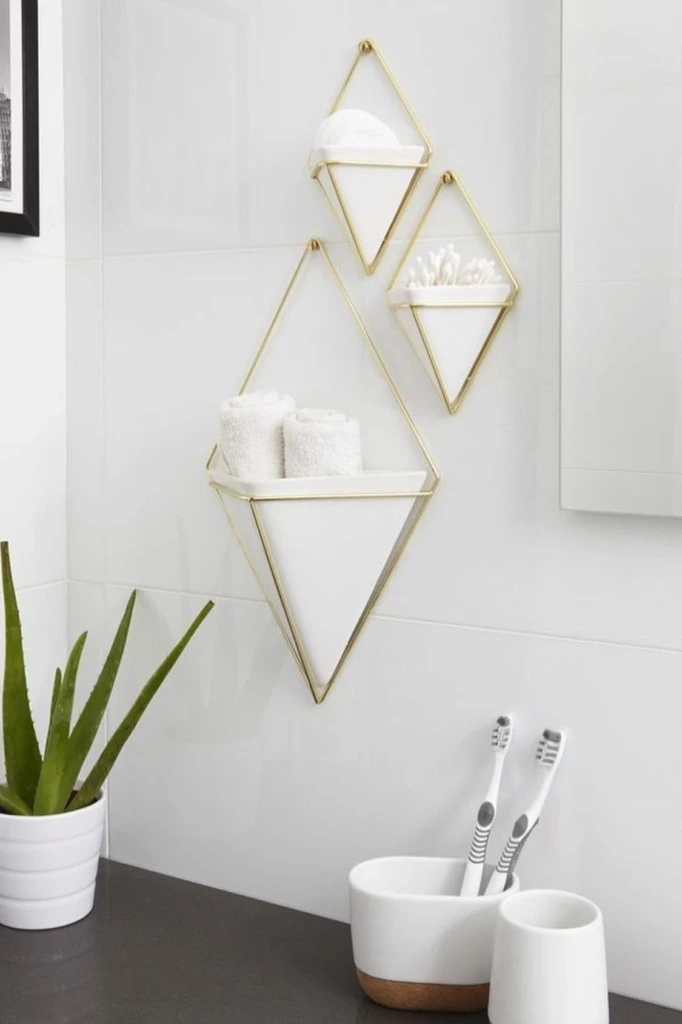
Individual wall holders are useful for small bathroom items that tend to get lost among larger products. Rather than installing a large cabinet, you can place a few compact holders near the mirror or vanity.
Use one for cotton pads, another for rolled washcloths, and another for grooming accessories. Assigning a clear purpose to each holder helps everyone in the household know where items belong.
Vertical placement makes efficient use of narrow wall sections and can leave the countertop free for essential tasks. Lightweight designs are particularly useful when you only need to store small accessories.
For damp areas, choose washable or moisture-resistant materials. Keep holders away from direct splashes when they contain products that must remain dry, and ensure that mounted containers can be removed easily for cleaning.
21. Hook Shelves
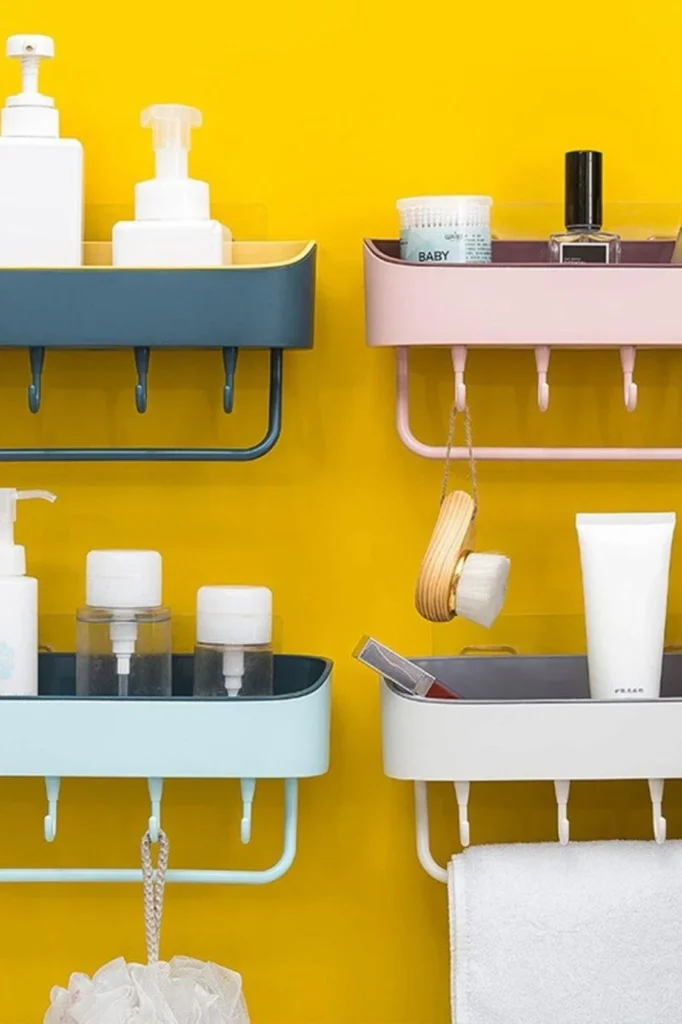
Hook shelves combine a small ledge for toiletries with hanging points underneath. This practical design provides two kinds of storage in one compact fixture, making it useful near a vanity, inside a suitable shower area, or beside a bathtub.
Place frequently used products on the upper shelf and hang lightweight items such as washcloths, loofahs, or small brushes from the hooks. Some models can also hold hand towels, provided their size and load capacity are appropriate.
If you need several units, organize them by function rather than placing everything together. One can hold grooming accessories, while another stores bathing essentials.
Choose a shelf with secure hooks and a stable mounting system. Check that hanging items will not interfere with taps, doors, or the movement of people using the bathroom.
22. Leaning Shelf
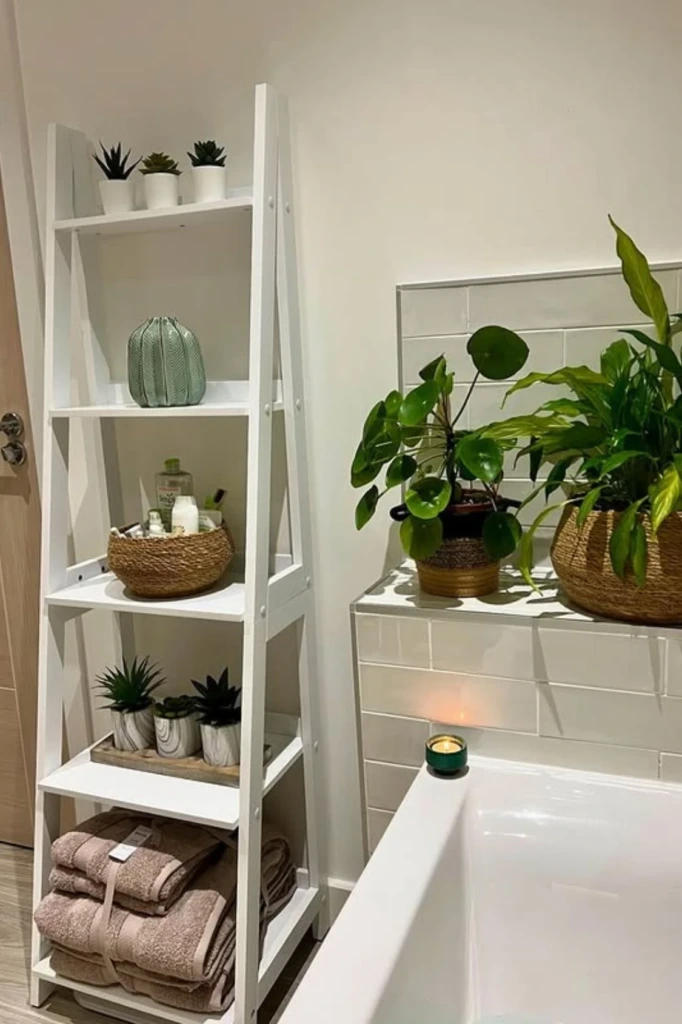
A leaning shelf offers vertical storage without the same installation requirements as a conventional wall-mounted unit. It can be a useful option for renters or anyone who prefers furniture that can be moved when the layout changes.
Place it beside a bathtub, near the bathroom entrance, or in another open corner where it will not obstruct movement. Lower levels can accommodate towels and heavier baskets, while upper shelves are better suited to lightweight toiletries and decorations.
The angled frame creates an open look and can help a small bathroom feel less enclosed than it might with a solid cabinet. Choose a model with moisture-resistant materials and feet that provide reliable grip on bathroom flooring.
For safety, follow the manufacturer's instructions for positioning and stabilization. Do not assume that every leaning shelf is designed for bathroom conditions, and avoid placing it where water can collect around its base.
How do you add wall storage in a bathroom without drilling holes?
You can add bathroom storage without drilling by using suitable adhesive shelves, suction-mounted organizers, over-door racks, and tension-mounted systems. These options can be helpful in rental properties where permanent changes are restricted.
Adhesive products are generally best for lightweight items unless the manufacturer specifically rates them for heavier loads. The wall surface must be compatible, clean, and dry during installation, and you should follow the recommended curing period before loading the shelf.
Suction organizers work best on smooth, nonporous surfaces such as compatible glass or glossy tile. They may not adhere reliably to textured tiles, grout lines, or porous finishes.
For heavier bottles or larger storage units, a properly installed mechanical fixing is usually more dependable. Always check the mounting method, weight limit, and rental agreement before choosing a solution.
What is the best height to install bathroom wall shelves?
The ideal height depends on what you plan to store, who uses the bathroom, and where the shelf will be positioned. Everyday products should be easy to reach without stretching, bending excessively, or leaning over fixtures.
For general bathroom storage, a shelf around 48 to 60 inches above the floor may be a useful starting point, but it is not a universal rule. The height of the vanity, mirror, users, and stored items should determine the final placement.
Keep frequently used toiletries around a comfortable standing reach, and reserve higher shelves for lightweight items or occasional-use supplies. Towels should be accessible from the sink or shower, while shelves inside the shower need to remain clear of controls and movement.
Before drilling, mark the proposed position and check it from a normal standing position. Confirm that the wall can safely support the shelf and that the fixings will not interfere with plumbing or electrical services.