23 Small Kitchen Storage Ideas for 2026
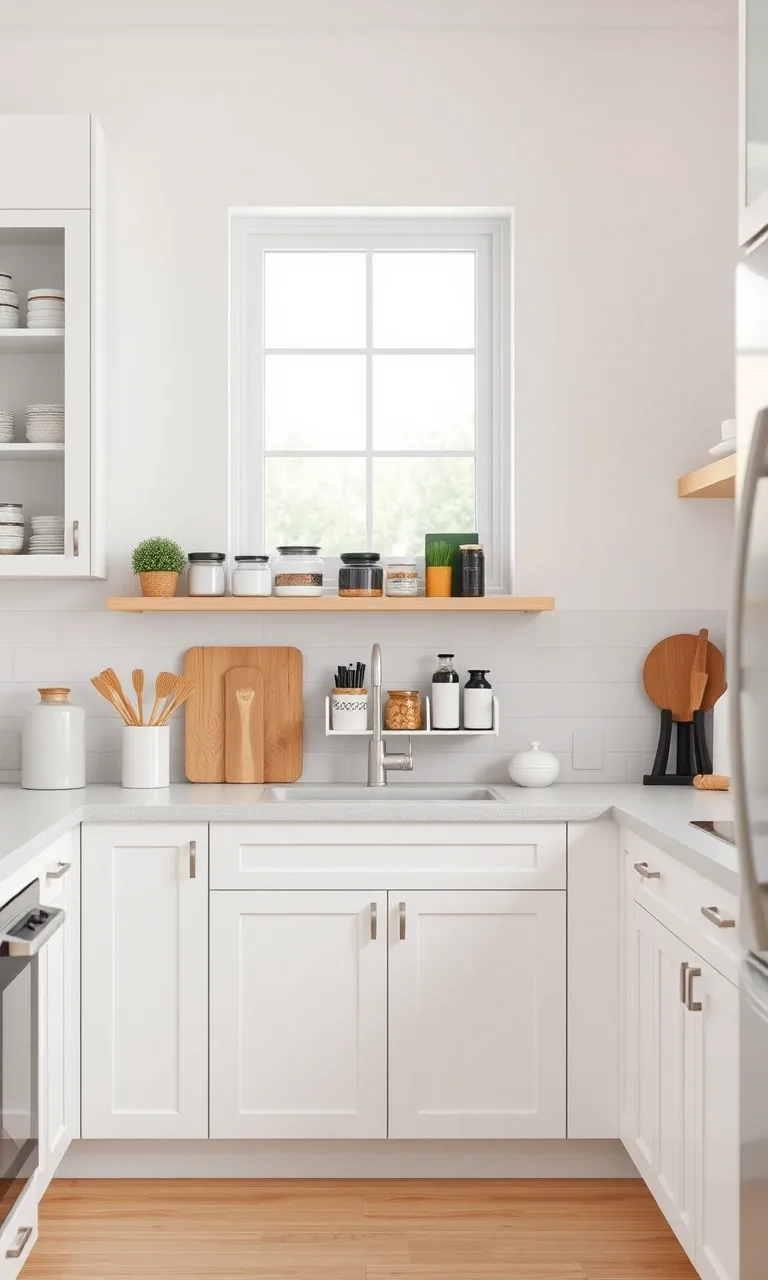
A small kitchen can quickly become crowded when cookware, dishes, groceries, and appliances compete for limited space. Without a practical organization system, even simple tasks like preparing breakfast or finding a cooking utensil can feel frustrating.
Fortunately, you don't need a complete kitchen renovation to create more storage. Making better use of cabinets, walls, drawers, and overlooked corners can help you organize everyday essentials without sacrificing valuable counter space.
These 22 small kitchen storage ideas offer practical ways to keep your kitchen functional, organized, and visually appealing, regardless of its size or layout.
1. Clever Drawer Solutions
Kitchen drawers often contain a mixture of utensils, cooking tools, and miscellaneous items that become difficult to find. Adding adjustable dividers helps separate these essentials into dedicated sections, making everything easier to locate.
For shallow drawers, consider expandable organizers that accommodate different utensil sizes. Deep drawers benefit from vertical dividers for baking trays, pot lids, and cutting boards.
You can also use removable trays to organize smaller accessories without permanently changing your cabinetry. Before purchasing organizers, measure the drawer's interior dimensions to ensure a comfortable fit.
2. Mug Bar
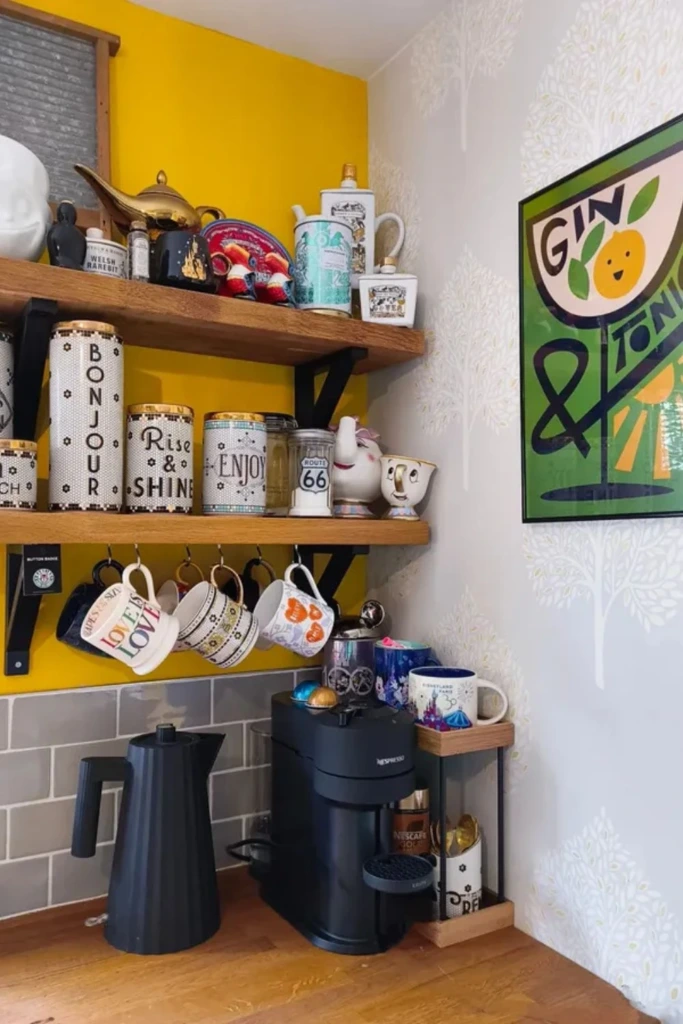
A dedicated mug bar can turn an unused section of your kitchen into a convenient beverage station. Install a compact shelf above your coffee maker and attach sturdy hooks underneath to hang frequently used mugs.
Keep coffee, tea, sweeteners, and other beverage supplies together in small containers. This arrangement reduces unnecessary movement around the kitchen during busy mornings.
For a coordinated appearance, choose shelves and hooks that complement your existing kitchen finishes. Position the station near an electrical outlet if you plan to use a coffee machine or kettle.
3. Microwave Shelf
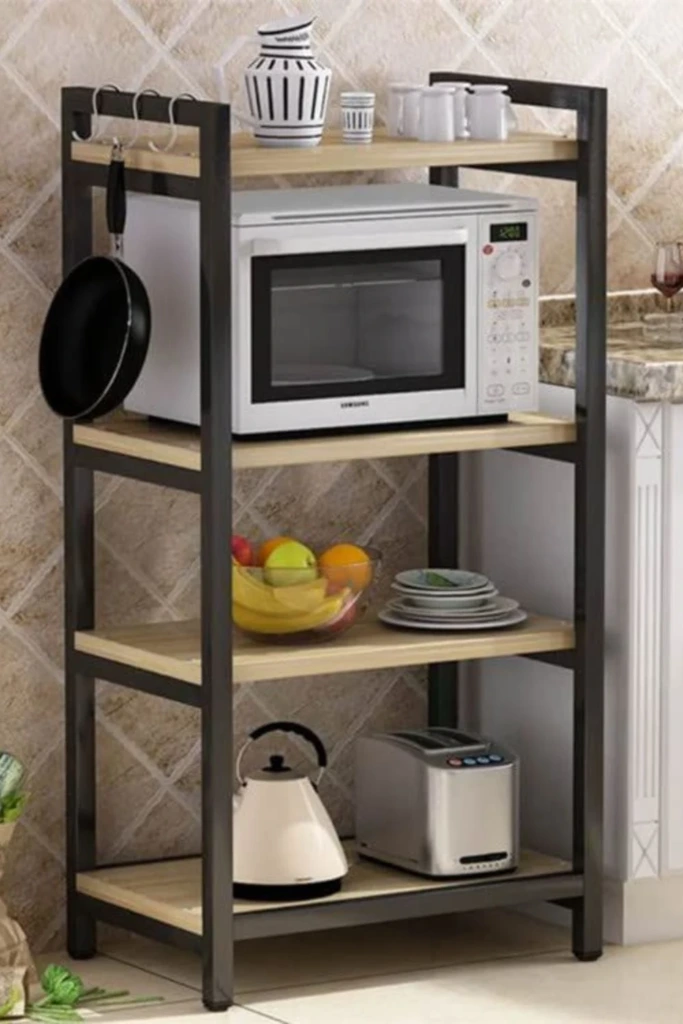
A microwave shelf helps reclaim countertop space by giving bulky appliances a designated location. A sturdy shelving unit can accommodate a microwave while providing additional compartments for dishes, containers, or smaller kitchen accessories.
Look for shelving specifically designed to support the appliance's weight and dimensions. Follow the microwave manufacturer's ventilation and clearance requirements rather than placing items directly against its vents.
A compact rack with adjustable shelves is particularly useful because you can modify the arrangement as your storage needs change.
4. Cereal Canisters
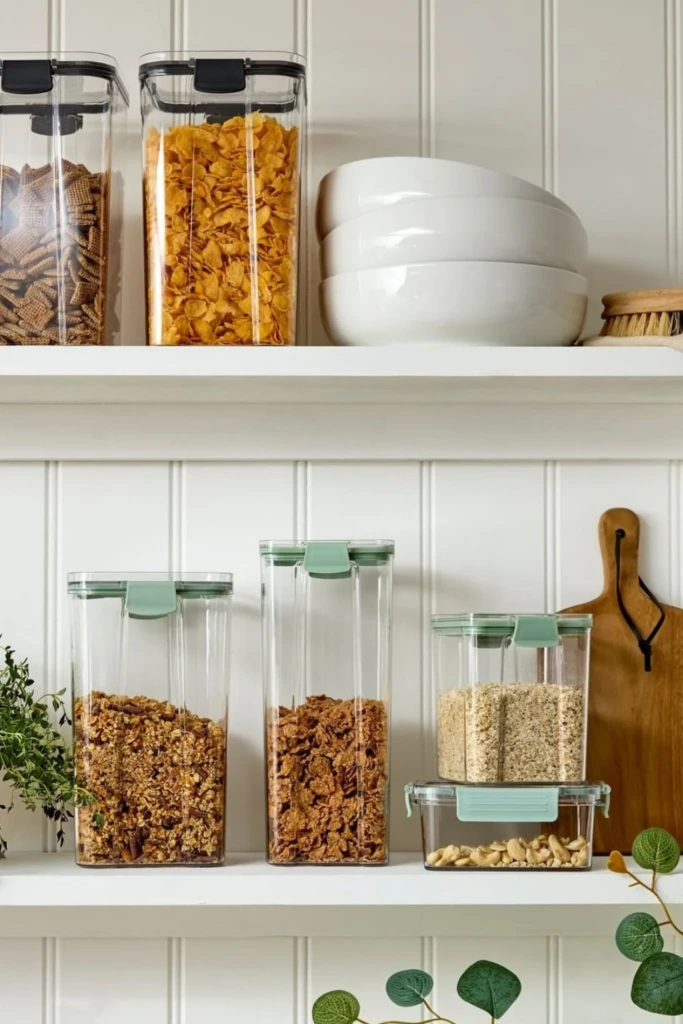
Storing breakfast cereals in appropriately sized airtight canisters can make pantry shelves easier to manage. Clear containers allow you to identify contents immediately and check when supplies are running low.
Choose rectangular or square containers when possible, as they generally fit together more efficiently than round ones.
Keep frequently used cereals at a comfortable height and store serving bowls nearby. Labels with product names and expiration dates can also help prevent confusion when transferring food from its original packaging.
5. Pegboard Wall
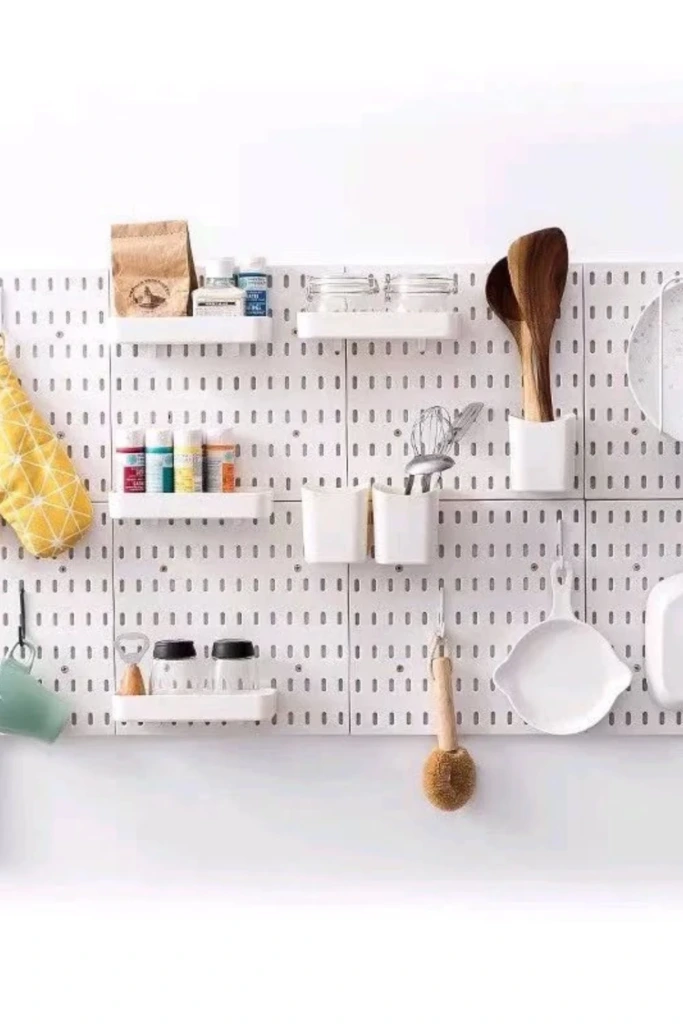
A pegboard provides flexible kitchen storage without requiring several separate shelves or organizers. Mounted on an available wall, it can hold cooking utensils, measuring cups, lightweight pans, and other frequently used accessories.
The main advantage is its adaptability. Hooks, small baskets, and holders can be repositioned whenever you rearrange your kitchen.
Install the board using suitable wall anchors and follow its weight limits. Keep heavier cookware on reinforced hooks and position everyday tools where they are easy to reach.
6. Hidden Bins
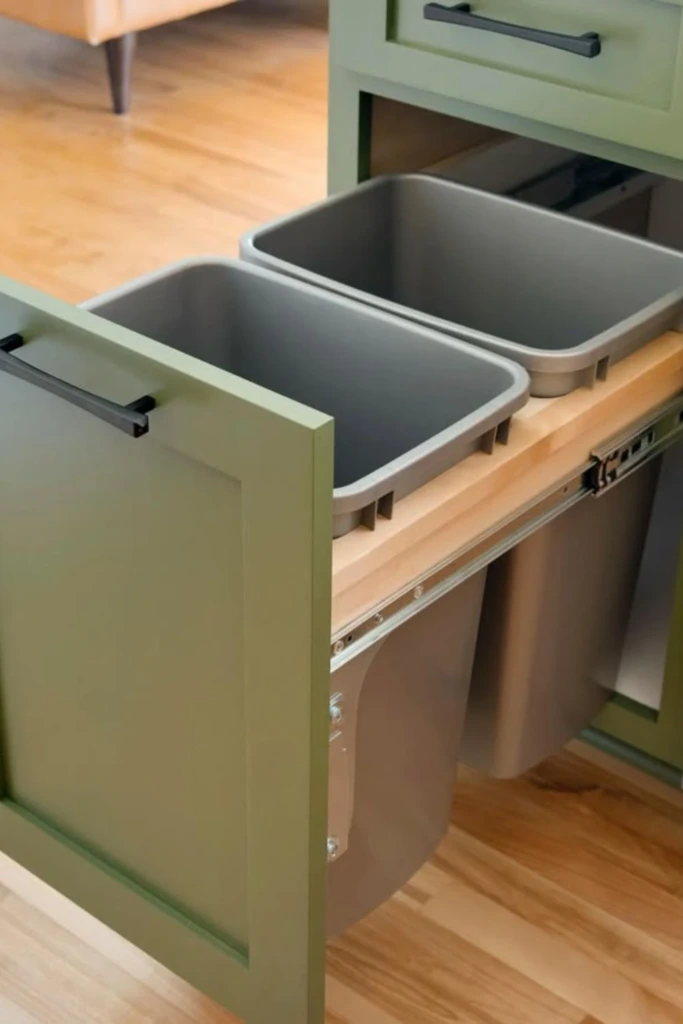
Visible trash containers can make a compact kitchen feel crowded, especially when floor space is limited. A concealed waste-bin system inside a lower cabinet offers a practical alternative.
Pull-out bins make it possible to separate general waste and recyclable materials without leaving multiple containers in the open.
Choose a system that fits your cabinet's internal measurements and allows the door to close properly. Removable containers are especially helpful for cleaning, while fitted lids can help contain odors.
7. Double Drawers
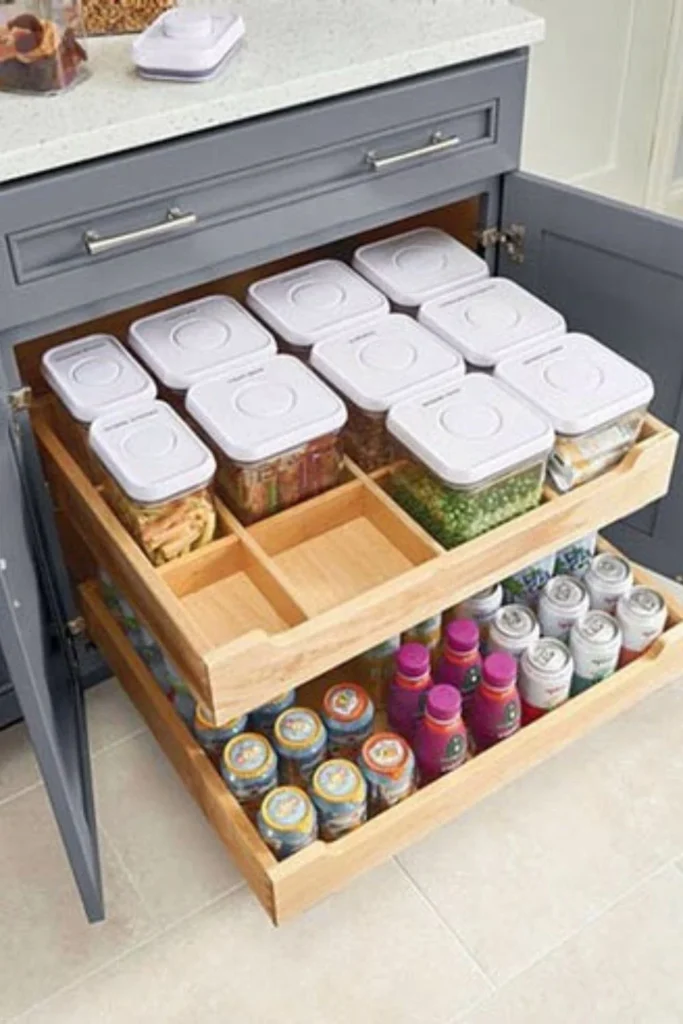
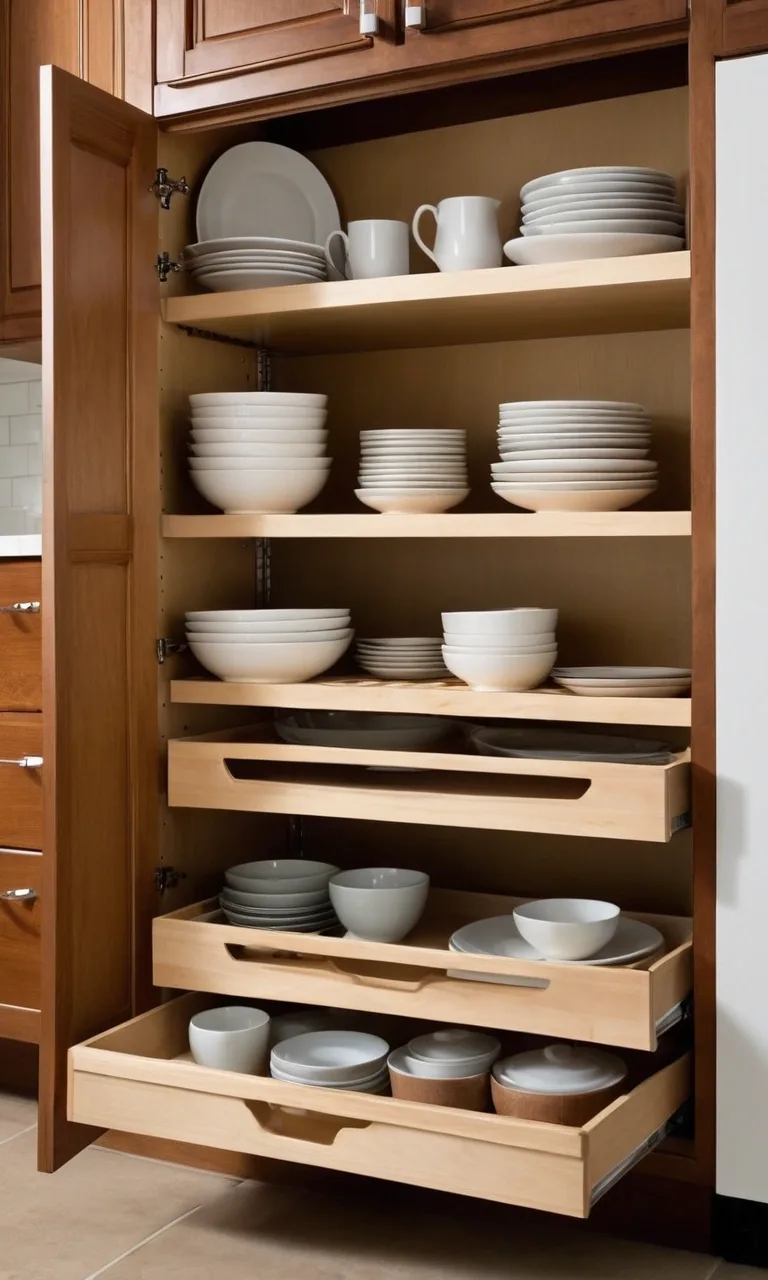
Deep kitchen cabinets often waste space because items become stacked behind or underneath one another. Installing two levels of sliding drawers creates separate storage areas within the same cabinet.
Use the upper level for smaller food packages, containers, or cooking accessories. The lower drawer can accommodate heavier items such as canned goods, mixing bowls, and cookware.
Full-extension runners improve accessibility by allowing you to see items stored toward the back. Always check the drawer hardware's load capacity before filling it with heavy kitchen supplies.
8. Counter Canisters
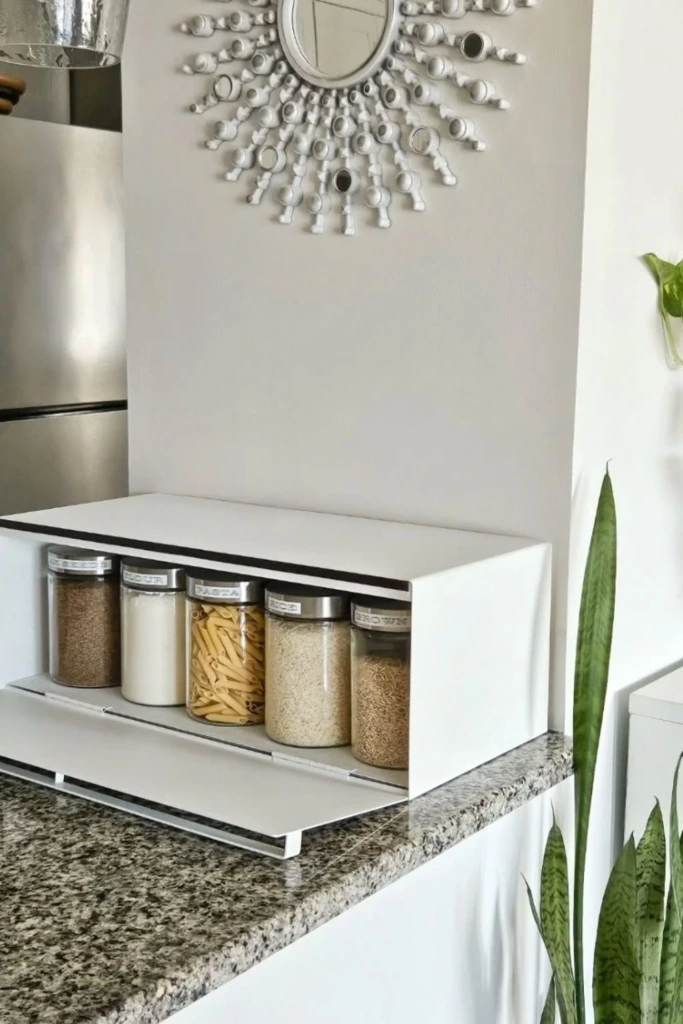
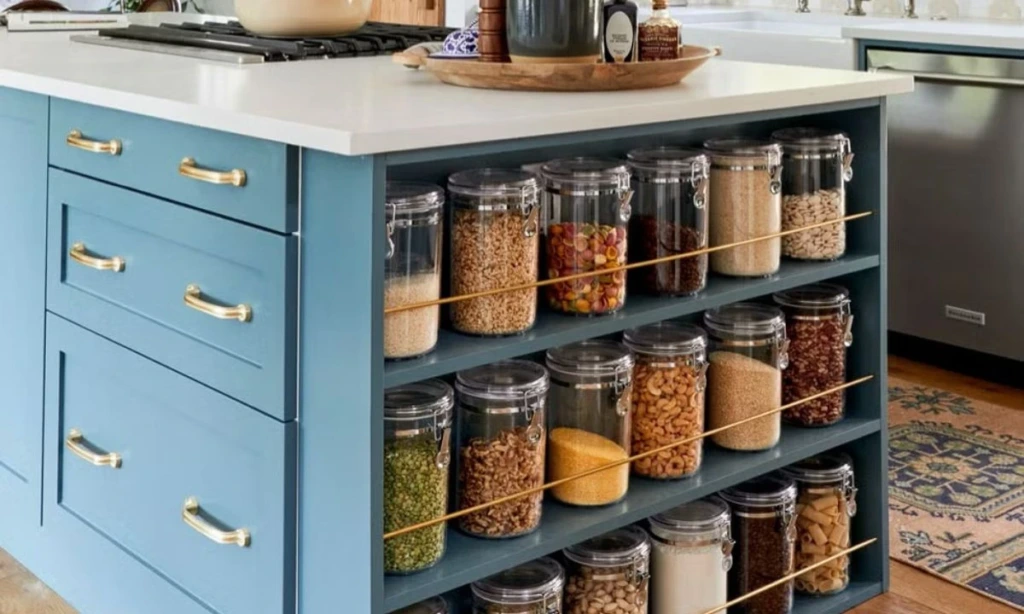
Countertop canisters keep frequently used dry ingredients organized and accessible. Instead of leaving several opened packages around your preparation area, transfer suitable pantry staples into food-safe containers with secure lids.
A compact canister arrangement works well for flour, sugar, rice, coffee, and other ingredients used regularly.
If your counter is particularly narrow, consider a wall-mounted or pull-down storage system that keeps containers accessible without occupying your main work surface.
Choose a consistent container style for a neater appearance, but prioritize practical features such as easy cleaning and reliable seals.
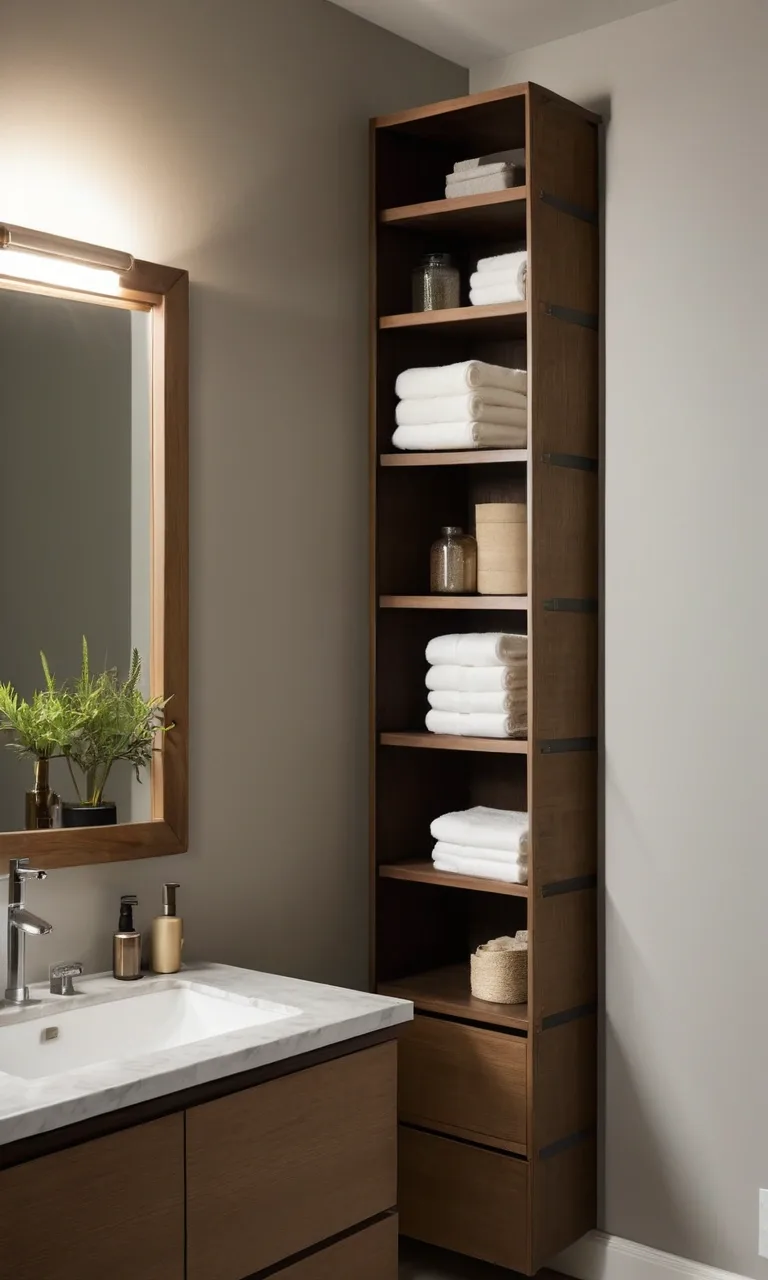
9. Slim Spice Pullout
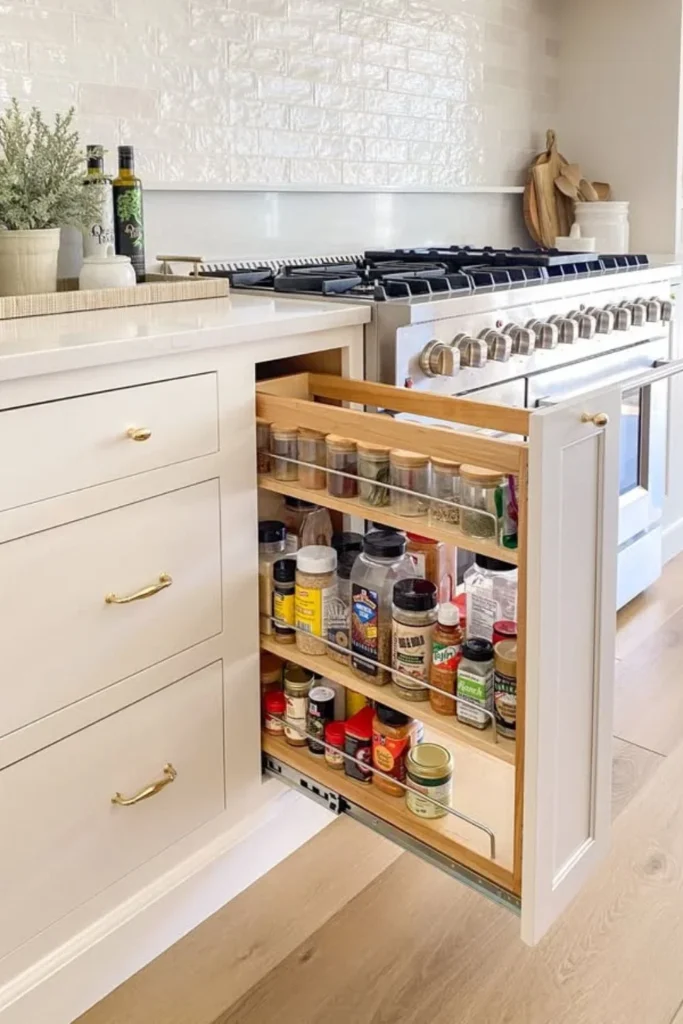
The narrow space beside a cabinet or between kitchen fixtures can sometimes accommodate a slim pull-out organizer. These compact units are useful for storing spice jars, seasoning bottles, and small pantry items.
A vertical pull-out design lets you view multiple ingredients at once instead of searching through crowded shelves.
Arrange spices by how frequently you use them, with everyday seasonings positioned near the front. Avoid placing spices immediately beside strong heat sources, as heat and moisture can reduce their quality over time.
Measure the available opening carefully, including any clearance needed for handles and sliding hardware.
10. Shelf Pantry
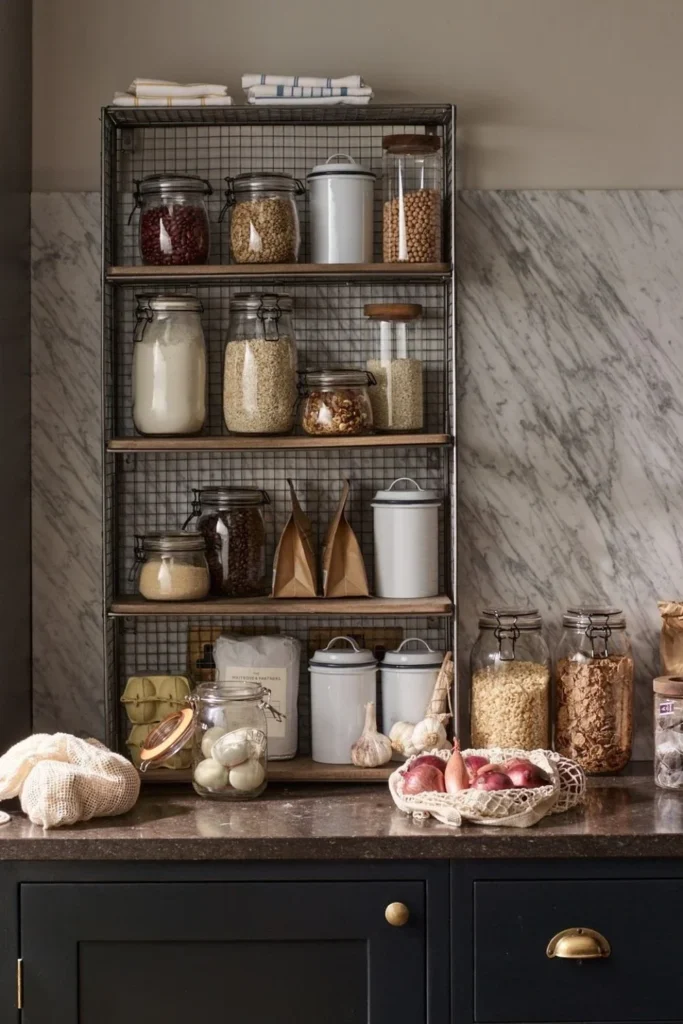
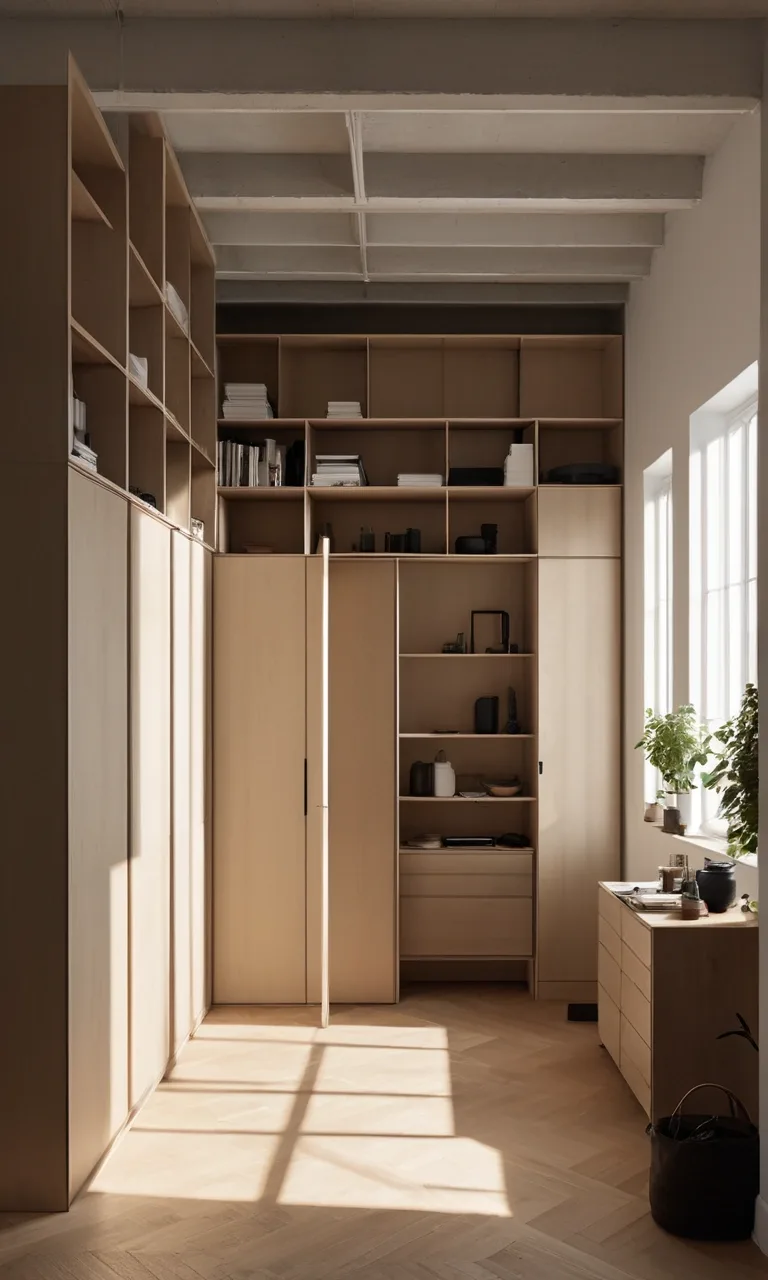
If your kitchen lacks a built-in pantry, a tall shelving unit can provide valuable food storage without requiring major modifications.
Use its shelves to group dry goods, canned foods, snacks, and baking ingredients into separate categories. Baskets or clear containers can prevent smaller packages from becoming scattered.
Adjustable shelves make it easier to accommodate items of different heights, while an open design helps you see what is available.
Secure tall furniture to the wall when appropriate, and keep heavier supplies on lower shelves for stability.
11. Rolling Cart
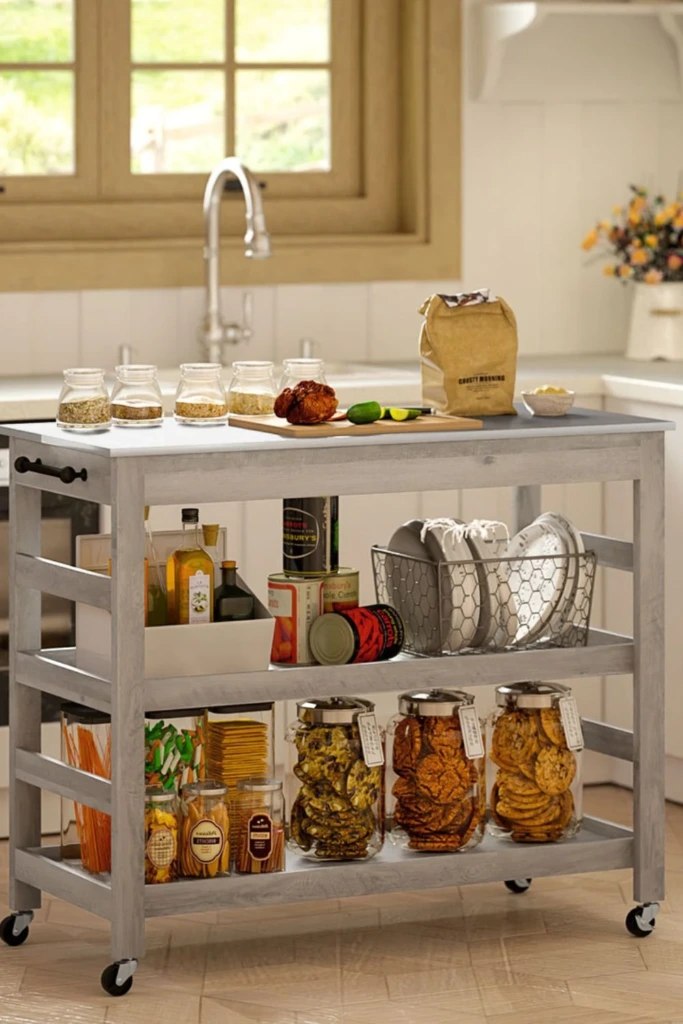
A rolling cart adds storage that can move wherever it is needed. This makes it particularly helpful in kitchens with limited cabinets or no permanent island.
Use the upper surface for lightweight food preparation or serving, provided the cart is stable and suitable for that purpose. Lower tiers can hold vegetables, cookware, kitchen towels, or pantry supplies.
Choose a narrow model with locking wheels so it remains stationary when in use.
When not needed, the cart can be moved into an available corner or tucked beside a cabinet, keeping walking areas clear.
12. Pullout Racks
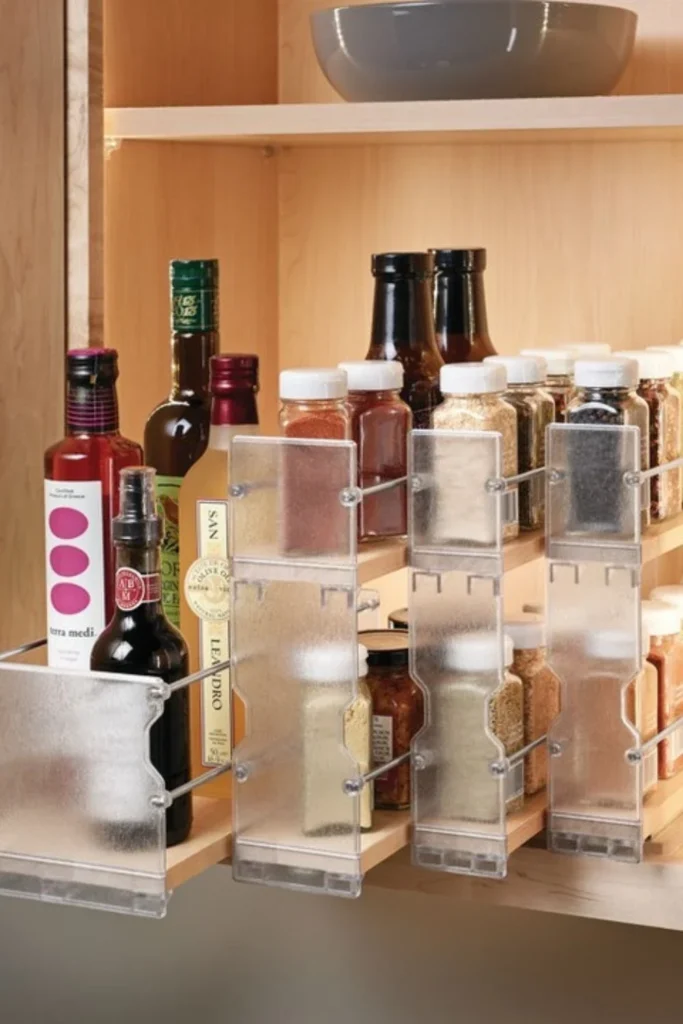
Traditional cabinets can be inconvenient when smaller items disappear behind larger containers. Pull-out racks solve this problem by bringing stored supplies forward.
Sliding organizers are particularly effective for oils, sauces, canned goods, and baking ingredients. They reduce the need to remove several items just to reach something at the back.
Select racks with sturdy runners and raised edges to prevent containers from tipping.
For existing cabinets, retrofit organizers can provide many of the benefits of custom cabinetry without replacing the entire storage unit.
13. Under-Shelf Basket
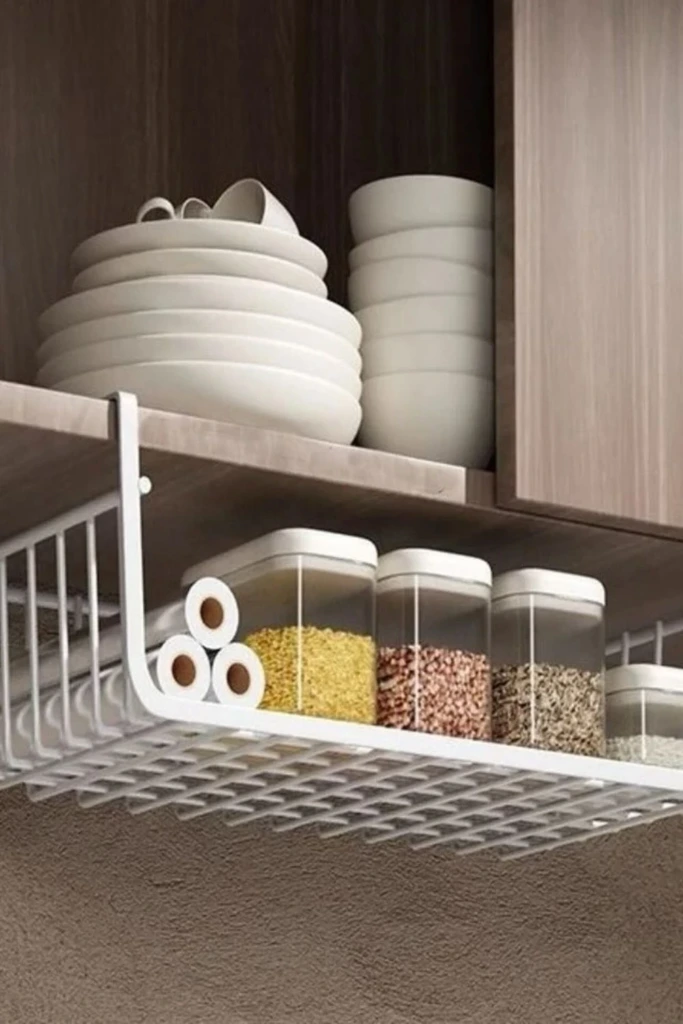
The empty space beneath a cabinet shelf offers an opportunity to add storage without increasing the cabinet's footprint.
An under-shelf basket slides or clips onto an existing shelf, creating an extra compartment for lightweight supplies such as napkins, food wraps, snack packets, or kitchen cloths.
These organizers work especially well in cabinets where tall shelves leave unused vertical space.
Check the thickness of your shelf and the basket's attachment design before buying. Avoid overloading suspended baskets, particularly when they are not permanently secured.
14. Tiered Shelves
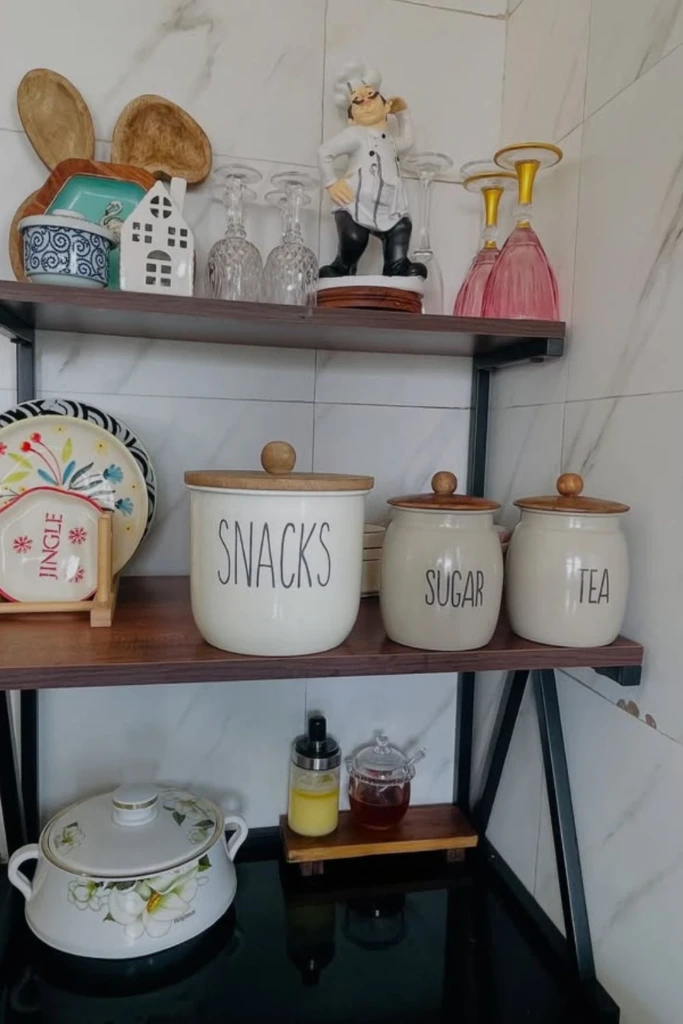
Tiered shelving makes it easier to organize several categories of kitchen essentials within a relatively small area.
A compact three-level unit can hold mugs, plates, pantry containers, or frequently used cooking accessories. Keeping these items on separate levels prevents unnecessary stacking and makes them easier to retrieve.
For countertop use, choose a narrow organizer that leaves enough room for meal preparation.
If you're using a freestanding shelving unit, place heavier items at the bottom and reserve upper levels for lightweight accessories or decorative pieces.
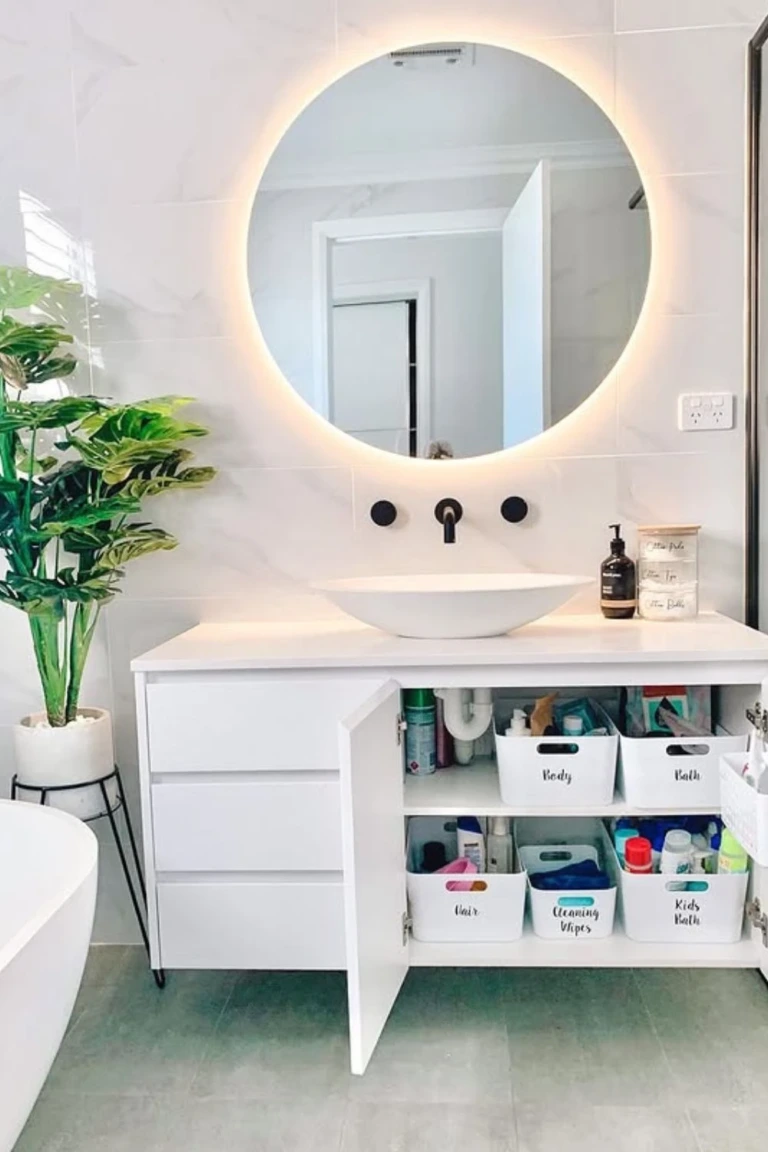
15. Labeled Baskets
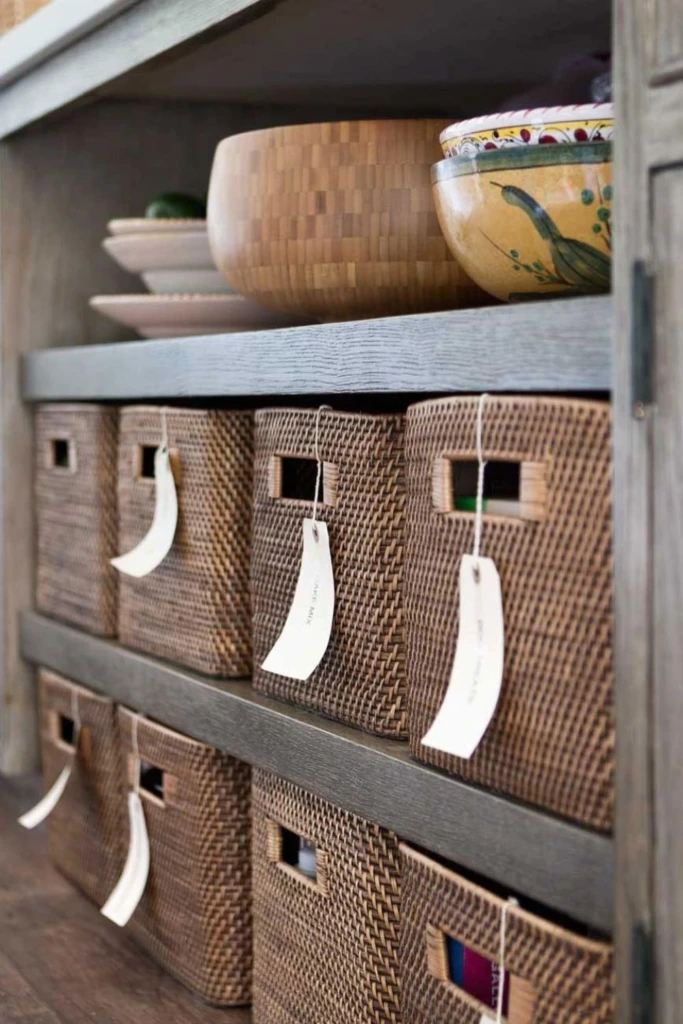
Baskets provide an uncomplicated way to organize items that otherwise become scattered throughout cabinets and open shelves.
Assign each basket a specific purpose, such as baking supplies, packaged snacks, kitchen linens, or reusable shopping bags.
Adding clear labels makes it easier for everyone in the household to return items to their proper places.
Woven baskets introduce natural texture, while washable plastic or metal options are often better suited to areas exposed to moisture or spills.
Choose baskets with handles if you frequently need to pull them from deep shelves.
16. Pantry Cabinet
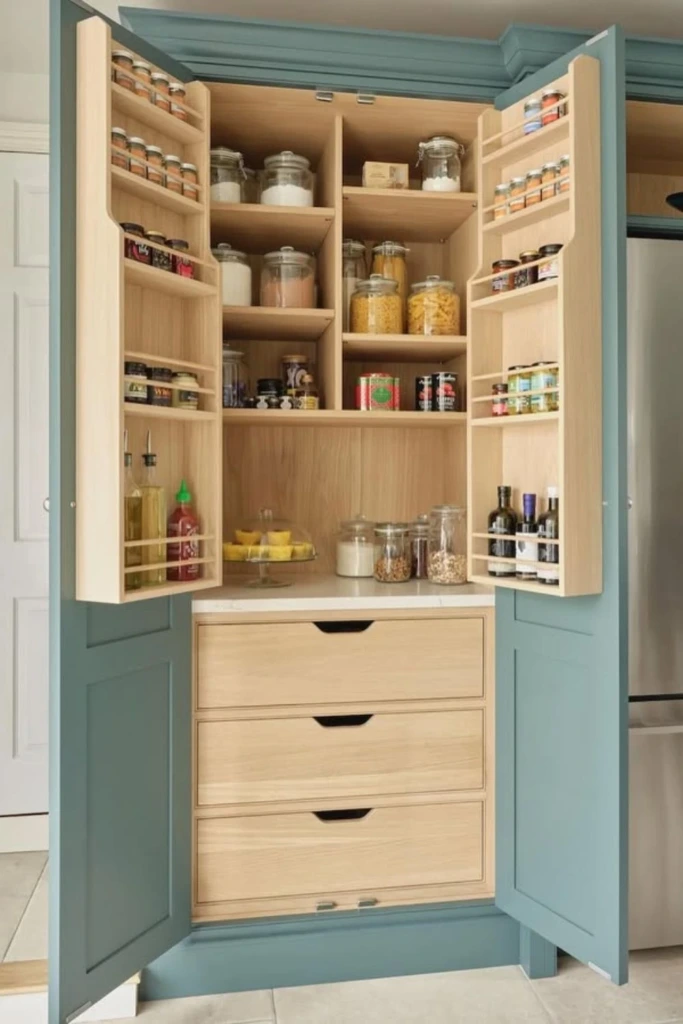
A single well-organized cabinet can function as a compact pantry when every section has a defined purpose.
Start by grouping food into categories, then arrange supplies according to how often they are needed. Everyday ingredients should remain at eye level, while occasional-use items can occupy higher compartments.
Door-mounted racks can hold lightweight packets and small containers, provided they do not interfere with the cabinet's shelves.
Pull-out trays, shelf risers, and stackable bins can improve access without requiring a completely new cabinet.
Keep older food products toward the front so they are more likely to be used before their expiration dates.
17. Glass Hutch
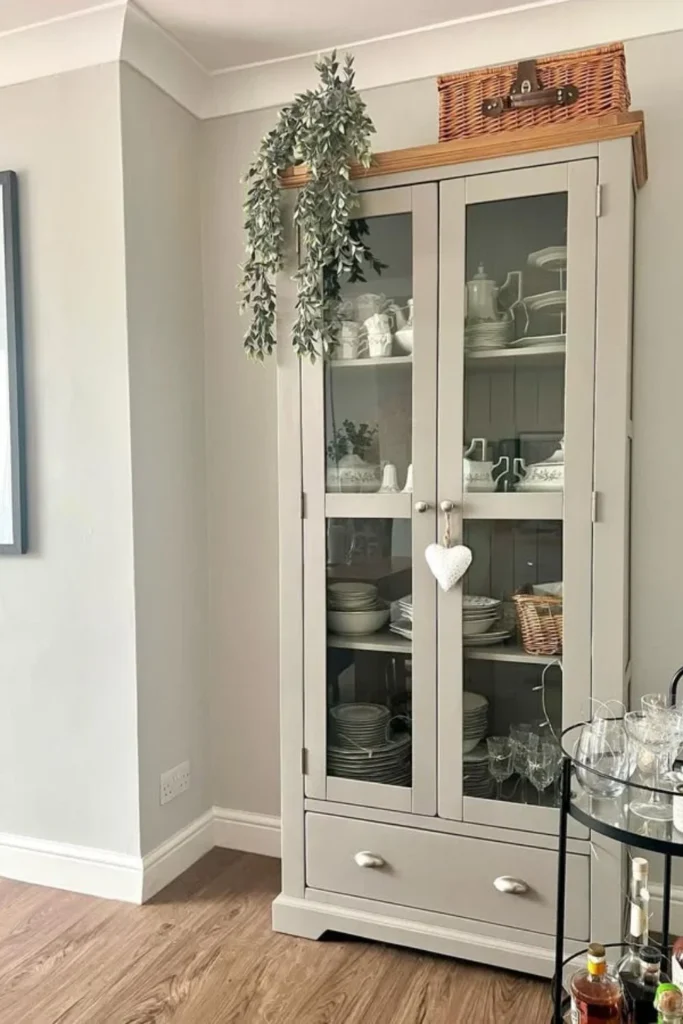
A glass-front hutch combines enclosed storage with an attractive display area. It can be especially useful in kitchens or adjoining dining spaces where cabinet storage is insufficient.
Arrange frequently used plates, bowls, and drinking glasses behind the doors, keeping similar pieces together for a consistent appearance.
Lower drawers or enclosed compartments can store table linens, serving utensils, and less decorative essentials.
For smaller rooms, choose a tall, relatively narrow design rather than a wide cabinet that consumes valuable floor space.
Secure the furniture appropriately, particularly if it has glass doors or holds heavy dinnerware.
18. Door Bin
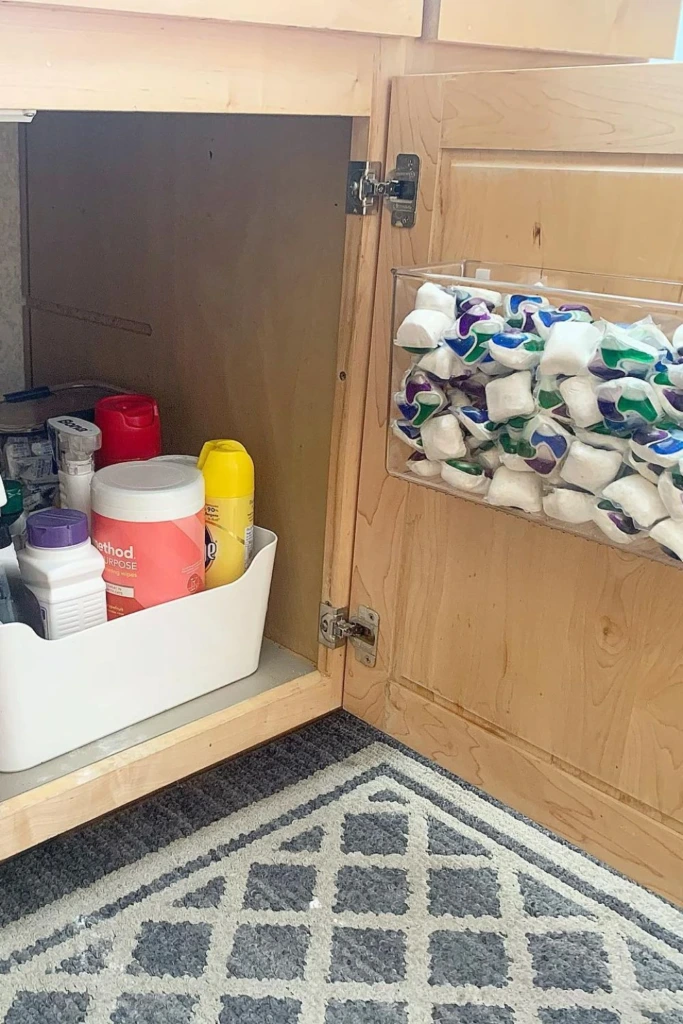
The inside of a cabinet door is often overlooked as a storage location. Attaching a shallow bin creates a convenient spot for smaller kitchen essentials without taking up shelf space.
Depending on the cabinet's location, these organizers can hold cleaning accessories, sponges, food-storage bags, or lightweight packets.
Clear bins are useful because their contents remain visible.
Before installation, check that the organizer will not collide with interior shelves, hinges, or stored products when the door closes.
Keep cleaning chemicals separate from food and follow the products' storage instructions.
19. Rod Organizer
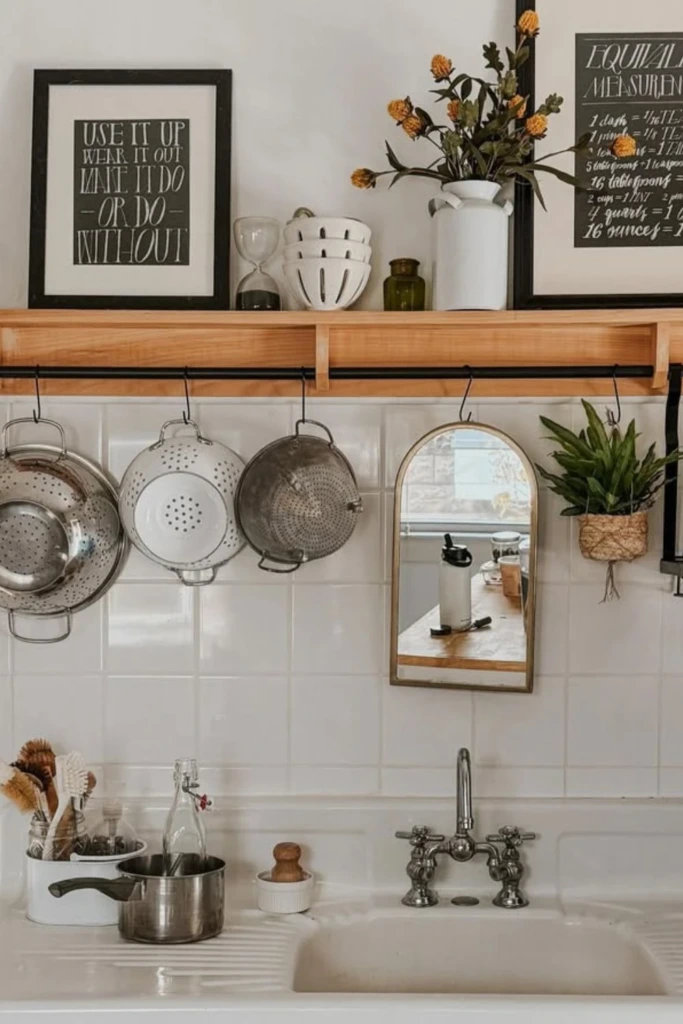
A wall-mounted rod can create useful hanging storage above a countertop or near the sink.
Install hooks along the rod to hold utensils, lightweight colanders, kitchen towels, or small accessories that are used regularly.
This arrangement frees drawer space and keeps important tools visible.
A shelf above the rod can provide additional room for containers or decorative items, creating a compact storage area with multiple functions.
Choose moisture-resistant materials near the sink and ensure hanging objects do not obstruct faucets, electrical outlets, or food preparation.
20. Vintage Canisters
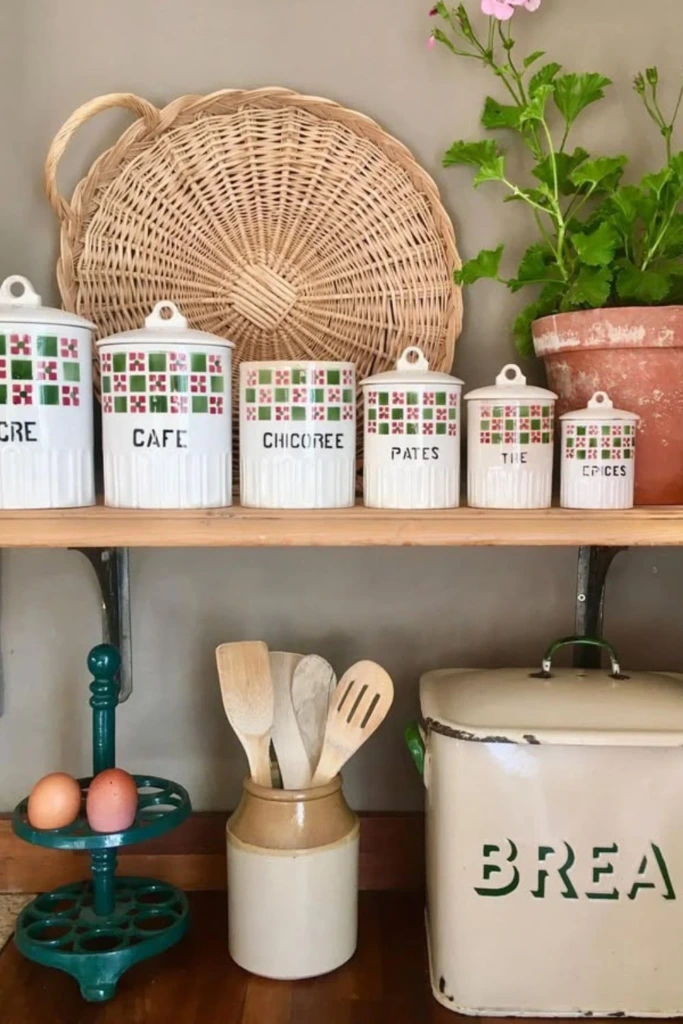
Vintage-inspired canisters offer a way to combine practical food storage with decorative character.
Ceramic, glass, or metal containers in traditional designs can hold coffee, sugar, tea, and other pantry staples while giving open shelves a distinctive appearance.
Mixing a few complementary colors or patterns can create visual interest without making the kitchen feel cluttered.
For food storage, check that the containers are food-safe and have suitable seals. Older decorative pieces may be better used for utensils or nonfood items if their materials are uncertain.
Group the canisters together to maintain an organized look.
21. Open Shelves
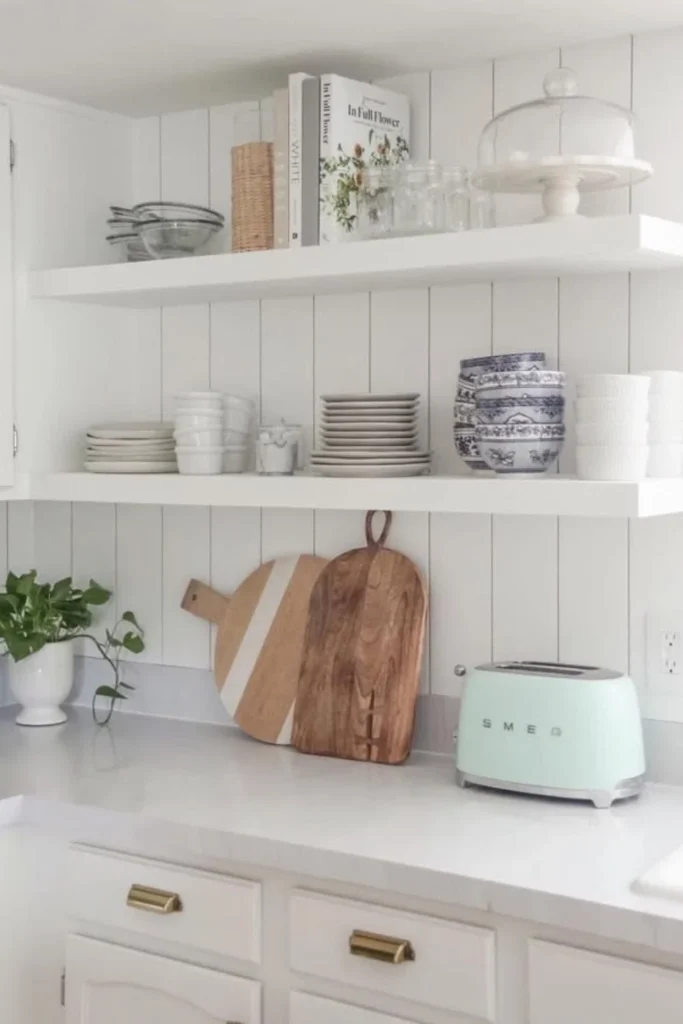
Open shelves provide accessible storage while making a compact kitchen feel less visually enclosed.
They work particularly well for everyday dishes, drinking glasses, and serving bowls that are used and washed frequently.
Keep the arrangement simple by grouping similar items and avoiding overcrowding. Leaving some open space between objects helps the shelves appear lighter.
Choose materials and mounting hardware capable of supporting the intended weight.
Because exposed shelves collect dust and cooking residue, place them away from areas with heavy grease or steam whenever possible.
22. Floating Shelves
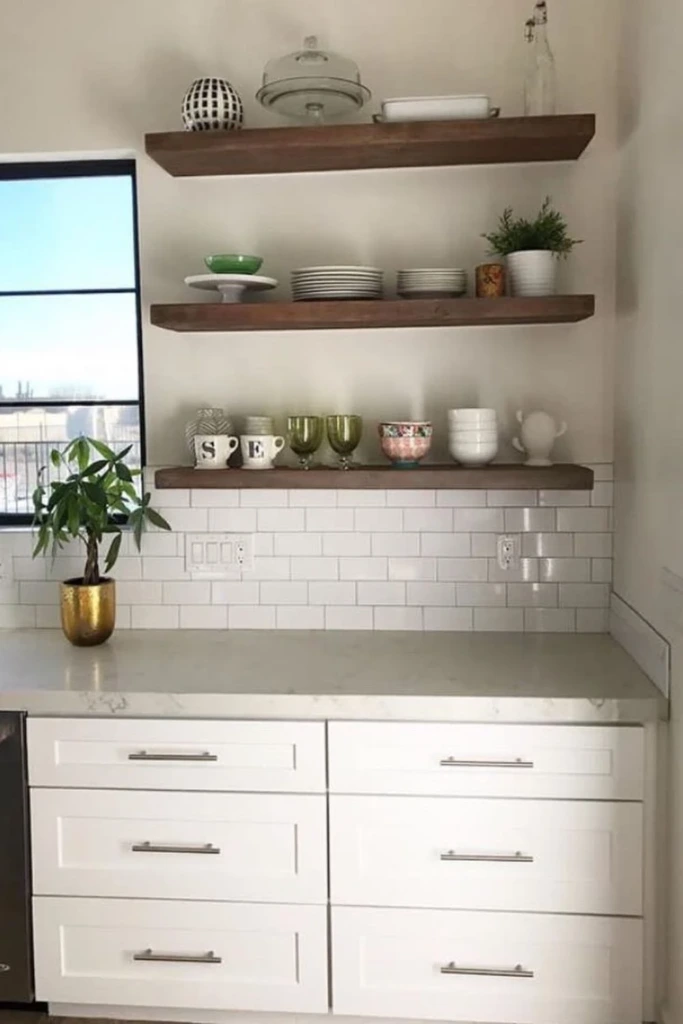
Floating shelves offer a streamlined storage option for kitchens with limited cabinet space. Their concealed brackets create a clean appearance while providing room for essential dishes and accessories.
Install them above a preparation counter, along an unused wall, or in a suitable corner where they won't interfere with daily activities.
Use lower shelves for regularly accessed items and reserve higher positions for lightweight pieces that are needed less often.
Wood finishes can introduce warmth, while shelves matching the wall color create a subtle, cohesive appearance.
Check the mounting system's weight rating and use appropriate anchors, especially when storing ceramics or glassware.
23. Wine And Dish Rack
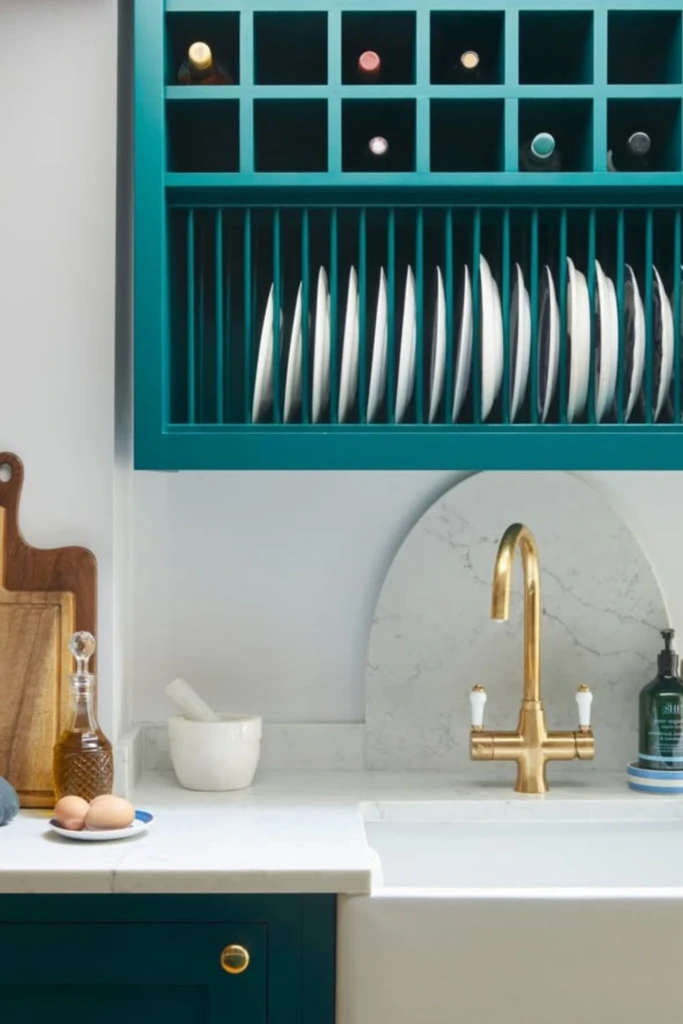
A combined wine and dish rack can bring two storage functions into one compact wall-mounted unit.
The upper portion can accommodate bottles, while a lower section with vertical dividers keeps plates separated and accessible.
This arrangement works particularly well when cabinet space is limited and you want to keep serving essentials together.
Choose a rack with secure bottle supports and sturdy plate slots. If it will be used for drying dishes, make sure the material tolerates moisture and that water can drain safely.
A painted finish or natural wood design can also make the rack an attractive feature in a small kitchen.
With thoughtful storage choices, even a compact kitchen can become easier to use and maintain. The most effective solutions make everyday essentials accessible while keeping counters, cabinets, and walking areas organized.
Start with the spaces that cause the most frustration, whether that's a crowded drawer, an overflowing pantry, or a cluttered countertop. A few carefully chosen organizers can make a noticeable difference without requiring expensive renovations.