24 Easy DIY Chicken Coop Plans for 2026
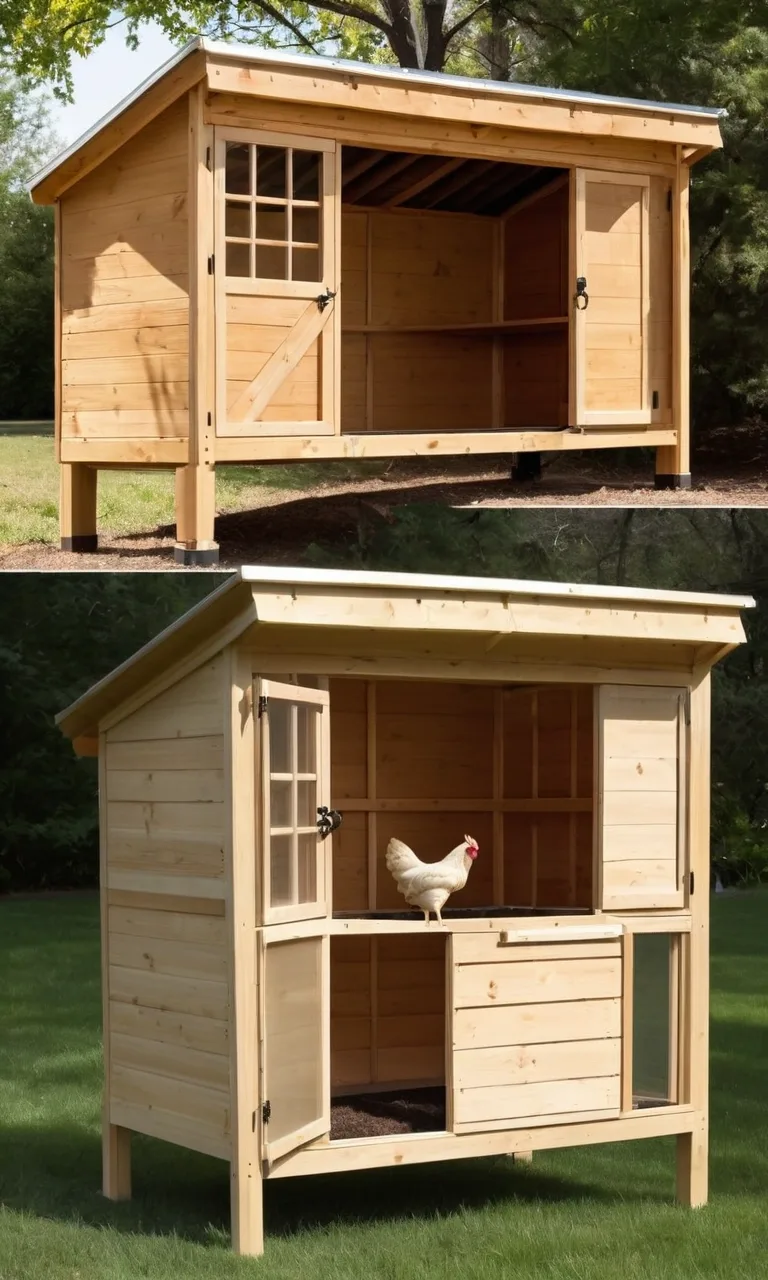
Raising chickens in your backyard can be an enjoyable way to produce fresh eggs, manage garden pests, and develop a more self-sufficient lifestyle. However, keeping a healthy flock starts with providing a comfortable, secure, and properly designed shelter.
Building your own chicken coop allows you to choose the size, materials, and layout that work best for your available space. Whether you prefer a traditional wooden structure, a modern enclosure, or a portable chicken tractor, there are plenty of practical designs to consider.
These 23 easy DIY chicken coop plans offer inspiration for different backyard sizes, budgets, and experience levels. Each idea combines useful features with attractive details to help you create a home your chickens can enjoy throughout the year.
1. Essential Features Every Chicken Coop Needs

Before choosing a design, consider the basic requirements that keep chickens healthy and protected.
Good ventilation is essential for controlling moisture, ammonia buildup, and excessive heat. Position screened openings above roosting height to encourage airflow without creating uncomfortable drafts directly across sleeping birds.
Allow approximately 3–4 square feet of indoor floor space per standard-size hen, with around 8–10 square feet per bird in an outdoor run as a useful starting point. Larger breeds and flocks that spend more time confined may need additional room.
Include sturdy roosting bars, accessible nesting boxes, and doors wide enough for convenient cleaning. One nesting box for every three or four laying hens is generally sufficient.
Predator protection deserves special attention. Use securely attached hardware cloth around vulnerable openings, install dependable locks, and protect the perimeter against digging animals. Ordinary chicken wire is not a reliable barrier against determined predators.
Finally, choose weather-resistant roofing, well-drained ground, and materials that are easy to maintain. A thoughtfully planned coop makes everyday chicken care considerably easier.
2. Farmhouse Charm
A farmhouse-inspired chicken coop adds traditional country character to almost any backyard. Start with a simple timber structure and finish the exterior in white, using natural wood details and rich green doors for contrast.
Small awnings above the windows can help prevent rain from entering, while a covered entrance makes daily feeding more convenient. Decorative flower boxes create a welcoming appearance without requiring complicated construction.
Attach a secure outdoor run with enough room for scratching and exploring. Choose easy-to-clean flooring inside the shelter and provide access to nesting boxes without entering the entire enclosure.
This design works especially well beside vegetable gardens, rustic patios, and farmhouse-style homes.
3. Cottage-Style Haven
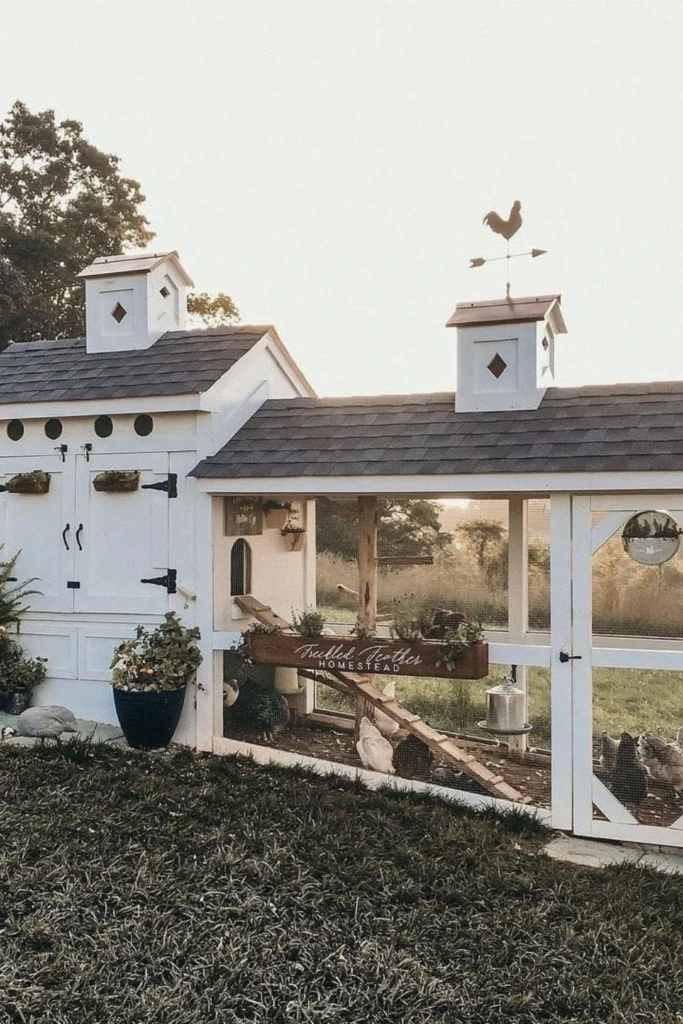
A cottage-style chicken coop offers the appearance of a miniature countryside home while providing practical accommodations for your flock.
Use light-colored siding with dark trim around the windows, doors, and roof edges. Two small cupolas can add architectural interest, although any decorative roof openings should be properly screened and weatherproofed.
Divide the structure into separate areas for roosting, nesting, and maintenance access. A roofed outdoor run allows chickens to spend time outside during light rain and provides welcome shade in warmer weather.
Complete the surrounding area with hanging baskets, a wooden nameplate, or a short garden path. Keep decorations beyond the chickens' reach when they could be harmful if pecked.
4. Rustic Whitehouse
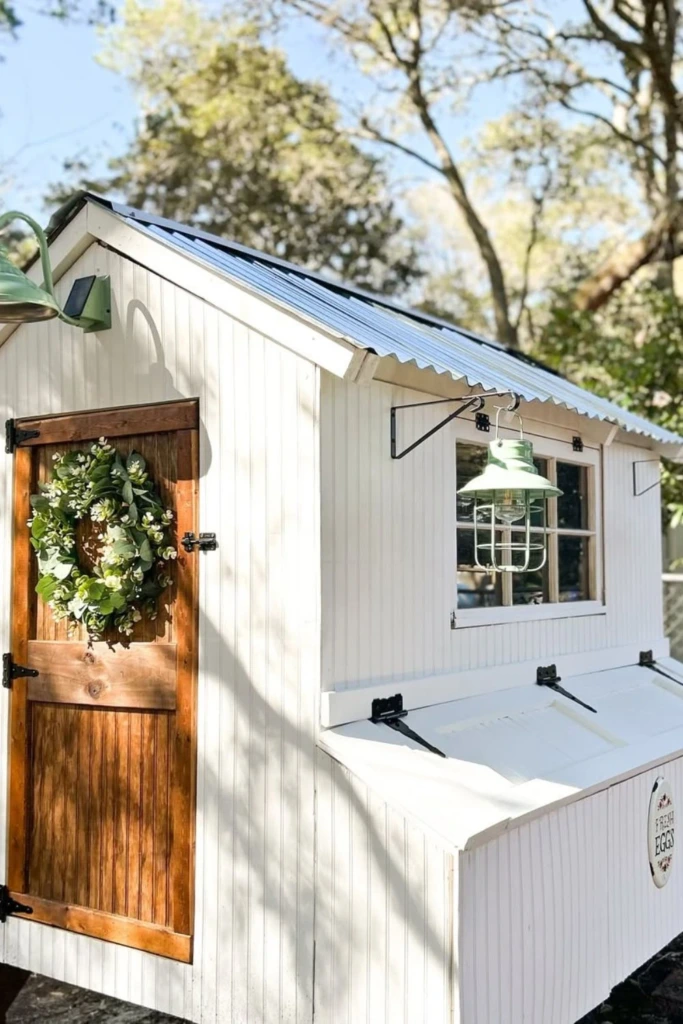
For a timeless backyard structure, consider a white chicken coop featuring vertical board-and-batten siding and a contrasting wooden entrance.
The straightforward rectangular design is suitable for DIY construction because it relies on conventional framing methods. A corrugated metal roof provides reliable rain protection when installed with the correct slope and fasteners.
Place several nesting compartments along one exterior wall, allowing eggs to be collected through a hinged access panel. Make sure the lid has a secure latch and a weather-resistant seal.
Farmhouse-style exterior lighting can improve visibility during evening chores. Use fixtures rated for outdoor conditions and keep electrical wiring inaccessible to chickens.
5. Dark Woodland Coop
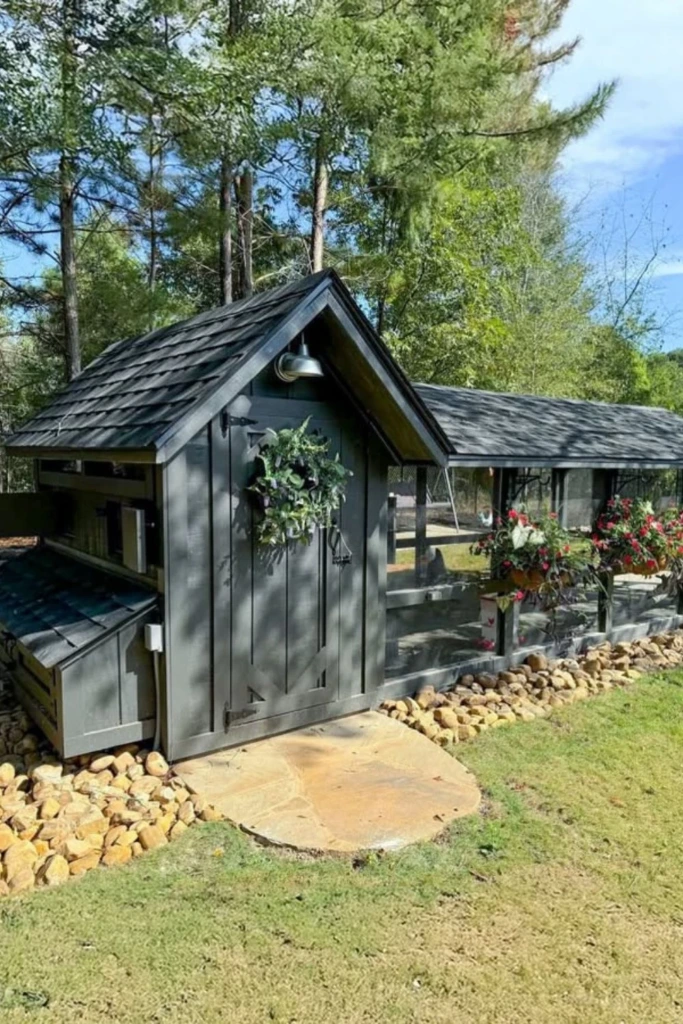
A woodland chicken coop uses darker colors and natural landscaping to blend into a tree-filled backyard.
Paint the exterior charcoal gray or another muted shade, then incorporate wooden trim for a warm, understated finish. A stone walkway leading to the entrance helps reduce muddy conditions during wet weather.
Surround the structure with rocks, native plants, and hanging flowers to create a natural garden setting. Avoid toxic plants and maintain enough clearance around the walls for cleaning and inspections.
A tall, walk-in run is particularly useful because it allows you to refill feeders, replace bedding, and inspect the enclosure without crouching.
In hot climates, provide generous shade and ventilation, since dark exterior finishes can absorb considerable sunlight.
6. Backyard Classic
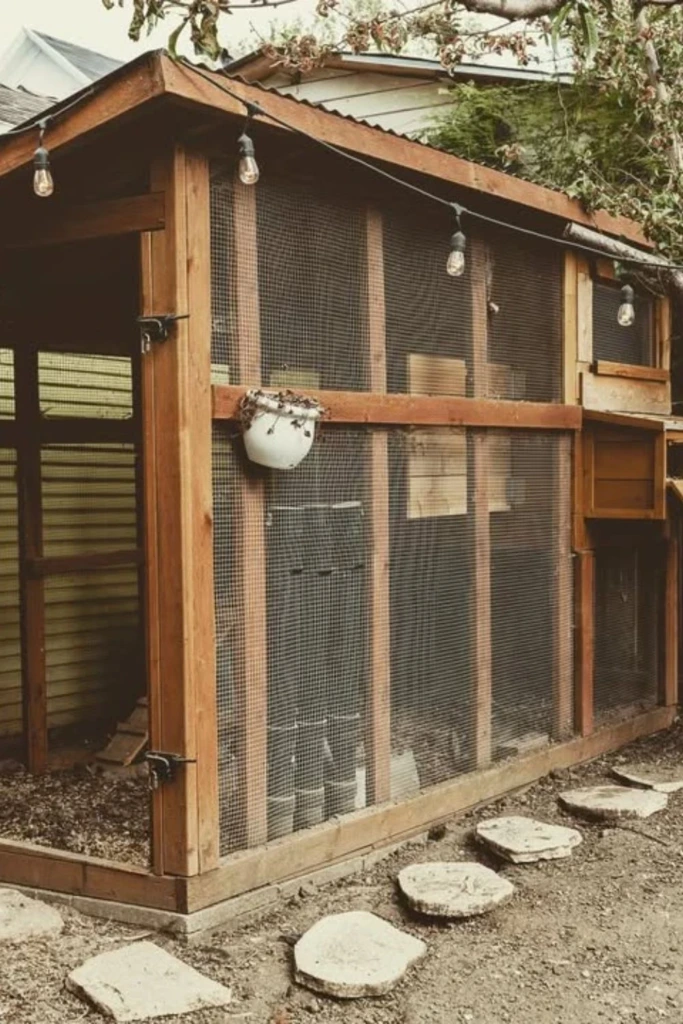
A classic wooden chicken coop is an excellent starting point for homeowners who prefer a straightforward project with minimal decoration.
Build the main framework from sturdy lumber and use exterior-grade plywood or wooden boards for the enclosed sleeping area. Surround the attached run with galvanized hardware cloth to provide airflow while limiting predator access.
A simple pitched roof helps direct rainwater away from the interior. Consider adding a removable droppings tray beneath the roosting bars to make cleaning faster.
Stepping stones, hanging planters, and outdoor string lights can enhance the surrounding space without affecting the basic construction.
This practical layout is especially suitable for small backyard flocks and can be expanded as your needs change.
7. White Barn Style
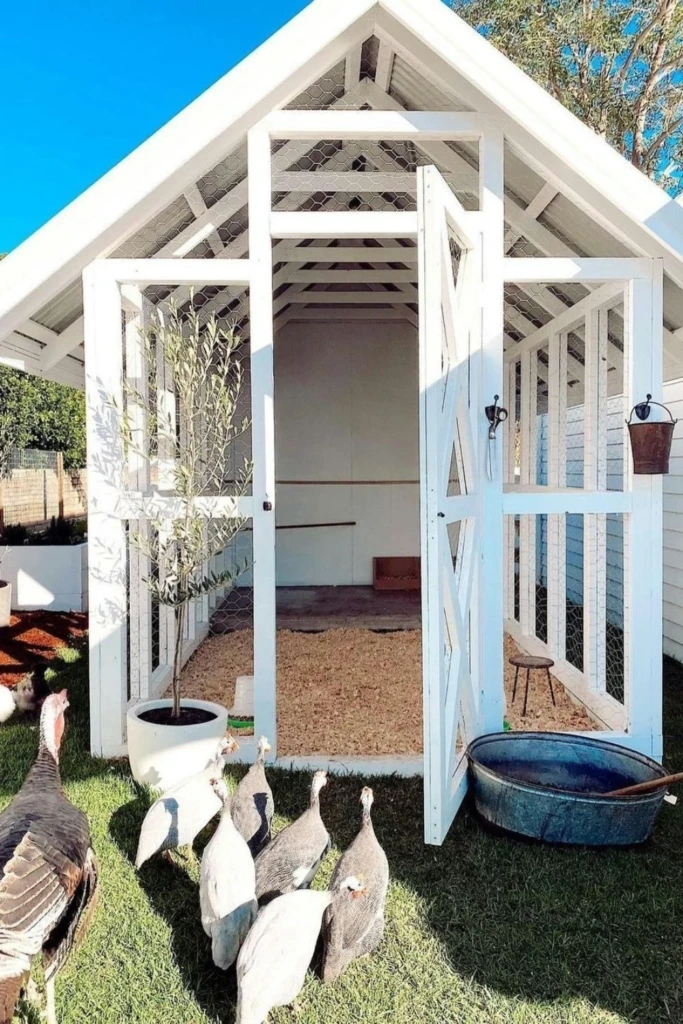
A white barn-style coop brings a clean, traditional appearance to backyard chicken keeping.
Its defining features include a pitched roof, bright exterior siding, and large access doors. Build the walls with weather-resistant materials and incorporate screened ventilation openings beneath the roofline.
A combination of gravel in surrounding drainage areas and suitable woodchip bedding in the run can help manage muddy ground. Inside the sleeping quarters, use dry, absorbent bedding that can be replaced easily.
Large doors are particularly helpful when cleaning the coop or checking on the birds. Install sturdy hinges and predator-resistant latches to keep everything secure overnight.
The bright finish also pairs beautifully with lawns, garden beds, and wooden fencing.
8. Sleek Minimalist
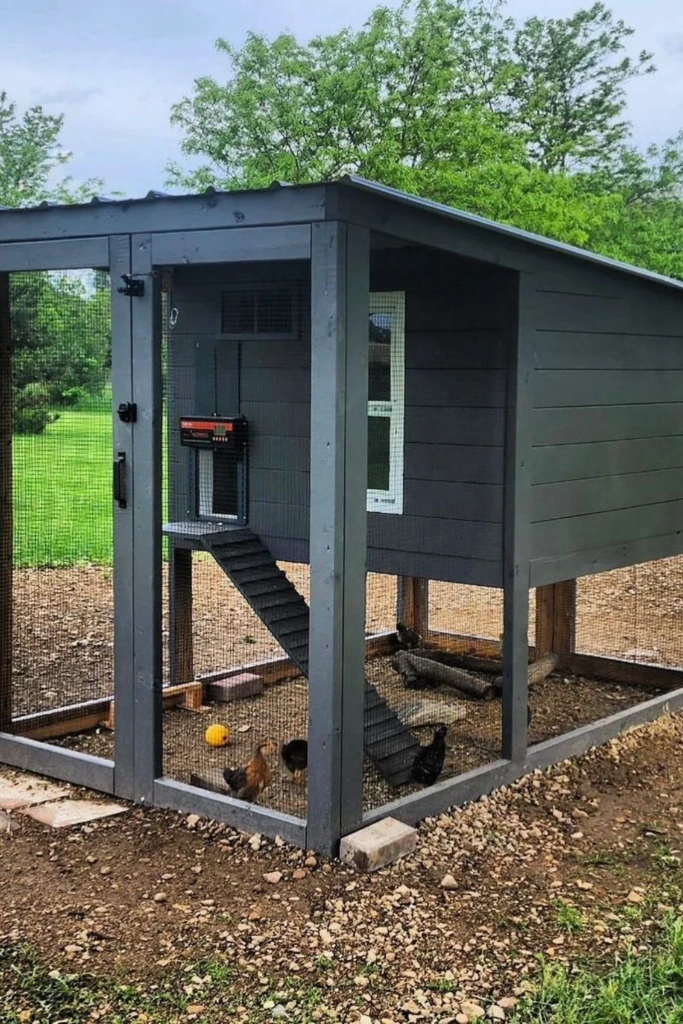
A minimalist chicken coop is ideal for homeowners who prefer contemporary backyard structures with simple shapes and limited decorative details.
Choose a rectangular design with smooth gray exterior panels and a flat-looking or gently sloped roof. The roof still needs sufficient pitch to drain rainwater effectively.
Position the enclosed roosting compartment above part of the outdoor run to make better use of the available footprint. A gently inclined ramp with small wooden cleats helps chickens move between levels.
Use strong mesh panels for the run and include a convenient cleaning door.
This compact arrangement is particularly useful in smaller yards where every square foot matters.
9. Garden House Coop
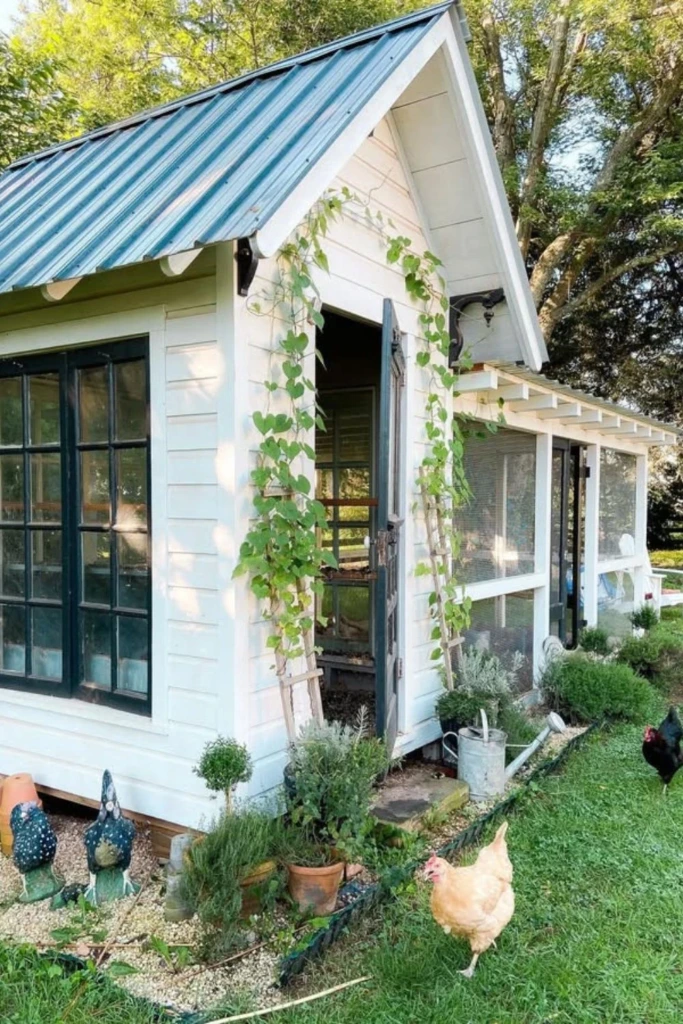
A garden house chicken coop can become an attractive focal point among flower beds, shrubs, and landscaped pathways.
Combine white exterior walls with a deep green roof and dark-framed windows for a charming garden-inspired appearance. Choose windows that open for ventilation and include securely fitted predator-resistant screens.
Inside, arrange the nesting boxes in a quiet, slightly shaded area and provide roosting bars higher than the nests to discourage chickens from sleeping in them.
Climbing plants can soften the exterior, but keep vegetation trimmed away from vents and structural joints.
A connected run gives the flock a protected outdoor area while preserving nearby garden beds from constant scratching.
10. Garden Oasis
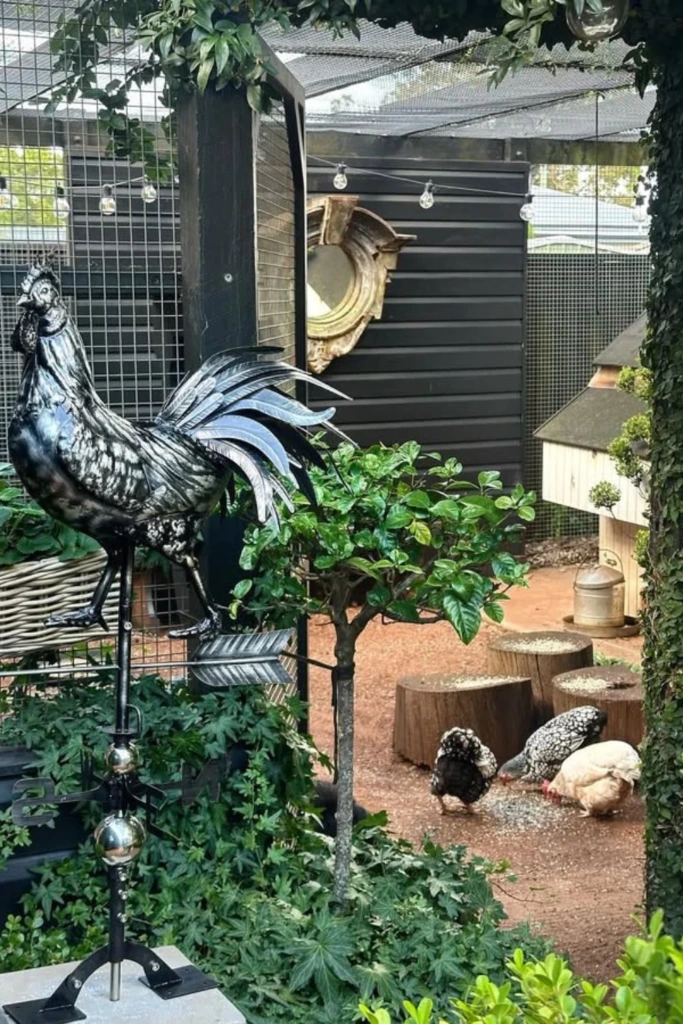
A garden oasis coop focuses on integrating the chicken enclosure into a lush, thoughtfully landscaped backyard.
Begin with a durable shelter and surround it with a combination of potted plants, climbing greenery, and decorative fencing. Dark fencing can provide an attractive backdrop for bright foliage.
A decorative rooster weathervane or rustic garden ornament adds personality without requiring changes to the coop's main structure.
Choose chicken-safe plants and keep containers positioned where they cannot be tipped over. Dense vegetation should not obstruct airflow or create hiding places for predators near the enclosure.
Adding a shaded dust-bathing area with dry, loose soil gives chickens an opportunity to perform an important natural behavior.
11. Large Farmyard
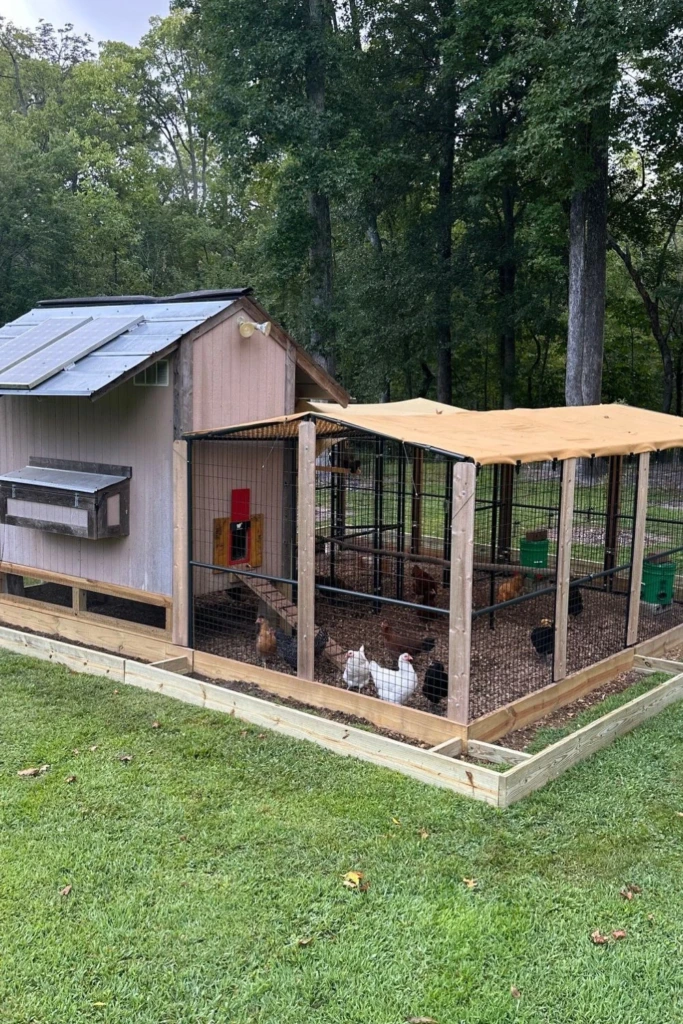
A large farmyard chicken coop is designed for households keeping a bigger flock or planning to expand their poultry setup.
Start with a spacious enclosed shelter and connect it to an extended outdoor run. Strong posts, securely fastened fencing, and a durable roof are essential for a structure of this size.
A covered section provides protection from direct sunlight and rainfall. If using tarpaulin roofing, secure it firmly, maintain proper drainage, and inspect it regularly for damage.
Arrange nesting boxes where they can be reached easily and provide multiple feeding and watering stations to reduce competition.
Wide access gates and walk-in headroom make maintenance more manageable, especially when caring for numerous birds.
12. Desert Ranch
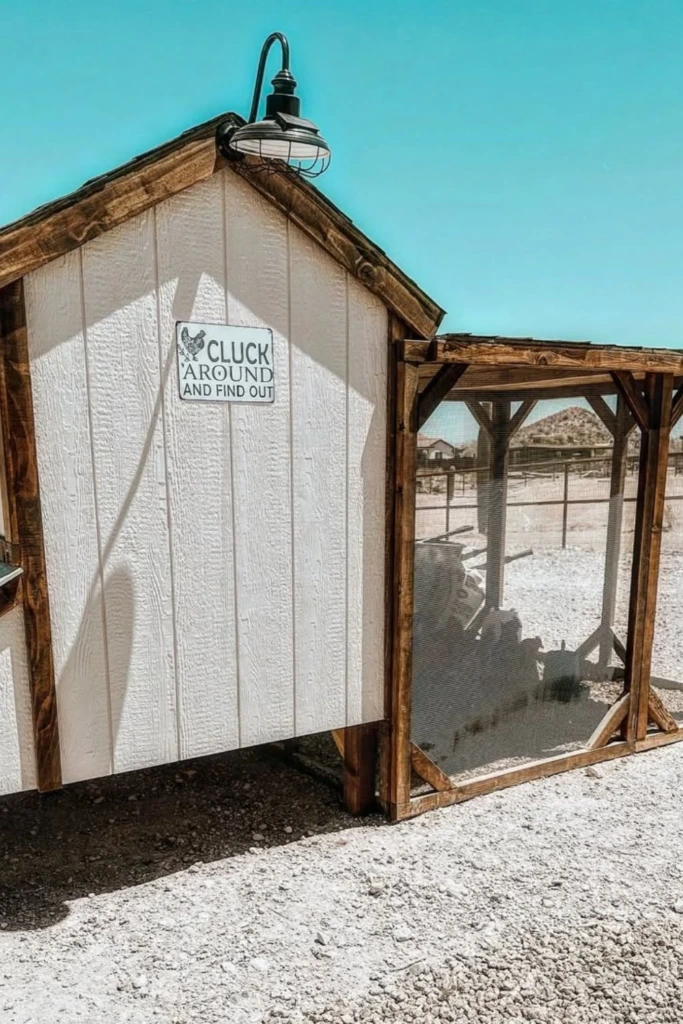
A desert ranch chicken coop combines rustic styling with features suited to dry, sunny environments.
Use pale exterior siding to reflect some of the sun's heat, then add natural wooden trim for a warm ranch-inspired finish.
A generously shaded outdoor run is essential in hot regions. Position the structure to take advantage of prevailing breezes and provide multiple protected ventilation openings.
Use roofing materials that withstand intense sunlight and create sufficient overhangs to shade the walls. Keep drinking water in shaded locations and refill it frequently during hot weather.
A humorous wooden sign or simple ranch-style decoration can personalize the entrance.
For desert climates, prioritize heat management over appearance, particularly during summer afternoons.
13. Classic Blue Barn
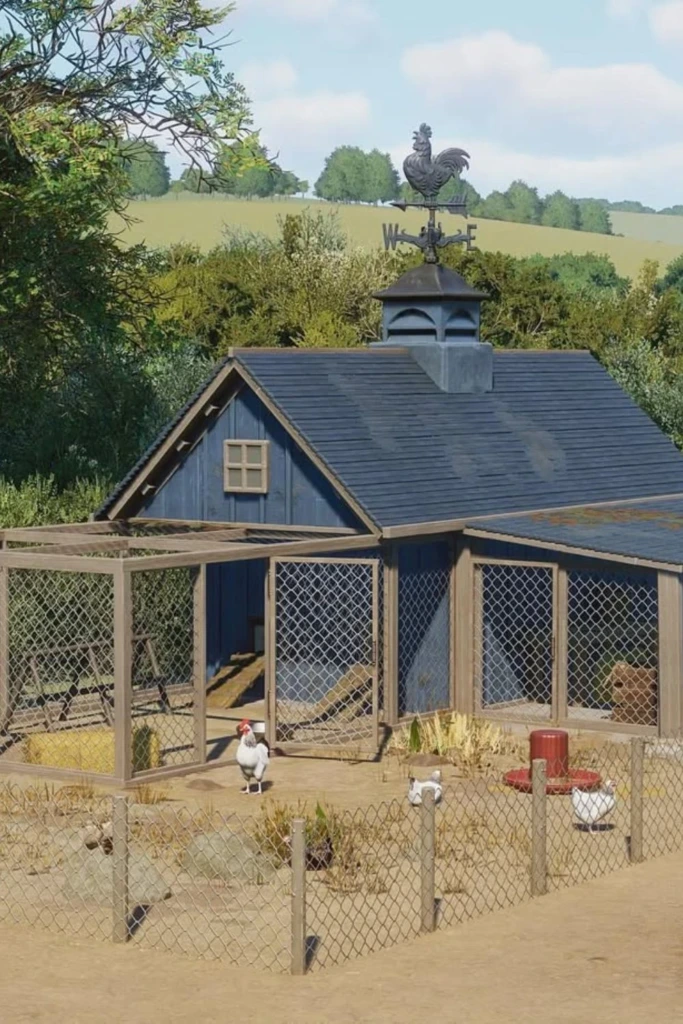
A blue barn chicken coop offers a colorful alternative to traditional white and red farm buildings.
Paint the exterior navy blue and use a familiar gable roof to create a recognizable barn silhouette. White trim around the doors and windows provides a crisp finishing detail.
Build the attached run with solid wooden posts and securely installed fencing. Chain-link panels can provide structural enclosure, but smaller predator-resistant mesh may also be necessary to prevent access through larger openings.
A rooster-shaped weathervane makes an attractive roof ornament, provided it is firmly mounted.
This design can accommodate medium-sized flocks when the indoor shelter, roosting space, and outdoor run are sized appropriately.
14. A-Frame Simplicity
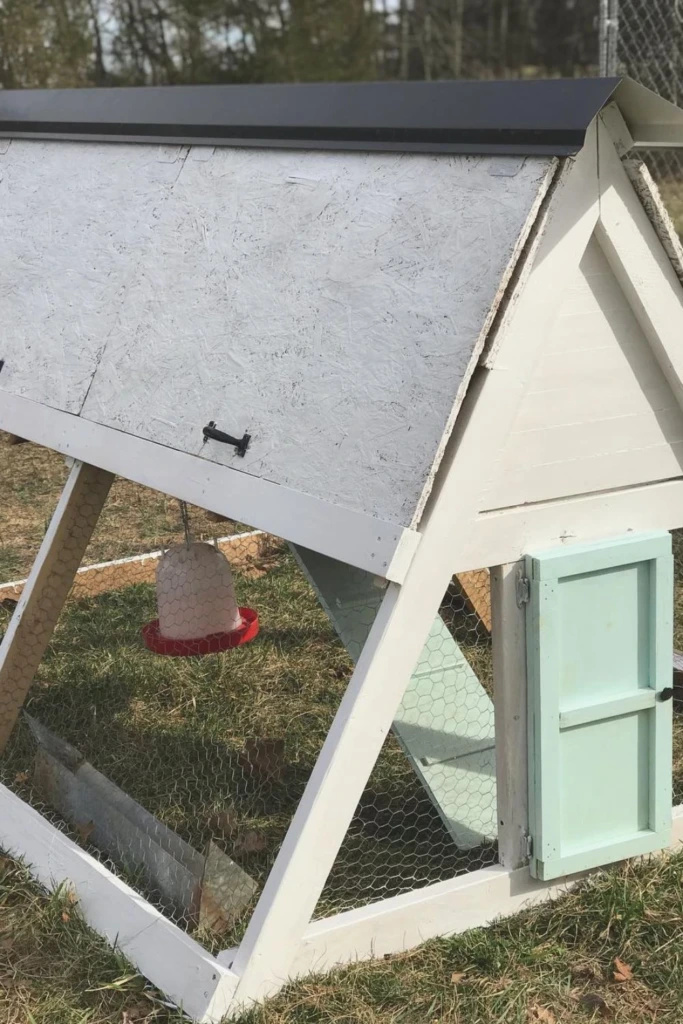
An A-frame chicken coop is a practical choice for beginners because its triangular shape uses a relatively simple structural layout.
Construct the frame from lightweight lumber and add plywood panels to create a sheltered sleeping compartment. Cover the outdoor portion with hardware cloth and provide a secure door for feeding and cleaning.
A small ramp can connect the enclosed upper area to the ground-level run.
If you want to move the structure around the yard, keep the overall weight manageable and add handles or wheels.
Portable designs allow chickens to forage on fresh patches of grass, but they must still offer protection from digging predators, overheating, and severe weather.
A colorful door can give this otherwise simple structure a cheerful finishing touch.
15. Massive Walk-In
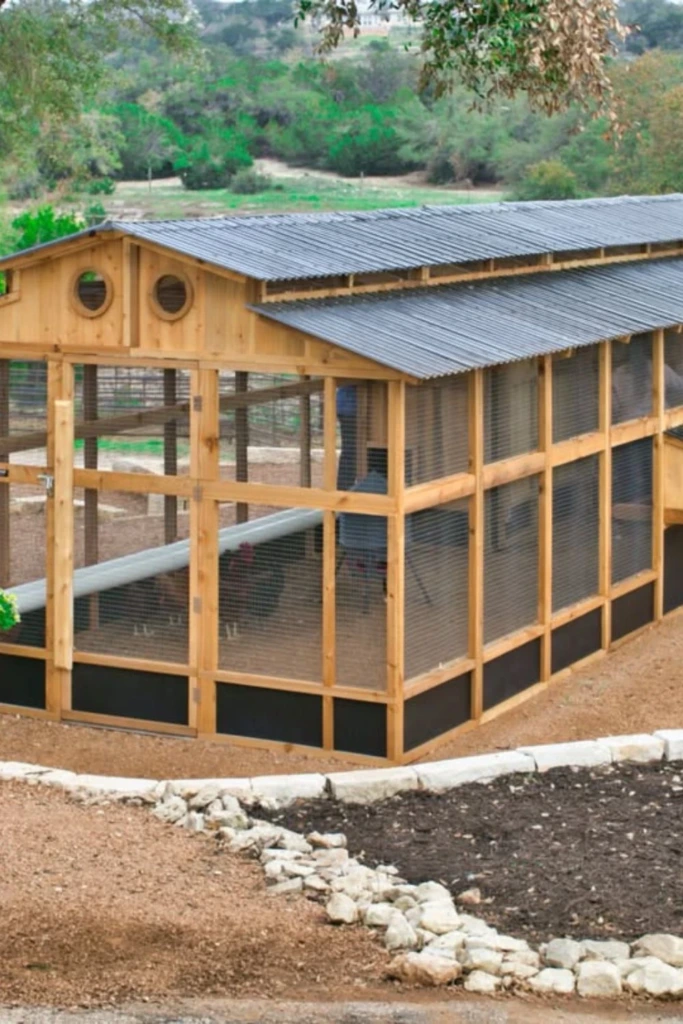
A large walk-in chicken coop is well suited to poultry keepers who want comfortable access and plenty of room for their birds.
Design the enclosure with sufficient height to stand upright while cleaning, collecting eggs, or inspecting the flock. Include a separate sheltered roosting area and a spacious covered run.
Corrugated roofing is a practical option because it sheds water efficiently when supported and installed correctly. Use suitable flashing and overhangs to prevent leaks.
Arrange nesting boxes along an accessible wall and leave clear pathways between equipment.
For larger structures, pay particular attention to post foundations, wind resistance, and local building requirements.
Decorative planters near the entrance can make the finished enclosure feel like a permanent part of the landscape.
16. Holiday Cottage
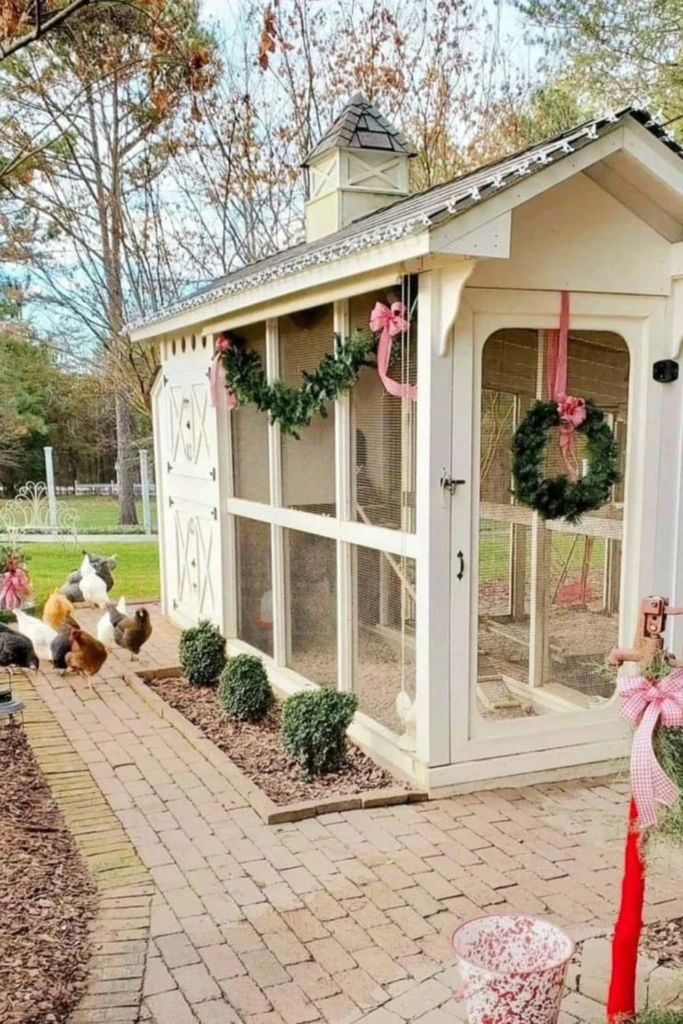
A holiday cottage chicken coop combines practical poultry housing with seasonal decorative possibilities.
Start with a compact barn-inspired structure featuring a pitched roof, solid wooden doors, and a covered run. A small decorative cupola can create a distinctive silhouette.
Add a brick or paver walkway to make the entrance easier to reach during wet conditions. Properly installed paving also helps prevent the surrounding soil from becoming excessively muddy.
Seasonal wreaths and ribbons can decorate the exterior, but attach them securely and keep loose strings, artificial berries, and small ornaments away from chickens.
The underlying structure should remain functional throughout the year, with weather protection, ventilation, and easy access taking priority over decorations.
17. Sloped Modern
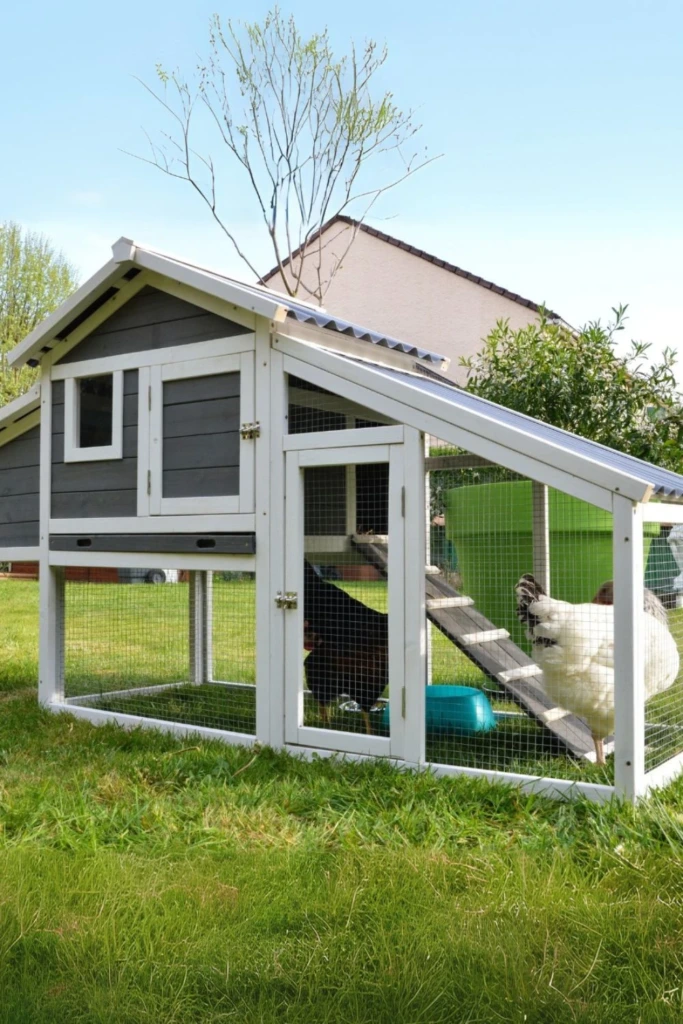
A modern coop with a single sloping roof is a space-efficient option for narrow yards and contemporary homes.
Use a straightforward timber frame and finish the exterior with gray and white siding. The sloped roof directs water toward one side, where gutters can help manage runoff.
Place the enclosed sleeping compartment at one end and connect it to a secure mesh-covered run. An elevated roosting section creates a protected resting space while keeping part of the ground available for daytime activity.
A large hinged cleaning panel can simplify bedding changes and interior inspections.
This design is particularly useful when you want a compact chicken coop that looks organized and fits neatly beside a fence or garden boundary.
18. White Gable Coop
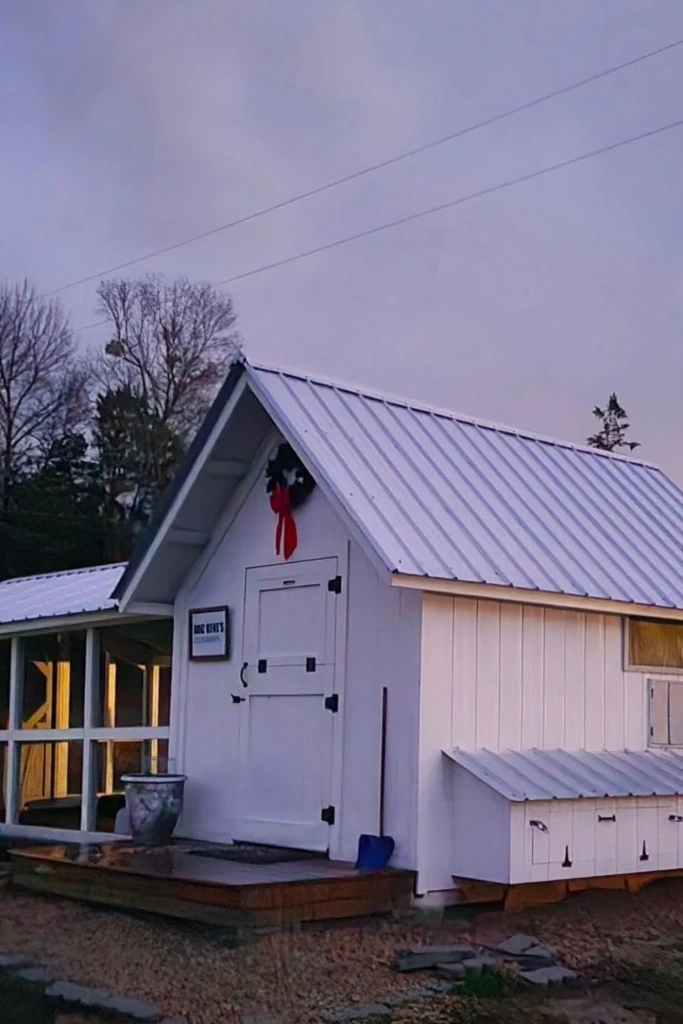
A white gable chicken coop is a versatile design that combines familiar farmhouse architecture with practical features.
The traditional roof shape provides useful overhead space and helps shed rain or snow. Metal roofing offers durability when installed over an appropriately constructed frame.
Add an enclosed outdoor run with a secure access gate. Exterior nesting boxes allow eggs to be gathered without disturbing the birds inside.
Double doors are worth considering if the coop is large enough to accommodate them, as they make removing bedding and equipment much easier.
A simple wreath or seasonal sign can personalize the exterior without interfering with daily maintenance.
For a polished appearance, keep the trim consistent and use exterior paint designed for the local climate.
19. Rustic Woodshed
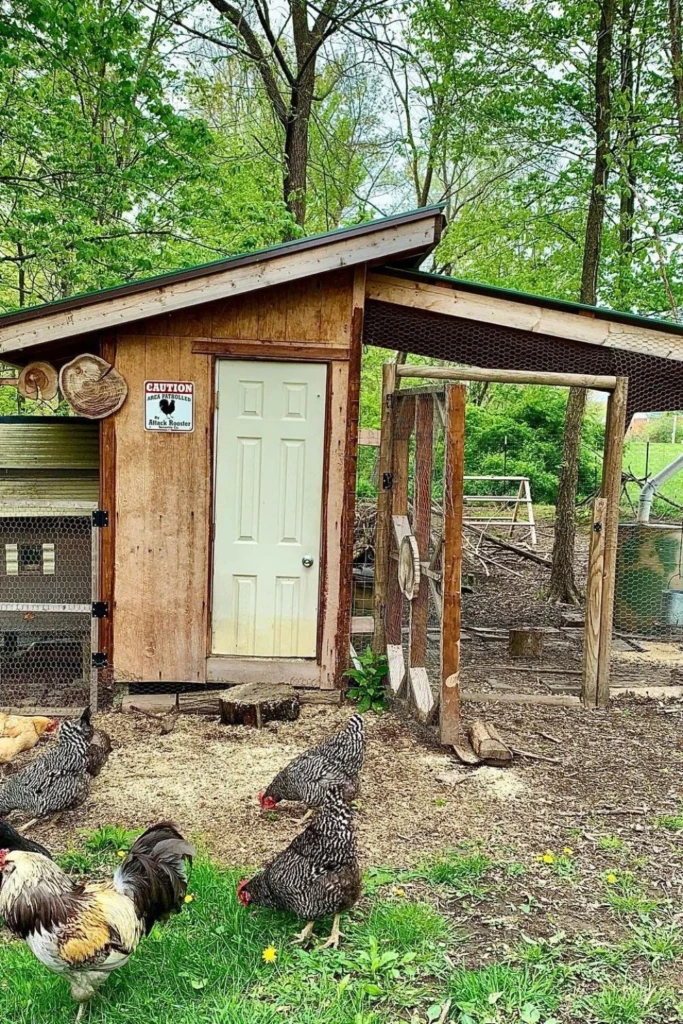
A rustic woodshed chicken coop is a budget-conscious option that makes good use of reclaimed building materials.
Use salvaged lumber for framing and exterior cladding, provided it is structurally sound and free from hazardous coatings or chemical contamination.
A lean-to roof keeps construction relatively simple and allows rainwater to drain toward the back or side. Position the structure so runoff does not collect inside the chicken run.
Reclaimed doors, rough-cut boards, and natural wood accents can create a traditional homestead appearance.
Despite its rustic styling, the coop still needs tightly secured walls, predator-resistant openings, dry bedding, and adequate ventilation.
This approach is particularly appealing for DIY builders who have leftover materials from previous projects.
20. Rolling Tractor
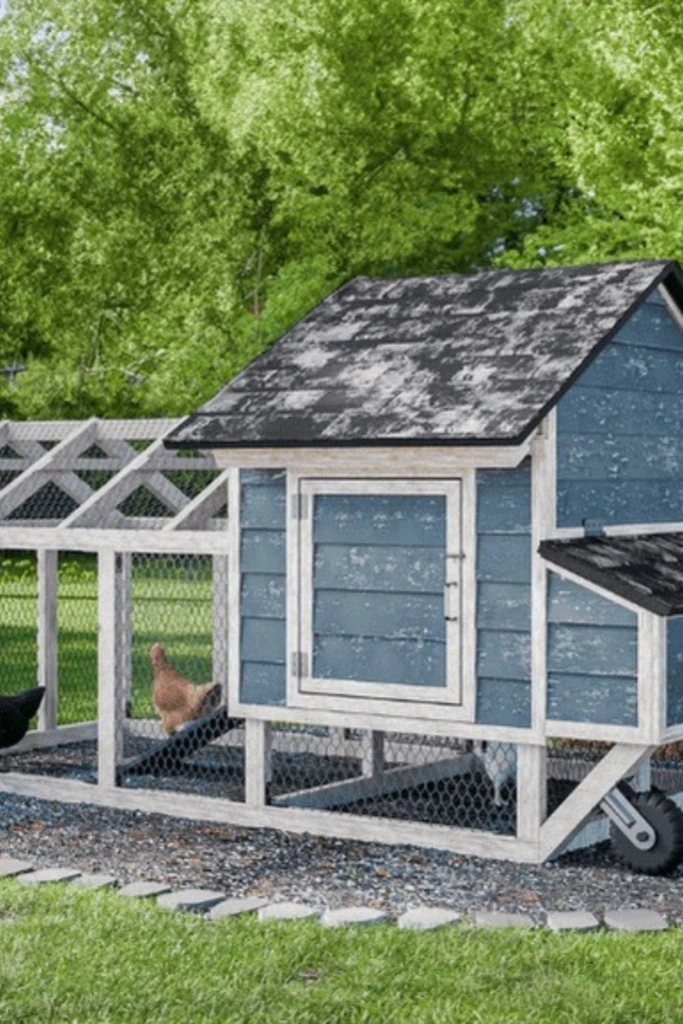
A rolling chicken tractor is a movable enclosure that allows a small flock to explore different areas of the yard.
Build a lightweight wooden or metal frame and attach a compact, enclosed sleeping compartment. Install durable wheels and a comfortable handle to make repositioning easier.
The outdoor section should be covered with strong mesh, while the sleeping compartment needs solid walls and a waterproof roof.
Move the tractor regularly to reduce damage to the grass and prevent excessive manure buildup in one location.
Make sure the structure cannot roll unexpectedly and that predators cannot enter beneath the frame. A secure nighttime housing arrangement is especially important where digging animals are common.
A blue-and-white paint scheme gives the mobile structure a cheerful farmhouse appearance.
21. Red Barn Coop
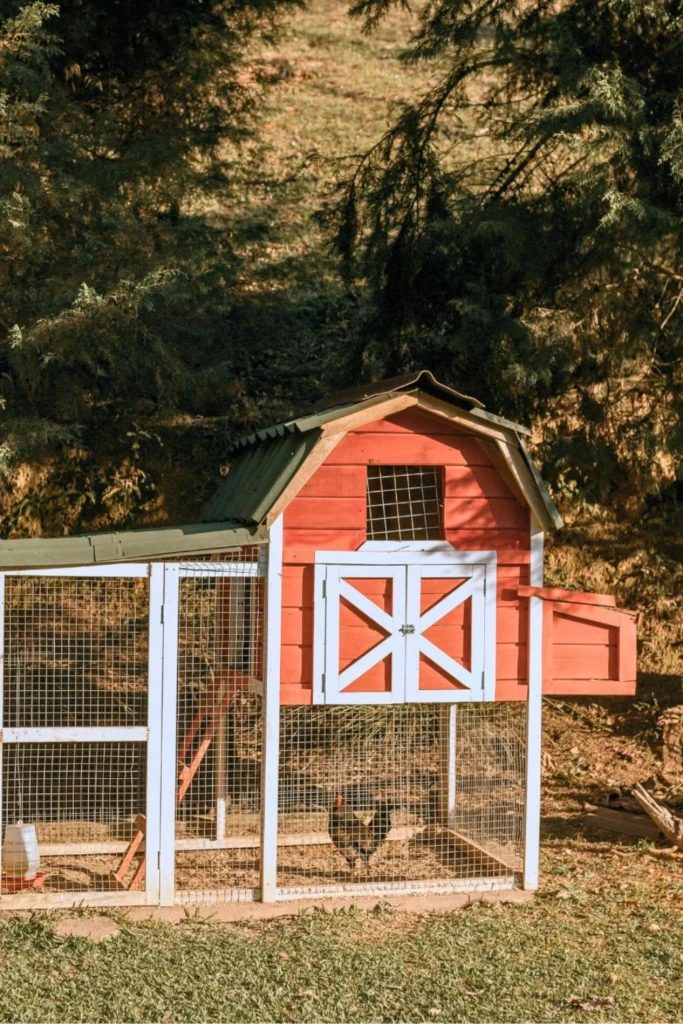
A red barn chicken coop brings the familiar look of a traditional farm building into a smaller backyard setting.
Use red exterior siding with white trim around the roof, windows, and doors. An arched-looking roofline can add character, although a conventional pitched roof is usually easier for beginners to construct.
Raise the enclosed sleeping area above the ground to improve drainage and provide some additional shelter beneath it.
Connect the coop to a protected outdoor run and install a secure pop door for the chickens.
Ensure that ramps are stable, roosting bars are appropriately positioned, and the nesting area stays dry.
This colorful design looks particularly attractive against green lawns and natural garden landscaping.
22. Two-Tone Coop
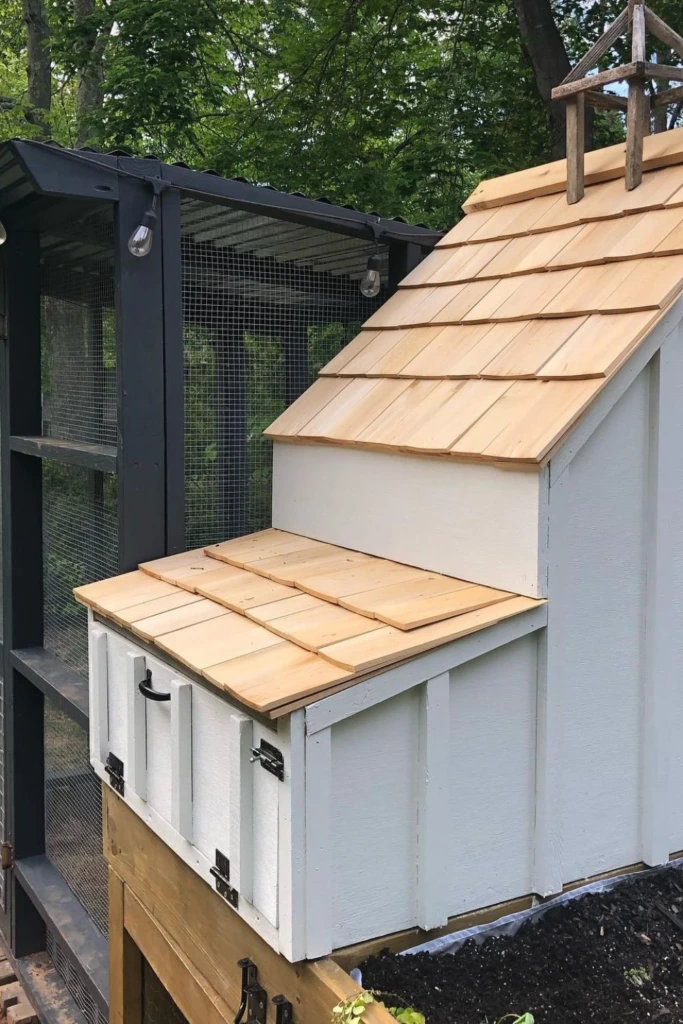
A two-tone chicken coop offers an elegant combination of natural wood textures and painted exterior surfaces.
Use cedar shingles or similar weather-resistant cladding on one section and white siding on the remaining walls. The contrasting finishes create visual interest without requiring elaborate architectural details.
A black-framed outdoor run provides a modern complement to the more traditional sleeping compartment.
Choose closely spaced, predator-resistant mesh and reinforce all corners, doors, and joints.
A small decorative roof accent can enhance the farmhouse appearance. Outdoor-rated string lights may also be used nearby, provided cords are protected from pecking, moisture, and damage.
This design works well for homeowners who want their chicken enclosure to complement a carefully maintained garden.
23. Urban Homestead
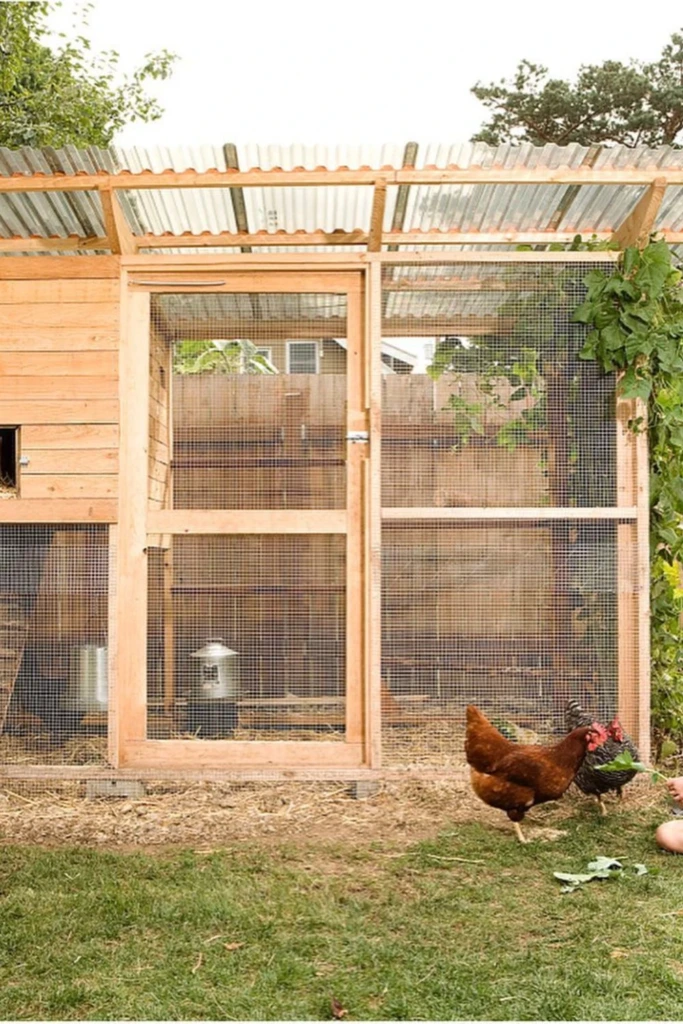
An urban homestead chicken coop focuses on efficient use of space, straightforward maintenance, and dependable construction.
Build a compact shelter using wooden plank walls and corrugated roofing. Include a securely enclosed run so chickens can exercise without wandering into neighboring properties.
An external nesting box is particularly helpful in tight spaces because it allows egg collection from outside the main enclosure.
Use vertical space thoughtfully by placing roosting bars above the floor, while keeping sufficient headroom and safe access for the birds.
Climbing greenery along nearby fencing can provide additional shade, although plants should not block ventilation or compromise the mesh.
Before building, check local rules concerning backyard chickens, flock size, property setbacks, and noise restrictions.
24. Winter Farmhouse
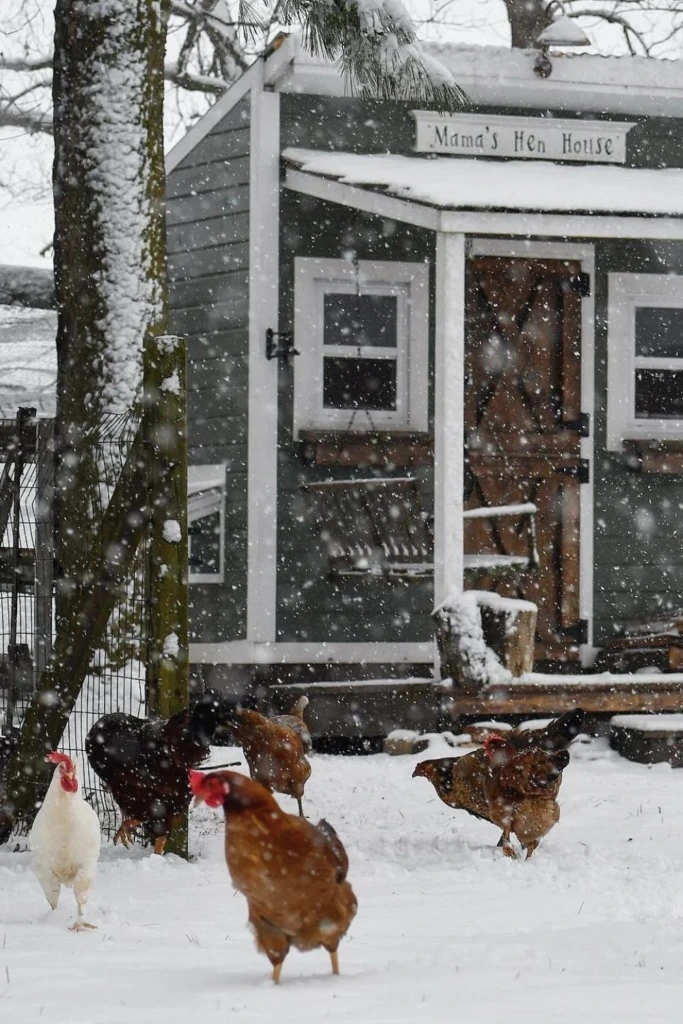
A winter farmhouse chicken coop is designed to help chickens remain dry, sheltered, and comfortable during colder weather.
Deep green siding with white trim gives the building a classic rural appearance. A substantial roof overhang helps keep snow and rain away from entrances and exterior walls.
Use sturdy doors, weather-resistant roofing, and properly fitted windows to limit unwanted drafts. However, maintain high-level ventilation because moisture buildup can contribute to respiratory problems and frostbite.
Provide wide, stable wooden roosts and keep bedding clean and dry. In areas with heavy snowfall, the roof must be designed for local snow loads.
Exterior nesting compartments make egg collection convenient, but they should be insulated or protected from excessive cold where necessary.
With careful construction and regular maintenance, this farmhouse-inspired design can provide dependable shelter through changing seasons.