22 DIY Mirror Frame Ideas for 2026
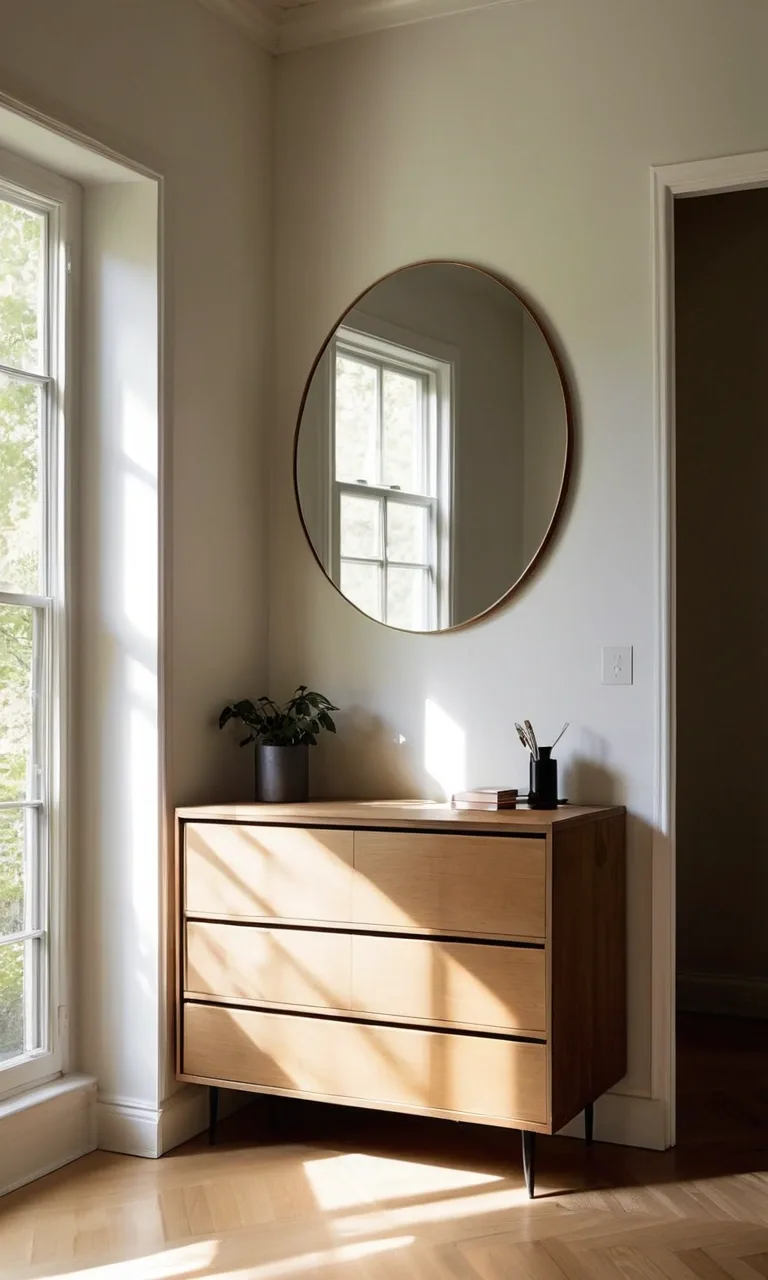
A mirror can do more than show your reflection. With the right frame, it can brighten a dull corner, complement your furniture, and become an attractive feature in any room.
The best part is that you don't need to purchase an expensive designer mirror to achieve a beautiful result. Many DIY mirror frame ideas use affordable supplies such as wood, rope, decorative molding, tiles, and craft materials.
Whether you prefer rustic farmhouse details, modern minimalist finishes, or colorful decorations, there are plenty of ways to customize an ordinary mirror.
These 21 creative ideas will help you transform existing mirrors into stylish home accessories while keeping your project practical and budget-friendly.
1. Before You Start Framing the Mirror

A successful mirror makeover begins with choosing materials that suit the mirror's shape, size, and location.
First, measure the mirror's height and width, including any exposed edges you intend to cover. Check for mounting clips and surrounding fixtures that could interfere with the new frame.
Consider these important preparations:
Choose suitable materials: Wood, metal trim, rope, and decorative pieces offer different finishes and installation requirements.
Check moisture exposure: Bathroom mirrors need materials and protective finishes that can withstand humidity.
Select the correct adhesive: Use mirror-safe products where adhesive may contact the reflective backing. Avoid products that could damage it.
Prepare your workspace: Keep measuring tools, protective equipment, and cutting supplies ready before beginning.
Plan the installation: Make sure the existing mounting hardware can support the additional frame weight.
Whenever possible, assemble and finish decorative components before securing them around the mirror. This reduces mess and helps produce cleaner results.
2. Coastal Shell Mirror Frame
A coastal shell frame brings a relaxed, beach-inspired atmosphere into your home. It works particularly well with round mirrors, although rectangular designs can look equally attractive.
Gather seashells in different sizes, along with a sturdy frame base and suitable craft adhesive. Arrange larger shells at intervals and fill the remaining spaces with smaller pieces.
For a more natural appearance, combine cream, sandy beige, and soft white shells. You can also include a few pieces of sea glass for subtle color.
This decorative frame is ideal for coastal bathrooms, bedrooms, and vacation-inspired interiors. Keep delicate shells away from areas where they could be frequently knocked or damaged.
3. Rustic Overlap Wood Frame
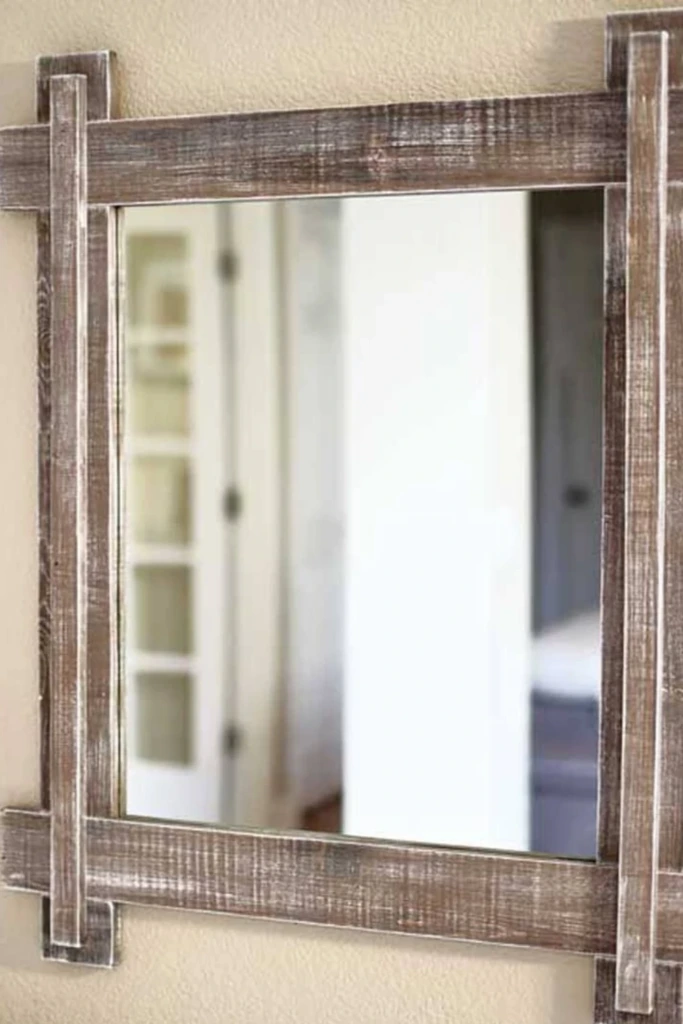
A rustic overlap wood frame adds warmth and character to a basic mirror without requiring complicated woodworking techniques.
Instead of creating angled corners, use straight wooden boards that extend slightly beyond one another. This produces a sturdy-looking border with a casual farmhouse appearance.
Reclaimed timber, pine boards, or leftover lumber can all work, provided the pieces are straight, dry, and suitable for the installation.
Finish the wood with a natural stain to emphasize its grain, or apply distressed paint for an aged appearance.
This design complements farmhouse bathrooms, wooden furniture, and interiors featuring neutral colors.
4. Clean Wood Edge
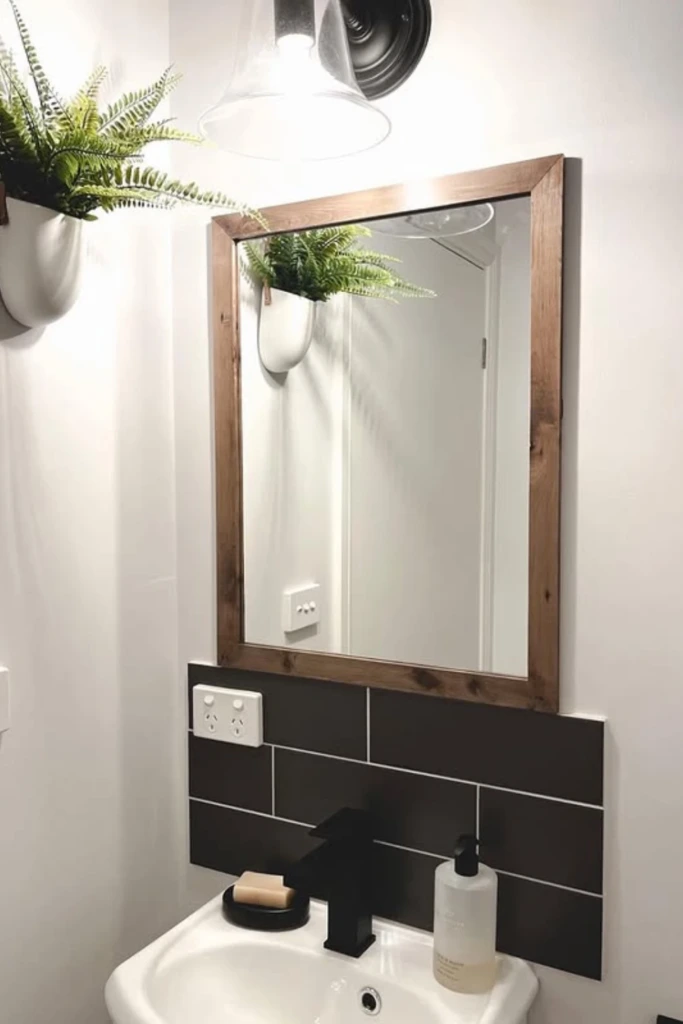
A clean wood edge offers an understated way to improve a plain mirror while maintaining a modern appearance.
Use narrow wooden strips to create a simple border around the glass. Light-colored woods such as maple, birch, or pale oak are particularly suitable for contemporary interiors.
Carefully cut each piece to size and smooth the surfaces with sandpaper. A clear protective coating preserves the wood's natural appearance without introducing unnecessary color.
The finished design works beautifully in Scandinavian-inspired bedrooms, minimalist bathrooms, and modern entryways.
Its narrow profile also makes it useful when surrounding wall space is limited.
5. Floral Accent Frame
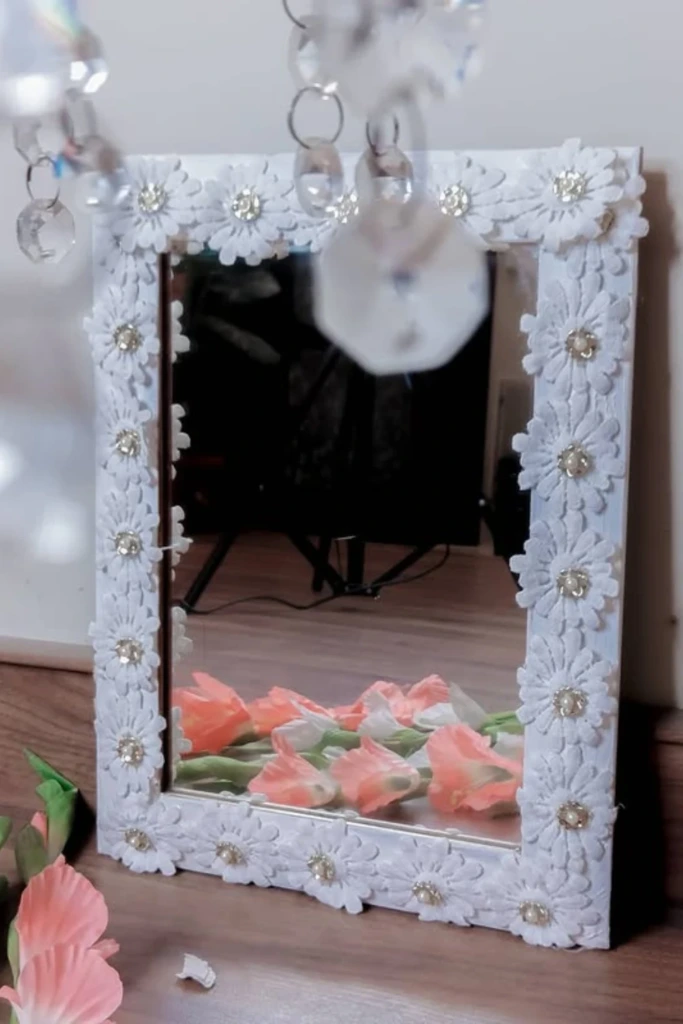
A floral accent frame introduces delicate decorative details that can make an ordinary mirror feel more elegant.
Begin with a basic wooden frame and attach small floral ornaments made from resin, wood, or lightweight molding material.
Position the decorations near the corners for a balanced design, or create a repeating arrangement along the sides.
Once everything is secured, apply a coordinated paint finish. Soft ivory, antique white, pale pink, and muted gold are attractive choices.
This mirror frame is especially suitable for vintage-inspired bedrooms, dressing tables, and feminine interior styles.
6. Colorful Ring Mirror
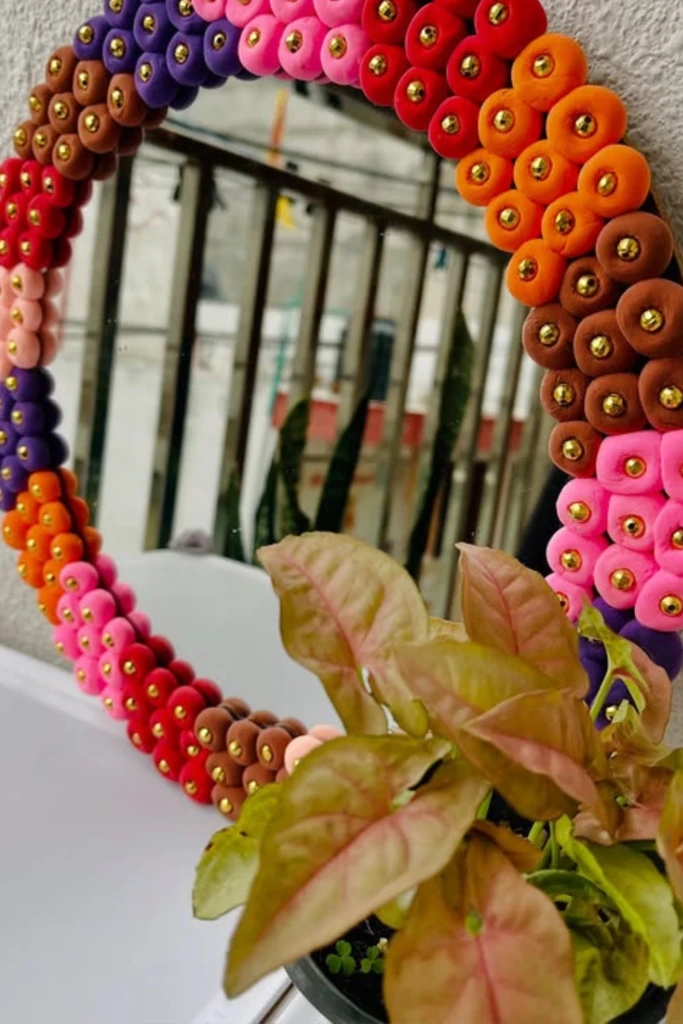
A colorful ring mirror is an excellent choice when you want to introduce cheerful colors and playful shapes into your decor.
Small wooden rings, circular craft pieces, or painted wooden beads can create an interesting border around a round mirror.
Choose a color scheme that complements the room. Pastel shades provide a gentle appearance, while bright primary colors create a more energetic design.
Arrange the pieces in a repeating pattern before attaching them to a suitable backing frame.
This project is particularly appealing for children's bedrooms, creative workspaces, and colorful home offices.
7. Black Grid Mirror
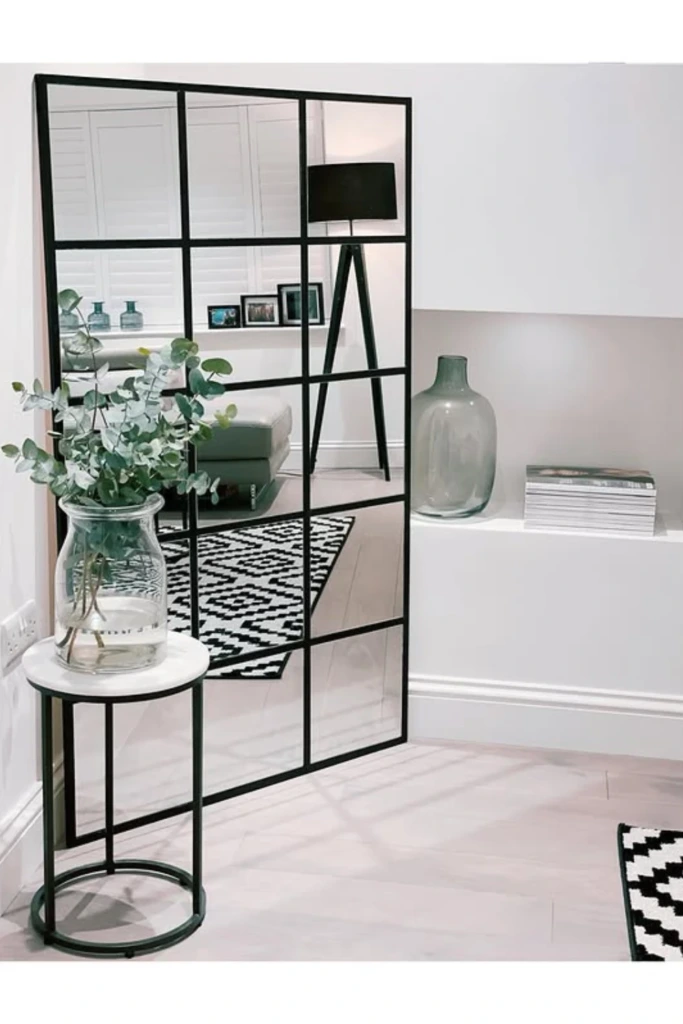
A black grid mirror creates the appearance of multiple glass panels while using a single mirror.
This design is inspired by industrial windows and works especially well with large rectangular mirrors.
Use narrow wooden or lightweight decorative strips painted black to form the outer border and internal grid pattern.
Measure the spacing carefully so the horizontal and vertical sections appear symmetrical.
A matte black finish provides a sharp architectural effect without excessive shine.
Black grid mirrors suit industrial bedrooms, contemporary living rooms, and modern bathrooms. Keep in mind that the decorative strips will cover some reflective surface.
8. Ornate Gold Mirror Frame
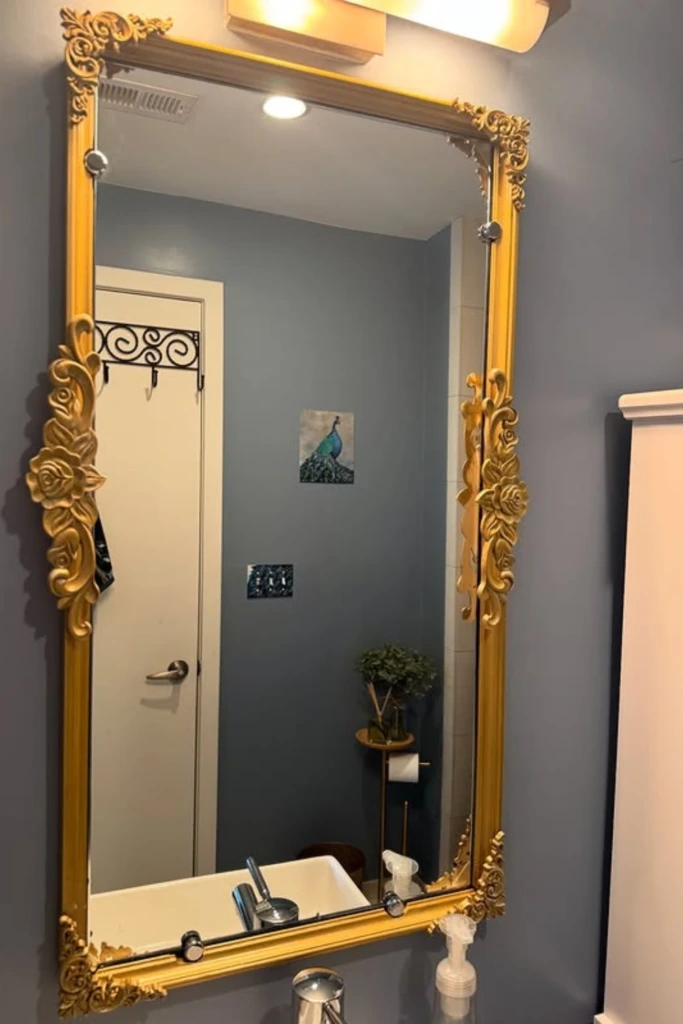
An ornate gold mirror frame can give a simple mirror a luxurious, antique-inspired appearance.
Start with a sturdy frame and add decorative molding, scrollwork, or carved-style corner ornaments.
Once the decorations are securely attached, coat the entire frame with metallic gold paint.
For a vintage finish, apply a small amount of darker glaze into the recessed details to emphasize their shape.
Champagne gold offers a softer alternative to bright metallic finishes.
This style makes an attractive statement above console tables, fireplaces, and traditional dressing tables.
9. Floral Vine Mirror
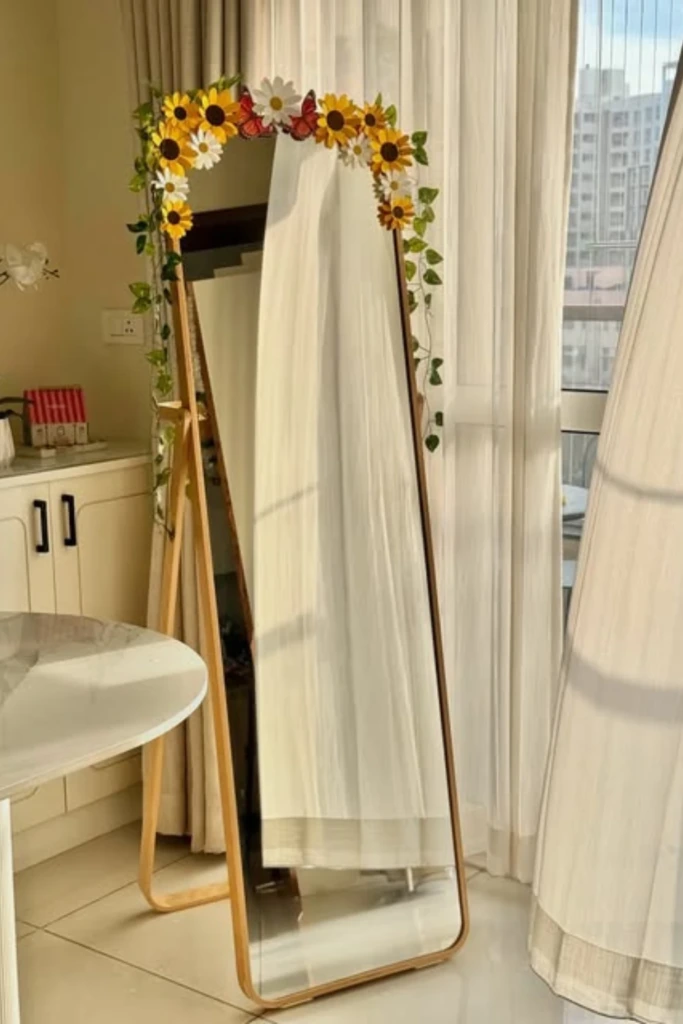
A floral vine mirror combines greenery and decorative flowers to create a soft, nature-inspired feature.
Choose artificial vines with flexible stems that can be arranged around the mirror's outer frame.
Rather than covering every edge, position the greenery along one side or allow it to cascade from an upper corner.
Add a few artificial roses, daisies, or other flowers to introduce color.
Secure the arrangement with removable ties or appropriate adhesive attached to the frame rather than the reflective surface.
This design works particularly well in cottage-style bedrooms, dressing areas, and spaces decorated with botanical accents.
10. Bold Black Frame
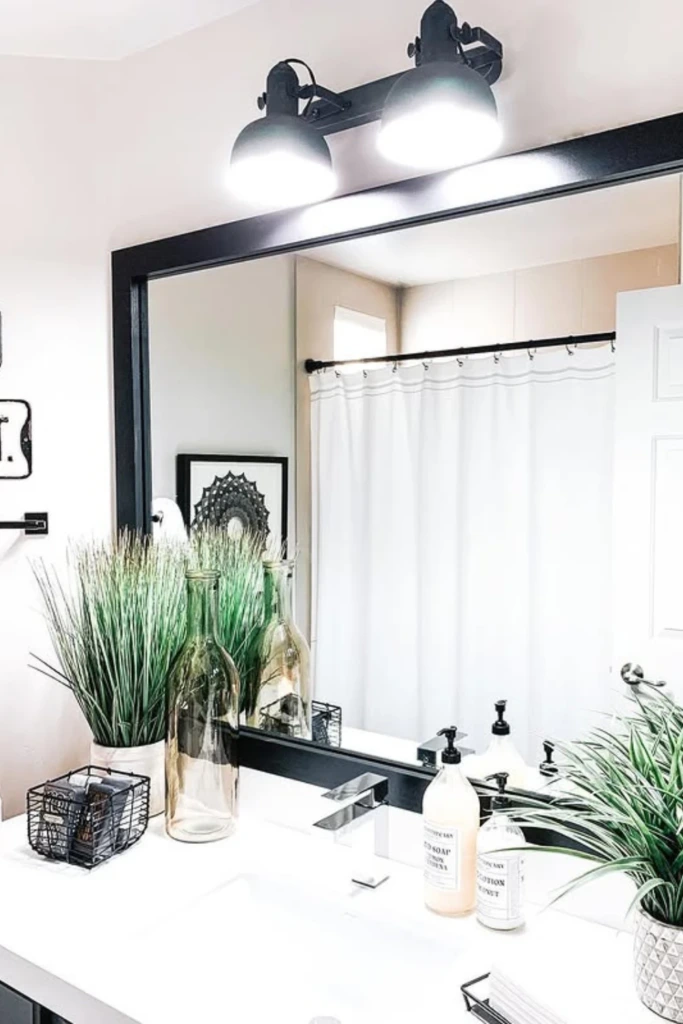
A bold black frame gives an ordinary mirror a strong, contemporary appearance.
Its visual impact comes from contrast rather than elaborate decoration, making it an accessible DIY project.
Choose flat wooden boards or molding with a width that suits the mirror's dimensions.
After cutting and sanding the pieces, apply primer followed by a durable black finish.
Matte black creates a subdued modern look, while satin black provides a slight sheen.
This design pairs beautifully with white walls, marble-effect surfaces, natural wood cabinetry, and metallic bathroom fixtures.
11. Mosaic Tile Mirror Frame
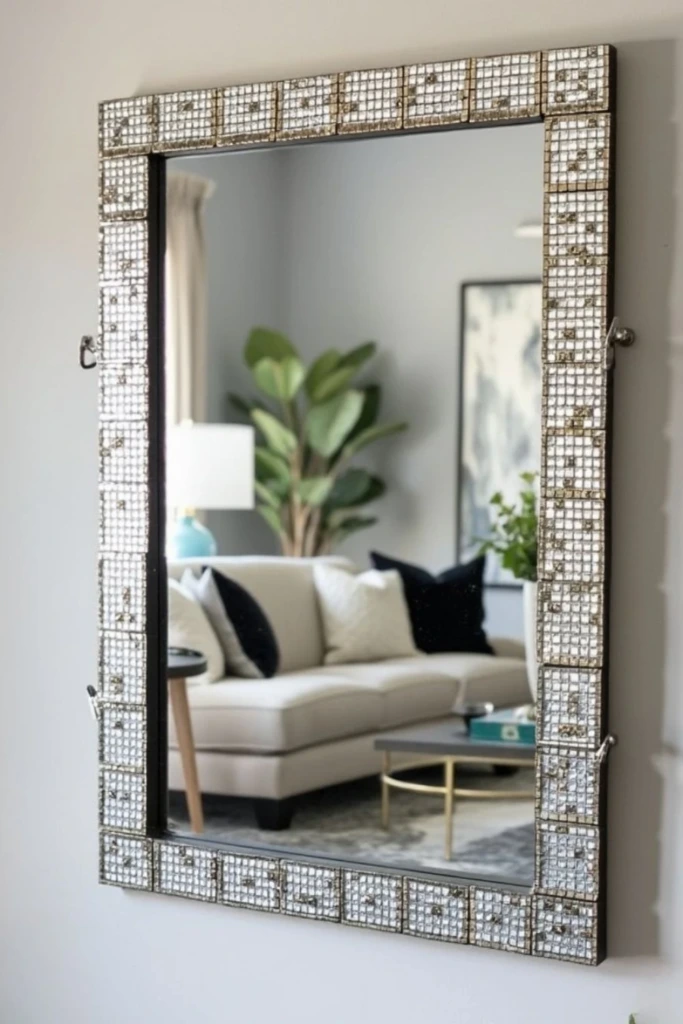
A mosaic tile mirror frame introduces color, pattern, and interesting surface textures.
Small ceramic, glass, or stone mosaic pieces can be arranged around a sturdy backing to create a customized border.
You might choose blue and white tiles for a Mediterranean look, neutral stone pieces for an earthy finish, or reflective glass mosaics for additional sparkle.
Plan the layout before attaching the tiles to avoid awkward gaps.
Use adhesive and grout appropriate for the backing material and room conditions.
Because tile adds considerable weight, make sure the frame and wall mounting are strong enough to support the completed project.
12. Double-Line Trim
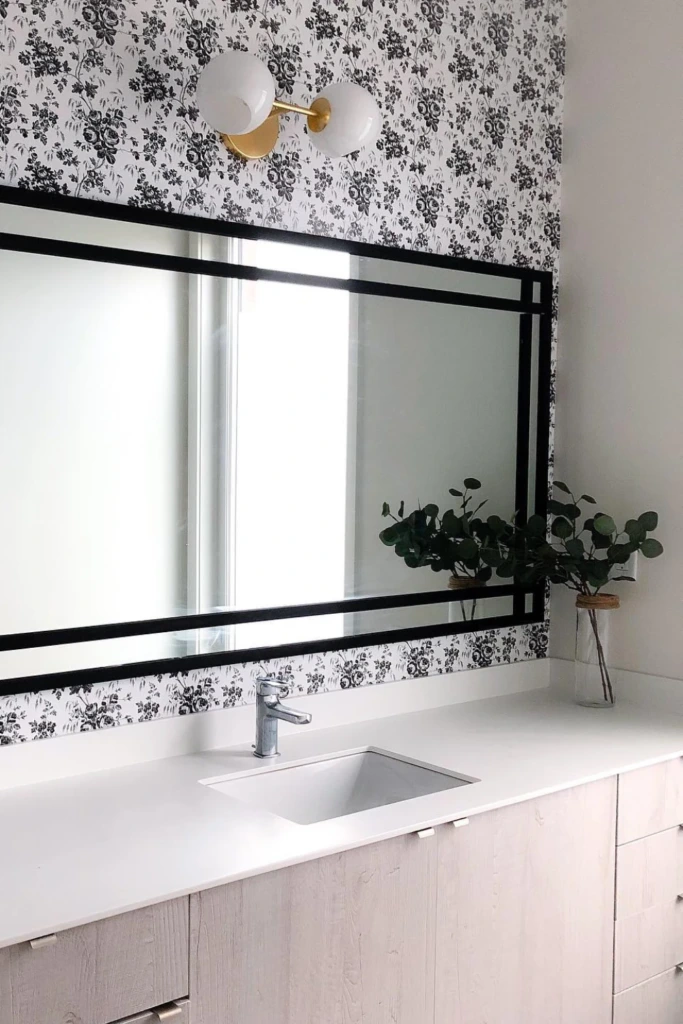
Double-line trim creates a refined mirror border using two narrow decorative elements instead of one wide frame.
Begin with a slim outer frame and add a second parallel strip closer to the mirror's reflective area.
Maintain consistent spacing between the two lines to create a polished appearance.
You can paint both strips the same color for a coordinated design or combine complementary finishes for additional contrast.
Black, bronze, white, and muted metallic shades work particularly well.
This idea is suitable for contemporary bathrooms and spaces where you want architectural detail without a bulky frame.
13. Painted Vanity Frame
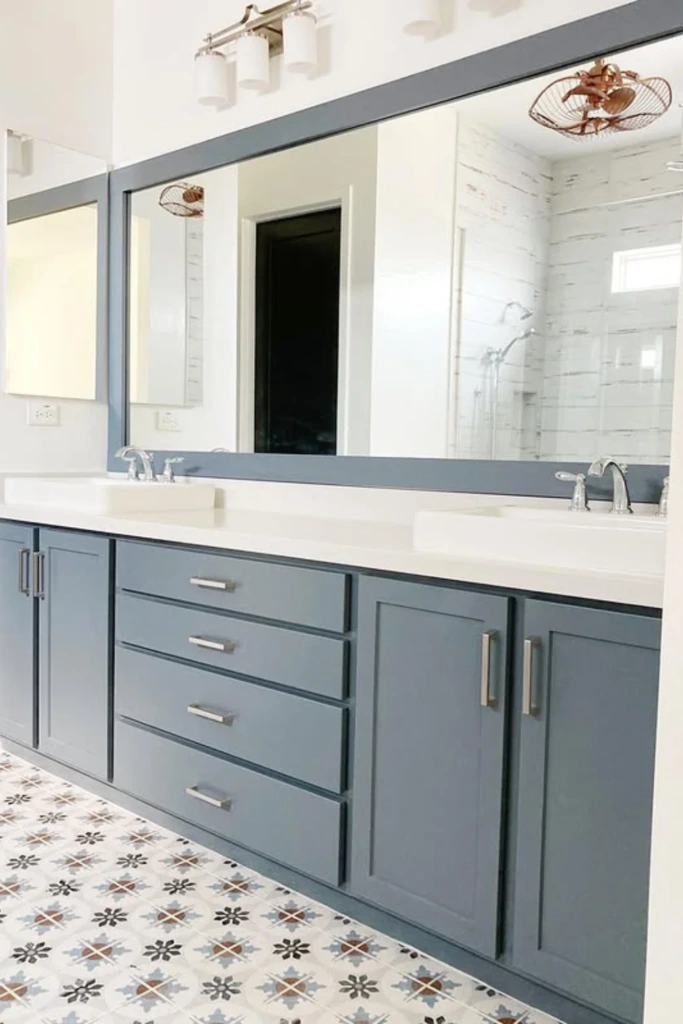
A painted vanity frame helps coordinate a bathroom mirror with the cabinetry beneath it.
Choose a wooden frame with a simple profile, then paint it to match the vanity or another prominent feature in the room.
For example, a sage green vanity can look beautiful with a matching mirror border, while navy cabinets pair well with a deep blue frame.
Prepare the wood with primer before painting, and use a moisture-resistant protective finish where appropriate.
This approach creates a cohesive bathroom design without replacing the existing mirror.
It is also a practical way to use leftover paint from a vanity renovation.
14. Floral Vanity Light Frame
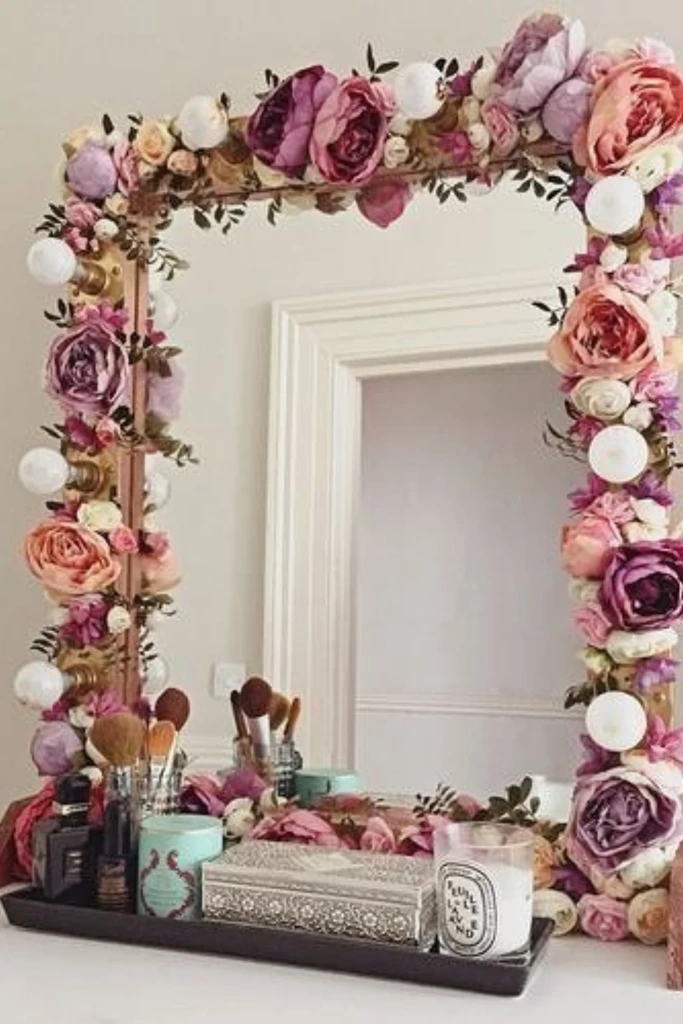
A floral vanity light frame combines decorative flowers with gentle illumination to create an inviting dressing area.
Start with a lightweight frame and arrange artificial flowers around selected sections.
Choose battery-operated or low-voltage LED lights rated for the intended use, and position them where they remain accessible.
Warm white lights create a cozy atmosphere, while cooler lighting can provide a brighter decorative effect.
Keep electrical components clear of flammable decorations and follow the lighting manufacturer's safety instructions.
This project is ideal for bedroom vanities, makeup stations, and decorative mirrors where atmosphere matters as much as appearance.
15. Sculpted Wave Frame
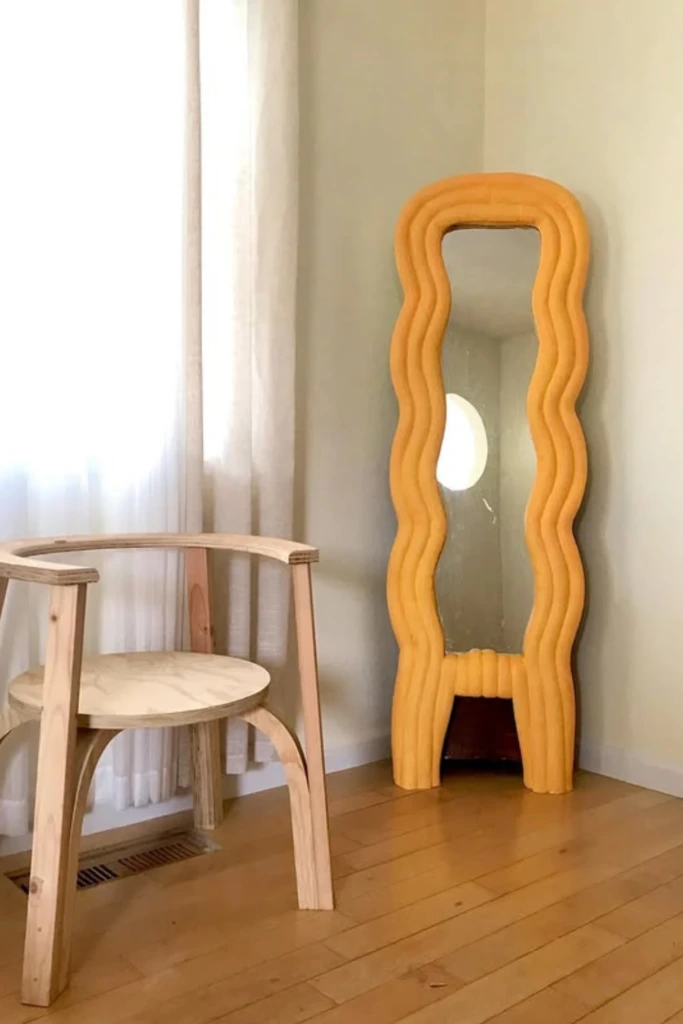
A sculpted wave frame gives a mirror an artistic, contemporary appearance.
Unlike traditional straight-edged borders, this design features flowing curves that create movement around the reflective surface.
A wave-shaped frame can be made from shaped plywood or other suitable rigid materials using the appropriate cutting tools.
After cutting the outline, sand the edges carefully to achieve smooth curves.
Finish the frame with a solid paint color such as cream, lavender, terracotta, or pastel blue.
This style is especially effective in modern bedrooms, creative interiors, and spaces featuring sculptural furniture.
16. Classic Wood Mirror Frame
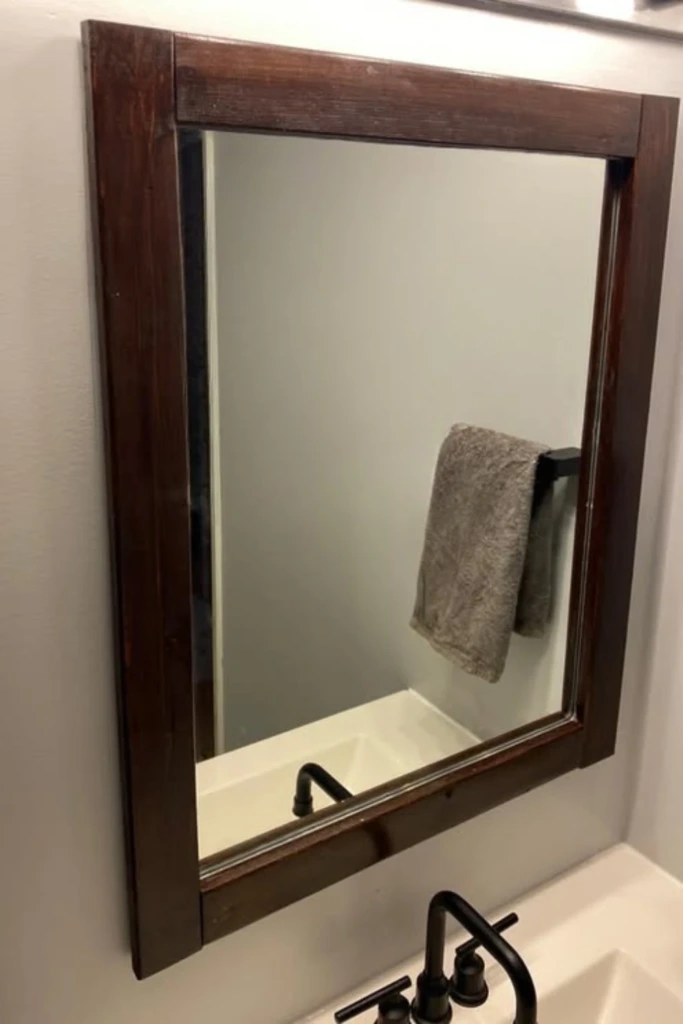
A classic wood mirror frame is a versatile option that complements almost any decorating style.
Four carefully measured wooden pieces create a structured border around a rectangular or square mirror.
You can use mitered corners for a traditional appearance or square-cut joints for a simpler construction method.
Select a wood species and finish that coordinate with nearby furniture.
A medium brown stain adds warmth, while white paint creates a fresh, timeless appearance.
For the best results, check that the corners are square, sand all exposed edges, and apply a suitable protective finish before installation.
17. Rope-Wrapped Mirror
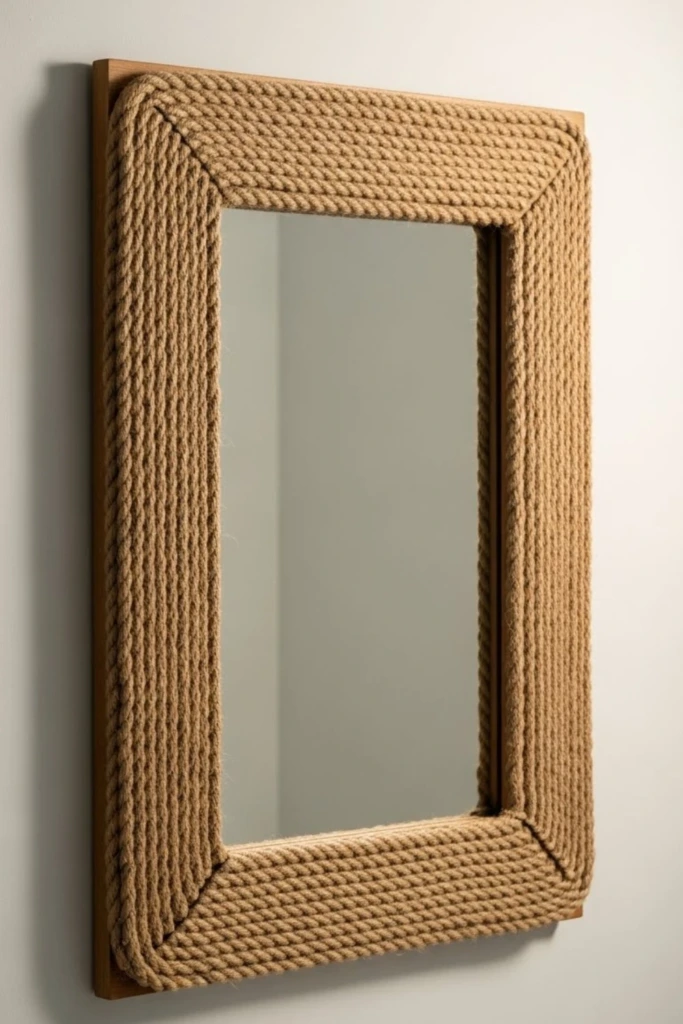
A rope-wrapped mirror adds natural texture and a relaxed handmade quality to a room.
Round mirrors are particularly suitable because flexible rope can follow their curved edges.
Choose jute, cotton, or another decorative rope that matches your preferred interior style.
Attach the rope in closely spaced concentric circles around a sturdy backing ring, keeping the rows neat and secure.
Natural jute provides a rustic coastal appearance, while white cotton rope creates a lighter, softer finish.
This frame works beautifully in beach-inspired bedrooms, casual entryways, and bohemian living spaces.
Avoid using untreated natural-fiber rope in consistently damp locations.
18. Leather Strap Detail
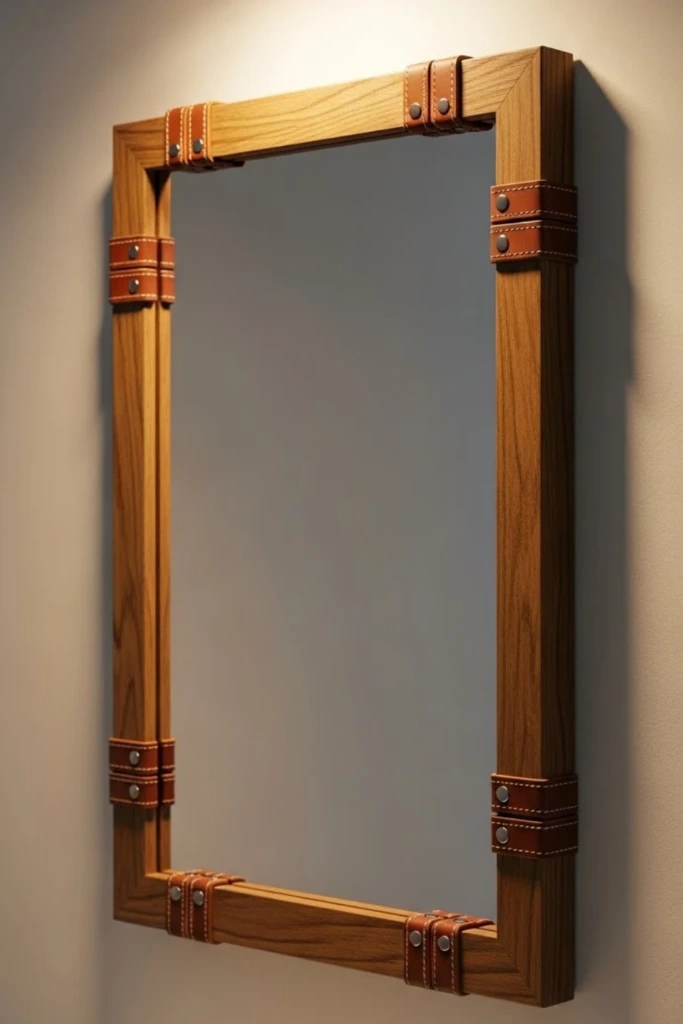
Leather strap details introduce a distinctive handmade element to a simple mirror frame.
Start with a wooden frame and select leather strips in a color that complements the wood.
Tan leather looks attractive against pale timber, while black leather provides stronger contrast.
Wrap short sections around the frame's corners or attach decorative leather tabs at evenly spaced points.
Use appropriate fasteners or adhesive based on the materials involved.
Leather accents should be treated as decoration unless they are specifically engineered and securely installed to carry the mirror's weight.
This design fits Scandinavian, rustic modern, and industrial interiors.
19. Thin Brass Border
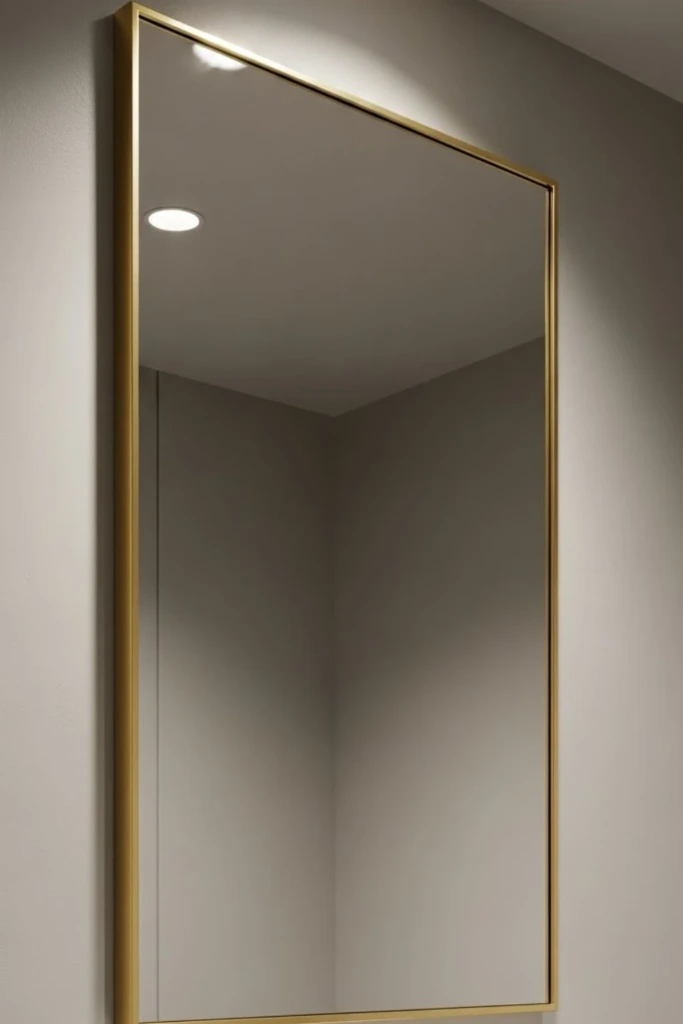
A thin brass border adds a refined metallic accent without overwhelming the mirror.
This minimalist design works especially well with rectangular mirrors and modern bathroom interiors.
Use narrow brass or brass-effect trim to create a consistent outline around the glass.
Carefully measure and cut each section so the corners align neatly.
Solid brass offers a traditional metallic appearance, while lightweight brass-colored trim can be a more affordable alternative.
Pair the finished mirror with warm wood furniture, neutral stone, or dark painted walls for an elegant result.
Choose corrosion-resistant materials if the mirror will be installed in a humid bathroom.
20. Washi Tape Mirror Border
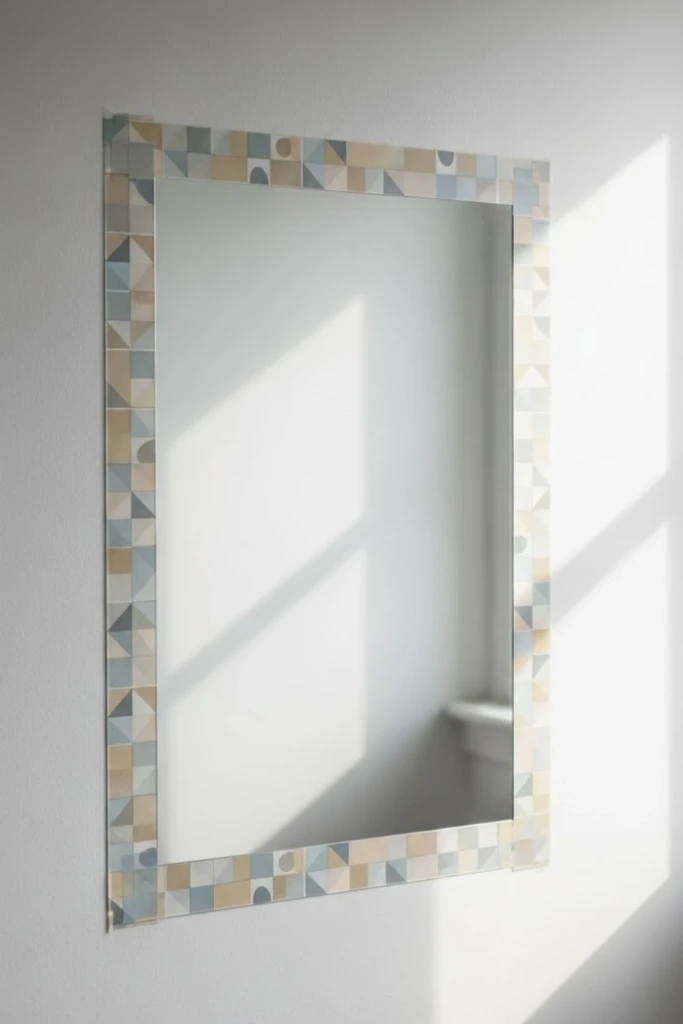
A washi tape mirror border offers a quick, inexpensive way to introduce color or pattern without constructing a permanent frame.
Decorative tape is available in numerous designs, including geometric prints, florals, metallic finishes, and solid colors.
Choose a tape width that suits the mirror, then apply it carefully along the outer edge.
For a layered effect, combine two coordinating tape patterns while maintaining straight lines and tidy corners.
This project is particularly useful for dorm rooms, temporary decorating, and small bedroom mirrors.
Test the tape on an inconspicuous area first, since removability depends on the surface and adhesive.
21. Tile Edge Border
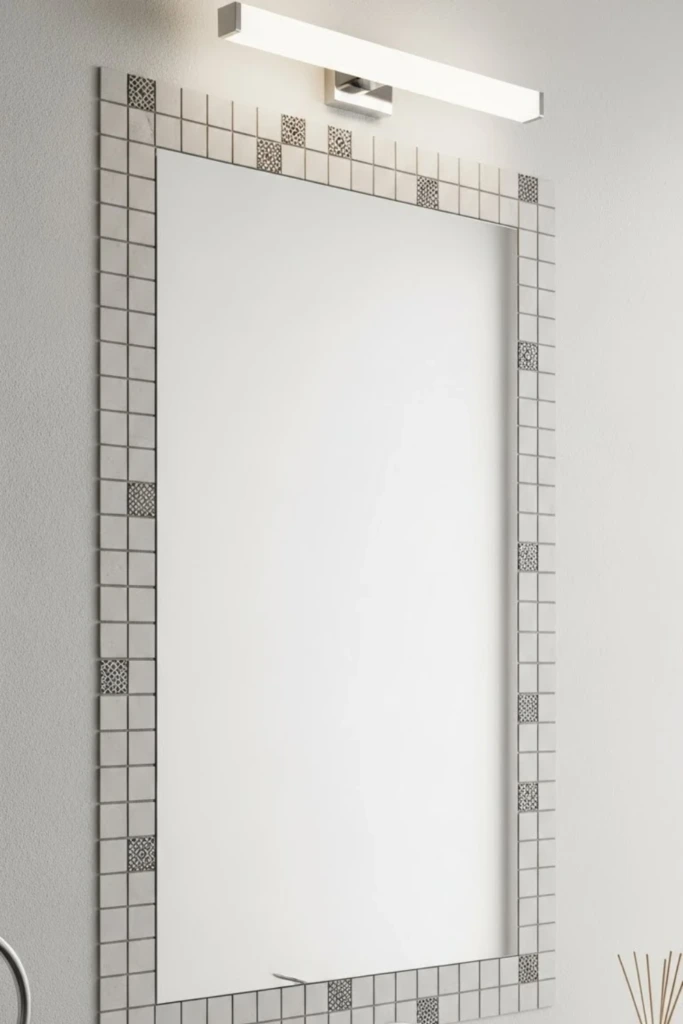
A tile edge border can visually connect a bathroom mirror with the surrounding wall or backsplash.
Instead of using an assortment of small mosaic pieces, this approach typically features a consistent row of tiles arranged around the mirror.
Choose tiles that match the existing bathroom surfaces for a seamless appearance.
Alternatively, use contrasting tiles to establish a more noticeable frame.
Plan the layout so the joints remain aligned, and select appropriate edge finishing pieces where needed.
Use installation materials suitable for the wall surface and moisture conditions.
This design is particularly practical when you have leftover tiles from a previous renovation.
22. Painted Arch Around the Mirror
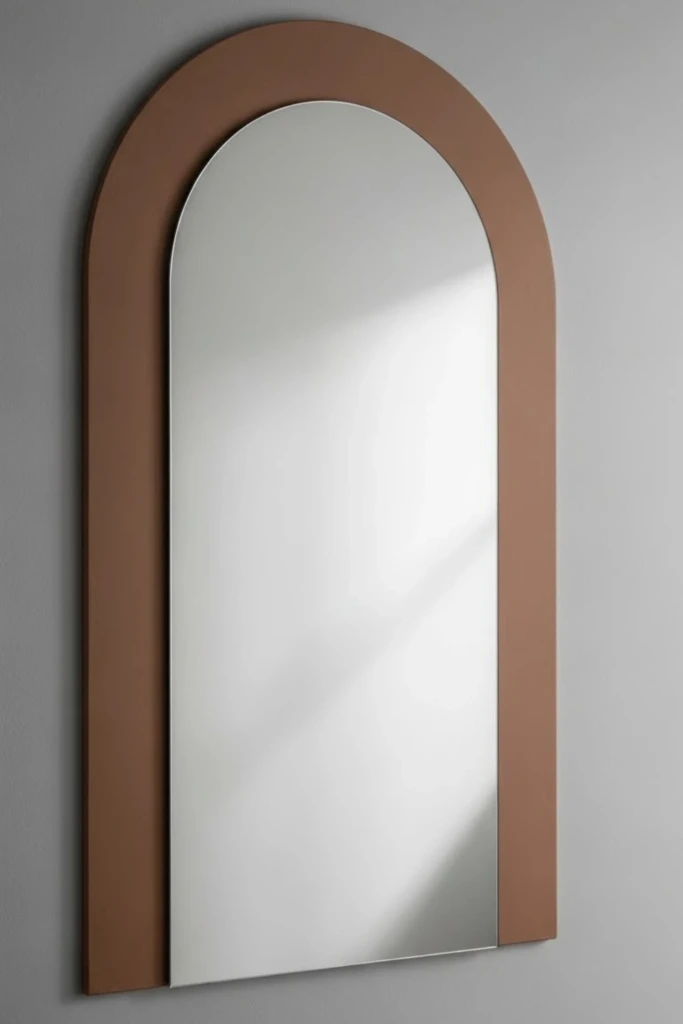
A painted arch around the mirror creates the impression of a decorative frame without attaching additional materials to the glass.
Begin by marking a large arch or curved shape on the wall behind the mirror.
Use painter's tape for straight edges and a suitable tracing method for the curved section.
Choose a paint color that contrasts gently with the surrounding wall.
Terracotta, olive green, dusty rose, and warm beige are attractive options.
The painted area should extend visibly beyond the mirror to create a deliberate design feature.
This idea works well in bedrooms, hallways, and modern living spaces. It is also convenient when you want to refresh the room without adding weight to the mirror.
Which DIY Mirror Frame Should You Choose?
The right DIY mirror frame depends on your decorating style, available materials, budget, and the location of the mirror.
For a modern bathroom, consider a bold black frame, thin brass border, or double-line trim. These options create clean edges and complement contemporary fixtures.
If you prefer rustic or farmhouse interiors, natural wood, overlapping timber, and rope-wrapped designs can introduce warmth and texture.
Decorative spaces such as bedrooms and dressing areas offer more opportunities to experiment with floral accents, colorful rings, sculpted waves, and ornate gold finishes.
For a budget-friendly project, washi tape borders and painted arches require relatively few supplies and can make a noticeable difference.
Before making your final choice, consider how much maintenance the materials will need and whether the completed frame can be safely supported.
A well-designed DIY mirror frame doesn't have to be expensive or complicated. Thoughtful proportions, careful workmanship, and materials that suit your space can turn an everyday mirror into a beautiful part of your home.