18 Storage Bin Rack DIY Ideas for 2026
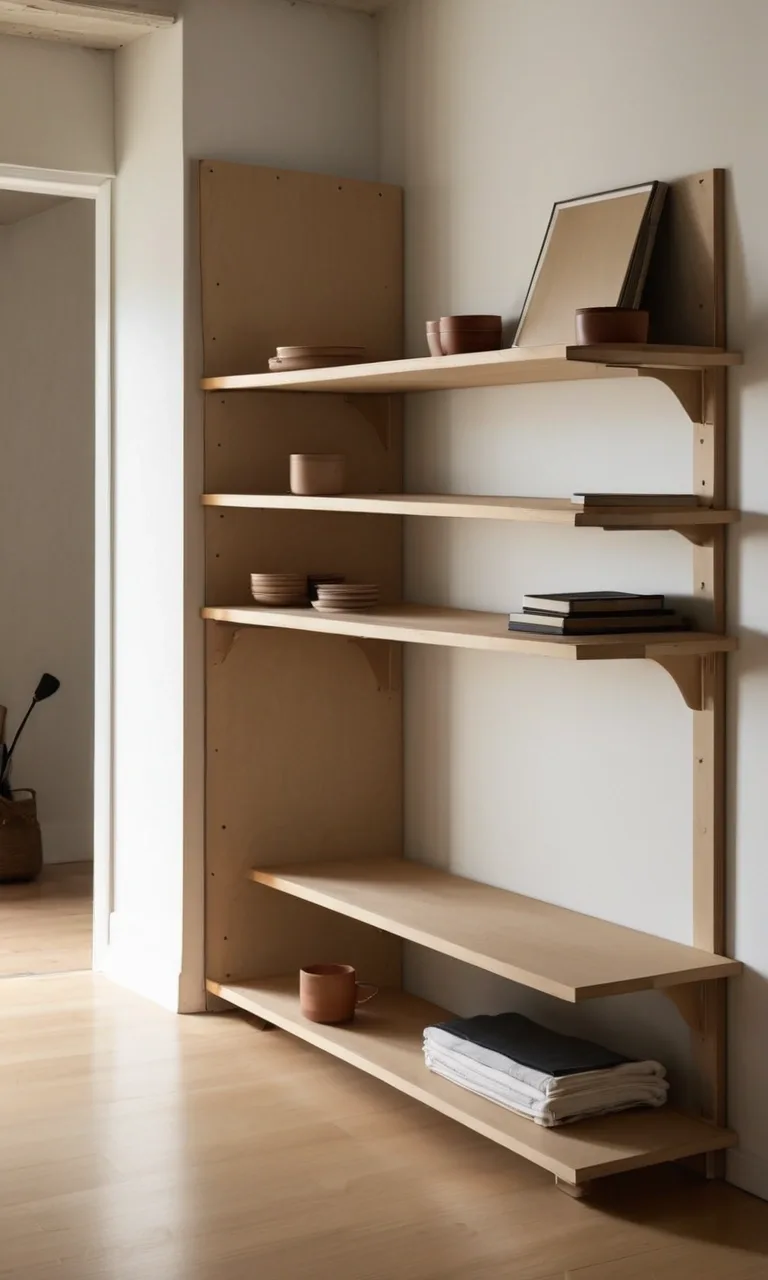
Storage bins are great for keeping belongings organized, but finding a convenient place to put them can become a challenge. When containers are piled on top of each other, reaching the bottom ones becomes frustrating, and valuable floor space quickly disappears.
A DIY storage bin rack offers a practical way to organize everything from seasonal decorations to workshop supplies. With a few basic materials and thoughtful planning, you can create a storage system that makes individual containers easier to access.
Whether you're organizing a garage, basement, shed, or utility room, these 18 DIY storage bin rack ideas will help you make better use of your available space.
How Do I Build a DIY Storage Bin Rack That Can Hold Heavy Loads?
Building a sturdy storage bin rack starts with choosing appropriate materials and understanding how the weight will be supported. Standard 2×4 lumber is a popular framing option because it's readily available, relatively affordable, and suitable for many household storage projects.
Before cutting anything, measure your containers, including their handles, lids, and upper rims. These measurements determine the spacing between supports and the amount of clearance needed for easy removal.
For a rail-style design, the supports must fit beneath the reinforced edges of compatible bins. Not every plastic container is designed to carry its full weight by the rim, so check the manufacturer's guidance. Bins without suitable rims should rest on complete shelves.
Use structural fasteners appropriate for the connections, reinforce long spans, and install diagonal bracing or rigid panels where necessary. Tall stationary racks should be secured to suitable wall framing to reduce tipping risks.
The rack's safe capacity depends on its dimensions, materials, connections, and construction quality. Test the finished structure carefully before loading it, and keep heavier items near the bottom.
1. Rolling Grid Tower
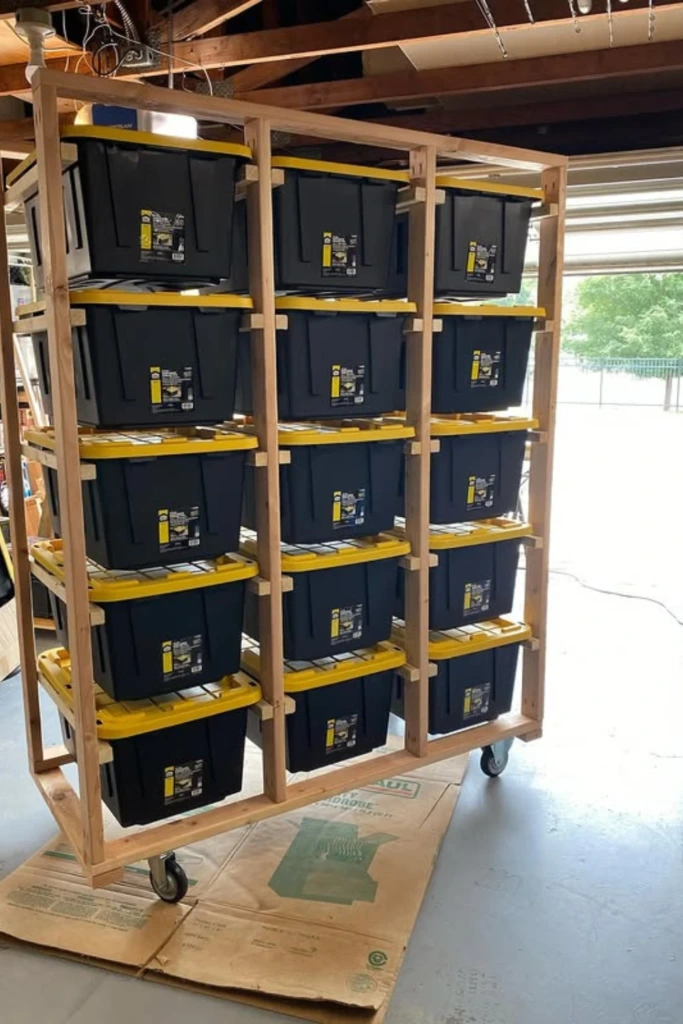
A rolling grid tower is an excellent solution for garages where storage needs frequently change. Its vertical arrangement accommodates several containers while keeping the overall footprint relatively small.
Construct a rectangular frame with vertical supports and individual compartments sized for your bins. Adding plywood shelves or properly designed support rails allows each container to occupy its own space.
Choose casters rated for the combined weight of the rack and its contents, including an appropriate safety margin. Install locking wheels and keep the unit on a level surface when accessing bins.
For better organization, attach labels to the front of each container. A rolling tower is particularly useful for storing craft materials, automotive supplies, or seasonal household items that need to move around the workspace.
2. Heavy Shelf Frame
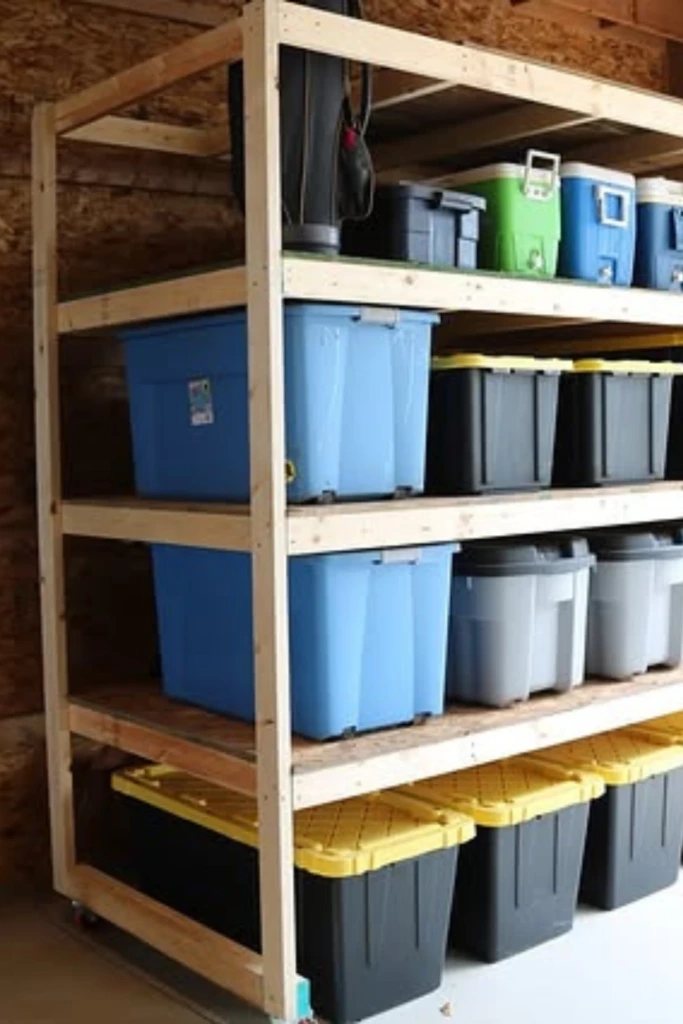
A heavy shelf frame provides straightforward storage without requiring custom-sized sliding compartments. It's particularly useful when you own containers of different shapes and dimensions.
Start by building a rectangular framework from construction-grade lumber. Add horizontal shelf supports, intermediate framing where needed, and plywood decking to create continuous surfaces.
Determine shelf spacing according to the tallest containers you plan to store. Leaving extra vertical clearance makes it easier to lift bins without damaging their lids.
For a cleaner appearance, sand exposed edges and apply paint or a protective finish. Position the finished unit against a wall and anchor it appropriately.
This design is especially practical for basements, garages, and sheds where durability and flexibility matter more than decorative details.
3. Compact Rail System
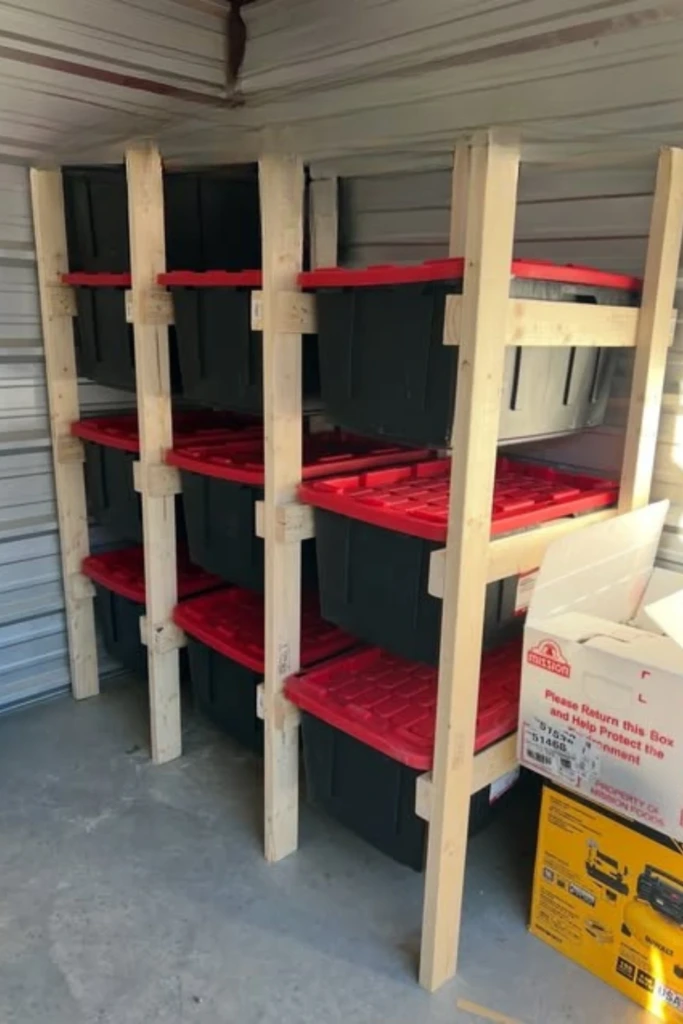
Limited floor space doesn't have to mean limited storage. A compact rail system uses closely spaced vertical compartments to accommodate multiple matching containers along a narrow wall.
Build two sturdy side frames and connect them with horizontal supports. Install paired rails at heights that allow the bins to slide into position without catching on the frame.
Careful measurements are essential because the supports must accommodate the container's actual shape, not just its advertised capacity. Test one loaded bin before completing the remaining compartments.
Add wall anchors suitable for the surrounding construction to improve stability.
A compact rack works particularly well in small garages, utility closets, and storage rooms where every inch of floor space counts.
4. Double Row Units
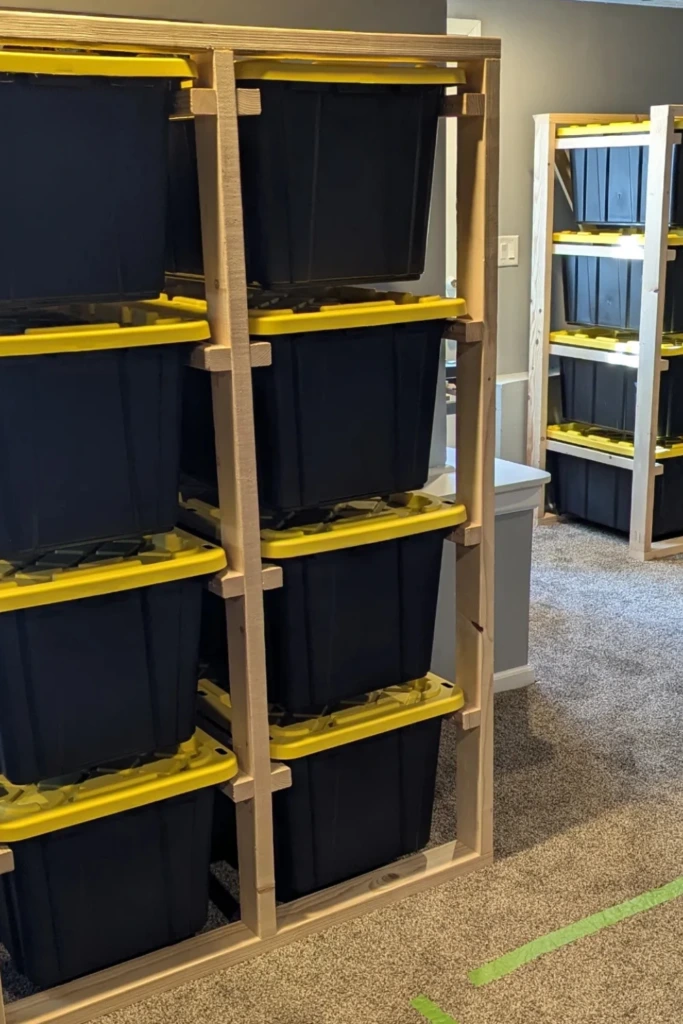
When one storage rack isn't enough, placing two matching units together creates a larger and more organized storage area.
Build the racks as separate structures using identical measurements. This approach makes assembly easier and allows you to rearrange the units later if your storage requirements change.
You can dedicate one rack to frequently used supplies and the other to items needed only occasionally. Matching containers and consistent labels help create a coordinated appearance.
Keep enough space around the units for comfortable access, and anchor each stationary rack securely rather than relying on the neighboring rack for stability.
Double row storage is especially useful for families managing holiday decorations, children's belongings, camping equipment, and household supplies.
5. Full Wall Storage
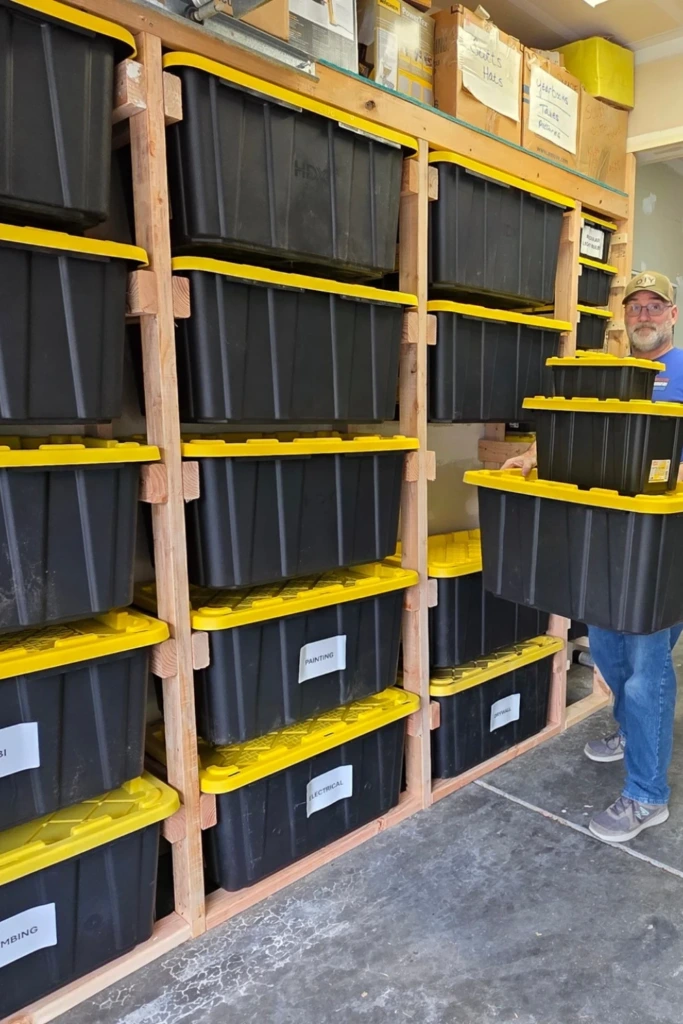
A full wall storage system transforms an underused garage or basement wall into a dedicated organization area.
Begin by measuring the available wall width, ceiling height, and any obstructions such as electrical outlets, windows, or doors. Divide the space into sections based on your container sizes.
Construct multiple framed bays with shelves or compatible bin rails. Adding intermediate vertical supports helps reduce unsupported spans and provides additional fastening points.
Store heavier containers at comfortable lifting heights near the bottom. Reserve higher compartments for lighter belongings that aren't needed regularly.
Consider installing overhead lighting to make labels visible throughout the storage area.
A full wall rack can significantly improve organization while leaving the center of the room open for other activities.
6. Workbench Base Storage
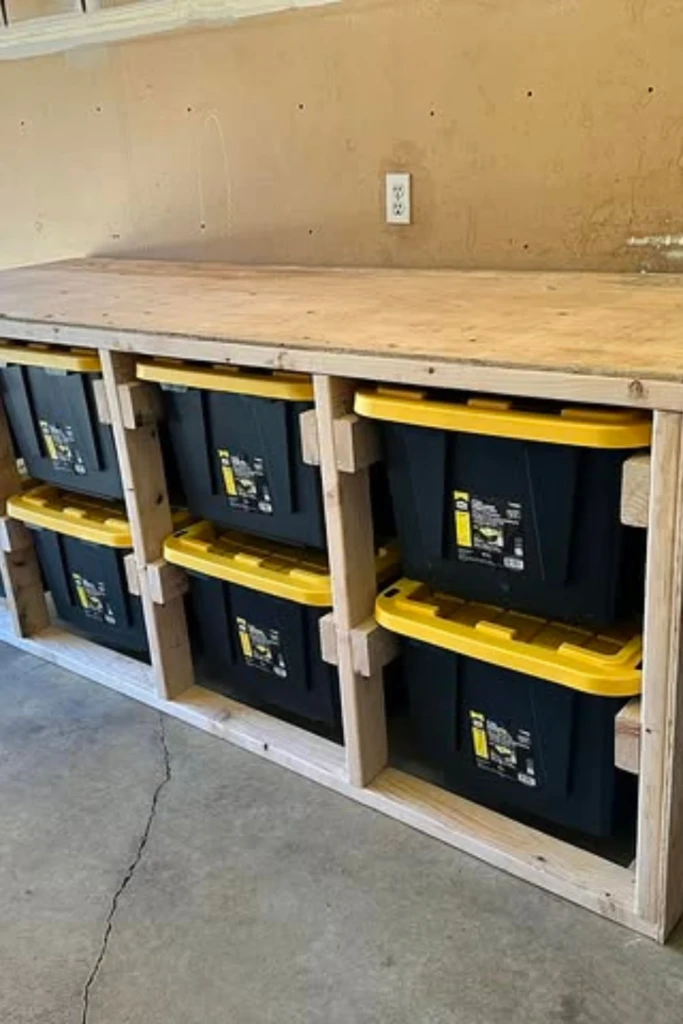
Combining storage with a workbench is a smart way to make a garage or workshop more functional.
Instead of building a separate shelving unit, incorporate bin compartments beneath a sturdy work surface. The lower framework can accommodate tools, hardware, cleaning supplies, and project materials.
Use a rigid frame with sufficient bracing and a worktop suited to the tasks you plan to perform. Plywood is a practical option for general-purpose benches, although demanding applications may require additional reinforcement.
Arrange the storage openings so you can remove containers without interfering with the bench legs or other equipment.
Adding a pegboard above the work surface creates extra room for frequently used hand tools.
This setup keeps supplies close to where they're needed while reducing unnecessary furniture in the workspace.
7. Wire Shelf Upgrade
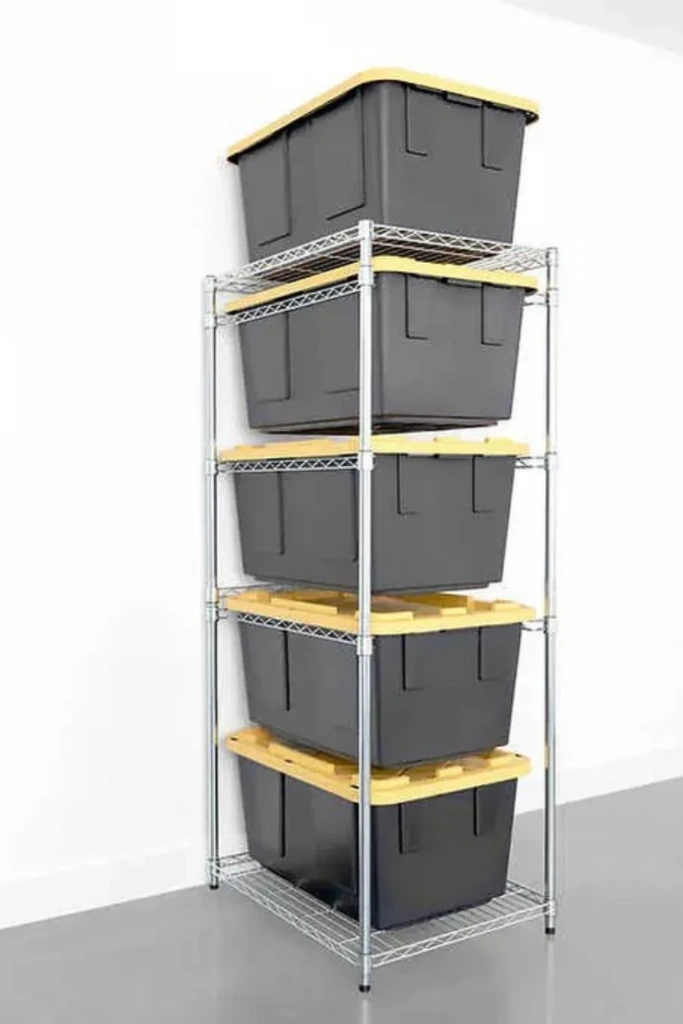
Existing wire shelving can sometimes be improved without building an entirely new rack.
If containers catch on the wire surface or small objects fall through the gaps, adding properly fitted shelf panels can create a smoother storage platform.
Measure each shelf and cut plywood or another suitable panel to fit. Sand the edges and secure the panels if there's a risk of movement.
Remember that adding plywood does not increase the manufacturer's rated load capacity. The original shelf frame, connections, and posts still determine how much weight the unit can safely support.
Check for bent components, loose fittings, and uneven feet before loading the shelves.
This affordable modification is useful for laundry rooms, pantries, basements, and utility spaces where you already have a suitable metal shelving unit.
8. Vertical Corner Stack
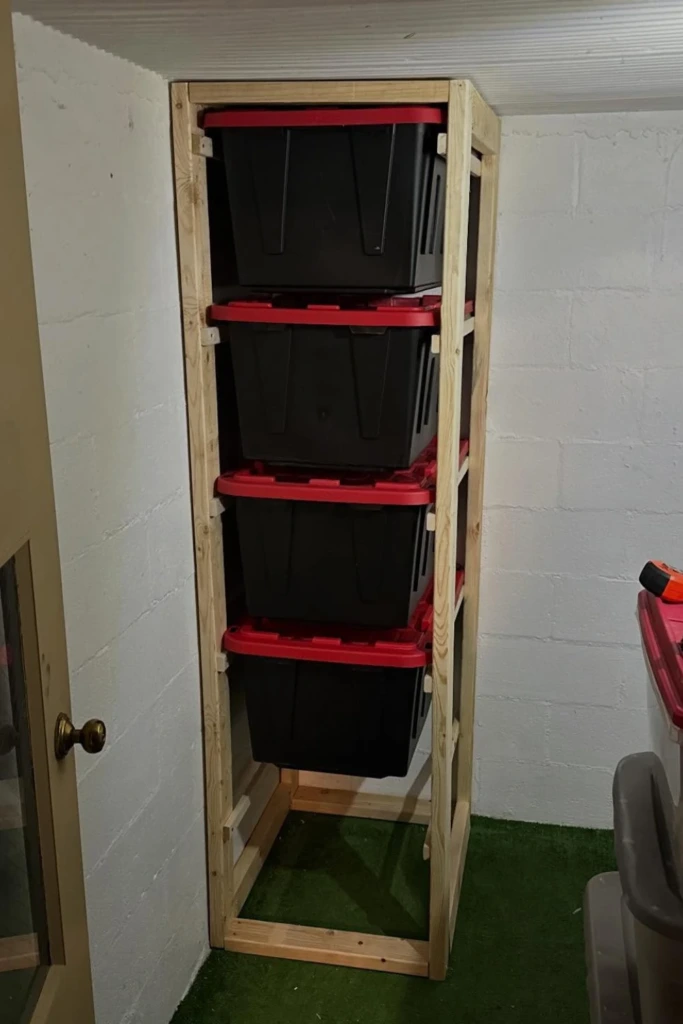
Corners are often overlooked when planning household storage. A vertical corner rack can make these awkward areas much more useful.
Measure the corner carefully and determine how far the rack can extend without blocking nearby doors or walkways.
Construct a narrow frame with several individual storage levels. Depending on the available space, you can use full shelves or supports designed for matching containers.
Because tall, narrow structures are more vulnerable to tipping, secure the rack to suitable wall framing and place heavier items on the lowest levels.
Consider using clear containers or large front-facing labels so you can identify their contents without removing every bin.
A corner rack is particularly effective in laundry rooms, small basements, and compact storage closets.
9. Mobile Work Island
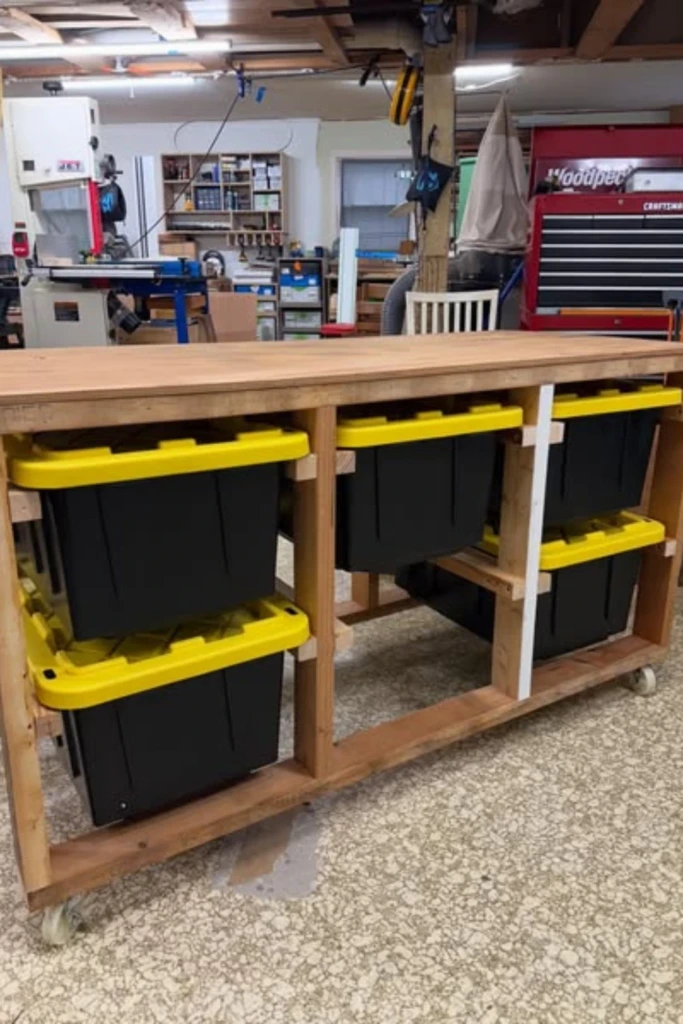
A mobile work island combines accessible storage with a movable work surface, making it especially useful for multipurpose workshops.
Build a wide, stable base with compartments for containers underneath. Install a strong top that provides enough working area for assembling projects, sorting materials, or handling everyday tasks.
Heavy-duty casters allow you to reposition the island when needed. Choose wheels and mounting hardware that can safely support the total expected load.
Lock the casters before using the work surface, and avoid leaning heavily against the island if doing so could cause movement or tipping.
For added convenience, install hooks on the sides for measuring tapes, small tools, or frequently used accessories.
This design works best in garages with sufficient clearance to move the island without blocking vehicles or walkways.
10. Ceiling Height Wall
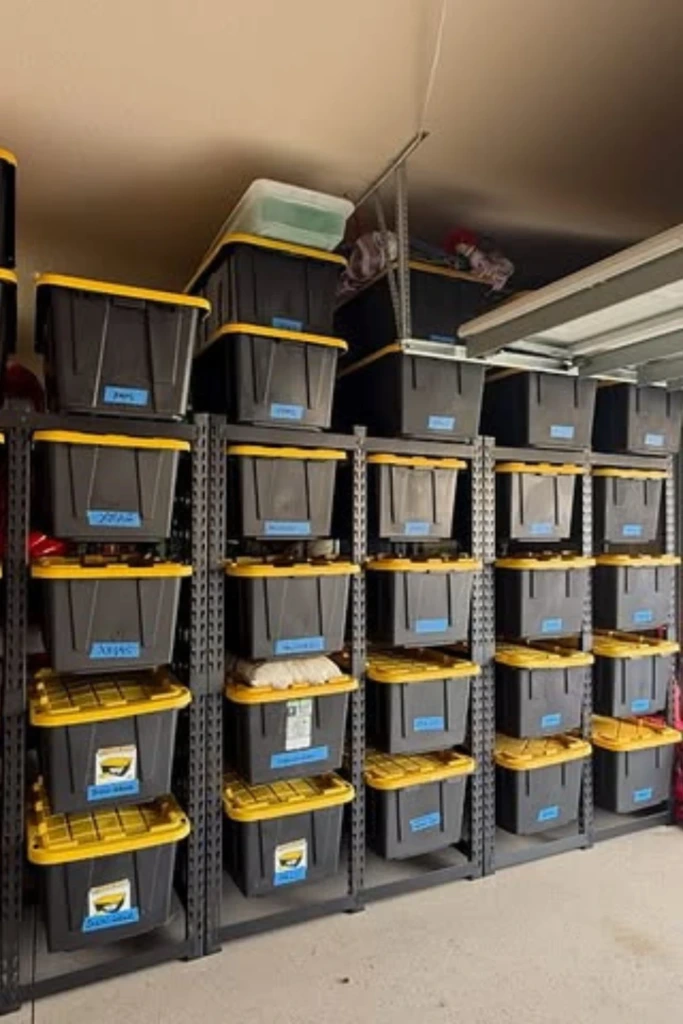
A ceiling-height storage rack makes use of vertical space that would otherwise remain empty.
Plan the layout from the floor upward, allowing enough clearance to insert and remove each container. Account for overhead obstructions, including garage door tracks, lighting fixtures, and ventilation equipment.
Build the structure with adequate vertical supports and securely fasten it to suitable framing. Tall installations require particular attention to stability and safe loading.
Keep dense or frequently used belongings on lower levels. Upper compartments are better reserved for lightweight seasonal items.
Avoid placing heavy containers where removing them would require unsafe lifting from a ladder.
A ceiling-height rack is a useful option for garages and storage rooms with generous wall height but limited available floor area.
11. Slim Wall Columns
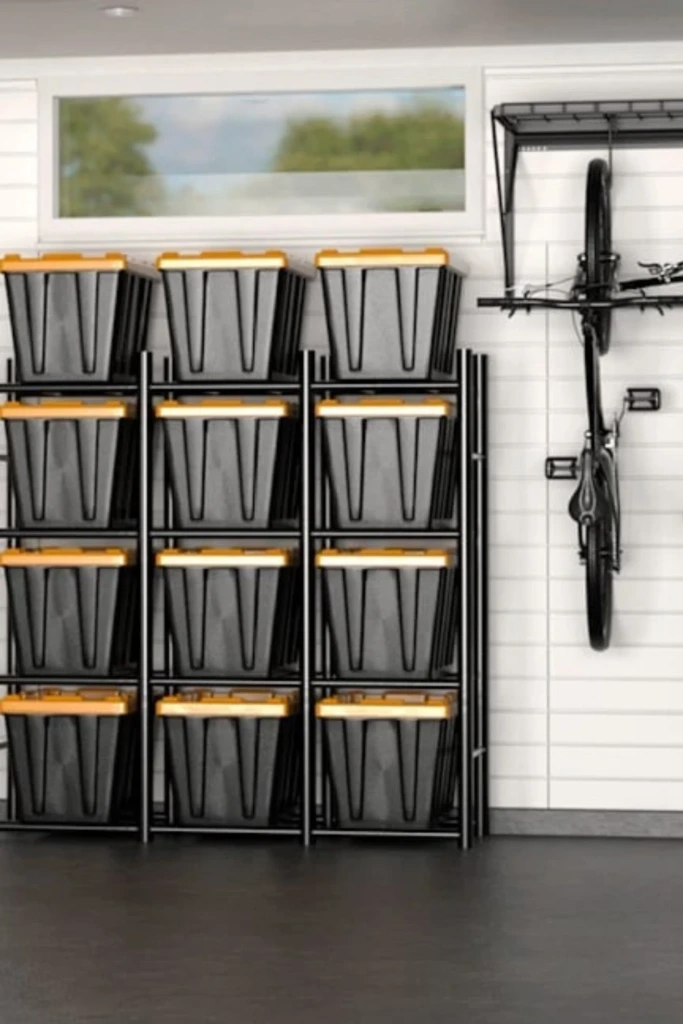
Slim wall columns provide organized storage without the bulky appearance of traditional shelving.
These narrow vertical units can be constructed from wood or assembled using suitably rated metal framing components. Each column accommodates a small number of containers stacked in individual compartments.
Their modular design makes it easy to expand storage gradually. You can install one column initially and add matching units as your collection grows.
For a finished look, paint wooden frames to coordinate with the wall or choose metal components with a durable protective coating.
Make sure the supports are appropriate for your bins and secure the units against tipping.
Slim columns are particularly appealing in finished garages where you want practical storage that also looks tidy.
12. Raised Platform Rack
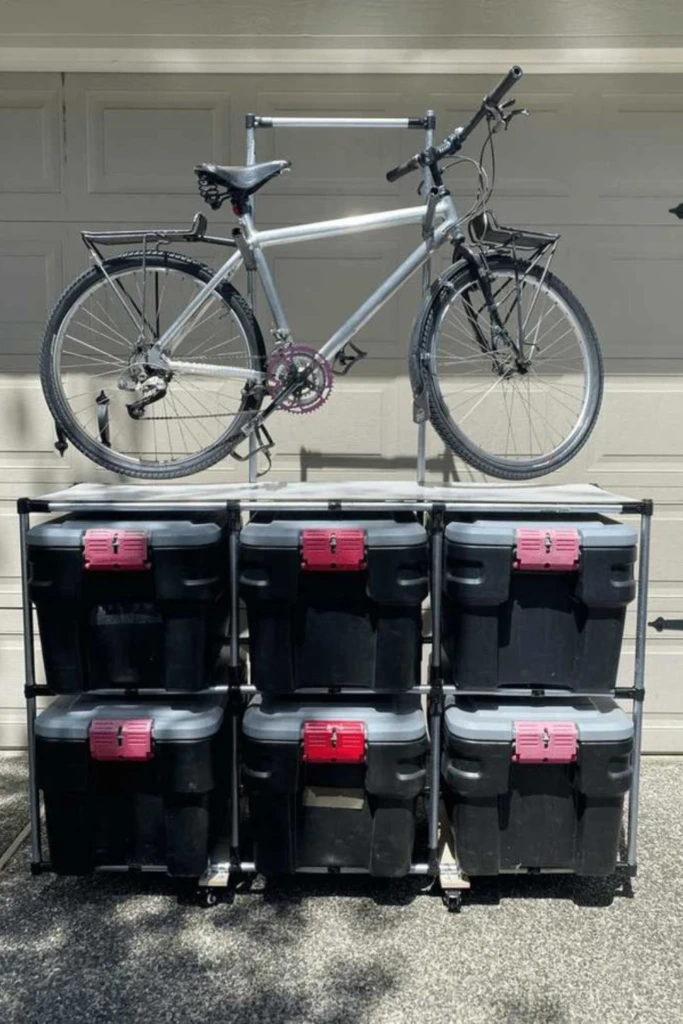
A raised platform rack adds another useful surface above your storage containers.
Build a stable lower framework with accessible bin compartments. Cover the top with a properly supported plywood platform or another suitable material.
The upper surface can hold lightweight equipment, baskets, or supplies that don't fit neatly inside standard containers.
If you plan to store heavy objects on top, design the structure specifically for those loads rather than assuming a thick panel alone will provide sufficient strength.
Keep the platform height comfortable for accessing items and avoid placing objects where they could fall into a walkway.
This arrangement is useful in garages, sheds, and utility rooms where you need both organized bin storage and an additional horizontal surface.
13. Angled Slide Frame
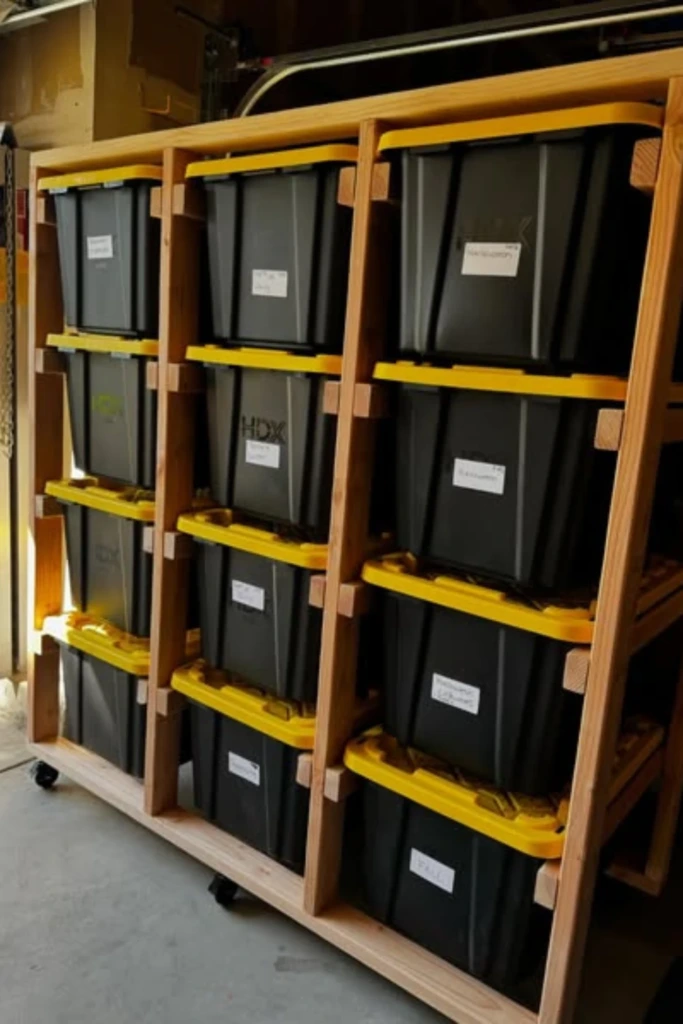
An angled slide frame offers a different approach to accessing storage containers.
Instead of using completely level supports, the rails are installed at a slight slope. Depending on the direction of the slope, bins may be easier to retrieve or may naturally move toward a designated resting position.
However, sloped storage requires careful planning. A forward-facing slope can cause heavy containers to slide out unexpectedly unless reliable stops or retention features are installed.
Build a rigid frame, keep the angle modest, and test the design with the actual containers before putting it into regular use.
Choose smooth, durable contact surfaces that won't damage plastic rims during repeated movement.
This design is most appropriate for controlled-access storage systems where containers are securely retained and their movement can be managed safely.
14. Open Rail Frame
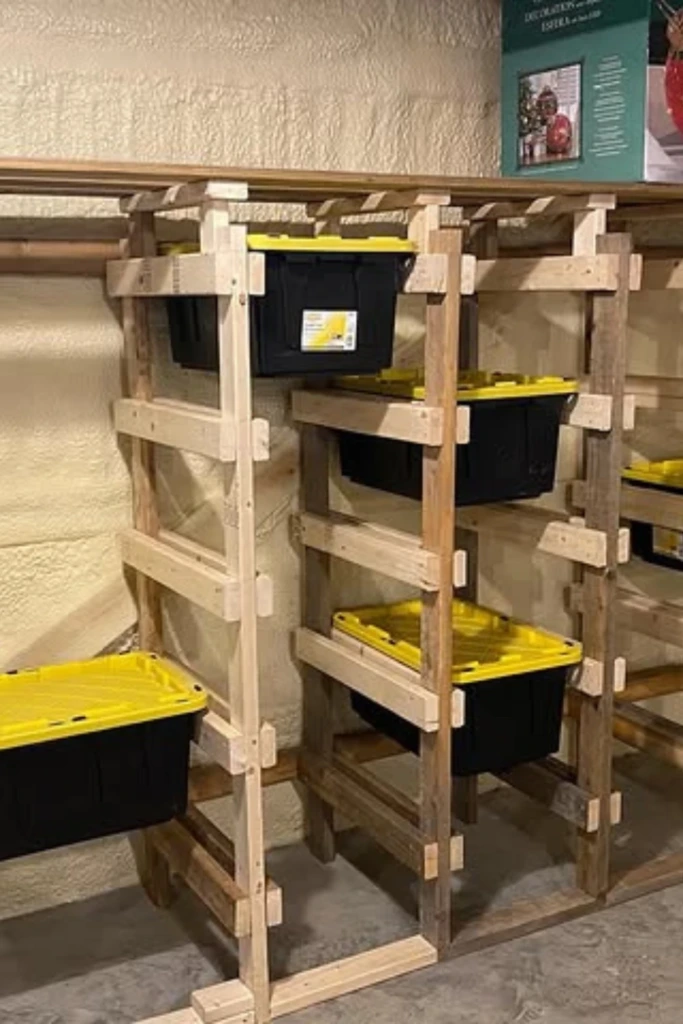
An open rail frame is a practical choice when you want to minimize materials while maintaining easy access to your belongings.
Unlike enclosed shelving, this design uses vertical framing and horizontal supports without covering every compartment with plywood.
The open construction makes it easier to see the containers and clean around the rack. It can also simplify future adjustments if you need to change the spacing.
Use adequately supported rails, strong connections, and suitable bracing to keep the structure rigid.
Because the containers depend on their edges for support, use only bins designed to withstand this arrangement. Otherwise, add full shelves.
An open rail rack is a useful solution for workshops and garages where simple construction and everyday convenience are priorities.
15. Reinforced Cubby Frame
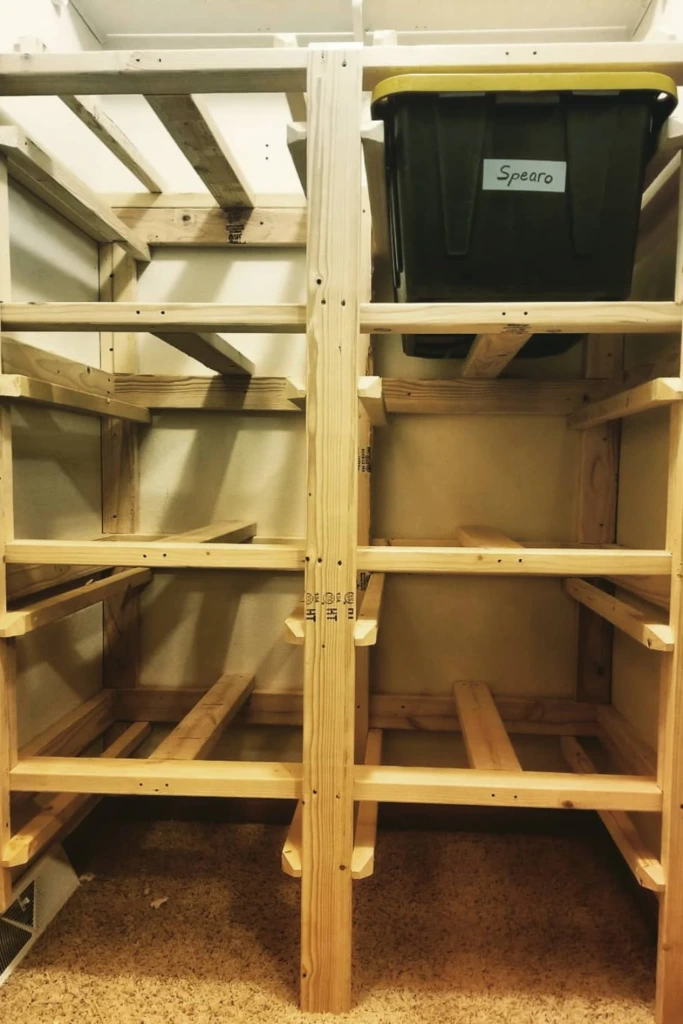
A reinforced cubby frame is ideal for organizing heavier household supplies while keeping containers separated.
Start with a sturdy outer frame and divide it into individual compartments using vertical and horizontal structural members.
Shorter support spans and well-designed connections can help limit movement and deflection. Add plywood panels or diagonal bracing where necessary to improve rigidity.
For especially heavy contents, full shelves may provide more reliable support than plastic bin rims.
Measure every opening carefully, leaving enough room to grip the containers and remove them comfortably.
This type of rack is well suited to storing hardware, books, tools, and other dense materials, provided the structure has been designed and checked for the intended loads.
16. Outdoor Concealment Cabinet
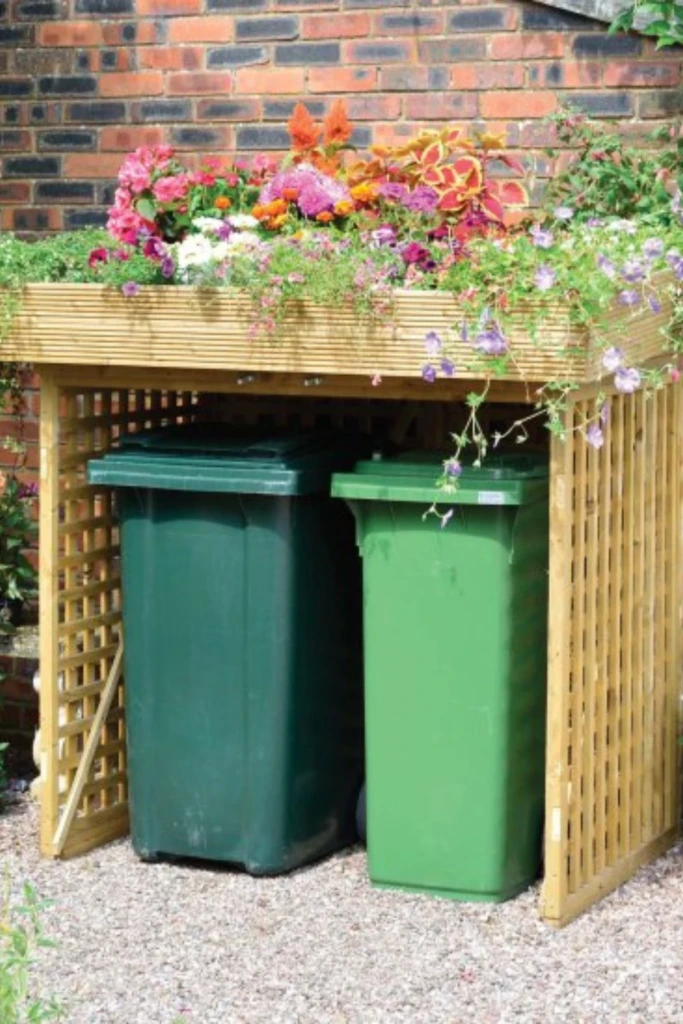
An outdoor concealment cabinet keeps storage containers organized while reducing visual clutter around patios, gardens, and side yards.
Construct the frame using materials suitable for exterior conditions, such as appropriately treated lumber or weather-resistant panels.
Add doors or removable front panels to hide the containers while maintaining convenient access. Ventilation openings help reduce trapped moisture, although they won't make the cabinet waterproof.
Elevate the base above surrounding ground level and design the roof to shed rainwater away from the stored items.
Choose corrosion-resistant fasteners and apply an exterior finish where appropriate.
This project works well for gardening accessories, outdoor toys, and other belongings that can tolerate normal outdoor temperature changes.
17. Fence Line Storage
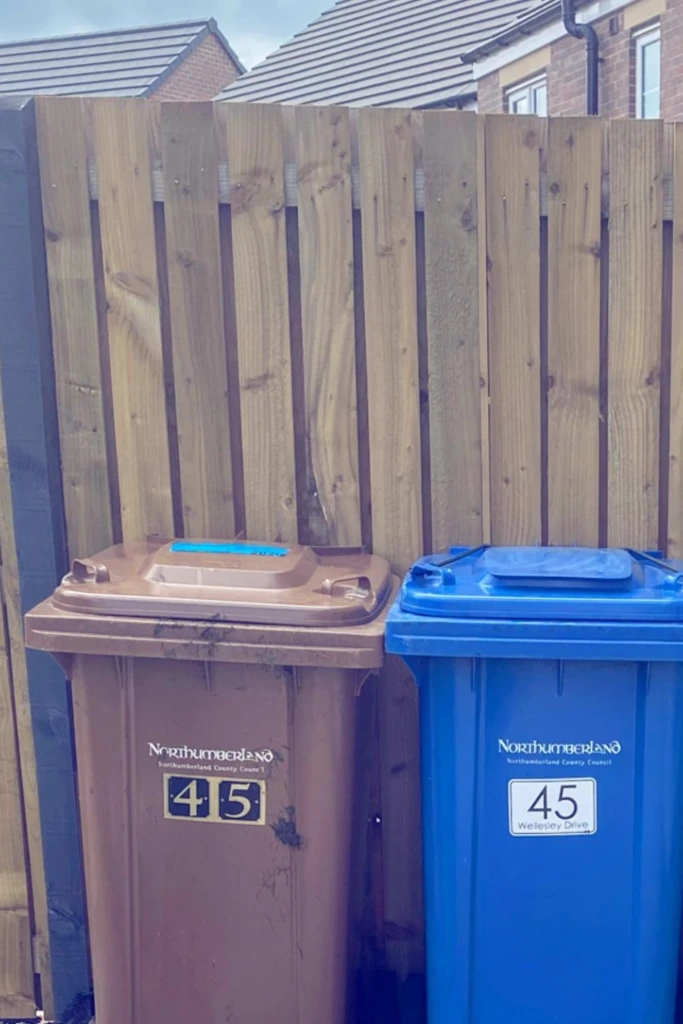
Fence line storage offers a simple way to organize outdoor containers without constructing a large freestanding cabinet.
Choose a level location along a sturdy fence and prepare a stable surface using suitable paving materials or a compacted base.
Arrange weather-resistant containers in a neat row, allowing sufficient room to open their lids and move them when necessary.
For a more permanent installation, build a low platform or restrained storage bay that keeps the containers positioned securely.
Avoid attaching heavy storage structures to a fence unless the posts and foundations are capable of supporting the additional loads.
You can also add discreet lighting to make the area easier to use after sunset.
This approach is particularly useful for gardening supplies, sports equipment, and other outdoor essentials.
18. Roofed Utility Station
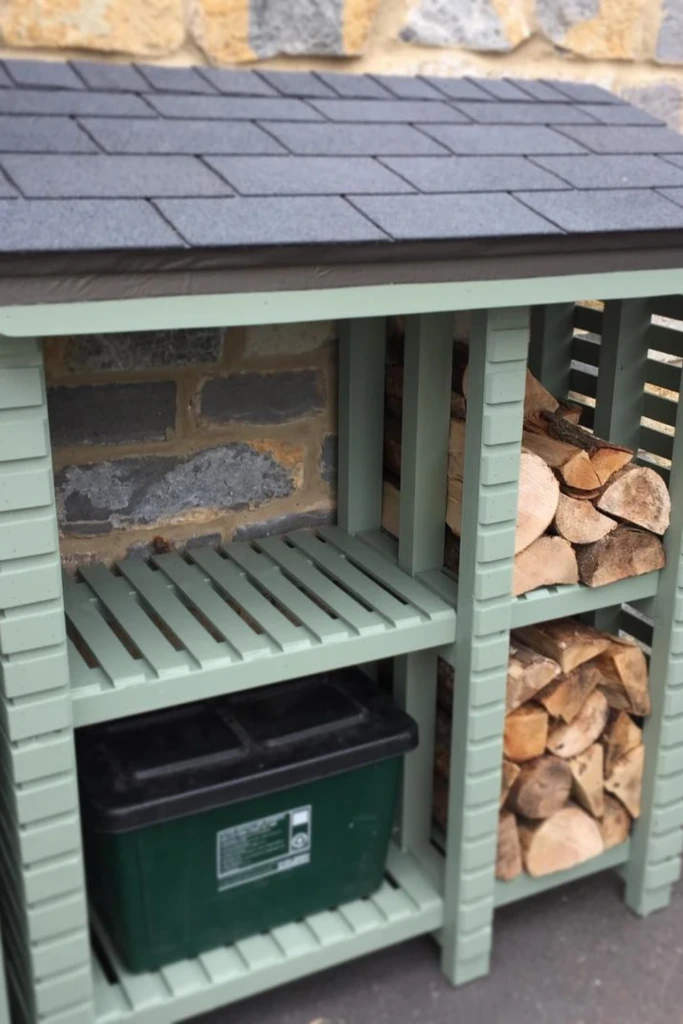
A roofed utility station provides a dedicated place for outdoor storage while offering protection from direct rainfall.
Build a durable frame using exterior-grade materials, then add a sloped roof that directs water away from the containers.
Install raised shelving or a ventilated platform to keep belongings above damp ground. Leave enough clearance around the stored items to encourage airflow.
Roofing materials can include corrugated panels, metal sheets, or shingles installed over an appropriate roof structure.
If the station will also hold firewood, keep it in a ventilated section separate from moisture-sensitive supplies.
Position the structure where it won't interfere with drainage or pedestrian access, and secure it against expected wind conditions.
A roofed station is a practical addition to gardens, backyards, and utility areas where a full storage shed would be unnecessary.
How Much Weight Can a DIY Bin Rack Hold?
There is no universal weight rating for a homemade storage bin rack. Its capacity depends on the lumber grade, shelf span, rail design, fasteners, bracing, and how the structure transfers weight to the floor.
The containers themselves also have limitations. Some plastic bins are suitable for rim-supported storage, while others require a continuous shelf beneath them.
For heavy-duty applications, use verified material specifications or a professionally reviewed design rather than relying on a general weight estimate.
Inspect the rack periodically for loose connections, cracked wood, sagging supports, or distorted containers. Distribute loads evenly and keep the heaviest items near the base.
Should I Anchor My Storage Rack to the Wall?
Yes, most tall stationary storage racks should be anchored to suitable wall framing to reduce the risk of tipping.
This is particularly important when containers are frequently pulled forward, the rack is narrow relative to its height, or children may have access to the storage area.
Use anchoring hardware appropriate for the wall construction. Drywall alone is not a reliable attachment point for a heavily loaded rack.
Freestanding mobile racks require a different stability strategy, including an appropriately wide base, rated locking casters, and careful weight distribution. Wall anchoring should not be treated as a substitute for a structurally sound rack.
A thoughtfully designed DIY storage bin rack can make everyday organization much easier. By selecting a layout that suits your available space, choosing suitable materials, and prioritizing safe construction, you can create a storage solution that remains practical as your needs change.