20 Genius Book Storage Ideas for 2026
I’ll structure the article around practical book storage ideas, with clear, original descriptions and useful tips for making the most of different spaces.
Books bring knowledge, inspiration, and personality into a home, but collecting them can quickly create an organization challenge. Bedside tables become crowded, desks lose valuable working space, and favorite novels end up scattered across different rooms.
The good news is that you do not need a dedicated library or an expensive furniture makeover to keep your collection organized. With a little creativity, you can turn unused corners, narrow walls, and everyday furniture into practical places for your books.
Whether you live in a compact apartment, have children who love reading, or simply want a more attractive home, the right storage solution can make a noticeable difference. These book storage ideas combine functionality with attractive displays, helping you keep your collection accessible without sacrificing valuable living space.
How Can You Store Books in a Small Space?
Limited square footage does not mean you have to give up your growing book collection. The trick is to identify areas that are often overlooked and use them more effectively.
Wall-mounted shelves are an excellent starting point because they keep books off the floor while making use of empty wall space. A tall, slim bookcase can fit into a narrow gap, while corner shelving makes an awkward layout more functional.
Look beyond traditional shelving, too. The area beneath a staircase, the wall above a doorway, and the space under a window may all offer useful storage opportunities. Furniture with open compartments can also hold books without requiring an additional bookcase.
Before buying anything, measure the available space and consider the size and weight of your collection. A carefully planned arrangement will usually be more practical than adding furniture wherever it fits.
1. Turn a Wall Nook into a Built-In Library
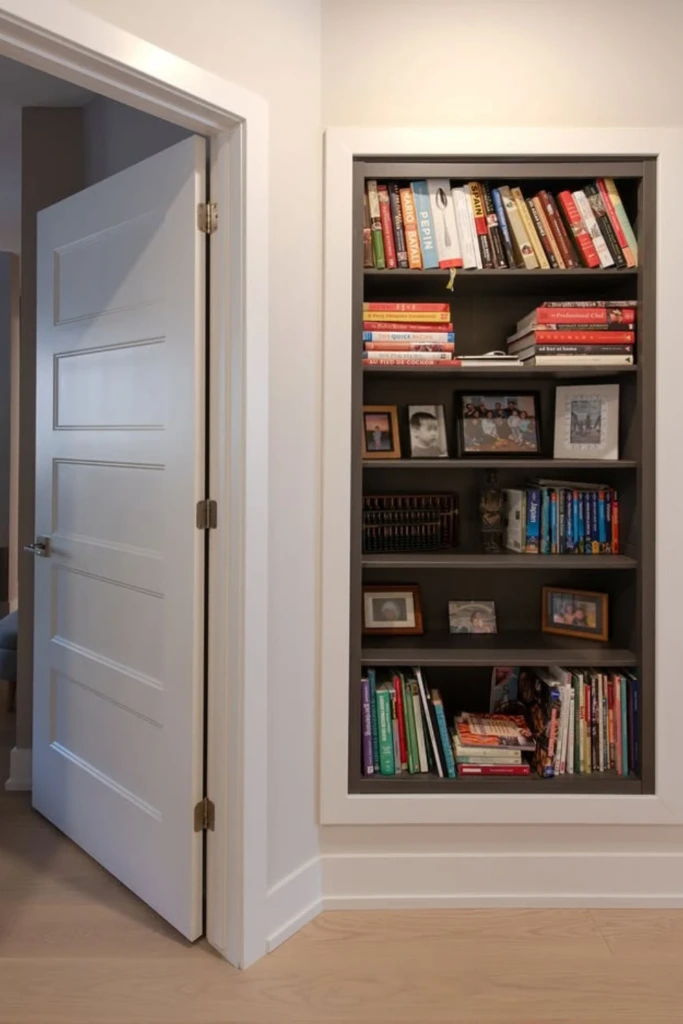
An unused wall recess can become a compact home library without taking up additional floor space. This approach works particularly well in hallways, bedrooms, and living rooms where conventional bookcases might make the room feel crowded.
Measure the nook carefully and install shelves that fit its width and depth. If you prefer a seamless appearance, choose shelving that matches the surrounding trim or wall color. A shallow freestanding unit can create a similar effect without extensive renovation.
Arrange frequently used books at comfortable heights and reserve the upper shelves for occasional reads or decorative objects. For a polished finish, group books by size or category and leave a little breathing room between collections.
2. Stack Books as a Vanity Frame
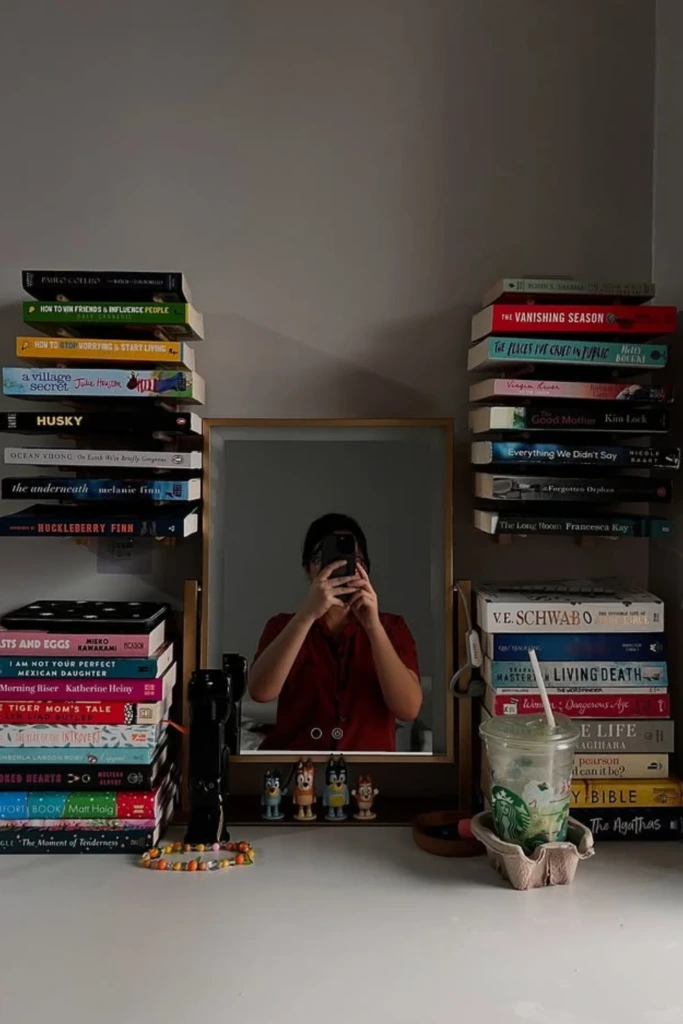
A bedroom vanity or dressing table can double as a small book display when you do not have room for another storage unit. Carefully arranged stacks on either side of a mirror create a distinctive look while keeping favorite titles close at hand.
Choose books with sturdy covers and stack them horizontally in manageable piles. Keep the arrangement low enough that it does not obstruct the mirror, lighting, or everyday grooming products.
This idea is best suited to a small collection rather than an entire library. Avoid placing valuable books where makeup, perfume, or water could spill onto them, and make sure the stacks remain stable.
3. Wrap a Room with Floor-to-Ceiling Shelves
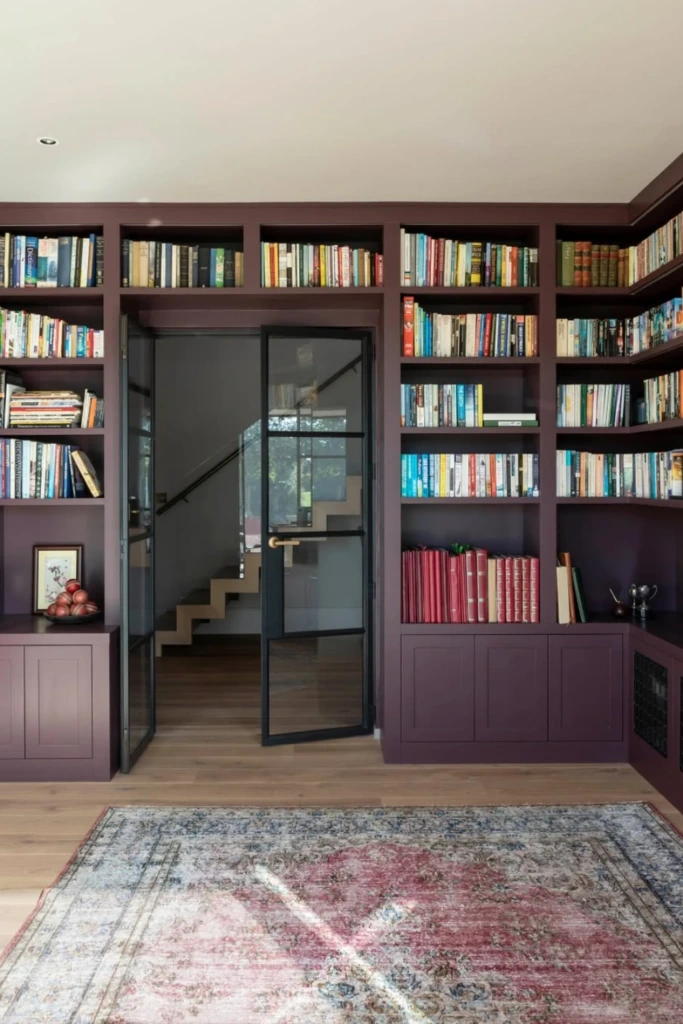
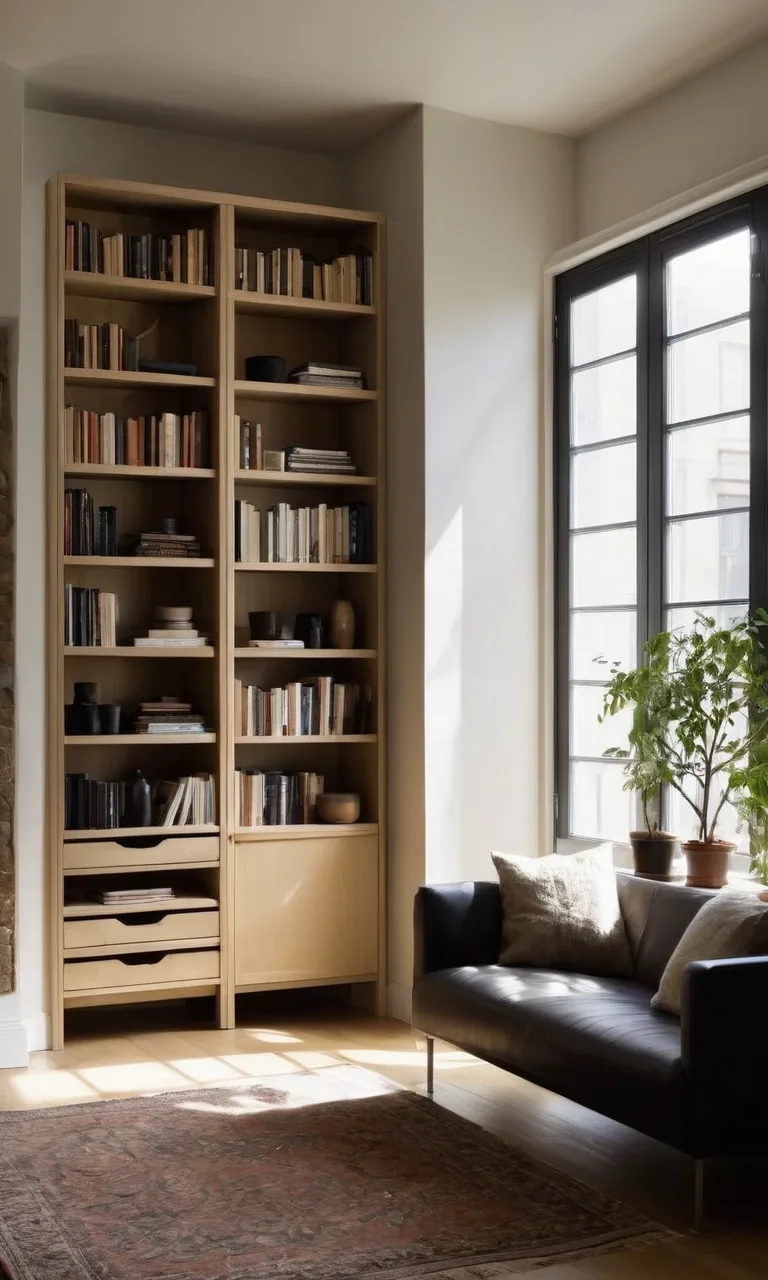
Floor-to-ceiling shelving turns an ordinary wall into a striking feature while providing generous storage for a large collection. It is particularly effective in living rooms, studies, and dedicated reading spaces.
Extend the shelves across one wall or continue them around the room to create a cohesive library effect. Adjustable shelving is useful because oversized art books, paperbacks, and hardcovers require different amounts of space.
You can keep the design subtle by matching the shelves to your walls or make them stand out with a rich, contrasting finish. Place heavier books on lower levels and secure tall shelving properly to prevent tipping.
To avoid an overcrowded appearance, mix tightly organized book sections with a few carefully chosen decorative pieces. The result can feel more like an intentional design feature than a wall filled with storage.
4. Build a Bench with Hidden Book Storage
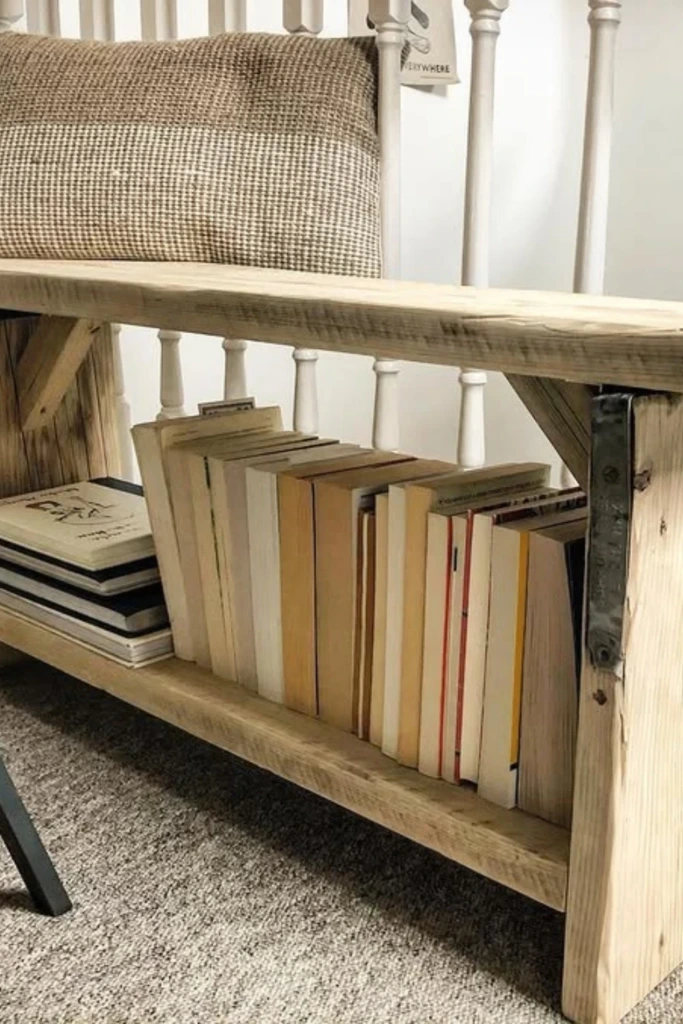
A storage bench is a practical way to combine seating and book organization in one piece of furniture. It works well beneath a window, along a hallway wall, or near a staircase where space might otherwise go unused.
Choose a bench with an open lower shelf, built-in cubbies, or a lift-up seat with a storage compartment. Open shelves make everyday reading material easy to reach, while enclosed compartments help keep less frequently used books out of sight.
For a reading-friendly setup, add a comfortable cushion and position a small lamp nearby. If you plan to store books inside a closed compartment, make sure the area stays dry and well ventilated.
A sturdy bench with appropriately sized compartments can accommodate novels, children's books, magazines, and other reading materials without requiring a separate bookcase.
5. Brighten Bookshelves with Fairy Lights and Greenery
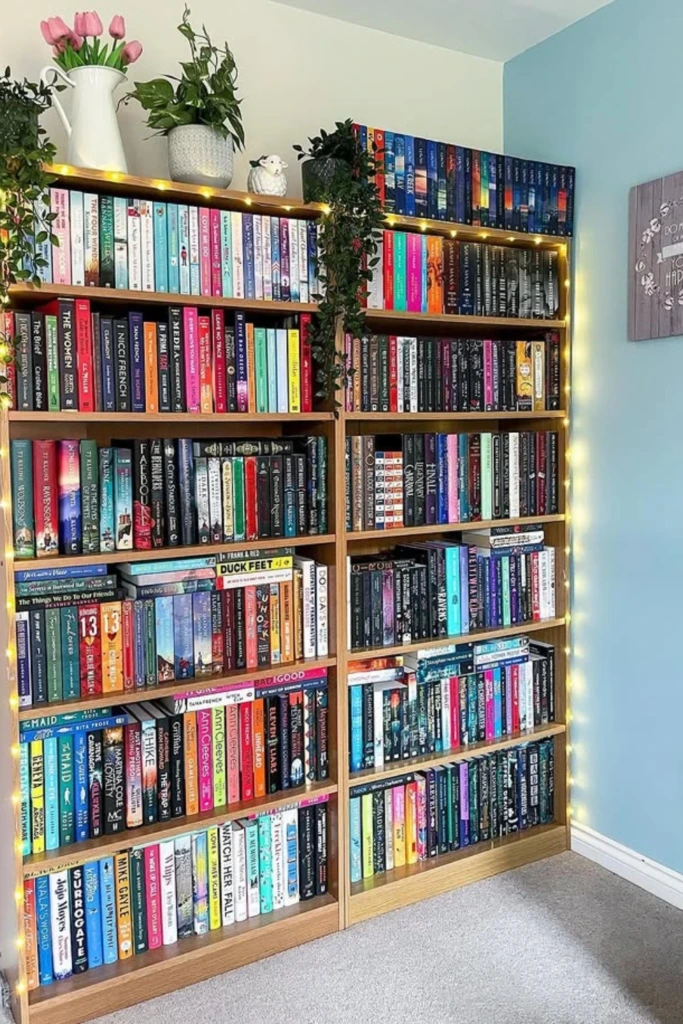
A bookshelf can serve as both a storage solution and a decorative focal point. Soft lighting and a few plants help make the arrangement feel welcoming, especially in bedrooms, living rooms, and home offices.
Place warm-white LED string lights along the edges of the shelves or attach suitable shelf lighting to illuminate the book spines. Battery-operated options are useful when outlets are difficult to reach.
Small artificial plants or carefully positioned decorative greenery can add texture between groups of books. If you prefer live plants, choose varieties suited to the available light and keep pots away from the books to prevent moisture damage.
Keep electrical cords tidy and avoid placing lights that generate noticeable heat directly against paper or fabric. A restrained arrangement will highlight the collection without making the shelves look cluttered.
6. Pair a Rolling Cart with Your Bookshelf
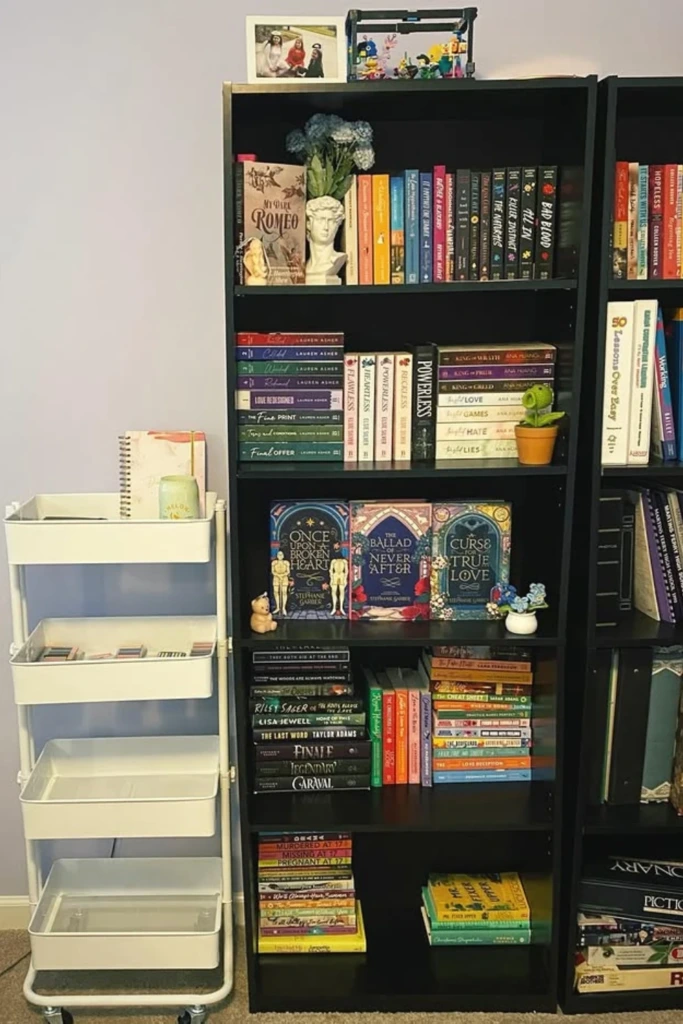
When your main bookcase is nearly full, a slim rolling cart can provide extra storage without permanently changing the room layout. Its compact footprint makes it especially useful in dorm rooms, small bedrooms, and shared workspaces.
Use the different tiers for specific purposes. One level might hold books you are currently reading, another can accommodate notebooks and journals, and the remaining shelf can store reference materials or reading accessories.
Position the cart beside your existing bookcase so the two pieces function as one organized area. Locking wheels help keep it in place, while movable wheels make it easy to bring reading materials to a desk or chair.
For a tidy appearance, avoid filling every shelf to its limit. Leaving some open space makes it easier to find individual titles and prevents the cart from becoming another miscellaneous storage pile.
7. Mix Books with Collectibles for Character
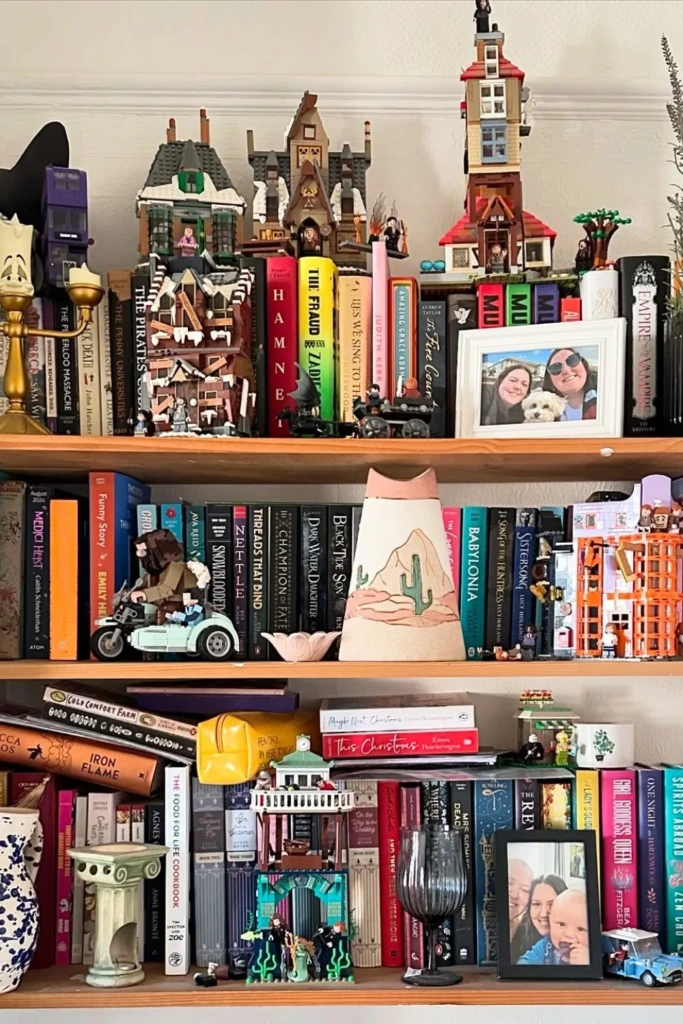
Bookshelves do not have to contain books alone. Combining reading material with personal objects creates a display that reflects your interests and gives the room a more individual feel.
Try alternating sections of books with framed photographs, small sculptures, travel souvenirs, or decorative bowls. Larger objects can act as visual anchors, while smaller items fit naturally into gaps between book groups.
For a balanced arrangement, vary the direction of the books by placing some upright and stacking others horizontally. Use the horizontal stacks as platforms for lightweight decorative pieces, provided the books remain stable and are not being damaged.
Keep the most frequently used titles within easy reach and reserve the more decorative sections for books you consult less often. This way, your shelf remains functional as well as attractive.
8. Use a Console Table with Open Shelving
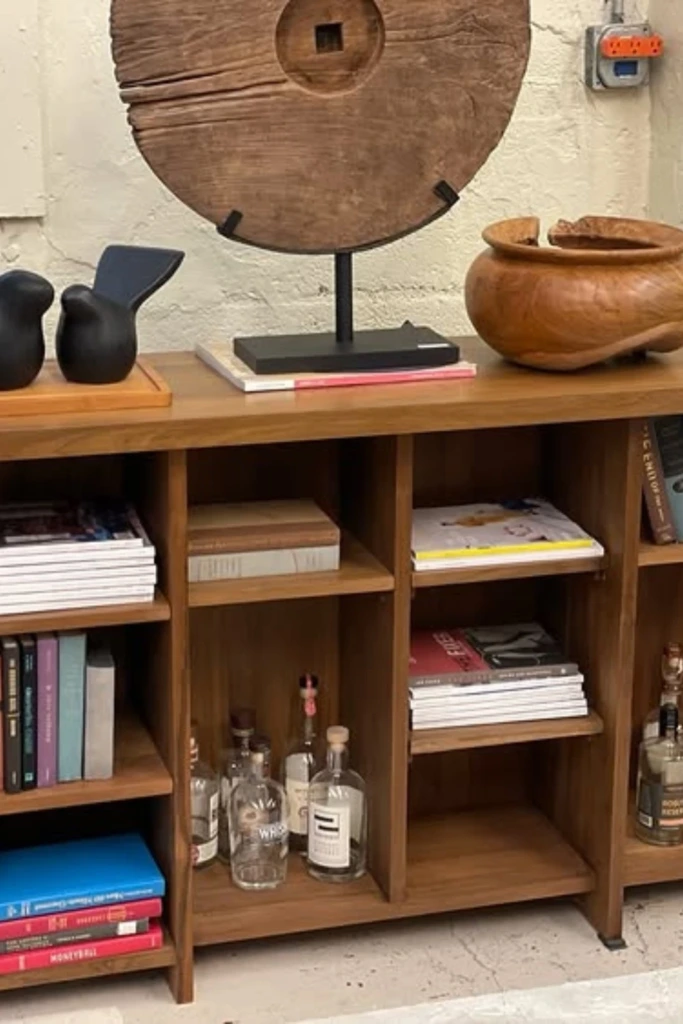
A console table with open compartments offers a useful alternative to a traditional bookcase. Its relatively narrow profile makes it suitable for entryways, living rooms, and other areas where deeper furniture would obstruct movement.
Choose a design with compartments that accommodate different book sizes. Upright novels fit neatly into taller sections, while large-format books can be stored horizontally in wider openings.
You can organize the collection by subject, author, or frequency of use. In an entryway, leave enough room for everyday essentials without allowing keys, bags, and mail to spill into the book storage area.
For a cohesive look, coordinate the console's finish with nearby furniture. This approach provides accessible storage while helping the books feel like a natural part of the room's design.
9. Build a Custom Shelf from Wooden Crates
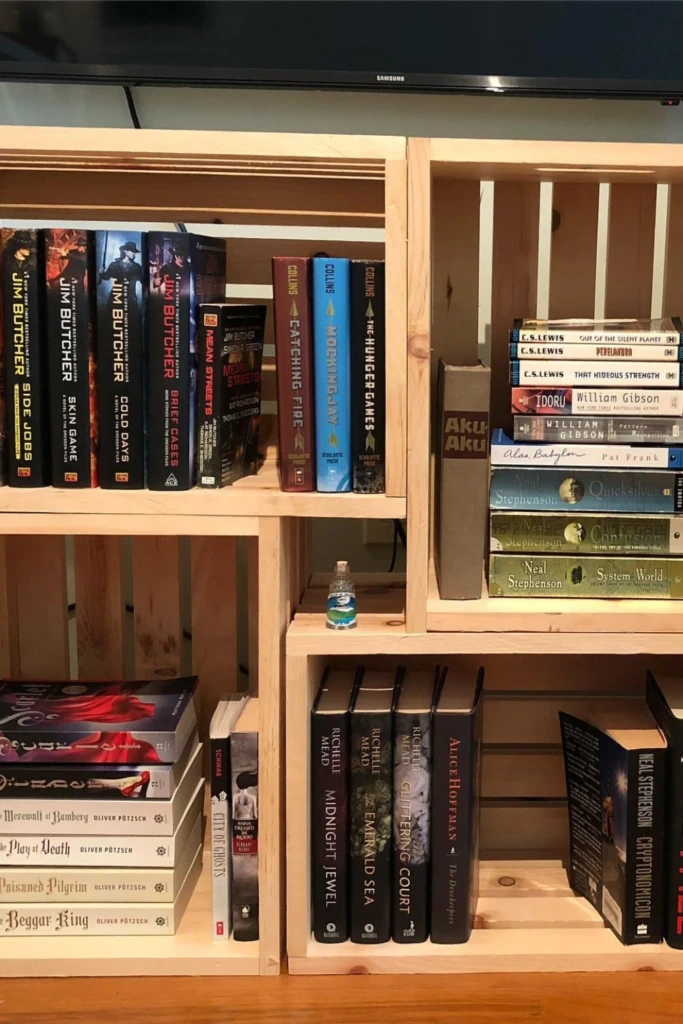
Wooden crates can be turned into an affordable book storage unit with a little planning. This DIY option suits renters, students, and anyone who enjoys creating useful furniture from simple materials.
Start with clean, sturdy crates that are free from splinters, loose boards, and exposed nails. Arrange them horizontally or vertically to create compartments for different book sizes, then secure the structure so it cannot shift or topple.
Sand rough surfaces and apply a suitable finish if needed. If you paint the crates, allow them to dry and cure fully before placing books inside.
Use the individual compartments to separate fiction, nonfiction, notebooks, and decorative items. Because crate dimensions vary, measure your collection before assembling the unit and check the manufacturer's or material's load capacity where available.
This flexible design can be expanded as your collection grows, provided the finished structure remains stable and safely supported.
10. Create a Cozy Glow with Shelf Lighting
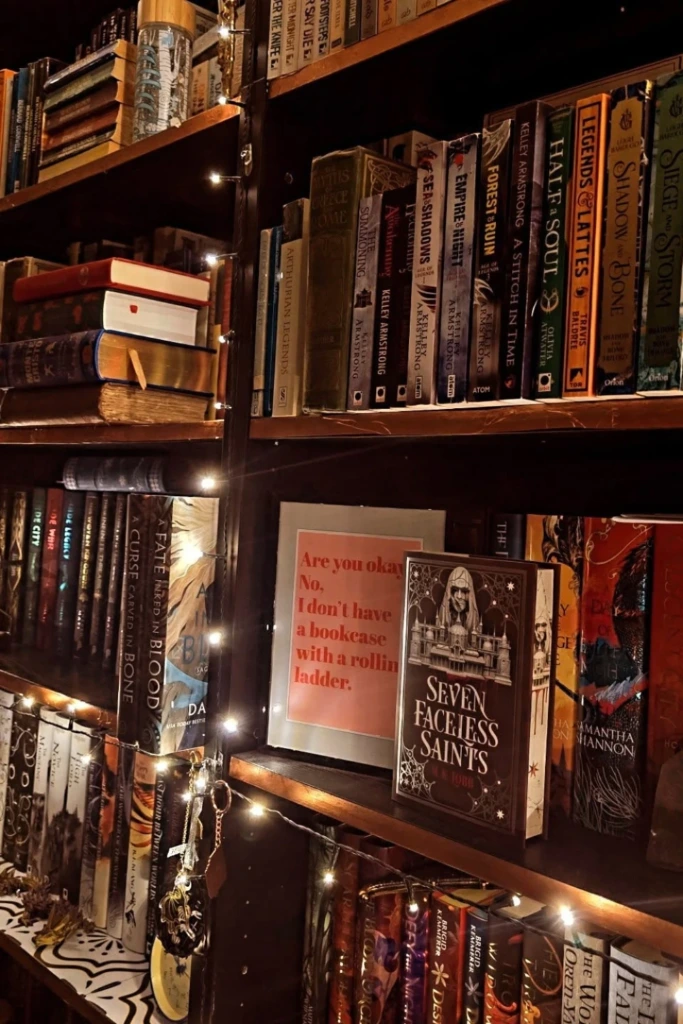
Thoughtful lighting can make a book collection easier to browse and more inviting in the evening. It is particularly useful in reading corners, bedrooms, and living spaces where overhead lighting feels too harsh.
Install low-heat LED strips beneath shelves or along their front edges to illuminate the books below. Warm-white lighting creates a relaxed atmosphere, while neutral white can work well in a study where visibility is important.
Conceal wires where practical and select lighting designed for indoor use. If the shelves contain rare books or materials sensitive to light, keep the illumination modest and switch it off when it is not needed.
You can also use a small nearby lamp instead of installing permanent lighting. The goal is to improve visibility and atmosphere without exposing your collection to unnecessary heat or prolonged light.
11. Turn a Corner into a Full Library
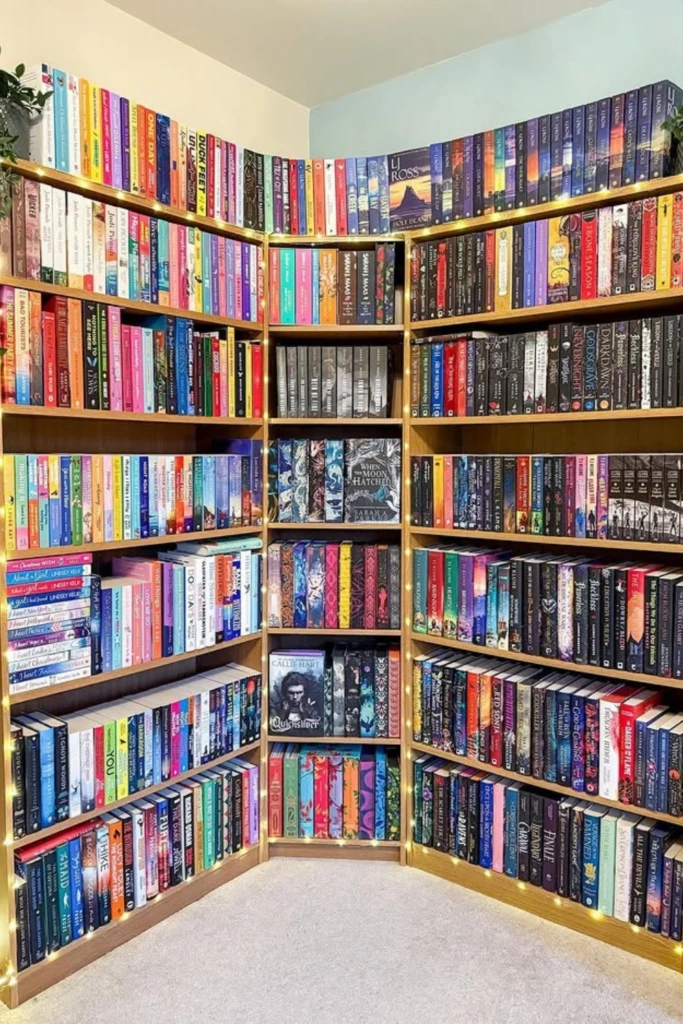
A room corner can hold considerably more reading material than you might expect when both adjoining walls are used effectively. This arrangement is ideal for a home office, bedroom, or living room with limited open wall space.
Install corner shelving or place two compatible bookcases at right angles. A purpose-built corner unit can provide a cleaner finish, while separate shelving makes it easier to adapt the layout to your room.
Keep books you reach for regularly on the lower and middle shelves. Less frequently used reference books can occupy higher positions, provided they remain safely accessible.
A comfortable chair and a nearby reading light can turn the area into a compact library. To keep the space from feeling cramped, choose furniture with a modest footprint and leave enough clearance for people to move around comfortably.
12. Use a Compact Diagonal Book Rack
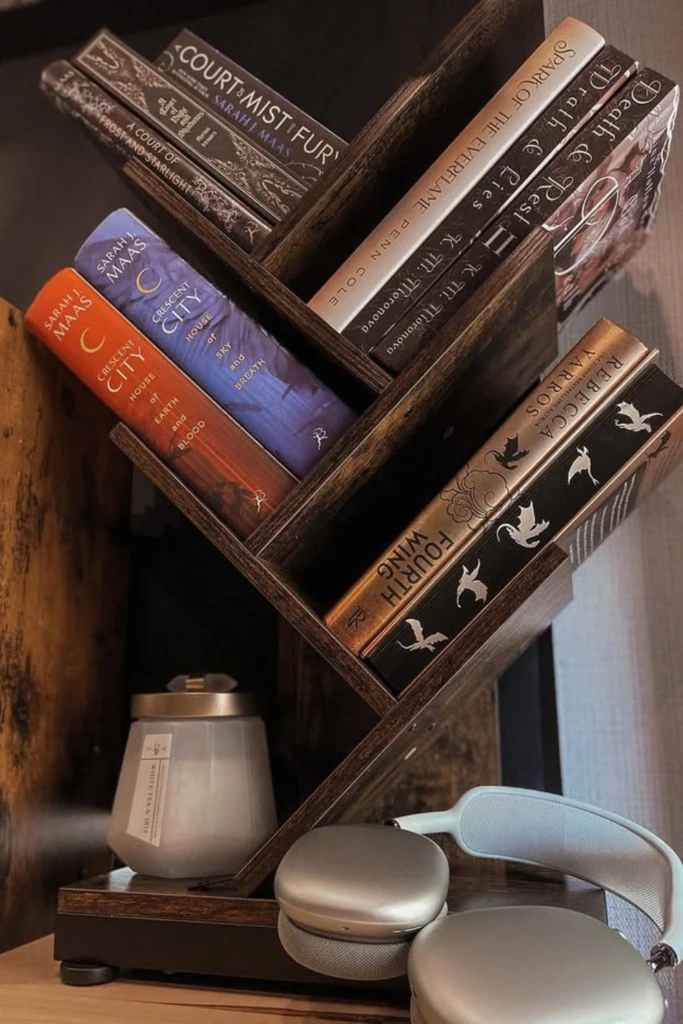
A diagonal book rack provides a decorative way to store a small selection of books on a desk, bedside table, or sideboard. Its angled compartments create a different look from conventional upright shelving.
Choose a rack with properly sized slots and a stable base. Arrange paperbacks, current reads, or a few favorite hardcovers so that each book sits securely without leaning excessively.
This type of organizer is especially useful for keeping a short reading list visible. You might dedicate it to books you plan to finish this month, titles for a book club, or reference materials for a current project.
Because compact racks have limited capacity, use them alongside a larger storage solution rather than expecting them to hold an entire collection. Their main advantage is convenience and visibility.
13. Mount Floating Shelves for a Modern Library Wall
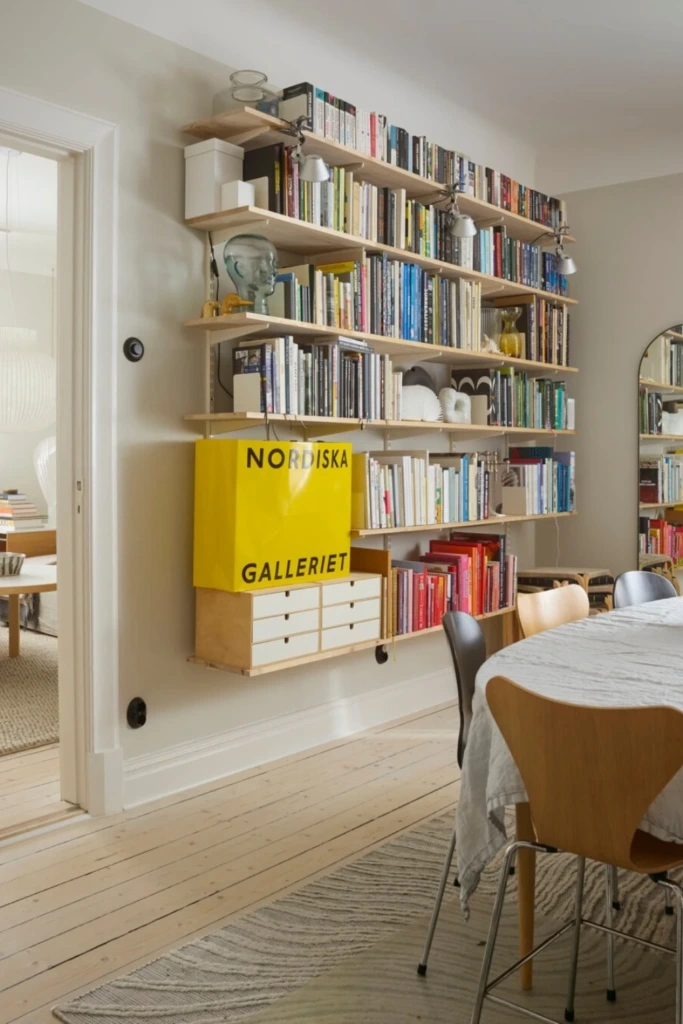
Floating shelves make use of vertical space while maintaining an open, uncluttered appearance. They are a good option for small apartments, studios, and rooms where a bulky bookcase would occupy too much floor area.
Plan the layout before drilling, taking into account the width of your books, the distance between shelves, and the wall's construction. Use brackets or mounting hardware rated for the expected load, and attach them to appropriate structural supports.
Long shelves can create a continuous library wall, while shorter shelves arranged in groups offer a more flexible display. Keep heavier books on lower levels and avoid exceeding the shelf's rated capacity.
For an organized finish, group similar-sized books together and use bookends where needed. Floating shelves work best when the spacing is practical for the collection rather than determined by appearance alone.
14. Turn Stair Walls into a Built-In Library
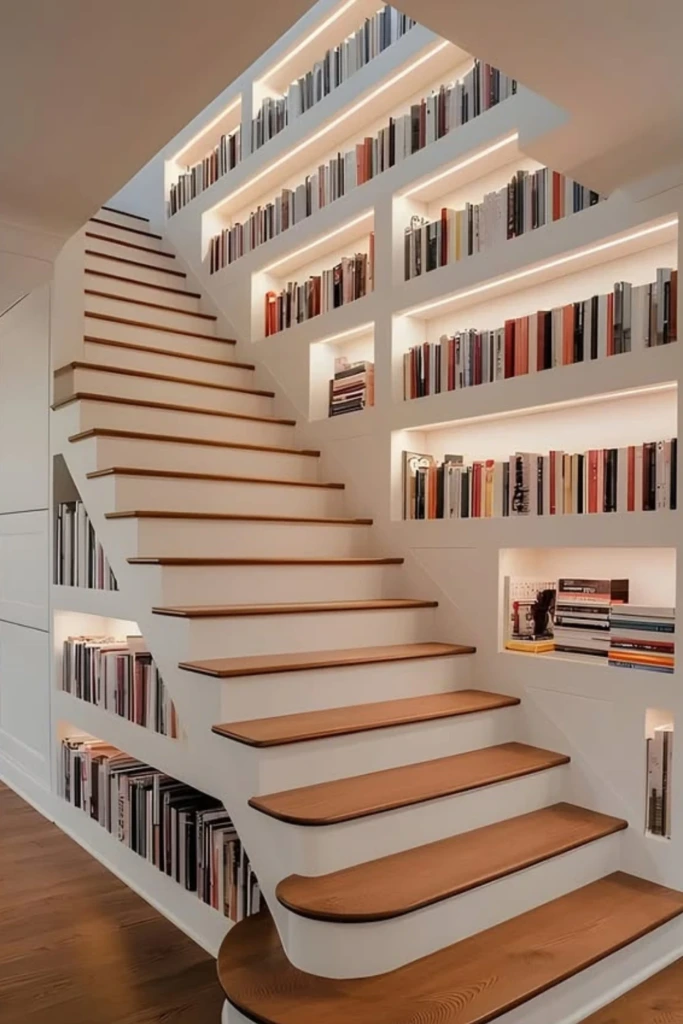
The walls around a staircase can provide valuable storage that might otherwise remain unused. Built-in shelving along a stair wall is especially appealing in homes where the staircase forms part of an open living area.
A custom installation can follow the available wall space and accommodate books of different heights. If you prefer a simpler project, install separate shelves along a suitable section of wall rather than building a complete unit.
Careful planning is essential around stairs. Make sure the shelves do not reduce headroom, obstruct the walking route, or create hazards near the handrail. Heavy installations should be properly anchored, and books should remain easy to retrieve without leaning dangerously over the steps.
Subtle LED lighting can help illuminate the display, but keep wiring safely installed and away from areas where it could be snagged. A well-designed stair library combines efficient storage with a distinctive architectural feature.
15. Display Children’s Books on Front-Facing Shelves
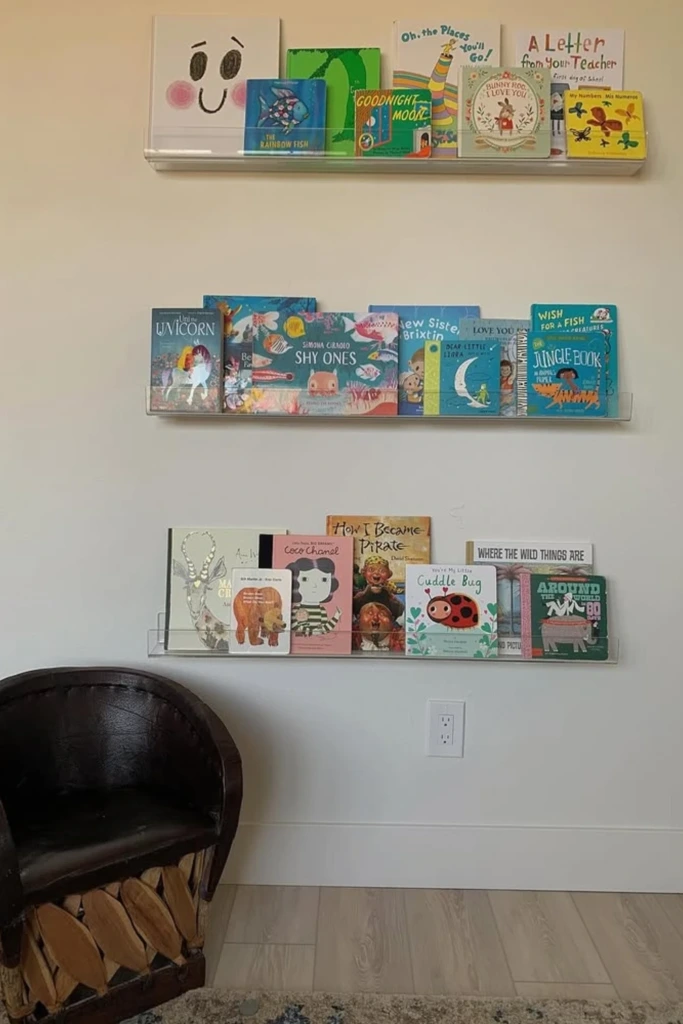
Children often find it easier to choose a book when they can see its cover rather than only its spine. Front-facing shelves make reading materials more inviting and encourage young readers to select and return books independently.
Install shallow shelves at a height children can comfortably reach. Wooden ledge shelves with a raised front edge can keep books from sliding off, while appropriately designed display racks can accommodate picture books of different sizes.
Arrange a manageable selection with covers facing outward, rotating titles occasionally to maintain interest. Store additional books in nearby baskets or lower cubbies so children can access them without climbing.
Choose securely mounted shelving with smooth edges and age-appropriate materials. Avoid placing heavy books overhead or positioning shelves where children might be tempted to climb them.
This arrangement works particularly well in nurseries, playrooms, classrooms, and shared family spaces because it combines accessible storage with an engaging display.
16. Build Recessed Shelves Beside Seating
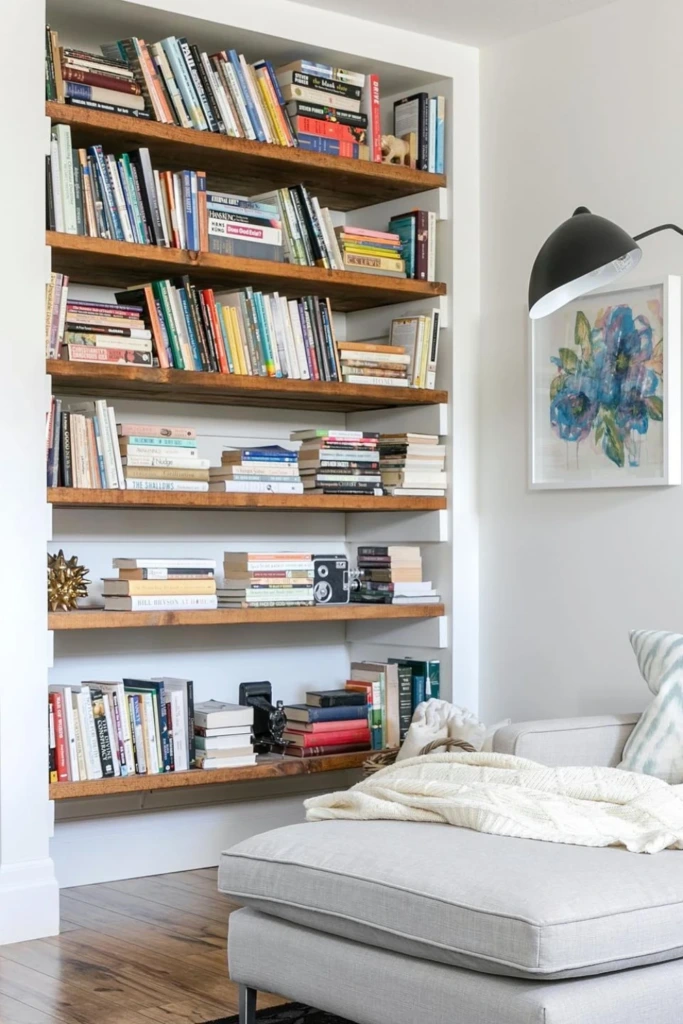
A recessed wall section near a sofa or reading chair can become a convenient place for books. Using an existing niche allows you to add storage without extending furniture into the room.
Measure the recess and install shelves that fit comfortably within it. Choose materials that can support the weight of the collection, and make sure the fixings are suitable for the wall structure.
Organize the shelves according to how you use the nearby seating area. Novels, magazines, poetry collections, and current reads can stay within easy reach, while decorative objects can occupy a few selected spaces.
If you want a more substantial library wall, vary the shelf heights to accommodate different formats. For a cleaner appearance, keep the overall arrangement consistent in color and spacing.
Before cutting into a wall to create a new recess, check for wiring, plumbing, and structural components. Using an existing niche is usually the simpler option.
17. Style a Neutral Shelf for a Minimalist Look
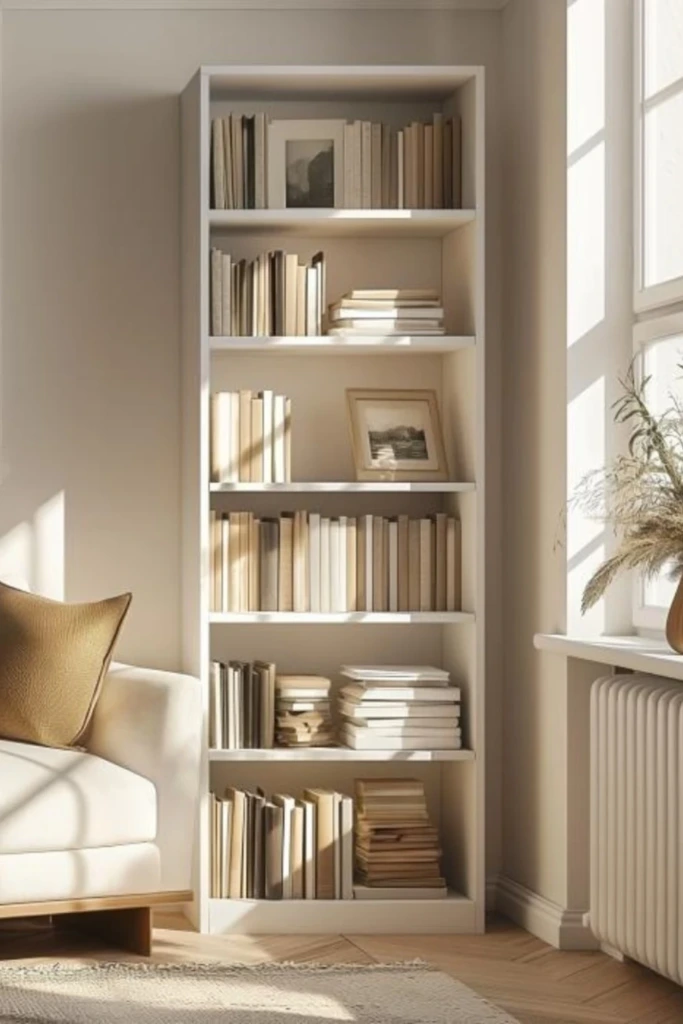
A neutral bookshelf can make a room feel calm and coordinated without hiding the personality of your collection. This approach works well in minimalist bedrooms, modern living rooms, and home offices with restrained color schemes.
Begin by removing everything from the shelves and grouping the books by size, subject, or cover color. Arrange them in small sections, mixing upright rows with horizontal stacks to introduce variation without creating visual clutter.
Cream, beige, gray, and muted wood finishes can help the storage blend into the surrounding decor. A few simple objects, such as a ceramic vase or a small framed print, can provide contrast without overwhelming the books.
You do not need to turn every book spine inward to achieve a neutral appearance. Keeping titles visible makes the collection easier to use and preserves its practical value.
The most effective minimalist shelf is one that contains the books and objects you genuinely want to keep, with enough space between groups to make the arrangement feel intentional.
18. Use a Rolling Cart as a Mobile Bookshelf
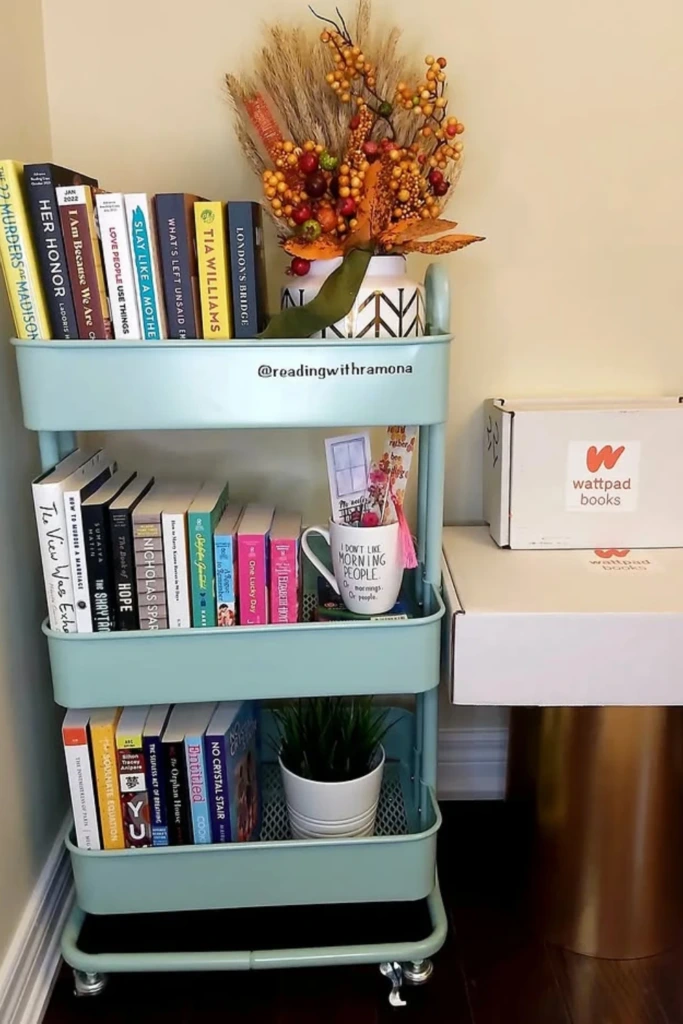
A mobile bookshelf is useful when you want your reading materials to move with you from room to room. A compact cart can serve as temporary storage in a bedroom, a home office, or a shared living area.
Choose a model with a stable frame, suitable shelf depth, and wheels that roll smoothly over your flooring. Store heavier books on the lowest tier to improve stability, leaving upper shelves for lighter paperbacks, notebooks, or reading accessories.
You can dedicate each level to a particular purpose: current reads on top, novels in the middle, and reference books below. Alternatively, keep one shelf available for a reading journal, bookmarks, and other small essentials.
Lock the wheels when the cart is parked, and avoid overloading it or leaving heavy objects where they might fall during movement. A well-organized cart offers flexibility without committing valuable floor space to permanent furniture.
19. Design Built-Ins with Open and Closed Storage
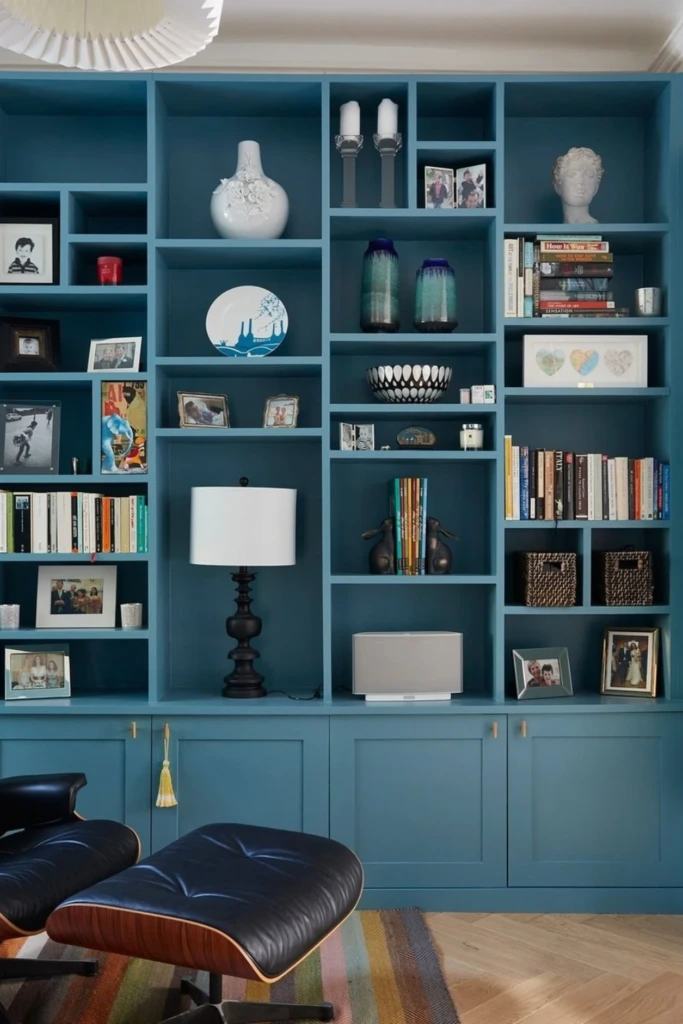
Combining open shelves with enclosed cabinets creates a versatile storage system for homes that need both display space and hidden organization. It is an effective solution for living rooms and home offices where books share space with household supplies.
Use open shelving for frequently read titles, favorite collections, and selected decorative objects. Reserve the cabinets for paperwork, spare stationery, older books, or items you would prefer to keep out of sight.
A consistent finish across the entire unit helps the arrangement look cohesive. You can choose a color that matches the walls for a subtle appearance or select a contrasting shade to make the storage a focal point.
Adjustable shelves can accommodate changing book sizes, while cabinet doors help reduce visible clutter. Ensure enclosed compartments remain dry and are not packed so tightly that books become difficult to retrieve.
If you are commissioning custom cabinetry, plan for the height and depth of your actual collection rather than relying solely on standard furniture dimensions.
20. Create a Reading Nook with Corner Shelves
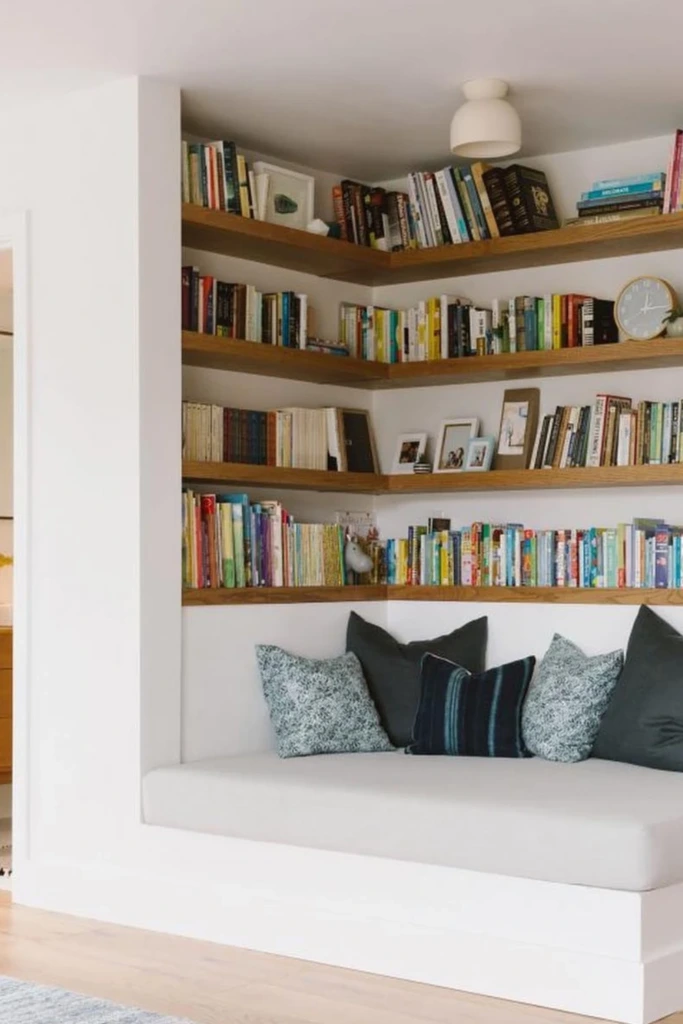
An empty corner can become a dedicated reading area when you combine compact shelving with comfortable seating. This idea works well in bedrooms, family rooms, and other spaces where a full library would be impractical.
Mount shelves on one or both adjoining walls to keep books nearby without filling the floor with furniture. Arrange favorite titles at a convenient height and use the upper shelves for additional reading material or lightweight decorations.
Add a comfortable chair, a cushion, and a suitable reading lamp. If space allows, a small side table can hold a cup, notebook, or pair of reading glasses.
Keep the walking area clear and position the shelves so that books can be removed easily while seated. In a smaller room, a compact chair or floor cushion may be more appropriate than an oversized armchair.
With a little planning, the corner becomes a practical place to unwind while making efficient use of an otherwise overlooked area.
What is the best way to store books without a bookshelf?
You can organize books without buying a traditional bookcase by making use of furniture and storage items you already own. Wooden crates, rolling carts, console tables, storage benches, and sturdy open cubbies can all hold books when arranged safely.
Wall-mounted ledges are another useful option when floor space is limited. For a small collection, neat stacks on a side table or desk can also work, provided they do not interfere with everyday activities.
Choose a solution based on the number of books you own, how often you read them, and the amount of space available. Keep heavier volumes on stable lower surfaces, avoid unstable piles, and make sure any wall-mounted storage is securely fixed.
How do I protect my books from damage at home?
Good book storage starts with a clean, dry environment away from direct sunlight and excessive humidity. Strong sunlight can fade covers and discolor pages, while damp conditions encourage mold and can damage bindings.
Keep books on sturdy shelves rather than directly on floors, particularly in areas where spills or water leaks might occur. Dust the shelves regularly, and avoid packing books so tightly that their spines become difficult to remove without pulling or bending them.
For long-term storage, aim for a stable indoor environment with moderate humidity. Around 40–50% relative humidity is a useful target for many household collections, although consistent conditions are more important than frequent fluctuations around a precise number.
Store books upright when their size and condition allow, using bookends to prevent leaning. Oversized volumes may be better stored flat, in manageable stacks. Rare, fragile, or valuable books benefit from appropriate protective enclosures and a dry, enclosed cabinet away from strong light.
Finally, check stored books periodically for signs of moisture, insects, dust buildup, or deterioration. Addressing small problems early can help preserve your collection for years to come.