24 Sweater Storage Ideas for 2026
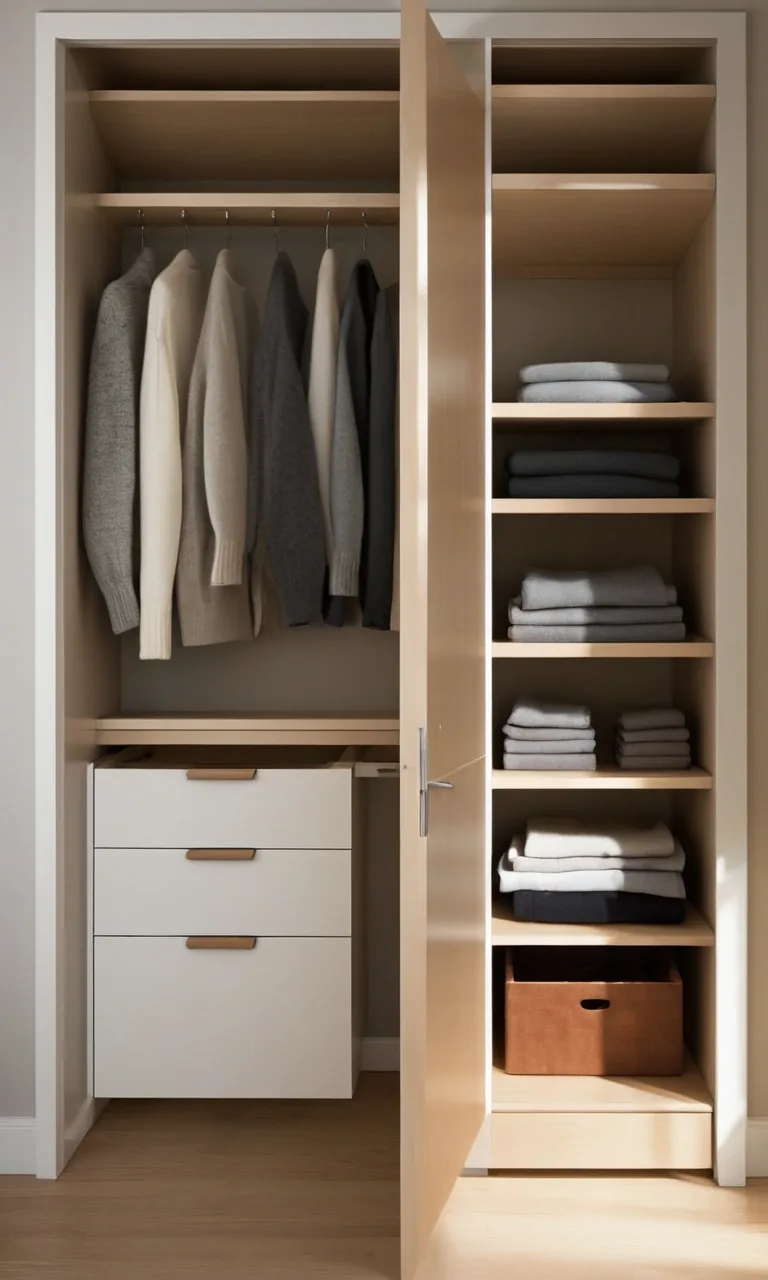
Sweaters are cozy wardrobe essentials, but their thick fabric can quickly take over your closet. Folded piles become unstable, drawers get overcrowded, and favorite knits often end up buried beneath everything else. Storing them incorrectly can also leave stretched shoulders, unwanted creases, and misshapen fabric.
The good news is that you don't need a large walk-in closet to keep your sweaters organized. With a few practical storage solutions, you can make better use of shelves, drawers, cabinets, and overlooked spaces around your bedroom.
Whether you're organizing a small wardrobe or preparing winter clothing for warmer weather, these sweater storage ideas can help you create a system that's easy to maintain.
How Do You Store Sweaters Without Stretching Them?
For most sweaters, folding is the safest storage method because it supports the garment's weight instead of placing pressure on the shoulders. Knit fabrics can gradually stretch when suspended from ordinary hangers, particularly when the material is heavy or loosely woven.
Start by laying your sweater on a clean, flat surface. Smooth the fabric, fold the sleeves inward, and bring the sides toward the center. Fold the body into halves or thirds, depending on the available storage space.
Place folded sweaters in drawers, on shelves, or inside suitable storage containers. If you prefer keeping garments upright, arrange them vertically in a drawer so you can see each piece without disturbing the others.
Lightweight knit tops can sometimes be hung using broad, padded hangers or a sweater-folding technique that distributes the garment's weight across the hanger. However, thick wool sweaters, chunky cardigans, and delicate knits generally benefit most from flat storage.
1. Color Zoning
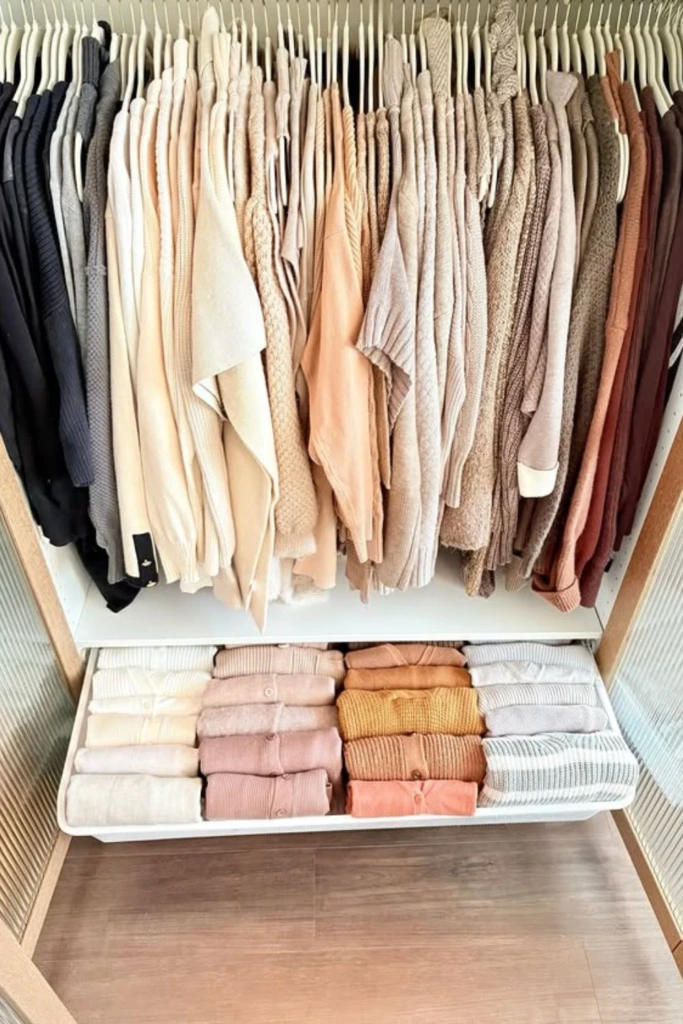
Organizing sweaters by color creates a wardrobe that's both attractive and practical. Instead of searching through mixed piles, you can quickly locate the shade you need when putting together an outfit.
Begin by separating sweaters into broad color families, such as whites and creams, browns and grays, blues and greens, and brighter shades. Within each group, arrange garments from light to dark if you prefer a coordinated appearance.
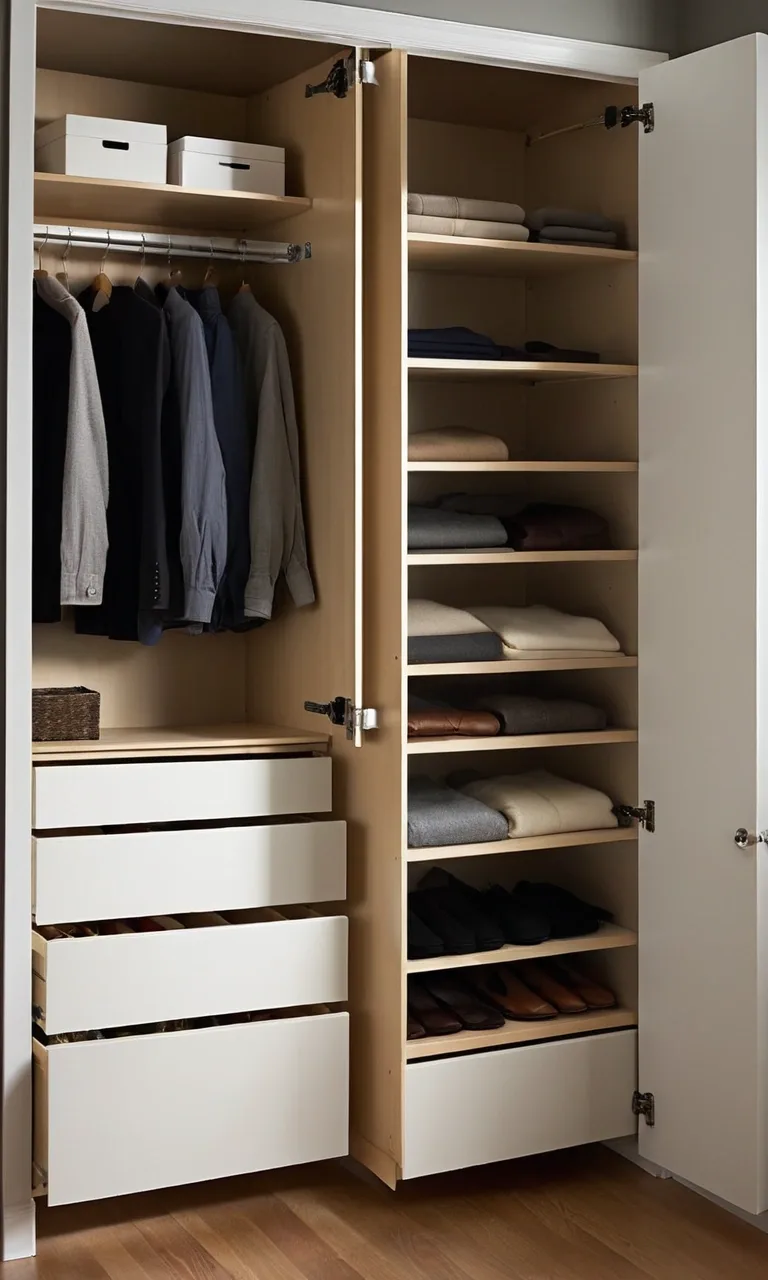
A combination of hanging rails and folded storage works particularly well here. Keep lightweight knits that tolerate hanging on the rail, while placing heavier sweaters in drawers or on shelves.
If your closet has a shallow drawer beneath the hanging section, use it for frequently worn folded sweaters. This arrangement keeps bulky clothing from competing with shirts and jackets for hanging space.
2. Shelf Stacks
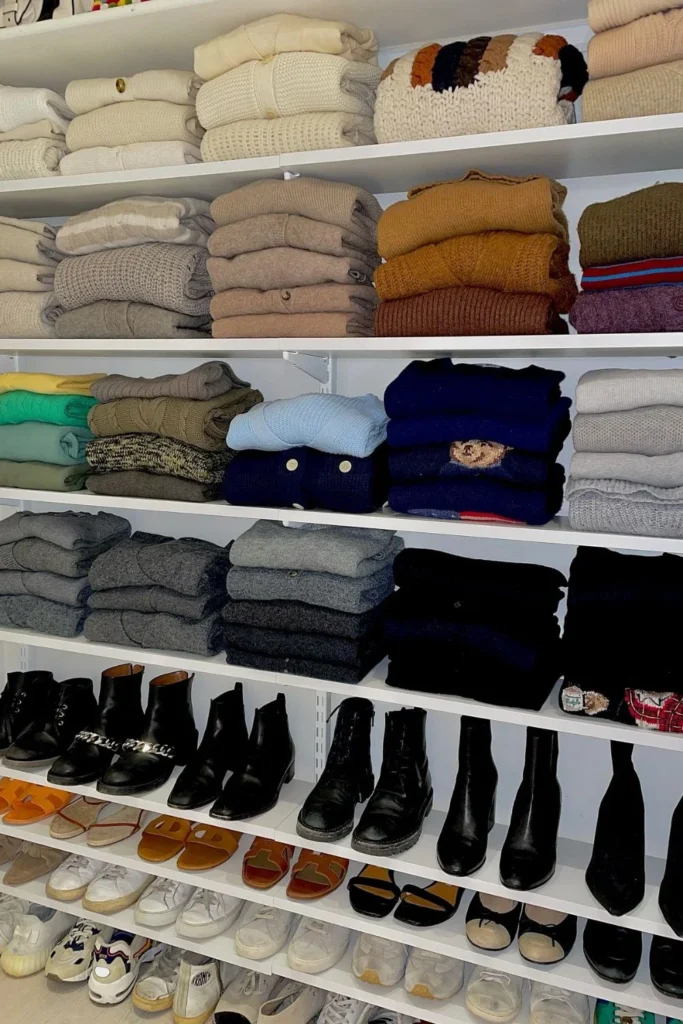
Open shelves provide a straightforward solution for storing sweaters without taking up valuable drawer space. They work especially well in closets with adjustable shelving or built-in compartments.
Fold each sweater into a similar-sized rectangle before stacking it. Place heavier garments near the bottom and lighter pieces above them to create a stable pile. Keeping stacks relatively short makes it easier to retrieve individual sweaters without causing the entire pile to collapse.
You can dedicate separate sections to different sweater styles, colors, or fabric weights. For example, keep chunky winter pullovers together and place finer everyday knits on another shelf.
Leave a little room between stacks so garments remain accessible. Overfilling a shelf can make even a well-organized closet difficult to use.
3. Bed Drawers
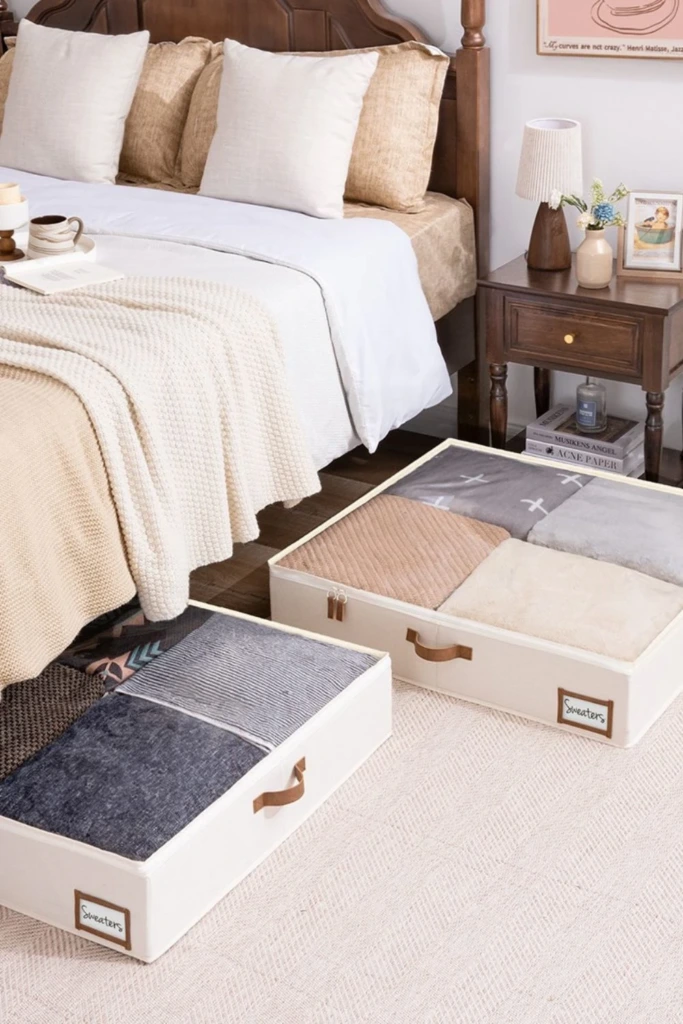
The area beneath your bed can become valuable sweater storage, particularly when your closet is small. Under-bed drawers and rolling containers provide a convenient home for knitwear that you don't need every day.
Fold sweaters neatly and arrange them in shallow drawers so they remain easy to retrieve. If you are storing seasonal garments, separate them by type or color to make finding a particular piece simpler when colder weather returns.
Choose containers with lids when you want additional protection against dust. Before placing sweaters inside, make sure every garment is clean and completely dry.
This approach is useful for bedrooms where floor space is limited because it uses an area that might otherwise remain empty. Select containers with enough clearance to slide comfortably beneath your bed.
4. Clear Bins
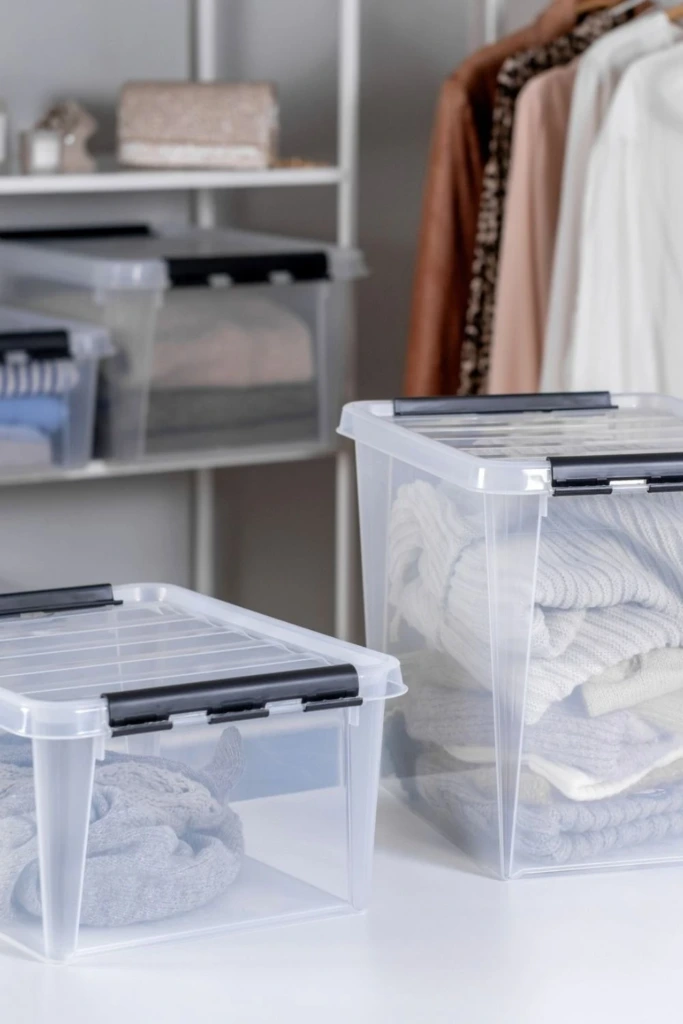
Transparent storage bins make it easier to keep sweaters organized while protecting them from everyday dust. Because you can see the contents through the sides, there's less need to open several containers to find a particular garment.
Fold sweaters before placing them inside, and avoid packing them so tightly that the fabric becomes compressed. Choose bins that fit your shelves or wardrobe without leaving unstable stacks.
Clear containers are especially practical for off-season clothing, spare knitwear, and sweaters stored on upper closet shelves. You can separate garments by season, thickness, or fabric type.
Add simple labels if you have several containers with similar contents. Although transparent bins improve visibility, they don't automatically prevent moisture problems. Store them in a cool, dry location, and make sure the sweaters are fully dry before putting the lids on.
5. Zipper Bags
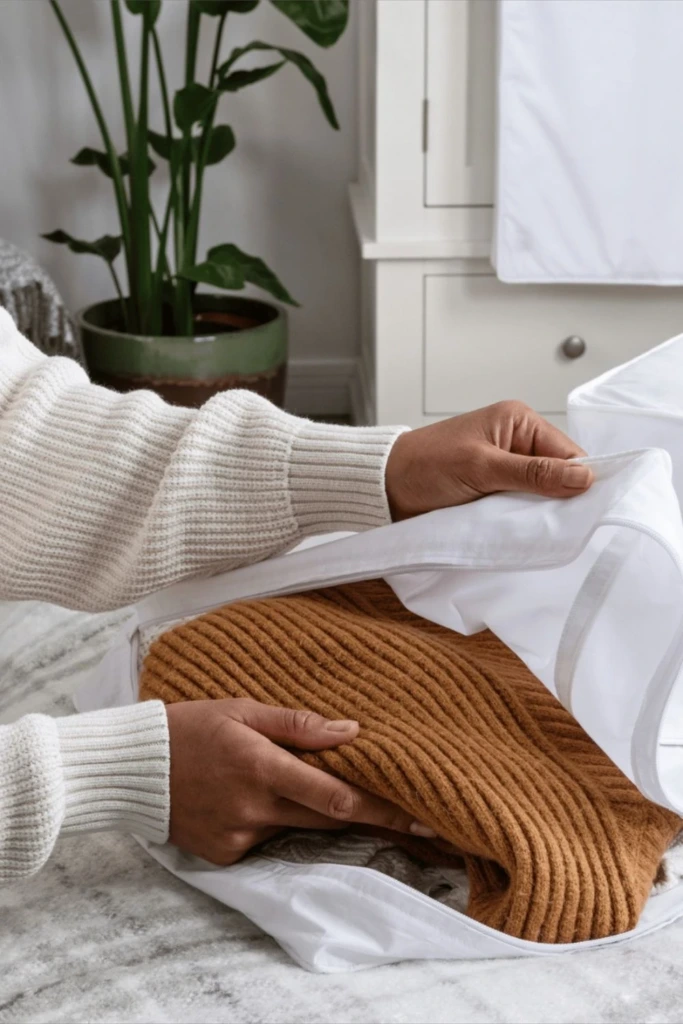
Fabric storage bags with zippers offer a flexible option for keeping sweaters together when they're not in regular use. They're lightweight, easy to move, and suitable for closets, wardrobe shelves, and under-bed storage.
Fold each garment carefully and place it inside without forcing too many sweaters into one bag. Overpacking can create deep creases and make the contents difficult to remove.
Breathable fabric bags are particularly useful for ordinary closet storage because they allow some air circulation while helping keep dust away. For long-term storage, choose a material appropriate for the sweater's fabric and the conditions in your home.
Clear windows or mesh panels make it easier to identify what's inside. You can also label each bag with its contents or the season when the garments are typically worn.
For valuable wool or cashmere pieces, make sure the storage material provides suitable protection against pests and moisture rather than assuming every fabric bag offers the same level of protection.
6. Shelf Dividers
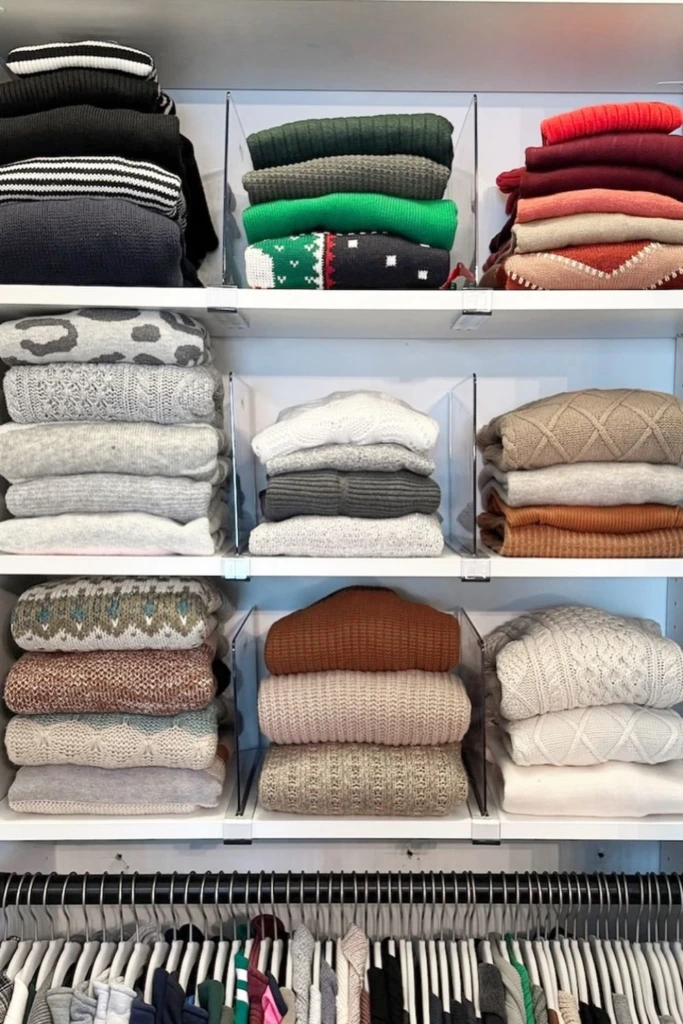
Shelf dividers help prevent folded sweaters from spreading into neighboring piles. They're especially useful when several people share a closet or when a wide shelf needs to hold multiple categories of clothing.
Install dividers to create separate sections for different colors, sweater weights, or styles. Fold garments consistently so each stack fits comfortably within its assigned space.
Keep heavier sweaters toward the bottom of each pile and lighter ones above them. Short stacks are generally easier to manage than tall towers, especially when you frequently reach for garments in the middle.
Clear dividers are a popular option because they provide structure without visually blocking the shelf. Adjustable versions are useful if your collection changes throughout the year.
With each sweater group contained in its own section, removing one garment becomes less likely to disturb the rest of the shelf.
7. Cabinet Shelves
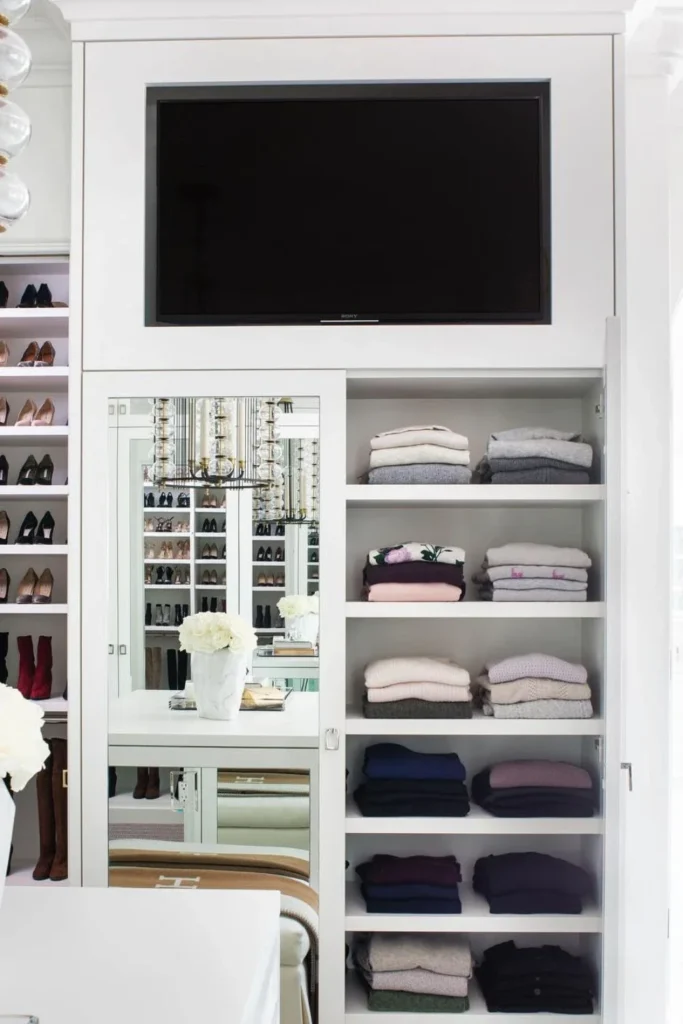
Cabinet shelving offers a more enclosed alternative to open closet shelves. It can be particularly useful for sweaters that need protection from direct sunlight and everyday dust.
Arrange folded garments on separate levels instead of squeezing everything into one crowded compartment. Give frequently worn sweaters an accessible shelf and reserve higher or lower spaces for pieces used less often.
Rather than building tall stacks, create smaller piles that are easy to lift and replace. You can also dedicate individual shelves to particular categories, such as cardigans, turtlenecks, and thick winter pullovers.
Tall cabinets make especially good use of vertical space in bedrooms where a wide wardrobe isn't practical. If the shelves are adjustable, reposition them to accommodate bulky knits without leaving large amounts of unused space.
Keep the cabinet dry and avoid storing sweaters directly against damp walls. An enclosed cabinet is helpful only when the environment inside remains suitable for clothing.
8. Fabric Boxes
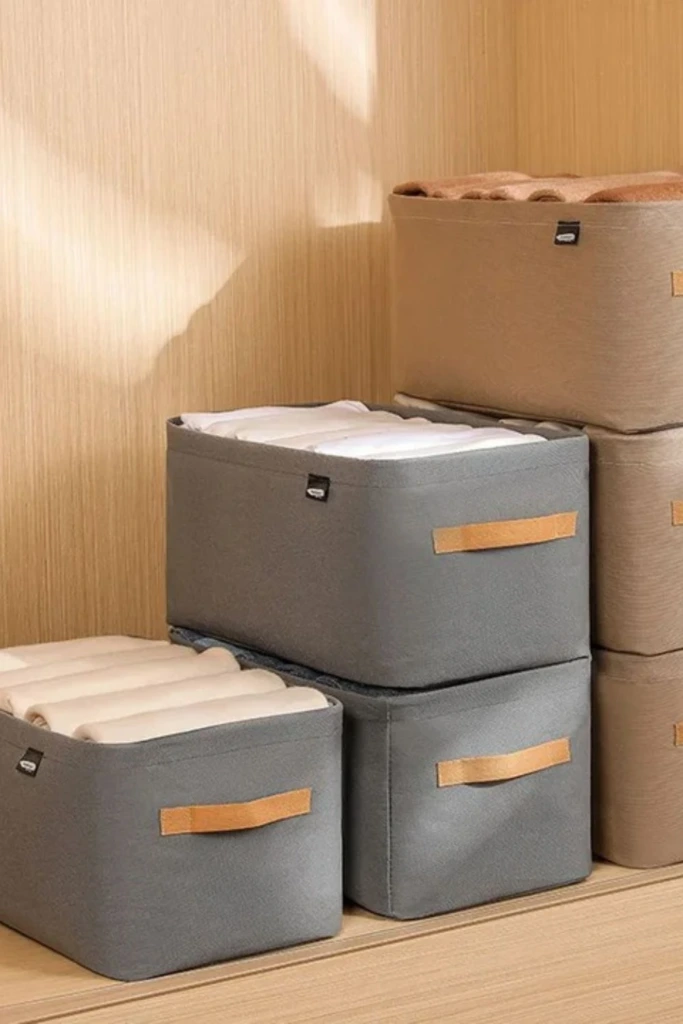
Fabric storage boxes combine a tidy appearance with flexible organization. They fit easily on wardrobe shelves, inside larger closets, and in corners that might otherwise collect loose clothing.
Choose boxes with enough depth for folded sweaters without forcing the garments into a cramped position. Neutral colors can create a coordinated look, while different box colors can help distinguish categories.
For everyday use, place sweaters vertically inside a box so you can identify individual garments more easily. If you prefer horizontal stacks, keep them short enough to avoid disturbing the entire pile when removing one piece.
Fabric boxes are convenient for lighter knitwear, cardigans, and seasonal garments. However, ordinary fabric containers may not provide sufficient protection against moths or humidity during long-term storage.
For valuable natural-fiber sweaters, consider a suitable protective liner or a more protective container when needed. Keep boxes clean, dry, and accessible so putting clothes away remains simple.
9. Folding Hang
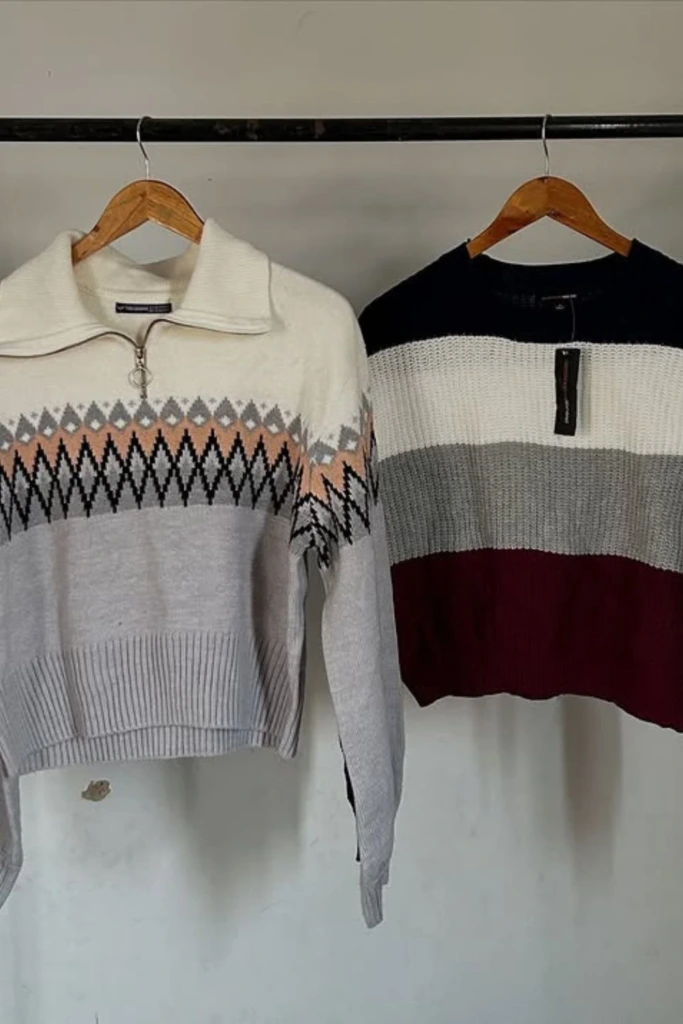
If closet space is limited and you want sweaters to remain visible on a hanging rail, folding them over a hanger can be a useful compromise.
Lay the sweater flat and fold it in half lengthwise. Position the hanger so its horizontal bar rests across the folded body, then drape the sweater over the bar with the sleeves lying alongside the body or folded neatly over it.
This arrangement distributes the garment's weight more evenly than hanging it by the shoulders. A smooth, sturdy hanger can help prevent unwanted creases, while leaving space between garments reduces crowding.
The technique works best when the sweater is lightweight enough to hang comfortably without slipping. Thick cable-knit garments, heavy wool pullovers, and loosely knitted pieces are generally better stored flat.
If you notice a crease forming along the fold, adjust the position occasionally or move the sweater to a shelf.
10. Color Stacks
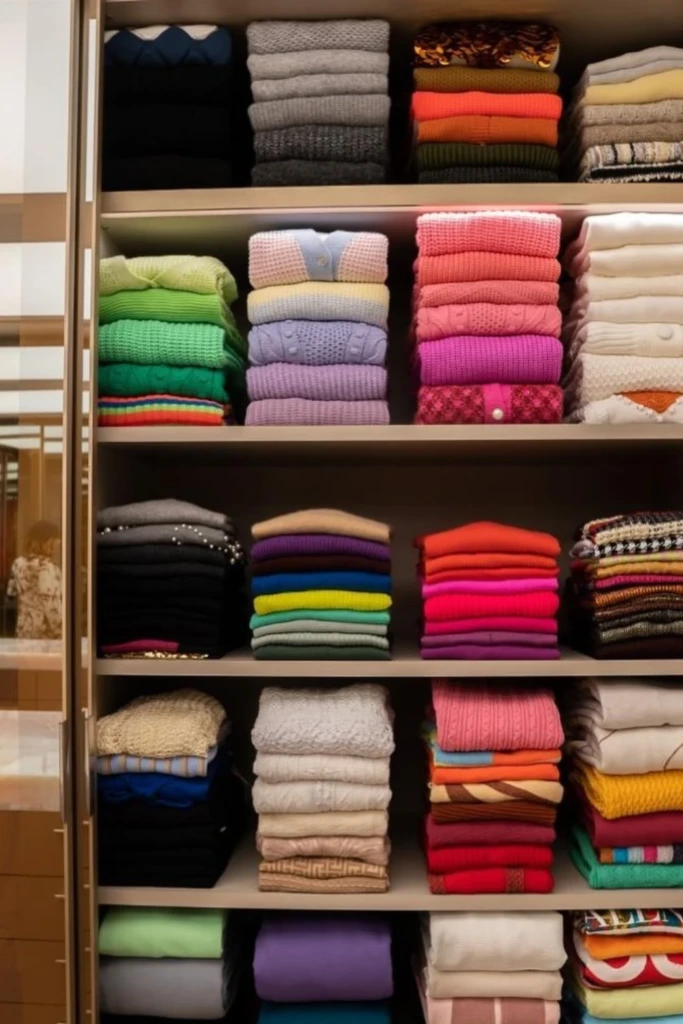
Color-based sweater stacks make it easier to locate clothing and maintain a consistent wardrobe layout. They're especially helpful when you own several sweaters in similar styles but different shades.
Separate garments into broad groups, such as neutrals, pastels, dark colors, and bright tones. Fold each sweater to approximately the same dimensions so the stacks look balanced and fit neatly on the shelf.
Keep the heaviest pieces near the bottom and avoid making the piles excessively tall. If your collection includes delicate or loosely knitted sweaters, give them their own space so other garments don't place unnecessary pressure on them.
Deep shelves are useful because they can accommodate multiple smaller stacks side by side. Leave enough room to remove a sweater without dragging neighboring garments along with it.
The best part of this method is that it combines practical organization with a clear visual system, making your wardrobe easier to navigate every morning.
11. Drawer Folding
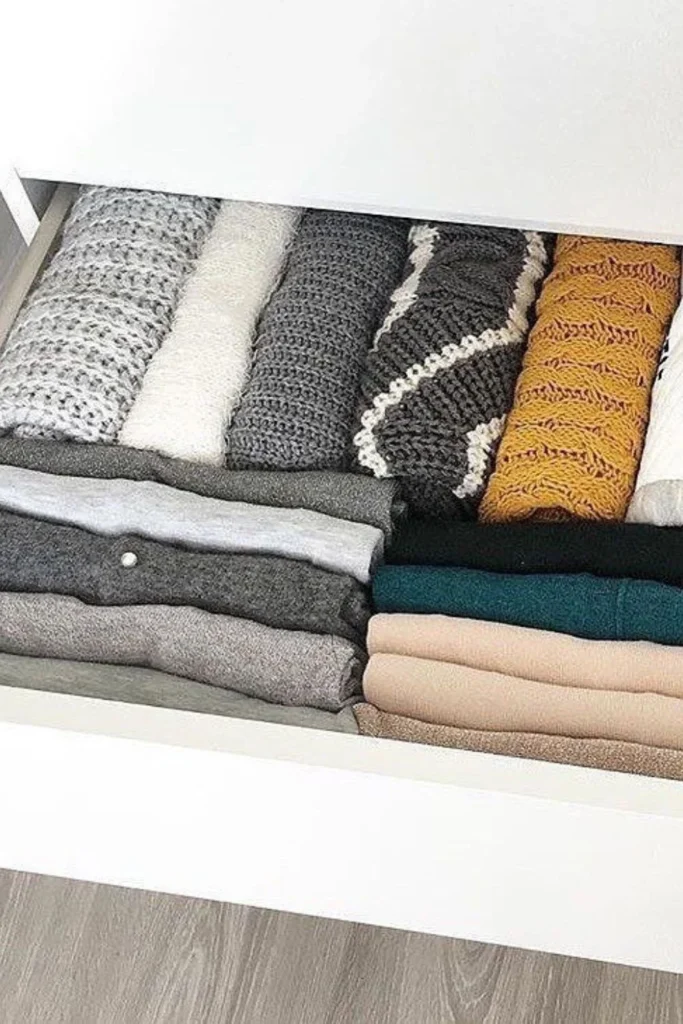
Drawers are ideal for sweaters because they keep garments supported and out of sight. With a consistent folding method, even a modest dresser can hold a useful collection of knitwear.
Fold each sweater into a compact rectangle, then place it upright in the drawer when the fabric and fold allow it to stand securely. This arrangement lets you view several garments at once instead of digging through a horizontal pile.
Separate thicker sweaters from lightweight ones to keep the rows organized. Adjustable dividers can prevent garments from tipping over as the drawer becomes less full.
Medium-depth drawers are often convenient because they provide enough room for folded knitwear without making every piece difficult to reach. Avoid forcing sweaters into narrow spaces that compress their fibers.
If you regularly rotate between several favorite sweaters, reserve the easiest-to-reach section for those garments and store occasional pieces farther back.
12. Closet Layers
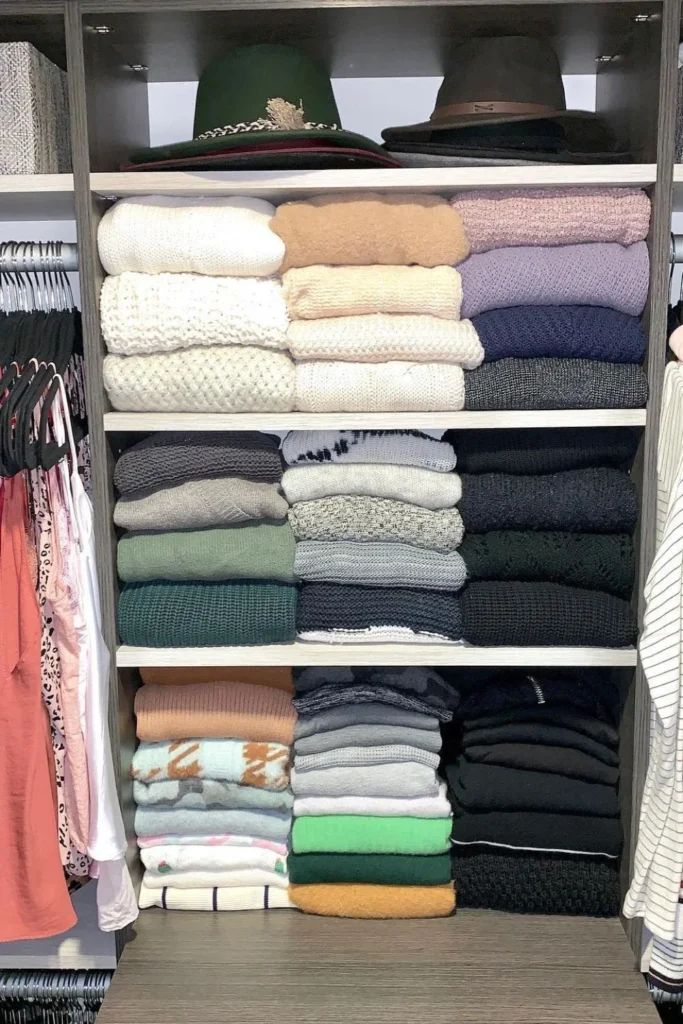
A closet with dedicated storage levels can accommodate sweaters without sacrificing all the space needed for hanging clothes.
Use open shelves for folded knitwear and reserve the hanging rail for garments that benefit from being suspended, such as shirts, dresses, and suitable lightweight tops. This separation prevents bulky sweaters from crowding the rail.
Keep everyday sweaters at a comfortable height, where you can reach them without moving other clothing. Upper shelves can hold less frequently worn pieces or off-season garments, provided they remain easy and safe to access.
Arrange sweaters in small stacks and group similar items together. You might dedicate one shelf to cardigans, another to everyday pullovers, and a third to heavier winter styles.
If your wardrobe has unused vertical space, adding another shelf can increase storage capacity without requiring a larger closet. Make sure each level has sufficient clearance for the folded garments you plan to store there.
13. Drawer Dividers
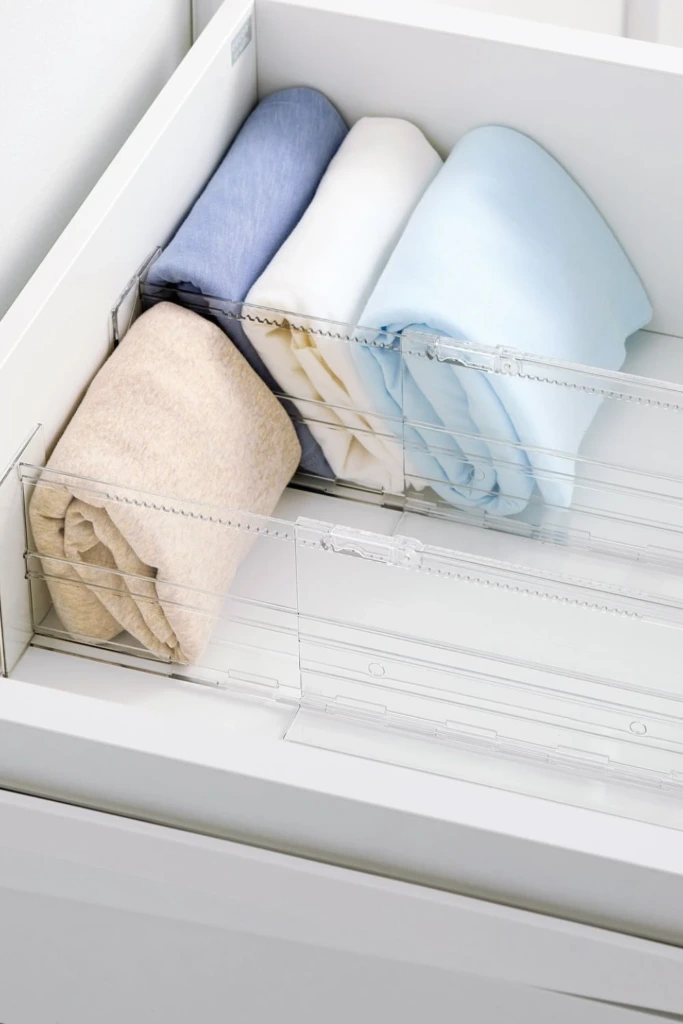
Drawer dividers create separate compartments that stop folded sweaters from shifting into one another. They're particularly useful in wide dressers where clothing tends to spread across the entire drawer.
Choose adjustable dividers that fit the drawer's dimensions and allow enough space for each sweater category. You can create sections for lightweight knits, heavier pullovers, cardigans, or different color families.
Fold sweaters consistently before placing them inside. When the fabric permits, stand the folded pieces upright so their colors and styles remain visible from above.
Clear dividers offer good visibility, while fabric versions provide a softer surface for delicate garments. Either can help maintain order as long as the compartments aren't too small or crowded.
One major advantage is that you can remove a sweater without disturbing the garments beside it. That makes the arrangement easier to maintain even when you're getting dressed in a hurry.
14. Cube Shelves
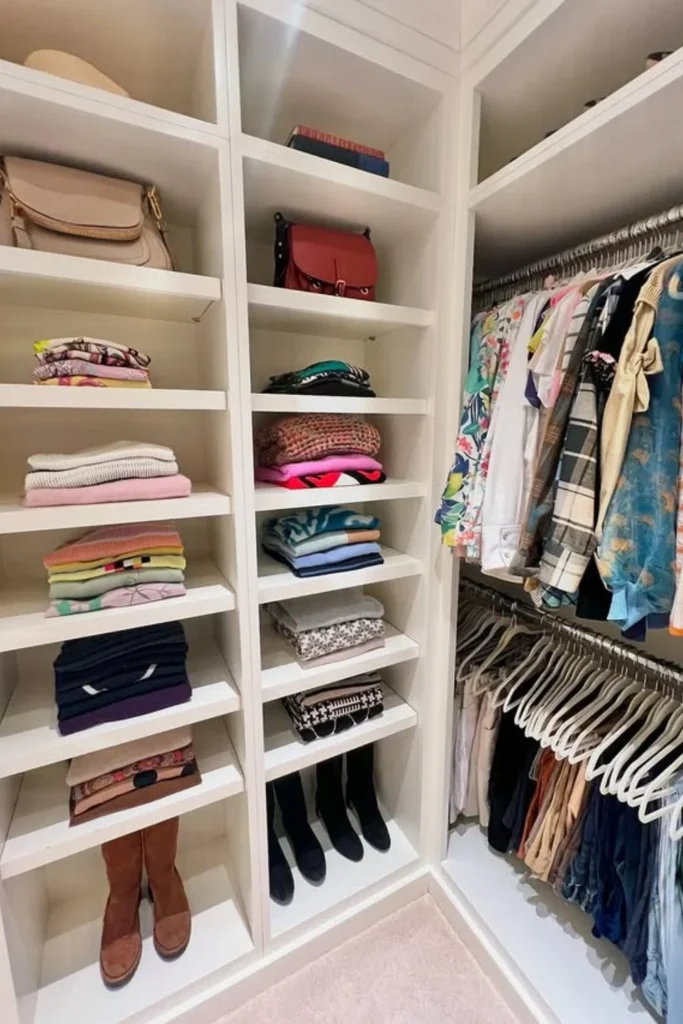
Cube shelving divides a larger storage area into individual compartments, giving each group of sweaters a defined home. This setup works well for modular closets, freestanding organizers, and bedrooms that need additional storage.
Fold sweaters into compact shapes that fit comfortably inside the cubes. Use separate compartments for different garment types or household members, depending on your needs.
Smaller compartments naturally limit the size of each stack, making it easier to avoid unstable piles. They also help prevent clothing from spreading sideways across a shelf.
Keep your most frequently worn sweaters at waist or chest height when possible. Reserve upper cubes for occasional or seasonal pieces, and use lower compartments for garments that are easy to lift without bending or reaching too far.
If your cube organizer is open, fabric baskets can be added to conceal clothing and reduce dust exposure. Choose baskets that slide in and out smoothly without catching on the sweater fabric.
15. Labeled Bins
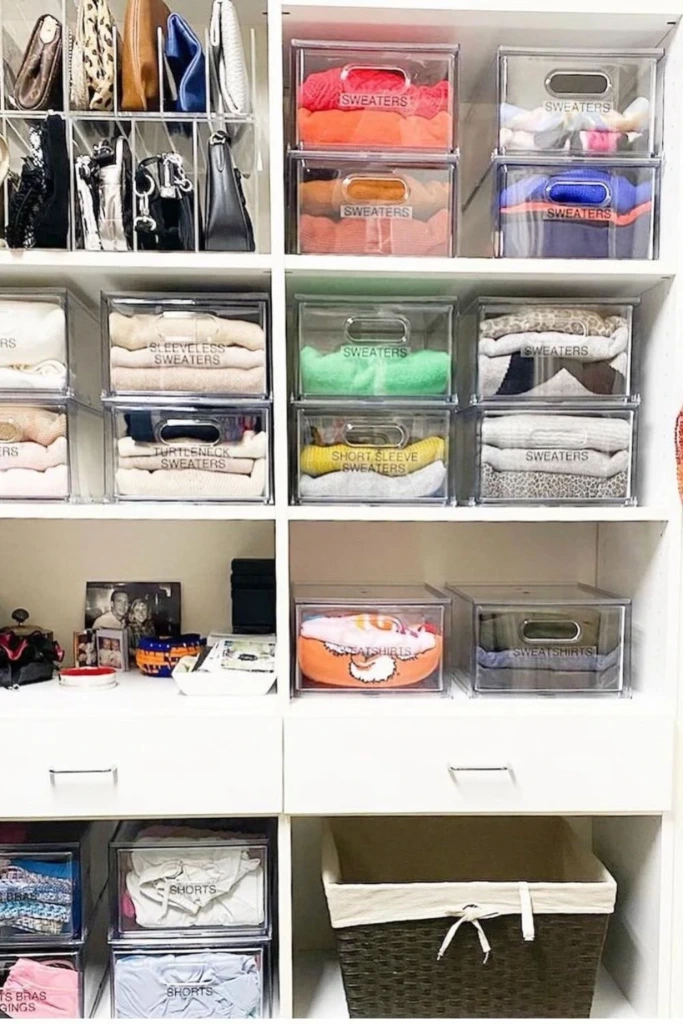
Labeled storage bins are a simple way to organize a large sweater collection without relying entirely on memory. They work especially well when several containers look alike or when clothing is rotated seasonally.
Begin by dividing sweaters into practical categories. You might create separate bins for lightweight pullovers, thick winter knits, turtlenecks, cardigans, or garments worn only occasionally.
Fold the sweaters before placing them inside, leaving enough room to lift each garment out comfortably. Use clear bins if you want to see the contents, or opaque containers with easy-to-read labels if you prefer a uniform appearance.
Position frequently used categories where you can reach them easily. Less frequently worn sweaters can go on higher shelves or into under-bed storage.
Keep the labels simple and specific so everyone using the closet knows where each item belongs. Returning sweaters to their assigned bins after laundry becomes much easier when the system is clear.
16. Upper Storage
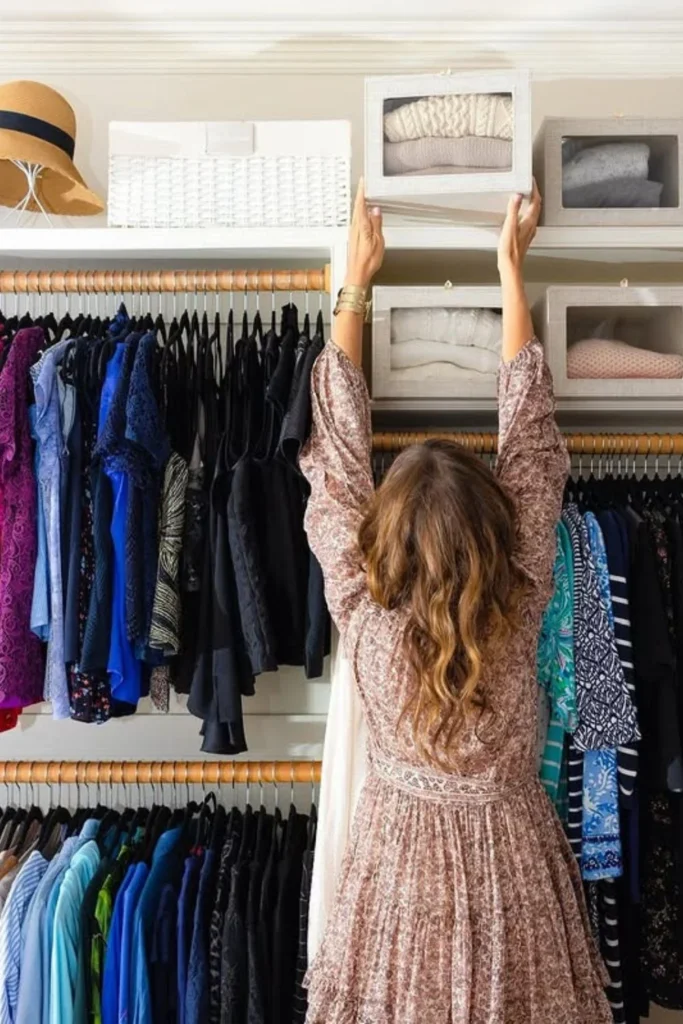
The space above a closet's hanging rail or on its highest shelf often goes unused, even when lower areas are overcrowded. This upper section can be valuable for storing sweaters that aren't needed every day.
Place folded garments inside sturdy containers that fit the shelf securely. Fabric boxes work well for routine organization, while suitable lidded containers can provide additional protection during seasonal storage.
Label each container so you can identify its contents without pulling everything down. Transparent panels are another helpful feature when you need to check what's inside quickly.
Use this space for off-season knitwear, special-occasion sweaters, or pieces you wear only occasionally. Keep everyday favorites on lower shelves so you don't have to reach overhead each morning.
Avoid stacking containers so high that they become unstable or difficult to lift. If the shelf is above shoulder height, choose lightweight boxes and use a safe step stool when retrieving them.
17. Neutral Stacks
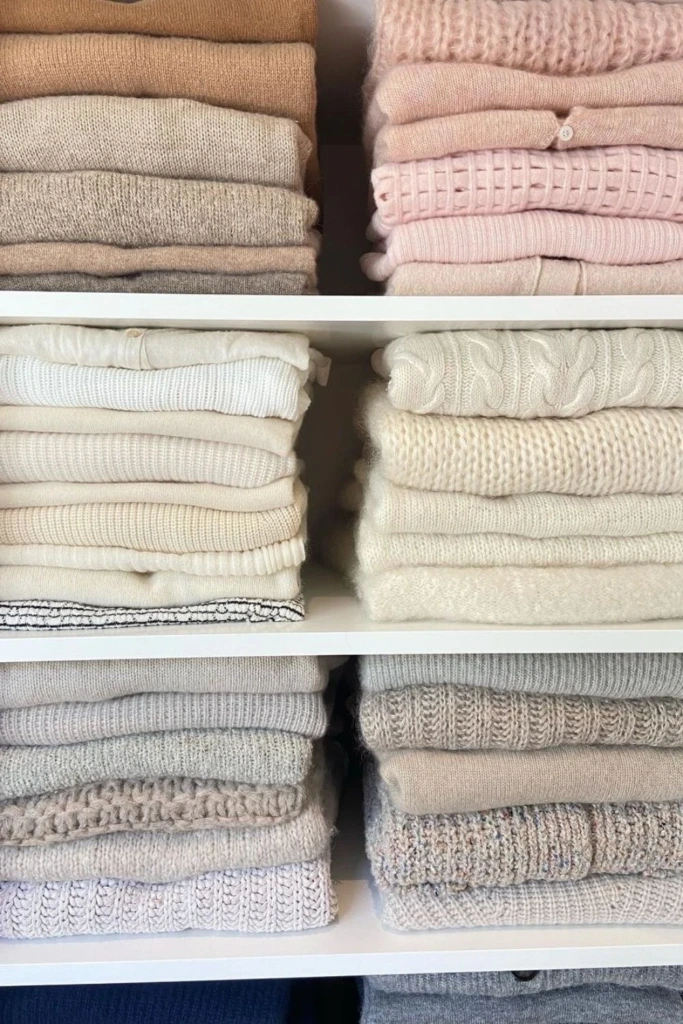
If your wardrobe consists mainly of understated colors, arranging sweaters into neutral stacks can make the closet look cohesive while improving accessibility.
Group whites, creams, beige, gray, brown, and black sweaters into separate piles or arrange them in a gradual color sequence. Fold garments to similar dimensions to prevent uneven stacks.
Place heavier knitwear toward the bottom for support, with lighter pieces above. Leave a little room between groups so you can remove garments without disturbing neighboring piles.
This method works particularly well on open shelves because the colors remain visible. It can also make outfit planning easier when you frequently combine neutral sweaters with different trousers, skirts, or jackets.
For a practical arrangement, prioritize the colors you wear most often on the easiest-to-reach shelf. Store occasional pieces elsewhere rather than allowing them to crowd your everyday clothing.
18. Rolled Rows
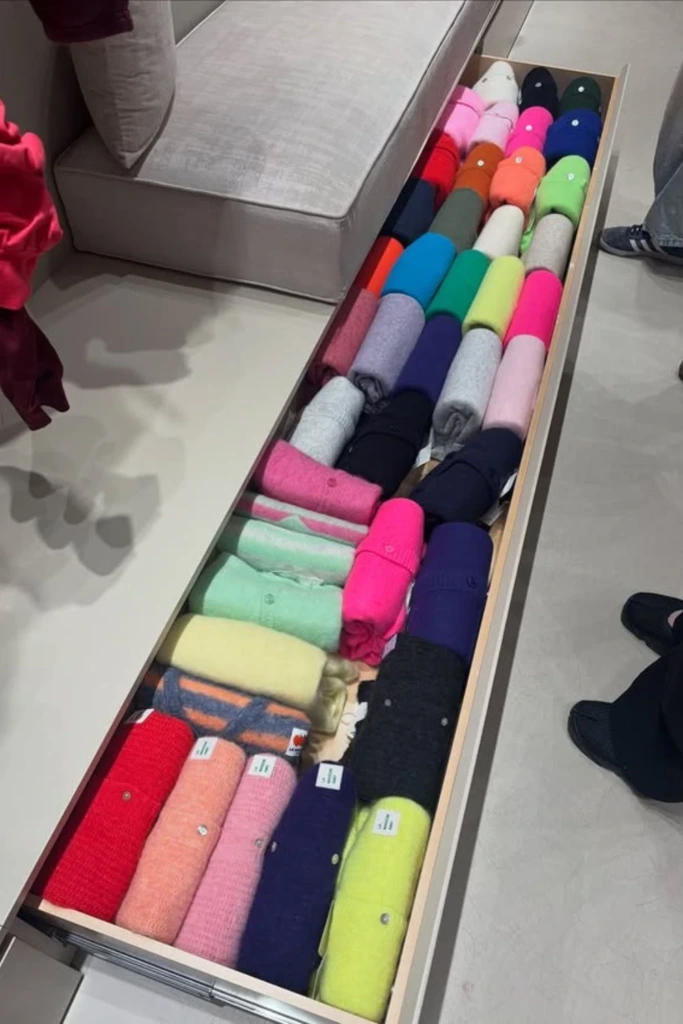
Rolling sweaters into rows can make certain drawers and storage compartments more efficient, particularly when you want to see every garment at a glance.
Start by laying the sweater flat and folding the sleeves inward. Fold the garment into a manageable shape, then roll it gently from the bottom toward the neckline. Avoid pulling tightly or pressing bulky knitwear into a small cylinder.
Arrange the rolls side by side in a drawer or storage basket. Group similar weights or colors together to keep the rows from becoming disorganized.
This approach can work well for lightweight sweaters and compact knits, especially when drawer space is limited. However, thick wool, delicate cashmere, and loosely knitted garments may be better stored flat to prevent unnecessary compression or bulky folds.
Check the garments periodically and adjust the rolls if they begin to loosen. The goal is to make each sweater easy to identify and retrieve, not to force every piece into the smallest possible space.
19. Vertical Shelves
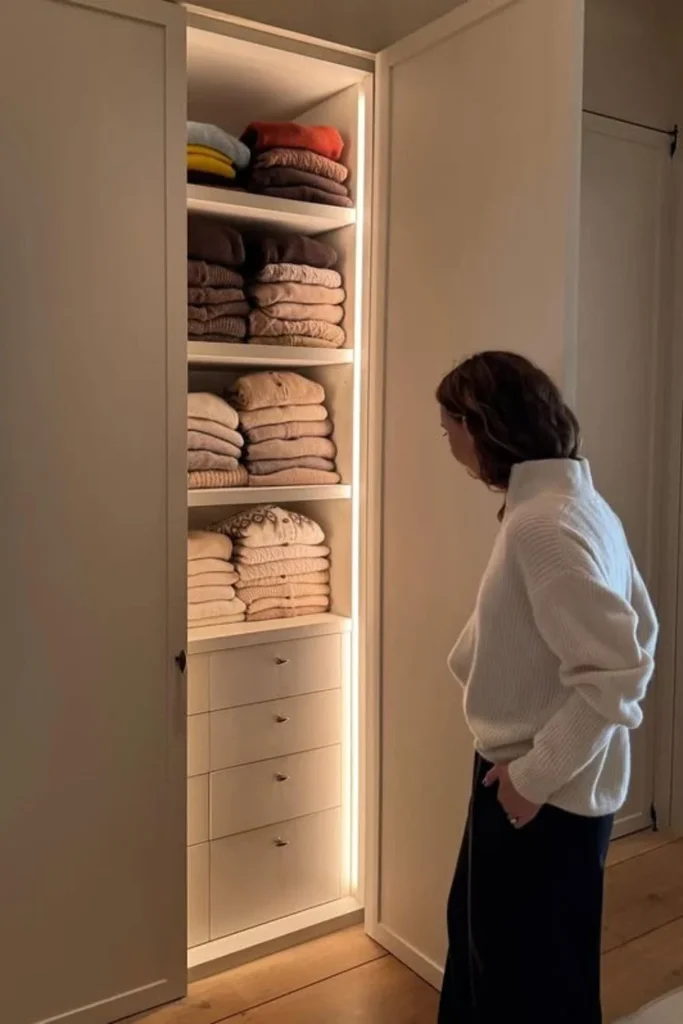
Tall shelving units offer additional sweater storage when a closet lacks sufficient width. Instead of allowing garments to occupy one oversized shelf, distribute them across several levels.
Fold sweaters into consistent rectangles and create manageable stacks on each shelf. Keep the most frequently worn pieces in the middle section, where they're easiest to reach.
Use upper shelves for seasonal knitwear or occasional pieces, and reserve lower levels for garments you can lift comfortably. If you have several sweater weights, dedicate different shelves to bulky and lightweight styles.
Vertical storage also helps separate clothing categories. For example, one level can hold cardigans, another can hold everyday pullovers, and another can hold winter sweaters.
If you're adding shelves to an existing wardrobe, measure your folded garments first. Adequate height between shelves prevents thick knits from being squeezed against the level above them.
20. Color Hanging
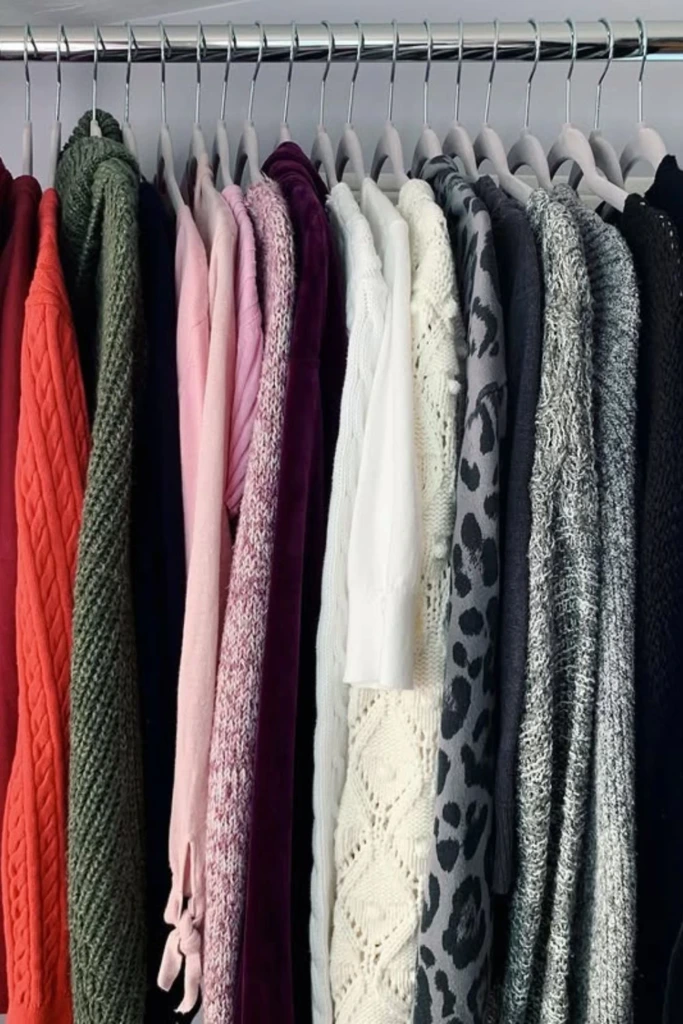
A color-organized hanging rail can be useful for lightweight sweaters that are suitable for hanging. It gives you a clear view of your options and makes it easier to coordinate outfits.
Arrange compatible garments in a sequence that works for you, such as light to dark, warm colors to cool colors, or neutrals followed by brighter shades.
Use broad, supportive hangers rather than narrow wire versions. For sweaters that are prone to stretching, consider draping the folded garment over the hanger's bar instead of hanging it by the shoulders.
Leave enough space between items so the fabric doesn't become compressed or crowded. This is particularly important for delicate knit tops that can snag against zippers, buttons, or rough fabrics.
Keep heavier sweaters folded on shelves or in drawers. The hanging section should be reserved for knitwear that can tolerate the arrangement without losing its shape.
21. Shelf Sections
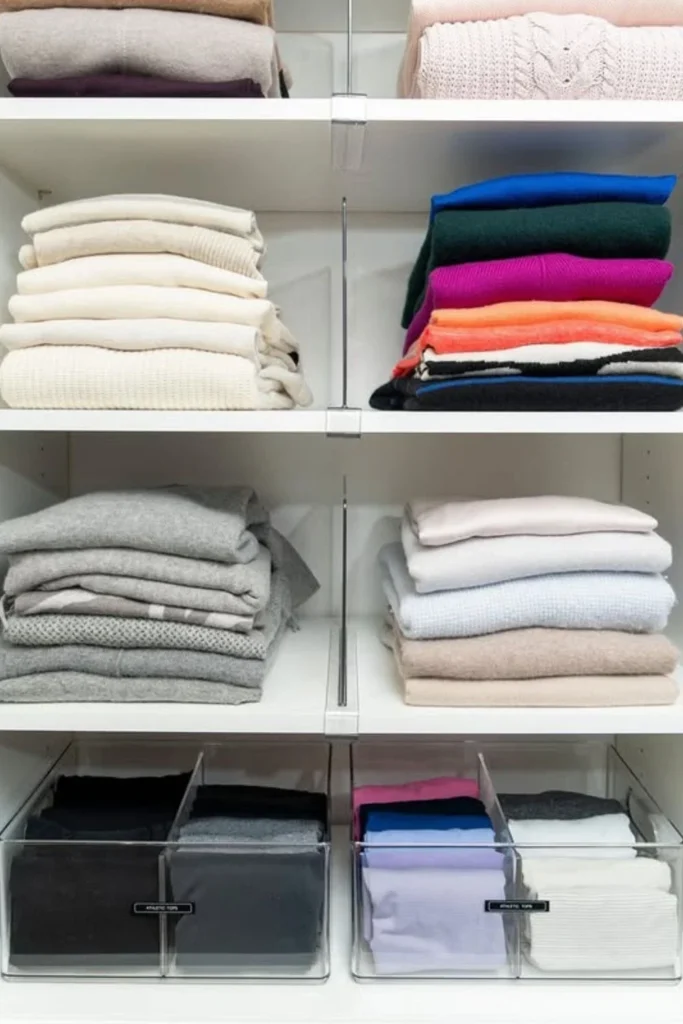
Dividing a wide shelf into smaller sections makes sweater storage easier to manage. Without clear boundaries, individual piles can spread sideways and gradually merge into one large, disorganized stack.
Use shelf dividers, small baskets, or separate storage trays to establish distinct areas. You might organize each section by sweater type, color, fabric, or how often the garments are worn.
Fold sweaters into similar shapes so the groups remain neat. Keep bulky knits in sections with enough width and height to prevent the fabric from being squeezed.
Smaller compartments are also useful for accessories that are often worn with sweaters, such as lightweight scarves, provided they have their own designated space.
This system is especially practical for shared closets because each person or category can have a clearly defined section. When every group has a home, putting away clean laundry becomes quicker and less frustrating.
22. Stack Trays
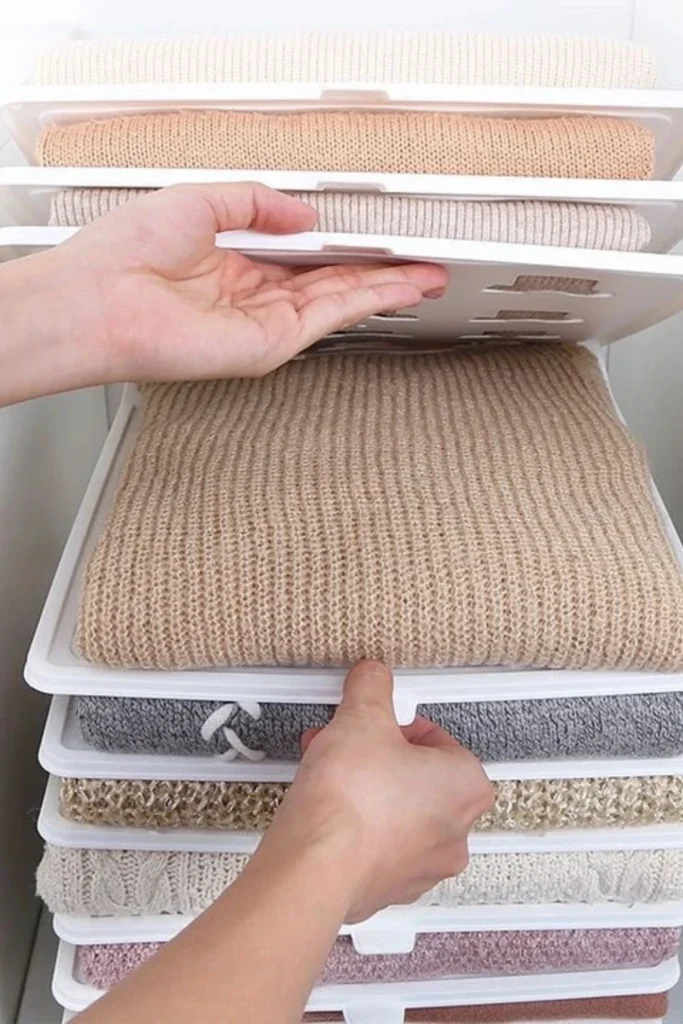
Stackable trays can help organize sweaters on shelves where traditional piles tend to become unstable. Each tray creates a separate level, allowing you to access one group without lifting several layers of clothing.
Choose trays with enough surface area for your folded sweaters and sides that help keep garments from slipping off. Fold each sweater consistently so it sits flat rather than hanging over the edges.
Place the heaviest garments on lower levels when using multiple trays, and make sure the entire arrangement remains stable. Avoid overloading trays or stacking them beyond a comfortable and safe height.
This setup works well for shallow closets, adjustable shelving, and wardrobe spaces where you want a more structured appearance.
Trays can also help separate sweater categories. Keep everyday knits together on the easiest-to-reach level, with occasional or seasonal garments stored farther up.
23. Acrylic Stacks
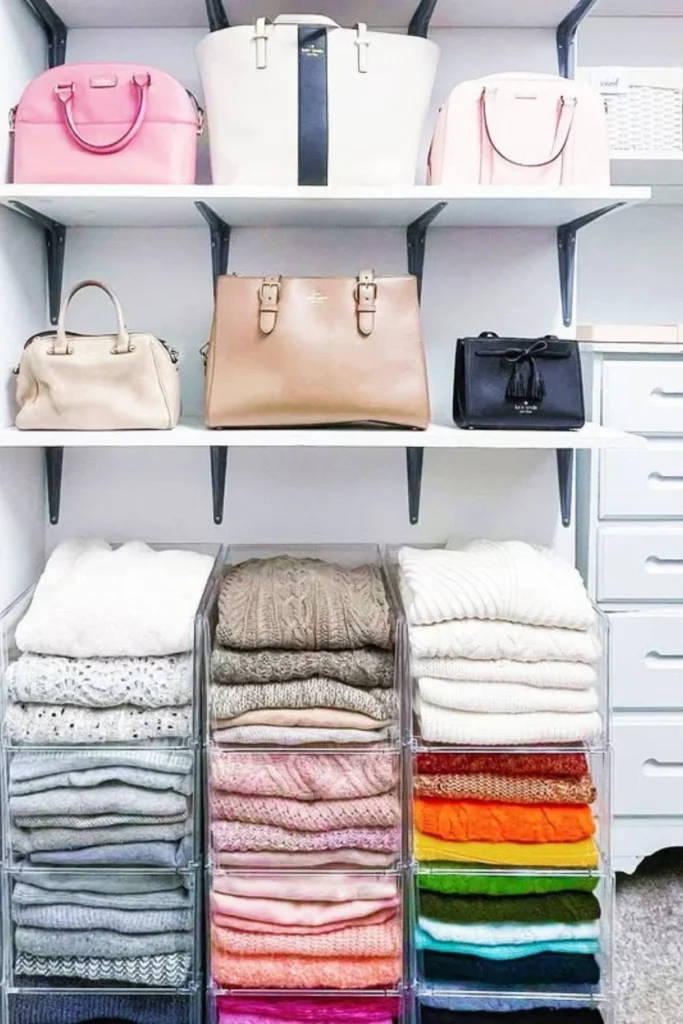
Transparent acrylic organizers offer a neat way to divide sweater storage into clearly visible sections. They're especially useful when you want to separate different colors or garment types without hiding the collection inside opaque containers.
Fold each sweater to fit the organizer's dimensions, then arrange the garments in manageable groups. The clear sides make it easier to see what's available before removing anything.
These organizers can work well on closet shelves, inside suitable cabinets, or within larger wardrobe compartments. Measure the available space before buying them so the organizers don't block access to nearby drawers or doors.
Use individual sections for lightweight knits, cardigans, or compact sweaters. Heavy garments should have sufficient support, and delicate fabrics should not be forced into narrow compartments.
For a more functional layout, place frequently worn sweaters in the most accessible sections. Keeping related items together reduces searching and makes it easier to return each piece to its proper place.
24. Grid Shelves
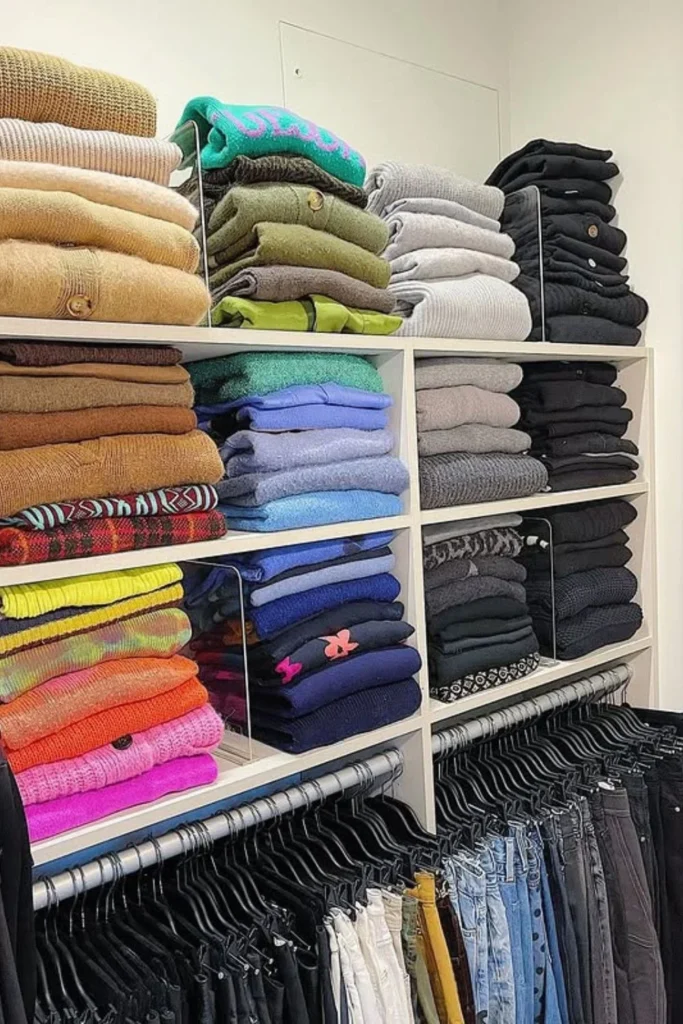
Grid shelving divides a large storage area into smaller compartments, providing a designated spot for each group of sweaters. This can be especially helpful when a growing knitwear collection no longer fits comfortably on a single shelf.
Fold sweaters into compact, uniform shapes and place them in the compartments without overfilling them. You can organize the grid by color, fabric weight, garment type, or season.
Position everyday sweaters in easy-to-reach compartments. Upper sections can hold garments used less often, while lower sections can accommodate heavier pieces if the shelves are designed to support their weight.
Grid systems are available in different configurations, so choose one that suits the dimensions of your closet and the size of your sweaters.
For open grids, make sure the compartment surfaces are smooth enough to avoid snagging knit fabrics. Fabric inserts or suitable baskets can provide additional protection while keeping the individual sections organized.
Should sweaters be folded or hung in a closet?
Folding is generally the better choice for most sweaters, particularly heavy wool pullovers, chunky knits, and loose-weave garments. Their weight can pull downward when they hang from ordinary hangers, potentially stretching the shoulders and changing the garment's shape.
Folded sweaters can be stored on shelves, in drawers, or inside suitable containers. Keeping them in short stacks or arranging them vertically in drawers makes individual pieces easier to access.
Some lightweight knit tops can be hung on broad, padded hangers if their construction supports it. You can also fold a sweater over a hanger's horizontal bar to distribute its weight more evenly.
The best method depends on the sweater's material, thickness, and shape. When you're unsure, flat storage is usually the safer option.
What is the best way to store sweaters for the off-season?
Start by checking each sweater for stains, dirt, and signs of damage. Clean the garments according to their care labels, then let them dry completely before storing them. Food residue, perspiration, and other organic traces can attract clothing pests.
Fold each sweater gently and place it in a clean storage container. Breathable fabric boxes are useful for routine closet storage, while suitable protective containers can offer additional defense against dust and pests during longer periods of storage.
Choose a cool, dry location away from direct sunlight, damp walls, and areas where temperatures or humidity fluctuate significantly. Under-bed containers, wardrobe shelves, and designated closet compartments can all work well when conditions are appropriate.
For wool and other animal-fiber knitwear, consider using cedar blocks or properly enclosed lavender sachets as supplementary measures. These scented items should not replace effective cleaning, pest monitoring, or protective storage.
Avoid compressing sweaters excessively for long periods, particularly if they're delicate or expensive. When the next season arrives, inspect the garments, air them out as appropriate, and check for any signs of moisture or pest damage before wearing them again.